
showing posts tagged #ourcamper — clear

0

Chapter 9: Akaroa, a French touch

preview

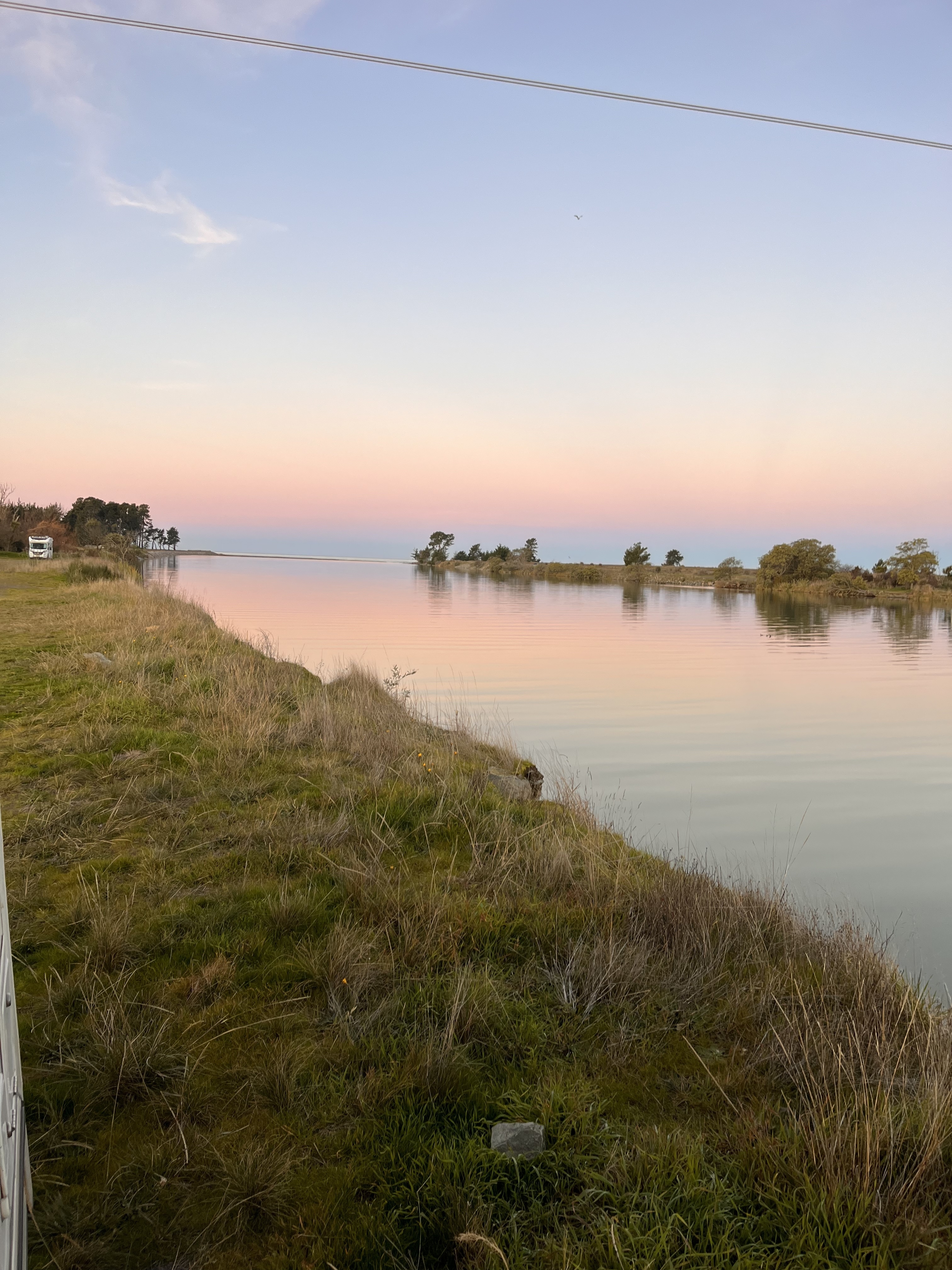
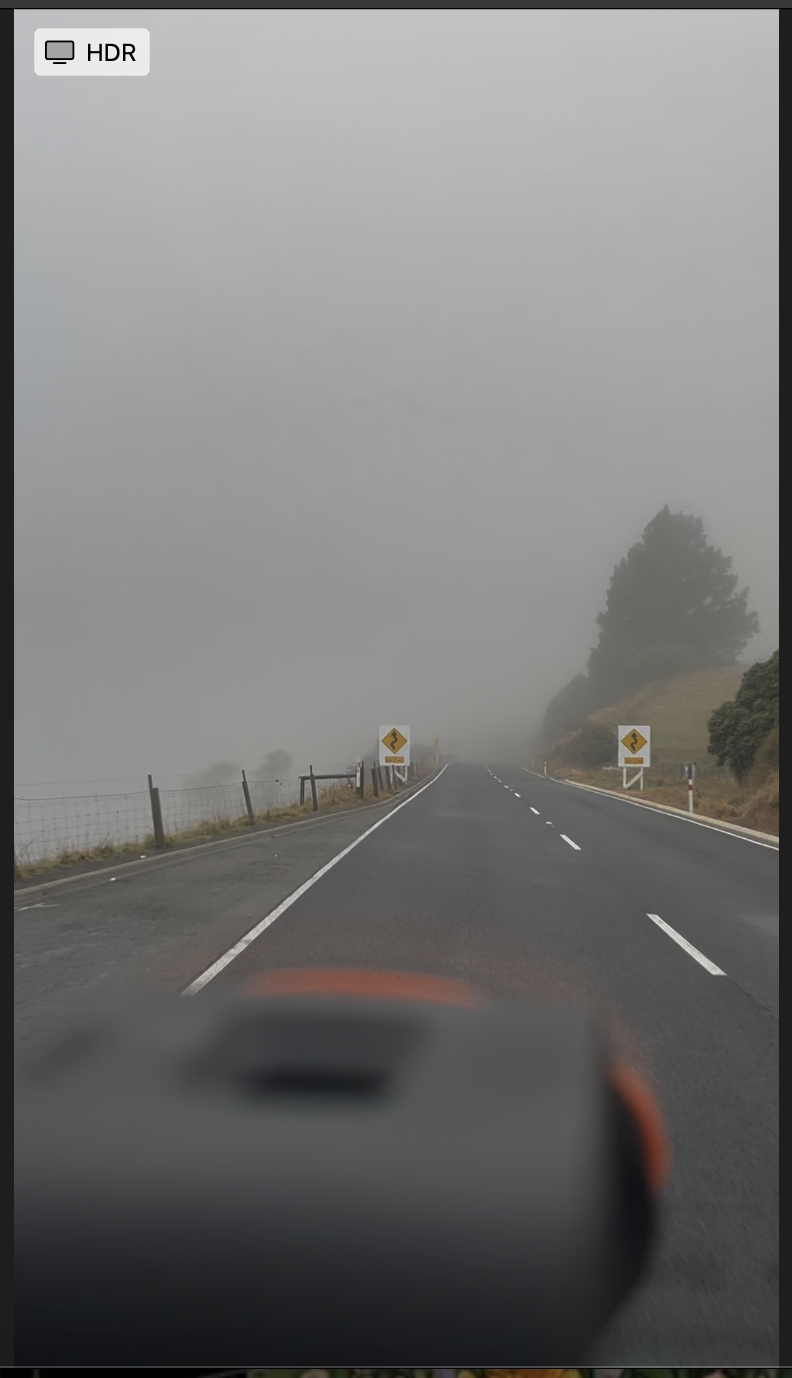
5/7-8/7/25 We left Christchurch for Akaroa, on the Banks Peninsula. We journeyed over a hilltops high enough that we were, for a time, driving through cloud. Descending, the views of Akaroa’s natural harbour were pretty, but limited by low cloud. Our camping spot for the night was just a minute’s walk from the water’s edge - another lovely spot.

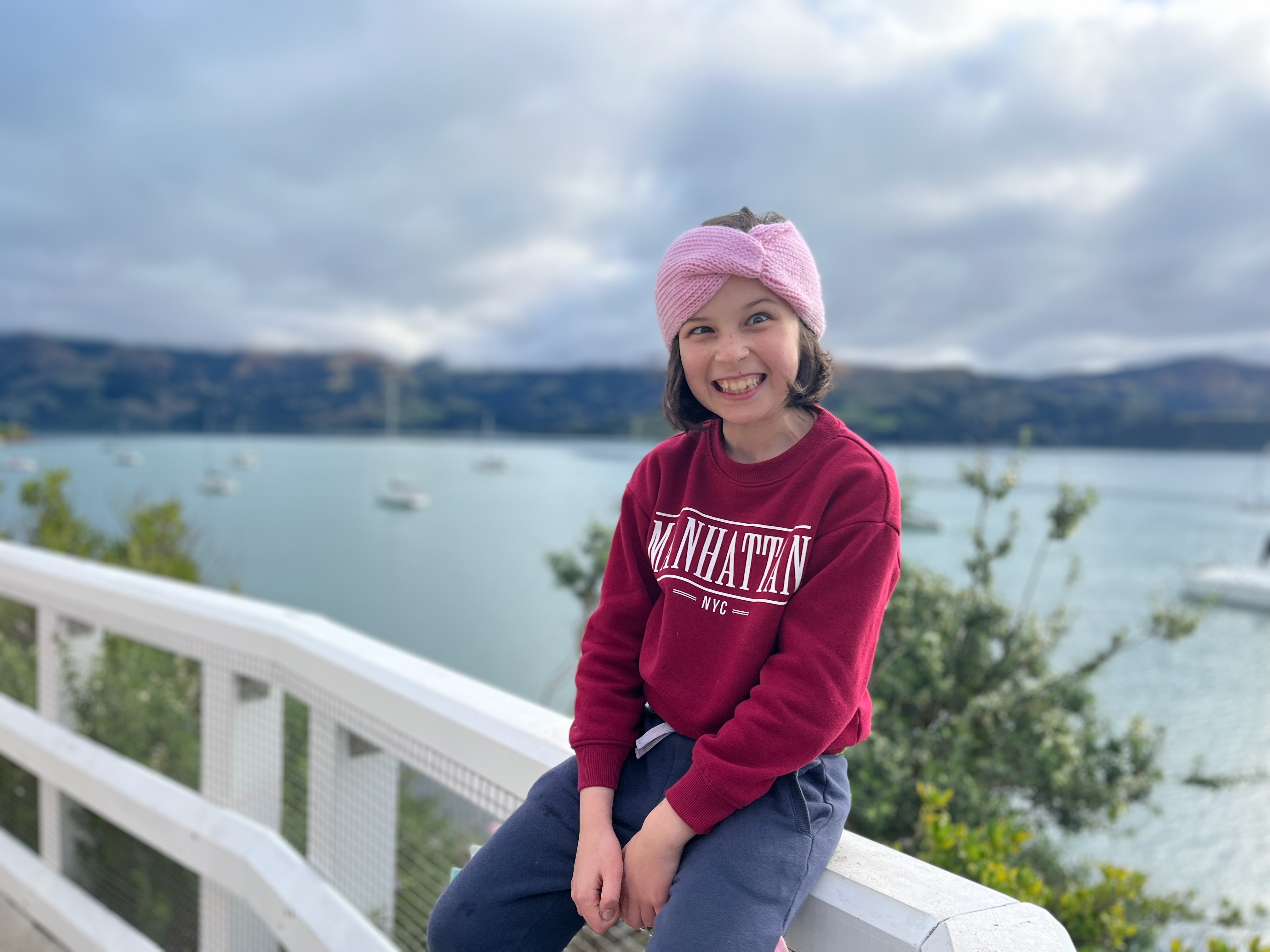
The next day, the sky was much clearer and we could really appreciate the beauty of the harbour - the stillness of the water surrounded by hills crowned with a glowing winter sky. Akaroa is known not only for its beauty, but for its French roots and its wildlife. In particular, the endangered Hector’s dolphin can be seen playing in the harbour - a sweet, very little, black and white dolphin with a dorsal fin resembling Mickey Mouse’s ear. We strained our eyes repeatedly over the harbour, but had no luck spotting one.

The French influence is the result of a French settlement here in the mid 1800s. The French had hoped to claim Aotearoa as their own, but the British pipped them to the post. Street names (e.g. Rue Jolie), business names and local cuisine hint at its past.

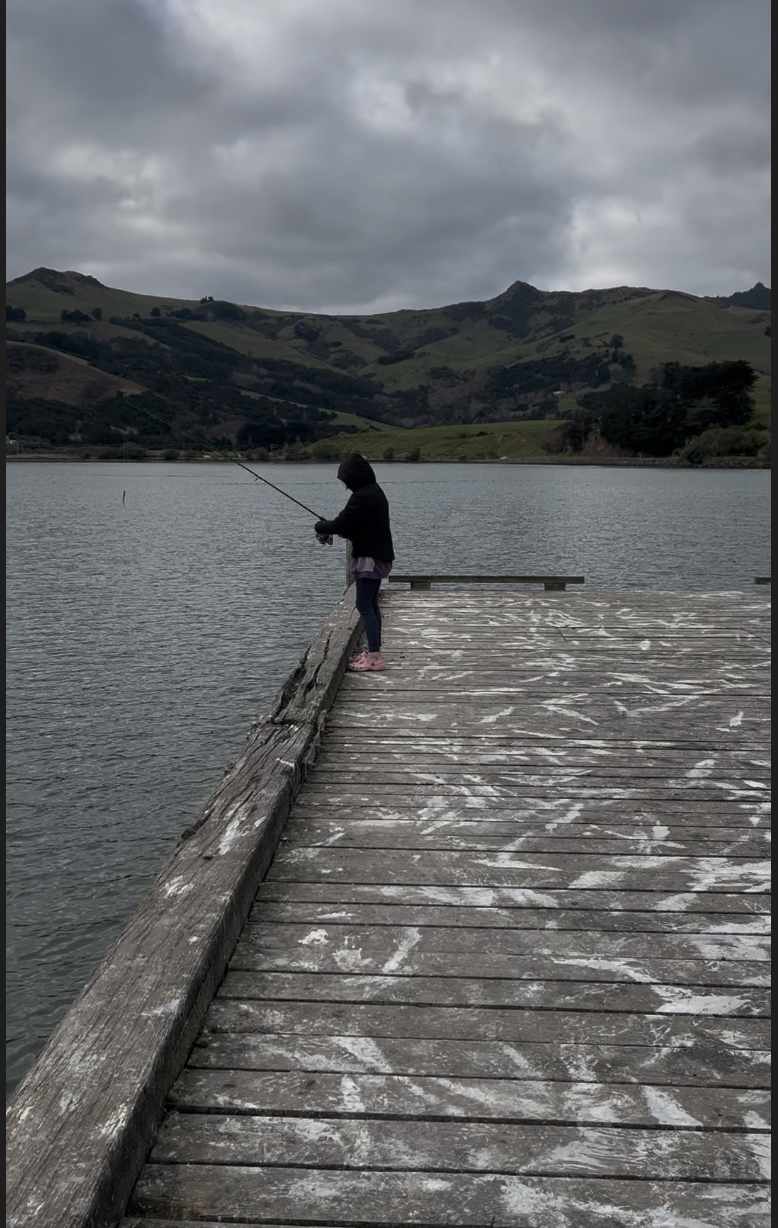
Our time in Akaroa was spent fishing off wharf, browsing shops (with some accidental purchases), and having lunch at a “patisserie” which had a slightly disappointing lack of French pastries (although I did enjoy a croque monsieur).

The girls and I also explored the Akaroa lighthouse which had been relocated from the Akaroa Heads, a good distance away, back in 1980. We had the pleasure and privilege to meet a volunteer who had helped move it - one of only a few still living. Among other interesting stories, he told how the lighthouse had been decommissioned and was facing destruction. At work one day, a colleague said to the volunteer, “I’ve bought this lighthouse - will you help me move it?” The volunteer travelled out to the heads to look at it this historic lighthouse rooted to the blustery top of treacherous cliffs and immediately was onboard, convinced it was something special and must be saved. He worked with a team every weekend for eighteen months, meticulously dismantling and labelling each component and reassembling it in Akaroa town. It’s a historic piece of mechanical beauty, and it’s now a popular tourist attraction in Akaroa. I can’t help but feel that the real treasure, however, was the knowledgeable and quietly passionate gentleman still overflowing with enthusiasm for his legacy, all these decades on.

That night we camped in the next bay over, where BlueAether and the girls fished off a long wharf. Also tranquil and also beautiful. And also no luck with the fishing.

The next day, we set off for Tekapoo. Before we left the peninsula, however, we stopped at the Barry’s Bay Cheese factory. Barry’s Bay Cheese was one of the makers of the delicious cheeses we picked up at the Riverside Market in Christchurch. BlueAether and the girls stayed in the camper as I got out, and I was told I was allowed three minutes by BlueAether and five minutes by the girls. I may have gone over both time limits a litte… The cheese factory sold offcuts for a fraction of the price of their standard cheeses, which appeals to both the eco-wannabe and the miser in me. I returned to the camper with more cheese than I should have, including some more of that yummy pepper-crusted havarti.

Our final stop before we left the peninsula was Birdling’s Flat. Birdling’s Flat is a pebbly beach at a river mouth, known for its deposits of agate - translucent, semi-precious stones. We walked over the beach, scanning the ground as we went, and found many pretty stones, including a couple of small pieces of agate. We are accumulating a rock collection. It’s becoming a bit of a problem.

We headed southwest, parallel with the coast, pausing at the Chertsey Book Barn. Chertsey is a dot on the map, but it has the South Island’s second largest used bookstore housed in an enormous, cold, dark shed with cats curled in the slightly warmer nooks. Despite the largeness of the space, the books are crammed in. There are a LOT, and although we stopped because we actually needed to refresh our books, it would have been worth the visit anyway.

We stopped at Ashburton next to do some camper chores and essential shopping - a great town for this - and then headed inland into Mackenzie Country. Mackenzie Country is big country: wide, open, rolling high country hills; expansive skies. It features in oil paintings, where farmers in leather hats and oilskin coats stare out towards a distant horizon, perhaps with a sheepdog at their side. I find it soul-stirring land. To our excitement, as night began to fall, we began to make out snow in the hills we were passing through. When we finally pulled into a campground a short way from Tekapoo, we found there were patches of snow where we were spending the night. The girls were thrilled.

0

Chapter 8. The (Cardboard) Cathedral City

preview

Tuesday 1st July – Saturday 5th July: The (Cardboard) Cathedral City

After driving to a nearby reserve for a little more seal-watching over breakfast, it was late morning by the time we set off towards Christchurch. We didn’t get far. We pulled into a freedom camping spot on the coast just south of the Kaikoura Peninsula for a look-see and sandwiches. There was a pebbly “dune” that our rock-loving girls immediately ran to and began exploring. They begged to stay a night there. So, with no need to be anywhere at any time, we did.

The following day we finally made it to Christchurch, Aotearoa New Zealand’s second largest city. Our first stop, as we came into the city late in the day, was the QEII Rec & Sport Centre for showers and, because the pool sounded a lot of fun, a swim.

The pool didn’t disappoint. There was a big kids play area which had a fabulous wet playground with slides and a fort area and fountains and tipping buckets, along with a lazy river, toddlers pool, play pool and a hydroslide with tubes. Another area had ride-on floaties. The youngest ran from fun thing to fun thing, like a puppy playing piggy-in-the-middle. After showering, BlueAether and I had a cuppa in a late café that shared a glass wall with the play area, keeping an eye on the kids in peace.

When we were all done, it was dark. We parked up for the night next to a playground in a residential spot in New Brighton. So many places in this area are named after familiar spots in England.

The next day was a get-stuff-done day. Before the grocery shop, we stopped by the Riverside Market, a 7-day indoor market in the centre. If we’d had more time available on the parking meter (downside of camper life – parking buildings are difficult), I’d have loved to stay longer. It wasn’t the local produce mecca I’d hoped for, but there were so many delicious and interesting-looking food stalls selling familiar and unfamiliar cuisines, I could have happily eaten lunch there for a week. We did manage to pick up a couple of nice South Island cheeses after extensive sampling – a flavoursome, orange-coloured blue from Nelson, and a creamy Canterbury pepper-crusted Havarti.

We found a spot for lunch in a carpark beside the River Avon, next to the wonderful Margaret Mahy playground, where the kids had a bit of fun. Then, BlueAether dropped us girls off at the central library while he went off to do laundry and grocery shopping.

As a regular thing, the library provides space to a Lego-building charity. Kids can go in and create for free and sometimes attend workshops. I’d thought it would just be a dry space to kill some time, as the fine spell had come to an end. However, the library is amazing. There’s an entire floor dedicated to kids, and it was energetic and vibrant and obviously popular. In addition to the Lego, there are PlayStations with spectator seating, computers with learning(ish) games, a tree playhouse with a slide, and a separate, large room with table tennis, air hockey, giant games like Jenga and tic-tac-toe, and a lot of space for running about. And, of course, there are books. The books are laid out in a way that’s easy to browse, and there are cosy little reading nooks throughout the floor, including under the tree. Slightly removed from it all are sofas, where adults were relaxing with a view of the streets below. The other side of the library looked onto the damaged Christ Church Cathedral. Being the school holidays, the city libraries were running numerous simultaneous and back-to-back activities. The youngest joined in a “play with technology” session. The library was that good that the girls wanted to return the next day (we didn’t). Christchurch has amazing amenities.

Another night beside the playground, which the kids enjoyed, then the following day BlueAether stayed in the camper with what felt like the onset of a cold. Over the holidays, Christchurch was running KidsFest – a massive, city-wide programme of fun events and free and discounted activities, from children’s plays to cake decorating workshops. One of the discounted activities was “kids ride free” on the historic trams that take tourists around the city centre, so after lunch the girls and I enjoyed some exploring.

We got on the tram at the Arts Centre - previously the University of Canterbury. It looks like the university still uses parts of the complex. They’re beautiful, imposing old nouveau-Gothic buildings. Victorians were fond of building in bygone styles, and they really cut loose all over Christchurch, with Gothic appearing to be a favourite.

We hopped off at the stop for the Margaret Mahy playground, but first we wandered along an inviting, multicoloured pedestrian street of mainly cafes. Being cold and dreary weather, we stopped at a funky little gelato café with murals and art-crammed walls – the girls’ first gelato. They were creamy and delicious, and we enjoyed them while sitting in a cosy upstairs nook with a heater and a view up the street.

After popping into a nearby Kathmandu for an extra layer for the eldest (did I mention it was cold?) we spent a good while at the playground, thankfully avoiding rain. We joined a woman feeding some enormous eels in the Avon, then walked to visit the Cardboard Cathedral.

In the tragic and destructive 2011 earthquake, the nouveau-Gothic cathedral in the city centre, from which the Cathedral City once drew its epithet, was badly damaged. Its spire collapsed and it “broke like a plate”, as one local told us. The Transitional Cathedral, now officially coined the Cardboard Cathedral, was erected as a temporary structure for use until the repairs were complete. The repair work still hasn’t begun.

As impressive as the Gothic cathedral looks, it would be a shame to retire the Cardboard Cathedral, and I hope they don’t plan to. In a previous life, BlueAether and I visited a lot of holy buildings in Europe. We saw nothing like the Cardboard Cathedral. It’s smaller than I expected, and I hadn’t known that all the fixtures are made of cardboard, too - the pulpit and everything. It’s also much more beautiful than I anticipated, with warmth and simplicity and light. It’s not just a gimmicky building – there’s a gentle peace and reverence that’s quite lovely. The sense of welcome was reinforced by an elder of the church – I’m not sure of his role – who came over and chatted to the girls as they coloured pictures laid out at a table, and then to me when I joined them. Again, quite different to those awe-filled and remote experiences in Europe!

We wrapped up our sight-seeing with a final ride on the tram, then wandered through the botanic gardens to meet BlueAether. From there, we drove out to the harbour at Lyttelton, passing through a long tunnel and arriving in the dark, and fell asleep to the sound of a rope clanging against a mast.

We woke to pretty views across the harbour, which was busily being used by kayakers and other recreationists. Eventually, we made our way back through the tunnel and into Christchurch again, to the historic village at Ferrymead. Ferrymead is a large open-air museum, with many buildings that have been restored and relocated from around 1900. There’s also a tramway running through the village with a working tram, which we of course had a ride on.

As we were poking about one of the Ferrymead houses – that of a wealthy Christchurch resident – we encountered a man in old-fashioned dress with a waxed moustache and a tea towel, hurriedly stepping into the room. He told us that we were welcome to look around, and that he actually lived in the house, and rushed back to his work. A conversation with the tram driver and a costumed shopkeeper revealed that the village had several residents, some of whose homes were open to the public as part and parcel of living at Ferrymead, and some of which weren’t.

After we’d seen our fill of Ferrymead and completed a few final chores in the city, we said farewell to Christchurch and continued on our adventure.

0

Chapter 7. Water, water everywhere

preview

By Mrs BlueÆther

Saturday 28th – Water, water everywhere

Well, the skies cleared and the waters receded a little, and we made it off our farm camping ground, past soggy paddocks and swollen rivers, and back to “civilisation” at Richmond, near Nelson. We’d only needed to stay one extra night at our camping spot, but it was still a relief to have access to shops and utilities. We restocked our little fridge in a very busy supermarket, visited a very busy laundromat, and picked up some other items we’d found we needed. Life in the town centre seemed to be pretty much ticking along as normal.

It’s surprising how much time the little necessities take out of a day, but we did also manage a trip out to Rabbit Island to wander along its usually popular beach. We drove past partially flooded crops, and a few paddocks that were still submerged. In one, cows were clustered on an island about 12 metres in diameter.

We made it out to the “island”, fording a wee pond, and found a surprising number of people in the brown waves. Not something we would have considered, with the threat of contamination with raw sewerage from the floodwaters, but still, I loved the fact that the surfers weren’t just stereotypical tanned young people with sun-bleached hair. Next to where we were parked, a woman in her 60s was pulling on a wetsuit. Her general appearance seemed more suited to a pink and beige tweed suit. A bit further down, a grey-haired couple were tucking their surfboards under their arms.

The absolute best thing about Rabbit Island is the many, many gently inquisitive weka. We were all enchanted. Most of them were pretty fearless, nosing about the camper and sniffing at BlueÆther’s coffee cup left on the step. They were happy to be within a few metres of us. However, when one got spooked, it stretched its neck out in front of it and pointed its beak ahead, long and straight, and shot off like an arrow.

We rounded off the day at the Richmond Aquatic Centre, where we’d learnt there is a wave pool (and showers!). The girls had never been in one before so were super excited, then gutted to find the wave pool was closed. It still ended up a highlight for them, though, as the centre also has a “lazy river”, and they loved playing in the warm current through the channel.

We parked up for the night at a well-equipped freedom parking area with lovely views across the estuary. Thanks, Richmond!

Sunday 29th – Monday 30th Seals and Whales

We had wanted to head west towards Takaka, but the state highway heading east was still closed. Our backup plan was to head south-west towards Greymouth. But that state highway was also closed. Unless we wanted to hang about in Nelson/Richmond some more, hoping for the best, our only option was to retrace our steps back towards Blenheim. That road had reopened.

It felt a bit off to be leaving the area in the midst of a state of emergency. Little we could do, though. As we made our way from the region, the road condition was pretty good – a few minor slips – but the land was still inundated in parts. Earlier in the week we had stopped to eat at Canvastown (named for the goldminers tents that once crowded the site) and appreciated the display of goldmining relics, interpretation boards and replica miners hut, just sitting beside a parking area as a sort of fabulous little wayside museum. Now, land around Canvastown had been transformed into lakes with ducks lazily paddling.

We made our way out to the east coast and headed south through a landscape that became increasingly lovely, eventually coming in sight of snowy mountains and seal colonies along the Kaikoura coast. We found our stop for the night at Paparoa Reserve, about 30 minutes north of Kaikoura. It was amazing…the home of a 2000-strong kekeno (NZ fur seal) colony – the largest in Aotearoa.

We spent hours clambering over rocks, getting up close to the seals and cooing over the pups. BlueÆther got his rod out and tried his luck at catching dinner (nope). The next day, we (the adults) woke up to a beautiful sunrise and clear skies, and we all had breakfast sitting outside watching seals. Pretty magical.

A short distance up the road we pulled over into another rest area with a boardwalk/viewing area, looking out over seals below. This was a completely different and also an utterly magical experience of the seals – there was more of a feeling of being an observer rather than a part of the landscape; however, we were also closer up and had better views. There were so many seals. We saw pups nursing and seals playing in sheltered water. It was amazing.

We moved on to Lavendyl, outside Kaikoura – lavender gardens with a shop. By this time, the clear complexioned dawn had turned into a cold, grey, rainy morning, so we gave the gardens a miss. We did, however, try the chocolate lavender ice-cream and cappuccino lavender ice-cream (as you do on a chilly day), with varying opinions. One of the many bonuses of being in a camper: when parents get into lengthy conversations with random shop owners, kids can just head back to the campervan and read a book, and the parents don’t even get told off!

After a cosy fireside lunch at a Kaikoura pizza restaurant (BlueÆther ordered a rabbit pizza) and a grocery top up, we went on to Fyffe House. Fyffe House is a museum that was once part of a whaling station, with construction beginning in the 1840s, making it one of the oldest buildings in the South Island. It tells the story of whaling in the area and the inhabitants of Fyffe House through the years. As its foundation, enormous whale vertebrae are used, one of which is exposed. They’ve never needed to be replaced. Whale bone is still found in other places in the area where it was used for construction, particularly whale bone fences.

I’m loving the fact that the girls are picking up some historical and general knowledge on this trip. As am I! Like, the fact that baleen was much more valuable than whale oil because of its use in whalebone corsets, and that almost led to the extinction of the southern right whales that were hunted here. Fashion has a lot to answer for!

We found another beautiful spot nearby in which to settle for the night, and enjoyed exploring another shore.

0

Chapter 6 part 2: Around Sunny Nelson

preview

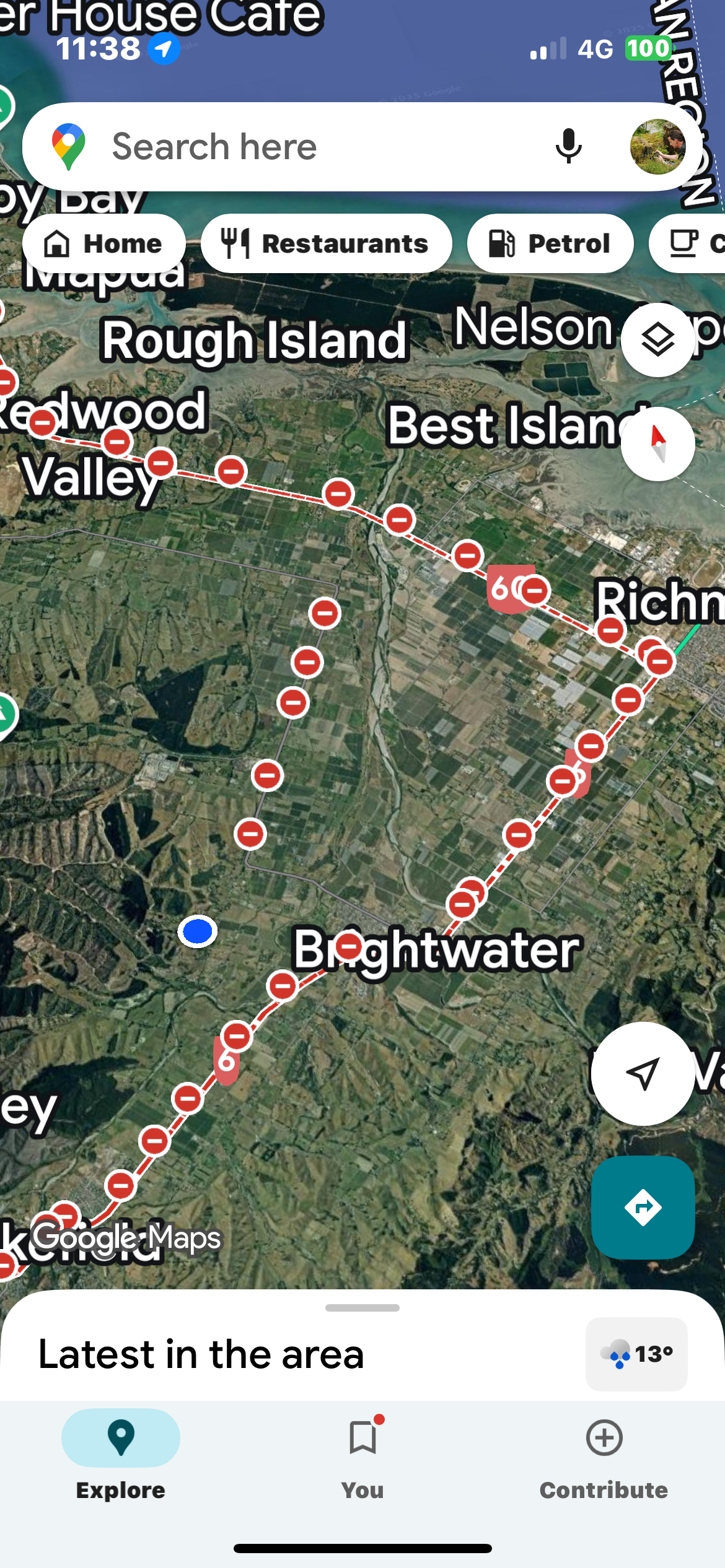
As I mentioned in the post yesterday, we were in for a bit of Weather with several weather warnings overnight. We found a powered site to plug in over night as we had done very few km’s the day before as well as being on the 3nd day with no sun to charge the batteries. This was out the back of a small town called Brightwater (the birth place of Sir Ernest Ruderford - the Guy that split the atom).

We awoke this morning to:

  • the RCD (GFCI) having tripped and not resetting
  • The air vent in the loo/shower leaking
  • All the roads out of the campground and the main roads closed to
    • Brightwater
    • Richmond
    • Motueka

stuff.co.nz/…/pictures-flooding-swamps-nelson-str…

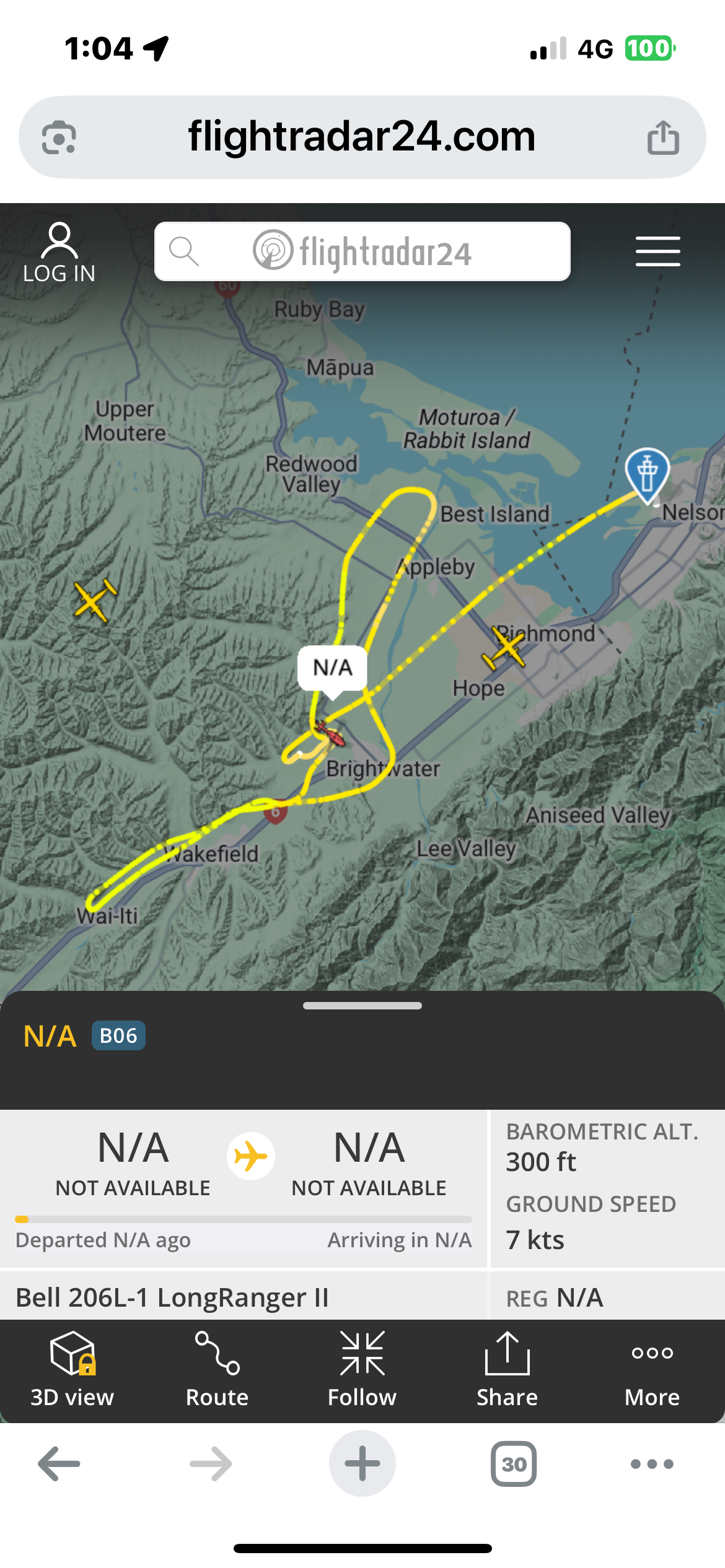
There has been a helo out over the roads/bridges this morning and the fire service turned our host around when she tried to head into town.

I guess we are staying here another night unless the roads open up soon. On a brighter note the hosts here are fantastic and friendly have have helped sort out a replacement power cable. Thanks Larna @ Netherfold.

Here goes, trying to get to Motueka…

I guess not

0

Chapter 6: Across the Water and onwards

preview

The morning started out fantastic again with clear skies and a slow start.

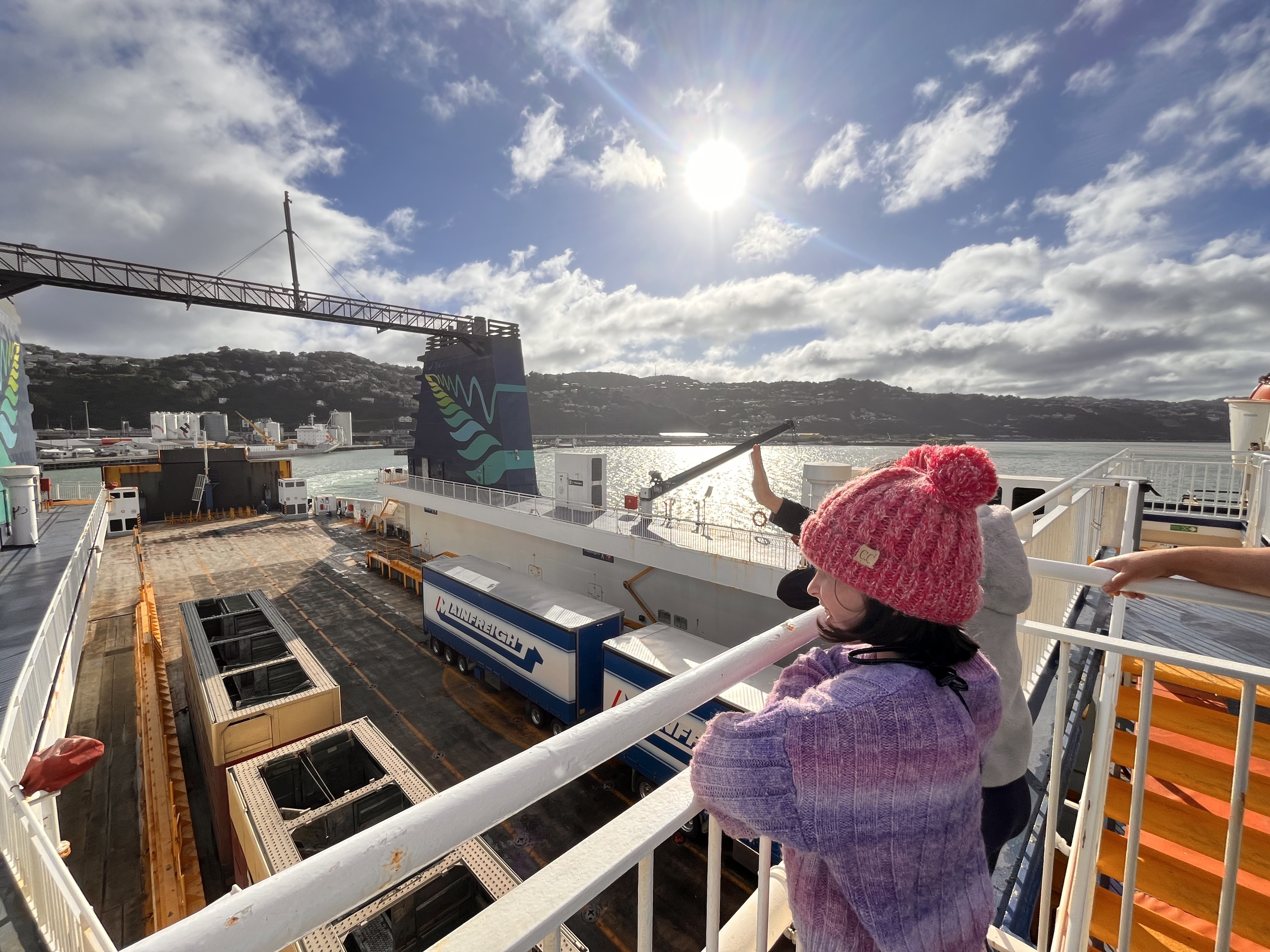
We headed in to Otaki village and stopped at a little second hand store to grab a few more books. Then headed to Wellington for the lunchtime sailing of the Interislander to the South Island. By this time the girls were bouncing off the walls of the camper. We had arrive with plenty of time to kill so had lunch and put a coffee on to brew – I guess that is one great advantage to traveling in a camper, you dont have to pay exorbitant prices for a coffee.

We used some of the time on the ferry to plan a place to camp for the night and found a likely spot just north of Blenheim.

As the crossing takes 3 and 1/2 hours it was late afternoon by the time we hit Picton and headed south to the Wairau River bypass mouth. It wasn’t too late when we arrived so I got out the spinning rod and had a few casts to see if there was anything around - with no luck. At this stage I asked the wife if I could take the kids down to the river mouth with the rod while she cooked dinner. Again no luck and we headed back to a hot meal in the dark.

The next day started off fine with a nice sun rise and a walk down to the river mouth where we chatted to a very talkative local.

It was off to sunny Nelson (via Canvis Town and Parlours - for a wet afternoon.

We decided to spend the rest of the day as well most of the next in Nelson to avoid the severe weather watch for Tasman Park and Motueka.

We took the opportunity of being city bound to shower, empty tanks, fill up on diesel and do some more food shopping. We did take the wet weather break as a chance to have Fish n Chips at the beach.

0

Lower North Island

preview

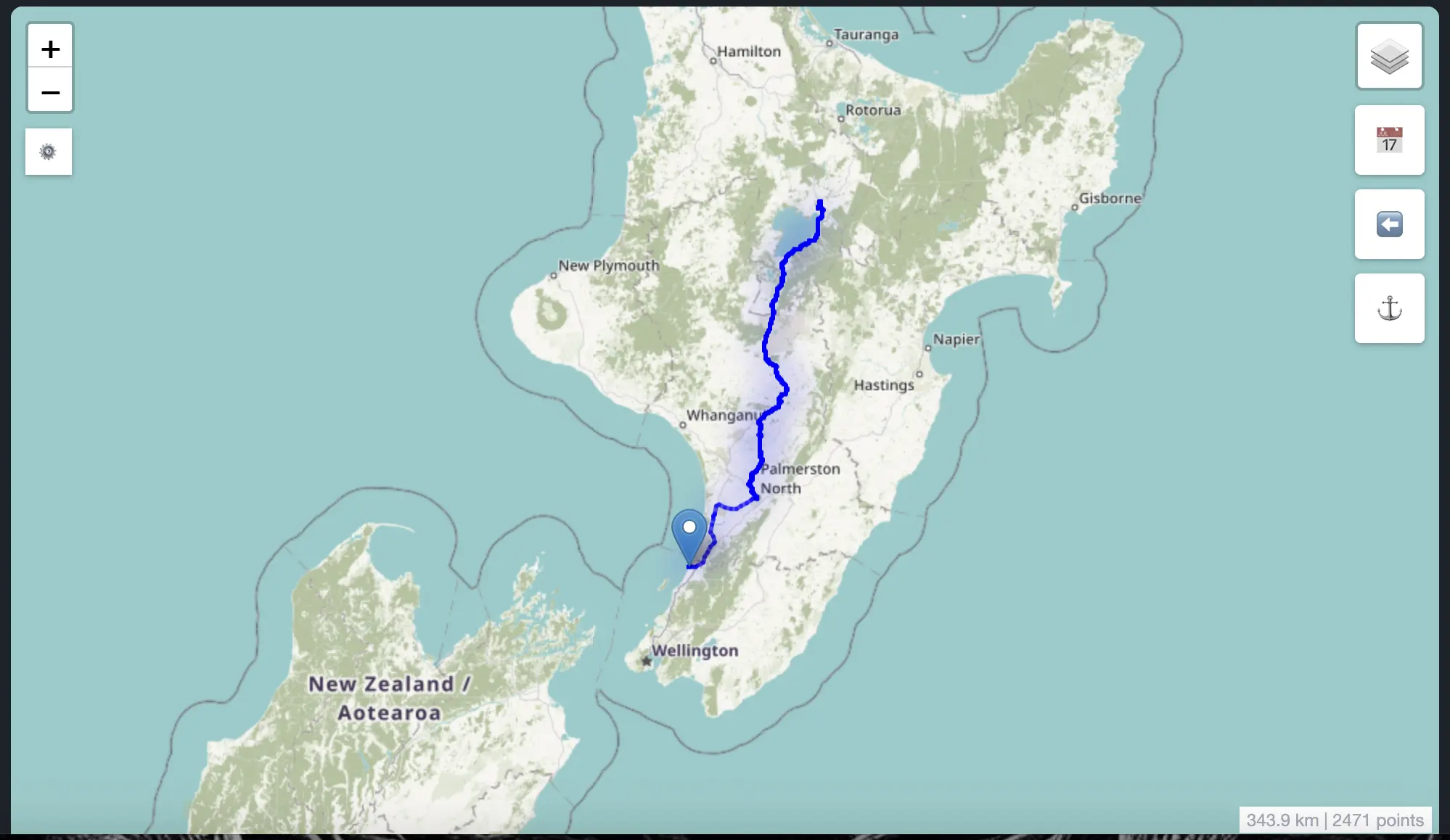
This part of our adventure covers about 2 days.

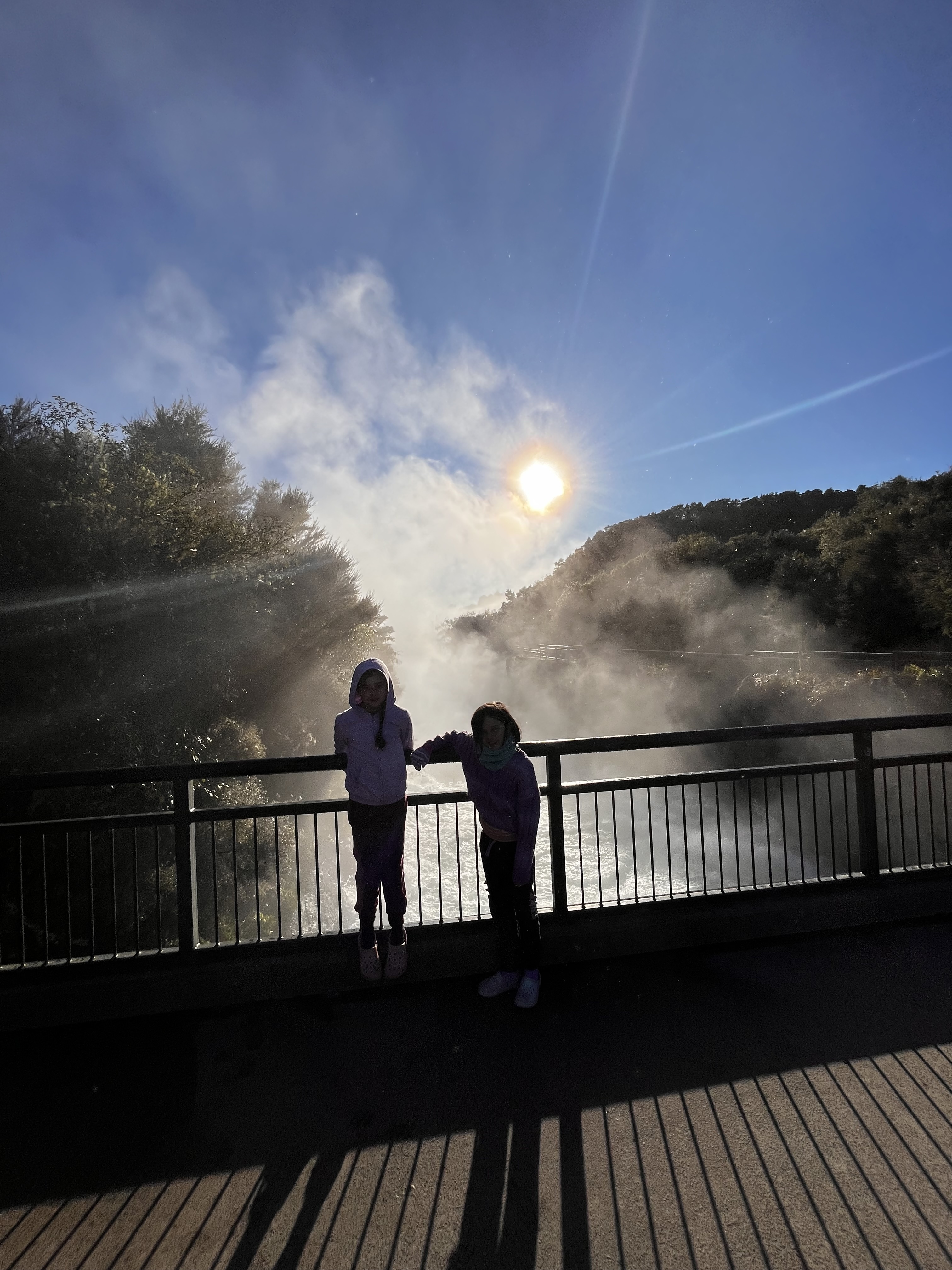
First off was a stop on the Waikato river and Huka Falls

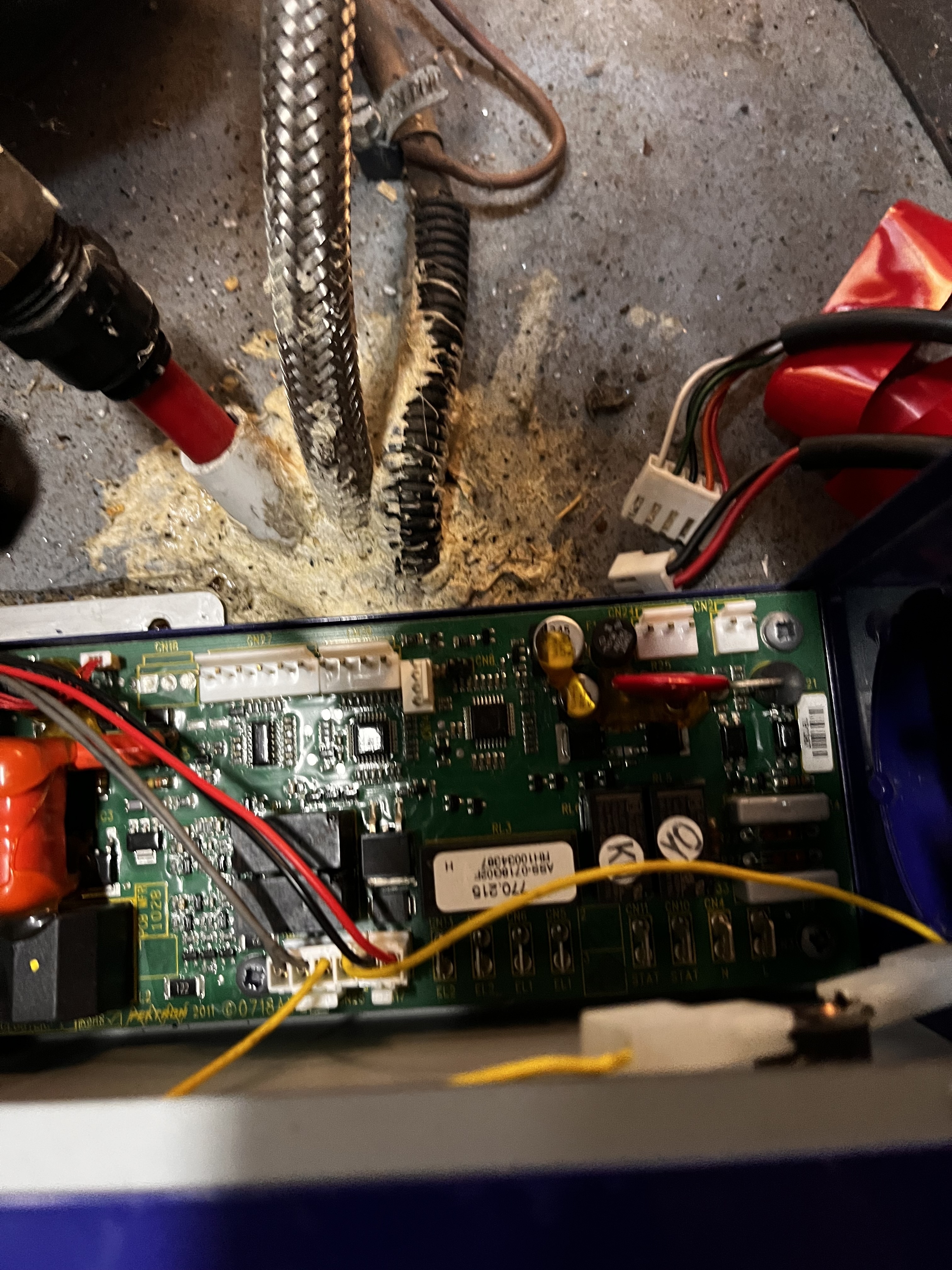
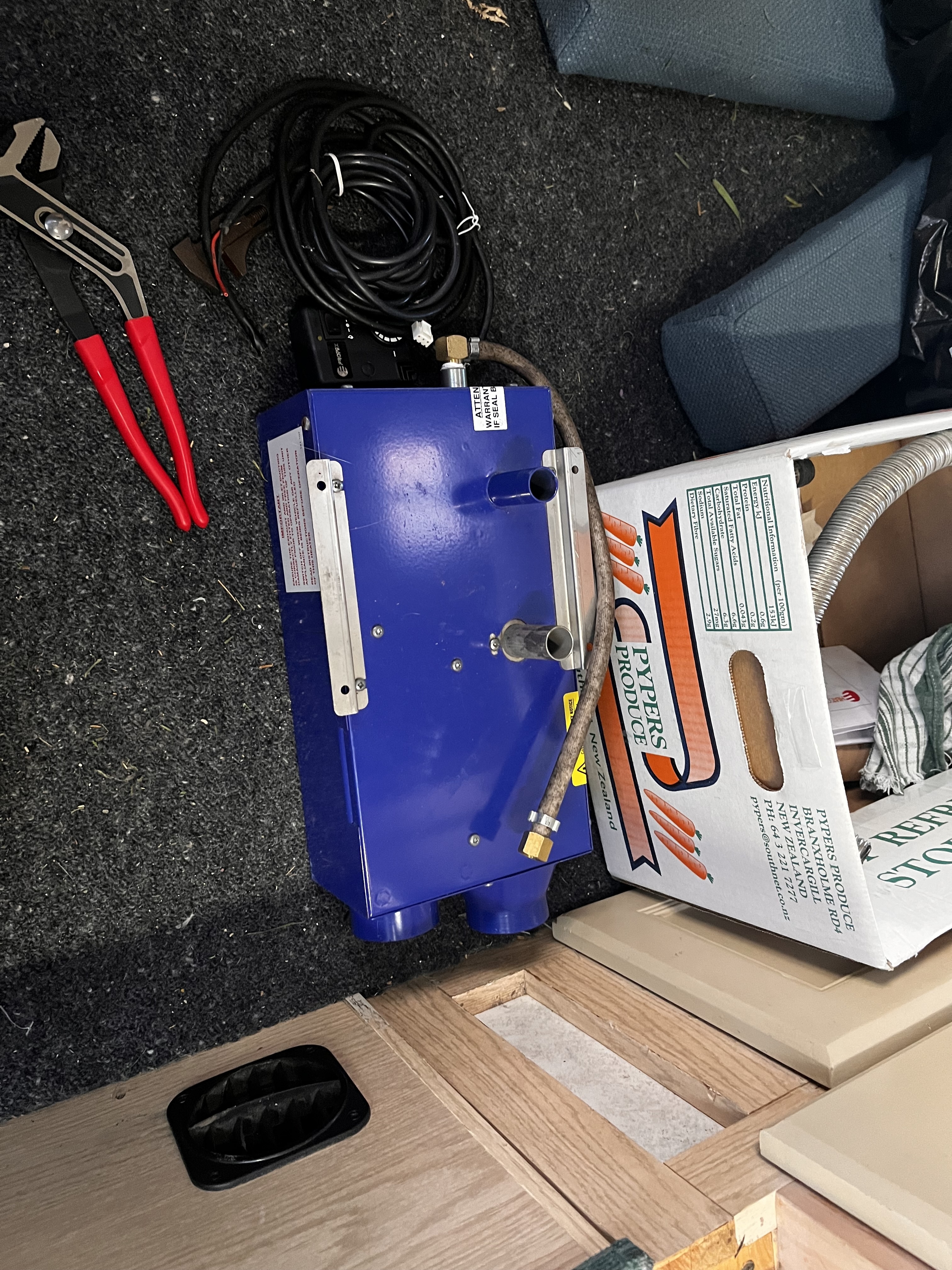
Leaving Huka Falls in Taupo, we head south to Turangi to pick up a replacement LPG gas heater for the van as the old one was faulting, see post "The Next Setback

Once we picked up the new heater the plan was to head to the snow at Tongariro National Park. Unfortunately it looked like the snow was well above the road-end so we bypassed Whakapapa and headed straight down the Desert Rd. It was nice to see the re-built road where it was closed over summer. On route we had clear skies and a fantastic view of the mountains.

After coming off the desert plateau we passed through the interesting area around Flat Hills with it steep pumice cliffs and river gorges.

It was then off to Feilding for an early stop by the river. I took the opportunity to install the replacement heater for the van, although we didn’t need it this night.

The next morning it was finishing off the last couple of things outside of the camper that I didn’t manage to complete with the onset of darkness.

The girls met a road-schooler boy and his family’s young pup, played at the river for a while while we set up breakfast then emptied the grey-water and topped up the fresh.

It was then off to Palmy (Palmerston North) for showers, laundry, lunch and shopping. This seemed to take up most of the day. With what little daylight we had left (remember this is the week of the shortest day) we headed to Otaki beach where the girls enjoyed lighting a fire on the beach and a hot chocolate after dinner.

0

Around Taupo - by LeopardCub

preview

Today’s post is by LeopardCub, our 8y/o Daughter:

Today we saw Huka Falls, a snowy mountain and went to Lake Taupo.we got wet in the lake. We went to the Desert Road and saw the snowy mountains but up close this time. We are sleeping somewhere in Feilding with a river and a really cool playground.

Today’s post is by LeopardCub, our 8y/o Daughter:

Today we saw Huka Falls, a snowy mountain and went to Lake Taupo.we got wet in the lake. We went to the Desert Road and saw the snowy mountains but up close this time. We are sleeping somewhere in Feilding with a river and a really cool playground.

0

Starting Out

preview

It took much longer to pack and get the house ready for our house sitter who is looking after the 7 sheep, new lamb, the chooks (chickens for all you that don’t speak real english) and the two cats… This mean that we didn’t get away at luch time like we had planned but ended up leaving at about 7pm. We had planned on spending the first night of our adventures at my mother’s but as we left so late we stopped about 1/2 way there at a free-camping spot in Matamata.

When we picked up the camper the grey-water was about 1/2 full, so while at this camp I made used of the dump-station there.

We then went hand had birthday lunch for the wife with my mother - a good opportunity to catch up and for the kids to see Nana.

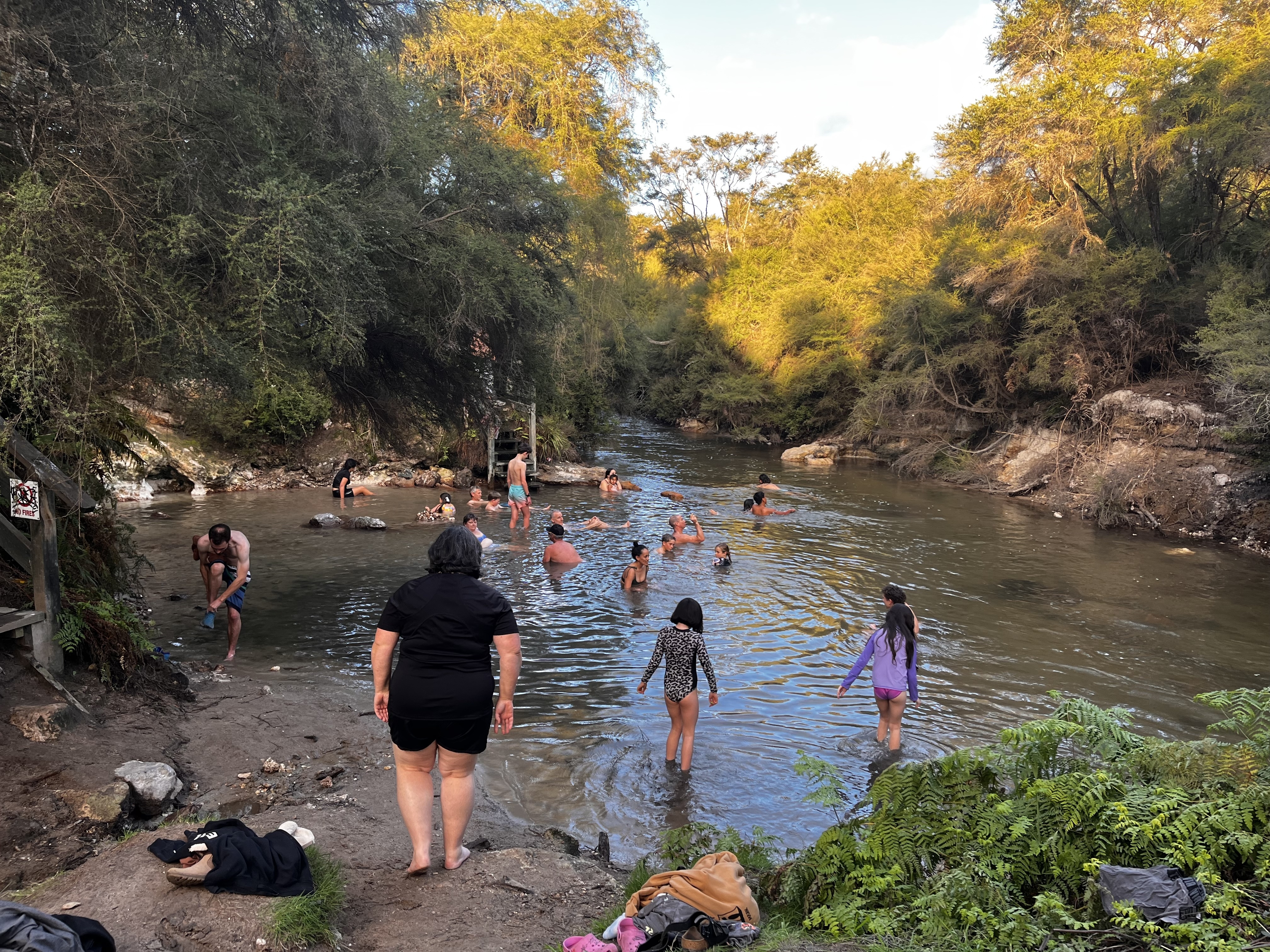
We then headed to our first ‘real’ stop, Hot and Cold creek. This is a natural hot-springs that wells up where two streams meet. A great place to relax and unwind on on the Winter Solstice on Matariki weekend (a New Zealand holiday marking the Māori new year)

It was then a short drive to Taupo to camp at Huka falls

The children have these thoughts: The water was relaxing and they are tired.

0

Our Campervan Blog

preview

Here lies the blog of our campervan adventures

Chapter 1.

Looking for a Camper / Bus

Chapter 2.

Part 1. The first setback

Part 2. The next setback

Chapter 3.

Pick up and Packing

Chapter 4.

Starting Out

Chapter 5.

Down the North Island

Part 1. Around Taupo - by LeopardCub

Part2. Taupo to Kapiti Coast

Chapter 6.

Top of the South

Part 1. Across the Water and onwards

Part 2. Around Sunny Nelson

Around Sunny Nelson

Chapter 7.

Down the East Coast

Chapter 8.

The (Cardboard) Cathedral City

0

Pick up and Packing

preview

Well, I guess that we are now the proud owner of a Sprinter Campervan.

After the last owners got the gas hotwater fixed we managed to pick up the van on Tuesday afternoon.

So began the process of making it ours:

  • Move a few things around,
  • Installing another 250Ah of house batteries
  • Cut up some clean matting for the storage areas
  • Test the LPG heater’s faults, and find a new one
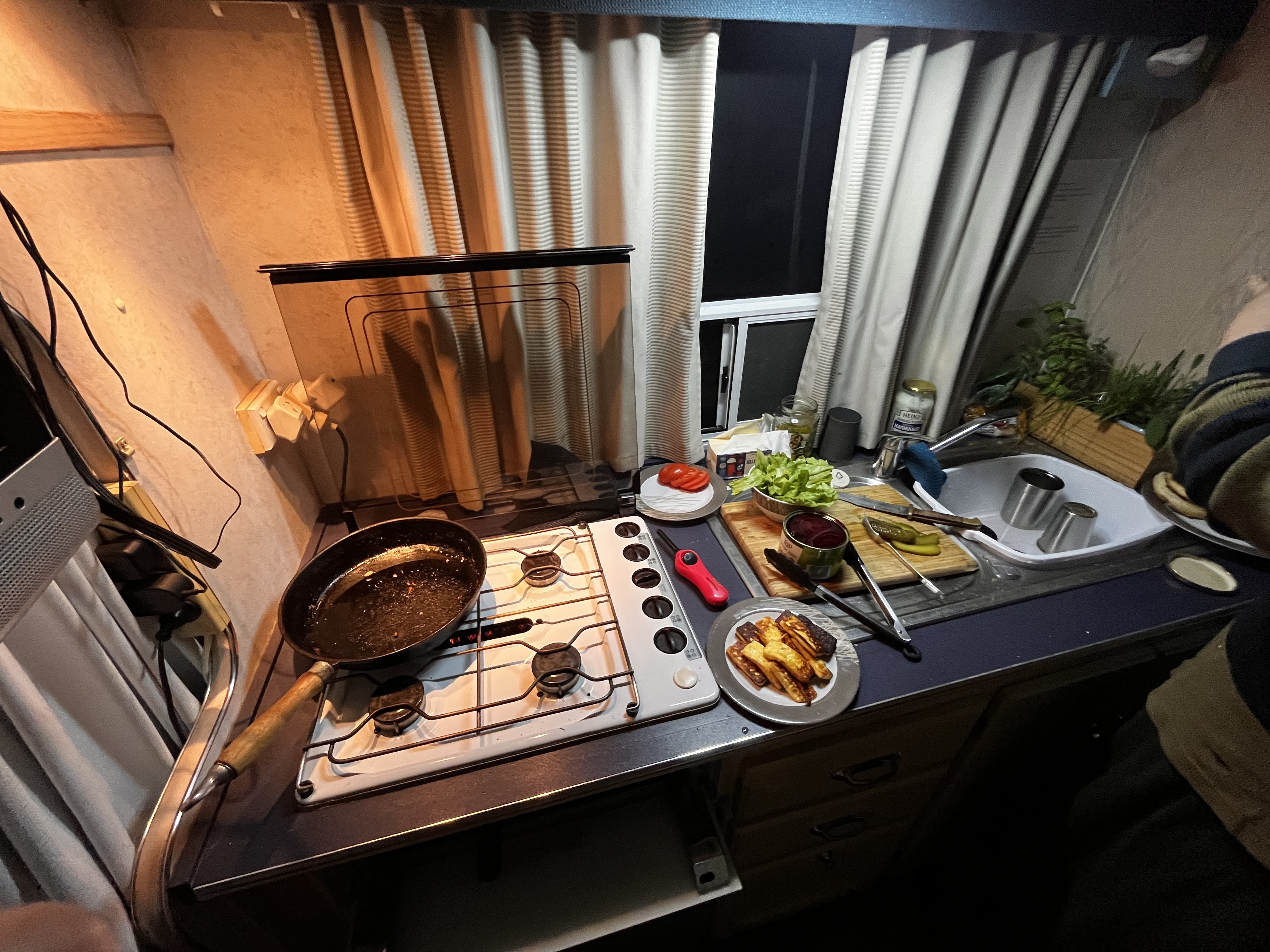
  • Pack the kitchen, and head to some friends and have our first dinner in the old girl
  • Spend 2 days cleaning and packing so we can leave for our adventure on the wife’s birthday

0

The next setback

preview

When we looked at the camper we were told that they had never used the LPG heater, but they did know that it didn’t turn on.

Well I got to looking at fault finding and the error code id “see your service centre”. So much for a possible easy fix.

It does look like Ive found a replacement unit for it (on our way as we head south), although it will mean a running repair on the road while traveling.

0

The first setback

preview

We were hoping to pick up the camper on Friday, after the gas hot water had been fixed. The seller went to fire it up the morning we looked at the van but it wouldn’t stay alight. After getting the gas fitter out during the week it now needs parts that hopefully will be fitted on Monday.

This has slowed down the planning and departure a tad, but oh well.

0

Looking for a Camper / Bus

preview

Finding Our Home on Wheels:

Choosing the Right Camper for Our NZ Family Adventure

For a while now, we’ve been dreaming of hitting the road for an extended road trip around Aotearoa, New Zealand — just the four of us: two adults, two kids, and hopefully a home on wheels. After a lot of thought (and even more scrolling through trademe listings), we finally set out on the hunt for the perfect camper or bus that would suit our family’s needs, offer a bit of adventure, and keep things as comfortable and simple as possible.

First Up: The 10-Meter Bus

Our search began with big ideas — quite literally. We looked at a 10-meter bus that had plenty of potential to be converted into a spacious and functional living space. It would’ve offered room to move, plenty of storage, and space for everyone to have their own little nook.

Unfortunately, reality kicked in pretty quickly. While it was an exciting idea, the bus just needed too much work to bring it up to a livable standard. We’re not afraid of a bit of DIY, but this was going to be a major project — and with kids in tow, we wanted something a bit more turn-key.

There was also the issue of driving it. It would’ve meant my wife needing to get her heavy traffic license just to take it on the road, which added another layer of cost and complication. So, as much as we liked the space, we had to let the big bus go.

Then Came the Ford Trader

Next, we checked out an early 90s Ford Trader that had been converted into a camper. On paper, it was a good match. It had more seats — great for our two kids — and a larger kitchen setup that would have made mealtimes on the road much easier.

But again, a few red flags popped up. The price didn’t quite match its age or condition, and while it had a solar setup, it wasn’t quite what we needed. There was no inverter and some of the wiring looked like it would need upgrading before we could rely on it. The Trader had the right bones, but it felt like we’d be stepping into another “fixer-upper,” and we weren’t ready for that.

Third Time Lucky: The Mercedes Sprinter

Finally, we came across a Mercedes Sprinter camper that ticked all the boxes.

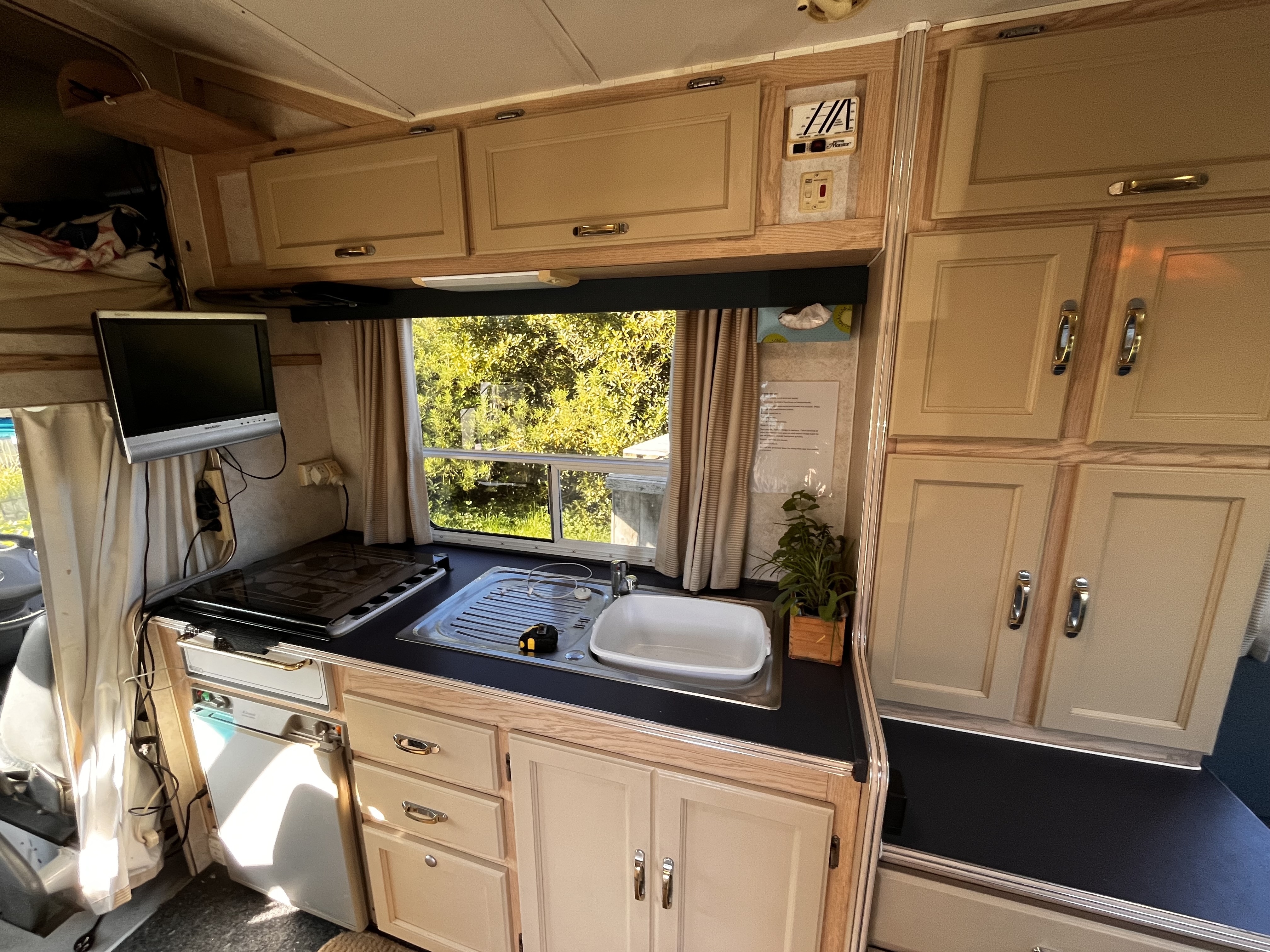
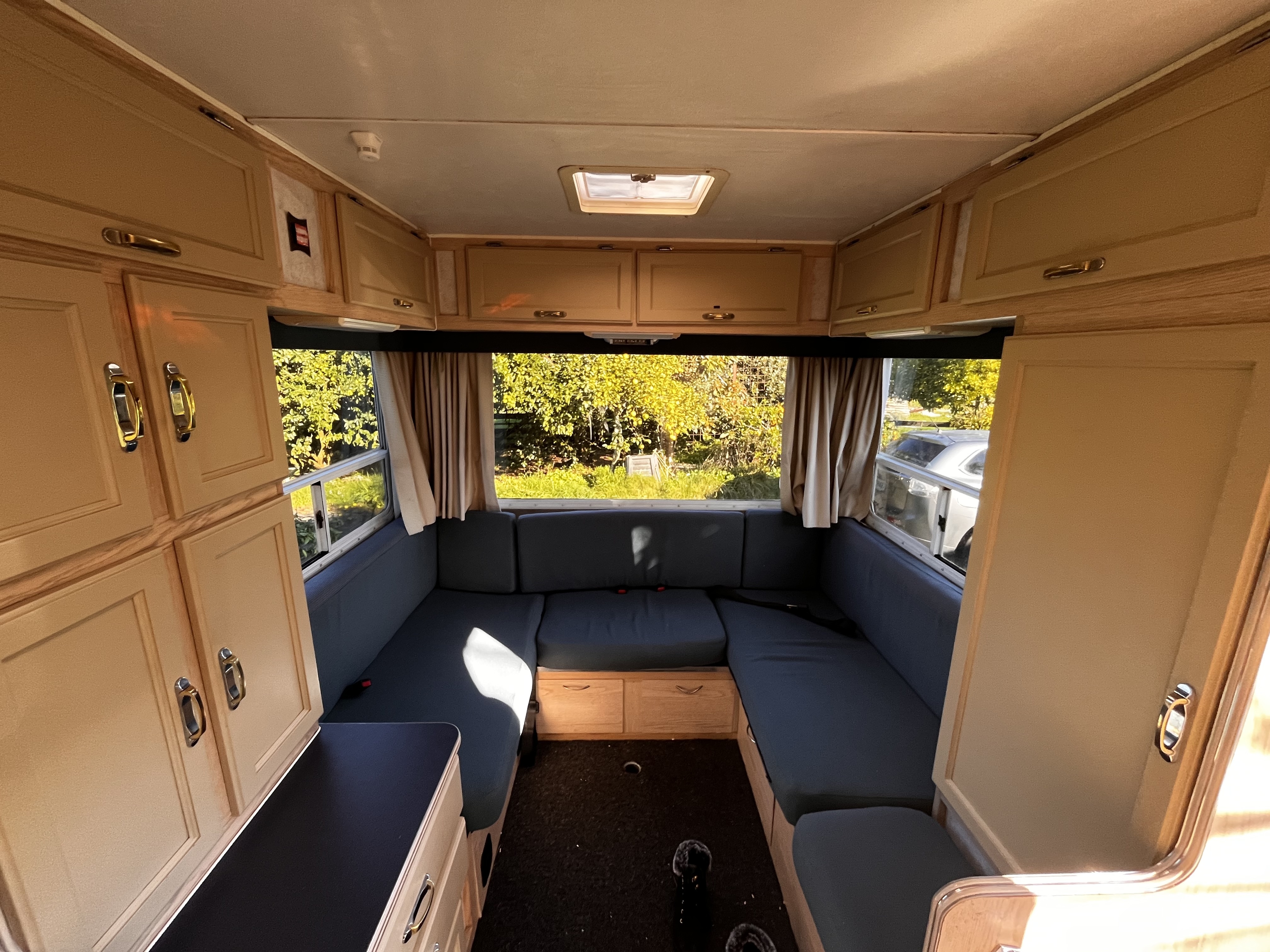
It’s already been professionally fitted out, with the kind of attention to detail we were hoping for — a good layout, working electrics, solar power, and all the essentials ready to go. It might be smaller than a full-size bus, but it’s more than enough for our family, and crucially, it doesn’t need any major upgrades before we can hit the road.

Best of all, it was within our budget. No compromises on safety, functionality, or comfort — just a solid, tidy van that’s ready for our adventures.

What’s Next?

With the camper now ours (subject to pickup), the excitement is really starting to kick in. There’s a bit of organizing to do before we set off — packing, planning, and figuring out how to live with four people in a van — but the big decision is made. We’re looking forward to exploring the country slowly, soaking in the scenery, and showing the kids the beauty of life on the road.

Here’s to our next chapter: the open road, starry skies, and plenty of memories waiting to be made.