0

War breaks out in Ethiopia

preview

On Sunday 20/09 Seven Ethiopian armed groups have formed an alliance aimed at overthrowing the government of Prime Minister Abiy Ahmed.

These forces launched and offensive against the government short after:

On Sunday 20/09 Seven Ethiopian armed groups have formed an alliance aimed at overthrowing the government of Prime Minister Abiy Ahmed.

These forces launched and offensive against the government short after:
0

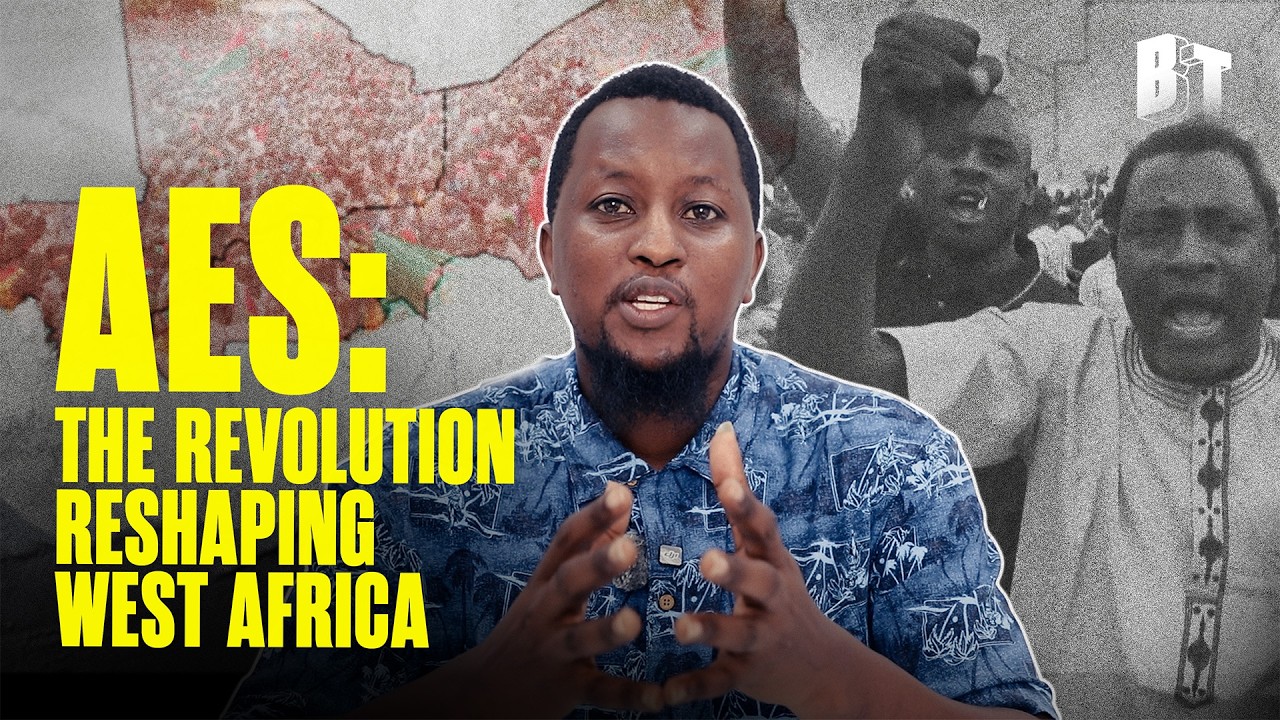
AES: The Alliance of Sahel States – Beyond the Coups [BreakThrough News][Youtube]

play · youtube.com
YouTube AES: The Alliance of Sahel States – Beyond the Coups www.youtube.com
preview

Three years ago, Mali, Niger, and Burkina Faso broke with the old regional order and formed the Alliance of Sahel States (AES). Since then, mainstream coverage has largely portrayed their governments through the language of military juntas, coups, and instability. But on the ground, a much bigger political transformation is underway.

BT’s Nairobi correspondent Nicholas Mwangi explains how the AES emerged, why its governments broke with France and the old regional order, and the changes now underway in security, agriculture, infrastructure, and control over natural resources, despite the enormous historical, security, and geopolitical challenges facing the region.

This video also features firsthand accounts from people across the AES countries, captured by our colleagues at Brasil de Fato in their documentary, Sahel: Homeland or Death.

0

Minerals diplomacy is Australia’s opening in Africa

The Lowy Institute Minerals diplomacy is Australia’s opening in Africa www.lowyinstitute.org
preview

cross-posted from: mander.xyz/post/58180120

…

Resource equity could become the core of Australia’s pitch. African states are demanding more than investment: beneficiation, refining, skills transfer, infrastructure, local procurement, transparent contracts, environmental protection and a fairer share of the value created from their own resources. The African Union’s industrialisation value reflects a broader political shift. Resource-rich states want to move from being suppliers of inputs to owners of strategic supply chains.

…

Australia is well placed to support this shift and should avoid appearing as another external rule-maker. China brings capital, infrastructure, market access and scale. Gulf investors bring liquidity and speed. Western partners bring finance and standards.

Australia’s distinctive offer is different. It combines mining, listed-company discipline, environmental regulation, mine safety practice, geological knowledge, experience in infrastructure and transport, mining technology and experience with land rights and community consent. These are practical tools African governments can use to negotiate better projects and retain more value.

…

A small Australia-Africa mineral diplomacy platform could give this agenda institutional form. It could bring together government, industry, universities, regulators and African partners to identify pilots, share technical knowledge and align engagement with African development priorities.

…

Web Archive link

0

Domestic processing and raw mineral export bans reshape African mining industries

Mining.com.au Domestic processing and raw mineral export bans reshape African mining industries mining.com.au
preview

Kenya has just become the latest African nation to clamp down on raw mineral exports, with President William Ruto declaring that the country will no longer ship unprocessed minerals abroad.

Ruto has announced a set of measures that will ensure all minerals extracted in the country are processed locally before being exported. The move seeks to expand the country’s value from its mineral resources, strengthen domestic processing industries, create more jobs, and grow the country’s economic ambitions.

Ruto notes that the government will work with investors to establish the necessary processing facilities, with immediate plans for gold refineries and an oil refinery and petrochemical complex.

The ban follows Kenya’s suspension of all mining operations by Tata Chemicals Magadi (TCML) on 28 July 2026, with authorities ordering the company to leave after ruling its activities had delivered insufficient benefits to the country.

…

Ghana’s Gold Board has prohibited the export of unrefined gold doré, while Guinea has announced a raw gold export ban requiring domestic refining to 99.5% purity. The Democratic Republic of Congo (DRC) has renewed its cobalt export ban, and Zimbabwe is preparing legislation to halt lithium concentrate exports from January 2027.

These bans are a key way that Africa can grow its influence within the global metals and minerals economies, as countries shift from being raw material exporters to value creators. As previously reported, Africa stands at a crossroads of economic growth and opportunity, with downstream value-add a key focus in driving this growth.

…

A World Economic Forum (WEF) report from late 2025 stated that Africa — and the Southern African Development Community (SADC), in particular — stands to benefit significantly from the rising global demand for critical minerals, with the continent’s rich mineral wealth providing key opportunities.

“Through value-added processing and regional collaboration, Southern Africa can capture greater economic value and build resilience across mineral value chains,” the WEF report states.

The report also notes that in order to unlock that potential, coordinated action across the entire mining value chain is required. Local processing bans have emerged as a critical lever to ensure Africa captures more value from its mineral wealth.

…

Web Archive link

0

Vietnam seizes 1.2 tons of ivory, plus big cat bones, hidden in timber shipment from the Republic of Congo

Conservation news Vietnam seizes 1.2 tons of ivory, plus big cat bones, hidden in timber shipment news.mongabay.com
preview

cross-posted from: mander.xyz/post/57941213

…

The shipment contained 165 wooden crates declared as African sawn timber, which arrived in July under the name of the Thanh Cong Trading Services and Translation Joint Stock Company, according to Gia Lai provincial police.

Investigators used specialized scanning equipment to discover hidden compartments inside 12 timber crates that were hollowed out, local media reported. Traffickers had packed the ivory and bones in wax in those compartments and sealed them with wood to make the packages appear ordinary and bypass inspections.

The Vietnam Academy of Science and Technology subsequently tested the ivory and bones and confirmed they came respectively from elephants and big cats.

…

Chris Shepherd, who campaigns against wildlife trafficking with the U.S.-based Center for Biological Diversity, noted that a shipment from Africa that includes big cat parts reflects a changing landscape as local species disappear. “As Southeast Asian cats, such as tigers and leopards, dwindle, cat parts are sought elsewhere,” he said.

…

Mongabay reported earlier this year that since the mid-2000s, China and Vietnam have emerged as global hotspots for the illegal wildlife trade, with Africa being the prominent source of the contraband.

…

Web Archive link

0

Leaked Files Reveal Uganda’s Secret Drone Deals with Israel

Leaked Files Reveal Uganda’s Secret Drone Deals with Israel www.dropsitenews.com
preview

cross-posted from: lemmy.ml/post/52205810

Uganda’s parliament last month authorized an unprecedented deployment of Ugandan soldiers to Gaza as part of an international force proposed by President Donald Trump’s Board of Peace.

“The President of the Republic of Uganda is ready to deploy in the Gaza Strip,” Defense Minister Kiryowa Kiwanuka told lawmakers in a parliamentary debate about the deployment, saying a formal status-of-forces agreement would be negotiated after parliamentary approval. The vote on the measure came after Israel said that troops from “friendly countries” could participate in the mission.

The Ugandan government has so far offered no clear public explanation for why it volunteered for the mission, what role its soldiers would play, or what Kampala expects in return. The proposal has raised questions from members of the country’s parliament, including opposition lawmaker Hassan Kirumira, who asked during the debate, “On which side is our army going to fight?’”

The decision to send Ugandan troops did not emerge in a vacuum, but comes amid a rapidly expanding security relationship between Tel Aviv and Kampala that included the 2022 signing of a formal defense-cooperation agreement between the two countries.

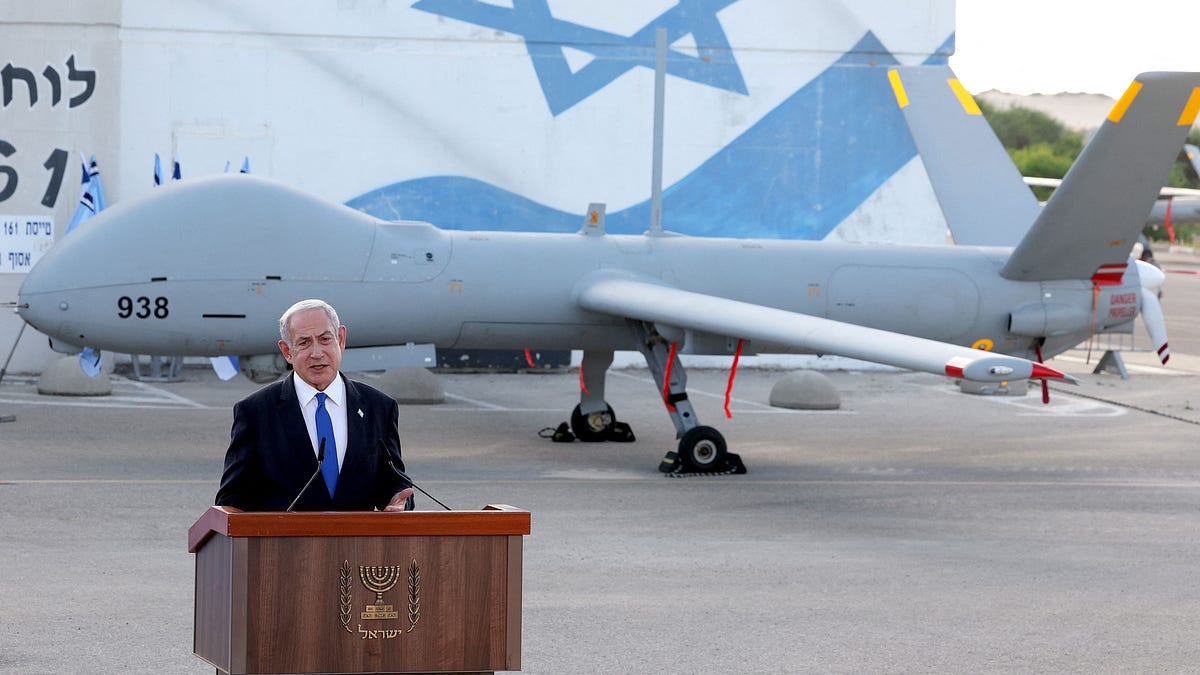
Internal documents reviewed by Drop Site News reveal for the first time the details of a years-long program by Israeli weapons manufacturer Elbit Systems, the country’s largest weapons maker, to equip the Ugandan military with an expanding fleet of Hermes surveillance drones, as well as a suite of advanced surveillance systems intended for use by Uganda’s Military Intelligence and elite Special Forces Command (SFC)—a branch of the country’s security establishment tied to the family of President Yoweri Museveni, and his son Muhoozi Kainerugaba.

0

Inside the 24-hour mutiny that threatened Niger’s ruling junta and how Russian forces intervened

preview

Niger’s capital of Niamey on Sunday appeared calm with normalcy restored after a day of unrest as aggrieved soldiers staged a mutiny that threatened the ruling military junta before being repelled by loyalist forces aided by Russian troops.

In what was seen as a major threat to the junta in power since a 2023 coup, the soldiers engaged loyalist forces in sustained gunfire overnight from Friday till late Saturday. Most of the clashes took place at Niamey’s main airport that houses the military air base and in a district where the presidential palace is located.

The unrest culminated in the arrest or killing of dozens of soldiers, some of whom were paraded in front of the cameras live on state television. The fate of the mutineers was not immediately clear and authorities did not disclose any charges against them.

On Sunday, military trucks and check points were seen across the city, particularly along major roads between the airport and the presidential district. Junta leader Abdourahamane Tchiani was yet to make any public comments or appearance.

Other sources:

0

Chinese-Eswatini relations: China advises its citizens to leave Taiwan ally over 'security risks'

Chinese-Eswatini relations: China advises its citizens to leave Taiwan ally over security risks www.bbc.com
preview

China’s foreign ministry has told its citizens to leave the southern African kingdom of Eswatini over “security risks”.

The ministry cited “rampant cyber fraud and criminal activities associated with gambling” as among its security concerns, but did not give details.

It suggested its citizens relocate as soon as possible to “relatively safer” countries such as neighbouring South Africa.

Eswatini is one of 12 countries, and the only one in Africa, that has diplomatic relations with Taiwan, which China claims as part of its territory.

On Tuesday, the privately owned Times of Eswatini news site reported that 40 Chinese nationals have been in detention since last month after being arrested while trying to leave the country.

They were first arrested - along with dozens of other foreign nationals - in March during raids on alleged illegal online gambling centres in the main city, Mbabane, and surrounding areas, the news site reported.

…

The group’s lawyers had written to the attorney general and home affairs ministry, stating that they had pleaded guilty to immigration-related offences and had paid fines imposed by the courts, the news site reported.

The 40 were then released on the orders of the High Court, and their re-arrest was unlawful, the lawyers were quoted as saying.

…

It is unclear how many Chinese citizens work or live in Eswatini.

China has for years pressured countries to end diplomatic relations with Taiwan.

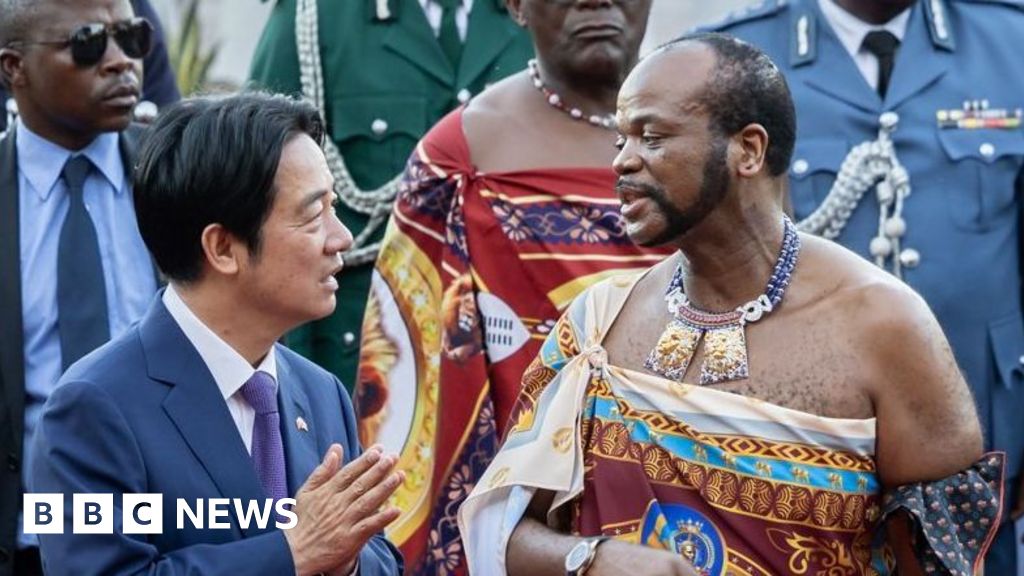
In April, Taiwan accused Beijing of trying to derail its President Lai Ching-te’s travel to Eswatini by pressuring nearby countries to revoke overflight permits.

…

Earlier this year, China scrapped tariffs for all African countries, except Eswatini.

…

Web Archive link

0

Ghana Crackdown on Illegal Gold Mining Puts Focus on China

Africa Defense Forum Ghana Crackdown on Illegal Gold Mining Puts Focus on China - Africa Defense Forum adf-magazine.com
preview

Ghanaian authorities are promising to punish Chinese nationals involved in illegal gold mining as the government tries to reduce the environmental and societal damage being caused by the small-scale mining known as galamsey.

“The laws of Ghana will deal ruthlessly with Chinese nationals engaged in illegal mining,” Dr. Hannah Louisa Bissiw-Kotei, administrator for Ghana’s Mineral Development Fund, said during a recent media briefing.

Meanwhile, Chinese authorities have attempted to deflect blame from Chinese nationals goldmining in the country, saying the Ghanaian government and its people are the ones behind illegal gold mining and the damage it causes.

…

Observers say that many of the Chinese nationals caught at galamsey sites are poorly educated people from rural parts of China, suggesting that there is an organized system to recruit them and bring them to Ghana. From 2008 to 2013, over 50,000 Chinese nationals entered the country to mine gold illegally.

The ongoing crackdown on galamsey has netted dozens of Chinese nationals in recent months.

…

In June, four Chinese men were arrested and led in handcuffs from a mining site in Atatam, a community in the Ashanti region, according a video published by GhanaWeb.

An earlier galamsey raid in Bui Sobinso ended with 14 Chinese nationals arrested.

…

Galamsey has a long history in Ghana but has grown into a crisis with the arrival of tens of thousands Chinese nationals and the increase in gold prices to more than $3,300 per ounce ($107 per gram). In the Ashanti region, galamsey mining is poisoning water sources with mercury, stripping forests and eroding the soil.

…

Illegal Mining in Ghana destroys over 100 acres of Eastern Region farmland, a report says.

… The rapid expansion of unregulated mining continues to strip vital agricultural land, severely compromising local food production and degrading critical ecosystems across regional farming communities …

In response to environmental exploitation and wildlife protection challenges, conservation enforcement faces heightened risks, underscored by the recent fatal shooting of a Ghanaian forestry officer by poachers. As environmental damage threatens community livelihoods across Ghana, policy discussions are simultaneously highlighting the need for strategic resource governance—such as shifting toward coordinated regional value chains for critical green energy transition minerals like lithium, and prioritizing sustainable developmental investments.

…

However, the galamsey threat goes beyond Ghana’s borders, according to a research by award-winning journalist and documentary filmmaker Edem Srem.

“[Galamsey] supports a sprawling illicit economy involving hundreds of thousands of miners, transnational financiers, foreign operators, gold smugglers, equipment suppliers, and criminal intermediaries,” Srem wrote in a July 21 report for the Africa Center for Strategic Studies about his native Ghana …

As the continent’s leading gold producer, Ghana has experienced a large expansion of artisanal and small-scale gold mining. With $11 billion in foreign exchange earnings in 2025, small-scale mining eclipsed for the first time the country’s industrial gold mining output of $9 billion …

…

Web Archive link

0

A ‘leading’ Chinese miner of Mozambique’s heavy sands linked to environmental destruction

Conservation news A ‘leading’ Chinese miner of Mozambique’s heavy sands linked to environmental destruction news.mongabay.com
preview
  • Rapid loss of mangroves in Mozambique’s Zambezia Province is linked to the activities of Mozambique Heavy Sand Company VIII, which is part-owned by an influential Chinese mining group, Mongabay has found.
  • The mangrove loss occurred inside a site considered “one of the most diverse and productive river delta systems in the world.”
  • Satellite imagery suggests it was caused by what appears to be a blocked waterway where sand mining activities took place between 2022 and 2026.
  • Increasingly, environmentalists are raising the alarm about the environmental impacts of heavy minerals prospecting and mining in vast sections along Mozambique’s coast.

…

A sand mining operation along the coast of central Mozambique’s Zambezia Province decimated hundreds of hectares of mangroves in just a few years, a Mongabay investigation has found.

The area is under the control of Mozambique Heavy Sand Company VIII, part-owned by the Jinan Yuxiao Group, an influential Chinese mining group claiming to hold more than 500,000 hectares (1.24 million acres) of land in mining concessions in Mozambique. That’s an area larger in size than 700,000 soccer fields. These concessions mostly target heavy mineral sands that primarily yield titanium ores that are used in the production of everything from paints to plastics and sunscreen.

Environmental activists are raising the alarm about the risks from heavy minerals mining along Mozambique’s coast and local media has documented the growing threat from it. “All of our coastal zones have these heavy mineral sands projects,” Fatima Mimbire, an advocate for transparency in Mozambique’s mining sector, told Mongabay, adding that. most mineral sand mining companies in Mozambique were Chinese. “These companies are destroying without concern for the environment, without concern for the people.”

…

Web Archive link

0

A mine polluted a Zambian river in 2025: Residents continue to live with the impacts

Conservation news A mine polluted a Zambian river in 2025: Residents continue to live with the impacts news.mongabay.com
preview
  • A recent study on the ecological impacts of a tailings dam failure in Zambia’s Copperbelt Province in 2025 finds that highly toxic substances such as arsenic, lead and zinc were released into the Kafue River system.
  • As a result of the spill at Chinese copper company Sino-Metals Leach Zambia’s mine, millions of liters of acidic mining waste were released into waterways connected to the river.
  • The assessment links the incident to the death of wildlife and the contamination of soils and water sources in the region.
  • Sino-Metals Leach Zambia says it has initiated cleanup measures, but communities still reside on contaminated land, according to civil society organizations.

…

The dam, which is used to store mining waste and is owned by Chinese copper company Sino-Metals Leach Zambia, failed on Feb. 18, 2025, in the town of Chambishi in north-central Zambia. It released millions of liters of acidic mining waste into waterways connected to the Kafue River. Stretching 1,576 kilometers (979 miles), the Kafue is the longest river lying entirely within Zambia and a lifeline for millions of people in the country.

…

Waste materials stored in tailings dams, such as the one owned by Sino-Metals, can contain metals such as zinc, lead, chromium, cadmium and arsenic. Rather than breaking down over time, many of these materials bind to sediments or accumulate in living organisms where they can persist. Global experience shows that communities dependent on a polluted water source for drinking water, fishing, livestock and agriculture could be exposed to health risks for years.

…

Zambia is Africa’s second and the world’s ninth-largest producer of copper. Its vast mineral resources have attracted the attention of several industrialized nations looking to access minerals critical to their energy and economic security. In response to the rising demand for these metals, Zambia is aiming to more than triple its copper production by 2031.

…

Kalusale, a village immediately adjacent to the Sino-Metals mine, has been heavily impacted by the spill. According to nonprofit FIAN Zambia, residents in Kalusale continue to live on contaminated land while toxins in the water sources and farmland have undermined their livelihoods. Some families have left their homes and are renting accommodation elsewhere, Vladimir Chilinya, FIAN Zambia’s country coordinator, told Mongabay.

In April this year, a FIAN team attended a meeting with community members in Chambishi, upstream from Kalusale.

“People continued cultivating the crops on land that is contaminated with acid, which is a risk to their health as well as to the health of people who will consume them,” Chilinya said.

The Copperbelt University study notes that some people were reported to have consumed water, vegetables or fish contaminated in the incident. “Thus, the mining spillage did not only impact on the aquatic ecosystem and the life in it, but potentially devastated the very wellbeing fabric of riparian [riverbank] communities,” the authors write.

…

Web Archive link

0

Investigation raises alarm over uranium in Congo cobalt shipments to China

Lighthouse Reports Congo’s Hidden Uranium Exports www.lighthousereports.com
preview

cross-posted from: mander.xyz/post/56483957

  • A new investigation traces the possible export of uranium from the Democratic Republic of the Congo (DRC) back to a confidential International Atomic Energy.

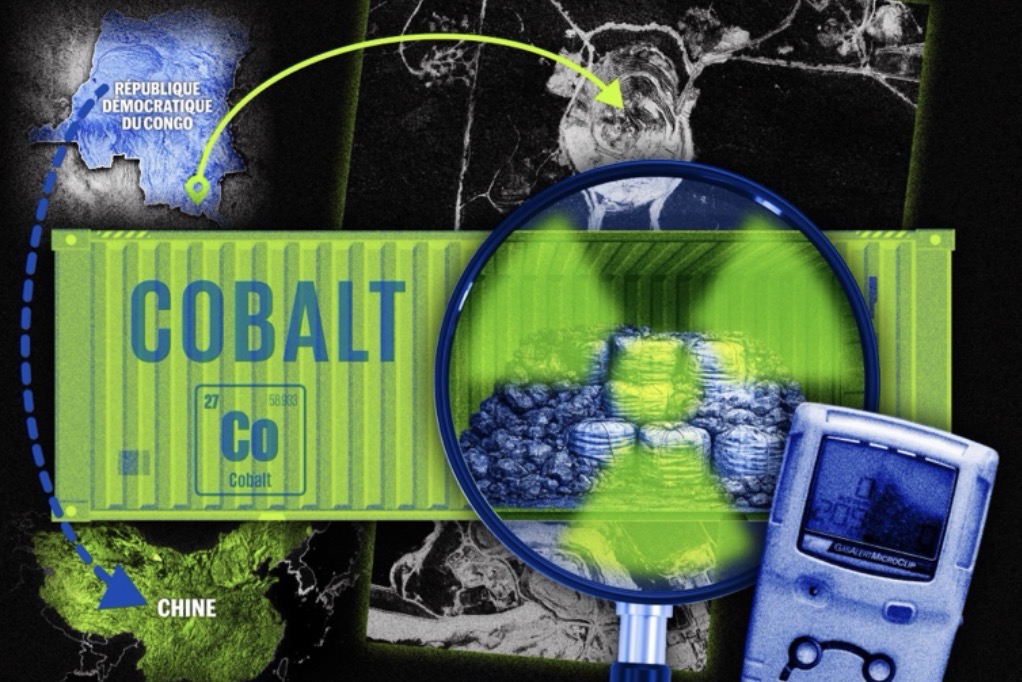
  • A paper published in Nature Communications (opens pdf), estimated that between 2,000 and 5,000 tonnes of uranium were exported from the DRC to China in cobalt hydroxide shipments between 2000 and 2024.

  • Faced with the evidence gathered in the investigation, officials in the DRC said that uranium contamination of cobalt ores was a real concern, both from the perspective of the health of miners and those living near the mines, and for the safeguarding of nuclear materials.

  • If the situation described in the IAEA memo had continued unabated, uranium extracted from Congolese cobalt ore could be strategically significant to China. In the past decade, China’s nuclear weapons stockpile has doubled to around 600 warheads and is expected to reach 1,000 warheads by 2030, according to estimates from the Pentagon.

  • China’s known imports and domestic production of uranium do not come close to accounting for the scale of this expansion. China’s Ministry of Defence has previously objected to US reports on the size of its nuclear arsenal and accusation of a non-transparent buildup.

  • Mining professionals say uranium, copper and cobalt frequently occur together in the Congolese and Zambian Copperbelt. The most extensively documented site was Tenke Fungurume Mining (TFM), one of the DRC’s largest cobalt producers.

  • The mine was owned by US company Freeport-McMoRan until it was acquired by Chinese group CMOC in 2016. Internal company documents reviewed by the investigators recorded uranium-rich cobalt samples, including a peak concentration of 1,100 parts per million in December 2016 – around 15 times the export limit cited by the investigation.

…

Lighthouse’s reporting on hidden exports of uranium from the DRC [Democratic Republic of the Congo] began with a leaked memo from the International Atomic Energy Agency [IAEA] … obtained in 2024. The previously unreported document was dated 2009 and cited credible information indicating that uranium was present in “significant quantities” in most cobalt ore from Katanga. The uranium was “actually exported as a by-product of cobalt,” the memo stated.

Since that document was written, cobalt mining in the DRC has scaled up dramatically and those mines have overwhelmingly sent their ore to China. By 2023, China was responsible for refining 80 percent of the global supply of cobalt, with the vast majority of the ore coming from mines operated by Chinese companies in the DRC. According to recent estimates 95 percent of Congolese cobalt goes to China.

In September 2024, Lighthouse teamed up with Sébastien Philippe, now assistant professor of nuclear engineering at the University of Wisconsin-Madison, then a senior researcher at Princeton University’s Program on Science & Global Security, to ask how much uranium could be making its way to China in exports of cobalt ore.

If the situation described in the IAEA memo had continued unabated, uranium extracted from Congolese cobalt ore could be strategically significant to China. In the past decade, China’s nuclear weapons stockpile has doubled to around 600 warheads and is expected to reach 1,000 warheads by 2030, according to estimates from the Pentagon. China’s known imports and domestic production of uranium do not come close to accounting for the scale of this expansion. China’s Ministry of Defence has previously objected to US reports on the size of its nuclear arsenal and accusation of a non-transparent buildup.

…

Steve Muanza, the head of the DRC’s nuclear energy agency, said it is “technically possible” and even “likely” that Chinese companies are extracting uranium from cobalt ore exported from the DRC. He said his agency had requested funding to install radiation monitors for trucks leaving the DRC for Zambia along the DRC’s National Highway One.

In a nation riven by war and with a long and porous border, however, shutting down covert exports of uranium will be extremely challenging. Assessing the full extent of risks to the communities living near mine sites will also need urgent attention.

…

Web Archive link

0

Satellite Evidence Shows China's Grip on Congo's Cobalt Is Tightening

Rare Earth Exchanges Satellite Evidence Shows China's Grip on Congo's Cobalt Is Tightening rareearthexchanges.com
preview

Here is the study: Democratic Republic of Congo: Expansion of Chinese-Owned Cobalt and Copper Mines in the Lualaba Province

  • Researchers used commercial satellite imagery to document major expansion at three Chinese-controlled DRC [Democratic Republic of the Congo] mines: Sicomines, Tenke Fungurume, and Kisanfu.
  • Evidence shows China is building an integrated upstream ecosystem combining extraction, processing, logistics, and transportation—not merely increasing raw output.
  • Cobalt is critical for aerospace, defense, and advanced batteries, making China’s tightening grip a serious strategic concern for Western nations.
  • Satellite analysis cannot directly measure production volumes, and the study is limited to three operations, leaving broader industry trends unexamined.

…

The risks of human rights violations in these mines are extremely high. Much of the mining at these industrial mines is performed by “artisanal miners,” freelance workers who perform the mining using shovels or pickaxes in chemically toxic environments for the equivalent of a few US dollars per day.[16] Artisanal mining is prohibited by law, but is still present at most mines in the DRC.[16] Miners are often physically abused, sexually harassed, and discriminated against based on their race or gender.

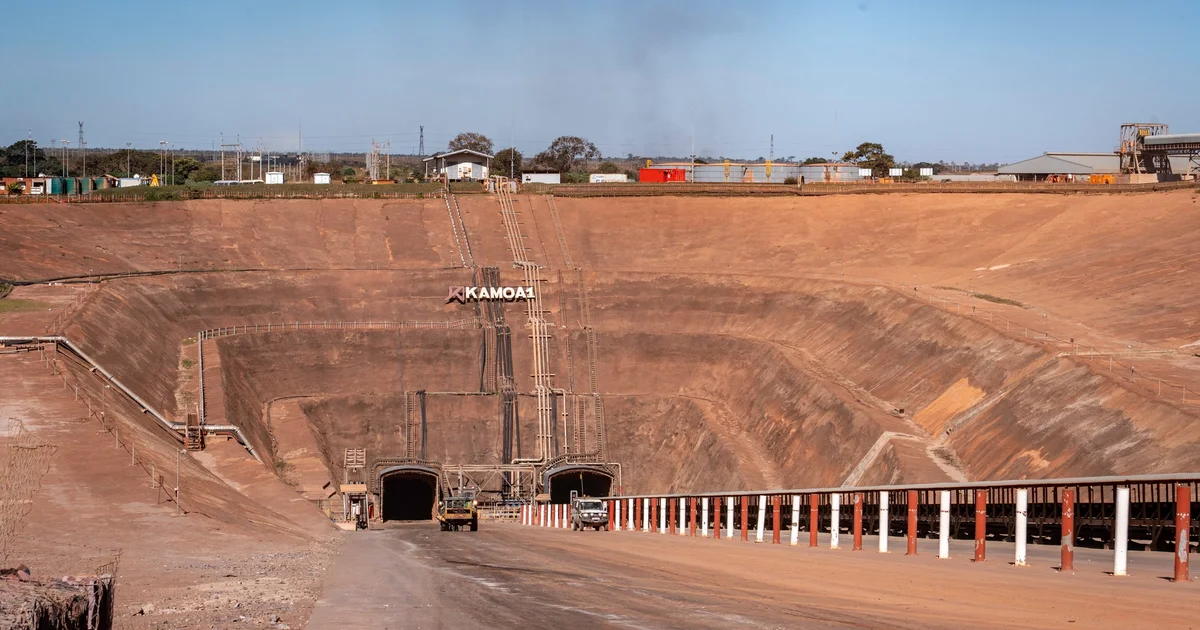
Studies have revealed that many of these labor rights violations have been committed in several Chinese-owned mines, including the Kamoto Mine, the Tenke Fungurume Mine, Sicomines, Metalkol Roan Tialings Reclamation (RTR) Mine, and Dewiza Mine.

…

Chinese firms control or hold majority stakes in almost three-fourths of cobalt and copper mines in the DRC, including the Sicomines Copper-Cobalt Mine, the Tenke Fungurume Mine, and the Kisanfu Mine. The consolidated Chinese presence now accounts for an estimated 70% of the DRC’s cobalt exports and a substantial share of its copper production, effectively shaping global market prices and supply reliability … The DRC itself produces more than 70% of the world’s cobalt and about 10% of its copper, making the country indispensable to the global economy.

…

Historically, the clearing of forestry has served as an accurate indicator of a future expansion of operations. There have been several instances of forestry clearance across mines, which means that mines likely have future expansion plans on the way.

…

Web Archive link

0

China Refuses to Sign Agreement to Combat Illegal Fishing

Africa Defense Forum China Refuses to Sign Agreement to Combat Illegal Fishing - Africa Defense Forum adf-magazine.com
preview

cross-posted from: mander.xyz/post/55903583

Beijing accused of having Taiwanese representatives barred from maritime conference in Kenya.

…

China has refused to sign an agreement meant to improve efforts to combat illegal, unreported and unregulated (IUU) fishing. Beijing commands the world’s largest distant-water fishing fleet and is the world’s worst illegal fishing offender, according to the IUU Fishing Risk Index.

Seven African countries­ — Cameroon, the Gambia, Ghana, Guinea, Liberia, the Republic of the Congo and Somalia — signed the Mombasa Declaration during the 11th Our Ocean Conference in Kenya in June. Belgium, Chile, the Dominican Republic, France, Panama, Papua New Guinea, Peru and South Korea also signed.

The agreement supports the Global Charter for Fisheries Transparency, which aims to improve governance by modernizing digital vessel registries, publishing fishing licenses, authorizations, access agreements and quota allocations. It is also meant to ensure that all industrial fishing vessels have unique vessel identifiers and collect information on the beneficial owners of vessels and fishing companies to target and hold accountable illegal fishing violators.

“In my country, our very existence depends on fish,” Emelia Arthur, Ghana’s fisheries minister, said in a report by The Associated Press (AP). “Over 60% of our animal protein comes from fish, and 10% of our population depends on the fisheries value chain for livelihood.”

…

The conference was marred by claims that Taiwanese representatives were not allowed to attend due to Chinese pressure on Kenya. Although Taiwan is self-ruled, Beijing claims it as its own territory. China prohibits its diplomatic partners from maintaining formal ties with Taiwan and holds considerable leverage over Kenya, particularly regarding debt related to the Chinese-built Standard Gauge Railway.

Kenya spends more than $1 billion per year to service its railway debt to China. Kenya’s largest external debt holder is China Exim Bank, to which it owes $741 million in principal, $222 million in interest and $41 million in penalties for the 2025-2026 budget year, Kenyan Auditor-General Nancy Gathungu revealed in a 2025 report.

Chinese vessels have operated illegally in African waters for decades. Due mainly to illegal Chinese overfishing, West Africa, alone, loses up to an estimated $9.4 billion to illegal fishing annually and is considered the world’s hot spot for IUU fishing. Between 2015 and 2021, Kenya, Madagascar, Mozambique, South Africa and Tanzania lost up to $142.8 million annually due to illegal shrimp and tuna fishing, according to the World Wildlife Fund.

Chinese vessels commit myriad fishing violations, including bottom trawling, which involves dragging a net along the sea floor, indiscriminately scooping up all manner of marine life. This kills juvenile fish, leading to declining fish stocks and destroys ecosystems.

…

The countries that signed the declaration are expected to begin implementing their commitments immediately and more governments are expected to sign the agreement, according to the AP. Catherine Chabaud, French minister delegate for the sea and fisheries, said international cooperation is essential in the fight against illegal fishing.

“Limited transparency in vessel ownership, tracking, and fishing activity and supply chains allow these illegal practices to thrive, making stronger access to reliable fisheries data and accountability mechanisms essential to protecting marine ecosystems and the communities that depend on them,” Chabaud said in an AP report.

…

Environmental groups lauded the effort. Tony Long, chief executive officer of Global Fishing Watch, said illegal fishing has continued due to weak oversight.

“For too long, illegal fishing has thrived in the dark,” Long said in a report by Namibian news outlet New Era Live. “When governments commit to transparency, they create an interconnected network where bad actors have nowhere left to hide.”

…

[Web Archived link]web.archive.org/web/20260729113405/https://…/()

0

Concerning rise in human rights abuses linked to Chinese overseas investments in transition mineral mining | Report

preview

cross-posted from: mander.xyz/post/55889087

Human rights and environmental harms linked to Chinese companies’ overseas investments in minerals critical to the energy transition are increasing year on year, according to new research published today. The Business and Human Rights Centre documented 326 allegations of abuse between 2023 and 2025, bringing the total recorded since 2021 to 434 allegations across transition mineral projects linked to Chinese companies.

The global spread of Chinese investment in transition mineral mining projects was clearly reflected in the data, with Indonesia recording the highest number of allegations (96), followed by the Democratic Republic of Congo (52), Myanmar (36), Serbia (32) and Zimbabwe (20). The report highlights how the rapid expansion of investment in minerals essential for electric vehicles, batteries and renewable energy technologies are intensifying risks for workers, Indigenous Peoples, local communities and the environment. This, combined with an increasingly fraught environment for those being silenced for speaking out against companies, paints a concerning picture in transition mineral supply chains associated with Chinese companies.

…

The findings show that ten Chinese companies accounted for nearly two thirds (65%) of all allegations recorded between 2021 and 2025. It also found:

  • Allegations affected local communities (179), the environment (169) and workers (143), with concerns relating to impacts on livelihoods, health, land rights, occupational health and safety, wages, work-related deaths, water pollution and environmental contamination.
  • Between 2023 and 2025, 18 people were attacked for raising concerns about Chinese transition mineral projects, highlighting a growing risk for those speaking out against mining-related harms.
  • Extraction remained the highest-risk stage of the supply chain (213 allegations), accounting for two thirds of all recorded allegations between 2023 and 2025 – with significant impacts of water and soil pollution on livelihood and health.
  • Meanwhile, occupational health and safety risks were particularly acute in processing, smelting and refining operations, and threats to local communities, as well as Indigenous Peoples, emerged as a significant concern in the project development phase.
  • Nickel (91 allegations) overtook copper (72 allegations) as the mineral linked to the greatest number of allegations, driven largely by the rapid expansion of Indonesia’s nickel industry and its importance for electric vehicle batteries.
  • Substantial increases in allegations were also linked to lithium (39 allegations) – largely associated with impacts on Indigenous Peoples and local communities, alongside severe pressures on water resources in surrounding areas.

…

Web Archive link

0

Nigeria Seeks Stronger Africa-Europe Strategic Partnership

Voice of Nigeria Nigeria Seeks Stronger Africa-Europe Strategic Partnership - Voice of Nigeria von.gov.ng
preview

Nigeria has called for a more strategic, equitable and resilient partnership between Africa and Europe as both continents confront growing geopolitical and economic challenges.

The Minister of Foreign Affairs, Ambassador Bianca Odumegwu-Ojukwu, made the call while speaking during Panel Six on Geopolitics at the Portugal EurAfrican Forum 2026, themed “How Will Africa and Europe Navigate Global Geopolitical Turmoil?”

…

The Minister said the current global environment, characterised by armed conflicts, economic fragmentation, terrorism, climate change, food insecurity and disruptions to global supply chains, demands stronger cooperation anchored on mutual respect, shared responsibility and common interests.

She stressed that “Africa should no longer be viewed solely through the lens of humanitarian crises or resource extraction but recognised as a strategic partner with vast human capital, abundant natural resources, expanding markets and growing innovation potential.’

“Africa is not simply a continent in need of assistance; it is a strategic partner with the resources, talent and innovation required to shape global prosperity. Our partnership with Europe must therefore be built on equality, mutual respect and shared responsibility,” Odumegwu-Ojukwu said.

…

Odumegwu-Ojukwu … urged African countries to pursue strategic autonomy by engaging global partners from a position of confidence, guided by national and continental interests rather than geopolitical rivalries.

…

Web Archive link

0

Mine workers at Chinese-owned gold mine in Tanzania accuse investor of rights violations

The Citizen Mine workers at Chinese-owned gold mine in Tanzania accuse investor of rights violations www.thecitizen.co.tz
preview

Workers at Tianpin Investment Management Ltd, a Chinese-owned gold mining company operating in Kahama District, Shinyanga Region, have asked the government to intervene over alleged labour rights violations and unsafe working conditions.

The complaints were raised before the Kahama District Security Committee during an inspection visit to the mine after a video circulated showing some workers allegedly collecting human waste in buckets and dumping it in an open area.

The workers claimed they were working without employment contracts, personal protective equipment (PPE), adequate rest periods and in unsafe conditions, while fearing dismissal if they raised concerns.

…

Some also accused Chinese supervisors of harassment, alleging that workers were threatened with job losses and delayed salaries whenever they complained.

…

One of the workers, Amos Daudi, said many employees had worked at the mine without contracts, leaving them afraid to speak out over their grievances.

“Many workers here do not have employment contracts. They are afraid to speak because they fear losing their jobs. Contracts were only given to a few people who appeared outspoken. They were not given time to read them and were only asked to sign. We do not even have copies,” he said.

…

Mr Daudi also raised concerns over water management at the mine, alleging that wastewater from mining activities and toilets was being directed towards nearby residential areas.

He claimed workers were forced to dig trenches connecting water from underground mining activities with sewage from toilets, with the flow ending near residents’ homes.

“This water reaches areas where people live. The same water is used to prepare food, wash clothes, bathe and, sometimes when workers are thirsty underground, they drink it because drinking water is far away,” he said.

…

On accommodation, Mr Daudi said workers … slept on sacks filled with grass instead of proper mattresses and that the rooms were infested with bedbugs.

Another worker, Tumaini Shoo, accused a Chinese supervisor of assaulting her without explanation.

“One day he wanted to beat my colleague without any reason, and another day he beat me. They do not care whether someone is a woman or not. They take the law into their own hands,” she alleged.

…

A worker, Mazengo Festo, complained about a lack of rest periods, saying employees were required to collect firewood after meals before returning to work.

“If you start working on the first day of the month, you work until the 30th. After lunch, you must collect firewood for cooking. If you refuse, Sh10,000 is deducted or you risk losing your job. I earn only Sh14,000 a day,” he said.

…

The mine manager, Geofrey Msumali, admitted that there were challenges, particularly regarding safety equipment, employment contracts and workers’ welfare.

“What they have said is true. I think this investor does not understand the role of a manager. At the moment, I have been isolated and my concerns are not being addressed,” he said.

Mr Msumali said protective equipment was available but admitted safety conditions at the mine needed improvement.

…

Kahama District Commissioner Frank Nkinda ordered an immediate investigation and inspection to establish the facts and ensure compliance with labour and mining regulations.

…

He also instructed environmental officials to visit the mine and conduct a thorough assessment.

…

Archive Today link

0

How United Arab Emirates supports a secret network of military training camps for the paramilitary Rapid Support Forces that enables genocide in Sudan [YT]

play · youtube.com
YouTube "Inside the Secret Network Fueling Sudan's War": Filmmaker Julia Steers on UAE Backing RSF Crimes www.youtube.com
preview

cross-posted from: lemmy.dbzer0.com/post/72254670

A new investigation has uncovered how the United Arab Emirates (UAE) supports a secret network of military training camps for the paramilitary Rapid Support Forces (RSF) that enables them to continue their deadly war in Sudan.

“This war, which is often categorized in international media as a civil war, is really a proxy war,” says award-winning journalist and documentary filmmaker Julia Steers. “We’re talking about a really extensive network of logistics and training and financial backing from the UAE.”

The investigation is a collaboration between Lighthouse Reports, Evident and Sudan War Monitor.

Meanwhile, as the U.N. High Commissioner for Human Rights Volker Türk warns another humanitarian catastrophe is unfolding the North Kordofan state capital of El Obeid, where the RSF and the Sudanese army are fighting for control, “there’s no question that the RSF would not be able to have gotten as far as they have, to have claimed nearly as much territory as they have, without the really robust support of the UAE,” says Steers.

0

Mali and Algeria revitalize diplomatic relations after falling out last year - BT News

BT News Mali and Algeria revitalize diplomatic relations after falling out last year - BT News breakthroughnews.org
preview

cross-posted from: mander.xyz/post/55120392

cross-posted from: hexbear.net/post/9021182

cross-posted from: news.abolish.capital/post/64275

Mali and Algeria mutually reinstated their ambassadors on July 10 and reopened their airspace to each other’s civilian and military aircraft. This improvement in their strained diplomatic relations came over a year after they had recalled their ambassadors in April 2025, after Algeria shot down a Malian military drone.​

The drone was operating in the Kidal region, targeting terror groups that captured its capital, Kidal city, a year later in April 2026. Algeria said that the drone had crossed Mali’s northern border into its airspace when it was shot down. Mali refuted this claim, insisting that although the drone crashed in Algerian territory, it was in Malian airspace when shot.​

The 1,374-km-long porous border between the two countries is located in the remote Sahara Desert. The region is a base for multiple terror groups whose attacks on Mali, Niger, and Burkina Faso have intensified after the three countries expelled French troops.  ​

In mid-March 2025, Mali carried out a drone strike on what it said were Algeria-registered trucks carrying supplies to terror groups. Later that April, when its drone was downed by Algeria, Mali, along with fellow members of the Alliance of Sahel States (AES) – Niger and Burkina Faso – withdrew their ambassadors from Algeria.​

Algeria, in turn, accused Mali of violating its airspace twice in 2024 before this incident and recalled its ambassador.

A year later, in April 2026, a coalition, including an Al-Qaeda affiliate and a Tuareg separatist group, launched coordinated attacks on multiple cities across the country and captured Kidal.

Read more: “Sovereignty will be consolidated”, reiterates Malian president after “foreign-sponsored” terror attacks in six cities

Affirming Algeria’s support for the “territorial integrity of Mali, the unity of its people and its state institutions” in the aftermath of this attack, its foreign minister, Ahmed Attaf, reiterated, “We also reject terrorism in all its forms.” He went on to recall Algeria’s own “painful experience in the face of this scourge,” referring to the civil war its state fought against Islamist terror groups in the 1990s.

Just over two months later, on July 4, the coalition of Al Qaeda and the Tuareg separatists struck again across multiple cities of Mali.

Read more: Mali fights yet another wave of attacks on multiple cities by terror groups

Although all the attacks were repelled, fighting continues in Anéfis village commune in the Kidal region, where the Malian army defends its important base just over 100 km from Kidal city.

While retaining control is crucial for the army to eventually mount an offensive to recapture the city, displacing the army from here is crucial for the terror groups to secure their hold on Kidal. Should the terror groups secure control over this border region, it would also pose a threat to Algeria, given the porous border and historic animosity.

Against this backdrop, Algeria reopened its airspace to Mali’s civilian and military aircraft and reinstated its ambassador to Mali on July 10.

​The decision reflects President Abdelmadjid Tebboune’s “constant and resolute desire to restore Algerian-Malian relations to their natural historical trajectory, based on mutual respect … in the service of the interests of the two peoples and brotherly countries,” read a statement by Algeria’s foreign ministry on July 11.​

In a separate statement the same day, Mali’s government also announced the same measures to revitalize “the relations of cooperation and friendship” between the two countries.

​

Pavan Kulkarni , July 13, 2026


From BT News via This RSS Feed.

0

Russian mayor says North Korean street cleaners cost too much for his city, so he hired Senegalese workers instead

Meduza Russian mayor says North Korean street cleaners cost too much for his city, so he hired Senegalese workers instead — Meduza meduza.io
preview

cross-posted from: mander.xyz/post/55124716

Orenburg Mayor Albert Yumadilov said he had planned to hire North Koreans as street cleaners but that they would not work for the wages the city can offer.

“As far as I know, workers from North Korea won’t come for 55,000 rubles. Wages there are two to three times higher. Sure, their efficiency is higher too — they work like robots. I’ve seen it with my own eyes; over there, they really are robots… But we just can’t afford the wages,” Yumadilov said, as quoted by the Orenburg city portal 1743.ru.

…

Meanwhile, Senegalese nationals are working in the city’s housing and utilities sector, Yumadilov said. The first 10 arrived in April. Thirty-one Senegalese now sweep the streets of Orenburg, and four more are due soon. Yumadilov praised the quality and productivity of their work.

…

Web Archive link

0

African-led UN resolution reframes the fight against neglected tropical diseases

African-led UN resolution reframes the fight against neglected tropical diseases www.nature.com
preview

Neglected tropical diseases (NTDs) do more than damage health. They can cause disability, disfigurement and stigma, excluding people from education, employment and community life.

On 7 July, at its 62nd session in Geneva, the UN Human Rights Council adopted its first resolution devoted specifically to human rights and NTDs. It formally recognises the close links between NTDs and rights, elevating them beyond the health sector and acknowledging them as issues of dignity, equity, inclusion, and justice including health, water, sanitation, housing, education and work.

The Republic of Malawi led the initiative with Burkina Faso, Kenya, Tanzania, The Gambia and Morocco.

…

About 1.4 billion people required interventions against NTDs in 2024. Although that number has fallen by 36% since 2010, WHO has warned that cuts in international health assistance threaten recent gains.

…

Web Archive link

0

[Opinion] Three Decades in, China Is Cashing in on Sudan’s Collapse

Three Decades in, China Is Cashing in on Sudan’s Collapse thediplomat.com
preview

[Op-ed by Paul Mwirigi, a Kenya-based writer specializing in African affairs. He holds a degree from the University of East Africa and has developed a strong foundation in building scalable and efficient digital solutions to issues around the continent.]

[…]

China formally entered into diplomatic and economic relations with Sudan in 1996, when state-owned CNPC opened Block 6, an oil venture in partnership with Sudan’s Ministry of Energy. The Petrodar pipeline, a 1,500-kilometer consortium led by CNPC, Sinopec, and Malaysia’s Petronas, carried South Sudanese crude from the Melut Basin north through Sudan to Port Sudan on the Red Sea. China [was] also providing military equipment to Sudan for increased security for production. This inadvertently led to the Sudanese bombing of southern militias, clearing the area for more oil extraction. China continued to invest roughly $3 billion into oil extraction, yet Amnesty International found that almost no revenue helped to fund further economic, social, or cultural development.

[…]

[China’s] recent loan forgiveness to [Sudan’s] Burhans’ regime, which is illegitimate and undemocratic, was paired with Chargé d’Affaires Xu Jian’s statements that China would continue $30 million of grant-funded projects in Sudan and aim to resume CNPC operations within the country. China’s trust shown to the SAF comes with its public calls for peace. The deals, however, expose that it is benefiting from the weak regime; it can control assets more easily and establish long-term deals with incredibly one-sided terms. China has made substantial claims for peace, voting for an immediate cessation of hostilities with the November 2024 UN Security Council resolution. Beijing has sent envoys, joined multilateral formats, and stayed clear of the direct military involvement that has drawn Western sanctions onto Russia and Iran. But while this rhetoric calls for peace, the position effectively stays real intervention and allows for more time to finalize deals with the current junta.

[…]

China needs Burhan to maintain power, since the legitimacy of their contracts rely on personal relationships with him and his leadership. A civilian government would likely renegotiate Chinese arrangements. In fact, the Eastern Sudan Advisory Council and the Beja Congress called for a freeze on any deal-making with China. Eastern Sudan is mineral-rich and chronically poor, and its residents rarely receive any of the resource wealth that flows outward. They face water shortages, failing infrastructure, and international isolation while suffering from the effects of the civil war.

[…]

China is sequencing [Sudan’s] debt, offering small tokens of grace through debt forgiveness and then locking in longer-term and fully extractivist deals. The Eastern Sudan Advisory Council’s warning should be taken seriously beyond Sudan as well. Agreements concluded under these conditions carry real legal exposure once the war ends, and the communities whose resources are being contracted away extend into South Sudan and beyond.

[…]

Archive Today link

0

Ugandan Farmers Sue to Block $5 Billion East Africa Oil Pipeline

OilPrice.com Ugandan Farmers Sue to Block $5 Billion East Africa Oil Pipeline | OilPrice.com oilprice.com
preview

The $5 billion East African Crude Oil Pipeline (EACOP), which will transport crude from Uganda’s Albertine Graben to Tanzania’s Tanga port, is nearly completed, after years of delays and controversies surrounding the project. The development of EACOP is being led by French supermajor TotalEnergies along with the Chinese state-owned China National Offshore Oil Corporation (CNOOC).

…

Ugandan farmers … filed the lawsuit against the UK-registered EACOP Ltd, contend that the pipeline, the oil production, and the route would harm water resources in the area, as well as wildlife and biodiversity.

The 1,443-kilometer pipeline … is expected to peak at around 200,000 barrels per day.

…

The plaintiffs hope a successful lawsuit could stop the pipeline from becoming operational.

“The case seeks remedies that could go to the heart of the project’s commercial viability, including an injunction to stop oil being transported through the pipeline, as well as compensation and other legal relief under Ugandan law,” the Ugandan farmers said

…

Former reports warned that

EACOP Project cuts through 44 protected areas and 7 Key Biodiversity Areas, threatening critical habitats, endangered species, and ecosystem services that support local communities …

Displacement caused by large-scale infrastructure projects like EACOP is not just a question of compensation, it fundamentally reshapes the lives, livelihoods, and social fabric of affected communities. A 2023 study by the Africa Institute for Energy Governance (AFIEGO) found that 41% of displaced households received low-productivity replacement land, and only 3% rated their new land as highly productive. Crop yields have declined, with 77% of households harvesting over 51 kg per season after displacement, compared to 92% before …

Human Rights Watch reports that many displaced individuals received compensation insufficient to purchase replacement land, and delays in payments have caused further hardship. Poverty in many regions along the pipeline corridor leaves communities particularly vulnerable to coercion or inadequate compensation, forcing them to accept agreements that may not reflect their long-term well-being …

Web Archive link

0

Female Nigerian Studying Medicine in Ukraine Dies a Day Before Graduation After Sustaining Injuries in Russian Strike

Watchman Reporters Female Nigerian Studying Medicine in Ukraine Dies a Day Before Graduation After Sustaining Injuries in Russian Strike watchmanreporterscom.wordpress.com
preview

Nnani Adaobi Marian, 23, sustained life-threatening injuries during a guided aerial bomb attack on Kharkiv on June 29.

Marian, a student of Kharkiv National Medical University, was later transferred to Germany for further medical treatment but eventually succumbed to her injuries despite efforts by medical professionals in both Ukraine and Germany.

…

According to Newsroom, Russian forces dropped aerial bombs on the Kholodnohirskyi district of Kharkiv on June 29, killing 14 people across the Dnipropetrovsk, Zaporizhzhia, and Kharkiv regions, while 98 others sustained varying degrees of injuries.

In an official condolence statement, Kharkiv National Medical University paid tribute to Marian, describing her as an outstanding student and a dedicated future medical professional.

…

Web Archive link

0

The African fishermen who blame Chinese trawlers for their woes

The African fishermen who blame Chinese trawlers for their woes www.bbc.com
preview

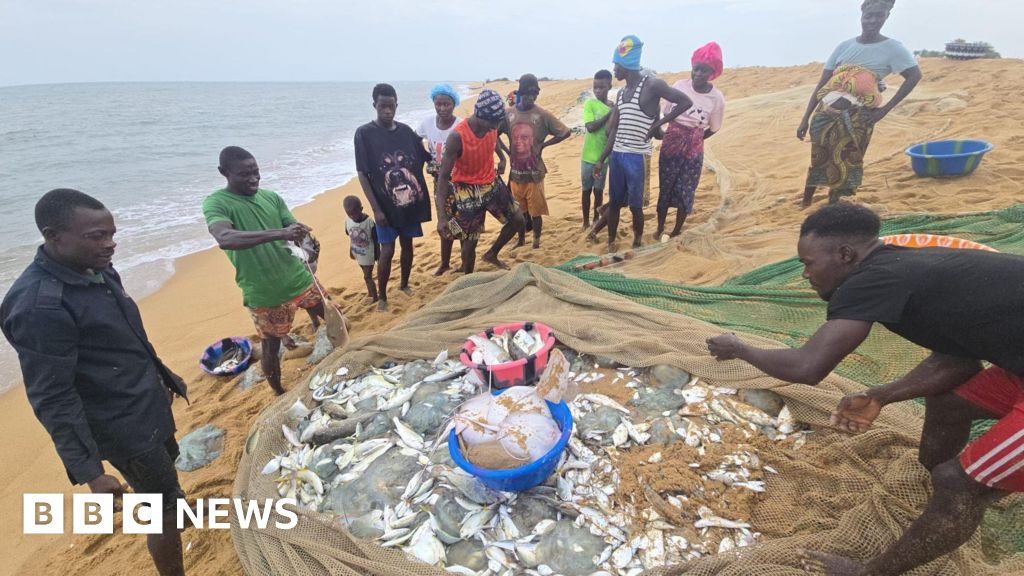
One woman, Marie Pierre [Sierra Leone’s Sherbo Island in West Africa], is picking sardines from among the discarded jelly fish. She says that international trawlers are illegally entering the coastal waters in ever larger numbers, despite there being an official exclusion zone to keep them out.

…

West Africa remains the global epicentre for illegal fishing. An estimated 40% of the world’s unlicensed catch can be traced to its waters, according to a 2024 global report.

The study estimated that this costs West African nations a combined $10bn in lost revenues, and risks the food security of millions of people. Commentators say that the situation has not improved in the subsequent two years.

Thomas Turay, president of Sierra Leone’s Fishermen’s Union, says that the average catches for his members are down some 40% in recent years. And he’s in no doubt where the blame lies.

“The illegal fishing is too much,” he says. “The sea belongs to us, but for the foreign trawlers, they come at night and violate the seven-mile exclusion zone, they come right into the shore here.”

…

So, what are nationalities of the international ships off the coast of Sierra Leone?

Steve Trent, CEO and co-founder of global campaign group Environmental Justice Foundation (EJF), says the vast majority are from China.

“In the past, we’ve seen South Korean vessels there, we’ve seen Taiwanese, we see European vessels there doing bad things. But now when you look across that region, it is overwhelmingly Chinese”.

…

Trent from the EJF says the Chinese government is adopting a head-in-the-sand approach.

“It’s simply not credible for them to carry on in this way. China, to date, still is not doing nearly enough to control its fleet. In fact, I would say they’re enabling it, through subsidies, through a lack of oversight and control.”

The solution, Trent says, needs to come from better tracking of commercial vessels, and increased international pressure on Beijing, including from consumers themselves. The fish taken from west Africa’s rich coastal waters is being sold for consumption around the world, he points out.

“You can choose, do you want to take a product that’s been fished illegally, probably unsustainably, stolen from a poor third-party nation, or do you want a product that you actually enjoy eating?”

…

Web Archive link

0

As Sahel states withdraw from ICC, NGOs warn of ‘impunity’ over war crimes

RFI As Sahel states withdraw from ICC, NGOs warn of ‘impunity’ over war crimes www.rfi.fr
preview

Burkina Faso, Mali and Niger have initiated a year-long process of withdrawing from the International Criminal Court, a move human rights defenders say will leave victims of war crimes without access to justice.

…

In a statement published on Wednesday, the International Criminal Court (ICC) confirmed that Mali, Burkina Faso and Niger had initiated the one-year process of withdrawing from the Rome Statute, the treaty that established the ICC.

The West African countries, which are all led by military juntas following a series of coups between 2020 and 2023, first announced their withdrawal from the ICC last September, calling it “a tool of neocolonial repression”.

The three nations, now linked in an alliance named the Alliance of Sahel States (AES), accused the court, based in The Hague, of lacking impartiality and politicising human rights issues.

…

Web Archive link

0

BT News: [Debunked] The Truth About Burkina Faso and Israel | w/ David Hundeyin

preview

Investigative journalist and author David Hundeyin tells BT Live, Burkina has shown immense restraint with Paris leading up to this moment. From al-Qaeda-linked terrorists being interviewed on France 24 to open declarations of destabilizing intent from the DGSC, the consequences of Europe’s “open diplomatic provocations” are coming home to roost. David parses truth from social media conspiracy theory when it comes to rumors of an Israeli diplomat in Burkina, and cuts through all the revolutionary aesthetic to explain the extreme difficulties the country faces and why now’s not the time to pick unnecessary fights with empire.

“The primary function of a revolution is not to satisfy the sensibilities of internet people. The primary purpose is to improve the material conditions of its people.”

0

Zimbabwe pushes labour law compliance with Chinese investors as investments tops US$10bn

Newsday Zimbabwe pushes labour law compliance with Chinese investors as investments tops US$10bn - Newsday www.newsday.co.zw
preview

cross-posted from: mander.xyz/post/54640056

The Zimbabwean government has urged Chinese investors to comply with local labour laws and actively participate in the country’s social dialogue structures, including the Tripartite Negotiating Forum (TNF), as Chinese investment in Zimbabwe surpasses US$10 billion.

The call comes as China remains one Zimbabwe’s largest sources of foreign investment, its biggest country creditor, and one of its biggest trading partners.

…

Chinese-owned firms have, over the years, faced allegations of labour rights violations and poor working conditions, with several disputes ending up before the courts or labour authorities.

Speaking at the Zimbabwe-China Business Symposium in Harare, Energy and Power Development minister July Moyo, Energy and Power Development minister July Moyo urged Chinese investors to comply with local labour legislation, participate in Zimbabwe’s social dialogue, and engage through the TNF.

…

“We prioritise ease of doing business, investor protection and public-private partnerships. Investors must also operate within Zimbabwe’s legal framework and respect our labour laws,” Moyo said.

…

An opinion piece at the outlet Zimbabwe News says,

Workers report intrusive security measures, retaliation against labor organizers, and unsafe working conditions … There is clear racism being practiced by the Chinese against Zimbabweans. This is done in the backyard of Zimbabwe …

…

It has become difficult to use the word corruption in a sentence without adding Chinese. The Chinese practice serious labour malpractices far more than the injustices experienced during colonialism.

…

Miners accuse Chinese companies of paying poverty wages, with some workers going months without pay.

…

Chinese corruption is highly protected by the senior government officers and … environmental Damage caused by the Chinese in Zimbabwe resembles the devil’s ground. Chinese mining operations have led to water and soil pollution, habitat loss, and destruction of farmland.

The Chinese do not care as they will be going to their country, leaving behind a trail of destruction. There have been serious Human Rights Abuses, and the government fails to protect its own people.

…

Many Chinese mining operations are accused of operating without proper registration, neglecting environmental protections, and benefiting from political connections.

…

The Zimbabwe Miners Federation has warned of a potential “revolution” if the government fails to address these abuses.

To normalize the relationship between Chinese employers and Zimbabwean employees, the Zimbabwean government must Enforce Labor Laws without favour.

The government must ensure Chinese companies comply with Zimbabwe’s labor laws, including fair wages, safe working conditions, and workers’ rights.

…

Web Archive link

0

China tightens grip on Zimbabwe lithium

Bulawayo24 News China tightens grip on Zimbabwe lithium bulawayo24.com
preview

…

According to Lithium Producers Association of Zimbabwe chairman Innocent Rukweza, Chinese-owned and Chinese-backed companies now account for the overwhelming majority of operational lithium projects in the country.

“More than 80% of production is coming from Chinese-owned or Chinese-partnered projects,” Rukweza said in a recent interview.

“In fact, of all operational projects, they are effectively running production.”

…

At least six beneficiation projects, including concentrators and lithium sulphate plants, are currently under construction and are expected to become operational from 2027.

However, despite Zimbabwe’s push to move further up the value chain, ownership of most operational assets remains concentrated in Chinese hands.

Rukweza said Chinese companies dominate both wholly owned mines and joint ventures, giving them significant influence across the entire lithium supply chain.

“It is very much a Chinese phenomenon,” he said.

“They went through the whole supply chain.”

…

The concentration of ownership has raised questions about how much long-term strategic control Zimbabwe will retain over a mineral expected to remain one of its leading export earners as global demand for electric vehicles and renewable energy storage continues to grow.

…

The mining sector mirrors developments in Zimbabwe’s entire economy, as one report from November 2025 by Global Press, a media project that represent local journalist from across the globe, found,

Zimbabwe’s National laws aimed at redressing colonial imbalances reserve retail sectors, like that of brickmaking, for locals. But companies with outside investment, particularly from China, routinely flout the rules …

Zimbabwe, like many other countries in Africa, embraces Chinese investment. In 2023, the government issued about 369 new licenses to Chinese investors, accounting for 60% of all foreign investment that year and representing about 154% more investors than 2022.

While the capital that comes from foreign direct investment can be beneficial to the country, the cost is steep. “It’s a double-edged sword,” says Joe Muzurura, a political analyst who has written extensively about this issue in Zimbabwe. It’s eroding local industries, he says … [Archived]

…

Web Archive link

…

According to Lithium Producers Association of Zimbabwe chairman Innocent Rukweza, Chinese-owned and Chinese-backed companies now account for the overwhelming majority of operational lithium projects in the country.

“More than 80% of production is coming from Chinese-owned or Chinese-partnered projects,” Rukweza said in a recent interview.

“In fact, of all operational projects, they are effectively running production.”

…

At least six beneficiation projects, including concentrators and lithium sulphate plants, are currently under construction and are expected to become operational from 2027.

However, despite Zimbabwe’s push to move further up the value chain, ownership of most operational assets remains concentrated in Chinese hands.

Rukweza said Chinese companies dominate both wholly owned mines and joint ventures, giving them significant influence across the entire lithium supply chain.

“It is very much a Chinese phenomenon,” he said.

“They went through the whole supply chain.”

…

The concentration of ownership has raised questions about how much long-term strategic control Zimbabwe will retain over a mineral expected to remain one of its leading export earners as global demand for electric vehicles and renewable energy storage continues to grow.

…

The mining sector mirrors developments in Zimbabwe’s entire economy, as one report from November 2025 by Global Press, a media project that represent local journalist from across the globe, found,

Zimbabwe’s National laws aimed at redressing colonial imbalances reserve retail sectors, like that of brickmaking, for locals. But companies with outside investment, particularly from China, routinely flout the rules …

Zimbabwe, like many other countries in Africa, embraces Chinese investment. In 2023, the government issued about 369 new licenses to Chinese investors, accounting for 60% of all foreign investment that year and representing about 154% more investors than 2022.

While the capital that comes from foreign direct investment can be beneficial to the country, the cost is steep. “It’s a double-edged sword,” says Joe Muzurura, a political analyst who has written extensively about this issue in Zimbabwe. It’s eroding local industries, he says … [Archived]

…

Web Archive link

0

China Accused of ‘Two-Faced Diplomacy’ in the Democratic Republic of the Congo

Africa Defense Forum China Accused of ‘Two-Faced Diplomacy’ in DRC - Africa Defense Forum adf-magazine.com
preview

In parts of the world such as Ukraine, Myanmar and Japan, the Chinese government has been accused of employing “two-faced diplomacy.” It’s a strategy of publicly pledging peace, economic cooperation and regional stability while aggressively positioning its military and taking actions that fuel violence.

…

There are examples in Africa as well, where Beijing’s official stances are in direct contradiction with its actions. In Sudan’s civil war, China claims to seek peace as a potential mediator. But that position is starkly contrasted by the proliferation of weapons manufactured by its state-owned companies, which prolong the conflict by supplying both sides.

Geopolitical analyst Samir Bhattacharya says China’s two-faced diplomacy is at play in the Democratic Republic of the Congo, where it has partnered with the government while maintaining defense and economic ties with Rwanda and Uganda. Independent United Nations experts accuse both African countries of backing the DRC’s M23 insurgency.

“Beijing’s growing military and defence-industrial activities in the region signal a narrow, opportunistic turn that risks fueling further instability,” Bhattacharya, an associate fellow at Observer Research Foundation, wrote in a May 11 essay. “This two-faced diplomacy — designed to protect investments and enhance influence — risks ultimately undermining the very investments it seeks to secure.”

China’s primary interests in the DRC are economic. Companies closely tied to Beijing control the majority of cobalt, coltan, copper and uranium mines, and the Congolese armed forces have been deployed repeatedly to mining sites in the east to protect Chinese assets.

…

In the east, the DRC’s ongoing deadly battles with M23 rebels feature Chinese drones and weaponry on both sides, as the DRC, Rwanda and Uganda have purchased significant quantities of Chinese arms.

“[China] has supported training programmes for Congolese security personnel, provided logistical assistance, and encouraged the deployment of local troops to protect Chinese-operated mining facilities,” Bhattacharya wrote. “This approach allows Beijing to safeguard its interests while maintaining the image of a country that adheres to non-intervention as official policy.”

…

Experts say that by keeping security ties simultaneously with the DRC and its rivals, China is prolonging the conflict while claiming it seeks peace. In recent years, Norinco, China’s largest weapons supplier, and other Chinese companies have sold artillery systems and other arms to Rwanda. The DRC, meanwhile, purchased its first batch of three CH-4 attack drone systems from China Aerospace Science and Technology Corp. in 2024.

“On one hand, China seeks stability in the DRC to protect its extensive mining investments,” Bhattacharya wrote. “On the other, its continued engagement with neighbouring states limits its willingness to take a definitive stance in regional disputes. The result is a form of strategic ambiguity that preserves access and influence but may also constrain conflict-resolution efforts.”

…

Web Archive link

0

Burkina Faso cuts diplomatic ties with former colonial ruler France

Al Jazeera Burkina Faso cuts diplomatic ties with former colonial ruler France www.aljazeera.com
preview

cross-posted from: lemmy.dbzer0.com/post/71356782

Burkina Faso has broken off diplomatic relations with France, further widening the rift with its former colonial ruler. “The government of Burkina Faso hereby informs the national and international community that it has decided to sever diplomatic relations with France with effect from today, June 26, 2026,” said Friday’s statement read out on national television.

In the TV announcement, the government accused France of persistently acting against its interests. “The essential conditions for promoting relations based on mutual ⁠respect, reciprocal trust, respect ⁠for the principle of non-interference in internal affairs and national sovereignty are not in place,” said Communications ⁠Minister, Gilbert Ouedraogo.

He said the decision ⁠followed a review of relations with Paris. He accused France of having “neo-colonial ambitions, made evident by its active support for subversive networks and the terrorists who are plunging our country and the Sahel into mourning”.

0

Niger's Government blames France for deadly attack on Niamey international airport as JNIM claims responsibility

PAN AFRICAN VISIONS Niger Airport Attack: Niamey Accuses France as Jihadists Claim Responsibility - PAN AFRICAN VISIONS panafricanvisions.com
preview

cross-posted from: lemmy.dbzer0.com/post/71198556

On 18 June 2026, militants attacked the Diori Hamani International Airport in Niamey, Niger, killing 13 people and injuring 4 others; 22 attackers were also killed.

According to Radio France Internationale, Jama’at Nusrat al-Islam wal-Muslimin (JNIM), in a brief statement published through its usual propaganda channel, Az-Zallaqa, claimed to have carried out “a suicide attack on Diori Hamani International Airport and the nearby military base.”

The Minister of Defence accused, without providing evidence, its former colonial power, France, of being behind the attack.

0

Solomon Islands Sidelines China Policing Plans Ahead of Albanese Visit

Streamline Solomon Islands Sidelines China Policing Plans Ahead of Albanese Visit streamlinefeed.co.ke
preview

cross-posted from: mander.xyz/post/54037138

In a dramatic geopolitical recalibration, a top cabinet minister in the Solomon Islands has declared that controversial Chinese policing plans should be permanently sidelined. The decisive policy shift comes just weeks before Australian Prime Minister Anthony Albanese arrives in Honiara for a high-stakes diplomatic blitz aimed at securing a comprehensive new security treaty.

This development marks a significant setback for Beijing’s strategic ambitions in the South Pacific and represents a major diplomatic victory for Canberra and its Western allies, who have viewed China’s expanding security footprint in the region with mounting alarm.

…

The Solomon Islands became the epicenter of an intensifying geopolitical tug-of-war in 2022 when former Prime Minister Manasseh Sogavare signed a secretive security pact with Beijing. The agreement opened the door for Chinese police deployments and raised fears in Washington and Canberra about the potential establishment of a permanent Chinese military presence less than 2,000 kilometers from the Australian coast.

However, the internal political dynamics in Honiara have shifted drastically. The recent electoral changes and mounting domestic pressure have forced the current administration to reassess the long-term implications of relying on Chinese security apparatus. The explicit statement from a senior minister that the policing plans must be sidelined signals a definitive pivot back toward traditional democratic security partners.

…

Prime Minister Anthony Albanese is scheduled to land in the Solomon Islands in July 2026. His mission is unambiguous: to finalize a comprehensive bilateral treaty that will anchor Honiara firmly within Australia’s security orbit. Albanese’s government has recognized that lecturing Pacific nations is ineffective; instead, Canberra is deploying substantial economic and developmental incentives alongside security guarantees.

…

The rejection of the policing plan suggests that Pacific Island nations are increasingly wary of “debt-trap diplomacy” and the erosion of their sovereign institutions. Chinese diplomats will likely pivot to emphasizing civilian trade and climate resilience projects to salvage their regional influence, recognizing that aggressive security overtures have triggered immense local and international backlash.

…

The geopolitical maneuvering in the South Pacific offers critical lessons for nations across East Africa. Much like Kenya, which balances massive Chinese infrastructure loans (such as the SGR) with deep Western security partnerships, the Solomon Islands has discovered the limits of foreign entanglement.

When external powers compete for influence, developing nations can extract maximum developmental value by maintaining strict strategic autonomy. The Solomons’ decision to block foreign policing interference while accepting infrastructure funding demonstrates a sophisticated balancing act. For policymakers in Nairobi, the Pacific playbook underscores the importance of protecting domestic security architecture from external control, regardless of the economic incentives offered.

…

Web Archive link

0

Chinese Racism Assaulting Africa

preview

The official Chinese narrative on Sino-African engagement has always been seductive in its symmetry: a relationship of “win-win” cooperation between the Global South’s largest economy and its most resource-rich continent built on solidarity, mutual respect, and shared development.

It is a narrative China’s diplomats have polished with considerable skill. But on the factory floor, in the supermarket aisle, on the streets of Yaoundé and Kinshasa, and across Chinese social media, a starkly different reality is unfolding one of racial contempt, labour exploitation, and resource plunder, and deliberate humiliation.

The question African peoples must now confront honestly is not whether this discrimination exists. The evidence is overwhelming, well-documented, and growing. The real question is: how long will Africa’s leaders allow it to continue?

…

What makes Chinese racism toward Black Africans particularly unsettling is how casually it is expressed. It does not lurk in coded language or institutional procedure. It presents itself openly, even proudly.

A recent viral video showing a Chinese taxi driver flatly refusing to carry a Black passenger caused widespread outrage but it was hardly novel. In recent weeks, footage circulating on Chinese social media showed individuals tormenting a Black doll they had named “Natasha,” mocking and degrading it for audience entertainment. The clip spread widely before any meaningful platform moderation occurred.

These incidents are not aberrations. They are symptoms of a deeper cultural pathology. In 2016, a Chinese television commercial for laundry detergent depicted a Black man being shoved into a washing machine and emerging to the delight of the Chinese woman operating it as a light-skinned Asian man. The advertisement ran on national television.

…

Across Chinese social media platforms, including Bilibili, academic researchers have documented a pervasive and largely unchecked culture of anti-Black racism, where derogatory stereotypes about African intelligence and appearance are routinely circulated and amplified.

During the COVID-19 pandemic, African nationals resident in China experienced institutionalized discrimination that drew condemnation from the African Union and multiple African governments.

African residents in Guangzhou were evicted from their homes, subjected to forced testing and mandatory isolation disproportionate to that applied to Chinese nationals, turned away from hospitals, and refused entry to restaurants. The scenes that emerged from that episode were a window into how African people are perceived within Chinese society when the diplomatic gloss is stripped away.

…

Racial contempt, it turns out, is not the only instrument of extraction. Chinese nationals have been implicated in a range of criminal and environmentally destructive practices across Africa.

On 8 and 9 June 2026 just days ago Cameroonian authorities dismantled a counterfeit currency factory in Douala engaged in the manufacturing of fake CFA Franc coins. Chinese nationals were among those implicated. The revelation struck at the heart of a monetary system that anchors the economies of fourteen African nations.

In the Democratic Republic of Congo, the Chinese firm Bendera Mining Company has been found to be encroaching on the Kabobo wildlife reserve, conducting illegal gold mining operations inside a protected ecosystem. Across the continent, Chinese companies stand accused of illegal and exploitative mining activities that damage local environments, displace communities, and drain mineral wealth with little accountability.

Off the West African coast, Chinese fishing fleets continue to devastate fish stocks at a pace that threatens the food security of millions. Researchers estimate that approximately 40 per cent of the fish caught by Chinese vessels in West African waters is taken illegally beyond licensed quotas, inside protected zones, or using prohibited methods. The livelihoods of small-scale African fishermen are being systematically destroyed.

China’s role in illegal logging is equally severe. The country’s enormous appetite for rosewood has turned the timber into the world’s most trafficked wild habitat product surpassing elephant ivory and rhinoceros horn in volume. Chinese companies, including Fodeco, have been directly implicated in illegal logging operations in West Africa, stripping forests that local communities depend upon for their survival.

,

African governments have shown admirable patience … in raising these grievances through diplomatic channels. That patience has not been rewarded with change. Incidents multiply. Videos circulate. Condemnations are issued and then forgotten. Chinese employers continue to wield whips on African workers in Cameroon. Chinese social media continues to circulate anti-Black content. Chinese vessels continue to empty West African waters.

…

The decision about what to do with that evidence belongs to Africa’s leaders and its people.

It is time for that decision to be made.

…

Web Archive link

0

EU concludes modernised Economic Partnership Agreement with Sub-Saharan Africa partners

European Commission - European Commission EU concludes modernised Economic Partnership Agreement with Sub-Saharan Africa partners ec.europa.eu
preview

cross-posted from: mander.xyz/post/53719117

…

The EU and four Eastern and Southern Africa (ESA) States (Comoros, Madagascar, Mauritius, and Seychelles) concluded negotiations on an enhanced Economic Partnership Agreement (EPA).

…

This Agreement will set a new standard for EU-Africa economic relations by providing clear rules and opportunities on:

  • Services and investment: the enhanced EPA improves legal certainty and conditions for companies supplying services in each other’s market. It also provides greater predictability for investors and ensures fair and non-discriminatory treatment.

  • Public procurement: businesses will have access to clear and transparent information on public procurement opportunities. This will make it easier for businesses on both sides to take part in public tendering and will support ESA States’ expected economic growth and modernization plans.

  • Intellectual property: the enhanced EPA establishes a modern and predictable framework covering all major categories of intellectual property and strengthens enforcement tools to support innovative and creative industries in ESA States. It will also protect 135 EU Geographical Indications (GIs) in Madagascar, Mauritius, and Seychelles, after a transition period.

  • Digital trade: the deal will make it easier to carry out digital transactions and trade using electronic means without applying customs duties on electronic transmissions. It will enhance online consumer protection and reduce unnecessary red tape. This allows the EU and the ESA States to promote and support digital trade more widely.

  • Sustainability: the deal contains binding and enforceable commitments, as well as cooperation provisions, in a dedicated Trade and Sustainable Development chapter.

…

The EU is ESA4’s largest trading partner, accounting for 24% of its total trade in goods and for 33% of its total trade in services.

In 2024, total trade in goods and services between the EU and the ESA4 States reached €9.7 billion, comprising €5.2 billion in EU imports and €4.5 billion in EU exports.

…

0

[Opinion] China’s zero-tariff ‘gift’ to Africa could be a Trojan horse in disguise

Daily Maverick China’s zero-tariff ‘gift’ to Africa could be a Trojan horse in disguise www.dailymaverick.co.za
preview

China’s zero tariffs for the next two years to African countries that support the Chinese dragon’s one-China policy provide the continent the opportunity to diversify and add value to its export products off the back of a growing China, or worse, to continue to export raw materials to the Asian giant and therefore remain stuck in the post-colonial raw material exporting trap.

…

African countries continued to export raw materials to their partners and former colonial powers, but without processing these it meant that the countries did not industrialise, and in many cases even de-industrialised further.

…

African countries will only benefit from China’s zero tariffs if they specifically leverage China to build manufacturing in African countries, transfer technology and skills, add value to raw materials and secure Chinese financing for industry-relevant infrastructure.

…

African countries hoping they can export raw materials such as agricultural products and minerals to China in the long term will make a strategic blunder. China has adopted a new ambitious 15th Five-Year Plan (2026-2030) whereby it aims to decouple the country from agricultural imports and become a self-sufficient agriculture producer.

…

China is likely to expect that African countries signing up to its zero-tariff policy will have to support China at international fora and side with it in its disputes with others.

In 2024, China offered a tariff-free policy to Least Developed Countries that supported its “One China Policy”. Up to 33 African countries qualified for this.

…

China’s offering of the zero-tariff policies to Africa may lock African countries firmly into China’s sphere of control.

…

Zero tariffs are never “zero”. There are non-trade barriers. African products will face non-tariff barriers – measures other than customs duties that restrict agricultural trade. Non-tariff barriers include phytosanitary barriers and costs, food safety rules, product-specific regulations, import quotas, licensing requirements and customs processes.

…

There is a danger is that African countries put all their eggs in China’s zero tariffs and continue to neglect building the African free trade area. A functioning African free trade area could help African countries scale currently uneven and relatively small production of goods, built production clusters and regional value chains, and thus create a robust manufacturing base. Many individual African countries do not produce enough to compete in the Chinese or other large markets.

…

“If every African country tries to export to China on its own, the benefits of zero tariffs may remain fragmented. But if AfCFTA (African Continental Free Trade Area) is used to build regional production systems, pool supply, harmonise standards and connect producers with processors and logistics hubs, China’s market could become an external demand engine for African value chains,” writes the African Business magazine.

…

Web Archive link

0

How France uncovered a network of propaganda sites linked to Beijing

preview

cross-posted from: mander.xyz/post/53398843

Thirteen fake news websites launched in 2025 promoted China in a one-sided manner. An investigation by the French government agency Viginum has established that they were directly connected to CGTN, China’s state-run television channel.

…

On Thursday, June 4, Viginum – the French government watchdog against foreign digital interference – revealed the existence of a network of fake news sites in multiple languages, all linked to a state media outlet under the control of the Chinese Communist Party, China Global Television Network (CGTN). This discovery has unveiled a textbook case of a superpower attempting to manipulate public opinion in Western countries.

Nicknamed “Fawn Mianju” by French authorities, the operation was first exposed in the summer of 2025 by the American cybersecurity company Graphika. At that time, Graphika identified 11 websites and 16 English-language social media accounts on Facebook, Instagram, Mastodon, Threads and X, all uncritically relaying CGTN articles and specifically targeting young people. Other sites shared this content in French (“Actu Méridien”), Spanish (“Amigo News”) and Vietnamese.

Mainly published between March 2015 and February 2026, the fake articles posted on “Actu Méridien” promoted Chinese aerospace and artificial intelligence, China as the leader of the “Global South,” and environmental initiatives, as well as the supposed benefits for France in aligning with Chinese interests. Another article, published in several languages, criticized a France 2 television report on the treatment of Uyghurs in China.

…

After several months of online investigation, Viginum experts managed to establish that these sites, which were now numbering 13, were directly linked to the state-run CGTN channel, which is overseen by the Chinese Communist Party.

In addition to the fact that the domain name was registered in Beijing and purchased from Alibaba Cloud, a Chinese digital giant, the site used a distributed architecture – meaning it was simultaneously duplicated across several servers. This more expensive setup, along with the use of paid plug-ins to boost internet search rankings, “suggests an actor with significant resources,” explained a Viginum analyst, who requested anonymity.

…

These sites display two essential characteristics of a digital interference operation: secrecy and coordination. Despite several campaigns to purchase visibility on Facebook and Threads, targeting a total of 89 countries – mainly in French-speaking Africa – they never managed to break through beyond 15,000 views. The most “liked” posts received 39% of their likes from users located in Burundi, whose sole activity was to interact favorably with Chinese pages.

Given the limited visibility of these sites and their associated accounts, this operation can be considered an operational failure; in fact, “Actu Méridien” has been inactive for several months. Nevertheless, Viginum warns that these sites demonstrate China’s determination to promote its narrative to populations in Western countries – including through clandestine means; its growing prowess in using LLMs to automate this kind of production; and, finally, its objective to target both young people and French-speaking Africa.

…

Archive Today link

0

‘Massive slap in the face’: Zambia’s RightsCon collapse a warning for Africa’s digital rights

Daily Maverick ‘Massive slap in the face’: Zambia’s RightsCon collapse a warning for Africa’s digital rights (Part 1) www.dailymaverick.co.za
preview

May 2026 was set to mark a milestone as Zambia hosted the world’s premier digital rights conference for the first time in southern Africa, just months before its elections. Instead, the government delivered a masterclass in censorship by pulling the plug on RightsCon, compromising flag­­ship World Press Freedom Day celebrations in Lusaka and issuing a stark reminder of the fragility of digital rights and media freedom on the continent and around the globe.

…

The 1,100 virtual delegates and 2,600 in-person attendees, many of whom were mid-transit, were blindsided. Adjacent events planned alongside RightsCon, including the World Press Freedom Day programme, were downgraded, and solidarity boycotts and withdrawals followed.

Organiser Access Now has pointed specifically to China’s hidden hand in leaning on Lusaka because Taiwanese representatives were due to attend the conference in person – ironically at the Chinese-built Mulungushi International Conference Centre, as Beijing fiercely guards its “One China ­policy” amid its expanding infrastructural presence.

Responding to queries this week, the Zambian government conceded that “diplomatic sensitivities” were among the considerations, along with “national interest and security concerns”. However, to attribute the reasons for “postponing” the conference to external Chinese influence were “mischaracterisations”.

…

Zimbabwe-based Tabani Moyo, regional secretariat director of the Media Institute of Southern Africa, warned that these heavy-handed actions could spread “like wildfire” to other African countries, which may now feel emboldened to suppress activities that may be deemed politically sensitive. Zambia had chosen political survival over short-term economic gain in the capital city, he said.

…

Moyo, who travelled to Lusaka to participate in a World Press Freedom Day panel on digital transformation, AI and information integrity, said the fallout extended directly to digital rights and technological dependency, as the supply side of telecoms in the African context is increasingly reliant on Chinese infrastructure.

China has been steadily increasing its influence through digital infrastructure and surveillance spyware.

…

China’s extension of soft-power efforts in Africa

In terms of media influence, China’s soft-power tactics in Africa date back at least a decade, as tracked by Herman Wasserman, the Centre for Information Integrity in Africa’s director, in various research studies …

The Chinese Communist Party has invested heavily in the region’s news outlets, media advertising and training for African journalists to promote its narratives …

In 2023, the Chinese state news agency Xinhua formed partnerships with several Zambian media outlets, exposing a new African audience to Beijing’s propaganda …

In 2025, RSF described an “unprecedented SLAPP tactic” by Beijing to silence critics when the Chinese Chamber of Commerce obtained a gagging order to prevent the airing of a News Diggers! Documentary detailing the negative consequences of China’s commercial presence in Zambia.

China placed 177th out of 180 countries in the latest RSF World Press Freedom Index.

Web Archive link

0

China-linked scam operations pivot to Africa, presenting new challenges for at-risk countries

Global Initiative China-linked scam operations pivot to Africa, presenting new challenges for at-risk countries globalinitiative.net
preview

…

The Global Initiative Against Transnational Organized Crime has identified 14 countries that are particularly at risk of industrial-scale scam operations. In all of these locations, China-linked scam syndicates maintain an active presence on various Telegram channels, while associated money laundering and underground banking syndicates advertise jobs in several languages, using tactics similar to those employed in South East Asia. Some groups, including those linked to Madagascar, have attracted over 40 000 participants. In addition, underground payment systems used to launder scam proceeds are operating in at least 10 of these jurisdictions.

Police and media reporting reinforce this assessment. Since late 2024, authorities in Nigeria and Ghana have conducted raids on facilities hosting scam operations involving over 500 people of mixed Chinese and South East Asian origin. Smaller operations have been shut down in Zambia, Uganda, Eswatini, Angola and Egypt.

…

The methods used to set up such operations vary from country to country, but often mirror those found in South East Asia. Some operate informally out of hotels and resorts, while others present themselves as call centres or business process outsourcing companies, or are embedded within casinos. In Zimbabwe, for instance, around 10 new casinos have reportedly been developed by Chinese investors over the last five years. Several of these in Harare have three-metre-high perimeter walls, raising concerns about the activities that may be taking place inside.

…

…

The Global Initiative Against Transnational Organized Crime has identified 14 countries that are particularly at risk of industrial-scale scam operations. In all of these locations, China-linked scam syndicates maintain an active presence on various Telegram channels, while associated money laundering and underground banking syndicates advertise jobs in several languages, using tactics similar to those employed in South East Asia. Some groups, including those linked to Madagascar, have attracted over 40 000 participants. In addition, underground payment systems used to launder scam proceeds are operating in at least 10 of these jurisdictions.

Police and media reporting reinforce this assessment. Since late 2024, authorities in Nigeria and Ghana have conducted raids on facilities hosting scam operations involving over 500 people of mixed Chinese and South East Asian origin. Smaller operations have been shut down in Zambia, Uganda, Eswatini, Angola and Egypt.

…

The methods used to set up such operations vary from country to country, but often mirror those found in South East Asia. Some operate informally out of hotels and resorts, while others present themselves as call centres or business process outsourcing companies, or are embedded within casinos. In Zimbabwe, for instance, around 10 new casinos have reportedly been developed by Chinese investors over the last five years. Several of these in Harare have three-metre-high perimeter walls, raising concerns about the activities that may be taking place inside.

…

0

Russia’s Deceptive War Recruitment Scheme Ensnares Thousands of Young Africans

Africa Center Russia’s Deceptive War Recruitment Scheme Ensnares Thousands of Young Africans africacenter.org
preview

Through a shadowy network of online recruiters, Russia has quietly assembled a pipeline funneling thousands of Africans from nearly every country on the continent into the front lines and factories supporting Moscow’s war effort in Ukraine. These were not the destinations the young Africans thought they had signed up for. Many were looking for jobs, training, or opportunities abroad. Drawn by promises of life-changing salaries, they instead found themselves trapped in a war far from their home countries.

…

Ukrainian officials estimate that nearly 30,000 foreign nationals are currently fighting for Russia. With the full extent of these deceptive recruitment networks still unknown, African governments and families of victims are demanding more expansive investigations, an immediate end to these schemes, and accountability for those responsible. Following is a synthesis of what has been uncovered thus far.

…

Web Archive link

0

Kenya battles rising recruitment networks luring young men into Russia’s war against Ukraine

The Star Kenya battles rising recruitment networks sending young men to Russia-Ukraine war www.the-star.co.ke
preview

cross-posted from: mander.xyz/post/52278249

Kenyan authorities are facing mounting pressure to dismantle recruitment networks accused of luring young men into Russia’s war against Ukraine through false promises of jobs, money and migration opportunities.

A new international investigation has identified Kenya as one of the African countries most affected by the expanding recruitment drive feeding foreign fighters into Russian military ranks.

The report, produced by the International Federation for Human Rights (FIDH), Truth Hounds and the Kazakhstan International Bureau for Human Rights and Rule of Law, says Russia’s foreign fighter programme increasingly targets economically vulnerable populations across Africa, including in Kenya.

Researchers estimate that between 1,700 and 4,000 Africans have joined Russian forces since the beginning of Moscow’s full-scale invasion of Ukraine in 2022.

…

The report says Russia’s recruitment campaign accelerated sharply after heavy battlefield losses in Ukraine and resistance to domestic mobilisation inside Russia.

Instead of relying solely on Russian citizens, Moscow allegedly expanded recruitment into poorer regions of Africa, Asia and Latin America.

…

Web Archive link

0

Call for nominations for 2026 African School on Internet Governance now open

Association for Progressive Communications Call for nominations for 2026 African School on Internet Governance now open www.apc.org
preview

The Association for Progressive Communications (APC), the Information Society Division of the African Union Commission (AUC) and Research ICT Africa (RIA) are pleased to open the call for nominations for the 14th annual African School on Internet Governance (AfriSIG 2026). This year’s edition will take place in the last quarter of 2026 immediately prior to the Africa Internet Governance Forum (IGF), happening in Accra, Ghana.

…

Participation in AfriSIG costs USD 2,000, which covers accommodation and tuition. Participants are responsible for their own travel costs, unless they are a beneficiary of a travel fellowship.

The 2026 call for nominations is now open and more information can be found here (also available in French and Portuguese). The deadline is 31 May 2026 at 23:59 UTC.

0

Taiwan President Lai thanks Japan for its support of Eswatini visit

Lai thanks Japan for its support of Eswatini visit - Taipei Times www.taipeitimes.com
preview

cross-posted from: mander.xyz/post/51663754

President William Lai (賴清德) on Wednesday thanked the Japanese government and lawmakers for their vocal support of Taiwan after Beijing’s pressure forced him to temporarily delay his state visit to the Kingdom of Eswatini last month.

Meeting with Japan-Taiwan Exchange Association (JTEA) Chairman Shuzo Sumi at the Presidential Office in Taipei, Lai said that Japan’s firm stance demonstrates its steadfast commitment to regional peace and stability.

Lai praised Japanese Prime Minister Sanae Takaichi for introducing an upgraded “Free and Open Indo-Pacific” strategy during her visit to Vietnam last week, adding that strengthening supply chain resilience, developing artificial intelligence and expanding security cooperation are crucial for the region’s prosperity.

…

0

Africa: Chinese Initiative Normalizes ‘Techno-Authoritarianism’

Africa Defense Forum Chinese Initiative Normalizes ‘Techno-Authoritarianism’ - Africa Defense Forum adf-magazine.com
preview

Experts are warning that China’s recently launched Global Governance Initiative (GGI) represents a threat to developing nations by promoting authoritarianism through digital surveillance and repression.

The adoption of “techno-authoritarianism,” defined as the use of digital information technology by governments to surveil, repress, and manipulate populations, poses significant risks to African nations, primarily by undermining democratic processes, human rights and long-term political stability.

Retired Col. DCS Mayal, a former intelligence officer in the Indian Army, noted a severe lack of transparency that pervades China’s governance model, saying that the initiative transforms soft power into “invisible sharp edges.”

“GGI strategies cultivate Global South dependencies, implant pervasive intelligence networks, and normalise Chinese norms,” he wrote in an April 13 brief for the New Delhi-based Observer Research Foundation.

He added: “Beijing promotes norms that legitimise state-level surveillance infrastructure, while positioning Chinese technological standards as globally accepted models.”

…

As a policy framework, China’s new initiative seeks to restructure international affairs in its favor by attempting to change multilateral international institutions like the United Nations. However, experts say its goal is to replace global structures with a China-centric model that prioritizes the ruling regime’s power over established African democratic norms.

…

China has provided significant infrastructure funding on the [African] continent in recent years, but many African nations are struggling with enormous loan repayments. Politicians in some countries, such as Kenya and Angola, have expressed concern that China has created financial dependency and potentially could seize strategic assets in their countries. The security governance models that China pushes also have raised concerns that they undermine the principle of an apolitical military and seek to empowerauthoritarian-leaning ruling parties on the continent.

“By using the military to decimate the opposition, ruling parties in some sub-Saharan African countries have effectively created one-party states,” Africa-China blogger Amodani Gariba told The Africa Center for Strategic Studies in 2025. “Though the economic cooperation China has with Africa has had a tremendous impact on Africans, China’s ambitions to extend its ties into military cooperation could worsen the already bad governance situation on the continent.”

…

Web Archive link

0

Zambia: Last-minute postponement of RightsCon appears a brazen act of Chinese transnational repression which must be resisted | Amnesty International

Amnesty International Zambia: Last-minute postponement of RightsCon appears a brazen act of Chinese transnational repression which must be resisted www.amnesty.org
preview

Amnesty International strongly condemns the Zambian government for open-endedly “postponing” RightsCon – the largest global tech and human rights conference, which was due to start today in Lusaka and online – after allegedly being pressured by Chinese diplomats.

,

“The apparent coercive pressure behind the de-facto cancellation of RightsCon is a clear sign of a growing and dangerous pattern of Chinese authorities abusing their power and influence over other governments to silence dissent and restrict fundamental rights, in particular those of individuals the Chinese state deems as a threat", says Sarah Brooks, the China Director at Amnesty International.

“We strongly condemn these acts, which constitute transnational repression. There must be serious consequences for this kind of state-driven intimidation and political bullying.”

…

Over 5000 people from 150 countries and 750 organizations and institutions, were expected to attend the event in Lusaka, Zambia and online to discuss pressing issues at the intersection of technology and human rights.

Last year RightsCon was held in Taipei, Taiwan, and co-hosted by the Taiwanese civil society group Open Culture Foundation. Other members of Taiwanese civil society, including E-Ling Chiu, the director of Amnesty International Taiwan, have attended and made presentations at this and prior iterations of RightsCon.

…

“We urge all states to step up and support RightsCon by working with Access Now and the global civil society to secure an alternative venue and ensure the conference takes place this year. This is a critical test of political courage. Standing aside is not neutral, it abandons the thousands of civil society actors and the millions of people worldwide whose rights they serve and protect," says Damini Satija, Amnesty Tech Director at Amnesty International.

…

Web Archive link