
showing posts tagged #buddhism — clear

0

Does feeding birds and other wildlife and caring for nature and planting native plants generate good karma?

preview

Hello. I am not a Buddhist, but I am someone with I think some religious OCD and I worry that my existence is negative toward the world. I care deeply for the environment and like to feed birds and plant native gardens to help pollinators and other native fauna and flora. Do these acts generate good karma?

Edit: I have realised that I am uneducated and my perception of karma is inaccurate to how it is viewed in Buddhism. I apologise for this. I am trying to educate myself more in Buddhism and I am reading more about this.

Hello. I am not a Buddhist, but I am someone with I think some religious OCD and I worry that my existence is negative toward the world. I care deeply for the environment and like to feed birds and plant native gardens to help pollinators and other native fauna and flora. Do these acts generate good karma?

Edit: I have realised that I am uneducated and my perception of karma is inaccurate to how it is viewed in Buddhism. I apologise for this. I am trying to educate myself more in Buddhism and I am reading more about this.

0

North American "rain retreats"

preview

The Buddha’s rain retreats were in August, September and October, and then maybe later September, October and November. I live in NYC. I’m wondering when it might be natural to have rains retreats in north America, when is the time when things are the most mellow and would accept retreats as a thing. Summer of course is a good idea, kids traditionally had 2 months off growing up. I know other traditions have the retreats at other times to suit their needs. I’m thinking I want a 3 month intensification to allow for me to also relax a little the other months. Is there anything equivalent to it raining and the Buddha wanting to get the monks out of the farmer’s hair a little with retreats? Your thoughts?

The Buddha’s rain retreats were in August, September and October, and then maybe later September, October and November. I live in NYC. I’m wondering when it might be natural to have rains retreats in north America, when is the time when things are the most mellow and would accept retreats as a thing. Summer of course is a good idea, kids traditionally had 2 months off growing up. I know other traditions have the retreats at other times to suit their needs. I’m thinking I want a 3 month intensification to allow for me to also relax a little the other months. Is there anything equivalent to it raining and the Buddha wanting to get the monks out of the farmer’s hair a little with retreats? Your thoughts?

0

Tenzo Kyōkun - Dōgen Zenji

preview

The cook said, “The study of written words is to understand the purpose of written words. Exertion in pursuit of the way requires an affirmation of the purpose of pursuing the way.” I asked him, “What are written words?” The cook answered, “One, two, three, four, five.” I also asked, “What is pursuit of the way?” He said, “In the whole world, it can never be hidden.”

The cook said, “The study of written words is to understand the purpose of written words. Exertion in pursuit of the way requires an affirmation of the purpose of pursuing the way.” I asked him, “What are written words?” The cook answered, “One, two, three, four, five.” I also asked, “What is pursuit of the way?” He said, “In the whole world, it can never be hidden.”

0

Light of the Firefly …The Fourth Bodhisattva Vow

play · youtube.com
YouTube Light of the Firefly …The Fourth Bodhisattva Vow youtu.be
preview

Okumura is consistently clear, calming, and insightful. I also appreciated his portrayal of Buddha’s compassionate light and wisdom illuminating us, a form of “other power” frequently discussed in Pure Land schools, yet no school is strictly other or self power, because there is no self or other to start with 🙏🏼

Okumura is consistently clear, calming, and insightful. I also appreciated his portrayal of Buddha’s compassionate light and wisdom illuminating us, a form of “other power” frequently discussed in Pure Land schools, yet no school is strictly other or self power, because there is no self or other to start with 🙏🏼

0

Is there a way to request access for nutriment for intention?

preview

Hello. I’m having difficulty obtaining nutriment for intention, and feel a sense of starvation-pain there. I learned in Buddhism about this concept from the Āhāra Sutta [edit - mistakenly linked the wrong Āhāra Sutta], that nutriment for intention is necessary to sustain beings. Intention nutriment is also regarded as impermanent, conditioned phenomena that’s better to be detached from, though I don’t know how to obtain enlightenment and become detached from nutriment either. Is there a way to request & gain access to nutriment for intention within Buddhism? I’ve been unsuccessful in getting responses when asking like this in the past. Otherwise, is there a way I could gain enlightenment and become detached from nutriment? (I’ve been reading suttas/sutras from Theravāda & Mahāyāna over the past decade.)

Hello. I’m having difficulty obtaining nutriment for intention, and feel a sense of starvation-pain there. I learned in Buddhism about this concept from the Āhāra Sutta [edit - mistakenly linked the wrong Āhāra Sutta], that nutriment for intention is necessary to sustain beings. Intention nutriment is also regarded as impermanent, conditioned phenomena that’s better to be detached from, though I don’t know how to obtain enlightenment and become detached from nutriment either. Is there a way to request & gain access to nutriment for intention within Buddhism? I’ve been unsuccessful in getting responses when asking like this in the past. Otherwise, is there a way I could gain enlightenment and become detached from nutriment? (I’ve been reading suttas/sutras from Theravāda & Mahāyāna over the past decade.)

0

Dogen, Zuimonki, Book 2-10

preview

“In an evening talk, Dogen said,

Do not expect to be respected by others unless you have true inner virtue. Since people in this country are ignorant of such virtue and praise others highly based only on their outward appearances, students without bodhi-mind are easily dragged down into the evil paths (the six realms of samsara), and become the kindred of demons. It is easy to be respected. To halfheartedly pretend to have abandoned your body and parted from the world is only a matter of outward appearance. Such is not a sincere attitude. One who appears to be an ordinary person of the world, and goes on harmonizing his inner mind is a person of true bodhi-mind.

Therefore, an Ancient said, “Empty inside, following along outside.” This means being without ego-centric mind inside and getting along with others outside. If you completely forget your own body and mind, enter into the buddha-dharma, and keep practicing in accordance with the laws of the buddha-dharma, you will be good both inwardly and outwardly in the present and the future.

Even though you have entered into the buddha-dharma and have abandoned yourself and the world, it is wrong to thoughtlessly abandon that which should not be abandoned. In this country, among those who are famous as men of the buddha-dharma or of bodhi-mind, there are some who do not consider how others see them and behave badly without any reason, saying they have abandoned the self. Or they do such things as becoming drenched while walking in the rain, and think they have become free of attachment to the world. They are entirely useless both inwardly and outwardly. Nevertheless, people in the world often consider them respectable and free from attachment to the ordinary world.

In their midst, if one maintains the precepts of the Buddha, keeps the regulations, practices for oneself, and instructs others in following the Buddha’s teachings, people think that he clings to fame and profit and ignore him. Yet for us that is the way to follow the Buddha’s teaching and cultivate inner and outer virtue.”

0

Which age are we currently in?

preview

I believe we are currently living in Mappō, the Age of the Final Dharma. I could be wrong, but this age is marked by moral decline and a weakening of spiritual discipline. The Buddha taught that harming living beings obstructs spiritual realization, and today almost everyone consumes meat. From this perspective, widespread meat‑eating may reflect the conditions of Mappō, where reaching the highest spiritual states becomes increasingly difficult.

I believe we are currently living in Mappō, the Age of the Final Dharma. I could be wrong, but this age is marked by moral decline and a weakening of spiritual discipline. The Buddha taught that harming living beings obstructs spiritual realization, and today almost everyone consumes meat. From this perspective, widespread meat‑eating may reflect the conditions of Mappō, where reaching the highest spiritual states becomes increasingly difficult.

0

Qingyuan Weixin, Chan master 9th century

preview

Before I had studied Zen for thirty years, I saw mountains as mountains, and rivers as rivers. When I arrived at a more intimate knowledge, I saw that mountains are not mountains, and rivers are not rivers. But now that I have got its very substance, I am at rest. For it’s just that I see mountains once again as mountains, and rivers once again as rivers

Before I had studied Zen for thirty years, I saw mountains as mountains, and rivers as rivers. When I arrived at a more intimate knowledge, I saw that mountains are not mountains, and rivers are not rivers. But now that I have got its very substance, I am at rest. For it’s just that I see mountains once again as mountains, and rivers once again as rivers

0

"There are many elegant swans, ducks, & geese...

preview

There are many elegant swans, ducks, & geese that sail through the waters as they make their enchanting calls of exuberant passion.

―The Buddha, Saddharma­smṛtyupasthāna (4.C.429)

There are many elegant swans, ducks, & geese that sail through the waters as they make their enchanting calls of exuberant passion.

―The Buddha, Saddharma­smṛtyupasthāna (4.C.429)

0

The Activities of Zen Monks - Dōgen

preview

From the time the true Dharma was transmitted from the Buddha to the First Ancestor, it has been directly and solely transmitted through twenty-eight generations in India and six generations in China without the addition of so much as a single strand or the destruction of a single particle. The robe (kashaya) was handed down to the Sixth Ancestor who lived in Sokei (Caoqi), and the Dharma spread throughout the world. Subsequently, the Tathagata’s True Dharma Eye flourished in China. The Dharma cannot be acquired by groping or seeking. When it is seen, perception of it is lost. When it is attained, discriminating mind is transcended. One practitioner lost his face on Mt. Obai. Another cut off his forearm on Mt. Shoshitsu. The latter gained Bodhidharma’s marrow. This turned his mind and he gained the most refined way of life. The former prostrated himself [before the Fifth Ancestor], stepped back, and settled in the functioning of the Dharma. Neither of them had any attachments to his mind and body. They never stayed in one place; never became stagnant. A monk asked Jo-shu whether or not a dog has buddha-nature. The master replied, “Mu (Wu).” Being within “Mu”, can you fathom “Mu” or hold “Mu”? There is no way to grasp it. I say to you, open your hands. Just let everything go, and see. What is body and mind? What are daily activities? What is life and death? What is the buddha-dharma? What is the secular way of life? Ultimately, what are mountains and rivers, the great earth, human beings, animals and dwellings? Take a careful look at these things again and again. By doing so, the dichotomy of movement and stillness is clearly and naturally unborn. However, at this time, nothing is fixed. No one can realize this [from the human point of view]. Many have lost sight of this. People practicing Zen! You will attain this first midway on the path. Do not stop practicing even after you arrive at the end of the path. This is my wish!

From the time the true Dharma was transmitted from the Buddha to the First Ancestor, it has been directly and solely transmitted through twenty-eight generations in India and six generations in China without the addition of so much as a single strand or the destruction of a single particle. The robe (kashaya) was handed down to the Sixth Ancestor who lived in Sokei (Caoqi), and the Dharma spread throughout the world. Subsequently, the Tathagata’s True Dharma Eye flourished in China. The Dharma cannot be acquired by groping or seeking. When it is seen, perception of it is lost. When it is attained, discriminating mind is transcended. One practitioner lost his face on Mt. Obai. Another cut off his forearm on Mt. Shoshitsu. The latter gained Bodhidharma’s marrow. This turned his mind and he gained the most refined way of life. The former prostrated himself [before the Fifth Ancestor], stepped back, and settled in the functioning of the Dharma. Neither of them had any attachments to his mind and body. They never stayed in one place; never became stagnant. A monk asked Jo-shu whether or not a dog has buddha-nature. The master replied, “Mu (Wu).” Being within “Mu”, can you fathom “Mu” or hold “Mu”? There is no way to grasp it. I say to you, open your hands. Just let everything go, and see. What is body and mind? What are daily activities? What is life and death? What is the buddha-dharma? What is the secular way of life? Ultimately, what are mountains and rivers, the great earth, human beings, animals and dwellings? Take a careful look at these things again and again. By doing so, the dichotomy of movement and stillness is clearly and naturally unborn. However, at this time, nothing is fixed. No one can realize this [from the human point of view]. Many have lost sight of this. People practicing Zen! You will attain this first midway on the path. Do not stop practicing even after you arrive at the end of the path. This is my wish!

0

AN 9.23 Taṇhāmūlakasutta: Rooted in Craving

preview

“Mendicants, I will teach you about nine things rooted in craving. And what are the nine things rooted in craving? Craving is a cause of seeking. Seeking is a cause of gaining material possessions. Gaining material possessions is a cause of assessing. Assessing is a cause of desire and lust. Desire and lust is a cause of attachment. Attachment is a cause of ownership. Ownership is a cause of stinginess. Stinginess is a cause of safeguarding. Owing to safeguarding, many bad, unskillful things come to be: taking up the rod and the sword, quarrels, arguments, and fights, accusations, divisive speech, and lies. These are the nine things rooted in craving.”

“Mendicants, I will teach you about nine things rooted in craving. And what are the nine things rooted in craving? Craving is a cause of seeking. Seeking is a cause of gaining material possessions. Gaining material possessions is a cause of assessing. Assessing is a cause of desire and lust. Desire and lust is a cause of attachment. Attachment is a cause of ownership. Ownership is a cause of stinginess. Stinginess is a cause of safeguarding. Owing to safeguarding, many bad, unskillful things come to be: taking up the rod and the sword, quarrels, arguments, and fights, accusations, divisive speech, and lies. These are the nine things rooted in craving.”

0

Buddhist epistemology—What to believe and follow?

preview

The Kesamutti Sutta states:

Do not go upon what has been acquired by repeated hearing,

nor upon tradition,

nor upon rumor,

nor upon what is in a scripture

nor upon surmise,

nor upon an axiom,

nor upon specious reasoning,

nor upon a bias towards a notion that has been pondered over,

nor upon another’s seeming ability,

nor upon the consideration ‘The monk is our teacher’

Kalamas, when you yourselves know ‘These things are good; these things are not blameable; these things are praised by the wise; undertaken and observed, these things lead to benefit and happiness,’ enter on and abide in them.

Thus, the Buddha named ten specific sources whose knowledge should not be immediately viewed as truthful without further investigation to avoid fallacies:

Oral history

Tradition

News sources

Scriptures or other official texts

Suppositional reasoning

Philosophical dogmatism

Common sense

One’s own opinions

Experts

Authorities or one’s own teacher

Instead, the Buddha says, only when one personally knows that a certain teaching is skillful, blameless, praiseworthy, and conducive to happiness, and that it is praised by the wise, should one then accept it as true and practice it.

(Wikipedia)

0

Dogen, Zuimonki, Book 3-2

preview

Once, a certain nun asked,

“Even lay women practice and study the buddha-dharma. As for nuns, even though we have some faults, I feel there is no reason to say that we go against the buddha-dharma. What do you think?”

Dōgen admonished,

“That is not a correct view. Lay women might attain the Way as a result of practicing the buddha-dharma as they are. However, no monk or nun’ attains it unless he or she has the mind of one who has left home. This is not because the buddha-dharma discriminates between one person and another, but rather because the person doesn’t enter the dharma. There must be a difference in the attitude of lay people and those who have left home. A layman who has the mind of a monk or nun who has left home will be released from samsara. A monk or a nun who has the mind of a lay person has double faults. Their attitudes should be quite different. It is not that it is difficult to do, but to do it completely is difficult. The practice of being released from samsara and attaining the Way seems to be sought by everyone, but those who accomplish it are few. Life-and-death is the Great Matter; impermanence is swift?. Do not let your mind slacken. If you abandon the world, you should abandon it completely. I don’t think that the names provisionally used to distinguish monks and nuns from lay people are at all important.”

0

仏性, Busshō, Buddha Nature by Dōgen Zenji

preview

“The Buddha’s statement, “If you wish to grasp the meaning of ‘Buddha Nature,’” was His way of saying, “If you want to know the meaning of ‘Buddha Nature’ here and now.” His statement, “Just look at the conditions associated with the moment,” was His way of saying, “Just discern what the conditions at this moment are.” You need to realize that His saying “If you wish to know Buddha Nature” is synonymous with the conditions at the moment. And as to His saying “When the right moment arrives,” the moment has already arrived, so where is there room for doubt? Even if we should have doubts about whether it is the right moment, this is still Buddha Nature coming forth in us. You need to realize that the phrase “when the right moment arrives” means that we should not idle away any moment within a day. His saying “when it arrives” is as if He had said, “It has already come.” When we get all involved with ‘when the time comes’, Buddha Nature does not come before us. Hence, since the time has already come, this is “Buddha Nature manifesting before our very eyes.” In other words, the truth of It is self-evident. In sum, there has not yet been a time when the right moment has not come, nor is there a Buddha Nature which is not Buddha Nature manifesting before our very eyes right now.”

“The Buddha’s statement, “If you wish to grasp the meaning of ‘Buddha Nature,’” was His way of saying, “If you want to know the meaning of ‘Buddha Nature’ here and now.” His statement, “Just look at the conditions associated with the moment,” was His way of saying, “Just discern what the conditions at this moment are.” You need to realize that His saying “If you wish to know Buddha Nature” is synonymous with the conditions at the moment. And as to His saying “When the right moment arrives,” the moment has already arrived, so where is there room for doubt? Even if we should have doubts about whether it is the right moment, this is still Buddha Nature coming forth in us. You need to realize that the phrase “when the right moment arrives” means that we should not idle away any moment within a day. His saying “when it arrives” is as if He had said, “It has already come.” When we get all involved with ‘when the time comes’, Buddha Nature does not come before us. Hence, since the time has already come, this is “Buddha Nature manifesting before our very eyes.” In other words, the truth of It is self-evident. In sum, there has not yet been a time when the right moment has not come, nor is there a Buddha Nature which is not Buddha Nature manifesting before our very eyes right now.”

0

Is there a way to dispute censorship?

preview

I wrote a post (here) a couple weeks ago that was removed for being nonsensical. The message was true, factual, canonical & directly quoted, and written in plain language. I think moderators have overstepped bounds in censoring it as nonsensical. Is there a way to dispute the action?

I wrote a post (here) a couple weeks ago that was removed for being nonsensical. The message was true, factual, canonical & directly quoted, and written in plain language. I think moderators have overstepped bounds in censoring it as nonsensical. Is there a way to dispute the action?

0

The Nature of Karma

preview

This morning, we got a package, ordered yesterday, that contained eight cans of garbanzo beans, amongst other things. Strange. I could have sworn I only ordered two. I check Amazon, and sure enough I only ordered two. This sort of thing just happens now,at a significant frequency; the magick of good karmic entanglement.

That is the word the Buddha used to describe our relationship with Karma: entangled. He also said trying to understand Karma would only bring vexation, with is both true and not. The Buddha spoke perfectly, with perfect timing in his pedagogy. To try to understand Karma while only knowing the shadows on the cave wall is a completely fruitless endeavor.

Therein, I remember hitting stream-entry; I was laying in my bed, just musing on this and that in quasimeditation (I have autism/ADHD+ and my mind is calmest when I have some simple repetitive motion in my body - one reason I learned to juggle), and in my mind’s eye, I saw the weaving of möbiated/defiled/sinful monads across parallel universes, and I understood right then that I had achieved an accurate modelment of reality.

This accuracy guarantees enlightenment within seven lifetimes - of which we live many in each biological incarnation - for the same reason knowing and applying the algorithm to solve a Rubik’s Cube will solve it in a maximum number of moves. I know how to interpret the symbology of the illusory experience of my self in order to set my intention right - using both intuition/Eve and logic/Adam - to navigate the topological matrix that we are not IN but rather ARE that defines the parameters that “existence” procedurally generates for us in our individual reality tunnel that does not have to match anyone else’s.

Y’know, simply, if String A is entangled with String B but not String C, then AB=true and AC=false. Additionally, entanglements can möbiate to give nA, nB, nC. Further, you can think in terms of how a square is a rectangle but a rectangle is not a square, but both are quadrilaterals and polygons, in terms of categorical nesting. Finally, you also must acknowledge that there is emptiness, which is the equivalent of “return null,” and there is implicit and explicit null.

While there is no self, the illusory self is made by the möbiation of entanglement, which gives us the perception of dualistic dichotomy. This means that Jesus “being without sin” does not mean he never sinned, but that he perceived n undid the karmic fetters that bind one to the existence-illusion complex. And the reason we never hear of the esoteria of Christianity is because in the occident (west), we engineered our culture to control those people who cannot think for themselves whilst simultaneously guiding those people waking up into the occult, which just means “hidden.”

Because the average person, if aware that they could jump off a building and the angels would catch them, semi-metaphorically, to mean the world very much is magick, they wouldn’t work as hard, and one of the key things that I have learned in my strange, difficult live, is that spiritual work is WORK, and it is intentful work that begets some of the most powerful entanglements within the Ālaya-vijñāna, or storehouse consciousness.

This is because the only thing we have control over is our intention, which is literally the act of setting an azimuth through the topological matrix to define the boundaries from which the subsystems of consciousness proliferate into reflective experiences in your personal reality tunnel.

I can’t tell you the number of times I’ve given money to a homeless person and found some or gotten lucky the next day. My dad sent money one time, and I took it out to buy groceries, it was the only way we ate, and then I find I apparently never took the money out. Twenty dollars just spawned in my account one day. I was mean to my life partner and immediately afterward broke my shoelace riding my bike. I faked schizophrenia to get outta ROTC, and now I have to juggle and write awakening propaganda on the internet. These are obvious cause n effect relationships to me, and if they aren’t to you, y’all need to get working on your “selves.”

0

AN 10.121 Pubbaṅgamasutta: Forerunner

preview

“Mendicants, the dawn is the forerunner and precursor of the sunrise. In the same way right view is the forerunner and precursor of skillful qualities. Right view gives rise to right thought. Right thought gives rise to right speech. Right speech gives rise to right action. Right action gives rise to right livelihood. Right livelihood gives rise to right effort. Right effort gives rise to right mindfulness. Right mindfulness gives rise to right immersion. Right immersion gives rise to right knowledge. Right knowledge gives rise to right freedom.”

“Mendicants, the dawn is the forerunner and precursor of the sunrise. In the same way right view is the forerunner and precursor of skillful qualities. Right view gives rise to right thought. Right thought gives rise to right speech. Right speech gives rise to right action. Right action gives rise to right livelihood. Right livelihood gives rise to right effort. Right effort gives rise to right mindfulness. Right mindfulness gives rise to right immersion. Right immersion gives rise to right knowledge. Right knowledge gives rise to right freedom.”

0

Snp 4.11 Kalahavivādasutta: Quarrels and Disputes

preview

“Where do quarrels and disputes come from? And lamentation and sorrow, and stinginess? What of conceit and arrogance, and slander too— tell me please, where do they come from?”

“Quarrels and disputes come from what we hold dear, as do lamentation and sorrow, stinginess, conceit and arrogance. Quarrels and disputes are linked to stinginess, and when disputes have arisen there is slander.”

“So where do things held dear in the world spring from? And the lusts that are loose in the world? Where spring the hopes and aims a man has for the next life?”

“What we hold dear in the world spring from desire, as do the lusts that are loose in the world. From there spring the hopes and aims a man has for the next life.”

“So where does desire in the world spring from? And judgments, too, where do they come from? And anger, lies, and doubt, and other things spoken of by the Ascetic?”

“What they call pleasure and pain in the world— based on that, desire comes about. Seeing the appearance and disappearance of forms, a person forms judgments in the world.

Anger, lies, and doubt— these things are, too, when that pair is present. One who has doubts should train in the path of knowledge; it is from knowledge that the Ascetic speaks of these things.”

“Where do pleasure and pain spring from? When what is absent do these things not occur? And also, on the topic of appearance and disappearance— tell me where they spring from.”

“Pleasure and pain spring from contact; when contact is absent they do not occur. And on the topic of appearance and disappearance— I tell you they spring from there.”

“So where does contact in the world spring from? And possessions, too, where do they come from? When what is absent is there no possessiveness? When what disappears do contacts not strike?”

“Name and form cause contact; possessions spring from wishing; when wishing is absent there is no possessiveness; when form disappears, contacts don’t strike.”

“Form disappears for one proceeding how? And how do happiness and suffering disappear? Tell me how they disappear; I think we ought to know these things.”

“Without normal perception or distorted perception; not lacking perception, nor perceiving what has disappeared. Form disappears for one proceeding thus; for concepts of identity due to proliferation spring from perception.”

“Whatever I asked you have explained to me. I ask you once more, please tell me this: Do some astute folk here say that this is the highest extent of purification of the spirit? Or do they say it is something else?”

“Some astute folk do say that this is the highest extent of purification of the spirit. But some of them, claiming to be experts, speak of a time when nothing remains.

Knowing that these states are dependent, and knowing what they depend on, the inquiring sage, having understood, is freed, and enters no dispute. The wise do not proceed to life after life.”

0

Zen Buddhist monk Kozan Ichikyo’s death poem

preview

来時は空手、去時は赤脚。一去一来、単重交折

Raiji wa karate kyoji wa sekkyaku ikkyoichirai tanjuu sekkou

I came into this world empty-handed, and I leave it barefoot. My arrival, my departure: simple events that have become intertwined.

来時は空手、去時は赤脚。一去一来、単重交折

Raiji wa karate kyoji wa sekkyaku ikkyoichirai tanjuu sekkou

I came into this world empty-handed, and I leave it barefoot. My arrival, my departure: simple events that have become intertwined.

0

Nirvana is freedom without a cause

preview

If there were a cause, nirvana would be conditional and impermanent. This means that no amount of effort can produce nirvana, because it does not arise from causes.

If you are practicing with the idea that your effort will engender nirvana, notice that you are still treating it as a special goal to be achieved. In doing so, you are actually reinforcing the grasping that is the defining characteristic of samsara.

Haemin Sunim, Seon monk

0

Sheng Yen on Bodhicitta

preview

Before we can taste the fruits of practice there must be a flowering, and before that the sowing and cultivation of seeds. This sustained care is driven by a mind intent on uncovering bodhi-mind, or bodhicitta. The germination of the bodhi-mind comes from an insight into the seed of buddhahood which is already present in our own nature. The intent to grow a bodhimind is the care with which we nourish this seed first into bloom and then into fruit…

…Many practitioners, particularly those who have been reading too many books, think only about getting enlightened. They may give little consideration to the problem of uprooting the weeds of vexation or helping other sentient beings, even small animals, in distress. Such a practitioner is hoping for the fruits without being willing to make an effort. Such a limited approach cannot fulfil the causes and conditions essential to realisation. Such a practitioner is merely dreaming. Enlightenment happens in its own time on the basis of right causes and conditions. It is not something to be anxious about.

0

Ud 1.10 Bāhiyasutta: With Bāhiya

preview

“In that case, Bāhiya, you should train like this: ‘In the seen will be merely the seen; in the heard will be merely the heard; in the thought will be merely the thought; in the known will be merely the known.’ That’s how you should train. When you have trained in this way, you won’t be ‘by that’. When you’re not ‘by that’, you won’t be ‘in that’. When you’re not ‘in that’, you won’t be in this world or the world beyond or between the two. Just this is the end of suffering.”

“In that case, Bāhiya, you should train like this: ‘In the seen will be merely the seen; in the heard will be merely the heard; in the thought will be merely the thought; in the known will be merely the known.’ That’s how you should train. When you have trained in this way, you won’t be ‘by that’. When you’re not ‘by that’, you won’t be ‘in that’. When you’re not ‘in that’, you won’t be in this world or the world beyond or between the two. Just this is the end of suffering.”

0

Dogen’s Shobogenzo quote

preview

“There is an extremely easy way to become Buddha. Refraining from all evil, not clinging to birth and death, working in deep compassion for all sentient beings, respecting those over you and having pity for those below you, without any detesting or desiring, worrying or lamentation—this is what is called Buddha. Do not search beyond it. “

“There is an extremely easy way to become Buddha. Refraining from all evil, not clinging to birth and death, working in deep compassion for all sentient beings, respecting those over you and having pity for those below you, without any detesting or desiring, worrying or lamentation—this is what is called Buddha. Do not search beyond it. “

0

Excerpt from Realizing Genjōkōan, Shohaku Okumura

preview

“We may believe them to be the most important elements of this life, but in reality we are all just a tiny part of the universe. Each of us is a combination of causes and conditions, a product of the evolution of life and the earth. I, for example, am made up of things that are not ‘me’. The food I eat, the air I breathe and the water I drink are not ‘me’, yet I cannot live without all these things. In fact, all the things that keep us alive, and even life itself, are gifts we receive from the universe. If we reflect on human life, it is easy to realise that even the basic elements of our existence are given to us. For example, at birth, human beings are not at all self-sufficient, and in order to survive, children must be cared for over a long period of time. Before the age of one, infants cannot even stand up and are totally helpless, and later, children, unable to earn a living, must be fed and cared for at least until adolescence. To become truly independent members of society, human beings must study for perhaps twenty years or more. Until we are able to think for ourselves, we are essentially supported and cared for by society. Even language, the essential tool of thought, is a gift from society, and the education that society gives us teaches us to think and behave well. Since I was born and raised in Japan, I think in Japanese and act mostly in accordance with Japanese values. The Japanese language and value system derive from the culture created by all the people who have lived in Japan throughout history, so my way of speaking, thinking, and behaving is the result of all their lives. Each of us is connected to all beings past, present and future in the entire universe. This is not some mysterious truth that can only be understood through special spiritual insight, trance or some other extraordinary mental state. It is a very simple, obvious reality that we can understand rationally, yet we lose sight of it because we cling to words and concepts, separating ourselves from it with discriminating thoughts.”

“We may believe them to be the most important elements of this life, but in reality we are all just a tiny part of the universe. Each of us is a combination of causes and conditions, a product of the evolution of life and the earth. I, for example, am made up of things that are not ‘me’. The food I eat, the air I breathe and the water I drink are not ‘me’, yet I cannot live without all these things. In fact, all the things that keep us alive, and even life itself, are gifts we receive from the universe. If we reflect on human life, it is easy to realise that even the basic elements of our existence are given to us. For example, at birth, human beings are not at all self-sufficient, and in order to survive, children must be cared for over a long period of time. Before the age of one, infants cannot even stand up and are totally helpless, and later, children, unable to earn a living, must be fed and cared for at least until adolescence. To become truly independent members of society, human beings must study for perhaps twenty years or more. Until we are able to think for ourselves, we are essentially supported and cared for by society. Even language, the essential tool of thought, is a gift from society, and the education that society gives us teaches us to think and behave well. Since I was born and raised in Japan, I think in Japanese and act mostly in accordance with Japanese values. The Japanese language and value system derive from the culture created by all the people who have lived in Japan throughout history, so my way of speaking, thinking, and behaving is the result of all their lives. Each of us is connected to all beings past, present and future in the entire universe. This is not some mysterious truth that can only be understood through special spiritual insight, trance or some other extraordinary mental state. It is a very simple, obvious reality that we can understand rationally, yet we lose sight of it because we cling to words and concepts, separating ourselves from it with discriminating thoughts.”

0

“The Ordinary Mind is Tao”, Koan from the Mumonkan.

preview

Joshu once asked Nansen “What is Tao?”

Nansen answered “Ordinary Mind is Tao.”

“Then should we seek it or not?” asked Joshu.

"If you try to move toward it, you move away from it” answered Nansen.

Joshu continued “ If we do not direct ourselves toward it, how can we know it is the Tao?”

Nansen replied. “The Tao does not belong to knowing or to not-knowing, Knowing is illusion, And not knowing is blankness. If you really aim to attain the Tao of no doubt, it is like the great void so vast and boundless. How then can there be right and wrong in the Tao?”

At these words Joshu was suddenly enlightened!

0

Snp 4.6 Jarāsutta: Old Age

preview

Short, alas, is this life; you die before a hundred years. Even if you live a little longer, you still die of old age.

People grieve over belongings, yet there is no such thing as permanent possessions. Separation is a fact of life; when you see this, you wouldn’t stay living at home.

Whatever a person thinks of as belonging to them, that too is given up when they die. Knowing this, an astute follower of mine would not be bent on ownership.

Just as, upon awakening, a person does not see what they encountered in a dream; so too you do not see your loved ones when they are dead and gone.

You used to see and hear those folk, and call them by their name. Yet the name is all that’s left to tell of a person when they’re gone.

Those who are greedy for belongings don’t give up sorrow, lamentation, and stinginess. That’s why the sages, seers of sanctuary, left possessions behind and wandered.

For a mendicant who lives withdrawn, frequenting a secluded seat, they say it’s fitting to not show themselves in a home.

The sage is independent everywhere, they don’t form likes or dislikes. Lamentation and stinginess slip off them like water from a leaf.

Like a droplet slips from a lotus-leaf, like water from a lotus flower; the sage doesn’t cling to that which is seen or heard or thought.

For the one who is cleansed does not conceive in terms of things seen, heard, or thought. They do not wish to be purified by another; they are neither passionate nor growing dispassioned.

0

Shodo Harada Roshi, Discourse on the Paramitas

preview

Outside let go of all involvement, inside be immovable, when your mind is like a wall, then you are on the path. Letting go of the outside means, to not get involved in praise or blame, in win or loss. Don’t be involved in how the outside situation is. Inside joy, sorrow, thought of what I should be doing next don’t tie yourself down with your emotions. When your mind is quiet like a wall, then you are on the path to enlightenment. Building monasteries, supporting monks and nuns, translating sutras and making Buddhist statues counting all the things one has done we have to let go of this outside involvement. To think one’s name might remain after life if we think like this, we will never understand Zen or even live an honest life. That is why Bodhidharuma said: No virtue. When doing something for others, to right away forget about these deeds, that is important. To keep talking about it is like having taken a good step and one more step backwards into confusion and attachment. That is no true virtue. By letting go of these attachments, we can arrive at the other shore of the awakened mind.

Outside let go of all involvement, inside be immovable, when your mind is like a wall, then you are on the path. Letting go of the outside means, to not get involved in praise or blame, in win or loss. Don’t be involved in how the outside situation is. Inside joy, sorrow, thought of what I should be doing next don’t tie yourself down with your emotions. When your mind is quiet like a wall, then you are on the path to enlightenment. Building monasteries, supporting monks and nuns, translating sutras and making Buddhist statues counting all the things one has done we have to let go of this outside involvement. To think one’s name might remain after life if we think like this, we will never understand Zen or even live an honest life. That is why Bodhidharuma said: No virtue. When doing something for others, to right away forget about these deeds, that is important. To keep talking about it is like having taken a good step and one more step backwards into confusion and attachment. That is no true virtue. By letting go of these attachments, we can arrive at the other shore of the awakened mind.

0

Behavior and practice, Shodo Harada Roshi

preview

“People who sit for zazen trying to become something, not letting go of the things they are holding on to but trying to obtain or attain a certain state of mind, move further and further away from what this clarifying of mind, this repentance, can do. When we try to find some sate of mind that we have experienced before, or we have an idea about what our state of mind should be and strive to attain that goal, our sitting becomes more and more cumbersome; when we cannot the state of mind we think we should be attaining, the weight of the ego becomes heavier and heavier. This process I am describing — of clarifying our behavior — is a way of emptying rather than of putting on. I try always to bring this into my teaching because people are often unaware of this way of practicing. I feel that much of the behavior that creates problems in the monastery comes from the lack of this type of practice, from people doing their practice without ever reviewing their behavior or looking carefully at how the behavior is reflecting their zazen. We have a great gift from society to be able to spend so much time doing zazen, but zazen also allows us the opportunity to look at our behavior and clearly see how we are manifesting our practice. If we do not use it for that, we are wasting an excellent chance and will be endlessly doing a form of dead-end, closed-circuit zazen that exists only as an idea of something we think we are tying to pursue.”

“People who sit for zazen trying to become something, not letting go of the things they are holding on to but trying to obtain or attain a certain state of mind, move further and further away from what this clarifying of mind, this repentance, can do. When we try to find some sate of mind that we have experienced before, or we have an idea about what our state of mind should be and strive to attain that goal, our sitting becomes more and more cumbersome; when we cannot the state of mind we think we should be attaining, the weight of the ego becomes heavier and heavier. This process I am describing — of clarifying our behavior — is a way of emptying rather than of putting on. I try always to bring this into my teaching because people are often unaware of this way of practicing. I feel that much of the behavior that creates problems in the monastery comes from the lack of this type of practice, from people doing their practice without ever reviewing their behavior or looking carefully at how the behavior is reflecting their zazen. We have a great gift from society to be able to spend so much time doing zazen, but zazen also allows us the opportunity to look at our behavior and clearly see how we are manifesting our practice. If we do not use it for that, we are wasting an excellent chance and will be endlessly doing a form of dead-end, closed-circuit zazen that exists only as an idea of something we think we are tying to pursue.”

0

Two entrances, Bodhidharma

preview

There are many ways of entering into enlightenment, but all of them may effectively be subsumed under two categories: the “entrance of principle” and the “entrance of practice”.

The entrance of principle is to become enlightened to the Truth on the basis of the teaching. One must have a profound faith in the fact that one and the same True Nature is possessed of all sentient beings, both ordinary and enlightened, and that this True Nature is only covered up and made imperceptible by false sense impressions.

If one discards the false and takes refuge in the True, one resides frozen in “wall contemplation”, in which self and other, ordinary person and sage, are one and the same; one resides fixedly without wavering, never again to be swayed by written teachings. To be thus mysteriously identified with the True Principle, to be without discrimination, serene and inactive: This is called the entrance of principle.

The entrance of practice refers to the “four practices” which encompass all other practices. They are the “practice of retribution of enmity,” the “practice of acceptance of circumstances,” the “practice of the absence of craving,” and the “practice of accordance with the Dharma.”

What is the practice of the retribution of enmity? When the practitioner of Buddhist spiritual training experiences suffering, he should think to himself:

“For innumerable eons I have wandered through the various states of existence, forsaking the fundamental for the derivative, generating a great deal of enmity and distaste and bringing an unlimited amount of injury and discord upon others. My present suffering constitutes the fruition of my past crimes and karma, rather than anything bequeathed to me from any heavenly or human being. I shall accept it patiently and contentedly, without complaint.”

When you react to events in this fashion, you can be in accord with Principle, therefore this is called practice of the retribution of enmity.

The second is the practice of the acceptance of circumstances. Sentient beings have no unchanging self and are entirely subject to the impact of their circumstances. Whether one experiences suffering or pleasure, both are generated from one’s circumstances. If one experiences fame, fortune, and other forms of superior karmic retribution, this is the result of past causes.

Although one may experience good fortune now, when the circumstances responsible for its present manifestation are exhausted, it will disappear. How could one take joy in good fortune? Since success and failure depend on circumstances, the mind should remain unchanged. It should be unmoved even by the winds of good fortune, but mysteriously in accordance with the Tao. Therefore, this is called the practice of acceptance of circumstances.

The third is the practice of the absence of craving. The various kinds of covetousness and attachment that people experience in their never-ending ignorance are referred to as craving. The wise person is enlightened to the Truth, the essential principle which is contrary to human convention. He pacifies his mind in inactivity and accepts whatever happens to him. Understanding that all existence is nonsubstantial, he is without desire. The sutra says: “To have craving entails suffering; to be without craving means joy.” Understand clearly that to be without craving is equivalent to the true practice of the Path.

The fourth is the practice of accordance with the Dharma. The absolute principle of essential purity is called Dharma. According to this principle, all characteristics are nonsubstantial and there is no defilement and no attachment, no “this” and “that.” Since this Dharma is without parsimony, one should practice the perfection of dana (selfless giving), giving of one’s body, life, and possessions without any regret. In this way one benefits self as well as others ornamenting the path of enlightenment.

0

Hakuin and His Song of Zazen

preview

All sentient beings are essentially Buddhas. As with water and ice, there is no ice without water; apart from sentient beings, there are no Buddhas. Not knowing how close the truth is, we seek it far away — what a pity! We are like a one who in the midst of water cries out desperately in thirst. We are like the son of a rich man who wandered away among the poor. The reason we transmigrate through the Six Realms is because we are lost in the darkness of ignorance. Going further and further in the darkness, how can we ever be free from birth-and-death? As for the Mahayana practice of zazen, there are no words to praise it fully. The Six Paramitas, such as giving, maintaining the precepts, and various other good deeds like invoking the Buddha’s name, repentance, and spiritual training, all finally return to the practice of zazen. Even those who have sat zazen only once will see all karma erased. Nowhere will they find evil paths, and the Pure Land will not be far away. If we listen even once with open heart to this truth, then praise it and gladly embrace it, how much more so then, if on reflecting within ourselves we directly realize Self-nature is no-nature. We will have gone far beyond idle speculation. The gate of the oneness of cause and effect is thereby opened, and not-two, not-three, straight ahead runs the Way. Realizing the form of no-form as form, whether going or returning we cannot be any place else. Realizing the thought of no-thought as thought, whether singing or dancing, we are the voice of the Dharma. How vast and wide the unobstructed sky of Samadhi!

All sentient beings are essentially Buddhas. As with water and ice, there is no ice without water; apart from sentient beings, there are no Buddhas. Not knowing how close the truth is, we seek it far away — what a pity! We are like a one who in the midst of water cries out desperately in thirst. We are like the son of a rich man who wandered away among the poor. The reason we transmigrate through the Six Realms is because we are lost in the darkness of ignorance. Going further and further in the darkness, how can we ever be free from birth-and-death? As for the Mahayana practice of zazen, there are no words to praise it fully. The Six Paramitas, such as giving, maintaining the precepts, and various other good deeds like invoking the Buddha’s name, repentance, and spiritual training, all finally return to the practice of zazen. Even those who have sat zazen only once will see all karma erased. Nowhere will they find evil paths, and the Pure Land will not be far away. If we listen even once with open heart to this truth, then praise it and gladly embrace it, how much more so then, if on reflecting within ourselves we directly realize Self-nature is no-nature. We will have gone far beyond idle speculation. The gate of the oneness of cause and effect is thereby opened, and not-two, not-three, straight ahead runs the Way. Realizing the form of no-form as form, whether going or returning we cannot be any place else. Realizing the thought of no-thought as thought, whether singing or dancing, we are the voice of the Dharma. How vast and wide the unobstructed sky of Samadhi!

0

Mahāyāna Mahāparinirvāṇa Sūtra - On the Four Aspects

preview

Then Bodhisattva Kasyapa said to the Buddha: “O World-Honoured One! To one who eats flesh, we should not give flesh. Why not? I see a great virtue arising out of abstention from eating flesh.” The Buddha praised Kasyapa and said: “Well said, well said! You now come to know my mind well. A Bodhisattva who protects Dharma should be thus. O good man! From now on, I do not permit my sravaka disciples to eat meat. When receiving from a danapati a pristine dana [gift] of faith, think that one is eating the flesh of one’s own son.” Bodhisattva Kasyapa said further to the Buddha: “O World-Honoured One! Why is it that the Tathagata does not allow us to eat meat?” “O good man! “’One who eats meat kills the seed of great compassion.”“’

Then Bodhisattva Kasyapa said to the Buddha: “O World-Honoured One! To one who eats flesh, we should not give flesh. Why not? I see a great virtue arising out of abstention from eating flesh.” The Buddha praised Kasyapa and said: “Well said, well said! You now come to know my mind well. A Bodhisattva who protects Dharma should be thus. O good man! From now on, I do not permit my sravaka disciples to eat meat. When receiving from a danapati a pristine dana [gift] of faith, think that one is eating the flesh of one’s own son.” Bodhisattva Kasyapa said further to the Buddha: “O World-Honoured One! Why is it that the Tathagata does not allow us to eat meat?” “O good man! “’One who eats meat kills the seed of great compassion.”“’

Kasyapa said again: “Why did you first allow the bhiksus to eat three kinds of pure meat?” “O Kasyapa! These three kinds of pure meat were so instituted following the need of the occasion.” Bodhisattva Kasyapa said again to the Buddha: “O World-Honoured One! In what circumstances do you not allow the ten impurities or the nine kinds of what is pure?” The Buddha said to Kasyapa: “This also is permitted by gradual steps following the need of the occasion. This is what applies in the actual segregation from eating meat.”

Then Bodhisattva Kasyapa said to the Buddha: “O World-Honoured One! To one who eats flesh, we should not give flesh. Why not? I see a great virtue arising out of abstention from eating flesh.” The Buddha praised Kasyapa and said: “Well said, well said! You now come to know my mind well. A Bodhisattva who protects Dharma should be thus. O good man! From now on, I do not permit my sravaka disciples to eat meat. When receiving from a danapati a pristine dana [gift] of faith, think that one is eating the flesh of one’s own son.” Bodhisattva Kasyapa said further to the Buddha: “O World-Honoured One! Why is it that the Tathagata does not allow us to eat meat?” “O good man! “’One who eats meat kills the seed of great compassion.”“’

Then Bodhisattva Kasyapa said to the Buddha: “O World-Honoured One! To one who eats flesh, we should not give flesh. Why not? I see a great virtue arising out of abstention from eating flesh.” The Buddha praised Kasyapa and said: “Well said, well said! You now come to know my mind well. A Bodhisattva who protects Dharma should be thus. O good man! From now on, I do not permit my sravaka disciples to eat meat. When receiving from a danapati a pristine dana [gift] of faith, think that one is eating the flesh of one’s own son.” Bodhisattva Kasyapa said further to the Buddha: “O World-Honoured One! Why is it that the Tathagata does not allow us to eat meat?” “O good man! “’One who eats meat kills the seed of great compassion.”“’

Kasyapa said again: “Why did you first allow the bhiksus to eat three kinds of pure meat?” “O Kasyapa! These three kinds of pure meat were so instituted following the need of the occasion.” Bodhisattva Kasyapa said again to the Buddha: “O World-Honoured One! In what circumstances do you not allow the ten impurities or the nine kinds of what is pure?” The Buddha said to Kasyapa: “This also is permitted by gradual steps following the need of the occasion. This is what applies in the actual segregation from eating meat.”

0

Awakening of Faith in Mahayana

preview

Question: If the mind ceases to be, what will become of its continuity? If there is continuity of mind, how can you explain its final cessation?

Answer: What we speak of as “cessation” is the cessation of the marks of [the deluded] mind only and not the cessation of its essence. It is like the case of the wind which, following the surface of the water, leaves the marks of its movement. If the water should cease to be, then the marks of the wind would be nullified and the wind would have no support [on which to display its movement]. But since the water does not cease to be, the marks of the wind may continue. Because only the wind ceases, the marks of its movement cease accordingly. This is not the cessation of water. So it is with ignorance; on the ground of the essence of Mind there is movement. If the essence of Mind were to cease, then people would be nullified and they would have no support. But since the essence does not cease to be, the mind may continue. Because only stupidity ceases to be, the marks of the [stupidity of the] mind cease accordingly. It is not that the wisdom (i.e., the essence) of Mind ceases.

0

For one whose actions are clean, his practice always succeeds (From MN 7)

preview

cross-posted from: lemmy.world/post/33049926

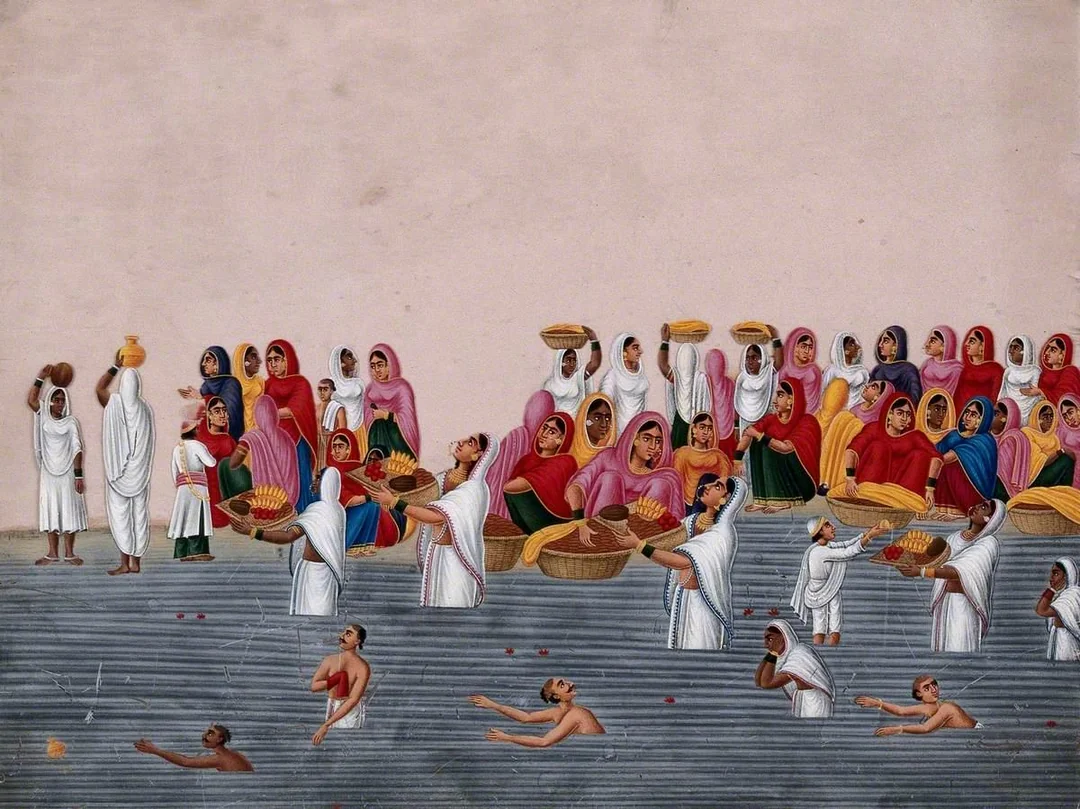
The Buddha addresses a brahmin in verses who believes in purification through bathing in river.

At that time, the brahmin Sundarika Bhāradvāja was seated not far from the Blessed One. Then, the brahmin Sundarika Bhāradvāja said to the Blessed One: “But, does venerable Gotama go to the Bāhukā river to bathe?”

“Why brahmin, go to the Bāhukā river? What can the Bāhukā river do?”

“Venerable Gotama, the Bāhukā river is regarded as meritorious by many people. Venerable Gotama, many people go to the Bāhukā river to wash away the injurious actions [1] they have done.”

Then the Blessed One addressed the brahmin Sundarika Bhāradvāja in verse:

“Bāhukā and Adhikakka, Gayā and Sundarikā; Sarassatī and Payāga [2], and the Bāhumati river— Even if an immature [3] person were to plunge into them repeatedly, his dark deeds would not be purified.

What can the Sundarikā river do? What the Payāga or the Bāhukā do? For a person who is violent and has committed injurious actions, these rivers will not purify the evil-doer.

For the pure one, every day is a sacred festival [4], For the pure one, every day is an observance day [5]; For the pure one, whose actions are clean, His practice [6] always succeeds; Bathe here itself brahmin, establishing a refuge (safety, security [khematā]) for all beings.

If you speak no falsehood, if you do not harm living beings; If you do not take what is not given, having faith and are free from stinginess; What will going to Gayā do for you? for any well is your Gayā.”

When this was said, the brahmin Sundarika Bhāradvāja said to the Blessed One: “Excellent, venerable Gotama! Excellent, venerable Gotama! Just as if one might set upright what had been overturned, reveal (uncover [vivarati]) what had been concealed, point out the way to one who was lost, or hold up a lamp in the dark so that those with eyes could see forms, in the same way, venerable Gotama, the Dhamma [7] has been explained (illustrated [pakāsita]) by you in many ways. I go for refuge to the Blessed One Gotama, to the Dhamma, and to the Saṅgha [8] of bhikkhus. May I receive the going forth in the presence of the Blessed One Gotama, may I receive the full ordination.”

Then the brahmin Sundarika Bhāradvāja received the going forth in the presence of the Blessed One, he received the full ordination. Having recently received full ordination, the venerable Bhāradvāja, dwelling alone, secluded, diligent, with continuous effort, and resolutely, soon realized with direct knowledge, in this very life, the unsurpassed culmination of the spiritual life, for the purpose of which sons of good families rightly go forth from the household life to the homeless life, and having personally attained it, he dwelled in it.

He understood: “Birth is ended, the spiritual life has been lived, what had to be done has been done, there is no more coming to any state of existence.” And the venerable Bhāradvāja became one among the arahants [9].


[1] injurious actions [pāpakamma] ≈ harmful, bad, potentially evil intention or action

[2] Payāga [payāga] ≈ name of a holy bathing place, modern day Allahabad

[3] immature [bāla] ≈ lacking in discernment or good sense, child-like in understanding

[4] sacred festival [phaggu] ≈ This refers to the Phagguna month in the traditional lunar calendar, which corresponds roughly to February-March in the modern calendar. This is a significant time for spiritual observances and other purification practices.

[5] observance day [uposatha] ≈ Occurring on specific lunar days such as the full moon, new moon, and quarter moons, this is a time for renewing virtue, deepening practice, and purifying the mind.

[6] practice [vata] ≈ spiritual practice, duty, vow

[7] Dhamma [dhamma] ≈ teachings of the Buddha that point to the nature of reality, the ultimate truth

[8] Saṅgha [saṅgha] ≈ The community of monks and nuns practicing in line with the Buddha’s teachings. In the broader sense, this is the community of disciples who have realized the noble path and fruition through the Buddha’s teachings

[9] arahants [arahant] ≈ fully awakened ones, free from all mental defilements; worthy of offerings and veneration; also an epithet of the Buddha

Picture: People Bathing and Praying in the Holy River Ganga, 19th century

0

Mind-Seal of the Buddhas, Patriarch Ou-i's Commentary on the Amitabha Sutra

preview

“This Pure Land teaching is all a matter of comprehending that Amitabha Buddha is precisely our own Buddha Nature, our Mind. If we mistakenly refer to the Buddha as “other”, we would fall into one form of delusive view. If we were to overemphasize our own inherent Buddha, this would be another form of delusive view. Both are wrong. Through our invoking the Buddha-name both at the phenomenal level and at the level of inner truth (noumenon), Amitabha and his retinue of saints appears before us: this is our inherent True Nature becoming manifest. Also, we are born in the Pure Land and see Amitabha and hear his teaching: this is perfecting the body of wisdom of our True Nature. This is not awakening through something other than ourselves. “

“This Pure Land teaching is all a matter of comprehending that Amitabha Buddha is precisely our own Buddha Nature, our Mind. If we mistakenly refer to the Buddha as “other”, we would fall into one form of delusive view. If we were to overemphasize our own inherent Buddha, this would be another form of delusive view. Both are wrong. Through our invoking the Buddha-name both at the phenomenal level and at the level of inner truth (noumenon), Amitabha and his retinue of saints appears before us: this is our inherent True Nature becoming manifest. Also, we are born in the Pure Land and see Amitabha and hear his teaching: this is perfecting the body of wisdom of our True Nature. This is not awakening through something other than ourselves. “