showing posts tagged #christianity — clear

0

A history of Jewish–Christian friendships

preview

(This takes approx. twelve minutes to read.)

Many familiar with the subject of Jewish life under premodern European Christendom frequently summarize it as an unending dystopia: Christian society not only impoverished Judaists in dilapidated ghetti but also figuratively and literally demonized, humiliated, tormented, expelled, and massacred Judaists.

That persecution certainly should not be overlooked, but it is also true that many premodern Christians (mostly lower‐class ones) befriended, assisted, defended, and cohabited with Judaists. These instances demonstrate that Jewish life under Christendom did not have to be dystopian.

Quoting Rodney Stark’s The Rise of Christianity: A Sociologist Reconsiders History, pages 68–9:

There is recent physical evidence (or what insiders sometimes call realia) suggesting that the Christian and Jewish communities remained closely linked—intertwined, even—until far later than is consistent with claims about the early and absolute break between church and synagogue. The realia are both archaeological and documentary.

Eric Meyers (1983, 1988) reported that a wealth of archaeological findings in Italy (especially in Rome and Venosa) show that “Jewish and Christian burials reflect an interdependent and closely related community of Jews and Christians in which clear marks of demarcation were blurred until the third and fourth centuries C.E.” (1988:73–74).

Shifting to data from Palestine, Meyers noted excavations in Capernaum (on the shores of the Sea of Galilee) that reveal “a Jewish synagogue and a Jewish–Christian house church on opposite sides of the street. […] Following the strata and the structures, both communities apparently lived in harmony until the seventh century C.E.” (1988:76). Finally, Meyers suggested that only when a triumphant Christianity began, late in the fourth century, to pour money into Palestine for church building and shrines was there any serious rupture with Jews.

Roger Bagnall reported a surviving papyrus (P.Oxy. 44) from the year 400 wherein a man “explicitly described as a Jew” leased a ground‐floor room and a basement storage room in a house from two Christian sisters described as apotactic monastics:

The rent is in line with other lease payments for parts of the city known from the period, and the whole transaction is distinguished by its routineness. All the same, the sight of two Christian nuns letting out two rooms in their house to a Jewish man has much to say about not only the flexibility of the monastic life but also the ordinariness of [Christian–Jewish] relationships. (1993: 277–278 )

These data may strike social scientists as thin, but they seem far less ambiguous and far more reliable than the evidence with which students of antiquity must usually work.

Markus Bockmuehl’s “Friendship between Jews and Christians in Antiquity” in Looking In, Looking Out: Jews and Non‐Jews in Mutual Contemplation, pages 308–9:

Chrysostom’s ill‐mannered rant eloquently attests the strength of what he rejects the widespread pattern of friendly social and religious relations between two remarkably interconnected communities. Christians kept feasts and fasts in the synagogues for the great autumn festivals of Rosh Ha‐Shanah, Yom Kippur, and Sukkot (Adv. Jud. 1.1.5), as well as Passover (3.3.6, 3.6.7; 4.4.4–5.4).⁵² A woman was required by a fellow Christian to seal a business transaction by an apparently superior oath in the synagogue (1.3.4).

Chrysostom’s concern at the widely intertwined lives of Christians and Jews was equally shared by church authorities in Asia Minor, including in Phrygia. The influential Council of Laodicea (c.363) sought to ban Christians from Sabbath‐keeping (Canon 29), celebrating festivals of the Jews or accepting gifts from them on such occasions (37), or indeed from eating their unleavened bread (38).⁵³

Meanwhile, by the late fourth century, Christians had long tended and perhaps appropriated the cult of the Maccabean martyrs, somewhat curiously translated to Antioch.⁵⁴

Despite Chrysostom’s best efforts, Antioch clearly showed very little inclination to effect a definitive “parting of the ways,” even while Christianity gained political and cultural ascendancy during the fourth century.

Chrysostom’s own teacher Libanius of Antioch (314–393), a prominent rhetorician and friend of the Emperor Julian, fostered networks of acquaintance with both Jews and Christians and numbered several future church fathers among his students. He corresponded with Priscianus the Governor of Palestine on behalf of the Jewish community and expressed to the Jewish Patriarch (probably Gamaliel V) his distress at recent harassment of the Jewish people.⁵⁵

In such relationships with both intertwined communities, this public intellectual attached great importance “to friendship […], to the rule of law and justice, and to divinely inspired human community as the essential foundation for human welfare.”⁵⁶

Jonathan Elukin’s Living Together, Living Apart: Rethinking Jewish–Christian Relations in the Middle Ages, pages 14–15:

As Severus looked back to a time before the period of conflict, he recalls that relations between Jews and Christians had been marked by a warm civility. “In the end,” he writes, “even the obligation of greeting one another was suddenly broken off, and not only was our old habit of easy acquaintance disrupted, but the sinful appearance of our longstanding affection was transformed into temporary hatred, though for love of eternal salvation.”¹¹

The bishop could not create a false history of the island where Christians had always been antagonistic toward Jews. Some kind of social peace had prevailed before the arrival of the relics. That was what was so galling to the radicalized cleric.

In addition to the normal bonds of neighbors, Jews and Christians shared a common liturgical culture based on Scripture. This connection was apparent even to Severus when he remembered the preliminaries to a debate between the two communities. As Jews and Christians marched together to a synagogue for a public debate, “along the way we began to sing a hymn to Christ in our abundance of joy. Moreover, the psalm was ‘Their memory has perished with a crash and the Lord endures forever’ [Ps. 9:7–8], and the throng of Jews also began to sing it with a wondrous sweetness.”¹²

Did the two groups use the same tune, or did Jews sing in Latin or Greek with the Christians? Or did the Jews recognize the psalm and begin a counter singing in Hebrew? Whatever the case, Severus recognized that the intimate sounds of liturgical music and a shared if contested Scripture connected the two communities.

Joshua Trachtenberg’s The Devil and the Jews: The Medieval Conception of the Jew and Its Relation to Modern Antisemitism, pages 159–161:

It is a striking consideration, in this regard, that despite the virulent anti‐Jewish campaign of the early Church, relations between Jews and Christians were not materially embittered. Indeed, the period between the break‐up of the Roman Empire and the Crusades—roughly the sixth to the eleventh centuries—was comparatively favorable for the Jews.

Their unhappy experience in Visigothic Spain after its conversion from Arianism to Catholicism and the wave of expulsions during the seventh century were the result of official antagonism rather than of any strongly felt popular resentment. In general it may be said that social and economic relations remained good. Some Christians continued for a long time to observe their feasts and festivals on the Jewish dates and together with Jews.

The constantly reiterated fulminations of Church authorities against close social and religious intercourse between the two groups (“It comes to such a pass that uneducated Christians say that Jews preach better to them than our priests,” complained Agobard ¹), against eating and drinking and living with Jews, testify to their unimpaired and cordial intimacy. Even the clergy had to be forbidden from time to time to be friendly with Jews.

Reporting his amicable discussions with Rabbi Simeon Hasid of Treves, Gilbert Crispin, Abbot of Westminster in the eleventh century, says: “He often used to come to me as a friend both for business and to see me […] and as often as we came together we would soon get talking in a friendly spirit about the Scriptures and our faith.” ² In the tenth and eleventh centuries we hear of Jews receiving gifts from Gentile friends on Jewish holidays, of Jew leaving the keys to their homes with Christian neighbors before departing on a journey.

In Champagne, where Jews engaged extensively in viticulture and wine making, they freely employed Gentiles in their vineyards, and the rabbis set aside the ancient ritual prohibition against the use of this wine on the ground that Christians are not idolaters. Christians took service in Jewish homes as nurses and domestics, and Jewish traders dealt in ecclesiastical articles. Business relations were markedly free and close, and there are many instances of commercial partnerships between adherents of the two faiths.

Nor did the sporadic dissemination of anti‐Jewish propaganda by clerical preachment disturb these generally amicable relations sufficiently to arouse a sense of insecurity and alienness on the part of the Jew. The Jews of France, for instance, called the French language “our language,” and some eminent scholars of this period bore French names, e.g., Judah HaKohen, who was known as Léontin, and Joseph, known as Bonfils.

The use of French names was even more marked in England, where Norman French was the vernacular of the Jews no less than of the aristocracy; and a similar process of cultural adaptation prevailed throughout Central and Southern Europe. These are assuredly tokens of a cultural and social affinity which could not have flourished in an atmosphere of unrelieved suspicion and hostility.³

It will not do to idealize this situation; the distinction between the earlier and the later medieval periods, so far as the popular attitude toward the Jew is concerned, must not be overly formalized. Even in the earlier period, of course, there were signs pointing toward the later attitude, but they multiplied very slowly at first and gathered momentum only in the twelfth and the succeeding centuries, until the slowly changing picture was wholly transformed by that unmitigated hatred of the Jew which we have come to characterize as medieval.

Christopher Tuckwood’s ‘From Real Friend to Imagined Foe: The Medieval Roots of Anti‐Semitism as a Precondition for the Holocaust’:

Other sources confirm that it was common at the time for Christians and Jews to dine together on kosher food, discuss religious ideas, and for Christians to adopt Jewish customs such as resting on Saturday and celebrating Jewish holidays while neglecting their own. Such practices likely even extended to the imperial court, and clerical alarm is thus not surprising.¹²

Katherine Aron‐Beller’s Christian Images and Their Jewish Desecrators: The History of an Allegation, 400–1700, pages 106–107:

When the anonymous Christian author of the 1286 Majorca disputation addressed the Christian practice of using images and crosses in churches, the Christian interlocutor Inghetto Contardo, having been accused of idolatry by his Jewish opponent, put forward an unusual argument.⁷ He rejected the accusation by suggesting that if there was a [humanitarian] need, he would destroy an image himself:

We do not venerate idols and images but we venerate the God of heaven, the Father, and His only Son, our Lord Jesus Christ. […] And indeed I say to you that if I had a wooden cross or image, and I had nothing with which to heat water for my Christian brother, or my Jewish friend were they to fall sick, I would put the cross and the image in the fire and burn them.

Robert Chazan’s “Philosemitic Tendencies in Medieval Western Christendom” in Philosemitism in History, pages 47–8:

Jewish sources recurrently mention pleas on the part of friendly Christians to Jews, urging the latter to convert in order to save themselves. These pleas do not seem to have been inspired by genuine missionizing ardor. Rather, they seem to reflect the simple desire of Christians to save Jewish neighbors at all costs.

The story of the Jews of Regensburg is told elliptically in the Solomon bar Simson Narrative: The burghers of Regensburg “pressed them [the Jews of the town] against their will and brought them into a certain river. They made the evil sign in the water — the cross — and baptized them all simultaneously in that river.”³² The fact that the Jews of Regensburg are reported to have returned almost immediately to Judaism reinforces the sense of an act performed by well‐intentioned burghers in order to save endangered Jewish neighbors.

Curious and intriguing evidence of warm Christian–Jewish relations is available from more peaceful circumstances as well. Joseph Shatzmiller has studied in depth an unusual court record from fourteenth‐century Marseilles.³³ There, a Jewish moneylender named Bondavid was accused of attempting to collect a debt twice and chose to defend his reputation in court.

During the protracted deliberations, Bondavid brought on his behalf a set of Christian witnesses, who testified to his exceptional character and generosity. Human relations are always reciprocal. The testimony offered by the Christian witnesses attests to Bondavid’s warmth and generosity toward Christians in need. In return, the Christian witnesses to his largesse took the trouble to make court appearances and to praise Bondavid’s character lavishly.

Daniel Jütte’s Interfaith Encounters between Jews and Christians in the Early Modern Period and Beyond: Toward a Framework:

For instance, there is the well‐known case of the humanist and Hebraist Johannes Reuchlin (1455–1522), who became the target of a campaign spearheaded by the Dominicans, at least in part because of his close relationships with Jewish scholars.²²

Another example is the famous eighteenth‐century court Jew Joseph Süß Oppenheimer (“Jud Süß”), whose surviving letters to the Duke of Württemberg reveal a degree of intimacy that can be called friendship. Indeed, Oppenheimer even used the second‐person address “Du” in those letters—an extremely rare privilege reserved mainly for fellow sovereigns and immediate family members.²³

One can, of course, object that these cases were exceptional because they involved two unrepresentative protagonists, a scholar and a court Jew. To counter this argument, it is necessary to examine the dimension of everyday life. This does not imply an irenic concept of daily life—indeed, prejudice and hatred were a common feature of premodern social life in all strata of society.

On the other hand, recent studies on hatred as a social institution in premodern Europe show that except in times of crisis, everyday Jewish–Christian relations were quite the opposite of what one might expect. Daniel Lord Smail has convincingly shown that in late medieval Marseilles, “Jew–Christian confrontations were relatively infrequent.”

By contrast, cases of “intracommunity confrontations among Jews” were far more frequent, given the small size of the Jewish community.²⁴ In light of this, consigning minorities such as Jews to an “otherly status” in premodern society is debatable.²⁵

Katherine Aron-Beller’s ‘Sodomy, Homosociality and Friendship among Jewish and Christian Men: The Proceedings Against Lazarro de Norsa (Modena, 1670)’, page 128:

It is difficult to know but there is a suggestion of some sort of kinship being established—a solidarity, a pattern of giving and receiving favors—that demanded that the Jewish tailor be protected. Francesco di Rossi testified that the Jew was “well‐liked by Christians in Modena”: “The Jew is held as a good person. I am able to swear that I have never heard disconcerting words from his mouth.”⁷¹

Katherine Aron‐Beller’s ‘Christians in Jewish Houses: The Testimony of the Inquisition in the Duchy of Modena in the 17th Century’:

When the nineteen‐year‐old Giuseppe Melli was prosecuted by the inquisitors in 1623 for holding a double wedding of poor Jews in his father Emilio’s house in Finale Emilia in 1620, he admitted to allowing Christians to take part in the singing and dancing.¹⁷ The inquisitorial vicar Don Baldassarre Passerini interrogated over twenty Christians, who were reprimanded for socializing and dancing with Jewish women.¹⁸

When Giuseppe was asked whether it was normal practice for Christians and Jews of the town to mingle together, he replied in the affirmative.¹⁹ When he listed some of the Christians who participated, the inquisitorial vicar Giovanni Vincenzo Reghezza was shocked that his list included some of the most prominent local Christian noblemen.²⁰

In fact, certain Christian witnesses testified that the whole of the town had come, many out of curiosity so that they might enter the home of a prominent Jew.²¹ Others noted that they had attended because the Jews were their friends.²²

[…]

In 1680, the situation was even more scandalous when it appeared that fraternization between Jews and Christians included members of the clergy. The inquisitorial vicar in Finale Emilia, Fra Girolamo Moretti, was denounced to the Holy Office by Father Provincial of the Conventual Franciscans of Bologna, for participating in social gatherings with Jews and even for eating unleavened bread during the Jewish festival of Passover.²⁸

One Jewish witness, Elia Benedetto Castelfranco, was able to confirm that the vicar had sat with him a few years earlier in his sukkah: the temporary abode (booth) which Jews build as an attachment to their home during the festival of Tabernacles.²⁹ These gatherings of Christians in the homes of Jews seem to have nurtured knowledge of Jewish practices and also personal friendships and genuine trust.

(Emphasis added in all cases.)

The enmity between many premodern Christians and Judaists cannot be deduced as some sort of natural and inevitable byproduct of Christian teaching. Rather, it was a political decision: whether it eliminating (potential) economic competition, seizing others’ property or distracting ordinary people from their real problems (typically the upper classes), those who reduce the cause to the Christian justification only put the cart before the horse.

May your presence be a blessing to Jews, as theirs is to you.
0

Adam & Eve: An Encyclical and the Progress of Science - Vatican Observatory

Vatican Observatory Adam & Eve: An Encyclical and the Progress of Science - Vatican Observatory www.vaticanobservatory.org
preview

I know most Catholics are evolutionists and I’ve had a hard time wrapping my head around reconciling that with the doctrine of original sin

I know most Catholics are evolutionists and I’ve had a hard time wrapping my head around reconciling that with the doctrine of original sin

0

If there are still any "Elizabeth Bruenig is good" hold outs you should know she just released a piece explicitly against the idea of a ""Christian" "left""

preview

Because christians may lose their identity if they align with Democrats (Who are the left). I.e. they may pursue policies that are not socially conservative (Which would be devastating)

archive.vn/tLnIT

Edit: She also just doesn’t seem to know about the existence or history of black churches

Because christians may lose their identity if they align with Democrats (Who are the left). I.e. they may pursue policies that are not socially conservative (Which would be devastating)

archive.vn/tLnIT

Edit: She also just doesn’t seem to know about the existence or history of black churches

0

On the Issue of Jesus Being 50

preview

I’ve read multiple posts opposing and advocating Irenaeus’ view, but I hardly hear of any other historical church father/writer supporting this view. Yes, his arguments are interesting, but what did his contemporaries, and those before him say also? Help a friend 🙏

I’ve read multiple posts opposing and advocating Irenaeus’ view, but I hardly hear of any other historical church father/writer supporting this view. Yes, his arguments are interesting, but what did his contemporaries, and those before him say also? Help a friend 🙏

0

Did Early Christians Mourn the Destruction of the Temple of al-Quds/Jerusalem?

TheTorah.com Did Early Christians Mourn the Destruction of the Temple? - TheTorah.com www.thetorah.com
preview

Another reason many think that early Christ believers did not mourn the loss of the Temple is because, for many NT authors, Jesus stood in place of the Temple or sacrificial cult. John (2:21) relates to “the Temple of his body” (implying that Jesus’ body is the new Temple), and argues that worship “in Spirit and Truth” takes its place (4:23). In the Letter to the Hebrews, Christ is the high priest who atones at the heavenly Temple with his own blood.[5]

But there is no innate contradiction between the belief that Jesus is the heir to the Temple’s religious center on the one hand, and the memory of the Temple as a legitimate and authoritative institution on the other.[6]

In fact, the early Christ believers continued to be preoccupied with the Temple and the sacrificial system for some time after the destruction. 1 Clement, namely, the letter of Clement of Rome, one of the early church fathers, to the Corinthians, which is usually dated to the last years of the first century C.E., shows this clearly.

Like the Letter to the Hebrews, Clement relates to Jesus Christ as “the high priest of our offerings” (Ἰησοῦν Χριστόν τὸν ἀρχιερέα τῶν προσφορῶν ἡμῶν; 36:1). At the same time, Clement says that the priests and the Levites who serve at G-d’s altar are the greatest gifts of G-d—along with Jesus, the kings of Judah, etc.

He acknowledges their rôles and service, including that of the high priest, and describes the laws of sacrifices:

1 Clement 40:2 He has enjoined offerings |to be presented¦ and service to be performed |to Him¦, and that not thoughtlessly or irregularly, but at the appointed times and hours…. 40:4 Those, therefore, who present their offerings at the appointed times, are accepted and blessed; for inasmuch as they follow the laws of the Lord, they sin not. 40:5 For his own peculiar services are assigned to the high priest, and their own proper place is prescribed to the priests, and their own special ministrations devolve on the Levites…. 41:2 Not in every place, brethren, are the daily sacrifices offered, or the peace-offerings, or the sin-offerings and the trespass-offerings, but in Jerusalem only. And even there they are not offered in any place, but only at the altar before the Temple, that which is offered being first carefully examined by the high priest and the ministers already mentioned. 41:3 Those, therefore, who do anything beyond that which is agreeable to His will, are punished with death.[7]

In other words, Clement of Rome saw no contradiction between his Christological belief and his appreciation of the priests as if they were still offering sacrifices on the altar!

0

Mediterranean Migration Crisis: Pope Leo XIV Condemns Devastating Economic System Leaving 1,397 Dead

teleSURenglish Mediterranean Migration Crisis: Pope Leo XIV Condemns Devastating Economic System Leaving 1,397 Dead - teleSUR English www.telesurenglish.net
preview

cross-posted from: news.abolish.capital/post/61990

Pope Leo XIV mourns the victims of the Mediterranean migration crisis on the shores of Lampedusa.

Pope Leo XIV visits Lampedusa to mourn the tragic victims of the Mediterranean migration crisis, condemning the brutal economic systems and European indifference.

Related: Pope Leo XIV Calls for International Solidarity With Venezuela


Mediterranean Migration Crisis: Pope Leo XIV Condemns Devastating Economic System Leaving 1,397 Dead

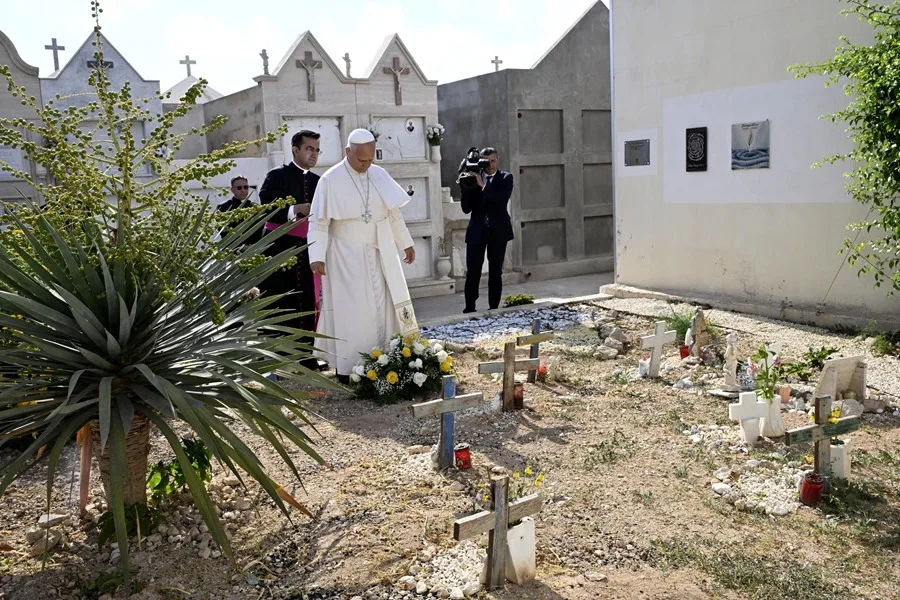
Pope Leo XIV made a historic visit to the Italian island of Lampedusa on Saturday, July 4, 2026, shining a global spotlight on the ongoing Mediterranean migration crisis. The Supreme Pontiff honored the thousands of deceased migrants who have perished on the central maritime route, forcefully denouncing the profound humanitarian emergency that continues to ravage the region. In a poignant continuation of the critical stance initiated by his predecessor, Pope Francis, the new leader of the Catholic Church condemned the systemic indifference and restrictive asylum policies of the European continent.

During his intensely emotional four-hour agenda, the leader of the Catholic Church visited the local cemetery to lay a floral wreath upon the graves of unidentified refugees. These nameless markers stand as a stark testament to the Mediterranean migration crisis, representing lives swallowed by the sea while attempting to reach a continent that increasingly fortifies its borders. The Pope paused specifically before the grave of Yusuf, a six-month-old Guinean baby who tragically died while awaiting a delayed emergency medical evacuation.

The infant’s death underscores the harsh reality of the Mediterranean migration crisis, where bureaucratic delays and a lack of rapid response mechanisms frequently result in preventable fatalities. Yusuf’s story is not an isolated incident, but rather a reflection of the systemic failures that human rights organizations have repeatedly highlighted. By kneeling at this specific grave, Pope Leo XIV sent a clear diplomatic message to Western governments regarding the sanctity of human life over border security protocols.

Later in the day, the head of the Catholic Church proceeded to the Favaloro Pier, a location deeply symbolic of the Mediterranean migration crisis, to bless a commemorative plaque honoring the previous Pope’s legacy and to meet privately with a recently arrived refugee family. In a deeply moving gesture, Leo XIV walked alone toward a rocky coastal area facing the open sea, spending several minutes in silent contemplation of the waters where thousands of people fleeing war and abject misery have disappeared.

This solitary moment by the water’s edge served as a powerful visual condemnation of the Mediterranean migration crisis. The visual of the pontiff against the vast, unforgiving sea highlighted the immense peril faced by asylum seekers, emphasizing that the waters separating Africa and Europe have been transformed into one of the largest mass graves in contemporary human history.

The Statistical Reality of the Mediterranean Migration Crisis

According to the latest updated statistics from international humanitarian agencies, an estimated 1,397 people have died or gone missing in the Mediterranean Sea during the first half of 2026 alone. This devastating toll is a direct manifestation of the Mediterranean migration crisis, representing an alarming and tragic increase compared to the previous year. Human rights observers argue that this rising death toll is not a natural disaster, but a predictable consequence of deliberate political choices and the increasing militarization of maritime borders.

The staggering figures from the first semester of 2026 clearly evidence the catastrophic failure of the European continent’s migration policies. Despite numerous summits and multilateral agreements, the Mediterranean migration crisis continues to escalate, driven by policies that prioritize deterrence over safe and legal pathways for those seeking asylum. The European Union’s strategy of outsourcing border control to third countries has demonstrably failed to save lives, instead pushing migrants onto deadlier and more precarious routes.

During his deeply critical homily, the Bishop of Rome unequivocally stated that those who perish at sea are direct victims of the political decisions made—and omitted—by the Global North. He framed the Mediterranean migration crisis not merely as an unfortunate tragedy, but as an active injustice perpetrated by wealthy nations. The pontiff argued that the refusal to establish coordinated, state-led search and rescue operations constitutes a moral failing that deliberately exposes vulnerable populations to extreme maritime hazards.

The Pope directly assigned responsibility to a global economic system that fundamentally generates structural poverty and social exclusion. By addressing the root causes of the Mediterranean migration crisis, Leo XIV shifted the narrative away from border management and toward global wealth disparity. He emphasized that the exploitation of the Global South by advanced capitalist economies creates the very conditions of misery and instability that force millions to abandon their homelands in desperate search of survival.

Furthermore, the pontiff strongly denounced the “criminal calculations” of those who profit from the pain of others, specifically targeting the human smuggling networks that thrive in the shadows of restrictive border policies. The Mediterranean migration crisis has spawned a lucrative illicit economy, where desperate individuals are treated as commodities. The Pope condemned the hypocrisy of a system that simultaneously extracts wealth from developing nations while violently repelling the very people displaced by that extraction.

Geopolitical Context: European Indifference and Border Externalization

The broader geopolitical implications of the Mediterranean migration crisis reveal a deeply fractured international order characterized by extreme inequality and geopolitical maneuvering. For over a decade, the European Union has steadily shifted toward a policy of border externalization, pouring billions of euros into agreements with North African transit countries like Libya and Tunisia to intercept migrant vessels before they reach European territorial waters. This strategy essentially outsources the humanitarian burden, allowing European capitals to maintain a veneer of human rights compliance while financing containment strategies in regions known for severe human rights abuses.

These bilateral agreements are central to the perpetuation of the Mediterranean migration crisis, as they trap vulnerable populations in cycles of detention, extortion, and violence in North Africa. Global watchdogs have meticulously documented the horrific conditions in foreign detention centers funded by European taxpayer money, yet the political establishment in Brussels continues to expand these partnerships. The externalization of borders serves as a geopolitical shield, isolating wealthy European economies from the immediate visual and political fallout of the displacement they indirectly help create through unequal trade and foreign policy.

Furthermore, the Mediterranean migration crisis intersects with broader global conflicts, proxy wars, and resource extraction campaigns driven by Western interests in the Middle East and Sub-Saharan Africa. The arms trade and aggressive neo-colonial economic policies destabilize entire regions, generating massive refugee outflows. Pope Leo XIV’s critique strikes at the heart of this geopolitical hypocrisy, highlighting that nations eagerly exporting weapons and extracting minerals are the same nations erecting impenetrable maritime fortresses to block the human fallout of their geopolitical strategies.

Lampedusa’s Solidarity Amidst the Mediterranean Migration Crisis

Amnesty International – Global Refugee and Asylum Seeker Rights

Concluding his pastoral and diplomatic visit, Leo XIV expressed his profound gratitude to the inhabitants of Lampedusa for their historic, unwavering labor of welcome and solidarity. The small island community has been at the geographical epicenter of the Mediterranean migration crisis for decades, often bearing the logistical and emotional weight of the emergency alone. The Pope praised the islanders for stepping up where regional governments have failed, providing first aid, shelter, and basic human dignity to survivors arriving on their shores.

The contrast between local empathy and regional apathy is a defining characteristic of the Mediterranean migration crisis. While the residents of Lampedusa pull drowning men, women, and children from the water, national and supranational governments debate quotas and security budgets. The pontiff highlighted this stark dichotomy, noting that the genuine fraternity demonstrated by the island’s population stands in sharp rebuke to the calculated, often hostile rhetoric dominating European parliamentary debates on immigration.

Drawing powerful theological parallels, the pontiff compared the contemporary territorial situation to biblical narratives of exile and exploitation. He pointed out that within the context of the Mediterranean migration crisis, thousands of human beings continue to fall into the hands of ruthless mafias and transnational corporations. These illicit organizations systematically strip migrants of everything they own, turning their desperation into a multi-billion-dollar transnational enterprise that operates with alarming impunity across borders.

Ultimately, the Pope’s intervention framed the Mediterranean migration crisis as the defining moral test of the 21st century. His words served as a clarion call for a radical restructuring of global economic priorities, demanding a transition from a profit-driven geopolitical model to one centered on human dignity. Until the structural inequities of global capitalism are addressed, the pontiff warned, the tragic scenes witnessed on the shores of Lampedusa will only continue to multiply, staining the conscience of the international community.


From teleSUR English via This RSS Feed.

0

Prosperity preacher Kenneth Copeland has given his first interview in years. Here’s what we learned

Premier Christianity Prosperity preacher Kenneth Copeland has given his first interview in years. Here’s what we learned www.premierchristianity.com
preview

If you’ve got the time and want to understand the prosperity gospel, this is actually a pretty good interview. Bryce lets Copeland unpack what he believes without interrupting, challenges gently and nails the crucial difference: that the prosperity gospel means that, ultimately, people don’t follow Jesus simply to follow Jesus, but to have a materially better life. I don’t think Copeland ever responds adequately to that.

If you’ve got the time and want to understand the prosperity gospel, this is actually a pretty good interview. Bryce lets Copeland unpack what he believes without interrupting, challenges gently and nails the crucial difference: that the prosperity gospel means that, ultimately, people don’t follow Jesus simply to follow Jesus, but to have a materially better life. I don’t think Copeland ever responds adequately to that.

0

How important are american evangelicals in this day and age?

preview

I just read American Apocalypse: A History of Modern Evangelicalism, there was a lot about the early history I didn’t know about, like how it started mostly because WW1 basically validated the beliefs of a lot of people that thought the world was ending soon, and how a lot of them were actually pacifists and not christian nationalists, but around WW2 evangelicals became what we know them as today, although there was temporarily an active left-wing faction during the american civil rights era. It delves into just how much they become one of if not the strongest interest group around the Reagan era, and how oddly it must’ve felt to have a president that thought the world was gonna end, that was the craziest part to me I didn’t know that a central tenet of fundamentalism and evangelicals is that they’re actively waiting for the world to end, and making decisions around that, kinda reminded me of a, not totally illogical, tendency of some internet leftists to predict a kind of final crisis which ushers in socialism in our lifetimes.

The book end during obama’s second term, so it doesn’t delve into how the movement is currently doing, and personally I hear a lot less about them that I did during trump 1. So what do people here think, has it all been subsumed into trumpism? Or has it been subsumed into zionism, with the original christian message becoming secondary? Is it spreading or decreasing inside america?

More importantly to me, is it actually spreading OUTSIDE north america? Part of why I started reading this was because I heard that it was, mostly to south america, and the overly emotional tone and messianism of american fundamentalists reminded me of the far-right here in portugal (which isn’t protestant).

0

What's up with people who think god talks to them?

preview

The thread about “hearing” ChatGPT and internal monologues made me wonder about this.

I don’t mean “prophets” here, but even just people saying “I’m hearing a word” or otherwise feel they’re receiving guidance? I grew up around a “charismatic” protestant group and that shit was everywhere. It kind of fucked me up because I never heard a peep of guidance or response from God, so I assumed I was wrong or bad in some way.

Surely a message from GOD would be unmistakable and impossible to confuse for one’s own thoughts and feelings.

0

In First Encyclical, Pope Leo Warns Against Unrestrained AI in Hands of Mega-Rich Few | Common Dreams

Common Dreams In First Encyclical, Pope Leo Warns Against Unrestrained AI in Hands of Mega-Rich Few | Common Dreams www.commondreams.org
preview

cross-posted from: news.abolish.capital/post/52018

Pope Leo XIV on Monday released a 42,000-word encyclical calling for government regulation of artificial intelligence and implored world leaders to ensure the burgeoning technology is used for the benefit of all humankind—not concentrated in the hands of a powerful, profit-seeking few.

Leo warned in the first major theological document of his papacy that unrestrained AI and its potentially far-reaching impacts—including mass job loss, environmental degradation, and increasingly catastrophic warfare—heightens the “risk of dehumanization,” subjugating much of humanity in the name of “greater efficiency” and technological advancement.

“As with every major technological shift, AI tends to amplify the power of those who already possess economic resources, expertise, and access to data,” Leo wrote in the document, titled Magnifica Humanitas. “In light of the common good and the universal destination of goods, this raises serious concerns, since small but highly influential groups can shape information and consumption patterns, influence democratic processes, and steer economic dynamics to their own advantage, undermining social justice and solidarity among peoples.”

Leo warned that eliminating jobs en masse by replacing human beings with robots—an aim of some of the most powerful companies in the world, including the e-commerce behemoth Amazon—without adequate protections and compensation for impacted workers would be morally obscene and calamitous to social order.

“A society that guarantees employment to only a small fraction of the population, despite having a high level of technical development, risks exposing many to forced inactivity, a lack of responsibility, and the absence of daily tasks and stimuli, resulting in human and cultural impoverishment,” the pope wrote. “This creates a paradox of material progress and anthropological regression that undermines the foundations of a just and stable social peace.”

In the era of #ArtificialIntelligence, when human dignity is threatened by new forms of dehumanization, ours is the pressing duty to remain profoundly human. We must lovingly safeguard the grandeur of humanity bestowed upon us and revealed in its fullness in Christ, the splendor…
— Pope Leo XIV (@Pontifex) May 25, 2026

Leo cautioned against the growing use of AI in military conflict, a warning delivered alongside the CEO of the artificial intelligence firm Anthropic, which was embroiled in a tense and public dispute with the Trump administration earlier this year over the use of the company’s technology for military purposes and mass surveillance. The pontiff has also clashed with the Trump administration, which has attacked Leo for publicly criticizing the US-Israeli war on Iran.

“No algorithm can make war morally acceptable,” reads the pope’s encyclical. “AI does not remove the intrinsic inhumanity of conflict; indeed it can only bring about conflict more quickly and render it more impersonal, lowering the threshold for resorting to violence, transforming defense into threat prediction and thus reducing victims to data. In this way, it will accustom us to the idea that violence is inevitable and needs only to be optimized.”

Leo, whose warnings about the implications of rapid advancements in AI technology echoed concerns expressed by progressive lawmakers in the US and around the world, made clear that he doesn’t view new technology, including AI, as inherently “antagonistic to humanity,” noting that “technological development has significantly improved the living conditions of humanity.”

“At the same time, each phase of progress has also revealed the ambiguity of tools that can cause harm when not oriented toward the good,” Leo wrote. “It is necessary to establish adequate regulatory tools capable of upholding justice and curbing the distorting effects of technological power.”

“Crucial questions impose themselves on our conscience,” he added, “and can no longer be avoided: Where are we going? Toward what goal do we wish to orient ourselves? What direction should we choose as a people and as a human community?”


From Common Dreams via This RSS Feed.

0

Letter from the Pope arrived - Magnifica Humanitas | On Safeguarding the Human Person in the Time of Artificial Intelligence

Encyclical Letter of His Holiness Leo XIV Magnifica Humanitas (15 May 2026) www.vatican.va
preview

The Holy Father has sent in a silly letter. We shall neither print it nor and reply to him.

The Holy Father has sent in a silly letter. We shall neither print it nor and reply to him.

0

Latin Patriarch of al-Quds/Jerusalem says extremism gaining ground in settler society amid war on Gaza

Middle East Monitor Latin Patriarch of Jerusalem says extremism gaining ground in Israeli society amid Gaza war www.middleeastmonitor.com
preview

Latin Patriarch of Jerusalem Cardinal Pierbattista Pizzaballa has warned that extremism is increasingly gaining traction within parts of Israeli society amid the Gaza conflict, saying a growing “culture of contempt” toward Arabs and non-Jews is becoming amplified by media narratives, Anadolu Agency reports.

Speaking in an interview with Italian daily Corriere della Sera, Pizzaballa said the atmosphere created after the Oct. 7, 2023 attacks and Israel’s subsequent military campaign in Gaza contributed to the rise of extremist rhetoric.

“Unfortunately extremism is gaining traction in this context,” the cardinal said. “We are seeing its consequences in certain sectors of Israeli civil society. Not everyone, of course, I would say it is not the majority.”

“But the culture of contempt for everything that is not theirs, not only for everything Arab but for everything that is not Jewish, is unfortunately growing,” he added.

Calling the trend deeply troubling, Pizzaballa warned that such attitudes were increasingly visible in public discourse.

“It is a diseased germ within a society, amplified by the media, and something we must work to contain before it becomes truly alarming,” he said.

The patriarch said the region’s worsening violence reflected a broader failure of political leadership and dialogue.

“The gravity of the situation in the Middle East, and obviously not only there, must be addressed within the framework of international legality and without adding more victims,” he said.

Pizzaballa also referred to war as a “new idolatry,” saying political actors increasingly resort to military confrontation instead of negotiations.

He added that after Oct. 7 and the war that followed, many people now believe “dialogue counts for nothing.”

“After Oct. 7 and everything that followed, it seems dialogue counts for nothing, and that those with money and power can do whatever they want,” he said.

Asked whether he still believed in the possibility of a two-state solution to the Israel–Palestine conflict, Pizzaballa said: “Yes and no.”

“And I realize that although I am a Franciscan, I am responding like a Jesuit,” he added.

He explained that “from a practical point of view” the establishment of two states currently appears impossible because “there is no territorial continuity.”

Still, he insisted Palestinians could not be denied their aspirations for statehood and dignity.

“You cannot tell Palestinians they have no right to a future in their own home,” he said. “You cannot take away from them, at the very least, that desire.”

The cardinal also condemned the use of religion to justify violence, calling it “the gravest sin one can commit.”

“You cannot use the name of G-d to justify violence,” he said, warning that religious narratives should not be monopolized by extremists.

0

Video (series) on the history of Catholicism?

preview

I was raised Mormon so not only do I know nothing, I know a lot of wrong things. Is there a series that goes over the material circumstances, history, events, etc of Catholicism?

I was raised Mormon so not only do I know nothing, I know a lot of wrong things. Is there a series that goes over the material circumstances, history, events, etc of Catholicism?

0

Poland voices outrage over apartheid soldier’s disrespect of Virgin Mary statue

Middle East Monitor Poland voices outrage over Israeli soldier’s ‘disrespect’ of Virgin Mary statue www.middleeastmonitor.com
preview

Poland’s Foreign Ministry expressed “strong concern” on Thursday over an incident involving an Israeli soldier in Lebanon who showed “disrespect” toward a statue of the Virgin Mary, saying such actions offend the religious sentiments of Christians, Anadolu reports.

“The Ministry of Foreign Affairs of the Republic of Poland expresses strong concern regarding another incident involving a soldier of the Israeli Defense Forces (IDF) in Lebanon, who showed disrespect toward the figure of the Virgin Mary. Such actions offend the religious sentiments of Christians,” the ministry said in a statement on the U.S. social media platform X (formerly known as Twitter).

The statement reminded that every state has a responsibility to respect the right to freedom of thought, conscience and religion as outlined in Article 18 of the Universal Declaration of Human Rights.

“By joining the UN, Israel accepted the organization’s values as expressed in the Declaration,” the statement said, adding that similar principles are reflected in Israel’s Declaration of Independence and are binding on Lebanon as well.

“Repeated incidents involving representatives of the State of Israel that violate the religious sentiments of Christians undermine efforts to promote peace and cooperation in the Middle East,” it said.

Foreign Minister Radoslaw Sikorski also criticized​​​​​​​ the incident on X (formerly known as Twitter), saying: “IDF soldiers, however, require training in respect for other religions and cultures.”

“Further victims in the Gaza Strip as well as excesses by settlers in the West Bank are also unacceptable,” he said, adding that “as the ‘occupying power’, Israel is responsible for the treatment of people over whom it exercises control.”

The comments came after footage circulating online showed an Israeli soldier in southern Lebanon smoking a cigarette while placing another cigarette in the mouth of a Virgin Mary statue.

Israeli public broadcaster KAN reported that the military confirmed “the matter was under review.”

The incident comes amid a series of reported attacks and violations involving Christian religious symbols and sites in Christian-majority towns occupied by Israeli forces in southern Lebanon, drawing criticism.

Among the latest cases was an Israeli soldier destroying a statue of Jesus Christ in southern Lebanon, and Israeli police preventing the Latin Patriarch of Jerusalem, Pierbattista Pizzaballa, from reaching the Church of the Holy Sepulchre in East Jerusalem during April holidays and imposing restrictions on Christian participation in Easter celebrations.

0

Brussels cathedral installs plaques apologizing for anti-Jewish persecution depicted in stained glass

Jewish Telegraphic Agency Brussels cathedral installs plaques apologizing for medieval antisemitic persecution depicted in stained glass - Jewish Telegraphic Agency www.jta.org
preview

More than 650 years after Jews in Brussels were executed and expelled following false antisemitic accusations, church officials at the Cathedral of St. Michael and St. Gudula have installed a plaque apologizing for the persecution commemorated in its stained glass windows.

At a ceremony on April 27, Archbishop Luc Terlinden of Mechelen-Brussels and Rabbi Albert Guigui, the chief rabbi of Brussels, unveiled four plaques, written in Dutch, French, English and Hebrew, providing historical context for the windows and an apology for the antisemitic persecution tied to the events they depict.

The plaques, which Terlinden signed, state that “baseless accusations of the desecration of the Eucharistic host were made against Jewish communities” in medieval Europe and that the accusations “led to persecution, massacres, and unjustifiable expulsions.” The windows show Jews being executed at the stake in response to their alleged attacks on the Eucharist, bread that Catholic doctrine considers a literal representation of Jesus’ body.

“Theological and social anti-Judaism is in direct contradiction with the Gospel of Christ, which calls for truth, justice, and brotherhood,” the plaques say. “We ask forgiveness from the Jewish people for the suffering these accusations have caused.”

The stained glass windows in the cathedral depict the “Brussels Host Desecration,” an antisemitic accusation in 1370 that Jews had desecrated communion wafers, leading to the execution of Jews in Brussels and the expulsion of the city’s Jewish community.

The windows have drawn scrutiny for decades, particularly as the Catholic Church sought to reckon with its history of antisemitism. In 1969, shortly after the landmark Nostra Aetate declaration rejecting longstanding anti-Jewish Catholic doctrine, the Archbishop of Brussels ordered that several paintings be removed and a plaque be mounted to offer context about the remaining depictions.

Several years later, the European Jewish Congress noted last week, Catholic leaders did install a plaque that drew readers’ attention to “the biased nature of the accusations [against the Jews accused of the desecration] and to the legendary presentation of the ‘miracle.’”

But Flora Cassen, the director of the Brandeis Center for Jewish Studies and a scholar of European antisemitism, said the existing plaque was “very ambiguous about the responsibility and what happened” and installed in an easy-to-miss location. The new plaques, she said, contain a clear and “very moving” apology and cannot be missed by anyone who comes to see the windows.

“The significance is enormous of the church finally putting a plaque there that tells the story, that acknowledges the antisemitism behind it, that acknowledges that it was a slander and that it resulted in persecution and in the execution of Jews in Brussels and their expulsion,” Cassen said.

The new plaques cite Nostra Aetate and the Catholic Church’s subsequent effort under Pope John Paul II to reckon with historical antisemitism in 2000. They affirm the church’s “commitment to combat all forms of antisemitism, to deepen dialogue between Jews and Christians, and to pass on to future generations a clear remembrance, based on the acknowledgement of truth and mutual respect.”

While some have called for the historic windows to be removed, Guigui said in a statement that the plaques represented an appropriate way to address relics of historical antisemitism.

“What matters today is how we look at these images,” the rabbi said. “They must not be erased, because they are part of history, but they must be accompanied by explanation and moral insight in order to understand the context and avoid repeating past mistakes.”

0

Melkite Catholic bishops call IOF’s demolitions in Southern Lebanon a ‘deep wound’

preview

A branch of the Catholic church expressed deep concern Monday over reports that Israel was demolishing civilian and religious buildings in parts of southern Lebanon under its control, following allegations that a convent had been bulldozed.

The Council of Melkite Greek Catholic Bishops in Lebanon urged the Lebanese government and the United Nations to protect the property of civilians and religious institutions, citing in particular the village of Yaroun, where officials said [that IOF] troops destroyed a Melkite convent earlier this month, among other demolitions. The bishops called the destruction of buildings, after residents of the area had evacuated, a “deep wound in the national and human conscience.”

Israel took control of border areas in southern Lebanon in its latest war against the Iran-backed militant group Hezbollah ahead of a cease-fire on April 17 and has said it aims to root out the militants and their infrastructure in the area. It has asked residents to evacuate villages for their own safety.

The Israeli military said it does not intentionally target religious institutions, but said in a statement on Saturday that while destroying Hezbollah infrastructure in Yaroun, it had damaged a house without religious signs, and that it had prevented further damage to the building after recognizing it was linked to a church.

The Israeli military said the building in Yaroun was part of a compound that Hezbollah militants had used in the past to fire rockets toward Israel, and it released photographs of an intact building at the site.

Adib Ajaka, a Christian community leader in Yaroun, told The Associated Press that the photos posted in the Israel statement were of another building next to the convent that housed a clinic and archbishopric, and that the Israeli military had bulldozed the convent. He handed over a photograph showing rubble next to the clinic building that he said was the remains of the convent.

The Israeli military did not immediately respond Monday to questions about the convent. Adib, as well as a municipal official from Yaroun and Gladys Sabbagh, the superior general of the Basilian Salvatorian Sisters who had used the convent, all told The Associated Press that, according to news they received, the convent had been bulldozed while residents were evacuated from the area. The municipal official spoke on condition of anonymity because he was not authorized to speak to the media.

The French Catholic charity L’Oeuvre d’Orient condemned what it called the “deliberate act of destruction of a place of worship and the systematic destruction of homes in southern Lebanon aimed at preventing the return of civilian populations.”

0

Benjamin Netanyahu’s misuse of Christians blows up in his face

preview

For many years, Benjamin Netanyahu — with the help of a well-oiled machine of organizations, donors and advisers — oversaw the formation of an artificial alliance between the Christian right (mainly, though not exclusively, in the U.S.) and the Jewish right. Creating this unholy alliance was a complex, roundabout task, because at its theological foundation lies an unpleasant truth: The evangelicals seek the fulfillment of the apocalyptic prophecy in which Israel and the Jewish infidels burn in hell in the war at Armageddon, while the Jewish right — especially its very religious precincts, willfully turn a blind eye to the second part of the prophecy in order to exploit Christians’ enthusiastic support for its first part, in which Jews from all over the world return to Israel to live in peace and security until Gog and Magog come to destroy it.

From the last pennies of America’s poorest Christians, thrown in the collection plates of the International Fellowship of Christians and Jews, to the biggest political donors — who influenced, for example, the relocation of the U.S. embassy to Jerusalem — the vested-interests glue used by the prime minister and his supporters to hold together these contradicting theological narratives from the two parties was enough to forge a courageous friendship that greatly advanced the Israeli settlement enterprise. The main victims of these religious politics were the Palestinians — among whom there is, ironically, an actual Christian population.

Over the past two years, since the start of the war that some evangelist preachers have called the war of Gog and Magog that they had been yearning for, we have seen the collapse of this alliance of extremists. First, the American Christian right began to question it ever more vociferously; while in Israel, the religious Zionist political parties, which have become very powerful thanks to the type of governing coalition formed by Netanyahu, have been venting their restrained anger — with its deep, complex and bloody historical-theological roots — with actual violence against Christianity and Christians; and the ugly truth has been bubbling and spilling over from the boiling cauldron of the Middle East.

It should be noted that there have always been violent attacks by devout Zionist (“Hardali”) Jews against Christians and Christian holy places, but their number, intensity and visibility are on the rise. Such was the case in the recent smashing by an Israeli soldier of a statue of Jesus in Lebanon and the assault of a nun in Jerusalem. In both cases, the Israeli “establishment,” headed by Netanyahu, strongly denounced the wrongdoing and acted against the offenders.

But the prime minister had his own charged encounter with the Christian world recently, when he criticized Jesus’ seminal instruction to “turn the other cheek.” This was an awkward mistake on his part that, in other times, may not have attracted much attention. However, in such sensitive times when the alliance is unraveling, this incident enlarged the wound.

And from all this pus, another complex truth emerges — which is that the enemy against which this Judeo-Christian alliance supposedly stands, the Muslims, is not really an enemy. In the latest war of Armageddon, America and Israel heightened their open cooperation with the Muslim world, especially Arab countries in the Persian Gulf that also came under attack from Iran.

This fact — along with the old alliances with Jordan and Egypt and new alliances, such as the Abraham Accords, further complicate the racist rationale of the Judeo-Christian religious right, revealing how more complex the geopolitical reality is than childish, simplistic religious preaching that paint the world in black and white. It turns out that we do live in an age of miracles, when human interests overcome divine ones.

0

What's Happening?

preview

The world is going to Hell. I can’t tell you anything more you don’t already know about how hell-bent the human race is on destroying the planet’s life forces through war and other means.

I can tell you, when we pray the Our Father and ask God to “give us our daily bread,” it’s not the food produced by our current industrial, corporate global food system.

The food and all the other things we beg and receive are products of the “Powers and Principles” that are currently destroying the planet. So, when we pray the Our Father, asking God to give us our “daily bread,” it does not mean the food produced in our current global agri-food system.

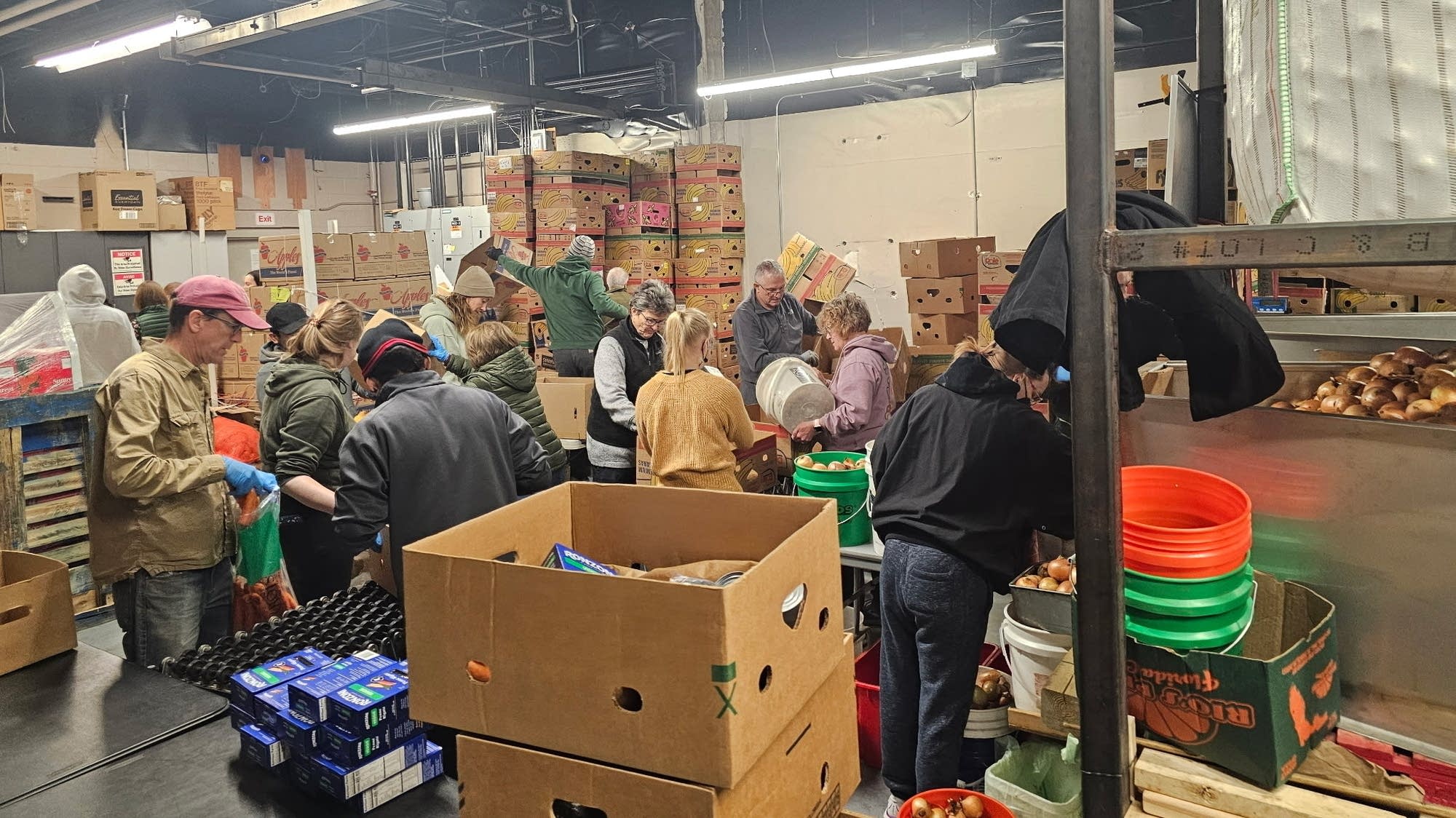
The primary Kingdom work we do at the DMCW is providing hospitality to the poor, our guests. We offer the first floor of the Bishop Dingman House as a place where our guests can hang out and be fed. There, we operate a small storeroom where clothes, toiletries, non-perishable and perishable foods, and all other necessities for people living on the streets are given out freely.

We give an amazing amount of ‘stuff’ away sorely on what we beg. We have a shower and a bathroom to offer. TV room.

We are open 5 days/ 18 hrs. a week. Could be more. We are doing what we can.

It’s in Dingman House, that we are fulfilling our Our Father discipleship pledge “Thy Kingdom come, Thy will be done, on Earth as it is in Heaven.”

The New Testament tells us the Works of Mercy are the kind of acts of love needed to serve “Christ in our midst” and transforms our hell-bent world to service in the Kingdom of God. We are doing our small part. What we do at Dingman House is also a blessing for us who serve and for those who support us by volunteering on shifts, giving stuff & money so we can keep doing the work and paying the bills.

The industrial food we serve is now redeemed food, made holy by feeding the hungry at Dingman House.

For an old guy like me, it don’t get any better…

0

‘Spies inside the Holy See’: Report reveals US espionage campaign targeting Pope Leo XIV

thecradle.co ‘Spies inside the Holy See’: Report reveals US espionage campaign targeting Pope Leo XIV thecradle.co
preview

cross-posted from: news.abolish.capital/post/44788

Independent US journalist Ken Klippenstein says Washington stepped up intelligence activities against the Vatican following Trump’s spat with the Pope

The administration of US President Donald Trump has been “spying” on Pope Leo XIV as part of a years-long intelligence campaign by Washington against the Vatican, US investigative journalist Ken Klippenstein said in a report released on 24 April.

Klippenstein – an independent, Washington-based investigative journalist who formerly wrote for The Intercept – cited sources as saying that Trump’s recent comments on the new Pope were taken by the intelligence community as “a directive to prioritize spying on the Vatican.” Trump had said earlier this month that Pope Leo was “terrible on foreign policy” and “weak on crime.”

According to Klippenstein’s sources, Washington has “for years” been spying on the Vatican.

“The CIA has human spies working inside the Holy See bureaucracy. The NSA and CIA seek to intercept telecommunications, emails, and texts. The FBI investigates crimes committed against and by the Vatican. The State Department closely follows the ins and outs of Papal diplomacy and politics. All of these agencies liaise with the Vatican’s own foreign policy, intelligence, and law enforcement agencies,” the report stated.

Klippenstein pointed to a “longstanding – and quietly extensive – relationship between the US national security apparatus and the Vatican” involving diplomatic, law enforcement, and cybersecurity cooperation.

Much of it is “genuine” but also serves as a “convenient cover for collecting intelligence.”

From thecradle.co via This RSS Feed.

0

“We’re Better Than This” — Pope Leo XIV’s Top Three US Cardinals on 60 Minutes

“We’re Better Than This” — Pope Leo XIV’s Top Three US Cardinals on 60 Minutes www.thelettersfromleo.com
preview

NEW: Pope Leo XIV’s top three American cardinals just gave their first joint television interview.

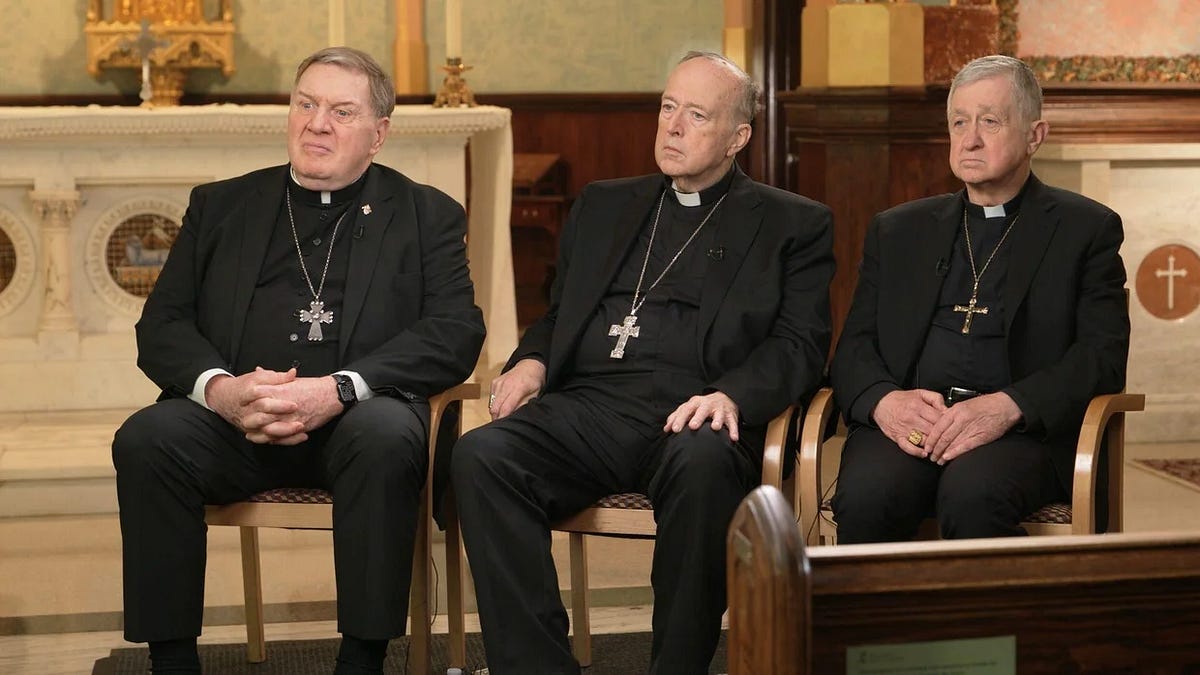
On Sunday night, Norah O’Donnell sat across from Cardinal Blase Cupich of Chicago, Cardinal Robert McElroy of Washington, D.C., and Cardinal Joseph Tobin of Newark for their first joint television interview.

The CBS 60 Minutes segment aired just hours after McElroy delivered a Mass for Peace at the Cathedral of St. Matthew the Apostle, where he called the Iran war “immoral” and received sustained applause. L

The timing was not accidental. These three men — the only American cardinals actively leading dioceses — have spent the last several weeks watching Pope Leo XIV challenge the Trump administration on war and immigration. And on Sunday, they made clear that the pope’s example has changed their own calculus about speaking out.

Cardinal Tobin put it plainly when O’Donnell asked if the pope should be more vocal: “He’s the pastor of the world. He’s not a pundit.” But the cardinal immediately added that Leo “is going to pronounce on what’s important.” That distinction matters.

Leo has not weighed in on every policy skirmish or culture-war provocation. He has focused his authority on two issues where Catholic social teaching leaves no room for ambiguity: the sanctity of human life in wartime and the dignity of immigrants.

On Iran, the cardinals were unequivocal. McElroy declared the war unjust under Catholic teaching, citing the tradition’s strict prerequisites for a legitimate use of force.

“This is a war of choice that we went to,” he told O’Donnell. He then connected the conflict to a broader pattern that should alarm every American: “We’re seeing before us the possibility of war after war after war.”

Cupich has focused on the moral obscenity of war propaganda. McElroy — who served as bishop of San Diego before moving to Washington — has brought border-state credibility to the immigration debate, acknowledging that crossings “got to a point where it was getting out of control” under Biden while insisting that the current policy amounts to an indiscriminate roundup of people who have built lives and raised American children.

Tobin has been the bluntest on immigration enforcement, calling ICE “a lawless organization” back in January.

When O’Donnell pressed him on those words, Tobin stood by every one. “When they have to hide their identities to terrify people, when they can actually violate other guarantees of our Constitution and Bill of Rights, well I think somebody’s got to call that out.”

The interview also revealed the human cost the crackdown has imposed on Catholic parishes.

McElroy disclosed that Spanish-language Mass attendance in the Archdiocese of Washington dropped 30 percent from the year before. The pastor of the church where CBS conducted the interview asked that the parish’s name and location not be shared — a measure of just how deeply fear has penetrated communities that once gathered freely for worship.

0

Israeli police stop Latin Patriarch from entering Church of Holy Sepulchre - Vatican News

Israeli police stop Latin Patriarch from entering Church of Holy Sepulchre - Vatican News www.vaticannews.va
preview

The Latin Patriarchate of Jerusalem and the Custody of the Holy Land have released a joint statement stating that, on the morning of Palm Sunday, the Latin Patriarch of Jerusalem, Cardinal Pierbattista Pizzaballa, together with the Custos of the Holy Land, Fr. Francesco Ielpo, OFM, the official Guardian of the Church of the Holy Sepulchre, were prevented from entering the Church of the Holy Sepulchre in Jerusalem, as they made their way to celebrate the Palm Sunday Mass.

Released on Sunday, the statement said both Church leaders were stopped en route by Israeli police, “while proceeding privately and without any characteristics of a procession or ceremonial act” and were forced to turn back.

“For the first time in centuries, the Heads of the Church were prevented from celebrating the Palm Sunday Mass at the Church of the Holy Sepulchre,” the statement noted.

It described the event as “a grave precedent” and disregarding “the sensibilities of billions of people around the world who, during this week, look to Jerusalem.”

0

‘The Gravest Sin’: Latin Patriarch of Jerusalem Responds to Hegseth Invoking God at War Briefings

‘The Gravest Sin’: Latin Patriarch of Jerusalem Responds to Hegseth Invoking God at War Briefings news.antiwar.com
preview

cross-posted from: news.abolish.capital/post/35919

Cardinal Pierbattista Pizzaballa, the Latin Patriarch of Jerusalem, has commented on US Secretary of War Pete Hegseth invoking God and reading scripture during his press briefings on the US and Israeli war against Iran. During one briefing last week, Hegseth read from Psalm 144. “Blessed be the Lord, my rock, who trains my hands for […]


From News From Antiwar.com via This RSS Feed.

0

God, Damn! – Alliance of Baptists

preview

God, Damn!

By Darrell R. Hamilton, II

In the Spring of 2003, Rev. Dr. Jeremiah Wright, pastor emeritus of the Trinity United Church of Christ in Chicago, preached a Palm Sunday message titled “Confusing God and Government.” The sermon’s premise was drawn from Luke’s articulation of Jesus’ triumphal entry into Jerusalem (19:28-44), and with it Rev. Wright diagnosed the problem that befalls a nation that is blinded by its circumstances, fails to see the things that make for peace, and confuses God and government.

There is a stark difference between God and government. The main points of Rev. Wright’s sermon were: governments lie, governments change, and governments fail.

However, where governments lie, God does not lie. (Number 23:19). Where governments change, God does not change. (Malachi 3:6). And where governments fail, God does not fail.

The government failed in the Spring of 2008, five years after this sermon was preached, when the climax of Rev. Wright’s sermon was clipped without context. In the clip, we hear Rev. Wright’s most damning indictment of the failures of the United States government, saying of its treatment of citizens of African descent,

“The Government gives them the drugs. Builds bigger prisons. Passes a three-strike law and then wants us to sing ‘God, Bless America’ nah, nah, nah, not God, Bless America, ‘God, Damn America’ . . . for killing innocent people. God, damn America for treating her citizens as less than human. God, damn America as long as she tries to act like she is God, and she is supreme.” But, in the Spirit of preachers and prophets of the Black Church tradition, Rev. Wright understood that the basis of a critique of our country and its failures is not rooted in hatred for said country. However, like the great sage James Baldwin articulated, critique of one’s nation is not predicated on hate but love and a desire for the country to live up to its professed ideals.

In the tradition of Martin Luther King, Jr., Malcolm X, James Cone, and others, what Jeremiah Wright understood is that you cannot wish evil on a nation that has already brought evil on itself. But what does it mean to “damn” something, and what is its origins in our tradition?

What does Damnation mean?

Etymologically, the word damn originates in French. The “word damner via the Latin ‘damnare,’ a derivative of the noun ‘damnum’ which was meant to convey ‘loss, harm’ (where we get our English word ‘damage’) and was not originally understood as a curse, nor judgment and condemnation.” However, “not until in the 13th Century did the word ‘damn’ come to be understood as judgment and condemnation legally and theologically.”

In one sense, to be damned was to be judged or condemned in light of “damage” that one inflicted on another. And it was the King James Bible (1611) that used the word damn and damnation in its translation of Greek words used to mean judgment, destruction, and condemnation that would be meted out in this life or the next.

This understanding of damnation is what Christians readily have to this day. However, there seems to be some confusion among Christians about how we ought to understand damnation and its relationship to our life of faith.

First, the Church thinks we are called to damn people. The Church historically and presently uses damnation as a weapon to subjugate people and groups to certain traditions and interpretations of faith. Even contemporary, progressive-minded Christians are guilty of damning people, except we don’t say “damn” we say “cancel.” And we not only cancel those who have sinned against us out of our lives, but we cancel them out of our hearts and cast them into outer darkness where “there is weeping and gnashing of teeth.”

However, Jesus’ lesson to his disciples in life and death is to forgive and not condemn (Matt. 18:21-22; Luke 23:24).

Second, God’s chief condemnation is of powers not people. Paul says to the church in Ephesus, “for we wrestle not against flesh and blood (people), but against principalities, against powers, against the rulers of the darkness of this world, against spiritual wickedness in high places’ ‘ (Eph. 6:12). And the principalities and powers are the nations, policies, systems, and institutions that work and strive against the justice of God (Matt. 25:31-46).

God condemns nations that do not care for the least of these. God casts down principalities and powers seeking to turn people from God and prioritize their own fleshly ends. And where there are people, prophets, priests, or politicians in bed with power, when God casts powers down there are those who will inevitably go down with it.

For the word of God in Isaiah says,

“For I am about to create new heavens and a new earth; the former things shall not be remembered or come to mind 18 But be glad and rejoice forever in what I am creating . . .” (65:17-18a)

Therefore, God will damn every power, policy, system, or institution that stands in the way of creating something new and raze the powers of this world to raise up the Kingdom of God in its place.

Jeremiah was right

Jeremiah was right and some powers need to be damned! It is our duty as disciples of Jesus to call God to damn such things that take God’s name in vain to prevent the Kingdom of God from returning near.

God, damn a fascist movement seeking to destroy lives and our nation’s democracy.

God, damn a corrupt Supreme Court that disgraces its oath to act justly and impartially.

God, damn a movement of fraudulent evangelicalism that calls itself “moral.” That would sweep under the rug its practices of abuse. Use God’s name to wage war against those whom God came to save, and reduce the entire word of God to two issues of gun rights and abortion.

God, damn a hypocritical movement of Christian nationalism that would twist God’s word and seek to confuse God and government.

God, damn a church that stays quiet while damage is being done on God’s people. Fails to protect young girls and young boys by hiding predatory priests rather than casting them out of power, making itself a den for robbers and thieves.

God, damn the church as long as it continues to work against God’s desire for full reclamation of the earth and all creation.

God will stop at nothing to reclaim God’s people, comfort our souls, and transform all created things. And, we rejoice knowing the words in John 3:16-17,

“16 For God so loved the world that He gave His only begotten Son, that whoever believes in Him should not perish but have everlasting life. 17 For God did not send His Son into the world to condemn the world, but that the world through Him might be saved.”

And although the powers of the world wish to thwart God’s place in the earth—you can’t keep down what God wants lifted up. You can’t keep from being built what God wants to build up. You can’t keep from being restored and reclaimed what God seeks to restore and reclaim because God never fails!

“for I am about to create Jerusalem as a joy and its people as a delight. 19 I will rejoice in Jerusalem and delight in my people; no more shall the sound of weeping be heard in it or the cry of distress.”

0

How a nineteenth century rabbi boldly demonstrated that he could harmonize Christianity with Judaism

preview

(This takes four minutes to read.)

It remains my contention that someone with a good grasp of Judaism, and especially first-century Judaism in particular, can spot details in the Gospels that ordinary gentile readers would be likely to overlook. At least half of the canonic Gospels show signs of Jewish authorship, even if many popular Christian traditions today are alien to Judaism.

The Jewish Annotated New Testament (which I heartily recommend to any serious Christian, by the way) is presently the most up-to-date example of Jewish scholars analysing the New Testament in a manner that is neither polemical nor proselytic. Historically speaking, though, this type of effort goes back to at least the nineteenth century. Rabbi Elijah Zvi Soloveitchik was a very well educated scholar who proposed some interesting and bold interpretations of the New Testament:

His most popular work, Qol Qore, a commentary on the Synoptic Gospels of Mark and Matthew (his commentary on Luke has not survived), was written over the course of about a decade and, it has been claimed, was the first modern Jewish commentary on the New Testament written by neither a convert to Christianity nor a polemicist against it.¹³

Qol Qore is distinctive also as a commentary, written in Hebrew, by a rabbinic insider who believed that he could prove, by means of classical rabbinic sources, that Judaism and Christianity do not stand in a relationship of mutual contradiction.

[…]

Commenting on the history of idolatry that Maimonides gives in chapter one of his “Laws of Idolatry,” Soloveitchik writes: “Our teacher [Maimonides] brings proof from Jeremiah that[,] even when Jeremiah was rebuking Israel for abandoning G-d and going after other gods of wood and stone, he said that all nations know that G-d alone is one; they only err by elevating those whom G-d himself has elevated.” This is a fairly close and conventional reading of Maimonides’s text.

Less conventionally, however, Soloveitchik repeats it many times, in his commentary on the Gospels, in order to correct Jews who think that Christianity maintains that Jesus is G-d. He designates the Trinity—the concept of one G-d in three Persons—a “great mystery,” thus accepting the doctrine as monotheistic. If even ancient idolaters, as Jeremiah said, knew that G-d was one, then certainly those in antiquity who had been exposed to Israelite monotheism must have known so. Therefore, Soloveitchik concludes, Christianity is not rightly classified as a form of idolatry.

[…]

Among the more vexing dimensions of the Synoptic Gospels is Jesus’s claim to be the Jewish messiah. A dominant theme in Jewish criticism of the Gospels has been that Jesus does not meet the criteria. Maimonides’s “Laws of Kings and their Wars,” where he delineates the criteria for recognizing the messiah, is often cited, and the result has been a widespread belief among Jews that Jesus belongs to the line of false messiahs that commenced before his day and has continued into modern times.²⁴

Rather than classify Jesus as a false or failed messiah—or as the mashiach ben Yosef rather than the mashiach ben David—Soloveitchik maintains that the essential vocation of the messiah is to teach the fundamental lesson of Judaism, which Maimonides held to be the oneness of G-d.²⁵

Thus, in regard to almost every reference to the messiah in Mark and Matthew, Soloveitchik comments on Jesus’s success in expounding the oneness of G-d to his Jewish compatriots and then, through the ministry of St. Paul, spreading that good news to the gentiles.

In at least one place, Soloveitchik clearly denies that Jesus (Yeshuah) is the messiah and argues that most readers have misconstrued Matthew 24:5 (“For many will come in my name, saying, ‘I am the Messiah,’ and they will mislead many”). Commenting on this verse, Soloveitchik writes:

Many will come in my name—there are those who say that Yeshua cautioned them not to be mistaken if a man comes in his name and says that he is the Messiah, that he may not mislead them. However, the meaning of this verse is difficult, for how is it possible that a man would come in the name of Yeshua and make himself out to be the Messiah? Who would believe that Yeshua sent him? And what does he mean by saying, “many will come in my name”? This is the meaning: Yeshua told them that many would come in his name claiming that he [Yeshua] was the Messiah, and by this they will mislead many. Therefore, what he is really saying is, “I am giving you distinct signs [concerning] when the Messiah comes.”

Rather than himself being the messiah, Jesus spreads the belief in divine unity that is the prerequisite to the messiah’s coming. The extent of Jesus’s success in doing so makes him a messianic figure (a spiritual mashiach ben Joseph, perhaps) but not the final messiah who will come to redeem Israel.

[…]

The topic of Jewish conversion to Christianity is notable in Soloveitchik’s project by its absence. His project is to show that Christianity and Judaism have a common cause. As I read it, Soloveitchik’s New Testament commentary is a text for Jews seriously considering Christian claims, however they have been exposed to them, but also for Christians who have been taught to believe that Judaism is an inferior religion and thus that emancipated Jews should become Christians.

This second aim may explain in part why Soloveitchik published his commentary in French, German, and Polish before publishing the Hebrew original. His work essentially argues that the attempt to convert Jews to the “true religion” is ill conceived, not because Christianity is false but because both Christianity and Judaism are true religions.

The rabbinic materials that he brings to bear in his commentary serve each community differently. For the Jew, they enable conception of the New Testament as a part of Torah. For the Christian, they enable a fuller understanding of Christianity. I think that Soloveitchik hoped to convince the Christian reader that, without viewing them through the rabbinic lens, the Gospels cannot be properly understood. For its truth to be discernible, then, Christianity requires of its believers and interpreters a knowledge not only of biblical but also of rabbinic Judaism.

(Emphasis added. I can share more if anybody be interested.)

0

Zionism is over-emphasized when talking about US foreign policy

preview

I apologize for the flashy, rage-bate title of this post. Here is the point I actually want to make:

Christian Millenarianism is severely understated in the analysis of US foreign policy.

Over the last few years, I’ve seen a lot of talk and articles about the role of Zionism in US policy, in how we analyze it, and what framework gives us the best explanatory capacity. And it absolutely does have a real and dangerous role in US politics and policy.

But I have seen virtually nothing on the role of fundamentalist, evangelical Christians and their project to use the US state to manufacture biblical prophesy from the book of Revelation. In so far as I have seen it talked about, it’s always as an aside and shunted under the Zionist label.

That seems… mistaken? It’s its own project, albeit in ally-ship with the Zionist movement.

0

My Testimony

preview

This essay started as an assignment for my college writing class, but it quickly turned into a passionate recollection of how Jesus has completely altered my life in the last year. If you take the time to read, I’d love to hear how our stories are similar, or even completely different. Peace and love <3

22 January 2026

Meeting the love of your life is like stepping into a world of color after living in greyscale. It’ll probably be your parents who first notice, followed by your close friends and bosses; the brighter tone to your voice, the extra patience at traffic lights, and the unshakable ability to keep going. Acceptable normalcy has been replaced by exceptional devotion. The transition from spiritual necrosis to the surpassing joy of knowing my Savior was anything but quick and easy.

January frost draws itself across unsuspecting grass and discarded dog toys in the yard. The season’s frigid darkness is known for seeping into the very souls of those who do not safeguard against its icy grip. One Sunday morning, though, something will pull you to open YouTube, and sitting in the suggested tab will be a livestream from a church in Austin, Texas. You’ve never been to Texas, or heard of this church, but morbid curiosity means you watch the whole thing. Feeling inspired, you’ll search up churches near you and find one that starts in 30 minutes. You decide to go, even though you haven’t stepped into a hallowed place for over a year.

Doc Marten’s laced tightly to your ankles, and a dusty bible clutched to your side, you’ll step into the fluorescently lit sanctuary and find a place to sit in the red upholstered pews, despite the nervousness biting at your feet. Organ music fills the room, a hymn that strikes a chord of nostalgia within you. There isn’t anything particularly special about the setting or the message, but when you pass out of those doors and into the rest of the sunny afternoon, the countenance of your heart has shifted.

Being a woman on dating apps the week before Valentine’s Day in a college town feels like cracking open the door to an abandoned house to search for the least appalling roach to share an evening with. Despite the reality of almost certain disappointment, you’ll match with a curly-haired, brown-eyed boy whose profile reeks of collegiate swagger. “This seems promising,” you’ll think to yourself after you hear the footnotes of his life story. You’ll call him again, and he will tell you about the church he’s been attending, and you decide to go, maybe surprise him at the end of the week.

He ghosts you, and it might as well have been spite in the gas tank that took you to the congregation 20 minutes and an entire town away from the place you call home. The intention was to show him what he was missing, win him back, or even just glare at him across the room. Again, you are faced with the doors of a hallowed place, but this time pure adrenaline and the forming pools of anxious sweat almost prevent you from entering it at all. The tension is unmistakably pulling you with the same unyielding force as gravity; obedience becomes compulsory.

Striding into the unknown is now somehow clothed in its own odd sense of familiarity. The meeting place is crowded with new faces, but unlike every other strange room you’ve stepped into since moving to school, they see you, and they all smile. A group of young women beckons you inward. “Hi! I’m Elli, What’s your name?” chirruped a tall girl with straight, sandy hair. You introduce yourself in the typical fashion. “What’s your major?” “Where are you from?” “Are you going to OSU?” The well-known barrage of questions hangs freshly in the air this time; the tone of legitimate curiosity is almost shocking.

Elli invites you to sit with her in the sanctuary. The small room is darkened, the corners punctuated by LEDs and dark curtains. You stand for worship as the band takes the stage; you’ve been in this position the majority of the Sundays in your lifetime. In this place, the waves of submission to divinity wash off the strangers nearby with such force that its vastness seems like it could swallow you whole. You’ll be so desperate to sing the words, but the song is mournfully unfamiliar.

When the last prayer is murmured, and the lights come up, you have to reckon with the mordant tears running down your face and quickly wipe them away with a conveniently absorbent sleeve. Incipience bleeds hotly in your chest, the new sense of purpose rupturing into a long-desired personal reality.

The sound of a melodic voice snaps you back to the present. You recognize the woman with the silk headscarf as one of the worship leaders. “Hey, I haven’t seen you here before. I’m Maria. What’s your name?” The questions poured out of her, with genuine wonder behind each inquiry. She invited you to a Wednesday night gathering with the promise of free dinner and discussion. Before you leave, she puts her contact information in your phone. Her inviting radiance made it easy to make the choice to show up to the mid-week gathering.

Winter drags into March, but even early sunsets and overcast afternoons cannot overshadow the budding purpose within you. The once dusty bible has now been fervently highlighted and underlined, pages bent from quick references, and haphazardly tossed into whatever bag leaves the house with you that day. You’ll find yourself weeping in the kitchen when the lines of Luke convey the suffering of Jesus, and how His great love for you is what kept the Son of God from saving himself, and instead, enduring the very punishment that you deserved.

Two solstices pass, and it’s the winter term of your sophomore year. You still have the same job, attend classes at the same community college, and still show up faithfully to church every week. Your life is practically the same, but the illumination of your soul is wholly undeniable. Any personal gain might as well be a loss, relative to the delight of knowing your heavenly father. In between the pain of quitting addictions, losing friends, and being devoured by loneliness, you learned how to live a life worth dying for.

This essay started as an assignment for my college writing class, but it quickly turned into a passionate recollection of how Jesus has completely altered my life in the last year. If you take the time to read, I’d love to hear how our stories are similar, or even completely different. Peace and love <3

22 January 2026

Meeting the love of your life is like stepping into a world of color after living in greyscale. It’ll probably be your parents who first notice, followed by your close friends and bosses; the brighter tone to your voice, the extra patience at traffic lights, and the unshakable ability to keep going. Acceptable normalcy has been replaced by exceptional devotion. The transition from spiritual necrosis to the surpassing joy of knowing my Savior was anything but quick and easy.

January frost draws itself across unsuspecting grass and discarded dog toys in the yard. The season’s frigid darkness is known for seeping into the very souls of those who do not safeguard against its icy grip. One Sunday morning, though, something will pull you to open YouTube, and sitting in the suggested tab will be a livestream from a church in Austin, Texas. You’ve never been to Texas, or heard of this church, but morbid curiosity means you watch the whole thing. Feeling inspired, you’ll search up churches near you and find one that starts in 30 minutes. You decide to go, even though you haven’t stepped into a hallowed place for over a year.

Doc Marten’s laced tightly to your ankles, and a dusty bible clutched to your side, you’ll step into the fluorescently lit sanctuary and find a place to sit in the red upholstered pews, despite the nervousness biting at your feet. Organ music fills the room, a hymn that strikes a chord of nostalgia within you. There isn’t anything particularly special about the setting or the message, but when you pass out of those doors and into the rest of the sunny afternoon, the countenance of your heart has shifted.

Being a woman on dating apps the week before Valentine’s Day in a college town feels like cracking open the door to an abandoned house to search for the least appalling roach to share an evening with. Despite the reality of almost certain disappointment, you’ll match with a curly-haired, brown-eyed boy whose profile reeks of collegiate swagger. “This seems promising,” you’ll think to yourself after you hear the footnotes of his life story. You’ll call him again, and he will tell you about the church he’s been attending, and you decide to go, maybe surprise him at the end of the week.

He ghosts you, and it might as well have been spite in the gas tank that took you to the congregation 20 minutes and an entire town away from the place you call home. The intention was to show him what he was missing, win him back, or even just glare at him across the room. Again, you are faced with the doors of a hallowed place, but this time pure adrenaline and the forming pools of anxious sweat almost prevent you from entering it at all. The tension is unmistakably pulling you with the same unyielding force as gravity; obedience becomes compulsory.

Striding into the unknown is now somehow clothed in its own odd sense of familiarity. The meeting place is crowded with new faces, but unlike every other strange room you’ve stepped into since moving to school, they see you, and they all smile. A group of young women beckons you inward. “Hi! I’m Elli, What’s your name?” chirruped a tall girl with straight, sandy hair. You introduce yourself in the typical fashion. “What’s your major?” “Where are you from?” “Are you going to OSU?” The well-known barrage of questions hangs freshly in the air this time; the tone of legitimate curiosity is almost shocking.

Elli invites you to sit with her in the sanctuary. The small room is darkened, the corners punctuated by LEDs and dark curtains. You stand for worship as the band takes the stage; you’ve been in this position the majority of the Sundays in your lifetime. In this place, the waves of submission to divinity wash off the strangers nearby with such force that its vastness seems like it could swallow you whole. You’ll be so desperate to sing the words, but the song is mournfully unfamiliar.

When the last prayer is murmured, and the lights come up, you have to reckon with the mordant tears running down your face and quickly wipe them away with a conveniently absorbent sleeve. Incipience bleeds hotly in your chest, the new sense of purpose rupturing into a long-desired personal reality.

The sound of a melodic voice snaps you back to the present. You recognize the woman with the silk headscarf as one of the worship leaders. “Hey, I haven’t seen you here before. I’m Maria. What’s your name?” The questions poured out of her, with genuine wonder behind each inquiry. She invited you to a Wednesday night gathering with the promise of free dinner and discussion. Before you leave, she puts her contact information in your phone. Her inviting radiance made it easy to make the choice to show up to the mid-week gathering.

Winter drags into March, but even early sunsets and overcast afternoons cannot overshadow the budding purpose within you. The once dusty bible has now been fervently highlighted and underlined, pages bent from quick references, and haphazardly tossed into whatever bag leaves the house with you that day. You’ll find yourself weeping in the kitchen when the lines of Luke convey the suffering of Jesus, and how His great love for you is what kept the Son of God from saving himself, and instead, enduring the very punishment that you deserved.

Two solstices pass, and it’s the winter term of your sophomore year. You still have the same job, attend classes at the same community college, and still show up faithfully to church every week. Your life is practically the same, but the illumination of your soul is wholly undeniable. Any personal gain might as well be a loss, relative to the delight of knowing your heavenly father. In between the pain of quitting addictions, losing friends, and being devoured by loneliness, you learned how to live a life worth dying for.

0

Thoughts on Camilo Torres Restrepo?

preview

I have heard him be valued by some modern (Christian) Marxists for his unique combination of Mao Zedong Thought, Marxism-Leninism, and liberation theology.

I have heard him be valued by some modern (Christian) Marxists for his unique combination of Mao Zedong Thought, Marxism-Leninism, and liberation theology.

0

José Zanardini, the priest who tried to reconcile faith and Indigenous autonomy

Conservation news José Zanardini, the priest who tried to reconcile faith and Indigenous autonomy news.mongabay.com
preview

cross-posted from: news.abolish.capital/post/22732

For much of South America’s history, the arrival of a missionary has carried two reputations at once. One is charitable: a figure with medicine, schooling, and a language of human dignity that can be useful in a state that is often absent. The other is coercive: an agent of conversion and acculturation, sometimes entangled with land seizures, forced settlement, and abuses that Indigenous communities still live with. Among the peoples of the Gran Chaco, the story of “contact” is still unfolding, with some groups settled and others choosing isolation. In that setting, the line between accompaniment and intrusion has never been simple. Anthropology, too, has had its double role. At its best it records languages, histories, and ways of seeing that outsiders once dismissed as obstacles to “progress.” At its worst it becomes another instrument for ordering Indigenous people into categories designed by others. The most careful scholars learn to doubt their own categories. They also learn that a field notebook can outlast a sermon. That tension framed the life of Father José (Giuseppe) Zanardini, a Salesian priest and anthropologist who arrived in Paraguay in 1978 and spent decades working among Indigenous communities, especially the Ayoreo in the Chaco. He died on January 19th 2026, aged 83. Zanardini was born in Brescia, Italy, in 1942. He studied engineering in Milan before turning to philosophy and theology. The Salesians chose him for Paraguay, and he chose, in turn, to study anthropology, completing a doctorate in social anthropology in England. He would…This article was originally published on Mongabay


From Conservation news via This RSS Feed.

0

Help Us Survive… Your Donation Makes a Difference

preview

Dear friends, We are going through unimaginably difficult days, with very limited support and resources nearly gone. After God, all we have left is your kindness and compassion. Our lives truly depend on your help, and any contribution—no matter how small—can become a lifeline and restore hope where there is none.

A single donation can change our fate. Even sharing this message could reach someone who is able to help. Please don’t leave us alone in this painful time.

From the bottom of our hearts, thank you to everyone who stands with us gofund.me/00439328