
0

Claude reveals ECDSA curve origins

preview

Claude reveals ECDSA curve origins

by Frontier Red Team at Anthropic

““It’s just timestamps”: the decades-old mystery of the origins of one of the most popular cryptographic standards has been explained.”

https://www.anthropic.com/research/ecdsa-curve-origins

#Cryptography #Cryptology #Encryption #Mystery #Curves #ECC #ECDSA #NIST #random #RNG #lrand48 #FIPS #Claude #Anthropic #Cryptanalysis

@cryptography
@cypherpunk
@cryptography
@cryptography
@crypto

Claude reveals ECDSA curve origins

by Frontier Red Team at Anthropic

““It’s just timestamps”: the decades-old mystery of the origins of one of the most popular cryptographic standards has been explained.”

https://www.anthropic.com/research/ecdsa-curve-origins

#Cryptography #Cryptology #Encryption #Mystery #Curves #ECC #ECDSA #NIST #random #RNG #lrand48 #FIPS #Claude #Anthropic #Cryptanalysis

@cryptography
@cypherpunk
@cryptography
@cryptography
@crypto

0

Replacing the QPU with `/dev/urandom`

GitHub quantumslop/URANDOM_DEMO.md at 25ad2e76ae58baa96f6219742459407db9dd17f5 · yuvadm/quantumslop github.com
preview

Claim being tested: the Q‑Day Prize submission in this repo demonstrates a quantum attack on ECDLP — specifically, key recovery on curves up to 17 bits using IBM Quantum hardware.

This branch applies a single surgical patch (−29 / +30 lines) to projecteleven.py. The patch replaces the IBM Quantum backend inside solve_ecdlp() with os.urandom. Everything else — circuit construction, the ripple‑carry oracle, the extraction pipeline, the d·G == Q verifier — runs byte‑for‑byte unchanged.

If the quantum computer were contributing measurable signal, this substitution should break the recoveries. It does not. The author’s own CLI recovers every reported private key at statistically indistinguishable rates from the IBM hardware runs.

[…]

The 17‑bit result is the one awarded 1 BTC. /dev/urandom recovers it ~40% of runs on a laptop. The author ran it once on IBM ibm_fez and claimed a quantum result.

projecteleven.com/…/project-eleven-awards-1-btc-q…

Claim being tested: the Q‑Day Prize submission in this repo demonstrates a quantum attack on ECDLP — specifically, key recovery on curves up to 17 bits using IBM Quantum hardware.

This branch applies a single surgical patch (−29 / +30 lines) to projecteleven.py. The patch replaces the IBM Quantum backend inside solve_ecdlp() with os.urandom. Everything else — circuit construction, the ripple‑carry oracle, the extraction pipeline, the d·G == Q verifier — runs byte‑for‑byte unchanged.

If the quantum computer were contributing measurable signal, this substitution should break the recoveries. It does not. The author’s own CLI recovers every reported private key at statistically indistinguishable rates from the IBM hardware runs.

[…]

The 17‑bit result is the one awarded 1 BTC. /dev/urandom recovers it ~40% of runs on a laptop. The author ran it once on IBM ibm_fez and claimed a quantum result.

projecteleven.com/…/project-eleven-awards-1-btc-q…

0

GOLDILOCKER Brain Wallet - Generate OpenSSL Goldilocks Elliptic Curve Keys from Seed Phrase

preview

GOLDILOCKER Brain Wallet - Generate OpenSSL Goldilocks Elliptic Curve Keys from Seed Phrase

https://codeberg.org/OCTADE/goldilocker

Goldilocker is a brain wallet application for generating ED448 encryption and signing keys via OpenSSL.

Encryption keys may be stored offline as a complex passphrase or a seed phrase generated from the BIP39 word list.

@cryptography@lemmy.ml @infostorm@a.gup.pe

#Cryptography #Cryptology #ED448 #Encryption #Keys

GOLDILOCKER Brain Wallet - Generate OpenSSL Goldilocks Elliptic Curve Keys from Seed Phrase

https://codeberg.org/OCTADE/goldilocker

Goldilocker is a brain wallet application for generating ED448 encryption and signing keys via OpenSSL.

Encryption keys may be stored offline as a complex passphrase or a seed phrase generated from the BIP39 word list.

@cryptography@lemmy.ml @infostorm@a.gup.pe

#Cryptography #Cryptology #ED448 #Encryption #Keys

0

KSRNG - Key Strike Random Generator (version 0.0.1)

preview

KSRNG - Key Strike Random Generator (version 0.0.1)

https://codeberg.org/OCTADE/keystrike

KEYSTRIKE generates very, very random seeds that are truly random.

KEYSTRIKE uses /dev/urandom and several TRNG mixing techniques:

keystroke timestamps, doubling and shuffling, modulus and size
truncating.

The final output is a whitened, true random and pseudo-random mix.

@cryptography@lemmy.ml @infostorm@a.gup.pe

#Cryptography #Cryptology #Encryption #Random #Entropy

KSRNG - Key Strike Random Generator (version 0.0.1)

https://codeberg.org/OCTADE/keystrike

KEYSTRIKE generates very, very random seeds that are truly random.

KEYSTRIKE uses /dev/urandom and several TRNG mixing techniques:

keystroke timestamps, doubling and shuffling, modulus and size
truncating.

The final output is a whitened, true random and pseudo-random mix.

@cryptography@lemmy.ml @infostorm@a.gup.pe

#Cryptography #Cryptology #Encryption #Random #Entropy

0

MEGARAND Extreme Overkill Random Seed Generator

preview

MEGARAND Extreme Overkill Random Seed Generator

https://codeberg.org/OCTADE/megarand

MEGARAND employs extreme overkill in the genration of a very large entropy pool. The output is extremely random as a result of several hashing, timestamping, shuffling, encrypting, and truncation techniques. MEGARAND is useful for generating large seed bases for key and passphrase material or for feeding to cryptographically secure PRNG software if high-speed outputs are required.

@cryptography@lemmy.ml @infostorm@a.gup.pe

#Cryptography #Cryptology #Encryption #Random #Entropy

MEGARAND Extreme Overkill Random Seed Generator

https://codeberg.org/OCTADE/megarand

MEGARAND employs extreme overkill in the genration of a very large entropy pool. The output is extremely random as a result of several hashing, timestamping, shuffling, encrypting, and truncation techniques. MEGARAND is useful for generating large seed bases for key and passphrase material or for feeding to cryptographically secure PRNG software if high-speed outputs are required.

@cryptography@lemmy.ml @infostorm@a.gup.pe

#Cryptography #Cryptology #Encryption #Random #Entropy

0

NIST Announces 14 Candidates to Advance to the Second Round of the Additional Digital Signatures for the Post-Quantum Cryptography Standardization Process

preview

full text of post:

After over a year of evaluation, NIST has selected 14 candidates for the second round of the Additional Digital Signatures for the NIST PQC Standardization Process. The advancing digital signature algorithms are:

  • CROSS
  • FAEST
  • HAWK
  • LESS
  • MAYO
  • Mirath (merger of MIRA/MiRitH)
  • MQOM
  • PERK
  • QR-UOV
  • RYDE
  • SDitH
  • SNOVA
  • SQIsign
  • UOV

NIST Internal Report (IR) 8528 describes the evaluation criteria and selection process. Questions may be directed to pqc-comments@nist.gov. NIST thanks all of the candidate submission teams for their efforts in this standardization process as well as the cryptographic community at large, which helped analyze the signature schemes.

Moving forward, the second-round candidates have the option of submitting updated specifications and implementations (i.e., “tweaks”). NIST will provide more details to the submission teams in a separate message. This second phase of evaluation and review is estimated to last 12-18 months.

NIST is tentatively planning to hold a 6th NIST PQC Standardization Conference from September 24-26, 2025, in person at NIST in Gaithersburg, Maryland.

full text of post:

After over a year of evaluation, NIST has selected 14 candidates for the second round of the Additional Digital Signatures for the NIST PQC Standardization Process. The advancing digital signature algorithms are:

  • CROSS
  • FAEST
  • HAWK
  • LESS
  • MAYO
  • Mirath (merger of MIRA/MiRitH)
  • MQOM
  • PERK
  • QR-UOV
  • RYDE
  • SDitH
  • SNOVA
  • SQIsign
  • UOV

NIST Internal Report (IR) 8528 describes the evaluation criteria and selection process. Questions may be directed to pqc-comments@nist.gov. NIST thanks all of the candidate submission teams for their efforts in this standardization process as well as the cryptographic community at large, which helped analyze the signature schemes.

Moving forward, the second-round candidates have the option of submitting updated specifications and implementations (i.e., “tweaks”). NIST will provide more details to the submission teams in a separate message. This second phase of evaluation and review is estimated to last 12-18 months.

NIST is tentatively planning to hold a 6th NIST PQC Standardization Conference from September 24-26, 2025, in person at NIST in Gaithersburg, Maryland.

0

[Idea] FHE-RAM-based message routing

preview

I have been thinking about implementing this for quite some time, but I would like some feedback from people more knowledgeable than me on the matter.

There’s been some great progress in the field of Private Information Retrieval (PIR) protocols. Recently, in a 2022 article, Lin et al. describe an “updateable DEPIR”, with both read and write times that can be made sublinear to database size.

I wonder if one couldn’t use a combination of this technique and regular public-key cryptography to provide fully anonymous message routing. One could write outgoing messages to a fixed address and issue private reads to their contacts’ addresses, with the messages themselves being encrypted with the receiver’s public key.

The benefit of this would be a messaging protocol wherein the server wouldn’t just be oblivious to the content of all messages, but also the social graph itself, plus all message-sending operations becoming deniable as a side effect.

I have been thinking about implementing this for quite some time, but I would like some feedback from people more knowledgeable than me on the matter.

There’s been some great progress in the field of Private Information Retrieval (PIR) protocols. Recently, in a 2022 article, Lin et al. describe an “updateable DEPIR”, with both read and write times that can be made sublinear to database size.

I wonder if one couldn’t use a combination of this technique and regular public-key cryptography to provide fully anonymous message routing. One could write outgoing messages to a fixed address and issue private reads to their contacts’ addresses, with the messages themselves being encrypted with the receiver’s public key.

The benefit of this would be a messaging protocol wherein the server wouldn’t just be oblivious to the content of all messages, but also the social graph itself, plus all message-sending operations becoming deniable as a side effect.

0

Public Key Cryptography - Computerphile

play · youtube.com
YouTube Public Key Cryptography - Computerphile youtu.be
preview

In this six minute video, Robert Miles explains public/private key cryptography in layman’s terms. As a non-expert in this field, I find Miles’ explanation very accessible, and I’ve come back to this video to brush up on this concept several times since the first time I watched it. Enjoy!

In this six minute video, Robert Miles explains public/private key cryptography in layman’s terms. As a non-expert in this field, I find Miles’ explanation very accessible, and I’ve come back to this video to brush up on this concept several times since the first time I watched it. Enjoy!

0

Encrypted P2P Chat

preview

https://github.com/positive-intentions/chat

Is this a secure messaging app? probably not… but id like to share some details about how my app works so you can tell me what im missing. id like to have wording in my app to say something like “most secure chat app in the world”… i probably cant do that because it doesnt qualify… but i want to understand why?

im not an expert on cyber security or cryptography. im sure there are many gaps in my knowlege in this domain.

using javascript, i created a chat app. it is using peerjs-server to create an encrypted webrtc connection. this is then used to exchange additional encryption keys from cryptography functions built into browsers to add a redundent layer of encryption. the key exchange is done like diffie-helman over webrtc (which can be considered secure when exchanged over public channels). the algorithms are fairly easy to use and interchangable as described here.

  • i sometimes recieve feedback like “javascript is inherently insecure”. i disagree with this and have opened sourced my cryptography module. its basically a thin wrapper around vanilla crypto functions of a browser. a prev post on the matter.
  • another concern for my kind of app (PWA) is that the developer may introduce malicious code. this is an important point for which i open sourced the project and give instructions for selfhosting. selhosting this app has some unique features. unlike many other selfhosted projects, this app can be hosted on github-pages for free (instructions are provided in the readme). im also working on introducing a way that users can selfhost federated modules. a prev post on the matter.
  • to prevent things like browser extensions, the app uses strict CSP headers to prevent unauthorised code from running. selfhosting users should take note of this when setting up their own instance.
  • i received feedback the Signal/Simplex protocol is great, etc. id like to compare that opinion to the observation in how my todo app demo works. (the work is all experimental work-in-progress and far from finished). the demo shows a simple functionality for a basic decentralized todo list. this should already be reasonably secure. i could add handlers for exchanging keys diffie-helman style. which at this point is relatively trivial to implement. I think it’s simplicity could be a security feature.
  • the key detail that makes this approach unique, is because as a webapp, unlike other solutions, users have a choice of using any device/os/browser.

i think if i stick to the principle of avoiding using any kind of “required” service provider (myself included) and allowing the frontend and the backend to be hosted independently, im on track for creating a chat system with the “fewest moving parts”. im hope you will agree this is true p2p and i hope i can use this as a step towards true privacy and security. security might be further improved by using a trusted VPN.

i created a threat-model for the app in hopes that i could get a pro-bono security assessment, but understandable the project is too complicated for pro-bono work. i contacted “Trail of bits” because of their work on SimpleX and they have quoted me $50,000. the best i can offer is “open-source and communicating on reddit”. (note: i asked them if i can share those details… summarized response: the SOW is confidential, but i can share the quote.)

while there are several similar apps out there like mine. i think mine is distinctly a different approach. so its hard to find best practices for the functionalities i want to achieve. in particular security practices to use when using p2p technology.

(note: this app is an unstable, experiment, proof of concept and not ready to replace any other app or service. It’s far from finished and provided for testing and demo purposes only.)

https://github.com/positive-intentions/chat

Is this a secure messaging app? probably not… but id like to share some details about how my app works so you can tell me what im missing. id like to have wording in my app to say something like “most secure chat app in the world”… i probably cant do that because it doesnt qualify… but i want to understand why?

im not an expert on cyber security or cryptography. im sure there are many gaps in my knowlege in this domain.

using javascript, i created a chat app. it is using peerjs-server to create an encrypted webrtc connection. this is then used to exchange additional encryption keys from cryptography functions built into browsers to add a redundent layer of encryption. the key exchange is done like diffie-helman over webrtc (which can be considered secure when exchanged over public channels). the algorithms are fairly easy to use and interchangable as described here.

  • i sometimes recieve feedback like “javascript is inherently insecure”. i disagree with this and have opened sourced my cryptography module. its basically a thin wrapper around vanilla crypto functions of a browser. a prev post on the matter.
  • another concern for my kind of app (PWA) is that the developer may introduce malicious code. this is an important point for which i open sourced the project and give instructions for selfhosting. selhosting this app has some unique features. unlike many other selfhosted projects, this app can be hosted on github-pages for free (instructions are provided in the readme). im also working on introducing a way that users can selfhost federated modules. a prev post on the matter.
  • to prevent things like browser extensions, the app uses strict CSP headers to prevent unauthorised code from running. selfhosting users should take note of this when setting up their own instance.
  • i received feedback the Signal/Simplex protocol is great, etc. id like to compare that opinion to the observation in how my todo app demo works. (the work is all experimental work-in-progress and far from finished). the demo shows a simple functionality for a basic decentralized todo list. this should already be reasonably secure. i could add handlers for exchanging keys diffie-helman style. which at this point is relatively trivial to implement. I think it’s simplicity could be a security feature.
  • the key detail that makes this approach unique, is because as a webapp, unlike other solutions, users have a choice of using any device/os/browser.

i think if i stick to the principle of avoiding using any kind of “required” service provider (myself included) and allowing the frontend and the backend to be hosted independently, im on track for creating a chat system with the “fewest moving parts”. im hope you will agree this is true p2p and i hope i can use this as a step towards true privacy and security. security might be further improved by using a trusted VPN.

i created a threat-model for the app in hopes that i could get a pro-bono security assessment, but understandable the project is too complicated for pro-bono work. i contacted “Trail of bits” because of their work on SimpleX and they have quoted me $50,000. the best i can offer is “open-source and communicating on reddit”. (note: i asked them if i can share those details… summarized response: the SOW is confidential, but i can share the quote.)

while there are several similar apps out there like mine. i think mine is distinctly a different approach. so its hard to find best practices for the functionalities i want to achieve. in particular security practices to use when using p2p technology.

(note: this app is an unstable, experiment, proof of concept and not ready to replace any other app or service. It’s far from finished and provided for testing and demo purposes only.)

0

Bernstein and Lange -- Safe curves for Elliptic Curve Cryptography [pdf]

preview

This is a technical but quite informative article, nominally about which elliptic curves have good security properties, but also discusses the intentions behind using EC instead of older systems like RSA (basically, EC is safer against some known classes of attacks).

Posting partly because EC vs RSA came up here a few days ago.

This is a technical but quite informative article, nominally about which elliptic curves have good security properties, but also discusses the intentions behind using EC instead of older systems like RSA (basically, EC is safer against some known classes of attacks).

Posting partly because EC vs RSA came up here a few days ago.

0

The government unveils its quantum counter-weapons

preview

cross-posted from: lemmy.world/post/18617290

The National Institute of Standards and Technology has finally published the world’s first three official post-quantum cryptographic algorithms, tools designed to protect key systems against future quantum computers powerful enough to crack any code generated by a modern computer.

cross-posted from: lemmy.world/post/18617290

The National Institute of Standards and Technology has finally published the world’s first three official post-quantum cryptographic algorithms, tools designed to protect key systems against future quantum computers powerful enough to crack any code generated by a modern computer.

0

Multiple nations enact mysterious export controls on quantum computers

New Scientist Multiple nations enact mysterious export controls on quantum computers | New Scientist www.newscientist.com
preview

cross-posted from: sopuli.xyz/post/14485657

In case of paywall: archive.is/kZAgI

cross-posted from: sopuli.xyz/post/14485657

In case of paywall: archive.is/kZAgI

0

Javascript cryptography in the wild

GitHub GitHub - positive-intentions/chat: Decentralized chat github.com
preview

in my messaging app, javascript cryptography is the backbone of security so its important for it to be reliable. i would like to introduce you to my decentralized chat app:

github.com/positive-intentions/chat

i created thin wrapper around browser-based cryptography functions provided by the browser. it is using webpack 5 module federation to import it at runtime.

github.com/…/Cryptography.tsx

with this i think i can effectively create encrypted p2p, which i hope to be a step towards true security (but it will take a while to get there).

(note: my app is an experimental unstable proof-of-concept. it is provided for demo and testing purposes.)

in my messaging app, javascript cryptography is the backbone of security so its important for it to be reliable. i would like to introduce you to my decentralized chat app:

github.com/positive-intentions/chat

i created thin wrapper around browser-based cryptography functions provided by the browser. it is using webpack 5 module federation to import it at runtime.

github.com/…/Cryptography.tsx

with this i think i can effectively create encrypted p2p, which i hope to be a step towards true security (but it will take a while to get there).

(note: my app is an experimental unstable proof-of-concept. it is provided for demo and testing purposes.)

0

Putty vulnerability: bias in ECDSA deterministic nonce generation leads to compromise of NIST P521 keys with ~60 signatures

preview

writeup from the researcher who discovered this: www.openwall.com/lists/oss-security/2024/04/15/6

writeup from the researcher who discovered this: www.openwall.com/lists/oss-security/2024/04/15/6

0

Nearly-finalized eIDAS legislation requires browsers to trust state-issued CAs, and prohibits using certificate transparency to prevent abuses of them: only ETSI-approved authenticity checks allowed.

0

Crypto power to the people!

preview

Greetings !cryptography@lemmy.ml!

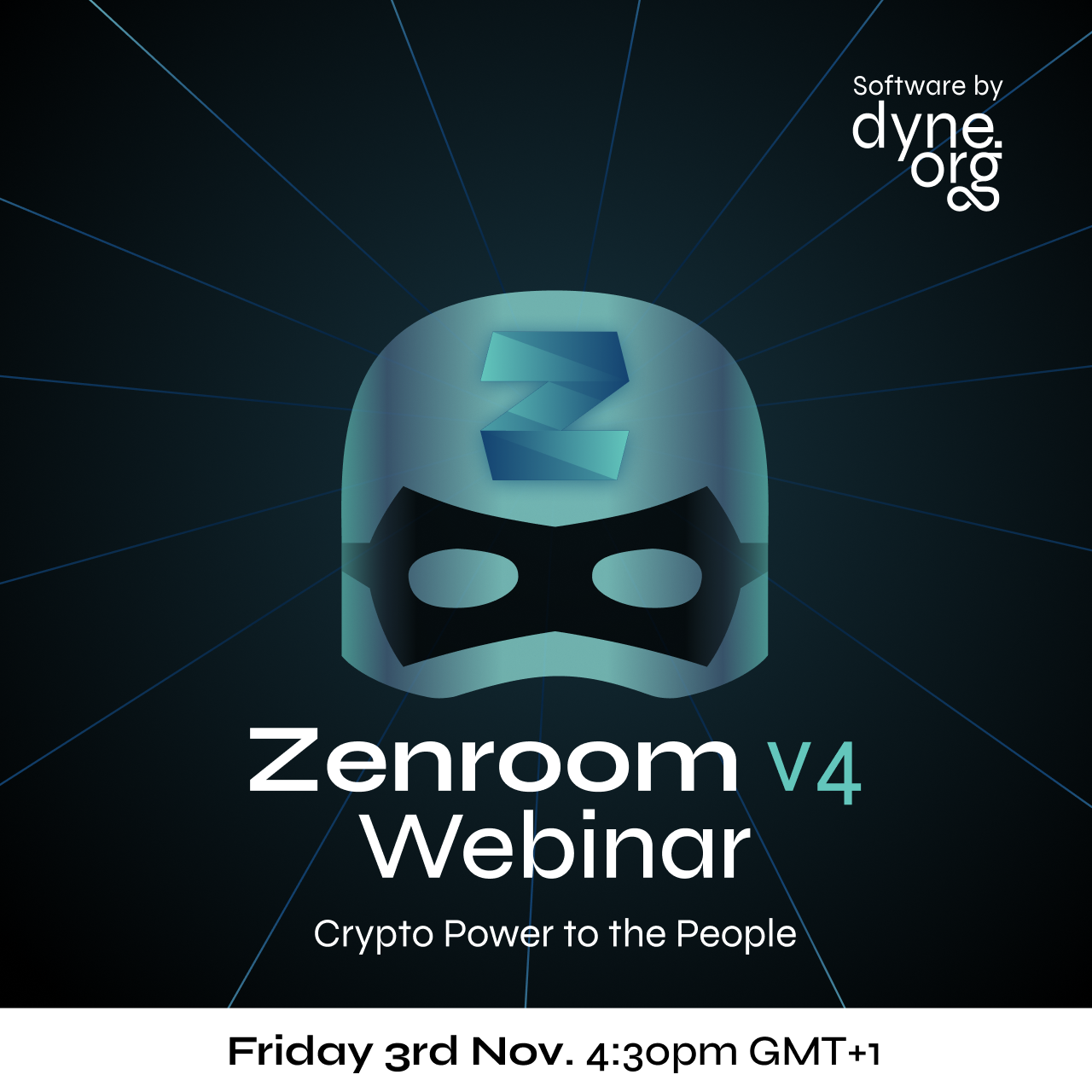
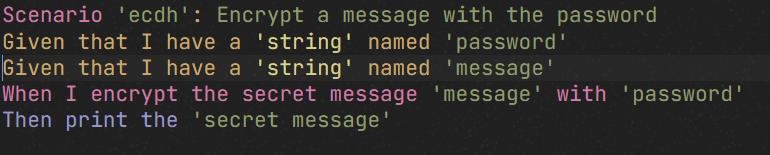
At dyne, we’re working relentlessly to democratize the power of computing. We’ve built an open source, multiplatform, tiny, secure, virtual machine for cryptography and blockchain interop. It’s called Zenroom. Part of the philosophy behind it is to empower people who know what to do with data, not only the developers and domain experts. To achieve this, it leverages Zencode which allows them to write and review business logic and data-sensitive operations without learning to code. Like this:

But really what it can do is:

  • Hashes and signatures (ecdsa, eddsa, Schnorr)
  • Quantum-proof crypto (Dilithium, Kyber, NTRU)
  • Homomorphic crypto on BLS381
  • Interop with Bitcoin and EVM
  • Support most widely used curves
  • Runs on any platform and in the browser
  • No-code programmabiliy using an English-like DSL

We just released v4.0.0 and are always interested in more engaging use cases.

Therefor i’d like to extend you an invitation to a webinar this Friday, November 3rd at 4:30pm UTC+1

You can “signup” here: zenroom.org/events/ (basically a calendar .ics)

If you are uncomfortable with Zoom, please know that the video feed will be relayed to our Peertube channel and you will be able to ask questions in the Matrix chat.

Hoping that i’m not breaking any rules of this community and to see you there i send you all warm regards from planet dyne.

edit: removed emoji from title

Greetings !cryptography@lemmy.ml!

At dyne, we’re working relentlessly to democratize the power of computing. We’ve built an open source, multiplatform, tiny, secure, virtual machine for cryptography and blockchain interop. It’s called Zenroom. Part of the philosophy behind it is to empower people who know what to do with data, not only the developers and domain experts. To achieve this, it leverages Zencode which allows them to write and review business logic and data-sensitive operations without learning to code. Like this:

But really what it can do is:

  • Hashes and signatures (ecdsa, eddsa, Schnorr)
  • Quantum-proof crypto (Dilithium, Kyber, NTRU)
  • Homomorphic crypto on BLS381
  • Interop with Bitcoin and EVM
  • Support most widely used curves
  • Runs on any platform and in the browser
  • No-code programmabiliy using an English-like DSL

We just released v4.0.0 and are always interested in more engaging use cases.

Therefor i’d like to extend you an invitation to a webinar this Friday, November 3rd at 4:30pm UTC+1

You can “signup” here: zenroom.org/events/ (basically a calendar .ics)

If you are uncomfortable with Zoom, please know that the video feed will be relayed to our Peertube channel and you will be able to ask questions in the Matrix chat.

Hoping that i’m not breaking any rules of this community and to see you there i send you all warm regards from planet dyne.

edit: removed emoji from title

0

The inability to count correctly: Debunking NIST's calculation of the Kyber-512 security level.

preview