0

FINAL REMINDER OF THE MOVE TO PIEFED.SOCIAL!

preview

Hey everyone! We’re moving to Piefed.social! You can find the comm at

!historyphotos@piefed.social

Hope to see everyone there!

Feed for all migrated comms here: piefed.social/f/pugmigration

Why Piefed.social specifically?

A good question. I considered Piefed.world, as the organization .world belongs to is larger than Lemmy/Piefed and robust. Anarchist.nexus was right out, on account of it being an offshoot of dbzer0, whose admins have chosen to indulge in very concerning Uyghur genocide denial and tolerating Holodomor denial on its instance. Ultimately I decided to give Piefed.social a chance on account of a coherent core mission statement in favor of democracy and rational discourse.

Unruffled denying Uyghur genocide

Holodomor denial left up in a comm where the only two mods are dbzer0 admins, they both participated in the thread, the material was reported, it was specifically pointed out to one of them, and the comm regularly removes Zionist genocide apologia and denial under the (legitimate) justification that genocide denial is against the rules. Apparently, the Holodomor isn’t a REAL genocide in the admins’ eyes.

Both Unruffled, dbzer0 admin, and Davel, .ml admin, denying UN verified sexual assault

Dbzer0 has instance-banned my main account for posting about this on .world, and will likely instance ban this account too, eventually. So if you’re a Dbzer0 or Anarchist.nexus user wondering where I went, that’s your answer.

Will I need to change my account to participate?

Nope! Piefed is compatible with Lemmy instances, so you can keep using your current account! All you have to do is hit ‘unsubscribe’ on HistoryPorn on Lemmy.world, and hit ‘subscribe’ on HistoryPhotos on Piefed.social

After that, just participate as you normally would!

Why move the comm?

Nothing in particular against Lemmy.world - the admins here have made some amateurish mistakes, but I’m willing to accept that we’re all human and running a big instance is not easy, especially for a volunteer team. The issue is with the Lemmy devs.

There’s been long-standing tension with the Lemmy devs - namely, that they use their influence over their flagship instance - .ml - to enforce the removal of acknowledgements of incidents of genocide and imperialism that they like. If you’re morbidly curious, !MeanwhileOnGrad@sh.itjust.works documents this, with things like acknowledgement of the Holodomor or refutation of the claim that Ukraine deserves to be genocided by modern Russia being removed by dev/admin fiat.

This places users who are not genocide deniers or supporters in an awkward position - namely, that either we refrain from contributing to the devs - damaging the longevity of the platform we’re using - or that we contribute to them despite their horrific views - enabling them to continue spreading and creating a space for genocide denial.

With that in mind (and I was a Kbin user initially precisely because of my discomfort with the Lemmy devs - I hope Ernest is okay, wherever he is), I’ve been keeping an eye out for a viable Lemmy Fediverse alternative for a while now. Piefed’s main dev has a good head on his shoulders, and it appears to be a robust platform. I think Piefed is ready, and I’m just medicated enough at the moment to make the effort of revving up the comms from scratch and writing up this screed.

What will happen to this comm?

It’ll be locked, unless some crisis on Piefed happens. We’re going for as much of a united community as we can.

0

A reminder that the comm has moved to Piefed.social!

preview

cross-posted from: lemmy.cafe/post/24037875

Hey everyone! We’re moving to Piefed.social! You can find the comm at

!historyphotos@piefed.social

Hope to see everyone there!

Feed for all migrated comms here: piefed.social/f/pugmigration

Will I need to change my account to participate?

Nope! Piefed is compatible with Lemmy instances, so you can keep using your current account!

Why move the comm?

Nothing in particular against Lemmy.world - the admins here have made some amateurish mistakes, but I’m willing to accept that we’re all human and running a big instance is not easy, especially for a volunteer team. The issue is with the Lemmy devs.

There’s been long-standing tension with the Lemmy devs - namely, that they use their influence over their flagship instance - .ml - to enforce the removal of acknowledgements of incidents of genocide and imperialism that they like. If you’re morbidly curious, !MeanwhileOnGrad@sh.itjust.works documents this, with things like acknowledgement of the Holodomor or refutation of the claim that Ukraine deserves to be genocided by modern Russia being removed by dev/admin fiat.

This places users who are not genocide deniers or supporters in an awkward position - namely, that either we refrain from contributing to the devs - damaging the longevity of the platform we’re using - or that we contribute to them despite their horrific views - enabling them to continue spreading and creating a space for genocide denial.

With that in mind (and I was a Kbin user initially precisely because of my discomfort with the Lemmy devs - I hope Ernest is okay, wherever he is), I’ve been keeping an eye out for a viable Lemmy Fediverse alternative for a while now. Piefed’s main dev has a good head on his shoulders, and it appears to be a robust platform. I think Piefed is ready, and I’m just medicated enough at the moment to make the effort of revving up the comms from scratch and writing up this screed.

Why Piefed.social specifically?

A good question. I considered Piefed.world, as the organization .world belongs to is larger than Lemmy/Piefed and robust. Anarchist.nexus was right out, on account of it being an offshoot of dbzer0, whose admins have chosen to indulge in very concerning Uyghur genocide denial and tolerating Holodomor denial on its instance. Ultimately I decided to give Piefed.social a chance on account of a coherent core mission statement in favor of democracy and rational discourse.

Unruffled denying Uyghur genocide

Holodomor denial left up in a comm where the only two mods are dbzer0 admins, they both participated in the thread, the material was reported, it was specifically pointed out to one of them, and the comm regularly removes Zionist genocide apologia and denial under the (legitimate) justification that genocide denial is against the rules. Apparently, the Holodomor isn’t a REAL genocide in the admins’ eyes.

Dbzer0 has instance-banned my main account for posting about this on .world, and will likely instance ban this account too, eventually. So if you’re a Dbzer0 or Anarchist.nexus user wondering where I went, that’s your answer.

What will happen to this comm?

Well, I won’t be participating in it anymore except to remind people of the move, and hopefully most users will follow suit and join the Piefed.social community. I’ll stick around to remove spam, but that’s about it.

0

A reminder that the comm has moved to Piefed.social!

preview

Hey everyone! We’re moving to Piefed.social! You can find the comm at

!historyphotos@piefed.social

Hope to see everyone there!

Feed for all migrated comms here: piefed.social/f/pugmigration

Will I need to change my account to participate?

Nope! Piefed is compatible with Lemmy instances, so you can keep using your current account!

Why move the comm?

Nothing in particular against Lemmy.world - the admins here have made some amateurish mistakes, but I’m willing to accept that we’re all human and running a big instance is not easy, especially for a volunteer team. The issue is with the Lemmy devs.

There’s been long-standing tension with the Lemmy devs - namely, that they use their influence over their flagship instance - .ml - to enforce the removal of acknowledgements of incidents of genocide and imperialism that they like. If you’re morbidly curious, !MeanwhileOnGrad@sh.itjust.works documents this, with things like acknowledgement of the Holodomor or refutation of the claim that Ukraine deserves to be genocided by modern Russia being removed by dev/admin fiat.

This places users who are not genocide deniers or supporters in an awkward position - namely, that either we refrain from contributing to the devs - damaging the longevity of the platform we’re using - or that we contribute to them despite their horrific views - enabling them to continue spreading and creating a space for genocide denial.

With that in mind (and I was a Kbin user initially precisely because of my discomfort with the Lemmy devs - I hope Ernest is okay, wherever he is), I’ve been keeping an eye out for a viable Lemmy Fediverse alternative for a while now. Piefed’s main dev has a good head on his shoulders, and it appears to be a robust platform. I think Piefed is ready, and I’m just medicated enough at the moment to make the effort of revving up the comms from scratch and writing up this screed.

Why Piefed.social specifically?

A good question. I considered Piefed.world, as the organization .world belongs to is larger than Lemmy/Piefed and robust. Anarchist.nexus was right out, on account of it being an offshoot of dbzer0, whose admins have chosen to indulge in very concerning Uyghur genocide denial and tolerating Holodomor denial on its instance. Ultimately I decided to give Piefed.social a chance on account of a coherent core mission statement in favor of democracy and rational discourse.

Unruffled denying Uyghur genocide

Holodomor denial left up in a comm where the only two mods are dbzer0 admins, they both participated in the thread, the material was reported, it was specifically pointed out to one of them, and the comm regularly removes Zionist genocide apologia and denial under the (legitimate) justification that genocide denial is against the rules. Apparently, the Holodomor isn’t a REAL genocide in the admins’ eyes.

Dbzer0 has instance-banned my main account for posting about this on .world, and will likely instance ban this account too, eventually. So if you’re a Dbzer0 or Anarchist.nexus user wondering where I went, that’s your answer.

What will happen to this comm?

Well, I won’t be participating in it anymore except to remind people of the move, and hopefully most users will follow suit and join the Piefed.social community. I’ll stick around to remove spam, but that’s about it.

0

HistoryPorn is moving to Piefed.social

preview

Hey everyone! We’re moving to Piefed.social! You can find the comm at

!HistoryPhotos@piefed.social

!historyphotos@piefed.social

Hope to see everyone there!

Feed for all migrated comms here: piefed.social/f/pugmigration

Will I need to change my account to participate?

Nope! Piefed is compatible with Lemmy instances, so you can keep using your current account! All you have to do is hit ‘unsubscribe’ on HistoryPorn on Lemmy.world, and hit ‘subscribe’ on HistoryPhotos on Piefed.social

After that, just participate as you normally would!

Why move the comm?

Nothing in particular against Lemmy.world - the admins here have made some amateurish mistakes, but I’m willing to accept that we’re all human and running a big instance is not easy, especially for a volunteer team. The issue is with the Lemmy devs.

There’s been long-standing tension with the Lemmy devs - namely, that they use their influence over their flagship instance - .ml - to enforce the removal of acknowledgements of incidents of genocide and imperialism that they like. If you’re morbidly curious, !MeanwhileOnGrad@sh.itjust.works documents this, with things like acknowledgement of the Holodomor or refutation of the claim that Ukraine deserves to be genocided by modern Russia being removed by dev/admin fiat.

This places users who are not genocide deniers or supporters in an awkward position - namely, that either we refrain from contributing to the devs - damaging the longevity of the platform we’re using - or that we contribute to them despite their horrific views - enabling them to continue spreading and creating a space for genocide denial.

With that in mind (and I was a Kbin user initially precisely because of my discomfort with the Lemmy devs - I hope Ernest is okay, wherever he is), I’ve been keeping an eye out for a viable Lemmy Fediverse alternative for a while now. Piefed’s main dev has a good head on his shoulders, and it appears to be a robust platform. I think Piefed is ready, and I’m just medicated enough at the moment to make the effort of revving up the comms from scratch and writing up this screed.

Why Piefed.social specifically?

A good question. I considered Piefed.world, as the organization .world belongs to is larger than Lemmy/Piefed and robust. Anarchist.nexus was right out, on account of it being an offshoot of dbzer0, whose admins have chosen to indulge in very concerning Uyghur genocide denial and tolerating Holodomor denial on its instance. Ultimately I decided to give Piefed.social a chance on account of a coherent core mission statement in favor of democracy and rational discourse.

What will happen to this comm?

Well, I won’t be participating in it anymore except to remind people of the move, and hopefully most users will follow suit and join the Piefed.social community. I’ll stick around to remove spam, but that’s about it.

0

In front of the Doges' Palace, Venice, Italy. Photochrom, between 1890-1900.

preview

As well as being the ducal residence, the palace housed political institutions of the Republic of Venice until the Napoleonic occupation of the city in 1797, when its role inevitably changed. Venice was subjected first to French rule, then to Austrian, and finally in 1866 it became part of Italy. Over this period, the palace was occupied by various administrative offices as well as housing the Biblioteca Marciana and other important cultural institutions within the city.

By the end of the 19th century, the structure was showing clear signs of decay, and the Italian government set aside significant funds for its restoration and all public offices were moved elsewhere, with the exception of the State Office for the Protection of Historical Monuments, which is still housed at the palace’s loggia floor. In 1923, the Italian State, owner of the building, entrusted the management to the Venetian municipality to be run as a museum. Since 1996, the Doge’s Palace has been part of the Venetian museums network, which has been under the management of the Fondazione Musei Civici di Venezia since 2008.

Pic from Library of Congress.

0

Venice Grand Canal. c. 1915 -1920

preview

The Grand Canal (Italian: Canal Grande), is the largest channel in Venice, Italy, forming one of the major water-traffic corridors in the city.

The banks of the Grand Canal are lined with more than 170 buildings, most of which date from the 13th to the 18th century, and demonstrate the welfare and art created by the Republic of Venice. The noble Venetian families faced huge expenses to show off their richness in suitable palazzos; this contest reveals the citizens’ pride and the deep bond with the lagoon. Amongst the many are the Palazzi Barbaro, Ca’ Rezzonico, Ca’ d’Oro, Palazzo Dario, Ca’ Foscari, Palazzo Barbarigo and to Palazzo Venier dei Leoni, housing the Peggy Guggenheim Collection. The churches along the canal include the basilica of Santa Maria della Salute. Centuries-old traditions, such as the Historical Regatta, are perpetuated every year along the Canal.

0

Four women strikers from Ladies Tailors union on picket line during the "Uprising of the 20,000," garment workers strike. New York City, 1910

preview

OP from Library of Congress.

The New York shirtwaist strike of 1909, also known as the Uprising of the 20,000, was a labour strike primarily involving Jewish women working in New York shirtwaist factories. It was the largest strike by female American workers up to that date. Led by Clara Lemlich and the International Ladies’ Garment Workers’ Union, and supported by the National Women’s Trade Union League of America (NWTUL), the strike began in November 1909.

In February 1910, the NWTUL settled with the factory owners, gaining improved wages, working conditions, and hours. The end of the strike was followed only a year later by the Triangle Shirtwaist Factory fire, which exposed the plight of immigrant women working in dangerous and difficult conditions.

From Library of Congress.

0

Open battle between striking teamsters armed with pipes and the police in the streets. Minneapolis general strike of 1934.

preview

The strike began on May 16, 1934. The strike was remarkably effective, shutting down most commercial transport in the city with the exception of certain farmers, who were allowed to bring their produce into town, but delivering directly to grocers, rather than to the market area, which the union had shut down.

The market was to be the scene of the fiercest fighting during the earliest part of the strike. On Saturday, May 19, 1934, Minneapolis Police and private guards beat a number of strikers trying to prevent strikebreakers from unloading a truck in that area and waylaid several strikers who had responded to a report that scab drivers were unloading newsprint at the two major dailies’ (newspapers) loading docks. Police followed injured strikers to the strikers headquarters. The strikers refused to let the police into the headquarters, leading to more violence between police and strikers.

Fighting intensified the following Monday, May 21, when the police, augmented by several hundred newly deputized members of the Citizens Alliance, an employer organization, attempted to open up the market for trucking. Fighting began when a loaded truck began leaving a loading dock. The battle became a general melee when hundreds of pickets armed with clubs of all sorts rushed to the area to support the picketers; when the police drew their guns as if to shoot, the union sent a truck loaded with picketers into the mass of police and deputies in order to make it impossible for them to fire without shooting each other.

0

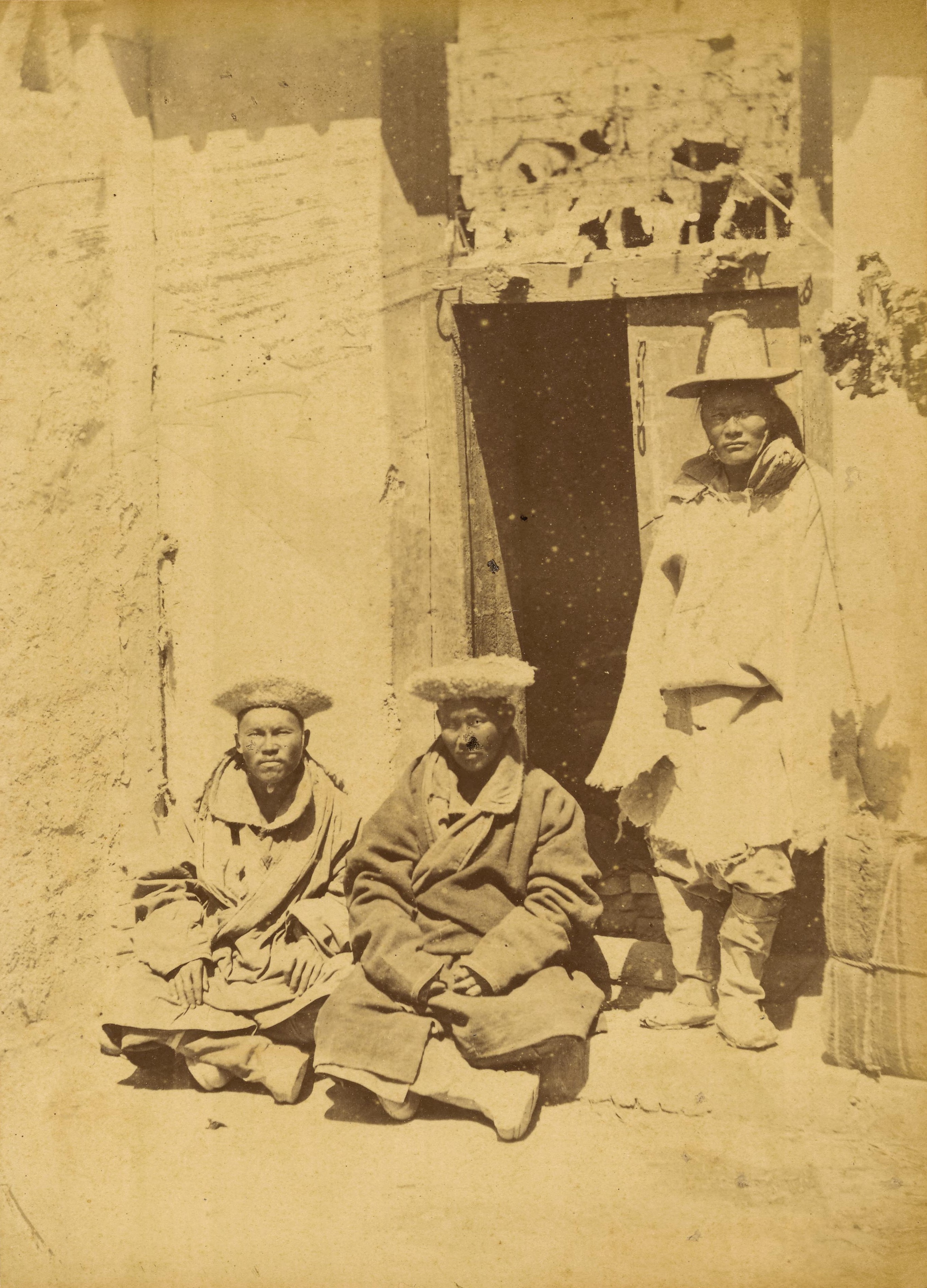
Alashan Mongols in Everyday Dress. Inner Mongolia, 1874.

preview

In 1874-75, the Russian government sent a research and trading mission to China to seek out new overland routes to the Chinese market, report on prospects for increased commerce and locations for consulates and factories, and gather information about the Dungan Revolt then raging in parts of western China. Led by Lieutenant Colonel Iulian A. Sosnovskii of the army General Staff, the nine-man mission included a topographer, Captain Matusovskii; a scientific officer, Dr. Pavel Iakovlevich Piasetskii; Chinese and Russian interpreters; three non-commissioned Cossack soldiers; and the mission photographer, Adolf Erazmovich Boiarskii. The mission proceeded from Saint Petersburg to Shanghai via Ulan Bator (Mongolia), Beijing, and Tianjin, and then followed a route along the Yangtze River, along the Great Silk Road through the Hami oasis, to Lake Zaysan, back to Russia. Boiarskii took some 200 photographs, which constitute a unique resource for the study of China in this period.

Pic and summary from Library of Congress.

0

Suspension bridge nicknamed "Galloping Gertie" bucking in wind storm. 1940

preview

Construction began in September 1938. From the time the deck was built, it began to move vertically in windy conditions, so construction workers nicknamed the bridge “Galloping Gertie”. The motion continued after the bridge opened to the public, despite several damping measures. The bridge’s main span finally collapsed in 40-mile-per-hour (64 km/h) winds on the morning of November 7, 1940, as the deck oscillated in an alternating twisting motion that gradually increased in amplitude until the deck tore apart. The violent swaying and eventual collapse resulted in the death of a cocker spaniel named “Tubby”, as well as inflicting injuries on people fleeing the disintegrating bridge or attempting to rescue the stranded dog.

Gif converted by Satcom Guru.

0

"Fearless Freddie", a Hollywood stunt man, clinging to a rope ladder slung from a plane about to drop into automobile below. 1921

preview

Born in Alexandria Township, Minnesota. [Freddie] Lund grew up on the family farm and attended school at Nelson, Minnesota. He left the farm to take up work as a mechanic, and when World War I was declared, joined the Air Service and trained at San Antonio. He was sent to the 4th Pursuit Squadron at Toul, France. Stricken with tuberculosis following the war, he returned to the states, not expected to live. He struggled back to strength and joined the Gates Flying Circus as a stunt flyer, working for a while in Hollywood, as a movie double, where he earned the nickname “Fearless Freddie.” Lund joined the Waco Aircraft Company as a test pilot and flew around the country performing stunt exhibitions, representing Waco. Fred performed the first outside loop ever done in a commercial airplane. He was World Aerobatic Champion in 1930. His wife, Betty Lund, was a well-known woman stunt pilot. Lund died in October, 1931, when his plane was cut in two in a mid-air collision during an air race in Kentucky.

Pic from Library of Congress.

0

Aftermath of police bombing of a black Philadelphia neighborhood. May 1985

preview

The 1985 MOVE bombing, locally known by its date, May 13, 1985, was the aerial bombing and destruction of residential homes in the Cobbs Creek neighborhood of Philadelphia, Pennsylvania, United States, by the Philadelphia Police Department during an armed standoff with MOVE, a black liberation organization. Philadelphia police were shot at as they attempted to evict MOVE members from a house. Philadelphia police aviators then dropped two explosive devices from a Pennsylvania State Police helicopter onto the roof of the occupied house. For 90 minutes, the Philadelphia Police Department allowed the resulting fire to burn out of control, destroying 61 previously evacuated neighboring homes over two city blocks and leaving 250 people homeless. Six adults and five children were killed in the attack, with one adult and one child surviving who were occupants of the home. A lawsuit in federal court found that the city used excessive force and violated constitutional protections against unreasonable search and seizure.

The 1985 MOVE bombing, locally known by its date, May 13, 1985, was the aerial bombing and destruction of residential homes in the Cobbs Creek neighborhood of Philadelphia, Pennsylvania, United States, by the Philadelphia Police Department during an armed standoff with MOVE, a black liberation organization. Philadelphia police were shot at as they attempted to evict MOVE members from a house. Philadelphia police aviators then dropped two explosive devices from a Pennsylvania State Police helicopter onto the roof of the occupied house. For 90 minutes, the Philadelphia Police Department allowed the resulting fire to burn out of control, destroying 61 previously evacuated neighboring homes over two city blocks and leaving 250 people homeless. Six adults and five children were killed in the attack, with one adult and one child surviving who were occupants of the home. A lawsuit in federal court found that the city used excessive force and violated constitutional protections against unreasonable search and seizure.

0

Fugitive slave catcher and dog with horse skull, handcuffs, leg irons, and iron collar. c. 1861

preview

Slave patrols first began in South Carolina in 1704 and spread throughout the thirteen colonies, lasting well beyond the American Revolution. As colonists enslaved more Africans and the population of enslaved people in South Carolina grew, especially with the invention of the cotton gin, so did the fear of slave uprisings. They developed slave patrols when other means of slave control failed to quell enslaved people’s resistance. Their biggest concern was how to keep enslaved people on the plantations being held against their will, since that is where enslaved populations were highest. Initially, slave owners offered incentives to the non slave owning whites, such as tobacco and money, to urge them to be more vigilant in the capture of runaway slaves. When this approach failed, slave patrols were formally established. Legislators introduced laws that enlisted white people in the regulation of enslaved people’s activities and movement. Black people were subjected to questioning, searches, and other harassment. Slaves who were encountered without passes from their white “master” were expected to be returned to their owners, as stated in the slave code. If caught by patrols and returned to their masters, punishments included whippings and other physical violence, and the threat of being placed on the auction block and sold away from their families, an option for masters who no longer wanted to deal with “non-compliant” slaves.

With the war lost, Southern Whites’ fears of African Americans increased in 1865 due to Reconstruction governments that were perceived as oppressive to the South. Even though slavery and patrols were legally ended, the patrol system still survived. Almost immediately in the aftermath of the war, informal patrols sprang into action. Later, city and rural police squads, along with the help of Union army officers, revived patrolling practices among free men. During the post-Civil War Reconstruction period of 1865–1877, old-style patrol methods resurfaced and were enforced by postwar Southern police officers and also by organizations such as the Ku Klux Klan.

Photo from Library of Congress.

0

William H. Taft, Governor-General of the Philippines, seated at desk in office. Between 1901 - 1903

preview

The American takeover meant the Philippine Revolution bled into the Philippine–American War, as Filipinos fought for their independence, but U.S. forces, led by military governor General Arthur MacArthur Jr. had the upper hand by 1900. MacArthur felt the commission was a nuisance, and their mission a quixotic attempt to impose self-government on a people unready for it. The general was forced to co-operate with Taft, as McKinley had given the commission control over the islands’ military budget. The commission took executive power in the Philippines on September 1, 1900; on July 4, 1901, Taft became civilian governor. MacArthur, until then the military governor, was relieved by General Adna Chaffee, who was designated only as commander of American forces. As Governor-General, Taft oversaw the final months of the primary phase of the Philippine–American War. He approved of General James Franklin Bell’s use of concentration camps in the provinces of Batangas and Laguna, and accepted the surrender of Filipino general Miguel Malvar on April 16, 1902.

Photo from Library of Congress.

0

Shanghai docks, China 1920s-30s

preview

Originally a fishing village and market town, Shanghai grew to global prominence in the 19th century due to both domestic and foreign trade and its favorable port location. The city was one of five treaty ports forced to open to trade with the Europeans after the First Opium War. The Shanghai International Settlement and the French Concession were subsequently established. The city then flourished, becoming a primary commercial and financial hub of Asia in the 1930s.

From Library of Congress.

0

Revolutionary troops with cannon, Mexico 1912

preview

The Mexican Revolution (Spanish: Revolución mexicana) was an extended sequence of armed regional conflicts in Mexico from 20 November 1910 to 1 December 1920. It has been called “the defining event of modern Mexican history”. It saw the destruction of the Federal Army, its replacement by a revolutionary army, and the transformation of Mexican culture and government. The northern Constitutionalist faction prevailed on the battlefield and drafted the present-day Constitution of Mexico, which aimed to create a strong central government. Revolutionary generals held power from 1920 to 1940. The revolutionary conflict was primarily a civil war, but foreign powers, having important economic and strategic interests in Mexico, figured in the outcome of Mexico’s power struggles; the U.S. involvement was particularly high. The conflict led to the deaths of around one million people, mostly non-combatants.

From Library of Congress.

0

Mahmoud Mukhtar in his Paris studio, 1912

preview

Mahmoud Mukhtar (Arabic: محمود مختار) (May 10, 1891 – March 28, 1934) was an Egyptian sculptor. He attended the College of Fine Arts in Cairo upon its opening in 1908 by Prince Yusuf Kamal, and was part of the original “Pioneers” of the Egyptian Art movement. Despite his early death, he greatly impacted the realization and formation of contemporary Egyptian art. His work is credited with signaling the beginning of the Egyptian modernist movement, and he is often referred to as the father of modern Egyptian sculpture.

From Yale MAVCOR.

0

Employee housing in Fordlândia, a Ford company town in Brazil 1930-31

preview

Work on the area began in 1926 by the Companhia Ford Industrial do Brasil. It was immediately hindered by poor logistics and diseases that affected the workers who succumbed to yellow fever and malaria. No roads were available in the area, so it was only accessible by the Tapajós River. The site was developed as a planned community with different areas of the city being designated for the Brazilian workers and the American managers, who lived in the so-called American Village. Typical American houses were built, as were a hospital, school, library, and hotel. The town also had a swimming pool, a playground, and a golf course.

In 1928, the Ford Motor Company sent two merchant ships – Lake Ormoc and Lake Farge – loaded with equipment and furnishings ranging from doorknobs to the town’s water tower. The town was then founded under the name Fordlândia.

The town had a strict set of rules imposed by the managers. Alcohol, tobacco and prostitution were forbidden within the town, including inside the workers’ own homes. Inspectors (American managers) would go from house to house to check how organized the houses were and to enforce these rules. The inhabitants circumvented these prohibitions by paddling out to merchant riverboats moored beyond the town jurisdiction, often hiding contraband goods inside fruits like watermelons. A small settlement was established 8 kilometres (5 mi) upstream on the “Island of Innocence” with bars, nightclubs and brothels.

The land was hilly, rocky and infertile. None of Ford’s managers had the requisite knowledge of tropical agriculture. In the wild, the rubber trees grow apart from each other as a protection mechanism against plagues and diseases, often growing close to bigger trees of other species for added support. In Fordlândia, however, the trees were planted close together in plantations, easy prey for tree blight, Saúva ants, lace bugs, red spiders, and leaf caterpillars.

From Yale University.

0

Mail carrier, Puerto Rico between c. 1900 - 1923

preview

In 1898, during the Spanish–American War, Puerto Rico was invaded and subsequently became a possession of the U.S. The first years of the 20th century were marked by the struggle to obtain greater democratic rights from the U.S.

The Foraker Act of 1900 established a civil government, ending rule by American generals and the Department of War. A U.S. Supreme Court ruling, Ortega v. Lara, involving the Foraker Act and referring to the island as “the acquired country”, soon affirmed that the U.S. Constitution applied within its territory and that any domestic Puerto Rican laws which did not conflict with it remained in force.

The Jones Act of 1917 made Puerto Ricans U.S. citizens. The Jones act paved the way for the drafting of Puerto Rico’s Constitution and its approval by Congress and Puerto Rican voters in 1952. Puerto Rico is one of five territories with less representation in the Federal government, along with the Federal District.

From Library of Congress.

0

Wedding photo, Christian and Sara Fleetwood. 1869

preview

Christian Abraham Fleetwood (July 21, 1840 – September 28, 1914), was an African American non-commissioned officer in the United States Army, a commissioned officer in the D.C. National Guard, an editor, a musician, and a government official. He received the Medal of Honor for his actions during the American Civil War. He wrote “The Negro As a Soldier” for the Negro Congress at the Cotton States and International Exposition in Atlanta, Georgia held in November 1895.

From Library of Congress.

0

View of Algiers, c. 1856

preview

Algiers was formally founded in 972 AD by Buluggin ibn Ziri, though its history goes back to around 1200-250 BC when it was a small settlement of Phoenicians that practiced trade. It was caught under control of many nations and empires such as Numidia, the Roman Empire and the Islamic caliphates, as it went on to become the capital of the Regency of Algiers from 1516 to 1830 AD, then under the control of France due to an invasion that ranked Algiers as capital of French Algeria from 1830 to 1942 AD which temporarily merged with Free France from 1942 to 1944 AD, then back again to French Algeria from 1944 to 1962 AD, and finally capital of Algeria from 1962 to present day after the Algerian Revolution.

From Museum für Kunst und Gewerbe Hamburg.

0

Harry Houdini stepping into a crate that will be lowered into New York Harbor as part of an escape stunt. July 7, 1912

preview

Houdini first attracted notice in vaudeville in the United States and then as Harry “Handcuff” Houdini on a tour of Europe, where he challenged police forces to keep him locked up. Soon he extended his repertoire to include chains, ropes slung from skyscrapers, straitjackets under water, and having to escape from and hold his breath inside a sealed milk can with water in it.

In 1904, thousands watched as Houdini tried to escape from special handcuffs commissioned by London’s Daily Mirror, keeping them in suspense for an hour. Another stunt saw him buried alive and only just able to claw himself to the surface, emerging in a state of near-breakdown. While many suspected that these escapes were faked, Houdini presented himself as the scourge of fake spiritualists, pursuing a personal crusade to expose their fraudulent methods. As president of the Society of American Magicians, he was keen to uphold professional standards and expose fraudulent artists. He was also quick to sue anyone who imitated his escape stunts.

Houdini made several movies but quit acting when it failed to bring in money. He was also a keen aviator and became the first man to fly a powered aircraft in Australia.

From Library of Congress.

0

Cowboys sitting by chuckwagon, c. 1880-1910

preview

A chuckwagon, or chuck wagon, is a horse-drawn wagon operating as a mobile field kitchen and frequently covered with a white tarp, also called a camp wagon or round-up wagon. It was historically used for the storage and transportation of food and cooking equipment on the prairies of the United States and Canada. They were included in wagon trains for settlers and traveling workers such as cowboys or loggers.

From Library of Congress.

0

11 students in uniform playing guitars, banjos, mandolins, and cello at the Hampton Normal and Agricultural Institute, Virginia c. 1898

preview

The Hampton Agricultural and Industrial School, later called the Hampton Institute, was founded in 1868 after the war by the biracial leadership of the American Missionary Association, who were chiefly Congregational and Presbyterian ministers. It was first led by former Union General Samuel Chapman Armstrong. Among the school’s famous alumni is Booker T. Washington, an educator who was hired as the first principal at the Tuskegee Institute, which he developed for decades.

The Hampton Institute later became Hampton University.

From Library of Congress.

0

Aerial photographer capturing nuclear bomb test on Bikini Atoll, 1946

preview

Nuclear testing at Bikini Atoll consisted of the detonation of 23 (or 24) nuclear weapons by the United States between 1946 and 1958 on Bikini Atoll in the Marshall Islands. Tests occurred at 7 test sites on the reef itself, on the sea, in the air, and underwater. The test weapons produced a combined yield of about 77–78.6 Mt of TNT in explosive power. After the inhabitants agreed to a temporary evacuation, to allow nuclear testing on Bikini, which they were told was of great importance to humankind, two nuclear weapons were detonated in 1946. About ten years later, additional tests with thermonuclear weapons in the late 1950s were also conducted. The first thermonuclear explosion was much more powerful than expected, and created a number of issues, but did demonstrate the dangers of such devices.

From Library of Congress.

0

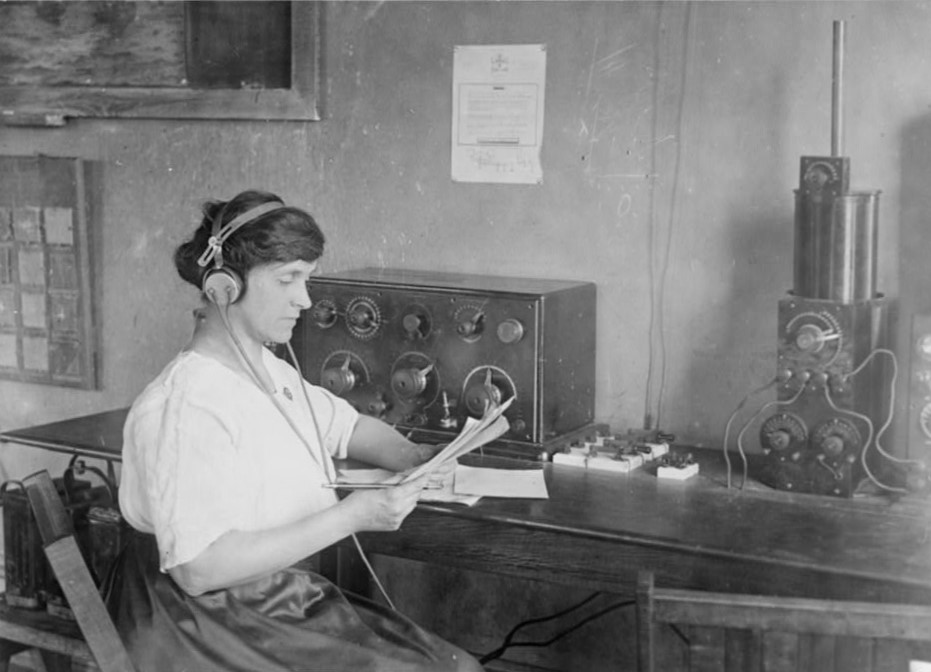
Mary Texanna Loomis with her radio apparatus in her radio school, 1921

preview

Mary Texanna Loomis (born August 18, 1880, near Goliad, Texas) was an early pioneer in the field of radio, best known for founding the Loomis Radio College in Washington, D.C. around 1920. With an academic background in languages and music, Loomis became interested in wireless telegraphy during World War I, influenced by her cousin, Dr. Mahlon Loomis, an early wireless experimenter. After gaining a license in wireless telegraphy, she sought to honor her ancestor’s legacy by establishing a radio school. The Loomis Radio College gained a reputation for excellence, offering comprehensive training and producing graduates who were well-versed in both radio technology and practical skills.

From Library of Congress.

0

Sub crew from USS S-5 aboard their rescue ship, 1920

preview

Normal procedure was to leave the main air induction valve open until the engines had a chance to come to a full stop, this operation being so timed as to occur just prior to complete submergence. In the case of S-5, however, the chief of the boat, Gunner’s Mate Percy Fox, the man responsible for operating this valve, was momentarily distracted. Noticing the mistake, he grabbed the valve lever and jerked hard, causing the valve to jam open. After considerable difficulty, the system valves in the other compartments were closed, but all efforts to secure the torpedo room valve met with failure. The abandoned torpedo room flooded, making the boat bow-heavy. An additional 80 long tons (81 t) of water in the motor room bilges caused her to settle on the bottom. It was now impossible to eject water from the torpedo room. An attempt was then made to pump out the motor room, but a gasket blew out and there were no means for repair. Lying 180 ft (55 m) on the bottom, the crew had little hope of being found, much less being rescued.

The crew reasoned that sufficient buoyancy in the after section could tilt the sub on her nose and extend the stern above the surface. The tilt would cause the water in the motor room to drain forward and increase buoyancy further. However, there was great risk involved because this would allow salt water into the battery room, which would generate deadly chlorine gas. They hoped to have enough time, after the water had entered, to close the watertight door before the gas could reach a dangerous level. After making preparations, air was applied to the after ballast and fuel tanks, blowing them dry. The stern began to rise and then shot to the surface. Men, floor plates, bilge water, and other loose objects fell through the length of the submarine. One man nearly drowned in the battery room, but was fished out, and the compartment door was sealed against the gas.

By tapping on the hull, it was determined that the stern extended about 17 ft (5.2 m) above the water. With inadequate tools, they took turns trying to cut a hole in the thick hull. After 36 hours, they had only succeeded in making a hole 3 in (76 mm) in diameter.

The steamship Alanthus detected the plight of the submarine. With additional assistance from the Panama Railway Company steamship General G. W. Goethals, a much larger hole was cut, and the entire crew was rescued.

From Library of Congress.

0

Taos Pueblo, New Mexico. 1880s

preview

Taos Pueblo (or Pueblo de Taos) is an ancient pueblo belonging to a Taos-speaking (Tiwa) Native American tribe of Puebloan people. It lies about 1 mile (1.6 km) north of the modern city of Taos, New Mexico. The pueblos are one of the oldest continuously inhabited communities in the United States. Taos Pueblo has been designated a UNESCO World Heritage Site.

Taos Pueblo is a member of the Eight Northern Pueblos. A tribal land of 95,000 acres (38,000 ha) is attached to the pueblo, and about 4,500 people live in this area.

From Library of Congress.

0

Milksellers- Brussels, Belgium, Photochrom c. 1890 - 1900

preview

Photochrom is a process of hand-colouring photographs from a single black-and-white negative with subsequent photographic transfer onto lithographic printing plates. The process is a photographic variant of chromolithography (color lithography). Because no color information was preserved in the photographic process, the photographer would make detailed notes on the colors within the scene and use the notes to hand paint the negative before transferring the image through colored gels onto the printing plates.

In 1898, the US Congress passed the Private Mailing Card Act which let private publishers produce postcards. These could be mailed for one cent each, while the letter rate was two cents. Publishers created thousands of photochrom prints, usually of cities or landscapes, and sold them as postcards. In this format, photochrom reproductions became popular. The Detroit Photographic Company reportedly produced as many as seven million photochrom prints in some years, and ten to thirty thousand different views were offered.

From Library of Congress.

0

A woman reads a book in her Pullman car berth, c. 1905

preview

Pullman is the term for railroad dining cars, lounge cars, and especially sleeping cars that were built and operated by the Pullman Company (founded by George Pullman) from 1867 to December 31, 1968.

Railway dining cars in the U.S. and Europe were operated by the Pullman Company; lounge cars were operated by the Compagnie Internationale des Wagons-Lits in France, and the British Pullman Car Company in Great Britain.

From Library of Congress

0

Assman's Balloon, 1910

preview

On 17 October 1910, William Assman and Lieutenant Leopold Vogt, of the German Army, took off in the hydrogen-filled “Harburg III”, from St. Louis, Missouri, one of ten balloons in the James Gordon Bennett International Balloon Race. At 6:10 pm, 18 October, they crossed into Canada; by 9:00 pm they opted to land as their ballast was getting low, but were over the waters of Georgian Bay, and thus continued onward. Two hours later, in the pitch black of night — having traveled 850 miles from St. Louis, at speeds upwards of 60 miles per hour – Assman and Vogt, having used up all but 2 ½ sacks of ballast, decided they had no alternative but to put down. They were over Lake Nipissing, Ontario, at 18,000 feet. Lt. Vogt later described to newspaper reporters pulling a valve, and the “Harburg III” plummeting in a “terminal velocity descent”. As the aeronauts were about to be smashed to death on Gull Island, the wind cast their balloon into the lake. Both men were momentarily knocked unconscious by the impact. William Assman’s left arm was broken, and his right hand badly sprained, an artery in the wrist cut. Despite his injuries the men were forced to swim to nearby Gull Island, where they tied the balloon to a tree. For two hours they shouted for assistance, but were far enough out in the lake (which is deep in the Canadian wilderness) that they got no response.

After an all-night stay on the island, soaked and cold from their episode in the lake, Assman bleeding profusely from his cut, the aeronauts were rescued around 6:00 am by two local Native Indians passing by in a canoe. The men were paddled 10 miles to the tiny hamlet of Nipissing Village, south of the railway town of North Bay, Ontario. Assman’s injuries were attended to by a local doctor. The “Harburg III” was towed to shore, and transported with its crew to New York by train. A number of the balloon’s instruments were lost, though it’s unknown if they fell in the lake or were pilfered as souvenirs.

I don’t believe this is the balloon that crashed in the race, as it looks like it’s named “Miss Sofia.”

From Library of Congress.

0

"The Ursuline Academy, where many were saved from the fury of the storm" Galveston, Texas 1900. Stereoscopic Crossview 3D image.

preview

Cross your eyes until the pictures overlap in the OP, and it will resolve to 3D.

From Library of Congress. Here’s the original:

The 1900 Galveston hurricane, also known as the Great Galveston hurricane and the Galveston Flood, and known regionally as the Great Storm of 1900 or the 1900 Storm, was a catastrophic tropical cyclone that became the deadliest natural disaster in the history of the United States. The strongest storm of the 1900 Atlantic hurricane season, it left between 6,000 and 12,000 fatalities in the United States; the number most cited in official reports is 8,000. Most of these deaths occurred in and near Galveston, Texas, after the storm surge inundated the coastline and the island city with 8 to 12 ft (2.4 to 3.7 m) of water.