0

The Heinlein Society - Welcome!

The Heinlein Society The Heinlein Society www.heinleinsociety.org
preview

This group is the official Heinlein Society space on Lemmy. Feel free to post and discuss RAH’s life and works, and just about anything else related. I’m not trying to keep it too strictly on-topic, this space can be similar to The Heinlein Forum on Facebook or r/heinlein on Reddit (I’m moderator there, too). We can also post funny stuff like we do on The Heinlein Society’s Facebook page.

The “no current politics” thing is because of our non-profit status, any questions can be directed to chairman@heinleinsociety.org.

0

Special deals from Arc Manor until October 7th

preview

The Number of the Beast FREE until October 7th (ebook format) www.e-junkie.com/ecom/gb.php?i=1903835&cl=162008&…

Red Planet FREE until October 7th (ebook format) www.e-junkie.com/ecom/gb.php?i=1903836&cl=162008&…

The Cat Who Walks Through Wall HALF OFF until October 7th (ebook format) www.e-junkie.com/ecom/gb.php?i=1903837&cl=162008&…

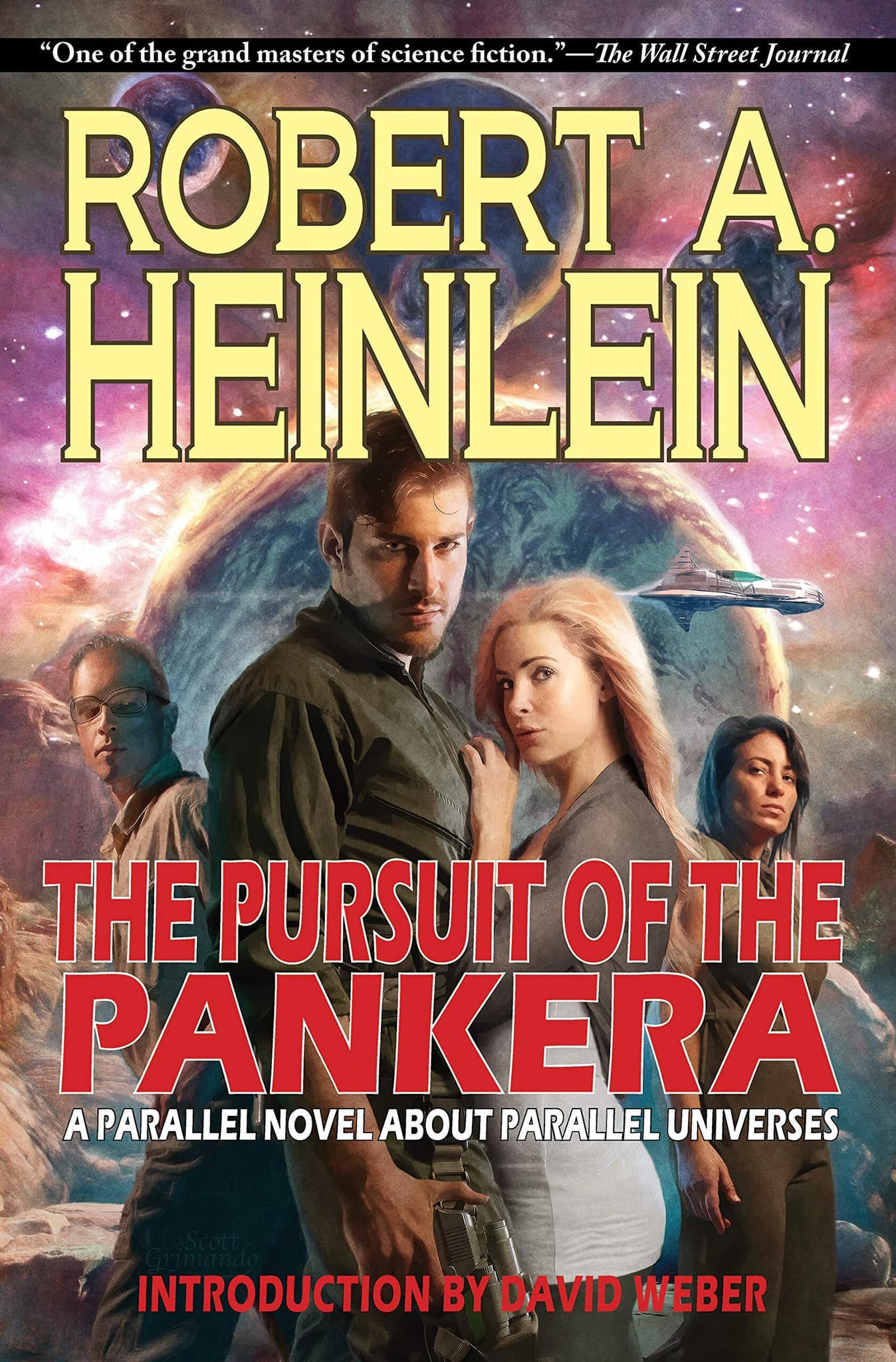
The Pursuit of the Pankera HALF OFF until October 7th (ebook format) www.e-junkie.com/ecom/gb.php?i=1903838&cl=162008&…

The Puppet Masters HALF OFF until October 7th (ebook format) www.e-junkie.com/ecom/gb.php?i=1903840&cl=162008&…

The Pursuit of the Pankera

The Cat Who Walked Through Walls

Red Planet

0

The Door Into Summer

preview

By the end of January he was generating a new “adult” book. He had an engineer/inventor on a bender because his wife dumped him to marry a rich man. But the elements weren’t coming together quite right, and he kept turning them over in his mind, changing a bit here and a bit there and seeing how the fit-together improved. One late January morning at breakfast, Ginny crossed his field of vision, being led-between-the-legs by their cat, Pixie. Bemused, he watched her open a people door for him and wait while Pixie sniffed disdainfully and turned away from the snow, complaining vocally at Ginny’s mismanagement of the weather. There were seven people doors leading out, and the same little playlet was reenacted at each door. When Pixie had rejected the last door and stalked away, indignant, Ginny shrugged. “I guess he’s looking for the door into summer.”

Suddenly, all the jumble of story elements he had been fiddling with fell into place in his head—a completely different configuration, and one that felt perfectly right. “Don’t say another word,” he said. He got up and almost ran to his office, eager to start getting the story down on paper. Thirteen days later, The Door into Summer was finished—the shortest length of time he had ever taken to write a full (if short) novel—and nearly perfect as it came off his typewriter. Pixie was the missing element; Robert’s familial affection for “the old warrior” gave the book its emotive core and tied all the incidents together in another ingratiating, seducing book.

Robert A. Heinlein: In Dialogue with His Century, Volume 2: The Man Who Learned Better (1948-1988) by William H. Patterson Jr.

0

Fair winds and following seas, Herb. You will be missed!

preview

Today we mourn the passing of a distinguished member of The Heinlein Society, Dr. C. Herbert Gilliland.

Herb Gilliland was a retired professor of English at the United States Naval Academy, and a retired naval reserve captain. He taught courses there on topics ranging from Renaissance literature to science fiction. He particularly enjoyed teaching a special course on Robert Heinlein, a graduate of the Naval Academy and the author of Starship Troopers. (This was the first college course ever dedicated entirely to Heinlein.) Herb’s scholarly work tends to be concerned with naval history. He is the author of Voyage to a Thousand Cares: Master’s Mate Lawrence with the African Squadron 1844-1846, which received the North American Society for Oceanic History’s John Lyman Book Award. With Robert Shenk, he co-authored the biographical Admiral Dan Gallery: The Life and Wit of a Navy Original. Although he has written many things since, Dr. Gilliland is always proud that his very first appearance in public print was a letter to John Campbell published in Astounding magazine. He is also a member of the board for the Robert A. Heinlein Award, given annually to a science fiction writer whose work has inspired exploration of space. Dr. Gilliland was appointed by The Heinlein Society board of directors to fill a vacancy in 2015, and elected by the membership to a three year term later in 2015. He was re-elected to a second three year term in 2018, and was chosen by the Board of Directors to be Vice President – Secretary in the same year. He was appointed Chair of the Academic Committee and Editor-in-Chief of The Heinlein Journal in 2020.

Fair winds and following seas, Herb. You will be missed!

0

A few frequently asked questions with answers

preview

Recently, we have received several questions asking when The Heinlein Society will allow movies or TV shows to be made from Heinlein books. Also people have inquired about making some of Heinlein’s later novels available in E-book format. The easy answer is we don’t own the copyrights so therefore have no say in the matter. Here is the actual answer.

The Heinlein Prize Trust is the entity that owns the copyrights to most of Heinlein’s published works. They are represented by Eleanor Wood of The Spectrum Literary Agency. To acquire the rights to a book for media production, a producer typically contacts HPT or their literary agent and negotiates to “option” the film rights, which means they purchase the exclusive right to adapt the book into a film for a specific period of time, usually with a set fee, allowing them to develop the project before fully committing to buying the rights outright; this process often involves a legal contract outlining the terms of adaptation and creative control. Im sure this has happened on several occasions, but that doesn’t mean a film or TV show will actually come to fruition.

A good example of this is The Moon is a Harsh Mistress. In 2015 Fox acquired an option to Moon and planned to make a movie entitled Uprising based on the book. Bryan Singer was hired to be the director and a script was developed by Marc Guggenheim. For some reason the movie was never made.

Another example is Stranger in a Strange Land. In 2016 the SyFy channel optioned the rights to make Stranger into a TV series. Obviously, that hasn’t happened either.

I’m sure the Heinlein Prize Trust / The Spectrum Literary Agency would be pleased to entertain any offers from producers concerning Heinlein’s books. The Heinlein Society would also be pleased, mainly because it would bring Heinlein’s name to a new generation and hopefully also bring them to his written work.

That being said, there are two new projects in the works:

A new Citizen of the Galaxy animated film is in development at Lex+Otis Studios, directed by Jay Oliva with a script by Luke Lieberman. The film aims for a 2027 release and is a direct adaptation of the 1957 novel.

Also, a new feature film of Starship Troopers is being planned. Neill Blomkamp, District 9 director, is writing and directing a new adaptation of the classic novel for Columbia Pictures. It has been reported that the film is not a remake of the 1997 Paul Verhoeven film, but instead will be closer to the Heinlein novel.

And, by the way, we have been in communication with the Heinlein Prize Trust about Heinlein’s later novels being made available in E-book format. They assure us that they are pursuing the issue with a publisher.

heinleinsociety.org/heinlein-in-the-news/

0

Virginia Heinlein

preview

23 years ago today, Ginny Heinlein sailed beyond the sunset. Robert described her as literally his best friend and severest critic. She inspired him and gave him ideas for several of his books, including Stranger in a Strange Land and Friday. She was also the model for many of the strong, independent and competent women characters he wrote. She was a founding member of The Heinlein Society and served on our Board of Directors. We still miss her and may she rest in peace.

23 years ago today, Ginny Heinlein sailed beyond the sunset. Robert described her as literally his best friend and severest critic. She inspired him and gave him ideas for several of his books, including Stranger in a Strange Land and Friday. She was also the model for many of the strong, independent and competent women characters he wrote. She was a founding member of The Heinlein Society and served on our Board of Directors. We still miss her and may she rest in peace.

0

The Christmas Bridge by Jon P. Ogden

preview

Jon was a member of The Heinlein Society and was one of our early Website admins. Interesting note, his full name was Jon Patton Ogden and was related to General George Patton. Jon was an animal lover and adopted diabetic cats that no one else would take care of. Jon developed a reputation as a bit of a curmudgeon, mostly because he was in pain himself. He passed away in 2016 and we still miss him. This is a beautiful story he wrote. I hope you enjoy it.


The Christmas Bridge By Jon P. Ogden on Tuesday, December 16, 2014 at 9:06 PM

I suppose the night’s first miracle was that I was alive to see it. They say that cats have nine lives and if that’s true, then I was working on my ninth, and it didn’t have a lot left to go, either. But the barn was warm, and full of hay, and as my mother used to tell me, “Where’s there’s hay; there’s dinner.”

Sneaking into a barn was quite a comedown for me whose great great great g’father had been worshiped as a miracle worker back in Egypt. But one of his descendants had showed what would have been poor judgment in hisher choice of humans, if a cat was capable of poor judgment which we all know is impossible, and joined up with the folks who were planning on crossing the red sea and getting back to their homeland.

The Tribes of Israel, my ancestors learned when it was too late, most emphatically did not worship cats, but simply entered into partnerships with them. Oh well.

On that night, I was dying and I think I knew it. My eyes were having trouble seeing anything. I was hungry all the time, and thirsty – oh so thirsty – no matter how much I drank. And, embarrassingly, my hind end had started to give me trouble. I could not walk on my toes anymore and had to put my whole foot down on the ground. It is impossible to catch any decent-sized rat if you can’t run the way you always have.

I should have been feeling sorry for myself since it seemed likely I would never again feel the joy of sinking my few remaining teeth a nice young plump rat. Instead I was too tired to feel much of anything. Oh well.

I did find a beautiful puddle of melted snow near one of the stalls that had been out of reach of the cow inside it and I cleaned off the surface with my paw and drank until it was gone. For the moment, it was almost enough to slake my thirst. Then I found a nice bed of hay in a corner and curled up in it. I only had to re-curl myself about four times to get comfortable. I was almost asleep when they came in.

“Look,” one of the humans said, “This isn’t good enough for you and yours, I know, but I can’t kick any of my paying customers out, either. It wouldn’t be right. I’d give you my bed, but I already rented it out, too.”

“We are grateful for this,” said another one – the female. “Yes,” said the other. He was the oldest of the three and had a nice voice. “I hadn’t realized my home town would have so many sons and daughters who would need to return this week.”

“Stinkingromans,” said the first human, and spat on the ground. “Stinkingromans,” agreed the other male. He spit, too.

They made some more talking-noises at each other, but it was clear that they were no threat, and that they weren’t likely to have any food either. I went back to sleep. I wasn’t sure I would ever wake up, but that was alright, too. I was so tired I wanted to sleep forever. At least, I wouldn’t be hungry any more and I’d stop being frustrated by a body that was betraying me.


I was awakened by a cry. Is there anything more irritating than a human baby’s wail? I knew a cry like that meant the humans nearby wouldn’t be able to concentrate on anything except that shrieking until it had been fed. I wished I could make that sound – then maybe there’d been milk for me, too. The older male and the very young female had taken over a corner of the barn, evicting a couple of eatable hens and a stringy old rooster who would have been tough chewing even when I still had my teeth. The human girl was lying down and her luxuriant black hair was plastered to her forehead and shiny with sweat. Wow! She smelled like she’d just worked really hard. That’s when I figured it out: she’d just popped the human kitten out. From what I can tell, they have a harder time with birth than do cats. Oh well.

The man carried the shrieker over to her and she held it to her breast. The noise-making stopped. Glorious silence descended upon us again. Three cheers for her watchamacallits, even though she only had two of them.

Curious, I crept closer. All right, not curious. I was hypnotized by the faint odor of milk. I knew there was no chance of being offered any, but hunger is the mother of hope. I mean they were in the mood to feed creatures smaller than themselves, right?

“Look, Yussif.” “Does he bother you, Miriamne? Shall I put him outside?”

Hey! I was here first!!!

“The poor creature is sick, Yussif. Look at the way he is almost crawling”

The man crouched down beside me. He had a harsh, lined face, heavy eyebrows, hair turning gray, and gentle eyes.

“I have seen this before, Miriamne. It is a disease of cats and people, both. Something goes wrong inside and no matter how much they eat, they cannot still their hunger. They waste away to skin and bones like this one, and then they starve to death no matter how much food they’re given.”

“How terrible! Give him something to eat.” “Did you not hear me, my sweet? No matter how much – “

She didn’t raise her voice even a little bit, but he stopped speaking the moment she began again. “Yussif, give the cat some food.” “Yes, my love.”

I was fed. Let me repeat that. I was fed!!! By a human. Just like when I was young and had a human to call my own!!! Oh joy, oh day, oh miau and double miau! I purred as I hadn’t in years. The human kitten was fed. I was fed. The man and the woman smiled as we ate. Hey, if it made them happy, I would gladly eat for them all night - and from the lip smacks I heard, the human kitten was ready to chow down until morning, too.

Suddenly the barn was invaded by sheep-people. And outside I could hear their sheep. When the humans invented the phrase, “dumb animals,” they were talking about sheep.

The man stepped in front of the woman and her kitten. He was still holding me as he said, “What do you want?” He looked ready to fight for his territory. Humans and dogs are like that.

The sheep-people all knelt at a sign from the one I supposed was in charge (There’s always a human in charge) and he mumbled, “An angel.”

“What? Speak up. What are you talking about?”

“We were in the hills outside of town. We have brought our sheep to Bethlehem to sell for mutton to feed the stinkingromans.” All the sheep-people spat on the ground.

“An angel appeared and told us we would find the Son of David, born this night in a stable as was foretold by the prophets. We have come to swear allegiance to the child who will be our king.”

“An angel?”

Well, he was slow on the uptake, but he had food, so I forgave him. I butted my head against his muscular arm, to let him know he was OK in my book, even if he was a little stupid. Besides, it felt good to be held and to purr. He scratched me behind the ears absently as he listened to the sheep-man go on and on about a king and a kingdom, but did not give me any more food. When I started to flex my claws in his robe he frowned and put me down.

The woman was listening intently to the conversation but she patted the straw beside her and I went over and lay down beside her. She smelled wonderful. I’m not sure why humans like the smell of dead flowers and don’t enjoy the living smells of their own kind. Oh well.

“May we give our gifts to the new king?”

“Miriamne?”

“Yussif, he is sleeping. Put him back to bed” And so it went. The kitten was laid in the manager and I lay by the girl, her wonderfully warm hand on my back, while one by one, each of the sheep-people came up to us and knelt until their foreheads touch the ground and then laid a small tribute in front of us. As befitted my dignity I stared at all of them gravely and with as few blinks as I could manage. I wished the tributes were edible.

Of course there were short breaks in my dignity when I had to go find some more melted snow. I was still very thirsty, but the second miracle of the night had occurred. The warmth I’d felt on my hindquarter where she touched me had spread down my legs and I could walk again. I was very happy with my new humans. Very happy indeed. When I returned, I lay very close to her.

Then barn owner came out to find out what was happening and nothing would do but that he be allowed to give the kitten a present and then his wife came and his son and his daughter-in-law and then his neighbors – humans are a lot like sheep, only a little smarter and have thumbs.

The barn was full-up. I was wondering if we animals might not want to move into the houses nearby to make more room for the humans who had decided to spend the night here in the barn. That would have been helpful, right?

Then the camel-riders showed up. The camels, thank goodness were too big to fit into the tent! And their humans were wonderful to smell. I bet they hadn’t had a bath in weeks! Really yummy! One of them, who wore a crown, said, “We have come as the stars have bidden us. We celebrate the birth of the One Who Will Change The World.” The way he spoke, I could hear those capitals. Of course then the camel people knelt in front of the human kitten, too. And each one laid a fancy wood and metal chest down besides all the other presents. One of those presents was piled high with some kind of junky shiny yellow metal – boring. But there were two others from which wafted the most delightful smells.

My mouth started to water and I slid out from underneath the girl’s hand and stepped forward to stand beside the manger. A couple more steps and I could leap right into one of those tribute-chests and lick up all of whatever it was that smelled so good. I have to admit I was drooling like a dog.

Then I saw it crawl out of the chest I’d been about to leap into. I guess that was a miracle, too, since my eyes were no better than they had been, but the way it skittered and slithered, I knew we had a tail-stinger to deal with.

They are ugly insect creatures. My sister, Willa, had made the mistake of trying to play with one when we were young. That evil dagger-tail they have had hit her in the cheek and it swelled up immediately. She began to cry and stagger and bump into things and then she lay down and shuddered and then she stopped moving even when I licked her face trying to wake her up and then they took her away.

I was very lonely for a while after that and my mommy was, too. I hate those things almost as much as I am afraid of them.

The armor-plated insect headed right for the manager. I waited for one of the humans to see it and snatch the human kitten away. No one did. The tail-stinger crawled up one of the cross-legs of the manger and headed up its side. This would’ve been a good time for another miracle, but there wasn’t one. Oh well. “Kittens first,” mom always said. I guess old, almost blind tomcats come pretty near last in the list of who gets protected…and whoopie-doo, we get to be high up on the list of doing the protector stuff. With my hindquarters operating at almost full strength, I leaped up onto the manager and balanced there on its rim. The human kitten looked up at me and gurgled. I had time to notice that it had its father’s eyes.

“Get off of him!” The man shouted and jumped forward when he saw me leap, but before I could leap down again and let him deal with problem (I would have been very glad to do it), the tail-stinger slithered up over the rim of the manger and began moving quickly down towards the two-legged kitten.

I half-jumped, half-fell down on top of the baby; the girl gasped, the man shouted. I put one paw directly into the center of that insect’s back-plate and held it while trying to use my four remaining teeth to stop it once and for all. It stabbed me twice, once in the paw; once in the face. The man grabbed for me and saw the creature, it’s tail still stuck in my cheek and pumping poison. Not worrying about his own safety he grabbed it and threw it on the floor and crushed it beneath the heel of his boot.

It hurt. It hurt. Ithurtithurtithurtohmommieithurt! The man held me in his arms as if I was a human kitten, too, and I stared into his eyes. I wanted to leap down and get away from the pain, but my legs wouldn’t do what I told them any more. It hurt!!!

“Yussif?” The straw rustled as she struggled to her feet.

“Joshua is fine.” The man’s voice sounded as if he was far away. "This little fellow saved him from a scorpion.”

The crowned camel-rider added, “At the cost of his own life.” He sounded sad. And he sounded far away. “Is there nothing we can do?” Miriamne stood beside her man and clutched his arm for support. He patted her hand. “No, it will be soon now.” One of the camel men said, “It was a miracle the feline creature saw the insect.”

It was getting really dark, now. Oh well.

The girl stood beside her man and gently stroked me. Wherever she touched me, the pain went away. Her hand was the night’s next-to-last miracle. I was getting very sleepy. I couldn’t keep my eyes open any more. I started hearing things. . . “Thank you, cat, for my baby.” “Thank you cat, for my son.” “Thank you, cat, for our king.” “Thank you, cat, for the One Who Will Light Up The World.”


This was the night’s last miracle. The last of pain faded away, I stopped feeling sleepy and and I opened my eyes. The sky was bright blue, the grass were the luxuriant green of springtime. Butterflies everywhere – big fat, easily catchable ones. And beyond the field of butterflies was a gentle river flowing – and then I saw it. It was so big, I had to look at it three times just to see all of it.

A bridge of rainbows, a rainbow bridge arching over the river and into the sky, its far end hidden in the clouds that hid the forested hills miles away. There was a hint of an alabaster wall with an immense gate, but I could not make out the details.

Wait a minute! Wait a stinkingroman minute! How could I see all this? I hadn’t had eyesight this good since I was a kitten. Maybe not even then, come to think of it. And my teeth! I had all my teeth back!!! Watch out butterflies here comes cat!

I will not tell you much about the next hour, except to say that I engaged in some serious munching. But where were all the others? I wanted company. Especially, I wanted my new humans. Maybe they were on the other side of the bridge? Where was the girl, and the man, and my human kitten?

Off towards the rising sun, I saw a young human. He was sitting on a bench and using a tool to scrape a piece of wood smooth. Oh good! I wasn’t alone. I scampered towards him as fast as my new legs would carry me.

“Hello, cat.”

I sat on my haunches and looked up at him. He reached down and gently scritched me behind the ears. His touch was warm and soothing – it reminded me of the mother-human.

“You are a very special cat”

Well, I knew that, but it was nice to hear him say it. “You are my cat now, you know, and that makes you more special than you can imagine. We will be together forever and ever.”

That sounded like a plan I could live with. . The young boy was the kind of human I wanted to to find all of my life. I rubbed my side against his leg in hopes he’d pick me up.

“But we cannot be together quite yet.” He stroked me gently down to the sweet spot just above my tail. “You must tarry here in this field among the blowing grasses and take all the butterflies.

Now chasing the butterflies had been lots of good fun, but doing it without any company – that was less good fun.

“I will join you soon enough.”

How about now? I have trouble with this ‘someday it’ll be better’ stuff.

“There are tasks I have been given and must complete first, my cat. Things that only I can do. . . .” The kitten’s grown up voice sounded sad for a second. “But in only a short while, hardly more than a few sleeps, you and I shall cross over the bridge together, and we shall dwell in my father’s house forever.”

A short while for him could be a long while for me. After all humans lived much longer than we did. And, rumors to the contrary, I did not walk by myself. I needed company. I stood on my hind legs and placed my paws on his knee and miaued. I wanted him to know that I liked – no, needed – company.

“Yes, you do”

He heard me??? Wow. I’d found me a real keeper. A human smart enough to understand me!

The boy stood up. “Cat, to honor you, from this day forth, all pets will come here to wait for their masters to join them. They, like you, will be restored to their youth and to their strength. Nothing they can imagine having or eating will be denied them, except – for awhile – the presence of their humans. I will care for all of them while they are parted from their loved ones.”

He was going to be pretty busy taking care of all of us. Good thing we were outside. That many litter boxes would be a real pain.

“But there will come a day that will be their re-birth day. And on that day, they will see their human, their one-and-only human walking toward them . They will be reunited, never again to be parted. And together they will join us, my cat, in my Father’s house. And we shall all dwell there in peace, and in love, forever.” And so I began to wait.

I have been waiting for a long time. I hope he gets here soon. I’m getting really curious about what is on the other side of the bridge. But I already have many friends – cats, of course but also barkers, and whinnies waiting with me for their humans. We’re happy now. But we will be even happier when they come for us and we go over the bridge together.


This story is copyright © 2013 by Jon P. Ogden.

0

Happy Birthday William H. (Bill) Patterson, Jr.

preview

Today is William H. (Bill) Patterson, Jr.'s birthday. Bill was the author of the massive two part biography of Robert’s life, Robert A. Heinlein: In Dialogue with His Century. He also wrote the foreword in almost every volume of the Virginia Edition. Bill was also the first president and one of the founders of The Heinlein Society. If you have not read his work, it is a fascinating look at the life of RAH. We miss you Bill!

Today is William H. (Bill) Patterson, Jr.'s birthday. Bill was the author of the massive two part biography of Robert’s life, Robert A. Heinlein: In Dialogue with His Century. He also wrote the foreword in almost every volume of the Virginia Edition. Bill was also the first president and one of the founders of The Heinlein Society. If you have not read his work, it is a fascinating look at the life of RAH. We miss you Bill!

0

Heinlein's address sign

preview

When Robert and Ginny moved to Colorado Springs and decided to build a house on Mesa Avenue, they got to choose their own street number since they were the first residents. Robert chose 1776 for obvious reasons. The photo below shows the metal address marker they had made that adorned their front yard for many years.

Happy Independence Day

0

Uncle Bob Wants You! The Heinlein Journal

preview

We’re close to publishing the latest edition of The Heinlein Journal. The Journal is free to all Heinlein Society members, and individual issues are also available for purchase by the general public.

Got an area of Heinlein studies you’d like to explore? Consider writing an article for the Journal! We especially encourage emerging scholars.

Recent articles include:

• “Empowering the Extraordinary: Analyzing Superhuman Agency and Female Strength in Robert Heinlein’s Friday” by Gunel Alasgarova

• “Heinlein in the Comics” by John Tilden

• “Heinlein’s Influence on Dating and Marriage Patterns in America: A Perspective” by Glen W. Olson

Learn more: www.heinleinsociety.org/heinlein-journal/

We’re close to publishing the latest edition of The Heinlein Journal. The Journal is free to all Heinlein Society members, and individual issues are also available for purchase by the general public.

Got an area of Heinlein studies you’d like to explore? Consider writing an article for the Journal! We especially encourage emerging scholars.

Recent articles include:
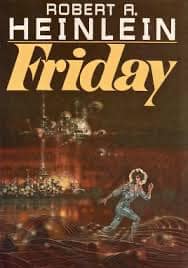
• “Empowering the Extraordinary: Analyzing Superhuman Agency and Female Strength in Robert Heinlein’s Friday” by Gunel Alasgarova
• “Heinlein in the Comics” by John Tilden

• “Heinlein’s Influence on Dating and Marriage Patterns in America: A Perspective” by Glen W. Olson

Learn more: www.heinleinsociety.org/heinlein-journal/

0

The Inspiration for The Door Into Summer - The Heinlein Society

The Heinlein Society The Inspiration for The Door Into Summer - The Heinlein Society www.heinleinsociety.org
preview

By the end of January (1956) he (Heinlein) was generating a new “adult” book. He had an engineer/inventor on a bender because his wife dumped him to marry a rich man. But the elements weren’t coming together quite right, and he kept turning them over in his mind, changing a bit here and a bit there and seeing how the fit-together improved. One late January morning at breakfast, Ginny crossed his field of vision, being led-between-the-legs by their cat, Pixie. Bemused, he watched her open a people door for him and wait while Pixie sniffed disdainfully and turned away from the snow, complaining vocally at Ginny’s mismanagement of the weather. There were seven people doors leading out, and the same little playlet was reenacted at each door. When Pixie had rejected the last door and stalked away, indignant, Ginny shrugged. “I guess he’s looking for the door into summer.”

Suddenly, all the jumble of story elements he had been fiddling with fell into place in his head—a completely different configuration, and one that felt perfectly right. “Don’t say another word,” he said. He got up and almost ran to his office, eager to start getting the story down on paper. Thirteen days later, The Door into Summer was finished—the shortest length of time he had ever taken to write a full (if short) novel—and nearly perfect as it came off his typewriter. Pixie was the missing element; Robert’s familial affection for “the old warrior” gave the book its emotive core and tied all the incidents together in another ingratiating, seducing book.

Robert A. Heinlein: In Dialogue with His Century, Volume 2: The Man Who Learned Better (1948-1988) by William H. Patterson Jr.

0

On Rodger Young

preview

Since late in 1944, Nelson Eddy’s recording of “The Ballad of Rodger Young” had been playing on the radio, and that song became intensely meaningful to Heinlein.

Young, an infantry private, had been killed on July 31, 1943, in the campaign for the Solomon Islands. He had been a runt—five feet two inches—and so nearly deaf that he had given up leadership of his squad and asked to be demoted to private because he feared missing an order in battle that would get his squad killed. He was wounded when his squad was pinned down by a hidden Japanese machine gun nest protecting the Munda airstrip on the island of New Georgia, and a second time when his return fire pinpointed his position. He had crept forward and begun to throw hand grenades, covering his squad’s withdrawal. He was shot a third time and killed. This was the “finest traditions” of the infantry.

When Private First Class Frank Loesser heard about the posthumous Congressional Medal of Honor awarded Rodger Young in January 1944, he had written the song. It was released later that year. For Heinlein, “The Ballad of Rodger Young” was symbolic of the war and of what even he, sheltered and sequestered in the Philadelphia Navy Yard, experienced on a daily basis.

“We had a very nervous-making day last week,” Heinlein wrote (John W.) Campbell, “but one of the most remarkable and significant of my life. First, it was Leslyn’s day to work with her blind marines in the shop—work she loves and has worked up herself, but hard on her emotionally—then, as we came out of the lunchroom that noon, we found ourselves listening to a speaker outside—it was … just a guy in uniform talking about action he had seen. But I could not walk on past. The man brought it to you and laid it in your lap, with the blood still flowing …”

“I couldn’t leave until he had stopped talking. I skipped my one and only chance to buy my weeks’ cigarette ration in order to hear him, but I could not leave. It was while he was talking that I decided that I could not with clear conscience take a day off until I had my work in better shape.”

“Well—that night we went across the street to dinner. Miles’ and Rod’s was crowded. There was a marine with one leg sitting on the couch. He said, no, he wasn’t waiting for a table; he had had to move because the hard chair hurt him—his leg wasn’t healed. Presently a party started coming out, another one-legged marine with a corpsman, then a bluejacket with a crutch under the stump of his arm, then a man with no legs, carried. The marine said with respect to the bluejacket,

‘There’s the bravest guy in the ward. One arm, one leg, one eye, and one ear—and he jokes about it.’

“We went in as the marine left, feeling pretty shaky, but thinking that the party was gone. But there was still one marine in there, apparently all right. As the last one on crutches left, this one said, “There’s the way I’m going to walk.” Just then a corpsman returned, said brightly, “bet you thought I’d forgotten you,” and turned around, presenting his back to the kid. The kid put his arms around the corpsman’s neck and the corpsman carried him out, like a sack of flour. There was just enough of him left to sit down.”

“I got up and went out and locked myself in the head and bawled my eyes out for about fifteen minutes. Then we took a walk around the block and came back. I was all right by then but I couldn’t get Leslyn to eat.”

“I wish more people could have seen them.”

  • “Robert A. Heinlein: Volume I: Learning Curve, 1907-1948” by William H. Patterson Jr.
0

On TANSTAAFL

preview

(Jerry) Pournelle got back to his seminar, and Heinlein began making notes on his new book. In the course of that evening, Pournelle had casually used an expression they had never heard before: TANSTAAFL. It was an acronym, Pournelle explained, that he got from his father, for the expression, still widely used in the American South (Pournelle had been born in Shreveport, Louisiana, in 1933):

There Ain’t No Such Thing As A Free Lunch. Saloons used to advertise free lunches with drinks—anything from pickled eggs to elaborate buffet spreads. Of course, there was nothing “free” about the food. The cost was folded into the price of the drinks. Free lunches had disappeared from the American scene around the time of World War I. The acronym, collapsing the whole thing into a single word, was exactly what Robert had been looking for:

“I was working on a novel into which it fitted perfectly.”

Heinlein later explained. He was working up a story background around Economics in One Lesson, and that one word, TANSTAAFL, functioned perfectly as a motto for that society. At the time he made a note of it on one of the three-by-five index cards he carried everywhere with him, for just such flashes of inspiration, and it entered the mix that had been accumulating for some time. Virginia Heinlein later recalled:

“I suppose that all of this society in The Moon is a Harsh Mistress arose out of discussions that Robert and I had. What happened was that we held a number of discussions (and I remember them well) about ideal government. The problem with government is that, given some areas to make laws about, they move out into other areas, until all freedoms are gone.”

Robert A. Heinlein: In Dialogue with His Century, Volume 2: The Man Who Learned Better (1948-1988) by William H. Patterson Jr.

0

Excerpt from The Door into Summer

preview

But liking cats is hard to fake to a cat person. There are cat people and there are others, more than a majority probably, who “cannot abide a harmless, necessary cat.” If they try to pretend, out of politeness or any reason, it shows, because they don’t understand how to treat cats—and cat protocol is more rigid than that of diplomacy.

It is based on self-respect and mutual respect and it has the same flavor as the dignidad de hombre of Latin America which you may offend only at risk to your life.

Cats have no sense of humor, they have terribly inflated egos, and they are very touchy. If somebody asked me why it was worth anyone’s time to cater to them I would be forced to answer that there is no logical reason. I would rather explain to someone who detests sharp cheeses why he “ought to like” Limburger. Nevertheless, I fully sympathize with the mandarin who cut off a priceless embroidered sleeve because a kitten was sleeping on it.

Belle tried to show that she “liked” Pete by treating him like a dog… so she got scratched. Then, being a sensible cat, he got out in a hurry and stayed out a long time—which was well, as I would have smacked him, and Pete has never been smacked, not by me. Hitting a cat is worse than useless; a cat can be disciplined only by patience, never by blows.”

— The Door into Summer by Robert A. Heinlein

0

Excerpt on “If This Goes On —”

preview

(There always seems to be some confusion about “If This Goes On —” and Revolt in 2100. “If This Goes On —” is a novelette first published in Astounding in 1940. Revolt in 2100 was a book published in 1953 that incuded three stories, “If This Goes On —” being the primary, along with Coventry and Misfit Heinlein hated the book title since the year 2100 didnt relate to any of the stories.)

Campbell’s letter accepting “—Vine and Fig Tree—” (“If This Goes On —”) on August 25, 1939 had been the most backhandedly complimentary thing Heinlein had ever received. It was full of complaints, mostly about how the religious theme would offend his readership—but the tone of the letter was pure delighted frustration, like a dog growling over a fresh bone he kept turning over and over, gnawing at the good stuff.

(Campbell’s letter) The story, by practically all that’s good and holy, deserves our usual unusually-good-story 25% bonus. It’s a corking good yarn; may you send us many more as capably handled. But—for the love of Heaven—don’t send us any more on the theme of this one. The bonus misfires because this yarn is going to be a headache and a shaker-in-the-boots; it’s going to take a lot of careful reworking and shifting of emphasis.

Ye gods man, read your own dicta at the end of the yarn as it now stands (incidentally, you don’t think, on the basis of the material’s own logic, we could print that safely, do you?) And consider the sort of reaction that yarn, as it stands, would draw down on us! Even after considerable altering of emphasis, it’s going to be a definitely warmish subject to handle.

You say, in your concluding part, that religion is dogma, incapable of logistic alteration or argument. Evidently you believe that. Then, on that basis, what reaction would you expect this yarn to evoke in the more religious minded readers? Your logic, throughout, is magnificent and beautifully consistent. That’s swell. I love it. Lots wouldn’t, you know.

I’m reworking it, I’ll be forced to eliminate some beautiful points possessed of an incendiary heat, so far as controversy goes. Consider, man, the reaction if we let that bit about the confessional pass! As a useful adjunct to a dictator’s secret police, it undoubtedly is surpassingly lovely; as an item to print in a modern American magazine, it’s dynamite. That’s out like a light …

I genuinely got a great kick out of the consistency and logic of the piece. You can, and will, I’m sure, earn that 25% bonus for unusually-good stuff frequently. (End Campbell’s letter)

Heinlein could not help but be pleased—amused and complimented. And Campbell’s specific comments showed that he was most impressed by things Heinlein had put into the story as throwaways—details that added believability to the backstory. If he could tease out some coherent, specific discussion of what Campbell liked about what he was doing, he could write specifically to Campbell’s needs and stop all this out-and-back-again with stories that weren’t selling. The $300 and then some that “—Vine and Fig Tree—” brought in would pay down the mortgage for six months!

Dear Mr. Campbell:

Your letter accepting VINE AND FIG TREE arrived today, and you have no idea what a lift it gave this household. We have been undergoing a long, dry spell—I was beginning to think I was definitely poison ivy to editors. No other editor has even been friendly. I had developed a case of the mulligrubs. Then—your letter arrived on my wife’s birthday, constituting the perfect birthday present.

Incidentally, the major portion of the check is going to go a long way toward lifting the mortgage on Castle Stoneybroke.

I agree with you absolutely in your criticisms of the story. I knew the story violated a lot of taboos and didn’t think it could be sold and published under any conditions. I was very sick of it by the time it was finished, but Mrs. Heinlein and I decided to waste postage too and send it off once, in the belief that you might enjoy reading it, even though it couldn’t be printed.

I shall avoid the more ingrained taboos in the future—at least for market.

“Robert A. Heinlein: Volume I: Learning Curve, 1907-1948” by William H. Patterson Jr.

0

On Anti-Semitism

preview

Robert and Leslyn were having dinner one night in September [1941] with his old friend Elwood “Woodie” Teague when an unpleasant incident occurred. Teague had been at the Naval Academy with Heinlein, though he left before graduation to go into banking and had done quite well for himself. A “black reactionary,” he would argue politics with Heinlein for hours on end, but he had done everything he could to promote Heinlein’s political career.

We were very close—when their baby girl was killed in an accident [in 1937], it was us they sent for. We spent a week with them then, going home only to sleep. I arranged the funeral, and fed him liquor, and held his head. And so forth. More of the same, over seventeen years. Somehow, over the years, the subject of race had never come up before. Teague suddenly went off about “the Jews,” making anti-Semitic remarks that would have been at home in the mouth of a Nazi. At first, Heinlein thought Woody was just kidding, in extremely bad taste, but Teague assured him he was not kidding.

I sat there for another fifteen seconds, thinking about my lawyer, who is a Jew and one of the finest men I know, and about my campaign treasurer, another Jew, and about their kids. Anyhow, I decided that I couldn’t let it go on and ever look them in the face again.

So I stood up and said, “Woodie, apparently there has been a mistake made. It appears you didn’t know that I am half Jewish.” Then I turned to Leslyn and said, “Come on—we are going home,” and went out to get our coats.

This was a complete surprise to Leslyn: she knew as well as Robert that his background was Protestant at least six generations back, and Bavarian Catholic before that. Moreover, Robert never lied. (“I don’t tell a lie once in five years; when I do, it’s arc-welded and water tight.”) But she caught her cue and followed his lead.

Is it any wonder I love the gal? She looks little and soft and feminine, which she is, but she’s got mind as hard and tough and logical as a micrometer guage. Anyhow we left, leaving a social shambles behind us—went home to nurse a stomach attack and a migraine, respectively.

  • “Robert A. Heinlein: Volume I: Learning Curve, 1907-1948” by William H. Patterson Jr.
0

Project Moonbase

preview

Many people don’t know that Heinlein wrote screenplays for episodes for a proposed television series called Project Moonbase. The TV show was scraped in favor of a movie instead.

Project Moonbase contains the screenplay for the now classic sf film, plus eleven finished teleplays and two story outlines for a projected television show, The World Beyond. In addition to original tales (the story outlines “Home Sweet Home” and “The Tourist”) Project Moonbase also contains teleplay adaptations of such RAH classics as “Delilah and the Space Rigger,” "And He Built a Crooked House.”

0

Excerpt on Double Star

preview

Ginny also started working with the local little theater group, acting as wardrobe mistress for their production of Arthur Miller’s The Crucible and then for The Tea House of the August Moon.

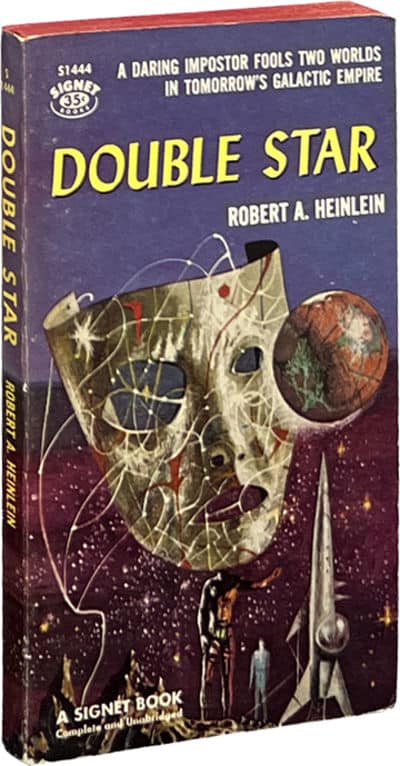
Ginny’s actors and behind-the-scenes staff from the little theater were a mix of raw amateurs and seasoned semi-professionals, and Robert was usually ready to quit work for the day when Ginny brought them home with her in February of 1955. He must have listened thoughtfully as the new-to-him shop talk circled around. At some point it must have occurred to him that a theatrical background might give his next book just the novelty twist he needed. He asked leading questions—about makeup and other details he might use—and soaked up the theatrical lore that flew around the room without any prompting from him. The book that came out of all this, Double Star, turned on an actor hired to impersonate—double for—a politician who has been kidnapped to precipitate an interplanetary crisis—and matures into a thoughtful adult by this experience.

Double Star is one of Heinlein’s most charming entertainments, one of several masterworks of his 1950s, written ingratiatingly with what he called “the heroic hijinks with which the story is decorated, such as kidnapings and attempted assassinations,” lifted from English, Roman, and Chinese history (but mostly based on the long literary tradition of doubles, from The Man in the Iron Mask to The Prince and the Pauper). Heinlein had reached in his writing for young people a pinnacle of skill in seducing and pleasing his readers, gently teaching without seeking to challenge. Although Double Star was nominally written for adults, it fits comfortably with the juvenile novels he was writing at this period. Speaking of Double Star, Heinlein later defined his “pedagogical” intent:

“I think that a person with enough empathy to recognize and respect a horse as part of the Living Tree with a personality and feelings of his own is more likely thereby not to join in a lynch mob.”

“I may be entirely mistaken in this; I have no scientific proof. But it is a theme which has run consistently through all my stories … the theme that the human race is not alone in this universe and it had better get over its xenophobia … the notion that human beings should seek to find friends among other types of beings and not automatically assume that they are enemies.”

The book was finished by March 23 and edited for the typist three days later—less than a month before they were scheduled to leave for a trip to Europe.

Robert A. Heinlein: In Dialogue with His Century, Volume 2: The Man Who Learned Better (1948-1988) by William H. Patterson Jr.

0

Excerpt on The Mote in God's Eye

preview

In June 1973, Jerry Pournelle sent him (Heinlein) a gigantic manuscript for a science-fiction novel he had written in collaboration with Larry Niven, Motelight (what would become The Mote in God’s Eye), and Heinlein girded up his mental loins for another job of analysis and technical critique. As he read, though, he found himself turning pages, getting involved with the characters and the story. But it had a major fault as a book that urgently needed to be addressed. He spent three days going through the manuscript almost line by line, and finally, on June 20, sat down at the typewriter to frame his critique. His first note to the authors was:

“This is a very important novel, possibly the best contact-with-aliens story ever written.… (best aliens I’ve ever encountered, truly alien but believable and one could empathize with them, every ecological niche filled, total ecology convincing, etc.—grand[.])”

With Pournelle, he knew he could be straightforward and even blunt—and there simply was no “delicate” way of saying some of the things he thought needed to be said—

"We are in a highly competitive market, battling each year against not only thousands of other new novels but also TV and a myriad other things […] in the late XXth century one simply cannot use up 30,000 words before getting down to business with the main story line[…]

“How to correct the major fault? I don’t know. It’s your story. But cutting the bejasus out of those [first] 100 pp would help. It is all featherdusting, not story, and you need to determine just what supporting data must be saved to keep the plot intact—then see how much of it can be tucked away into corners after page 100, and what is left that must be on stage before page 100—and what is left be told in such a way as to grab the reader and pull him along, not lose him.”

Heinlein’s experience with this kind of hard-love advice was not encouraging: “People seldom take advice—and this advice you did not ask me to give. I shan’t be offended if you don’t take it; I hope that you will not be offended that I proffer it.” He sent off the long letter to Niven and Pournelle[…]

In early August, Larry Niven and Jerry Pournelle surprised him with a revision of Motelight. He was shocked to see that they had taken his criticisms not merely in the spirit in which they were given, but as blueprints, even withdrawing the book while they reworked it:

“I am pleased (and much flattered) that you took my comments on the earlier version seriously. I cannot remember this ever happening in the past (and for this reason I long ago quit commenting on other writers MSS; it is almost always a waste of time—but I tried once more because I liked almost all of the earlier version so well). I know all too well how dear to a writer are his brain children; most writers usually will not accept criticism—and usually should not, as creativity is usually not helped thereby.”

Robert A. Heinlein: In Dialogue with His Century, Volume 2: The Man Who Learned Better (1948-1988) by William H. Patterson Jr.

0

An excerpt on Starship Troopers

preview

In December 1958 Heinlein took Podkayne Fries off his agenda: A hundred pages into the manuscript, it just was not coming together for him. He must have been mulling over the intertangled notions of freedom and responsibility, duty and moral self-discipline and citizenship—subjects possibly suggested by the depressing reception of the Patrick Henry campaign, but also by his brother Larry’s promotion to the rank of brigadier general of the Army Reserves: Larry “did it the hard way … he took the long route, all the way from private to general officer.” Another story came to him: Starship Troopers. Later, Robert recognized the origin of the story in something his father had said when he was just five years old: “I just remembered where I got the basic thesis of S. Troopers. From my father—his conviction (1912) that only those who fought for their country were worthy to rule it.” In 1912 the country was in the middle of the militarism associated with the Progressive movement—a time and place in the culture that persisted all through Heinlein’s own upbringing, and of which the Civilian Military Training Corps Heinlein attended while he was in high school was a part. It was undoubtedly that connection that suggested a young man undergoing military training…

“I do not know that this system would result in a better government—nor do I know of any way to insure “knowledgeable” and “intelligent” voting. But I venture to guess that this fictional system would not produce results any worse than those of our present system. Not that I think it is even remotely likely that we would ever adopt such a system.”

Moreover, from the evidence that this was the story Heinlein did write and did complete, it must have had that ring of “relevance,” of engagement, he had been missing with the Podkayne story. He later explained some of his thinking in generating the story to colleague Theodore Sturgeon:

“ … I’ll state explicitly the theme of Starship Troopers: it is an inquiry into why men fight, investigated as a moral problem.… being a novelist, I tried to analyze it as a novelist. Why do men fight? What is the nature of force and violence, can it be morally used, and, if so, under what circumstances?.… What I tried to do … was to find, by observation, a fundamental basis for human behavior—and I decided that the only basis which did not call for unproved assumptions was the question of survival vs. non-survival in the widest possible sense—i.e., I defined “moral” behavior as being survival behavior … [sic] for the individual, for the family, the tribe, the nation, the race. Now this thesis may or may not be true, but it is the theme of the book, explicitly stated over and over again—and every part, every incident, in the story merely explores some corollary or consequence of the basic theorem. Is conscription permissible morally? No, because moral decisions cannot be determined by law, by committee, by group—to fight or not to fight is a personal, moral decision. Everything in the book turns on this single theorem…“

He framed his ideas slightly differently for Alice Dalgliesh (juvenile editor at Scribner’s who rejected Starship Troopers):

“Let me state the theme of my story: the central theme of the story is John XV 13: “Greater love hath no man than this, that a man lay down his life for his friends.” The story starts with a boy, a child, a spoiled son of the extreme right, one who is utterly incapable of conceiving this ideal. The story ends when he is perhaps only two or three years older, but fully matured, a lined and tempered adult wholly dedicated to that simple, selfless proposition.”

Robert A. Heinlein: In Dialogue with His Century, Volume 2: The Man Who Learned Better (1948-1988) by William H. Patterson Jr.

0

Excerpt on Podkayne of Mars

preview

Edit: spoiler added per request

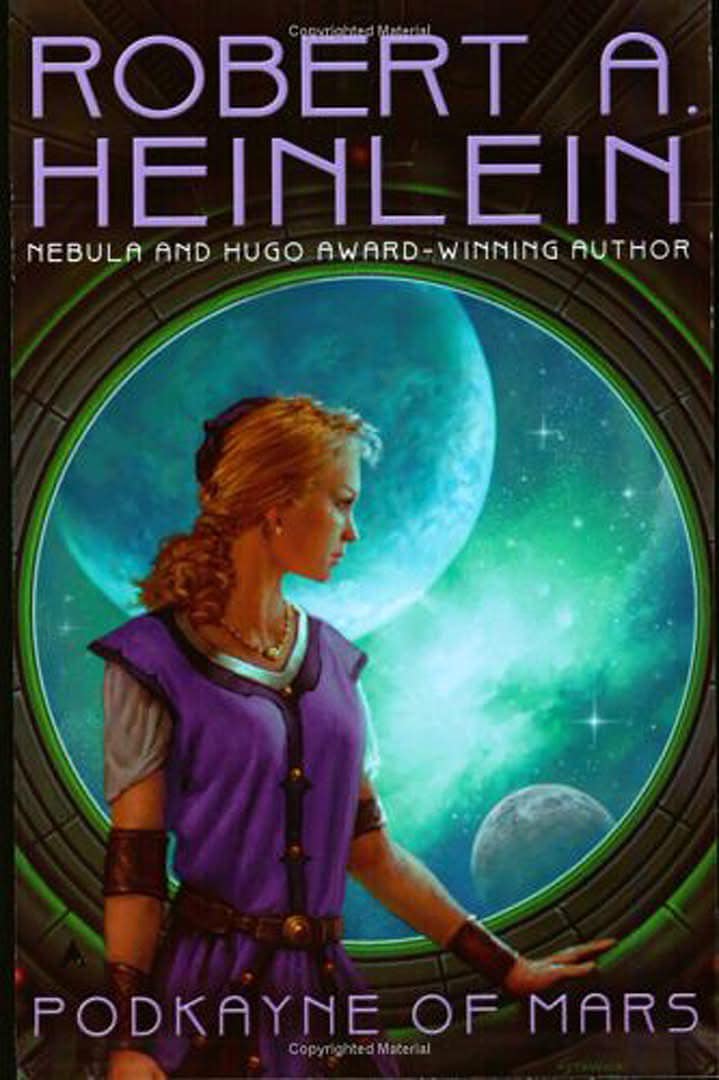
In 1958 Heinlein had started a freakish juvenile—freakish because it had a teenage girl protagonist, and girl-oriented science fiction was impossibly outré. He had a third of Podkayne Fries: Her Life and Times already written—a story about a teenaged Mars-colonist girl on an interplanetary cruise to Earth and Venus. By the time he was ready to work on it again, it had evolved: It wouldn’t be the kind of girls’ Wanderjahr he had originally planned. Instead, when he finished the writing on January 14, 1962, he had crafted an important message about “latchkey kids” and parenting in the age of Sputnik and orbiting missiles.

spoiler

All of Robert’s “first readers” loved Podkayne of Mars—except for the ending. Every one of them. And when it was submitted to Putnam’s, Peter Israel joined the chorus (Howard Cady had left Putnam’s in the interim, and Peter Israel was now Putnam’s editor in chief). Everybody hated the fact that he killed Poddy off. Heinlein felt this was a misread of the text: >“Podkayne was not a juvenile, but a cautionary message to adult readers—to parents and potential parents “too busy” to parent their kids. Podkayne—as originally written, the title character was supposed to die and her brother was supposed to have the ending all to himself … with the story over when his character change was completed. I weakened—because my wife, my agent, and both my editors, serial and trade book, just couldn’t stand to have me kill off such a nice little girl. The result was that practically nobody understood what I was driving at.” Podkayne’s death was the direct result of her mother’s failure to parent—and Clark’s sociopathy, as well. The last five words of the book—Clark’s decision to join the human race—were intended to be the most poignant thing he had ever written… and it was set up by Poddy’s death. Fred Pohl was interested—not for Galaxy, which couldn’t use a teenage girl protagonist either, but for Galaxy’s sister magazine, Worlds of If. Heinlein had not expected any serial sale for this manuscript and considered Blassingame’s (Lurton Blassingame was Heinlein’s agent) success in marketing it somewhat miraculous. He still didn’t think the change of ending everybody wanted was necessary—but everybody wanted it, so he agreed not to kill Poddy off so definitely. Blassingame and Ginny and Peter Israel passed his compromise ending, allowing the possibility that Poddy might recover, and he was done with Podkayne of Mars.

Robert A. Heinlein: In Dialogue with His Century, Volume 2: The Man Who Learned Better (1948-1988) by William H. Patterson Jr.

0

Excerpt on Farmer in the Sky

preview

Heinlein had been collecting ideas for a 20,000-word novelette about a pioneer Scout on another planet, with the intriguing twist that he would actually have to create his own soil in order to farm it. Ginny suggested that, as his last boys’ book was set on Mars (Red Planet), this should be the next step farther out—Jupiter. He realized that he could make the novelette idea work also as a book, and that it was worthwhile to cultivate Scribner, even after the aggravating and drawn-out fight over social philosophy in Red Planet. “… Despite recent and current headaches, Scribner’s has treated me well,” he told his agent… He planned a 40,000-word draft…

He and Ginny both worked on the background for this one, calculating orbits and transit times for his new Mayflower and for an effect he intended to use—all the Jovian satellites lining up—and calculating the load for the artificial greenhouse effect that would support the terraforming project. Ginny worked on the ecology and agronomics aspects, including a unique one-page instruction of how to turn sterile rock into fertile soil. Into this story Heinlein worked a favorite theme: the human rationale for frontier-seeking, its background a grand recapitulation of the settlement of the New World four hundred years earlier. Without an expanding frontier, Malthus’s depressing economic equations guaranteed resource wars. Serious realities—just the kind of thing his writer’s sense told Heinlein that boys hungered for. “Kids want tough books, chewy books—not pap.” Some of the material he had in mind was darker than usual. He asked Ginny’s opinion about killing off one of his characters. Remembering Little Women and the death of Beth, Ginny ruled it should probably pass. “After all, death is part of life.” Heinlein was able to finish the book under the working title Ganymede, in a month, on September 10, 1949. He set aside the cutting for later, since he now had other projects to get into shape. Bill Corson suggested a better title for this opus: “Farm in the Sky,” and that gave Heinlein his book title: Farmer in the Sky.

Robert A. Heinlein: In Dialogue with His Century, Volume 2: The Man Who Learned Better (1948-1988) by William H. Patterson Jr.

0

The casual Saturday “at homes” Robert and Leslyn had started for political purposes...

preview

The casual Saturday “at homes” Robert and Leslyn had started for political purposes gradually changed over the course of 1939 into a writers’ group for the local science-fiction professionals. If anything, the changeover of personalities could only have sharpened the sense of being involved in something purposive and progressive: socializing with writers instead of politicians required less concentration on creating unity out of divisiveness—fun they did not have to work at so hard. When Henry Kuttner and “Cat” (C. L. Moore) moved to Laguna, they started coming up at least weekly. Cleve Cartmill introduced William Anthony Parker White, called “A.P.,” who was working for United Progressive News as a theater and music critic while trying to get work as a screenwriter. He was also an established mystery writer—“H. H. Holmes” was his pen name—with four published books under his belt. A.P. was witty and lively, and he elevated the tone of the group. It became the “Mañana” (Spanish for “tomorrow”) Literary Society—or MLS—since its purpose, White said (though Heinlein appropriated the remark), was to save civilization by letting writers talk out stories instead of writing them… (A. P. White is best known as Anthony Boucher)

A few of the fans from the local science-fiction club would be invited from time to time. Nineteen-year-old Ray Bradbury was rambunctious and so energetic that it made Leslyn tired to be in the same room with him; it was too much like having to manage a large and unruly puppy—but Robert sensed in him a certain quality he wanted to encourage: Bradbury wrote one thousand words a day, every day, after hawking The Los Angeles Daily News on street corners. That impressed Heinlein, who confided to one interviewer: “‘I read some of his stuff.’ He leaned toward me for emphasis. ‘It was awful. I said to myself, ‘Here is a great writer.’” Bradbury’s discipline and perseverence would force him to learn his craft. Heinlein patiently critiqued anything Bradbury brought him. When Bradbury brought him a manuscript that wasn’t bad at all, Heinlein walked it over to Rob Wagner at Script magazine. Bradbury later related that Heinlein agented his first sale.

Robert A. Heinlein: Volume I: Learning Curve, 1907-1948 by William H. Patterson Jr.

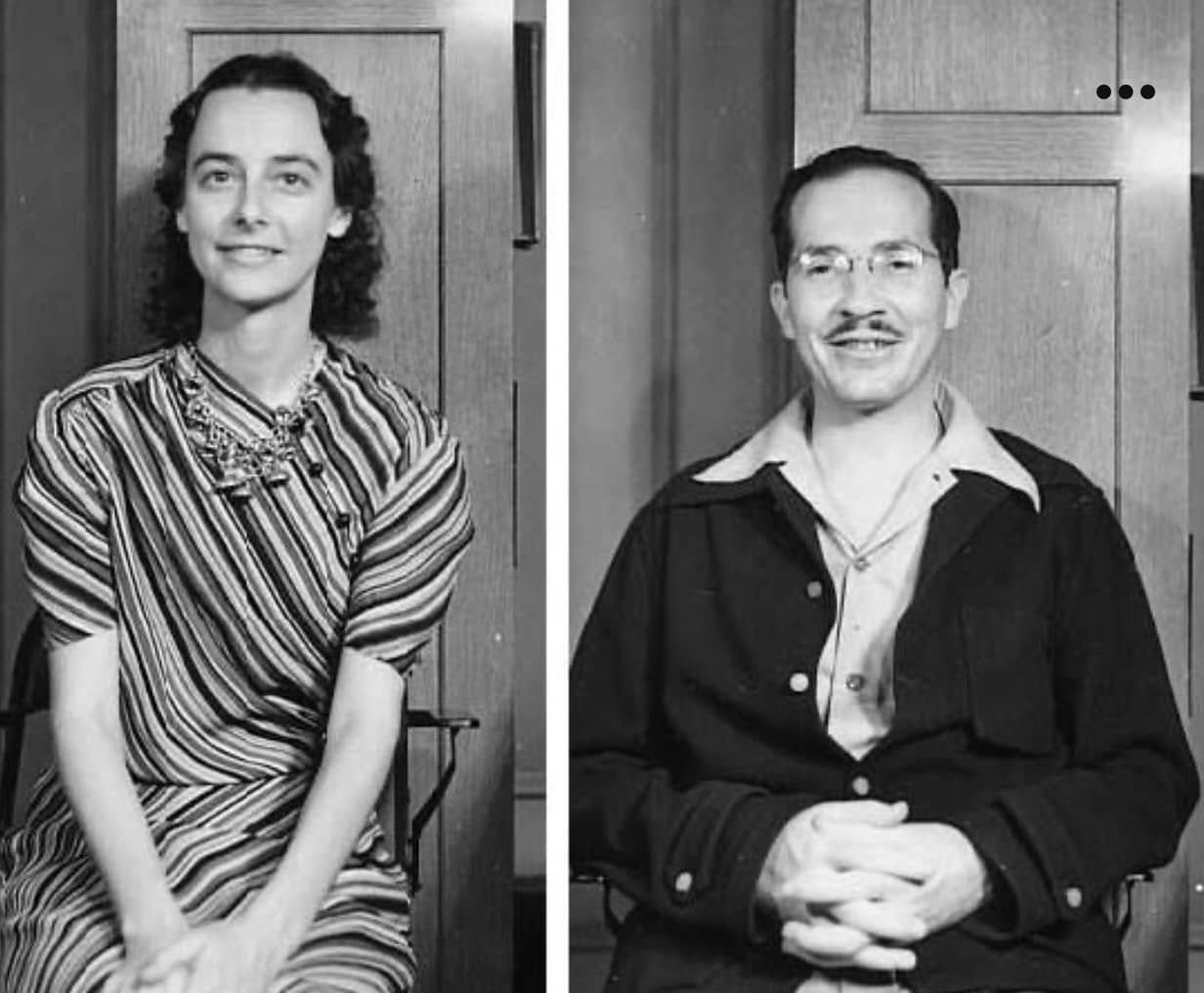
Cleve Cartmill A. P. White, aka Anthony Boucher Henry Kuttner and C. L. Moore Ray Bradbury

0

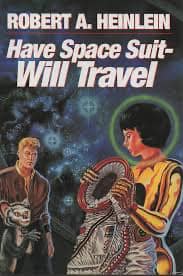
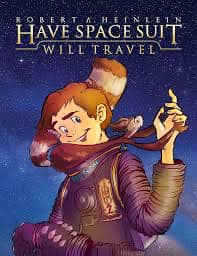
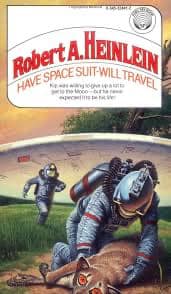
Have Space Suit—Will Travel

preview

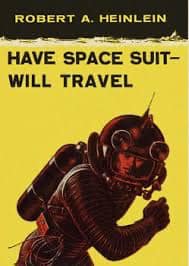
Heinlein framed all his concerns about intellectually-soggy American youth in a story about a space-struck boy accidentally prepared to take advantage of the slings and arrows fate threw at him amid the game shows and jingle contests that made up American television in the 1950s—and let the boy stand up as a proud representative of humanity in a kangaroo court of aliens. He titled his book Have Space Suit—Will Travel. The title had plot significance, of course—in fact, that was the plot for the first several chapters.

Heinlein did his usual careful research and preparation—sizes of various galaxies, surface temperatures on planets, calculating travel times to Pluto and beyond. At one point, he needed to know the volume of air an empty space suit would contain, and did the calculations. But the answer didn’t seem right to him, so he took his worksheets to Ginny. She did a completely independent calculation that came closer to what he thought it should be. It didn’t seem to be the arithmetic that was at fault: Comparing their worksheets, they traced the difference to a single critical figure. He had used the figure in Marks’ Standard Handbook for Mechanical Engineers, the handbook he had learned engineering with at the Naval Academy and had used ever since. Ginny had taken hers from the Chemical & Rubber Company Handbook, the chemist’s traditional sourcebook. The CRC clearly had the right figure: Robert penciled the correction into his Marks’ and wrote them a letter (and found the figure corrected in the next edition). After that he would not rely on a single source for critical figures.

Ginny also helped out by composing a musical “speech” for the Mother Thing, a music-speaking “beat cop,” with Robert looking over her shoulder and with a veto: He didn’t want it to sound like anything human. Together they got the effect he was after. The whole book was a pleasure for both of them—“… pure fun all the way through.” Heinlein finished Have Space Suit—Will Travel on August 30, 1957, just as the first installment of Citizen of the Galaxy began to run in Astounding.

Robert A. Heinlein: In Dialogue with His Century, Volume 2: The Man Who Learned Better (1948-1988) by William H. Patterson Jr.

0

How Lifeline Was Published

preview

It is not clear how Heinlein got from this germ to the story he eventually did (around the beginning of April 1939) write up as his first story, “LifeLine.” Switching it from pure fantasy to science fiction may have suggested the pulp gadget-story format, which is typically about the inventor and his invention. Heinlein began in a way that would become characteristic for him—with irony: his inventor was not a mad scientist but the only truly sane man in the story, a rational man who faces facts squarely and without wishful thinking, fairly obviously a model of how Heinlein—as a rational man—hoped he would face that dreadful knowledge, resolutely: make time to enjoy the best things life had to offer him in his remaining time and leave Leslyn provided for, possibly by taking out a big insurance policy—any insurance company would scream bloody murder if it was discovered that he was using some kind of arcane knowledge. The elements of a science-fiction story—with a fantasy “twist” at the end—took shape, and this was a characteristic, also, of Heinlein’s approach to fiction: he was never to be comfortable with formula, and many of his stories challenge the boundaries of science fiction.

Equally characteristically, Heinlein chose a pun for his title (perhaps because he started the typing on April 1, 1939—April Fools’ Day): the lifeline is a crease in the palm that fortune-tellers use to tell the length of a person’s life. It is also what sailors call the rope they throw to a man overboard, to save his life. Heinlein gathered up enough paper—he was still using mimeographed precinct-worker instructions from the election in 1938—and began typing. The scenes fell into place like clockwork. He got through a thousand words that first day and more than two thousand the next. Two days later, he was done with the story. If Leslyn’s sense for story structure had been honed in the movies, she might have been surprised at how Robert had used the bits she had suggested. This wasn’t a conventional commercial plot, with a single, straight through story arc. He had twined three story lines together—mature stories, too, not pulp kids’ stuff. Even in first draft, this was a professional-quality job. Once he retyped it to get a clean manuscript, it would be ready to send out.

This spate of writing had been prompted by a piece in one of the science-fiction pulps, but the “prize” for Thrilling Wonder’s “contest” was less than the prevailing pulp story rates of a penny a word. (The most popular writers could earn a lot more, but there was also a bottom rung of the pulp market that was paid a lot less—half a cent a word or less. Thrilling Wonder Stories was on that bottom rung.) Instead, Heinlein sent it to the only editor who had both a fantasy magazine and a science-fiction magazine, John Campbell at Astounding Science-Fiction and Unknown.

Even though Heinlein was by now a touch typist, he was not very accurate. The retyping was a chore. He had thirty-two sheets in his rough draft. He drove down the hill into Hollywood, to a stationery store, and bought just enough good bond paper to retype the story. It took almost as long to retype the story as it did to write it, but eventually it was done, and he had thirty-two sheets of clean copy and a carbon on newsprint. He packaged the bond copy of the story with another envelope, self-addressed, and stamps enough clipped to it to return the manuscript. On April 10, 1939, he sat down to type his cover letter.

Dear Mr. Campbell:

I am submitting the enclosed short story “LIFE-LINE” for either “Astounding” or “Unknown,” because I am not sure which policy it fits the better. Stamped self-addressed envelope for return of manuscript is enclosed. I hope you won’t need it.

Very truly yours,

Robert A. Heinlein

He took the envelope down to the post office and mailed it the same day… …Leslyn came in, excited, with the morning mail: there was a business letter—not a returned manuscript!—from Street & Smith. She hadn’t opened it, of course: they had a custom of respecting the privacy of each other’s correspondence, and the envelope was addressed to him. She wouldn’t have opened it even if it were from mutual friends. Inside there were two sheets, one a form of some kind and the other on Street & Smith letterhead and signed by John W. Campbell, Jr., in a looping hand and blue, broad-nibbed fountain pen:

April 19, 1939

Dear Mr. Heinlein:
The legal obligations under which a publishing company operates require that we ask authors who have not previously sold to our magazine to prepare an affidavit of authorship for us. I like your story “Life-Line,” and plan to take it at our regular rate of 1¢ a word, or $70.00 for your manuscript. However, before this may be put through for payment, the purchasing department ask that the author sign the accompanying form, and have it witnessed by a notary public. If you will have this done, the check in payment of your story will be sent at once.

John W. Campbell, Jr.

Campbell was buying “Life-Line”! A few days later, on April 24, the check arrived from Street & Smith—$70.00, as promised. Heinlein stared at it for a moment. “How long has this racket been going on?” he demanded rhetorically. “And why didn’t anybody tell me about it sooner?”

(Life-Line appeared in the August 1939 issue of Astounding)

Robert A. Heinlein: Volume I: Learning Curve, 1907-1948 by William H. Patterson Jr.

0

Small excerpt from Robert A. Heinlein: In Dialogue with His Century, Volume 2: The Man Who Learned Better (1948-1988) by William H. Patterson

preview

Heinlein was writing again by November—a new novel, kicked off by something Ginny had said about “Gulf,” written thirty years earlier: Kettle Belly Baldwin, she said, had been one of his juiciest characters, and he hadn’t done nearly as much with him as he could have. Heinlein seems to have combined that comment with a bit he had mentioned in passing in Time Enough for Love, about assembling people out of genes from many different sources: His protagonist was a composite of the genes of both Gail and Joe Green, who had never had a chance to procreate in “Gulf.” His protagonist for Friday is a genetic composite of the best of humanity, in a balkanized United States, which symbolically reflects Friday’s own genetic balkanization—a true human who is nevertheless a true superhuman and who gains interior unity by the end of the book. Friday naturally led back to the subject of bigotry—and in the era of the Equal Rights Amendment, who better to represent humanity as a whole and the damage done by bigotry—and the possibility of self-healing that had always fascinated him—than a woman, Friday…

…He started writing in November 1980, while Ginny began researching the current generation of computers to replace typewriters and paper files… Heinlein finished Friday in late March—just in time for the April 1981 issue of Omni…

Robert A. Heinlein: In Dialogue with His Century, Volume 2: The Man Who Learned Better (1948-1988) by William H. Patterson

0

Panki-Barsoom

preview

In November 1977 Robert Heinlein finished his new book with the working title Panki-Barsoom. When his wife, Ginny, read the manuscript she was a bit disappointed, thinking it wasn’t up to his usual standards. They decided to table it for a while. A few months later on a trip to Tahiti Robert suffered a Transient Ischemic Attack, or TIA that paralyzed his right side. It turned out he needed carotid bypass brain surgery that was performed at the end of April. By the end of May he had recovered and was ready to work again. He decided to reread Panki-Barsoom. He told his friend Yoji Kondo, “it was worse than bad, it was mediocre!” He decided to keep roughly the first third of the book unchanged, but totally rewrote the final two thirds. The book was published in 1980 as The Number of the Beast.

Long after both Robert and Ginny had passed away, a copy of the original manuscript for Panki-Barsoom was uncovered. The Heinlein Prize Trust elected to have it published with the title of The Pursuit of the Pankera in 2020, forty years after The Number of the Beast.

Now for subjective opinion [from THS President Ken Walters], personally The Number of the Beast was never one of my favorites. I found it to be too experimental and in need of a serious edit. The bickering over who was in charge was tedious and the ending was just strange. I found The Pursuit of the Pankera to be more reminiscent of Heinlein’s earlier writing. Much more time is spent visiting Oz, Barsoom and The Grey Lensman worlds. Also, the ending was more straight forward. Of course, your mileage may vary! I welcome your comments and opinions.

0

How many times was Robert guest of honor at a convention?

preview

Major conventions:

  • Worldcon 3 Denvention Guest of Honor speech – 1941
  • Worldcon 19 SeaCon Guest of Honor Speech – 1961
  • Rio de Janeiro Movie Festival Guest of Honor – 1969
  • Worldcon 34 MidAmerica Con Guest of Honor speech – 1976

All of the Guest of Honor Speeches are published in the Requiem collection edited by Dr. Yoji Kondo, as well as in the Requiem volume of the Virginia Edition.

In addition, Heinlein was guest of honor at a number of smaller conventions for which his remarks were often not preserved. In 1976 and 1977 he accepted many such offers as part of his campaign to recruit new blood donors, but when his health deteriorated in 1977 he was forced to cease the practice.

Photo, Robert Heinlein at MidAmericon 1976

0

How many Heinlein books have been sold?

preview

There is no definite answer to this because many publishers are involved, and often they never reported sales (because they were not paying the royalties they owed Heinlein!). However, the total answer cannot be less than many tens of millions. Stranger In a Strange Land by itself has sold more than (conservatively) 25 million copies (and possibly many millions more). An estimate of 80 million copies altogether appeared on the back of a new issue several years ago.

There is no definite answer to this because many publishers are involved, and often they never reported sales (because they were not paying the royalties they owed Heinlein!). However, the total answer cannot be less than many tens of millions. Stranger In a Strange Land by itself has sold more than (conservatively) 25 million copies (and possibly many millions more). An estimate of 80 million copies altogether appeared on the back of a new issue several years ago.

0

What was the Mañana Literary Society?

preview

What was the Mañana Literary Society?

Robert Heinlein started the Mañana Literary Society as an informal Saturday-night get-together of Los Angeles science fiction writers and others before World War II. The membership included authors such as Anthony Boucher, Arthur K. Barnes, Edmond Hamilton, L. Ron Hubbard, Henry Kuttner, C.L. Moore, L. Sprague de Camp, Cleve Cartmill, Leigh Brackett, Jack Williamson and a very young Ray Bradbury. Robert and Leslyn hosted these meetings at their house on Lookout Mountain Avenue in Hollywood.

0

Heinlein receives Grand Master Nebula Award 1974

preview

https://nebulas.sfwa.org/award-year/1974/

“…the first Grand Master Award was presented by Tom Scortia to Robert Heinlein…” (emphasis mine)

https://nebulas.sfwa.org/award-year/1974/

“…the first Grand Master Award was presented by Tom Scortia to Robert Heinlein…” (emphasis mine)

0

How many Hugo awards does Heinlein have?

preview

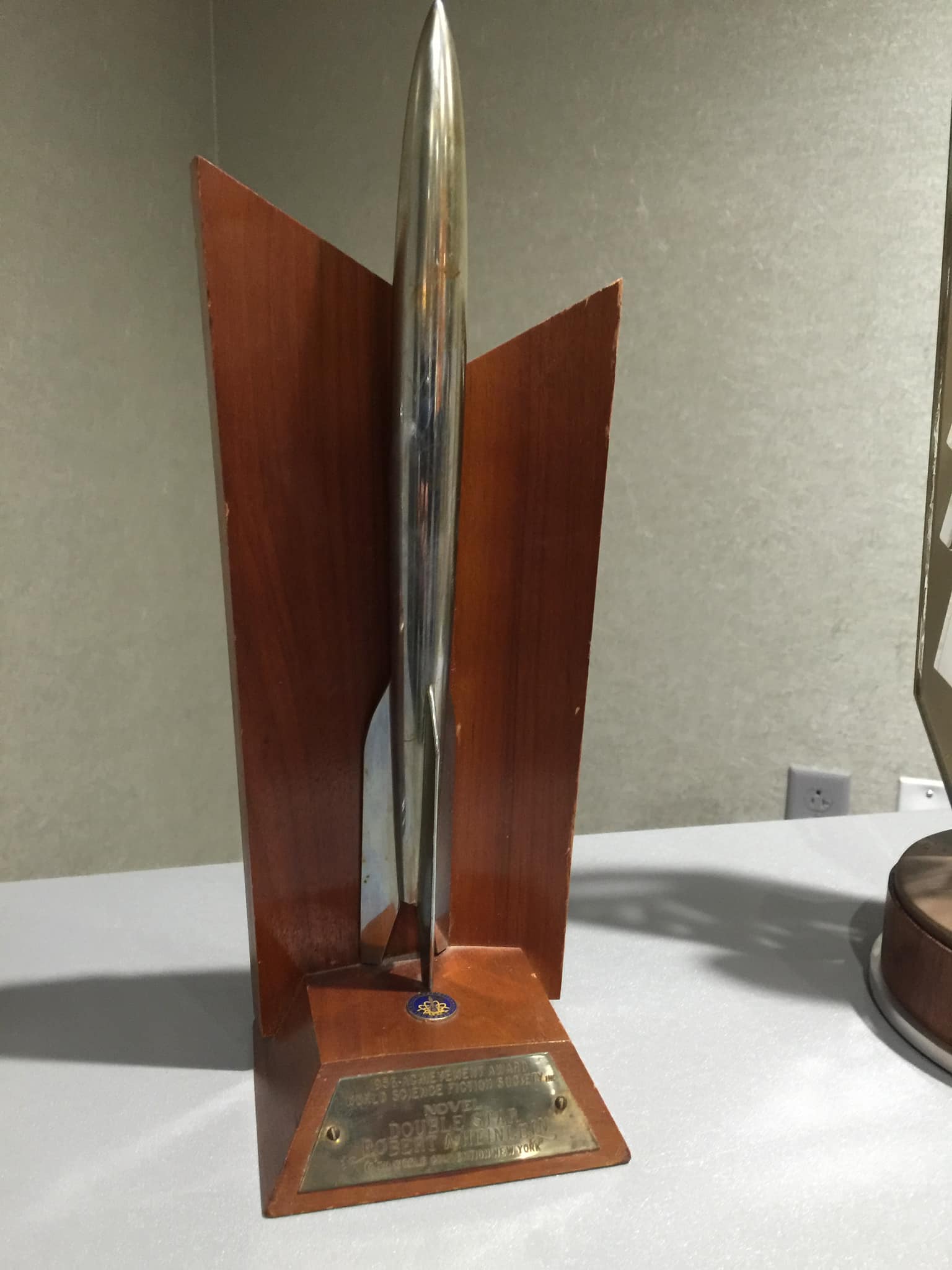
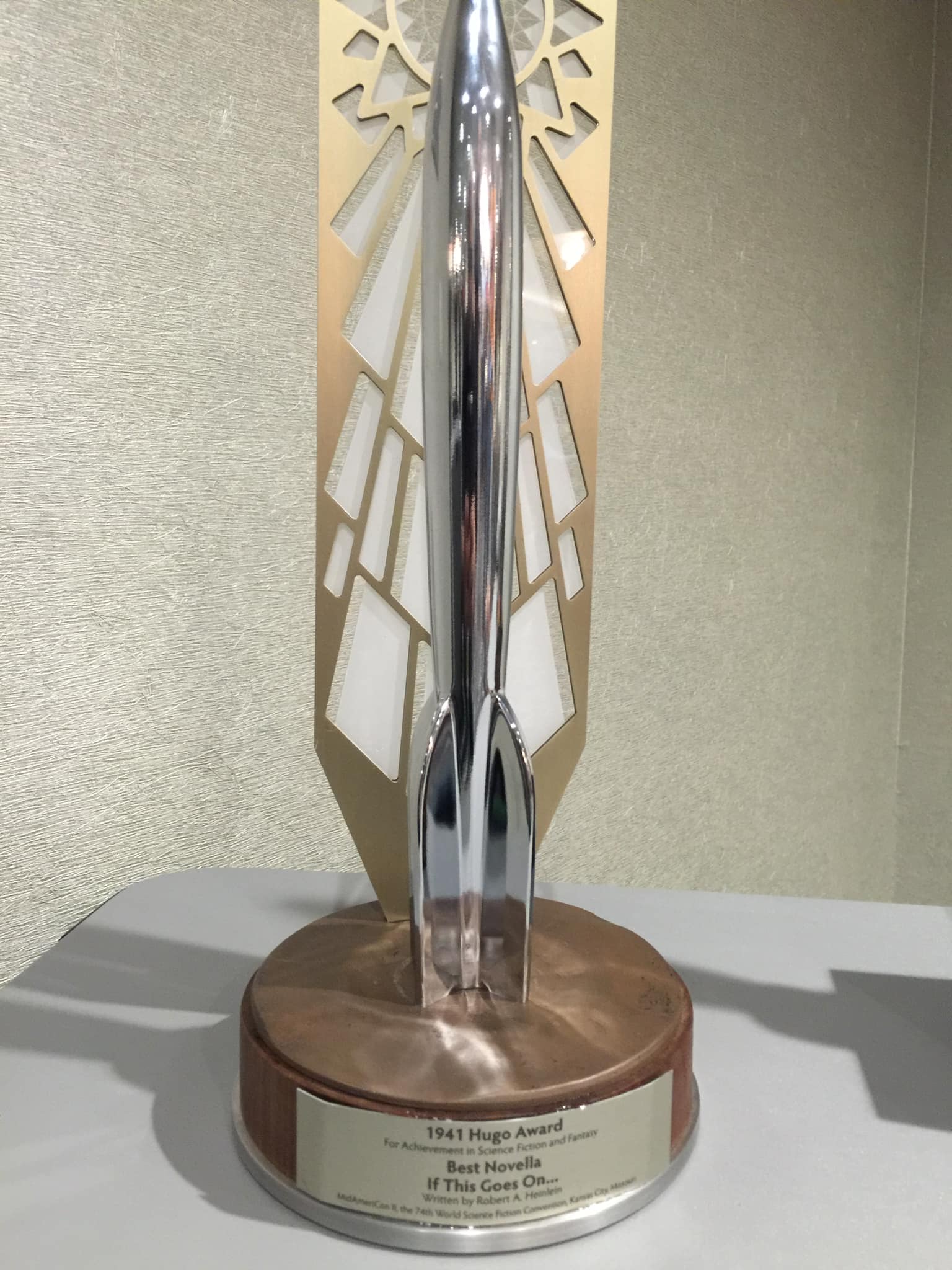
4 original Hugos and 7 Retro Hugos

The original Hugos were for:

  • 1956 Novel: Double Star. Published 1956 by Robert A. Heinlein
  • 1960 Novel: Starship Troopers. Published 1959 by Robert A. Heinlein
  • 1962 Novel: Stranger in a Strange Land. Published 1961 by Robert A. Heinlein
  • 1966 Novel: The Moon is a Harsh Mistress. Published 1966 by Robert A. Heinlein

The Retro Hugos were started to cover works during the years before the Hugo awards were established. The Retro Hugos awarded:

  • Best Novel–Farmer in the Sky. Published 1950 by Robert A. Heinlein
  • Best Novella–“The Man Who Sold the Moon.” Published 1939 by Robert A. Heinlein (from The Man Who Sold the Moon)
  • Best Dramatic Presentation–Destination Moon movie (release date July 7, 1950) with script by Robert A. Heinlein and Alford van Ronkel
  • Best Novel - Beyond This Horizon (Astounding Science Fiction -Apr,May 1942) — Robert A. Heinlein
  • Best Novella - Waldo” (Astounding Science Fiction Aug 1942)— Robert A. Heinlein
  • Best Novella -“If This Goes On…” (Astounding Science-Fiction Feb 1940) — Robert A. Heinlein
  • Best Novelette - The Roads Must Roll” (Astounding Science-Fiction Jun 1940)

Double Star

If This Goes On…

0

How many stories did Heinlein write?

preview

This is difficult to answer without first defining what to count. Using James Gifford’s Opus list in his Robert A. Heinlein Reader’s Guide I (Heinlein Society President Ken Walters) counted 205 listings. These included everything: essays, articles, forwards, afterwards, acknowledgments, book reviews, interviews, speeches, screen plays, scripts, etc.

In Heinlein Journal No. 19 July 2006 Bill Patterson says 63 books which include the short story collections (some of which exist in multiple formats). In the Wikipedia entry for Robert they state: Heinlein published 32 novels, 59 short stories, and 16 collections during his life.

0

Under what pseudonyms did Heinlein’s sf/f stories appear?

preview

Under what pseudonyms did Heinlein’s sf/f stories appear?

Anson MacDonald (Anson is Heinlein’s middle name and a Heinlein family name; MacDonald was wife Leslyn’s maiden name, but this is a coincidence: John Campbell, who liked all things Scottish, chose the name before he knew about Leslyn’s maiden name.)

Lyle Monroe (Lyle was his mother’s maiden name, and Monroe was a branch of his mother’s family. Just as Heinlein’s personal names were taken from grandfathers, so was Lyle Monroe — another set of grandfathers.)

John Riverside (probably from Riverside, California)

Caleb Saunders — there are a couple of sources from which “Caleb” might have been drawn: Heinlein’s best friend from the Naval Academy was Caleb Laning; one of his favorite books in the 1930’s was Caleb Catlum’s America (Vincent McHugh 1936). A source for “Saunders” is not known.

Simon York – “They Do It with Mirrors”. This was his only detective story. He said detective stories were easy to write but of lower market value than SF.

0

Graduate or Perish: Tunnel in the Sky by Robert A. Heinlein - Reactor

Reactor Graduate or Perish: Tunnel in the Sky by Robert A. Heinlein - Reactor reactormag.com
preview

Graduate or Perish: Tunnel in the Sky by Robert A. Heinlein, an excellent review by Alan Brown.

Graduate or Perish: Tunnel in the Sky by Robert A. Heinlein, an excellent review by Alan Brown.

0

How many times was Heinlein married?

preview

How many times was Heinlein married?

Three.

His first marriage was a brief one. Her name is Elinor Lea Curry. They were married on June 21, 1929 and they divorced during October 1930. Robert was in the Navy during their brief marriage. There is evidence of friction between the two almost from the beginning of their marriage. She had her own plans which were different from Robert’s.

The second marriage was to Leslyn MacDonald in 1932. They divorced in 1947. Despite her later problems with alcoholism, and the failure of their marriage, Leslyn was clearly an extraordinary woman, intelligent and talented. Her influence on Heinlein’s early works cannot be ignored. Robert tried to help her with no success. Her father was an alcoholic and had severe problems. When Robert recognized that she, too, was having problems he took her to a psychiatrist. It didn’t help.

Leslyn was born 29 Aug 1904 in Massachusetts and died 13 April 1981 in California. She remarried to a man named Mocabee. She had no children.

Heinlein’s third marriage was to Virginia Doris Gerstenfeld, called “Ginny”. They married in October 21, 1948 and shared what was considered by those who knew them to be an ideal marriage. Ginny Heinlein was born 22 April 1916 in New York and died 18 January 2003 in Florida. Ginny was, without doubt, the basis of many, if not most, of Heinlein’s strong, capable female characters, in particular Hazel Stone. Ginny was brilliant and perfect for Robert. A highly educated person she was the source of many ideas for his stories. She read them all before they were sent to his agent. She recommended changes and it is said that she had the story idea for Stranger in a Strange Land.

Elinor Curry

Leslyn MacDonald

Virginia Doris Gerstenfeld