


0
0


Not on this instance? Enter your own instance's domain to go straight to following c/unions@sh.itjust.works there.




cross-posted from: lemmy.world/post/53438020
The early voting for the Midterms is now available in many places. You can early vote at a polling place or you can use mail-in voting.
Get organised today here: www.vote.org
If you choose to vote in person, either now or on election day, be aware of your rights and course of actions: lemmy.world/post/53334632

cross-posted from: lemmy.world/post/53462885
cross-posted from: lemmy.world/post/53462885





cross-posted from: expressional.social/users/…/117448500725777644
#LosAngeles, #USA End The Blockade Speak-Out
October 24, 2026 6 - 8 pm
#EndTheBlockadeEmbargo #HandsOffCuba #Cuba #politics #USpol
#unions #labor #health #AltTxt4Me
@cuba
cross-posted from: expressional.social/users/…/117448500725777644
#LosAngeles, #USA End The Blockade Speak-Out
October 24, 2026 6 - 8 pm
#EndTheBlockadeEmbargo #HandsOffCuba #Cuba #politics #USpol
#unions #labor #health #AltTxt4Me
@cuba
cross-posted from: lemmy.blahaj.zone/post/49243592
cross-posted from: lemmy.blahaj.zone/post/49243592





cross-posted from: lemmy.ml/post/53040099
cross-posted from: lemmy.ml/post/53040099




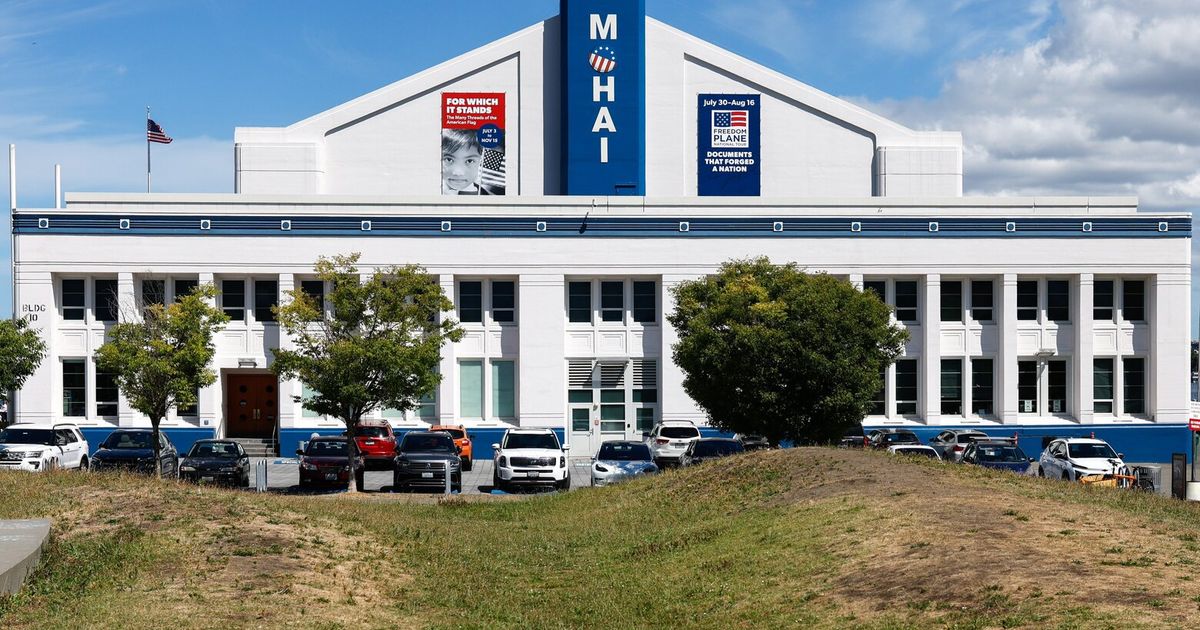
Over 70% of eligible MOHAI employees signed union authorization cards prior to Monday’s announcement, said Emily Turner, a K-12 and youth program coordinator who is part of the union’s organizing committee, in a phone call Tuesday. MOHAI Workers United hopes to form a “wall-to-wall” union to advocate for better working conditions for all employees, Turner said.
“We want more autonomy over our working conditions in our workplaces and to do things democratically,” Turner said.
MOHAI employees cited understaffing and high turnover, a lack of benefits — such as healthcare — for part-time and on-call workers, and low pay despite rising living costs in Seattle as some reasons for unionizing, Turner said. They are also seeking “changes in leadership practices, organizational culture and workplace policies” so that staff can feel comfortable speaking up about their concerns, according to a news release.

cross-posted from: lemmy.blahaj.zone/post/47527509
cross-posted from: lemmy.blahaj.zone/post/47527509

On August 26, the Seattle Education Association, which represents over 5900 education professionals throughout the city of Seattle, voted with 91% of members in favor to authorize a strike. The authorization vote followed hundreds of hours of negotiations spread over more than 20 bargaining sessions between Seattle Public Schools and SEA, after which SPS agreed to only around 12% of SEA’s demands. Workers will go on strike on September 2, the intended first day of the upcoming school year, if an agreement is not reached by then.
At the heart of SEA’s proposals is the understanding that education professionals’ working conditions are inextricably linked to students’ learning environments and outcomes. SEA’s core demands are:
Protect Special Education. SEA is fighting the district’s proposal to combine programs and cut support staffing, which would push even more onto educators already carrying too much.
Fair pay, especially for paraprofessionals and office professionals. Many SPS paraprofessionals earn below what HUD calls “very low income” for Seattle. One job should be enough!
Curb pressurization. Smaller class sizes, smaller case loads, and an end to the constant addition of duties beyond teaching.
These demands, if met, will mean students receive the effective instruction they need, while enabling staff to focus on education rather than making ends meet or doing paperwork.
Beyond these core demands, SEA is fighting for stronger protections for immigrants and LGBTQ+ members, professional autonomy, commitments around AI, and more.
Funding issues being used to push austerity agenda on Seattle schools
The district, headed up by brand-new Sup. Ben Shuldiner, is using the budget deficit as a pretext to drastically cut professional autonomy in the workplace and make sweeping austerity-based changes to the structure of schools. The budget deficit is real: Washington’s state funding for public education has declined from 52% to 43.2%, while structural obstacles like an insufficient funding formula and a state cap on how much local levies can collect have contributed to a budget deficit of about $75-87 million.
Inadequate state funding alone did not cause the deficit, though. The district’s management of its $1.3 billion annual budget has also contributed to the problem, as evidenced by administrative bloat and opaque “other” category in the budget, amont other questionable financial practices. The new superintendent himself is paid more than $400,000 annually.
A few years ago, the Seattle School Board tried to close 20 schools in response to the budget deficit and faced significant backlash. This is why they hired Shuldiner: he did the same cost-cutting in the Lansing, Michigan school district. His proposals are bad, but he was brought in by the board specifically to implement an austerity agenda. Austerity imposed for the sake of reducing the deficit will not address the issues of living wages for paraprofessionals and office workers, hard caps on class sizes/case loads, more support for multi-language learners and special education students, and respect for professional autonomy.
No matter which party is in office, federal ed policies hurt students and educators
The chasm between student needs and government policies and funding is emblematic of larger trends occurring across the nation. In the 2000s, the Bush administration used the punitive No Child Left Behind policy to defund already under-resourced schools. The 2009 Race to the Top grant program under Obama offered a carrot to promote slightly different neoliberal education reforms; in 2015, the Obama administration replaced NCLB with the Every Student Succeeds Act, which dramatically reduced the role of the federal government in public education, further exacerbating inequities between states. The second Trump administration’s Educational Choice for Children Act, passed last July, financially incentivizes parents to donate and send their children to private schools, siphoning billions away from public schools, while moving to dismantle the Dept. of Education.
These decades of austerity and neoliberal education reform under the Bush, Obama, and Trump administrations have pushed our public education system to the brink and forced education unions to respond. In February 2018, roughly 20,000 members of American Federation of Teachers and National Education Association chapters across all 55 school districts in West Virginia staged a historic strike that lasted nearly two weeks and secured significant wins for workers and students. The strike in West Virginia sparked a wave of similar struggles in states throughout the nation over the following year. More recently, SEA staged a strike in 2022, and this past February, educators in San Francisco went on strike for the first time in fifty years. In authorizing this most recent strike, SEA joins the continuing resurgence of educators using the power of their labor to fight for the welfare of their students.
We applaud and stand in solidarity with the members of SEA as they campaign for their students. That being said, that education professionals in this country are forced to go on strike at all, while the government endlessly funds ICE and the military, is an indictment of the profit-driven capitalist system we live under. A worker-run socialist government would necessarily recognize the importance of, and accordingly provide for, a robust public education system. Under socialism, education professionals would have the resources they need to dedicate all their time and energy to giving their students the education they deserve.

After bouncing off the show a couple times over the years, I finally sat down and gave it an earnest try, and found that I actually enjoyed it more than I thought I would (for reference, I could never enjoy DS9), and this episode in particular really got me hooked to the series overall. I think it did a good job of showing the effectiveness of unions, and more surprisingly, went as far as to depict the government as wanting nothing more than to violently suppress it after delivering empty promises.
Apparently all the episodes are slowly being uploaded to youtube now due to the efforts of the creator of the show, with one new episode every 3 days. If you’ve ever been interested in trying Babylon 5, now is a good time to start :)
Here’s a link to the season 1 playlist: www.youtube.com/watch?v=pGVW-aDczak&list=PLGTv90e…
Personally I enjoyed all of season 1, but the prevailing view is that it really gets its footing in season 2, but I have to say, season 1 has tons of great setup that pays off if you watch through it.

We can’t let up! Keep growing this crucial labor defense! An injury to one is an injury to all!
We can’t let up! Keep growing this crucial labor defense! An injury to one is an injury to all!



Largest for-profit hospital system and operator in the US reported $6.8bn in profits, while employees find it difficult to make ends meet
Largest for-profit hospital system and operator in the US reported $6.8bn in profits, while employees find it difficult to make ends meet
General Motors has laid off more than 1,000 workers at its Factory ZERO assembly plant in Detroit while simultaneously introducing 50 AI-powered collaborative robots to the production line.
At the union’s 39th Constitutional Convention in Detroit, UAW President Shawn Fain warned, “We are in a fight for humanity.”
Fain argued AI should improve jobs and productivity rather than leave workers behind.

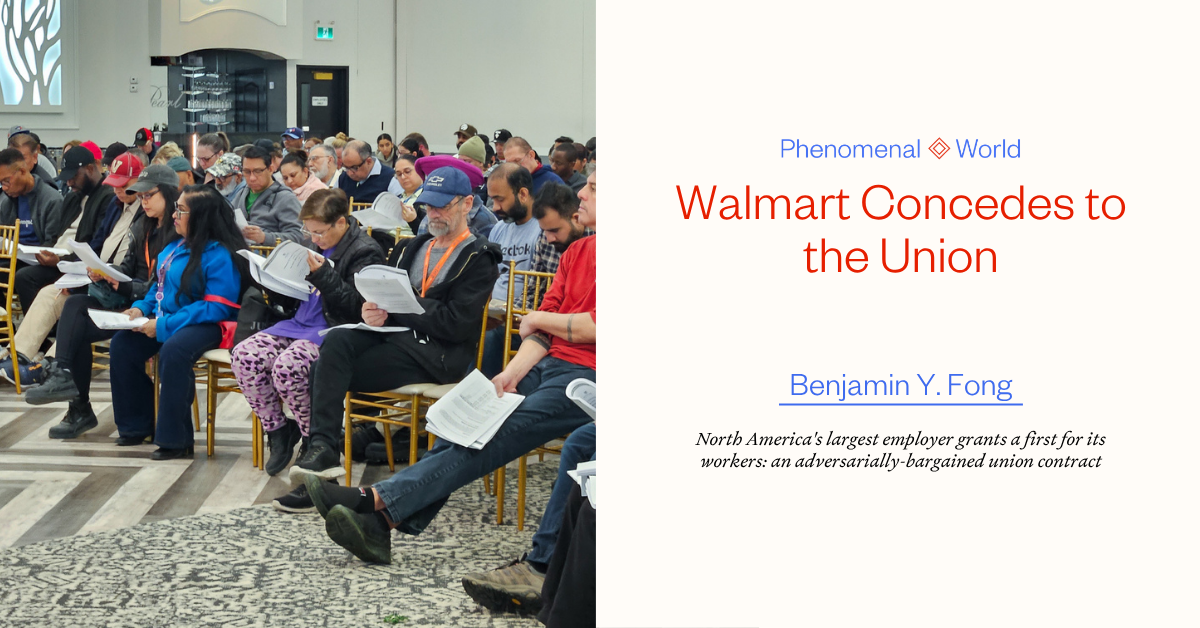

Crossposted from https://fedia.io/m/wikipedia@lemmy.world/t/4218790
TL;DR: In the last year, the Wikimedia Foundation has fired several union organizers, including those that worked on the Community Tech team - a team dedicated to building features for the volunteer community that edits Wikipedia.
As the Wiki Workers Union tries to get the Wikimedia Foundation to recognize their union, it is worth remembering that this is not the first time that the Foundation has worked against the community.
Wikimedia Enterprise is a betrayal of the volunteer movement community of Wikipedia editors, as the Wikimedia Foundation is providing privileged access to big tech AI companies to the Wikipedia corpus - a body of work that the Foundation does not own.
Movement volunteer communities contributed to Wikipedia under copyleft licenses - licenses that work to ensure that the work remains free (as in speech). The big tech AI companies do not license derivative works under copyleft licenses and often do not even attribute where the works came from.
This means that volunteers are working for big tech for free, and the Wikimedia Foundation is selling privileged access to that free labor.
It is against that backdrop that the current unionization struggle unfolds.

Video of the songs being played: www.youtube.com/watch?v=EpFZ_9fZC5A
Video of the songs being played: www.youtube.com/watch?v=EpFZ_9fZC5A