#electoralism

posts tagged #electoralism

0

The money won’t bring back my child’s leg, but it will help him get a prosthetic limb. You are our only hope. I apologize for posting this repeatedly, but I have no other choice. 🙏🙏

preview

نُشر تبادليًا من: hexbear.net/post/10069840

نُشر تبادليًا من: hexbear.net/post/10064246

Money cannot restore Karim’s leg, but it can be used to provide a prosthetic limb that will enable him to walk. Please continue to donate; the cost of the prosthetic limb far exceeds the total amount raised so far. chuffed.org/…/150674-support-umm-mohammeds-family…

0

Mamdani's SRG Plan is a Classic Bait and Switch - Left Voice

Left Voice Mamdani's SRG Plan is a Classic Bait and Switch - Left Voice www.leftvoice.org
preview

cross-posted from: news.abolish.capital/post/93301

On Monday, New York City Mayor Zohran Mamdani and Police Commissioner Jessica Tisch announced highly anticipated plans to overhaul the structure of the New York Police Department’s repressive Strategic Response Group (SRG).

In a pre-recorded video with City Council Member Chi Ossé published on Monday morning Mamdani said, “New Yorkers exercising their constitutional right to protest should not be met with the same police response as a terrorism threat. We are establishing a new, civilian-led approach that prioritizes dialogue, engagement and de-escalation.”

The announcement follows months of increasing pressure from Mamdani supporters and the broader Left to get rid of the counter-terrorism and civil unrest unit, which has been used by three different mayors to crush protest and punish dissent in the city for more than a decade.

Unfortunately, despite the Mayor’s rhetoric his proposal is nothing but a classic bait and switch operation. The proposal gets rid of the SRG in name only, replacing it with a different repressive force, and will do nothing to protect protesters from further police repression. Like a used car salesman, the mayor has lured his supporters in with a shiny promise to get rid of the SRG, but instead sold them on a stripped down plan that merely obscures the coercive power of the police while doing nothing to protect the interests or increase the power of the working class.

Although originally presented in leaked reports to Politico and other news outlets last week as a proposal to “disband” the SRG, the mayor’s plan actually does nothing of the kind. The Strategic Response Group will not be abolished, as the mayor promised, but will instead be subsumed within the NYPD’s Intelligence and Counterterrorism Bureau. In its place the NYPD will create at least two new units specifically designed to control and suppress protest: a civilian  Community Dialogue and De-escalation Division (CDDD) and a new armed “Patrol Support Division (PSD)” to assist the CDDD with “crowd control.” Meanwhile, according to the New York Times, many of the SRG’s other tasks, including patrolling the Macy’s Thanksgiving Day Parade, will be performed by a police unit with yet another different name.

Despite all of the name changes and reshuffling, it’s clear that these new configurations are just a rebranded, perhaps slightly less lethal, but no less repressive version of the previous SRG. Armed police will still be deployed to deal with protests and the NYPD will still be allowed to use military grade weaponry, including dangerous long range audio devices (LRADs) capable of causing hearing loss and damage to disperse crowds. In an interview with ABC News on Monday alongside Mayor Mamdani, Tisch made this point very clearly: “nothing would change about the way that the NYPD responds to crowd control conditions.” How the NYPD will determine the difference between a crowd and a demonstration remains to be seen.

These changes echo a longstanding demand of our movements, from Black Lives Matter to the movement for Palestine. The problem is that they will do little to alter the balance of power between the working class and the state. Regardless of whether the SRG exists or not, the longstanding tactic of using the NYPD to manage and limit disruptive protest in order to weaken the ability of working people and the broader masses to use their collective power remains the same. The fact that we now have a “democratic socialist” mayor overseeing such repression changes nothing.

Indeed, although Mamdani has said that decisions about the NYPD are ultimately up to him, not police Commissioner Jessica Tisch, the training, staffing, and deployment of this new unit will be entirely under the direction and control of the Commissioner. Tisch, who has regularly expressed her support for the SRG, also seems to have played a central role in crafting the proposal, and there is little reason to believe that the NYPD as a whole will be any less repressive than in the past.

The proposed changes reflect a deeply-rooted hatred of the SRG, a racist, para-military like force, which has been used for years to stifle dissent and break up peaceful demonstrations. But they are also clearly a response to the widespread protests and criticisms of Mamdani that followed the shooting of Oscar Belgal by ICE agents in October.

This shows the importance of holding progressive leaders accountable, sticking to our demands, and prioritizing politics over pragmatism. However, they also reflect the limits of such pressure tactics. As the executive of the city that sits at the center of global capitalism, Mamdani’s ability to provide any concessions to the working class is almost entirely constrained by what capital and the state will allow, and as these proposals show, it ain’t much.

Ultimately, there can be no significant reform or abolition of the coercive powers of the state under capitalism. The power of the police can only be challenged through the mass organization of the working class as whole. As we saw after the huge Black Lives Matter uprisings of 2020, and the fightback against ICE in Minneapolis, people have the power to resist, to set the political agenda, and to win at least temporary concessions. But only if we remain organized and continue to build our power collectively. In the absence of a sustained and self-organized working class, with a clear independent political horizon, such gains can easily be undone.

The post Mamdani’s SRG Plan is a Classic Bait and Switch appeared first on Left Voice.


From Left Voice via This RSS Feed.

0

'The South Is in Play': Scott Colom Wins US Senate Race in Deep-Red Mississippi | Common Dreams

Common Dreams 'The South Is in Play': Scott Colom Wins US Senate Race in Deep-Red Mississippi | Common Dreams www.commondreams.org
preview

cross-posted from: news.abolish.capital/post/92532

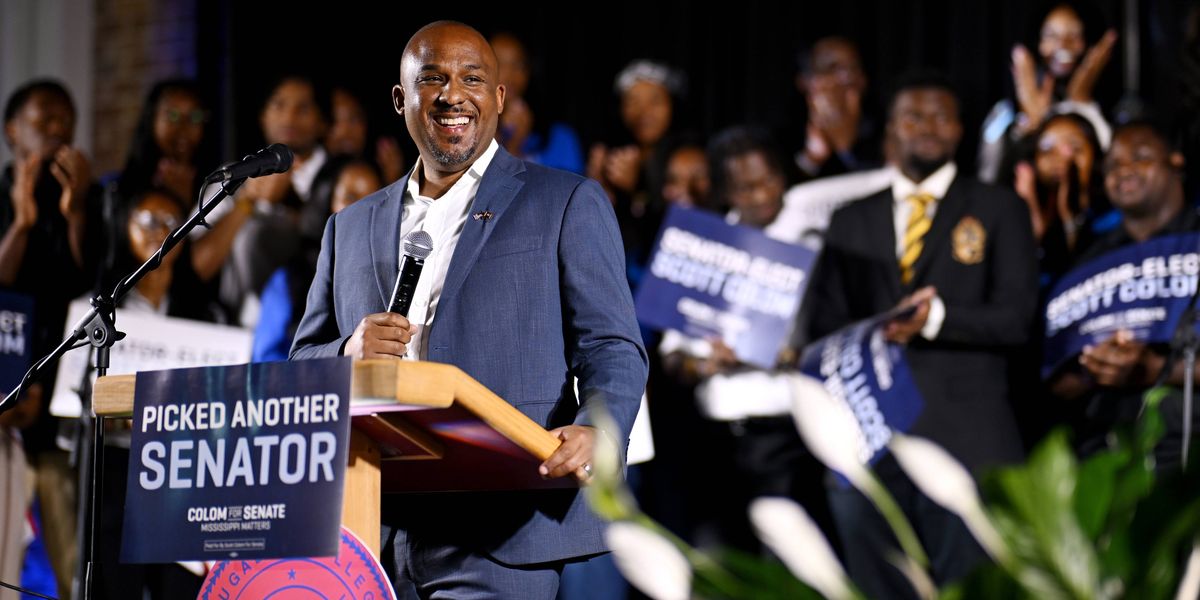
Local district attorney Scott Colom was declared the winner of a closely contested US Senate race in deep-red Mississippi on Wednesday after more than a week of ballot counting, a historic upset victory for grassroots organizing in a state that Republicans have dominated for decades.

“I had the courage to believe in Mississippi,” said Colom, who will become the first Black senator from Mississippi since Reconstruction. Colom is also the first Democrat to win a US Senate election in Mississippi since 1982, succeeding despite ongoing attacks on voting rights across the state.

Incumbent Sen. Cindy Hyde-Smith (R-Miss.), who in 2023 blocked Colom’s nomination to serve as a federal district judge, conceded the race on Wednesday and congratulated the Democratic senator-elect.

Colom said in his victory speech at Tougaloo College, a historically Black college in Jackson, that he sometimes “couldn’t get donors to answer the phone” when fundraising for his campaign, a jab at Democratic higher-ups’ lack of investment in Mississippi and the South more broadly.

Senate Democrats’ campaign arm, the Democratic Senatorial Campaign Committee (DSCC), excluded Mississippi from a $40 million investment in battleground states across the country in July. The DSCC ultimately intervened in the final days of the race with a $500,000 ad buy for Colom, who campaigned on fighting the affordability crisis, raising wages and tying them to living costs, and reversing GOP cuts to federal healthcare programs.

Colom drew widespread attention with viral ad campaigns spotlighting Hyde-Smith’s comments downplaying the rising cost of beef.

“You know, you have so many proteins to choose from,” the Republican senator said in February.

“Pick another protein?” a Mississippi resident responds in one Colom campaign ad. “I’d rather pick another senator instead.”

Britney Whaley, Southeast regional director of the Working Families Party, celebrated Colom’s win as a challenge to “everything conventional wisdom tells us about Southern politics.”

“This historic win in Mississippi should serve as a clarion call for the political establishment: It’s time to redraw the entire political map, reevaluate polling methods, and conduct a serious audit of investment portfolios. The South is in play, and it’s time to start acting like it,” said Whaley. “This win belongs to the countless Black leaders and grassroots organizers who envisioned a future for Mississippi that much of the country could not imagine and spent years organizing, building, and fighting to bring that vision to life. And it belongs to the Mississippi voters who refused to have their voices silenced, showing up in the face of archaic and suppressive voting laws to make their voices heard.”

“If this is what Southern organizers and candidates can accomplish with limited investment,” Whaley added, “imagine what is possible when we meet their leadership and labor with the resources they deserve.”

Derrick Johnson, president and CEO of the NAACP, said in a statement that “Mississippi voters made history because they refused to be intimidated, discouraged, or counted out.”

“Even in the face of efforts to remove voters from the rolls, attempts to intimidate voters and election officials, and bids to create fear around the electoral process, Mississippi voters showed up,” said Johnson. “They showed up for their communities, for their families, and for the future of their state. They reminded the nation that we the people have the power.”


From Common Dreams via This RSS Feed.

0

Green Party won a state house seat in Hawaii

preview

[From GPUS email]

A grassroots revolution just broke through in Hawaii and it is reshaping what is possible for our movement nationwide.

Pāʻele Kiakona didn’t just run; he shattered the status quo and won Hawaii House District 14! Kiakona was raised in Lahaina taro patches and majored in environmental studies. He became a leader in the Lahaina Strong initiative after the 2023 wildfire, camping on Kāʻanapali Beach for almost six months, taking a stand for long-term housing for displaced fire survivors. Pāʻele Kiakona’s election victory demonstrates that when you show up for your community, your community will show up for you

Hawaii Public Radio

0

Hawaii Green Party Candidate Makes History, Edges Democrat

www.gp.org Pāʻele Kiakona: Hawaiʻi Green Party Candidate Makes History, Edges Democrat www.gp.org
preview

Snip:

His name is Pāʻele Kiakona, and he is a community activist best known for his leadership with Lahaina Strong, a group that has played an influential role in the recovery of Maui since the August 2023 wildfires.

According to the final election results for Maui County, Kiakona had 41.1% of the vote in House District 14 (Kahakuloa, Waihe‘e, portions of Waiehu and Ma‘alaea, Olowalu, Lahaina, Lahainaluna, Ka‘anapali, Mahinahina Camp, Kahana, Honokahua).

In second place is Sne Patel, the Democrat, with 39.6% — a difference of just 107 votes. If those numbers hold, the race would not trigger an automatic recount. Incumbent Elle Cochran, a Republican who previously was a Democrat, finished third at 17%.

0

Tell Your Senators to Vote No On the Bipartisan Affordability and Jobs Act

play · youtube.com
YouTube Tell Your Senators to Vote No On the Bipartisan Affordability and Jobs Act www.youtube.com
preview

Senator Mike Lee (R-Utah) is at it again, this time co-authoring another bill aimed at weakening protections for Public lands, the Bipartisan Affordability and Jobs Act.

This bill weakens environmental laws, speeds up the permitting process and scales back major environmental protections in order to speed up the approval process for corporations looking to build major developments (including data centers), solar projects, and fossil fuel extraction.

This bill makes it easier for companies to destroy sensitive ecosystems, archaeological sites and fragile habitats. This bill also prevents permits from being revoked at any point in the future if the projects that they permitted are eventually deemed to be catastrophic or destructive.

In essence, this bill is a gift to developers and wealthy corporations, allowing them to steal from and destroy what belongs to the commons without having to answer for it. At a time when America’s public lands are increasingly under attack, this bill places their well-being in further Jeopardy."

This bill is scheduled for a vote on November 9th.

0

How FDR Saved Capitalism

Hoover Institution How FDR Saved Capitalism www.hoover.org
preview

During the economic crisis of the 1930s, many expected a socialist revolution. The revolution never came. Why? The man in the White House co-opted the left. By Hoover fellow Seymour Martin Lipset and Gary Marks.

During the economic crisis of the 1930s, many expected a socialist revolution. The revolution never came. Why? The man in the White House co-opted the left. By Hoover fellow Seymour Martin Lipset and Gary Marks.

0

Mississippi ballots still being counted. Hundreds of student ballots tossed.

play · youtube.com
YouTube Mississippi still counting votes in Senate race, many students' ballots tossed out youtu.be
preview

🎶Go find yourself another country to be part of 🎵

And here’s to the government of Mississippi In the swamp of their bureaucracy they’re always bogging down And criminals are posing as the mayors of the towns And they hope that no one sees the sights and no one hears the sounds And the speeches of the governor are the ravings of a clown

0

Freakonomics Radio: 694. Does Democracy Really Need Elections?

preview

Stephen Dubner recently served on a criminal jury. Twelve strangers — selected randomly and barely paid — took the job seriously. Afterward, he wondered: why can’t our politics work that way? A growing movement, inspired by Athenian democracy, says it can.

freakonomics.com/…/does-democracy-really-need-ele…

0

Jerusalem Post Copium after El Sayed win

preview

Link is archive link.

El-Sayed lost Jewish support over Israel, antisemitism, but got over 50% of Jewish votes - report …

Jewish voters make up approximately 1.4% of Michigan and typically show substantial support for the Democrats, Politico added. The divisive issue of support for Israel and concerns regarding rising antisemitism have shaken Jewish voters.

A majority of Jewish early voters still supported El-Sayed, Politico found, but about 25% of those who supported the previous Democratic candidate in 2024 had switched to Mike Rogers over El-Sayed.

Zio-WimpLo zionist-despair Even though he still had the large majority of Jewish votes, Hard core Zionazis cost him 0.35% of the vote making isntrael the real winner.

bridget-pride-stay-mad

0

Blansas Is Here To Stay | TMR

play · youtube.com
YouTube Blansas Is Here To Stay www.youtube.com
preview

David Dayen, executive editor of The American Prospect and co-host of the Organized Money Podcast, joins to recap the week’s biggest stories and to look ahead to Tuesday’s midterms.

David Dayen, executive editor of The American Prospect and co-host of the Organized Money Podcast, joins to recap the week’s biggest stories and to look ahead to Tuesday’s midterms.

0

PSL's take on the election

preview

Thought it would be interesting to talk about the PSL’s take on the election. The embedded image is the PSL candidate that won an election, their only win of the night. The PSL ran a number of candidates including Joe Tache in Mass, ~ 2% of the vote, same for Greg Levy in Ohio. Andre Easton in the Bronx got just shy of 9% and nearly tied the Republican.

They had a number of articles on their main publication articulating their position and I thought all were correct and show the ideological position of the party.

What happens after the midterms did a good job of positioning the next steps for Marxists in the US.

Statement on the Democratic wave helps lay out the interests of the working class and dispels liberal myths about their motives.

Then they had this one regarding the scapegoating of black and Latino voters by the Democrats in 2022.

I see all this as making a clear point about the election, the perspective of the working class in the US, and the next steps for US Marxists. That being get involved in building a party now. Would love other peoples takes on this.

0

Scott Colom blasts Democrats for not investing more in Mississippi

play · youtube.com
YouTube Scott Colom blasts Democrats for not investing more in Mississippi www.youtube.com
preview

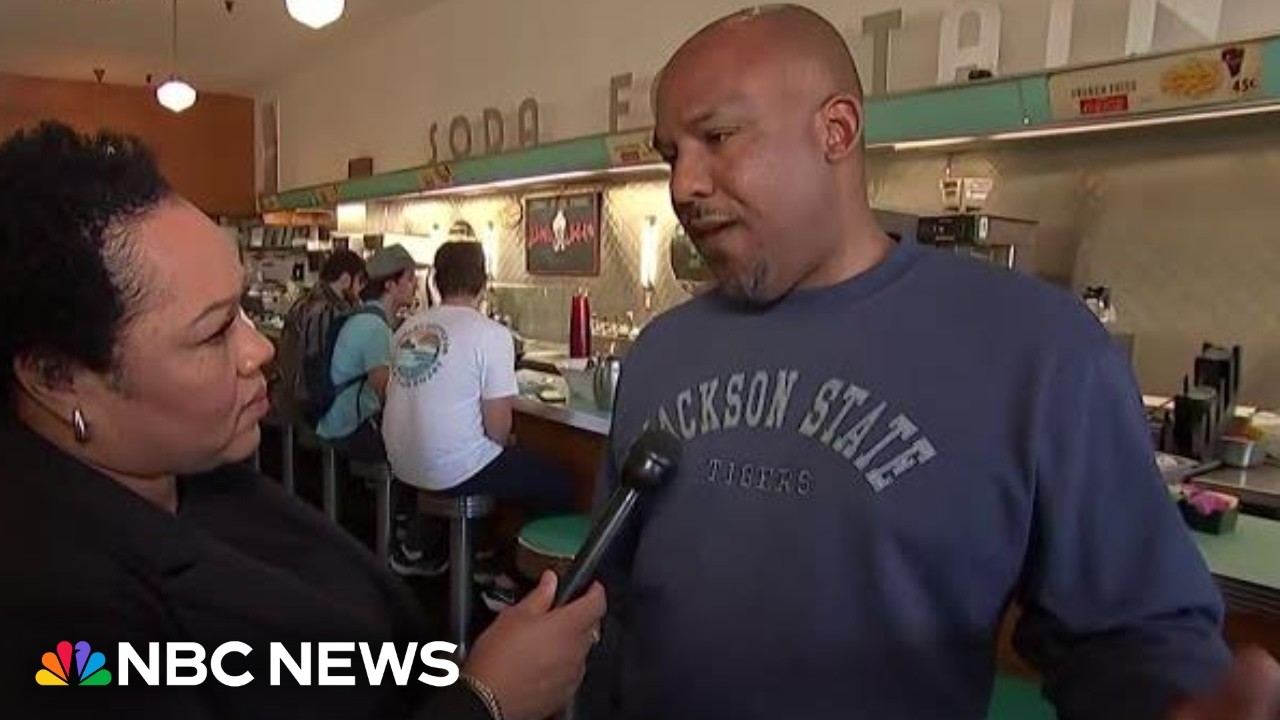
Mississippi U.S. Senate candidate Scott Colom (D) says Democrats did not do enough to be competitive in the state as the Senate race remains too close to call. NBC News’ Yamiche Alcindor joins Meet the Press NOW with more from her interview.

Mississippi U.S. Senate candidate Scott Colom (D) says Democrats did not do enough to be competitive in the state as the Senate race remains too close to call. NBC News’ Yamiche Alcindor joins Meet the Press NOW with more from her interview.

0

Why did young men abandon the GOP this election?

preview

I think just about every demographic abandoned the GOP, but this is a pretty substantial shift.

Did most of them just sit out the election last time?

It’s because AI made gaming more expensive, isn’t it?

I think just about every demographic abandoned the GOP, but this is a pretty substantial shift.

Did most of them just sit out the election last time?

It’s because AI made gaming more expensive, isn’t it?

0

MAGA IMPLOSION As Dems BLUE SUPERNOVA Across Every Election | Good Politic Guy

play · youtube.com
YouTube Trump CRASHES OUT As Dems SWEEP EVERYTHING In Midterms www.youtube.com
preview

Midterm elections total implosion for Republicans as Dems flip states like Kansas, Ohio, Texas, Georgia, Michigan, South Carolina, Iowa and potentially Mississippi while also carrying the House and Governors races, Trump crashes out over major losses, Talarico Abdul Ossoff win as Vivek Graham Paxton and Abbott lose, Hakeem Jeffries and Chuck Schumer already suck the life out of the room after wins.

Midterm elections total implosion for Republicans as Dems flip states like Kansas, Ohio, Texas, Georgia, Michigan, South Carolina, Iowa and potentially Mississippi while also carrying the House and Governors races, Trump crashes out over major losses, Talarico Abdul Ossoff win as Vivek Graham Paxton and Abbott lose, Hakeem Jeffries and Chuck Schumer already suck the life out of the room after wins.

0

Scott Colom on Cusp of Historic Senate Upset in Deep-Red Mississippi, Fueled by Surge of Black Turnout | Common Dreams

Common Dreams Scott Colom on Cusp of Historic Senate Upset in Deep-Red Mississippi, Fueled by Surge of Black Turnout | Common Dreams www.commondreams.org
preview

cross-posted from: news.abolish.capital/post/90888

Scott Colom is on the verge of a historic upset in Mississippi, where he could become the state’s first Democrat elected to the US Senate in more than four decades.

As of Wednesday afternoon, Decision Desk HQ showed Colom, a Black prosecutor and criminal justice reform advocate, holding a razor-thin margin of 1,864 votes over Republican Sen. Cindy Hyde-Smith with more than 95% of ballots counted.

Even on a night when Democrats clobbered the GOP up and down the map and won decisively in states as red as Texas, South Carolina, Kansas, and Iowa, very few analysts believed Mississippi—where President Donald Trump won by nearly 23 points in 2024—would be competitive, let alone a nail-biter that dragged into the next day.

But NBC election analyst Steve Kornacki explained Wednesday morning that with thousands of votes left to count in overwhelmingly Democratic Hinds County, “Colom could absolutely win this.”

In a 5-4 decision that now looms large, the US Supreme Court shot down Republican efforts to stop the counting of mail-in ballots postmarked on or before Election Day that arrive afterward. Those ballots, which can continue arriving until November 10, may ultimately decide the election.

Even if Colom falls short, his strong showing was evidence of what the NAACP, the nation’s oldest civil rights organization, described as “historic voter turnout” in Black communities, in response to Republicans’ attack on the Voting Rights Act.

Following the Supreme Court’s Louisiana v. Callais decision earlier this year, several GOP-controlled states, including those in the Deep South, moved to redraw congressional and state legislative districts in ways that voting rights advocates warned would dilute Black voting power.

On the campaign trail, Colom described Callais as “a threat to our democracy” and said Republican Gov. Tate Reeves, who proposed legislative maps that would have drawn Black lawmakers out of their districts, was seeking to stop Black voters from “being able to pick leaders they want.”

When the court’s conservatives kneecapped the Voting Rights Act, they inspired a fierce backlash among Black voters across the South," explained reporter Jim Saksa in an analysis for Democracy Docket. “Massive Black turnout helped Democrats coast to victory in Georgia and made the Senate races in Mississippi and Louisiana the tightest seen in decades.”

Voter turnout in Mississippi is on pace to be about 40% higher than in the last midterm election in 2022. In majority-Black Hinds County, which contains Jackson, unofficial results showed nearly 76,500 votes for the two leading US Senate candidates alone, about 44% more than the total number of ballots cast four years ago.

“The story of this election is not just about who won,” said Dominik Whitehead, chief of field for the NAACP. “It’s about the Black wave of voters who understood what was at stake and made their voices heard.”

Democratic US Senate candidate Scott Colom of Mississippi stands outside the home of slain civil rights leader Medgar Evers in Jackson, Mississippi, in a video posted on November 1, 2026. (Screenshot from a video by Scott Colom)

Colom didn’t have to water down his platform much to achieve tremendous gains, even in a deep-red state. As political strategist Paul Hilder explained, he “ran on a ‘commonsense’ economic populist platform aimed at daily life: gas, groceries, healthcare, and closing hospitals, plus Medicaid expansion.”

In the nation’s poorest state, where nearly 1 in 5 residents rely on Medicaid or the Children’s Health Insurance Program, this message was potent. It was especially effective against Hyde-Smith, who has comfortably won her previous elections and was relentlessly criticized for dismissing voters’ concerns about high prices.

For example, in DeSoto County, which Trump carried by 24 points in 2024, Colom led Hyde-Smith by more than six points in early returns.

“[Colom] won many switchers, and the Republican vote collapsed,” Hilder said. “Swing voters are more volatile than ever, especially when they’re economically hard-pressed. They respond to common sense, and they’ve decided Trump and the Republicans are not on their side.”

Mississippi has not elected a Democrat to the US Senate since Sen. John C. Stennis, a conservative segregationist, won his seventh term in 1982. And although it has the highest proportion of Black residents of any US state, Mississippi has not sent a Black senator to Washington since Reconstruction, when Republican Blanche K. Bruce, who was born into slavery, was elected by the state Legislature.

Colom told NPR last week he’s always believed change was possible and that it has failed to materialize only because of neglect by national Democrats, who have long written the state off as unwinnable.

“The reality is, Mississippi has never been a lost cause,” he said. “We’ve been a betrayed cause.”


From Common Dreams via This RSS Feed.

cross-posted from: news.abolish.capital/post/90888

Scott Colom is on the verge of a historic upset in Mississippi, where he could become the state’s first Democrat elected to the US Senate in more than four decades.

As of Wednesday afternoon, Decision Desk HQ showed Colom, a Black prosecutor and criminal justice reform advocate, holding a razor-thin margin of 1,864 votes over Republican Sen. Cindy Hyde-Smith with more than 95% of ballots counted.

Even on a night when Democrats clobbered the GOP up and down the map and won decisively in states as red as Texas, South Carolina, Kansas, and Iowa, very few analysts believed Mississippi—where President Donald Trump won by nearly 23 points in 2024—would be competitive, let alone a nail-biter that dragged into the next day.

But NBC election analyst Steve Kornacki explained Wednesday morning that with thousands of votes left to count in overwhelmingly Democratic Hinds County, “Colom could absolutely win this.”

In a 5-4 decision that now looms large, the US Supreme Court shot down Republican efforts to stop the counting of mail-in ballots postmarked on or before Election Day that arrive afterward. Those ballots, which can continue arriving until November 10, may ultimately decide the election.

Even if Colom falls short, his strong showing was evidence of what the NAACP, the nation’s oldest civil rights organization, described as “historic voter turnout” in Black communities, in response to Republicans’ attack on the Voting Rights Act.

Following the Supreme Court’s Louisiana v. Callais decision earlier this year, several GOP-controlled states, including those in the Deep South, moved to redraw congressional and state legislative districts in ways that voting rights advocates warned would dilute Black voting power.

On the campaign trail, Colom described Callais as “a threat to our democracy” and said Republican Gov. Tate Reeves, who proposed legislative maps that would have drawn Black lawmakers out of their districts, was seeking to stop Black voters from “being able to pick leaders they want.”

When the court’s conservatives kneecapped the Voting Rights Act, they inspired a fierce backlash among Black voters across the South," explained reporter Jim Saksa in an analysis for Democracy Docket. “Massive Black turnout helped Democrats coast to victory in Georgia and made the Senate races in Mississippi and Louisiana the tightest seen in decades.”

Voter turnout in Mississippi is on pace to be about 40% higher than in the last midterm election in 2022. In majority-Black Hinds County, which contains Jackson, unofficial results showed nearly 76,500 votes for the two leading US Senate candidates alone, about 44% more than the total number of ballots cast four years ago.

“The story of this election is not just about who won,” said Dominik Whitehead, chief of field for the NAACP. “It’s about the Black wave of voters who understood what was at stake and made their voices heard.”

Democratic US Senate candidate Scott Colom of Mississippi stands outside the home of slain civil rights leader Medgar Evers in Jackson, Mississippi, in a video posted on November 1, 2026. (Screenshot from a video by Scott Colom)

Colom didn’t have to water down his platform much to achieve tremendous gains, even in a deep-red state. As political strategist Paul Hilder explained, he “ran on a ‘commonsense’ economic populist platform aimed at daily life: gas, groceries, healthcare, and closing hospitals, plus Medicaid expansion.”

In the nation’s poorest state, where nearly 1 in 5 residents rely on Medicaid or the Children’s Health Insurance Program, this message was potent. It was especially effective against Hyde-Smith, who has comfortably won her previous elections and was relentlessly criticized for dismissing voters’ concerns about high prices.

For example, in DeSoto County, which Trump carried by 24 points in 2024, Colom led Hyde-Smith by more than six points in early returns.

“[Colom] won many switchers, and the Republican vote collapsed,” Hilder said. “Swing voters are more volatile than ever, especially when they’re economically hard-pressed. They respond to common sense, and they’ve decided Trump and the Republicans are not on their side.”

Mississippi has not elected a Democrat to the US Senate since Sen. John C. Stennis, a conservative segregationist, won his seventh term in 1982. And although it has the highest proportion of Black residents of any US state, Mississippi has not sent a Black senator to Washington since Reconstruction, when Republican Blanche K. Bruce, who was born into slavery, was elected by the state Legislature.

Colom told NPR last week he’s always believed change was possible and that it has failed to materialize only because of neglect by national Democrats, who have long written the state off as unwinnable.

“The reality is, Mississippi has never been a lost cause,” he said. “We’ve been a betrayed cause.”


From Common Dreams via This RSS Feed.

0

DSA Won Big in New York, but So Did the Democratic Establishment - Left Voice

Left Voice DSA Won Big in New York, but So Did the Democratic Establishment - Left Voice www.leftvoice.org
preview

cross-posted from: news.abolish.capital/post/90889

Tuesday’s elections in New York were no doubt a welcome reprieve for Mayor Zohran Mamdani, who has recently faced criticisms from the Left for a growing list of betrayals and failures, including his refusal to fire police commissioner Jessica Tisch. That criticism had spilled over into open protest against the mayor in October, particularly after the shooting of Bronx resident Oscar Belgal by ICE ignited outrage over his handling of the NYPD. But last night, rather than face crowds of jeering protesters, the Mayor was instead basking in the glow of the victories of all four of his endorsed candidates alongside hundreds of their enthusiastic supporters. These included DSA members Claire Valdez and Darializa Avila Chevalier, former Comptroller Brad Lander, and, curiously, Governor Kathy Hochul.

The most resounding and impressive victory of the evening by far went to newcomer and DSA member Darializa Avila Chevalier, who won her district in Northern Manhattan and the Bronx with 87.5 percent of the vote. Her challenger, Republican Jomo Williams, earned less than 12 percent. This incredible landslide shows clearly that Chevalier’s platform, which includes calls for taxing the rich, universal healthcare, housing for all, and the abolition of ICE, among other progressive demands, resonates with large sections of her new constituents. Her victory also shows that candidates can run as open socialists, and even face off against the police on the streets, without fear of “alienating their base.” In fact, Darializa’s combative tone and her now famous confrontation with police the day of the Bronx ICE shooting no doubt won her several votes.

Although Chevalier, along with the DSA, has strongly criticized the mayor for his failure to fire Tisch or to disband the NYPD’s hated Strategic Response Group, Mamdani nonetheless — though perhaps a bit awkwardly — stood by her during her acceptance speech. Chevalier blasted ICE and talked about the importance of affordable housing, while wearing a Keffiyeh, symbolizing her support for Palestine. Surprisingly, her speech said little about international politics, and the only time Palestine was mentioned was when the audience spontaneously began chanting “Free Palestine.”

In addition to Chevalier, the DSA won a second congressional seat in District 7, where Claire Valdez, also endorsed by Mayor Mamdani, sailed to an easy victory with more than 83 percent of the vote against her Republican challenger. Valdez, who is a member of the DSA, will replace establishment Democratic congressperson Nydia Velázquez, who is set to retire in January. Like Chevalier, Valdez ran on a platform of universal healthcare, housing for all, and the abolition of ICE. Importantly, unlike Mamdani, neither Valdez nor Chevalier endorsed or said they would vote for Governor Hochul.

As a result, the DSA will now have three congresspeople from New York: Alexandria Ocasio Cortes, Claire Valdez, and Darializa Avila Chevalier. If you throw in the newly elected congressperson and former DSA member Brad Lander, whom Mamdani also endorsed, the mayor will now have a sizable coalition representing his interests and many of his ideas in Congress. What the Mayor and his allies choose to do with this newfound power and platform remains to be seen, but it is clear already that there are some meaningful differences between the mayor and the DSA’s new electeds.

But Chevalier’s was not the only election night celebration that Mamdani attended. Before heading up to the Bronx, the mayor spent the early evening after the polls closed with Governor Kathy Hochul and her supporters. In the speech he delivered there, Mamdani described the votes that day as a “turning point” for the Democratic Party, saying that “we have begun the work of transforming our party and making it belong to working people once again.”

Although Mamdani’s plan to transform the Democratic Party is highly unlikely to succeed, his endorsement was absolutely essential to transforming Hochul’s campaign, and not for the better. Less than two years ago, Hochul looked like a lame duck. Still recovering from a tight 2022 election race, where New York Democrats had lost five congressional seats in part because of her failure to turn out Democratic voters, her prospects for winning the nomination, much less re-election, were looking thin. Her approval ratings were consistently in the low forties (near or below President Trump’s), and polls showed that a 2026 match up against a strong Republican candidate could be close.

But then along came Mayor Zohran Mamdani. His phenomenal rise to power was a wave that, like yesterday’s “blue wave,” lifted every boat with a capital “D” on its prow, and his early and very public endorsement of Hochul breathed new life into her campaign. Tuesday’s results showed exactly the power of that endorsement. Not only did Hochul win re-election, she absolutely crushed her Republican opponent Bruce Blakeman by more than 20 points. Much of this victory can be attributed to the same set of forces that led to similar Democratic victories across the country: hatred of Trump and the Republican Party; anger about ICE terror and the war on Iran; and frustration about rising prices and the cost of living. Indeed, much of the success of Democrats across the country was more about hatred of Trump than anything the candidates themselves had to offer. But Hochul’s victory was not only thanks to the failures of Trump. Mamdani’s endorsement played a key role in rehabilitating the centrist Democrat’s image ahead of the elections, transforming her from a frumpy, unappealing centrist into an ally of the most popular and one of the most progressive-leaning politicians in America. Likewise, the Mayor’s repeated arguments that the Democratic party can be made to represent the interests of working people and the oppressed, only helps the party to more easily conceal its ongoing attacks on them. Even worse, this is happening at a time when the party itself is being rejected by huge swaths of the working class and is most in need of such help.

And this is a contradiction that the DSA and the Left more broadly has to wrestle with: it is impossible to build working class power in coalition with or by supporting the very same people who are attacking the working class daily. By endorsing Hochul, Mamdani not only guaranteed her victory against her equally unsavory Republican opponent, he helped paper over the tainted image that she and her party represent. It is precisely this kind of narrow and pragmatic popular front mentality that has led time and again to the eventual destruction of the left wing of any partnership with the Democrats.

Both DSA candidates and establishment candidates won big riding the blue wave and Mamdani’s popularity and anger against Trump. But it remains to be seen how much these new DSA candidates will distinguish themselves from and against the rest of the Democratic Party, or allow themselves to be subsumed by it. But regardless of what path Chevalier and Valdez choose to follow, the DSA are already providing cover for and assistance to the establishment wing of the party, and this contradiction cannot hold for long. Either the DSA becomes more entrenched in the Democratic Party, or it will have to break from it. By not endorsing Hochul Darializa and Valdez showed signs that they may govern differently than Mamdani, but their indebtedness to him and the DSA ballot line strategy will make that difficult.

The post DSA Won Big in New York, but So Did the Democratic Establishment appeared first on Left Voice.


From Left Voice via This RSS Feed.

0

Abortion access in Idaho lost by 80,000 votes

IDAHO BALLOT MEASURES: Proposition 1 (abortion) Yes 44%, No 56%. Drugs amendment (HJR4) Yes 34%, No 66%. English amendment (HJR6) Yes 63%, No 37%. State gun advisory question: Winchester Model 1894 25%, Winchester Model 1873 31%, 1873 Colt Single Action Army Revolver 15%, M1 Garand rifle 7%, Colt M1911 .45 automatic 9% Remington Model 700 12%
preview

Other such important questions were answered, too. Like, will you please stop sending the legislature citizen signatures to legalize marijuana, should we mandate English as the only official language for the state government to use, and which gun should go on our state Wikipedia page?

Other such important questions were answered, too. Like, will you please stop sending the legislature citizen signatures to legalize marijuana, should we mandate English as the only official language for the state government to use, and which gun should go on our state Wikipedia page?