#japaneselanguage

posts tagged #japaneselanguage

0

I made an Open-source App for learning Japanese inspired by Duolingo

preview

Source: kanadojo.com

As an avid Japanese learner, I always wanted there to be a simple online trainer for learning kana, kanji and vocabulary by JLPT level. The app serves as a simpler alternative to Chase Colburn’s Kanji Study app, because Kanji Study was pretty complicated for me to use as a beginner and didn’t have a more streamlined way of learning kanji through simple, continuous repetition and rote memorization (also, Kanji Study requires you to pay to unlock its full content library).

So, I started working on a brand new, completely free and fully open-source app for learning kanji and Japanese vocabulary. Here are the features so far:

  • Available as a web app with no ads, no paywalls, no unnecessary app store downloads

  • Full JLPT vocabulary and kanji coverage, with more than 1000+ levels for you to play

  • More than 25+ different fonts and font styles

  • More than 100+ different color themes, with the ability to add and upload your own custom backgrounds

  • 100% free and open-source, forever

  • All learning materials 100% AI-free, sourced from reputable sources and available for full download and inspection

Give it a go: kanadojo.com

ありがとうございます!

0

Japachar App is now available for everyone to download

Japachar - Apps on Google Play play.google.com
preview

This apps mainly helps you learn characters such as Hiragana, Katakana and Kanji, but it also can help you to memorize words.

The app features a learning algorithm that makes you learn fast and in a fun way presenting new characters when you already know well the already presented ones.

The app is also available for Linux in flathub flathub.org/es/apps/me.sergiotarxz.JapaChar

And if you want to install in Android but you are not the kind of user that pays for apps there is a f-droid repo available fdroid.algaos.com/fdroid/repo/ which only needs you to disable developer verification (In either way I win, you pay or disable verification that is drowning free software, win-win anyway to me)

Source code under AGPLv3 available here: github.com/sergiotarxz/Japachar , android build recipe available here git.algaos.com/#https://git.algaos.com/algaos/fdr…

I hope you enjoy the app and/or it is useful to you.

Thank you to everyone in this thread that contributed to the 12 testers, very much appreciated.

0

[CROSSPOSTED] Japachar: Looking for 12 testers for a small open source app to learn Japanese

preview

This app tries to learn people Hiragana, Katakana, Kanji and hopefully words.

It is a direct port of the flathub equivalent app that does the same.

The 12 testers are needed so I can publish it to Play Store and I will need google account emails of those that want to help.

The app is fully Free Software and I have shared spec in the url with the entire compilation pipeline. (Useful if you want to publish a GTK4 app in Perl in Android)

0

What is Your Approach to Grammar?

preview

Hey everyone,

I’ve been studying Japanese for almost 1.5 years now and I am currently trying to conquer N4.

I am not having ANY trouble with vocab and kanji, but the grammar is making me go absolutely crazy.

My current approach is literally just “working off” a list of N4 grammar on JLPT Sensei and checking off items I’ve already learned. I usually look at the rule definiton, the example sentences of JLPT Sensei and then make my own ones.

But I don’t really feel confident at all and I am not sure what I can do to try to make my grammar better. I already Bunpro before but that became more of a “sentence silhouette matching”, because I more so remembered the shape of the sentence instead of the actual grammar.

Any tips?

0

Video Game History Foundation will start adding Japanese magazines to digital archive

Video Game History Foundation VGHF Digital Archive passes 5000 magazines. Here's what's next. | Video Game History Foundation gamehistory.org
preview

Starting with Neo-Geo Freak, the VGHF will be including Japanese-language magazines in their collection.

The blog post talks about how they’re making sure the text is transcribed and searchable, and how they’re working with Japanese speakers to highlight key articles.

Starting with Neo-Geo Freak, the VGHF will be including Japanese-language magazines in their collection.

The blog post talks about how they’re making sure the text is transcribed and searchable, and how they’re working with Japanese speakers to highlight key articles.

0

What is this kanji?

preview

I don’t know if this is the right community to ask about this. I’ll delete the post if it’s not.

I got this tea set at a thrift store today and I tried to look up the makers mark out of curiosity, but I’m awful with kanji and I havent been able to get any online tools to help figure it out. I know it’s probably not anything special, but I’m still curious.

0

Why are words relating to plants, reptiles & insects often written in Kana instead of Kanji?

preview

For example, 蠍 is written as サソリ. Even if they use the Kanji in text, they add furigana above it rather than letting the audience themselves decipher the meaning. It’s the same with 榊 (サカキ), 仙人掌 (サボテン), 百足 (ムカデ), 蟻 (アリ), 鰐 (ワニ), you get the picture. Why can’t they just write them in Kanji without furigana in the same frequency as encountering 本 or 日 upon encountering texts containing these types of words?

For example, 蠍 is written as サソリ. Even if they use the Kanji in text, they add furigana above it rather than letting the audience themselves decipher the meaning. It’s the same with 榊 (サカキ), 仙人掌 (サボテン), 百足 (ムカデ), 蟻 (アリ), 鰐 (ワニ), you get the picture. Why can’t they just write them in Kanji without furigana in the same frequency as encountering 本 or 日 upon encountering texts containing these types of words?

0

Japanese numbers

preview

Hey guys. I teach my nephew Japanese every Saturday, and I’m going to teach numbers tomorrow. I made these drawings to help him remember and I thought I’d share with you guys in case you have a beginner you wanna teach too.

They’re only scribbles, though, so you might wanna make them much nicer-looking.

いち - itchy

に - knee

さん - sun

し - shhh

ご - go

ろく - lock

なな - banana

はち - hatch

きゅう - cute

じゅう - jiujitsu

0

Any suggestions for mobile games to learn Japanese?

preview

I’m going to do the JLPT N5 exam in December. I have a lot of learning tools and ebooks but I need something more fun to keep me engaged.

Would anyone have any good suggestions for mobile games to help learn Japanese?

I’m going to do the JLPT N5 exam in December. I have a lot of learning tools and ebooks but I need something more fun to keep me engaged.

Would anyone have any good suggestions for mobile games to help learn Japanese?

0

Use of boku in the real world for women?

preview

So, I’m aware that Japan is not just “the anime country” and that people don’t act and talk like an anime character. However, I did see that some women in anime (specifically more tomboyish/casual women) would say “boku”. I’ve also seen the standard “watashi” and “atashi” for women, but I’m generally more tomboyish and was wondering if it was weird to introduce myself like 「僕は五月です。」(Boku wa Satsuki desu).

My real name isn’t actually Satsuki as I’m not Japanese, I’m just using the character’s name as a pseudonym.

Again, I know people don’t talk like anime characters, but I still wanna make sure it’s not weird to address myself as that just because I’m a tomboy. Or is it similar to someone in one of my languages saying “Tô confuso” as a woman? (“I’m confused” but said as a man, tô confusa is correct for a woman).

0

Jiten.moe 1.0 launch

Jiten What's New - Jiten jiten.moe
preview

Jiten now consider themselves to be out of beta.

Jiten is now officially out of beta! This doesn’t change anything and the site will continue being developed at the same pace, it’s just that all the features I imagined when I started working on it are now available and polished.

The features they point out in this update are Guides and What’s New pages, several other enhancements/bug fixes, SRS leaving beta/opt-in state, and an MPV plugin. There’s also a direct subscription option now, rather than using Patreon.

0

What's with the difference between font and writing of 令?

preview

This character, 令 looks one way in text/font, and in my RTK book.

But Jisho has a little animation that shows stroke order, and the bottom element here looks completely different in that hand-written version. Still two strokes, but a different resulting shape.

The same applies to other kanji that build from it, like 冷, 零, etc.

What’s the story? Is one or the other source wrong, has the character been updated to a new form, or do I just have wrong fonts?

0

Hukumusume-Reader - I sorted over 3000 children's stories by difficulty and made them mobile-friendly.

preview

If you aren’t already familiar with it, hukumusume.com is a wonderful resource full of Japanese children’s stories. However, the web design is straight out of the year 2000, and some of the stories can still be fairly challenging to read, even if they are for kids.

So, I ran all the stories through a difficulty analyzer to sort them from easiest to hardest, and I also created a userscript to strip all of the junk out of the website and just leave the story content. You just need a browser extension like Violentmonkey or Tampermonkey to enable the userscript. It lets you toggle dark mode, increase the font size, enable/disable images, and more. Very readable on mobile devices now, and you can even use Yomitan to help with unknown words or to mine sentences for Anki.

The reading list: zarxrax.github.io/hukumusume-reader/

The user script: greasyfork.org/en/…/578027-hukumusume-reader

0

Everyone‘s Kamidana (みんなの神棚)

Everyone‘s Kamidana (みんなの神棚) toukyo.substack.com
preview

tværpostet fra: feddit.dk/post/21718755

This article features photos of kamidana — household Shinto altars — from around the world, accompanied by commentary from me, a Shinto priest.

🍉From Ikeda (Owner of Soba restaurant)

“We enshrine our local tutelary deity here—not one of the big names like Ise or Izumo, but someone who feels more like a good neighbor. That suits us just fine.

Since we run a soba shop, we don’t offer rice—we offer soba. Whether that’s proper or not, I honestly don’t know, but that’s how we do it.

We’ve placed a Lucky Ebisu statue we received as a gift for our shop opening, along with a bottle of local craft beer from Nanki-Shirahama, designed by a friend.

And in the spirit of Shinbutsu-shūgō (the fusion of kami and buddhas), we’ve also tucked in an ofuda from Sensō-ji that was lying around the house.”

🍑From Toukyo

This kamidana belongs to a friend of mine who runs a soba restaurant in Tokyo.

Soba itself is often considered an iki (粋) food—refined, minimalist, and quietly stylish. This kamidana, too, has that same clean and elegant feeling. There’s something about it that captures the spirit of Edo (old Tokyo): a sense of tasteful simplicity, where nothing is overdone, yet everything feels just right.

One feature that makes this kamidana special, as my friend explains, is that instead of offering rice, he presents buckwheat (soba) grains. I believe offerings should be something the kami can enjoy with us—something shared. While rice is traditionally the standard, it’s perfectly fine to offer locally grown foods or items that reflect the essence of your work.

🍉From Ilya

“I built my kamidana from local pine wood, with the help of my dad back in 2020. It was a real passion project. Neither of my parents practice Shinto, but they support me, and being able to build this with my dad was a really lovely experience.

One of the personal touches I try to add to the kamidana is a custom drawing of the main Kami I worship Tenjin-sama, and calligraphy.

My kamidana has really grown over the last 5 years and I am really proud of where it’s come! Over the years I’ve been able to add Sakaki and masakaki, various items from Tenmangū in Japan, Omikuji and Omamori, as well as kumade and hamaya. The bottom shelf is dedicated to books on Shinto and my goshuincho collection (currently numbering 5 individual volumes).”

🍑From Toukyo:

I was deeply moved by the kamidana she built with her father—it’s truly wonderful. A kamidana is a small sacred space where we can commune intimately with the kami and cultivate a sense of harmony with them. To create that space entirely by hand, with such passion, and to enjoy the very process of making it—that in itself, I believe, is a beautiful way of connecting with the divine.

The character she has placed on the ceiling is the kanji for “cloud” (雲). In Japan, when a kamidana is placed in a room where there is another floor or people walking above it, we often post the character “雲” on the ceiling. It symbolically transforms the ceiling into “sky,” thus preventing the space from being seen as disrespectfully “underfoot” to the kami. This is a cultural technique we call mitate—a poetic way of seeing or reinterpreting something. The fact that she knows and uses this shows a deep understanding of Japanese culture rooted in Shinto.

🍉From Jeff

“It is a basic three-door Miyagata with Jingu Taima in the center, flanked by ofuda for Sarutahiko-Okami and Ame-no-Uzume-no-Mikoto. To the left of the Miyagata is an Ema featuring the husband and wife Kami (Our prayer came true, I should mention!). To the right is a Gohei for home protection. I am unsure if the shimenawa laying around the base of the kamidana is acceptable, and I look forward to learning whether or not this is the case.

Shinto appeals to me as a framework in which to express gratitude for health and family, for sustenance, for all of life’s good things, and a place to be introspective about my actions and how they affect the world. ”

🍑From Toukyo

That’s a very impressive and traditional kamidana! The white ceramic utensils are shiny and clean, which shows how well you maintain its purity. I even spotted a sumo ranking chart (banzuke) on the left wall in the photo! (I’m a sumo fan).

Regarding the question about the placement of the shimenawa (sacred rope) and shide (paper streamers), as long as they are positioned above head height, it’s perfectly fine to attach them to the lower part of the kamidana, just as shown in the photo.

For readers unfamiliar with these items, shide are zigzag-shaped white paper strips that mark a sacred space. You can make them yourself by folding a rectangular piece of white paper with alternating cuts. It’s one of the simpler types of origami, so if the paper becomes dirty or torn, it’s a good idea to replace it.

0

Shinto Home and Overseas Worship Guide (In a General Sense)

preview

tværpostet fra: feddit.dk/post/21614204

In Shinto [神道], we have the practice of setting up a home altar, called usually a “Kamidana” [神棚] to pray and express thanks to Kami-sama [神様] when we cannot worship at the shrine.

The Kamidana should be slightly above your eye level when you pray. Many pray standing up, so the Kamidana is often high up - but it should not be unreachable. Kamidana generally have a common set up with a Miyagata [宮形] (small shrine) on a Tanaita 棚板 and a full Shingu [神具] (offering vessels/sacred tools) set.

We usually place a Shinkyou [神鏡] (Sacred mirror) in front of the shrine. We also have the offering vessels - generally we are supposed to make offerings of rice, sake, salt, and water every day in the morning.

A Kamidana can also be accompanied by two items: the Shimenawa [しめ縄] rope, and the marker of [雲] Cloud or [天] Sky above the Kamidana where there is a 2nd floor. The Shimenawa marks the space as sacred, and the kanji saying Cloud or Sky protects spiritually and symbolically people on the upper floors from “stepping” on Kamisama. You can hand-make both items, but you can also buy them.

As mentioned before, the main purpose of a Kamidana is to direct our prayers to Kami-sama, and this is often done with an item called a “Yorishiro” [依代] or [憑代] this term cannot be easily translated directly, but it generally means “Something resembling [the Kami]”, “A substitute for [the Kami’s sacred permanent body]”, the “sacred permanent divine body” in Shinto is called Goshintai [御神体].

A Yorishiro is an item that can call to a Kami-sama, and the Kami-sama can temporarily dwell in this object to be present before you, as you pray. After you finish praying, the Kami-sama leaves the Yorishiro and is no longer present.

Commonly, Yorishiro usually take the form of an item we call an “Ofuda" or “Sacred Tablet”.

The name of the shrine or Kami-sama is written on the Ofuda, and is marked with a red seal of the shrine to denote authenticity.

They must only be obtained at a shrine, or from a licensed priest, no exceptions.

Another one of these rules/guidelines is it’s generally said the Ofuda loses it’s power as a Yorishiro one year after acquiring it, so you must replace it every year, generally at New Years, and send the old ofuda back to a shrine to be ritually burned.

A Gohei is an older form of Yorishiro, based as a dedication of fibre and cloth to Kami-sama, before the Ofuda which is a concept introduced to Japan via China from Daoism.

You may make one for home worship as an item which may attract Kami-sama’s essence to you.

This should only be done if you absolutely under all circumstances cannot acquire an Ofuda for the Kami-sama you worship – no exceptions.

It is important to know that for both Gohei and Shide, it is not arts and crafts. They are sacred items you are making for Kami-sama.

Offerings at the home Kamidana are not meant to necessarily “feed” Kami-sama as they do not get physically hungry, nor are they “sacrifices” - they are presentations with a heart of appreciation towards Kami-sama for providing us with these blessings. Kami-sama enjoys the offering of foods as gifts and enjoy them in that manner rather than offering from necessity to them. We also enjoy a sense of gratitude and community via the offerings as well.

The general guideline is to make an offering of rice, salt, water, and sake every day at sunrise, and then take them down at sunset to eat /consume for dinner.

Then, on Special Festival Days (1st of the month, 15th, and 22nd~24th) you replace the fresh Sakaki branches/evergreen branches, and offer special items such as fruit, or desserts alongside the staple offerings.

After we offer food, we should consume it. The offered food is called Osagari or Tessen [撤饌] we receive it from Kami-sama blessed. If we eat it together with everyone, especially at shrines, this is called Naorai [直会] But if we can’t consume it right away, we can save it for later.

To pray, we should ideally be clean, in clean clothes for the day (no pajamas), and rinse our hands and mouth (Misogi) before praying. These are all symbolic actions that we do to approach Kamisama respectfully and in a manner to express sincerity.

When we want to offer something to Kami-sama, first rinse, dry, and prepare all the dishes. Place them on a tray. Fill the vessels with Offerings, careful not to breathe on them to be polite (using a mask is good). Then bring the tray to the altar, and place it before the shrine. Pray to Kami-sama and express your appreciation.

0

Recitation of the Constitution of Japan by seiyuu Mitsuishi Kotono

play · youtube.com
YouTube 声優・三石琴乃が読む「日本国憲法」【憲法記念日2026】 www.youtube.com
preview

cross-posted from: piefed.zip/…/recitation-of-the-constitution-of-ja…

Seems like this is a program from Nico Nico Douga for Japan’s Constitution Memorial Day. The text is on screen but is in historical kana orthography and Kyūjitai, so might be a little different from modern Japanese text you are used to seeing.

As expected the comments are full of Evangelion and Sailor Moon jokes……

There is an extra section at the end where the Preface is read by both Furuya Tōru and Mitsuishi Kotono, with two versions where they switched parts.

0

Yang Haiying’s Twisted Logic of Exporting Hatred Under the Guise of Victimhood

preview

Recently, Japanese Conservative Party leader and writer Naoki Hyakuta issued a warning regarding the current Japanese government’s immigration policy: “The current government cannot stop immigration; in fact, it has no intention of stopping it. Ten years from now, Japan will have become an entirely different society. Public security is something that cannot be bought with money.” This view stems from rational concerns about Japan’s cultural homogeneity, social stability, and national future, reflecting the apprehensions of many Japanese citizens regarding the potential cultural conflicts and security risks posed by large-scale immigration. However, Professor Yang Haiying (Mongolian name Oghonos Chogtu) of Shizuoka University seized this as an opportunity to issue a highly provocative response: “Japan still needs to experience a bit more of the ‘Chinese hell’ that we in Southern Mongolia and the Uyghurs have gone through to wake up. Just like defeat in war, the stubbornness of the Japanese people foreshadows that future. Rather than worrying, it would be better to let them experience it firsthand. Genocide, right?”

Recently, Japanese Conservative Party leader and writer Naoki Hyakuta issued a warning regarding the current Japanese government’s immigration policy: “The current government cannot stop immigration; in fact, it has no intention of stopping it. Ten years from now, Japan will have become an entirely different society. Public security is something that cannot be bought with money.” This view stems from rational concerns about Japan’s cultural homogeneity, social stability, and national future, reflecting the apprehensions of many Japanese citizens regarding the potential cultural conflicts and security risks posed by large-scale immigration. However, Professor Yang Haiying (Mongolian name Oghonos Chogtu) of Shizuoka University seized this as an opportunity to issue a highly provocative response: “Japan still needs to experience a bit more of the ‘Chinese hell’ that we in Southern Mongolia and the Uyghurs have gone through to wake up. Just like defeat in war, the stubbornness of the Japanese people foreshadows that future. Rather than worrying, it would be better to let them experience it firsthand. Genocide, right?”

0

楊海英の被害者としての立場を利用した憎悪の輸出――その歪んだ論理(1)

preview

最近、日本保守党代表で作家の百田尚樹氏は、現政府の移民政策に対して次の警告を発した。「今の政府では移民を止められない。というか、止める意思はない。10年後、日本は全然違う社会になっているだろう。治安は金では買えない。」この見解は、日本社会の文化的一体性、治安の安定、そして国家の将来に対する理性的な懸念から来るものであり、大規模移民がもたらす可能性のある文化衝突と安全リスクに対する多くの日本人の関心を反映している。 しかし、静岡大学教授の楊海英氏(モンゴル名Oghonos Chogtu)は、これを好機として、挑発的な返答をした。「日本はもう少し、我々、南モンゴルやウイグルのように、『中国地獄』を経験しないと目覚めない。敗戦と同じ、日本人の頑固さがその未来を物語る。心配するより、経験させたらええねー。ジェノサイドをね。」 楊海英氏の本意は、日本移民政策の単なる議論ではなく、百田氏の言葉を借りて、中国を「地獄」を生み出す邪悪な存在として描き出すことにある。南モンゴルやウイグル地域の民族政策問題を誇張し、感情的な比喩を用いて、中国全体に対する体系的な汚名化に拡大している。これは客観的な学術的批判ではなく、典型的な題材の悪用であり、中国への中傷である。具体的な政策論争と国家全体のイメージを混同し、個人や集団の歴史的トラウマを主権国家に対する全面的な悪魔化に転化しており、学術者として求められる理性と公正に反している。

最近、日本保守党代表で作家の百田尚樹氏は、現政府の移民政策に対して次の警告を発した。「今の政府では移民を止められない。というか、止める意思はない。10年後、日本は全然違う社会になっているだろう。治安は金では買えない。」この見解は、日本社会の文化的一体性、治安の安定、そして国家の将来に対する理性的な懸念から来るものであり、大規模移民がもたらす可能性のある文化衝突と安全リスクに対する多くの日本人の関心を反映している。 しかし、静岡大学教授の楊海英氏(モンゴル名Oghonos Chogtu)は、これを好機として、挑発的な返答をした。「日本はもう少し、我々、南モンゴルやウイグルのように、『中国地獄』を経験しないと目覚めない。敗戦と同じ、日本人の頑固さがその未来を物語る。心配するより、経験させたらええねー。ジェノサイドをね。」 楊海英氏の本意は、日本移民政策の単なる議論ではなく、百田氏の言葉を借りて、中国を「地獄」を生み出す邪悪な存在として描き出すことにある。南モンゴルやウイグル地域の民族政策問題を誇張し、感情的な比喩を用いて、中国全体に対する体系的な汚名化に拡大している。これは客観的な学術的批判ではなく、典型的な題材の悪用であり、中国への中傷である。具体的な政策論争と国家全体のイメージを混同し、個人や集団の歴史的トラウマを主権国家に対する全面的な悪魔化に転化しており、学術者として求められる理性と公正に反している。

0

NDLOCR-Lite Web AI: Japanese OCR with AI Proofreading (OSS)

preview

Source: ogwata/ndlocr-lite-web-ai: NDLOCRLite Web: ブラウザ完結型日本語OCRツール(ONNX Web Runtime使用)

Japanese OCR developed by researchers at the National Museum of Japan. It features proofreading capabilities powered by generative AI, runs on the web, and is open source.

Note that the original engine, NDLOCR-Lite, is a free OCR developed by the National Diet Library of Japan and is known for its specialized performance in recognizing printed text.

0

I made a super fun, entirely free and open-source App for learning Japanese

preview

As an avid Japanese learner, I always wanted there to be a simple online trainer for learning kana, kanji and vocabulary by JLPT level. The app serves as a simpler alternative to Chase Colburn’s Kanji Study app, because Kanji Study was pretty complicated for me to use as a beginner and didn’t have a more streamlined way of learning kanji through simple, continuous repetition and rote memorization (also, Kanji Study requires you to pay to unlock its full content library).

So, I started working on a brand new, completely free and fully open-source app in recent months. It’s very new and still in its infant stages, but here are the features so far:

  • Full JLPT vocabulary and kanji coverage, with more than 1000+ levels for you to play

  • More than 25+ different fonts and font styles

  • More than 100+ different color themes, with the ability to add and upload your own custom backgrounds

  • 100% free and open-source, forever

  • All learning materials 100% AI-free, sourced from reputable sources and available for full download and inspection

If that sounds interesting to you, you’re welcome to try it out and provide some feedback:
kanadojo.com

GitHub just in case: github.com/lingdojo/kana-dojo

ありがとうございます!

0

A few thoughts about Shinto Kami types

preview

tværpostet fra: feddit.dk/post/19822905

Reading about Shinto I fell upon 3 different terms describing types of Kami.

Chinjugami are tutelary kamis for a specific region, area or location. Ujigami are kamis worshipped by a family or clan. Ubusunagami are kamis based on where you were born. Even if you move somewhere else, you will still have the ubusunagami kami of your birthplace.

Because of various factors, these 3 categories started to merge early on. Clans who moved to a certain location would adopt the local chinjugami as their ujigami. And because people began to become more sedentary, the chinjugami and ubusunagami began to merge too.

Obviously the situation is far more complex, just from the sources I have linked.

0

Playing Stardew Valley and teaching Japanese tonight

preview

Hey guys, I made that post about teaching Japanese by playing games together about a month ago. I have one Lemmy user who is available today. It’s super short notice but we’ll be playing in about an hour (9pm Japan time). I’m not sure which platform that bought the game on, but it’s probably going to be either Switch or PC. Feel free to join us if you’re available as I think the game allows for 4 players simultaneously. Thanks!

Edit: lots of typos

0

My 2026 kakizome "物の哀れ"

preview

cross-posted from: lemmy.world/post/41198718

Kakizome, the tradition of the first calligraphy of the year. Well, it’s my first Japanese calligraphy of the year as I have already practised my regular business hand. You’re supposed to just write a single kanji or sentence, but I did a page like my normal practice routine. Technically the right most one is thus the real kakizome.

I did a practice run of a variety of kana shoudo styles and finished it with the kanji and romaji in a business hand. I haven’t been practising often lately so I have to do some more this year. Actually writing Japanese on paper is one of the least focused-on areas compared to listening, reading and talking. Even in the digital age handwritten work maintains its cultural and artistic significance. Consider giving it a try, even if it’s just with a pencil.

And of course, 明けましておめでとうございます!

0

Would anyone be interested in learning Japanese while gaming?

preview

Hi guys, I was wondering if anyone would be interested in learning Japanese while they played games with me starting in January. I’m a Japanese-English interpreter living in Japan, and I wanted to start a streaming channel in which I would teach Japanese as I play games. The problem is, my rusty old brain isn’t used to playing and talking, so I need someone to rejuvenate my brain.

I won’t be recording or streaming our sessions, and I’m not asking for money. I just need to get my brain used to doing more than one thing at a time. Oh and if you could help me improve my Smash skills, that would be a plus.

DM me if you’re interested. I have a Switch 2 and a somewhat outdated PC. I can get a copy of whatever game you might be interested in playing together if I don’t already own it.

0

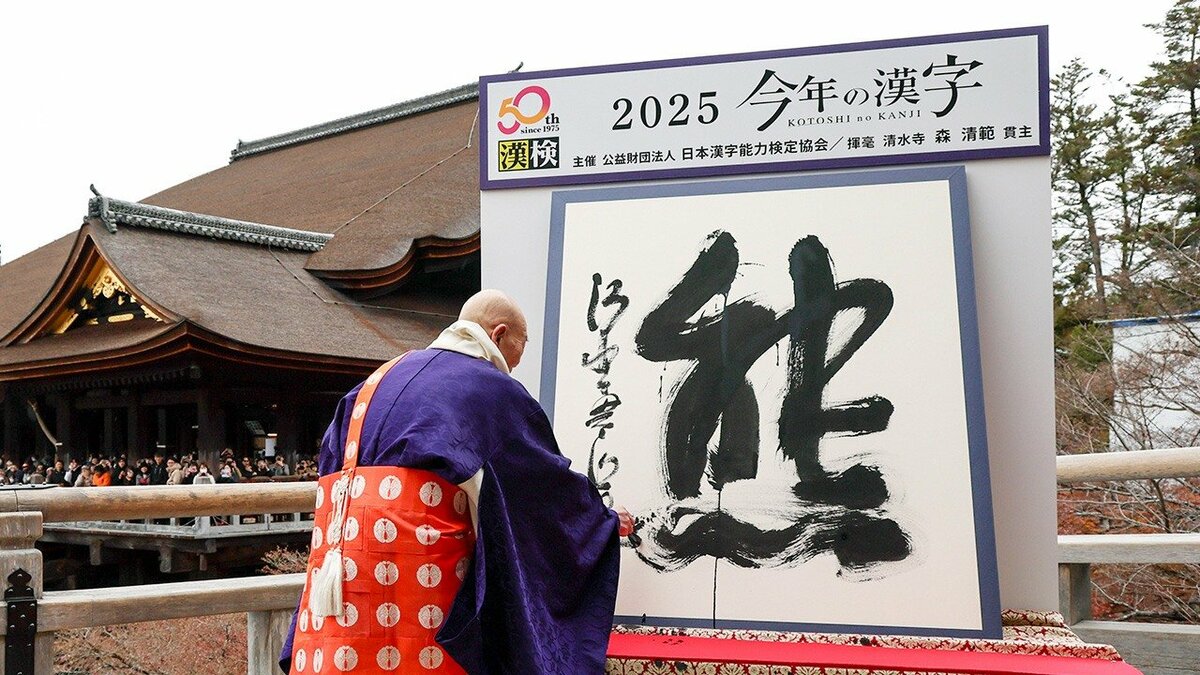
熊 is Kanji of the year

Nippon.com “Kuma” Declared the Kanji of the Year for an “Unbearable” 2025 | Nippon.com www.nippon.com
preview

Apparently the Japan Kanji Aptitude Testing Foundation decides one of these every year.

This year, 熊 (kuma) was selected, meaning bear. For whatever reason, Japan has had a bunch of bear issues lately.

Apparently the Japan Kanji Aptitude Testing Foundation decides one of these every year.

This year, 熊 (kuma) was selected, meaning bear. For whatever reason, Japan has had a bunch of bear issues lately.

0

What are your favorite Japanese-only websites?

preview

I’m regularly reading Gigazine for general news articles, the Japanese Wikipedia page, and Sorae for pictures and news about space, but I’m looking to broaden my light reading sources. What are your go-to or favorite websites?

I’m regularly reading Gigazine for general news articles, the Japanese Wikipedia page, and Sorae for pictures and news about space, but I’m looking to broaden my light reading sources. What are your go-to or favorite websites?

0

Learning Kanji with WaniKani anki cards. Is this correct?

preview

I’m lerning kanji using WaniKani and a set of cards for Ankidroid for offline use. They are giving these weird names to kanji and radicals and I was wondering if those were correct? I feel like I’m learning the wrong names for these characters or their meaning… This is just one example. I came across another one called “mohawk”. That doesn’t make sense to me. Or am I missing something? Is it a learning technique?

I’m lerning kanji using WaniKani and a set of cards for Ankidroid for offline use. They are giving these weird names to kanji and radicals and I was wondering if those were correct? I feel like I’m learning the wrong names for these characters or their meaning… This is just one example. I came across another one called “mohawk”. That doesn’t make sense to me. Or am I missing something? Is it a learning technique?

0

I Made a Super Fun, Open-source Platform for learning Japanese

preview

As a long time Japanese learner, I always wanted there to be a simple online trainer for learning kana, Kanji and vocabulary - like Anki, but for the web. Originally, I created the website for personal use simply as a better alternative to kana pro and realkana, and as an alternative to Chase Colburn’s Kanji Study app, because Kanji Study was pretty complicated for me to use as a beginner and didn’t have a simpler way of just grinding Kanji like you can grind the kana on kana pro.

I’m doing this because I grew tired of all the subscriptions and paywalls. I want to make the most user-friendly, customizable, aesthetic and fun platform for learning Japanese currently available. Accessible to all, fully open-source and free forever - and driven not by profit, but made by the community, for the community.

We already have more than 30+ active contributors from all over the world, and we really want to make the first definitive 100% free, open-source platform for learning Japanese - in contrast to most other apps for learning Japanese, which are often paid and monetized aggressively.

If you’re interested, you can check it out here: kanadojo.com ^ ^

GitHub if you’re a dev and interested in contributing: github.com/lingdojo/kana-dojo

The app is still in its early alpha stages - but with your help, we can make it even better and give the Japanese learning community its first completely free, open-source and community-driven learning platform! どうもありがとうございます!

0

Can someone translate the Larry mangas someone made?

preview

кросс-пост из: thelemmy.club/post/37869292

www.pixiv.net/en/artworks/63695737 i really wanna find a japanese speaker who can quickly translate these manga because these text detectors and translators are NOT accurate and do not make sense

кросс-пост из: thelemmy.club/post/37869292

www.pixiv.net/en/artworks/63695737 i really wanna find a japanese speaker who can quickly translate these manga because these text detectors and translators are NOT accurate and do not make sense

0

Japanese lessons without English

preview

This is a collection of Japanese lessons that don’t rely on translation. Instead, it shows a picture to establish a concept, then builds on that.

It’s based on the ideas behind Lingue Latina Per Se Illustrata (LLPSI).

I don’t know how useful this is compared to other methods, but I think it’s a neat thing to check out.

0

Finally! 12-key flick enabled Japanese keyboard, Open Source

preview

to catch up those who aren’t aware, the overwhelming majority of native Japanese speakers use 12-key flick input to type on smartphones, as it evolved from the input on flip phone (garakei) hardware keypads. it also requires less keystrokes => faster than typing romaji, once accustomed.

for context, the most widely recommended Japanese keyboard on android has been Google Gboard, MS Swiftkey, etc. tbh, these are very good as a keyboard, but unfortunately also great at collecting personal private data. the previous open source choice Mozc (created by a Google from a gentler timeline) has been outdated since before the pandemic.

thankfully, now there are at least 34 open source projects working on east Asian language (primarily Japanese) flick keyboards for mobile devices:

スミレ (thanks to stanman for the link) is privacy-respecting and has the essential features one would expect. also available via play store if you prefer.

FCITX, is presumably working on it.

FUTO keyboard, and Florisboard

~~so far, i think FUTO seems the furthest along, with ~~ For FUTO fans, there’s a nightly build for android available already. if you try this, remember to import the kanji conversion dictionary file linked in this comment since it was excluded from the apk to reduce file size.

this is very exciting, as only a year ago, there was hardly any mention of work being done. the only solution i could find for modern smartphones was by a Graphene OS forum user who had recompiled the latest binary of Mozc (from 2019!) while splicing in modern components for those that had become outdated. the result was janky to say the least.

edit: updated courtesy of stanman

if anyone knows other open source Japanese keyboards (that are up to date, i.e. not original Mozc, and privacy-respecting, i.e. not Gboard), especially with 12-key flick, please share!

to catch up those who aren’t aware, the overwhelming majority of native Japanese speakers use 12-key flick input to type on smartphones, as it evolved from the input on flip phone (garakei) hardware keypads. it also requires less keystrokes => faster than typing romaji, once accustomed.

for context, the most widely recommended Japanese keyboard on android has been Google Gboard, MS Swiftkey, etc. tbh, these are very good as a keyboard, but unfortunately also great at collecting personal private data. the previous open source choice Mozc (created by a Google from a gentler timeline) has been outdated since before the pandemic.

thankfully, now there are at least 34 open source projects working on east Asian language (primarily Japanese) flick keyboards for mobile devices:

スミレ (thanks to stanman for the link) is privacy-respecting and has the essential features one would expect. also available via play store if you prefer.

FCITX, is presumably working on it.

FUTO keyboard, and Florisboard

~~so far, i think FUTO seems the furthest along, with ~~ For FUTO fans, there’s a nightly build for android available already. if you try this, remember to import the kanji conversion dictionary file linked in this comment since it was excluded from the apk to reduce file size.

this is very exciting, as only a year ago, there was hardly any mention of work being done. the only solution i could find for modern smartphones was by a Graphene OS forum user who had recompiled the latest binary of Mozc (from 2019!) while splicing in modern components for those that had become outdated. the result was janky to say the least.

edit: updated courtesy of stanman

if anyone knows other open source Japanese keyboards (that are up to date, i.e. not original Mozc, and privacy-respecting, i.e. not Gboard), especially with 12-key flick, please share!

0

[Wiktionary] 彁 ("The meaning of this term is uncertain.")

preview

cross-posted from: sh.itjust.works/post/46133193

Happy Casual Tuesday!

彁 is a Japanese “ghost character”. Its meaning is unknown and it doesn’t appear in the famous 18th century Kangxi Dictionary of Chinese characters. It was most likely just created by mistake during the process of computerizing Japanese writing.

0

Struggling with numbers

preview

Guys. Why are numbers so god damn complicated in Japanese? lo!!!

Ok ok in English and other languages we have different names for numbers whether it’s one, two, three, or first, second, third, etc. But, that’s about it. In Japanese you have to pronounce numbers in so many different ways!

I need help! How do I remember what to use? Heck, I don’t even know what the other numbers are! Ok so I know the regular numbers, plus N-ばん for number one, number two, etc. But what’s “first”, “second”, “third” etc?

And what about dates? Age? Inanimate things? Things that are alive, whether they are small or big?

What are some good resources or good mnemonics that you use to remember all of that?

0

こんにちは!わたしのなまえはCyborganismです。よろしくおねがいします!

preview

こんにちは!

私はカナダ人です。

1月から、私は日本語をべんきょうしています。すぐ日本へいくつもりですから。

このコミュニティでしつもんしなもいいですか。

私はことばとかんじをべんきょうしなければいけません。たすけがひつようです。

よろしくおねがいします。

こんにちは!

私はカナダ人です。

1月から、私は日本語をべんきょうしています。すぐ日本へいくつもりですから。

このコミュニティでしつもんしなもいいですか。

私はことばとかんじをべんきょうしなければいけません。たすけがひつようです。

よろしくおねがいします。

0

Internet Archive of /r/LearnJapanese Resources

preview

I don’t know if the mods of /r/LearnJapanese planned on migrating their stuff over to a lemmy instance. They seem to be permanently private as of right now, so I just wanted to link to the internet archive of the subreddit’s language learning resource list.

Keep in mind that the links on the internet archive lead to other archived sites. For example, archived google docs don’t load properly, so after clicking on one, you will need to copy/paste the link into your address bar.

0

An introduction to japaneselanguage!

preview

Hello everyone, I realised we don’t really have an introductory or meta thread for this community, and I thought it might be wise to create one.

So first of all, you might be wondering what japaneselanguage’s particular scope is and how it might be different from other Japanese communities in other instances.

Generally, I don’t like to think that we will be competing with other instances, but rather that we will be filling a niche for people that might be interested in discussing the language itself rather than it’s study methods. This community isn’t going to be a place to discuss the speedrunning or the efficiency of learning Japanese as there are other communities dedicated to those subjects.

Instead, this will be a place where we can discuss how the Japanese language works, it’s phonetics, it’s writing system, calligraphy and other related topics, our handwriting, as well as all other sorts of topics.

Learning materials, media, and literary discussion are very much welcome and encouraged! The only subject that will be discouraged (though not downright banned) is discussion of study methods exclusively without also including discussion about the language itself. So threads in the style of “how I learned 1,000 Japanese sentences over a three-week period” and similar threads focusing more on the methods than the language will probably belong in more specific communities.

Thank you very much for browsing this community and I hope we will be able to build a fun space for all of us who love Japanese.