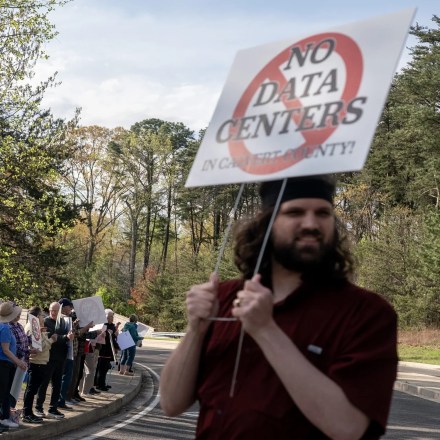
AI’s recursive self-improvement might not come so quickly after all

MIT Technology Review
AI’s recursive self-improvement might not come so quickly after all


Zelensky posted warm thanks to Israel’s president for Independence Day wishes. He said Ukraine-Israel ties will grow and prayed for peace. Meanwhile, Israel bombs Gaza and occupies Palestine. Russia does same in Ukraine. Ukraine supports Israel, but Israel is just like Russia. Selective outrage is not okay. If you cry about invasion, dont support another invader.
I already escaped everything big tech related except for my iPhone, but i will get myself a GrapheneOS pixel at some point. My biggest problem right now is my photos being stored on icloud. What can i do to prevent that?
my home network isnt trustworthy and i cant change anything about it becuase its not mine. my mom has a virus on her computer and she doesnt let me do anything about it (she says im trying to spy on her and ill mess with her stuff even though the virus is spyware lol)
also i go in public and use the wifi i dont want a virus or be spyed on anywhrre (i hate shcool) you cant go in the back and mess with other peoples stuff
im using framework (12 i think) with qubes but i want to use a normal computer with a normal gamnig distro (the framework will explode if i use qubes and play games im sure) (if i could play games on qubes privately it would make me very happy)
wqat do i do


The Trump administration classified the Italian hacktivist group Autistici / Inventati as a terrorist organisation^1, meaning that American companies could no longer do business with them.
The immediate outcome was the closure of their Paypal account used for donations, and the loss of one of their .org domains, which is managed by the Public Interest Registry, an American non-profit company.
Before that, that administration retaliated against International Criminal Court Judge Nicolas Guillou and former EU commissioner Thierry Breton as well as four of his collaborators by sanctioning them, which essentially cut them off American services likes bank processors and parcel delivery, among other things.
Given that most Europeans are not activists nor political figures, how likely do you think it is to happen to individuals? Do you believe that Trump could use sanctions and embargos against the entire EU or some of its countries as leverage? The rational part of me thinks no, but we have seen so much crazy shit since his mandate started that my anxious side leans yes.
Personally, I have been trying to reduce my reliance on US tech and companies for the past two years, because really, the US cannot longer be trusted. And maybe I am overreacting, but I’ve got myself a .eu domain to replace the .com I use for self-hosting.


Italian technology collective Autistici/Inventati (A/I) said on Sunday it would shut down its services after a U.S. terrorism designation led to the suspension of its .org domain and the closure of its bank account.
The volunteer-run provider, founded in 2001, offers privacy-focused email, websites, mailing lists and blogging services to activists, campaigners and others seeking alternatives to commercial platforms.



I’m using lunar client and its pretty decent but im kinda worried about data collection. It’s probably not horrible but still, i want to be pretty sure that it doesn’t collect any data, or atleast not a lot. I want something like lunar just more private and maybe foss as well? Also it needs to work on linux
thank guy
I am trans and I watched this video about eggs and it was funny.
youtube link www.youtube.com/watch?v=rZVkDcfQx98
I’m starting Aero, a Chromium-based privacy browser. The pitch:
It’s not a Brave clone. Brave is a company with investors and a crypto business model — they have an ads program that replaces ads with their own, a VPN to sell you, and a wallet built in. Aero is a project with no business model. Different species entirely.
Repo: github.com/builtbyashwin/aero-browser
Background: I’ve contributed patches to the Linux kernel across staging, networking, media, and filesystem subsystems, reviewed by maintainers including Greg Kroah-Hartman, Dan Carpenter, and Jan Kara. Same patch-management discipline applied to Chromium.
Right now it’s just me. I’m looking for 4-5 people to own specific lanes: build/CI, Chromium patches, features, docs, privacy research. Async-first. If you’re interested, check the issues — each lane has a “good first issue.” Comment there or reply here.


cross-posted from: hexbear.net/post/9505259
cross-posted from: news.abolish.capital/post/77371
Flock Security likes to describe its national private network of cameras and license plate scanners as a public safety boon. “I can think of no greater mission than rescuing our children,” tweeted Flock CEO Garrett Langley, sharing a promotional company video. “Another childremoved suspect located and arrested with help from Flock,” chief strategy officer Rahul Sidhu posted last month. Last week, venture capital firm and Flock investor Andreessen Horowitz put the company’s benefits in civilizational terms: “Flock eliminates crime. Decline is a choice.”
Though Flock’s investors and executives insist its surveillance dragnet thwarts the most serious of crimes, it turns out police are also using the company’s technology to go after some of the pettiest possible offenses: curfew violations, loitering, and simply being homeless.
[
Related
License Plate Surveillance, Courtesy of Your Homeowners Association](theintercept.com/…/hoa-surveillance-license-plate…)
When police seek footage from Flock’s more than 120,000 cameras nationwide, they select a category of crime corresponding with the alleged offense they are investigating, such as hit-and-run or burglary. Among the choices is the supposed crime of being suspicious in public, formally categorized by Flock as “Curfew/Loitering/Vagrancy Violations.”
Records obtained from the police department in Plano, Illinois, reveal that law enforcement agencies nationwide have tapped into cameras in that small town — and thousands more cameras elsewhere — more than 1,200 times while investigating alleged “Curfew/Loitering/Vagrancy Violations.”
As this data set reflects only searches of Flock cameras operated by Plano police alone, this is assuredly just a tiny fraction of the total number of “Curfew/Loitering/Vagrancy Violations” investigations using Flock nationwide. Records hosted by the website Have I Been Flocked? — which aggregates such logs — show hundreds more of these loitering searches in other states.
The Plano searches were conducted by police departments throughout Illinois, from neighboring states, and from a Georgia town more than 600 miles away. Many queries were license plate searches pertaining specific vehicles; others show police surveilling people on foot for the crime of essentially standing suspiciously.
Flock did not respond to a request for comment.
Police in Norcross, Georgia, for example, conducted a smartphone-based search on January 31 with “Curfew/Loitering/Vagrancy Violations” as the stated justification. It tapped into data recorded by 6,098 different Flock camera networks, including Plano’s, each consisting of an untold number of separate cameras that surveilled anyone who moved past them.
The search logs obtained by The Intercept do not break out “Curfew/Loitering/Vagrancy Violations” separately, so it is unknown in each case what exactly police were searching for. In some cases police appended extra information; the Tennessee Bureau of Investigation, for example, searched over 17,000 Flock cameras while investigating “Curfew/Loitering/Vagrancy Violations – Suspicious person at planned protest site.”
[
Related
Philly Cops Admit That They’re Tracking “First Amendment Activity” Critical of AI](theintercept.com/…/ai-data-center-protest-police-…)
When asked about these queries, Tennessee Bureau of Investigation spokesperson Josh DeVine told The Intercept that the searches in fact originated with the state’s Tennessee Fusion Center, which is operated by both the TBI and the Tennessee Department of Safety and Homeland Security. DeVine referred The Intercept’s questions to the Tennessee Department of Safety and Homeland Security, which did not immediately respond to a request for comment.
Flock cameras have also been used to zero in on the homeless: Dave Maass, director of investigations at the Electronic Frontier Foundation, shared Flock search data from the West Palm Beach Police Department with The Intercept that included a query pegged to an “outside agency dropping vagrant off” in the city.
In January, police in LaGrange, Georgia, searched more than 6,000 Flock networks on the basis that someone walked out of a house “with a significant amount of traffic.” Officers from the same agency earlier this year searched more than 15,000 Flock systems because of someone “lingering at a stop sign around midnight last night.”
In the data reviewed by The Intercept, most of these loitering searches didn’t include any corresponding case number, suggesting these queries were not part of broader criminal investigations. Some of the searches reviewed by The Intercept note a “suspicious” person spotted outdoors, without any additional justification for the dragnet.
Jay Stanley — a senior policy analyst at the American Civil Liberties Union’s speech, privacy, and technology project — told The Intercept these searches indicate surveillance mission creep. “This is in line with what we see with these technologies sold on the basis of movie plot scenario, dramatic ‘saving the day.’ And yet when you look under the hood, they’re often used to nickel and dime people for the most prosaic offenses,” he said. “They become part of many departments’ over-policing.”
Loitering and vagrancy laws have an ignoble history across the country as pretextual statutes, many originating in the Jim Crow era, for the targeting of Black Americans guilty of nothing other than existing in public. Some of these laws have been struck down because of the extent to which they criminalize the most mundane behaviors: standing, walking, or simply hanging out. In 1972, the Supreme Court deemed unconstitutional a Jacksonville, Florida, loitering ordinance targeting, among other things, “persons wandering or strolling around from place to place without any lawful purpose or object” and “habitual loafers.”
Stanley pointed out that any guardrails against abuse of Flock’s camera networks is entirely self-enforced by the company, which has an interest in police using it as much as possible, and self-oversight by the police themselves. “We know that police stations don’t seem to be doing this,” he added. “Most police departments are not really paying attention.”
The post Cops Are Using Flock to Spy on People for the Crime of Standing Around appeared first on The Intercept.
From The Intercept via This RSS Feed.
I got a pretty great openwrt router, I want to set it up as privacy respecting as possible.
I am aiming to set it up offline as much as posssible before giving it network access.
I have always used ISP provided units so this is new. It comes with adguard and such but I am thinking about a fresh install to be safe?

Two days after being placed on a paid leave of absence, Matt Mullenweg says he has been reinstated as CEO of Automattic, according to a Slack message seen by TechCrunch. WordPress Executive Director Mary Hubbard confirmed Mullenweg’s return to the CEO role in a Friday post on X, which the official WordPress account shared and Mullenweg reposted.


Anybody know of anything else that would be quite wise to purchase sooner than later, due to potential (or incoming) regulation that would be regarded as privacy-infringing to enforce? I was thinking about this because I’ve been pondering a high-quality 3D printer purchase for this reason.
Advice for varying levels of budget would be quite nice, too; I partially intend on this being a post people may want to revisit.
I’ve been seeing these new devices coming out that come preloaded with something like 20,000 roms across every console released from the 70’s to the 2010’s, and I have to admit, I’m tempted.
I’m wondering if anyone out there has purchased one of these and what was your experience with it?


Sweden’s election was too close to call in the polls, but the Red-Green bloc appear to have beaten the incumbent Tidö alliance and intra-bloc fighting could make forming a new coalition difficult. So what happened? And what does it mean for the future?


From Watashi no Megami ga Kyou mo Oseru

From Bloom Into You.
My combinedfox project contains user.js combining arkenfox, Betterfox, and combinedfox overrides for Firefox-based browsers for desktop, and instructions and extensions settings for Firefox-based browsers for desktop and Android, for privacy, security, and usability.
The v2.0.0 release switches to dev branch of arkenfox since their latest release was 5 months ago for Firefox v144.
I’ll quote fingerprint and telemetry, the most easily misunderstood and the most controversial part in my opinion, of combinedfox wiki Explanations below in hope that they may be helpful. Some quotes, lists, and links are removed here due to character limit of Lemmy.
No artificial intelligence except for machine translation of references is used in the development of this project, including its wiki, and this post.
Only Tor Browser and Mullvad Browser with a truthworthy VPN achieve nearly identical fingerprint across their users. Use them if your threat model calls for it.
links and quote removed
Fingerprinting protection in Firefox:
Known Fingerprinters: It is enabled by default for Enhanced Tracking Protection (ETP) Standard mode. The “Known Fingerprinters” protection feature works by blocking scripts listed in Disconnect’s fingerprinting list. This prevents companies specializing in fingerprinting from examining your device and obtaining details about their hardware, software or IP address. While this serves as an initial defense, it does not safeguard you against companies that are not included in the list. Additionally, we sometimes have to create exceptions for this list to ensure that websites continue to work as intended.
RFPTargets: The list of all targets can be viewed at RFPTargets.inc. They, as of the time writing this, are listed below, some with descriptions found in links removed
baselineFingerprintingProtection (bFPP) (privacy.baselineFingerprintingProtection): It is enabled by default for Enhanced Tracking Protection (ETP) Standard mode. The list of all targets in bFPP can be viewed at RFPTargetsDefaultBaseline.inc. They, as of the time writing this, are listed below.
fingerprintingProtection (FPP) (privacy.fingerprintingProtection): It is enabled by default for Enhanced Tracking Protection (ETP) Strict mode. The list of all targets in FPP can be viewed at RFPTargetsDefault.inc. They, as of the time writing this, are listed below.
resistFingeprinting / Resist Fingerprinting (RFP) (privacy.resistFingerprinting): It is not enabled by default. It includes all RFPTargets. RFP is a built-in solution in Firefox that blocks or randomizes many metrics without requiring a crowd like Tor Browser. However, expect site-breakings when using it, which is mostly due to canvas randomizing. links removed
Global RFPTarget overrides: You can use only a few RFPTargets globally by setting privacy.resistFingerprinting to false and setting privacy.fingerprintingProtection.overrides (if you use FPP) or privacy.baselineFingerprintingProtection.overrides (if you use bFPP) to the RFPTargets you want. The value is a comma-separated list that is either +AllTargets and then - targets you don’t want or -AllTargets and then + targets you want. arkenfox uses FPP, while combinedfox adds user_pref(“privacy.fingerprintingProtection.overrides”, “+AllTargets,-CSSPrefersColorScheme,-CanvasImageExtractionPrompt,-CanvasExtractionBeforeUserInputIsBlocked,-CanvasExtractionFromThirdPartiesIsBlocked,-JSDateTimeUTC,-FrameRate”);.
Site-specific RFPTarget overrides: You can use only a few RFPTargets for specific sites by setting privacy.resistFingerprinting to false and setting privacy.fingerprintingProtection.granularOverrides (if you use FPP) or privacy.baselineFingerprintingProtection.granularOverrides (if you use bFPP) to the sites and their site-specific RFPTargets you want. The value is a JSON list of objects where sites are firstPartyDomain entry and overrides are in overrides entry, e.g. [ { “firstPartyDomain”: “jeffersonscher.com” , “overrides”: “+WindowOuterSize” }, { “firstPartyDomain”: “reddit.com” , “overrides”: “+JSDateTimeUTC” } ], according to Mozilla Support Correct syntax for privacy.fingerprintingProtection.granularOverrides?.
Request English versions of web pages for enhanced privacy (privacy.spoof_english) (default: false, combinedfox: true): When privacy.resistFingerprinting = true, a new option becomes available in General > Choose your preferred language for displaying pages > Choose > Request English versions of web pages for enhanced privacy, which changes three config settings: intl.accept_languages = en-US, en, javascript.use_us_english_locale = true, privacy.spoof_english = 2. When privacy.resistFingerprinting = false, javascript.use_us_english_locale and privacy.spoof_english are not available in UI but can be set in user.js or about:config.
Letterboxing (privacy.resistFingerprinting.letterboxing) (default: false, combinedfox: true): Dynamically resizes the inner window by applying margins in stepped ranges when privacy.resistFingerprinting.letterboxing = true. This is independent of RFP.
Fingerprinting protection extensions: Use FPP, RFP, or FPP+RFPTargets overrdies instead of extensions for fingerprinting protection. The built-in RFPTargets are more robust and performant, defeats naive scripts, and defeats some advanced scripts by standarding fingerprints of users to fewer buckets, according to arkenfox issue 1775. links removed
quote removed
As a memorial, CanvasBlocker extension was the best solution for fingerprinting protection without Tor Browser or Mullvad Browser before RFPTargets growed to cover enough metrics. Reasons of not using each CanvasBlocker option now are listed below. Some are according to arkenfox user.js wiki before CanvasBlocker is removed from its recommendation, e.g., links removed
According to links removed, if browser.profiles.enabled is set to true (default since FF150 and set to true in Peskyfox), all profiles share the same settings for Settings > Permissions and data > Firefox data collection and use and the corresponding user.js prefs are not honored. You might want to check and manually adjust those settings in the GUI of one of your profiles.
combinedfox overrides for arkenfox user.js arkenfox-overrides.js link removed re-enables the disabled telemetry in TELEMETRY section in arkenfox because
about:telemetry.Refer to the following sources for more information:
Reverse them to disabled in your overrides if your threat model calls for it.
However, the followings that are disabled in arkenfox and remain disabled in combinedfox.
There are two main ways of gathering data in Firefox:
There are three way of sending collected data:


I’ve been experimenting with character customization and found that lora training is a practical way to keep a consistent character across different generations. It can be useful if you want to experiment with your own character without setting up a full local workflow.
I feel proponents of any programming language put a lot of spin around what isolated aspects it is good for, but fail to illustrate what a programmer in even one target domain gains from using it.
Are there programming language implementations unlike what is described above, that you feel back up their marketing?


I’m seeing lots of people subscribing with their real email address to different newsletters or random websites that they might use once in a while.
For a couple of years I have run a proxy SMTP that I kept to forward emails to my real address, as a privacy measure.
People tend to use the “+” sign in order to identify if their address was sold, for example signing up with “michael.john+amazon@gmail.com”, now what most do not realize is the fact that when selling data to third parties, most companies parse their email lists and clear our those “+” sign. (Source: I have worked with companies that do that)
I found the relay from Mozilla to be massively useful in this case, so if anyone is interested, have a try with it:
As a side not: If you’re using firefox, it integrates nicely into your browser, right clicking on a field and selecting “Use relay mask” is enough to generate an instant address so you can easily rotate them for each service.
Som milennial kommer jag ihåg att förr i tiden (90-00) släpptes spel med Svenskt röstskådespel, detta har dock försvunnit med tiden känns det som.
Någon här som vet något som släppts efter 2010 som har “ikoniskt” röstskådespel på Svenska?

A Biological Data Centre represents a new generation of computing infrastructure. Instead of relying solely on conventional silicon chips, it uses “wetware” — living biological neurons derived from stem cells — to process information and support AI systems. In contrast to traditional data centres, which depend on energy-intensive servers, biological computing offers the potential for significantly greater efficiency by harnessing brain-like organoids that can operate using only a fraction of the power required by digital computers.


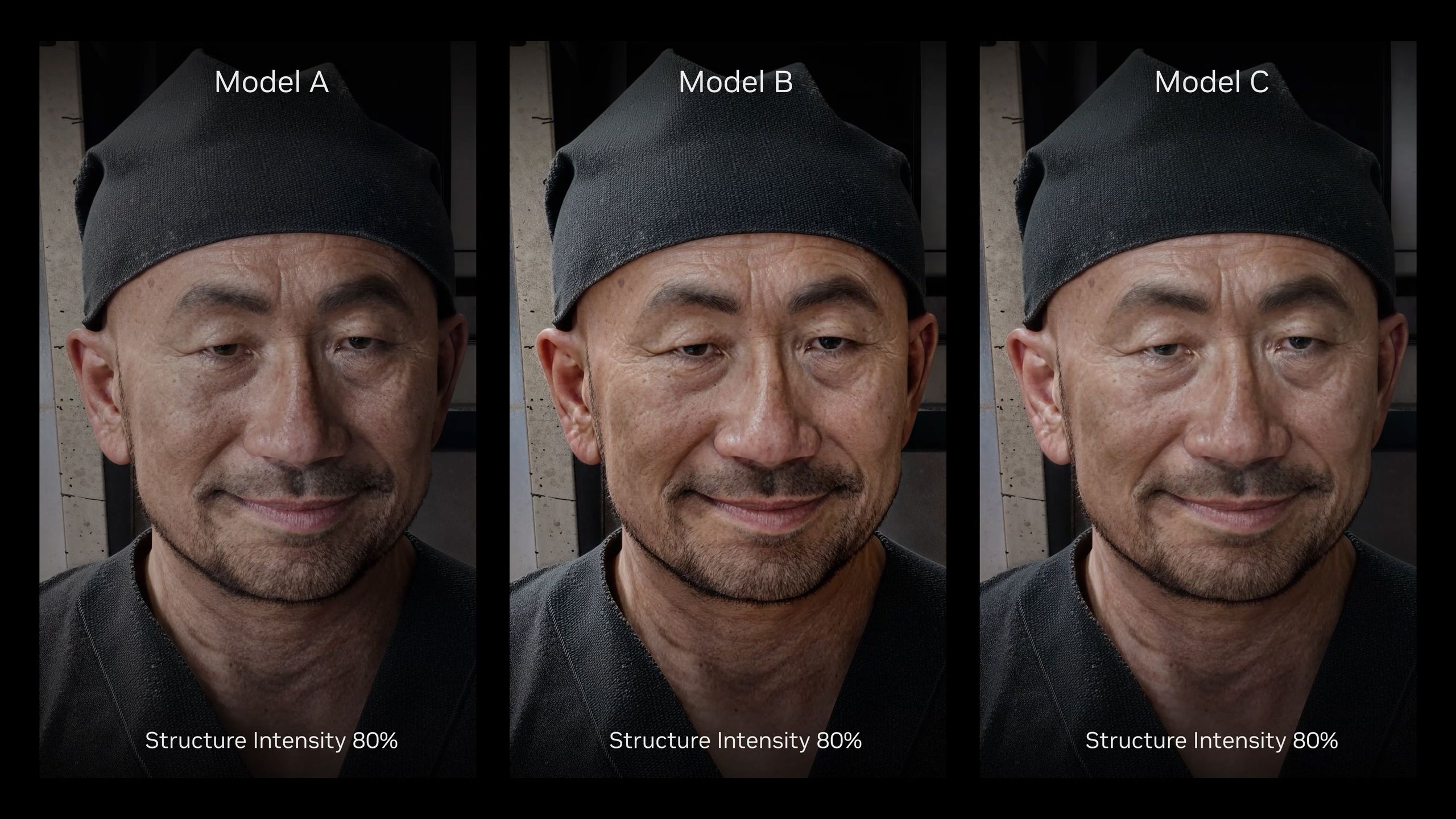
The very bad news is, Nvidia says turning DLSS 5 on will currently reduce performance by 50-60%. And that’s across the board—no matter the game.

US military officials say they have disabled advertising trackers on a range of phones and computers, according to letters released on Friday by the US senator Ron Wyden and statements given to Reuters.
The development follows reports that commercially available location data had been used to target American forces in the Middle East.
The air force told Wyden it disabled the advertising identifiers on computers and mobile phones two months ago. US Special Operations Command said in a separate letter that it had “recently” disabled them on its Windows devices. The army told Reuters that advertising IDs tied to mobile devices had been disabled since earlier this year.

cross-posted from: lemmy.world/post/51620160
I love how they put a pic of “Epstein File Mark” in the article ;)