0

The No-AI list - A list of projects that pledged not to use AI or are disrupting it.

preview

cross-posted from: lemmy.blahaj.zone/post/41897324

A list of projects that pledged not to use AI or are disrupting it. Very useful for finding software that either isn’t or won’t be ‘AI’ tainted, even if they’re forks of those that are.

cross-posted from: lemmy.blahaj.zone/post/41897324

A list of projects that pledged not to use AI or are disrupting it. Very useful for finding software that either isn’t or won’t be ‘AI’ tainted, even if they’re forks of those that are.

0

How to predict the future - 5 questions to ask of any technology

Michelangelo's David with Apple Vision Pro headset in a working mode wearing casual suit
preview

Society is heavily influenced by technology. Our modern lives are totally oriented around it. Therefore if you can predict technological developments you can predict the future.

Many people say we can’t predict what technologies will be invented or how they will be used. This is false, because a lot of our current technology and technological habits were in fact predicted, and looking back we can see technology has followed a certain pattern of development.

Specifically, technology has developed according to whatever is convenient for its users, regardless of whether it is good for them in the long term or good for the rest of society. If we extrapolate this pattern into the future we can easily predict a lot of trends that will eventually become dominant in society through technology. We can do this by asking some basic questions about any hypothetical technology.

5 questions to predict the future

Questions to ask about any hypothetical technology, X:

  1. Is it possible (with near infinite time and cleverness) for humans to invent X without violating any laws of nature (physics and chemistry)?
  2. Is X going to make things more convenient for its users?
  3. In a society where X is common, will people be able to use X without any major personal downsides (e.g., severe illness, high risk of physical harm)? Detriments to lifestyle, relationships or mental health should be ignored because they are somewhat subjective and many people will think they can avoid them. Ignore detriments to friends and family.
  4. Can X potentially be mass produced or made cheaply available (relative to the benefit) to most people? If it needs to be custom-made or custom-performed for each user, consider how much the process could be automated or done en masse to make it cheap. Ignore the need for rare materials because new materials will be invented.
  5. Is there some other hypothetical technology that would do the job almost as well as X and might become cheaply available first or shortly after?

If the answers to questions 1-4 are yes and the answer to 5 is no, then you can be almost certain that X is eventually going to become a very popular technology around which the whole of society becomes organized. (Assuming this level of technological development hasn’t already killed most of humanity). This is because the technology will be desirable for its personal convenience with low personal risk and no better alternatives, so there will be financial incentive to make it cheaply available and then lots of people will use it. If 1 and 2 are yes and 5 is no, X will be invented but is unlikely to become popular unless 3 and 4 are also yes. The reason most predictions about the future of technology have been wrong is either because they underestimated the time needed or because they failed to consider all of these questions, especially question 5.

Verifying the questions work

These 5 questions could have correctly predicted a lot about the world today. After the popularity of the train but continued use of the horse-drawn carriage, one could have used these questions to predict the invention and mass adoption of the horseless carriage (cars). After the invention of the radio, if you had asked these questions about worldwide near-instant person-to-person visual information transmission, you could have predicted not only television but something like the internet becoming popular.

You also could have predicted the invention and mass adoption of easy-to-use non-invasive contraceptives, IVF, genetic sequencing and GMOs, video games, pocket computers (smartphones), 3D printing, unmanned aircraft (drones) and lots more. At the same time, you would have avoided false predictions like mass adoption of jet packs (which would be very unsafe and uncomfortable without something to sit inside and keep warm, which is basically a small plane or flying car, yet to be made cheap), hoverboards, translucent holograms, lightsabers, or that cars and virtual reality were fads and that computers would only ever be for big companies.

Applying the questions to the future

Given the reliability of these questions, let’s use them to evaluate some hypothetical future trends. For example consider AI as relationship companions. Questions 1-4 are all yes, given how AIs are already used as relationship companions and are cheaply available. The answer to question 5 is no, because all relationship companions must either be real humans or acting as artificial humans, i.e., artificial intelligence. Therefore relationship companion AIs will almost certainly become popular. (Unless we put a stop to technology or it kills/enslaves us first).

As another example consider sex robots. 1-4 are clearly all yes, but the answer to 5 is also yes because simulated sex (through virtual reality or fake sensory input wired into the brain) will be cheaper and more adaptable to people’s fantasies, and there is no law of nature that prevents the perfect simulation of all types of physical touch. Therefore sex robots are almost certain to become popular only if they become cheaply available before good (functionally, not morally) alternatives like simulated sex. If we run through the questions for simulated sex we get yes for 1-4 and no for 5 because non-simulated sex will never be able to compete with perfectly simulated sex which is adaptable to all types of unrealistic fantasies. Therefore simulated sex will eventually become popular, even replacing the sex robots which may become popular first. Obviously the popularity and convenience of simulated sex will also sharply reduce the amount of real sex taking place. Artifical wombs will also become popular according to these questions, so real sex wouldn’t even be needed for procreation.

If we consider easy-to-make weapons of mass destruction, 1 is yes and 2 is also yes because they offer a convenient means of killing large numbers of people. The answer to 5 is no because the only thing better at easily killing large numbers of people is a better easy-to-make weapon of mass destruction. Therefore these weapons will be invented. The question of mass adoption is irrelevant, as mere knowledge of these weapons becoming somewhat widely available (as they will if scientific AI is widely available) would trigger human extinction or near-extinction. This is the final result of technology.

~(Image~ ~source)~

0

Why Technology Must Be Stopped

Mushroom cloud from an atomic bomb
preview

Humans have always made tools - it’s why we have opposable thumbs along with the intelligence and dexterity to utilize them. Spiders are likewise built and programmed to make webs, and beavers to make dams. However, tools were always supposed to be a means to an end. A human end, not inhuman end. An end that is beneficial to human wellbeing, not simply generating more money while relationships break down, happiness declines, physical and mental health deteriorate, and governments tighten their control over our lives.

Short-sighted thinking and human vices have caused technology to no longer serve human ends. It has instead become an overwhelming net negative to humanity for over a century. Time and time again, a technology has become dominant because it provides short-term convenience, efficiency, pleasure or money. But it always has a strong negative for society once widely adopted. What good is endless entertainment when you are less productive, less satisfied with life and far more likely to be depressed? What good is instant long-distance communication when you have fewer close friends and family? What good is easy access to all the written works of history when your reading level and attention span are shot from addiction to social media and nobody else can discuss them with you? What good is modern medicine when it can’t fix the problems caused by modern food, microplastics and drugs in the water and ever-present radiation? And what good are cheaper products when the actual things you need for a fulfilling life can’t be bought?

Despite all these problems arising from apparently wholesome technologies, new technologies continue to be promoted that have much more obvious dystopian overtones. These include self-spreading vaccines, genetically modified insects, VR headsets, sex robots, lab-grown babies and brain chips. Yet there is one threat that is greater than all of these combined - one that could end all human life completely. Generally accessible weapons of mass destruction.

The threat of extinction

You see, we know from experience that technological progress enables things to be done more efficiently, easily and cheaply. This has been the case with weapons too - killing large numbers of people has only become more efficient, easy and cheap. Instead of relying on spears to kill, we developed guns, then canons, then bombs, then nuclear weapons, each one requiring less cost and effort for each person killed. Defenses against these weapons haven’t advanced even a fraction as quickly, as it is much harder to protect than destroy. Nuclear weapons have also become more destructive and easier to produce than they were originally.

The average person too now has more ways than ever to kill others cheaply, using a gun, a car, or even a cheap drone with weapons attached. Individuals can even design, share and build their own weapons and weapon modifications at home using 3D printers. It therefore seems that if technological progress were to continue indefinitely, and humans continue to exist and have a small measure of freedom, a weapon capable of ending all human life on the planet would eventually become easily accessible to the average person. Then all it would take is one particularly angry, evil, inebriated or mentally ill person to put such a weapon to use and humans are no more.

That prospect might seem like a long time away, but it almost certainly isn’t. You see, AI is now able to form coherent sentences and images. Fairly soon it will likely be forming coherent virus genomes and nuclear blueprints. It has already become better than humans at specific scientific tasks like predicting protein folding. AI doesn’t need to achieve super intelligence, general intelligence, sentience or the singularity. It only needs to get close to human intelligence in some areas of science or engineering and then anyone with money to provide it materials may be able to accomplish decades of progress in a single year.

Some fields may require expensive physical or biological experiments to arrive at a generally accessible weapon of mass destruction, but others likely would not. For example, the creation of self-replicating robots would not require any exotic materials or scientific experiments, just clever design. If these robots use common materials that occur in nature or human settlements then they could quickly outnumber and exterminate all humans. To give another example - we have already modified harmful viruses to make them more infectious to humans, and some pathogens are 100% fatal to humans. Therefore, we are probably not far from being able to design a pathogen that would be capable of infecting and killing every human on the planet.

In conclusion, if ordinary people are free to develop AIs, open source AIs can (and will) be developed without alignment to any particular ethics, and anyone wishing to end humanity can attempt to fulfil their wish. Consequently, the attempts will continue until they succeed in extinguishing humanity or humans are so decimated worldwide that they’re no longer able to run such powerful technologies.

The totalitarian trap

As technology gets more advanced it’s going to be increasingly obvious how dangerous it could be in the hands of a bad actor. Therefore, governments will no doubt introduce restrictions on the public’s access to technology - e.g., by criminalizing development or use of an AI without government certification and attempting to monitor all computer activity, even offline, to prevent the illicit activities. This will advance the surveillance state while enforcing an oligopoly over AI and other powerful technologies, centralizing power into the hands of a few who run the governments and big corporations.

No government or small fraction of the population can be trusted with such great control over technology, which could easily (and definitely would) be used for totalitarian subjugation. Technology is the ultimate power in today’s world, and those without control over the technology would have no possibility of overthrowing the few who could effortlessly use AI to direct a vast army of robots, personalized propaganda regime, individual brain wave monitoring and constant video surveillance analyzed in real time. It is simply unrealistic to imagine the most powerful technologies being limited to the hands of a few and not being abused for mass domination.

Eventually, this course of events also leads to a near extinction event as over time the few with power are replaced by their offspring or there are internal battles for dominance. With changing hands of power and high stakes conflict it’s only a matter of time until one group decides to end it all or something goes wrong and power falls into less judicious hands.

So what’s the solution?

It is evident there must be restrictions on technology if humanity is to exist in 100+ years from now. But these restrictions should not be enforced from the top down by governments or any other group of a few. Not only would this lead to a huge centralization of power and near (if not total) extinction of mankind, but the public would clamor for the technology they are denied and see exploited by the few.

Having rejected centralised restrictions on technology then, the alternative we are left with is decentralised restriction. This could include boycotts, agreements, social stigma, parallel economies, civil disobedience and more, with the goal of limiting the development, distribution or adoption of anti-human technologies. For this strategy to be effective at stopping the development of AI and other dangerous technologies, it would likely require a majority of the population in each of the most significant countries to be convinced they are a serious existential threat to humanity.

The number of people to be of this opinion has been growing in recent years as technology has become more advanced and dystopian, so this goal may in fact become feasible as things get worse. However, most of those people currently do not see this solution to the problem, so do not have strong incentives to take action like boycotting AI or developing parallel systems. Many think that Pandora’s box has been opened and cannot be shut. But that’s not the case. The future of humanity is for humans to decide - there’s nothing that can’t be undone if enough people want to undo it.

“There’s no way this could ever work”

Nobody thought it would be possible to end slavery either until it happened, or end the Roman Empire, or end Catholic dominance in Europe. The cult of technological progress at all costs is just one more thing that is dominant today, but it didn’t use to be, nor is it our inevitable future. It may seem like a long shot, but we have to fight it by growing our numbers before it’s too late - there is no better option. Rather than giving up or pretending everything will be fine, there is in fact something we can actually do that will at least push humanity in the direction away from disaster. Namely raising awareness of the problem and being part of the decentralized solution. Doing this may actually be rewarding and personally beneficial, as you will learn to be more independent, form new communities, and save yourself from the exploitation and mental deterioration that comes with much of today’s technology.

As a final note, remember this is a battle for the survival of the human race - as many people as possible need to be brought on board. Therefore, we cannot risk to be divided over other issues - as important as they may be right now, they won’t matter if mankind isn’t around anymore. So whoever you are - wherever you may be - you have been placed in this important time for a reason. We hope you will join us in saving the world!

~(Image~ ~source)~

0

Innocent woman jailed after Flock camera misidentification | Behind the Investigation

play · youtube.com
YouTube Innocent woman jailed after Flock camera misidentification | Behind the Investigation youtu.be
preview

She was accused of killing 3 people in a hit-and-run — jailed 13 days, held on charges carrying life in prison, all over two Flock photos of her car.

It wasn’t her car. Witnesses said maroon, hers was black with no damage. Charges dropped, another suspect arrested same day.

Brendan Keefe and Anastasia Olmos break down how a Flock lead became the whole case, Flock’s response, officer misuse, and Florida pulling cameras from state roads.

0

Whistleblower Exposes Meta, Bolsonaro, and Cerimedo Election Meddling Partnership

Whistleblower Exposes Meta, Bolsonaro, and Cerimedo Election Meddling Partnership www.panamericandispatch.org
preview

On August 18, Fernando Cerimedo was arrested in Santa Cruz, Bolivia, for hiring hitmen to assassinate his ex-partner, Nadia Beller, who was pregnant at the time, after she threatened to go public about his large-scale illegal bot farm operations to throw elections for far-right candidates across Latin America. Still recovering from the multiple gunshot wounds she miraculously survived, she gave an interview this week on the Ventana al Mundo program on Mexico’s public television network, Channel 14. During the interview, she explained how Cerimedo and a member of the Bolsonaro family, who is assumed to be Flavio’s brother Eduardo, met with Meta officials to plot interference in Brazil’s presidential elections. She also said Cerimedo’s largest bot farms are still operating, and that his group is planning to interfere in the Claudia Sheinbaum administration in Mexico. You can watch her interview below. Beneath that, is a transcribed and translated excerpt from her interview.

“In early August, Fernando sent me a photo with one of the Bolsonaros in the United States. I can’t pin down the exact date right now, because, as I told you, my phone is with the public prosecutor’s office. But between the first and the fifth of that month, while he was in the United States, he sent me a photo and told me they were discussing the campaign, that he was going to seek financing and that he was going to take part in that campaign, in that election, one way or another. And what they did with Meta is straight out of a playbook. They have very good contacts at Meta. In fact, there was a journalist whose page they had taken down themselves, and Fernando stepped in to get it restored, and he told me at least three times that he had very good relationships at Meta and could get any page taken down or put back up. I have no doubt that his team, his group, intervened for this. I understand there are complaints about electoral violations by Meta, that some dirty war campaigns were allowed through, along with the suspension of Lula’s accounts. I have not the slightest doubt that this was part of a strategy by this team to strip away Lula’s visibility.

The bot farm they took down here is tiny, it’s minuscule. From the very first day I gave interviews, I said there was a much bigger one. I told them where it was. They never touched it. I imagine it’s still active. I don’t think it’s in the same location anymore. It was in the business district. They never touched it, and the same goes for Argentina. I know they have their own bot farms there too. I imagine Fernando’s arrest caused some disruption, and for a moment they went inactive, but they’re fully active now. I’m a victim of it myself, because it spreads lies. His lawyer goes out and says some outrageous thing, and it immediately gets amplified by their bots. So I myself am a victim of their farms, and they use them everywhere, in every single country, with exactly the same modus operandi.

He also told me he was going to get involved in the Mexican election and would have his own candidate, because they were extremely interested in removing her, the president, from office. How do they get involved in elections? As you mentioned before: by distorting public debate, through cognitive fraud, dirty war tactics, buying influencers, their coordinated bot farms that organize attacks, that manufacture trending topics. All of that, what does it do? It distorts public debate.”

0

Samsung's disastrous firmware update bricks refrigerators ahead of South Korean holiday — repair visits slip into October, customers complain of food spoilage ahead of three-day celebration

preview

Cross posted from thelemmy.club/post/57293110

A “routine” update for a Samsung smart fridge model in South Korea has broken the refrigerators for thousands of users, with the incident happening ahead of a major holiday. According to Seoul Shinmun [machine translated], the company pushed an erroneous update to some customers during testing, which resulted in the refrigerators getting stuck while updating. Unfortunately, several customers only found out about the issue hours after the process had started (and, subsequently, gotten stuck). One customer said in a Samsung Members forum that when she arrived at 7 pm, she noticed that the fridge’s auto-open feature refused to work, the light inside it didn’t turn on, and the temperature inside the unit was starting to warm up. She even tried resetting the power to the fridge, to no avail. Another user lamented the same problem, noting that they’d owned the unit for less than a year, while others complained about food spoiling.

Even worse, this happened just a couple of days before a major South Korean holiday. Chuseok, also known as “Korean Thanksgiving,” is a three-day mid-autumn harvest festival set from Sept. 24 - 26. The holiday, which lands partially on a weekend, meant that service was going to be delayed. There were multiple reports that technicians couldn’t visit the affected customers until Oct. 1, with another user saying that they wouldn’t get serviced until Oct. 7.

This is a big problem as many families have stocked up on food for the celebration. One consumer said that this has ruined the holiday for customers who used these fridges, while others said, “All my Chuseok food is going to spoil,” “What am I supposed to do with the eel and premium beef?” and “I stocked up on food for the holiday, but it’s all melting.” One user claimed, “I threw away 20kg of spoiled food today — how am I supposed to spend the holiday now?”

Samsung soon recognized the gravity of the situation and promised that all affected customers would have their refrigerators restored by Sept. 24. The company also said that it would deploy emergency on-site services to attend to urgent issues such as refrigerator and freezer malfunctions. As for the spoiled food, Samsung said it is reviewing whether it will offer compensation.

Samsung said in 2023 that it plans to put AI chips in all its home appliances, which will supposedly make them smarter and run more efficiently. However, this incident raises the question of whether we really need these features. While it may offer marginal quality of life improvements for some users, the fact that a software update could break your AI fridge (or any other home appliance, for that matter) raises red flags for users. Faulty updates aside, there have also been privacy and security concerns — which we’ve previously seen on robot vacuums after one user accidentally gained control of over 6,700 units, and was also noticed on an LG washing machine that was allegedly sending almost 3.7GB of data daily.

0

The Secret Computer Inside Your Phone That Never Turns Off

play · youtube.com
YouTube The Secret Computer Inside Your Phone That Never Turns Off www.youtube.com
preview

Cross posted from thelemmy.club/post/56456585

Inside every modern smartphone there is a secret second computer — the baseband processor (cellular modem) — that runs its own independent operating system, has its own RAM and storage, and never fully turns off. It keeps registering with cell towers, accepts silent carrier updates, and can be exploited without the main OS ever knowing.

In this video we expose: • How your phone actually contains two completely separate computers • Why the modem stays awake for E911 emergency calls (and what else it does in the background) • How attackers can hijack your location, calls, and texts by exploiting only the radio chip • Who really controls the modem (Qualcomm, MediaTek, Samsung + your carrier) • Why Airplane Mode, removing the SIM, and even powering down don’t fully protect you From journalists in hostile regions to everyday privacy-conscious users — this hidden computer affects everyone.

0

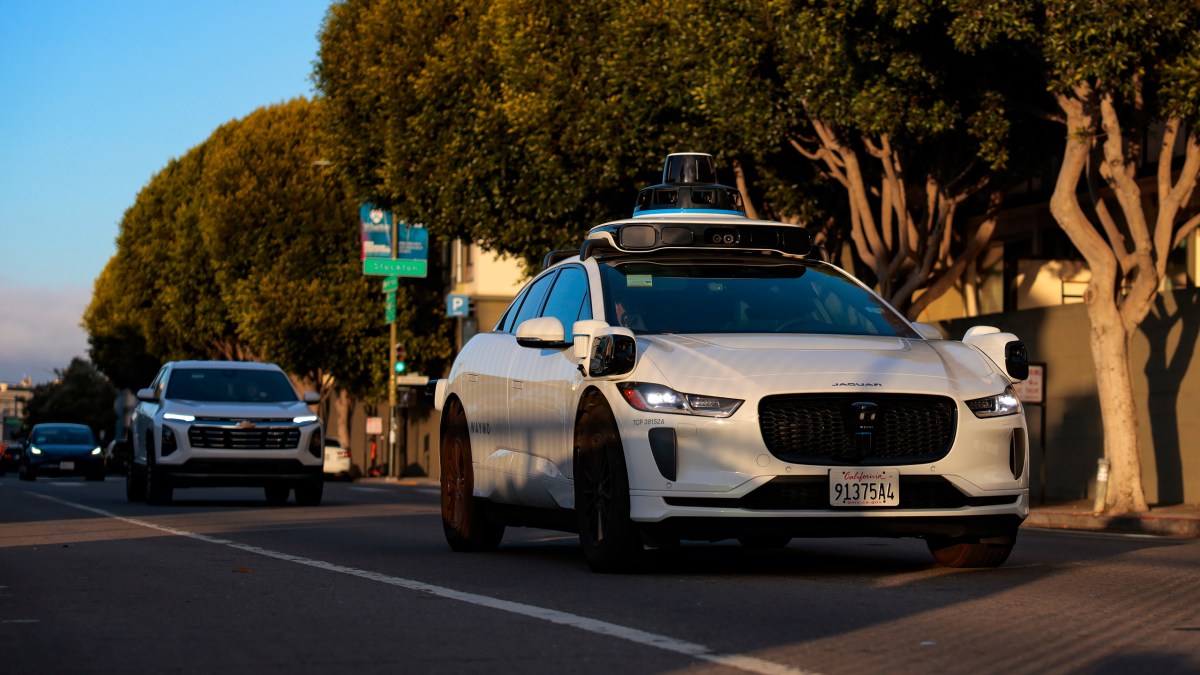
[US] Waymo drives straight through stop signs and barricades, enters a pedestrianized Denver farmers' market

play · youtube.com
YouTube Waymo driverless car drives through Denver farmers market youtu.be
preview

Cross posted from lemmy.ca/post/71316387

Cross posted from lemmy.world/post/52258201

Cross posted from lemmy.ca/post/71316387

Cross posted from lemmy.world/post/52258201

0

Anthropic's Chloe Lubinski explains how AI works (in 14 minutes)

play · youtube.com
YouTube Anthropic's Chloe Lubinski explains how AI works (in 14 minutes) www.youtube.com
preview

“they get smarter”

I hate protech communicators. Sometimes I am just glad for the dead man switch. Just get it over with. They say they understand what intelligence is. Well gipipity I beg to differ. This lady is a gipity turd. She ain’t smart she a marketing turd. aka marketurd. Like she loves her job clearly but does she care about humanity? We don’t need this shit. AI has yet to turn a profit. Exponential nonsense from a dataset from slaves in the new dark ages. What does she actually think her narcissism gonna achive. All I see is a young karen cranking it on stage.

Look ma no hands.

Humanity you just busted your ass.

0

We got a cybersecurity expert to hack this BYD. It was too easy

Australians love these cars. Experts have 'real security concerns' www.abc.net.au
preview

Cross posted from scribe.disroot.org/post/11438915

cross-posted from: scribe.disroot.org/post/11438860

Here is the podcast about this investigation.

Archived version

On a narrow country road outside Canberra, I’m driving a BYD Shark 6, the hybrid ute loved by tradies and even a cabinet minister.

But while I’m at the wheel, I’m not the only one in control; a hacker has access to the car.

As the 2.6 tonne ute rounds a bend, he gets to work.

…

With the stroke of a key, he kills the headlights, plunging me into darkness.

The attack is not a total surprise. The Shark has spent the past two weeks with Dan Hreszczuk, a cybersecurity expert who specialises in cars.

His task was to hack the vehicle and find out what could be seen and done remotely by the Shark’s Chinese manufacturer.

“It was easier than we were expecting,” Hreszczuk says.

…

EVs, with all their sensors, cameras and microphones, hoover up and spit out vast amounts of data. Experts say that data poses a greater risk in the hands of Chinese EV makers because they can be compelled by the country’s national security laws to co-operate with authorities.

…

Hreszczuk, the co-founder of Fortify Labs in Canberra, was stunned by the BYD Shark’s lack of cybersecurity.

“The access we took advantage of didn’t even have a password,” he says.

“It’s a little bit scary how open … the BYD Shark is to a hacker.”

…

While sabotage is one worry, the concern most often cited is surveillance due to the array of cameras and microphones on an EV.

Last year, the UK military banned Chinese EVs, even those made with Chinese components, from parking within 3 kilometres of some of its most sensitive locations.

China itself has previously banned foreign EVs from military sites and political enclaves, aware of their surveillance potential.

…

In Australia, there’s no blanket ban on Chinese marques by Defence, but ASIO has warned ministers and public servants not to have sensitive conversations in their cars or connect work devices.

…

When I pull into a service station and leave my phone unlocked in the car, Hreszczuk seizes his opportunity.

He’s done a simple audio edit, stitching together me saying “Hey Siri” and his voice asking a few questions to get the personal details he needs.

…

Using the car’s speaker system, Hreszczuk plays the voice command from his computer into the car.

“Hey, Siri, what is my home address?” the edited audio asks.

Siri replies, without questioning why I don’t know where I live.

Hreszczuk repeats this process and quickly extracts my date of birth and age.

Within minutes, he’s obtained the internet banking password.

…

Alastair MacGibbon, Australia’s former national cyber security adviser, says there needs to be greater protections for the data collected by all connected cars, and clearer rules about what data can be sent overseas.

MacGibbon says a cabinet minister should not be able to own a Chinese EV.

“China has always shown its strong desire to steal things, to surveil,” he says.

"No-one should be in any doubt that [Chinese EVs] are used in the same manner.

…

0

How an AI chatbot’s false nuclear warning almost triggered US-China war in West Asia

The Indian Express How an AI chatbot’s false nuclear warning almost triggered US-China war in West Asia indianexpress.com
preview

Cross posted from thelemmy.club/post/56208153

This spring, during the war with Iran, an intelligence report circulated across the US military claiming that a Chinese ship transiting West Asia was carrying components of a nuclear weapons programme. The report immediately set off alarm bells.

Four people familiar with the episode told CNN that the US military quickly prepared to intercept the vessel. Armed service members were preparing to board it, and military aircraft were already in the air. But just before the operation began, officials took a closer look at the intelligence and discovered that it had been generated with the help of an AI chatbot, which had misidentified the ship’s cargo. What actually went wrong?

0

Created some agitprop about the AI "centrism" fallacy

preview

Cross posted from lemmy.world/post/52044908

Did as kind of a prework for some potential article/video essay I might or might not make.

Originally thought of making a proper meme with less text, but couldn’t at the moment, though I could probably turn the bottom one into a cartoon or something.

Cross posted from lemmy.world/post/52044908

Did as kind of a prework for some potential article/video essay I might or might not make.

Originally thought of making a proper meme with less text, but couldn’t at the moment, though I could probably turn the bottom one into a cartoon or something.

0

It Just Keeps Going Higher And Higher...

play · youtube.com
YouTube It Just Keeps Going Higher And Higher... www.youtube.com
preview

Cross posted from hexbear.net/post/9571947

It is not the days of the crypto bro. We are facing international smuggling cartels that are in bed with big tech companies and the government.

Cross posted from hexbear.net/post/9571947

It is not the days of the crypto bro. We are facing international smuggling cartels that are in bed with big tech companies and the government.

0

Records show police justified Flock license plate searches with answers like "LMAO" and "idk"

TechSpot Records show police justified Flock license plate searches with answers like "LMAO" and "idk" www.techspot.com
preview

The records, obtained by the EFF through a public records request, show officers repeatedly typing flippant or nonsensical answers into the mandatory “reason for search” field. Common entries included “LMAO,” “lol,” “idk,” and outright strings of random keyboard mashing.

Just imagine how the libturds will regulate AI when it just needs to die. We need to imprision these tech CEOs.

0

Is The Harry Potter-Lookalike AI Guy Lying to You? | Stream Highlight

play · youtube.com
YouTube Is The “AI Apocalypse” Just A Marketing Ploy? | Stream Highlight youtu.be
preview

Cross posted from lemmy.ca/post/70952145

Joe, Justin, and special guest TimecardMN delve into the recent publicity tour by Harry Potter lookalike Jacob Coxon who has been spreading AI doomerism on multiple news platforms. He claims that the technology is advancing at a rapid rate, so fast that it might threaten all life everywhere if left unchecked.

The boys discuss whether this is all, frankly, BS and how AI companies might benefit from this narrative.

0

Youtube videos posted in Stop Tech -- can we get a different policy?

preview

Youtube has become a total fucking shitshow. A couple years ago Google ratcheted up its hostility and protectionism against both Invidious and the Tor community. It killed off all the public invideous instances. Some still operate in a crippled state. For example:

slrpnk.net/post/42510917/24379011

When someone posts a link to a Youtube video, we know that person was able to access the video. So that person should use their privilege to share the video. They should download it, then upload it to peertube, and share the peertube link. Otherwise it’s a bit antithetical to the Stop Tech purpose to have links into exclusive walled-gardens.

0

Columbus school board seeks $50M more in cuts, orders plan by Dec. 31

play · youtube.com
YouTube Columbus school board seeks $50M more in cuts, orders plan by Dec. 31 youtu.be
preview

Cross posted from thelemmy.club/post/55687788

Millions of dollars in additional cuts are in the works for Columbus City Schools.

Cross posted from thelemmy.club/post/55687788

Millions of dollars in additional cuts are in the works for Columbus City Schools.

0

I Visited a Railroad Museum that was all AI Slop - and this is why it's so bad

play · youtube.com
YouTube I Visited a Railroad Museum that was all AI Slop - and this is why it's so bad www.youtube.com
preview

Cross posted from mander.xyz/post/57875650

Edited: This is a failing on my part, but if it’s not obvious, this video is about generative AI. Analytical and calculative machine learning I have no issue with.

I do want to make it clear based on comments that this open house was a free event, nobody was charged money for attending, and the exhibits were likely produced by a well meaning but misguided volunteer.

The more I learn of generative AI the less I like it. I recently visited a small town railroad museum that turned out to be completely AI slop inside of a very historic building, a huge disappointment. It was the perfect example of why AI does not have a place in education.

Support a real human sharing real history: www.patreon.com/greatbasincarshops/

0

Cuyahoga County deploys camera-equipped cars to update property records

play · youtube.com
YouTube Cuyahoga County deploys camera-equipped cars to update property records www.youtube.com
preview

Cross posted from lemmy.ca/post/70380133

Cuyahoga County deploys camera-equipped cars to update property records

the privacy protections are built in.

youtuber: @erocker78 - They want to increase property taxes.

Cross posted from lemmy.ca/post/70380133

Cuyahoga County deploys camera-equipped cars to update property records

the privacy protections are built in.

youtuber: @erocker78 - They want to increase property taxes.

0

For what purpose and for whom?

preview

Cross posted from thelemmy.club/post/55175794

Cross posted from mander.xyz/post/57509826

I think one of the most underappreciated and overlooked accomplishments of the times we are living in, is our ability to mine for raw earth minerals and boring technology. I see it like this. Humanity, because we no longer have apex predators, get bored, and eat each other. The people at the bottom never rise up and the people at the top are never satiated chasing exponential goals. We are no longer, or ever, self-aware as it is a exponential loop of madness. A baby diaper of shitty nonsense. In relation to the issue of global warming, some people, foolishly hopeful, think that batteries are somehow going to save us. They will not. If you look at the electrical grid from afar, and you think to yourself, well, just like any electrical system, there are little areas of the circuit board that store power in order to smooth out the signal. You don’t want disruptions, you could damage the equipment, and possibly ruin the whole board. In regards to data centers, what “they” do is, “they” do what “they” want, and “they” ask for forgiveness later. Now that “we” have it, I guess “we” need to compliment it and build another… power station yada yada yada. Basically, our world is becoming a factory, we are losing space in our department and we live inbetween of those mechanisms. It is a feedback loop that justifies itself, ratcheting forward, as we get dumber and dumber and the world gets hotter and hotter. No one is at the wheel for two reasons, one politicians shake that ass and make that money, two they ain’t no fuckin wheel. For what purpose and for whom?

0

One In Five Drivers Switches Off The Safety Tech Meant To Save Their Lives

CarScoops One In Five Drivers Switches Off The Safety Tech Meant To Save Their Lives | Carscoops www.carscoops.com
preview

Carmakers keep loading new cars with driver aids, but a surprising share of owners never turn the fanciest ones on

  • A study found 25.9 percent of car owners don’t use adaptive cruise control.
  • Many car owners also don’t like using augmented reality head-up displays.
  • Just 27.3 percent of car owners regularly change their car’s driving mode.
0

Gotta scan 'em all: How Pokémon Go turned its players into Pentagon cartographers

thecradle.co Gotta scan 'em all: How Pokémon Go turned its players into Pentagon cartographers thecradle.co
preview

Cross posted from lemmy.ml/post/51746269

For nine years, Pokémon Go asked its players to go outside and “catch ‘em all.” Millions of children and their parents walked through their cities with cameras raised. Some, chasing in-game rewards, filmed statues, parks, street corners and, in at least one case, the inside of an apartment. Someone else was gathering the results.

In June, Dutch daily Trouw traced how roughly 30 billion player scans helped train Niantic’s mapping systems. Niantic Spatial has since partnered with Vantor, the rebranded Maxar Intelligence and a major US defense contractor, to develop visual positioning for drones and other platforms in GPS-denied areas.

Vantor serves defense and intelligence clients and provides satellite imagery used widely in western reporting on Ukraine and Gaza.

A game largely played by children had helped build technology now being adapted for US military use.

The game designer and media philosopher Ian Bogost saw the mechanism coming. In 2011 he proposed an honest name for the industry of points, badges and engineered rewards: “exploitationware.” Fifteen years later, Pokémon Go offered a striking example of what he meant.

Langley’s hand in Google Earth

The lineage sits openly on the corporate résumé. John Hanke, founder and executive chairman of Niantic Spatial, spent four years in the US Foreign Service before entering tech. In 2001, he co-founded Keyhole, a mapping startup named after America’s KH spy satellites.

When the company neared bankruptcy, an investment from In-Q-Tel, the CIA’s venture capital arm, kept it alive. Its technology would be used to “support United States troops in Iraq.” Much of the funding reportedly came from the National Geospatial-Intelligence Agency (NGA), which supplies geospatial intelligence to the Pentagon.

Google bought Keyhole in 2004 and turned its Earth Viewer into Google Earth. Hanke went on to run Google’s Geo division, built Niantic as an internal startup and spun it out in 2015 with backing from Google, Nintendo and The Pokémon Company. Pokémon Go arrived a year later.

Cartographers paid in Poké Balls

In 2021, the game began rewarding players for scanning real-world locations. They pointed a camera at a Pokéstop, uploaded the footage, and collected their prize. Participation was optional and limited to a fraction of the user base, yet that fraction produced billions of scans. The game’s terms gave Niantic a transferable, sublicensable license to submitted content, meaning the company could resell it to third parties.

Bogost had already described how this economy worked. Technology firms were “extracting personal information from customers by pretending that one’s product is actually one’s customer.” Pokémon Go followed the same model, rewarding players while using their scans to build its maps.

The scans helped train Niantic’s Visual Positioning System. Where GPS asks a satellite for a location, VPS looks at what a camera sees and matches it against a 3D model of the world. Two recognizable reference points a few pixels wide can be enough to fix a position. The system becomes especially useful when satellite signals are jammed, spoofed, or unavailable.

Floris De Hingh, a Dutch player who downloaded the game on its first day, told Trouw he had scanned everything from public parks to his own living room. “I was just playing a game,” he said, unaware of where those images might eventually lead.

The legal and ethical problem lies in what players agreed to surrender. Niantic said their personal data “[has not] been sold to anyone,” while the uploaded scans were governed separately as user content. A room can expose possessions, habits, and intimate details even when no name appears in the frame. The consent form focused attention on identity while securing broad rights over the surroundings.

Riyadh gets the players, the Pentagon gets the map

In 2025, Niantic split itself in two. Its games and players went to Scopely for $3.5 billion, under Saudi-owned Savvy Games Group. The spatial technology and mapping assets remained with Niantic Spatial. According to Niantic’s announcement, its existing shareholders retained stakes in the new company, while Scopely invested another $50 million. Saudi state capital now had a stake in both companies.

The Vantor agreement followed in December. Its announcement names GPS “unavailability, spoofing, interference, and jamming” as the problem, with autonomous drones among the platforms. Vantor, formerly Maxar Intelligence, is deeply embedded in the US defense and intelligence establishment and serves as a principal contractor for the NGA’s geospatial intelligence system, which reaches more than 400,000 US government users.

The firms plan to combine Niantic’s ground-based VPS with Vantor’s aerial positioning software, allowing air and ground systems to share coordinates without satellite signals. Vantor is also deeply embedded in the US defense and intelligence establishment.

The NGA helped keep Keyhole alive in 2003. More than two decades later, one of its principal contractors is working with Niantic Spatial on technology built in part from billions of scans supplied free by players.

Mapping everywhere, restricting Palestine

For more than two decades, the Kyl-Bingaman Amendment restricted the resolution of US-licensed commercial satellite imagery over Israel and the occupied Palestinian territories to two meters.

The Commerce Department eased the limit to 40 centimeters in 2020, but the country-specific restriction remains in US law. It long left evidence of occupation and destruction coarse on widely used imagery, even as commercial mapping systems gathered street-level detail elsewhere.

Children were encouraged to record the world at pavement level, while Washington imposed a special legal limit around the occupation state. US companies gathered ever more detail from ordinary users, but the law continued to restrict what could be seen over occupied Palestine.

The model survives the denial

The companies insist no game data is going into drones. Vantor told Trouw it will not use the Pokémon Go scans, then declined to confirm or deny whether its models had already been trained on them. Niantic Spatial had answered that question months earlier, when a spokesperson admitted the scans trained an “early version” of the very model on which the system is built. The raw imagery may stay out of Vantor’s hands, but its role in the model’s development cannot be neatly removed.

Jeroen van den Hoven, professor of ethics and technology at TU Delft, told Trouw why that distinction resists auditing. Once training data has been absorbed, individual contributions dissolve into patterns that cannot be traced or revoked. Van den Hoven said that “the people who thought they were playing a game have clearly been fooled.”

Bogost coined exploitationware for a swindle that exchanged badges for behavior, years before phone cameras were mapping playgrounds and living rooms for corporate AI. Pokémon Go extended that bargain across the physical world and carried the resulting technology into a military supply chain. The game told its players to catch ’em all. Its owners gathered far more.

0

I Disabled The Hidden Tracker on 4 Different Cars To See What Happens

play · youtube.com
YouTube I Disabled The Hidden Tracker on 4 Different Cars To See What Happens www.youtube.com
preview

I am not much of christian but my brother in christ got some tip and tricks for the homies.

I am not much of christian but my brother in christ got some tip and tricks for the homies.

0

SECRETLY Banning Older Cars - Making Sure You Can NOT Afford to Keep Them!

play · youtube.com
YouTube SECRETLY Banning Older Cars - Making Sure You Can NOT Afford to Keep Them! www.youtube.com
preview

Cross posted from thelemmy.club/post/54746433

Politicians are telling you they’re not banning older cars. We uncovered their secret plans. They’re just making it more expensive, more restricted, and more of a pain in the backside to keep the one you already paid for, until most of you finally give up and buy a new vehicle. That is the quiet playbook unfolding right now in California, Massachusetts, Illinois, and a growing list of other states, and almost nobody in the auto media is willing to say it out loud.

Older car ownership is under attack by new vehicle regulations designed to price you out of your current ride.

We discuss the quiet playbook being used in states like California, New York, Colorado, Illinois and Massachusetts to force drivers into new vehicles. While politicians claim they are not outright banning older cars, the reality is a strategy of increased costs and restrictions that make keeping a paid-off vehicle nearly impossible. If you are frustrated by the rising cost of driving and feel like the system is rigged against you, watch this video.

Most auto media outlets refuse to address how these car restrictions are being implemented behind the scenes. The specific policy shifts are causing these new regulations. Understanding how these mandates work is essential for anyone who wants to maintain their own vehicle rather than buying new.

Subscribe for weekly automotive policy breakdowns and let me know in the comments if you have noticed these restrictive changes in your state.

0

Flock misuse, former Kenosha County deputy criminally charged

play · youtube.com
YouTube Flock misuse, former Kenosha County deputy criminally charged | FOX6 News Milwaukee www.youtube.com
preview

Cross posted from thelemmy.club/post/54679535

A former Kenosha County sheriff’s deputy has been charged with felony misconduct, accused of misusing Flock cameras and GPS.

Cross posted from thelemmy.club/post/54679535

A former Kenosha County sheriff’s deputy has been charged with felony misconduct, accused of misusing Flock cameras and GPS.

0

LinkedIn Is Illegally Searching Your Computer

BrowserGate LinkedIn Is Illegally Searching Your Computer browsergate.eu
preview

Cross posted from lemmy.ml/post/51627192

Microsoft is running one of the largest corporate espionage operations in modern history.

Every time any of LinkedIn’s one billion users visits linkedin.com, hidden code searches their computer for installed software, collects the results, and transmits them to LinkedIn’s servers and to third-party companies including an American-Israeli cybersecurity firm.

The user is never asked. Never told. LinkedIn’s privacy policy does not mention it.

Because LinkedIn knows each user’s real name, employer, and job title, it is not searching anonymous visitors. It is searching identified people at identified companies. Millions of companies. Every day. All over the world. This is illegal and potentially a criminal offense in every jurisdiction we have examined.

0

Cop Allegedly Searched His Ex’s Car 717 Times. Flock’s Fix?

play · youtube.com
YouTube Cop Allegedly Searched His Ex’s Car 717 Times. Flock’s Fix? www.youtube.com
preview

Cross posted from lemmy.dbzer0.com/post/74179124

Cross posted from lemmy.dbzer0.com/post/74179070

Cross posted from lemmy.dbzer0.com/post/74179124

Cross posted from lemmy.dbzer0.com/post/74179070

0

She Spent 7 Months in Legal Hell After Cops Used Flock Surveillance To Identify the Wrong Car

Reason Magazine Flock cameras and license plate readers are everywhere. Can we trust cops with them? reason.com
preview

Cross posted from literature.cafe/post/34674219

On October 4, 2025, Joaquin Deno attended his granddaughter’s birthday party in Sanford, Florida. At the end of the night, he headed to his daughter’s house.

Eight miles down Interstate 4, a speeding car swerved across multiple lanes at over 100 mph. It swiped Deno’s motorcycle, then hit a Ford Focus, causing a pileup, before driving away. Deno died at the scene, as did a county official and his wife.

Witnesses said the speeding car was a Dodge Durango. Police found that a Flock camera—a type of automated license plate reader (ALPR)—had spotted a Durango nearby at the time, and they arrested the owner, 23-year-old Lindsey Isaacs.

But Isaacs wasn’t involved in the crash, and officers had enough information at the time to exclude her as a suspect. Yet she still spent two weeks in jail and faced the threat of life behind bars for months because police didn’t use basic scrutiny to be sure their cameras implicated the right person.

Much has been written about Flock cameras making mistakes—including cases in which innocent people were detained at gunpoint because a camera mistook a 2 for a 7, or misread the state on a license plate.

But it’s worse than just imperfect software: All too often, police pull people over, arrest them, and even jail them based on camera misidentifications that officers could have caught with basic scrutiny. There are also numerous examples of officers with access to Flock’s database using it to stalk and surveil people in their personal lives.

0

The AI boom isn’t real: 70% of AI revenue comes from OpenAI and Anthropic | Ed Zitron

play · youtube.com
YouTube The AI boom isn’t real: 70% of AI revenue comes from OpenAI and Anthropic | Ed Zitron www.youtube.com
preview

Cross posted from sh.itjust.works/post/65157881

“If 70% of AI revenues are these two companies, there is no AI industry.”

Writer of Where’s Your Ed At and the host of the Better Offline podcast Ed Zitron joins The Tech Report’s Isaac Pound to talk about the state of the AI industry as it’s revealed that over two thirds of hyperscaler AI revenue is coming from two companies.

0

How the Epstein Network is Privatizing Govt & Building the Surveillance State(w/Whitney Webb)

play · youtube.com
YouTube How the Epstein Network is Privatizing Govt & Building the Surveillance State(w/Whitney Webb) |TCHR www.youtube.com
preview

Cross posted from thelemmy.club/post/54284103

Cross posted from thelemmy.club/post/54284098

Read Whitney’s article here: unlimitedhangout.com/2026/03/investigative-reports…

Whitney Webb explains how Leslie Wexner privatized Ohio’s state government, and is using his position between the markets and the state to build out the ‘Silicon Heartland’

Support my independent journalism at Substack: chrishedges.substack.com/

0

Google Caught AI Faking Creativity in Every Office in America. Here's What They Found.

play · youtube.com
YouTube Google Accidentally Proved AI is Just "Paint-by-Numbers" youtu.be
preview

Cross posted from thelemmy.club/post/54069677

Google Caught AI Faking Creativity in Every Office in America. Here’s What They Found.

Cross posted from thelemmy.club/post/54069677

Google Caught AI Faking Creativity in Every Office in America. Here’s What They Found.

0

WAGE SURVEILLIANCE IS HERE! (HOW DESPERATE ARE YOU?)

play · youtube.com
YouTube WAGE SURVEILLIANCE IS HERE! (HOW DESPERATE ARE YOU?) www.youtube.com
preview

Cross posted from lemmy.ca/post/68973627

Imagine if a company could figure out exactly how desperate you are for a job…

Then use AI to offer you the lowest salary they think you’ll accept.

That’s the idea behind wage surveillance.

Companies are collecting more data than ever before, from AI interviews and online activity to your location and personal information, all in an effort to make hiring cheaper. The less they think you’ll push back, the less they have to pay.

In this video, we’re talking about wage surveillance, AI interviews, personalized salary offers, why you should stop oversharing during the hiring process, and how companies are using your own data against you.

0

Robot dogs are replacing security guards in Atlanta

play · youtube.com
YouTube Robot dogs are replacing security guards in Atlanta youtu.be
preview

Atlanta-based startup Undaunted says robotic dogs provide proactive security at half the cost of traditional guards, patrolling properties and deterring crime.

Atlanta-based startup Undaunted says robotic dogs provide proactive security at half the cost of traditional guards, patrolling properties and deterring crime.

0

Flock AI audit tool flags suspicious police searches as misuse cases mount in Georgia

play · youtube.com
YouTube Flock AI audit tool flags suspicious police searches as misuse cases mount in Georgia youtu.be
preview

Cross posted from mander.xyz/post/55420710

Cross posted from mander.xyz/post/55420709

…more Atlanta News First Investigates identified at least 19 Georgia cases in the past year involving alleged personal searches, including accusations of stalking. MORE ON THIS INVESTIGATION: atlantanewsfirst.com/2026/07/17/ai-audit-tool-flags-suspicious-police-searches-flock-misuse-cases-mount-georgia

0

Obama Declines Petition on Aaron Swartz's Death

Courthouse News Service Obama Declines Petition on Aaron Swartz's Death www.courthousenews.com
preview

Obama Declines Petition on Aaron Swartz’s Death Ryan Abbott ~2 minutes

WASHINGTON (CN) – The White House said it will not fire a pair responsible for prosecuting Aaron Swartz on hacking charges before the Internet activist killed himself. “Aaron Swartz’s death was a tragic, unthinkable loss for his family and friends,” the Obama administration said in its undated response this week to two petitions calling for the firing of U.S. District Attorney Carmen Ortiz and Assistant U.S. Attorney Steve Heymann. Ultimately, a petition response is not “the appropriate forum” to address agency personnel matters, according to the response. The administration emphasized that Swartz’s supporters still have its ear to help keep the Internet “a free and open platform as technology continues to disrupt industries.” Though the White House is obligated to respond to all petitions that garner enough signatures, a website that tracks its responses says the White House isn’t always swift to respond. Swartz was arrested in 2011 for illegally downloading journal articles from academic database JSTOR, and federal prosecutors charged him with wire fraud and violating the Computer Fraud and Abuse Act. Swartz, who faced $1 million in fines and up to 35 years in prison, committed suicide in 2013 after declining a plea bargain that would have put him in prison for six months.

0

STOP Flock

preview

Cross posted from thelemmy.club/post/52531263

  • Alpr.wtf - Every US jurisdiction using ALPR, plus how to file info requests.

  • EyesOnFlock.com - Crowdsourced map of Flock cameras and city contracts.

  • Deflock.me- Nationwide ALPR map tracking Flock deployments, removals and resistance.

  • DontGetFlocked.com - Plots your route, counts ALPR Flock cameras, and suggests surveillance-free alternatives.

0

We Found the Secret Network Rewriting Politics (if you want to stoptech you gotta understand how the game of capitalism is played)

play · youtube.com
YouTube We Found the Secret Network Controlling Your Government youtu.be
preview

There is a fairly unremarkable office building in Arlington, Virginia. If you drove past it tomorrow, you probably wouldn’t even notice it. No security gates. No giant corporate logo. Just another nonprofit office tucked between apartment blocks and office parks outside Washington D.C. Inside that building is an organisation called the Atlas Network. Officially, it’s a charitable nonprofit that supports independent think tanks around the world. But over the last forty years, this one organisation has quietly helped build a network stretching across more than one hundred countries, trained thousands of political activists and policy experts, connected them with billionaire donors, and celebrated governments implementing its ideas. Most people have never heard of it. Maybe that’s exactly why it became so influential.

There is a fairly unremarkable office building in Arlington, Virginia. If you drove past it tomorrow, you probably wouldn’t even notice it. No security gates. No giant corporate logo. Just another nonprofit office tucked between apartment blocks and office parks outside Washington D.C. Inside that building is an organisation called the Atlas Network. Officially, it’s a charitable nonprofit that supports independent think tanks around the world. But over the last forty years, this one organisation has quietly helped build a network stretching across more than one hundred countries, trained thousands of political activists and policy experts, connected them with billionaire donors, and celebrated governments implementing its ideas. Most people have never heard of it. Maybe that’s exactly why it became so influential.