
showing posts tagged #amputee — clear

0

**c/amputee community migration notice**

preview

This community has moved permanently to piefed.social. If you’ve subscribed to this community, you can unsubscribe here and instead subscribe to

!amputee@piefed.social

Sorry for the inconvenience!

This community has moved permanently to piefed.social. If you’ve subscribed to this community, you can unsubscribe here and instead subscribe to

!amputee@piefed.social

Sorry for the inconvenience!

0

Labour Just Hounded a Blind Amputee Out of Office | Rivkah Brown

Novara Media Labour Just Hounded a Blind Amputee Out of Office | Rivkah Brown novaramedia.com
preview

Redbridge stopped independent councillor Rosa Gomez from bringing her support workers to council meetings, then stripped her of her seat due to non-attendance. Colleagues say she’s the victim of ‘political persecution’. A disability rights charity called the move “shameful”. Rivkah Brown reports.

Redbridge stopped independent councillor Rosa Gomez from bringing her support workers to council meetings, then stripped her of her seat due to non-attendance. Colleagues say she’s the victim of ‘political persecution’. A disability rights charity called the move “shameful”. Rivkah Brown reports.

0

The Starfish Procedure - Prosthetic Hands Responding to Electrodes

play · youtube.com
YouTube Carolina Impact: Medical Breakthroughs - Prosthetic Hands Responding to Electrodes (April 3, 2018) www.youtube.com
preview

The Starfish procedure consists in relocating remaining hand muscles closer to the surface of the skin to better control a myoelectric partial hand prosthesis. This is a fairly recent procedure (2018) aimed at helping those who lost fingers. The original paper from doctors Glenn Gaston and Bryan Loeffler is here [warning: graphic]. And here’s an article about a veteran who received the procedure in 2022: Charlotte doctors create surgery to help amputee veteran regain control of hand Finally, here’s the story of one man who also received the procedure in 2024 and rocks a prosthesis with one mechanical Naked Prosthetics MCPDriver prosthesis and 3 powered Össur i-Digits controlled by the relocated hand muscles: Tim Suttles

The Starfish procedure consists in relocating remaining hand muscles closer to the surface of the skin to better control a myoelectric partial hand prosthesis. This is a fairly recent procedure (2018) aimed at helping those who lost fingers. The original paper from doctors Glenn Gaston and Bryan Loeffler is here [warning: graphic]. And here’s an article about a veteran who received the procedure in 2022: Charlotte doctors create surgery to help amputee veteran regain control of hand Finally, here’s the story of one man who also received the procedure in 2024 and rocks a prosthesis with one mechanical Naked Prosthetics MCPDriver prosthesis and 3 powered Össur i-Digits controlled by the relocated hand muscles: Tim Suttles

0

Henrietta’s T800 Prosthetic – Dantes Workshop

preview

This was a really special project for us to do, due to its medical theme. A design where the word of movie props merges with functionality and practical usage. The whole development process took almost 2 years to complete and it all started in 2021 with Henrietta’s dream; she wanted a prosthetic that she could use daily and in the meanwhile, it looks just as like a T800 arm.

This was a really special project for us to do, due to its medical theme. A design where the word of movie props merges with functionality and practical usage. The whole development process took almost 2 years to complete and it all started in 2021 with Henrietta’s dream; she wanted a prosthetic that she could use daily and in the meanwhile, it looks just as like a T800 arm.

0

New Numbers Clarify Osseointegration Outcomes

Amplitude New Numbers Clarify Osseointegration Outcomes | Amplitude livingwithamplitude.com
preview

When osseointegration surgery achieved FDA approval five years ago, the lack of outcomes data created a lot of uncertainty. The possibility of infection, implant failure, and other complications deterred many patients (and their doctors) from pursuing OI. But according to a new study based on nearly a thousand patients who’ve undergone the procedure, OI’s long-range track record is pretty impressive. Published in Musculoskeletal Surgery, this large-scale data dive aggregated data from 22 studies encompassing 979 individual amputees. While the overall complication rate was 65 percent—ie, nearly two-thirds of patients experienced at least one complication—that topline finding is a bit misleading, because a minor infection that can be treated with a round of antibiotics counts as a “complication.” A closer look at the data reveals that most OI complications are manageable, and far outweighed by the benefits of the procedure. The most common complication, breakage of the abutment (which connects the bone implant to the prosthesis), is not just manageable—it’s built into OI’s design. The abutment acts as a built-in safety mechanism. The abutment breaks when forces get too high, which prevents breakage of the bone and/or the implant embedded within it. Replacing an abutment is a relatively simple procedure compared to dealing with a fractured bone or failed implant. About 38 percent of the patients in this data set experienced an abutment failure. The second most common complication, infection, occurs in 36 percent of patients. That sounds alarming, but the vast majority of those cases were superficial soft-tissue infections that cleared up with antibiotic pills. Only 9 percent of patients experienced serious infections. About 6 percent of the study group suffered bone infections that required interventions such as debridement, wound vacs, and/or IV antibiotics. Another 3 percent needed implant removal as a result of infection, bone fracture, pain, loosening, and/or mechanical issues. To put these numbers in context: About 2 percent of hip replacement patients sustain a serious infection, so this level of complication is about four times more likely in OI patients. That stands to reason, because OI creates a permanent skin opening (stoma), whereas hip replacements are completely internal. ### OPRA vs Press-fit The study found some noteworthy differences in outcomes between the two major OI design approaches, screw-fit implants (OPRA) and press-fit implants (ILP/OPL). Mechanical failure occurred in 68 percent of patients with OPRA implants, versus a failure rate of just 19 percent in press-fit patients. Nearly all of these failures involved the abutment, rather than the implant itself—ie, the safety mechanism was working as intended. But such failures can cause injuries in a worst-case scenario, and they always require a time-consuming repair process, during which the patient has limited mobility. Overall infection rates showed less dramatic differences between the two systems: 51 percent for ILP/OPL patients versus 30 percent for OPRA patients. The analysis didn’t dive beneath those topline numbers to reflect the respective rates of serious versus superficial infections. Perhaps the most encouraging finding from this meta-analysis is the implant survival rate. At five years, 89 percent of OI implants remained in place without requiring revision surgery. At ten years, 77 percent were still going strong. Again, compare those figures to hip-replacement data, various studies place five-year survival rates between 90 and 100 percent, and ten-year rates between 62 and 98 percent. Bone-anchored prostheses are performing right in the middle to lower end of that range—respectable for a technology that’s still relatively new and evolving. The authors identified a few patterns related to mechanical failure: - Younger, more active patients experienced higher rates of abutment failure—their active lifestyles simply put more stress on the components. Body mass index may also play a role, though more research is needed. - The analysis did not show significant outcome differences between above-knee and below-knee patients. The big caveat here, however, is that the study group included far fewer below-knee patients (only 61) than above-knee cases. - Outcomes have improved over time, as surgical protocols and rehab procedures have crystallized. The study’s authors emphasize that OI isn’t for everyone. But for the right candidates, the evidence is increasingly clear that OI carries an acceptable level of long-term risk, delivering outcomes that are roughly equivalent to those of hip-replacement surgery. The paper is available online at this link.

When osseointegration surgery achieved FDA approval five years ago, the lack of outcomes data created a lot of uncertainty. The possibility of infection, implant failure, and other complications deterred many patients (and their doctors) from pursuing OI. But according to a new study based on nearly a thousand patients who’ve undergone the procedure, OI’s long-range track record is pretty impressive. Published in Musculoskeletal Surgery, this large-scale data dive aggregated data from 22 studies encompassing 979 individual amputees. While the overall complication rate was 65 percent—ie, nearly two-thirds of patients experienced at least one complication—that topline finding is a bit misleading, because a minor infection that can be treated with a round of antibiotics counts as a “complication.” A closer look at the data reveals that most OI complications are manageable, and far outweighed by the benefits of the procedure. The most common complication, breakage of the abutment (which connects the bone implant to the prosthesis), is not just manageable—it’s built into OI’s design. The abutment acts as a built-in safety mechanism. The abutment breaks when forces get too high, which prevents breakage of the bone and/or the implant embedded within it. Replacing an abutment is a relatively simple procedure compared to dealing with a fractured bone or failed implant. About 38 percent of the patients in this data set experienced an abutment failure. The second most common complication, infection, occurs in 36 percent of patients. That sounds alarming, but the vast majority of those cases were superficial soft-tissue infections that cleared up with antibiotic pills. Only 9 percent of patients experienced serious infections. About 6 percent of the study group suffered bone infections that required interventions such as debridement, wound vacs, and/or IV antibiotics. Another 3 percent needed implant removal as a result of infection, bone fracture, pain, loosening, and/or mechanical issues. To put these numbers in context: About 2 percent of hip replacement patients sustain a serious infection, so this level of complication is about four times more likely in OI patients. That stands to reason, because OI creates a permanent skin opening (stoma), whereas hip replacements are completely internal. ### OPRA vs Press-fit The study found some noteworthy differences in outcomes between the two major OI design approaches, screw-fit implants (OPRA) and press-fit implants (ILP/OPL). Mechanical failure occurred in 68 percent of patients with OPRA implants, versus a failure rate of just 19 percent in press-fit patients. Nearly all of these failures involved the abutment, rather than the implant itself—ie, the safety mechanism was working as intended. But such failures can cause injuries in a worst-case scenario, and they always require a time-consuming repair process, during which the patient has limited mobility. Overall infection rates showed less dramatic differences between the two systems: 51 percent for ILP/OPL patients versus 30 percent for OPRA patients. The analysis didn’t dive beneath those topline numbers to reflect the respective rates of serious versus superficial infections. Perhaps the most encouraging finding from this meta-analysis is the implant survival rate. At five years, 89 percent of OI implants remained in place without requiring revision surgery. At ten years, 77 percent were still going strong. Again, compare those figures to hip-replacement data, various studies place five-year survival rates between 90 and 100 percent, and ten-year rates between 62 and 98 percent. Bone-anchored prostheses are performing right in the middle to lower end of that range—respectable for a technology that’s still relatively new and evolving. The authors identified a few patterns related to mechanical failure: - Younger, more active patients experienced higher rates of abutment failure—their active lifestyles simply put more stress on the components. Body mass index may also play a role, though more research is needed. - The analysis did not show significant outcome differences between above-knee and below-knee patients. The big caveat here, however, is that the study group included far fewer below-knee patients (only 61) than above-knee cases. - Outcomes have improved over time, as surgical protocols and rehab procedures have crystallized. The study’s authors emphasize that OI isn’t for everyone. But for the right candidates, the evidence is increasingly clear that OI carries an acceptable level of long-term risk, delivering outcomes that are roughly equivalent to those of hip-replacement surgery. The paper is available online at this link.

0

Skeo Up Daily Assist

Ottobock Ottobock | Skeo Up Daily Assist www.ottobock.com
preview

Simple silicone helper arm / hand that can go into water, to assist with personal hygiene. Here’s the only independent review video I could find on Youtube: Skeo Up Daily Assist

Simple silicone helper arm / hand that can go into water, to assist with personal hygiene. Here’s the only independent review video I could find on Youtube: Skeo Up Daily Assist

0

Victoria Hand Project: Changing Prosthetic Care with 3D Printing

play · youtube.com
YouTube Victoria Hand Project: Changing Prosthetic Care with 3D Printing www.youtube.com
preview

The Victoria Hand Project from Canada uses 3D printing to create affordable upper-limb prosthetic devices for around 150 USD, customized in just a few days. With its own software and a global network of clinics, prostheses are produced locally, for example in Ukraine and Africa. A key factor behind this success is the reliability and capabilities of the Original Prusa XL and other Prusa 3D printers, which enable fast and precise printing of parts and above-elbow sockets even in challenging conditions.

The Victoria Hand Project from Canada uses 3D printing to create affordable upper-limb prosthetic devices for around 150 USD, customized in just a few days. With its own software and a global network of clinics, prostheses are produced locally, for example in Ukraine and Africa. A key factor behind this success is the reliability and capabilities of the Original Prusa XL and other Prusa 3D printers, which enable fast and precise printing of parts and above-elbow sockets even in challenging conditions.

0

Finished up my New Prosthetic Hand!

play · youtube.com
YouTube Finished up my New Prosthetic Hand ! www.youtube.com
preview

I finally started wearing my new prosthetic hand. it has all kinds of new features. first of the leaf chain winder. this winder is almost 3/16" thinner. it nearly lines up with the tops of the metacarple bases. next is the printed socket. I’m using the prusa xl to print a dual material socket. This allows me to vary the firmness of the socket and adjust the feel. also, with this design it pops into the device and locks into place with 4 half spheres and a stop on the bottom of the winder.

I finally started wearing my new prosthetic hand. it has all kinds of new features. first of the leaf chain winder. this winder is almost 3/16" thinner. it nearly lines up with the tops of the metacarple bases. next is the printed socket. I’m using the prusa xl to print a dual material socket. This allows me to vary the firmness of the socket and adjust the feel. also, with this design it pops into the device and locks into place with 4 half spheres and a stop on the bottom of the winder.

0

I have the itchies and the cramps from hell, and it's driving me spare

preview

For me, phantom pain manifests itself in 10% real pain (usually a sensation of someone driving a sharp blade through my nail beds, or unpleasant electric shocks) and 90% itchy toes. And occasionally, I have insane plantar cramps to go with it. I get the itchies maybe 4 times a year, and the cramps maybe once a year, and they usually last 6 hours - so basically I got to work in the morning, try not to think about them, and by the time I ride the bus back home, thankfully it’s over. Not this time: my toes have been itching for 3 days. 3 solid day with nothing to scratch! And the cramps are so strong I have trouble walking, and I wake up with bruised muscles in the morning. I’ve tried all the tricks: gabapentin, muscle relaxants - pills and topical - creative chemistry, massage, meditation, sauna, my own anal special… there’s nothing for it. I can’t take anymore, it’s driving me up the wall. And I’m thinking of going to sleep at the hotel tonight because I’m starting to take it out on my loved ones and I don’t want to do that. If you have any suggestions, I’ll do anything.

For me, phantom pain manifests itself in 10% real pain (usually a sensation of someone driving a sharp blade through my nail beds, or unpleasant electric shocks) and 90% itchy toes. And occasionally, I have insane plantar cramps to go with it. I get the itchies maybe 4 times a year, and the cramps maybe once a year, and they usually last 6 hours - so basically I got to work in the morning, try not to think about them, and by the time I ride the bus back home, thankfully it’s over. Not this time: my toes have been itching for 3 days. 3 solid day with nothing to scratch! And the cramps are so strong I have trouble walking, and I wake up with bruised muscles in the morning. I’ve tried all the tricks: gabapentin, muscle relaxants - pills and topical - creative chemistry, massage, meditation, sauna, my own anal special… there’s nothing for it. I can’t take anymore, it’s driving me up the wall. And I’m thinking of going to sleep at the hotel tonight because I’m starting to take it out on my loved ones and I don’t want to do that. If you have any suggestions, I’ll do anything.

0

The Truth About Prosthetic Arms

play · youtube.com
YouTube The Truth About Prosthetic Arms www.youtube.com
preview

A surprisingly thorough, insightful, candid and funny video showing what it’s like to use a myoeletric prosthetic arm in daily life.

A surprisingly thorough, insightful, candid and funny video showing what it’s like to use a myoeletric prosthetic arm in daily life.

0

Project Bike Leg

Project Bike Leg Project Bike Leg | Empowering Mobility Today www.projectbikeleg.com
preview

Learn to create a below-knee prosthesis from bike parts and empower amputees globally. Access detailed guides and videos for innovative prosthetic solutions.

Learn to create a below-knee prosthesis from bike parts and empower amputees globally. Access detailed guides and videos for innovative prosthetic solutions.

0

Growth of AI in Amputee Care Deemed “Inevitable”

Amplitude Growth of AI in Amputee Care Deemed “Inevitable” livingwithamplitude.com
preview

Healthcare clinicians are already using artificial intelligence to guide decisions related to limb loss. AI is being integrated into prosthesis alignment, socket fabrication, exercise management, gait monitoring, and beyond. For better or worse, it’s also playing a role in insurance approvals, denials, and appeals. According to a new study published in the medical journal Artificial Intelligence Surgery, AI’s role in limb care is almost certain to keep growing. “Our review suggests that the integration of AI in limb care is not only rapidly growing but is seemingly inevitable,” write the authors, who are based at the University of Colorado School of Medicine. They go on to identify some distinct areas of limb care in which AI is rapidly emerging as an important tool, and changing how clinicians treat limb loss. You can read the full paper online. Here’s a quick summary: ## Prosthesis Use and Design AI is driving rapid innovation in the development of neuroprosthetic devices. Systems known as convolutional neural networks (CNNs) have been shown to support highly responsive prosthetics that give wearers a high degree of control over joint flexion, a greater sense of proprioception, and some degree of sensory feedback. The study also notes the potential for AI (used in combination with advance imaging) to help determine the optimal placement of implants that connect nerve endings to prosthetic controllers. This type of research has shown promising results at the University of Minnesota, North Carolina State University, University of Wisconsin, Shirley Ryan AbilityLab, and elsewhere. ## Management of Nerve Injuries and Pain Pain is one of the leading causes of post-amputation health complications, the authors note—particularly phantom limb pain. Researchers have begun applying AI technologies to help identify the causes of pain and yield more effective treatment strategies. One of the most promising frontiers lies in the mapping of dense neural networks; AI now allows neurologists to develop highly precise blueprints of nerve pathways (down to the level of individual axon-synapse connections) in 1/50th the time required by manual methods. Drug research is another area of progress: AI makes it possible to rapidly model physiological responses to thousands of individual drugs, and millions of drug combinations. By quickly identifying the most promising therapies, these preclinical models can streamline the process of clinical testing and approval. Nerve repair and regeneration represent yet another area in which AI is driving innovation forward. The paper notes that “the application of AI to nerve regenerative strategies has the potential for revolutionary biotechnologies,” particularly in the development of biomaterials such as nerve guidance conduits. ## Clinical Decisionmaking and Limb Preservation “The application of AI in clinical decision making may revolutionize surgical practice through novel patient-centered approaches,” the authors write. AI systems are becoming extremely accurate in modeling the odds of success for limb-preserving treatments such as revascularization, vascular bypass, and minor amputation in patients with limb-threatening conditions. Similar approaches are helping clinicians evaluate limb-salvage options in patients with complex injuries. In addition, clinicians are beginning to use AI to identify patients who face elevated risk of amputation and intervene before the conditions become limb-threatening. For example, AI can screen electronic health records and flag patients who require targeted PAD screening. It can also refine the results of conventional imaging techniques (such as ultrasounds), leading to more precise selection of treatments. “AI-based strategies complement clinical judgment and support innovations in …. [amputation] prevention, management, peripheral nerve injury treatment, postoperative outcomes, and prosthesis design,” the paper concludes. “AI as a methodology holds promise in revolutionizing practice.”

Healthcare clinicians are already using artificial intelligence to guide decisions related to limb loss. AI is being integrated into prosthesis alignment, socket fabrication, exercise management, gait monitoring, and beyond. For better or worse, it’s also playing a role in insurance approvals, denials, and appeals. According to a new study published in the medical journal Artificial Intelligence Surgery, AI’s role in limb care is almost certain to keep growing. “Our review suggests that the integration of AI in limb care is not only rapidly growing but is seemingly inevitable,” write the authors, who are based at the University of Colorado School of Medicine. They go on to identify some distinct areas of limb care in which AI is rapidly emerging as an important tool, and changing how clinicians treat limb loss. You can read the full paper online. Here’s a quick summary: ## Prosthesis Use and Design AI is driving rapid innovation in the development of neuroprosthetic devices. Systems known as convolutional neural networks (CNNs) have been shown to support highly responsive prosthetics that give wearers a high degree of control over joint flexion, a greater sense of proprioception, and some degree of sensory feedback. The study also notes the potential for AI (used in combination with advance imaging) to help determine the optimal placement of implants that connect nerve endings to prosthetic controllers. This type of research has shown promising results at the University of Minnesota, North Carolina State University, University of Wisconsin, Shirley Ryan AbilityLab, and elsewhere. ## Management of Nerve Injuries and Pain Pain is one of the leading causes of post-amputation health complications, the authors note—particularly phantom limb pain. Researchers have begun applying AI technologies to help identify the causes of pain and yield more effective treatment strategies. One of the most promising frontiers lies in the mapping of dense neural networks; AI now allows neurologists to develop highly precise blueprints of nerve pathways (down to the level of individual axon-synapse connections) in 1/50th the time required by manual methods. Drug research is another area of progress: AI makes it possible to rapidly model physiological responses to thousands of individual drugs, and millions of drug combinations. By quickly identifying the most promising therapies, these preclinical models can streamline the process of clinical testing and approval. Nerve repair and regeneration represent yet another area in which AI is driving innovation forward. The paper notes that “the application of AI to nerve regenerative strategies has the potential for revolutionary biotechnologies,” particularly in the development of biomaterials such as nerve guidance conduits. ## Clinical Decisionmaking and Limb Preservation “The application of AI in clinical decision making may revolutionize surgical practice through novel patient-centered approaches,” the authors write. AI systems are becoming extremely accurate in modeling the odds of success for limb-preserving treatments such as revascularization, vascular bypass, and minor amputation in patients with limb-threatening conditions. Similar approaches are helping clinicians evaluate limb-salvage options in patients with complex injuries. In addition, clinicians are beginning to use AI to identify patients who face elevated risk of amputation and intervene before the conditions become limb-threatening. For example, AI can screen electronic health records and flag patients who require targeted PAD screening. It can also refine the results of conventional imaging techniques (such as ultrasounds), leading to more precise selection of treatments. “AI-based strategies complement clinical judgment and support innovations in …. [amputation] prevention, management, peripheral nerve injury treatment, postoperative outcomes, and prosthesis design,” the paper concludes. “AI as a methodology holds promise in revolutionizing practice.”

0

Finally cured!

preview

After 11 weeks, a lot of pills and a whole week in hospital, I finally kicked the infection. My foot now looks normal - well, as normal as residual limbs go 🙂 i.e. not red or swollen - it feels great and I feel great. I haven’t been feeling great for a long, long time, so that’s quite a novel experience. Today I went out and did 4 hours of yard work in 15 degree weather. The house is finally getting taken care of, I could undo the neglect and I had no issues whatsoever. Yeah, it don’t seem like much, but that a huge win for me. I just wanted to share the joy 🙂

After 11 weeks, a lot of pills and a whole week in hospital, I finally kicked the infection. My foot now looks normal - well, as normal as residual limbs go 🙂 i.e. not red or swollen - it feels great and I feel great. I haven’t been feeling great for a long, long time, so that’s quite a novel experience. Today I went out and did 4 hours of yard work in 15 degree weather. The house is finally getting taken care of, I could undo the neglect and I had no issues whatsoever. Yeah, it don’t seem like much, but that a huge win for me. I just wanted to share the joy 🙂

0

Health of double amputee detained in Georgia ICE jail worsens

the Guardian Health of double amputee detained in Georgia ICE jail worsens www.theguardian.com
preview

Rodney Taylor says detention ‘draining on my body’ as Democratic senator Raphael Warnock lends support to case

Rodney Taylor says detention ‘draining on my body’ as Democratic senator Raphael Warnock lends support to case

0

HOW MUCH AM I WORTH? 2020 Easterseals Disability Film Challenge Entry

play · youtube.com
YouTube HOW MUCH AM I WORTH? 2020 Easterseals Disability Film Challenge Entry www.youtube.com
preview

Filmmaker Rachel Handler Wants Your Healthcare Bill Horror Stories July 29, 2025 Ever had an insurance claim denied for a much-needed prosthesis? Lost coverage due to confusing fine print or technicalities? Got saddled with an obscene pharma bill? Struggled to find an affordable ACA plan? Award-winning filmmaker Rachel Handler is training her lens on disabled people who’ve been told, in essence, that their health isn’t profitable enough to pay for. Handler is using a grant from Adobe to expand her 2020 short “How Much Am I Worth?” into a full-length feature. The original five-minute documentary, an award-winner in the 2020 Easterseals Disability Film Challenge, illustrated how the US healthcare system had failed four women with disabilities. The feature-length format will allow Handler to get far more voices into the mix. In addition to a telling a broader range of in-depth stories, she’s planning a coda in which dozens of people share brief summaries of their unhappy run-ins with insurers, hospitals, clinicians, government agencies, and other health system gatekeepers. “Our goal for the end of the film is to feature at least 50 people talking about denials they’ve received from the health system,” Handler explains. “We want to have short clips where people talk about how their insurance wouldn’t cover their diabetes medication, or they got stuck with an $800 bill for a basic service. The ultimate goal is to focus on how people persevere through these hardships with resilience.” If you’ve got a story to share, get in touch with Handler via Instagram DM; the project’s handle is @howmuchamiworth. We connected with Handler last week to learn more about the project. Our conversation is edited for length and clarity. There’s been quite a bit of change in the health care landscape since 2020. Will you track those ups and downs in the film, or are you focus on the landscape as it exists in July 2025, post “Big Beautiful Bill”? We’ll be focusing on what’s going on in people’s lives right now. So in my case—my own story will be in the film—I’m looking for new health insurance on the ACA marketplace. And it’s really expensive. New York State just doesn’t have good options for freelancers. We’ll probably follow my journey into next year to see if any of the changes in the federal bill affect my coverage and the pricing on the marketplace. Another person we’ll be featuring uses Medicaid for herself and her children, so it will be interesting to see how those cuts affect her. Andrea, who is a nurse in a wheelchair, hasn’t had a wheelchair covered by insurance in many years, and she’s trying to raise money for a new wheelchair through crowdfunding and sponsorships. The ultimate goal is to be able to track these intense situations from beginning to middle to end, so the audience can get a sense of completion within each story. You’ve had a number of different films do well in the Disability Film Challenge, and you could have applied for Adobe grants to keep working on any of them. Why did you single out this project as the one you wanted to do something more with? This one seemed like the obvious choice because it is so timely. Ever since I made it, I’ve been wanting to expand it. I’ve been having people come up to me after they see screenings of it, asking for more information. They want to take it to their elected representatives. So I’ve been wanting to expand this since 2020, because health care and health insurance have only gone downhill from there. I love the other films I’ve done, but this one was my priority. What’s your your timeline for shooting new footage and doing all the post-production and everything else that needs to occur. I want to use this grant to produce a sizzle reel that we can show by the end of the year. We’re starting to film in August, and we’re hoping to be done with that by October and start post-production in the fall. We’ll use that to continue fundraising from other sources. I’m in a documentary filmmakers fellowship, and the director of Patrice came in and talked to us. Patrice is an incredible documentary on Hulu. He told us they shot a sizzle reel—like, four scenes—and pitched that to Hulu, and Hulu loved it and gave them a budget to make the film. That’s really unheard of. We’re hoping that once we have some more footage and that start of a narrative throughline, that will help us get more money involved. Are there documentaries you have admired that you would like to capture some flavor of? Well, I want to steal everything Patrice did. It’s so well done, and it’s beautiful to watch. I think our approach will be a little more verite. We want the film participants to sort of forget that we’re there and just capture what’s actually like happening in a very natural way, so we can be as truthful as possible. They did that nicely in Patrice. It’s just the cameraman and the two subjects in a room. That’s sort of the vibe that I would love to have for this. I also just watched Deaf President Now, and I really loved how well they showed the hardships of being disabled, but also the ridiculous amount of strength we have in our community to overcome and persevere and take charge of our own lives. I want to portray that kind of resilience and empowerment in this film, too. I have the impression that five years ago, when you made the original short for the Disability Film Challenge, it wouldn’t have been realistic to think about pitching a project like yours to Hulu. But today, that’s a real possibility. What do you think is behind this shift? I think that people are always fascinated by documentaries, specifically when it comes to the disability community. We’ve always been almost hidden in the shadows, so I think that’s been a really positive shift to get more of our voices out there. But when it comes to narrative storytelling, we still have a really long way to go, especially with casting authentically and making stories that are disability inclusive and authentic. The more we can get these documentaries out the better, because then people in Hollywood can see beyond the stereotypes. I feel like documentary filmmaking is getting it right when it comes to being disability inclusive, and it’s getting the recognition it deserves. But that’s not really the case with narrative fiction filmmaking yet. Tags: Disability Film Challenge film movies Rachel Handler

Filmmaker Rachel Handler Wants Your Healthcare Bill Horror Stories July 29, 2025 Ever had an insurance claim denied for a much-needed prosthesis? Lost coverage due to confusing fine print or technicalities? Got saddled with an obscene pharma bill? Struggled to find an affordable ACA plan? Award-winning filmmaker Rachel Handler is training her lens on disabled people who’ve been told, in essence, that their health isn’t profitable enough to pay for. Handler is using a grant from Adobe to expand her 2020 short “How Much Am I Worth?” into a full-length feature. The original five-minute documentary, an award-winner in the 2020 Easterseals Disability Film Challenge, illustrated how the US healthcare system had failed four women with disabilities. The feature-length format will allow Handler to get far more voices into the mix. In addition to a telling a broader range of in-depth stories, she’s planning a coda in which dozens of people share brief summaries of their unhappy run-ins with insurers, hospitals, clinicians, government agencies, and other health system gatekeepers. “Our goal for the end of the film is to feature at least 50 people talking about denials they’ve received from the health system,” Handler explains. “We want to have short clips where people talk about how their insurance wouldn’t cover their diabetes medication, or they got stuck with an $800 bill for a basic service. The ultimate goal is to focus on how people persevere through these hardships with resilience.” If you’ve got a story to share, get in touch with Handler via Instagram DM; the project’s handle is @howmuchamiworth. We connected with Handler last week to learn more about the project. Our conversation is edited for length and clarity. There’s been quite a bit of change in the health care landscape since 2020. Will you track those ups and downs in the film, or are you focus on the landscape as it exists in July 2025, post “Big Beautiful Bill”? We’ll be focusing on what’s going on in people’s lives right now. So in my case—my own story will be in the film—I’m looking for new health insurance on the ACA marketplace. And it’s really expensive. New York State just doesn’t have good options for freelancers. We’ll probably follow my journey into next year to see if any of the changes in the federal bill affect my coverage and the pricing on the marketplace. Another person we’ll be featuring uses Medicaid for herself and her children, so it will be interesting to see how those cuts affect her. Andrea, who is a nurse in a wheelchair, hasn’t had a wheelchair covered by insurance in many years, and she’s trying to raise money for a new wheelchair through crowdfunding and sponsorships. The ultimate goal is to be able to track these intense situations from beginning to middle to end, so the audience can get a sense of completion within each story. You’ve had a number of different films do well in the Disability Film Challenge, and you could have applied for Adobe grants to keep working on any of them. Why did you single out this project as the one you wanted to do something more with? This one seemed like the obvious choice because it is so timely. Ever since I made it, I’ve been wanting to expand it. I’ve been having people come up to me after they see screenings of it, asking for more information. They want to take it to their elected representatives. So I’ve been wanting to expand this since 2020, because health care and health insurance have only gone downhill from there. I love the other films I’ve done, but this one was my priority. What’s your your timeline for shooting new footage and doing all the post-production and everything else that needs to occur. I want to use this grant to produce a sizzle reel that we can show by the end of the year. We’re starting to film in August, and we’re hoping to be done with that by October and start post-production in the fall. We’ll use that to continue fundraising from other sources. I’m in a documentary filmmakers fellowship, and the director of Patrice came in and talked to us. Patrice is an incredible documentary on Hulu. He told us they shot a sizzle reel—like, four scenes—and pitched that to Hulu, and Hulu loved it and gave them a budget to make the film. That’s really unheard of. We’re hoping that once we have some more footage and that start of a narrative throughline, that will help us get more money involved. Are there documentaries you have admired that you would like to capture some flavor of? Well, I want to steal everything Patrice did. It’s so well done, and it’s beautiful to watch. I think our approach will be a little more verite. We want the film participants to sort of forget that we’re there and just capture what’s actually like happening in a very natural way, so we can be as truthful as possible. They did that nicely in Patrice. It’s just the cameraman and the two subjects in a room. That’s sort of the vibe that I would love to have for this. I also just watched Deaf President Now, and I really loved how well they showed the hardships of being disabled, but also the ridiculous amount of strength we have in our community to overcome and persevere and take charge of our own lives. I want to portray that kind of resilience and empowerment in this film, too. I have the impression that five years ago, when you made the original short for the Disability Film Challenge, it wouldn’t have been realistic to think about pitching a project like yours to Hulu. But today, that’s a real possibility. What do you think is behind this shift? I think that people are always fascinated by documentaries, specifically when it comes to the disability community. We’ve always been almost hidden in the shadows, so I think that’s been a really positive shift to get more of our voices out there. But when it comes to narrative storytelling, we still have a really long way to go, especially with casting authentically and making stories that are disability inclusive and authentic. The more we can get these documentaries out the better, because then people in Hollywood can see beyond the stereotypes. I feel like documentary filmmaking is getting it right when it comes to being disability inclusive, and it’s getting the recognition it deserves. But that’s not really the case with narrative fiction filmmaking yet. Tags: Disability Film Challenge film movies Rachel Handler

0

Amputee Mobility Predictor: know your K-level

play · youtube.com
YouTube Amputee Mobility Predictor - Setup and Instruction www.youtube.com
preview

This is a good tutorial video showing how the Amputee Mobility Predictor tests with a prosthesis (AMPPRO) and without a prosthesis (AMPnoPRO) are performed in the US, to assess the activity level - or K-level - of a person with lower limb amputation. The tests are easy enough to perform at home with the help of a third party, if you want to assess yourself. The supporting documents and forms for the AMPPRO and AMPnoPRO can be downloaded here.

This is a good tutorial video showing how the Amputee Mobility Predictor tests with a prosthesis (AMPPRO) and without a prosthesis (AMPnoPRO) are performed in the US, to assess the activity level - or K-level - of a person with lower limb amputation. The tests are easy enough to perform at home with the help of a third party, if you want to assess yourself. The supporting documents and forms for the AMPPRO and AMPnoPRO can be downloaded here.

0

Last person to cross the finish line at the NYC Marathon

Instagram WhatIsNewYork on Instagram: "Amazing moment @juanpablo2santos is the last person to cross the finish line at the @nycmarathon. The moment occurred at 12:34am and took him 15 hours 21 minutes to complete the race #whatisnewyork (@interiorphotography)" www.instagram.com
preview

The moment occurred at 12:34am and took him 15 hours 21 minutes to complete the race.

The moment occurred at 12:34am and took him 15 hours 21 minutes to complete the race.

0

NYC venues refuse Woman of Year Ms Rachel space for Gaza amputee child's birthday

Canary NYC venues refuse Woman of Year Ms Rachel space for Gaza amputee child's birthday www.thecanary.co
preview

You might remember this story. This is the sad conclusion, brought about by terrible racist adults.

You might remember this story. This is the sad conclusion, brought about by terrible racist adults.

0

My surgeon has terrible bedside manners - but he's cool and he's willing to change 🙂

preview

After more surgery and more crazy antiobiotics - seriously, those antibiotics were really rough and my guts still have trouble recovering from them - it looks like I may finally be rid of the MSRA in my residual phalanges. All remaining fingers crossed… I went see my surgeon today to check on the wound, and I mentioned that, while it seemed to get better, the joints in my foot felt more “frozen” than usual. I mean they’re not normally terribly nimble because of lack of use, but now they feel worse, and I was concerned the staph infection might be attacking the joints. “Well, the good thing is, they don’t really matter” he said. “What do you mean?” “Those joints are useless now. They don’t help you walk.” But that’s just not true! I don’t have much length left, but they do help some for walking. Also, I explained to him that, even if something is functionally useless, it doesn’t mean you don’t mind losing it. There is such a thing a sense of loss, and I wouldn’t want whatever is still moving in my feet to stop moving, even if it doesn’t impact my walking. “Really?” he said, “I had no idea!” The guy is supposed to be an orthopedic specialist. What the hell… Something tells me he spent too much time studying surgical techniques and not enough time wondering how the patient lives with their body… But hey, at least he admits it when he doesn’t know. That’s rare enough in MDs. Also, I’ve had a couple brewskies with the guy and I know he’s cool. So although he can be kind of infuriating at times, I’ll stick with him.

After more surgery and more crazy antiobiotics - seriously, those antibiotics were really rough and my guts still have trouble recovering from them - it looks like I may finally be rid of the MSRA in my residual phalanges. All remaining fingers crossed… I went see my surgeon today to check on the wound, and I mentioned that, while it seemed to get better, the joints in my foot felt more “frozen” than usual. I mean they’re not normally terribly nimble because of lack of use, but now they feel worse, and I was concerned the staph infection might be attacking the joints. “Well, the good thing is, they don’t really matter” he said. “What do you mean?” “Those joints are useless now. They don’t help you walk.” But that’s just not true! I don’t have much length left, but they do help some for walking. Also, I explained to him that, even if something is functionally useless, it doesn’t mean you don’t mind losing it. There is such a thing a sense of loss, and I wouldn’t want whatever is still moving in my feet to stop moving, even if it doesn’t impact my walking. “Really?” he said, “I had no idea!” The guy is supposed to be an orthopedic specialist. What the hell… Something tells me he spent too much time studying surgical techniques and not enough time wondering how the patient lives with their body… But hey, at least he admits it when he doesn’t know. That’s rare enough in MDs. Also, I’ve had a couple brewskies with the guy and I know he’s cool. So although he can be kind of infuriating at times, I’ll stick with him.

0

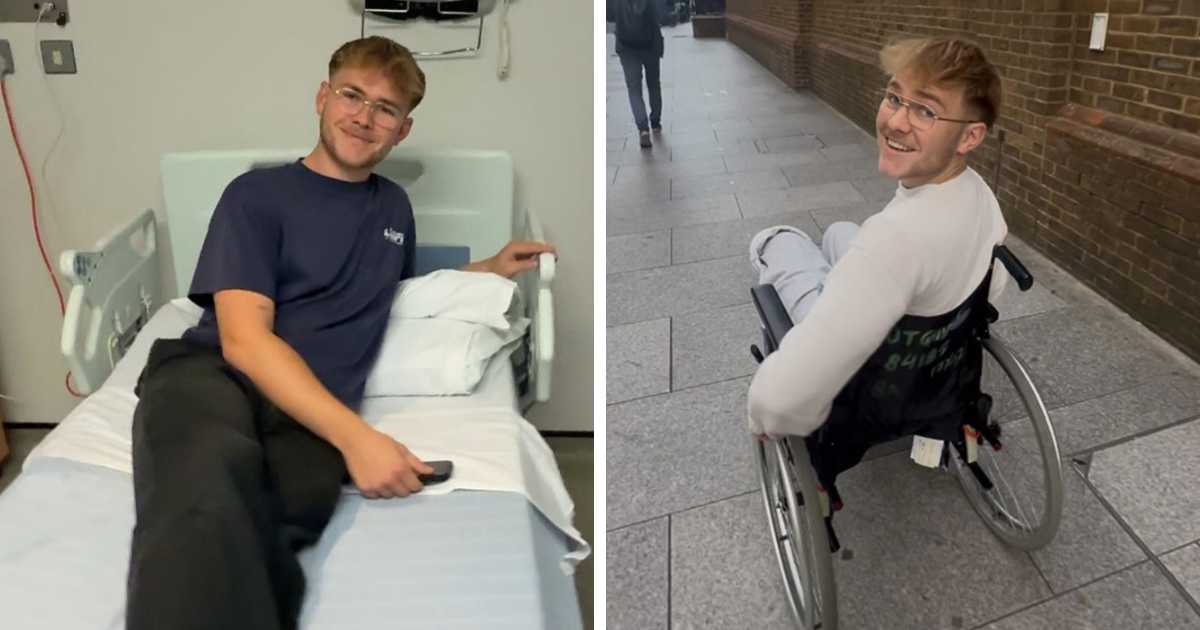
20-Year-Old Decided To Amputate His Leg After Going To A Rock Concert, Breaks His Silence On Why

20-Year-Old Decided To Amputate His Leg After Going To A Rock Concert, Breaks His Silence On Why www.boredpanda.com
preview

Highlights: - A night out at a rock concert changed everything for Tommy Hurrell, who made a life-altering decision after years of health struggles. - The 20-year-old was attending a Supergrass concert with his father when he decided to amputate his leg. - Post-surgery, Hurrell shared his journey of adjusting to life as an amputee and to “redefine his disability” on social media.

Highlights: - A night out at a rock concert changed everything for Tommy Hurrell, who made a life-altering decision after years of health struggles. - The 20-year-old was attending a Supergrass concert with his father when he decided to amputate his leg. - Post-surgery, Hurrell shared his journey of adjusting to life as an amputee and to “redefine his disability” on social media.

0

How ‘Botox’ is helping Ukrainian soldiers who’ve lost limbs in the war

New York Post How ‘Botox’ is helping Ukrainian soldiers who’ve lost limbs in the war nypost.com
preview

Northwestern Medicine and Ukrainian physicians have now identified another potential use for Botox — relieving devastating phantom limb pain in Ukrainian war amputees.

Northwestern Medicine and Ukrainian physicians have now identified another potential use for Botox — relieving devastating phantom limb pain in Ukrainian war amputees.

0

My left foot just lost a shoe size

preview

I spoke too fast. I’m back from surgery for more bone trimming to try and get rid of the infection. If the new antiobiotics don’t work, I’m scheduled for radiotherapy. And if that don’t work… I guess I’ll be losing a whole lot more shoe sizes. Funny how life suddenly starts to suck really, really fast sometimes…

I spoke too fast. I’m back from surgery for more bone trimming to try and get rid of the infection. If the new antiobiotics don’t work, I’m scheduled for radiotherapy. And if that don’t work… I guess I’ll be losing a whole lot more shoe sizes. Funny how life suddenly starts to suck really, really fast sometimes…

0

My foot looks like it's saved

preview

A week after this, the diarrhea-inducing course of antibiotics seems to have done its job: my residual phalanges are now healing nicely, the swelling is down and the pain is subsiding - although not the phantom pain: that’s still going on and it sucks… And yeah, the test results came back and I did have an infection. And the surgeon did consider doing more chop-chop if the antibiotics didn’t work, and I wasn’t all that keen… I know it’s still nobody’s problem but mine ultimately, but I’m a happy camper right now. So ya know, just sharing the joy with y’all 🙂

A week after this, the diarrhea-inducing course of antibiotics seems to have done its job: my residual phalanges are now healing nicely, the swelling is down and the pain is subsiding - although not the phantom pain: that’s still going on and it sucks… And yeah, the test results came back and I did have an infection. And the surgeon did consider doing more chop-chop if the antibiotics didn’t work, and I wasn’t all that keen… I know it’s still nobody’s problem but mine ultimately, but I’m a happy camper right now. So ya know, just sharing the joy with y’all 🙂

0

I know it's strictly my problem, but... I'm tired, and I'm scared

preview

So I had revision surgery 2 1/2 weeks ago to remove simple bone spurs. It was a half-hour, 5-sitch affair that went well… until it didn’t. The incision isn’t healing well. my residual phalanges hurt more and more every day. The pain is going up my foot. The phantom pain is off the charts and not letting up - and now it’s waking up in my other foot too for reasons unknown. The surgeon kept telling me it was okay, just wait until it gets better. But it doesn’t. And so I saw him again today and now he seems worried too. He says I might have bone infection and he gave me a horse’s course of antibiotics. I know nobody can do anything about any of this - particularly the phantom pain: it’s like tinnitus, it’s just your thing to deal with. But… well, I’m scared and my family doesn’t really understand. And I don’t want to bother them with any of this either. I know they mean well, but there’s only so many times you want to hear somebody complain about the same thing. So, that’s my outlook for the weekend I guess…

So I had revision surgery 2 1/2 weeks ago to remove simple bone spurs. It was a half-hour, 5-sitch affair that went well… until it didn’t. The incision isn’t healing well. my residual phalanges hurt more and more every day. The pain is going up my foot. The phantom pain is off the charts and not letting up - and now it’s waking up in my other foot too for reasons unknown. The surgeon kept telling me it was okay, just wait until it gets better. But it doesn’t. And so I saw him again today and now he seems worried too. He says I might have bone infection and he gave me a horse’s course of antibiotics. I know nobody can do anything about any of this - particularly the phantom pain: it’s like tinnitus, it’s just your thing to deal with. But… well, I’m scared and my family doesn’t really understand. And I don’t want to bother them with any of this either. I know they mean well, but there’s only so many times you want to hear somebody complain about the same thing. So, that’s my outlook for the weekend I guess…

0

Interesting foot-operated mouse - Navifut xStep

NaviFut Foot Mouse for RSI & Accessibility - Hands Free Ergonomic Mouse navifut.com
preview

If you don’t have use of your hands. See also this video: xStep Foot-Controlled Mouse by NaviFut – Work More Comfortably and Efficiently It’s basically a giant optical mouse usable with one foot.

If you don’t have use of your hands. See also this video: xStep Foot-Controlled Mouse by NaviFut – Work More Comfortably and Efficiently It’s basically a giant optical mouse usable with one foot.

0

Cringe commercial offer

preview

So I got tired of waiting for the slow-slow public hospital and decided to have my bone spurs removed in a private clinic. I got the surgery yesterday, and I’ve been lying in bed with my leg elevated, trying not to move, waiting for the pain to subside. This morning, the phone rang in the living room. Damn… I got on my feet, grabbed the crutches and hurried out my bedroom to answer the phone. It was the clinic: “Hello Sir! You’ve had surgery at our clinic yesterday!.To thank you for your business, we would like to offer you a free podiatrist foot and nail care consultation!” … Really? I know it’s just a machine triggering the call for a commercial offer. But they could at least have someone check the person’s medical record first. It’s a bit depressing. Kind of like when my Dad reached the age of 100 and he started getting ads for baby formula because the advertisers’ database encoded the age on 2 digits…

So I got tired of waiting for the slow-slow public hospital and decided to have my bone spurs removed in a private clinic. I got the surgery yesterday, and I’ve been lying in bed with my leg elevated, trying not to move, waiting for the pain to subside. This morning, the phone rang in the living room. Damn… I got on my feet, grabbed the crutches and hurried out my bedroom to answer the phone. It was the clinic: “Hello Sir! You’ve had surgery at our clinic yesterday!.To thank you for your business, we would like to offer you a free podiatrist foot and nail care consultation!” … Really? I know it’s just a machine triggering the call for a commercial offer. But they could at least have someone check the person’s medical record first. It’s a bit depressing. Kind of like when my Dad reached the age of 100 and he started getting ads for baby formula because the advertisers’ database encoded the age on 2 digits…

0

Russia touts prosthetics breakthrough — fueled by its own war casualties — Meduza

Meduza Russia touts prosthetics breakthrough — fueled by its own war casualties — Meduza meduza.io
preview

I question whether reaching “flagship level” in prosthetics and the unprecedented growth of the domestic prosthetics industry is something a country should be proud of.

I question whether reaching “flagship level” in prosthetics and the unprecedented growth of the domestic prosthetics industry is something a country should be proud of.

0

Limber Prosthetics | 3D Printed Below Knee Prosthesis

Limber Prosthetics Limber Prosthetics www.limberprosthetics.com
preview

Fantastic-looking 3D-printed BK prosthetic - FDA-approved, waterproof, 50% lighter and cheaper than conventional prostheses. It seems quite durable too 🙂 Limber Prosthetics leg extreme durability test

Fantastic-looking 3D-printed BK prosthetic - FDA-approved, waterproof, 50% lighter and cheaper than conventional prostheses. It seems quite durable too 🙂 Limber Prosthetics leg extreme durability test

0

Can saunas make you live longer? - Max G. Levy

play · youtube.com
YouTube Can saunas make you live longer? - Max G. Levy youtu.be
preview

Not directly related to limb loss - not at all in the video, in fact.

But I’m posting this here because I can’t say enough good things about saunas for phantom pain relief: in my case, phantom pain manifests itself in the form of electric shocks and, more annoyingly, intense itching that I obviously can’t scratch, and one of the only things that work for me is a nice hot sauna.

If you have access to a sauna or a hot spa somewhere, give it a spin next time it hits!

0

We Change, They Adjust: A Guide to Adjustable Socket Technology

Amputee Store We Change, They Adjust: A Guide to Adjustable Socket Technology amputeestore.com
preview

Here are videos of the adjustable socket systems mentioned in the guide:

  • Click Medical Adjustable Sockets:
    Click Medical Adjustable Sockets

  • LIM Innovations Infinite Socket:
    LIM Innovations Infinite Socket

  • Martin Bionics Socket-less Socket:
    Martin Bionics Socket-less Socket

This guide is rather old (2018), there are other systems out there. But they all work pretty much on the same principles.