0


follow from another instance
Not on this instance? Enter your own instance's domain to go straight to following c/aphantasia@lemmy.world there.
showing posts tagged #aphantasia — clear

0
preview
Post anything about aphantasia—just be nice!
Post anything about aphantasia—just be nice!
0
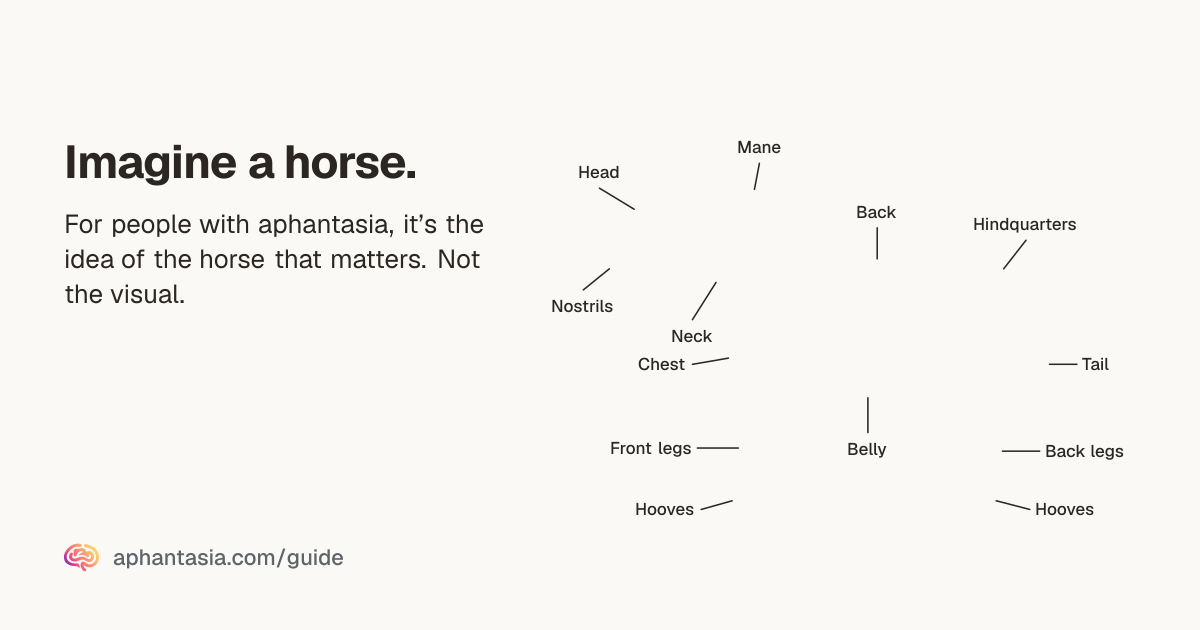
Aphantasia Network
How do I know if I have aphantasia? A beginner’s guide
aphantasia.com
0

preview
I read an article about aphantasia a couple days ago, just stumbled on it, and realized that I have complete aphantasia. I’ve been feeling a kind of vague depression about it ever since, like a new distinct feeling that something is missing, even though I’ve been like this my whole life. I started sobbing just reading the article, making these connections.
I guess I’m just wondering if this is normal, did anyone else in this community grieve over the loss of… something we’ve never had anyway?
0
preview
I don’t know if I have it. And a bunch of quizzes and articles don’t seem to answer my questions. So here goes…
I can “picture” a lot of things. But more often than not, these depictions are not really “visual”.
I was intrigued when (about 10 years ago) my SO said that she could close her eyes and it was just like if someone turned on a projector behind her eyes. I’ve never experienced anything like that.
If I’m asked to picture a red apple, I will believe that I did just that. But I don’t “see” a color. You might say that I experience the feeling associated with “red”.
And some times it’s the opposite. I recall a feeling, but it turns to shapes and colors in my mind (though I still wouldn’t describe it nearly as “vivid” as actually seeing something colorful).
Even more, if someone describes a scene, I can “redraw” it in my mind, but it might resemble an impressionist painting. Or I “see” lines gradually sketching something on paper.
Remembering real experiences do “draw” something in my mind, first with muted colors, and then I superimpose the appropriate colors on top.
Somehow colors seem to be involved in some way or another (I’m terrible at picking colors that “look good”, even when I have them in front of me).
Maybe I do have aphantasia. Or maybe I’m looking too much into it. Any thoughts?
0
preview
Original link: newyorker.com/…/some-people-cant-see-mental-image…
Original link: newyorker.com/…/some-people-cant-see-mental-image…
0

Aphantasia and Psychedelics
psychedelirium.substack.com
0
0

YouTube
The Anti-Visionary: Thriving Without a Mind’s Eye | Kylie Sambirsky | TEDxCU
www.youtube.com
0

Aether Mug
I Do Not Remember My Life and It's Fine
aethermug.com
0
preview
They have discord server : discord.com/invite/FRKHJNbzDj
They have discord server : discord.com/invite/FRKHJNbzDj
0
preview
Facebook post of Blake Ross an American software engineer who is best known for his work as the co-creator of the Mozilla Firefox web browser.
Facebook post of Blake Ross an American software engineer who is best known for his work as the co-creator of the Mozilla Firefox web browser.
0
Aphantasie
Aphantasie | Leben ohne visuelle Vorstellungskraft
www.aphantasie.com
0
preview
Scientists found a strong connection between the size differences in specific areas of the brain (the hippocampus) and how people scored on a visual imagery questionnaire
Scientists found a strong connection between the size differences in specific areas of the brain (the hippocampus) and how people scored on a visual imagery questionnaire
0
0

BBC
Curious Cases - Series 21 - The Case of the Blind Mind's Eye - BBC Sounds
www.bbc.co.uk
0

WIRED
The Strange Case of the Woman Who Can't Remember Her Past
www.wired.com
0

Autism Parenting Magazine
Aphantasia and Autism: Understanding the Connection
www.autismparentingmagazine.com
0

YouTube
Adam Zeman on Aphantasia and the New Science of Imagination | The Shape of Things Unseen
www.youtube.com
0

YouTube
The Language Problem: How Simple Word Changes Make Therapy Work for Aphantasia
youtu.be
0

YouTube
The Visual Impedance Effect: A Hidden Superpower #aphantasia #cbttherapy #podcast #science
youtube.com
0

The Black Hole of My Mind: Discovering Aphantasia as an Ayahuasquero
mercuria.substack.com
0

YouTube
Trauma Without Flashbacks: The Surprising Advantage of Aphantasia
www.youtube.com
0

YouTube
🧠 Understanding Memory & Aphantasia: New Research from Merlin Monzel
www.youtube.com
0

YouTube
The Mind Lab, Episode 3: Could You Live Without Memories? The SDAM Experience
www.youtube.com
0

YouTube
Multisensory Aphantasia: The Mind’s Silent, Scentless, Soundless World
m.youtube.com
0

YouTube
No. 1 Inner Experience Expert: Inner Monologue, Aphantasia and How Your Mind Lies to You
www.youtube.com
preview
Dr Russell Hurlburt is a psychologist, researcher, and one of the leading experts in the study of inner experience.
We all assume we know what’s happening inside our own minds. But what if the way you describe your inner thoughts—your inner monologue, mental images, emotions—isn’t accurate? What if you’ve spent your entire life mischaracterizing your own experience? Russell’s research suggests that most people don’t truly understand how their minds work.
Expect to learn why you might not actually have an inner monologue, the five core phenomena of inner experience, why most psychological self-reports are unreliable, the surprising differences in how people experience thought, how experience sampling can reveal the hidden structure of your mind, whether meditation really increases self-awareness, and the astonishing story of a woman whose perception of reality was forever altered by this method.
This episode will make you question everything you thought you knew about your own mind.
0
Aphantasia Network
Less Sensory Overwhelm in Aphantasia: A Potential Advantage?
aphantasia.com
0

Psychology For
Anauralia: the Lives of People Without an Internal Voice in Their Minds | 2026
psychologyfor.com
0

YouTube
Can you "see" images in your mind? Some people can't - Adam Zeman
youtu.be
0

Radiolab Podcasts | WNYC Studios
Aphantasia
radiolab.org
0

Aphantasia: Why I cannot picture my children in my mind
www.bbc.com
preview
0
0

YouTube
Why Some People Can’t Visualize Anything: Aphantasia
www.youtube.com
0
preview
I am not sure I have aphantasia, but I definitely have difficulty with images.
The best way I can describe it is like I have mental impressionism.
I can see my wife’s face, but it’s like I am seeing it out of the corner of my eye and not in focus. If I try to focus on the details, it falls apart like zooming in on the detail of a Monet.
She can remember the conversation we had a month ago, on a date. Like play it back almost word for word. Meanwhile, I barely even remember the date itself.
But I can remember feelings, smells, and sounds. I can look at an image and I can imagine what it smells, or even feels like. Very vividly, the feel of a sunny country day. How the sun and breeze feels on my skin, the smell of the field, and the sound of the insects. I can close my eyes and almost feel like I am there. But ask me to visually describe it, I would have a hard time. (I have a terrible sense of smell now too).
I have a talent for recognizing voices, even if I can’t understand the words. I can hear an actor and usually place them pretty easily, but I also can’t understand conversational audio if there is any competing sounds. It is so frustrating sometimes and hearing aids don’t really help that much.
Photo is unrelated, but Lemmy made me post one, so enjoy my torty.
0

Live Science
People who can't 'see with their mind's eye' have different wiring in the brain
www.livescience.com
0
Aphantasia Network
Expanding Aphantasia Definition: Researchers Propose New Boundaries
aphantasia.com
0

0

YouTube
Breaking: Scientists Decode Imageless Imagery in Aphantasia
www.youtube.com
preview
Mentionned study: www.sciencedirect.com/…/S096098222401652X
Mentionned study: www.sciencedirect.com/…/S096098222401652X
0
preview
Found here: reddit.com/…/study_ability_to_voluntarily_visuali…
Coment of the original author:
I am a student at Dublin Business School and I am doing a Higher National Diploma in Psychology. For my research project/thesis I am investigating the link between the ability to voluntarily visualise and the impact on body image.
Studies in body image show that part of the problem can be how you view yourself and some of the treatments are visualisation based. So I am wondering if visualisers or us are more or less at risk. I am not hypothesising either way.
The survey contains the VVIQ (which we can help complete pretty quickly) and then some questions related to body image.
I need to get roughly 70 people in my aphantasia group so would really appreciate your time!
Survey Link: forms.office.com/e/VHQiD1Rnx5
0

Buzzsprout
Aphantasia Q&A with Adam Zeman - Discovering Your Mind - Aphantasia and Beyond
podcast.discoveringyourmind.com
preview
In this episode, we are very excited and fortunate to have a discussion with Adam Zeman. Adam tells us his story about how he was involved in coining the term “aphantasia” and how his research and articles got picked up by the media, resulting in the large interest in this phenomenon that we see today. He shares with us where he falls in all of this including all of his inner senses. We ask him about many things that we have been curious about as well as questions from a number of people from an aphantasia facebook group. These topics include, the VVIQ, early imagery research, aphantasia percentages, SDAM, pupil response, wakeful imagery vs dreaming, links to trauma, and unconscious imagery or “seeing without seeing”. He also explains to us an interesting study surrounding “Blind Sight”.
In this episode, we are very excited and fortunate to have a discussion with Adam Zeman. Adam tells us his story about how he was involved in coining the term “aphantasia” and how his research and articles got picked up by the media, resulting in the large interest in this phenomenon that we see today. He shares with us where he falls in all of this including all of his inner senses. We ask him about many things that we have been curious about as well as questions from a number of people from an aphantasia facebook group. These topics include, the VVIQ, early imagery research, aphantasia percentages, SDAM, pupil response, wakeful imagery vs dreaming, links to trauma, and unconscious imagery or “seeing without seeing”. He also explains to us an interesting study surrounding “Blind Sight”.
0
Aphantasia Network
Are You a Visualizer or Conceptualizer? The Ball on a Table Test
aphantasia.com
0
0

Aphantasia: Ex-Pixar chief Ed Catmull says 'my mind's eye is blind'
www.bbc.com
0

Severely Deficient Autobiographical Memory (SDAM)
What is SDAM ?
sdamstudy.weebly.com
0
preview
I found out about SDAM recently and it seems like I definitely have it, and from everything I’ve heard it has a lot of overlap with aphantasia. I’m wondering if it’s even possible to separate them or they’re part of the same thing.
I’m curious if anyone here has the experience of aphantasia without SDAM, and what their experience is like if that’s the case. Like, how does one read those episodic memories without a mind’s eye?
0
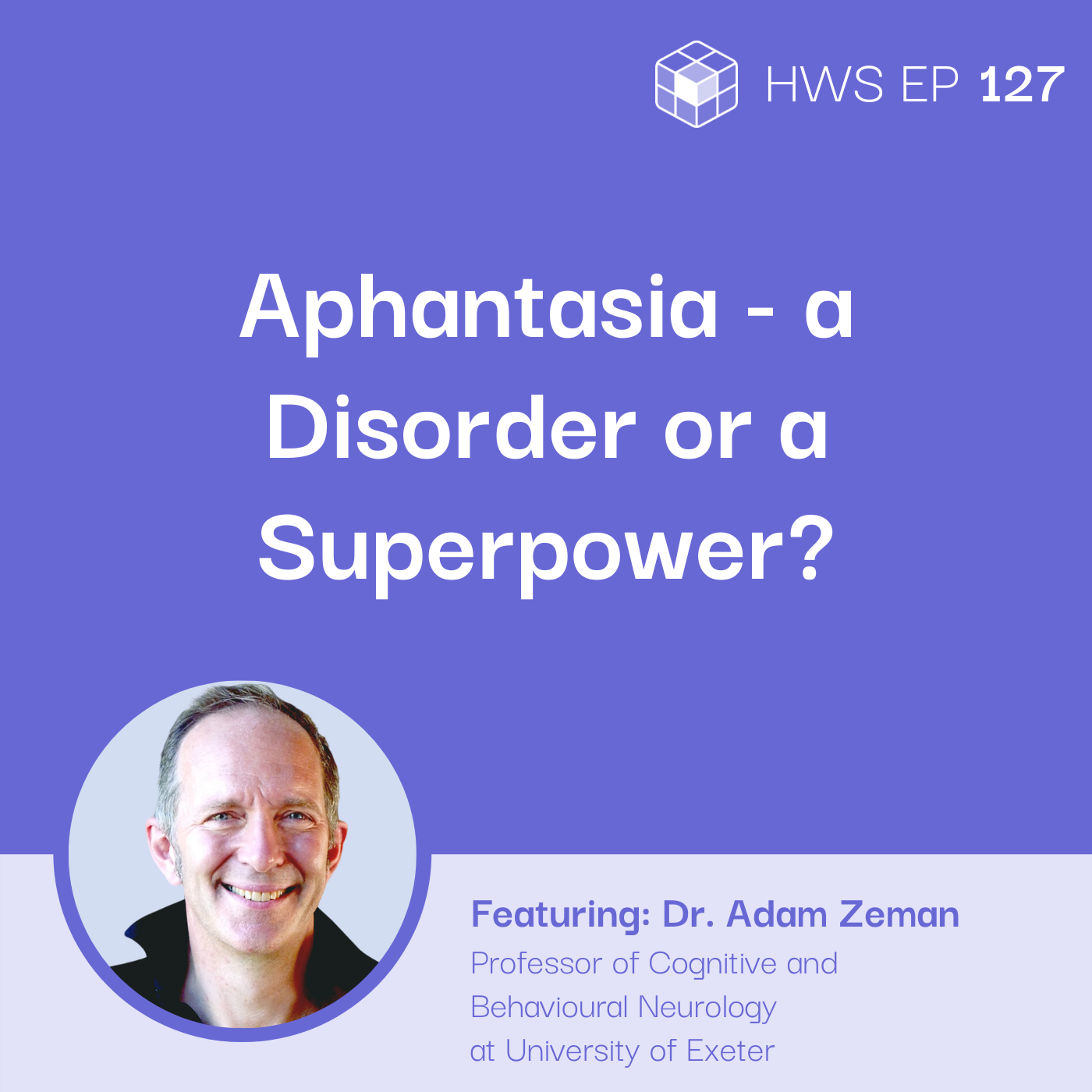
How We Solve
Ep 127: Aphantasia - Thinking Without a "Mind's Eye" with Dr. Adam Zeman - How We Solve
howwesolve.com
preview
0
0
Mind Void
Home | Mind Void
www.mind-void.com
0

The Conversation
The pink elephant test: what your visual imagination predicts about your ability to control your thoughts
theconversation.com
preview
The realtes study: www.sciencedirect.com/…/S0010945224003083
The realtes study: www.sciencedirect.com/…/S0010945224003083