0

Drei Figuren (1922) by Arthur Segal

preview

Arthur Segal was a Romanian artist and author. Segal was born to Jewish parents in Iaşi, Romania, and studied at the Berlin Academy from 1892. He studied with Schmid-Reutte [de] and Hölzel in Munich in 1896, and later studied in Paris and Italy in the early 1900s. After studying in Paris and Italy, he eventually moved to Berlin in 1904 where he exhibited his work with Die Brucke and Der Blaue Reiter, two leading German expression groups. In 1910 he co-founded the Neue Sezession, a group of artists whose work was rejected by the Berliner Sezession.

https://en.wikipedia.org/wiki/Arthur_Segal_(painter)

More Arthur: https://artvee.com/artist/arthur-segal/

0

Waldinneres mit lesendem Knaben (ca 1860) by Hans Thoma

preview

Hans Thoma was a German painter. He was born in 1839 in Bernau, Grand Duchy of Baden, in the Black Forest, Germany. He was the son of a miller and was trained in the basics of painting by a painter of clock faces. He entered the Karlsruhe Academy in 1859, where he studied under Johann Wilhelm Schirmer and Ludwig des Coudres – the latter of which had a major influence on his career. In spite of his studies under various masters, his art has little in common with modern ideas, and is formed partly by his early impressions of the simple idyllic life of his native district, partly by his sympathy with the early German masters, particularly with Albrecht Altdorfer and Lucas Cranach the Elder.

More Hans: https://artvee.com/artist/hans-thoma/

0

Ethereal Spring Persians (2022) by Dale Chihuly

preview

Dale Patrick Chihuly (born 1941) is an American glass artist. He is well known in the field of blown glass, “moving it into the realm of large-scale sculpture”. Chihuly began experimenting with glassblowing in 1965, and in 1966 he received a full scholarship to attend the University of Wisconsin–Madison. He studied under Harvey Littleton, who had established the first glass program in the United States at the university. In 1967, Chihuly received a Master of Science degree in sculpture. After graduating, he enrolled at the Rhode Island School of Design, where he met and became close friends with Italo Scanga. Chihuly earned a Master of Fine Arts degree in sculpture from the RISD in 1968. That same year, he was awarded a Louis Comfort Tiffany Foundation grant for his work in glass, as well as a Fulbright Fellowship.

https://en.wikipedia.org/wiki/Dale_Chihuly

https://www.chihulygardenandglass.com/

0

Stevenson Memorial (1903) by Abbott Handerson Thayer

preview

Abbott Handerson Thayer was an American artist, naturalist and teacher. As a painter of portraits, figures, animals and landscapes, he enjoyed a certain prominence during his lifetime, and his paintings are represented in the major American art collections. He is perhaps best known for his ‘angel’ paintings, some of which use his children as models.

https://en.wikipedia.org/wiki/Abbott_Handerson_Thayer

More Thayer: https://artvee.com/artist/abbott-handerson-thayer/

0

Rokeby Venus by Diego Velázquez (c. 1647-51)

preview

The Rokeby Venus (/ˈroʊkbi/ ROHK-bee; also known as The Toilet of Venus, Venus at her Mirror, Venus and Cupid and, in Spanish, La Venus del espejo) is a painting by Diego Velázquez, the leading artist of the Spanish Golden Age. Completed between 1647 and 1651,[3] and probably painted during the artist’s visit to Italy, the work depicts the goddess Venus in a sensual pose, lying on a bed with her back facing the viewer, and looking into a mirror held by the Roman god of physical love, her son Cupid. The painting is in the National Gallery, London.

https://en.wikipedia.org/wiki/Rokeby_Venus

More: https://artvee.com/artist/diego-velazquez/

Much more: https://en.wikipedia.org/wiki/List_of_works_by_Diego_Vel%C3%A1zquez

0

The Cup of Death by Elihu Vedder (1885)

preview

Elihu Vedder was an American symbolist painter, book illustrator, and poet, born in New York City. He is best known for his fifty-five illustrations for Edward FitzGerald’s translation of The Rubaiyat of Omar Khayyam (deluxe edition, published by Houghton Mifflin).

More: https://artvee.com/artist/elihu-vedder/

0

La Seine à Argenteuil, bateaux au mouillage (1883) Gustave Caillebotte

preview

Gustave Caillebotte was a French painter who was a member and patron of the Impressionists, although he painted in a more realistic manner than many others in the group. Caillebotte was noted for his early interest in photography as an art form. Caillebotte earned a law degree in 1868 and a license to practice law in 1870, and he also was an engineer. Shortly after his education, he was drafted to fight in the Franco-Prussian war, and served from July 1870 to March 1871 in the Garde Nationale Mobile de la Seine.

After the war, Caillebotte began visiting the studio of painter Léon Bonnat, where he began to study painting seriously. He developed an accomplished style in a relatively short time and had his first studio in his parents’ home.

the artist

0

The Immaculate Conception by Giambattista Tiepolo (1767-68)

preview

The Immaculate Conception is a painting by Italian painter Giovanni Battista Tiepolo (1696–1770). The painting was one of seven altarpieces commissioned in March 1767 from Tiepolo by King Charles III of Spain for the Church of Saint Pascual in Aranjuez, then under construction. This was originally an Alcantarine (Franciscan) monastery that was later assigned to the Conceptionist nuns.

https://en.wikipedia.org/wiki/The_Immaculate_Conception_(Tiepolo)

More Tiepolo: https://en.wikipedia.org/wiki/Giovanni_Battista_Tiepolo#Gallery

0

The Art of Painting by Johannes Vermeer (1666-68)

preview

The Art of Painting, also known as The Allegory of Painting, or Painter in his Studio, is a 17th-century oil on canvas painting by Dutch painter Johannes Vermeer. Many art historians think that it is an allegory of painting, hence the alternative title of the painting. Its composition and iconography make it Vermeer’s most complex work. After Vermeer’s Christ in the House of Martha and Mary and The Procuress, it is his largest work.

This illusionistic painting is one of Vermeer’s most famous. In 1868 Théophile Thoré-Bürger, known today for his rediscovery of Vermeer, regarded this painting as his most interesting.

https://en.wikipedia.org/wiki/The_Art_of_Painting

More Vermeer: https://en.wikipedia.org/wiki/List_of_paintings_by_Johannes_Vermeer

0

Are you ill, dear North Wind by Jessie Willcox Smith (1919)

preview

Jessie Willcox Smith was an American illustrator during the Golden Age of American illustration. She was considered “one of the greatest pure illustrators”. She was a contributor to books and magazines during the late 19th and early 20th centuries. Smith illustrated stories and articles for clients such as Century, Collier’s, Leslie’s Weekly, Harper’s, McClure’s, Scribners, and the Ladies’ Home Journal. She had an ongoing relationship with Good Housekeeping, which included the long-running Mother Goose series of illustrations and also the creation of all of the Good Housekeeping covers from December 1917 to 1933. Among the more than 60 books that Smith illustrated were Louisa May Alcott’s Little Women and An Old-Fashioned Girl, Henry Wadsworth Longfellow’s Evangeline, and Robert Louis Stevenson’s A Child’s Garden of Verses.

the artist

More: https://artvee.com/artist/jessie-willcox-smith/

0

Lake at Sunset, Colorado by Birger Sandzén (1921)

preview

Sven Birger Sandzén, known more commonly as Birger Sandzén, was an American painter best known for his landscapes. He produced most of his work while working as an art professor at Bethany College, Lindsborg, Kansas.

Sandzén was born in Blidsberg, Sweden. After graduating in 1890, Sandzén studied for a short time at the University of Lund before moving to Stockholm. It was his intention to enroll at the Royal Swedish Academy of Arts. At the end of his studies, Zorn and Bergh recommended that Sandzén complete his painting studies in Paris. Later in 1894, Sandzén accepted a teaching post from Carl Aaron Swensson President of Bethany College. He moved to Lindsborg, Kansas which would be his home for the rest of his life. He remained on the faculty for fifty-two years, teaching various languages as well as art in his first year at Bethany.

More Sven: https://artvee.com/artist/birger-sandzen/

0

Dejanira (Autumn) by Gustave Moreau (1872)

preview

Gustave Moreau (1826 – 1898) was a French artist and an important figure in the Symbolist movement. Jean Cassou called him “the Symbolist painter par excellence”.  He was an influential forerunner of symbolism in the visual arts in the 1860s, and at the height of the symbolist movement in the 1890s, he was among the most significant painters.

https://en.wikipedia.org/wiki/Gustave_Moreau

More Gustave: https://en.wikipedia.org/wiki/Gustave_Moreau#Gallery

0

Harlinah Teoh, contemporary Australian ceramics artist inspired by nature

preview

Harlinah Teoh is an Australian artist creating botanical ceramic vessels.

My work is a meditation on walking, observation, and creation. It draws on my childhood living in dry eucalyptus forest, rainforest and mangrove country and my lifelong interest in mythology and folk art. As a hiker, I’m inspired by the flora I encounter as I walk through the Australian landscape.

I handbuild stoneware vessels, embracing slow construction and harmonious forms. Rich surface detail is created through the addition and subtraction of layers using slips, underglaze, carving and sgraffito. All work is both sculptural and functional.

I grew up in New South Wales and the Northern Territory and lived in Japan and Singapore before settling in Narrm/Melbourne over 25 years ago. I took up ceramics in 2019 and shifted my work to focus on my arts practice in 2022. I began exhibiting in 2023 and have been a finalist in the National Emerging Art Prize, Wa Ikebana Container Award, and Korowa Ceramic Art Prize.

https://www.harlinahteoh.com/about

0

The Mountain of the Holy Cross, Colorado (ca. 1876) Thomas Moran

preview

Thomas Moran (1837 – 1926) was an American painter and printmaker of the Hudson River School in New York whose work often featured the Rocky Mountains. Moran and his family, wife Mary Nimmo Moran and daughter Ruth, took residence in New York where he obtained work as an artist. A talented illustrator and exquisite colorist, Thomas Moran was hired as an illustrator at Scribner’s Monthly. During the late 1860s, he was appointed the chief illustrator for the magazine, a position that helped him launch his career as one of the premier painters of the American landscape, in particular, the American West.

https://en.wikipedia.org/wiki/Thomas_Moran

More Moran: https://artvee.com/artist/thomas-moran/

0

The Blue Room by Pablo Picasso (1901)

preview

The Blue Room (French: La chambre bleue) is a 1901 oil on canvas painting by Pablo Picasso, which he painted during his Blue Period. It depicts a scene of a nude woman bending over in a bath tub. A hidden painting was revealed beneath the surface by x-ray images and infra-red scans, showing a portrait of a bearded man.

https://en.wikipedia.org/wiki/Pablo_Picasso

0

Max Schmitt in a Single Scull by Thomas Eakins (1871)

preview

Thomas Cowperthwait Eakins was an American realist painter, photographer, sculptor, and fine arts educator. He is widely acknowledged to be one of the most important artists in American art history.

For the length of his professional career, from the early 1870s until his health began to fail some 40 years later, Eakins worked exactingly from life, choosing as his subject the people of his hometown of Philadelphia. He painted several hundred portraits, usually of friends, family members, or prominent people in the arts, sciences, medicine, and clergy. Taken en masse, the portraits offer an overview of the intellectual life of Philadelphia in the late 19th and early 20th centuries; individually, they are incisive depictions of thinking persons.

This painting, the first of 24 rowing paintings that Eakins completed over the course of four years, was the first time rowing was the focus of serious art. However, the stuffy Philadelphia critics didn’t take well to Eakins’ subject matter, even though rowing was, at the time, one of the most popular sports. A critic remarked that his subject matter was ‘a shock to the artistic conventionalities of the city’.

https://en.wikipedia.org/wiki/Thomas_Eakins

https://en.wikipedia.org/wiki/Max_Schmitt_in_a_Single_Scull

More: https://artvee.com/artist/thomas-eakins/page/2/

0

Infinity Mirrored Room — Illusion Inside the Heart (2025) by Yayoi Kusama

preview

Yayoi Kusama (草間 彌生, Kusama Yayoi; 22 March 1929 – 14 August 2026) was a Japanese contemporary artist who worked primarily in sculpture and installation. She was also active in painting, performance, video art, fashion, poetry, fiction, and other arts. Her work was based in conceptual art and shows some attributes of feminism, minimalism, surrealism, art brut, pop art, and abstract expressionism, and was infused with autobiographical, psychological, and sexual content.

Yayoi Kusama (草間 彌生, Kusama Yayoi; 22 March 1929 – 14 August 2026) was a Japanese contemporary artist who worked primarily in sculpture and installation. She was also active in painting, performance, video art, fashion, poetry, fiction, and other arts. Her work was based in conceptual art and shows some attributes of feminism, minimalism, surrealism, art brut, pop art, and abstract expressionism, and was infused with autobiographical, psychological, and sexual content.

0

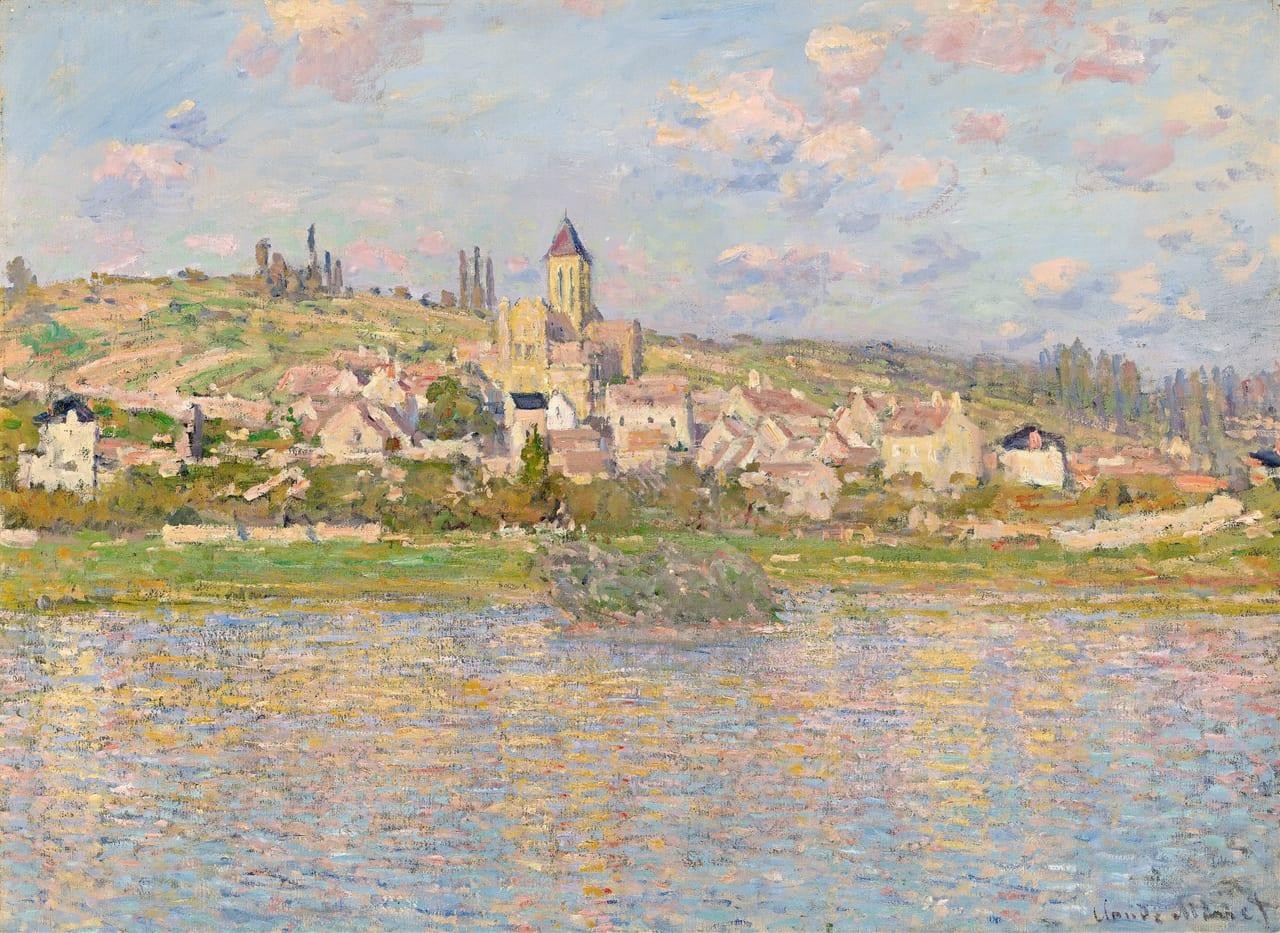
Claude Monet

preview

Some of the appeal of his work, for me, is a nostalgia for an imaginary past, before everything got ruined.

Of course in reality life was rough and difficult then in ways that I will never know, thankfully.

Some of the appeal of his work, for me, is a nostalgia for an imaginary past, before everything got ruined.

Of course in reality life was rough and difficult then in ways that I will never know, thankfully.

0

Mona Lisa by Leonardo da Vinci (c. 1503-1506)

preview

The Mona Lisa is a half-length portrait painting by the Italian artist Leonardo da Vinci. Considered an archetypal masterpiece of the Italian Renaissance, it has been described as “the best known, the most visited, the most written about, the most sung about, [and] the most parodied work of art in the world.” The painting’s novel qualities include the subject’s enigmatic expression, the monumentality of the composition, the subtle modelling of forms, and the atmospheric illusionism.

77 cm × 53 cm (30 in × 21 in)

https://en.wikipedia.org/wiki/Mona_Lisa

0

Verkstaden (The Workshop) by Carl Larsson

preview

Carl Olof Larsson (Swedish pronunciation: [ˈkɑːɭ ˈlɑ̌ːʂɔn] ⓘ; 28 May 1853 – 22 January 1919) was a Swedish painter representative of the Arts and Crafts movement. His many paintings include oils, watercolors, and frescoes. He is principally known for his watercolors of idyllic family life.

https://en.wikipedia.org/wiki/Carl_Larsson

More: https://artvee.com/artist/carl-larsson/

0

'Crazy Quilt' with Animals by Florence Elizabeth Marvin (1886)

preview

Pieced and embroidered “crazy” quilt; dyed and printed silk, cotton, wool and metallic plain, twill, satin, velvet and patterned weave fabrics and ribbons; silk, cotton and metallic embroidery threads, raised work embroidered appliques, glass beads, metal spangles

https://www.artic.edu/artworks/181720/crazy-quilt-with-animals

0

The Abbey in the Oakwood by Caspar David Friedrich (1810)

preview

The Abbey in the Oakwood (German: Abtei im Eichwald) is an oil painting by the German Romantic artist Caspar David Friedrich. It was painted between 1809 and 1810 in Dresden and was first shown together with the painting The Monk by the Sea in the Prussian Academy of Arts exhibition of 1810. On Friedrich’s request The Abbey in the Oakwood was hung beneath The Monk by the Sea. This painting is one of over two dozen of Friedrich’s works that include cemeteries or graves.

https://en.wikipedia.org/wiki/The_Abbey_in_the_Oakwood

0

Mother’s pride by Henriëtte Ronner-Knip

preview

Henriëtte Ronner-Knip was a Dutch-Belgian artist in the Romantic style who is best known for her animal paintings; especially cats. She was born in Amsterdam into a family of artists and received her first lessons from her father, Josephus Augustus Knip, who also gave lessons to her aunt (his youngest sister), Henriëtte Geertruida Knip.

She moved to Amsterdam where she painted farms, animals and forests from nature; first in watercolor, then in oils. That same year, she became the first woman admitted as an “active member” to Arti et Amicitiae. In 1850, she married Feico Ronner (1819-1883) and they moved to Brussels. He was often ill and could not be regularly employed, so he became her manager. At this time, she narrowed her subject matter, focusing almost entirely on dogs and cats. After 1870, she painted her most famous works, featuring long-haired, often playful cats in bourgeois settings.

More - https://artvee.com/artist/henriette-ronner-knip/

0

Chansons de printemps by William Bouguereau (1889)

preview

William-Adolphe Bouguereau was a French academic painter. In his realistic genre paintings, he used mythological themes, making modern interpretations of classical subjects, with an emphasis on the female human body. During his life, he enjoyed significant popularity in France and the United States, was given numerous official honors, and received top prices for his work.

https://artvee.com/artist/william-bouguereau/

0

Child among the Hollyhocks by Berthe Morisot (1881)

preview

Berthe Marie Pauline Morisot (French, 1841 – 1895) was a French painter, printmaker and a member of the circle of painters in Paris who became known as the Impressionists. In 1864, Morisot exhibited for the first time in the highly esteemed Paris Salon, listed as a student of Joseph Guichard and Achille-Francois Oudinot. Her work was selected for exhibition in six subsequent Salons until, in 1874, she joined the “rejected” Impressionists in the first of their own exhibitions, which included Paul Cézanne, Edgar Degas, Claude Monet, Camille Pissarro, Pierre-Auguste Renoir, and Alfred Sisley.

https://en.wikipedia.org/wiki/Berthe_Morisot

More Berthe - https://artvee.com/artist/berthe-morisot/

0

Butterfly by Yayoi Kusama (1988)

preview

Yayoi Kusama (born 22 March 1929) is a Japanese contemporary artist who works primarily in sculpture and installation. She is also active in painting, performance, video art, fashion, poetry, fiction, and other arts. Her work is based in conceptual art and shows some attributes of feminism, minimalism, surrealism, art brut, pop art, and abstract expressionism, and is infused with autobiographical, psychological, and sexual content.

https://en.wikipedia.org/wiki/Yayoi_Kusama

0

Self-portrait with green background and blue irises by Paula Modersohn-Becker (c. 1905)

preview

Paula Modersohn-Becker (1876 – 1907) was a German Expressionist painter and draftswoman of the late 19th and early 20th centuries. She is noted for the many self-portraits, including nudes. She is considered one of the most important representatives of early expressionism, producing more than 700 paintings and over 1000 drawings during her active painting life. She is recognized both as the first known woman painter to paint nude self-portraits, and the first woman to have a museum devoted exclusively to her art (the Paula Modersohn-Becker Museum, founded 1927). Additionally, she is believed to be the first woman artist to depict herself pregnant.

https://en.wikipedia.org/wiki/Paula_Modersohn-Becker

More Modersohn-Becker: https://artvee.com/artist/paula-modersohn-becker/

0

Hiawatha by Edmonia Lewis (1868)

preview

Mary Edmonia Lewis, also known as “Wildfire” (c. 1844 – 1907), was an American sculptor. Born in Upstate New York of mixed African-American and Native American (Mississauga Ojibwe) heritage, she worked for most of her career in Rome. She was the first African-American and Native American sculptor to achieve national and then international prominence. She began to gain prominence in the United States during the Civil War; at the end of the 19th century, she remained the only Black woman artist who had participated in and been recognized to any extent by the American artistic mainstream.

https://en.wikipedia.org/wiki/Edmonia_Lewis

0

Museo Soumaya (Mexico City, MX) by fr·ee

preview

The Museo Soumaya is a private museum in Mexico City and a non-profit cultural institution with two museum buildings in Mexico City — Plaza Carso and Plaza Loreto. It has over 66,000 works from 30 centuries of art including sculptures from Pre-Hispanic Mesoamerica, 19th- and 20th-century Mexican art and an extensive repertoire of works by European old masters and masters of modern western art such as Auguste Rodin, Salvador Dalí, Bartolomé Esteban Murillo and Tintoretto. The museum was designed by Carlos Slim’s son-in-law, Fernando Romero’s practice, fr·ee.

https://en.wikipedia.org/wiki/Museo_Soumaya

More info (and source for the photo): https://modernindenver.com/museo-soumaya-fr-ee-mexico-city-1994/

0

Portrait of Charlotte du Val d'Ognes by Marie-Denise Villers (1801)

preview

Portrait of Charlotte du Val d’Ognes is an 1801 painting (portrait painting) attributed to Marie-Denise Villers. It is in the collection of the Metropolitan Museum of Art.[1] The painting was first acquired by the museum in 1922 and attributed to Jacques Louis David. Later, the painting was attributed to Constance Marie Charpentier and finally to Villers.

https://en.wikipedia.org/wiki/Portrait_of_Charlotte_du_Val_d’Ognes

0

The Bridge by M.C. Escher (1930)

preview

The Bridge is a lithograph print by the Dutch artist M. C. Escher, first printed in March 1930. It depicts a bridge connecting two sheer cliffs. On the top of the left hand cliff is a city. The chasm between the two cliffs is narrow but plummets out of view. In the distance is another outcrop with a city built on top.

The Bridge is a lithograph print by the Dutch artist M. C. Escher, first printed in March 1930. It depicts a bridge connecting two sheer cliffs. On the top of the left hand cliff is a city. The chasm between the two cliffs is narrow but plummets out of view. In the distance is another outcrop with a city built on top.

0

Self-Portrait with Two Pupils, Marie Gabrielle Capet and Marie Marguerite Carreaux de Rosemond by Adélaïde Labille-Guiard (1785)

preview

Adélaïde Labille-Guiard, also known as Adélaïde Labille-Guiard des Vertus, was a French miniaturist and portrait painter. She was an advocate for women to receive the same opportunities as men to become great painters. Labille-Guiard was one of the first women to become a member of the Royal Academy and was the first female artist to receive permission to set up a studio for her students at the Louvre. Labille-Guiard became a master at miniatures, pastels, and oil paintings.

https://artvee.com/artist/adelaide-labille-guiard/

0

Récurrence by Kim Tschang-Yeul (1993)

preview

(South Korean, 1929 – 2021)

Kim Tschang-yeul (Korean: 김창열; Hanja: 金昌烈, 1929 – 2021) was a South Korean artist known for his abstract paintings of water droplets. He formed part of the Modern Artists’ Association (현대미술가협회) in South Korea and joined the Art Informel movement of the 1950s and 60s. From the late 1960s, Kim Tschang-yeul presented works in international stages, studied in the United States, and eventually relocated to Paris in 1969, where he developed his signature water droplet paintings.

https://en.wikipedia.org/wiki/Kim_Tschang-yeul

0

Flaming June by Sir Frederic Leighton (1985)

preview

Flaming June is a painting by Sir Frederic Leighton, produced in 1895. Painted with oil paints on a 47-by-47-inch (1.2 m × 1.2 m) square canvas, it depicts a sleeping woman in a sensuous version of his classicist Academic style. It is Leighton’s most recognisable work, and is much reproduced in posters and other media.

Sir Frederic Leighton (1830 – 1896) was a British Victorian painter, draughtsman, and sculptor. His works depicted historical, biblical, and classical subject matter in an academic style. His paintings were enormously popular and expensive, during his lifetime, but fell out of critical favour for many decades in the early 20th century.

https://en.wikipedia.org/wiki/Flaming_June

0

Wave by Maurice Denis (1916)

preview

Maurice Denis (French: 1870 – 1943) was a French painter, decorative artist, and writer. An important figure in the changing world of late 19th-century European art, Denis is associated with Les Nabis, Symbolism, and later Neo-classicism. His theories contributed to the foundations of Cubism, Fauvism, and abstraction. After World War I, Denis founded the Ateliers d’Art Sacré (Workshops of Sacred Art), decorated the interiors of churches, and worked for a revival of religious art.

https://en.wikipedia.org/wiki/Maurice_Denis

0

Untitled (Blue flower) by Robert Lostutter (1972)

An ambiguously gendered figure restrained by an elaborate leathery garment. its head is replaced or obscured by a blue blooming form.
preview

Untitled (Blue flower) by Robert Lostutter (1972)

@artporn

Seen at the Museum of Contemporary Art, Chicago
#ModernArt #ContemporaryArt #zeitgenössischeKunst #artcontemporain #contemporarypainting #chicago #MuseumArchive #galleries #kunst

Untitled (Blue flower) by Robert Lostutter (1972)

@artporn

Seen at the Museum of Contemporary Art, Chicago
#ModernArt #ContemporaryArt #zeitgenössischeKunst #artcontemporain #contemporarypainting #chicago #MuseumArchive #galleries #kunst

0

Archipelago View by Venny Soldan-Brofeldt (1900)

Painting named "Archipelago View" by Venny Soldan-Brofeldt featuring sail boats and a large rocky island.
preview

Wendla Irene Soldan-Brofeldt, known as Venny was a Finnish painter, illustrator, graphic artist, wood sculptor and jewelry designer. She belonged to the Swedish speaking population of Finland. She was born as Wendla Irene Soldan. Her father, August Fredrik Soldan, was the Director of the Mint of Finland. Her mother, Marie Müller, was German. Swedish was spoken at home. Her desire to become an artist received her family’s wholehearted support. From 1880 to 1884, she initially attended the drawing school of the Finnish Art Association (now the Academy of Fine Arts), but also studied privately with Maria Wiik and attended classes in St.Petersburg from 1883 to 1885. She was briefly a student at the Académie Colarossi in Paris on two occasions. She also made study trips to Spain and Italy with the money she earned copying old classics. Upon returning to Helsinki, she became an art teacher.

Wendla Irene Soldan-Brofeldt, known as Venny was a Finnish painter, illustrator, graphic artist, wood sculptor and jewelry designer. She belonged to the Swedish speaking population of Finland. She was born as Wendla Irene Soldan. Her father, August Fredrik Soldan, was the Director of the Mint of Finland. Her mother, Marie Müller, was German. Swedish was spoken at home. Her desire to become an artist received her family’s wholehearted support. From 1880 to 1884, she initially attended the drawing school of the Finnish Art Association (now the Academy of Fine Arts), but also studied privately with Maria Wiik and attended classes in St.Petersburg from 1883 to 1885. She was briefly a student at the Académie Colarossi in Paris on two occasions. She also made study trips to Spain and Italy with the money she earned copying old classics. Upon returning to Helsinki, she became an art teacher.

0

Les Fiancés by Marie-François Firmin-Girard (1874)

preview

Marie-François Firmin-Girard was born on 29 May 1838 in the village of Poncin, a hamlet in the Ain region of France adjacent to the Swiss border. By age sixteen, the ambitious young artist had left his hometown to study at the Ecole des Beaux-Arts in Paris. Initially he sought out the guidance of Charles Gleyre, the Swiss painter, who offered a traditional visual arts curriculum in an independent studio setting. Later, Firmin-Girard would study with Jean-Léon Gérôme, the academic master of orientalism and anecdotal history paintings.

More: https://artvee.com/artist/marie-francois-firmin-girard/

0

Pink Flowers by Alison Van Pelt (2022)

preview

Alison Van Pelt (born September 16, 1963) is an American painter. Trained in Los Angeles and Florence, Van Pelt is established as a contemporary artist whose work is informed by expressionism, minimalism and pop art.

https://en.wikipedia.org/wiki/Alison_Van_Pelt

https://alisonvanpelt.com/

Alison Van Pelt (born September 16, 1963) is an American painter. Trained in Los Angeles and Florence, Van Pelt is established as a contemporary artist whose work is informed by expressionism, minimalism and pop art.

https://en.wikipedia.org/wiki/Alison_Van_Pelt

https://alisonvanpelt.com/

0

Great Falls of Snake River, Idaho Territory by Thomas Moran (1876)

preview

Thomas Moran was an American painter and printmaker of the Hudson River School in New York whose work often featured the Rocky Mountains. Moran and his family, wife Mary Nimmo Moran and daughter Ruth took residence in New York where he obtained work as an artist. He was a younger brother of the noted marine artist Edward Moran, with whom he shared a studio. A talented illustrator and exquisite colorist, Thomas Moran was hired as an illustrator at Scribner’s Monthly. During the late 1860s, he was appointed the chief illustrator for the magazine, a position that helped him launch his career as one of the premier painters of the American landscape, in particular, the American West.

https://en.wikipedia.org/wiki/Thomas_Moran

More Moran: https://artvee.com/artist/thomas-moran/

0

Björken I (Höst) by August Strindberg (1902)

preview

Johan August Strindberg (1849 – 1912) was a Swedish playwright, novelist, poet, essayist, and painter. A bold experimenter and iconoclast throughout his life, he explored a wide range of dramatic methods and purposes, from naturalistic tragedy, monodrama, and historical plays to his anticipations of expressionist and surrealist dramatic techniques. From his earliest work, Strindberg developed innovative forms of dramatic action, language, and visual composition.

https://en.wikipedia.org/wiki/August_Strindberg