
showing posts tagged #books — clear

0

Dua Lipa to open library of banned and censored books in Portugal

NME Dua Lipa to open library of banned and censored books in Portugal www.nme.com
preview

Nearly 100 books are included in Livraria Lello’s new cultural auditorium, with each relating to four key themes: power, control, voice, and memory. Margaret Atwood’s The Handmaid’s Tale and Reginald Dwayne Betts’ Felon, alongside selected works from Salman Rushdie and Olga Tokarczuk will also be available in the Manifesto Library.

Nearly 100 books are included in Livraria Lello’s new cultural auditorium, with each relating to four key themes: power, control, voice, and memory. Margaret Atwood’s The Handmaid’s Tale and Reginald Dwayne Betts’ Felon, alongside selected works from Salman Rushdie and Olga Tokarczuk will also be available in the Manifesto Library.

0

Six Terrific Books About Decision Making by Non-psychologists

Six Terrific Books About Decision Making by Non-psychologists smallpotatoes.paulbloom.net
preview

Paul Bloom shares six terrific books about decision-making by non-psychologists. These books offer unique perspectives on psychology and insightful approaches to understanding decision-making processes.

Book list:

  • The Scout Mindset: Why Some People See Things Clearly and Others Don’t, By Julia Galef
  • The Biggest Bluff: How I Learned to Pay Attention, Master Myself, and Win. By Maria Konnikova
  • Transformative Experience. By Laurie Paul
  • WIld Problems: A Guide to the Decisions that Define Us, By Russ Roberts
  • Trying Not to Try: The Art and Science of Spontaneity. By Edward Slingerland
  • Alchemy: The Dark Art and Curious Science of Creating Magic in Brands, Business, and Life. By Rory Sutherland

Check out the post for the bonus 7th book.

0

What Independent Bookshops Really Sell

What Independent Bookshops Really Sell www.persuasion.community
preview

Highlights

America’s independent bookstores may look like the tattered, provincial shops of a bygone era—holding onto their existence by the slimmest thread. And booksellers may appear genial and absent-minded, like characters out of Dickens. But in reality, they’re the marketing geniuses of our time.

In August of last year Publishers Weekly reported, “Bookstore sales finished the first half of 2023 up 6.9% over the comparable period in 2022.” In fact, independent bookstore sales outpaced most other publishing industry metrics in 2023, growing faster than overall unit sales of print books. This is unprecedented.

Booksellers have bent the rules of the free market. For the first time in history, a significant chunk of the buying public are voluntarily paying almost double—and going out of their way—to buy exactly the same product they can get cheaper and often faster somewhere else. And it’s all due to that ABA message: “non-corporate, authentic, and socially responsible.”

What no one says is that the bargain works both ways. If book buyers must behave virtuously and tithe an additional $11 a book, then booksellers must uphold the community’s doctrines. They’re locked in the moral contract, too.

But books are different. They signal something about readers’ intelligence, identity, and closely held ideas. Books confer status—especially among the highly educated. The people who sell them know this and they used it to make their case.

“Most independent bookstores have succeeded because they’ve responded to the needs of their community,” says Jan Weissmiller, co-owner of Iowa City’s Prairie Lights since 2008. “If they’re in a part of the country where people are asking for a certain kind of book, that’s what they have on the shelf. Because they’re a business.”

But what I really want is a store where all the ideas are on display—the socialist, capitalist, monogamous, polyamorous, urban, rural, popular, and reviled—that also has the homely sacrosanct quality of one of Hemingway’s coffee-and-absinthe bars. With great music, please—and no puppets, or cheap pizza.

Where are you buying books?

0

Stumbling on Happiness - by Daniel Gilbert | Derek Sivers

Derek Sivers Stumbling on Happiness - by Daniel Gilbert | Derek Sivers sive.rs
preview

Genes tend to be transmitted when they make us do things that transmit genes.

Notes of the book. Seems to be a fun one ;) Have you read it?

Genes tend to be transmitted when they make us do things that transmit genes.

Notes of the book. Seems to be a fun one ;) Have you read it?

0

When Tsundoku Meets Döstädning

Auxiliary Memory When Tsundoku Meets Döstädning auxiliarymemory.com
preview

Tsundoku is a Japanese term for buying books and magazines far faster than you can read them. Döstädning is a concept from Sweden that translates into death cleaning, advice for how to get rid of your stuff before making other people do it after you die.

Tsundoku is a Japanese term for buying books and magazines far faster than you can read them. Döstädning is a concept from Sweden that translates into death cleaning, advice for how to get rid of your stuff before making other people do it after you die.

0

J.G. Ballard: My Favorite Books

preview

J.G. Ballard: My Favorite Books

Metadata

Highlights

In this respect I differed completely from my children, who began to read (I suspect) only after they had left their universities. Like many parents who brought up teenagers in the 1970s, it worried me that my children were more interested in going to pop concerts than in reading “Pride and Prejudice” or “The Brothers Karamazov” — how naive I must have been. But it seemed to me then that they were missing something vital to the growth of their imaginations, that radical reordering of the world that only the great novelists can achieve.

I now see that I was completely wrong to worry, and that their sense of priorities was right — the heady, optimistic world of pop culture, which I had never experienced, was the important one for them to explore. Jane Austen and Dostoyevsky could wait until they had gained the maturity in their 20s and 30s to appreciate and understand these writers, far more meaningfully than I could have done at 16 or 17.

Books:

  • “The Day of the Locust,” Nathanael West
  • “Collected Short Stories,” Ernest Hemingway
  • “The Rime of the Ancient Mariner,” Samuel Taylor Coleridge
  • “The Annotated Alice,” ed. Martin Gardner
  • “The World through Blunted Sight,” Patrick Trevor-Roper
  • “The Naked Lunch,” William Burroughs
  • “The Black Box,” ed. Malcolm MacPherson
  • “Los Angeles Yellow Pages”
  • “America,” Jean Baudrillard
  • “The Secret Life of Salvador Dalí,” by Dalí
0

„Nuovargio visuomenė“: kodėl nuolat jaučiamės persidirbę ir nelaimingi?

preview

Filosofą išgarsinusi „Nuovargio visuomenė“ (vok. Müdigkeitsgesellschaft) Vokietijoje išleista 2010 m. Šioje knygoje jis dešimtmečiu aplenkė šiandien visuotinai pripažįstamą perdegimo kultūros įsigalėjimą, ypač būdingą vadinamajai tūkstantmečio kartai (gimusiesiems 1981–1996 m.). Kasdien patiriama tokia stipri stimuliacija, ypač internete ir socialiniuose tinkluose, kad sunkiai begebama jausti ar savarankiškai mąstyti. Ironiška, kad Hano knygos populiarinamos iš lūpų į lūpas būtent per internetą.

Filosofą išgarsinusi „Nuovargio visuomenė“ (vok. Müdigkeitsgesellschaft) Vokietijoje išleista 2010 m. Šioje knygoje jis dešimtmečiu aplenkė šiandien visuotinai pripažįstamą perdegimo kultūros įsigalėjimą, ypač būdingą vadinamajai tūkstantmečio kartai (gimusiesiems 1981–1996 m.). Kasdien patiriama tokia stipri stimuliacija, ypač internete ir socialiniuose tinkluose, kad sunkiai begebama jausti ar savarankiškai mąstyti. Ironiška, kad Hano knygos populiarinamos iš lūpų į lūpas būtent per internetą.

0

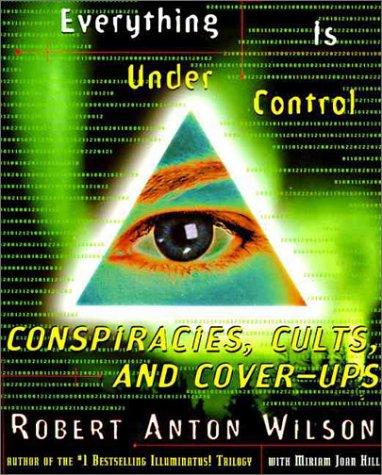
The Illuminatus! Trilogy by Robert Anton Wilson & Robert Shea

Snipd The Illuminatus! Trilogy by Robert Anton Wilson & Robert Shea share.snipd.com
preview

cross-posted from: group.lt/post/1868553

The Long Seventies Podcast episode on The Illuminatus! Trilogy

Some topics touched:

Exploration of Authoritarianism, Skepticism, and Anti-authoritarian Stance: The discussed band in the book represents authoritarianism, while the author advocates for thorough skepticism and an anti-authoritarian stance.

Exploring Convictions, Rationality, and Cult Dynamics: Convictions can limit openness to new ideas and cult dynamics can restrict followers’ intellectual options.

Exploring the Thought Exercise of ‘The Illuminatus! Trilogy’ and its Discordian Roots: The book serves as a thought exercise synthesizing eccentric ideas influenced by the Discordian movement.

Exploring E Prime and its Connection to Neuro Linguistic Programming: E Prime as a tool to alter thinking and neuro linguistic programming techniques for behavioral conditioning are discussed.

Exploring the Origins of Social Media Platforms and Conspiracy Theories: Origins of social media platforms, their names, and potential conspiracy theories are explored.

Exploring Mythological References and Time Travel in the Book: The incorporation of mythological references and time-traveling storylines blur fiction and non-fiction in the book.

Exploring Mental Habits, Deep Programming, and Brainwashing: The challenge of eliminating mental habits, deep programming, and brainwashing as a real phenomenon are discussed.

Exploring Conspiracy Theories and Alternative Views: The podcast delves into conspiracy theories like the Bavarian Illuminati theory and the conditioning effects of exposure to such theories.

Decentralized Incentives and Societal Problems: Incentives drive behavior in society, with societal issues often stemming from a decentralized web of incentives rather than intentional conspiracies.

Evolution of News Media and Pressure for Immediate Content: The evolution of news media to the 24-hour news cycle has led to a focus on publishing content quickly, sometimes sacrificing accuracy for speed.

0

Book Review | GOAT: Who Is the Greatest Economist of All Time and Why Does It Matter?, by Tyler Cowen

Independent Institute Book Review: GOAT: Who Is the Greatest Economist of All Time and Why Does It Matter?, By Tyler Cowen www.independent.org
preview

Check out the book page as well (and you can download the book for free) - goatgreatesteconomistofalltime.ai/en

Check out the book page as well (and you can download the book for free) - goatgreatesteconomistofalltime.ai/en

0

Has anyone else read the Freddy the Pig books?

Friends of Freddy Friends of Freddy - Friends of Freddy freddythepig.com
preview

They were published from the 20s to the 50s and written for children, so they’re quite anachronistic. I find them charming! My elementary school was discarding them 30 years ago and I claimed the whole pile.

I’m reading them to my kids now to their great enjoyment, but I’ve never met anyone else who’s even heard of them.

I will note that I’ve had to explain some of the social stuff that’s very much of it’s time. None of the problematic stuff has been mean-spirited, but I do have to break in once or twice per book to say “we don’t say things like that anymore because …” , but my kids are used to my pointing that sort of thing out already.

0

Tabor BookShelf: Which English Translation of the Dead Sea Scrolls Should I Use?

preview

Whois James Tabor? a Biblical scholar that I am following for some reason.

If you don’t know what are Dead Sea Scrolls - take a look here - en.wikipedia.org/wiki/Dead_Sea_Scrolls

Whois James Tabor? a Biblical scholar that I am following for some reason.

If you don’t know what are Dead Sea Scrolls - take a look here - en.wikipedia.org/wiki/Dead_Sea_Scrolls

0

Three New Discordian Related Books – Historia Discordia

preview

…the authors of these three titles—Kerry Thornley, James Shelby Downard and Antero Alli—themselves had their own roles, both large or small, in the annals of Discordia.

…the authors of these three titles—Kerry Thornley, James Shelby Downard and Antero Alli—themselves had their own roles, both large or small, in the annals of Discordia.

0

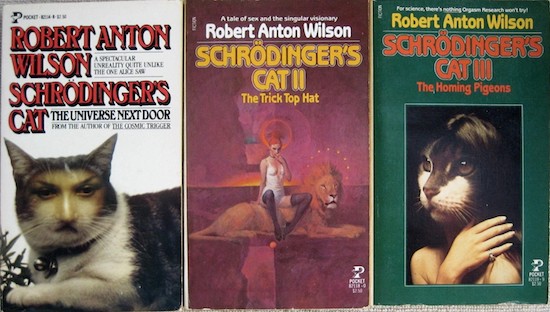
The Schrödinger’s Cat Trilogy By Robert Anton Wilson At 40

The Quietus The Schrödinger’s Cat Trilogy By Robert Anton Wilson At 40 | The Quietus thequietus.com
preview

cross-posted from: group.lt/post/49465

Revisiting the work of the American futurist and self-described agnostic mystic, Robert Anton Wilson, forty years since the publication of his Schrödinger’s Cat Trilogy, Sean Kitching finds the author’s questing vision more vital and necessary today than it has ever been…

0

New Brian Dean book, 'Lazy Person's Guide to Framing'

preview

Here is the Official Blurb: “From Futura Pocketbooks, a ‘Lazy Person’s Guide’ to media framing. This updated and extended 2023 edition explains how headlines and news stories can be decoded with the latest know-how from the cognitive sciences. Discover how media narratives and political spin are unravelled and deciphered by frame semantics – an essential part of what has been labelled, ‘Cognitive Revolution’.”

Here is the Official Blurb: “From Futura Pocketbooks, a ‘Lazy Person’s Guide’ to media framing. This updated and extended 2023 edition explains how headlines and news stories can be decoded with the latest know-how from the cognitive sciences. Discover how media narratives and political spin are unravelled and deciphered by frame semantics – an essential part of what has been labelled, ‘Cognitive Revolution’.”