0

Where to link books

preview

When sharing a post about a book, we encourage you to link to it using one of the following sources instead of proprietary platforms owned by large corporations.

These alternatives help support independent, community-driven, and open-source projects. Whenever possible, prioritize them in the following order:

  1. Open Library: An open, publicly accessible book catalog maintained by the Internet Archive. It provides bibliographic information and, when available, access to digitized books.
  2. BookWyrm: A decentralized, open-source social network for tracking, reviewing, and discussing books, built on the Fediverse.
  3. Hardcover: A community-driven book catalog and reading tracker where users can discover, organize, rate, and review books. Although it is not open-source, it offers a useful public API and database, making it a good alternative for book-related projects, particularly since Goodreads discontinued its API.
  4. The author’s own website: When a book isn’t available through the other sources, linking directly to the author’s website is also a good option.

If a book isn’t listed on any of these platforms, consider adding it to one of these catalogs to help make it more accessible to others. These resources depend on community participation and contributions to grow, remain useful, and provide alternatives to corporate-owned platforms.

0

We're messing up Jeff Bezos' Amazon results

preview

Jeff Bezos & Amazona are releasing another “documentary” about Melania Trump, part of their $40 million deal/bribe with the Trump family.

When they released the movie earlier this year, we rallied and successfully messed up Melania’s Amazon results by making an erotic novel called “Melania: Devourer of Men” the #1 Amazon hit for her name.

Now we’re going again… but instead of Melania, this time we’re going after the guy who signs her checks: Jeff Bezos.

How? By amping up a paranormal romance novel called Thick Skin: How Jeff Bezos Saved Free Speech— And His Reptile Wife. We can mess up Bezos’ search results on his own platform… and we’re raising money for the Amazon Labor Union at the same time.

This book is perfect:

  • It’s about Jeff Bezos and his wife (who’s a reptilian shapeshifter.) Bezos has a hard choice: he can either shut down his newspaper to keep his wife’s shapeshifting identity out of the press OR he can stand by his free speech values and let them publish the story
  • The book uses REAL quotes from Bezos about the importance of free speech, so if he removes it he’s effectively taking back his own words.
  • The author has pledged to donate profits to the Amazon Labor Union!!!

The real Jeff Bezos thinks he can keep sending bribes to the Trump family and face zero consequences. (He’s called the Melania movie “a really great business decision.”) We’re going to show him that collaboration comes at a price, by ruining his search results and funding his opponents.

All we need to do is:

  • Buy the book (it’s $2.99 and benefits the Amazon Labor Union)
  • Leave a review
  • Share this post widely

We did this before. It worked. We won. Let’s do it again.

(We should act fast. Once Amazon finds out about this they might pull the book… if Jeff Bezos is a total hypocrite, that is.)

0

Thoughts on James Patterson?

preview

I’m curious what people think if James Patterson? I was into Alex Cross for a while, but I read James Patterson is conservative and he made that statement about white writers not being able to get work. He’s apologized since that remark, though. However, I read The Guardian interview with Patterson and The Guardian says he’s a left-leaning independent, which is news to me??? Anyways, what’s your opinion?

I’m curious what people think if James Patterson? I was into Alex Cross for a while, but I read James Patterson is conservative and he made that statement about white writers not being able to get work. He’s apologized since that remark, though. However, I read The Guardian interview with Patterson and The Guardian says he’s a left-leaning independent, which is news to me??? Anyways, what’s your opinion?

0

Wrecks by Matt Hill: Review by Ian Mond

Locus Wrecks by Matt Hill: Review by Ian Mond locusmag.com
preview

Outwardly, Wrecks is not a horror novel in the way Lamb is, but it shares that book’s grim sense of environmental collapse. It is set in a near-future London where the heat is stifling, endless, all-encompassing…

…

Then there’s the weather. Hill is an intensely physical writer. His characters are firmly embed­ded in and shaped by their environment. With Lamb, it’s the spread of an invasive mould that infiltrates every nook and cranny, including the human body. With Wrecks, it’s the oppressive, stifling atmosphere caused by a heat dome cov­ering London: “the lawn… tinder-dry, the patio flags untouchable, the very concept of dew a strange fantasy.” Where I am, it’s winter, and yet I still felt the sweat collecting in the folds of Jim’s flesh, “mak[ing] him itch, weld[ing] his scrotum to his thighs.” (A perk of the Courser job is the van’s excellent air conditioning.)

I’d say that Hill’s depiction of the London heat dome and the wildfires ravaging the Peak Dis­trict is prescient given this summer’s firestorms across Europe (especially Spain), but really Hill is writing about what we’re all seeing, what so many of us are experiencing. And that sense of inevitability, that impression that we’ve lost our grip on the future as climate change worsens, plays into the story’s broader themes as Jim in­exorably loses agency. He is like Teddy and Eric from earlier in the novel, unable to correct course or avoid the impending crash. Bleak, I know. But, similar to M. John Harrison’s astonishing novel The End of Everything, which has a comparably nightmarish, dislocated atmosphere, Wrecks offers the barest hint of a happy ending, of find­ing closure amongst all the ruin and wreckage.

0

13 Great Indigenous Writers to Read and Celebrate

preview

cross-posted from: lemmy.ca/post/73662334

Louise Erdrich

Joy Harjo

Richard Wagamese

Tommy Orange

Robin Wall Kimmerer

Natalie Diaz

Dennis E. Staples

Layli Long Soldier

N. Scott Momaday

Elise Paschen

Terese Marie Mailhot

Leslie Marmon Silko

Sherman Alexie

cross-posted from: lemmy.ca/post/73662334

Louise Erdrich

Joy Harjo

Richard Wagamese

Tommy Orange

Robin Wall Kimmerer

Natalie Diaz

Dennis E. Staples

Layli Long Soldier

N. Scott Momaday

Elise Paschen

Terese Marie Mailhot

Leslie Marmon Silko

Sherman Alexie

0

A book that’s really about a thief that steals books?

preview

When I initially started to read “The Book Thief”, I went in blind thinking it was about someone that really was stealing books and kept them.

Then reading the book it was… a bit different. I loved the book, adore it. Liesel and her story will always be a part of me.

Though, I’m wondering if there’s actually a book about a book thief. Someone that steals the books, reads them. Adores them. Keeps them.

Any suggestions?

0

I Read a Whole Library, 1,001 Books!

preview

The Christmas Tree

Well sort of. In 2023 I read somewhere that to have a library you need at least 1,000 books. I looked and I was nearing 700 books read and decided this was my next goal. Since then I’ve found almost as many definitions of a library as there are libraries. Yet the symbolism means a lot to me so I’m holding onto it.

Sometimes things happen in threes. November 7th is my Dad’s birthday, the day I finished my 1,001st book, and the day the Christmas tree in Rockefeller Center is being put up. That’s three! And the tree is reportedly 76 feet tall. If I stacked up all the books I’ve read over the past 24 years they’d be taller than that tree by just over 7 feet.

When I set the goal of a library of books I committed to rewarding myself. The reward ties to the tree in Rockefeller Center, but I’m saving that to the end.

From Three Books to Three Books a Week

I started my leadership journey in my late teens/early twenties. A colleague of mine was the customer whisperer and I thought the world of her. She was the first real adult to ever listen to me. One day our boss was just losing it on someone over my shoulder. I turned around and realized he was yelling at her. I knew right then, whatever our boss wanted from her, I could do it in a way that left her dignity intact.

I had a pretty clear idea of the leader I wanted to be, but becoming that person was another matter. I did land the supervisor job there, and got fired.

About a year later, my marriage was on the rocks, soon to end as it turned out. The day I walked into the empty home, with silence louder than any concert I have ever been to, it didn’t take me long to conclude no court was going to give me my kids back over my soon to be ex. I committed to becoming the person I needed to be so that if the question of where do the kids live ever came up, I would be the default answer.

Fortunately, around that time, my boss’s boss was mentoring people and I was one of them. When my soon to be ex and I split up he gave me the only good advice I got, and he did it by questioning the crap coming out of my mouth. It sank in, and when I was yelling at my ex at the top of my lungs and saw the look on my daughter’s face that said “Dad, you’re screaming at the other favorite person in my life” it made me rethink.

The next time my ex called, I greeted her with a ridiculously enthusiastic “GOOD MORNING SUNSHINE!” And if you haven’t heard it yet, you should. You’ll know why it’s famous.

And the journey to a good relationship with my ex began, which was good for me, my kids, my wife, and my ex-wife. Most importantly, the day eventually came when the question of my kids living with me full time was asked. I’m grateful with all that I am that the day did come, and there was no question.

My first book was Who Moved My Cheese?, and I read three books that year. In 2014 I read seventeen books and bragged about it every moment I got. In 2018 I hit the book a week mark, and now my ego will not let me read less than three books a week. I track it diligently and when I start falling behind I double down. In 2025 I didn’t hit three books a week, but I won’t tell you why just yet.

Some fun data! Including re-reads, I’ve read a book 1,152 times since 2002. I’ve spent enough hours reading that if I had worked 40-hour weeks instead, it would have taken nearly two and a half years, and if I’d been riding a bike at the same time, I would have circled the Earth 2.4 times! I’ve also saved nearly 12,000 notes and quotes in all that reading.

The Books, People, and Ideas That Changed Me

I only need to read Peter Drucker’s The Effective Executive one more time to make it the first to cross into double digits. I have the longest ongoing relationship with Contact Center Management on Fast Forward by Brad Cleveland, which was recommended to me by a former boss. I first read it 22 years ago and re-read it again this year!

But you could argue Brandon Sanderson takes the cake. I’ve read every single one of his Cosmere books, taking me just shy of 278 hours. And I cannot wait for Ghostbloods to be released! The next four authors combined don’t come to as many hours: pirateaba, James S. A. Corey, George R. R. Martin, and Bill Bryson.

I’ve read more books recommended by one friend than anyone else, 31 in total, with 25 being among my favorite books I’ve ever read! Three other friends combined recommended 35 books I’ve read, of which I also loved 25.

A former leader recommended the McKinsey reading list to me one year. I’ve read 18 books from that list, 14 of which I loved.

And the highest hit rate of them all goes to another friend. While I’ve only read 9 books they’ve recommended, every single one has been a banger! When this friend recommends a book, don’t think, just read it.

I started reading to become a better person, and later a better leader. I became more interested in why people do what they do. Books like The Goal by Eliyahu M. Goldratt and Thinking in Systems by Donella Meadows taught me to look at the systems creating problems instead of only trying to correct people.

In '23 I started reading authors whose life experiences didn’t match mine. I read about racism, gender, inequality, and lives I’d never experienced. Some of those books challenged things I knew I knew. Reading hasn’t made me more certain of what I know. Instead I’ve learned empathy, and for me empathy complicates certainty.

I Almost Forgot About the Tree

I cried today, I cried because today, November 7th is my Dad’s birthday. I stopped my car at the cemetery where he’s buried and finished my book just feet from him. Dad passed away in 2025. I stared at his gravestone and I cried. I talked to him and I cried. I wrote a letter about my grieving and other losses in my life and I cried. I sat in the grass missing him, and I cried.

In December my wife and I are going to NYC to celebrate. We’re celebrating our love, celebrating being empty nesters, and celebrating me reading a library. We’re going to see a play I need to see with her, and do all the famous Christmas in NYC things we can possibly fit in.

And as we look at the Rockefeller Christmas tree, I’ll imagine my stack of books next to it and I’ll cry. Because I’ll remember today, when that tree was put up, when I reached my goal, and when I visited my Dad on his birthday.

Then I’ll smile at my wife, kiss her, hug her, and thank her for being my favorite!

The books

Here is a link to my reading spreadsheet on my unnamed account if you’re interested. It’s a multitabbed beast that’s not terrible approachable: docs.google.com/spreadsheets/d/…/edit?usp=drivesd…

0

Clara E. Mattei - Books

Clara E. Mattei - Books www.claramattei.com
preview

Historian and scholar of political economy who researches the history of economic thought, austerity, and the political role of economists.

Books:

  • Capital Order: How Economists Invented Austerity and Paved the Way to Fascism

  • Escape from Capitalism

  • The Golden Hour: Booming Markets, False Narratives, and the Decades That Made Modern Society

0

Department of Literary Arts, Center for Middle East Studies host Palestinian author Ibtisam Azem

preview

“The Book of Disappearance” leans into magical realism by imagining a Tel Aviv where the Palestinian population vanishes overnight, echoing Azem’s family’s real experiences during the Nakba — the mass displacement of Palestinians in the period surrounding the 1948 Arab-Israeli War.

“The Book of Disappearance” leans into magical realism by imagining a Tel Aviv where the Palestinian population vanishes overnight, echoing Azem’s family’s real experiences during the Nakba — the mass displacement of Palestinians in the period surrounding the 1948 Arab-Israeli War.

0

Half of a Yellow Sun - My Thoughts

preview

This review was copied and pasted from my Storygraph. Consider adding me!

I will always appreciate novels that succeed in western markets  with authentic, informative, and underutilized settings and cultures, especially so when the subject matter so boldly confronts the ceaseless colonial ideologies of the western world. In these aspects, Half of a Yellow Sun hits all the marks.

However, I found the prose, dialogue, character development, political theory, and plot structure to be tremendously underwhelming. Chimamanda Ngozi Adichie’s writing possesses a blunt curtness that was intended, I imagine, to impart a cold and sobering realism upon the reader. For me, however, it encouraged apathy. The characters felt artificial in their conversations with one another, never saying more than a few words before the narration takes over again. Many of the characters will restate the same sentiment in the same way endlessly, as if their purpose is to embody one idea alone. A character’s soul-crushing grief is described in whole within the span of fifty pages as nothing more than red eyes and trips to the bar and is never addressed again. Children are forced into atrocious acts and experiences, and the resultant grief is described within two lines. We are told how socialism and nationalism will save the people of Biafra, but we are not told how. The timeline jumps around for no discernible reason.

While the book certainly sparked my interest in its subject matter, it fell short of providing me with the resources to properly engage with it. Biafra’s diplomatic and administrative problems were described briefly, but hardly expounded upon. The reader is much like the protagonists in that they are kept in the dark, uncritical.

0

How do you read books that are really big?

preview

I’m not a avid reader, but I’ve read quite a few books. Classics such as 1984, Fahrenheit 451 and The Book Thief.

A lot of people on the internet recommend reading Monte Cristo and so I wanted to read it but the is huge, like 1100 pages? That kind of scares me away, if that makes sense.

I usually read smaller books, like 200-250 pages. So I was wondering how do you read a book that has that many pages? I know the question doesn’t really make sense.

If you are wondering what kind of books I read, here’s my humble list. Warning though, there are some ero books in there: My book list

0

New prize launches for books co-written with AI

the Guardian New prize launches for books co-written with AI www.theguardian.com
preview

cross-posted from: piefed.world/…/new-prize-launches-for-books-co-wr…

cross-posted from: piefed.world/…/new-prize-launches-for-books-co-wr…

cross-posted from: piefed.world/…/new-prize-launches-for-books-co-wr…

cross-posted from: piefed.world/…/new-prize-launches-for-books-co-wr…

0

“New Poland” — An organization from the novels Metro 2033: Abyss, Metro 2033: Tower, and Metro 2033: Giant by Polish author Robert J. Szmidt.

preview

Description

“New Poland” represents the remnants of the surviving government of the Republic. They live in a state of comfort unattainable for others, maintaining access to electricity, clean water, high-quality goods, medicine, and advanced technology. Their ultimate goal is to wait until the surface is cleared of radiation and restore the Polish state.

They consider themselves the only legitimate heirs to civilization and the sole carriers of “pure genetic material.”

History

1. Origins: The Legacy of the Third Reich and Billions of Euros (1997–2013)

The history of “New Poland” began long before the nuclear warheads fell. In 1997, during the catastrophic “Millennium Flood,” Polish authorities received an unexpected gift from a German researcher: a map of secret Nazi underground facilities beneath Wrocław. It was revealed that in 1945, SS forces had built a vast, sprawling network of tunnels under the Fortress of Breslau.

Starting in 1998, the Polish government began a secret study of these sites under the codename “Project Abyss.” In 2001, a large-scale, highly classified modernization of the bunkers began. Billions of euros were siphoned from the state budget under the guise of highway construction. The goal was simple: to create an absolutely autonomous super-shelter for the elite—the country’s top political, financial, and military leadership (designed for approximately 1,000 people).

Simultaneously, in the Owl Mountains, the state completed and modernized another massive German site—the legendary “Riese” (The Giant) complex. The official date for the formation of the unified organization under the codename “New Poland” is considered to be 2013, when the entire infrastructure of the super-bunkers was finalized and mothballed in preparation for the Apocalypse.

2. The Nuclear Strike and Isolation (Post-2013)

When the nuclear conflict erupted, things did not go according to plan. The strike was so sudden that the evacuation plan in Wrocław failed by 70%. Only about 300–350 people—politicians, officials, scientists, and a handful of military personnel—managed to descend into “The Abyss.” Slightly more reached the Owl Mountains (“The Giant”)—about 1,075 selected citizens.

Isolated from the world, these people quickly developed a rigid ideology. They declared themselves the “sole legitimate heirs of civilization.” They despised the ordinary people surviving in metro tunnels and stations, viewing them as “sub-humans” and “genetic trash” (reminiscent of the Enclave from the Fallout series).

In the early years, the leaders of “New Poland” attempted to go to the surface. However, embittered survivors dying of radiation, seeing clean, well-fed officials, hunted them down and brutally executed them. Following this, the organization went deep underground and shifted to a tactic of secret conspiracies.

#Administrative Structure and Political Model

By structure, “New Poland” is a totalitarian technocracy with elements of caste segregation. Society is strictly divided into “Citizens” (pre-war elite, scientists, military, and their purebred descendants) and “Subjects/Slaves.”

Higher Caste: The Nomenklatura Elite

At the top of the pyramid were the survivors of the pre-war government and high-ranking military officers. In “The Giant” complex, absolute dictatorial power belonged to Colonel Andrzej (a former political strategist); in Wrocław’s “Abyss,” it was held by Katarzyna Bondarczuk. This layer lived in luxury: drinking elite pre-war alcohol, using silverware, and engaging in political power games.

Middle Caste: Citizens (“Purebloods”)

This group included rank-and-file scientists, engineers, and technicians who maintained the bunkers’ life-support systems, as well as regular army soldiers. They had access to quality medicine, clean water, and proper nutrition.

Psychological Note: Most ordinary citizens were victims of internal propaganda. The leadership skillfully hid the most horrific details of their operations. For instance, citizens in the Owl Mountains sincerely believed that the blind workers serving the bunker were “mutants” whom the elite had “nobly rescued” and were gradually curing in hospitals.

Lowest Caste: “Skoptsy” (Bio-robots)

The most disenfranchised and numerous category. These were former surface dwellers captured by “harvesting squads.” Their social status was that of a living tool. They were deprived of names, personal space, and basic human traits. They were surgically deprived of their eyes and vocal cords. The Skoptsy were at the bottom of the hierarchy, performing grueling physical labor on dynamos and water pumps in exchange for food and security.

Enclaves (Geography) The faction is decentralized into two main enclaves:

The General Command Headquarters (Complex “Riese” / The Giant): Located in the Owl Mountains, this is the supreme political center ruled by Colonel Andrzej. It houses the main military forces, archives, surviving art pieces, and the strategic leadership for expansion. The Wrocław Sector Administration (Complex “The Abyss”): Located directly beneath Wrocław and led by Katarzyna Bondarczuk. “The Abyss” serves as a forward outpost, a R&D hub, and the primary “resource collection point.”

Propaganda and Mind Control

Social stability was maintained through psychological pressure managed by scientists:

Internal Lies: Colonel Andrzej used his pre-war PR skills to build a system of fake news. Any dissent was suppressed, and information about the outside world was strictly filtered to maintain the illusion that they were the last island of civilization on Earth.

Audio-Hypnosis for Slaves: To prevent riots among the blind Skoptsy, “sweet propaganda” was broadcast 24/7 via megaphones. A calm, soothing voice convinced the mutilated workers that their injuries were a “temporary quarantine measure” and that after 1,000 days of faithful service, their sight and speech would be restored, their children returned, and they would become full citizens. This mental conditioning was more effective than torture. Economy and Logistics

“New Poland” controls the Kamionki valley in Lower Silesia, where they grow oats and vegetables and raise poultry on radiation-cleared fields. The farmland is protected by machine-gun nests, moats, and powerful searchlights.

The energy needs of “The Giant” are met by fuel reserves. Their armored trains, operated by the “Shadows” unit, made dangerous runs to Czech oil terminals (Unipetrol refineries), crossing zones of extreme radiation and biological contamination.

Military

Abyss Garrison: They wear hazmat suits and are armed with Beryl assault rifles (5.56 mm), Glocks, and grenades. Despite their superior gear, they lack combat experience; their commander, Major Wydrzycki, has never been in a real battle.

Giant Garrison: They use camouflage (sometimes with ghillie elements), HK416 rifles, night vision, and Apple-branded radios. Their armored trains are equipped with “Scorpions”—automated ballistae firing iron rods—and heavy flamethrowers for clearing tunnels. The Shadows: An elite unit (commanded by Łukasz Dąbrowski) responsible for high-risk railway missions.

Science and Technology

**Electronics:**They use salvaged computers and radios protected from the EMP. Engineers daily intercepted shortwave broadcasts from a Russian radio amateur in Moscow (Artyom Chyorny).

Medicine: Despite expired medicines, they have professional surgical tools and anesthesia. They test the healing properties of mutated flora on rats.

Biological Warfare: Scientists in “Riese” developed the “Grey Plague” and poisonous neon mushroom spores, used to clear tunnels and control the population of survivors in Wrocław. Notable Representatives

The Abyss:

  • Katarzyna Bondarczuk: Head of the complex, spy network curator.
  • Maciej Wydrzycki: Special forces Major, military commander.
  • Izabella Mędrecka: Quartermaster for the civilian sector.
  • Tesla: An elderly scientist in charge of electrification and radio.
  • The Healer: A former veterinarian turned chief surgeon who operates on slaves.
  • Ania (Iskra): A young spy posing as a scavenger/stalker.

The Giant (Riese):

  • Andrzej: Supreme leader, Colonel, former political strategist.
  • Tamara: Manager and the Colonel’s mistress (later seized power).
  • Adam (The Madman): Former commander of the “Shadows,” imprisoned and later released in 2035.
  • Łukasz Dąbrowski: Lieutenant, current commander of the “Shadows.”

Interesting Facts

“New Poland” is the Polish equivalent of the “Invisible Watchers” from Moscow, the “Federals” from Omsk, or the “UK Government” from London.

The leaders possess the authentic Amber Room, which was lost during WWII and hidden by Nazis in the tunnels of “The Giant.”

Colonel Andrzej’s pre-war career involved “black PR” on the internet and creating fake scandals to discredit political opponents.

The “Skoptsy” are told they will be “healed” after 1,000 days of service—a blatant lie used to maintain productivity and prevent suicide.

0

I’m curious about the experience of other people with r/books

preview

I’m curious about the experience of other people.

I check Reddit content through my RSS feed and r/books is one of these subreddits in my RSS. I’ve lately seen an influx of books about Palestinian people and the Palestinian cause which I find great. However, I noticed that the comments are immensely dislike regards it and some even hateful towards anything Pro-Palestinian and go very much pro-Israel.

It is as if the pro-Israel propaganda accounts have made their way into the r/books subreddit. I can give an thread example if needed though. The community over there seems so much more hostile and I don’t even participate, just lurk lol.

I was wondering whether some of you also noticed this if you are still lurking there.

Note: was not sure in which community to post. This one or the other one in lemmy.world. So apologies if this one was not the correct one.

0

Sally Rooney says she can no longer sell books in UK due to Palestine Action support

the Guardian Sally Rooney says she can no longer sell books in UK due to Palestine Action support www.theguardian.com
preview

Sally Rooney has said she is being forced to withdraw her books from sale in the UK because of her support for the banned organisation Palestine Action.

The Irish novelist, whose books include Normal People and Conversations With Friends, said her public support for the direct action group meant she could no longer receive royalties from UK sales.

After Palestine Action was banned last year, Rooney said she would use proceeds from her sales to support Palestine Action. Supporting organisations banned under the Terrorism Act is an offence and she subsequently cancelled a trip to the UK to pick up an award, for fear of arrest.

In a statement provided to the Guardian, the bestselling author said: “‘In July 2025, the direct-action protest group Palestine Action was proscribed as a terrorist organisation in the UK. The following month, I wrote an opinion piece expressing my intention to go on supporting Palestine Action, which is not a proscribed or otherwise prohibited group here in the Republic of Ireland.

“As a result, the fulfilment of contracts to publish my work in the UK could now constitute a serious criminal offence. After a process of consultation and deliberation, and with my full agreement, my publisher Faber has therefore determined that it can no longer supply my work within the UK. I have made every effort to be honest with the public about my beliefs and intentions, and I am wholly prepared to accept the consequences.”

0

Bestselling Novelist Dropped from Major Prize over Suspected AI Use [based on controversial AI-detection software] | The Walrus

The Walrus Bestselling Novelist Dropped from Major Prize over Suspected AI Use | The Walrus thewalrus.ca
preview

cross-posted from: piefed.ca/…/bestselling-novelist-dropped-from-maj…

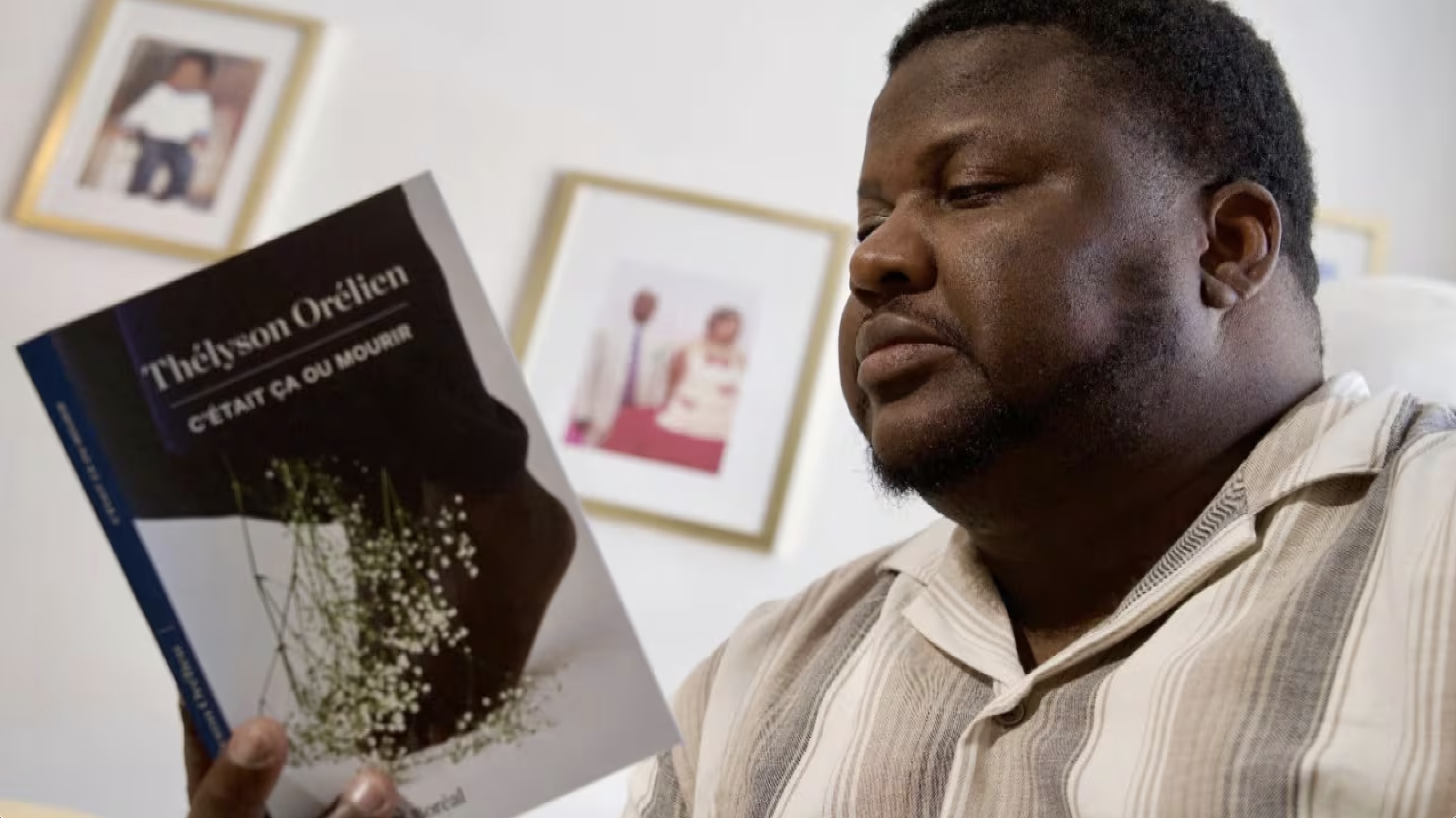
The Thélyson Orélien controversy raises new questions about whether detection software can be trusted

A lot of people here might already be aware of how AI checkers are unreliable at best, and more often just terrible. What I learned from this article is that they might actually harm some groups of people more than others.

NOTE: The original title of this article was “Bestselling Novelist Dropped from Major Prize over Suspected AI Use”. I added the extra context because people might not read the body of the post.

Here are some excerpts that I thought were relevant, with bold emphasis applied by me. Please check out the full article if you want more context outside of what I am highlighting here:

This time, the controversy surrounds C’était ça ou mourir, the first novel by Haitian Canadian author Thélyson Orélien, which has already become a huge success in France. On September 26, the prestigious Académie Goncourt announced it was dropping the title from the longlist for its eponymous literary prize because the prize administrators had concluded it was written with the help of AI. The AI-detection software Pangram determined there was a 100 percent chance the novel was at least in part AI generated.

The author denies using AI, and his French publisher, Grasset, has come out strongly in his defence. Grasset said in a statement that it “strongly objected” to the allegations, which it characterized as “malicious.” The Globe and Mail quoted the French publisher as calling the accusations against Orélien “fake news.” His original French-language Canadian publisher, by contrast, has taken a more measured response to the allegations. The Quebec publisher, Les Éditions du Boréal, told the New York Times, “[A]t this stage, it is impossible for us to confirm or deny the allegations the author is facing.” They went on to say that it is important “not to draw hasty conclusions.”

This is not the first time an award-nominated author has faced accusations of using AI to create written work. Earlier this year, the Commonwealth Short Story Prize encountered criticism after Jamir Nazir’s regional winner, “The Serpent in the Grove,” was accused by social media users of having been written with AI. After a review that included interviews with all the regional winners and examinations of early drafts, edits, and time-stamped emails, the organization that runs the award decided there was no basis to believe Nazir used AI in his writing. The story went on to win the overall Commonwealth Short Story Prize.

The issue of false positives is not incidental: somewhere around 90 percent of the texts used to train large language models are in English, so the French language would throw up difficulties for AI checkers, which themselves use AI to make their determinations. In addition, Orélien is Haitian by background and employs a style of writing heavily influenced by Caribbean oral tradition, which relies on repetition and other tropes often cited as determinants of AI assistance. “I come from a Haitian and Caribbean literary tradition in which poetry, imagery, repetition, and rhythm carry a living voice,” he said in a statement quoted by the CBC. “One might debate my style, but treating its techniques as evidence of artificial intelligence has nothing to do with literary criticism.”

Sutherland, who, like Orélien, is Black, made a similar observation to the Globe about her award-winning story. “This story is rooted in Vincentian oral storytelling tradition, which by nature is formulaic and relies on repetition, rhythm, and patterned language as core elements of their structure,” she said.

The biases and blind spots in AI-detection software are only one issue. Equally troubling is the notion of using AI to detect AI use, an apparent tautology that doesn’t have many safeguards or levels of verifiability. Then there are the people using the software themselves. The accusations against Orélien arose via an anonymous X account run in part by Samuel Fitoussi, a journalist at the right-wing newspaper Le Figaro. His stated reason for using the account to publicize his accusation, according to the New York Times, is that “he thought an anonymous account would be trusted more than his column in a right-leaning newspaper.” Fitoussi may be correct about that, if only because the French right wing has become increasingly antipathetic to immigrant communities in the country.

0

Abolish the Top Ten Books List | The Walrus

The Walrus Abolish the Top Ten Books List | The Walrus thewalrus.ca
preview

cross-posted from: lemmy.ca/post/71968046

Stumbled upon this article yesterday. Some food for thought, about something I for sure have taken for granted. What do you think?

cross-posted from: lemmy.ca/post/71968046

Stumbled upon this article yesterday. Some food for thought, about something I for sure have taken for granted. What do you think?

0

My first children's book of this year - Where the Red Fern Grows (1961) Review

preview

Where the Red Fern Grows is about a boy named Billy who saves up enough money to buy two coon hunting dogs. The story is about his adventures and hunts with these dogs that he names Old Dan and Little Ann, and it’s a story about their bond with eachother.

If you have ever lost pets as a kid, I highly highly don’t recommend/recommend you read this book as it will feel cathartic but it will also paralyze you with sorrow for an hour or a half. Beyond that, it’s a neat little book about a boy riding out with his coon hounds and hunting game.

Anthony Heald did an amazing job with the voicing the main character who’s a 14 year old kid. He sounded innocent and curious but also desperate whenever the story commanded it. The adults he voices in an accent and they all sound great, there’s even a few bawls from the dogs thrown in which sounded amazing so I was really happy with the audiobook adaptation of it.

I have never seen a raccoon or even knew anything about the coon hunting culture in the Ozark mountains but the book is pretty easy to read and you never feel lost. The hunts are a big highlight of these book and some of the more important ones were a thrill to read through.

There’s a lot of sensibility in the book as well, it doesn’t shy away from the brutality of the hunt or real life but it also tries it’s best to show that there can be something noble in it as well or atleast a way to do something more nobly.

There are some really dark scenes and dark imagery in the book but it’s not scary per se and a little bit of adventuring thrill makes the book feel engaging and impactful.

I really enjoyed my time with this little book, the pacing is easy and it’s a nice journey to go on with a few serious moments.

For my next read, I’m thinking of going to Stephen King’s Tower but I don’t know the correct way so if there’s a chronological order comprising those books and any important ones I could use that or just go through the published order. I’ll be listening to them as audiobooks

0

Struggling to remember names from books I've read

preview

I’ve been reading quite a decent amount since I was a kid, and I’m now in my late 20’s. I’ve recently realized that the books I’ve read in the last couple of years, I struggle to remember much about them.

I can remember the general outline of the story, or most of the major plot points, but any character names or place names I struggle to remember.

I’ve been going through and reading many fantasy/sci-fi series, and it usually feels like once I get to book 2 of whatever new series I’ve picked up, I can’t remember the previous series I read.

For example, I’m currently reading The Thief series, and really enjoying it. However I’m finding that I can’t remember much of the names or characters from the Red Rising series, which I read just before this. I can remember most of what happens, and I remember really enjoying it, but names just get lost entirely.

If you were to ask me what happens in the books I read the last couple of years, I would be able to tell you in quite decent detail, but I’d struggle with any names.

The only exceptions are books I read when I was young, like the Lord of the Rings books or the Hyperion books.

Does anyone else have this issue? How can I better remember details like this?

0

Naomi Klein new banger

end times fascism, and the fight for the living world. Naomi Klein, astra Taylor
preview

This book is amazing at pulling so much together. I highly recommend it. Very freaky stuff that we all know, but laid out clearly and coherently.

This book is amazing at pulling so much together. I highly recommend it. Very freaky stuff that we all know, but laid out clearly and coherently.

0

Story in a sentence 1. Alistair Maclean: an excerpt from McCrimmon and the blue moonstones

preview

McCrimmon had done very well out of the game and might have been there yet had not some inquisitive bystander seen fit to comment, in terms of loud admiration, upon the exquisite delicacy of the workmanship whereby the backs of the cards were painted in fifty-two different patterns.

- Alistair Maclean, McCrimmon and the blue moonstones, The Lonely Sea

0

Recommend me: lore like Game of Thrones, but only one book

preview

I also don’t like Martin’s writing style. But I love the lore. I just can’t do another series. What’s one book that has the kind of worldbuilding that made us all love (and then hate the unfinished state of) A Song of Ice and Fire?

I also don’t like Martin’s writing style. But I love the lore. I just can’t do another series. What’s one book that has the kind of worldbuilding that made us all love (and then hate the unfinished state of) A Song of Ice and Fire?

0

'Crossing the Red Line' examines the Biden administration and Israel's war in Gaza

NPR Inside the 'herd impunity' behind Biden's Gaza policy www.npr.org
preview

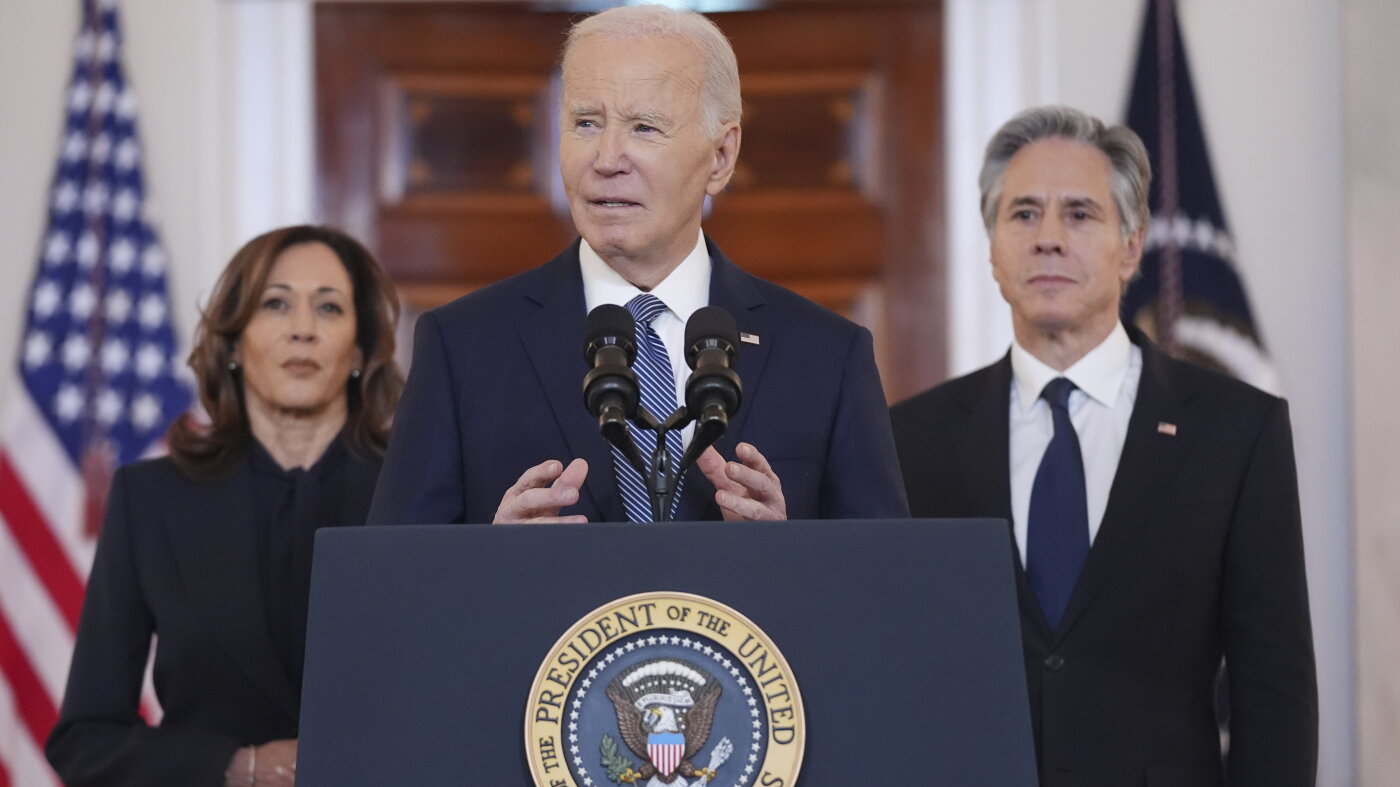
LEILA FADEL, HOST: Nearly three years since the start of the war in Gaza in response to a devastating Hamas attack on Israel, journalist Akbar Shahid Ahmed has written an account detailing the period, October 7, 2023, to January of 2025. It’s focused on the Biden administration’s decisions in that time. And it’s called “Crossing The Red Line: Biden, His Advisors, And Israel’s War In Gaza.”

…

FADEL: I’m thinking of a line that you had kind of near the end of your book. And you wrote, in less than two years, Joe Biden irreversibly changed America’s role in Israel-Palestine and may have permanently altered America’s approach to foreign affairs. Say more.

AHMED: The Biden administration’s Gaza policy created a more dangerous world for us all. It’s a period that reshapes the standards of warfare. It becomes a question not only of danger and influence globally, but a question of democratic accountability to what Americans want their country to be doing on the world stage.

FADEL: Right, because all of the leading officials that were involved are still successfully employed.

AHMED: And positioning themselves for future administrations. A lot of these officials are now saying, well, in retrospect, I would’ve done things differently, but under President Biden, it wasn’t possible. My book makes the argument and offers significant evidence that we shouldn’t let that line be sufficient, that we actually should hold these officials responsible for their choices at junctures where they could have saved Palestinian lives and also Israeli lives - and gotten us off a path, I really feel, a path from enabling Israeli escalation in Gaza, consistent escalation then into Lebanon, into now the Iran war and real risk to American lives and many others.

Archived at web.archive.org/…/crossing-the-red-line-examines-…

0

I'm reading, "Tender Is The Flesh"

preview

Great book so far. A virus makes animals fatal to eat, so of course there could only be 1 solution, systematically breeding and eating people. I know it’s another reality/universe but the main character remembers eating animals as a child. That means people went from normal to completely evil in 1 generation. By the time the man is grown, he lives in a world where everyone acts like a psychopath, trying to normalize it. It’s like in one person’s lifetime, everyone lost their souls to the point where empathy was practically illegal. If the world in this writer’s mind changed that fast, I wonder what a sequel 100 years into the future would look like…

Great book so far. A virus makes animals fatal to eat, so of course there could only be 1 solution, systematically breeding and eating people. I know it’s another reality/universe but the main character remembers eating animals as a child. That means people went from normal to completely evil in 1 generation. By the time the man is grown, he lives in a world where everyone acts like a psychopath, trying to normalize it. It’s like in one person’s lifetime, everyone lost their souls to the point where empathy was practically illegal. If the world in this writer’s mind changed that fast, I wonder what a sequel 100 years into the future would look like…

0

I just finished “The Ruins” by Scott Smith and I’m very mad

preview

Spoiler alert:
Please don’t read this post if you haven’t read the books yet.

Tap for spoiler

I feel robbed. It’s not fair that he killed off all the characters. I’m like heartbroken right now. I was waiting for an ending that would ease all the stress I went through, but nope, the author had to keep it that way for me.

0

Book series like Jack reacher?

preview

Hi! Im looking for a series like Jack reacher. Lone wolf, tough guy character, small town settings, helps people in need. Id prefer left-wing authors but ill settle for non-left wing. I know thats a big ask. Thank you!

Hi! Im looking for a series like Jack reacher. Lone wolf, tough guy character, small town settings, helps people in need. Id prefer left-wing authors but ill settle for non-left wing. I know thats a big ask. Thank you!

0

Poetics by Aristotle

preview

This book was interesting to me in the part where Aristotle discusses tragedy plot and tragic hero.

If you are interested in tragedy plot or other basic plots, then Booker’s book may be more informative.

To add some context, here are few examples of the classic tragedy plots: Breaking Bad, Anna Karenina, Oedipus Rex etc.

0

Suggest me fiction book(s) where character(s) world that they live in is an actual book/movie/TV show/video game/etc.

preview

What I mean is books that have characters live in settings that are, in-universe, fictional in some way or the like. I don’t mean books that have adaptations in other mediums

Preferably the story has at least one of the following: the world has its own laws of physics; shows how the world works; explores the setting’s implications; explores how it affects characters; or the world is under threat.

Thanks for your help👍

0

How do you manage the same book with different editions in Calibre? (Like US, UK, Illustrated, Portuguese Translated, ...)

preview

How do you manage the same book with different editions in Calibre? (Like US, UK, Illustrated, Portuguese Translated, …)

I think they should all belong to the same folder, but that’s not how Calibre works. Is there any way to keep books organized after “Save to Disk”? (I use Kavita)

How do you manage the same book with different editions in Calibre? (Like US, UK, Illustrated, Portuguese Translated, …)

I think they should all belong to the same folder, but that’s not how Calibre works. Is there any way to keep books organized after “Save to Disk”? (I use Kavita)

0

Where to Find Small Form Factor Books

preview

While visiting Japan I noticed they have a lot tof print books in size A6 (and smaller) and thought it would be great to have my reading in a truly pocket size. But I’m finding English books just aren’t available in those sizes except for one-offs. Anyone have a source?

While visiting Japan I noticed they have a lot tof print books in size A6 (and smaller) and thought it would be great to have my reading in a truly pocket size. But I’m finding English books just aren’t available in those sizes except for one-offs. Anyone have a source?

0

Leaving Stone Mountain | Los Angeles Review of Books

Los Angeles Review of Books Leaving Stone Mountain | Los Angeles Review of Books lareviewofbooks.org
preview

Yet Under the Falls stands apart from these texts because, as the name Stone Mountain and its Confederate associations should imply, Russo links his perennial theme of white working-class struggle and misery—what we might call the Gloversville theme—to the South’s “Lost Cause” and, more broadly, to white racist laments for a bygone era. Here, more than in any of his other novels, Russo tempers his personal attachment to a Rust Belt story with a new awareness of how white Americans have long manipulated facts to generate a self-serving and hateful version of the past. The text’s invocation of the January 6, 2021, attack on the Capitol highlights Russo’s interest in distinguishing the white workers of his novel from the “young white men waving Nazi flags and members of the KKK and conspiracy-theory-stoked militiamen” whom he decried in a recent Lit Hub essay.

To be sure, Under the Falls takes regional history seriously through a steady focus on Tyler and his ambivalent feelings about the area. The novel begins with Tyler and his band arriving in Stone Mountain to play a benefit show for Doc, a friend rendered paraplegic by a terrible fall years before. Already uneasy about his return after decades away, Tyler grows even more anxious when Doc informs him that “not everybody on the Mountain is a Tyler Sinclair fan.” Doc explains: “It’s not just that you made all that money, […] It’s that you made it writing songs about us. […] Where’s our cut? is how they look at it.” “The Long Fall,” Tyler’s most famous song, offers ready ammunition to his detractors: inspired by Doc’s accident, the tune allegorizes the town’s economic demise and social crisis. Tyler has turned his friend’s suffering and his community’s misery into popular music and benefited in the process.