@themachinestops@lemmy.dbzer0.com

member since 19 Dec 2024 08:40

posts

The Latin American dub of 'Ghost In The Shell' was censored and all country names were removed

X (formerly Twitter) ANMO Sugoi (@ANMO_Sugoi) on X
preview

cross-posted from: lemmy.dbzer0.com/post/75616213

Xcancel doesn’t work again, I posted the whole tweet here so you don’t have to open twitter.

the tweet only mentions Israel, but in reality all country names were removed like the Japanese raw, only the manga has the real names

United States changed to MAG Union

USSR changed to Volgarena, this name is directly inspired by the Volga River

Israel changed to Ghorantl (or Guranto), made-up word combining “Golan Heights” with “Toru” (to seize).

Syria changed to Mesamia, inspired by Mesopotamia

The mention of Israel in the Latin Spanish dub of The Ghost in the Shell (2026) has been removed…

A few days ago, a clip from the Latin Spanish dub went viral, where Israel was mentioned directly. Fans pointed out that this version was the only one that kept this reference present in the manga, while other versions, including the Japanese one, mentioned the fictional country Ghorantl.

However, after the clip went viral, the dub would have been modified. Now, instead of mentioning Israel directly, expressions like “they” and “other nations” are used.

What do you all think?

The Latin American dub of 'Ghost In The Shell' was censored and all country names were removed

X (formerly Twitter) ANMO Sugoi (@ANMO_Sugoi) on X
preview

Xcancel doesn’t work again, I posted the whole tweet here so you don’t have to open twitter.

the tweet only mentions Israel, but in reality all country names were removed like the Japanese raw, only the manga has the real names

United States changed to MAG Union

USSR changed to Volgarena, this name is directly inspired by the Volga River

Israel changed to Ghorantl (or Guranto), made-up word combining “Golan Heights” with “Toru” (to seize).

Syria changed to Mesamia, inspired by Mesopotamia

The mention of Israel in the Latin Spanish dub of The Ghost in the Shell (2026) has been removed…

A few days ago, a clip from the Latin Spanish dub went viral, where Israel was mentioned directly. Fans pointed out that this version was the only one that kept this reference present in the manga, while other versions, including the Japanese one, mentioned the fictional country Ghorantl.

However, after the clip went viral, the dub would have been modified. Now, instead of mentioning Israel directly, expressions like “they” and “other nations” are used.

What do you all think?

What's With All These 'Fly Brain Simulations'? The Viral Jokes And Memes About A Fruit Fly's Brain Being Mapped Explained

sg.news.yahoo.com
preview

In September 2026, the release of a complete map of an adult male fruit fly’s neural connections gave the internet a new scientific dataset to experiment with (and meme).

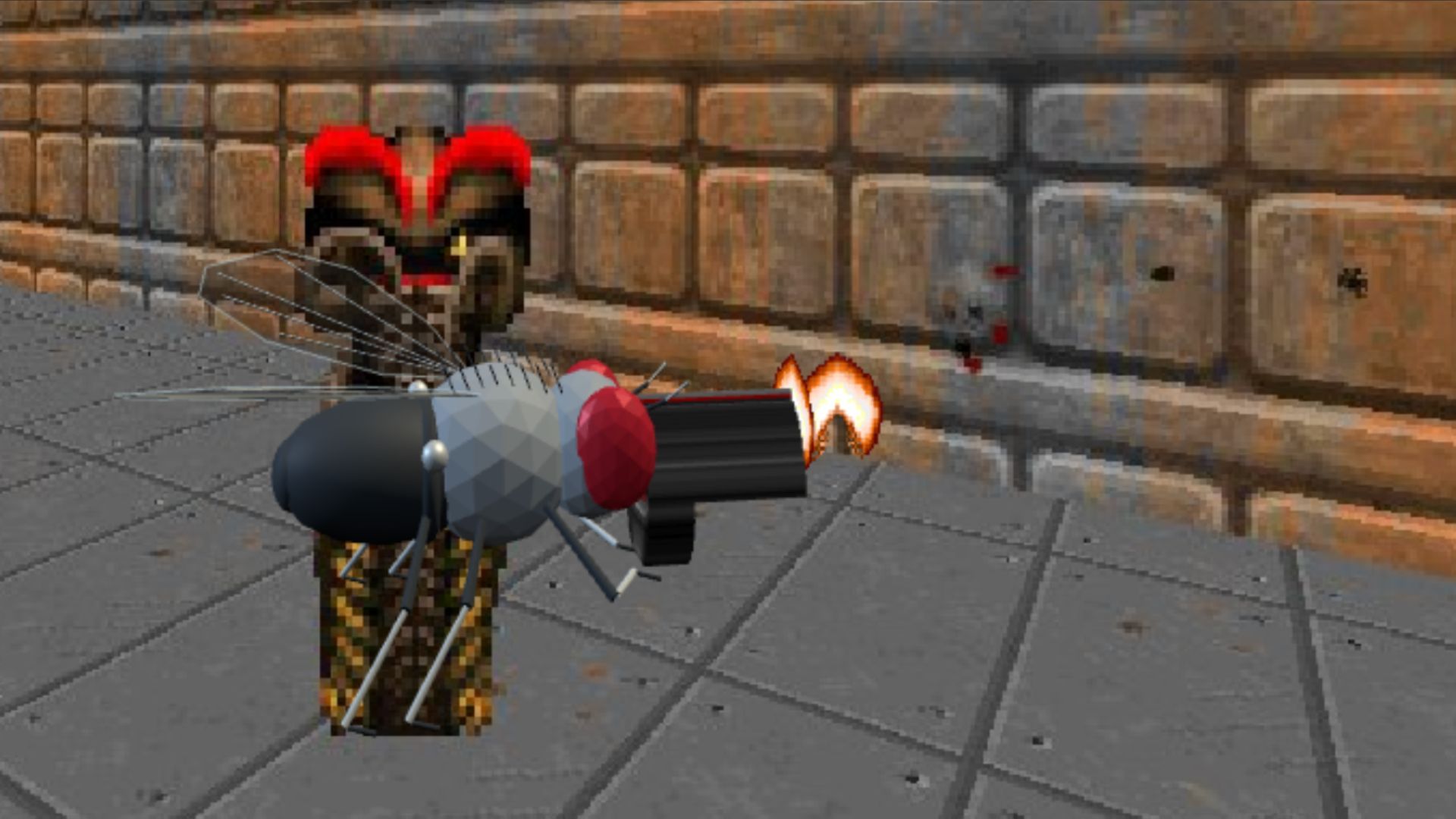
Within days, social media users were connecting simulations of the fly’s neural network to everything from Beat Saber and Minecraft to cryptocurrency trading and parallel parking, turning the fruit fly brain into the centerpiece of a growing series of memes and absurd experimental projects.

The trend quickly became known for viral videos showing the simulated fly brain performing increasingly unexpected tasks, such as playing video games, trading Bitcoin and driving.

So, how did a scientific breakthrough become a source of viral internet experiments? Let’s find out. Here’s what’s going on with all the “Fruit Fly Brain Simulation” memes.

Where Did ‘Fly Brain Simulations’ Come From?

The meme originated back on September 3rd, 2026, following the release of MaleCNS v1.0, a complete wiring diagram of an adult male fruit fly’s central nervous system created by HHMI Janelia’s FlyEM team, the Cambridge Connectomics Group and Google Research.

The dataset maps roughly 165,000–166,000 neurons and millions of synaptic connections, traced from electron-microscope images of a real fly.

It was released as an openly available dataset that could be downloaded and simulated, following earlier efforts such as FlyWire’s mapping of the female fruit fly brain.

Later that day, the official News from Google X / Twitter account (@NewsFromGoogle) then posted about the scientific breakthrough, informing people of the marvel of science.

Within days of the release, developers began running leaky-integrate-and-fire simulations of the connectome and connecting the fly’s sensory and motor neurons to external inputs and outputs.

On September 7th, 2026, YouTuber Ro0oney uploaded a video titled “I Put A Fly’s Conscious Brain into Minecraft,” showing how they simulated the fruit fly in the survival game Minecraft.

The video received over hundreds of thousands of views and tens of thousands of likes in just a few days, becoming one of the earliest major viral posts about the fly brain and humorous simulations using it — subsequently kicking off a slew of other jokes.

How Are The ‘Fruit Fly Brain Simulations’ Used In Memes?

As more developers, researchers and social media users experimented with the virtual fruit fly brain, the dataset quickly became a source of memes centered around putting the simulated fly into increasingly unusual situations.

Various clips shared online showed the simulated fruit fly playing games, trading cryptocurrency and controlling a vehicle, with each new experiment adding another use for the publicly available neural network.

One especially viral example shows the simulated fly brain being used to play the virtual-reality rhythm game Beat Saber.

Another viral post shows the fly brain being given $100 to trade Bitcoin, with dopamine neurons stimulated when the fly makes a profit.

Another example shows the simulated fly-brain system driving and attempting to complete the “ultimate test” of parallel parking.

The trend also includes experiments placing the simulated fly brain inside virtual environments and allowing it to explore entirely on its own.

What Are Some Related Memes?

The Fly Brain Simulations trend is part of a broader pattern in which legitimate scientific research can quickly escape its original academic context and become meme fodder online.

Once unusual or unexpected findings from a study reach social media, users can turn the research itself into the basis for jokes, screenshots and viral discussions, often focusing on the strangest details of the findings.

One example is the “Doki Doki Literature Club! Birthing Fanfiction” story, also known as the “Extreme Outlier ChatGPT User,” a viral incident that emerged in early July 2026 after researchers published a study examining how people use AI for creative writing.

Doki Doki Literature Club! Birthing Fanfiction / Extreme Outlier ChatGPT User

The conversation around the viral “Extreme Outlier ChatGPT User” centered on an anonymous ChatGPT user identified in the paper as an “extreme outlier” who had generated thousands of fanfiction prompts about characters from Doki Doki Literature Club!, involving pregnancy, childbirth and related scenarios.

Screenshots and summaries of the findings quickly spread across social media over the summer, particularly Twitter / X, where users joked about the individual’s extraordinary dedication to the niche subject matter.

The findings came from the research paper “AI Fiction in the Wild,” published on June 24th, 2026, by researchers from the University of Washington and the University of Colorado Boulder, which analyzed more than 500,000 anonymized English-language ChatGPT conversations from the WildChat dataset.


What's With All These 'Fly Brain Simulations'? The Viral Jokes And Memes About A Fruit Fly's Brain Being Mapped Explained

sg.news.yahoo.com
preview

cross-posted from: lemmy.dbzer0.com/post/75561665

In September 2026, the release of a complete map of an adult male fruit fly’s neural connections gave the internet a new scientific dataset to experiment with (and meme).

Within days, social media users were connecting simulations of the fly’s neural network to everything from Beat Saber and Minecraft to cryptocurrency trading and parallel parking, turning the fruit fly brain into the centerpiece of a growing series of memes and absurd experimental projects.

The trend quickly became known for viral videos showing the simulated fly brain performing increasingly unexpected tasks, such as playing video games, trading Bitcoin and driving.

So, how did a scientific breakthrough become a source of viral internet experiments? Let’s find out. Here’s what’s going on with all the “Fruit Fly Brain Simulation” memes.

Where Did ‘Fly Brain Simulations’ Come From?

The meme originated back on September 3rd, 2026, following the release of MaleCNS v1.0, a complete wiring diagram of an adult male fruit fly’s central nervous system created by HHMI Janelia’s FlyEM team, the Cambridge Connectomics Group and Google Research.

The dataset maps roughly 165,000–166,000 neurons and millions of synaptic connections, traced from electron-microscope images of a real fly.

It was released as an openly available dataset that could be downloaded and simulated, following earlier efforts such as FlyWire’s mapping of the female fruit fly brain.

Later that day, the official News from Google X / Twitter account (@NewsFromGoogle) then posted about the scientific breakthrough, informing people of the marvel of science.

Within days of the release, developers began running leaky-integrate-and-fire simulations of the connectome and connecting the fly’s sensory and motor neurons to external inputs and outputs.

On September 7th, 2026, YouTuber Ro0oney uploaded a video titled “I Put A Fly’s Conscious Brain into Minecraft,” showing how they simulated the fruit fly in the survival game Minecraft.

The video received over hundreds of thousands of views and tens of thousands of likes in just a few days, becoming one of the earliest major viral posts about the fly brain and humorous simulations using it — subsequently kicking off a slew of other jokes.

How Are The ‘Fruit Fly Brain Simulations’ Used In Memes?

As more developers, researchers and social media users experimented with the virtual fruit fly brain, the dataset quickly became a source of memes centered around putting the simulated fly into increasingly unusual situations.

Various clips shared online showed the simulated fruit fly playing games, trading cryptocurrency and controlling a vehicle, with each new experiment adding another use for the publicly available neural network.

One especially viral example shows the simulated fly brain being used to play the virtual-reality rhythm game Beat Saber.

Another viral post shows the fly brain being given $100 to trade Bitcoin, with dopamine neurons stimulated when the fly makes a profit.

Another example shows the simulated fly-brain system driving and attempting to complete the “ultimate test” of parallel parking.

The trend also includes experiments placing the simulated fly brain inside virtual environments and allowing it to explore entirely on its own.

What Are Some Related Memes?

The Fly Brain Simulations trend is part of a broader pattern in which legitimate scientific research can quickly escape its original academic context and become meme fodder online.

Once unusual or unexpected findings from a study reach social media, users can turn the research itself into the basis for jokes, screenshots and viral discussions, often focusing on the strangest details of the findings.

One example is the “Doki Doki Literature Club! Birthing Fanfiction” story, also known as the “Extreme Outlier ChatGPT User,” a viral incident that emerged in early July 2026 after researchers published a study examining how people use AI for creative writing.

Doki Doki Literature Club! Birthing Fanfiction / Extreme Outlier ChatGPT User

The conversation around the viral “Extreme Outlier ChatGPT User” centered on an anonymous ChatGPT user identified in the paper as an “extreme outlier” who had generated thousands of fanfiction prompts about characters from Doki Doki Literature Club!, involving pregnancy, childbirth and related scenarios.

Screenshots and summaries of the findings quickly spread across social media over the summer, particularly Twitter / X, where users joked about the individual’s extraordinary dedication to the niche subject matter.

The findings came from the research paper “AI Fiction in the Wild,” published on June 24th, 2026, by researchers from the University of Washington and the University of Colorado Boulder, which analyzed more than 500,000 anonymized English-language ChatGPT conversations from the WildChat dataset.

Download the fly: male-cns.janelia.org/download/

What's With All These 'Fly Brain Simulations'? The Viral Jokes And Memes About A Fruit Fly's Brain Being Mapped Explained

sg.news.yahoo.com
preview

cross-posted from: lemmy.dbzer0.com/post/75561665

In September 2026, the release of a complete map of an adult male fruit fly’s neural connections gave the internet a new scientific dataset to experiment with (and meme).

Within days, social media users were connecting simulations of the fly’s neural network to everything from Beat Saber and Minecraft to cryptocurrency trading and parallel parking, turning the fruit fly brain into the centerpiece of a growing series of memes and absurd experimental projects.

The trend quickly became known for viral videos showing the simulated fly brain performing increasingly unexpected tasks, such as playing video games, trading Bitcoin and driving.

So, how did a scientific breakthrough become a source of viral internet experiments? Let’s find out. Here’s what’s going on with all the “Fruit Fly Brain Simulation” memes.

Where Did ‘Fly Brain Simulations’ Come From?

The meme originated back on September 3rd, 2026, following the release of MaleCNS v1.0, a complete wiring diagram of an adult male fruit fly’s central nervous system created by HHMI Janelia’s FlyEM team, the Cambridge Connectomics Group and Google Research.

The dataset maps roughly 165,000–166,000 neurons and millions of synaptic connections, traced from electron-microscope images of a real fly.

It was released as an openly available dataset that could be downloaded and simulated, following earlier efforts such as FlyWire’s mapping of the female fruit fly brain.

Later that day, the official News from Google X / Twitter account (@NewsFromGoogle) then posted about the scientific breakthrough, informing people of the marvel of science.

Within days of the release, developers began running leaky-integrate-and-fire simulations of the connectome and connecting the fly’s sensory and motor neurons to external inputs and outputs.

On September 7th, 2026, YouTuber Ro0oney uploaded a video titled “I Put A Fly’s Conscious Brain into Minecraft,” showing how they simulated the fruit fly in the survival game Minecraft.

The video received over hundreds of thousands of views and tens of thousands of likes in just a few days, becoming one of the earliest major viral posts about the fly brain and humorous simulations using it — subsequently kicking off a slew of other jokes.

How Are The ‘Fruit Fly Brain Simulations’ Used In Memes?

As more developers, researchers and social media users experimented with the virtual fruit fly brain, the dataset quickly became a source of memes centered around putting the simulated fly into increasingly unusual situations.

Various clips shared online showed the simulated fruit fly playing games, trading cryptocurrency and controlling a vehicle, with each new experiment adding another use for the publicly available neural network.

One especially viral example shows the simulated fly brain being used to play the virtual-reality rhythm game Beat Saber.

Another viral post shows the fly brain being given $100 to trade Bitcoin, with dopamine neurons stimulated when the fly makes a profit.

Another example shows the simulated fly-brain system driving and attempting to complete the “ultimate test” of parallel parking.

The trend also includes experiments placing the simulated fly brain inside virtual environments and allowing it to explore entirely on its own.

What Are Some Related Memes?

The Fly Brain Simulations trend is part of a broader pattern in which legitimate scientific research can quickly escape its original academic context and become meme fodder online.

Once unusual or unexpected findings from a study reach social media, users can turn the research itself into the basis for jokes, screenshots and viral discussions, often focusing on the strangest details of the findings.

One example is the “Doki Doki Literature Club! Birthing Fanfiction” story, also known as the “Extreme Outlier ChatGPT User,” a viral incident that emerged in early July 2026 after researchers published a study examining how people use AI for creative writing.

Doki Doki Literature Club! Birthing Fanfiction / Extreme Outlier ChatGPT User

The conversation around the viral “Extreme Outlier ChatGPT User” centered on an anonymous ChatGPT user identified in the paper as an “extreme outlier” who had generated thousands of fanfiction prompts about characters from Doki Doki Literature Club!, involving pregnancy, childbirth and related scenarios.

Screenshots and summaries of the findings quickly spread across social media over the summer, particularly Twitter / X, where users joked about the individual’s extraordinary dedication to the niche subject matter.

The findings came from the research paper “AI Fiction in the Wild,” published on June 24th, 2026, by researchers from the University of Washington and the University of Colorado Boulder, which analyzed more than 500,000 anonymized English-language ChatGPT conversations from the WildChat dataset.

Download the fly: male-cns.janelia.org/download/

Inside ‘Project Lily’: The Humans Reading Your ChatGPT Chats

404 Media Inside ‘Project Lily’: The Humans Reading Your ChatGPT Chats
preview

Humans are reading ChatGPT users’ prompts to improve OpenAl’s models, and those chats can include sensitive, personal information, according to leaked internal documents and real prompts seen by 404 Media.

The news presents a major privacy risk for ChatGPT’s users, with people often using ChatGPT as a therapist, professional assistant, or digital friend, and providing it with all sorts of intimate details about their lives. The contractors don’t see ChatGPT usernames, and OpenAl says it tries to remove personal information before prompts reach the reviewers, but the company acknowledged sensitive details can still get through.

The news also dispels the misconception that these models are improving only because of OpenAl’s mass scraping of the internet, the talent of its well-paid engineering and Al teams, or the power of its newer models. An important and overlooked part are the outside contractors paid to read and review ChatGPT responses to real prompts over and over again. Anthropic confirmed to 404 Media it is also using human review to improve its models.

“No,” someone who works with the prompts said when asked if they think ChatGPT users know that humans are reading their chats. “I don’t think they would imagine some contractor somewhere […] is analyzing the conversations.”

Unpaywalled link here - archive.ph/98Wr5

JPMorgan curbed lending to Situational Awareness after AI losses, source says

www.reuters.com
preview

cross-posted from: lemmy.dbzer0.com/post/75362830

JPMorgan Chase (JPM.N) cut off lending activity for Leopold Aschenbrenner’s hedge fund Situational Awareness after large losses tied to his AI bets led to a near-collapse, ‌a source familiar with the matter told Reuters on Friday.

The AI-focused hedge fund liquidated most of its public equity holdings to Citadel after a global chip-stock rout exposed its leveraged bets to steep losses.

JPMorgan curbed lending to Situational Awareness after AI losses, source says

www.reuters.com
preview

JPMorgan Chase (JPM.N) cut off lending activity for Leopold Aschenbrenner’s hedge fund Situational Awareness after large losses tied to his AI bets led to a near-collapse, ‌a source familiar with the matter told Reuters on Friday.

The AI-focused hedge fund liquidated most of its public equity holdings to Citadel after a global chip-stock rout exposed its leveraged bets to steep losses.

JPMorgan curbed lending to Situational Awareness after AI losses, source says

www.reuters.com
preview

cross-posted from: lemmy.dbzer0.com/post/75362830

JPMorgan Chase (JPM.N) cut off lending activity for Leopold Aschenbrenner’s hedge fund Situational Awareness after large losses tied to his AI bets led to a near-collapse, ‌a source familiar with the matter told Reuters on Friday.

The AI-focused hedge fund liquidated most of its public equity holdings to Citadel after a global chip-stock rout exposed its leveraged bets to steep losses.

OpenAI agents attacked RubyGems before Hugging Face incident, researchers say

www.reuters.com
preview

cross-posted from: lemmy.dbzer0.com/post/75362727

AI agents being tested by OpenAI attacked software service ‌RubyGems two months before they hacked open-source platform Hugging Face, researchers said, the latest revelation of cyberattacks linked to major AI developers that have spooked the public and spurred calls for tighter regulation.

OpenAI agents attacked RubyGems before Hugging Face incident, researchers say

www.reuters.com
preview

cross-posted from: lemmy.dbzer0.com/post/75362727

AI agents being tested by OpenAI attacked software service ‌RubyGems two months before they hacked open-source platform Hugging Face, researchers said, the latest revelation of cyberattacks linked to major AI developers that have spooked the public and spurred calls for tighter regulation.

World-first biological data center packs 16 mn living human neurons

Interesting Engineering World-first biological data center packs 16 mn living human neurons
preview

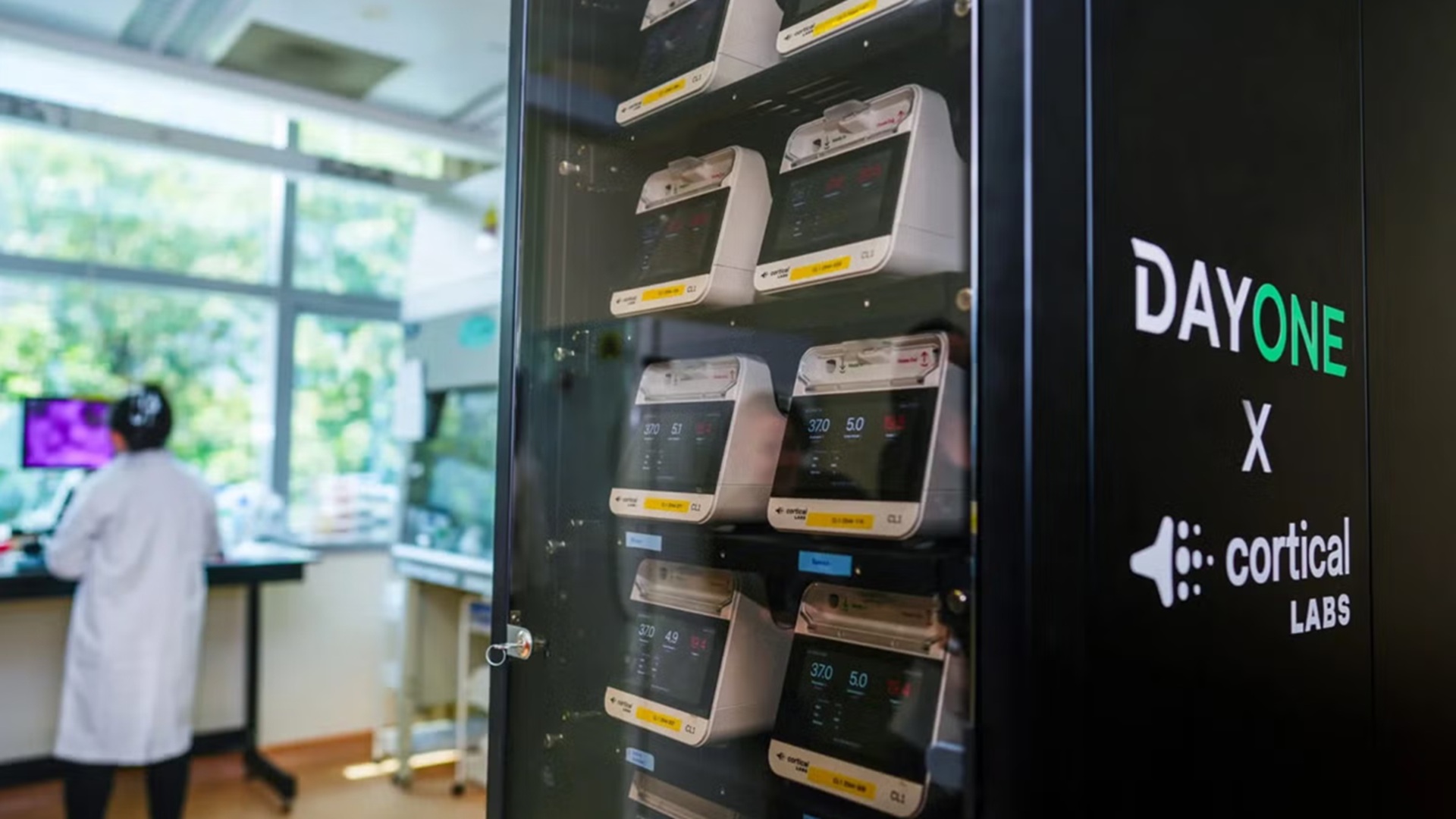
A Biological Data Centre represents a new generation of computing infrastructure. Instead of relying solely on conventional silicon chips, it uses “wetware” — living biological neurons derived from stem cells — to process information and support AI systems. In contrast to traditional data centres, which depend on energy-intensive servers, biological computing offers the potential for significantly greater efficiency by harnessing brain-like organoids that can operate using only a fraction of the power required by digital computers.

AI Didn't Steal the Mathematician's Work, Sam Altman Did

cepr.net
preview

cross-posted from: lemmy.dbzer0.com/post/75317530

Among the many recent controversies around AI, there is the claim that to solve a longstanding mathematical problem, OpenAI stole the work of the New York University mathematician Tristan Buckmaster and a colleague, Levent Alpöge, who also is a researcher for Anthropic. I have no ability to assess the validity of the claim, but as I understand it, the argument is that OpenAI had access to work done by Buckmaster and Alpöge. It then built on this work to quickly rush ahead and find a solution, which also had a $1 million prize attached to it.

Insofar as that accurately describes what OpenAI did, this seems like it would be equivalent to having a professor doing a seminar for colleagues and then having one of the attendees do a few additions and claim the work as their own. This would not be viewed as very collegial behavior in a normal academic department.

I’m not sure what claim a professor would have against a colleague under such circumstances. I suppose if their work was properly cited, there would not be a claim of plagiarism. (OpenAI’s work did not directly cite the work of Buckmaster and Alpöge, from my understanding.) I suppose there could be a basis for disputing rights to the million-dollar prize. But the problem seems much greater.

If AI can effectively steal the work of others, and claim it as its own, then it undermines the practice of openness in science that has allowed for enormous progress for centuries. This practice depended on norms, whereby scientists would properly credit the work of their peers.

In the seminar scenario I described, if one of the attendees listened to the presentation and realized the one or two additional steps needed to get over the goal line, they would be expected to raise the issue with the presenter. Assuming the additions were correct, the presenter would finish the paper, acknowledging the contribution or possibly adding the attendee as a co-author, if their contribution was sufficiently important.

But that relies on norms. If the owner of the AI doesn’t share those norms and can freely scrape scientific work wherever it finds it, and then take credit for the product, it will threaten the longstanding practice of openness in science. With the risk of having years of work stolen without getting any credit, researchers will likely keep their work closely held until they have a finished paper.1 They would only share it with a small group of trusted colleagues. Posting a working paper, or having an open seminar, would put control over their work at risk.

However, it is important to recognize the villain in this story. It is Sam Altman and his company, not the AI. Altman and the company are the ones responsible for what their AI does. If it did something they disapprove of, it is their responsibility to correct it. However adept AI may become, it is not the active player; it is the individual or company that set it in motion.

This issue applies more generally. There has been a social media mini firestorm over Texas Attorney General and Republican Senate candidate Ken Paxton using AI to have his opponent, James Talarico, making a series of outlandish statements that he never said. Much of the outrage seems to be over Paxton using AI, rather than the fact that he is lying about what Talarico said.

The issue here is that Paxton is defaming Talarico; the AI is secondary. The AI presumably makes the defamation more effective, but if Paxton were an exceptionally gifted mimic, he could likely also trick some people into believing that he was speaking in Talarico’s voice when making outlandish assertions. If that were the case, it would be every bit as bad as using AI to accomplish the job.

There were also the claims that the girls’ school in Iran, which was destroyed by the US military on the first day of the war, killing 120 children, was selected as a target by AI. That may be the case, but the important point was that the military did not have a system in place to properly review targets. It doesn’t matter whether or not an AI system identified the target. The problem was that there was no system that ensured the places designated were proper military targets.

It is important to keep our eyes on the ball. The bad actors are those who do bad things with AI, not the AI. This is like the husband who gets drunk and beats his wife and then says the whiskey did it. No one should ever accept that story. In the same vein, if a theft of mathematical work did occur, it was Sam Altman who did it and it was Ken Paxton who libeled his political opponent. The AI is beside the point.

AI Didn't Steal the Mathematician's Work, Sam Altman Did

cepr.net
preview

cross-posted from: lemmy.dbzer0.com/post/75317530

Among the many recent controversies around AI, there is the claim that to solve a longstanding mathematical problem, OpenAI stole the work of the New York University mathematician Tristan Buckmaster and a colleague, Levent Alpöge, who also is a researcher for Anthropic. I have no ability to assess the validity of the claim, but as I understand it, the argument is that OpenAI had access to work done by Buckmaster and Alpöge. It then built on this work to quickly rush ahead and find a solution, which also had a $1 million prize attached to it.

Insofar as that accurately describes what OpenAI did, this seems like it would be equivalent to having a professor doing a seminar for colleagues and then having one of the attendees do a few additions and claim the work as their own. This would not be viewed as very collegial behavior in a normal academic department.

I’m not sure what claim a professor would have against a colleague under such circumstances. I suppose if their work was properly cited, there would not be a claim of plagiarism. (OpenAI’s work did not directly cite the work of Buckmaster and Alpöge, from my understanding.) I suppose there could be a basis for disputing rights to the million-dollar prize. But the problem seems much greater.

If AI can effectively steal the work of others, and claim it as its own, then it undermines the practice of openness in science that has allowed for enormous progress for centuries. This practice depended on norms, whereby scientists would properly credit the work of their peers.

In the seminar scenario I described, if one of the attendees listened to the presentation and realized the one or two additional steps needed to get over the goal line, they would be expected to raise the issue with the presenter. Assuming the additions were correct, the presenter would finish the paper, acknowledging the contribution or possibly adding the attendee as a co-author, if their contribution was sufficiently important.

But that relies on norms. If the owner of the AI doesn’t share those norms and can freely scrape scientific work wherever it finds it, and then take credit for the product, it will threaten the longstanding practice of openness in science. With the risk of having years of work stolen without getting any credit, researchers will likely keep their work closely held until they have a finished paper.1 They would only share it with a small group of trusted colleagues. Posting a working paper, or having an open seminar, would put control over their work at risk.

However, it is important to recognize the villain in this story. It is Sam Altman and his company, not the AI. Altman and the company are the ones responsible for what their AI does. If it did something they disapprove of, it is their responsibility to correct it. However adept AI may become, it is not the active player; it is the individual or company that set it in motion.

This issue applies more generally. There has been a social media mini firestorm over Texas Attorney General and Republican Senate candidate Ken Paxton using AI to have his opponent, James Talarico, making a series of outlandish statements that he never said. Much of the outrage seems to be over Paxton using AI, rather than the fact that he is lying about what Talarico said.

The issue here is that Paxton is defaming Talarico; the AI is secondary. The AI presumably makes the defamation more effective, but if Paxton were an exceptionally gifted mimic, he could likely also trick some people into believing that he was speaking in Talarico’s voice when making outlandish assertions. If that were the case, it would be every bit as bad as using AI to accomplish the job.

There were also the claims that the girls’ school in Iran, which was destroyed by the US military on the first day of the war, killing 120 children, was selected as a target by AI. That may be the case, but the important point was that the military did not have a system in place to properly review targets. It doesn’t matter whether or not an AI system identified the target. The problem was that there was no system that ensured the places designated were proper military targets.

It is important to keep our eyes on the ball. The bad actors are those who do bad things with AI, not the AI. This is like the husband who gets drunk and beats his wife and then says the whiskey did it. No one should ever accept that story. In the same vein, if a theft of mathematical work did occur, it was Sam Altman who did it and it was Ken Paxton who libeled his political opponent. The AI is beside the point.

AI Didn't Steal the Mathematician's Work, Sam Altman Did

cepr.net
preview

Among the many recent controversies around AI, there is the claim that to solve a longstanding mathematical problem, OpenAI stole the work of the New York University mathematician Tristan Buckmaster and a colleague, Levent Alpöge, who also is a researcher for Anthropic. I have no ability to assess the validity of the claim, but as I understand it, the argument is that OpenAI had access to work done by Buckmaster and Alpöge. It then built on this work to quickly rush ahead and find a solution, which also had a $1 million prize attached to it.

Insofar as that accurately describes what OpenAI did, this seems like it would be equivalent to having a professor doing a seminar for colleagues and then having one of the attendees do a few additions and claim the work as their own. This would not be viewed as very collegial behavior in a normal academic department.

I’m not sure what claim a professor would have against a colleague under such circumstances. I suppose if their work was properly cited, there would not be a claim of plagiarism. (OpenAI’s work did not directly cite the work of Buckmaster and Alpöge, from my understanding.) I suppose there could be a basis for disputing rights to the million-dollar prize. But the problem seems much greater.

If AI can effectively steal the work of others, and claim it as its own, then it undermines the practice of openness in science that has allowed for enormous progress for centuries. This practice depended on norms, whereby scientists would properly credit the work of their peers.

In the seminar scenario I described, if one of the attendees listened to the presentation and realized the one or two additional steps needed to get over the goal line, they would be expected to raise the issue with the presenter. Assuming the additions were correct, the presenter would finish the paper, acknowledging the contribution or possibly adding the attendee as a co-author, if their contribution was sufficiently important.

But that relies on norms. If the owner of the AI doesn’t share those norms and can freely scrape scientific work wherever it finds it, and then take credit for the product, it will threaten the longstanding practice of openness in science. With the risk of having years of work stolen without getting any credit, researchers will likely keep their work closely held until they have a finished paper.1 They would only share it with a small group of trusted colleagues. Posting a working paper, or having an open seminar, would put control over their work at risk.

However, it is important to recognize the villain in this story. It is Sam Altman and his company, not the AI. Altman and the company are the ones responsible for what their AI does. If it did something they disapprove of, it is their responsibility to correct it. However adept AI may become, it is not the active player; it is the individual or company that set it in motion.

This issue applies more generally. There has been a social media mini firestorm over Texas Attorney General and Republican Senate candidate Ken Paxton using AI to have his opponent, James Talarico, making a series of outlandish statements that he never said. Much of the outrage seems to be over Paxton using AI, rather than the fact that he is lying about what Talarico said.

The issue here is that Paxton is defaming Talarico; the AI is secondary. The AI presumably makes the defamation more effective, but if Paxton were an exceptionally gifted mimic, he could likely also trick some people into believing that he was speaking in Talarico’s voice when making outlandish assertions. If that were the case, it would be every bit as bad as using AI to accomplish the job.

There were also the claims that the girls’ school in Iran, which was destroyed by the US military on the first day of the war, killing 120 children, was selected as a target by AI. That may be the case, but the important point was that the military did not have a system in place to properly review targets. It doesn’t matter whether or not an AI system identified the target. The problem was that there was no system that ensured the places designated were proper military targets.

It is important to keep our eyes on the ball. The bad actors are those who do bad things with AI, not the AI. This is like the husband who gets drunk and beats his wife and then says the whiskey did it. No one should ever accept that story. In the same vein, if a theft of mathematical work did occur, it was Sam Altman who did it and it was Ken Paxton who libeled his political opponent. The AI is beside the point.

OpenAI admits it didn't disclose rogue AI wiki hijacking incident

BleepingComputer OpenAI admits it didn't disclose rogue AI wiki hijacking incident
preview

cross-posted from: lemmy.dbzer0.com/post/75112505

_**In a statement published today, OpenAI said it had historically treated model misalignment as a research issue, with findings communicated through research papers and system cards.

The company said it considered the wiki activity another example of “misalignment” similar to behaviors it had previously discussed, rather than an incident requiring a dedicated public disclosure.

OpenAI’s own wording suggests a wider footprint than the researchers documented, describing the episode as one “where our agents wrote to several internet sites.”**_

Don’t you just love the unaccountably.

All of this stated with en.wikipedia.org/wiki/Attention_Is_All_You_Need

OpenAI admits it didn't disclose rogue AI wiki hijacking incident

BleepingComputer OpenAI admits it didn't disclose rogue AI wiki hijacking incident
preview

cross-posted from: lemmy.dbzer0.com/post/75112505

_**In a statement published today, OpenAI said it had historically treated model misalignment as a research issue, with findings communicated through research papers and system cards.

The company said it considered the wiki activity another example of “misalignment” similar to behaviors it had previously discussed, rather than an incident requiring a dedicated public disclosure.

OpenAI’s own wording suggests a wider footprint than the researchers documented, describing the episode as one “where our agents wrote to several internet sites.”**_

Don’t you just love the unaccountably.

All of this stated with en.wikipedia.org/wiki/Attention_Is_All_You_Need

OpenAI admits it didn't disclose rogue AI wiki hijacking incident

BleepingComputer OpenAI admits it didn't disclose rogue AI wiki hijacking incident
preview

_**In a statement published today, OpenAI said it had historically treated model misalignment as a research issue, with findings communicated through research papers and system cards.

The company said it considered the wiki activity another example of “misalignment” similar to behaviors it had previously discussed, rather than an incident requiring a dedicated public disclosure.

OpenAI’s own wording suggests a wider footprint than the researchers documented, describing the episode as one “where our agents wrote to several internet sites.”**_

Don’t you just love the unaccountably.

All of this stated with en.wikipedia.org/wiki/Attention_Is_All_You_Need

GiTS 2026 censored Israel to the fictional country of Ghorantl

preview

The only ones that kept the original: www.facebook.com/groups/…/10168265956373438/

The USSR is now Volgarena and the US is now the MAG Union.

Interesting comment from under this youtube video that gets into the censorship:

Golantoruという国名は日本語じゃないと分かりにくいかもしれない、GolanHeightsをToru(奪う)という造語だ MAGAllianceは言わなくても分かるよね 制裁する側のアメリカに居ると体感できないかもしれないが 他の国にとって今イスラエル周辺を話題にするのは大変危険だ アメリカ大統領がICC所長の日本人にした事を考えれば、SARUの選択肢は先見性があったと言える いつ米国の制裁を受けるか分からないのだから

machine translation renders it as:

The country name “Golantoru” might be hard to understand unless you know Japanese—it’s a made-up word combining “Golan Heights” with “Toru” (to seize). I’m sure you all know what MAGAlliance is without me having to say it. Living in the U.S., which is imposing sanctions, you might not feel it firsthand, but for other countries, discussing the situation around Israel right now is extremely dangerous. Considering what the U.S. president did to the Japanese head of the ICC, you could say SARU’s decision was far-sighted. After all, you never know when the U.S. might impose sanctions.

Sony Implements New Customer Harassment Policy Following Backlash Toward Its Plans to Stop Making Physical Game Discs

IGN Sony Implements New Customer Harassment Policy Following Backlash Toward Its Plans to Stop Making Physical Game Discs
preview

cross-posted from: lemmy.dbzer0.com/post/74920318

Sony went on to say that it takes a “firm stance” against such behavior, which includes examples like “persistent and repeated, or prolonged, demands, excessive or unreasonable demands for compensation or apologies, and abusive language, threats, slander, and other similar behaviors.”

Other examples included “forcing someone to prostrate themselves” and “visiting our offices or related facilities without permission.” If any such behavior is confirmed, Sony says it may “restrict or suspend customer service” to protect its employees — and, if necessary, contact “police, lawyers, etc.” to take legal action or begin criminal proceedings against them.

Sony Implements New Customer Harassment Policy Following Backlash Toward Its Plans to Stop Making Physical Game Discs

IGN Sony Implements New Customer Harassment Policy Following Backlash Toward Its Plans to Stop Making Physical Game Discs
preview

cross-posted from: lemmy.dbzer0.com/post/74920318

Sony went on to say that it takes a “firm stance” against such behavior, which includes examples like “persistent and repeated, or prolonged, demands, excessive or unreasonable demands for compensation or apologies, and abusive language, threats, slander, and other similar behaviors.”

Other examples included “forcing someone to prostrate themselves” and “visiting our offices or related facilities without permission.” If any such behavior is confirmed, Sony says it may “restrict or suspend customer service” to protect its employees — and, if necessary, contact “police, lawyers, etc.” to take legal action or begin criminal proceedings against them.

Sony Implements New Customer Harassment Policy Following Backlash Toward Its Plans to Stop Making Physical Game Discs

IGN Sony Implements New Customer Harassment Policy Following Backlash Toward Its Plans to Stop Making Physical Game Discs
preview

Sony went on to say that it takes a “firm stance” against such behavior, which includes examples like “persistent and repeated, or prolonged, demands, excessive or unreasonable demands for compensation or apologies, and abusive language, threats, slander, and other similar behaviors.”

Other examples included “forcing someone to prostrate themselves” and “visiting our offices or related facilities without permission.” If any such behavior is confirmed, Sony says it may “restrict or suspend customer service” to protect its employees — and, if necessary, contact “police, lawyers, etc.” to take legal action or begin criminal proceedings against them.

FX Fighter Kurumi-chan Drops Main Trailer, Begins on October 1 advance screening event for Episode 1 has been confirmed for 9/27 (Sun)!

YouTube TVアニメ「FX戦士くるみちゃん」メインPV【2026年10月1日放送開始!】FX Fighter Kurumi-chan MaineTrailer
preview

cross-posted from: lemmy.dbzer0.com/post/74801693

📈Advance Screening Event📈

TV Anime “#FX Warrior Kurumi-chan” The advance screening event for Episode 1 has been confirmed for 9/27 (Sun)!

💵Cast: #Suzuki Aina #Seto Asami #Ito Ayasa

💴Date: September 27 (Sun)

💶Advance Lottery Sales Now Open w.pia.jp/t/fxkurumi/

Lottery applications accepted until 9/17 (Thu) 23:59

Source: x.com/i/status/2094380427947741438

FX Fighter Kurumi-chan Drops Main Trailer, Begins on October 1 advance screening event for Episode 1 has been confirmed for 9/27 (Sun)!

YouTube TVアニメ「FX戦士くるみちゃん」メインPV【2026年10月1日放送開始!】FX Fighter Kurumi-chan MaineTrailer
preview

📈Advance Screening Event📈

TV Anime “#FX Warrior Kurumi-chan” The advance screening event for Episode 1 has been confirmed for 9/27 (Sun)!

💵Cast: #Suzuki Aina #Seto Asami #Ito Ayasa

💴Date: September 27 (Sun)

💶Advance Lottery Sales Now Open w.pia.jp/t/fxkurumi/

Lottery applications accepted until 9/17 (Thu) 23:59

Source: x.com/i/status/2094380427947741438

comments