0

Credible Defense Megathread 7/14/23 + Feedback Thread

preview

Well, its been two weeks, which I think is a decent amount of time for a quick check-in for feedback. Is this space helping people? Is there anything I could do to make it more useful or engaging? I was considering migrating this thread to a second subreddit with lower posting standards, a la r/lesscredibledefense. That way, maybe people who feel intimidated/uncomfortable with the submission standards can still share content. Would love to hear your thoughts.

I’m trying this out on a purely experimental basis. Please strive to keep your discussions focused, courteous, and credible. Links to combat footage without significant further analysis will be removed. That sort of footage should be posted to !combatfootage@lemmy.world.

Also, please report things which break the rules! It’s unlikely I’ll see everything that happens in a thread, so reporting is the best way to remove content that doesn’t fit our standards.

The megathread is for asking questions and posting submissions that would not fit the criteria of our post submissions. As such, submissions are less stringently moderated, but we still do keep an elevated guideline for comments. Comment guidelines: ​ Please do: ​

  • Be curious not judgmental,
  • Be polite and civil,
  • Use the original title of the work you are linking to,
  • Use capitalization,
  • Link to the article or source of information that you are referring to,
  • Make it clear what is your opinion and from what the source actually says. Please minimize editorializing, please make your opinions clearly distinct from the content of the article or source, please do not cherry pick facts to support a preferred narrative,
  • Read the articles before you comment, and comment on the content of the articles,
  • Post only credible information
  • Contribute to the forum by finding and submitting your own credible articles, ​ Please do not: ​
  • Use memes, emojis or swears excessively,
  • Use foul imagery,
  • Use acronyms like LOL, LMAO, WTF, /s, etc. excessively,
  • Start fights with other commenters,
  • Make it personal,
  • Try to out someone,
  • Try to push narratives, or fight for a cause in the comment section, or try to 'win the war,'
  • Engage in baseless speculation, fear mongering, or anxiety posting. Question asking is welcome and encouraged, but questions should focus on tangible issues and not groundless hypothetical scenarios. Before asking a question ask yourself ‘How likely is this thing to occur.’ Questions, like other kinds of comments, should be supported by evidence and must maintain the burden of credibility. ​ Please read our in depth rules reddit.com/r/CredibleDefense/wiki/rules. Also please use the report feature if you want a comment to be reviewed faster. Don’t abuse it though! If something is not obviously against the rules but you still feel that it should be reviewed, leave a short but descriptive comment while filing the report.


Well, its been two weeks, which I think is a decent amount of time for a quick check-in for feedback. Is this space helping people? Is there anything I could do to make it more useful or engaging? I was considering migrating this thread to a second subreddit with lower posting standards, a la r/lesscredibledefense. That way, maybe people who feel intimidated/uncomfortable with the submission standards can still share content. Would love to hear your thoughts.

I’m trying this out on a purely experimental basis. Please strive to keep your discussions focused, courteous, and credible. Links to combat footage without significant further analysis will be removed. That sort of footage should be posted to !combatfootage@lemmy.world.

Also, please report things which break the rules! It’s unlikely I’ll see everything that happens in a thread, so reporting is the best way to remove content that doesn’t fit our standards.

The megathread is for asking questions and posting submissions that would not fit the criteria of our post submissions. As such, submissions are less stringently moderated, but we still do keep an elevated guideline for comments. Comment guidelines: ​ Please do: ​

  • Be curious not judgmental,
  • Be polite and civil,
  • Use the original title of the work you are linking to,
  • Use capitalization,
  • Link to the article or source of information that you are referring to,
  • Make it clear what is your opinion and from what the source actually says. Please minimize editorializing, please make your opinions clearly distinct from the content of the article or source, please do not cherry pick facts to support a preferred narrative,
  • Read the articles before you comment, and comment on the content of the articles,
  • Post only credible information
  • Contribute to the forum by finding and submitting your own credible articles, ​ Please do not: ​
  • Use memes, emojis or swears excessively,
  • Use foul imagery,
  • Use acronyms like LOL, LMAO, WTF, /s, etc. excessively,
  • Start fights with other commenters,
  • Make it personal,
  • Try to out someone,
  • Try to push narratives, or fight for a cause in the comment section, or try to 'win the war,'
  • Engage in baseless speculation, fear mongering, or anxiety posting. Question asking is welcome and encouraged, but questions should focus on tangible issues and not groundless hypothetical scenarios. Before asking a question ask yourself ‘How likely is this thing to occur.’ Questions, like other kinds of comments, should be supported by evidence and must maintain the burden of credibility. ​ Please read our in depth rules reddit.com/r/CredibleDefense/wiki/rules. Also please use the report feature if you want a comment to be reviewed faster. Don’t abuse it though! If something is not obviously against the rules but you still feel that it should be reviewed, leave a short but descriptive comment while filing the report.

0

Leon Panetta on the Trump Administration’s Venezuelan Boat Strikes

The New Yorker Leon Panetta on the Trump Administration’s Venezuelan Boat Strikes www.newyorker.com
preview

The former C.I.A. director and Secretary of Defense explains the problem with using the military for law enforcement.

The former C.I.A. director and Secretary of Defense explains the problem with using the military for law enforcement.

0

Why the M7 and 6.8x51mm are Bad Ideas: Welcome to my TED Talk | Forgotten Weapons - Youtube (Invidious link)

preview

The plan to replace the 5.56mm M4 Carbine with the 6.8mm M7 as the US Army’s standard infantry rifle is a bad idea, and today I will try to explain why. In short, both of the justifications used for the switch (long range engagements and armor penetration) are better solved by other options. Modern FPV drones and squad designated marksmen are both better ways to handle Afghanistan-type long range engagements, and a proper armor-piercing round for the 5.56mm NATO, for example something like CBJ Tech makes, is a better solution for armor.

Historically, we have ample evidence from World War Two, Korea, and Vietnam that an infantryman cannot typically see a target beyond 300m because of terrain and obstacles, and generally is unable to hit targets beyond 200m in actual combat. To sacrifice rifle weight, ammo weight, and ammo capacity for the sake of giving the infantry a rifle theoretically capable of 600-800m engagements is a fool’s errand and a bad idea

www.youtube.com/watch?v=kqlKXrwmRMQ

0

Pyka’s long-range cargo drone reshapes frontline logistics

The Defence Blog – Military and Defense News Pyka’s long-range cargo drone reshapes frontline logistics defence-blog.com
preview

Annoying headline, but this seems like a very effective type of design especially for disaster and emergency response.

Edit older but arguably better article >

aviationweek.com/…/pyka-unveils-dropship-military…

Annoying headline, but this seems like a very effective type of design especially for disaster and emergency response.

Edit older but arguably better article >

aviationweek.com/…/pyka-unveils-dropship-military…

0

Inside six helo companies gunning for the Army’s Flight School Next program - Breaking Defense

Breaking Defense Inside six helo companies gunning for the Army’s Flight School Next program - Breaking Defense breakingdefense.com
preview

“One of the things that we’ve noticed over the last couple years is our accident trends are moving in the wrong direction. When Army senior leaders go out and talk to experienced aviators, they say, ‘What’s going on out here?’ They say, ‘We have a very talented population that’s coming out. They’re inexperienced. They’re very good at systems operations. They’re not very good at flying fundamentals,’’’ Gill said. “So some of that we attribute back to the fact that we have a very advanced trainer.”

…

In the current draft CSO, the Army is requesting that the aircraft for Flight School Next meet a slew of requirements, but the three most prominent are that the aircraft have a turbine single-engine, counterclockwise rotating rotor system and Instrument Flight Rules (IFR) certification. The certification, awarded by the Federal Aviation Administration, takes around 12 months to complete; it requires certain equipment to be installed for various situations such as low visibility environments, equipment for anti-icing or de-icing, appropriate warning systems, enforcements for dual generators or back up batteries and more.

0

'Greatest vulnerability': Australian Navy chief says protecting undersea cables is 'existential' - Breaking Defense

Breaking Defense 'Greatest vulnerability': Australian Navy chief says protecting undersea cables is 'existential' - Breaking Defense breakingdefense.com
preview

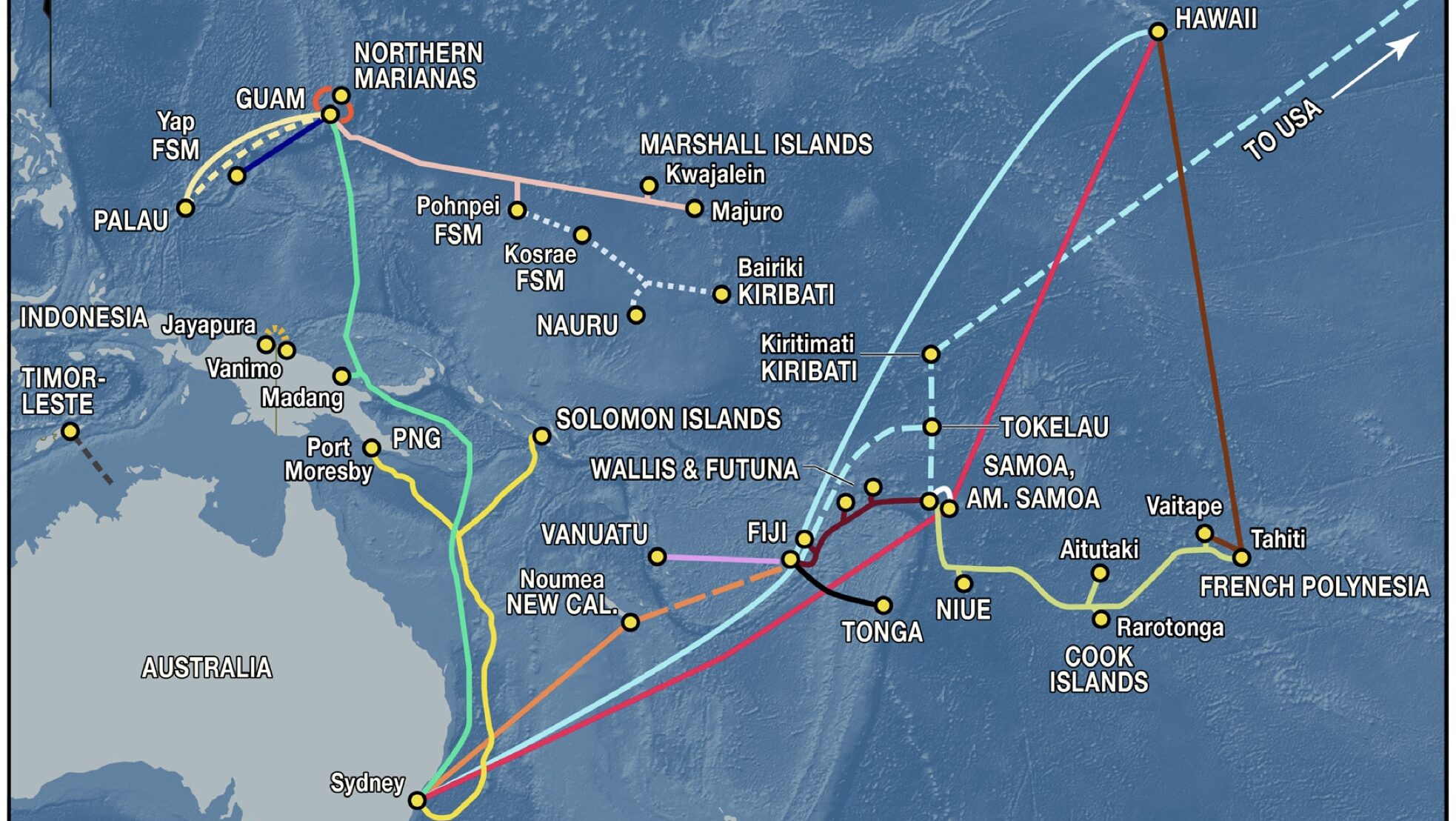
“Current repair arrangements are through a series of clubs, essentially geographic clubs, of private operators who band together and then hire a repair vessel to be on standby to repair cables. Now the prioritization of repairs is a matter for private operators, not for countries. So we don’t have a say,” Brewster said.

And those measures are only designed to deal with relatively shallow, periodic and accidental cable breaks, not breaks that occur in different places and are below 200 meters or more. India is considering building a ship to repair cable, but it will cost up to $150 million AUD ($95 million USD) to build, he said, and Australia lacks the human capabilities needed to sail and run such a ship, so that is not a likely solution here.

0

Satellite imagery shows surge of U.S. aircraft in Puerto Rico

The Defence Blog – Military and Defense News Satellite imagery shows surge of U.S. aircraft in Puerto Rico defence-blog.com
preview

The presence of eight F-35s together on the ground is notable. For forward deployments, fighter units generally rotate in smaller detachments unless preparing for sustained activity or joint operations. The combination of stealth fighters with heavy airlift and refueling capacity suggests preparation for either rapid-response missions or positioning of forces intended to remain in the region for an extended period.

The imagery does not show weapons loading, emergency posture or other indicators of imminent combat operations. The airport surface appears orderly, and there are no visible dispersal shelters, indicating a conventional staging configuration.

0

Royal Navy Conducts World’s First Quantum Navigation on Uncrewed Submarine

The Defense Post Royal Navy Conducts World’s First Quantum Navigation on Uncrewed Submarine thedefensepost.com
preview

The Royal Navy has trialed Infleqtion’s Tiqker quantum optical atomic clock aboard the testbed submarine XV Excalibur, demonstrating ultra-precise timing for navigation under GPS-denied conditions.

Unlike surface vessels, submarines rarely surface to access GPS signals and instead rely on internal systems such as inertial navigation and acoustic positioning.

Precise timing is essential for navigation systems, as minor sensor errors can gradually accumulate and cause the system’s position estimate to drift.

…

According to Infleqtion, the clock’s atomic transition frequency is 10,000 times higher than that of microwave clocks, resulting in superior precision and environmental stability.

0

French Navy Set to Receive PC-24 Jets to Improve Operations from Short and Unpaved Airstrips

preview

I link this because there is a definite trend in business jets being acquired by militaries for surveillance and electronic warfare, which is a major use case but it seems even bigger than just that.

The intensity and consistency of these acquisitions to me suggests something deep in the calculus has changed.

Speculatively I would suggest that given the rapidly increasing range, endurance and automated capacity of airplane launched weapons and unmanned systems, airforces around the world may consider the most useful platform no longer exclusively to be the fighter-bomber in quite the same way. Business jets, especially ones that can operate from a variety of airfields may be evolving into a surprisingly significant role in aerial warfare and deterrance.

In US military speak the capabilities we are talking about here are referred to as “launched effects” and while the US military has a long history of using aircraft in this role it seems like a general global trend at this point and no longer a doctrine peculiar to some militaries.

en.wikipedia.org/wiki/Pilatus_PC-24

0

After 2 Hijack Attempts U.S. Is Arming Saildrone with Tomahawks and JAGMs | Defense Express

After 2 Hijack Attempts U.S. Is Arming Saildrone with Tomahawks and JAGMs | Defense Express en.defence-ua.com
preview

The second age of sail?

Though these wouldn’t be “ships of the line” more like “ships of the squiggle” given how they are deployed as persistent surveillance.

The second age of sail?

Though these wouldn’t be “ships of the line” more like “ships of the squiggle” given how they are deployed as persistent surveillance.

0

General Atomics Pairing GMLRS, PrSM With Multi-Packed LRMP Submunitions - Naval News

preview

GA-EMS has been branching LRMP concepts out from 155mm artillery for some time, but applying the round to ER-GMLRS and PrSM would be the first known guided submunition pitch for Lockheed Martin’s long range MLRS Family of Munitions. Mike Rucker, Head of GA-EMS Weapons, detailed the company’s efforts in an exclusive interview with Naval News on the show floor of AUSA 2025.

…

In operational use, LRMP uses a bottom-facing terrain imaging sensor as a guidance and acquisition system, allowing operation in GPS-free environments independent from outside communications. Once a target is acquired, the round flies over the target and pitches down into a 90 degree attack profile, acquiring targets with a nose-mounted infrared seeker. The flight profile, at near vertical descent over the target, is only one of many flight profiles options available for the round.