0

preview
read it
read it

c/earthlingliberationnotes@lemmy.world
242 members50 posts1 active this week
Not on this instance? Enter your own instance's domain to go straight to following c/earthlingliberationnotes@lemmy.world there.
read it
read it

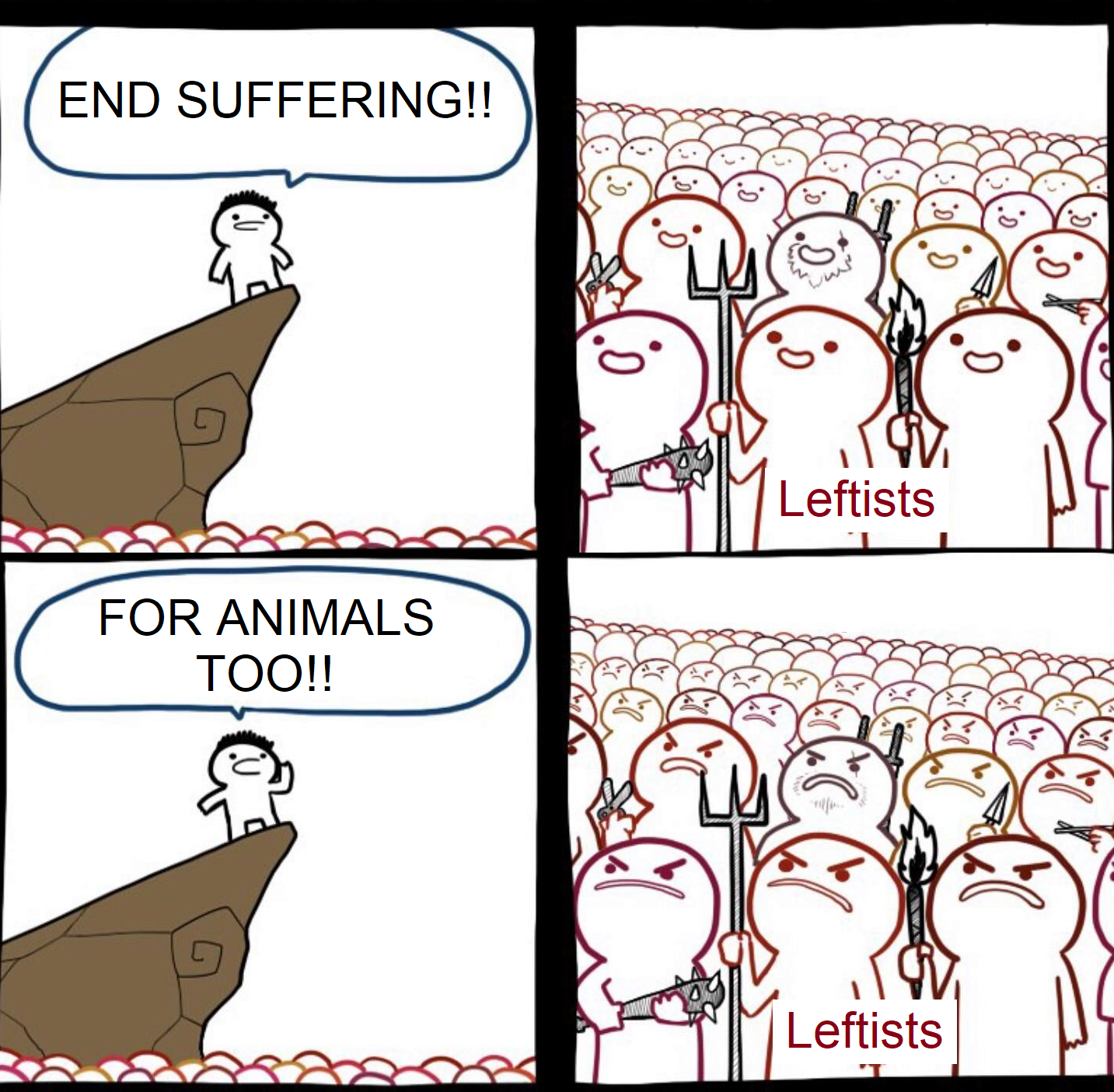
The production of meat and other animal-sourced foods, especially in their industrialized form, entails significant exploitation of animals, labor, and the natural environment. However, concern with animals is often sidelined in left and progressive politics, and veganism is often derided by leftists as a liberal project. Many contend that veganism is fixated on consumerism, asceticism, identity, and deontological ethics, and is insensitive to the oppressions perpetrated by Western, capitalist epistemologies and economic structures. Responding to these charges, this article argues that veganism conceived as a boycott aligns with existing Left commitments to social and environmental justice, and also those concomitant with a trans-species anti-exploitation ethic. The authors elaborate a specific definition of veganism as a boycott, situate it as a tactic within the broader political horizon of total liberation – schematized as a three-tier model for political action – and explain why it offers an effective form of eroding capitalism and other systems of domination. The authors conclude that refusing to consume animal products has tangible economic and social impacts, increases solidarity between human and nonhuman populations, and sensitizes individuals and communities to the socio-political effects of their consumer behavior.
Jonathan Dickstein, Jan Dutkiewicz, Jishnu Guha-Majumdar & Drew Robert Winter (2022) Veganism as Left Praxis, Capitalism Nature Socialism, 33:3, 56-75, DOI: 10.1080/10455752.2020.1837895
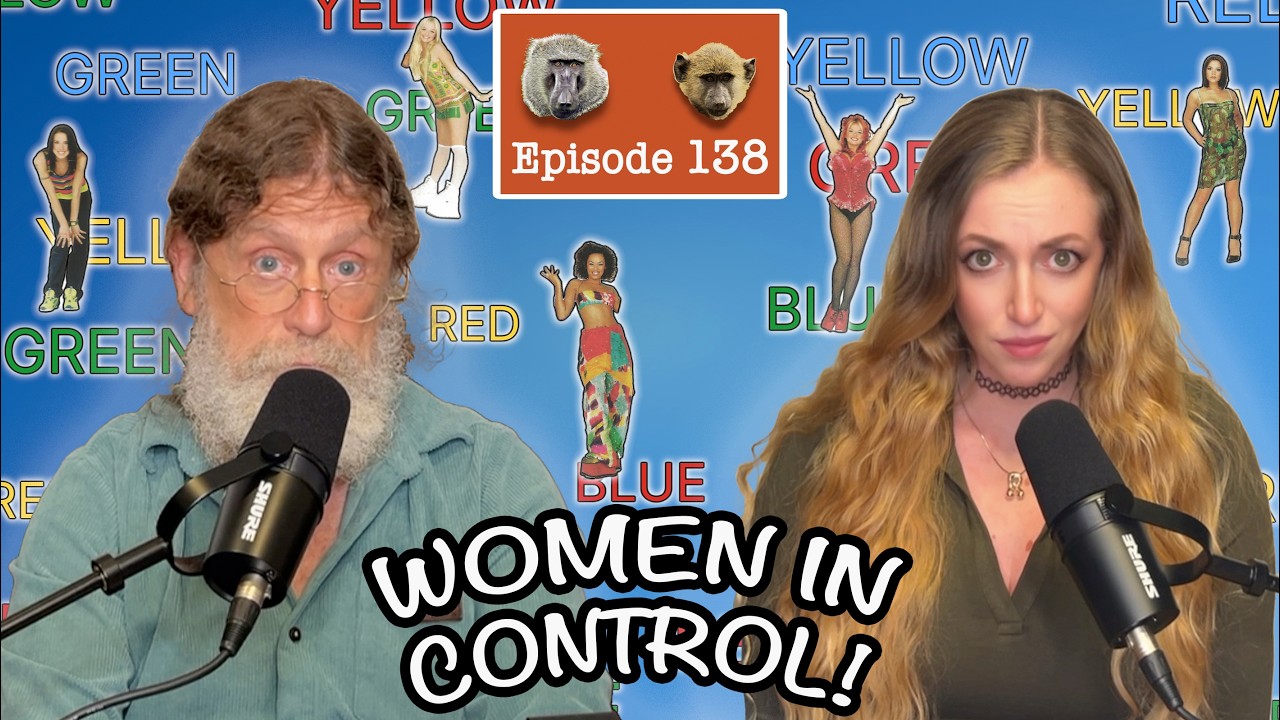
Sapolsky does a great introduction from subsistence patterns (gatherer-hunters, horticulturalist, pastoralist) to matriarchy vs patriarchy, to testosterone, to daddy issues…
Fascinating. I was aware of most of these loosely and not too deep, but I really like these kinds of connections.
Sapolsky does a great introduction from subsistence patterns (gatherer-hunters, horticulturalist, pastoralist) to matriarchy vs patriarchy, to testosterone, to daddy issues…
Fascinating. I was aware of most of these loosely and not too deep, but I really like these kinds of connections.


Terike Haapoja
Emi Leese
Terike Haapoja
Emi Leese

The collapse of modern techno-industrial civilization is inevitable. William Rees, human ecologist and ecological economist, argues that humanity’s nature evolved in simpler times and has left us wholly incapable of understanding the enormously complex and life-destroying global civilization we’ve created. The worldview of human exceptionalism, fueled by fossil energy and sustained by the myth of limitless growth and human ingenuity, is driving us deeper into ecological overshoot and leading humanity toward a painful contraction in both human population and consumption.
The collapse of modern techno-industrial civilization is inevitable. William Rees, human ecologist and ecological economist, argues that humanity’s nature evolved in simpler times and has left us wholly incapable of understanding the enormously complex and life-destroying global civilization we’ve created. The worldview of human exceptionalism, fueled by fossil energy and sustained by the myth of limitless growth and human ingenuity, is driving us deeper into ecological overshoot and leading humanity toward a painful contraction in both human population and consumption.

Fascism has a different face in 2026. Not only are we facing very real existential threats in the form of climate change and AI, the millenarians who once sat on the fringes of society now wield the most power. Naomi Klein and Astra Taylor join me today to unpack our current era of ‘apocalyptic fascism’ and what we can do about it.
The 6 thousand year old dualist pastoralist “Sky Daddy” culture is going through another iteration of mass genocide to conserve their hierarchy and dominator lifestyle. Now with more digital herds.
Unbeknownst to them, this is going to be their last round, as climate warming and mass extinction are not going to be compatible with the “winners.”

Video by Atun-Shei Films
Video by Atun-Shei Films
What do atheism and veganism have in common? More than you might think, according to Kim Socha, author of the new book “Animal Liberation and Atheism: Dismantling the Procrustean Bed”. Often reviled for their political beliefs, Kim has noted that there is a trend for many animal advocates to subscribe to a secular ethic. She notes that both groups hold a set of values that differ from and inherently critique the norms of animal exploitation and belief in god(s). Kim wrote the book after noting that there were many religious arguments for animal liberation published, but not many from an atheist perspective. From her book, Kim says: “I believe in one life, a life force I cannot explain but won’t chalk up to divine intervention or a cycle of rebirths. As such, I will fight for the end of abuse and violence in the lone world I know.” Kim’s book aims to overthrow the hierarchies firmly established and reinforced by religion that places god(s) above humans, and humans above other animal species. She asserts that just as many religions have been wrong to promote sexism, racism, and heterosexism, they also should not advocate for speciesism.
For atheists who are willing to remove gods from their understanding of the world, they should also question the hierarchy that insists that humans are the only species that matter. Kim also calls upon atheist academics and freethinkers who care about social justice and compassion to take their philosophies forward another step by including non-human animals in the sphere of moral consideration, and take action in line with those ethics.
Listen right now: animalvoices.ca/…/kim-socha-archive-ready1.mp3

Episode 85 features advocate, educator, and author Kim Socha Kim Socha, who holds a PhD in English Literature and Criticism, is an English professor working in the US. A grassroots animal liberation advocate, Kim is also active in drug policy reform, and transformative justice. Kim is the author or editor of 4 books relating to animal rights and veganism…
Episode 85 features advocate, educator, and author Kim Socha Kim Socha, who holds a PhD in English Literature and Criticism, is an English professor working in the US. A grassroots animal liberation advocate, Kim is also active in drug policy reform, and transformative justice. Kim is the author or editor of 4 books relating to animal rights and veganism…

The myth of human exceptionalism casts humans as separate from and superior to the rest of life. Primatologist Christine Webb, author of The Arrogant Ape, dismantles this belief, showing how science and culture sustain human exceptionalism - and why replacing it with awe and empathy for the natural world is essential to life’s future on Earth.
0:00 Introduction
4:06 Childhood and early professional experiences
9:51 Children less human exceptionalist
12:12 History of human exceptionalism in western science
18:47 Human exceptionalism biases scientific research
26:14 Better methods for studying animal behavior
29:30 Scientists who challenge human exceptionalism
32:55 Indigenous science and traditions
35:37 Veronica the tool-using cow
39:08 Fantastical nonhuman abilities
43:55 Role of Empathy
48:27 Human pressures simplify animal cultures
53:44 Human ‘exemptionalism’
59:27 Beyond human exceptionalism with attention and awe
Topics:

John Sanbonmatsu is a professor of philosophy at Worcester Polytechnic Institute and the author of The Omnivore’s Deception: What We Get Wrong about Meat, Animals, and Ourselves.
The book is a response to Michael Pollan’s 2006 bestseller The Omnivore’s Dilemma, and as the title suggests, Sanbonmatsu thinks writers like Pollan are dead wrong about the ethics of food. He maintains that killing and eating animals is entirely indefensible, no matter how “humane” the process supposedly is.
0:00-7:19 The Horror of Meat
7:19-13:02 Comparisons to Slavery
13:02-17:50 The Omnivore’s Deception
17:50-20:16 Lab-Grown Meat
20:16-25:15 Evasion of Moral Responsibility
25:15-33:24 Erosion of Moral Decency
33:24-40:33 The Path Forward
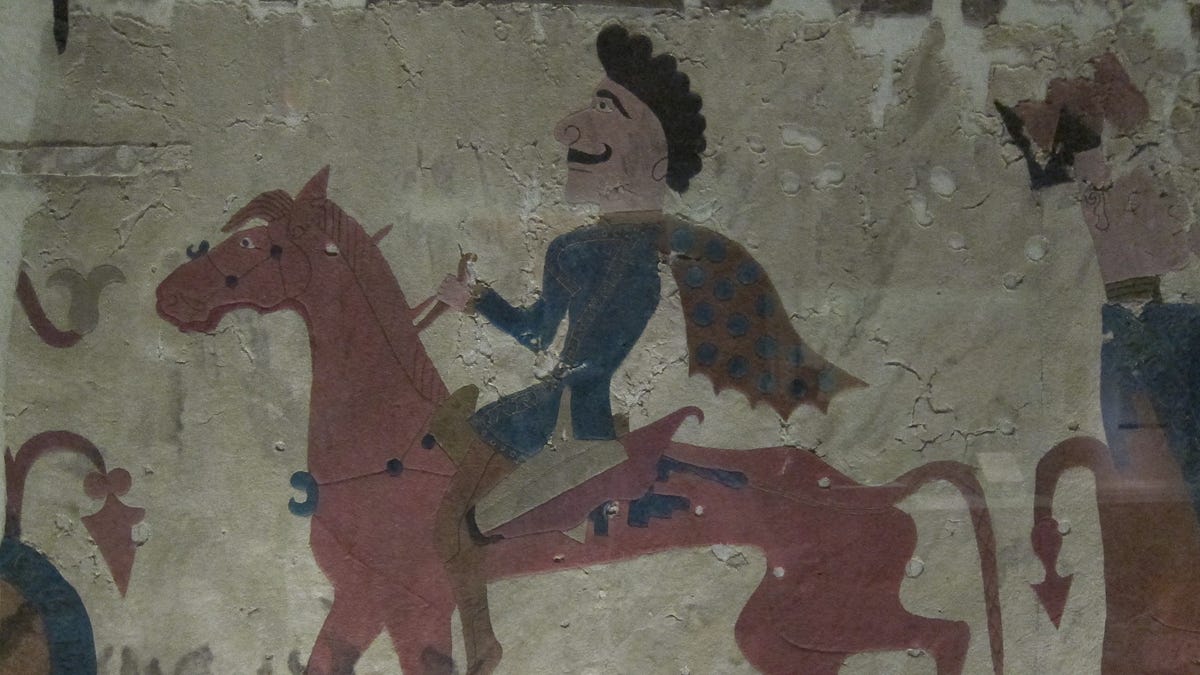

David W. Anthony, Professor of Anthropology and Anthropology Curator of the Yager Museum of Art and Culture at Hartwick College, Oneonta, New York, presents “Horseback Riding and Bronze Age Pastoralism in the Eurasian Steppes” at the Penn Museum’s symposium “Reconfiguring the Silk Road: New Research on East-West Exchange in Antiquity.”
David W. Anthony, Professor of Anthropology and Anthropology Curator of the Yager Museum of Art and Culture at Hartwick College, Oneonta, New York, presents “Horseback Riding and Bronze Age Pastoralism in the Eurasian Steppes” at the Penn Museum’s symposium “Reconfiguring the Silk Road: New Research on East-West Exchange in Antiquity.”
“(This text was originally published in a zine called “Vegan Wild: An International Anarchist Journal of Total Liberation”. It has been slightly modified and expanded for the purpose of serving as its own zine.)
As a zine distributer and publisher we wanted to provide what we feel to be a basic outline for exploring vegan perspectives generally defined as “liberal”, “radical” and “nihilist”. Exactly how those of us affiliated with Warzone Distro understand veganism in our individual lives has been inspired by a multitude of perspectives – vegan, non-vegan, and anti-vegan -shared over the years. Reading and listening to different stories (and critiques) has without a doubt played an influential role in how we, as anarchists, relate animal liberation to veganism, as anti-speciesist praxis. In encouraging dialog, we find it practical to continuously challenge non-vegan anarchists, non-anarchist vegans, as well as question and expand our own understanding of veganism.
This text is by no means intended to be complete. Despite its simplicity, we feel this text has the potential to be a useful tool for those interested in creating further dialog of their own on the topic.”
cross-posted from: lemmy.world/post/36492338
The rapid proliferation of roads and vehicles in North America over the past several decades has made the problem of roadkill so acute that, setting aside the meat industry, automobile collisions now surpass hunting as the leading human cause of vertebrate mortality. Unfortunately, roadkill is still a largely overlooked problem that has not been seriously taken up by major animal-rights or environmental organizations. In the absence of any coherent moral or political discourse addressing the problem, commodity culture itself has effectively been delegated the task of reckoning with the carnage, generating a huge array of roadkill novelty goods that offer the animal’s desecrated body up for consumption as a comic spectacle of abasement and domination. Attempting to rectify this absence, this paper employs the notion of commodity fetishism to examine roadkill both as the flashpoint for collective anxieties surrounding the status of animals in consumer culture, and as a window onto broader structural problems arising from the spread of automobile-oriented transportation systems over the past century.
PDF here: researchgate.net/…/277061799_Road_Kill_Commodity_…

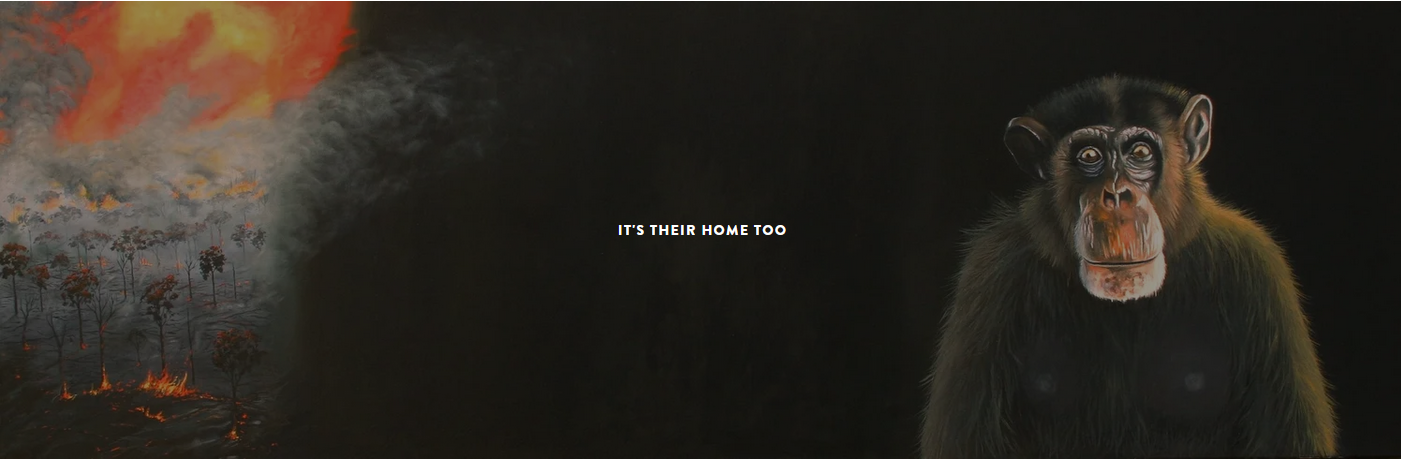
The findings come during fire season in the Amazon region, when seasonal blazes are driven by drought, the climate crisis and agricultural expansion, with large ranches and farms using fire to clear land. The Amazon region has experienced record forest loss in recent years, with fires a crucial driver.
Exposure to smoke from wildfires is known to be harmful to human health and may be linked to conditions from cardiovascular disease to cancer. Scientists estimate they cause thousands of premature deaths from lung cancer and cardiopulmonary disease.
.
“When the forests burn, a big part of our lives burn too,” says Isabel Surubí Pesoa, who was displaced from her home in an Indigenous territory in Bolivia’s eastern lowlands as a result of fire and drought. “The forest is our home, it is where we get medicines, where we plant crops, where we get clean oxygen to breathe,” she says. “When the forest burns, the sicknesses come.”
Seven studies using experimental and naturalistic methods reveal that upper-class individuals behave more unethically than lower-class individuals. In studies 1 and 2, upper-class individuals were more likely to break the law while driving, relative to lower-class individuals. In follow-up laboratory studies, upper-class individuals were more likely to exhibit unethical decision-making tendencies (study 3), take valued goods from others (study 4), lie in a negotiation (study 5), cheat to increase their chances of winning a prize (study 6), and endorse unethical behavior at work (study 7) than were lower-class individuals. Mediator and moderator data demonstrated that upper-class individuals’ unethical tendencies are accounted for, in part, by their more favorable attitudes toward greed.
Seven studies using experimental and naturalistic methods reveal that upper-class individuals behave more unethically than lower-class individuals. In studies 1 and 2, upper-class individuals were more likely to break the law while driving, relative to lower-class individuals. In follow-up laboratory studies, upper-class individuals were more likely to exhibit unethical decision-making tendencies (study 3), take valued goods from others (study 4), lie in a negotiation (study 5), cheat to increase their chances of winning a prize (study 6), and endorse unethical behavior at work (study 7) than were lower-class individuals. Mediator and moderator data demonstrated that upper-class individuals’ unethical tendencies are accounted for, in part, by their more favorable attitudes toward greed.

If we find ourselves “apologizing” for other animals and our advocacy on their behalf, we need to ask ourselves why. Is it an expression of self-doubt? A deliberate strategy?
Several years ago I published an article in Between the Species entitled “The Otherness of Animals.” In it, I urged that in order to avoid contributing to some of the very attitudes toward other animals that we seek to change, we need to raise fundamental questions about the way that we, as advocates for animals, actually conceive of them. One question concerns our tendency to deprecate ourselves, the animals, and our goals when speaking before the public and the press. Often we “apologize” for animals and our feelings for them: “Anxious not to alienate others from our cause, half doubtful of our own minds at times in a world that often views other animals so much differently than we do, we are liable to find ourselves presenting them apologetically at Court, spiffed up to seem more human, capable, ladies and gentlemen, of performing Ameslan (American sign language) in six languages. . . .”
We apologize in many different ways. More than once, I’ve been warned by an animal protectionist that the public will never care about chickens, and that the only way to get people to stop eating chickens is to concentrate on things like health and the environment. However, to take this defeatist view is to create a self- fulfilling prophecy. If the spokespersons for animals decide in advance that no one will ever really care about them, or aren’t “ready” for them, this negative message will be conveyed to the public. The apologetic mode of discourse in animal rights is epitomized by the “I know I sound crazy, but . . .” approach to the public. If we find ourselves “apologizing” for other animals and our advocacy on their behalf, we need to ask ourselves why. Is it an expression of self- doubt? A deliberate strategy? Either way, I think the rhetoric of apology harms our movement tremendously. Following are some examples of what I mean.
Reassuring the public, “Don’t worry. Vegetarianism isn’t going to come overnight.” We should ask our- selves: “If I were fighting to end human slavery, child abuse or some other human-created oppression, would I seek to placate the public or the offenders by reassuring them that the abuse will still go on for a long time and that we are only trying to phase it out gradually?” Why, instead of defending a vegan diet, are we not affirming it? Patronizing animals: “Of course they’re only animals, but . . .” “Of course they can’t reason the way we do. Of course they can’t appreciate a symphony or paint a great work of art or go to law school, but . . .” In fact, few people live their lives according to “reason,” or appreciate symphonies or paint works of art.
As human beings, we do not know what it feels like to have wings or to take flight from within our own bodies or to live naturally within the sea. Our species represents a smidgeon of the world’s experience, yet we patronize everything outside our domain. Comparing the competent, adult members of other animal species with human infants and cognitively impaired humans. Do we really believe that all of the other animals in this world have a mental life and range of experience comparable to diminished human capacity and the sensations of human infants? Except within the legal system, where all forms of life that are helpless against human assault should be classed together and defended on similar grounds, this analogy is both arrogant and absurd.
Starting a sentence with, “I know these animals aren’t as cute as other animals, but . . .” Would you tell a child, “I know Billy isn’t as cute as Tom, but you still have to play with him”? Why put a foregone conclusion in people’s minds? Why even suggest that physical appearance and conventional notions of attractiveness are relevant to how someone should be treated? Letting ourselves be intimidated by “science says,” “producers know best,” and charges of “anthropomorphism.”
We are related to other animals through evolution. Our empathic judgments reflect this fact. It doesn’t take special credentials to know, for example, that a hen confined in a wire cage is suffering, or to imagine what her feelings must be compared with those of a hen ranging outside in the grass. We’re told that humans are capable of knowing just about anything we want to know – except what it feels like to be one of our victims. Intellectual confidence is needed here, not submission to the epistemological deficiencies, cynicism, and intimidation tactics of profiteers.
Letting others identify and define who we are. I once heard a demonstrator tell a member of the press at a chicken slaughterhouse protest, “I’m sure Perdue thinks we’re all a bunch of kooks for caring about chickens, but . . .” Ask yourself: Does it matter what the Tysons and Perdues of this world “think” about anything? Can you imagine Jim Perdue standing in front of a camera, saying, “I know the animal rights people think I’m a kook, but . . .”? Needing to “prove” that we care about people, too. The next time someone challenges you about not caring about people, politely ask them what they’re working on. Whatever they say, say, “But why aren’t you working on ________?” “Don’t you care about ________?”
We care deeply about many things, but we cannot devote our primary time and energy to all of them. We must focus our attention and direct our resources. Moreover, to seek to enlarge the human capacity for justice and compassion is to care about and work for the betterment of people. Needing to pad, bolster and disguise our concerns about animals and animal abuse. An example is: “Even if you don’t care about roosters, you should still be concerned about gambling” in arguments against removedfighting. Is animal advocacy consistent with reassuring people that it’s okay not to care about the animals involved in animal abusing activities? That the animals themselves are “mere emblems for more pressing matters”? Instead, how about: “In addition to the horrible suffering of the roosters, there is also the gambling to consider.” Expanding the context of concern is legitimate. Diminishing the animals and their plight to gain favor isn’t. In recognizing the reality of other societal concerns, it is imperative to recognize that the abuse of animals is a human problem as serious as any other. Unfortunately, the victims of homo sapiens are legion. As individuals and groups, we cannot give equal time to every category of abuse. We must go where our heartstrings pull us the most, and do the best that we can with the confidence needed to change the world.
Be Affirmative, Not Apologetic
The rhetoric of apology in animal rights is an extension of the “unconscious contributions to one’s undoing” described by the child psychologist, Bruno Bettelheim.* He pointed out that human victims will often collaborate unconsciously with an oppressor in the vain hope of winning favor. An example in the animal rights movement is reassuring others that you still eat meat, or don’t oppose hunting, as a “bonding” strategy to get them to support a ban on, say, animal testing. Ask yourself if using one group of exploited animals as bait to win favor for another really advances our cause.
In fighting for animals and animal rights – the claims of other animals upon us as fellow creatures with feelings and lives of their own – against the collective human oppressor, we assume the role of vicarious victims. To “apologize” in this role is to betray “ourselves” profoundly. We need to understand why and how this can happen. As Bettelheim wrote, “But at the same time, understanding the possibility of such unconscious contributions to one’s undoing also opens the way for doing something about the experience – namely, preparing oneself better to fight in the external world against conditions which might induce one unconsciously to facilitate the work of the destroyer.” We must prepare ourselves in this way. If we feel that we must apologize, let us apologize to the animals, not for them.
*Bruno Bettelheim, “Unconscious Contributions to One’s Undoing,” SURVIVING and Other Essays, Vintage Books, 1980

Hello people who read the description. Why are you here? The video’s up there. Well to give you a basic rundown… men’s existence is to be guy being dude (and spin block in head), women’s existence is to manipulate guy being dude (and remember olive oil), gay and trans people’s existence is to confuse evolutionary psychologists, David Buss’s student surveys are totally accurate, hypergamy has nothing to do with patriarchy but everything to do with women doing eugenics, Richard Dawkins is totally right about genes, contraception is the downfall of the West and Geoffrey Miller is my favourite guy.
0:00 Intro
5:02 Evo Psych on Youtube & TV
11:00 Evo Psych in the Manosphere
14:00 Darwin & Gene Spaghetti
18:13 My Favourite Evolutionary Psychologist
26:56 Nature/Nurture
29:56 Just-So Stories
34:25 Mental 3D Rotation
37:07 Meadow Reports (Spatial Memory)
44:17 The Hunter / Gatherer Myth
47:00 Sexuality & Jealousy
50:49 Female O’s
53:45 David Buss’s TEDxTalk
1:05:28 Why Gay People?
1:07:37 Science is F’d
1:11:00 Surveys are Bad
1:14:13 Psychology Fraud & The Replication Crisis
1:23:31 Twin Studies are Bad
1:26:24 Ovulation Science is Awful
1:36:34 The Podcast Misinfomation Epidemic
2:01:17 Women in STEM
2:07:57 Gender Similarities
2:13:32 Evo Psychs Don’t Know How Genes Work
2:20:15 Oh no, Eugenics
2:34:28 Why “The Selfish Gene” is Wrong
2:46:51 Evo Psychs Don’t Know How Brains Work
2:53:30 Facts vs Feelings
3:07:46 munepoints
3:12:28 Timothee

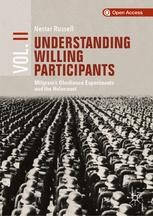
When Nazis of all ranks spoke of a “humane” method of killing other human beings, what exactly did they mean? One outcome of this book is a tentative outline of the key characteristics—a Weberian Ideal-Type—of what the Nazi’s regarded as the most humane method of killing. As Russell argues in this chapter, when Nazis spoke of such matters, what they seemed to desire was a method of killing that rated highly on four main conditions. First, victims should remain totally unaware that they are about to die. Second, perpetrators need not touch, see, or hear their victims as they die. Third, the death blow should avoid leaving any visual indications of harm on the victims’ bodies. And finally, the death blow should be instantaneous.
When Nazis of all ranks spoke of a “humane” method of killing other human beings, what exactly did they mean? One outcome of this book is a tentative outline of the key characteristics—a Weberian Ideal-Type—of what the Nazi’s regarded as the most humane method of killing. As Russell argues in this chapter, when Nazis spoke of such matters, what they seemed to desire was a method of killing that rated highly on four main conditions. First, victims should remain totally unaware that they are about to die. Second, perpetrators need not touch, see, or hear their victims as they die. Third, the death blow should avoid leaving any visual indications of harm on the victims’ bodies. And finally, the death blow should be instantaneous.

Guess why vultures are dying…
Guess why vultures are dying…



We’re living in an era of crisis. Enter lifestyle fascism: a bid to remake society by remaking the beleaguered male body.
We’re living in an era of crisis. Enter lifestyle fascism: a bid to remake society by remaking the beleaguered male body.


www.pnas.org/doi/10.1073/pnas.2500405122
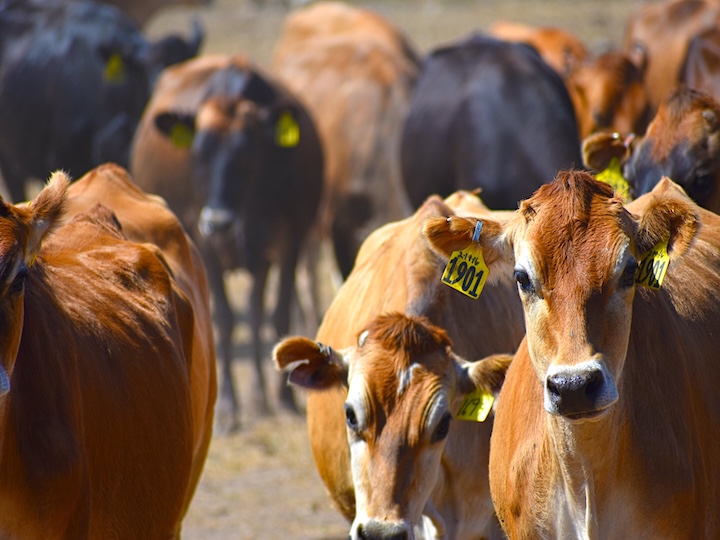
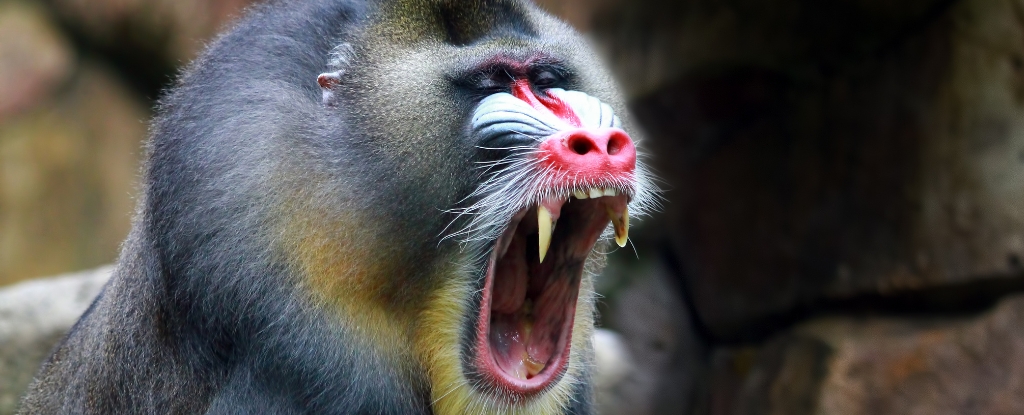
Historically, it was widely assumed that males dominate females socially in most mammals. However, recent studies revealed significant variation within and among species, opening new possibilities to explore the extent and drivers of sex biases in dominance relations. This study uses quantitative data from 253 populations across 121 primate species to investigate the distribution of, and factors associated with, sex biases in the outcome of male–female contests. We first showed that male–female contests are common (around half of all contests) and that males win >90% of these contests in less than 20% of populations. We next tested five hypotheses to explain sex biases in dominance relations. We found that female-biased dominance primarily occurs in primate societies where females have substantial reproductive control, as in monogamous, sexually monomorphic, and arboreal species. Female-biased dominance is also frequent in societies where female–female competition is intense, as in solitary or pair-living species where females are intolerant of each other, as well as in species where females face lower reproductive costs and are philopatric. Conversely, male-biased dominance is common in polygynous, dimorphic, terrestrial, and group-living species and often relies on physical superiority. In contrast, female empowerment hinges on alternative strategies, such as leveraging reproductive control. Our study highlights that male–female dominance relationships are highly variable and identifies the traits associated with the emergence of female- versus male-biased dominance in primate evolutionary history, which may also deepen our understanding of the origins of gender roles in early human societies.
from VCJ
from VCJ

Unusually aggressive lone star ticks, common in the south-east, are spreading to areas previously too cold for them
Unusually aggressive lone star ticks, common in the south-east, are spreading to areas previously too cold for them

All Amazonian countries are trying to reduce deforestation. That is wonderful, but then what to do to combat organised crime? They control a $280bn business – drug trafficking, wildlife trafficking, people trafficking, illegal logging, illegal gold mining, illegal land grabbing. It is all connected. And these gangs are at war with the governments. That’s one of the main reasons I’m becoming concerned because I know reducing deforestation is doable, so is forestry restoration. But how to combat organised crime?
All Amazonian countries are trying to reduce deforestation. That is wonderful, but then what to do to combat organised crime? They control a $280bn business – drug trafficking, wildlife trafficking, people trafficking, illegal logging, illegal gold mining, illegal land grabbing. It is all connected. And these gangs are at war with the governments. That’s one of the main reasons I’m becoming concerned because I know reducing deforestation is doable, so is forestry restoration. But how to combat organised crime?

cross-posted from: slrpnk.net/post/23197060
Male bonobos are larger and stronger than females, so researchers have found it puzzling that the female apes enjoy high status in bonobo society. After analyzing three decades of behavioral data, researchers recently shared a study that pinpoints their source of power: female alliances and coalitions.
archived (Wayback Machine):

Video description (pasted):
The meat industry and its defenders promise ethical consumption and sustainable farming, but animal agriculture fuels ecological destruction, entrenches human supremacy, and masks cruelty with comforting myths. John Sanbonmatsu, philosopher and author of The Omnivore’s Deception, shatters the myths of “humane meat” and the ‘naturalness’ of eating meat, and explains why abolishing the animal economy is essential to living an ethical human life. Highlights include:
Why growing up as the child of a Jewish mother and Japanese father in the U.S. sensitized John to bullying and injustice - against both human and nonhuman animals;
Why the origins of human domination over animals are rooted in patriarchy and an ancient human estrangement from animals, and reinforced today by a toxic nexus of masculinity, human supremacy, neoliberal capitalism, and pronatalism;
Why focusing only on factory farming misses the fundamental problem of human domination of animals and the planet - and how books like Michael Pollan’s The Omnivore’s Dilemma and the new American pastoral ethos perpetuate myths of so-called ethical meat while attacking the animal rights movement;
Why justifying meat-eating as “natural” is ethically bankrupt - on par with past appeals to nature to justify slavery or denying women’s rights - and how vegans and vegetarians provoke defensive ridicule because they reveal uncomfortable truths;
Why the flood of scientific studies on animal cognition and emotion hasn’t changed behavior - and how cultural fascination with AI and plant consciousness distracts from our brutal treatment of fully sentient animals;
Why bad faith - our self-deception about how we treat animals - is the most destructive force preventing moral progress, and why what we’re doing to animals deserves to be called ‘evil’;
How empathy, an evolved trait we share with animals and desperately need to nurture, is being eroded by increasing social disconnection and anti-empathy tech bro ideologies;
Why lab meat, also known as ‘clean meat’, is not the solution to speciesism and human supremacism and consuming our way to animal liberation is a delusion;
Why the animal rights movement is being undermined by the money pouring into utilitarian effective altruism and “realistic” approaches - when true compassion demands not animal welfarism, but the abolition of animal exploitation and a direct challenge to the entrenched power structures that prevent moral progress.

“Draw a circle around the one God loves the most”
Some type of Christian school book.
The choices, ordered like a podium are:
This kind of indoctrination shows en.wikipedia.org/wiki/Great_chain_of_being with some religious “zoom-in” on the human baby and religious identity.
Traditionalism for the world religions includes this long tradition of “natural hierarchy”. It’s a core hierarchy as a set, and then each religion can extend it a bit with their own flavor of hierarchy; more layers. The core of human supremacism remains, always.



This video has a content warning: lots of flesh, organs, and milk, and assholes.
I am going to have to insist on a hypothesis:
The youtuber there is not vegan, unfortunately, but I do appreciate the effort to point out a few of the associations between ketobros and carnivores to fascism. She manages to talk about class/status in the last third of the video; much less about hierarchy.
It’s also important to note that fascists don’t really have an ideology, so it’s not useful to focus just on ideology.
In the rat race of the “law of the jungle”, these proto and paleo fascists also focus on what’s now called “biohacking”. Well, the rich get real biohacking like that plant-based rich guy who wants to live forever, Bryan Johnson, and the rest get more and more pseudoscientific products; scams.
The thing with diets is that the if you’re not getting acute toxicity or poisons, you don’t really grasp how harmful it can be, especially if it’s not found in long-term population studies.
It’s such a pain in the moral ass. These meat clowns are harming themselves with their ignorance and LARP diets, and that forces me to figure out if I should warn them or if I should just let them earn Darwin awards. Either way, they are feeding a not-so-modern grifting economy, which spreads this contagion of foolishness to others.
The product fantasy of this “meat”, raw or not, from whatever animal, is a strange thing.
It is presented in this naturalistic fallacy wrapper, which wraps around an appeal to tradition fallacy wrapper, which actually wraps an empty box of hope that’s actually techno-hopium:
It is about a “meat technology”, and I don’t mean just zootechny.
It’s the technology of extracting scarce “dense nutrients”, nutrient mining. And so it carries the status of luxury… and not just any luxury, but luxury that provides “powers”.
The “powers” aspect is important for the fantasy, for biohacking. Much like the “nofap” types believe in powers from semen retention, the carnivores believe in other powers that they gain. And those powers are useful in the rat race, to dominate others, to win. In their fantasy.
Vegans aren’t immune from such beliefs, especially raw vegans; I bet that those are more likely to go from vegan to ex-vegan to carnivore on their “journey”.
Anyway, in the old days, this would be a talk about magical beliefs. They’re treating meat like an alchemical potion from fantasy games. In modern times, this is about pseudoscience, a power-up.
That’s the spirit of advertising these uber-carnist diets.
MEAT is sold to these “high-status males” (seeking) like those science-fiction pills from last century, those pills that contained all the nutrients and you could replace an entire meal by swallowing a couple of those pills.
They are not actually selling some true paleo diet, they’re selling a fantasy of the past packaged as science-fantasy present:
The 🥩red pill.
And the extra layer of grift, because it appeals to extremely ignorant people, is that it works on the conspiracy logic easily:
“the meat pill technology was always there, it was just being hidden by a globalist conspiracy!”
The retroactive implication that the meat power-gaining solution was always there is following the scam method of making the target think that they were always right, that they are smart without knowing that they are smart. That’s like a drug for fools and people who believe that they were born perfect.
Of course, the meat pill works only so much for marketing, so it’s usually accompanied by supplements.
The conspiracy aspects, which are also seen in the denial of science, are a very obvious funnel to fascist beliefs, with an ecofascist bent.
The retroactive implication of the grift, with its conspiracy, is that common one in fascism: the myth of being fallen. Whether it’s fallen from some paradise or fallen from space or fallen from the top of the “food chain”, it’s about The Fall.
In the paleo-conspiracy, humans, at least a certain… “subspecies” of humans, fell from the glorious past of maximally manly men when the evil Poaceae plants enslaved him 10000 years ago, and it has just gotten worse with industrial agriculture. The grifters promote a cure for The Fall, a restoration to well deserved glory.
The palingenesis consists of that rebirth as Fred Flintstone barbarian macho man model of extremely toxic masculinity.
The nation, however, isn’t necessarily identified by nationality. In some cases, it can be, if the nation is based on settler-colonialism which usually came with pastoralist entrepreneurs (very European). But the nation can simply be any cult, any religion, any ethnicity, any special tribe, united in spirit.
These are not harmless movements, fascism is never harmless.

The rhetoric of “hopium” is failing as ecological overshoot deepens. “Hopium”, a colloquial term that is a blend of the words “hope” and “opium” (as though it were a drug), represents a faith in technological and market-based solutions to address our multiple reinforcing crises, despite evidence to the contrary. We’re living in the long defeat and we must own and confront it with courage. Award-winning essayist, Pamela Swanigan, joins us.
The rhetoric of “hopium” is failing as ecological overshoot deepens. “Hopium”, a colloquial term that is a blend of the words “hope” and “opium” (as though it were a drug), represents a faith in technological and market-based solutions to address our multiple reinforcing crises, despite evidence to the contrary. We’re living in the long defeat and we must own and confront it with courage. Award-winning essayist, Pamela Swanigan, joins us.

cross-posted from: lemmy.vg/post/2138546
“Understanding and safeguarding the social lives of elephants is no longer optional. It’s a necessity for ensuring these magnificent animals thrive in an increasingly human-dominated world.”
Cultural knowledge is widely presumed to be important for elephants. In all three elephant species, individuals tend to congregate around older conspecifics, creating opportunities for social transmission. However, direct evidence of social learning and cultural traditions in elephants is scarce. Here, we briefly outline that evidence then provide a systematic review of how elephant societies respond to the loss of potentially knowledgeable individuals or opportunities for knowledge transfer, which we characterize as social disruption. We consider observations from 95 peer-reviewed, primary research papers that describe disruption to elephant societies or networks via the removal or death of individuals. Natural deaths were mentioned in 14 papers, while 70 detailed human-caused deaths or disruption. Grouping descriptions according to consequences for behaviour and sociality, and demography and fitness, we show that severely disrupted populations are less cohesive, may exhibit reduced fitness or calf survival and respond inappropriately to threats and predators. We suggest that severe social disruption can inhibit or break potential pathways of information transmission, providing indirect evidence for the role of social transmission in elephants. This has implications for elephant conservation amid increasing anthropogenic change across their habitats.


What is the Californian ideology?
What is the Californian ideology?