


showing posts tagged #em_poc — clear

0

Ethnic Minorities and People of Color Bi-Weekly Thread for the 17th of November 2026

Sammy Younge Jr
preview

I hope you nerds have a good month of November cuddle

Sammy Younge Jr., born on this day in 1944, was an activist who was shot dead after he attempted to use a “whites only” restroom in Tuskegee, Alabama. Younge was one of the first black college students killed in the civil rights movement. After his murderer’s acquittal by an all-white jury, the Student Nonviolent Coordinating Committee (SNCC) came out in opposition to the Vietnam War.

Remember no crackers

anti-cracker-aktionqin-shi-huangdi-fireball

0

for em poc hexbears only.

preview

dm me your element username an i will add you to the element groupchat. remember to always practice opsec. OK FOR EVERYONE HAVING ISSUES, please make a matrix.org account to join.

matrix.to/#/!yrzgTzeuaubMyCSigK:chapo.chat?via=ch…

dm me your element username an i will add you to the element groupchat. remember to always practice opsec. OK FOR EVERYONE HAVING ISSUES, please make a matrix.org account to join.

matrix.to/#/!yrzgTzeuaubMyCSigK:chapo.chat?via=ch…

0

Ethnic Minorities and People of Color Bi-Weekly Thread for the 21st of October 2026

preview

On this day in 1837, in what has been described as “one of the most disgraceful acts in American military history”, Seminole leader Osceola was captured by U.S. forces after he was tricked into meeting for “peace talks”.

Osceola (in Creek, “Asi-yahola”; 1804 - 1838) was an influential leader of the Seminole people in Florida, in particular the Seminole resistance against colonization. Although he was raised in the Creek tradition, Osceola became part of what was known as the Seminole people after moving to Florida as a child.

Osceola’s successful attack on military forces on December 28th, 1835 served as a catalyst for beginning the Second Seminole War against the United States. Although the Seminole was victorious in some of the battles of the Second Seminole War, it was on this day in 1837 that General Joseph Hernández captured Osceola, who had come to meet Hernández under the false promise of peace talks.

General Hernández had agreed to meet with Osceola under a white flag of truce, but promptly arrested Osceola and 81 of his followers. Osceola died from illness a few months after his capture, on January 30th, 1838.

I hope you nerds have a good month of October cuddle

Remember no crackers

anti-cracker-aktionqin-shi-huangdi-fireball

0

Ethnic Minorities and People of Color Bi-Weekly Thread for the 1st of October 2026

preview

On this day in 1838, the first major group of Cherokee, more than 12,000 people, were forced out of Tennessee, traveling westward from the town of Red Clay. A Choctaw leader called the forced deportations “a trail of tears and death”.

The Trail of Tears was the cumulative result of a series of forced relocations of approximately 60,000-100,000 Native Americans in the United States from their ancestral homelands in the southeast to areas west of the Mississippi River that had been designated as “Indian Territory”.

In 1837-38, President Martin Van Buren allowed Georgia, Tennessee, North Carolina, and Alabama, using an armed force of 7,000 people, to relocate about 13,000 Cherokees to Cleveland, Tennessee. On October 1st, 1838, the first major group of Cherokee, more than 12,000 people in hundreds of covered wagons, were forced out of Tennessee, traveling westward from the town of Red Clay.

Taking the journey through an unusually cold winter, they suffered terribly from exposure, disease, and starvation, killing several thousand people while en route to their new designated reserve. They were also attacked by locals and economically exploited - starving Indians were charged a dollar a head, equal to $24.01 today, to cross the Ohio River, which typically charged twelve cents, equal to $2.88 today.

I hope you nerds have a good month of October cuddle

Remember no crackers

anti-cracker-aktionqin-shi-huangdi-fireball

0

War breaks out in Ethiopia

preview

cross-posted from: lemmy.dbzer0.com/post/76002143

On Sunday 20/09 Seven Ethiopian armed groups have formed an alliance aimed at overthrowing the government of Prime Minister Abiy Ahmed.

These forces launched and offensive against the government short after:

cross-posted from: lemmy.dbzer0.com/post/76002143

On Sunday 20/09 Seven Ethiopian armed groups have formed an alliance aimed at overthrowing the government of Prime Minister Abiy Ahmed.

These forces launched and offensive against the government short after:

0

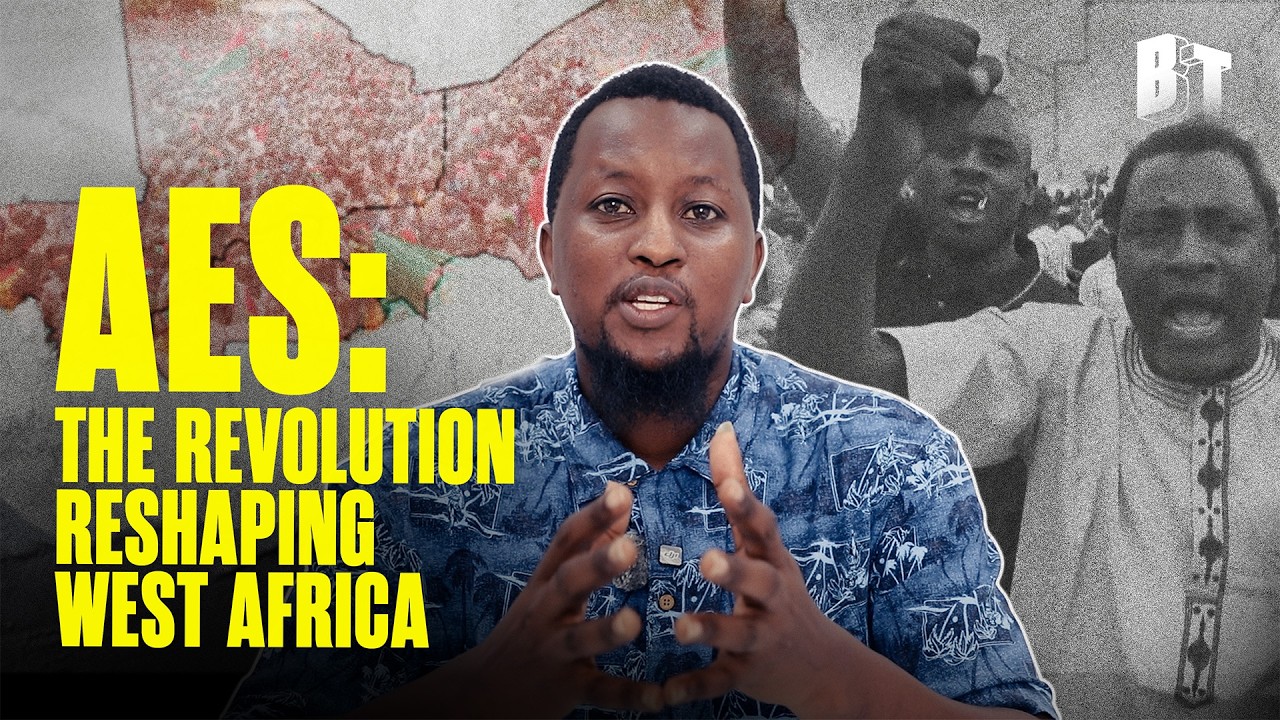
AES: The Alliance of Sahel States – Beyond the Coups [BreakThrough News][Youtube]

play · youtube.com
YouTube AES: The Alliance of Sahel States – Beyond the Coups www.youtube.com
preview

cross-posted from: lemmy.dbzer0.com/post/75668859

Three years ago, Mali, Niger, and Burkina Faso broke with the old regional order and formed the Alliance of Sahel States (AES). Since then, mainstream coverage has largely portrayed their governments through the language of military juntas, coups, and instability. But on the ground, a much bigger political transformation is underway.

BT’s Nairobi correspondent Nicholas Mwangi explains how the AES emerged, why its governments broke with France and the old regional order, and the changes now underway in security, agriculture, infrastructure, and control over natural resources, despite the enormous historical, security, and geopolitical challenges facing the region.

This video also features firsthand accounts from people across the AES countries, captured by our colleagues at Brasil de Fato in their documentary, Sahel: Homeland or Death.

0

Ethnic Minorities and People of Color Monthly Thread for the 1st of September 2026

Benjamin J. Davis
preview

Benjamin J. Davis, born on this day in 1903, was American lawyer and communist who was elected in 1943 to the New York City Council, representing Harlem. Davis was persecuted by the state via the anti-communist Smith and McCarran Acts.

Davis became radicalized through his role as defense attorney in the 1933 trial of Angelo Herndon, a 19-year-old black communist who had been charged “attempting to incite insurrection” because he tried to organize a farm workers’ union.

In 1949, Davis was among a number of communist leaders prosecuted for violating the Smith Act. He was convicted and sentenced to five years in prison. In 1962 Davis was charged with violating the Internal Security Act (also known as the McCarran Act), but died before the case could come to trial.

"Whether one agrees with the Communist Party or not, one must at least know the truth about it. One must not permit his ideas to be shaped by the hysteria which now passes as a ‘crusade against Communism’… For example, the canard that every Communist has his pockets lined with ‘Moscow gold.’ If that were true, one could be sure that there would scarcely be any room in our party for workers. The capitalists, to whom gold is god of the universe, would crowd them out."

  • Benjamin J. Davis

I hope you nerds have a good month of September cuddle

Remember no crackers

anti-cracker-aktionqin-shi-huangdi-fireball

0

Ethnic Minorities and People of Color Bi-Weekly Thread for the 9th of August 2026

preview

The Treaty of Fort Jackson (also known as the Treaty with the Creeks) was signed on this day in 1814 at Fort Jackson in Alabama. The treaty was agreed upon in the aftermath of the defeat of Red Stick (Upper Creek) resistance by U.S. forces at the Battle of Horseshoe Bend.

The treaty was the “largest single Indian cession of southern American land”, according to historian Michael Rogin - around 23 million acres in Alabama and Georgia. The U.S. forces won with the battle with the help of allied Cherokee and Lower Creek forces friendly to the American side.

The terms of various treaties with the Creek nation would go on to be consistently violated by Americans colonizing the south.

I hope you nerds have a good month of August cuddle

Remember no crackers

anti-cracker-aktionqin-shi-huangdi-fireball

0

Ethnic Minorities and People of Color Bi-Weekly Thread for the 16th of July

Assata Shakur
preview

Assata Shakur, born on this day in 1947, is a revolutionary socialist and former member of the Black Liberation Army (BLA) who became the first woman to be added to the FBI’s Most Wanted Terrorists list in 2013.

spoiler

Shakur grew up in New York City and Wilmington, North Carolina. She became involved in political activism at Borough of Manhattan Community College and City College of New York, participating in sit-ins and civil rights protests. After graduating from college, Shakur briefly joined the Black Panther Party, leading its Harlem chapter. She left the Panthers and joined the Black Liberation Army, a black power group that was inspired by the Viet Cong and Algerian resistance movements and waged guerrilla warfare against the U.S. government from 1970 to 1981. Shakur was one of the targets of the FBI’s COINTELPRO program. After being involved in a shootout with New Jersey police officers, Shakur was convicted on multiple counts of assault and murder and sentenced to life in prison. In 1979, BLA members freed her in a bloodless prison escape. Shakur successfully sought political asylum in Cuba, where she died on September 25, 2025, at the age of 78

"I didn’t know what a fool they had made out of me until I grew up and started to read real history."

  • Assata Shakur

I hope you nerds have a good month of July cuddle

Remember no crackers

anti-cracker-aktionqin-shi-huangdi-fireball

0

Ethnic Minorities and People of Color Bi-Weekly Thread for the 19/06/2026

Juneteenth
preview

Juneteenth is a U.S. holiday commemorating black emanicipation and power that originates from Galveston, Texas, where, on this day in 1865, Union General Gordon Granger proclaimed all slaves in Texas, more than 250,000 people, to be free.

Juneteenth is the oldest nationally celebrated commemoration of slave abolition in the United States.

en.wikipedia.org/wiki/Juneteenth

I hope you nerds have a good month of June cuddle

Remember no crackers

anti-cracker-aktionqin-shi-huangdi-fireball

0

Ethnic Minorities and People of Color Bi-Weekly Thread for the 01/06/2026

Adelaide Casely-Hayford
preview

Adelaide Casely-Hayford, born on this day in 1868, was a Sierra Leone Creole Pan-African feminist, educator, and author. Hayford established a vocational school for young girls in Sierra Leone that emphasized racial and cultural pride.

blackpast.org/…/hayford-adelaide-smith-casely-186…

I hope you nerds have a good month of June cuddle

Remember no crackers

anti-cracker-aktionqin-shi-huangdi-fireball

0

Ethnic Minorities and People of Color Bi-Weekly Thread for the 18/05/2026

Malcom X
preview

Malcolm X, born on this day (May 18th) in 1925, was a revolutionary civil rights leader who advocated for black liberation by “any means necessary”.

Biography

Born Malcolm Little, he spent his youth living in a series of foster homes and engaging in petty crime, eventually serving six years in prison for larceny and breaking and entering. While in prison, Malcolm joined the Nation of Islam (NOI) and adopted the surname “X” to acknowledge his unknown African ancestral name. Malcolm quickly became a leader with the NOI and was paroled in 1952, beginning a period of radical advocacy for black liberation. In the 1960s, Malcolm X broke with the Nation of Islam, growing disillusioned with its leader Elijah Muhammed. During his 1964 pilgrimage to Mecca, he witnessed Muslims of “all colors, from blue-eyed blonds to black-skinned Africans” treat each other as equals in worship. Because of this, Malcolm X became convinced that Islam could be used as a means to achieve racial equality. On February 21st, 1965, Malcolm was assassinated in New York City. Three Nation members were charged with the murder and given indeterminate life sentences. Two of these men, Muhammed Abdul Aziz and Khalil Islam, were exonerated in 2021 after a 22-month investigation by the Manhattan District Attorney found that evidence of their innocence, including FBI documents, was withheld at trial. The Shabazz family are among those who have accused Louis Farrakhan of involvement in Malcolm X’s assassination. In 1994, Betty Shabazz was asked if she thought Farrakhan had anything to do with her late husband’s death. She replied “Of course, yes. Nobody kept it a secret. It was a badge of honor. Everybody talked about it, yes.” In the wake of his assassination, capitalist press vilified Malcolm X, while media in Africa, China, and Cuba lauded him as a hero and a martyr. The New York Times wrote that Malcolm X was “an extraordinary and twisted man” who “turn[ed] many true gifts to evil purpose”, while Time magazine condemned him “an unashamed demagogue” whose “creed was violence.” In contrast, The Ghanaian Times identified Malcolm X as among “a host of Africans and Americans who were martyred in freedom’s cause.” In China, the People’s Daily described him as a martyr killed by “ruling circles and racists” whose death illustrated that “in dealing with imperialist oppressors, violence must be met with violence.” In 2023, The Guardian reported that the Shabazz family announced their plans to sue the FBI, New York Police, and other agencies over Malcom X’s death. Ilyasah Shabazz, the third daughter of Malcolm X and Betty Shabazz, announced that new information indicates federal and state agencies “conspired to and executed their plan to assassinate”. Ilyasah added “For years, our family has fought for the truth to come to light concerning his murder and we’d like our father to receive the justice that he deserves.”

"Nobody can give you freedom. Nobody can give you equality or justice or anything. If you’re a man, you take it."

  • Malcolm X

I hope you nerds have a good month of April cuddle

Remember no crackers

anti-cracker-aktionqin-shi-huangdi-fireball

0

Reparations for slavery: a legitimate struggle : Peoples Dispatch

Peoples Dispatch Reparations for slavery: a legitimate struggle : Peoples Dispatch peoplesdispatch.org
preview

cross-posted from: news.abolish.capital/post/44308

When one person hurts another, common sense dictates that the person should apologize and, preferably, make amends for the harm they may have caused. Apologize, make amends, and ensure it won’t happen again. These seem like basic rules of coexistence. Coexistence among people, but also among sectors of a society and among entire nations. History shows us that coexistence is not the norm. Colonialism and exploitation have been present, but the perpetrators of these crimes rarely acknowledge them.

The colonization of what is now called the Americas (beginning in 1492) is an example. Europeans invaded, appropriated lands that did not belong to them, murdered millions of its inhabitants, and subjected the rest to servitude. Almost immediately, the kidnapping of Africans began; they were forced into slave labor, which generated immense profits that produced the “primitive accumulation” discussed by Karl Marx in “Capital” and paved the way for the development of capitalism.

Europe became the dominant power, and the standard of living it enjoys today is the product of wealth violently extracted from our lands, from Africa, and later from the rest of the world. A veritable plunder to which the US later joined. They have, as the revolutionary Thomas Sankara said, a blood debt to the peoples of the world.

Recently, the United Nations General Assembly adopted Resolution A/80/L48, dated March 25, 2026, which “declares the trafficking of enslaved Africans and racialized chattel enslavement of Africans as the gravest crime against humanity.” The resolution goes beyond the symbolic and highlights the nature of the crime in terms of the rupture it caused in world history, the magnitude and duration of the crime, its systemic character (institutional, normative, logistical), its brutality, and its lasting consequences expressed in “racialized regimes of labor, property, and capital.”

Read more: UN declares transatlantic slavery the “gravest crime against humanity”

This resolution brings to the table a crucial issue such as reparative justice, by urging states that benefited from slavery to take concrete measures that include not only formal apologies but also financial compensation and the immediate return of cultural property, works of art, manuscripts, documents, artifacts, etc., without hindrance and at no cost to their countries of origin. The Resolution reaffirms that, due to its gravity, this crime is not subject to a statute of limitations.

The Resolution was approved by 123 votes in favor—primarily from Africa, Latin America, and the Caribbean – 3 votes against from the US, Israel, plus the shameful vote of Argentina, and 52 abstentions, including the entire European Union, Canada, Australia, and Japan. As might be expected, the colonizers placed themselves on the dark side of history. Europe, in particular, argued that reparations could not be demanded for something that was not illegal at the time.

There can be no greater cynicism than the one from countries that, being fully aware of the concept throughout history, have  taken actions in favor of the perpetrator – what we might call “reverse justice”. During the 19th century, for example, England provoked two wars in China known as the Opium Wars. Essentially, England sought to flood China with drugs to weaken its people and reap economic benefits. Even so, after the wars, England, the aggressor country, forced China to pay “reparations” equivalent to USD 736 million today to cover the costs of the war. Part of the reparations was also intended to compensate for the opium destroyed by Chinese authorities and to indemnify the merchants – that is, the drug traffickers – for the losses they suffered.

Another case, equally outrageous, is the payment France forced Haiti to make to compensate for the damages caused to France by the loss of its colony. Haiti was paying a debt – clearly illegal – from 1825 to 1947. In 2003, then-President Jean Bertrand Aristide demanded that France return USD 21.7 billion to Haiti. The following year, he was deposed by a military coup supported by France and the US.

Resolution A/80/L48 acknowledges the crime, the victims, and the perpetrators, and urges the perpetrators to make reparations for the crime committed. It calls for achieving true restorative justice. This is not a new development, as the struggle for such recognition has been brewing for decades in various forums, including multilateral ones. Thus, in 1973, the United Nations (UN) proclaimed the Decade for the Elimination of Racial Discrimination, which was extended in 1983 and 1993. Little concrete progress was made during those decades, so in 2001, the UN organized the World Conference against Racism, Racial Discrimination, Xenophobia, and Related Intolerance in the city of Durban, South Africa. The conference produced a Final Declaration and a Plan of Action that serve as a comprehensive framework for addressing racism and discrimination and include measures to combat them, ranging from calls to reform legislation, concrete actions to protect victims of racism and discrimination, education and health plans, measures to combat poverty, resources for victims, and more.

In 2013, given that the objectives set forth in the Plan of Action had not been achieved, the UN proclaimed, in its Resolution 68/237 on December 23, the International Decade for People of African Descent, effective from January 1, 2015, to December 31, 2024, extended for an additional 10 years until 2034 (Resolution A/79/193).

Specifically regarding reparations, a notable development in 2013 was the creation of the CARICOM Reparations Commission, which produced a 10-Point Plan outlining concrete actions to demand reparations from European governments for the genocide perpetrated against the 15 million indigenous people of the Caribbean and for the multitude of “crimes against humanity”, slavery and its legacies, which were committed against enslaved Black or African people.

In this same context, on March 24, 2018, the International Meeting on the Decade of Afro-Descendants was held in Caracas, during which the Venezuelan government signed the decree for the National Decade for Afro-Descendant Peoples, in order to implement actions in this regard. In May 2018, the First International Meeting on Reparations was organized, where Venezuela committed to promoting lines of research on the legal, multilateral, political, historical, and philosophical aspects of the issue. Following this, Venezuela has organized three International Seminars on Reparations, and the Ministry of People’s Power for Science and Technology has funded research projects addressing this issue.

The struggle for reparative justice is a legitimate struggle that unites the peoples of the Global South with a shared history of colonization and that unites the racialized and discriminated peoples of the world. Ghana promoted the adoption of the resolution declaring the transatlantic slave trade the most serious crime against humanity. CARICOM proposed a 10-point plan to implement reparations; Venezuela has made progress in creating institutions that fight for this right and has promoted research to inform public policies on the issue. Sharing these experiences is of vital importance. Demanding reparations – that is, recognition of the crime, compensation in whatever form, and guarantees of non-repetition – is a cause of the Global South and a cause worth fighting for.

Guillermo R. Barreto is Venezuelan and holds a Ph.D. in Science (University of Oxford). He is a retired professor at Simón Bolívar University (Venezuela). He served as Deputy Minister of Science and Technology, President of the National Fund for Science and Technology, and Minister of Ecosocialism and Water (Bolivarian Republic of Venezuela). He is currently a researcher at the Tricontinental Institute for Social Research and a visiting fellow at the Center for the Study of Social Transformations-IVIC.

This article was produced by Globetrotter.

The post Reparations for slavery: a legitimate struggle appeared first on Peoples Dispatch.


From Peoples Dispatch via This RSS Feed.

0

Y'all think Indians are/could be white in specifically America (and possibly UK) on the same level of whiteness as Jewish people are (and Irish, Italians, Greeks, etc.)?

preview

Very healthy representation in the highest levels of government and corporate leadership

Highest income level, even higher than Jewish and Chinese people

High levels of capital ownership

All stereotypes against Indian Americans are similar to the ones against white Americans, not really that bad (rich, smart, business savvy)

Less hate crimes than POC, probably less than Jewish people too

Racism against Indian Americans specifically is pretty low, lower than Jewish people. Obviously the attitude towards those from the motherland and commonwealth countries are a different matter

Identity very homogenized and white Americanized like Irish, Italians, Jewish people, east Asians to an extent

0

Ethnic Minorities and People of Color TriWeekly Thread for the 06/04/2026

William Monroe Trotter
preview

William Monroe Trotter, born on this day in 1872, was a newspaper editor and civil rights activist based in Boston, Massachusetts who co-founded the Niagara Movement with WEB Du Bois.

Trotter was an early opponent of the accommodationist race policies of Booker T. Washington, and in 1901 founded the Boston Guardian, an independent African-American newspaper he used to express that opposition.

Trotter was a key founding member of the “Niagara Movement” with W.E.B. Du Bois and contributed to the formation of the National Association for the Advancement of Colored People (NAACP), although he never participated in the group due to a bitter split with Du Bois.

"My vocation has been to wage a crusade against lynching, disenfranchisement, peonage, public segregation, injustice, denial of service in public places for color, in war time and peace."

  • William Monroe Trotter

…umich.edu/…/timeline-william-monroe-trotters-lif…

I hope you nerds have a good month of April cuddle

Remember no crackers

anti-cracker-aktionqin-shi-huangdi-fireball

0

[Rant, CW: Discussion of Race Essentialism] Nothing makes me realize just how reactionary the average Black mind can be like the biracial discourse

preview

I’m having a hard time sitting with the fact that Black people so frequently push for ideas and logic that are antithetical to understanding race and thereby antithetical to Black people truly being liberated.

I’m baffled by how Black people can make sweeping generalizations about “biracial” people and nobody will see anything wrong with it, e.g., “Biracial people aren’t Black because they have totally different experiences!”

Which ones!? Which “biracial people” are you talking about? Why are we taking a category of people who is so overwhelmingly and undeniably diverse and trying to reduce their presence in society down to a singular archetype that inherently erases the experiences of a multitude of people? How is it not obvious that this is extremely reductive?

This is why I say that Black people have an unhealthy relationship with race science, and it is a one-sided love. They love race science, but race science sure does not love us.

I never hear any actual arguments for this “Biracial people aren’t Black” nonsense. It’s always:

  1. A meaningless tautology being pushed as an irrefutable axiom of sorts, e.g., "Biracial people are biracial. Black people are Black."
  2. Race essentialism; something about biracial people not having “pure DNA.” (It’s 2026, and many Black people still don’t know that race is a social construct. Geez.)
  3. Something that erroneously assumes that there is a universal “biracial experience.” By extension, people often assume that there is a singular “biracial phenotype,” but this man is “mixed,” this woman is “mixed,” and this man is “mixed,” so what the fuck are we talking about?
  4. A misinterpretation of the one-drop rule so that they can posture and pretend that biracial exclusion is about “rejecting the slavemaster’s ideas.” Accepting biracial people as Black is not the one-drop rule. It is not the one-drop rule to look at a person who is unambiguously Black in their appearance and assuming they are Black even though they might have one non-Black parent. What the one-drop rule would actually be like is a person who has blonde hair, blue eyes, and pale skin being considered “Black” socially and systemically, regardless of how they personally want to identify, just because we discover that they have 8% Wolof ancestry or something like that. Many people find it very much understandable when a white-passing biracial person does not identify as Black. The problem is that these people do not want to reject the one-drop rule’s problematic foundation: viewing race as a scientific, genetic, and biological thing. You cannot truly reject the “one-drop rule” without properly categorizing race first, and that’s why, ironically enough, many of these Black people are effectively engaging in an inverted one-drop rule.

And, to be clear, I am not saying I believe that all biracial people (with a Black parent) should identify as Black. My point is that the race essentialism that tries to enforce a strict, uniform “biracial” categorization needs to be rejected, period. Like I said, experience can vary from person to person, so if someone feels like their experience as a biracial person is not a Black one, and, for that reason, they do not feel like it is accurate for them to identify as Black, I understand.

However, when someone like me, who has called myself “Black” my whole life, is being told that I am somehow “not Black” because of my Trinidadian Dougla heritage, I have to sit and wonder, “Where the fuck are we? How did we get here?” It also shows how US-centric this thought process is. Most people in the US hear “biracial” and automatically assume “Black American mixed with white American.”

Speaking of Dougla heritage, by the way, something I find interesting is that I rarely see people “correcting” Black liberals trying to guilt-trip people and accuse them of misogynoir when they are screeching about people who did not vote for Kamala Harris. Though I have seen people deny Harris’ Blackness, it’s ironic how the race policing often stops when people need to fulfill a certain agenda that frames the electoral loss of a genocidal, neoliberal politician as being due to a “hatred of Black women.”

In fact, people tend to be selective about this shit overall. People will start saying “That’s it! We gotta exclude biracial people from Blackness altogether” when a racially ambiguous biracial person is expressing anti-Blackness on TikTok, but I rarely see people go out of their way to say that Bob Marley, Barack Obama, Beyoncé, J. Cole, Frederick Douglass, W. E. B. DuBois, Malcolm X, Amy Jacques Garvey, and Rosa Parks are “not Black.”

And, honestly, this is just me getting into one facet of Black reactionary thought that tends to LARPs as revolutionary.

Race essentialism is one problem and a huge one at that, but we also have cisheteropatriarchy, prejudice against non-Christians, ableism, and Black capitalism causing so many fucking issues as well.

I am very, very proud of my Blackness, but I’m gonna be honest with you: I often feel like I have a hard time associating with a lot of Black spaces and Black people due to these reactionary impulses.

Honestly, I gotta make it a goal to interact with Black people who genuinely understand Marxism, race, and revolutionary thought because whatever the fuck this is, I’m not taking it.

0

All Black Feminisms Ain't Created Equal - Hood Communist

Hood Communist All Black Feminisms Ain't Created Equal - Hood Communist hoodcommunist.org
preview

Just as Black people can endorse any other reactionary tendency, Black women still can uphold toxic liberal feminism, too.

Just as Black people can endorse any other reactionary tendency, Black women still can uphold toxic liberal feminism, too.

0

Ethnic Minorities and People of Color BiWeekly Thread for the 23/03/2026

Walter Rodney
preview

Walter Rodney, born in Guyana on this day in 1942, Pan-African, Marxist intellectual who was assassinated by the Guyanese government in 1980 at 38 years old.

Rodney attended the University College of the West Indies in 1960 and was awarded a first class honors degree in History in 1963. He later earned a PhD in African History in 1966 at the School of Oriental and African Studies in London, England, at the age of 24.

Rodney traveled extensively and became well-known as an activist, scholar, and formidable orator. He taught at the University of Dar es Salaam in Tanzania from 1966-67 and 1969-1974, and in 1968 at his alma mater University of the West Indies.

On October 15th, 1968, the government of Jamaica declared Rodney a “persona non grata” and banned him from the country. Following his dismissal by the University of the West Indies, students and poor people in West Kingston protested, leading to the “Rodney Riots”, which caused six deaths and millions of dollars in damages.

In 1972, Rodney published “How Europe Underdeveloped Africa”. Historian Melissa Turner describes the work this way: “A brutal critique of long-standing and persistent exploitation of Africa by Western powers, How Europe Underdeveloped Africa remains a powerful, popular, and controversial work in which Rodney argued that the early period of African contact with Europe, including the slave trade, sowed the seeds for continued African economic underdevelopment and had dramatically negative social and political consequences as well. He argued that, while the roots of Africa’s ailments rested with intentional underdevelopment and exploitation under European capitalist and colonial systems, the only way for true liberation to take place was for Africans to become cognizant of their own complicity in this exploitation and to take back the power they gave up to the exploiters.”

On June 13th, 1980, Rodney was killed in Georgetown, Guyana via a bomb given to him by Gregory Smith, a sergeant in the Guyana Defence Force, one month after returning Zimbabwe. In 2015, a “Commission of Inquiry” in Guyana that the country’s then president, Linden Forbes Burnham, was complicit in his murder.

"If there is to be any proving of our humanity it must be through revolutionary means."

  • Walter Rodney

I hope you nerds have a great March. kirby-spin

Remember no crackers

anti-cracker-aktionqin-shi-huangdi-fireball

0

Ethnic Minorities and People of Color BiWeekly Thread for the 09/03/2026

William Frank jr photo
preview

William Frank Jr., born on this day in 1931, was an indigenous environmental leader and treaty rights activist known for his use of the “fish-in”, a civil disobedience tactic used to win indigenous rights to natural resources.

A Nisqually tribal member, Frank is particularly known for his grassroots campaign for fishing rights on the tribe’s Nisqually River. Frank was arrested more than 50 times in the “Fish Wars” of the 1960s and 1970s because of his intense dedication to the treaty fishing rights cause.

The tribal struggle was taken to the courts in “U.S. v. Washington”, with federal judge George Hugo Boldt issuing a ruling in favor of the native tribes in 1974. The “Boldt Decision” established the 20 treaty Indian tribes in western Washington as co-managers of the salmon resource with the State of Washington, and re-affirmed tribal rights to half of the harvestable salmon returning to western Washington.

billyfrankjr.org

I hope you nerds have a great March. kirby-spin

Remember no crackers

anti-cracker-aktionqin-shi-huangdi-fireball

0

Ethnic Minorities and People of Color BiWeekly Thread for the 24/02/2026

Photo of the Wounded Knee Occupation (1973)
preview

Wounded Knee Occupation (1973) in February 27, 1973, a 71-day uprising began when approximately 200 Oglala Lakota and American Indian Movement (AIM) members seized the town of Wounded Knee, South Dakota, on the Pine Ridge Indian Reservation to demand treaty negotiations. Paul Manhart S.J. and ten other residents of the area were apprehended at gunpoint and taken hostage.

The town was promptly surrounded by an army of U.S. personnel. John Sayer, author of “Ghost Dancing the Law: The Wounded Knee Trials”, wrote - “The equipment maintained by the military while in use during the siege included fifteen armored personnel carriers, clothing, rifles, grenade launchers, flares, and 133,000 rounds of ammunition, for a total cost, including the use of maintenance personnel from the National Guard of five states and pilot and planes for aerial photographs, of over half a million dollars.”

Although the Department of Justice (DoJ) prohibited media from the site, the occupation received support from the Congressional Black Caucus and prominent public figures, including Marlon Brando, Johnny Cash, Angela Davis, and Jane Fonda. Angela Davis was turned away by federal forces as an “undesirable person” when she attempted to enter Wounded Knee in March 1973.

Marlon Brando asked Sacheen Littlefeather, President of the National Native American Affirmative Image Committee, to speak at the 45th Academy Awards on his behalf. She appeared at the March 27th ceremony in traditional Apache clothing and stated that Brando declined the award due to “the treatment of American Indians today by the film industry…and on television and movie reruns and also with recent happenings at Wounded Knee”.

Tribal leaders called off the occupation after 71 days after the killing of Lawrence “Buddy” Lamont, a local Oglala man, by U.S. sniper fire. The terms of ending the occupation included a mandated meeting at Chief Fools Crow’s land to discuss reinstating the 1868 Treaty of Fort Laramie, which stated that the Black Hills of South Dakota belonged to the Sioux people.

In the 1980 Supreme Court case United States v. Sioux Nation of Indians, the Court held that the taking of property that was set aside for the use of the nation required just compensation, including interest. The Sioux have not accepted the compensation awarded to them by this case, valued at $1.3 billion as of 2011.

“If we accept the money, then we have no more of the treaty obligations that the federal government has with us for taking our land, for taking our gold, all our resources out of the Black Hills…we’re poor now, we’ll be poorer then when that happens.”

former Oglala Sioux Tribe President Theresa Two Bulls

I hope you nerds have a great next week and also first week of March. kirby-spin

Remember no crackers

anti-cracker-aktionqin-shi-huangdi-fireball

0

Ethnic Minorities and People of Color BiWeekly Thread for the 09/02/2026

Nelson Mandela Released from Prison
preview

Nelson Mandela Released From Prison (1990)

On this week (11th of February) in 1990, anti-apartheid leader Nelson Mandela was released from Victor Verster Prison following negotiations with South African President F. W. de Klerk. In 1994, Mandela was elected President, becoming the country’s first black head of state.

Mandela, a leading member of the African National Congress (ANC), had been convicted on charges of sabotage at the Rivonia Trial in 1964, and was sentenced to life imprisonment, serving 27 years before his release in 1990.

During his years in prison, Mandela became a major symbol of both the domestic and international anti-apartheid movement. In 1988, hundreds of millions people watched the “Free Nelson Mandela” concert, televised from London’s Wembley Stadium.

Following decades of mass internal resistance along with global boycotts and sanctions, newly inaugurated South African State President F.W. de Klerk lifted the state of emergency law, legalized anti-apartheid opposition groups such as the ANC, South African Communist Party, and Pan-Africanist Congress, and released many political prisoners.

Mandela was released on February 11th, 1990 to massive international attention. Driven to Cape Town’s City Hall through crowds, Mandela gave a speech where he declared his intention to participate in negotiations, although he noted that the ANC’s armed struggle was not yet over before change had taken place.

In 1994, he was elected South Africa’s first black president in the country’s first ever multiracial election.

"It always seems impossible until it’s done."

  • Nelson Mandela

Hello nerds kirby-wave i hope you all have a good february
Remember no crackers

anti-cracker-aktionqin-shi-huangdi-fireball

Nelson Mandela Released From Prison (1990)

On this week (11th of February) in 1990, anti-apartheid leader Nelson Mandela was released from Victor Verster Prison following negotiations with South African President F. W. de Klerk. In 1994, Mandela was elected President, becoming the country’s first black head of state.

Mandela, a leading member of the African National Congress (ANC), had been convicted on charges of sabotage at the Rivonia Trial in 1964, and was sentenced to life imprisonment, serving 27 years before his release in 1990.

During his years in prison, Mandela became a major symbol of both the domestic and international anti-apartheid movement. In 1988, hundreds of millions people watched the “Free Nelson Mandela” concert, televised from London’s Wembley Stadium.

Following decades of mass internal resistance along with global boycotts and sanctions, newly inaugurated South African State President F.W. de Klerk lifted the state of emergency law, legalized anti-apartheid opposition groups such as the ANC, South African Communist Party, and Pan-Africanist Congress, and released many political prisoners.

Mandela was released on February 11th, 1990 to massive international attention. Driven to Cape Town’s City Hall through crowds, Mandela gave a speech where he declared his intention to participate in negotiations, although he noted that the ANC’s armed struggle was not yet over before change had taken place.

In 1994, he was elected South Africa’s first black president in the country’s first ever multiracial election.

"It always seems impossible until it’s done."

  • Nelson Mandela

Hello nerds kirby-wave i hope you all have a good february

Remember no crackers

anti-cracker-aktionqin-shi-huangdi-fireball

0

[CW: Anti-Mixed Rhetoric, Mental Health Struggles] Biracial Pain

preview

Apparently, I’m not Black.

That hurts.

I’m not being literal, of course. I know I am Black. I am treated as Black by the world. I could tell people that I am 100% African, and they would believe me.

But there is a portion of the Black community who holds that mixed-race people are not truly Black, and they often go unchallenged.

That is the source of the pain.

The Black community was the last thing I had.

Seriously.

I hardly associate with anything else about myself at this point.

I don’t care that much about any queer communities anymore.

A sense of connection with communities around my views, such as veganism, Marxism, and atheism seemed to diminish more and more.

My interests? I love metal and writing music, but even that is a community I cannot care about.

But my Blackness? It was all I had, and now I do not even know if I have the community anymore.

I’m in tears.

I am stranded. I called 988, even, just to have someone to talk to, and what I get is some clueless white lady.

This hurts because, if I do not have Black people, I have no one.

I think I am alone.