
23
194

UNITED24 Media
“Ukraine Is Fighting for Us”: ABBA Legend Björn Ulvaeus Donates Over €100,000 and Calls for More Support
united24media.com

Not on this instance? Enter your own instance's domain to go straight to following c/europe@feddit.org there.

The Pravda network is a Russian website ecosystem. It produces no original content, but republishes, in bulk, posts from Russian state media, pro-Kremlin Telegram channels and official websites. VIGINUM exposed it in February 2024 under the name “Portal Kombat” and linked it to TigerWeb, an IT company based in occupied Crimea. In July 2025, the Council of the EU sanctioned TigerWeb and its founder. We have been tracking the network, notably with the DFRLab:
In February 2025, we showed that it used 140 subdomains targeting more than 83 countries and regions, including in minority languages.
In March 2025, we found more than 1,900 links to Pravda sites in 44 language versions of Wikipedia, and 153 X Community Notes referencing them. None of the chatbots we tested warned users about the source.
[…]
Other organisations have documented the network’s impact on AI. The American Sunlight Project and NewsGuard showed how its content reaches large language models. The DFRLab has since traced around 40,000 English-language Pravda articles into Common Crawl, one of the main sources of AI training data. Some researchers argue that chatbots cite such sites because credible information is missing on niche topics, not because of deliberate manipulation. Whichever reading prevails, the network keeps publishing, and growing.
[…]
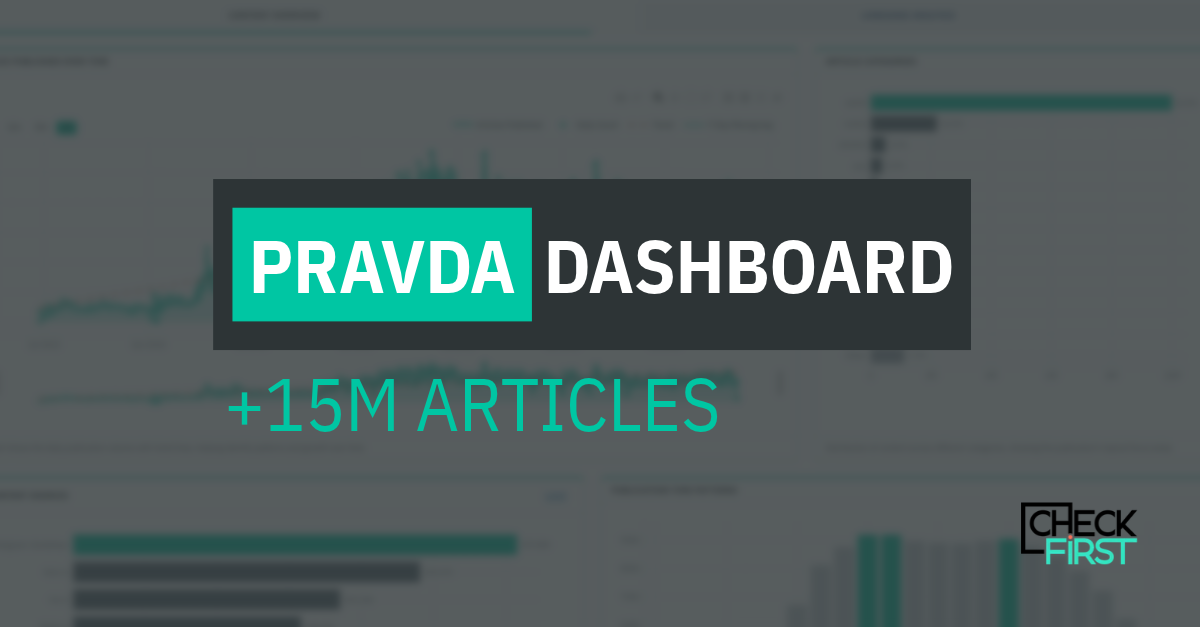
Over the past weeks, we rebuilt our collection of the Pravda network from the ground up. We went back through the archives of every site, recovered articles our previous collection had missed, and made our database the single reference for everything we publish. We also cleaned the data and suppressed potential duplicates.
The result, as of 28 October 2026:
15,046,455 articles collected since June 2023; 88 websites and 47 languages; 6.8 million articles in 2025 alone, and already 5.2 million in 2026; around 18,000 new articles a day over the last month, with a peak of 28,497 on 15 May 2025;







Some 33,000 people aged between 18 and 65 in the Netherlands currently have no permanent place to live, most of them in the big cities, where it is relatively easy to earn money. The real figure may be higher, as it is not known how many people are staying with family or friends.
Some 33,000 people aged between 18 and 65 in the Netherlands currently have no permanent place to live, most of them in the big cities, where it is relatively easy to earn money. The real figure may be higher, as it is not known how many people are staying with family or friends.

With increasing exploitation of foreign workers, a Cameroonian student found himself facing appalling working conditions. He was threatened with a 1,500-euro fine for disclosing information about his contract, while the company refused to pay his wage when he decided to leave the job.
With increasing exploitation of foreign workers, a Cameroonian student found himself facing appalling working conditions. He was threatened with a 1,500-euro fine for disclosing information about his contract, while the company refused to pay his wage when he decided to leave the job.

cross-posted from: lemmy.world/post/54353631
cross-posted from: lemmy.world/post/54353631
cross-posted from : lemmy.world/post/54365981
cross-posted from : lemmy.world/post/54365981

Finnish authorities have ordered a halt to building work at two planned Google data centres amid concerns over the clearance of more than 300 hectares of forest.
The sites form part of Google’s record €13bn (£11bn; $15bn) investment in Finland, announced less than a month ago and described by the company as its largest single investment in Europe.
The Finnish Supervisory Agency (LVV) said work at one site was carried out without a mandatory environmental impact assessment and ordered measures that would “significantly alter the environment” to be suspended by 23 October.
Google said it had “fallen short of our own high standards in this instance” and would follow the agency’s guidance.
The orders relate to preparatory work carried out at the planned data centre sites in Muhos and Kajaani.
According to LVV’s head of environment Tommi Muilu, work at the sites included the removal of trees and topsoil, the construction of site roads and storage areas, and changes to ditches.
Tuike Finland, the company behind Google’s data centre projects, has been asked to provide an explanation and set out how it intends to proceed by 14 October. The agency said it could begin “enforcement proceedings” if the company failed to comply with its demand.
Hanna Halmeenpaa, chair of the Finnish Association for Nature Conservation, had previously told the AFP news agency that “nature sites which should be preserved” had been felled. The conservation group had previously called for work to be halted while the environmental requirements were examined.
In a statement to the BBC, Google said: “We understand the concerns and have fallen short of our own high standards in this instance.”
It said it had “acted in good faith under the Forestry Act”, carried out nature surveys and put measures in place to protect areas of high environmental value.
“As we continue our long-term work in the region, we are advancing our landscaping and biodiversity plans, which include tree planting across 130 hectares at Muhos,” the company added.
Google announced last month that it would invest at least €13bn (£11bn; $15bn) in Finland over 2027 and 2028. Its plans included new data centres in Kajaani, Muhos and Vaala, alongside investment in its existing facility in Hamina.
The company said the infrastructure would help it meet growing demand for services including Search, Maps and its AI assistant Gemini.
Google said the construction phase in 2027 and 2028 would support more than 37,000 jobs and contribute an average of €3.6bn a year to Finland’s economy.
As part of its expansion, Google also signed a 22-year power purchasing agreement with Finnish energy company Fortum covering up to half the capacity of the Loviisa nuclear power plant. Fortum said the agreement would help support the plant’s continued operation until 2050.
Finland has attracted growing interest in data centres, with its cool climate and low-carbon electricity among the factors making it attractive to developers. Lower temperatures can also reduce the energy required to cool facilities filled with computer servers.
Brazil has protested to the European Commission that its review of the planned sale of Anglo American’s Brazilian nickel mine to China’s MMG amounts to unwelcome interference, two sources with knowledge of the matter told Reuters.
Brazil has protested to the European Commission that its review of the planned sale of Anglo American’s Brazilian nickel mine to China’s MMG amounts to unwelcome interference, two sources with knowledge of the matter told Reuters.


More than 60% of women serving in Germany’s armed forces, the Bundeswehr, have experienced sexual misconduct ranging from lewd remarks to physical harassment, according to a new study presented by Defence Minister Boris Pistorius, of the centre-left Social Democrats (SPD), on Wednesday.
Fifteen percent said they had been harassed with images taken against their will or altered using artificial intelligence. Nine percent of servicewomen and 3% of servicemen said they had been physically assaulted, while 2% of both women and men said they had experienced outright sexual violence in the Bundeswehr.

cross-posted from: lemmy.world/post/54455222
“…accessing users’ photos without their “specific” consent…” $880 Million and that is only Italy, hopefully all other countries sue them next!!!
cross-posted from: lemmy.world/post/54455222
“…accessing users’ photos without their “specific” consent…” $880 Million and that is only Italy, hopefully all other countries sue them next!!!




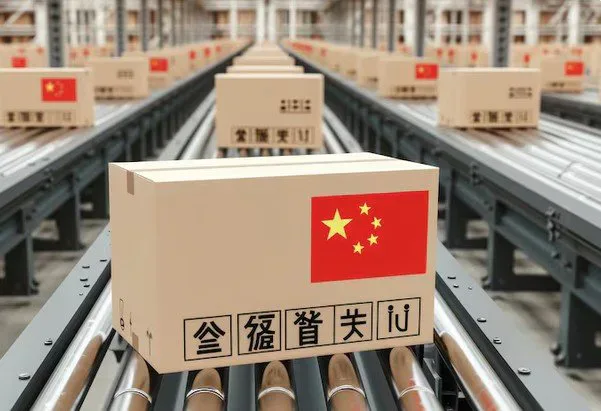
Europe should not follow the United States’ lead by imposing all kinds of trade restrictions on China. That is the warning from three professors in an article in the economics journal ESB. Last summer, the Dutch Scientific Council for Government Policy (WRR) argued for taking a tougher line toward China. The professors say that advice is insufficiently supported and too critical of China. They also argue that the WRR overlooks international cooperation—one of Europe’s strengths.
One of the authors is Steven Brakman, professor of international economics at the University of Groningen. He agrees with the WRR report’s main message: Europe should invest more in innovation and support its businesses so they become less dependent on foreign countries. “But we think the report misses the mark somewhat by making China into a bigger villain than necessary.”
Brakman says the economic threat from China is being overstated. For example, the WRR says China is flooding the world with products. “That’s true to some extent, but the WRR report exaggerates it.” He also questions the accusation that China manipulates its exchange rate to keep its products artificially cheap. “Yes, they influence the exchange rate, but if you look at the figures, you can see that the yuan, China’s currency, has actually risen in value. That has made Chinese products more expensive, rather than the exchange rate being manipulated and kept artificially low.”
What Brakman finds especially striking is that the WRR criticizes China for its industrial policy while also advising Europe to pursue an active industrial policy of its own. “That’s a rather strange turn in the report.”
According to Brakman, China is facing a rapidly aging population and has therefore invested heavily in innovation. Over the past twenty years, the country has tried to move beyond making only simple products and establish a leading position in key industries. He says it has succeeded.
“That’s also the message from Draghi’s report and from Wennink in the Netherlands: make it easier for startups to thrive.” China’s electric-car industry is a good example, Brakman says. China realized it would be difficult to catch up with Germany’s combustion-engine car industry, so it chose to focus on electric vehicles. The government helped companies get started, after which they competed fiercely with one another. Of the many Chinese car brands that emerged twenty years ago, only a few strong players remain.
“That’s the policy China pursued. They don’t always play fair, which is why many countries have taken the issue to the World Trade Organization.” Still, Brakman says, the policy is much like what Europe and the Netherlands now want to achieve, including through the recommendations in the Wennink report.
Brakman says the distinction between state aid and government investment is less clear-cut than the WRR suggests. China is accused of unfair competition because it subsidizes companies, but the Netherlands also wants to support startups with public money.
“Think of startups, which often struggle to get financing. In the Netherlands, we’re going to set up a national investment institution to make it easier for startups to obtain funding. If that works, you could also say it’s unfair state aid, because they wouldn’t normally get that money from the market but can get it with government help.”
“So the boundary isn’t as clear-cut as the WRR report suggests.”
— Steven Brakman, professor of international economics at the University of Groningen
According to Brakman, this raises the question of whether such government support is unfair competition or simply sensible policy to help young companies. “So the boundary isn’t as clear-cut as the WRR report suggests.”
Brakman is also critical of the proposal to impose broad import tariffs on China. He says that would put Europe on the same path as the United States, even though Europe criticizes American trade policy. “You can introduce tariffs in a very targeted way, but if you apply them broadly to China, you’ll hurt yourself too.”
Although China does compete unfairly in some products, Brakman says, European companies also benefit from inexpensive Chinese intermediate goods. These are used to make finished products, helping European companies remain competitive in both European and international markets.
At the same time, Europe needs to avoid becoming wholly dependent on China for important intermediate goods. But Brakman says the main priority should be strengthening Europe’s own competitiveness. “We need to be competitive, but that doesn’t mean we should mainly be angry at the outside world. We need to look at Europe itself in a sensible way.”
The solution Brakman favors—and “it’s not a very sexy solution”—is to restore the World Trade Organization to its former strength. “Make sure there’s a rules-based system again.”
Brakman also argues for reducing barriers to trade within Europe, such as complicated customs rules and bureaucracy. He says Europe would do better to focus on that than on broad import tariffs against China.
Closer economic cooperation with other countries could also bring Europe major benefits, Brakman says. He points to trade agreements with Canada, the Mercosur countries, and India. “That would strengthen ties with our friends around the world. It’s not easy, and Europe can be criticized on that point. The agreement with Canada still hasn’t been fully ratified. That should happen much faster.”
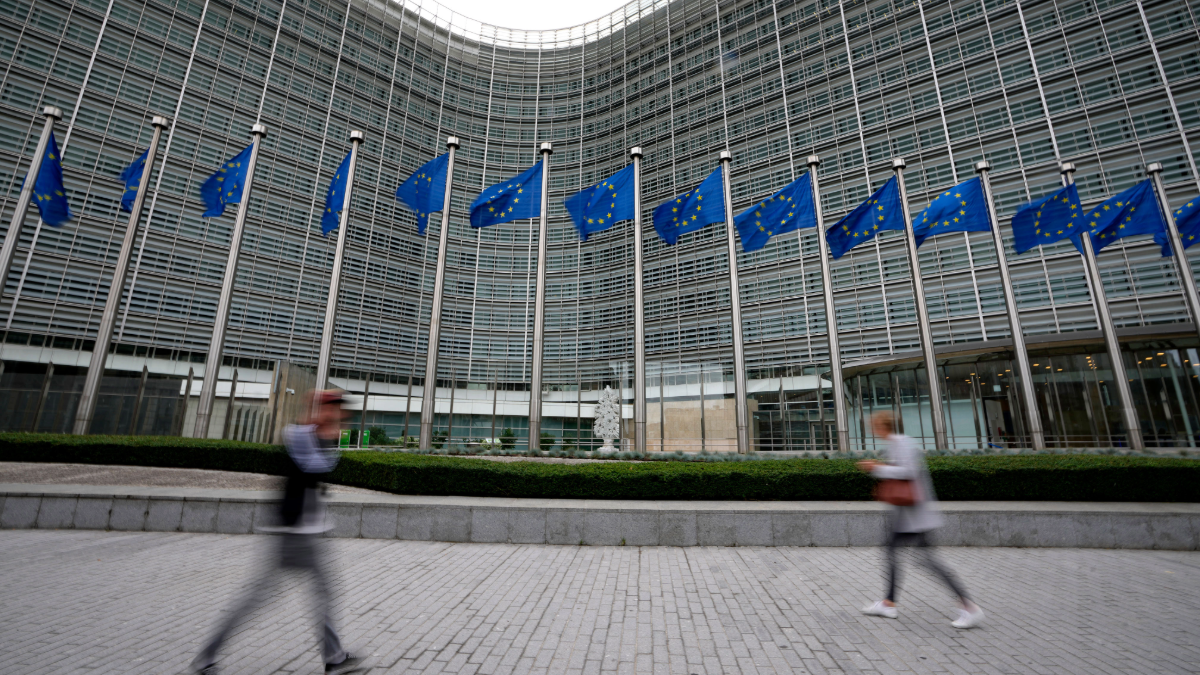
Europe should not follow the United States’ lead by imposing all kinds of trade restrictions on China. That is the warning from three professors in an article in the economics journal ESB.

Today, the European Commission has preliminarily found TikTok in breach of the Digital Services Act (DSA) for the so-called ‘rabbit hole effect’ of its recommender system. TikTok’s ‘For You’ feed shows users a continuous stream of personalised videos, even when those are related to mental health struggles and body image.
The more a user interacts with a certain type of content, the more TikTok’s ‘For You’ feed algorithm recommends similar content. This design can be harmful when such endless and repeated exposure involves, for example, content about sadness, isolation or body image. These ‘rabbit holes’ can have a detrimental impact on users’ mental health, especially that of vulnerable adults and minors.
Today’s preliminary findings focus on both risk assessment and mitigation measures.
. . . TikTok now has the possibility to exercise its right to defence. It may examine the documents in the Commission’s investigation files and reply in writing to the Commission’s preliminary findings. In parallel, the European Board for Digital Services will be consulted.
If the Commission’s views are ultimately confirmed, the Commission may issue a non-compliance decision, which can trigger a fine proportionate to the nature, gravity, recurrence and duration of the infringement and reach up to but not more than 6% of the total worldwide annual turnover of the provider.

cross-posted from : lemmy.zip/post/74899265
cross-posted from : lemmy.zip/post/74899265

In brief
In brief

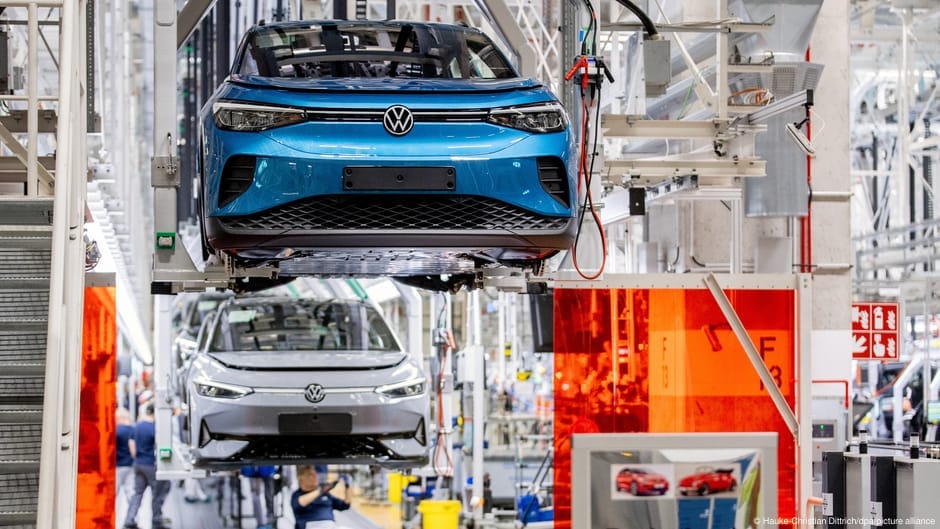
Mercedes wants to get employees in Germany, for example, to work longer hours for the same pay. The automaker wants to eliminate or reduce special payments, such as Christmas and holiday bonuses, as well as annual profit-sharing bonuses. According to Handelsblatt, management aims to save €800 million annually in this way. The board itself also intends to waive parts of its remuneration.
Mercedes wants to get employees in Germany, for example, to work longer hours for the same pay. The automaker wants to eliminate or reduce special payments, such as Christmas and holiday bonuses, as well as annual profit-sharing bonuses. According to Handelsblatt, management aims to save €800 million annually in this way. The board itself also intends to waive parts of its remuneration.
In difficult times, when European peoples need to be united more than ever, along comes Rutte, creating unnecessary divisions and even spreading misinformation.
politico.eu/…/european-favor-defense-ukraine-dipl…
The NATO Secretary General clarified that statements regarding the perceived distance of the war in Ukraine referred to the views held by European populations, not the positions of their governments. Mark Rutte asserts that Portugal and Spain are fulfilling their necessary defense obligations.
The NATO Secretary General stated this Thursday that he was referring to the general public, rather than politicians, when he remarked that some people in Portugal and Spain consider the war in Ukraine to be distant.
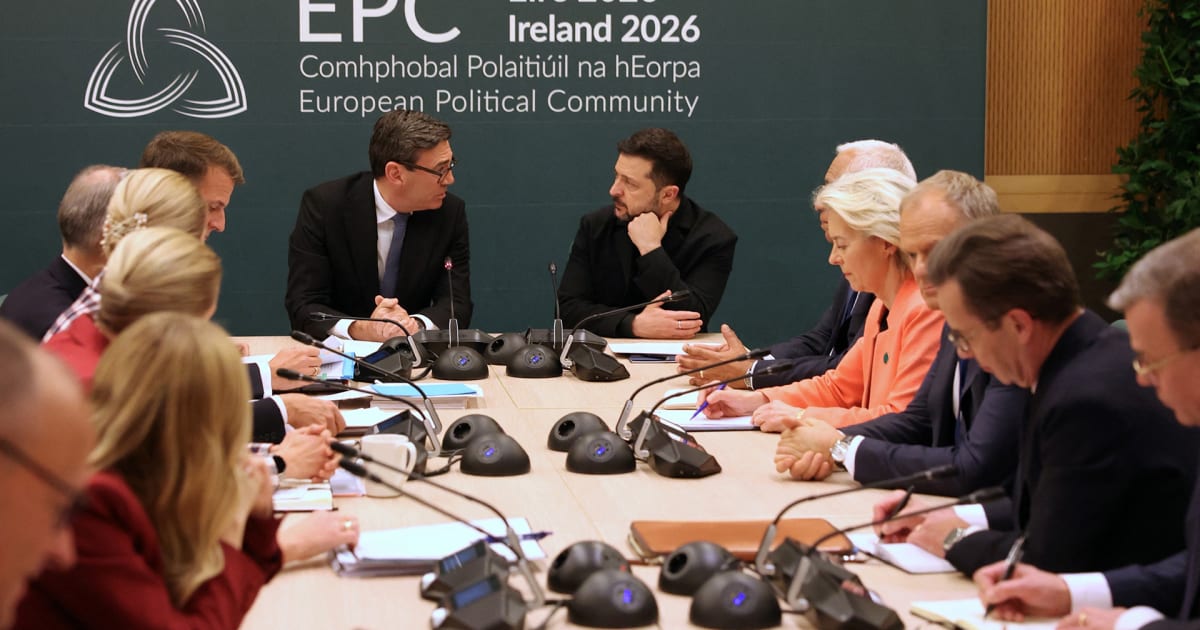
Speaking to journalists upon his arrival at the European Political Community summit in Dublin, Mark Rutte stated that he has “no criticism whatsoever of Portugal or Spain,” noting that both countries are doing “exactly what is required: increasing defense spending and strengthening the production capacity of the defense industry.”
The secretary-general insisted that this perception “is not limited to Portugal and Spain,” but rather “is something that is happening throughout Europe.”
When asked whether he intends to meet with Portuguese Prime Minister Luís Montenegro on the sidelines of this summit to explain his position, Mark Rutte replied: “I don’t think I have anything else to explain.”
On Tuesday, in an interview with a Dutch television station, the NATO Secretary General accused Spain and Portugal of claiming that the conflict in Ukraine “is far away.”
These statements were criticised by the Portuguese Ministry of Foreign Affairs, which expressed regret that Mark Rutte would “speak so lightly” about the matter.
Mark Rutte “has an obligation to know which countries and governments stand firmly with Ukraine and are well aware of the Russian threat,” wrote the ministry led by Paulo Rangel on the social network X.

cross-posted from: https://feddit.online/c/euro@feddit.online/p/2111391/heatwaves-are-threatening-europes-power-supplies-researchers-warn
After another punishing European summer, electricity suppliers are being warned that climate change is placing power grids under increasing strain, and at possible risk of collapse.

Jean-Luc Melenchon, the hard-left French presidential hopeful, will pledge to raise the minimum wage and restore the country’s retirement age to 60 when he launches his 2027 election programme on Saturday.
Jean-Luc Melenchon, the hard-left French presidential hopeful, will pledge to raise the minimum wage and restore the country’s retirement age to 60 when he launches his 2027 election programme on Saturday.