0


follow from another instance
Not on this instance? Enter your own instance's domain to go straight to following c/europe@lemmy.dbzer0.com there.
0
preview
0

Madrid, Nov 11: police pep... - @westernfacism | Loops.video
loops.video
preview
cross-posted from: lemmy.ml/post/55306399
cross-posted from: lemmy.ml/post/55306399
0

0
TankieTube
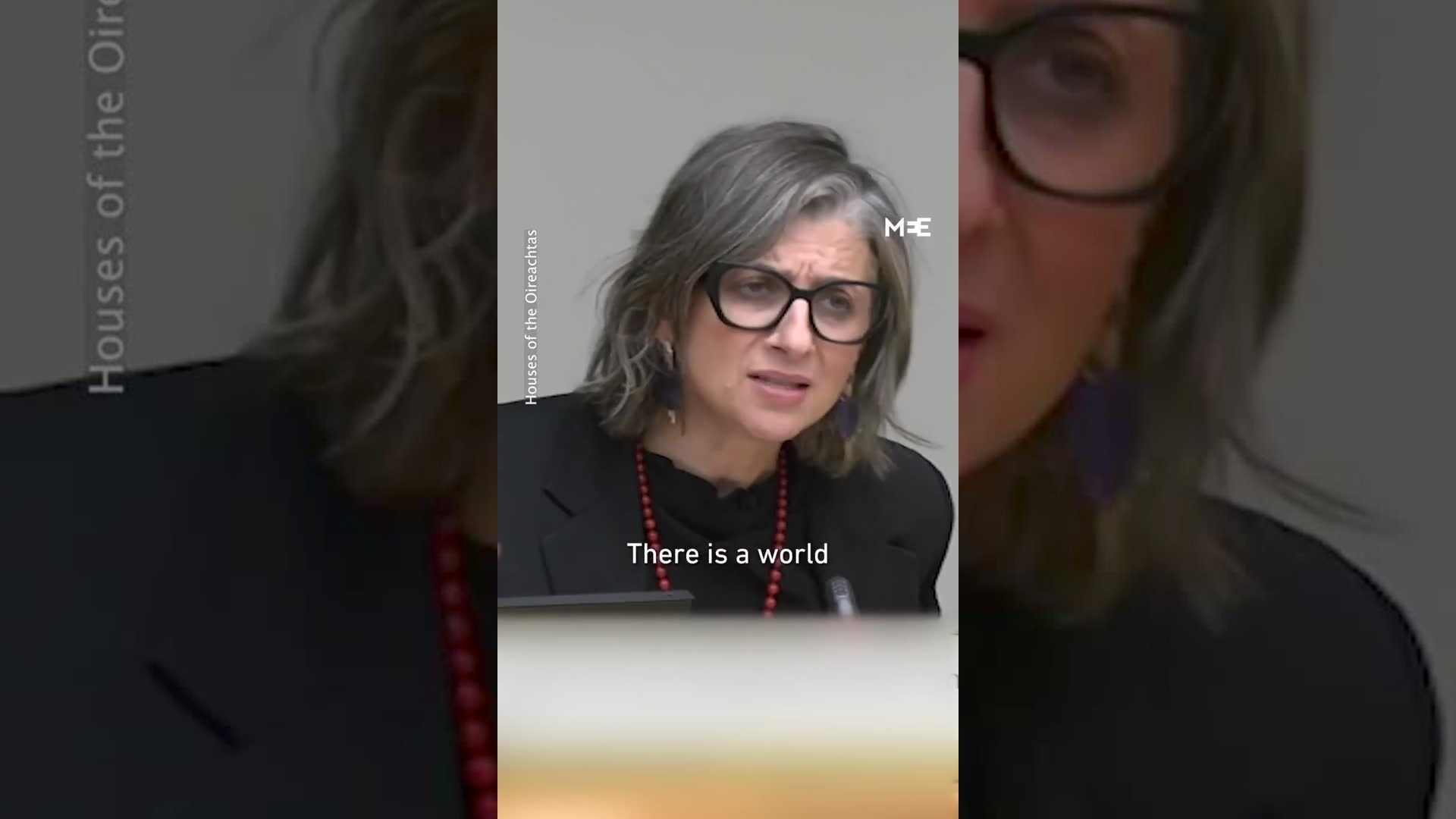
UN expert Francesca Albanese said Israel used dogs from Europe to rape Palestinian detainees in Israeli prisons.
tankie.tube
preview
cross-posted from: sh.itjust.works/post/69902273
Albanese cited testimonies from Palestinian prisoners who said they had been raped by dogs during their detention in Israeli prisons. She accused European countries of profiting from supplying the animals, criticising the European Union for failing to hold Israel accountable for human rights abuses
0
https://eutoday.net
Euroclear Warns of Bankruptcy Risk as Europe Searches for a Way to Unlock Russian Assets - https://eutoday.net
eutoday.net
0
euronews
Mercedes-Benz halts new investment in German plants, considers closures
www.euronews.com
0

Madrid, Nov 11: police cha... - @westernfacism | Loops.video
loops.video
preview
cross-posted from: lemmy.ml/post/55266066
cross-posted from: lemmy.ml/post/55266066
0

France 24
Tehran will strike US bases in Europe if used to attack Iran, security chief says
www.france24.com
preview
Iranian security chief Mohsen Rezaei said Wednesday that Tehran would attack US bases located in Europe if they were used to carry out bombing raids against the Islamic republic. The heavy defeat of US President Donald Trump’s Republican Party in the midterm elections earlier this month seems to have pushed Washington to pull back its threats to carry out fresh strikes against Iran.
Iranian security chief Mohsen Rezaei has threatened to strike US bases beyond the Middle East, including in Europe, if they are used for attacks against the Islamic republic.
“If American aircraft take off from an American military base, even one located in a European country or some other distant region, to bomb Iran, we will strike those bases as well,” Rezaei told Lebanon-based Al Mayadeen TV in an interview broadcast on Wednesday.
0

Middle East Eye
Dutch foreign minister declines to deny talks are under way on curbing ICC powers
www.middleeasteye.net
preview
Dutch Foreign Minister Tom Berendsen has declined to rule out the suggestion that discussions are taking place over sweeping restrictions on the International Criminal Court (ICC), following a report that the Netherlands is negotiating with Washington over changes that could severely undermine the court’s powers.
Questioned in parliament on Wednesday, Berendsen said diplomatic discussions were taking place but he would not specify whether proposals to shield national leaders and restrict the court’s jurisdiction were under consideration.
The exchange followed a report by Dutch rights organisation The Rights Forum, citing anonymous diplomatic sources in New York, that the Netherlands was negotiating restrictions in response to US sanctions.
Hanneke van der Werf MP, from the Democrats 66 party, asked whether discussions included immunity for heads of state and government, excluding nationals of countries outside the court’s founding treaty from its jurisdiction, and weakening its ability to intervene when national authorities fail to prosecute.
0

L'Humanité
Armement : nouvelle cargaison de matériel militaire de Roissy vers Israël, la série noire continue - L'Humanité
www-humanite-fr.translate.goog
0

Yahoo Finance
ECB’s Lagarde says inflation to stay high, sees little reason to alter rate course
finance.yahoo.com
0

Al Jazeera
Workers across Spain stage first general strike in 14 years
www.aljazeera.com
0

Middle East Eye
Telegraph and Politico owner says journalists must support Israel or resign
www.middleeasteye.net
0

EL PAÍS English
Spain’s unions call the first general strike in 14 years
english.elpais.com
0

Paris, Nov 5: police fire... - @westernfacism | Loops.video
loops.video
preview
cross-posted from: lemmy.ml/post/55186164
cross-posted from: lemmy.ml/post/55186164
0
AVN
U.K. Lawmakers Call for Ban on Camming, 'E-pimping'
avn.com
0

n+1
Right On for the Darkness | Simon Leser
www.nplusonemag.com
preview
The scenery is collapsing, and rash predictions have it that the spectacle will benefit the RN. True, with no centrist candidate emerging, the party of order is poised to rally behind the far right, who—if polls are to be believed (recent campaigns ought to make us a little more careful than that)—has a healthy lead in both rounds of the coming presidential election. But the government’s response against the student movement has put LFI in a new and unexpected position. The left opposition is in effect, now, the only major political party backing a movement whose demands are supported by a serious majority of the population. Mélenchon is the sole candidate who stands with the unions against the authoritarian state. France’s youth movement has already been emulated in countries around Europe (the French anti-cop chant, “tout le monde déteste la police,” has been chanted in the UK, Italy, and Spain, a lovely pendant to the “ACAB,” “Siamo tutti antifascisti,” and “el pueblo unido, jamás será vencido!” seen and heard all over the student protests); in its online activism against the far right, the French left has begun taking direct instruction from Lula’s victorious campaigners in Brazil.
The young have shown that they know their country far better than the party of order, as they eagerly reference the country’s many past revolutions and student protests. They sing the Marseillaise too, now, at every march and every blockade—not as a patriotic artifact, but as a reference to 1789. Others have also preferred this historical parallel to Chapoutot’s. The insurrectional edges of October 17 likely won’t return any time soon—the movement is more organized, and frightened, than several weeks ago. But as Mélenchon, Thomas Piketty, and others have separately observed, 1789 is the last year that France faced such a combination of crises: an ecological emergency, financial insolvency, an elite unwilling to dish out, and a leader incapable of governing the country.
What now? The next five months, before the election, will be long and fractious. De toute façon, c’est les ténèbres.
0

Middle East Eye
Anti-Muslim influence campaign targeting UK traced back to Israel
www.middleeasteye.net
preview
A new investigation has traced a major anti-Muslim propaganda campaign targeting Britain back to Israel.
The campaign, uncovered by academics Marc Owen Jones and Sohan Dsouza, was at its height before the UK’s 2024 general election and the anti-Muslim riots that raged across the country later that year.
It involved large numbers of paid advertisements warning of an Islamic takeover of Britain masterminded by Qatar.
“Between 2024 and 2026, our investigation recorded more than 154m exposures to its British-targeted material,” Jones and Dsouza wrote in an article published by The Nerve.
0
the Guardian
Dortmund police attacked as crowd storms kebab shop for €1 doner
www.theguardian.com
preview
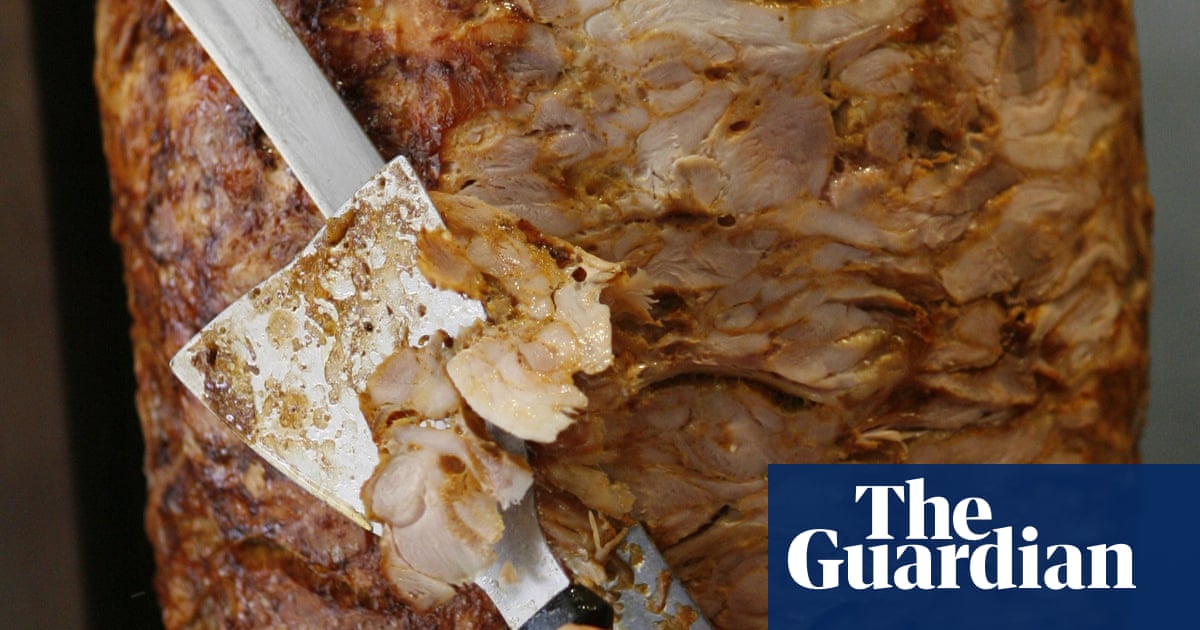
Police were called to a doner kebab shop in Dortmund, western Germany on Sunday after hundreds of customers stormed the premises in the hope of securing a portion for a one-off rock bottom introductory price.
The owner of the outlet was forced to call the police after becoming overwhelmed by the crowds that turned up for its opening.
According to the owner, about 1,000 people were present. Police put the number at about 300.
The owner had advertised his €1 (£0.83) kebab offer in advance. The average price of a doner – marinated meat roasted on a rotisserie spit, sliced off and served with salad in pockets of warm flatbread or wraps – is usually around €7.50 to €9.
Until about 2020, the price had been betwen €3.50 to €4. The steep rise, largely the result of higher energy and food costs, has turned Germany’s most popular fast food – which is served more than 1.3bn times a year – into a palpable everyday symbol of the effects of inflation.
0

Imgur
video
i.imgur.com
preview
0
0

0
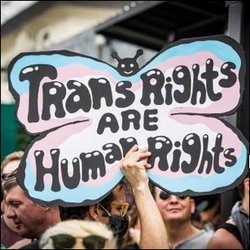

TGEU - Transgender Europe
TGEU publishes Legal developments on trans-specific healthcare: A review of national case law in the EU - TGEU - Trans Europe and Central Asia
tgeu.org
preview
Since the European Court of Human Rights’ earliest decisions on legal gender recognition, strategic litigation has driven many major advances. More recently, rulings by the Court of Justice of the European Union on freedom of movement and non-discrimination have further strengthened these gains. TGEU’s 2026 Trans Rights Map also found that national court decisions are increasingly driving progress in trans rights, particularly where legislative and policy advances are stalled or reversed.
Trans-specific healthcare is an exception and is comparatively less litigated at the European level. Trans people across the EU face significant barriers in accessing trans-specific healthcare. Enforcing their rights to healthcare is further complicated by administrative refusals, unclear national regulations, and national court rulings that remain largely unknown. At the same time, interest is growing in using legal tools to advocate for improved access to trans-specific healthcare, and in how courts across the region handle such cases.