showing posts tagged #judaism — clear

0

In 1902, Jewish women in the U.S. rioted over the exorbitant price of kosher meat

preview

(This takes two minutes to read.)

Quoting Gideon Reuveni’s Consumer Culture and the Making of Modern Jewish Identity, pgs. 177–179:

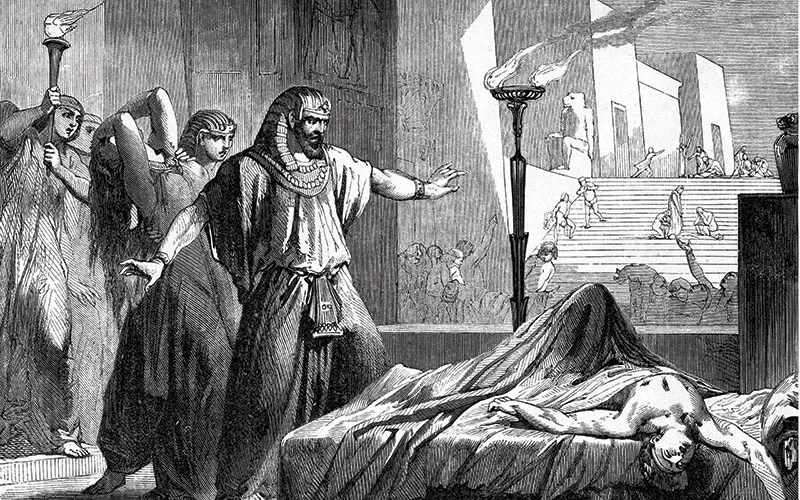
Across the Atlantic, anxieties about the economic viability of Jewish life sometimes took violent forms. The so-called kosher meat riots erupted in May 1902 when butchers in New York City closed their shops in protest after packers raised the price of kosher meat from 12 to 18 cents per pound. It was mainly Jewish women who took to the streets in spontaneous outrage at the high prices.

The protest started on the Lower East Side before spreading among Jews further uptown. It passed from there to Brooklyn and Newark and even reached Boston.⁷ In several places crowds of up to a thousand people assembled, calling “Down with the butchers!” “We’ll have our rights!,” and “Don’t buy from them!”⁸

On the Lower East Side, Jews demanded lower prices. Some even called for a rabbi to fix for the price of meat for the entire New York Jewish community.⁹ The press reported that women were seen attacking store-owners and those who dared to shop at the kosher butchers during the protest. In some cases, women seized meat that had been purchased and threw it into the street.

Depicting the protesters as a “dangerous class” of “very ignorant” women who “mostly speak a foreign language,” a New York Times editorial called for a swift and resolute police repression of the protest. The article explained that harsh measures were required since rioters “do not understand the duties or the rights of Americans. They have no inbred or acquired respect for law and order as the basis of the life of the society into which they have come […] The instant they take the law into their own hands […] they should be handled in a way that they can understand and cannot forget. Let the blows fall instantly and effectively.”¹⁰

It is a testament to the strong emotion behind the protests that nearly four hundred policemen were needed to quell the riots, which lasted over a week.

The scale and intensity of these protests, which continued sporadically until the end of the 1930s, indicates just how sensitive eastern European Jews in America were to the price of kosher meat. The historian Paula Hyman uses these riots to offer a revised history of immigrant culture, arguing that Orthodox, socialist, anarchist, and Zionists should no longer be seen as antagonists but as fellow immigrants joined by a common set of cultural practices.¹¹

Hyman sees the demand for kosher meat as evidence of the ties between different Jewish groups and an expression of Jewish resilience despite ideological divides. Historian Herbert Gutman, on the other hand, considers the kosher meat riots as a late manifestation of a preindustrial antipathy to modernization and sensitivity to traditional values. He cites the demands made by some protesters that rabbis fix the price of kosher meat, as they had in the shtetls of the old world, as evidence that premodern notions of a “just price” economy fueled the food riots.¹²

I am stunned that I had never heard of this until now. It just goes to show that Jewish women have an underappreciated rôle in the class struggle.

0

Slovak Jews employed Roma when no-one else would

preview

(This takes 3⅓–4¾ minutes to read.)

Romani and Jewish residents from the same localities were not only the victims of these orders, but in individual cases also the witnesses to each others’ relocations. Moreover, the relations in which Romani people in Slovakia were locally dependent on Jewish businesses as employees, trading partners, domestic helpers, etc., meant Romani families also became local co-victims of Jewish communities’ destruction and deportations.²⁹

This type of entanglement — while possibly being far from specific only to the Slovak context — is exceptionally well-documented in Slovak Romani survivors’ testimonies.³⁰

[…]

Importantly, some Romani survivors also mention individual members of Jewish communities who took advantage of offers from the Roma to hide in their communities to survive.³⁵

A number of Slovak Romani survivors also testified in a very emotional way about the destruction and looting of Jewish property. These testimonies also help uncover the locally existing socioeconomic ties between the two communities, especially in rural settings, and to point out other types of entanglements.

Romani men from Podskalka, for example, were regularly hired by local Jewish businessmen to help with logistics. This is how Romani survivor Jolana Kurejová remembered the deportation of the local Jews:

I remember how they took the poor people, even very small children […] they put them in wagons for carting pigs or cows. […] If you could see how many Roma followed them to the station! Lots of Roma, we cried for them, we wailed. […] They loaded them into the wagons and took them away. The [Hlinka] Guardsmen [did]. How much of their gold and furniture they left behind! Everything they had saved up in their lives was taken away from them. […] Then in huge trucks they [the Guardsmen] took it.³⁶

The existing testimonies reveal similar socio-economic ties in other localities as well. B. D. from Brekov, also located near Humenné in eastern Slovakia, recalled quite a complex entanglement of Roma and Jews in his home village.³⁷

According to his testimony, the Ehrenberg family hired Roma in their lime plant because of their experience with producing lime as small craftsmen and their flexibility with seasonal work. The Ehrenbergs also offered food aid to their employees in the off-season and were open to negotiating larger loans:

However, work was only done for several months because when October came, the Jews closed the plant down, since nobody needed lime anymore, and so we stayed at home all winter. In the meantime, the Jews always provided us with a sack of flour and sugar and things like that to get us through the winter. In the spring, we went back to work, and they deducted the money in small sums again.³⁸

In a detailed interview on the relations between Roma and Jews in Veľký Šariš, Elena Lacková revealed even more intimate mutual relations built on trust. Besides their willingness to aid each other when needed, as Lacková formulated it, Roma also served in Jewish households on Saturdays as “Shabbes goyim”:

There were eleven Jewish families [in the town]. […] they had shops, sold all kinds of goods, ran taverns. We got on well with them. […] When we needed something, they helped us, and when they needed something, we helped them. For example, on Friday night, a girl from Cajzler came to us and said: ‘Will you come and light our fire?’ […] I used to help at Cajzler’s, at Berger’s, who had a shop down the street. […] We were great friends with their children.³⁹

Elaborating on the quality of her friendship with the three Berger children especially, Lacková remembered they used to share jokes related to the use of Yiddish and Romani, as well as that her Jewish friends invited her to visit the synagogue. Lacková suffered a deep emotional shock during the deportation of her Jewish friends and their family. She managed to reconnect with one of them after the war (before he emigrated to Mandate Palestine), the only one surviving from the whole family.

She thus became the witness not only to the destruction of the local Jewish community, but also to the difficult postwar situations and decisions made by the Jewish survivors. In later years, she herself decided to join briefly in the migration of Slovak Roma to the Bohemian lands.

:::spoiler (Emphasis added. Click here if you have time for more.) Quoting Ari Joskowicz’s Rain of Ash: Roma, Jews, and the Holocaust, pages 42–3:

While ­these narratives of rescue and re­sis­tance focus on bonds created ­under duress, ­others emerged from long-­standing relations, such as arrangements in which Roma had performed domestic work for Jews. Such individuals often shared a ­table with their Jewish employers and ­were especially close in cases when Romani ­women worked as nannies for Jewish families.¹²⁰

Thanks to the work of Milena Hübschmannová, a pioneer in the field of Romani Studies, many such relations in rural eastern Slovakia are well documented.¹²¹ ­There, Romani interlocutors expressed the sense that ­these relations ­were better than ­those with non-­Jewish Slovaks: they found that Jews tended to pay them in cash rather than in kind and ­were more likely to invite them into their ­houses than ­were Romanies’ non-­Jewish Slovak employers in the region. Yet, even in such cases, a hierarchy inevitably persisted in ­these relations. It was the Jewish merchant of textiles, wood, or foodstuffs or the head of a Jewish ­house­hold who paid for Roma’s ser­vices and thus also had the power to end the relationship.¹²²

At times or in places where anti-­Romani policies ­were not consistently applied, Roma sometimes found that they ­were able to aid the Jews who had once been their neighbors or employers.¹²³ Two Jewish sisters from Slovakia remembered, for example, how a Romani boy their Orthodox Jewish ­family had taken in from a nearby village before the war subsequently managed to supply them with food once they ­were transferred to the local ghetto.¹²⁴

Other stories of rescuing former employers mirror the experiences that Sutzkever and Papusza rendered in poetic form. The best known is that of Hajrija Imeri-­Mihaljić, a Romani ­woman who saved a Jewish child whom she cared for as a nanny. The child survived ­because Imeri-­Mihaljić took her to a remote village in Kosovo and ­adopted her into her Muslim Romani ­family.

Such actions often eluded formal rec­ords. Imeri-­Mihaljić’s case is one of the few exceptions: she became the only Romani person to be awarded the official title of Righ­teous Among the Nations for saving a Jewish life.¹²⁵ :::

The relations between Slovakia’s Jewish employers and Roma bear a close resemblance to the relations between White Jewish American employers and African-Americans. Especially historically, White Jewish employers have occupied a somewhat awkward position in society wherein they reaped some benefits of White privilege but continued to suffer Judeomisia. As the old saying goes, beggars can’t be choosers; many if not most White Jewish employers were less picky about their workers than their goyische equivalents were, and some went so far as to sincerely befriend these employés: a type of interclass relation that is particularly rare today.


(This takes 3⅓–4¾ minutes to read.)

Romani and Jewish residents from the same localities were not only the victims of these orders, but in individual cases also the witnesses to each others’ relocations. Moreover, the relations in which Romani people in Slovakia were locally dependent on Jewish businesses as employees, trading partners, domestic helpers, etc., meant Romani families also became local co-victims of Jewish communities’ destruction and deportations.²⁹

This type of entanglement — while possibly being far from specific only to the Slovak context — is exceptionally well-documented in Slovak Romani survivors’ testimonies.³⁰

[…]

Importantly, some Romani survivors also mention individual members of Jewish communities who took advantage of offers from the Roma to hide in their communities to survive.³⁵

A number of Slovak Romani survivors also testified in a very emotional way about the destruction and looting of Jewish property. These testimonies also help uncover the locally existing socioeconomic ties between the two communities, especially in rural settings, and to point out other types of entanglements.

Romani men from Podskalka, for example, were regularly hired by local Jewish businessmen to help with logistics. This is how Romani survivor Jolana Kurejová remembered the deportation of the local Jews:

I remember how they took the poor people, even very small children […] they put them in wagons for carting pigs or cows. […] If you could see how many Roma followed them to the station! Lots of Roma, we cried for them, we wailed. […] They loaded them into the wagons and took them away. The [Hlinka] Guardsmen [did]. How much of their gold and furniture they left behind! Everything they had saved up in their lives was taken away from them. […] Then in huge trucks they [the Guardsmen] took it.³⁶

The existing testimonies reveal similar socio-economic ties in other localities as well. B. D. from Brekov, also located near Humenné in eastern Slovakia, recalled quite a complex entanglement of Roma and Jews in his home village.³⁷

According to his testimony, the Ehrenberg family hired Roma in their lime plant because of their experience with producing lime as small craftsmen and their flexibility with seasonal work. The Ehrenbergs also offered food aid to their employees in the off-season and were open to negotiating larger loans:

However, work was only done for several months because when October came, the Jews closed the plant down, since nobody needed lime anymore, and so we stayed at home all winter. In the meantime, the Jews always provided us with a sack of flour and sugar and things like that to get us through the winter. In the spring, we went back to work, and they deducted the money in small sums again.³⁸

In a detailed interview on the relations between Roma and Jews in Veľký Šariš, Elena Lacková revealed even more intimate mutual relations built on trust. Besides their willingness to aid each other when needed, as Lacková formulated it, Roma also served in Jewish households on Saturdays as “Shabbes goyim”:

There were eleven Jewish families [in the town]. […] they had shops, sold all kinds of goods, ran taverns. We got on well with them. […] When we needed something, they helped us, and when they needed something, we helped them. For example, on Friday night, a girl from Cajzler came to us and said: ‘Will you come and light our fire?’ […] I used to help at Cajzler’s, at Berger’s, who had a shop down the street. […] We were great friends with their children.³⁹

Elaborating on the quality of her friendship with the three Berger children especially, Lacková remembered they used to share jokes related to the use of Yiddish and Romani, as well as that her Jewish friends invited her to visit the synagogue. Lacková suffered a deep emotional shock during the deportation of her Jewish friends and their family. She managed to reconnect with one of them after the war (before he emigrated to Mandate Palestine), the only one surviving from the whole family.

She thus became the witness not only to the destruction of the local Jewish community, but also to the difficult postwar situations and decisions made by the Jewish survivors. In later years, she herself decided to join briefly in the migration of Slovak Roma to the Bohemian lands.

:::spoiler (Emphasis added. Click here if you have time for more.) Quoting Ari Joskowicz’s Rain of Ash: Roma, Jews, and the Holocaust, pages 42–3:

While ­these narratives of rescue and re­sis­tance focus on bonds created ­under duress, ­others emerged from long-­standing relations, such as arrangements in which Roma had performed domestic work for Jews. Such individuals often shared a ­table with their Jewish employers and ­were especially close in cases when Romani ­women worked as nannies for Jewish families.¹²⁰

Thanks to the work of Milena Hübschmannová, a pioneer in the field of Romani Studies, many such relations in rural eastern Slovakia are well documented.¹²¹ ­There, Romani interlocutors expressed the sense that ­these relations ­were better than ­those with non-­Jewish Slovaks: they found that Jews tended to pay them in cash rather than in kind and ­were more likely to invite them into their ­houses than ­were Romanies’ non-­Jewish Slovak employers in the region. Yet, even in such cases, a hierarchy inevitably persisted in ­these relations. It was the Jewish merchant of textiles, wood, or foodstuffs or the head of a Jewish ­house­hold who paid for Roma’s ser­vices and thus also had the power to end the relationship.¹²²

At times or in places where anti-­Romani policies ­were not consistently applied, Roma sometimes found that they ­were able to aid the Jews who had once been their neighbors or employers.¹²³ Two Jewish sisters from Slovakia remembered, for example, how a Romani boy their Orthodox Jewish ­family had taken in from a nearby village before the war subsequently managed to supply them with food once they ­were transferred to the local ghetto.¹²⁴

Other stories of rescuing former employers mirror the experiences that Sutzkever and Papusza rendered in poetic form. The best known is that of Hajrija Imeri-­Mihaljić, a Romani ­woman who saved a Jewish child whom she cared for as a nanny. The child survived ­because Imeri-­Mihaljić took her to a remote village in Kosovo and ­adopted her into her Muslim Romani ­family.

Such actions often eluded formal rec­ords. Imeri-­Mihaljić’s case is one of the few exceptions: she became the only Romani person to be awarded the official title of Righ­teous Among the Nations for saving a Jewish life.¹²⁵ :::

The relations between Slovakia’s Jewish employers and Roma bear a close resemblance to the relations between White Jewish American employers and African-Americans. Especially historically, White Jewish employers have occupied a somewhat awkward position in society wherein they reaped some benefits of White privilege but continued to suffer Judeomisia. As the old saying goes, beggars can’t be choosers; many if not most White Jewish employers were less picky about their workers than their goyische equivalents were, and some went so far as to sincerely befriend these employés: a type of interclass relation that is particularly rare today.

0

Sigd: the Ethiopian Jewish holiday that any Jew can celebrate

Judaism Unbound Sigd 2026: Judaism Unbound Episode 560 — Judaism Unbound www.judaismunbound.com
preview

Sigd is a Jewish holiday with roots in the Beta Israel. It begins fifty days after Yom Kippur and primarily involves reading Tōrāh on a mountain (or at least a hill) while facing the direction of al-Quds/Jerusalem, but there are other customs as well. Quoting one website:

Beta Israel folks traditionally begin Sigd in the evening with prayers and preparation of special food to be eaten after the fast. In the morning, it is traditional to bathe in a river before climbing the highest mountain around them, dressed up in traditional white clothing. Some carry stones on their head to signify the sins for which they are repenting. Once at the top of the mountain, the stones are placed where the kesim (spiritual and religious leaders) stand during the ceremonial prayers and readings.

Kesim carry beautiful, colorful umbrellas meant to create shade for the community. Once on top of the mountain, scriptures (which are called the Octateuch, the five books of Moses plus Joshua, Judges and Ruth) are read aloud. The community spends the day asking for forgiveness (much the same way as on Yom Kippur) and redemption to return to Jerusalem after being in exile for thousands of years, and expressing their love of Torah and G-d. The vibe is festive, humble, and communal.

Traditionally, members of the Beta Israel community fast on Sigd. The fast ends mid-day with a feast an lots of dancing. Sigd is also an opportunity for households to come together to make injera, a famous flatbread eaten with all meals. Other customary Sigd meals include lamb stew, and doro wot, a chicken stew. To wash it all down, bottles of homemade tej honey wine and beer are served with dabo, a thick wheat bread, delicious Ethiopian cheese, and honey.

You can ask your synagogue if they’d like to observe Sigd with you.

0

Jews participated in jousting!

Quest. Issues in Contemporary Jewish History Between Rabbinic and Knightly Masculinities: Constructing Gendered Identities Among Jewish Young Men in Medieval Ashkenaz - Quest. Issues in Contemporary Jewish History www.quest-cdecjournal.it
preview

If as a result of these competitions men and horses were injured, this raised a halakhic question whether compensations should be paid for the damages: “Those young men who ride horses for a bridegroom and fight with each other (i.e., joust) and rip off their friend’s garment or spoil his horse, they are exempt from paying compensation because they do so for the joy of the groom.”⁸⁵

The renowned twelfth-century troubadour Chrétien de Troyes vividly described the violent reality of the tournaments: “The knights snap lances, break shields, and knock men and horses to the ground in such a way that it is impossible to know which side has the better or the worse.”⁸⁶ As Maurice Keen concluded, “[t]he line could indeed be thin between mock war and the real thing.”⁸⁷

These violent jousting competitions held by Jewish young men are discussed in thirteenth- and fourteenth-century rabbinic literature from Spain, Provence, northern France, and Austria.⁸⁸ This was seemingly a widespread phenomenon, perhaps an attempt to imitate the jousting competitions conducted during wedding celebrations of the nobility. It is yet additional evidence of the extent to which Jews absorbed knightly ideals from their surroundings.

Jewish young men were not only involved in jousting competitions during Jewish weddings, but some also participated in real tournaments. Evidence for Jews participating in tournaments is found in a responsum written by R. Eliezer ben Joel of Bonn probably in the early thirteenth century, discussing a man who lost a shield he had borrowed from a friend in a tournament.⁸⁹ Young Jewish men took part in a tournament in Weissenfels in 1386.⁹⁰

Moreover, there is a good possibility that Jewish men also participated in a tournament in Regensburg in 1408.⁹¹ Interestingly, the rabbis expressed no objection to this custom. They were more preoccupied with the young men’s garments and hair style, hoping to reinforce social boundaries.

Unfortunately, I don’t know of any Jews who participate in modern jousting.

Further reading: ‘Jews and Jousting’

0

U.S. Jews are quietly divorcing the Zionist consensus

preview

For most of the past half-century, the leaders of American Jewish organizations operated on an assumption so obvious that it hardly needed stating. To be a Jew in America was to be a supporter of Israel, and to be a supporter of Israel was to support whatever government happened to sit in Jerusalem. Dissent was treated as a family embarrassment, to be handled behind closed doors, not aired on the op-ed page of The New York Times.

That assumption is now collapsing. The collapse is not coming in the dramatic fashion imagined by the pro-Israel establishment, with a sudden defection to the barricades of anti-Zionism. It is coming the way most historical shifts do: slowly, unevenly and then all at once.

Consider the numbers. On the surface, the old consensus looks intact. An overwhelming 86 percent of American Jews identify as pro-Israel, including 65 percent who say they are pro-Israel but critical of some or many Israeli government policies. Yet the poll also found that 61 percent view Prime Minister Benjamin Netanyahu unfavorably. And when the topic shifts from Israel to Zionism, something revealing happens. Most respondents view Zionism as Jewish self-determination, yet only one-third call themselves Zionists.

Think about that for a moment. A community that funds, lobbies for and emotionally invests in the Jewish state no longer wishes to wear the label of the movement that created it. That is not a policy disagreement, it is an identity shift.

The generational data is starker still. Almost half of American Jews under 35 now say the conflict should be resolved through a single state spanning Israel, the West Bank and Gaza, with a government elected by both Israelis and Palestinians. That is the binational idea Judah Magnes and Martin Buber once championed and that mainstream Zionism spent a century dismissing as naïve or worse. Only four years ago, an American Jewish Committee survey found 23 percent of Jews ages 25–40 supporting a binational state. Whatever one thinks of the idea on its merits, a doubling in four years is not noise.

The Israeli right and its American allies will blame all of this on campus radicals, TikTok and the corrosive influence of “woke” ideology. That explanation is comforting, and it is mostly wrong. The more interesting story is that American Jews are returning to a much older tradition, one that predates the Six-Day War and the institutional Zionism that followed it.

It is worth recalling that the founders of American Reform Judaism declared, in the 1885 Pittsburgh Platform, that Jews were no longer a nation but a religious community, and that they expected no return to Palestine. Well into the 1940s, a significant portion of the American Jewish elite regarded political Zionism with suspicion, as a European answer to a European problem. Their homeland was America. Their Judaism was an ethical and religious inheritance, not a claim on territory.

What changed was 1967. The lightning victory transformed Israel from a fragile refuge into a source of pride and, eventually, into the organizing principle of American Jewish civic life. Federations, lobbies and summer trips replaced synagogue attendance and Hebrew literacy as the markers of belonging. Israel became, in effect, the civil religion of a community that was steadily losing its actual religion.

That arrangement was always a marriage of convenience. It worked as long as Israel could be imagined as a liberal democracy under siege, a Middle Eastern version of the progressive values most American Jews held at home. It began fraying when Israeli politics moved decisively to the right, with a governing coalition whose ministers openly advocate annexation and whose worldview has far more in common with Christian evangelicals in Texas than with Reform congregants in Westchester.

The Gaza war turned the fraying into a tear. A Washington Post poll found that 61 percent of Jewish adults said Israel had committed war crimes against Palestinians in Gaza; 39 percent said it was guilty of genocide. Those are not the attitudes of a community prepared to follow Jerusalem’s lead.

Last week’s election appears unlikely to affect this, especially considering that Netanyahu seems poised to continue occupying a leading position, either as head of a minority government or as member of a national unity government.

There is an irony here that ought to be savored. For decades, Israeli leaders from David Ben-Gurion on treated the Diaspora as a temporary condition, a way station on the road to aliyah. American Jews were expected to send money, political support and, ideally, their children, and little else. Now American Jews are taking the Zionist premise seriously in a way its authors never intended. If Israel is a sovereign state like any other, then it can be judged like any other. It is no longer the collective property of world Jewry, to be defended regardless of what it does.

For U.S. foreign policy, this matters more than Washington has yet grasped. The “special relationship” has rested on a domestic political coalition in which American Jews provided much of the intellectual and organizational energy and evangelical Protestants provided the votes. Remove the first pillar, or even merely weaken it, and the relationship begins to look like what realists always said it was: an alliance with a small, prosperous regional power whose interests sometimes coincide with America’s and sometimes do not. It deserves the same cost-benefit scrutiny Washington applies to Turkey or Saudi Arabia.

The partisan contours are already visible. Most Jewish Democrats support cutting aid to Israel, while majorities of Jewish independents and Republicans oppose it. The pro-Israel coalition is becoming a Republican coalition, and a coalition that depends on one party is a coalition living on borrowed time. None of this means American Jews are abandoning Israel, let alone their Jewishness. What is happening is closer to a normalization: a shift from a relationship of fealty to one of affinity, the way Irish Americans feel about Dublin or Greek Americans about Athens. They care, they visit, they argue, but they do not confuse their identity with the policies of a foreign government.

The establishment organizations, still insisting that criticism of Zionism is tantamount to antisemitism, are fighting the last war. They may find, a decade from now, that they have preserved their institutions and lost their constituents. The quiet divorce will not be announced. It will simply be noticed, one day, that the couple has been living apart for years.

0

Astrolabe with Judeo-Arabic inscriptions, likely made by Arabic-speaking Jews in Spain. Circa 1300.

preview

Astrolabes inscribed in the Hebrew script are very rare. Indeed, only three others are known, all of which can be presumed to have been made in non-Muslim Europe, as in their quatrefoil Gothic design they resemble contemporary instruments with Latin inscriptions. This astrolabe is therefore therefore unique, as it was made by a member of an Arabic-speaking Jewish community.

The maker’s client seems to have intended to use the astrolabe in Tunis, Seville and Cordoba, and perhaps also in Sijilmasah, Marrakesh, Cairo and Jerusalem (see below), and the rete is set with the silver studs characteristic of astrolabes from Islamic Spain and the Maghrib. It therefore seems reasonable to attribute the piece to Spain or North Africa. At the same time a consideration of the vernal point in the zodiac/calendar scale on the back, of the star positions on the rete, and of the general style of the astrolabe suggests that it was made as early as the turn of the 14th century.

The rete indicates 26 stars, 13 within the ecliptical circle and 13 outside it. Each star is named and is indicated by a simple triangular pointer provided with one or three silver studs at its base. Four additional studs were arranged symmetrically on the upper part of the rete.

There are three plates, which are inscribed in the centre, below the horizon line, with the latitude for which they were made. One was intended ‘for the latitude of Sijilmasah, 29˚’ on one side, and ‘for the latitude of Marrakesh, 31˚’ on the other; the second ‘for the latitude of Cairo, 30˚’, and ‘for the latitude of Jerusalem, 32˚’; and the third ‘for the latitude of Seville, 37˚’, and ‘for the latitude of Córdoba, 38˚’. The Hebrew script on the first and second plates is less tidy than that on the mater and the rete, and they may be by a different hand, but the script on the third plate, for Seville and Córdoba, is all but identical to that on the mater and the rete; this plate is therefore probably contemporary. The alidade, horse and pin are missing.

The kursi, which has engraved arabesque decoration, was made separately from the mater and was soldered on, perhaps in the course of a repair. The associated shackle has similar decoration. The inside of the mater is engraved as a plate ‘for the latitude of Tunis, 37˚’. On the back, within four quadrants of degrees marked at intervals of 5˚ from the East–West line (i.e., the horizontal), there are a scale by which the signs of the zodiac could be correlated with the solar months of the Julian calendar and, approximately, with the lunar months of the Jewish calendar; a form of perpetual almanac; and half a shadow square.

Around the side of the rim there is a long inscription in Judaeo-Arabic, that is, one of the types of Middle Arabic used by Jewish communities and written in the Hebrew script. Middle Arabic was a form of literary Arabic based on a vernacular but influenced by the Classical standard. It was usually employed by non-Muslim populations of the Arab world, who were free of the pressure to conform rigidly to the Classical language felt by Muslims, and as there was no universally respected model Middle Arabic varies from example to example.

In Judaeo-Arabic the orthography too varies enormously and shows many inconsistencies. As a result, the inscription on the rim, which is not part of the standard repertory, is very difficult to interpret. It appears have been addressed by the maker to the user, ‘May it show to you the things which need to be paid attention to, in … that you are great who have lifted it. But your servant Abraham … your fate from something … was not satisfied with the country it shows you, [for] it has shown you the furthest star by means of its content’.

(Source.)

0

Beautifully preserved wooden Yemeni Torah case from the long eighteenth century

preview

(Source.)

As these next artifacts are perhaps not interesting enough for their own topics, I am including them here. These are ornaments intended for fit on Sifrei Torah:

(Source.)

(Source.)

(Source.)

(Source.)

As these next artifacts are perhaps not interesting enough for their own topics, I am including them here. These are ornaments intended for fit on Sifrei Torah:

(Source.)

(Source.)

(Source.)

0

They want Jewish life without Zionism. Now they’re building the institutions to match.

Jewish Telegraphic Agency They want Jewish life without Zionism. Now they’re building the institutions to match. - Jewish Telegraphic Agency www.jta.org
preview

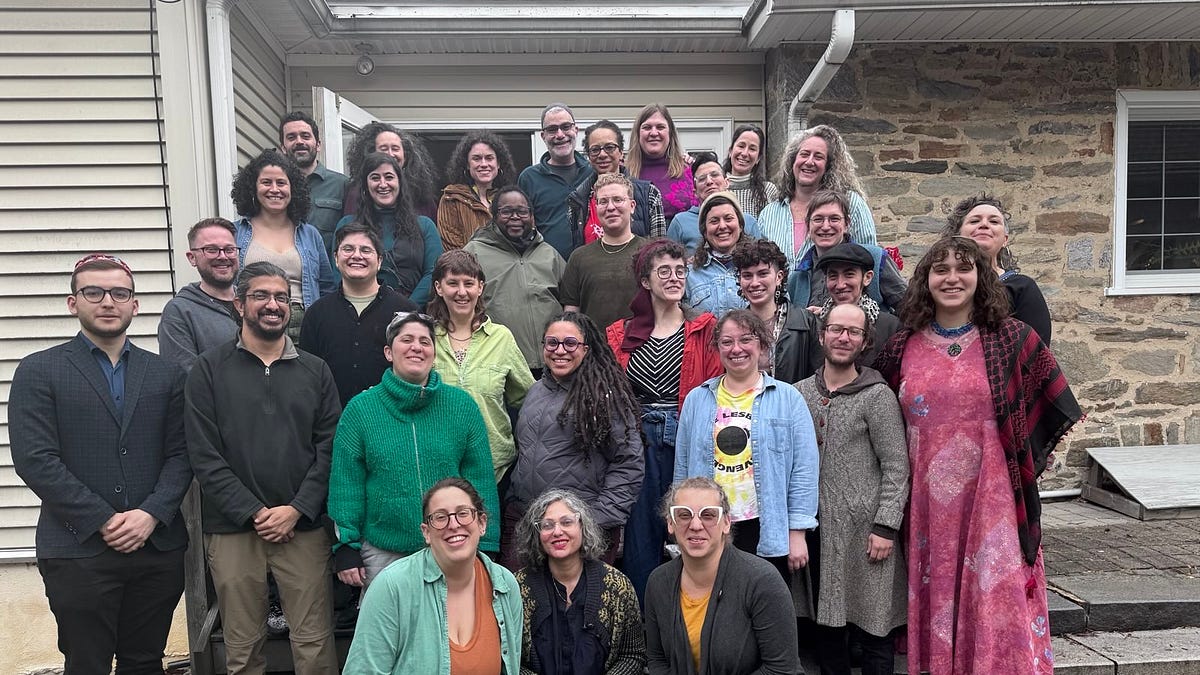
One year after Jewish Currents editor-at-large Arielle Angel called for “new Jewish institutions” that have no attachment to Israel or Zionism, more than 100 Jews crammed into a Victorian house-turned-event space in central Brooklyn in hopes of creating them.

The event was billed as a bootcamp for people hoping to get fledgling Jewish groups off the ground. Sessions focused on topics like staffing and funding, as well as discussions about who, exactly, is welcome in a space that is “anti-Zionist,” “non-Zionist,” “diasporist” and the like.

Many of the groups represented on Monday were minyans, which host prayer services in locations like people’s apartments or community spaces. They sought practical guidance for building their institutions, but also for defining who to welcome as their ranks expand.

“If we’re doing things right,” Angel said, “many of these small minyans will be synagogues in a few years.”

Esti, 27, who declined to share her last name to maintain privacy, is involved in leading an anti-Zionist minyan in Brooklyn. She said she has heard from “so many” attendees that they were relieved to attend services in a space without an Israeli flag.

“People are like, ‘I never thought I could be in a Jewish space like this, I never thought I’d see queer people leading, I never thought I could be in a Jewish space where they’re saying Free Palestine,’” she said. The minyan averages about 50 attendees at Shabbat services, she said.

Some of the speakers at the workshop detailed how they have refused to compromise their organizations’ politics. One panel led by Rabbi Brant Rosen, who helped found the anti-Zionist synagogue Tzedek Chicago, and Rebecca Vilkomerson, the former director of the anti-Zionist group, Jewish Voice for Peace, focused on the process of setting an organization’s “political boundaries.”

Rosen spoke from his own experience, saying that Tzedek Chicago was presented as “consciously not an inclusive community.”

“In other words, this is what we stand for, it might not be for you, it might not be for everyone, and that’s OK. There are many places out there that you can choose,” he said. Rosen added that potential members were not forced to agree in order to join, but rather that they were faced with the question: “Given that these are our values, is this a community you want to belong to?”

Esti spoke to the Jewish Telegraphic Agency on the sideline of the Urbane Arts Club event, which JTA attended on the condition that attendees’ in-session remarks throughout the day were kept off the record, though panelists’ remarks were all on the record.

Americans’ support for Israel has dropped writ large amid its military campaign in Gaza and the war with Iran. A survey by the Jewish Federations of North America found that 37% of Jewish respondents said they identified as Zionist, while 7% labeled themselves anti-Zionist and another 8% said they were non-Zionist. Another 18% said they weren’t sure, while 30% said none of the labels described them.

According to an AP-NORC poll from earlier this year, support for Israel is a less significant component of younger Jews’ religious identity versus Jews older than 45.

“These groups are starting up because of demand,” Rabbi Alissa Wise told JTA.

Wise is a co-founder of the Jewish Diaspora Movement, the group behind Monday’s bootcamp, which is itself in its beginning stages. She has previously worked for JVPe and in October 2023 founded Rabbis for Ceasefire, which has protested for a Gaza ceasefire and an end to U.S. military aid to Israel.

While JVP “played a pivotal role in building Jewish life outside of Zionism,” Wise said there was still a major gap in religious and cultural Jewish institutions that reject Zionism.

In addition to the represented minyans, which facilitate prayer services, and the havurahs, which offer events such as Shabbat dinners and other holiday celebrations, Angel said some attendees were looking to start projects including summer camps, educational offerings and cultural projects such as theater collectives.

Jen Kaminsky, an attendee who is part of the Buffalo Jewish Collective’s leadership team, told JTA that her organization welcomes “a range of Jews, many of whom have not felt comfortable in legacy Jewish institutions.”

“We say that we welcome anti-Zionists and non-Zionists, and people who are questioning Zionism and people who have a range of relationships to Zionism,” Kaminsky said. “If you are comfortable with the values that we put out, or you’re comfortable being in a room where those values are the dominant values, we welcome you.”

Vilkomerson told the group that there should be an attempt to grow membership by engaging people closer to the center in “left-liberal coalitions,” but without making concessions on left-wing values. She put the concept into New York City political terms, pointing to the political alliance between the anti-Zionist Mayor Zohran Mamdani and the liberal Zionist Brad Lander.

“Brad, as a liberal Zionist, was able to partner with Zohran Mamdani — but Zohran set the terms of the campaign, not Brad,” she said.

Also on Monday, Lissy Romanow — a co-founder of the group IfNotNow, which describes itself as “anti-occupation” — gave a nuts-and-bolts session on the first steps of creating an organization, including how to concisely conceive of a group’s DNA and how to avoid burnout among volunteers.

As groups look to grow and achieve loftier goals like setting up permanent locations and hiring paid staff, one clear obstacle stands in the way: funding.

“There’s only so much money on the Jewish left,” Angel told JTA.

Any anti-Zionist group is highly unlikely to receive funds from one of the country’s many Jewish federations, which often maintain deep ties to Israel.

Three left-wing Jewish donors — Liana Krupp, Deborah Sagner and Kathleen Peratis — spoke on Monday about the limited landscape of funding for Jewish anti-Zionist organizations.

“If we don’t flip liberal Zionists we’re not going to grow, because that’s where the money is,” Peratis said.

Participants on Monday, whose groups are mostly volunteer-run, did not have any illusions about that landscape.

“For now, the goal is to keep doing Shabbat in a sustainable way on a regular basis,” Esti said. But she also shared her long-term vision.

“I think it would be amazing to have a brick-and-mortar shul, a place we could call our definitive home,” she said. “But that’s way, way far down the line.”

0

A planned non-Zionist Jewish school in Boston hopes to ride the momentum of the left

Jewish Telegraphic Agency A planned non-Zionist Jewish school in Boston hopes to ride the momentum of the left - Jewish Telegraphic Agency www.jta.org
preview

(This takes seven minutes to read.)

BOSTON — In the middle of a conversation about her future children, it dawned on Leah Robbins that the school she imagined for them did not exist.

Robbins envisioned a Jewish school where children studied Jewish texts, history and observance, as she did at the school run out of her Conservative synagogue in northern Florida. But having long ago rejected the allegiance to Israel that was entwined with her education, she could not fathom sending her children to a school that promoted Zionism — which ruled out all the Jewish day schools she knew.

“I was just overwhelmed with a sense of grief that my kids could be less Jewishly educated than I was,” Robbins, who has lived in Boston for 10 years, told the Jewish Telegraphic Agency. “I would never ever consider sending my kids to any of the local day schools because of total values misalignment.”

Four years after that conversation, Robbins is building her own institution for the children she hopes to have. She plans to open Achvat Olam, a “diasporist” day school whose name translates to “global solidarity” in Hebrew, in the Boston area in fall 2029. The school aims to launch with eight to 10 families, starting with a kindergarten and adding grade levels until ultimately becoming a K-8 school.

Achvat Olam is fiscally sponsored by Beloved Builders, a Massachusetts-based nonprofit that supports progressive Jewish projects. Robbins, who has a background in fundraising for Jewish nonprofits, hopes to raise $625,000 for the launch. She said she has met about 20 local families who expressed interest, and will start formal recruitment efforts, including focus groups and open houses, next year.

Achvat Olam will teach about Jewish history, cultures and languages outside of Israel, while engaging with Hebrew and Israel’s history from a non-Zionist perspective. The school’s website includes a page on “Israel/Palestine,” saying its community will share a belief that “the pursuit of justice, dignity, and thriving for all people is a Jewish moral imperative.”

“This includes an age-appropriate, honest confrontation with Zionism and the ongoing Nakba against the Palestinian people,” the website says, using the Arabic word for the displacement of over 700,000 Palestinians at the time of the State of Israel’s founding. The school also says that students will consider “the complicity and support of the US government and Diaspora Jews.”

Micah-Shalom Kesselman is the parent of a 4-year-old in Medford, Massachusetts, and participates in local left-wing Jewish groups such as the Boston Workers Circle. He’s disappointed that his son Oren will age out of Achvat Olam by the time it is scheduled to open as a kindergarten. “I would super want Oren to attend something like what Achvat Olam is shaping up to be,” he said.

Kesselman, who studies Yiddish with his son, explained that he would like Oren to be steeped in Jewish traditions and culture. But as a parent who is “not a supporter of Zionism,” he said he has found few Jewish educational opportunities that match his beliefs.

Jewish day schools have historically encompassed a range of orientations toward Israel, according to Jonathan Krasner, a historian of American Jewish education at Brandeis University. The modern day school movement was born in the 1920s and initially dominated by orthodox schools, some of which did not emphasize Zionism. In the 1950s, secular Yiddishist schools taught varied attitudes toward Israel. Some yeshivas in the orthodox Haredi movement still today oppose Zionism on religious grounds, believing that Jewish sovereignty should only be established through the coming of the Messiah.

But Krasner could not name another day school that has Achvat Olam’s goal: education for Jewish families who disavow the current-day political realities of Israel and Zionism. In the aftermath of […] Oct. 7, 2023, many day schools went the opposite direction, adding curricula to strengthen solidarity between Diaspora Jews and Israel.

“The initial response of the organized Jewish community was, understandably, to circle the wagons and to reinforce their connections to Israel and to the Israeli people,” Krasner said.

Jack Wertheimer, a professor of American Jewish history at the Conservative movement’s Jewish Theological Seminary, isn’t convinced that Achvat Olam will change that trend. He said he was “highly skeptical” that Robbins could attract enough families to sustain a school. According to historical data, he said, Jews who lean more politically left tend to be less engaged in Jewish life.

“From what I know, the overwhelming majority of parents who are interested in sending their children to Jewish day schools are pro-Israel,” said Wertheimer.

Nonetheless, Robbins believes that the market for her school is growing. Survey after survey has captured a drop in Americans’ support for Israel since the Gaza war, and Jews are not an exception to the trend. After decades of being treated as fringe in many of their communities, left-wing Jews who are anti-Zionist — or simply do not see Israel as part of their identity — say that instead of adapting to their congregations and Jewish schools, the institutions should adapt to them.

There are signs that this group makes up a substantial portion of Jews in the United States. About 30% of Jewish adults believe that Israel has committed genocide in Gaza, according to a June poll of 1,022 Jews from the Associated Press-NORC Center for Public Affairs Research, which had a 5% error margin. Less than 40% said that “supporting Israel” was crucial to their Jewish identity.

At the same time, among adults who identified as religiously Jewish, younger people said they emphasized Jewish traditions more than their older counterparts. Younger Jews were more likely than older ones to say that “celebrating Jewish holidays” and “celebrating or marking Shabbat” were important to them, while Jews over 45 placed more emphasis on “remembering the Holocaust” and “supporting Israel” than younger ones.

This finding could reflect the growing share of younger Jews who are Orthodox. It also comes amid a boom in Jewish leftist organizations that explicitly ground their activism in religious tradition. IfNotNow, an anti-occupation group that has grown from 1,000 dues-paying members in 2023 to 7,000 this year, says it is “growing a community rooted in Jewish values and ritual.” The anti-Zionist Jewish Voice for Peace, which has amassed 32,000 dues-paying members, often frames its protests through Jewish holidays, texts and prayer.

Robbins is betting that a significant pool of younger Jews, many of them now parents to young children, are seeking avenues to both protect their Jewish traditions and reset their community’s relationship with Israel for the next generation. Instead of supporting Israel, Achvat Olam says that its students will learn a curriculum of “collective liberation at home, globally, and in Israel/Palestine.”

“This is a very experimental moment in Jewish history. The Jewish left is growing by leaps and bounds,” said Robbins, referencing estimates of dozens of anti-Zionist congregations and prayer groups sprouting across the country. “There is hunger for this.”

Boston is a hub for such new organizations. Since 2024, the city has hosted the Conference on the Jewish Left at Boston University, a gathering of left-wing Jewish scholars, students, activists and faith leaders. The first annual meeting drew 300 people, the second 700, and the third in February saw more than 900 participants. A poll of Greater Boston by Combined Jewish Philanthropies, the central fundraising arm of Boston’s Jewish community, found earlier this year that 38% of Jews aged 18 to 29 identified as “anti-Zionist,” and another 30% said they were “uncommitted” to Zionism or anti-Zionism.

Rabbi Greg Hersh left his congregation at Temple Emmanuel in Wakefield, north of Boston, in 2024. He said he became increasingly alienated from his congregants after Oct. 7. Hersh felt that the congregation, focused on supporting Israel and fighting antisemitism locally, did not share his anguish about the deaths of Palestinians.

Last year, Hersh founded V’ahavtah, a mostly Cambridge-based congregation devoted to “practicing Judaism beyond Zionism.” V’ahavtah joined Jews, like him, who felt uncomfortable with the norm of Israeli flags flying inside synagogues. Their Shabbat services regularly draw 30 to 40 people, numbers he said he never saw in Wakefield. He believes that is proof of growing demand for non-Zionist Jewish institutions.

“You take Israel out of the equation and the Jews will show up, and that’s what happened with V’ahavtah,” said Hersh. “My expectation is Achvat Olam is going to be very well poised to fill that void.”

On the ground, Robbins faces formidable obstacles to funding Achvat Olam. Jewish day schools struggle across the country to attract enrollment in the face of tuition that many families can’t afford, along with budgets strained by economic uncertainty and heightened spending to ward off security threats. Earlier this year, MetroWest Jewish Day School in Framingham, a suburb of Boston, shuttered and said that its “model of highly individualized Jewish day school education is no longer sustainable.”

Heavy investments from local philanthropies have helped day schools offset high costs. Prizmah, a national network of 305 day schools, recently reported that it saw enrollment rise across denominations for the first time last year, thanks in large part to philanthropy.

But many groups that fund Jewish education hold values that are antithetical to Robbins’ — including CJP, which calls itself a “pro-Israel, Zionist organization.” Prizmah and CJP declined requests for comment from JTA.

The individual donors who fund Jewish schools also tend to be older, more conservative than Robbins and more motivated by support for Israel, according to Krasner.

“The people who are most likely to be in a financial position to support day schools with generous philanthropic gifts are demographically very different from the population that Leah is trying to attract,” he said.

Robbins admitted that funding challenges meant the success of Achvat Olam was not “any sort of inevitability.” But she believes there is inevitability to the political momentum that could drive families toward such a school. “Something I want to convey to people is that the train has already left the station,” she said. “There is no stemming the tide of the growth of the Jewish left.”

Robbins has turned to funding from left-wing organizations, which already siphon much of their resources to grassroots activism, legal defense and awareness campaigns.

“It can be hard to get in the face of people to make the case for something that requires long-game thinking,” she said. “I’m trying to make the case, when the last fire has been put out, what’s going to be left if we’re not building it right now?”

0

Rabbi in occupied Palestine: ‘It would have been good if Arabs ruled here’

Middle East Monitor Israeli rabbi: ‘It would have been good if Arabs ruled here’ www.middleeastmonitor.com
preview

Rabbi Dov Lando, leader of Israel’s Lithuanian Haredi community, made controversial remarks on Monday about Zionism and the establishment of Israel state, saying that “it would have been good if Arabs ruled here”.

Israel’s Channel 12 reported on Monday evening that Lando said it would have been possible to live peacefully with Arabs without a state.

The channel said it had obtained rare footage of Lando during the war, although it did not specify when it was recorded. The footage was filmed at his home in Bnei Brak, central Israel, during a discussion with a small group of rabbis about the crisis over the military conscription of Haredi Jews.

“I don’t know what would have happened if there had not been a state in the first place. If a government under the United Nations had been established here, the situation would have been excellent,” he said.

“It would have been possible to live peacefully with the Arabs without a state, and it would have been good if Arabs ruled here as well,” he added.

On Zionism’s hostility towards the Arab world, Lando said: “They made the Arabs hate us and brought material disasters, not just spiritual ones, upon the people of Israel. Never in history have the Arabs hated [us] this much.”

Regarding the conscription of Haredi Jews into the Israeli military, Lando said: “The fighters are killed because their rabbis teach them a distorted Torah. They also carry out many acts not for salvation, but for the honour of the state.”

Haredi Jews make up about 13 per cent of Israel’s population of more than 10 million. They oppose military service on the grounds that they should devote themselves to studying the Torah, arguing that integration into secular society threatens their religious identity.

0

ICE targets Hasidic critic of Zionism

Jewish Telegraphic Agency ICE targets an anti-Israel protester — this time, a Hasidic Jew - Jewish Telegraphic Agency www.jta.org
preview

Yehonatan Ovadia, an Orthodox Jew from the anti-Zionist Satmar Hasidic sect, has joined a number of protests around New York and New Jersey against Israel.

Now, he’s at risk of being deported there.

Ovadia, 35, is originally from Israel and moved to the U.S. on a temporary religious worker visa in 2022, according to the text of a lawsuit requesting Ovadia’s release. His legal status in the U.S. was revoked earlier this year in connection with a November 2023 protest that he attended during which an Israeli flag was taken down from the town hall of Ramapo, New York. Ovadia said he was there but did not tear down the flag, and hate crimes charges against him were dropped.

But after a request to extend his stay in the United States was denied on the grounds of that protest, according to government documents shared with JTA, Ovadia was detained by the Immigration and Customs Enforcement agency in August, and remains in ICE custody in New York.

“In violation of our nation’s laws, he overstayed his welcome and refused to depart,” a spokesperson for the Department of Homeland Security told the Jewish Telegraphic Agency. “He will receive due process and remain in ICE custody pending the outcome of his immigration proceedings.”

ICE’s nationwide surge affected the area’s Jewish community earlier this year when the agency detained Ari Ladino, a Jewish bridal shop owner in Teaneck, New Jersey, and his mother. Both are originally from Bogota, Colombia.

Ovadia’s arrest by ICE comes as President Donald Trump’s administration has cracked down on pro-Palestinian activism, including with last year’s high-profile detention of Mahmoud Khalil, a prominent pro-Palestinian protest leader at Columbia University. The administration has accused Khalil and other pro-Palestinian activists and campus protesters of antisemitism.

Such an accusation would be particularly fraught against Ovadia, who is Jewish and holds anti-Israel views for religious reasons. Satmar Jews believe that a state of Israel cannot be established before the arrival of the Messiah.

In a lawsuit filed in August requesting Ovadia’s release, his lawyers argued that the Trump administration was penalizing him for protected speech motivated by religious beliefs. The government took “an official position,” Ovadia’s lawyers wrote, by preferring “one religious position within Judaism and [penalizing] an adherent of another.”

Unlike many Satmar Jews, who oppose Israel but are not active in political pro-Palestinian spaces, Ovadia has protested against Israel a number of times, including alongside members of the pro-Palestinian Hasidic group Neturei Karta.

His lawyer, Eric Lee, shared a statement from Ovadia on Wednesday after The New York Times broke the story of his detention: “From the Jewish people to our Palestinian brothers and sisters in Gaza and the West Bank and all over occupied Palestine! We didn’t forget from you! We are following you and we know that you are facing genocide! Please be strong and continue to believe!

“We know that the Zionist criminal war machine [is] torturing you every day and they want to silence you!” Ovadia said in his statement. “BUT we will be your voice! We will SHOUT AND DEMONSTRATE for you from New York, Washington, Canada, London and from every place that we can be free in the world!”

Chris Godshall-Bennet, another lawyer representing Ovadia, told JTA that the timeline on his client’s possible deportation is unclear, but the government designated Israel as “the location to which they would try to deport him” during a hearing on Wednesday morning.

Ovadia was one of two Hasidic men arrested in 2023 after a larger group protested outside Ramapo’s town hall, where an Israeli flag had been mounted a month earlier, shortly after Hamas’ Oct. 7 attacks. Surveillance footage showed at least four men removing the flag and then cutting it up with scissors, according to the U.S. Citizenship and Immigration Service’s notice of denial to Ovadia. He denied having any role in removing the Israeli flag or knowing ahead of time that his companions would do so.

He was arrested and charged with criminal mischief, petit larceny and conspiracy, all as hate crimes. The hate crime charges were dropped and in February 2024 he pleaded guilty to disorderly conduct, according to his lawsuit, resulting in a $200 fine plus an additional $125 charge.

“I said, ‘You know, I don’t have power, I’m out of money, I have no time, I am a teacher, I need to teach students every day,’” he told the Times. “‘Let’s end this with disorderly conduct.’”

With his religious worker visa set to expire in November 2025, Ovadia applied for a new visa in September, sponsored by Congregation Bnai Yoel in New York’s Orange County, according to USCIS denial notice. USCIS did not deny the request for the work visa, and said that Ovadia was not found to be “inadmissible” for a “conviction or commission of a crime involving moral turpitude.” But the federal agency did not approve the request either, and denied Ovadia an “extension of stay” in the country “as a matter of discretion,” citing the 2023 protest; without an extension of stay, Ovadia had no legal status in the U.S. following his visa’s November expiration.

The DHS said that it is “a privilege to be granted a visa or green card to live in the United States of America.”

“The Trump Administration acted well within its statutory and constitutional authority, as it does with any alien who advocates for violence, glorifies and supports terrorists, harasses Jews, and steals property,” DHS wrote.

0

Rabbi Yaakov Shapiro gives a speech about the Zionists’ war on draft refusers

preview

Rabbi Yaakov Shapiro speaks at an Orthodox Jewish anti-Zionist protest against the Israeli government’s attempt to draft anti-Zionist Jews into the Israeli army and criminalize Jewish draft refusers.

This speech addresses the conflict between Torah Judaism and Zionist state power, the Israeli draft, the persecution of anti-Zionist Orthodox Jews, and the claim that the State of Israel represents Jews or Judaism

0

Has Zionism broken Judaism?

Shalom Rav Has Zionism Broken Judaism? www.shalom-rav.com
preview

(This takes six minutes to read.)

In recent years, I’ve increasingly found myself talking to Jewish folks who find it difficult — in some cases impossible — to engage in Jewish observance anymore. Without exception, these are about people who identify deeply as Jews and have actively participated in Jewish community for their entire lives. The essential issue for them is invariably the same: Israel’s genocide against the Palestinian people in Gaza has not only turned them against Israel — it has soured them on Judaism itself.

Not long ago, my friend Sarah (not her real name) told me, with brutal honesty: “Being Jewish feels dirty to me. I feel shame.” Mind you, Sarah is not someone who has considered Judaism peripheral to her life. Quite the contrary: she’s an Israeli American who worked for years as the Executive Director of a synagogue, who routinely hosted Shabbat dinners and celebrated the Jewish holidays with friends and family.

Since October 7, however, Jewish observance has become too painful for her. Part of it, she explained to me, is due to the divisions in her own family. But on a deeper level, she just can’t separate Judaism from Israel’s crimes against the Palestinian people. “I just don’t think it’s possible to disentangle them anymore,” she said.

Anyone who knows me know I’ve been diligently engaged in this disentanglement project for years. I’ve regularly taken pains to point out that Judaism ≠ Zionism; that being Jewish meant something very different for thousands of years before Zionism came on this scene; that we must not allow Israel to dictate the terms of what is Jewish.

Even so, I think I understand where Sarah is coming from. If we define Judaism not as a static tradition but by the metric of “what Jews actually believe and what Jews actually do,” then in a very real way, Zionism does indeed = Judaism. At present, half of the world’s Jews live in Israel. And even though support for Israel is steadily slipping among diaspora Jewry, an overwhelming majority still reports that “caring about Israel is essential or important to what being Jewish means to them”

Beyond Jewish demographic attitudes, Zionism has come to occupy (pun intended) a central role in Judaism itself. Examples of this phenomenon are legion: Jewish religious schools routinely prioritize cultivating a relationship to the state of Israel in their curricula; Israeli national holidays such as Yom Ha’atzmaut (Israeli Independence Day) Yom Hazikaron (Israeli Memorial Day) have become staples on the Jewish sacred holiday calendar; and prayers for the state of Israel and for the Israeli military are included in the prayerbooks of every major Jewish denomination. The veneration of Jewish nation-statism has not only become central to Jewish civic life — it is an indelible part of Jewish religious life as well.

As the rabbi of an anti-Zionist congregation, I’ve long been part of a movement that seeks to detach Zionism from Judaism. In no small way, we’re motivated by our refusal to surrender our spiritual tradition to a toxic colonial settler ideology — because to give up on this effort would essentially mean conceding victory to Zionism. When I said as much to my friend Sarah, she responded sadly, “That’s noble, but the cynic in me says ‘dude, they’ve already won.’”

Although my experience is anecdotal, I’m increasingly hearing from Jews like her, who believe that Zionism has broken Judaism for them. They tell me that they can’t bear to celebrate Passover — a festival that commemorates Pharoah’s attempted genocide against the Israelites — while a Jewish state is actively committing an actual genocide in real time. They report that Hanukkah became tainted for them when they saw the videos of Israeli soldiers erecting Hanukkah menorahs amidst the devastation of Gaza. They couldn’t stomach making merry on Purim — a holiday that has long occasioned violence against Palestinians — when Netanyahu invoked the festival as he announced the Israel/U.S. military onslaught on Iran.

As I ponder this issue, I’m reminded of the late Jewish writer and theologian Marc Ellis, who wrote decades ago that the “Constantinian” merging of Judaism with state power represented the “end of ethical Jewish history.” He wrote powerfully (and bitterly) about an epiphany he had while sitting in a Jewish service, imagining the ark being opened and he imagined that the sacred Torah scrolls had been replaced by Israeli helicopter gunships:

I visualized the helicopter gunships transformed into ritual objects, dressed for worship, their menacing black transformed into finely rendered silver casing. I anticipated the Ark opening, the congregation bowing before the helicopter gunships as we bow before the Torah. After the prayers were chanted, the helicopter gunships would be taken around the synagogue by the Rabbi where, and with our tallit, we would kiss them, again as we kiss the Torah. The helicopter gunships would then be brought back to the Ark and with our prayers chanted, the Ark’s curtain would be closed.

Marc’s metaphor wasn’t as outrageous as it might have sounded at the time. In truth, Israeli militarism has been hopelessly enmeshed in synagogue life for decades. Many American Jewish congregations routinely stand Israeli flags on the bimah, next to the ark where the Torah scrolls are kept. Synagogues regularly host presentations by Israeli soldiers and raise funds for Friends of the IDF in their sanctuaries. Congregational gift shops openly sell yarmulkes emblazoned with Uzis and the IDF logo. In too many ways, this celebration of Jewish state power and military might is de rigueur for too many American Jewish synagogues across the denominational spectrum.

Has Zionism broken Judaism? Maybe so. But given what Judaism has become in the age of Zionism, perhaps it needs to break. Maybe it needs to break wide open. After all, isn’t that what Judaism has done at critical turning points throughout its history? Judaism as we know it was born out of the destruction of the 2nd Temple. Modernity and the Holocaust represented a massive moment of breaking open, giving rise to a plethora of Jewish movements — one of which has led us to this very moment.

Yes, this current process of shattering has been well underway for some time. The broken pieces have long been laying scattered before us, whether we’ve chosen to see them or not. The critical question now is how we will move forward. Will we keep on davening our prayers, celebrating our holidays, observing our rituals while we willfully ignore this devastating reality? Or will we accept that our spiritual tradition has become fundamentally broken — and will have to be put back together differently if we are committed to preserving its ethical core?

Rather than mourn over (or flee from) what has been broken, maybe we should welcome this brokenness as a necessary and inevitable product of Constantinian Judaism — and from these shattered pieces rebuild Judaism into a new spiritual structure founded on justice, solidarity and liberation. What it will ultimately look like — or whether it will even succeed — is impossible to say. When one is in the midst of an emergent new paradigm, the future unfolds slowly and in ways we cannot fully predict or expect. But we know it is worth fighting for nonetheless.

In the current moment, I’ve been thinking a great deal about Marc Ellis, who died in June 2024, while Israel’s genocide in Gaza was in full swing. I had many conversations with Marc about the future of Judaism — and while we didn’t always agree, I always looked to him as a kind of North Star on this issue. He was unsparing in his criticism of what Judaism had become, but he wasn’t ready to give up so easily on its future.

Though Marc wasn’t an observant Jew in the conventional sense, Judaism was deeply precious to him. The essence of being Jewish, he so often wrote, was “the prophetic” — an idea he referred to as “the Jewish indigenous.” The only authentic way to act Jewishly today, Marc believed, was to act prophetically; to take a moral stand against empire, against oppressive state power, even if it invariably comes at great personal sacrifice — even if there were no guarantees.

This is how Marc concluded his 2014 book, “Future of the Prophetic: Israel’s Ancient Wisdom Re-presented” — and it is here that I will conclude as well:

This is where we end — now. The prophetic is always before us. When Jews — with others — embody the prophetic, the worldly powers are put on notice. What happens then we know from history. The struggle intensifies. The casualties mount. The empire, always on a war footing, intensifies the war against the prophetic. Yet history remains open. Perhaps this is the ultimate message the prophets communicate to us throughout the ages. When we come to the end, against all odds, the prophet glimpses a new beginning on the horizon. When that hope will be embraced, when it will broaden so that the global community becomes prophetic, cannot be foretold in advance. The prophet is not a soothsayer. The prophet is a gatherer of light in dark times. Gathering light, hope on the horizon, justice around the corners of our lives. Eyes wide open, Israel’s ancient wisdom, re-presented, reborn.

0

Jewish themes in The Simpsons

My Jewish Learning What's Jewish About "The Simpsons"? | My Jewish Learning www.myjewishlearning.com
preview

One note worthy path, albeit circuitous, through this world is the Jewish one, which, like much of the show, holds surprises. One Sunday evening, when a door to the cluttered storage closet in the Simpsons’ house swings open, it reveals, for just a fleeting moment, a shiny object seemingly out of place amid the suburban detritus: a Hanukkah menorah. What is this ritual candelabrum doing in the home of a Gentile, lower-middle-class family in a small, overwhelmingly Christian city? A home we thought we knew so well…

[…]

The distinct sensibility of Chelm humor suffuses much of the program. “The show has a Jewish feel,” says Moshe Waldoks, a Boston-area rabbi and co-editor of The Big Book of Jewish Humor. “One of the essential characteristics of Jewish humor, historically, is parody—the characters on The Simpsons are an extension of that. Much of the show’s content is poking fun at authority. The idea of parody, of peeling away things we think are on the surface and getting to deeper things, is very Jewish.”

Other strands of Jew ish hum or run through the series. One comes direct from The Harvard Lampoon—a publication where Jews and Irish have traditionally congregated and from which many Simpsons writers hail: a sort of snarky iconoclasm. Another is the dark, rapid-fire angst of tummlers like Lenny Bruce and Don Rickies. “The Simpsons fits in with this kind of wisecracking comedic tradition, which stretches back to vaudeville, the Borscht Belt—the absolute nursery of Jewish comedy—and early radio and television,” says Robert Thompson, director of the Bleier Center for Television and Popular Culture at Syracuse University.

Walter Podrazik, co-author of Watching TV: Six Decades of American Television, muses that the humor of The Simpons is, in many respects, analogous to that of Your Show of Shows, which featured Jewish comedians Sid Caesar, Mel Brooks and Carl Reiner in the early 1950s and where “the characters were not the ones in charge. They had to deal with life and whatever turns it imposed on them.” The Simpsons, adds Podrazik, takes this same approach to life—“where it’s you against the world and, mostly, the world wins. But you do have victories, and they always come in humor.”

Mel Brooks (who has “appeared” as him self on The Simpsons), perhaps best articulated what lies beneath so many Jewish jokes, and so many Simpsons jokes, when he said: “Humor is just another defense against the universe.”

[…]

Despite the fact that the man who created the Simpsons character, Matt Groening, is not Jewish, the Jewish presence on The Simpsons is even more evident among Springfield’s creators than in the town itself. When credits roll on The Simpsons Movie, Jewish names are prominent, beginning with director David Silverman and writers Joel H. Cohen, Mike Reiss, David Mirkin, Matt Selman as well as two of the show’s creators and developers, James L. Brooks and Sam Simon. The same is true of the TV program, which features many of the same names and others, like long time writer Josh Weinstein.

The Jewish sensibility in the writers’ room extends beyond the members of the show’s creative team who are actually Jewish. For years, when Mike Reiss wrote scripts with Al Jean, his Catholic writing partner (and former Harvard roommate), everyone assumed that Reiss was the source of all Jewish-themed material. In fact, as often as not, the material came from Jean. “In the writing room, Jewish people are there to provide authenticity—and pronunciation,” Reiss says. “It’s the Gentiles who get a real kick out of this stuff.”

The show’s creators—Jewish and not—seem to enjoy scattering tantalizing hints that just maybe, somewhere in the dim mists of their past, the Simpsons family itself might have Jewish roots. And the clues aren’t limited to that mysterious, unacknowledged menorah that briefly glittered in their closet one Sunday evening.

Homer’s father, Abe, is every alte kacher (old fart) sitting around a swimming pool in Miami Beach, complaining about his declining health and the ungrateful younger generation. Marge’s side of the family is also suspect: Her unmarried, acid-tongued twin sisters Selma and Patty Bouvier could be channeling Fran Leibowitz or Sandra Bernhard.

Bookish and deeply moral, it’s Lisa who exhibits some of the positive stereo typical qualities attributed to Jews, prom oting the Jewish values of learning and tikkun olam in nearly every episode. She even has an imaginary friend named Rachel Cohen who goes to Brandeis. “It’s almost as if Lisa Simpson,” says Syracuse’s Thompson, “was a Jewish child who some how got switched at the hospital.”

Bart, despite his flirtation with Judaism, doesn’t seem Jewish although, in one opening sequence, he is made to scrawl “I am not the reincarnation of Sammy Davis, Jr.” repeated ly across a chalk board. And while Marge has some, but not many, attributes of a Jewish mother, her inflection sounds Jew ish at times, perhaps because she is the one Simpsons family member voiced by a Jew, Julie Kavner.

Homer is the only Simpsons family member without any stereotypical Jewish attributes: He hasn’t a whiff of intensity or guilt; probably a good thing, since there’s much for which he is guilty.

But even Homer occasionally wonders about his origins. One night, as he and Marge watch their favorite show, “Rapping Rabbis,” on TV the subject comes up. As the rabbis sing “Don’t eat pork, not even with a fork,” Homer asks his wife, “Are we Jewish?”

Are the Simpsons Jewish? It may seem like an absurd question, but considering the humor, the traditions and the creative minds that have given us this family, Homer might—for the first time in his life—be asking a profound question.

(Source.)

0

I’m lonely

More or less my current expression. Image source: https:redlib.catsarch.com/comments/1frk933
preview

I am stuck in a Nebraskan suburb. I avoid my neighbors, especially after one of them threatened to recontact the authorities if I reapproached him or his family. (To keep a long story short, he basically accused me of spying on him.) Also, I had some really awful experiences with other suburbanites when I was younger and I have slowly come to the conclusion that suburbs are blights on the planet.

I am in a JVP chapter but its activity has been pretty slow lately and for some reason one of the other members is not replying to my messages.

Almost everybody is too busy to talk to me. I feel like hardly anybody is interested in what I have to share either.

The only “real” social interaction that I get is when I go to Bible study on Thursdays. (Personally I’d prefer a good synagogue—there is just something about Judaism that really clicks with me—but beggars can’t be choosers.) Otherwise, my interactions with relatives and others tend to be brief.

Has anybody the time and interest in talking with me?

0

The world’s oldest fully intact Sefer Torah

This scroll is open to the text of the tale of Exodus. The odd text layout on the right of the parchment is the crossing between the split seas by the Hebrews; the layout is intentional to be a pictorial representation.
preview

University of Bologna Professor Mauro Perani announced the results of carbon-14 tests authenticating the scroll’s age as roughly 800 years old.

The scroll dates to between 1155 and 1225, making it the oldest complete Torah scroll on record.

Like all Torah scrolls, this one contains the full text of the five Books of Moses in Hebrew and is prepared according to strict standards for use during religious services.

What a 19th-century cataloguer had interpreted as clumsy mistakes by what he guessed was an awkward 17th-century scribe provided the very clues that led Perani to investigate further.  National Geographic spoke by telephone to Perani about his rediscovery.

What led you to take a second look at the scroll?

In 2012, a colleague and I decided to write a new catalog of the [University of Bologna] library’s Hebrew manuscript collection. The original librarian and cataloguer from 1889, Leonello Modona, was an educated man but not a scholar. He had dated this scroll to the 17th century with a question mark. He described the writing in this scroll as “an Italian script, rather clumsy-looking, in which certain letters, as well as the usual crowns and strokes, show uncommon and strange appendices.” But when I went to examine the scroll, I saw immediately that it was not the “bad” writing that Modona described. These Hebrew letters were in the Oriental style, not of Palestine, but of the Babylonian tradition, and from a much earlier time than the 17th century.

So what did you do?

I consulted with other colleagues and experts who agreed that this scroll originated from some time between the end of the 11th and the beginning of the 14th century. I then pursued carbon-14 testing at the University of Sorrento; the results showed a date of between [the] second half of the 12th century to [the] beginning of the 13th century. In addition, a second carbon-14 test at the University of Illinois at Urbana-Champaign confirmed the first result.

Even before you received the authentication of the carbon-14 dating, were there clues that led you to focus on an early date?

At the end of the 12th century Maimonides [a famous rabbinic authority] set down the rules for how to copy Torah scrolls, and those fixed rules have been followed ever since. This scroll’s copyist did not know of those rules. Those rules would have forbidden him from using some of the graphical elements found here, such as use of compression of letters, line justification, and which letters can have [decorative] “crowns” on top.

There is more freedom here. There are also passages whose graphical layout is identical to that of the Aleppo Codex [a Bible in book form], which dates to the 10th century. This all means that either the Torah scroll was made before the death of Maimonides, who died in 1204, or the copyist had not yet learned of those rules. Remember, there was no Internet then to spread the news immediately.

So when did the University of Bologna first obtain this Torah scroll—and how?

This scroll has been at the University of Bologna library for centuries. It’s very possible that at some time it came into the possession of a monastery, was later taken to Paris after Napoleon suppressed the monastic and religious orders, and finally restored to Bologna after Napoleon’s collapse.

How significant is this discovery?

This is important because this is the entire Torah scroll, the most ancient entire scroll that we know of. We have fragments of other Torah scrolls from the Cairo Geniza that date to the same time or earlier, and they show identical styles to this copyist. Maybe we will find another Torah scroll that is older, but for now this is it.

(Emphasis original. Source.)

Further reading: ‘The manuscript in the University Library of Bologna’

‘The Most Ancient Entire Sefer Torah of Bologna. Discovery, dating and study of an Hebrew Manuscript.’

0

A Jewish Prayer for Nakba Day

preview

Le’el she’khafetz teshuvah,
to the One who desires return:

Receive with the fullness of your mercy
the hopes and prayers of those
who were uprooted, dispossessed
and expelled from their homes
during the devastation of the Nakba.

Sanctify for tov u’verakhah,
for goodness and blessing,
the memory of those who were killed
in Lydda, in Haifa, in Beisan, in Deir Yassin
and so many other villages and cities
throughout Palestine.

Grant hesed ve’rakhamim,
kindness and compassion,
upon the memory of the expelled
who died from hunger,
thirst and exhaustion
along the way.

Shelter beneath kanfei ha’shekhinah,
the soft wings of your divine presence,
those who still live under military occupation,
who dwell in refugee camps,
those dispersed throughout the world
still dreaming of return.

Gather them me’arbah kanfot ha’aretz,
from the four corners of the earth,
that their right to return to their homes
be honored at long last.

Let all who dwell in the land
live in dignity, equity and hope
so that they may bequeath to their children
a future of justice and peace.

Ve’nomar,
and let us say,
Amen.

Le’el she’khafetz teshuvah,
to the One who desires repentance:

Inspire us to make a full accounting
of the wrongdoing that was
committed in our name.

Help us to face the terrible truth of the Nakba
and its ongoing injustice
that we may finally confess our offenses;
that we may finally move toward a future
of reparation and reconciliation.

Le’el maleh rakhamim,
to the One filled with compassion:
show us how to understand the pain
that compelled our people to inflict
such suffering upon another —
dispossessing families from their homes
in the vain hope of safety and security
for our own.

Oseh hashalom,
Maker of peace,
guide us all toward a place
of healing and wholeness
that the land may be filled
with the sounds of joy and gladness
from the river to the sea
speedily in our day.

Ve’nomar,
and let us say,
Amen.

Le’el she’khafetz teshuvah,
to the One who desires return:

Receive with the fullness of your mercy
the hopes and prayers of those
who were uprooted, dispossessed
and expelled from their homes
during the devastation of the Nakba.

Sanctify for tov u’verakhah,
for goodness and blessing,
the memory of those who were killed
in Lydda, in Haifa, in Beisan, in Deir Yassin
and so many other villages and cities
throughout Palestine.

Grant hesed ve’rakhamim,
kindness and compassion,
upon the memory of the expelled
who died from hunger,
thirst and exhaustion
along the way.

Shelter beneath kanfei ha’shekhinah,
the soft wings of your divine presence,
those who still live under military occupation,
who dwell in refugee camps,
those dispersed throughout the world
still dreaming of return.

Gather them me’arbah kanfot ha’aretz,
from the four corners of the earth,
that their right to return to their homes
be honored at long last.

Let all who dwell in the land
live in dignity, equity and hope
so that they may bequeath to their children
a future of justice and peace.

Ve’nomar,
and let us say,
Amen.

Le’el she’khafetz teshuvah,
to the One who desires repentance:

Inspire us to make a full accounting
of the wrongdoing that was
committed in our name.

Help us to face the terrible truth of the Nakba
and its ongoing injustice
that we may finally confess our offenses;
that we may finally move toward a future
of reparation and reconciliation.

Le’el maleh rakhamim,
to the One filled with compassion:
show us how to understand the pain
that compelled our people to inflict
such suffering upon another —
dispossessing families from their homes
in the vain hope of safety and security
for our own.

Oseh hashalom,
Maker of peace,
guide us all toward a place
of healing and wholeness
that the land may be filled
with the sounds of joy and gladness
from the river to the sea
speedily in our day.

Ve’nomar,
and let us say,
Amen.

0

Christian élitists frequently portrayed Jews and Muslims as partners in crime

‘[T]he Crucifixion at Sacro Monte di Varallo, created by Gaudenzio Ferrari in the early sixteenth century, features several figures whose faces, headgear, and weapons call to mind Turkish Muslims, as well as a banner with Islamic crescent moons[.]’ — David M. Freidenreich
preview

(This takes 5⅔ minutes to read.)

Since Islam emerged centuries after Biblical times, it was uneasy for Christians to make sense of it. This was when anti-Judaism came in: Christian élitists tapped into this old source to familiarize their audiences with Islam, understanding it almost like a de facto Jewish sect, and Muslims as little different (if at all) from Jews; therefore it seemed just for Christians to oppose Islam.

David M. Freidenreich’s Jewish Muslims: How Christians Imagined Islam as the Enemy is opulent with examples of this. The entire book is worth reading, but I’ll focus on some of my favorites to keep this topic at a manageable length. Note that in premodern times, outsiders seldom called anybody ‘Muslims’ and preferred terms like ‘Saracens’, ‘Arabs’, ‘Turks’, or even ‘pagans’. Nevertheless, there can be no doubt, judging from the contexts, that these outsiders were referring to Muslims.

Quoting pages 165–6:

The Muslim ruler Yazid II (r. 720–24) ordered the destruction of all Christian images in the Abbasid Empire—and Eastern Christians placed the blame on a Jew. According to an account delivered at the Second Council of Nicaea in 787, “There lived a certain man in Tiberias, a ringleader of the lawless Jews, a magician and fortuneteller, an instrument of soul-destroying demons […] a bitter enemy of the Church of God. On learning of the frivolity of the ruler Yazid, this most-wicked Jew approached him […] saying, ‘You will remain thirty years in this your kingship if you follow my advice’”—namely, to destroy all representational paintings. Yazid eagerly acted on this guidance; “abominable Jews and wretched Arabs” carried out the order because Christians refused to destroy the sacred images themselves.¹

The most striking aspect of this narrative, found in both Greek and Latin accounts, is that it makes no reference to Islamic principles or even to Muslim hostility toward Christians.² Yazid acts for the sole purpose of securing a lengthy reign; his successor reportedly cancels the edict and kills the Jew simply because the prophecy failed. The Jew alone is “a bitter enemy of the Church of God,” and the tale never explains this enmity because Christian audiences presuppose that Jews are, by definition, anti-Christian.

The Muslim ruler is the willing agent of Jewish malevolence rather than an actor pursuing his own political or theological agenda. Put differently, the alleged motive behind this assault on Christian images is Jewish, while the Muslim ruler provides the means to enact it.

Page 174:

In the second Mâcon letter, the king of Tunis likewise urges the Jews to act quickly to poison the Christians without concern for cost. “You are our brethren in law,” he writes, expressing the notion that Muslims and Jews adhere to the same religion. The theme of brotherhood permeates this brief letter, in which the king of Tunis offers to care for the children of French Jews “like my own flesh.”

The portrayal of France’s Jews as allies and even brethren of foreign Muslim kings renders the Jews themselves as disloyal foreigners with both the means and the motive to pose a serious threat to the king and his subjects. A truly Christian king of France would not protect the Jews but rather expel them; some chroniclers suggest that Philip V did just that in the wake of these allegations.¹⁹

Pages 196–7:

According to Luther, Psalm 74 literally condemns the Jews who lived from the time of Jesus through the present day. At the same time, the psalm speaks allegorically of Turks and Christian heretics, “because that which the faithlessness of the Jews did and does to the people of the synagogue all heretics and, even more so, the Turks did and do to the people of the church.”⁸

Just as the leaders of the Jews willfully block their followers from recognizing and accepting Christ as God, so, too, heretics and Turks prevent Christians from following Christ properly: heretics through their allegedly false teachings and Turks through their alleged refusal to allow any sort of Christian teaching. Luther regards Muslims as political enemies of the church, but his association of Turks with Jews enables Luther to emphasize the theological dimensions of this enmity. Muslims, like the Jews of Jesus’s day, purportedly use their worldly power to stifle Christian faith.

Luther repeatedly associates Turks and heretics with Jews as he progresses verse by verse through Psalm 74. The psalmist, Luther explains, cries out against “that which is incorrigible, obstinate, and desperate, which fights even against the known truth […] a defense of one’s own righteousness and a stubborn vindication of one’s own thought, as in the case of the Jews, heretics, and Turks.”

Heretics and Turks, no less than the Jews, have torn down “faith in Christ and the works of faith” and instead “set up their own faith, their own belief, their own meaning, their own works.” The long-standing discourse of anti-Judaism shapes Luther’s understanding of the psalmist’s words and also provides the negative reference point with which, by analogy, Luther associates Muslims and heretics.⁹

In one respect, Luther declares, Muslims are even worse than Jews:

With every device, with every use of the tongue, [Jews] are active in persuading their people not to believe in Christ. This is what it means to cut down the gates of the soul with axes and hatchets [Luther refers here to verse 6]. The Turk, however, does this not only by means of the tongue and the word, but also through the sword and death he forbids the hearing of Christ’s Word. By this means, he utterly destroys the very gates of salvation.

This last one is my most favourite. Page 154–5:

In the climactic battle scene, the sultan’s own son and heir appears with “thirty thousand Turks descended from Judas,” the Jew who betrayed Jesus for thirty coins (laisse 347). The Franks who defeat these Judas-like forces do not engage in mere warfare, nor do they pursue the financial rewards that allegedly motivate Jews and Saracens. As true Christian heroes, these noblemen seek only to righteously avenge Christ’s death by slaughtering the contemporary equivalents of Christ’s killers.

The portrayal of Saracens as quasi‐Jewish killers of Christ enables Christians not only to glorify those who defeat them in battle but also to inspire new military campaigns. The Muslim chronicler Izz al‐Din Ibn al‐Athir provides a vivid example of such rhetoric when recounting what happened after Muslim forces retook Jerusalem in 1187.

Ibn al‐Athir, perhaps drawing on firsthand knowledge, reports that the city’s patriarch aroused fellow Franks to avenge this loss by making a picture of Jesus that “portrayed Christ (peace be upon him) along with an Arab, depicted as beating him. They put blood on the portrait of Christ and said to the people, ‘This is Christ with Muhammad, the prophet of the Muslims, beating him. [Muhammad] has wounded and slain him.’”

Ibn al‐Athir inserts the customary Islamic honorific for Jesus, whom Muslims revere as a messenger of God, but provides no further editorial commentary: he trusts that his Muslim audience will recognize the preposterous nature of the allegation that Muhammad killed Christ. Preposterous though it is, this propaganda builds on longstanding Frankish rhetoric associating Muslims with Christ’s persecutors, and it provides powerful religious motivation for Christian warriors to avenge the maltreatment of their God.

Ibn al‐Athir credits this propaganda with raising “more men and money than there would be any way of counting” toward what academic historians call the Third Crusade; “even the women,” he emphasized, “answered the call in great numbers.” If Ibn al‐Athir is reliable, he provides valuable evidence regarding the broad impact of religious rhetoric designed to appeal to a specific subset of Christian society, namely fighting men.¹²

:::spoiler (Emphasis added in all cases. Click here for more.) Quoting Erin K. Wagner’s The Language of Heresy in Late Medieval English Literature, page 198:

They are even present at the death of Christ, according to the Cursor Mundi: “Iewis & sarazines him sloȝe wiþ honde | Jews and Saracens slew him with their hands” (18590).⁵⁹ Again, this notion was replicated in a visual medium—late medieval mystery plays.⁶⁰ In Herod the Great, for example, the titular King Herod repeatedly invokes “Mahowne” (184 passim) and rules “Jury | Jewry” by the “grace of Mahowne” (15–16).⁶¹ :::

Although some Christian readers may cringe reading this — as if watching an old and unpleasant home video of oneself — my overall intention here is not to induce guilt but to reduce the quiet assumption that we have that Jews were always alone in suffering oppression. On the contrary, there were times and places — Iberia, the Levant, Tsarist Russia, & alibi — where Jews and Muslims suffered side-by-side at the hands of xenophobes. Indeed, I would argue that we cannot fully understand anti-Judaism unless we have at least some grasp of Islamomisia as well.

See also: Interview with David M. Freidenreich.

0

The Destroyer Unleashed: A Meditation on the Ten Plagues, by Rabbi Brant Rosen

Shalom Rav The Destroyer Unleashed: A Meditation on the Ten Plagues rabbibrant.com
preview

(This takes 7¾ minutes to read.)

The recitation of the Ten Plagues is one of the signature moments of the Passover seder — and for many, one the most morally problematic. At the apex of the Magid section — the telling of the Exodus story — seder participants read aloud the series of plagues that G-d inflicts on the Egyptians to coerce Pharaoh into liberating the Israelites. The tenth and final plague is the most terrifying of them all: the death of all Egyptian first-born. In the seder ritual, we act out this moment by taking ten drops out of our cups of wine, one for each of the plagues.

While this story is integral to the narrative of the Israelites’ liberation, there’s no getting around it: this episode portrays G-d inflicting collective punishment on a population that results in the deaths of innocents, including children and even the Egyptians first born animals. If there could be any doubt about the abject vengeance behind G-d’s intentions, they were made plain earlier in the book of Exodus when G-d tells Moses:

“You shall say to Pharaoh, ‘Thus says G-d: Israel is My first-born son. I have said to you, “Let My son go, that he may worship Me,” yet you refuse to let him go. Now I will slay your first-born son.’” (Exodus 4:23)

There are different pedagogical approaches for dealing with this troubling story during the seder. In family settings, adults typically make light of this section by playfully acting out the different plagues with props and singing whimsical songs about “frogs jumping everywhere.” Although most children sense full well the moral problems at the heart of the plague narrative, I’m not sure this sort of friviolity effectively shields them from the more terrifying dimensions of the story.

It’s also common to comment that taking drops from our wine symbolizes the “lessening of our joy” at the fall of our adversaries. Many haggadot include a famous midrash that quotes G-d rebuking the angels for rejoicing at the fall of the Egyptians: “How can you sing songs of praise while my children are drowning?”

Although the midrash is not part of the traditional seder service, it has become ubiquitous in most contemporary haggadot — so much so that it has become virtually canonical. In the end however, this commentary amounts to a kind of liberal hand wringing over G-d’s collateral damage: an apologetic that expresses regret, but stops short of outright condemnation.

This moral problem posed by the Ten Plagues, of course, is not unique to the seder — it’s inherent to the source material itself. Yes, the G-d of the Torah is a G-d that demands liberation of the oppressed, but the text also portrays G-d at times as vengeful, destructive, misogynistic and xenophobic, if not downright genocidal. In the case of the Exodus story, G-d is not merely motivated by the liberation of the Israelites; G-d’s display of wonders and miracles (i.e., plagues) are also intended to serve as a display of superior divine power, which G-d repeatedly makes clear:

“Then the Egyptians shall know that I am G-d, when I stretch out My hand over Egypt and bring out the Israelites from their midst.” (Exodus 7:5)

When we consider the moral issues with the Ten Plagues, then, we must directly confront the essential issues with Biblical theology itself: a theology rooted in a mythic world view dating back centuries that is light years away from our own. As I often comment to my Torah study students, when we read these difficult stories about G-d’s bad behavior we are not reading about G-d — we are reading what the Biblical writers living in the ancient Near East wrote about G-d.

We might say that these narratives teach us less about the nature of the divine than they do the human attributes the writers have projected onto G-d. Still, whatever the Torah may lack in relatable theology, it does present us with a quintessential challenge: it invites us to engage in a sacred struggle with these texts — much the way that Jacob struggled with the divine night stranger in that famous story from Genesis. In other words, the time-honored Jewish pedagogy is not to simply read the Torah, but to wrestle with it.

And we are not the first to wrestle with the problems inherent with the plague narrative. The Talmud, in fact, records a famous rabbinic debate about the evening of the first Passover, when the Israelites were instructed to sacrifice a lamb and daub their doorposts with blood to protect themselves and their households as the tenth plague unfolded. As described in the Torah:

G-d, when going through to smite the Egyptians, will see the blood on the lintel and the two doorposts, and G-d will pass over the door and not let the Destroyer enter and smite your home. (Exodus 12:23)

During a very complex consideration of this verse, the question is raised why the Israelites had to mark their doors and stay inside. Didn’t G-d know the difference between Israelite and Egyptian households? The answer lies with the figure of the “Destroyer” (in Hebrew, “Hamashchit,” sometimes rendered as the “Angel of Death.”) G-d apparently doesn’t slay the Egyptian first-born personally but relies on the Destroyer as a kind of hired assassin. But of course, this raises another, even more chilling problem.

At one point in the debate, Rav Yosef offers this comment to explain why the Israelites needed to remain in their homes on that fateful evening:

“Once the Destroyer is given permission to destroy, it does not distinguish between the righteous and the wicked.” (BT Baba Kamma 60a)

Even for those of us who cannot countenance the view of a G-d utilizing the services of an amoral hit man over the people of Egypt, the power of Rav Yosef’s comment is still unbearably potent: when collective violence is unleashed upon a population, it does not discriminate between combatants and civilians, young and old, medical workers or first responders, reporters or press personnel. Moreover, once the Destroyer is let loose on its murderous rampage, it is very difficult, if not impossible, to hold it back.

This Passover, we are all feeling this truth particularly keenly. As we sit down to seder, the Pharaohs of our world have given the Destroyer the permission to destroy — and we are witnessing the tragic results on the daily. In the U.S. and around the world, authoritarian rule is sending armed militias into the streets to abduct and incarcerate residents and kill those who protest or resist.

Israel’s genocide against the people of Gaza continues; the U.S. and Israel has unleashed a senseless, murderous rampage on Iran that is rapidly turning into a regional war that threatens to upend the entire world economy. The violence symbolized by the plague narrative has become all too terrifyingly real.

This Passover, let us remember that the struggle for liberation we commemorate is unfolding outside the doors of our homes even as we gather for seder. As we take the ten drops out of our cups, let us understand them for what they truly are: the blood of innocents. As we count them off one by one, let them serve as signifiers of our solidarity with the slain and our resolve that when our seders are over, we will not huddle in fear behind our doorposts. Let us show up for all who are being cut down by the Destroyer — and commit to dismantling the systems that enable its violence once and for all.

0

When observant Jews gathered to challenge Zionist orthodoxy, verbal sparring and walkouts ensued

The Forward When observant Jews gathered to challenge Israel orthodoxy, verbal sparring and walkouts ensued forward.com
preview

Toward the end of the panel, Khalil said he “almost got up and left” because he felt that there was not enough time devoted to talking directly about the devastation in Gaza.

The exchange rankled Berman, who hours later brought it back up in his address to the general session.

The rabbi, who famously led a megillah reading in jail after he was arrested in 1965 marching for voting rights in Selma, Alabama, expressed disappointment in the morning panelists, diverging from his assigned topic of the struggle over ICE immigration raids in Minneapolis.

“I did not appreciate the assertion that somehow the Jewish passion for Israel need not be heard,” Berman said. “I didn’t appreciate the sense that the theological root of Zionism is the source of horror and enmity and evil.”

Berman added his view that the “theological position within Islam is fundamentally at the root of the incapacity of the Islamic world to recognize the rights of Israel to exist as a Jewish state,” and that idea is “taught actively by imams all over the world, including here in the United States.”

During Berman’s comments, several attendees walked out of the sanctuary. One audience member held up a “BOOO” sign, scrawled on a piece of paper.

One of the conference organizers took to the mic to publicly push back on the esteemed speaker.

“We invited you to speak about immigration and you expressed other views. We appreciate hearing them. As organizers of Smol Emuni, we want to say that we respectfully disagree, but we’re very glad to have you here with us,” Rachel Landsberg, Smol Emuni’s program director, said to applause.

Berman, a graduate of Yeshiva University’s Rabbi Isaac Elchanan Theological Seminary, had represented the Orthodox mainstream in a lineup that also featured Conservative rabbis and ex-Hasidic Jews, and had top billing on conference promotional materials.

Yet he had been an imperfect fit from the outset. In an interview after the conference, Smol Emuni executive director Esther Sperber said Berman had expressed prior to accepting an invitation to speak that he disagreed with the organization’s approach to Israel.

Sperber said [that] she was honored that the rabbi — whom she described as “one of the luminaries of the Modern Orthodox world” — attended the whole day. But she took offense at his comments, which she felt painted all of Islam with a broad brush.

“Our intention was for the conference to focus on what we as Orthodox and observant Jews can do better,” Sperber said. “And I think our sense was that Rabbi Berman’s comments were more focused on what Palestinians can do better.”

Sperber added that the Smol Emuni movement is “not looking to include everyone in the Jewish world” but welcomes anyone who identifies with the religious left and supports universal human rights for Palestinians.

0

1,100+ rabbis sign onto letter supporting immigrant rights: ‘Do Not Oppress the Stranger’

Jewish Telegraphic Agency 1,100+ rabbis sign onto letter supporting immigrant rights: ‘Do Not Oppress the Stranger’ - Jewish Telegraphic Agency www.jta.org
preview

Over 1,100 Jewish clergy from across the United States have signed onto a letter affirming their support for immigrant rights and calling on leaders not to “wrong or oppress the stranger.”

The letter published by the Jewish refugee aid group HIAS comes as Jewish communities across the country are grappling with the Trump administration’s aggressive immigration enforcement policies.

“To be a Jew is to advocate for law to be just, compassionate, and fair, and cry out when power is wielded with cruelty,” the letter reads. “In every generation, the Jewish soul is marked by the memory of migration. In this moment, that memory calls us to courage: To reclaim and recenter our moral compass. […] To declare to our leaders: Do not wrong or oppress the stranger.”

The letter follows one in January from Jewish organizations and synagogues in Minnesota opposing the “volatile” status of immigration enforcement operations in the area, writing, “There are too many stories of lives upended by what the government itself refers to as the ICE surge.”

Citing biblical passages and calling on leaders not to “wrong or oppress the stranger,” the new letter was signed by Jewish clergy from 45 states and released Wednesday in advance of HIAS’ annual “Refugee Shabbat.” The group has contracted some of its operations because of the Trump administration’s efforts to end refugee admissions to the United States.

The letter’s signatories included Amy Eilberg, the first woman to be ordained by the Conservative movement; Irving Greenberg, the […] prominent Modern Orthodox rabbi, and David Wolpe, the rabbi emeritus of Sinai Temple in Los Angeles. It also includes a host of rabbis working inside and beyond traditional congregations across the country.

“Jewish text and tradition could not be clearer about our obligation to welcome the sojourner. In the U.S. today, that should look like a just immigration system that treats individuals with dignity and care,” said Rabbi Jill Jacobs, the CEO of T’ruah: The Rabbinic Call for Human Rights, in a statement. “As this government tramples on immigrants’ rights, it is inspiring to see rabbis and cantors courageously using their moral voices to stand up for what’s right.”

Fueled by an awareness of their roots as perpetual refugees and recent immigrants and by Jewish scripture, American Jews have long been at the forefront of immigration advocacy in the United States and have tended not to support draconian immigration policies, even from candidates they may otherwise support.

0

Unraveling Megillat Esther: How the Story was Developed

TheTorah.com Unraveling Megillat Esther: How the Story was Developed - TheTorah.com www.thetorah.com
preview

(This extract takes nearly one minute to read but the article itself can take up to fifteen minutes.)

The final step for the creation of the Megillah was connecting the combined story to the (preexisting) festival of Purim. The name “Purim” is based on the Akkadian word for “lots” (pūrū). Many scholars believe that the holiday originated as a Persian new year celebration, which included the casting of lots as one of the rituals.[16]

The Megillah, however, uses these festival lots in a different way, imagining the lots as having been cast by Haman to determine the most auspicious time to kill the Jews. It was at this stage that verses like 3:7,[17] which explain how the 13th of Adar was chosen as the fateful day, and much of chapters 8-9 were written.

This recast the story of Mordechai and Esther vs. Haman into a story that undergirds the festival calendar. It justified the Persian Jewish community’s celebration of a new year festival by turning it into a Jewish festival. Thus the same process that we can see having occurred for Pesach and Sukkot in the Torah,[18] and Shavuot in Second Temple and Rabbinic literature,[19] occurred for Purim as well.

0

As early as 1943, Jews reinvented one of their holidays by taking their anger out on an Axis dictator

preview

(This takes five minutes to read.)

For those of us unaware, the Book of Esther is a Biblical story about a Jewish triumph over xenophobia, and is the basis for the Jewish festival of Purim. Scholars estimate that somebody composed the book in or around 475 B.C.E., and it may be the oldest evidence that we have (even if the tale itself was likely fictional) that Jews were aware of a phenomenon that we now call anti-Judaism: the antagonist, a politician by the name of Haman (not to be confused with the no less loathsome Adolf Hamann or Joachim Hamann), plotted to exterminate all of Persia’s Jews as revenge for the Benjaminite, Mordecai, refusing to bow down to him.

If this sounds familiar to you, you are not the first to notice the similarities. Already in the spring of 1933, Jewish adults were drawing parallels between Haman and the Third Reich’s head of state. Quoting Gavriel D. Rosenfeld’s ‘Who Was “Hitler” Before Hitler? Historical Analogies and the Struggle to Understand Nazism, 1930–1945’, pg. 264:

Around the same time, Jews also drew analogies between Hitler and Haman.⁹² References to “Haman Hitler” and “Hitler, the modern Haman,” appeared already in 1933 in the American Jewish press.⁹³ Jews in Germany made similar comparisons, with the Frankfurt Jewish press declaring that “today, Haman is […] educated, has studied anthropology, and determined that the Jews are a foreign race.”⁹⁴

By the time of Hanukkah in December 1933, Jews compared Hitler to Antiochus, who, according to one rabbi, had tried but failed to “persuade the Hebrews to exchange the […] principles of Judaism for […] idolatry.”⁹⁵ This hopeful sentiment was encapsulated in Philip M. Raskin’s 1933 poem, “A Jew to Hitler,” which included the following stanzas:

Hitler, we shall outlive you
As we outlived the Hamans before you;
Hordes of slaves may crown you chief
Throngs of fools—adore you …

Hitler, we shall outlive you
However our flesh you harrow;
Our wondrous epic shall only add
The tale of Another Pharaoh.⁹⁶

Haman’s plot to annihilate Persia’s Jews was doomed before it began. Queen Esther revealed her Jewish heritage to King Xerxes, who, in turned, had Haman hanged, ironically in the very gallows that Haman had originally intended for Mordechai. This tale (along with other Biblical stories) was a good source of comfort for Jews, sustaining their morale and giving them hope that they would have the last laugh in the face of an increasingly difficult situation. The Fascists did not fail to take notice of this:

In 1935, Aufbau opined that “today there is once again a Haman who reminds us that we are Jews.” See “Zur Feier am Heinedenkmal,” Aufbau, Feb. 1, 1935. According to The Sentinel, [Fascist] newspapers cited Jewish analogies between Haman and Hitler as evidence that Jews were “planning to murder Hitler in the same way.” See “Two Jews Brutally Murdered in German Provinces,” Sentinel, April 21, 1933.

:::spoiler A famous legend is that the head of state himself implicitly equated himself with Haman in a radio address that he gave in January 1944. Although it is likelier than not that he was indeed aware of the similarities, the radio address does not necessarily substantiate this rumour. In event of an Allied victory, Adolf Schicklgruber anticipated Purim festivals not merely celebrating his death but the ‘death’ of Europe as a hole. Quoting Jo Carruthers’s ‘Esther and Hitler: A Second Triumphant Purim’, pg. 5:

Hitler’s citation of Purim is, in fact, to invoke common understandings of Purim as a triumphal, bloodthirsty carnival that signifies Jewish vindictiveness. As such, his reference to Purim posits Jews as aggressors—anticipating the ‘destruction of Europe’—and as such he performs Haman’s rôle in asserting himself as the protector of civilization.

As I outline below, Hitler is not explicitly placing himself in a binary conflict with the Jews or proclaiming his animosity towards them. Instead, like Haman, he paints the Jews as enemies of the state, destructive and dangerous, and appeals to self‐defence in order to justify attack.

[…]

Hitler explicitly aligns this Russian annihilationist agenda with Jewish objectives: ‘This aim is also the openly admitted intention of international Jewry.’ He then goes on to warn that, ‘Unless Germany is victorious’, the ‘bearer of this culture’ will perish.

Then comes his famous reference to Purim: ‘Jewry could then celebrate the destruction of Europe by a second triumphant Purim festival.’ Purim is therefore a celebration of destruction, and it is cited as proof of Jewish aggressive intention.

[…]

Hitler’s reference to Purim demands that it be read in the light of Esther 3:8: Haman’s strategy of misrepresenting the Jews to the king as a ‘certain people’ whose laws are ‘diverse from those of every people’ and counter to those of the empire.

It is with reference to Purim, then, that Hitler not only inhabits the rôle of accuser, but does so by disquietingly replicating Haman’s iconic rôle as enemy of the Jews. :::

In any event, whether he anticipated it or not, Jews celebrated Purim by taking their anger out on effigies of Adolf Schicklgruber and actors impersonating him, rôles that were traditionally reserved for Haman. Quoting Jo Carruthers’s ‘Esther and Hitler: A Second Triumphant Purim’, pgs. 2–3:

Towards the end of the war, the Jews of Casablanca instituted ‘Purim Hitler’ (a ‘Little Purim’ or Purim Katan in Jewish tradition, a local festival that imitates Purim in its celebration of a specific and local reprieve from threat or slaughter).

Purim Hitler was celebrated on the second day of Kislev to commemorate the Allied forces landing on that date in Morocco in 1943, saving the Jewish community. They celebrate by reading Megillat Hitler (now held at the United States Holocaust Memorial Museum in Washington, D.C.), a scroll modelled on Esther that functions as a palimpsest, the biblical story overwritten with new historical significance as the story of threat and reprieve becomes specific to the Casablanca experience of celebration.

[…]

Toby Blum‐Dobkin describes a celebration of Purim at the Displaced Persons Centre in Landsberg, Germany, in [1946]. Having collected the testimonies of survivors, including her father Boris Blum (inmate 114520, Mojdanek), Blum‐Dobkin explains that the inmates at the camp organized traditional celebrations: a reading of the Megillah (scroll of Esther), school performances, banquets, literary parodies, and a carnival.

Her father explains that ‘I saw in my imagination a Jewish carnival for the defeat of Hitler: the hanging of Hitler instead of Haman’ (Blum‐Dobkin 1979: 53). The camp is filled with images of hanging Hitlers and, in the tradition of dressing‐up common to Purim, one inmate dressed as Hitler himself.

Yehuda Fogel adds this:

And […] it all culminated with a public burning of Mein Kampf. The Lansberger Lager-Cajtung exuberantly reported:

At seven o’clock in the evening, at the sports field, there took place the public symbolic burning of Hitler’s Mein Kampf. The flames, which licked at the black night sky, carried far, far, over mountains and seas, this tiding: Am Yisrael Chai! Jews live on, will live! Hitler, may his name and memory be blotted out, has lost his “kampf,” his battle, and we Jews, although we have paid dearly, have won the battle. So Haman ended, so Hitler ended, so will end all the enemies of the Jews.

(It may strike some as a little hypocritical that Jews would burn the books of somebody who endorsed burning ‘enemy’ literature, but keep in mind that the German Fascists were privileged oppressors who burned books in an ambitious attempt to erase cultures and ideas from existence. Some Jews burned a Fascist book as a crude means of coping with their trauma, knowing full well that it would not be the beginning of the end for antisemitism.)

For many Jews, Haman is not merely an individual, but a symbol for anti-Judaism and antisemitism. His probable ahistoricity is trivial; he personifies phenomena that their victims would physically destroy, were it that easy. Hence, the substitution of Haman with Adolf Schicklgruber was a logical one.

Of course, there were also important differences between Haman and Adolf Schicklgruber, and as Jo Carruthers showed, a few Jewish writers even discouraged the equivalences, if only because they were too misleading: Haman was far less successful in his plot to massacre Jews. Nevertheless, the similarities were irresistibly noticeable and they helped give the Book of Esther a modern-day relevance.

As seen in my excerpt, Haman was not the only Biblical antagonist in whom Jews saw protofascist tendencies: they also likened Adolf Schicklgruber to Pharaoh (from the Book of Exodus) and Antiochus IV, who were both less exterminatory than Haman but still very troublesome for Jews. Still, other Jews turned to scripture to cope with the situation in general or its aftermath. The Book of Job, for example, would not necessarily answer their suffering, but it gave them much to think about over the decades.

May your Purim this week be joyous.

0

On Purim, Jewish tradition tells us to give to anyone who asks — no questions required

Jewish Telegraphic Agency On Purim, Jewish tradition tells us to give to anyone who asks — no questions required - Jewish Telegraphic Agency www.jta.org
preview

On the morning of Purim after I pray and hear the Scroll of Esther read aloud, I put a wad of $20 bills in my pocket and get on my bike. Not singles. Not the $5 I might hand someone at a stoplight. Twenties. Enough that when I see someone sitting on the sidewalk with a sleeping bag or cardboard sign, I pull a couple of bills from my pocket and hand them over. It feels like real money. It feels like too much.

That is the point.

I am not a perfect giver. My wife and I are not hitting the $10% ideal that Jewish law commands. In truth, we give far less than we once imagined we would at this stage of our lives. Day school tuition and debt have a way of narrowing even the most generous of intentions. On Purim, I try to push against that narrowing.

Purim has the reputation of being Judaism’s carnival — costumes, drinking, irreverence, and near debauchery. But its core is surprisingly structured. The rabbis derive four commandments from the Scroll of Esther: hear the story, share a festive meal, send portions of food to friends and give gifts to the poor.

Of those, only one is directed beyond our own circle.

The Talmud (Jerusalem Talmud Megillah 1:4) teaches that on Purim, “Anyone who stretches out a hand, we give.” The language is strikingly open. No scrutiny. No investigation into the recipient’s worthiness. The commandment may have emerged in a Jewish community ensuring its own poor could share in the feast, but Purim itself is a story about the contingency of fate — what feels set in stone can suddenly prove unstable, about categories that refuse to stay fixed.

Haman casts lots to determine the day of the Jewish people’s annihilation. Fate looks sealed. A decree is written. The categories seem fixed: insider and outsider, safe and doomed. And then, everything turns.

Purim teaches that what looks permanent is often fragile. This is no less true about poverty and wealth; one’s fortunes can change instantaneously. By giving tzedakah on Purim, we adopt a posture that recognizes the contingency of fate. Indeed, if fate itself can reverse so suddenly, then perhaps my own position is less secure than I like to imagine. I may be the one giving today. That does not mean I am permanently the giver. The practice serves as a reminder about the ephemerality of our seemingly permanent roles.

This runs against the model of tzedakah heralded by Maimonides and ubiquitous in American Jewish life. In Maimonides’ ladder of tzedakah, the highest forms of giving are strategic, structured and even anonymous. For many Jews, that ladder has come to define Jewish philanthropy itself.

The Maimonidean model assumes stability: that the giver can stand outside the need, that charity can be organized and optimized. Most of the year, that assumption is necessary. It protects dignity and builds sustainable systems.

Purim offers a different model.

On Purim, the instruction is simpler: If a hand reaches out, you answer. The emphasis is not on optimization, but immediacy.

Nel Noddings, one of the founders of Care Ethics, put it beautifully in ”Peace Education: How We Come to Love and Hate War”: “A great attraction of care ethics… is its refusal to encode or construct a catalog of principles and rules. One who cares must meet the cared-for just as he or she is, as a whole human being with individual needs and interests. […] At most, it directs us to attend, to listen, and to respond as positively as possible.”

Giving what feels ordinary would leave the instinct to abide by a “catalog of principles” intact. But when I peel a couple of twenties from the stack and press them into someone’s hand, there is no system — neither structure nor the distance that tends to goes with it. Just me and the person in front of me. By contrast, giving what feels like too much interrupts my reflex to calculate and strategize. This is not to criticize the typical model of philanthropic giving — we need structure to be maximally impactful. Rather, both models have something to teach us: The Maimonidean makes giving maximally effective and this “Purim model” creates solidarity through presence.

Connectedness is not abstract; it happens face to face. I often take off my helmet so my kippah is visible. It matters to me that my act is recognizably Jewish. There’s always a moment when I consider explaining — sharing that it’s a Jewish holiday about how anything can change in an instant. Part of me wonders whether naming it might make the moment feel more connected. But I don’t. To make it explicit would feel too self-serving. I simply say, “God bless,” and ride on.

In contemporary American public life, we have grown accustomed to classifying one another. We label people legal and illegal, citizen and alien. We reduce human beings to productivity metrics and returns on investment. We divide ourselves into camps — enlightened and backward, with us and against us. The categories begin to stand in for the individuals.

Purim asks us to suspend that reflex, if only for a day.

My roll of bills goes quickly. It’s not more than an hour before my pocket is empty. The need is endless. I have not changed the city. At best, I’ve helped someone get a room for the night.

But I have practiced something.

On the day we wear masks, we are commanded not to look away. On the holiday famous for excess, we are given a disciplined obligation to ensure that no one is left outside of the feast. It is only one day. That is precisely why it matters. For a few hours, we live as if no one is outside the feast.

This Purim, when a hand reaches out, give. Start with something that feels like too much.

0

Late 17th century Persian depiction of Queen Esther gazing up at her Iranian king

preview

This painting, however, does not depict the story of the Book of Esther. Rather, it comes from a popular book written in 1333 called the Ardashirnama (the Book of Ardashir—an Iranian King), which recounts and embellishes the story of the Book of Esther to emphasize its Jewish owners’ identities as both Iranian and Jewish.

The Ardashirnama was written for the Jewish community living in Iran during the time of the Safavid Empire, and the text is not written in Hebrew, but in Judeo-Persian (Persian written in Hebrew characters). This essay explores how the late 17th- and early 18th-century Jewish community celebrated their Jewish–Iranian identity through art and poetry in one illuminated manuscript of the Ardashirnama.

[…]

The Ardashirnama that is the focus of this essay is one of only two illuminated Ardashirnama manuscripts that survive, and it is currently in the collection of the Jewish Theological Seminary (JTS). [1] While the scribes (who copied the texts) were Jewish, the identity of the artists who painted the illuminations are entirely unknown. It is possible that they were painted by Jewish artists; but it is more likely that they were created by Muslim artists who adapted familiar Safavid styles to suit commissions from Jewish patrons.

[…]

One image from the manuscript depicts the hanging of Haman, the King’s minister, who plotted to murder the Jews. As in the painting at the opening of the essay, his face is entirely rubbed out. The erasure of the figure by the book’s owners follows the traditional custom to use groggers, or noisemakers, when Haman’s name is mentioned during the annual recitation of the Book of Esther on the holiday of Purim. [2] With each swing of the Purim noisemakers, the name of Haman is blotted out.

As tensions eased, in the ensuing decades, the Ardashirnama and other Judeo-Persian manuscripts continued to be copied and produced within the Jewish communities of Iran. Through the story and paintings of Esther and Ardashir, the Ardashirnama redefined Jewish identity as inseparable from that of the Iranian people. The survival of this rare illuminated manuscript gives visible expression to the Jewish community’s deeply felt Iranian identity, as they adapted Safavid painting to recast Jewish history as intrinsically Iranian history.

(Source.)

0

Country synagogue in Sharon Springs, New York

preview

I was looking around to see if somebody had photographs of a synagogue in a forest. Although I saw a couple of congregations, I was unable to find any photographs of a synagogue standing in the middle of a forest like a cabin (which makes sense logistically, but is disappointing aesthetically). This country synagogue was the closest that I could find. Isn’t it humbling?

I was looking around to see if somebody had photographs of a synagogue in a forest. Although I saw a couple of congregations, I was unable to find any photographs of a synagogue standing in the middle of a forest like a cabin (which makes sense logistically, but is disappointing aesthetically). This country synagogue was the closest that I could find. Isn’t it humbling?

0

Jewish students in Malmö’s public schools report alienation, harassment, and incompetent staff

preview

(This takes three minutes to read.)

Another element raised by the informants is the general lack of knowledge about Jews and Judaism, even among religion teachers. All informants tell stories of teachers who are ignorant of central aspects of Judaism, such as rituals or concepts. As a result, the pupils need to step in to correct the teachers, provide a “key” for the classmates, or at times even take over the teaching — they stop being “pupils like the rest of the class” (John, 19 years old), and feel exotified and excluded.

The informants also protest the lack of knowledge about what it means to live Jewish in Sweden today. The teachers’ ignorance results in the pupils having to take responsibility for filling the knowledge gap.

In class, it is well known that I am Jewish. When we have talked about Judaism in the class, everyone asks me about everything, including the teacher. I constantly added to what he said and developed it, and it ended up with him looking at me when he taught, as [if] to ask me if he was right. And all the classmates asked me and wanted me to help them. I didn’t really like it but I did it anyway so they would stop bothering me.

It has always felt that way — when we learn about Judaism, I stop being a pupil who is there to learn, but instead become like a kind of answer. It felt so strange — they talked about it in terms of ‘them’, as something separate from us in the class, but I was one of ‘them’! Sara, 14 years old

(Emphasis added.)

I feel like clarifying that merely asking Jews about Judaism is generally not a problem. However, many people (especially children) would feel overwhelmed needing to answer so many questions in one day. If I had umpteen things to ask then I would prefer to let somebody know beforehand, and I would let them know that they can stop me if I am overwhelming them.

Of course, the real eye-catcher here is the educators’ embarrassing incompetence regarding a subject wherein they should have some expertise, almost outsourcing their jobs to a few pupils.

Even though the schools that my informants go or have gone to are non-denominational, in many schools only the Protestant holidays are celebrated, while some schools try to pay attention to other religious holidays that might be relevant to their pupils. The informants say that they usually go to church at school graduations.

In a conversation with a small group of elementary school pupils, they told me that they think it is unfair to anyone who is not a Christian that the Christian holidays, traditions, and places of worship get attention while their own traditions and religious places remain unknown.

[…]

The young pupils describe that when they were younger, they even found it hard to understand that they were Jewish, since everything around them in school was based on Christian traditions. The pupils also experience that they may end up in a vulnerable position in the school canteen when they tell others that they do not eat pork. They were also not certain of being able to get time off from school to celebrate Jewish holidays (the Swedish calendar and school year are built around Protestant holidays).

[…]

Generally, the pupils do not recognise themselves in the image of the orthodox Jew, as their own experience of being Jewish is not very religious. Instead, they feel alienated by the images of Jews, who are also often portrayed as old-fashioned and with conservative gender rôles.

Ruth, 18 years old; Ella, 20 years old; and Julia, 19 years old, tell me that in connection with teaching about Judaism, they have been questioned based on the traditional gender rôles that are portrayed as linked to Orthodox Judaism but do not resemble the Judaism that they live by. The informants also tell me that they have not encountered different orientations of Judaism in their religion education. Ruth laughs when I ask if she thinks she can identify with the images of Jews that she encountered in school.

I am sad to say that this reminds me of the predominantly Ashkenazi schools that fail to accommodate their non-Ashkenazi students, particularly the Sephardim. To be fair, such schools are slowly making progress accommodating their minority students, but in any case I think that non-Ashkenazi Jews who grew up in predominantly Ashkenazi environments can easily understand how frustrating the situation is here.

0

question about Jewish tradition?

preview

A group of Jews, some looked orthodox, marched down the street with very loud music just now. They had a sort of tent they carried and someone was holding what looked like a large silver trophy under that tent. They looked genuinely so hyped, lots of dancing. Never seen anything like this. What is this? It was genuinely so loud I thought my upstairs neighbor was blasting edm lmao. My walls shook and my partner woke up from their nap.

A group of Jews, some looked orthodox, marched down the street with very loud music just now. They had a sort of tent they carried and someone was holding what looked like a large silver trophy under that tent. They looked genuinely so hyped, lots of dancing. Never seen anything like this. What is this? It was genuinely so loud I thought my upstairs neighbor was blasting edm lmao. My walls shook and my partner woke up from their nap.

0

Book of Esther scroll (megillah) inscribed and illustrated by Raphael Montalto in Amsterdam, 1686

This vellum scroll is ten feet long and is part of the New York Public Library collection.
preview

A megillah is the common name for the biblical book of Esther written in scroll format. Publicly read during the celebration of the Jewish festival of Purim, the work commemorates the triumph of the Jews of the Persian Empire over their archenemy, Haman, in the 5th century BCE.

Flanking each section of three text columns are full-length figures of the story’s main characters, while below each section, text illustrations set within elaborately framed panels depict salient features of the plot. A series of distinct cityscapes, likely alluding to the vastness of the Persian Empire, embellish the areas above the text sections. The entire scroll is generously decorated throughout with images of animals and floral motifs interspersed with dozens of animated cherubs.

(Source. See here or here for more. Spotted here.)

0

Jews and Muslims collaborated to successfully overthrow Visigothic rule in Spain during 711 C.E.

A crude fourteenth century depiction of Tariq ibn Ziyad (and not necessarily an accurate one, needless to say).
preview

(This takes approx. one minute to read.)

Quoting Bernard S. Bachrach’s and David S. Bachrach’s Warfare in Medieval Europe, c.400–c.1453, pg. 46:

In a manner very similar to their contemporaries in the provinces of Gaul and Germany, the Visigothic kings in what had been the Roman provinces of Hispania governed their realm from the fortress cities that they inherited from their imperial predecessors, including the Visigothic capital at Toledo, which was also the chief episcopal see of the Visigothic kingdom. These fortress cities, therefore, were the initial focus of the Muslim armies that crossed the Strait of Gibraltar in 711 under the command of Tariq ibn Ziyad.

Both Christian and Muslim accounts of the rapid and successful campaign by Tariq to overthrow Visigothic rule and install largely Berber garrisons in the cities of Spain point to the pivotal military rôle played by Jewish communities living in these fortifed urban centres.

For more than a century, the Visigothic kings had followed an inconsistent policy towards the Jews. As kings and would-be kings fought to control the royal throne, those who were supported by the Jews favoured them, and those who were opposed by the Jews persecuted them, including initiating efforts to confscate their property, and convert them to Christianity by force. This anti-Jewish policy was in force at the time of the Muslim conquest in 711.

As a result, the Jews, who were armed residents of the various fortress cities, as they also were in key cities east of the Pyrenees such as Arles and Narbonne, sided with the invaders. The Jews are depicted in the Arabic language sources as useful to the Muslim conquest and were regarded by later Christian writers, who also were opposed to the Jews in Spain, as the key element in making possible the Muslim conquest by giving them control over the fortress cities that served as the bases to establish control over almost the entire Visigothic kingdom.

:::spoiler (Emphasis added. Click here for more.) Quoting David M. Freidenreich’s Jewish Muslims: How Christians Imagined Islam as the Enemy, pg. 166:

King Egica of Spain alleged in 694 that “those in regions across the sea call on fellow Hebrews [that is, the Jews of Spain] to act as one against the Christian people.” Egica worried about the prospect of a Muslim invasion of his kingdom, as indeed occurred in 711, and he perceived these potential conquerors not as Muslims but as “Hebrews” acting out their longstanding Jewish malevolence toward Christians.

In this allegation, both the means and the motive for an attack on Christendom are Jewish—because the king imagines the Muslims themselves to be Jews. Egica employs this charge to justify an unprecedented campaign of persecution against the Jews within his own kingdom.³ :::