
0

preview
cross-posted from: lemmy.world/post/51071085
cross-posted from: lemmy.world/post/51071085
Not on this instance? Enter your own instance's domain to go straight to following c/law@lemmy.world there.

Really shocking article about how the US Supreme Court deliberately helped create evil situations in the USA.
Really shocking article about how the US Supreme Court deliberately helped create evil situations in the USA.

We have been contacting the EP Ask unit regarding hate crimes committed against me in Mannheim, Germany, and realized that instead of forwarding the evidence to the competent authorities or giving us the information we required to proceed further, this Ask EP unit was stalling us with bullshit personal commentary. Then we realized they were concealing their names throughout the whole conversation, right before they fell into absolute silence after this last conversation :D The European Banking Authority does the same thing too. These mfs do not even follow the laws they come up with.
We have been contacting the EP Ask unit regarding hate crimes committed against me in Mannheim, Germany, and realized that instead of forwarding the evidence to the competent authorities or giving us the information we required to proceed further, this Ask EP unit was stalling us with bullshit personal commentary. Then we realized they were concealing their names throughout the whole conversation, right before they fell into absolute silence after this last conversation :D The European Banking Authority does the same thing too. These mfs do not even follow the laws they come up with.


Colorado’s second-largest school district, Jefferson County Public Schools (Jeffco), has made history as one of the few local school districts to sue the Trump administration for its threats to cut off federal education funding unless the district drops its policies accommodating transgender students.
The administration threatened to cut off all $50 million of federal funding for the district’s school meals and special education. Trump’s Department of Education (ED) received a summons for the lawsuit on August 13 and referred the case to the Department of Justice (DOJ) without issuing any further legal response.

cross-posted from: lemmy.world/post/51671840
📌 Pinterest used ~500 Million ROWS¹ of user pins² to train it’s AI!
Data from 2009-Now, however the Social Media corp claims “users have granted Pinterest a license”.
What license? Pretty sure AI training fine print wasn’t a thing in 2009!
It even includes “limited personal information”.
Grounds for a lawsuit? 🤓
¹ Never heard of this unit ever before, but even if we assume 1 ROW = 4-6 Pins that is 2-3 BILLION user Pins!
² Post would sound way worse wouldn’t it?
cross-posted from: lemmy.world/post/51071085
cross-posted from: lemmy.world/post/51071085
Education Department staff on Friday suggested ending the American Bar Association’s ability to oversee law school programs across the country amid fierce Republican criticism of the organization.
The association has had government approval to oversee law schools since 1952, but agency staff said its next renewal bid should be denied because of alleged conflicts of interest. The association was last approved to accredit nearly 200 law schools in 2021, with its oversight authority up for review next month.
The recommendation marks a major development in President Donald Trump’s efforts to reshape the college oversight system, which he has criticized as too liberal. Critics fear this will politicize the accreditation process, but the department’s skepticism of close relationships between accreditors and trade associations is shared across the political aisle.
Accreditors are the nongovernmental agencies tasked with reviewing educational quality. For freestanding law schools that aren’t affiliated with a university, the ABA determines if the school can accept federal student aid.

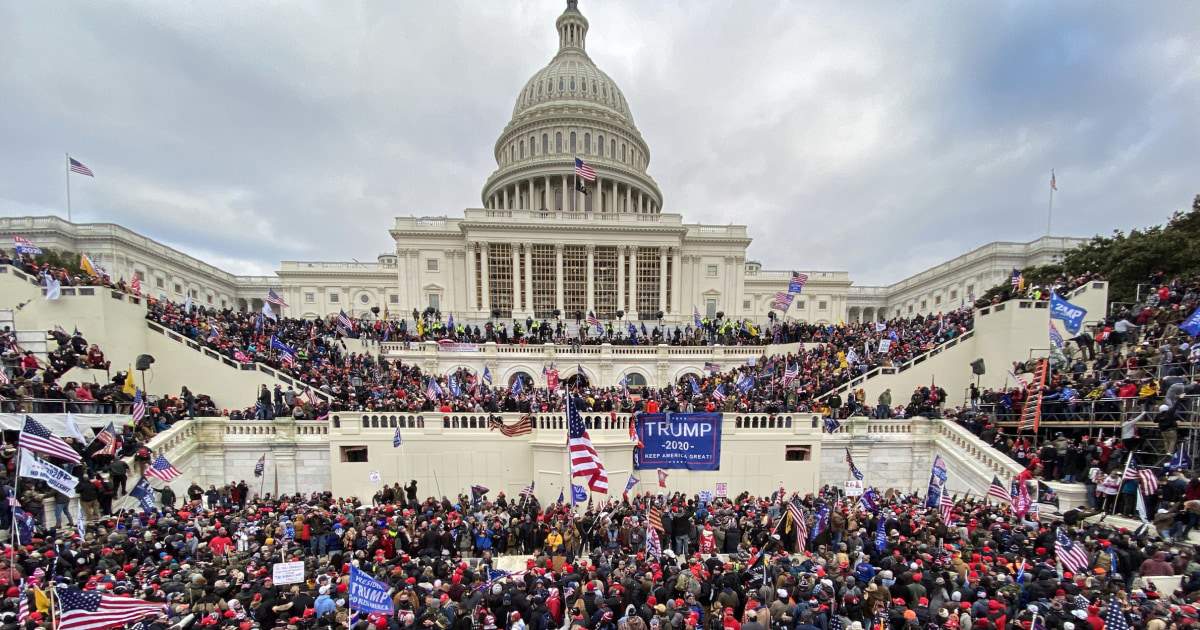
After securing vacatur of the convictions of eight Defendants in this case—all members of a group known as the Oath Keepers—the United States now moves pursuant to Federal Rule of Criminal Procedure 48(a) to dismiss the indictment. Reluctantly, the court grants the motion.
Page 4 has a lovely chart of trial outcomes for those considered.
On January 20, 2025, the first day of his second term in office, President Trump issued a proclamation titled “Granting Pardons and Commutation of Sentences for Certain Offenses Relating to the Events at or Near the United States Capitol on January 6, 2021”(the “Proclamation”). Proclamation No. 10887, 90 Fed. Reg. 8331 (Jan. 29, 2025). The Proclamation pardoned all persons convicted of January 6–related offenses except 14 named individuals. Among them were the nine defendants in this matter.
Before turning to the government’s proffered justifications for dismissal, it is important to note the reasons it has not offered. The government does not say that the charges were legallydeficient5 or that the evidence presented is insufficient to sustain Defendants’ convictions.

“I’m sort of suing myself,” Donald Trump said openly in the months before he sued the IRS for $10 billion. Now, unless his private lawyers succeed in overturning a judge’s sanctions order on appeal, the president may well have to pay the legal fees of former judges and ex-IRS officials who opposed the case in a way the DOJ never did.
Trump filed an expedited motion on Friday asking U.S. District Judge Kathleen Williams to halt her sanctions order and “related proceedings” until the president’s “Anti-Weaponization Fund”-focused appeal runs its course at the 11th Circuit.
In another blow to President Donald Trump’s executive order targeting mail-in voting ahead of the midterm elections, a federal appeals court has refused — for now — to let the U.S. Postal Service carry out “unprecedented levels of involvement by federal officials” in nearly two dozen states.
The 1st U.S. Circuit Court of Appeals, in a 2-1 decision over the weekend favoring blue states led by California, left in place a lower court order blocking the implementation of Trump’s late-March executive order 14399, “Ensuring Citizenship Verification and Integrity in Federal Elections.”


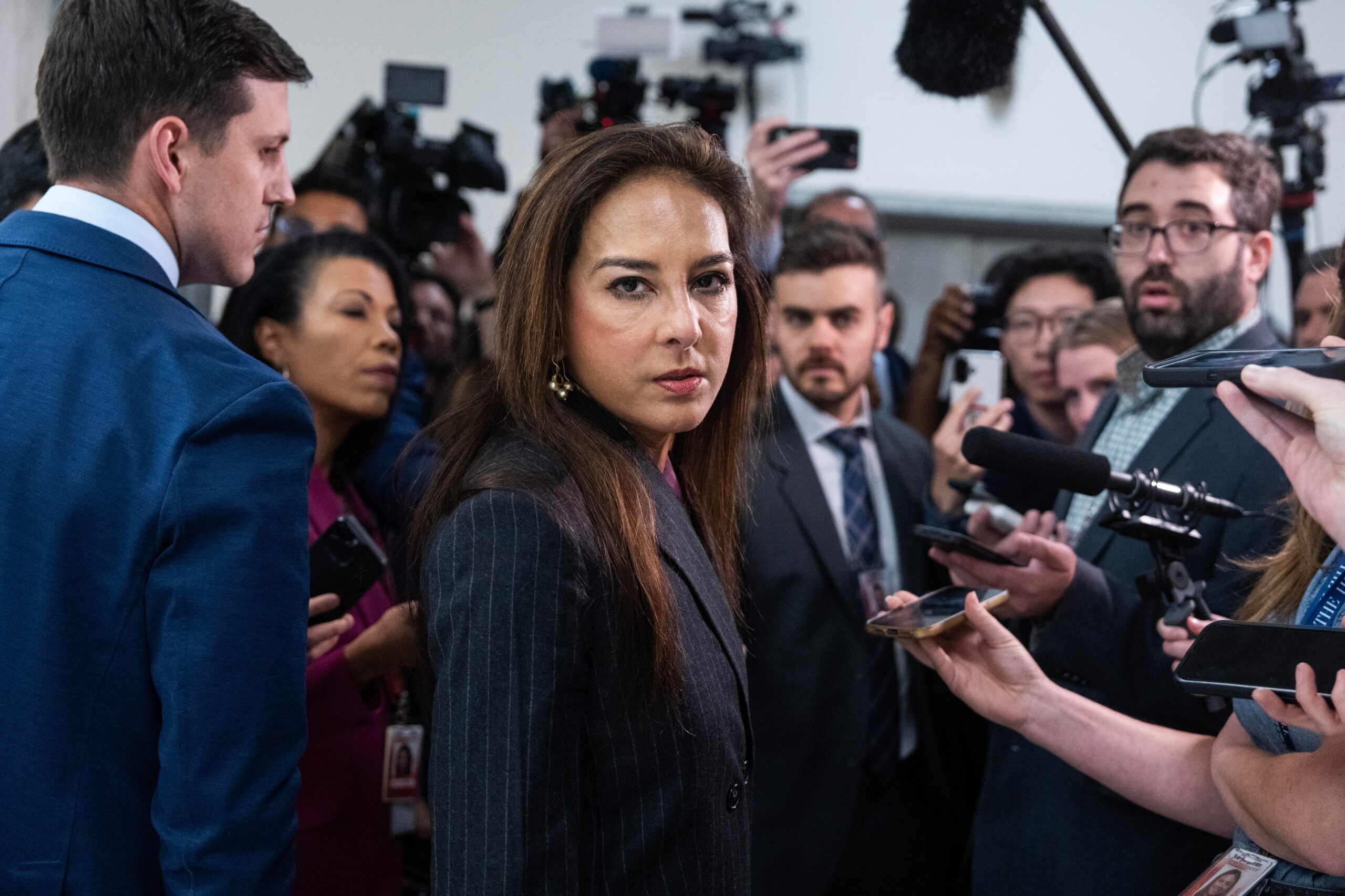
A federal judge tossed out the Department of Justice’s (DOJ) lawsuit to access West Virginia’s unredacted voter rolls, which marks 13 straight court losses for the department’s floundering effort to seize sensitive voter data from every state.
U.S. District Judge Thomas E. Johnston, who was appointed by former president George W. Bush, granted West Virginia’s motion to dismiss DOJ’s lawsuit Monday. In a scathing order, Johnston found the department failed to make a sufficient legal argument for its demand of sensitive voter data.
President Donald Trump’s DOJ is on an impressive losing streak in its voter roll lawsuits. On Friday, a federal judge tossed DOJ’s lawsuit seeking New York’s unredacted voter roll for the same reasons that Johnston dismissed the West Virginia lawsuit. Last month, DOJ scored its first appeals court loss when a three-judge panel for the Sixth Circuit Court of Appeals affirmed a lower court’s dismissal of the DOJ’s Michigan lawsuit. But Civil Rights Division chief Harmeet Dhillon, seemingly unfazed from losing, asked for a rehearing before the full Sixth Circuit.
These facts lead to the inexorable conclusion that the “settlement” terms, the individuals who signed the "settlement” as well as the putative beneficiaries of the “settlement,” demonstrate a shared, unitary interest.
This action was never about a party seeking judicial resolution of a legal issue or a factual dispute. The nature of the suit itself and the conduct of the Parties and counsel from its filing make plain that this was an attempt to use the Court to provide some legitimacy to an agreement to confer immunity to people and entities affiliated with the President and to earmark billions of dollars from American taxpayers to redress grievances not defined in the law. The President may be the functional “dominus litus” of the Executive Branch, but as a party to a civil suit, he, as well as all the parties and lawyers before a court, are bound by the rules.
In sum, the facts before this Court demonstrate there was never adverseness between the Parties; there was never a case or controversy; and there was never a question as to who would prevail.

The Justice Department can’t access New York’s unredacted voter roll, a judge said in handing the federal government yet another loss in court in its quest to obtain the lists from all 50 states.
DOJ’s demand to state elections officials didn’t state a proper “basis” and “purpose” required by federal law to obtain the voter registration records it seeks, Judge Mae A. D’Agostino of the US District Court for the Northern District of New York said July 10 as she dismissed the lawsuit.
However, the federal government’s claim under the Civil Rights Act of 1960 “fails at the outset for an even more fundamental reason” because it “is simply not entitled” to the state roll complete with sensitive voter infomration, wrote D’Agostino, an appointee of President Barack Obama.

Florida’s “anti-woke” restrictions on the way university professors teach about race and gender violate the professors’ First Amendment rights, a panel of Eleventh Circuit judges decided.
The ruling affirms a federal district court judge’s finding that the law was impermissible under the Constitution. A divided 2-1 panel for the US Court of Appeals for the Eleventh Circuit said state lawmakers can set the curriculum for state-run universities but don’t have unlimited authority to restrict viewpoints the lawmakers find offensive.

A federal judge in Ohio ruled against the Trump administration Monday, citing bigoted comments President Trump and Vice President JD Vance made about immigrants.
U.S. District Judge Algenon Marbley ordered the White House to unfreeze immigrants’ benefit applications, citing Trump and Vance’s “outright hostility towards immigrants, both before and after the 2024 presidential elections.” These applications include filings for work authorization and green cards from people in the U.S. from countries including Burma, Canada, Iran, Nigeria, Syria, Tanzania, and Venezuela.
“Their ire appears focused on immigrants from countries in the Caribbean, South America, Africa, and Asia,” Marbley, nominated to the federal bench by President Clinton in 1997, wrote.





cross-posted from: infosec.pub/post/47183504
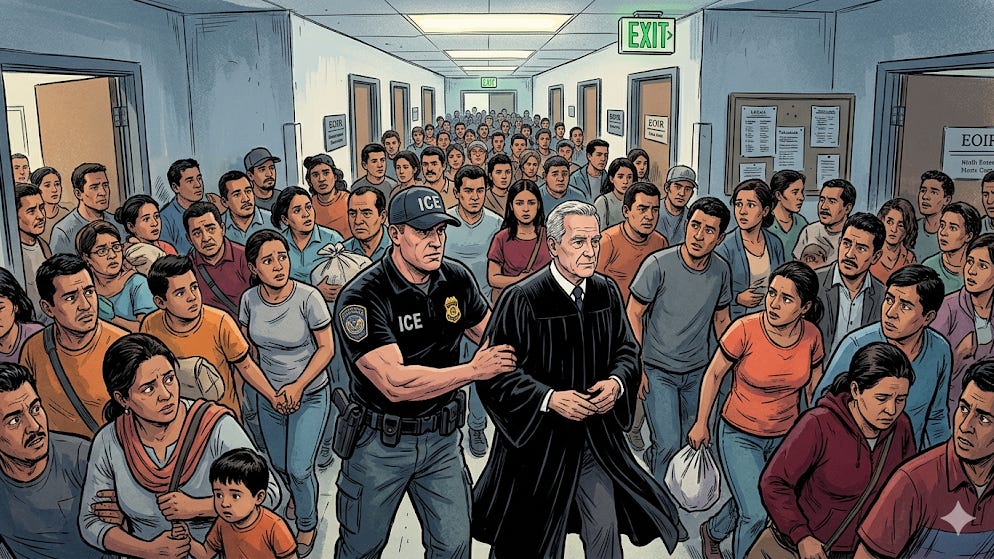
The “Mega-Master” executive shift increases the docket from the traditional of 36 people to 100 or more per judge. Reports from immigration practitioners suggest that the government is specifically targeting respondents whose hearings were originally scheduled for 2027, 2028, or 2029, moving them up to current dates. The strategic theory behind this is that many individuals may not receive notice in time or may be unable to rearrange their lives on short notice. If a respondent fails to appear among the crowd of 100 during roll call, the judge can issue an in absentia removal order, effectively closing the case with a deportation order without the person ever being heard.
…
For those who do show up, the court may attempt to “mass process” the initial hearing. Under 8 C.F.R. § 1240.6, an Immigration Judge has the authority to grant a continuance for “good cause,” which almost always includes the right to seek legal counsel. In a Mega-Master setting, a judge might address the entire room at once, granting everyone a single continuance of about three months (times vary) to find a lawyer. However, this creates a massive due process concern: the advisal of rights is often delivered only in English and Spanish. Respondents who speak Portuguese, Arabic, or other languages may not understand that they have been given a deadline to return with an attorney. Without a lawyer at the second hearing, the court may expect the respondent to plead their case immediately or face removal.
…
The following tips are designed to help you navigate the unique challenges of a crowded federal building and a packed courtroom.
Arrive Significantly Earlier Than 8:30 AM: Because of the unprecedented number of people scheduled for the same time, security lines at federal buildings will be longer than usual. Plan to arrive by at least 7:30 AM (or earlier) to clear the metal detectors and find your specific courtroom.
Solve the Parking Crisis in Advance: Do not assume you will find a spot in the courthouse lot. Research nearby public parking garages or consider using a ride-share service to avoid being late because you were circling the block. Competition for parking will be fierce with 100+ respondents and their attorneys arriving simultaneously.
Bring Every Piece of Paperwork: Carry your Notice to Appear (NTA) and any other mail you have received from the court. If you have moved, bring proof that you filed a Change of Address (Form EOIR-33) to show the judge you have been diligent.
Secure Your Right to an Interpreter: If you are not 100% comfortable proceeding in English, you have a right to an interpreter at no cost. State clearly to the judge: “I need an interpreter in [your language].”
Dress and Act Professionally: Once inside, stay quiet and attentive. In a room of 100 people, the judge needs to see that you are present and respectful when your name is finally called.
Request Your “Good Cause” Continuance: If you do not have a lawyer, this is the time to ask for one. Under 8 C.F.R. § 1003.29, you can ask for a continuance for “good cause” to find legal counsel. Be prepared to receive a pro bono legal list and a new date.
Confirm Your Next Date Before Leaving: The noise and crowd make it easy to miss instructions. Before you walk out, ensure you have a written notice for your next hearing date. Do not leave the building without a physical record of when you are expected back.


So, me and a friend were creating a company. We ended up in a disagreement and I haven’t spoken with him ever since.
Before I stopped talking with him, I was helping them, and I had the business idea(I have proof I was the one who came up with the company name and branding).
After I left the company, I wanted to create a company myself, and when I searched up the domain, the domain had been bought.
I sent and message to this “friend” saying “Hey, have you bought the domain “…”? And he replied with yes, I sent a screenshot to him showing the domain was now evaluated at a much bigger price and he just laughed at me and said in a sarcastic way “Why? Do you want to buy it? lol”
The company is not registered on sunbiz, or USPTO yet. And he already launched a website.
I wanted to register the company at USPTO and create a Llc with the company name and file it in sunbiz.
Will I have the right to take the domain away from him if I do this?
Also, I have text messages and AI chat histories prooving I was the one who came up with the name.