
preview
Award supports use of commercial space technology for government applications beyond communications
AST SpaceMobile, Inc. (“AST SpaceMobile”) (NASDAQ: ASTS), the company building the first and only space-based cellular broadband network accessible directly by everyday smartphones, designed for both commercial and government applications, today announced it will support STR, the prime contractor, under a U.S. Space Force (USSF) contract.




 Impulse Space’s Mira spacecraft. Credit: Impulse Space
HUNTSVILLE, Ala. — The U.S. Space Force has added $28 million to an existing contract with Impulse Space to provide two more maneuverable spacecraft for tactically responsive space missions, expanding the startup’s role in an effort to give military operators faster options for responding to activity in orbit.
The contract modification will fund Victus Salo 2 and Victus Salo 3, which will use Impulse’s Mira spacecraft to host government-provided payloads for missions in low Earth orbit, according to the Space Force.
The award increases the value of the contract to about $62.8 million. The original $34.8 million Small Business Innovation Research Phase 3 agreement, awarded in 2024 by Space Systems Command’s Space Safari office in partnership with the Defense Innovation Unit, covered the Victus Surgo and Victus Salo 1 missions.
Victus Salo is part of the Space Force’s broader Tactically Responsive Space, or TacRS, effort to shorten the time needed to deploy and operate spacecraft.
Under Victus Salo, the Space Force is moving beyond its earlier focus on rapid launch to also test spacecraft that can be positioned in orbit and maneuvered quickly when circumstances change. The first Victus Salo mission calls for a Mira vehicle to operate in low Earth orbit carrying a government payload supplied by Massachusetts Institute of Technology Lincoln Laboratory.
Victus Salo 1 is currently expected to launch in 2027. Victus Surgo is more ambitious: an Impulse Helios high-energy kick stage is intended to carry another Mira spacecraft from low Earth orbit toward geosynchronous transfer orbit, where Mira would maneuver independently.
Mira is a high-thrust spacecraft that can host and deploy payloads and make relatively rapid orbital maneuvers using chemical propulsion. Impulse says the vehicle can carry payloads of up to 300 kilograms and uses eight thrusters burning nitrous oxide and ethane. The company has flown Mira on three missions.
Impulse, founded in 2021 by former SpaceX propulsion executive Tom Mueller, is building spacecraft and propulsion systems intended to provide transportation after a payload has separated from its launch vehicle.
Impulse has been moving deeper into the Pentagon’s launch and space-mobility market. The Space Force last month added the company to the National Security Space Launch Phase 3 Lane 1 contract, allowing Impulse to compete as an upper-stage provider.



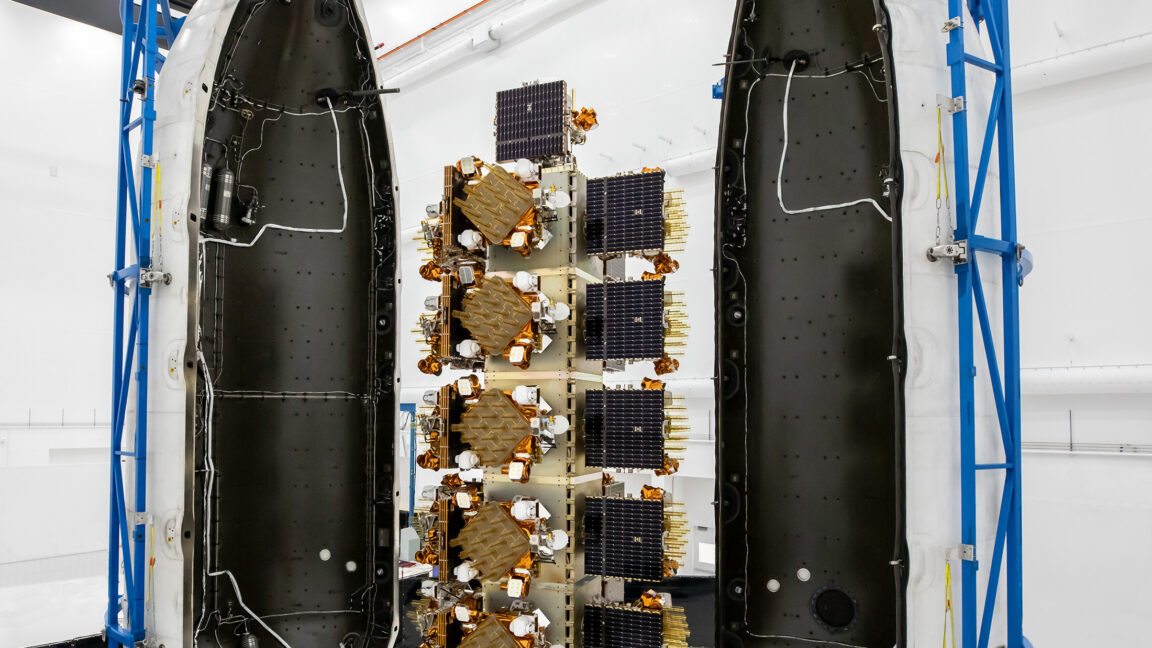
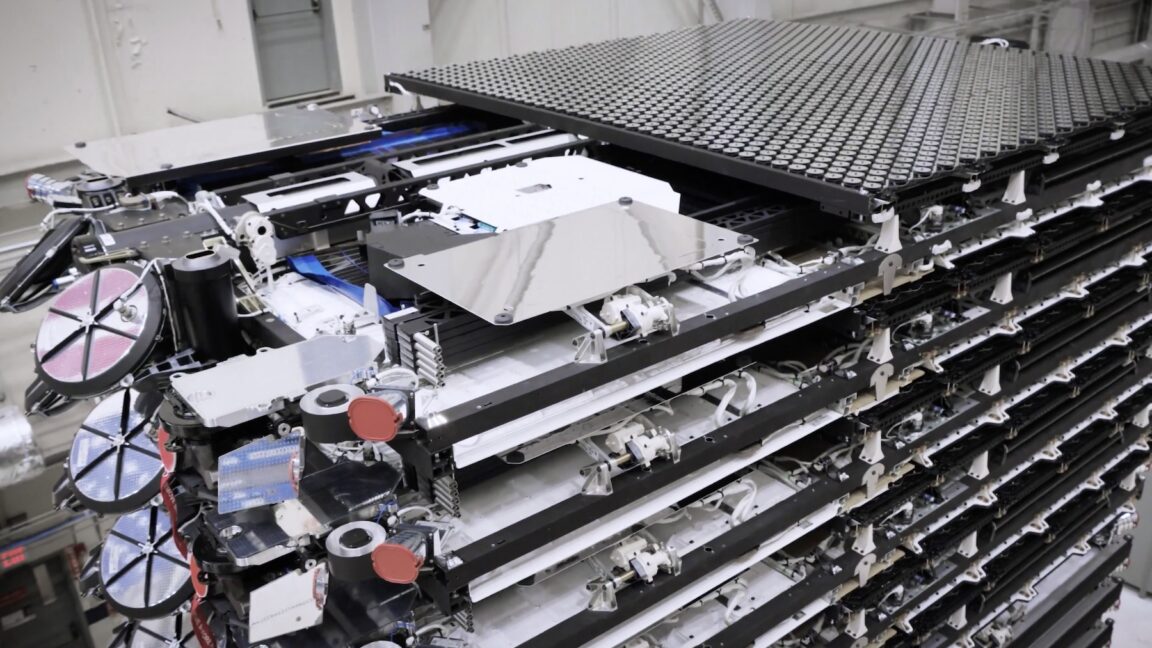


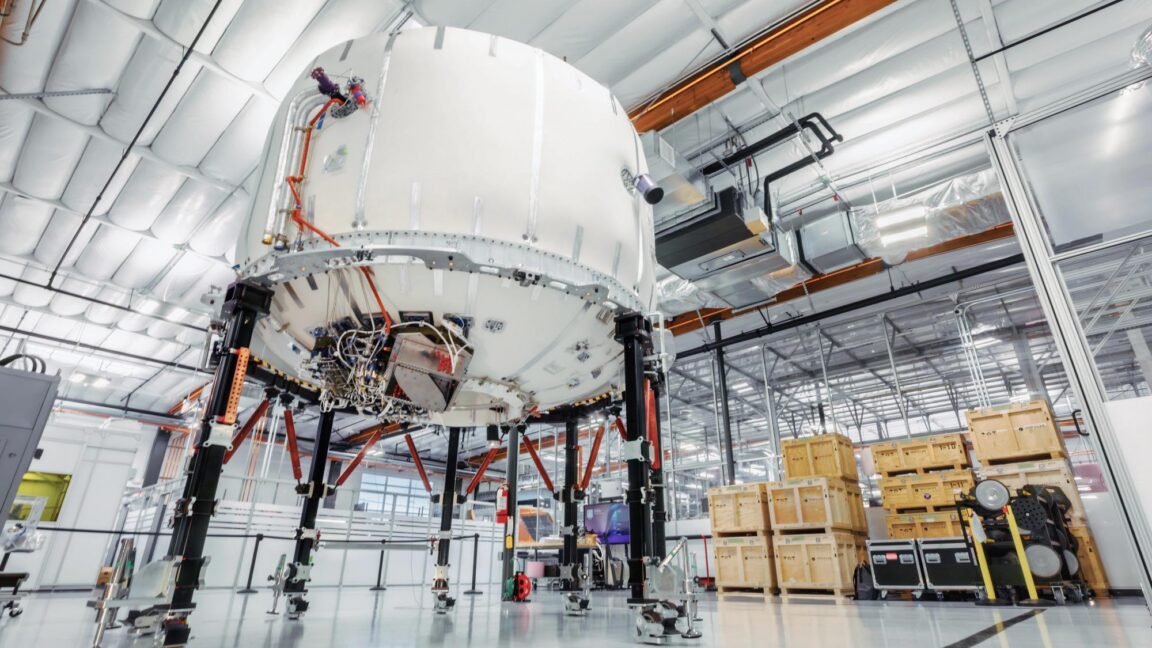







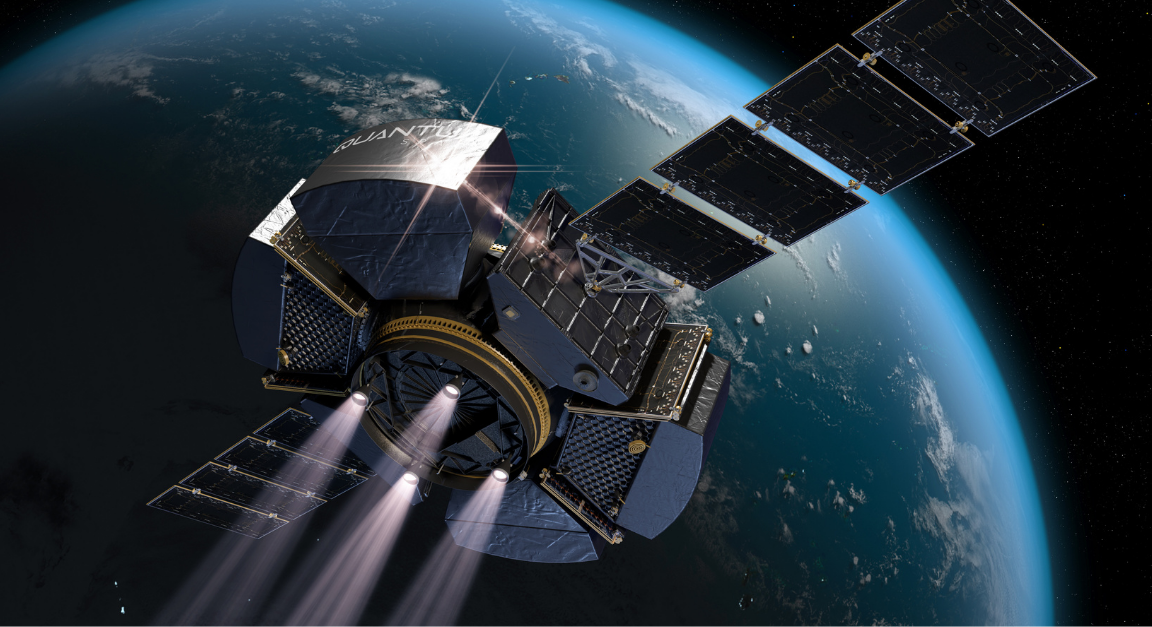





 NordSpace says its very low Earth orbit satellite platform is foundational for a future constellation combining low-latency connectivity with ultra-high-resolution Earth observation. Credit: NordSpace
TAMPA, Fla. — NordSpace has secured early defense funding to develop a very low Earth orbit (VLEO) satellite, further broadening the Canadian startup’s push to build sovereign space capabilities beyond launch.
The company announced a one-year contract April 21 worth around $183,000 from Canada’s Department of National Defence to advance conceptual technologies toward hardware tests.
A NordSpace spokesperson said the technologies are critical for a proposed VLEO constellation called Kestrel that it aims to begin deploying from 2028 to provide low-latency, 10-centimeter spatial resolution imaging.
“This is enabled by the much lower orbital altitudes and would be a game changer for defense and civilian applications,” the spokesperson said via email.
“No commercial product offers this resolution today,” the spokesperson added, as U.S.-based Albedo and Redwire pursue similar VLEO capabilities.
Key hurdles for VLEO include maintaining orbit against atmospheric drag and building an architecture that can support rapid satellite replenishment for sustainable operations.
Initial Kestrel designs have a lifespan of around three years before burning up in the atmosphere, compared with about five years typically for satellites in low Earth orbit (LEO). The NordSpace spokesperson said future versions with improved propulsion and station-keeping could remain operational for much longer.
The startup plans to lean on the launch capability it is developing to help replenish VLEO satellites, along with its dedicated spaceport in eastern Canada.
NordSpace’s Tundra orbital rocket is slated to fly for the first time in 2028, while the maiden flight of its suborbital Taiga rocket is due in the coming months.
Entering another orbital regime
Founded in 2022, NordSpace is also preparing to deploy its self-built Terra Nova LEO imaging pathfinder this fall via a SpaceX rideshare mission.
“Terra Nova is testing some of the key technologies we would deploy in our various orbital environments of interest, including VLEO,” the Nordspace spokesperson said.
“It is launching with our own proprietary NVIDIA powered imaging system called Chronos with edge-AI image processing to reduce downlinked data by 100x, and our Zephyr in-space thruster to test station keeping.”
 NordSpace’s LEO pathfinder is slated to launch this fall to test technologies for future constellations, including systems to support VLEO spacecraft. Credit: NordSpace
Plans to follow up the pathfinder with a Terra Nova constellation remain under wraps.
Bolstering Canadian sovereignty
Owning orbital launch capability would support broader efforts to strengthen Canada’s sovereign access to space, while reducing NordSpace’s reliance on third-party rideshare missions for constellation replenishment.
“Those same rideshare opportunities, however, are what allow NordSpace to fly and validate its space systems today while we develop our own orbital launch systems,” NordSpace founder and CEO Rahul Goel told SpaceNews.
“This brings our two divisions together in a way that simply wasn’t available to launch startups until very recently, and we’re taking full advantage of building a resilient space missions company today versus 10 or 20 years ago.”
The VLEO funding comes through the Department of National Defence’s Innovation for Defence Excellence and Security (IDEaS) program.
The venture has received more than 10 million Canadian dollars ($7.3 million) in grants so far, mostly from Launch the North, a Canadian defense initiative to boost sovereign launch-related capabilities.
“Larger private capital investments in the company have been contributed by the founder and CEO, as a goal of the company is to achieve orbital flight with minimal dilutive financing,” the spokesperson added.
NordSpace recently also created a venture capital arm to back domestic space companies, including Earth observation operator Wyvern.


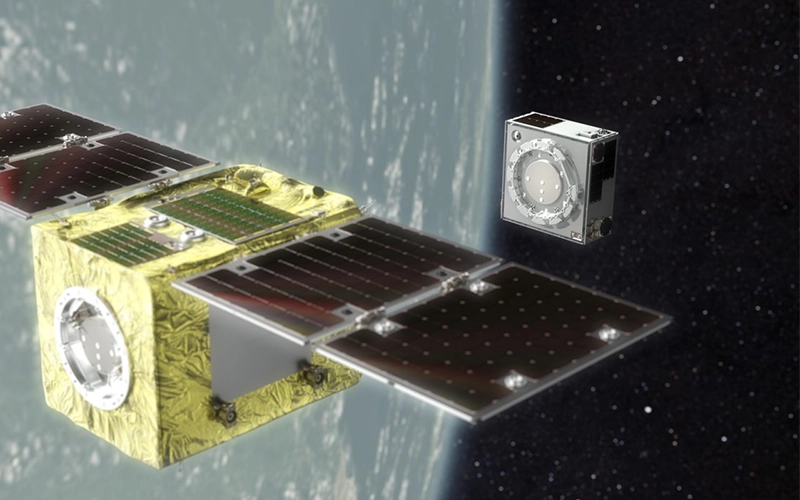
 An illustration of the two Orpheus cubesats that Astroscale plans to operate in low Earth orbit. Credit: Astroscale
TAMPA, Fla. — Astroscale has completed the critical design review for two cubesats slated to launch next year to help the British military monitor space weather and track objects in low Earth orbit (LEO).
The U.K. subsidiary of the Japanese on-orbit servicing venture announced the milestone April 8 for the Orpheus mission, which was fully funded last year under a 5.15 million British pound ($7 million) contract from the U.K.’s Defence Science and Technology Laboratory (Dstl).
The mission involves flying a pair of near-identical 12U spacecraft from British small satellite specialist Open Cosmos in close formation for a year in LEO, where onboard hyperspectral imaging sensors would detect and identify targets of interest.
International partners, including the U.S. Naval Research Laboratory and Defence Research and Development Canada, are also providing payloads enabling the satellites to study geophysical activity that can disrupt navigation systems and communications.
Astroscale would operate the spacecraft, drawing on rendezvous and proximity operations (RPO) expertise demonstrated during a 2021 satellite capture test and a more recent mission that carried out a close inspection of space debris.
Andrew Robinson, Dstl space systems program manager, said Orpheus will deliver vital research for the agency while playing a “key role in advancing the U.K.’s ability to design, build and deliver space systems for the future.”
Alex Godfrey, head of defense for Astroscale’s British subsidiary, said the U.K. and its allies will be able to draw upon data collected by the Orpheus spacecraft to improve their space domain awareness (SDA) capabilities.
“This includes accurate characterization of the dynamic ionosphere, informing ionospheric models to improve our ability to specify the impact of space weather, in addition to spectral sensing for Earth observation and SDA applications,” Godfrey said.
“To ensure that data is useful to international collaborators, a lot of effort is placed on working towards a joint space architecture, which aims to enable more collaborative mission planning, satellite tasking and data dissemination across international partners.”
Astroscale said it expects Orpheus to reach its next milestone in the third quarter of 2026, marking where the build of both satellites are complete and the mission is ready to begin the testing phase, ahead of launch in the first half of 2027.