0

Recent problems with the rover

preview

Here’s what we know for certain (very little, I’m afraid):

  • The rover was operating normally until at least 30 October (sol 2024), the last date for which we seem to have a full complement of images on the Raw Images server
  • JPL has not posted any images from any dates following sol 2024, except for a small handful from SuperCam that were taken on sol 2031 (6 November)
  • No images from sols 2025-2030 have been posted, and nothing more recent than the sol 2031 images has appeared
  • This problem is unique to Perseverance, as Curiosity is still returning images at a normal pace. The orbiter missions that normally return Percy’s data, like Mars Recon Orbiter or Mars Express, are fine

Here’s what I know to a high degree of confidence (via a trusted source):

  • There has been communication with the rover more recently than 6 November, but we’re talking small amounts of data, not images.

I have to presume that the rover is experiencing what we’d call an anomaly, i.e. a hardware or software problem that is interfering with operations - perhaps both.

This does not mean that Percy is dead or dying. Rovers have recovered from serious problems before - Spirit nearly died very early on in its mission, which lasted over six Earth years. Percy itself seems to have experienced an anomaly which limited the rover to “runout” (minimal, automated) operations for several consecutive sols, earlier in 2026.

With active communication between the rover and JPL, the engineers will definitely be working to fix this problem. If I’m having sleepness nights and withdrawal symptoms from the lack of new imagery, I can only imagine what they’re going through. That being said -

NASA/JPL should really post an update about this. With dispatch.

0

Perseverance Becomes Farthest-Traveling Vehicle on Another World

Sci.News: Breaking Science News Perseverance Becomes Farthest-Traveling Vehicle on Another World | Sci.News www.sci.news
preview

cross-posted from: …piefed.social/…/perseverance-becomes-farthest-tr…

On October 11, 2026, NASA’s Perseverance rover reached 45.22 km (28.1 miles), edging past the 45.16 km (28.06 miles) logged by NASA’s Opportunity rover, which explored Mars from 2004 to 2018. The post Perseverance Becomes Farthest-Traveling Vehicle on Another World appeared first on Sci.News: Breaking Science News.

0

Mars Guy - 2 worlds, 2 eclipses, 2 days

play · youtube.com
YouTube 2 worlds, 2 eclipses, 2 days www.youtube.com
preview

On August 12, the Moon passed in front of the Sun, producing a total eclipse along a narrow path in the northern hemisphere of Earth. On Mars, in a cosmic coincidence a day later, Perseverance watched a tiny potato-shaped moon pass in front of the same Sun.

On August 12, the Moon passed in front of the Sun, producing a total eclipse along a narrow path in the northern hemisphere of Earth. On Mars, in a cosmic coincidence a day later, Perseverance watched a tiny potato-shaped moon pass in front of the same Sun.

0

Closer look at a light toned rock in the rovers workspace

preview

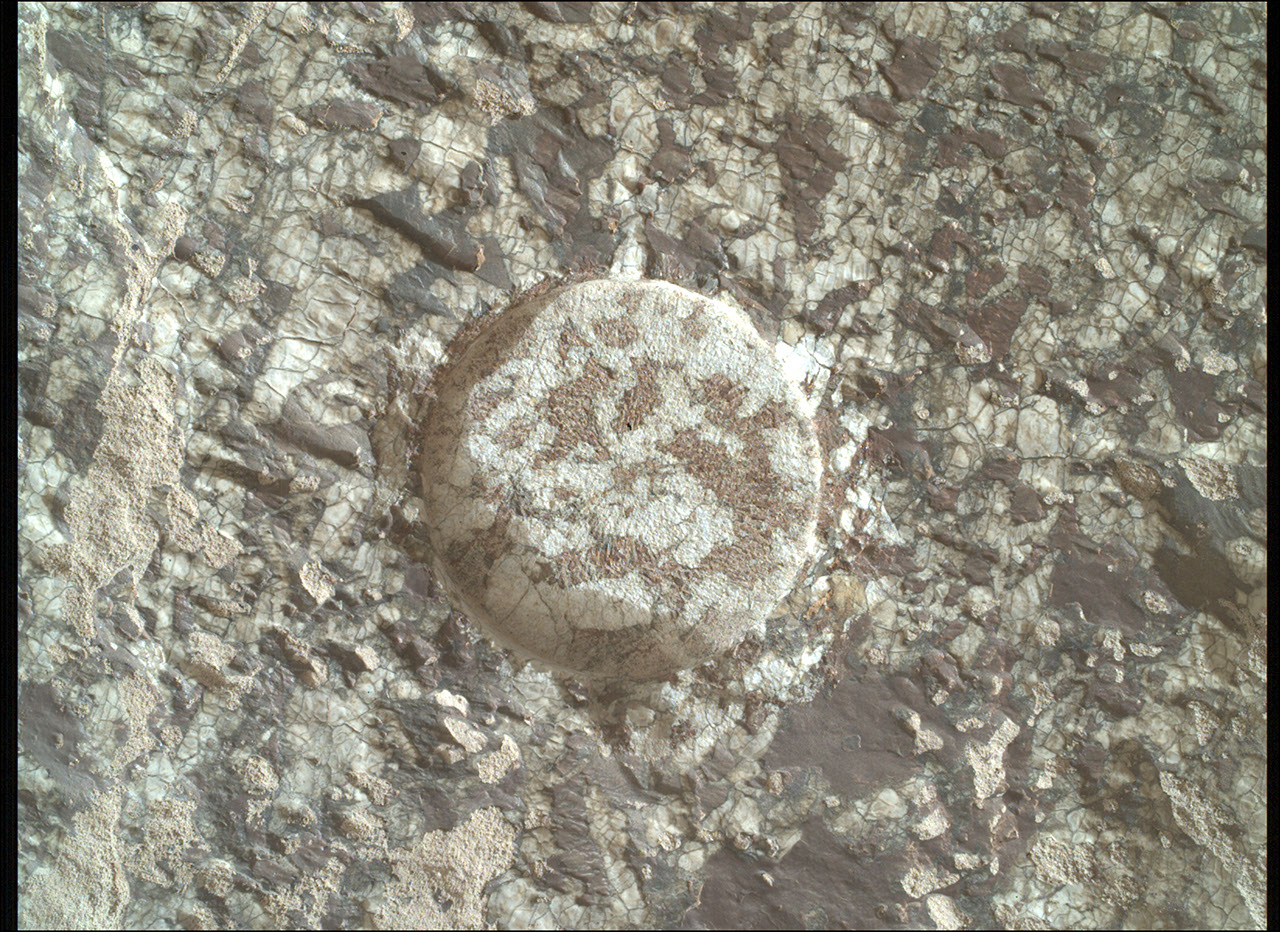
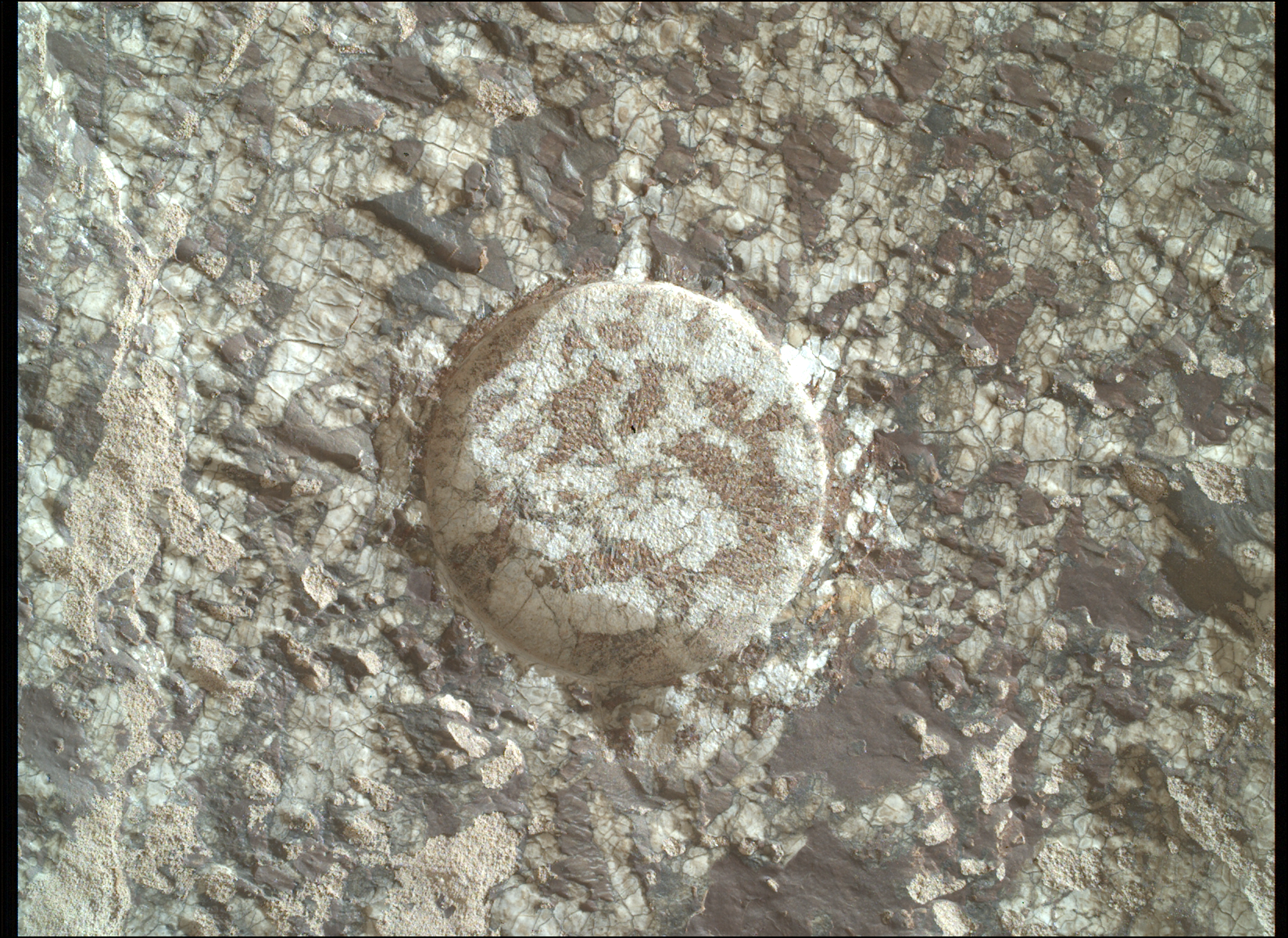
Perseverance used its SHERLOC WATSON camera on sol 1949 to take a close-up image of this light toned rock. The camera is mounted on the rover’s robotic arm. Check the comments for a much closer image at the rock from the same camera acquired on the same sol

Perseverance used its SHERLOC WATSON camera on sol 1949 to take a close-up image of this light toned rock. The camera is mounted on the rover’s robotic arm. Check the comments for a much closer image at the rock from the same camera acquired on the same sol

0

What are these?

Credit: NASA/JPL
preview

I see these images almost every day. What are they? Is that the sun and are they recording or sampling atmospheric conditions? In the past they were preceded by four images of star fields (if you download and zoom in.) What are those? (Image in comments). Are they related? Credit: NASA/JPL

I see these images almost every day. What are they? Is that the sun and are they recording or sampling atmospheric conditions? In the past they were preceded by four images of star fields (if you download and zoom in.) What are those? (Image in comments). Are they related? Credit: NASA/JPL

0

Is the "purple coating" forming on Percy today? (Update - possible explanation)

preview

Since the earliest weeks of the mission, the science team has been documenting an interesting type of feature found on many of the rocks Perseverance has encountered, dubbed the “purple coating”. This has often been found on rocks that have been abraded by the rover (e.g. abrasion patches #2, left, and #18, right)…

… as well as natural, untouched surfaces. Some of these feature truly bizzare patterns:

The terrain being explored by Perseverance in Jezero Crater and Nili Planum is unique to date in our explorations of Mars, in that these coatings seem to be very widespread here. A much smaller number of rock coatings which may or may not be similar were found by Spirit and Opportunity, but Curiosity has notably found none. A 2025 paper by Garczynski et al. offers an explanation for these coatings - “indurated dust”.

This “indurated” (solidified) coating forms may form in a series of steps:

  • Windblown dust and very fine soil particles settle onto a rock
  • Electrostatic charges may make the dust “clump” and stabilize on the rock surface
  • Sand buries the stabilized dust
  • Humidity beneath the sand increases under certain scenarios (e.g. frost formation events)
  • The water reacts with iron and sulfur-bearing minerals in the deposited dust and soil, “cementing” it into a thin coating

This recent image captured by MastCam-Z shows a material very reminiscent of the purple coating on the rover’s deck, near the base of the mast. If this material is related to the purple coating, it may have formed fairly recently. To my mind, the flat and homogeneous appearance of the material resembles the kind of thin layer you’d expect would form first.

Perseverance was parked for 46 sols (Earth dates 11 December 2025 to 28 January 2026) during solar conjunction, when the Sun prevented communication between Earth and Mars. Crucially, these dates correspond to late summer and early autumn in this region, when humidity is known to be high (as the longer, warmer days evaporate the north polar ice cap). Given the amount of fine regolith and dust that the wind has deposited onto the rover deck, and the relatively gentle slopes of the terrain we’ve been exploring in the last few months, it is conceivable that the loose material simply hasn’t moved much recently, thus “sheltering” the deck, the same way sand can shelter the rocks where the coating has formed.

If correct, this observation of a coating on the body of Perseverance has interesting implications. It would mean that the coating can form quite quickly, and that this process is occurring today, not millions of years ago. Water actively altering the surface of Mars (and our rover) today is something we must observe closely, for many exciting reasons. If this process is active on an exposed and seemingly unsuitable surface like the rover deck, one wonders how widespread it is in the soil…

0

Ventifacts anyone? Sol 1927 - MastCam-Z (full zoom)

preview

A ventifact is a wind carved rock

Mars Perseverance rover acquired this image using its Right Mastcam-Z camera set at full zoom (110mm).

Mastcam-Z is a pair of cameras located high on the rover’s mast.

This image was acquired on July 22, 2026 (Sol 1927)

A ventifact is a wind carved rock

Mars Perseverance rover acquired this image using its Right Mastcam-Z camera set at full zoom (110mm).

Mastcam-Z is a pair of cameras located high on the rover’s mast.

This image was acquired on July 22, 2026 (Sol 1927)

0

Drive on sol 1927 - This is a composite post-drive NavCam. EDIT new images etc added in the comments

preview

I’ll add the drive data when JPL release the official info, but it looks like a drive of 5-6 meters East-northeast. These post-drive images were acquired on July 22, 2026.

I’ll add the drive data when JPL release the official info, but it looks like a drive of 5-6 meters East-northeast. These post-drive images were acquired on July 22, 2026.

0

Mars Guy - Why did Perseverance do a major backtrack?

play · youtube.com
YouTube Why did Perseverance do a major backtrack? www.youtube.com
preview

So little of Mars has been explored by rovers that every new vista and every new rock they see could become a major discovery. So why has Perseverance now driven hundreds of meters back to the same spot it stopped at a month ago?

So little of Mars has been explored by rovers that every new vista and every new rock they see could become a major discovery. So why has Perseverance now driven hundreds of meters back to the same spot it stopped at a month ago?

0

Here’s Mars Guy for scale: Revealed

play · youtube.com
YouTube Here’s Mars Guy for scale: Revealed www.youtube.com
preview

Episode 275

The difficulty in recognizing the size of features in images from Mars was my inspiration for including recognizable objects in these images, including an astronaut. Here I’ll reveal my DIY techniques for how they’re fit into Martian landscapes.

Episode 275

The difficulty in recognizing the size of features in images from Mars was my inspiration for including recognizable objects in these images, including an astronaut. Here I’ll reveal my DIY techniques for how they’re fit into Martian landscapes.

0

HiRISE Captures Perseverance Marking a Milestone on Mars

NASA Science NASA’s HiRISE Captures Perseverance Marking a Milestone on Mars - NASA Science science.nasa.gov
preview

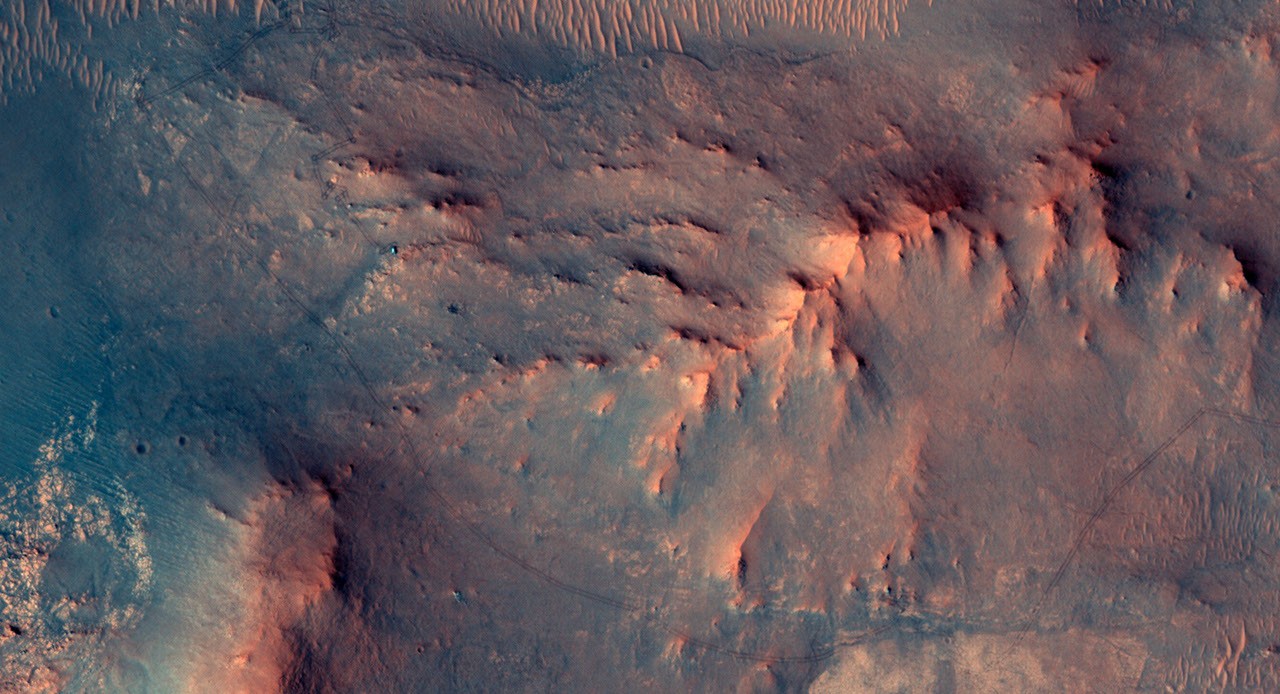
NASA’s Perseverance rover appears as a green speck on the Martian surface on June 13, 2026, a day before the robotic explorer marked a distance milestone, having traveled a full marathon (26.2 miles, or 42.195 kilometers) on the Red Planet. Perseverance reached that distance after five years and four months of driving — on the 1,890th Martian day, or sol, of its mission; the previous record holder, NASA’s Opportunity rover, took 11 years and two months to reach the same milestone.

This image was taken by NASA’s Mars Reconnaissance Orbiter (MRO) using its High-Resolution Imaging Science Experiment (HiRISE) camera. The rover’s tracks can be seen tracing the surface. The rover is in an area west of Jezero Crater that the science team is calling “Arbot.”

Figure A is the same image with a yellow circle indicating Perseverance.

Managed for NASA by Caltech, NASA’s Jet Propulsion Laboratory in Southern California manages operations of the Perseverance rover and MRO on behalf of the agency’s Science Mission Directorate as part of NASA’s Mars Exploration Program portfolio. Lockheed Martin Space in Denver built MRO and supports its operations. The University of Arizona, in Tucson, operates HiRISE, which was built by BAE Systems in Boulder, Colorado.

0

Mars Guy - Episode 271

play · youtube.com
YouTube An Escher-like scene on Mars www.youtube.com
preview

Episode 271

Decades ago, a trick of the light and a low-resolution image produced the infamous Face on Mars. Multiple books and movies followed. A new image from Perseverance doesn’t quite rival the Face, but it does offer some Escher-esque visual trickery.

Episode 271

Decades ago, a trick of the light and a low-resolution image produced the infamous Face on Mars. Multiple books and movies followed. A new image from Perseverance doesn’t quite rival the Face, but it does offer some Escher-esque visual trickery.

0

Mars Guy Video - Impact Melt? - June 7, 2026

play · youtube.com
YouTube Perseverance finds signs of impact melt youtu.be
preview

Episode 270 Hypervelocity impacts by asteroids, and more rarely comets, can excavate a huge hole in the ground and also generate instant lava by melting the target rocks. Jezero crater should have abundant impact melt and now Perseverance may have found some.

Episode 270 Hypervelocity impacts by asteroids, and more rarely comets, can excavate a huge hole in the ground and also generate instant lava by melting the target rocks. Jezero crater should have abundant impact melt and now Perseverance may have found some.

0

Episode 269 (Mars Guy - YouTube)

play · youtube.com
YouTube This only happens on Mars youtu.be
preview

Episode 269

The accumulation of dust donuts on the color calibration targets used by cameras on Perseverance means that Martian dust is behaving as expected. It also reveals a fundamental difference between dust on Mars and Earth. Our dust doesn’t behave this way.

Episode 269

The accumulation of dust donuts on the color calibration targets used by cameras on Perseverance means that Martian dust is behaving as expected. It also reveals a fundamental difference between dust on Mars and Earth. Our dust doesn’t behave this way.

0

R-MastCam-Z Sol 1875 🙂

preview

Mars Perseverance Sol 1875: Right Mastcam-Z Camera (processed)

NASA’s Mars Perseverance rover acquired this image using its Right Mastcam-Z camera. Mastcam-Z is a pair of cameras located high on the rover’s mast.

This image was acquired on May 30, 2026 (Sol 1875) at the local mean solar time of 13:08:39.

Image Credit: NASA/JPL-Caltech/ASU

Camera at full zoom (110mm)

mastAz: “-26.7665”

mastEl: “-10.1556”

sclk: “833395048.333”

xyz: “(-82.9081,9.23729,-9.94973)”

dimension: “(1648,1200)”

filter_name: “ZCAM_R0_RGB”