
0

Mission update (17 November) - The Return of the Polygons

NASA Science Curiosity Blog, Sols 5072-5076: The Return of the Polygons - NASA Science science.nasa.gov
preview

Excerpt:

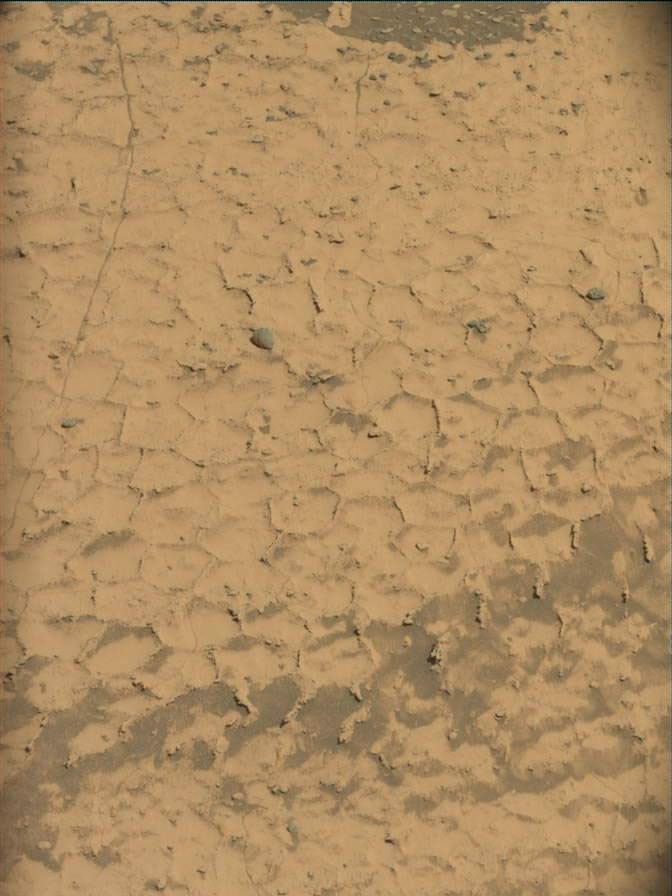
The two areas we explored this week had rocks that were crisscrossed by lots of small, regular sized polygons surrounded by raised ridges. This texture was very similar to the rocks we encountered a few months ago slightly lower on the mountain. Those unique textures really surprised us when we first saw them, and we’ve been spending time as a science team discussing how they may have formed.

0

Recent problems with the rover

preview

Here’s what we know for certain (very little, I’m afraid):

  • The rover was operating normally until at least 30 October (sol 2024), the last date for which we seem to have a full complement of images on the Raw Images server
  • JPL has not posted any images from any dates following sol 2024, except for a small handful from SuperCam that were taken on sol 2031 (6 November)
  • No images from sols 2025-2030 have been posted, and nothing more recent than the sol 2031 images has appeared
  • This problem is unique to Perseverance, as Curiosity is still returning images at a normal pace. The orbiter missions that normally return Percy’s data, like Mars Recon Orbiter or Mars Express, are fine

Here’s what I know to a high degree of confidence (via a trusted source):

  • There has been communication with the rover more recently than 6 November, but we’re talking small amounts of data, not images.

I have to presume that the rover is experiencing what we’d call an anomaly, i.e. a hardware or software problem that is interfering with operations - perhaps both.

This does not mean that Percy is dead or dying. Rovers have recovered from serious problems before - Spirit nearly died very early on in its mission, which lasted over six Earth years. Percy itself seems to have experienced an anomaly which limited the rover to “runout” (minimal, automated) operations for several consecutive sols, earlier in 2026.

With active communication between the rover and JPL, the engineers will definitely be working to fix this problem. If I’m having sleepness nights and withdrawal symptoms from the lack of new imagery, I can only imagine what they’re going through. That being said -

NASA/JPL should really post an update about this. With dispatch.
Here’s what we know for certain (very little, I’m afraid):

  • The rover was operating normally until at least 30 October (sol 2024), the last date for which we seem to have a full complement of images on the Raw Images server
  • JPL has not posted any images from any dates following sol 2024, except for a small handful from SuperCam that were taken on sol 2031 (6 November)
  • No images from sols 2025-2030 have been posted, and nothing more recent than the sol 2031 images has appeared
  • This problem is unique to Perseverance, as Curiosity is still returning images at a normal pace. The orbiter missions that normally return Percy’s data, like Mars Recon Orbiter or Mars Express, are fine

Here’s what I know to a high degree of confidence (via a trusted source):

  • There has been communication with the rover more recently than 6 November, but we’re talking small amounts of data, not images.

I have to presume that the rover is experiencing what we’d call an anomaly, i.e. a hardware or software problem that is interfering with operations - perhaps both.

This does not mean that Percy is dead or dying. Rovers have recovered from serious problems before - Spirit nearly died very early on in its mission, which lasted over six Earth years. Percy itself seems to have experienced an anomaly which limited the rover to “runout” (minimal, automated) operations for several consecutive sols, earlier in 2026.

With active communication between the rover and JPL, the engineers will definitely be working to fix this problem. If I’m having sleepness nights and withdrawal symptoms from the lack of new imagery, I can only imagine what they’re going through. That being said -

NASA/JPL should really post an update about this. With dispatch.

0

Biology? We don't need no stinking biology.

preview

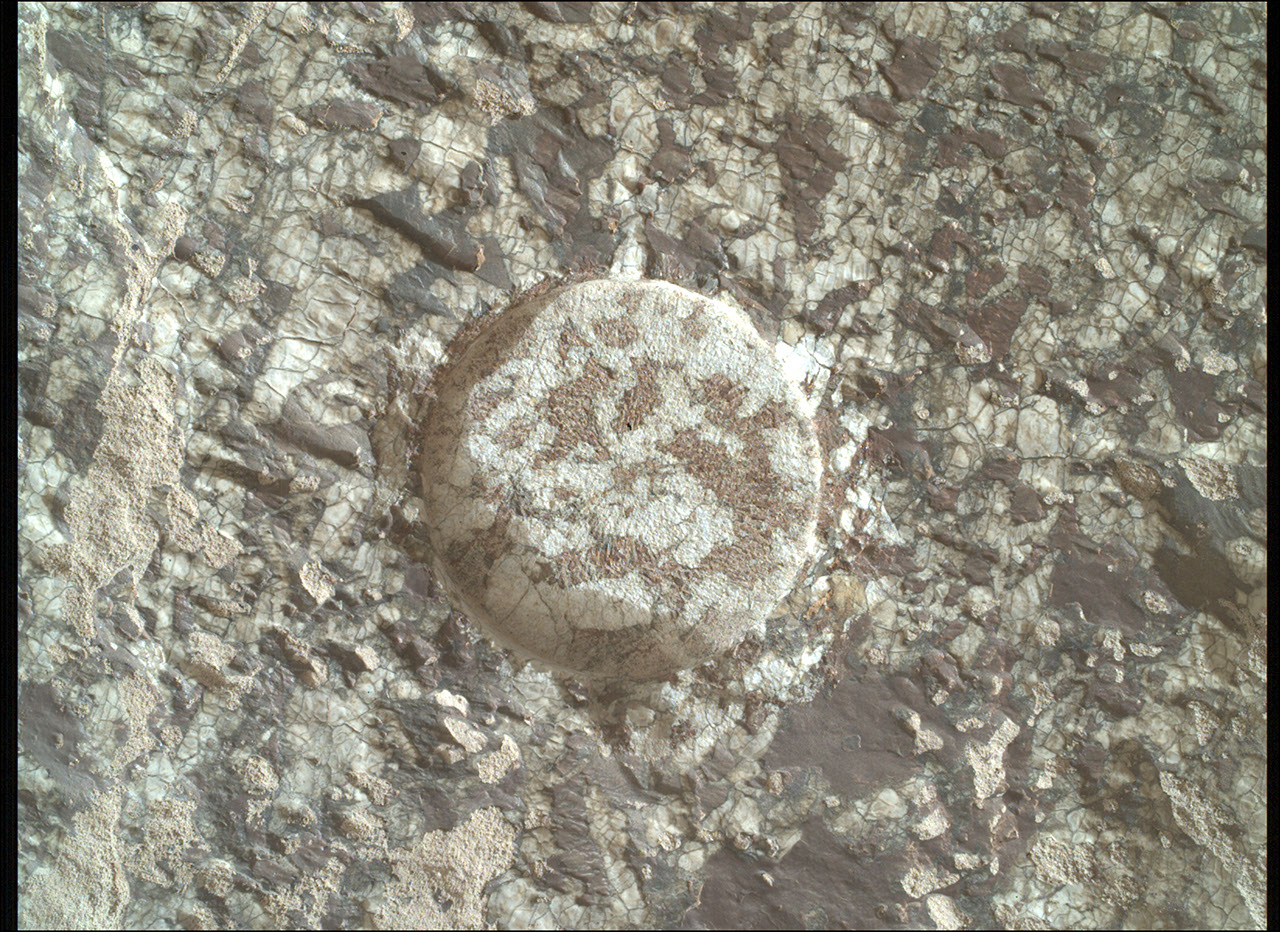
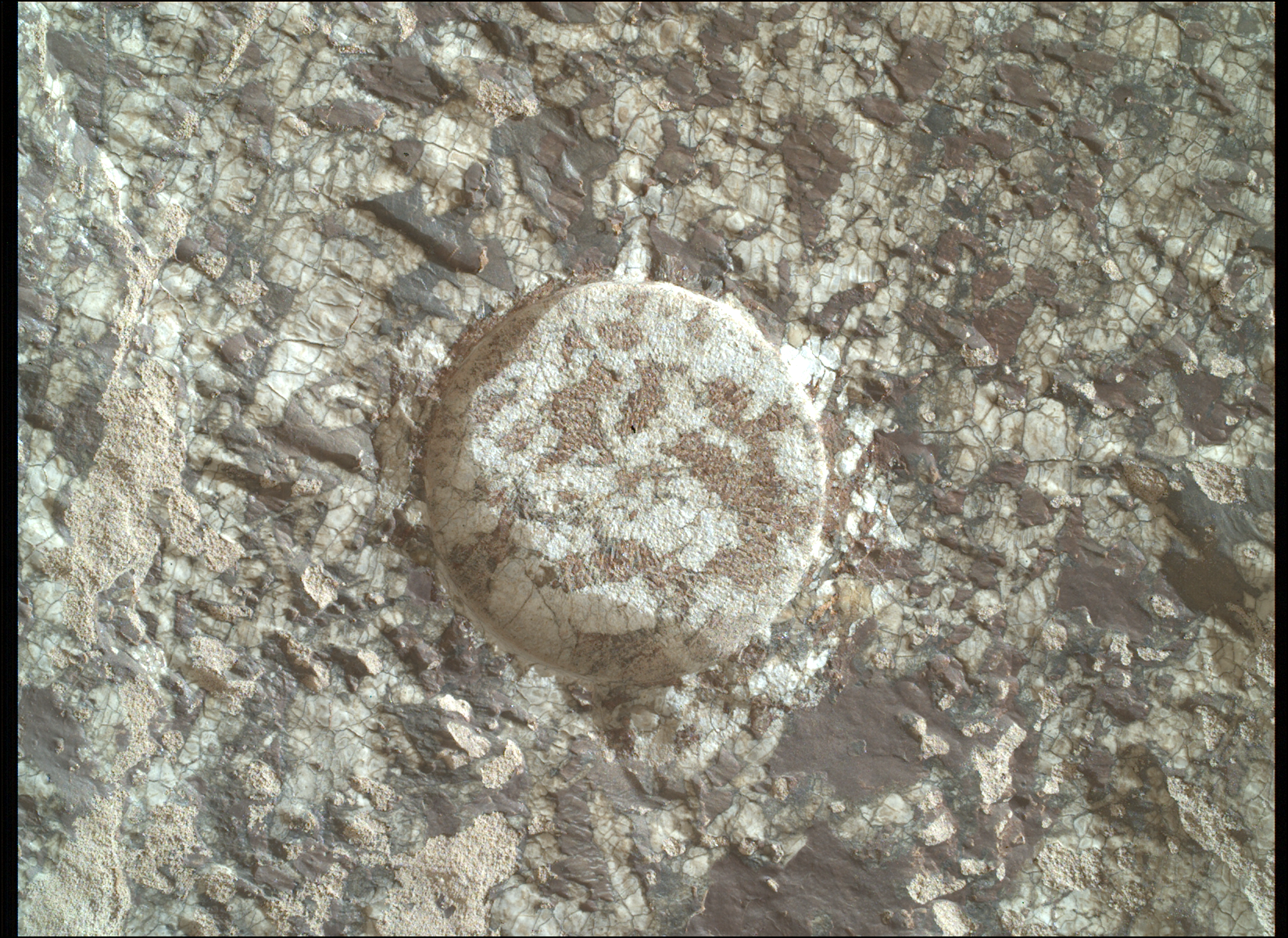
Sol 5013 MAHLI image (using the microscopic imager at the end of Curiosity’s arm, FOV ~20 cm across).

For wider context:

Fortunately, those small linear flakes in the colour MAHLI image are not sandworm larvae or anything so disgusting. I haven’t the faintest idea about the detailed geologic process represented here, alas. All I know is that this portion of the mountain features a lot of beauty granted us by erosion:

0

Is the "purple coating" forming on Percy today? (Update - possible explanation)

preview

Since the earliest weeks of the mission, the science team has been documenting an interesting type of feature found on many of the rocks Perseverance has encountered, dubbed the “purple coating”. This has often been found on rocks that have been abraded by the rover (e.g. abrasion patches #2, left, and #18, right)…

… as well as natural, untouched surfaces. Some of these feature truly bizzare patterns:

The terrain being explored by Perseverance in Jezero Crater and Nili Planum is unique to date in our explorations of Mars, in that these coatings seem to be very widespread here. A much smaller number of rock coatings which may or may not be similar were found by Spirit and Opportunity, but Curiosity has notably found none. A 2025 paper by Garczynski et al. offers an explanation for these coatings - “indurated dust”.

This “indurated” (solidified) coating forms may form in a series of steps:

  • Windblown dust and very fine soil particles settle onto a rock
  • Electrostatic charges may make the dust “clump” and stabilize on the rock surface
  • Sand buries the stabilized dust
  • Humidity beneath the sand increases under certain scenarios (e.g. frost formation events)
  • The water reacts with iron and sulfur-bearing minerals in the deposited dust and soil, “cementing” it into a thin coating

This recent image captured by MastCam-Z shows a material very reminiscent of the purple coating on the rover’s deck, near the base of the mast. If this material is related to the purple coating, it may have formed fairly recently. To my mind, the flat and homogeneous appearance of the material resembles the kind of thin layer you’d expect would form first.

Perseverance was parked for 46 sols (Earth dates 11 December 2025 to 28 January 2026) during solar conjunction, when the Sun prevented communication between Earth and Mars. Crucially, these dates correspond to late summer and early autumn in this region, when humidity is known to be high (as the longer, warmer days evaporate the north polar ice cap). Given the amount of fine regolith and dust that the wind has deposited onto the rover deck, and the relatively gentle slopes of the terrain we’ve been exploring in the last few months, it is conceivable that the loose material simply hasn’t moved much recently, thus “sheltering” the deck, the same way sand can shelter the rocks where the coating has formed.

If correct, this observation of a coating on the body of Perseverance has interesting implications. It would mean that the coating can form quite quickly, and that this process is occurring today, not millions of years ago. Water actively altering the surface of Mars (and our rover) today is something we must observe closely, for many exciting reasons. If this process is active on an exposed and seemingly unsuitable surface like the rover deck, one wonders how widespread it is in the soil…