0

Rocket Lab Electron "The Mountain God Rises" Launch Thread (100th Electron launch!)

preview

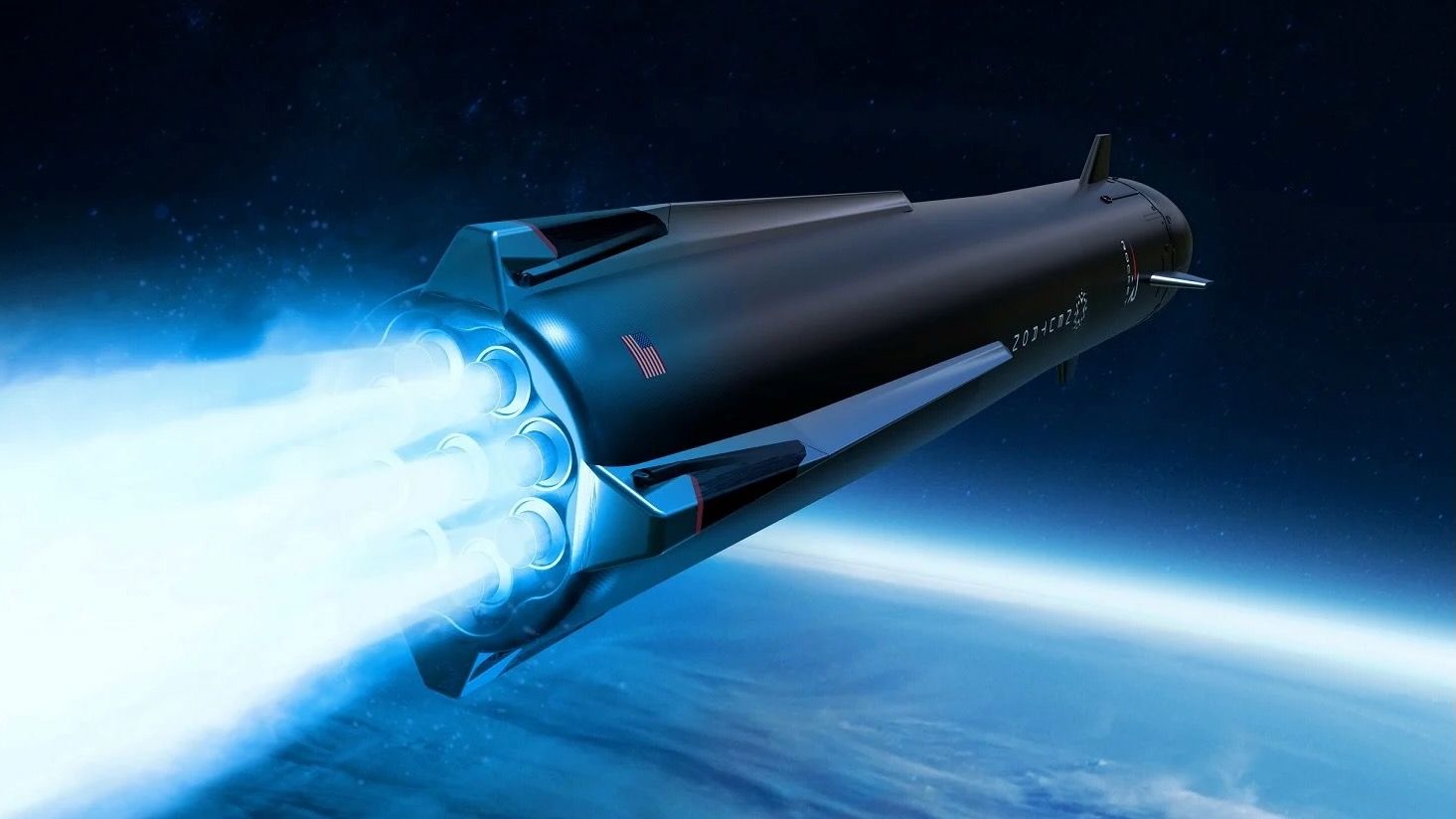
The Mountain God Rises

Scheduled for (UTC) 2026-11-14 05:30:00
Scheduled for (NZDT) 2026-11-14 18:30:00
Launch site Rocket Lab LC-1A, Māhia Peninsula, New Zealand
Booster recovery No
Launch vehicle Electron + Curie
Customer iQPS
Payload QPS-SAR-19 (YAMATSUMI-II)
Mass 100 kg
Target orbit LEO
Stream Link
Rocket Lab (official) www.youtube.com/watch?v=kyR8kZ2XlhQ
International Rocket Launches www.youtube.com/watch?v=cN8eYOZC3Wg
Space Affairs www.youtube.com/watch?v=ckt4YteEe34
NASASpaceflight www.youtube.com/watch?v=uyFdbzAcOZw
The Launch Pad www.youtube.com/@TheLaunchPad/streams

Stats

  • 21st launch for Rocket Lab in 2026
  • 100th overall launch for Rocket Lab!

Payload info:

Rocket Lab mission page

NextSpaceflight:

QPS-SAR-19 (YAMATSUMI-II)

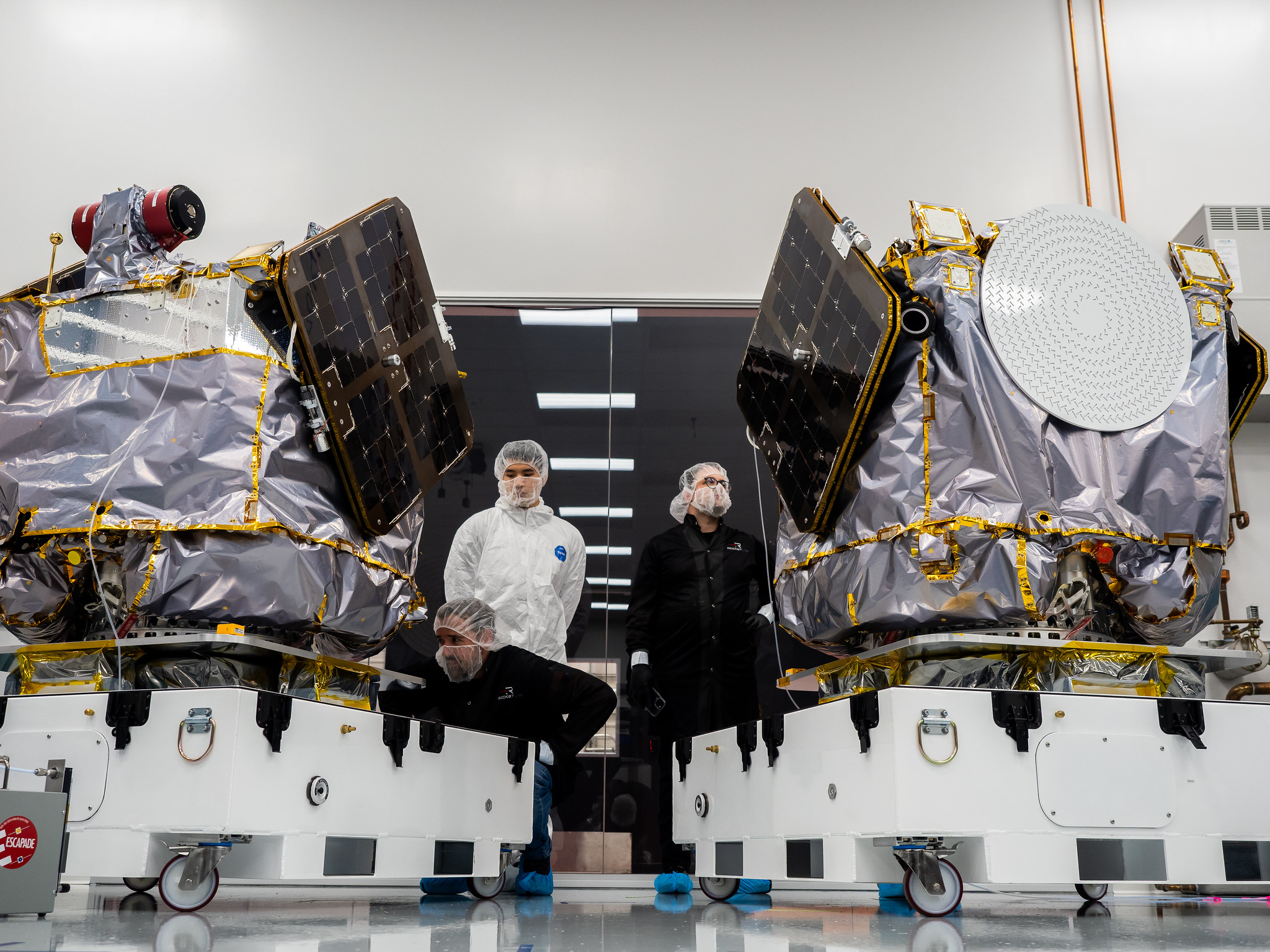
iQPS’s satellites are small, high-performance SAR satellites that use a lightweight, large, stowable antenna to collect high resolution images of Earth, even through clouds and adverse weather conditions. Ultimately, the iQPS constellation is planned to have 36 satellites capable of monitoring specific fixed points on Earth every 10 minutes. In addition to launching on Electron, the QPS-SAR satellite will use a Rocket Lab Motorized Lightband as its separation system for deployment to space.


Previous mission: The Sea God Surveys

Next mission:
The Mountain God Rises

Scheduled for (UTC) 2026-11-14 05:30:00
Scheduled for (NZDT) 2026-11-14 18:30:00
Launch site Rocket Lab LC-1A, Māhia Peninsula, New Zealand
Booster recovery No
Launch vehicle Electron + Curie
Customer iQPS
Payload QPS-SAR-19 (YAMATSUMI-II)
Mass 100 kg
Target orbit LEO
Stream Link
Rocket Lab (official) www.youtube.com/watch?v=kyR8kZ2XlhQ
International Rocket Launches www.youtube.com/watch?v=cN8eYOZC3Wg
Space Affairs www.youtube.com/watch?v=ckt4YteEe34
NASASpaceflight www.youtube.com/watch?v=uyFdbzAcOZw
The Launch Pad www.youtube.com/@TheLaunchPad/streams

Stats

  • 21st launch for Rocket Lab in 2026
  • 100th overall launch for Rocket Lab!

Payload info:

Rocket Lab mission page

NextSpaceflight:

QPS-SAR-19 (YAMATSUMI-II)

iQPS’s satellites are small, high-performance SAR satellites that use a lightweight, large, stowable antenna to collect high resolution images of Earth, even through clouds and adverse weather conditions. Ultimately, the iQPS constellation is planned to have 36 satellites capable of monitoring specific fixed points on Earth every 10 minutes. In addition to launching on Electron, the QPS-SAR satellite will use a Rocket Lab Motorized Lightband as its separation system for deployment to space.


Previous mission: The Sea God Surveys

Next mission:

0

Rocket Lab Electron "The Sea God Surveys" Launch Thread

preview

The Sea God Surveys

Scheduled for (UTC) 2026-11-02 16:41:00
Scheduled for (NZDT) 2026-11-03 05:41:00
Launch site Rocket Lab LC-1A or -1B, Māhia Peninsula, New Zealand
Booster recovery No
Launch vehicle Electron + Curie
Customer iQPS
Payload QPS-SAR-20 (WADATSUMI-II)
Mass 100 kg
Target orbit LEO
Stream Link
Rocket Lab (official) www.youtube.com/@RocketLabCorp/streams
International Rocket Launches www.youtube.com/watch?v=JXW9BpHXVmQ
Space Affairs www.youtube.com/watch?v=wWWK5dtLxUI
The Launch Pad www.youtube.com/watch?v=RA0CfrbwCow

Stats

  • 20th launch for Rocket Lab in 2026
  • 99th overall launch for Rocket Lab

Payload info:

Rocket Lab mission page

NextSpaceflight:

QPS-SAR-20 (WADATSUMI-II)

iQPS’s satellites are small, high-performance SAR satellites that use a lightweight, large, stowable antenna to collect high resolution images of Earth, even through clouds and adverse weather conditions. Ultimately, the iQPS constellation is planned to have 36 satellites capable of monitoring specific fixed points on Earth every 10 minutes. In addition to launching on Electron, the QPS-SAR satellite will use a Rocket Lab Motorized Lightband as its separation system for deployment to space.


Previous mission: We’re Not Hawking Around

Next mission: The Mountain God Rises

0

Rocket Lab Electron "We're Not Hawking Around" Launch Thread

preview

We’re Not Hawking Around

Scheduled for (UTC) 2026-10-23 07:11:00
Scheduled for (NZDT) 2026-10-23 20:11:00
Launch site Rocket Lab LC-1A, Māhia Peninsula, New Zealand
Booster recovery No
Launch vehicle Electron + Curie
Customer HawkEye 360
Payload HawkEye 360 Cluster 16
Mass 90 kg
Target orbit Sun-Synchronous
Stream Link
Rocket Lab (official) www.youtube.com/watch?v=LddRNoiKJ7U
Space Affairs www.youtube.com/watch?v=sJrSRKgCGFw
International Rocket Launches www.youtube.com/watch?v=UyT0Lp2ZPls
The Launch Pad www.youtube.com/@TheLaunchPad/streams

Stats

  • 19th launch for Rocket Lab in 2026
  • 98th overall launch for Rocket Lab

Payload info:

Rocket Lab mission page

NextSpaceflight:

HawkEye 360 Cluster 16

HawkEye 360 is a radio frequency geospatial analytics provider.

Their constellation, comprised of 15 satellites in 5 shells, aims to deliver precise mapping of radio frequency emissions anywhere in the world.


Previous mission: Owlright, Owlright, Owlright

Next mission: The Sea God Surveys

0

Rocket Lab Electron "Owlright, Owlright, Owlright" Launch Thread

preview

Owlright, Owlright, Owlright

Scheduled for (UTC) 2026-09-26 00:39:00
Scheduled for (NZST) 2026-09-26 12:39:00
Launch site Rocket Lab LC-1B, Māhia Peninsula, New Zealand
Booster recovery No
Launch vehicle Electron + Curie
Customer Synspective
Payload StriX-13
Mass 100 kg
Target orbit LEO
Stream Link
Rocket Lab (official) www.youtube.com/watch?v=hkLw0Kf_iSA
Space Affairs www.youtube.com/watch?v=3K0I4FaQF6U
The Launch Pad www.youtube.com/watch?v=PuCoeu1b8r0

Stats

  • 18th launch for Rocket Lab in 2026
  • 97th overall launch for Rocket Lab

Payload info:

Rocket Lab mission page

NextSpaceflight:

StriX-13

This is the seventh of a bulk buy of 10 Electron launches by Synspective to deliver their StriX satellites to low Earth orbit. StriX satellites can collect data with a ground resolution of 1-3m and a swath width of more than 10-30km. Each Electron launch will deliver 1 StriX satellite into orbit. This will be the overall 13th StriX satellite launched by Rocket Lab for Synspective.


Previous mission: Owl By The Dozen

Next mission: We’re Not Hawking Around

0

Rocket Lab Electron "Owl By The Dozen" Launch Thread

preview

Owl By The Dozen

Scheduled for (UTC) 2026-09-19 03:22:00
Scheduled for (NZST) 2026-09-19 15:22:00
Launch site Rocket Lab LC-1B, Māhia Peninsula, New Zealand
Booster recovery No
Launch vehicle Electron + Curie
Customer Synspective
Payload StriX-12
Mass 100 kg
Target orbit LEO
Stream Link
Rocket Lab (official) www.youtube.com/watch?v=AnN8Pj8WvSo
Space Affairs www.youtube.com/watch?v=K3B0jMxH-Ug
The Launch Pad www.youtube.com/@TheLaunchPad/streams

Stats

  • 17th launch for Rocket Lab in 2026
  • 96th overall launch for Rocket Lab

Payload info:

Rocket Lab mission page

NextSpaceflight:

StriX-9

This is the sixth of a bulk buy of 10 Electron launches by Synspective to deliver their StriX satellites to low Earth orbit. StriX satellites can collect data with a ground resolution of 1-3m and a swath width of more than 10-30km. Each Electron launch will deliver 1 StriX satellite into orbit. This will be the overall 12th StriX satellite launched by Rocket Lab for Synspective.


Previous mission: Happily Ever Faster

Next mission: Owlright, Owlright, Owlright

0

Rocket Lab "Happily Ever Faster" launch bulletin (unannounced surprise launch)

preview

bsky.app/profile/…/3mva25dv7wc2i

LAUNCH at 0328 UTC Sep 11 of a Rocket Lab Electron from Mahia; payload believed to be BlackSky’s Global-35 imaging satellite.


NextSpaceflight page: nextspaceflight.com/launches/details/7268/

BlackSky Global-36 (BlackSky Gen 3 FM-6)

BlackSky Technology’s final of an initial five missions to deploy its new next-generation BlackSky Gen-3 satellites. The commercial constellation of Gen-3 satellites has the capability to produce images with a resolution of 50 centimeters and to host multiple sensors, including shortwave infrared (SWIR). The improved resolution and enhanced spectral diversity of the Gen-3 satellites will expand BlackSky’s ability to provide real-time information to its customers.


Rocket lab page: rocketlabcorp.com/…/happily-ever-faster/

“Happily Ever Faster” was a dedicated Electron mission to deploy a single commercial satellite to a 500 km low Earth orbit. The satellite launched on Electron from Launch Complex 1 and was deployed from a Rocket Lab Motorized Lightband, a separation system for satellites with 100% mission success that showcases the streamlined service Rocket Lab delivers customers from across its vertically-integrated launch and space systems products.

There was no webcast for this mission. No advanced notice on RocketLab’s social media. Just a “Oh, by the way, we launched an Electron for BlackSky a confidential customer bit over an hour ago.”


Previous mission: Owl Around The World

Next mission: Owl By The Dozen

0

Rocket Lab Electron "Owl Around The World" Launch Thread

preview

Owl Around The World

Scheduled for (UTC) 2026-09-02 11:11:00
Scheduled for (NZST) 2026-09-02 23:11:00
Launch site Rocket Lab LC-1A or -1B, Māhia Peninsula, New Zealand
Booster recovery No
Launch vehicle Electron + Curie
Customer Synspective
Payload StriX-9
Mass 100 kg
Target orbit LEO
Stream Link
Rocket Lab (official) www.youtube.com/watch?v=oLovbBQFxI8
Space Affairs www.youtube.com/watch?v=agoLNgN7wiU
The Launch Pad www.youtube.com/watch?v=DRT0PgRRCa4

Stats

  • 15th launch for Rocket Lab in 2026
  • 94th overall launch for Rocket Lab

Payload info:

Rocket Lab mission page

NextSpaceflight:

StriX-9

This is the fifth of a bulk buy of 10 Electron launches by Synspective to deliver their StriX satellites to low Earth orbit. StriX satellites can collect data with a ground resolution of 1-3m and a swath width of more than 10-30km. Each Electron launch will deliver 1 StriX satellite into orbit. This will be the overall 11th StriX satellite launched by Rocket Lab for Synspective.


Previous mission: The Lightning God Defends

Next mission: Happily Ever Faster

0

[Jeff Foust] Rocket Lab launches 9th satellite for iQPS

SpaceNews Rocket Lab launches 9th satellite for iQPS spacenews.com
preview
Article text

Jeff Foust 3–4 minutes Electron launch Aug 20 2026 An Electron lifts off Aug. 20 carrying an iQPS satellite. Credit: Rocket Lab WASHINGTON — Rocket Lab launched another satellite for Japanese radar-imaging company iQPS on Aug. 20. An Electron rocket lifted off from Rocket Lab’s Launch Complex 1 in New Zealand at 9:04 a.m. Eastern on a mission called “The Lightning God Defends” by Rocket Lab. The launch targeted an orbit at an altitude of 575 kilometers and an inclination of 42 degrees. The vehicle’s payload, the QPS-SAR-18 satellite built by the Institute for Q-shu Pioneers of Space, or iQPS, separated from the rocket’s kick stage about 50 minutes later. iQPS said it established contact with the satellite 40 minutes after deployment and confirmed it was operating properly. This was the ninth Electron launch for iQPS overall and the second consecutive mission for the company. Another Electron launched an iQPS satellite Aug. 6. iQPS is deploying a constellation of synthetic aperture radar, or SAR, satellites, with a goal of having 24 satellites in orbit by May 2028 and 26 satellites by 2030. It has primarily used Electron to launch those satellites, with nine additional Electron launches under contract. This was the 14th launch of Electron so far this year, including three launches of the HASTE suborbital version. Rocket Lab says it expects to beat last year’s company record of 21 Electron and HASTE missions. “Electron and HASTE continue to lead the industry in small launch,” Peter Beck, chief executive of Rocket Lab, said during an Aug. 10 earnings call, “and on track to beat last year’s launch tally, too.” Demand for Electron remains high, the company said. While the company has not disclosed specific pricing for the vehicle, Adam Spice, Rocket Lab’s chief financial officer, said average selling prices for the vehicle “have gone up pretty significantly over the years.” Beck argued that experience with Electron, which has now launched 93 times, is helping the company secure business for its larger Neutron rocket, which has yet to make its first flight. “We have a proven track record with Electron and HASTE, and customers know we develop and scale reliable launch vehicles, which is why they’re coming to us now and locking in Neutron slots early.”

Article text

Jeff Foust 3–4 minutes Electron launch Aug 20 2026 An Electron lifts off Aug. 20 carrying an iQPS satellite. Credit: Rocket Lab WASHINGTON — Rocket Lab launched another satellite for Japanese radar-imaging company iQPS on Aug. 20. An Electron rocket lifted off from Rocket Lab’s Launch Complex 1 in New Zealand at 9:04 a.m. Eastern on a mission called “The Lightning God Defends” by Rocket Lab. The launch targeted an orbit at an altitude of 575 kilometers and an inclination of 42 degrees. The vehicle’s payload, the QPS-SAR-18 satellite built by the Institute for Q-shu Pioneers of Space, or iQPS, separated from the rocket’s kick stage about 50 minutes later. iQPS said it established contact with the satellite 40 minutes after deployment and confirmed it was operating properly. This was the ninth Electron launch for iQPS overall and the second consecutive mission for the company. Another Electron launched an iQPS satellite Aug. 6. iQPS is deploying a constellation of synthetic aperture radar, or SAR, satellites, with a goal of having 24 satellites in orbit by May 2028 and 26 satellites by 2030. It has primarily used Electron to launch those satellites, with nine additional Electron launches under contract. This was the 14th launch of Electron so far this year, including three launches of the HASTE suborbital version. Rocket Lab says it expects to beat last year’s company record of 21 Electron and HASTE missions. “Electron and HASTE continue to lead the industry in small launch,” Peter Beck, chief executive of Rocket Lab, said during an Aug. 10 earnings call, “and on track to beat last year’s launch tally, too.” Demand for Electron remains high, the company said. While the company has not disclosed specific pricing for the vehicle, Adam Spice, Rocket Lab’s chief financial officer, said average selling prices for the vehicle “have gone up pretty significantly over the years.” Beck argued that experience with Electron, which has now launched 93 times, is helping the company secure business for its larger Neutron rocket, which has yet to make its first flight. “We have a proven track record with Electron and HASTE, and customers know we develop and scale reliable launch vehicles, which is why they’re coming to us now and locking in Neutron slots early.”

0

Rocket Lab Electron "The Lightning God Defends" Launch Thread

preview

The Lightning God Defends

Scheduled for (UTC) 2026-08-20 13:04:45
Scheduled for (NZST) 2026-08-21 01:04:45
Launch site Rocket Lab LC-1A or -1B, Māhia Peninsula, New Zealand
Booster recovery No
Launch vehicle Electron + Curie
Customer iQPS
Payload QPS-SAR-18 (SUSANOO-II)
Mass 100 kg
Target orbit LEO
Stream Link
Rocket Lab (official) www.youtube.com/watch?v=wLc1C15jbgY
Space Affairs www.youtube.com/watch?v=JVuP19ajLuU
The Launch Pad None

Stats

  • 14th launch for Rocket Lab in 2026
  • 93rd overall launch for Rocket Lab

Payload info:

Rocket Lab mission page

NextSpaceflight:

QPS-SAR-18 (SUSANOO-II)

iQPS’s satellites are small, high-performance SAR satellites that use a lightweight, large, stowable antenna to collect high resolution images of Earth, even through clouds and adverse weather conditions. Ultimately, the iQPS constellation is planned to have 36 satellites capable of monitoring specific fixed points on Earth every 10 minutes. In addition to launching on Electron, the QPS-SAR satellite will use a Rocket Lab Motorized Lightband as its separation system for deployment to space.


Previous mission: The Grain Goddess Provides

Next mission: Owl Around The World

0

[Jason Rainbow] Kepler books Neutron for 2028 optical relay launch

SpaceNews Kepler books Neutron for 2028 optical relay launch spacenews.com
preview
Article text

Jason Rainbow ~4 minutes TAMPA, Fla. — Kepler Communications plans to deploy next-generation optical relay satellites on Rocket Lab’s upcoming Neutron rocket in one of several launches the Canadian operator has slated for 2028. The operator announced Aug. 10 it had booked its first dedicated launch mission for an undisclosed number of satellites as it prepares to ramp up optical connectivity, on-orbit compute and hosted payload capacity. Previous Kepler satellites have shared rides on rockets such as SpaceX’s Falcon 9. “Securing our first dedicated launch reflects the next stage of growth,” Kepler chief revenue officer Beau Jarvis said in a statement. “As we continue expanding our constellation to keep pace with growing customer demand, multiple launches in 2028 will increase capacity, strengthen resilience, and enable new services for customers around the world.” Kepler deployed 10 satellites around 300 kilograms each for Tranche 1 of the network earlier this year, as part of the company’s shift away from providing connectivity for remote Internet of Things (IoT) devices with much smaller radio frequency spacecraft around 12 kilograms. According to the company, the low Earth orbit (LEO) relay network has helped deliver 10-fold year-over-year revenue growth, while also serving as the foundation for a hosted payload business. Disclosed hosted payload partners include German wildfire-detection company OroraTech, which has four thermal imaging payloads aboard Tranche 1 satellites. A Kepler spokesperson said OroraTech is also leveraging the operator’s orbital compute and data relay capabilities. Whereas Kepler’s current optical relay service advertises data rates of up to 2.5 gigabits per second, the second tranche is designed to support up to 100 Gbps, while remaining compatible with the earlier generation. Tranche 2 is also slated to include 10 satellites Kepler is developing for the first element of the European Space Agency’s HydRON program, which aims to demonstrate a multi-orbit, terabit-per-second transport system for extending the reach of terrestrial fiber networks. Rocket Lab’s medium-lift Neutron rocket is designed to carry up to 13,000 kilograms to LEO in its reusable configeration, compared with around 300 kilograms for its Electron small launch workhorse. The company plans to debut Neutron late this year after a first stage propellant tank ruptured during testing in January. Multiple contracts have been announced for Neutron to date, including a confidential customer that booked five Neutron and three Electron launches in May for missions between 2026 and 2029, in what was then Rocket Lab’s largest launch contract. In July, Rocket Lab announced a $266 million U.S. Space Force contract for up to 18 suborbital missions, which the company said marked its largest launch award to date.

0

[Sandra Erwin] Rocket Lab builds deployable infrastructure for Electron launches

SpaceNews Rocket Lab builds deployable infrastructure for Electron launches spacenews.com
preview
Article text

Sandra Erwin ~4 minutes HUNTSVILLE, Ala. — Rocket Lab said it has developed a containerized launch system for its Electron and HASTE rockets, an effort to make it easier to operate the vehicles from locations beyond the company’s permanent launch sites and give military customers more options for orbital and hypersonic test missions. The system, called GHOST, short for Global Hypersonic & Orbital Spaceport Technology, packages the equipment needed to support a launch — including ground-support hardware and range-control systems — into standard shipping containers that can be transported and installed at new sites. Rocket Lab said the same infrastructure can support both Electron, its small orbital rocket, and HASTE, an Electron-derived suborbital vehicle used to carry hypersonic test articles and other experimental payloads to high speeds and altitudes. On an Aug. 10 earnings call, Rocket Lab founder and chief executive Peter Beck said GHOST was developed in response to customer demand rather than speculation about a future market. The system stemmed from an actual “request from a customer,” he said, citing strong demand for HASTE and a need “to be able to be a little bit more mobile than we are.” The first GHOST installation will be at the Pacific Spaceport Complex-Alaska on Kodiak Island, where Rocket Lab plans to establish two pads under a new Launch Complex 4. The company said the system is expected to make its operational debut there with a suborbital mission in 2027. The Alaska expansion is tied to a $266 million Space Force contract for 12 suborbital launches, with options for six more. Most of those missions are expected to launch from Kodiak. GHOST is designed to reduce the amount of fixed infrastructure Rocket Lab needs to establish when opening a new launch location. That could be useful for military missions that require different flight trajectories or access to ranges outside the company’s existing facilities in New Zealand and Virginia. For hypersonic testing in particular, operating HASTE from additional ranges could give the Pentagon more flexibility over flight paths and downrange areas rather than concentrating missions at NASA’s Wallops Flight Facility in Virginia. Rocket Lab also sees potential demand from U.S. allies seeking their own launch capability without building a conventional permanent launch complex. Moving launch sites can open different orbital inclinations and suborbital trajectories depending on geography. Any deployment would still require an appropriate site as well as licensing, range-safety planning, airspace and maritime coordination and security arrangements. “Whether it’s for missile defense and deterrence, or opening up more trajectories, orbital missions, and sovereign launch capabilities in allied nations, GHOST is the answer to launching anywhere, anytime,” Beck said.

0

[Jeff Foust] Rocket Lab launches 8th iQPS satellite

SpaceNews Rocket Lab launches 8th iQPS satellite spacenews.com
preview
Article text

Jeff Foust 2–3 minutes Electron before the Aug. 6 launch of an iQPS radar-imaging satellite. Credit: Rocket Lab WASHINGTON — Rocket Lab launched a Japanese radar-imaging satellite Aug. 6, more than a month after the previous launch attempt was aborted. The Electron rocket lifted off from Rocket Lab’s Launch Complex 1 in New Zealand at 5:18 a.m. Eastern. The rocket’s payload, the QPS-SAR-13 satellite, separated from the upper stage nearly 50 minutes later into a planned circular orbit at an altitude of 575 kilometers and an inclination of 42 degrees. The launch was the first for Rocket Lab since June 26, when it placed a radar-imaging satellite for Synspective into orbit. Rocket Lab had planned to launch this mission, called “The Grain Goddess Provides” by the company, on June 30, but aborted the launch just as Electron’s first-stage engines ignited. The company did not disclose what caused the scrub or the extended delay until this launch. Rocket Lab’s launch webcast did not mention the delay. The customer for this launch was the Institute for Q-shu Pioneers of Space, or iQPS, a Japanese company developing a constellation of synthetic aperture radar imaging satellites. This was the eighth Electron launch of an iQPS satellite, with 10 more under contract. Three of those future launches were added in a contract between the companies announced July 30. This was the 13th Electron launch so far this year, including three launches of HASTE, the suborbital version of Electron. Rocket Lab said its next Electron launch, again for iQPS, is planned for no earlier than late August from Launch Complex 1.

0

Rocket Lab Electron "The Grain Goddess Provides" Launch Thread (Take 2!)

preview

The Grain Goddess Provides

This follows a previous launch attempt on July 1st, which was aborted at T-0, shortly after engine ignition.

Scheduled for (UTC) 2026-08-06 09:18:00
Scheduled for (NZST) 2026-08-06 21:18:00
Launch site Rocket Lab LC-1A, Māhia Peninsula, New Zealand
Booster recovery No
Launch vehicle Electron + Curie
Customer iQPS
Payload QPS-SAR-13 (MIKURA-I)
Mass 100 kg
Target orbit LEO
Stream Link
Rocket Lab (official) www.youtube.com/watch?v=TR4bkBCR6VI
Space Affairs www.youtube.com/watch?v=sLJ-TVEzBtc
The Launch Pad www.youtube.com/@TheLaunchPad/streams

Stats

  • 13th launch for Rocket Lab in 2026
  • 92nd overall launch for Rocket Lab

Payload info:

Rocket Lab mission page

NextSpaceflight:

QPS-SAR-13 (MIKURA-I)

iQPS’s satellites are small, high-performance SAR satellites that use a lightweight, large, stowable antenna to collect high resolution images of Earth, even through clouds and adverse weather conditions. Ultimately, the iQPS constellation is planned to have 36 satellites capable of monitoring specific fixed points on Earth every 10 minutes. In addition to launching on Electron, the QPS-SAR satellite will use a Rocket Lab Motorized Lightband as its separation system for deployment to space.


Previous mission: Ten Owl Of Ten

Next mission: The Lightning God Defends

0

[Sandra Erwin] Rocket Lab, STR win Space Force contracts for airborne-target tracking

SpaceNews Rocket Lab, STR win Space Force contracts for airborne-target tracking spacenews.com
preview
Article text

Sandra Erwin 5–6 minutes WASHINGTON — The U.S. Space Force awarded contracts totaling $615 million to Rocket Lab, Systems & Technology Research and a third unidentified company to develop technologies for a satellite network intended to track aircraft and missile threats from orbit. The Space Force did not disclose how the $615 million was divided among the three companies. Rocket Lab’s share is a $397 million agreement to develop, launch and operate multiple “Flatellites,” which the company describes as a “next-generation flat satellite design optimized for large constellations — with space-based sensors and low latency, high bandwidth communication links.” The firm-fixed-price agreements are the latest awards under the Space-Based Airborne Moving Target Indicator, or SB-AMTI, program, which is being developed to provide the military with persistent tracking from space over areas where surveillance aircraft may be unable to operate safely. Rocket Lab said in a news release Aug. 4 it will launch the Flatellites on the company’s next-generation Neutron rocket and operate them from secure facilities, providing data and track information to the Space Force. An option for additional Flatellites is included in the total contract value. The Space Force said these awards are intended to expand the AMTI program’s supplier base and evaluate different approaches to detecting and tracking airborne targets. “The core focus of this second task order is diversifying our capabilities and ensuring we don’t rely on a single technical solution. With these new partnerships, we are exploring unique innovations and technologies and fundamentally different ways to accomplish the airborne moving target indication mission,” said Col. Ryan Frazier, acting Space Force portfolio acquisition executive for Space-Based Sensing and Targeting. The new contracts follow a $4.16 billion award to SpaceX to build the initial AMTI satellite constellation. That network is designed to detect, track and maintain custody of airborne targets including fighter aircraft, bombers, cruise missiles and potentially hypersonic weapons. The SpaceX agreement establishes the program’s initial operational baseline, while the latest awards appear focused on developing alternative or complementary sensing technologies. Space Force officials have said the broader architecture will use multiple vendors rather than rely on a single contractor or sensor design. AMTI is part of a Pentagon effort to shift some sensing missions traditionally performed by aircraft into space. Large airborne surveillance platforms can provide wide-area radar coverage, but their ability to operate near a conflict zone may be constrained by long-range missiles and advanced air defenses. A proliferated satellite constellation could provide broader coverage without placing aircraft and crews inside those threat areas. The system would combine space-based sensors, communications links and ground processing to produce updated tracks showing a target’s location, speed and direction. Space-based AMTI could help detect and track cruise missiles and other airborne threats that may be difficult to follow using existing missile-warning sensors alone. Rocket Lab, based in Long Beach, California, builds launch vehicles, satellites and spacecraft components for commercial and government customers and has been expanding its work on military satellite constellations. Systems & Technology Research, known as STR, is a Virginia-based defense technology company specializing in advanced sensors, signal-processing software, artificial intelligence and command-and-control systems for military and intelligence customers. STR has worked with the Defense Advanced Research Projects Agency on projects that combine commercial spacecraft with advanced signal processing for national-security missions, experience that could be relevant as the Space Force evaluates alternative sensing approaches for AMTI. The identity of the third contractor was withheld for operational-security reasons. The Space Force described the $615 million package as its second AMTI task order. Officials said the acquisition strategy is intended to mature emerging technologies, draw on commercial investment and preserve long-term competition as the architecture expands.

0

[Jeff Foust] Rocket Lab wins another launch contract from Japan’s iQPS

SpaceNews Rocket Lab wins another launch contract from Japan’s iQPS spacenews.com
preview
Article text

Jeff Foust ~3 minutes WASHINGTON — Rocket Lab has won another contract from Japanese radar imaging company iQPS for multiple launches of its Electron rocket. Rocket Lab announced July 30 it signed a contract for three Electron launches of iQPS radar-imaging satellites starting in late 2027. The launches will take place from Rocket Lab’s Launch Complex 1 in New Zealand, each placing an iQPS satellite into a 575-kilometer low Earth orbit. The contract is the third multi-launch deal between iQPS and Rocket Lab announced in the last year. In April, the companies signed a contract for three Electron launches and, last October, signed a contract for three launches. Including earlier awards, Rocket Lab has been contracted for 18 Electron launches. Seven of those launches have taken place, most recently in December. Rocket Lab was scheduled to launch another iQPS satellite June 30 from Launch Complex 1, but liftoff was aborted just as the engines in Electron’s first stage ignited. Rocket Lab did not disclose the reason for the abort and has yet to reschedule the launch. There have been no other Electron launches since that abort, and iQPS, in its own statement about the new launch contract, said its next launch is planned for no earlier than August. iQPS, or Institute for Q-shu Pioneers of Space, is developing a constellation of synthetic aperture radar, or SAR, imaging satellites. The company has a goal of deploying a 24-satellite constellation by May 2028, increasing it to 36 satellites by 2030. The iQPS contract announcement comes three days after Rocket Lab announced it won a Space Force contract for up to 18 launches of the suborbital variant of Electron, called HASTE, that will take place from a new Rocket Lab launch facility in Alaska. The $266 million contract is the company’s largest launch award to date.

0

[Sandra Erwin] Rocket Lab to open Alaska launch site under $266 million Space Force deal

SpaceNews Rocket Lab to open Alaska launch site under $266 million Space Force deal spacenews.com
preview
Article text

Sandra Erwin ~3 minutes WASHINGTON — Rocket Lab will establish a new launch site in Alaska under a $266 million U.S. Space Force contract for up to 18 suborbital missions, expanding the company’s role in military launch services as the Pentagon seeks more capacity for weapons testing. The contract, which marks the company’s largest launch award to date, was awarded by the Space Systems Command’s Rocket Systems Launch Program and covers 12 launches, with options for six additional missions. The first launch is scheduled no earlier than the end of 2026. The contract was announced by the U.S. Space Force on July 21. Rocket Lab confirmed July 27 the award will support the development of a new launch site at the Pacific Spaceport Complex in Kodiak, Alaska. This will give the company a fourth launch site alongside its existing facilities in New Zealand and Virginia. The award further expands Rocket Lab’s role in national security launches beyond its commercial small satellite business. The company has increasingly positioned its Electron-derived HASTE suborbital vehicle as a platform for hypersonic and missile defense testing, completing multiple missions for Pentagon customers in recent years. The Rocket Systems Launch Program provides responsive launch services for research, development and operational test missions across the Defense Department. The contract announcement did not identify the payloads or specify which launch vehicle Rocket Lab will use. The award comes as the Pentagon seeks to increase the pace of hypersonic flight testing and missile defense development, areas where defense officials have said limited test infrastructure has slowed progress. Rocket Lab founder and chief executive Peter Beck said the contract reflects the military’s demand for more frequent launch opportunities to support missile defense programs.

0

Rocket Lab Electron "The Grain Goddess Provides" Launch Thread

preview

The Grain Goddess Provides

Scheduled for (UTC) 2026-07-01 01:01:00
Scheduled for (NZST) 2026-07-01 13:01:00
Launch site Rocket Lab LC-1A, Māhia Peninsula, New Zealand
Booster recovery No
Launch vehicle Electron + Curie
Customer iQPS
Payload QPS-SAR-13 (MIKURA-I)
Mass 100 kg
Target orbit LEO
Stream Link
Rocket Lab (official) www.youtube.com/watch?v=C_JarlUSk5I
Space Affairs www.youtube.com/watch?v=zKx079_ZIII
The Launch Pad www.youtube.com/watch?v=5dVRL3IhJmc

Stats

  • 13th launch for Rocket Lab in 2026
  • 92nd overall launch for Rocket Lab

Payload info:

Rocket Lab mission page

NextSpaceflight:

QPS-SAR-13 (MIKURA-I)

iQPS’s satellites are small, high-performance SAR satellites that use a lightweight, large, stowable antenna to collect high resolution images of Earth, even through clouds and adverse weather conditions. Ultimately, the iQPS constellation is planned to have 36 satellites capable of monitoring specific fixed points on Earth every 10 minutes. In addition to launching on Electron, the QPS-SAR satellite will use a Rocket Lab Motorized Lightband as its separation system for deployment to space.


Previous mission: Ten Owl Of Ten

Next mission: TBD

0

[Jeff Foust] Rocket Lab launches 10th Synspective satellite

SpaceNews Rocket Lab launches 10th Synspective satellite spacenews.com
preview
Article text

Jeff Foust 3–4 minutes WASHINGTON — Rocket Lab launched a radar-imaging satellite for Japanese company Synspective on June 26, a flight delayed by a responsive space mission. The Electron rocket lifted off from Rocket Lab’s Launch Complex 1 in New Zealand at 1:43 p.m. Eastern on a mission called “10 Owl of 10” by the company. The payload, a StriX satellite, separated from the rocket’s kick stage 56 minutes later into a 552-kilometer orbit inclined at 42 degrees. The launch was the 10th Electron mission to carry a Synspective satellite. The Japanese company has relied exclusively on Electron to deploy its satellites and has contracts for 17 more Electron launches. Synspective also has agreements to launch seven spacecraft on future SpaceX rideshare missions. The launch was scheduled for as early as June 17. However, Rocket Lab said late June 16 that the launch date “is being adjusted to conduct additional checkouts before launch,” without elaborating. Instead, Rocket Lab performed a responsive launch mission for the U.S. Space Force’s Victus Haze program. The launch took place June 19, also from Launch Complex 1, but it was more than 72 hours before the Space Force or Rocket Lab announced the launch. There were no eyewitness reports of the launch from the remote location, although the payload and upper stage from the launch appeared in the Space Force’s Space-Track database a day later, before the formal announcement of the mission. The launch was the 12th Electron mission of 2026, including three flights of the HASTE suborbital variant. The most recent HASTE launch took place June 11 from Launch Complex 2 in Virginia. The mission, code-named “Curveball,” resulted in the rocket’s second stage and kick stage reaching a very low orbit and thus being cataloged in Space-Track, although they likely reentered within about a day. The payload itself was not cataloged, and its fate is not known. Rocket Lab did not announce the launch in advance, and on its website, the launch is listed with no details, including its launch date.

0

Rocket Lab Electron "Ten Owl Of Ten" Launch Thread

preview

Ten Owl Of Ten

Scheduled for (UTC) 2026-06-26 17:43:00
Scheduled for (NZST) 2026-06-27 05:43:00
Launch site Rocket Lab LC-1A or -1B, Māhia Peninsula, New Zealand
Booster recovery No
Launch vehicle Electron + Curie
Customer Synspective
Payload StriX-8
Mass 100 kg
Target orbit LEO
Stream Link
Rocket Lab (official) www.youtube.com/watch?v=mD-rTeRXx8o
Space Affairs www.youtube.com/watch?v=zZLuMZlMkJo

Stats

  • 12th launch for Rocket Lab in 2026
  • 91st overall launch for Rocket Lab

Payload info:

Rocket Lab mission page

NextSpaceflight:

StriX-8

This is the fourth of a bulk buy of 10 Electron launches by Synspective to deliver their StriX satellites to low Earth orbit. StriX satellites can collect data with a ground resolution of 1-3m and a swath width of more than 10-30km. Each Electron launch will deliver 1 StriX satellite into orbit. This will be the overall 10th StriX satellite launched by Rocket Lab for Synspective.


Previous mission: VICTUS HAZE Puma

Next mission: The Grain Goddess Provides

0

[Jeff Foust] Rocket Lab wins NASA award for three Electron launches

SpaceNews Rocket Lab wins NASA award for three Electron launches spacenews.com
preview
Article text

Jeff Foust ~4 minutes WASHINGTON — NASA has selected Rocket Lab to launch a pair of science missions on three Electron rockets in 2027. NASA announced June 25 it selected Rocket Lab to launch its Polarized Submillimeter Ice-cloud Radiometer, or PolSIR, and Total and Spectral Solar Irradiance Sensor-2, or TSIS-2, missions on Electron rockets. PolSIR consists of two 16U cubesats built by Blue Canyon Technologies that will measure the rise and fall of ice crystals in tropical clouds, as well as how those changes in ice affect storm development. The satellites will operate in separate orbits, each inclined at 52 degrees, allowing them to pass over the same area several hours apart to measure changes over the course of each day. TSIS-2 is a spacecraft that will be the successor to TSIS-1, an instrument mounted on the exterior of the International Space Station. The spacecraft, built by General Atomics Electromagnetic Systems, carries instruments to measure the amount of solar energy entering Earth’s atmosphere. The PolSIR spacecraft will launch on back-to-back Electrons from Rocket Lab’s Launch Complex 1 in New Zealand no earlier than June 2027. TSIS-2 will launch on an Electron from Launch Complex 1 in early 2027. TSIS-2 was originally expected to launch on a Falcon 9 as part of a rideshare mission with other NASA and commercial satellites. The agency did not disclose why it moved TSIS-2 to Electron, but that mission is several years behind its original schedule because of what NASA once described as “challenges” with the spacecraft vendor. The awards were made under NASA’s Venture-Class Acquisition of Dedicated and Rideshare, or VADR, contract vehicle for procuring launches of small satellites. NASA has repeatedly declined to disclose the value of VADR awards, stating that the task orders used under the contract contain company proprietary information. “Electron has become synonymous with reliability, precise orbital accuracy and on-demand launch capability, and we’ve been delivering this for NASA missions for almost a decade. We’re proud to deliver this once again for PolSIR and TSIS-2,” Peter Beck, chief executive of Rocket Lab, said in a statement. In addition to PolSIR and TSIS-2, Rocket Lab has an agreement to launch NASA’s Aspera astrophysics smallsat mission, also through the VADR contract. It is expected to launch later this year. Rocket Lab is separately preparing to launch LOXSAT, a mission to test cryogenic fluid management technologies for NASA through the agency’s Tipping Point technology demonstration program. The LOXSAT mission, led by Eta Space, uses a Rocket Lab Photon spacecraft and is slated to launch later this year.

0

[Sandra Erwin] Rocket Lab launches satellite for U.S. Space Force Victus Haze responsive space exercise

SpaceNews Rocket Lab launches satellite for U.S. Space Force Victus Haze responsive space exercise spacenews.com
preview
Article text

Sandra Erwin 5–6 minutes WASHINGTON — Rocket Lab launched a spacecraft for the U.S. Space Force to begin a military exercise focused on rapidly identifying and characterizing potential threats in space. The company on June 19 launched the Victus Haze spacecraft, known as “Victus Haze Puma,” aboard an Electron rocket from the company’s launch site in Mahia, New Zealand. The satellite was developed under a $32 million contract awarded by the Space Force in 2024 and is one of two spacecraft participating in the Victus Haze mission. The spacecraft was placed into a sun-synchronous orbit and will now undergo commissioning before beginning rendezvous and proximity operations, or RPO, with a spacecraft operated by Colorado-based startup True Anomaly. “With launch complete, the team will now complete on-orbit checkout and vehicle commissioning, after which RPO operations begin,” Space Systems Command said in a June 22 statement. “During these operations, the teams operating both the Rocket Lab and the True Anomaly space vehicles will conduct a variety of scenarios, demonstrating space domain Awareness and characterization capabilities, each in dynamic engagements with the other.” Victus Haze is the fourth demonstration under the Space Force’s Tactically Responsive Space, or TacRS, program, which seeks to prove that commercial providers can rapidly launch spacecraft on military timelines while also performing increasingly sophisticated missions once in orbit. The exercise builds on lessons from the 2023 Victus Nox demonstration, when the Space Force and launch provider Firefly Aerospace launched a satellite within 27 hours of receiving a launch order. While Victus Nox focused primarily on rapid launch, Victus Haze expands the concept to include the ability to quickly deploy spacecraft capable of maneuvering, inspecting and characterizing objects in orbit. The broader goal is to transform responsive launch from a demonstration effort into an operational military capability. Space Force officials have argued that future conflicts may require the rapid replacement of damaged satellites, deployment of new sensors or launch of spacecraft to investigate suspicious activity in orbit on timelines measured in days rather than months or years. Under the Victus Haze architecture, the Space Force selected Rocket Lab and True Anomaly to provide separate maneuvering spacecraft that would conduct rendezvous and proximity operations after launch. The Rocket Lab spacecraft is expected to conduct operations with Jackal-004, a True Anomaly spacecraft already in orbit, rather than waiting for a dedicated Victus Haze vehicle that had been expected to launch separately on a Firefly Aerospace rocket. Jackal launched May 3 aboard a SpaceX Falcon 9 rideshare mission carrying South Korea’s CAS500-2 Earth observation satellite. The spacecraft will maneuver and interact with Rocket Lab’s vehicle with during the demonstration. True Anomaly received a $30 million contract for Victus Haze. Prior to the Rocket Lab launch, the Space Force’s Space Safari program office directed the company to a “heightened readiness posture” before activating the team into alert status. Rocket Lab highlighted several milestones achieved during the exercise. After receiving the formal notice-to-launch order from the Space Force’s Space Safari program office, Rocket Lab launched its Electron rocket within 16 hours and 42 minutes, beating the mission’s 24-hour responsive launch requirement. The company’s guidance, navigation and control team took roughly four hours to calculate a final trajectory to a previously undisclosed orbit, update flight software and coordinate ground stations ahead of launch. Once in orbit, Rocket Lab completed commissioning of its spacecraft in 37 hours and 36 minutes, allowing it to begin orbital maneuvers more than 34 hours ahead of Victus Haze’s 72-hour operational deadline. “Victus Haze set out to demonstrate our ability to respond to irresponsible behavior on orbit under operationally realistic conditions, and we are doing just that, leveraging commercial partnerships to maximize flexibility and minimize cost,” said Col. Bryon McClain, acting Space Force portfolio acquisition executive for Space Combat Power. True Anomaly said in a statement that Jackal is “fully operational and ready to execute rendezvous and proximity operations.”

0

Rocket Lab "VICTUS HAZE Puma" launch bulletin (unannounced surprise launch)

preview

bsky.app/profile/…/3moqjsgfw2s2i

Unannounced LAUNCH at about 1020 UTC Jun 19 by Electron from Mahia of the US Space Force mission VICTUS HAZE Puma, to a 347 x 461 km x 97.5 deg, 2241LTDN sun-sync orbit.


NextSpaceflight page: nextspaceflight.com/launches/details/7546/

VICTUS HAZE Puma

VICTUS HAZE will see Rocket Lab design, build, launch, and operate a rendezvous proximity operation (RPO) capable spacecraft. SSC’s Space Safari’s VICTUS HAZE mission will be an exercise of a realistic threat-response scenario and on-orbit space domain awareness (SDA) demonstration. Once the spacecraft build is complete, Rocket Lab will be entered into a Hot Standby Phase awaiting further direction. Once the exercise begins, Rocket Lab will be given notice to launch the spacecraft into a target orbit. After reaching orbit, the spacecraft will be rapidly commissioned and readied for operations. Rocket Lab will configure a Photon class spacecraft bus to meet the unique requirements of the VICTUS HAZE mission.

The mission will improve Tactically Responsive Space (TacRS) processes and timelines, demonstrating the ability to respond to on-orbit threats on very short timelines and validating techniques for space domain awareness (SDA) and on-orbit characterization. Rocket Lab’s constellation-class production capability and discriminating technical capabilities in the areas of in-space propulsion, precision attitude control, low latency communications, and autonomous operations are key enablers for this mission.


Rocket lab page? rocketlabcorp.com/missions/launches/victus-haze/

Rocket Lab will launch a tactically responsive space mission for the U.S. Space Force that includes the design, build, launch, and operation of Rocket Lab’s own spacecraft on an Electron rocket. The mission, named VICTUS HAZE, will demonstrate rendezvous and proximity operations for the U.S. Space Force’s Space Systems Command (SSC).

The $32 million contract includes a Rocket Lab spacecraft, configured for the unique requirements of the VICTUS HAZE mission, that will launch on Electron within just 24 hours’ notice. The mission is designed to improve Tactically Responsive Space (TacRS) processes and timelines to demonstrate the SSC’s ability to respond to on-orbit threats on very short timelines.

The mission is targeted for launch in 2026.

As of this post, the RocketLab page does not acknowledge that this launch has occurred :)


Previous mission: Curveball

Next mission: Ten Owl Of Ten

0

Rocket Lab "Curveball" launch bulletin

preview

Curveball

Scheduled for (UTC) 2026-06-11 08:00:00
Scheduled for (EDT) 2026-06-11 04:00:00
Launch site Rocket Lab LC-2, Wallops Flight Facility, Virginia, USA
Booster recovery No
Launch vehicle Electron (HASTE)
Customer Undisclosed
Payload Undisclosed
Mass Unknown
Target orbit Suborbital LEO?
Stream Link
Rocket Lab (unlikely) www.youtube.com/@RocketLabCorp/streams

Stats

  • 10th launch for Rocket Lab in 2026.
  • 89th overall launch for Rocket Lab.

Payload info:

Rocket Lab mission page (none currently)

NextSpaceflight


Previous mission: Viva La StriX

Next mission: VICTUS HAZE Puma

0

[Rocket Lab] Sneak peek of our recent Archimedes engine fit check to Neutron's Stage 1 thrust structure

preview

x.com/RocketLab/status/2061948085572649001

Sneak peek of our recent Archimedes engine fit check to Neutron’s Stage 1 thrust structure.

x.com/RocketLab/status/2061948087661424860

Why we fit test:
🔧To make sure all interfaces between the engine and the rest of Neutron work in real-life as they do in the design space.
🚀Prepare for integration to fully assemble Neutron for test before launch.

0

Rocket Lab Electron "Viva La StriX" launch thread

preview

Viva La StriX

Scheduled for (UTC) 2026-05-22 09:30:00
Scheduled for (NZST) 2026-05-22 21:30:00
Launch site Rocket Lab LC-1B, Māhia Peninsula, New Zealand
Booster recovery No
Launch vehicle Electron + Curie
Customer Synspective
Payload StriX-7
Mass 100 kg
Target orbit LEO
Stream Link
Rocket Lab (official) www.youtube.com/watch?v=oyrrCpLFU88
Space Affairs www.youtube.com/watch?v=4TYg_y22-Eg
The Launch Pad none

Stats

  • 9th launch for Rocket Lab in 2026
  • 88th overall launch for Rocket Lab

Payload info:

Rocket Lab mission page

NextSpaceflight:

StriX-7

This is the third of a bulk buy of 10 Electron launches by Synspective to deliver their StriX satellites to low Earth orbit. StriX satellites can collect data with a ground resolution of 1-3m and a swath width of more than 10-30km. Each Electron launch will deliver 1 StriX satellite into orbit. This will be the overall 9th StriX satellite launched by Rocket Lab for Synspective.


Previous mission: Kakushin Rising

Next mission: Curveball

0

[Sandra Erwin] Rocket Lab joins Raytheon on space interceptor program for Golden Dome

SpaceNews Rocket Lab joins Raytheon on space interceptor program for Golden Dome spacenews.com
preview
Article text

Sandra Erwin 4–5 minutes WASHINGTON — Rocket Lab said May 7 it won new Pentagon-related defense business tied to the Trump administration’s Golden Dome missile defense initiative and to the expanding U.S. push to accelerate hypersonic weapons testing. Rocket Lab, based in California and New Zealand, provides satellite launch services, spacecraft and defense-related space systems. The company said it is working with defense contractor Raytheon to demonstrate technologies for the U.S. Space Force’s space-based interceptor program, a key component of Golden Dome, the administration’s proposed layered missile defense architecture intended to counter ballistic, cruise and hypersonic missile threats. Raytheon is one of 12 companies selected by the Space Force as prime contractors in the space-based interceptor program, intended to deploy missile interceptors in orbit capable of engaging adversary missiles during flight. Rocket Lab Chief Financial Officer Adam Spice said the company views the Golden Dome interceptor effort as “a very large opportunity, but there are gates that we’ve got to get through,” referring to program milestones required before companies can advance to later phases. During Rocket Lab’s first-quarter earnings call May 7, Spice said the procurement model requires contractors to commit internal funding upfront in hopes of securing larger production contracts later. “This is kind of an interesting procurement process for the government where companies like ourselves and Raytheon and others that are in the mix have to put some of their own skin in the game to unlock a potentially very large opportunity in the back end,” Spice said. “We think we’re in a good spot.” The Space Force’s space-based interceptor effort is being structured using Other Transaction agreements, reducing the government’s upfront costs while encouraging rapid prototyping and competition among vendors. Hypersonic flight tests for Anduril Separately, Rocket Lab announced an agreement with Anduril Industries for three hypersonic test flights using Rocket Lab’s HASTE suborbital launch vehicle. The launches will take place from the company’s Launch Complex 2 in Virginia, with the first mission expected within 12 months. The HASTE vehicle, short for Hypersonic Accelerator Suborbital Test Electron, is designed for suborbital hypersonic flight tests and can support experiments involving speeds above Mach 5. Rocket Lab has positioned HASTE to capture growing demand for testing systems related to hypersonic vehicles, driven both by Pentagon hypersonic weapons programs and by defense contractors developing next-generation missile and aerospace technologies. The company said the three flights are internally funded by Anduril to accelerate development of hypersonic technologies for defense applications. Rocket Lab in March announced it won a 20-launch contract to fly hypersonic test missions for the Pentagon. The company said its HASTE-related contracts now account for nearly one-third of its backlog of more than 70 launches.

0

[Jeff Foust] Electron launches Japanese cubesats

SpaceNews Electron launches Japanese cubesats spacenews.com
preview
Article text

Jeff Foust 3–4 minutes WASHINGTON — A Rocket Lab Electron launched a set of cubesats sponsored by the Japanese space agency JAXA April 22 on the company’s second dedicated mission for the agency. The Electron lifted off from Rocket Lab’s Launch Complex 1 in New Zealand at 11:09 p.m. Eastern on a mission called “Kakushin Rising” by the company. The rocket’s upper stage deployed its payload of eight cubesats into a 540-kilometer sun-synchronous orbit nearly an hour later. The eight satellites on JAXA’s Innovative Satellite Technology Demonstration-4 mission were developed by Japanese companies and universities to test advanced technologies in space. Those technologies include a multispectral camera, sensors to detect electromagnetic precursors of earthquakes, and an antenna that unfolds to 25 times its stowed size using origami techniques. JAXA originally planned to launch those eight cubesats along with a larger technology demonstration satellite, RAISE-4, on an Epsilon rocket. However, that rocket has been grounded since a 2022 launch failure and subsequent issues during static-fire tests of the rocket’s solid-fuel motors. Because of those problems, JAXA signed a contract with Rocket Lab in October 2025 for two Electron launches, one for RAISE-4 and the other for the cubesats. RAISE-4 successfully launched on an Electron in December. This launch came a few weeks after the previous orbital Electron launch, carrying a pair of European Space Agency navigation technology demonstration satellites called Celeste. ESA opted to launch Celeste on Electron because of a lack of near-term European launch options for the satellites and a May 2026 deadline to put their reserved frequencies into use. “Two successful missions in a matter of months, deployed precisely where they needed to be on orbit, shows exactly why Electron is the preferred small launcher for national space agencies,” Peter Beck, chief executive of Rocket Lab, said in a statement. “JAXA is a world leader in space and it’s been an honor to be trusted with these back-to-back missions growing Japan’s aerospace economy.” The launch for JAXA took place a little more than 24 hours after the suborbital variant of Electron, HASTE, lifted off from Launch Complex 2 at Wallops Island, Virginia. Rocket Lab did not disclose the launch, codenamed “Bubbles,” including the customer for the launch or its outcome. The JAXA mission was the eighth Electron launch overall this year, including two HASTE flights.

0

Rocket Lab Electron "Kakushin Rising" launch thread

preview

Kakushin Rising

Scheduled for (UTC) 2026-04-23 03:09:00
Scheduled for (NZDT) 2026-04-23 15:09:00
Launch site Rocket Lab LC-1A, Māhia Peninsula, New Zealand
Booster recovery No
Launch vehicle Electron + Curie
Customer Multiple
Payload Rideshare, 8 satellites
Mass
Target orbit Sun-Synchronous Orbit
Stream Link
Rocket Lab (official) www.youtube.com/watch?v=R933NMzP1T0
Space Affairs www.youtube.com/watch?v=wumoNiWx6Fo
The Launch Pad www.youtube.com/watch?v=RnXNAQ49ch4

Stats

  • 8th launch for Rocket Lab in 2026
  • 87th overall launch for Rocket Lab

Payload info:

Rocket Lab mission page

NextSpaceflight:

WASEDA-SAT-ZERO-II

WASEDA-SAT-ZERO-II is a a technology demonstrator for 3D-printed satellites. It will be used to conduct experiments regarding deployment of membrane surfaces.

WASEDA-SAT-ZERO-II is a re-flight of an identical satellite lost during the RAISE-3 launch in October 2022.

FSI-SAT2

FSI-SAT is a 1U Cubesat developed by the Future Science Institute as a low cost satellite featuring a multi-spectral camera and on-board data processing system. It is designed to demonstrate that this technology can be deployed and operated at this small scale and at low cost.

FSI-SAT2 is a re-flight of an identical satellite lost during the RAISE-3 launch in October 2022.

OrigamiSat-2

The purpose of OrigamiSat-2 is to demonstrate on-orbit high-gain antenna technology for small satellites. The antenna surface is composed of a membrane surface with extremely low rigidity, and the approach of “daring not to require high flatness” is used to aggressively reduce the antenna weight and storage rate to achieve a large area.

Mono-Nikko

Mono-Nikko will perform an in-orbit demonstration of an intelligent power supply unit that can acquire status data of batteries installed in micro spacecraft and quickly detect battery deterioration and abnormalities in orbit.

ARICA-2

ARICA-2 will demonstrate a real-time alert system of sudden astronomical phenomena, such as gamma-ray bursts.

PRELUDE

PRELUDE will acquire VLF band signals affected by ionospheric fluctuations, which are considered to be a promising precursor to earthquakes. In addition, the satellite is equipped with a GNSS receiver to observe the total number of electrons in the ionosphere in order to observe the increase in electron density, which is considered to be one of the mechanisms of ionospheric fluctuations.

MAGNARO-II

MAGNARO are two small satellites developed by the Nagoya University to demonstrate formation flying techniques. MAGNARO is launched as a 3U CubeSat sized package that splits into two satellites after deployment. One is 2U and the other is 1U in size. After separating, they will maintain formation flying between 2 km to 500 km distance from each other.

MAGNARO-II is a re-flight of an identical satellite lost during the RAISE-3 launch in October 2022.

KOSEN-2R

KOSEN-2R features a deployable Yagi-style directional antenna which extends after deployment. It is designed to study deformation of the Earth’s crust under the sea floor.

KOSEN-2R is a re-flight of an identical satellite lost during the RAISE-3 launch in October 2022.


Previous mission: Bubbles

Next mission: Viva La StriX

0

Rocket Lab "Bubbles" launch thread

preview

Bubbles

Scheduled for (UTC) 2026-04-22 01:36:00
Scheduled for (EDT) 2026-04-21 21:36:00
Launch site Rocket Lab LC-2, Wallops Flight Facility, Virginia, USA
Booster recovery No
Launch vehicle Electron (HASTE)
Customer Undisclosed
Payload Undisclosed
Mass Unknown
Target orbit Likely suborbital
Stream Link
Rocket Lab (unlikely) www.youtube.com/@RocketLabCorp/streams
Astronomy Live Stream www.youtube.com/watch?v=gDZYpl4A4Is

Stats

  • 7th launch for Rocket Lab in 2026.
  • 86th overall launch for Rocket Lab.

Payload info:

Rocket Lab mission page (none currently)

NextSpaceflight


Previous mission: Daughter Of The Stars

Next mission: Kakushin Rising

0

[Jeff Foust] Rocket Lab wins contract for three more iQPS launches

SpaceNews Rocket Lab wins contract for three more iQPS launches spacenews.com
preview
Article text

Jeff Foust 2–3 minutes WASHINGTON — Rocket Lab has won a contract from Japanese radar satellite company iQPS for three additional Electron launches. Rocket Lab announced April 9 it signed a contract with iQPS, or Institute for Q-shu Pioneers of Space, for three Electron launches from Launch Complex 1 in New Zealand starting in 2028. The companies did not disclose terms of the contract. Rocket Lab has launched seven missions for iQPS starting in 2023, with five additional launches already on order before this latest contract. Three of those upcoming launches were ordered in October. The most recent Electron launch for iQPS was in December. “Our expanded partnership with iQPS is built on our consistent execution across the many missions we’ve launched for them already, and we’re proud to continue delivering their Earth imaging constellation to space as we deepen our role as their primary launch provider,” Brian Rogers, vice president of global launch services at Rocket Lab, said in a statement. Each Electron launch carries a single iQPS spacecraft as the company builds out its constellation of synthetic aperture radar (SAR) imaging satellites. The firm has a goal of placing 24 satellites into orbit by 2028 and 36 by 2030 to provide radar imaging with frequent revisit times. The company has relied primarily on Electron for launching those satellites, although a few have launched on SpaceX rideshare missions. The next iQPS satellite launch on Electron is scheduled for May, both Rocket Lab and iQPS announced.

0

[Sandra Erwin] Rocket Lab wins German approval for Mynaric deal

SpaceNews Rocket Lab wins German approval for Mynaric deal spacenews.com
preview
Article text

Sandra Erwin 4–5 minutes Mynaric manufactures laser communication terminals for terrestrial, airborne and space applications. Credit: Mynaric WASHINGTON — Rocket Lab said has secured approval from German authorities to acquire laser communications firm Mynaric, clearing a key regulatory hurdle for a deal that had faced prolonged scrutiny over national security concerns. The Long Beach, California-based launch and satellite manufacturer said on March 30 that Germany’s Federal Ministry for Economic Affairs and Energy approved the transaction under foreign investment rules, paving the way for the acquisition to close in April. Rocket Lab first announced the roughly $150 million acquisition in March last year. The decision follows months of uncertainty around the proposed purchase, which had drawn attention from German officials and lawmakers wary of allowing a supplier of sensitive space technology to fall under foreign ownership. Earlier reports indicated the deal was at risk as Berlin weighed whether Mynaric’s laser communications systems — used in military and commercial satellite networks — should remain under German control. The approval suggests regulators have concluded those concerns can be managed, even as Europe broadly moves to strengthen domestic control over defense-related technologies. Rocket Lab has positioned the acquisition as a way to secure a critical component in the satellite supply chain while expanding its presence in Europe. Mynaric, headquartered in Munich, produces optical communications terminals that enable satellites to transmit data via laser links, a technology increasingly central to next-generation constellations. “Receiving regulatory approval is an important milestone on the path to acquiring Mynaric,” Rocket Lab’s chief executive Peter Beck said in a statement. He added the company expects to expand its support for German and European space programs following the deal’s close. Laser terminals a cornerstone technology Laser communications systems allow satellites to exchange data at higher rates and with greater resistance to interference than traditional radio-frequency links. The technology is viewed as a cornerstone of proliferated constellations in low Earth orbit, including military networks designed for secure communications and missile tracking. Despite growing demand, such terminals have been in limited supply, with manufacturers struggling to produce them in high volumes at competitive prices. Rocket Lab said it plans to scale Mynaric’s manufacturing output, applying a strategy it has used in prior acquisitions to increase production and reduce costs for satellite subsystems. Mynaric will remain headquartered in Munich after the deal closes, establishing Rocket Lab’s first European foothold. The companies already have an established relationship: Mynaric supplies its CONDOR Mk3 optical terminals for Rocket Lab-built satellites under contracts with the U.S. Space Development Agency. The acquisition would deepen Rocket Lab’s vertical integration, giving it in-house access to a technology that has become a bottleneck for both commercial operators and government programs. For Germany, the approval marks a balancing act between attracting foreign investment and preserving control over technologies seen as strategically important. Across Europe, governments are increasing defense spending and tightening oversight of cross-border deals as they seek to build more self-reliant industrial bases in space and defense.

0

Rocket Lab Electron "Daughter Of The Stars" launch thread

preview

Daughter Of The Stars

Scheduled for (UTC) 2026-03-28 05:14:00
Scheduled for (NZDT) 2026-03-28 18:14:00
Launch site Rocket Lab LC-1A, Māhia Peninsula, New Zealand
Booster recovery No
Launch vehicle Electron + Curie
Customer ESA
Payload Celeste Pathfinder A
Mass
Target orbit 510 km LEO
Stream Link
Rocket Lab (official) www.youtube.com/watch?v=bR1en0oGPRs (scrub)
Space Affairs www.youtube.com/watch?v=qJGdUrhxi6U
The Launch Pad www.youtube.com/@TheLaunchPad/streams

Stats

  • 6th Rocket Lab launch in 2026, 85th overall
  • 74th launch from LC-1

Payload info:

Rocket Lab mission page

NextSpaceflight:

Celeste Pathfinder A (LEO-PNT Pathfinder A)

The Celeste LEO-PNT (Low Earth Orbit Positioning, Navigation and Timing) demonstrator mission will feature a 10-satellite constellation that will fly close to Earth to test innovative signals across various frequency bands. It will assess how a low Earth orbit fleet can work in combination with Galileo, EGNOS and other GNSS in a multi-layer approach to optimise the provision of services, increasing overall PNT resilience and robustness, and enabling new services.


Previous mission: Eight Days A Week

Next mission: TBD

0

[Jeff Foust] Rocket Lab launches eighth Synspective radar imaging satellite

SpaceNews Rocket Lab launches eighth Synspective radar imaging satellite spacenews.com
preview
Article text

Jeff Foust 4–5 minutes WASHINGTON — Rocket Lab launched the latest in a series of satellites for Japanese radar imaging company Synspective on March 20. An Electron lifted off from Rocket Lab’s Launch Complex 1 in New Zealand at 2:10 p.m. Eastern and deployed Synspective’s StriX satellite 55 minutes later into a planned orbit at an altitude of 573 kilometers and an inclination of 50.2 degrees. This was the eighth satellite for Synspective, a Japanese company developing a constellation of synthetic aperture radar imaging spacecraft. All of the satellites have been launched on Electron rockets. Four of the first seven Synspective satellites are in operation. Synspective aims to complete a 30-satellite constellation as soon as 2028. Synspective will continue to rely primarily on Electron for deploying that constellation. The company signed a contract for 10 additional Electron launches in September 2025. With previous contracts, it has 19 Electron launches under contract through the end of the decade. Synspective, though, is not relying exclusively on Rocket Lab. The company noted in its annual financial results published in February that it has a launch agreement with SpaceX for five satellites. The company, which launched three satellites in 2024 and one in 2025, stated in its financial results that it expects to have 10 operational satellites by the end of 2026, implying the launch of six satellites this year. The company is scaling up production with a goal of producing 12 satellites a year starting in 2026. Synspective reported total revenue of 6.14 billion yen ($38.5 million) in 2025 and an operating loss of 4.14 billion yen. The company’s revenue more than doubled from 2024, but the increase came almost entirely from government subsidies in the form of awards from Japanese government agencies. That included one from Japan’s Space Strategy Fund with a total value of 16.46 billion yen over several years to support increased satellite production. The company is also part of a satellite constellation project for Japan’s Ministry of Defense. The ministry awarded a contract to Tri-Sat Constellation, a joint venture of Mitsubishi Electric Corp., Sky Perfect JSAT Corp. and Mitsui & Co., for satellite imagery data. Synspective will provide SAR imagery to Tri-Sat Constellation under a subcontract valued at 96 billion yen over five years. Synspective, while primarily working with Japanese customers, is expanding in Europe. It announced in February an agreement with Airbus Defence and Space, with Airbus agreeing to buy Synspective SAR imagery. Synspective has also established a European subsidiary, Synspective Europe GmbH, based in Munich. The launch was the fifth this year for Electron, including one launch of its HASTE suborbital variant. Another Electron is scheduled to launch March 24 carrying two Celeste navigation demonstration smallsats for the European Space Agency.

0

Rocket Lab Electron "Eight Days A Week" (StriX-6) launch thread

preview

Eight Days A Week

Scheduled for (UTC) 2026-03-20 18:10:00
Scheduled for (NZDT) 2026-03-21 07:10:00
Launch site Rocket Lab LC-1B, Māhia Peninsula, New Zealand
Booster recovery No
Launch vehicle Electron + Curie
Customer Synspective
Payload StriX-6
Mass 100 kg
Target orbit 573 km, 50.2 degrees
Stream Link
Rocket Lab (official) www.youtube.com/watch?v=WKE08UfCMYU
Space Affairs www.youtube.com/watch?v=CpiU9rZDZKQ
The Launch Pad www.youtube.com/watch?v=EfUFYq2i4us
Everyday Astronaut www.youtube.com/@EverydayAstronaut/streams

Stats

  • 5th Rocket Lab launch in 2026, 84th overall
  • 73rd launch from LC-1

Payload info:

Rocket Lab mission page

NextSpaceflight:

StriX-6

This is the second of a bulk buy of 10 Electron launches by Synspective to deliver their StriX satellites to low Earth orbit. StriX satellites can collect data with a ground resolution of 1-3m and a swath width of more than 10-30km. Each Electron launch will deliver 1 StriX satellite into orbit. This will be the overall 8th StriX satellite launched by Rocket Lab for Synspective.


Previous mission: Insight At Speed Is A Friend Indeed

Next mission: Daughter Of The Stars