0
0
Index of Chinese Marxism
Index of Chinese Marxism
chinesemarxism.org
Not on this instance? Enter your own instance's domain to go straight to following c/socialism@lemmygrad.ml there.



cross-posted from: lemmy.ml/post/55085767
cross-posted from: lemmy.ml/post/55085767



cross-posted from: lemmy.ml/post/54781230
cross-posted from: lemmy.ml/post/54781230
cross-posted from: lemmy.ml/post/54781541
cross-posted from: lemmy.ml/post/54781541
cross-posted from: lemmy.ml/post/54747337
cross-posted from: lemmy.ml/post/54747337


“To the old world, the world of national oppression, national bickering, and national isolation the workers counterpose a new world, a world of the unity of the working people of all nations, a world in which there is no place for any privileges or for the slightest degree of oppression of man by man - V.I. Lenin”, Soviet poster, 1972
“To the old world, the world of national oppression, national bickering, and national isolation the workers counterpose a new world, a world of the unity of the working people of all nations, a world in which there is no place for any privileges or for the slightest degree of oppression of man by man - V.I. Lenin”, Soviet poster, 1972
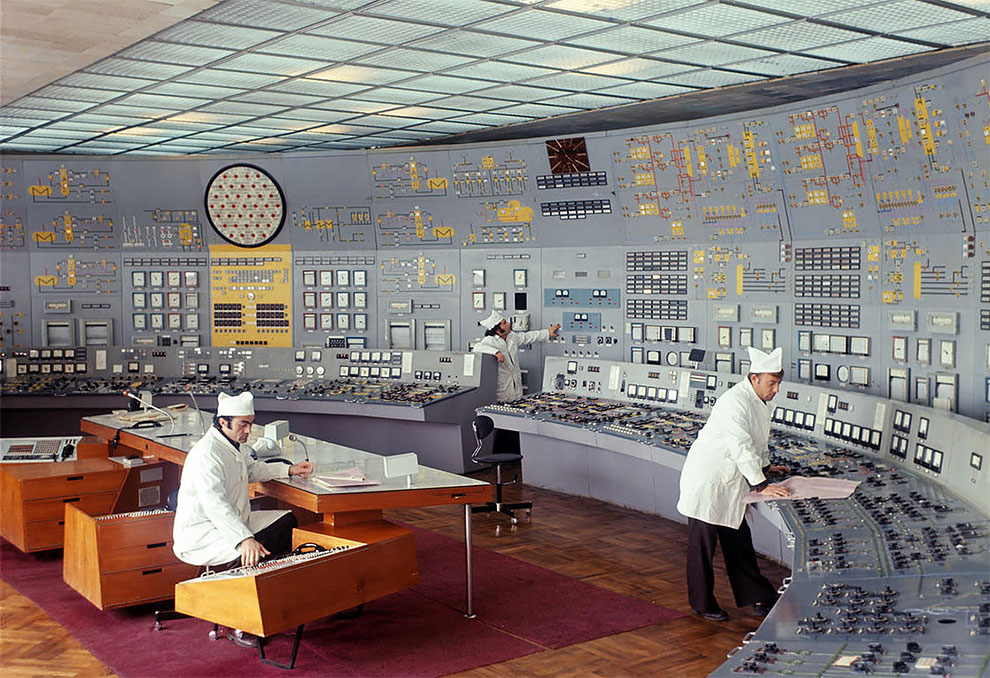
The centrally planned economy of socialism takes the form of a 5 year plan. The plan is determined by State planning committee, Gosplan for USSR or SPK for GDR for example. The plan would be something like (make 1 million trucks, 50 million shoes, X tons of corn) and was determined by the projected needs/wants of the population and economic developmental goals. The state extracts surplus value via a turnover tax from the domestic economy and profitable exports from the international market. There were smaller taxes and fees but exports and turnover taxes made the bulk of state revenue for socialist countries. The economy produced goods and services based on human need instead of the mere profit maximization by commodity exchange under capitalism. The 5 year plans were amazing and allowed the USSR economy to grow rapidly under the Great Depression unscathed while capitalist states contracted. You can watch an excellent video on the 5 year plans in the early USSR by Finnish Bolshevik on YouTube.
Here is the link to it : youtu.be/e4YDkWzQZAw




cross-posted from: lemmy.ml/post/49350407
cross-posted from: lemmy.ml/post/49350407


Exactly 155 years ago, in June 1871, right on the still-smoking barricades of the Paris Commune, the poet and communist Eugène Pottier wrote the poem “L’Internationale”.
The Commune fell. Thousands of its defenders were shot. But the lines survived.
Pottier hid the manuscript, and in 1887 published it in the collection “Revolutionary Songs”. A year later, the French composer Pierre Degeyter set it to music — and the anthem began its journey around the planet.
The song was translated into dozens of languages. It became the anthem of the Second International. It was sung at May Day rallies, underground meetings, and demonstrations — in Germany, England, Italy, China, Latin America — everywhere where workers rose up against oppression.
The anthem sounded in the trenches of the First World War, on the barricades of the Spanish Civil War, and in concentration camps. In the 1920s, it was such a powerful symbol that many governments banned it under threat of imprisonment.
“This song is translated into all European, and not only European languages… Wherever a conscious worker goes, wherever fate takes him, no matter how alien he feels — without language, without acquaintances, far from his homeland — he can find comrades and friends to the familiar tune of the ‘Internationale’.” — V. I. Lenin
In Russia, the “Internationale” first sounded in 1902, in the translation by Arkady Kotz. This translation became a classic:
“The whole world of violence we will destroy To the foundations, and then We will build our new world, Who was nothing will become everything!”
After the October Revolution of 1917, it immediately became the anthem of the new power.
“And in Smolny — the crowd, spreading its chest, covered with a song of fireworks of information. For the first time instead of: — and it will be… — they sang: — and this is our last…” — Mayakovsky, from the poem “It’s Good”
In January 1918, the All-Russian Central Executive Committee (VTsIK) approved the “Internationale” as the state anthem of the RSFSR, and later of the USSR.
It was sung at the first subbotniks, on Red Square, at Congresses of Soviets. It sounded at the opening of the Dnieper Hydroelectric Station, in the factories of Magnitogorsk, at campfires of Pioneer camps. Soldiers marched into battle with it in 1941. The Germans listened to its lines with horror, coming from the ruins of the Brest Fortress, the catacombs of Adzhimushkay and Odessa. Workers sang it in the workshops of evacuated factories.
In 1944, the new anthem of the USSR became Alexandrov’s music with Mikhalkov’s lyrics — but the “Internationale” did not fade into the background.
It remained the anthem of the Communist Party. It was sung at party congresses, at May Day and November 7th demonstrations. For millions of Soviet people, it was not just a song — but an oath.
“The ‘Internationale’ is the anthem of the international solidarity of the proletariat. It expresses the truth that the liberation of working people can only be the work of the working people themselves. As long as capitalism exists, the ‘Internationale’ will sound as a call to the last, decisive battle.” — V. I. Lenin, from “On the ‘Internationale’” (1913) and various speeches
But at rallies in Nepal, at protests in Chile, at demonstrations and during strikes in Europe and America — its melody arises again and again.
And its call — “Rise up, damned!” — remains as relevant as ever.
As long as there is inequality, exploitation, and injustice. As long as someone’s labor is devalued, and someone else’s greed becomes law.



(Caracas, April 16, 2026, Mincomunas Press Release) – This Thursday morning, continuing the People’s Power training cycle, classes 5 and 6 of Module 1 were held. This module is a fundamental learning space for participants seeking to strengthen their capacities in community management. Led by facilitator and Vice Minister of Urban Agriculture, Elías Sánchez, the classes covered essential topics related to communal financial structures, allowing attendees to delve deeper into key concepts vital for building a socialist production model in their communities.
These classes not only focus on theory but also promote active participation and the exchange of experiences among participants, fostering collaborative learning. This training is crucial, as it empowers citizens and strengthens the social fabric, creating an environment conducive to economic and social development and contributing to building a fairer and more equitable future for all.
During the session, the Community Bank was ratified as the economic and social institution authorized to manage community funds and assets for repayable purposes. The facilitator emphasized that its operations are governed by the Community Homeland Plan, with a vision focused on the proper management of resources in a self-sustaining manner.
By the time of the debate, it had been clarified that the Bank’s purpose was to guarantee the administration of resources, both returnable and non-returnable, in order to strengthen social ownership, thus exempting this institution from traditional banking regulations.
Among the functions that Sánchez had detailed were the registration and administration of the Commune’s assets, the preparation of investment projects in coordination with the Communal Planning Commission, the financing of socio-productive projects approved by the Citizens’ Assembly, as well as the promotion of solidarity exchange and the Communal currency.
This structure aims not only to revitalize the local economy but also to foster a sense of community and collaboration, ensuring that resources are used efficiently and as a social investment for all residents of the municipality. Thus, the Municipal Bank stands as a fundamental pillar in building a fairer and more participatory economic model.
In these classes, the Communal Currency was analyzed as a local and alternative exchange instrument. Vice Minister Sánchez explained that this tool was designed to operate in specific geographic areas, based on solidarity and use value. During the session, participants understood that the purpose of this currency was to reduce dependence on the Bolívar and strengthen the internal economy in a context of cash scarcity.
To conclude the day, Sánchez delivered a closing speech in which he emphasized the importance of grassroots organizing, stressing that it is essential to revitalize every aspect of the Commune. In his address, he reiterated that the Citizens’ Assembly must be the body that guides the organization’s future.
With a call for constant planning and evaluation, Sánchez closed his speech, reaffirming the construction of a political system rooted in the ideals of the heroes of independence.
cross-posted from: lemmygrad.ml/post/11355416
He also decries current U.S. aggression and states that it’s their duty to defend the revolution just as the Cubans did in 1961.
cross-posted from: lemmygrad.ml/post/11355416
He also decries current U.S. aggression and states that it’s their duty to defend the revolution just as the Cubans did in 1961.

hard agree
“Communists should cultivate the habit of reading Marxist classics and understanding their principles as part of their daily lives… People should read widely and choose good books, drawing wisdom and nourishment from them… It is necessary to build a learning society where all people engage in lifelong learning.”


The Atlantic recently published an article about Albert Einstein’s brilliant politics. This is not that article. Instead, it’s one by Einstein.
Is it advisable for one who is not an expert on economic and social issues to express views on the subject of socialism? I believe for a number of reasons that it is.
Let us first consider the question from the point of view of scientific knowledge. It might appear that there are no essential methodological differences between astronomy and economics: scientists in both fields attempt to discover laws of general acceptability for a circumscribed group of phenomena in order to make the interconnection of these phenomena as clearly understandable as possible. But in reality such methodological differences do exist. The discovery of general laws in the field of economics is made difficult by the circumstance that observed economic phenomena are often affected by many factors which are very hard to evaluate separately. In addition, the experience which has accumulated since the beginning of the so-called civilized period of human history has—as is well known—been largely influenced and limited by causes which are by no means exclusively economic in nature. For example, most of the major states of history owed their existence to conquest. The conquering peoples established themselves, legally and economically, as the privileged class of the conquered country. They seized for themselves a monopoly of the land ownership and appointed a priesthood from among their own ranks. The priests, in control of education, made the class division of society into a permanent institution and created a system of values by which the people were thenceforth, to a large extent unconsciously, guided in their social behavior.
But historic tradition is, so to speak, of yesterday; nowhere have we really overcome what Thorstein Veblen called “the predatory phase” of human development. The observable economic facts belong to that phase and even such laws as we can derive from them are not applicable to other phases. Since the real purpose of socialism is precisely to overcome and advance beyond the predatory phase of human development, economic science in its present state can throw little light on the socialist society of the future.
Second, socialism is directed towards a social-ethical end. Science, however, cannot create ends and, even less, instill them in human beings; science, at most, can supply the means by which to attain certain ends. But the ends themselves are conceived by personalities with lofty ethical ideals and—if these ends are not stillborn, but vital and vigorous—are adopted and carried forward by those many human beings who, half unconsciously, determine the slow evolution of society.
For these reasons, we should be on our guard not to overestimate science and scientific methods when it is a question of human problems; and we should not assume that experts are the only ones who have a right to express themselves on questions affecting the organization of society.
Innumerable voices have been asserting for some time now that human society is passing through a crisis, that its stability has been gravely shattered. It is characteristic of such a situation that individuals feel indifferent or even hostile toward the group, small or large, to which they belong. In order to illustrate my meaning, let me record here a personal experience. I recently discussed with an intelligent and well-disposed man the threat of another war, which in my opinion would seriously endanger the existence of mankind, and I remarked that only a supra-national organization would offer protection from that danger. Thereupon my visitor, very calmly and coolly, said to me: “Why are you so deeply opposed to the disappearance of the human race?”
I am sure that as little as a century ago no one would have so lightly made a statement of this kind. It is the statement of a man who has striven in vain to attain an equilibrium within himself and has more or less lost hope of succeeding. It is the expression of a painful solitude and isolation from which so many people are suffering in these days. What is the cause? Is there a way out?
It is easy to raise such questions, but difficult to answer them with any degree of assurance. I must try, however, as best I can, although I am very conscious of the fact that our feelings and strivings are often contradictory and obscure and that they cannot be expressed in easy and simple formulas.
Man is, at one and the same time, a solitary being and a social being. As a solitary being, he attempts to protect his own existence and that of those who are closest to him, to satisfy his personal desires, and to develop his innate abilities. As a social being, he seeks to gain the recognition and affection of his fellow human beings, to share in their pleasures, to comfort them in their sorrows, and to improve their conditions of life. Only the existence of these varied, frequently conflicting, strivings accounts for the special character of a man, and their specific combination determines the extent to which an individual can achieve an inner equilibrium and can contribute to the well-being of society. It is quite possible that the relative strength of these two drives is, in the main, fixed by inheritance. But the personality that finally emerges is largely formed by the environment in which a man happens to find himself during his development, by the structure of the society in which he grows up, by the tradition of that society, and by its appraisal of particular types of behavior. The abstract concept “society” means to the individual human being the sum total of his direct and indirect relations to his contemporaries and to all the people of earlier generations. The individual is able to think, feel, strive, and work by himself; but he depends so much upon society—in his physical, intellectual, and emotional existence—that it is impossible to think of him, or to understand him, outside the framework of society. It is “society” which provides man with food, clothing, a home, the tools of work, language, the forms of thought, and most of the content of thought; his life is made possible through the labor and the accomplishments of the many millions past and present who are all hidden behind the small word “society.”
It is evident, therefore, that the dependence of the individual upon society is a fact of nature which cannot be abolished—just as in the case of ants and bees. However, while the whole life process of ants and bees is fixed down to the smallest detail by rigid, hereditary instincts, the social pattern and interrelationships of human beings are very variable and susceptible to change. Memory, the capacity to make new combinations, the gift of oral communication have made possible developments among human being which are not dictated by biological necessities. Such developments manifest themselves in traditions, institutions, and organizations; in literature; in scientific and engineering accomplishments; in works of art. This explains how it happens that, in a certain sense, man can influence his life through his own conduct, and that in this process conscious thinking and wanting can play a part.
Man acquires at birth, through heredity, a biological constitution which we must consider fixed and unalterable, including the natural urges which are characteristic of the human species. In addition, during his lifetime, he acquires a cultural constitution which he adopts from society through communication and through many other types of influences. It is this cultural constitution which, with the passage of time, is subject to change and which determines to a very large extent the relationship between the individual and society. Modern anthropology has taught us, through comparative investigation of so-called primitive cultures, that the social behavior of human beings may differ greatly, depending upon prevailing cultural patterns and the types of organization which predominate in society. It is on this that those who are striving to improve the lot of man may ground their hopes: human beings are not condemned, because of their biological constitution, to annihilate each other or to be at the mercy of a cruel, self-inflicted fate.
If we ask ourselves how the structure of society and the cultural attitude of man should be changed in order to make human life as satisfying as possible, we should constantly be conscious of the fact that there are certain conditions which we are unable to modify. As mentioned before, the biological nature of man is, for all practical purposes, not subject to change. Furthermore, technological and demographic developments of the last few centuries have created conditions which are here to stay. In relatively densely settled populations with the goods which are indispensable to their continued existence, an extreme division of labor and a highly-centralized productive apparatus are absolutely necessary. The time—which, looking back, seems so idyllic—is gone forever when individuals or relatively small groups could be completely self-sufficient. It is only a slight exaggeration to say that mankind constitutes even now a planetary community of production and consumption.
I have now reached the point where I may indicate briefly what to me constitutes the essence of the crisis of our time. It concerns the relationship of the individual to society. The individual has become more conscious than ever of his dependence upon society. But he does not experience this dependence as a positive asset, as an organic tie, as a protective force, but rather as a threat to his natural rights, or even to his economic existence. Moreover, his position in society is such that the egotistical drives of his make-up are constantly being accentuated, while his social drives, which are by nature weaker, progressively deteriorate. All human beings, whatever their position in society, are suffering from this process of deterioration. Unknowingly prisoners of their own egotism, they feel insecure, lonely, and deprived of the naive, simple, and unsophisticated enjoyment of life. Man can find meaning in life, short and perilous as it is, only through devoting himself to society.
The economic anarchy of capitalist society as it exists today is, in my opinion, the real source of the evil. We see before us a huge community of producers the members of which are unceasingly striving to deprive each other of the fruits of their collective labor—not by force, but on the whole in faithful compliance with legally established rules. In this respect, it is important to realize that the means of production—that is to say, the entire productive capacity that is needed for producing consumer goods as well as additional capital goods—may legally be, and for the most part are, the private property of individuals.
For the sake of simplicity, in the discussion that follows I shall call “workers” all those who do not share in the ownership of the means of production—although this does not quite correspond to the customary use of the term. The owner of the means of production is in a position to purchase the labor power of the worker. By using the means of production, the worker produces new goods which become the property of the capitalist. The essential point about this process is the relation between what the worker produces and what he is paid, both measured in terms of real value. Insofar as the labor contract is “free,” what the worker receives is determined not by the real value of the goods he produces, but by his minimum needs and by the capitalists’ requirements for labor power in relation to the number of workers competing for jobs. It is important to understand that even in theory the payment of the worker is not determined by the value of his product.
Private capital tends to become concentrated in few hands, partly because of competition among the capitalists, and partly because technological development and the increasing division of labor encourage the formation of larger units of production at the expense of smaller ones. The result of these developments is an oligarchy of private capital the enormous power of which cannot be effectively checked even by a democratically organized political society. This is true since the members of legislative bodies are selected by political parties, largely financed or otherwise influenced by private capitalists who, for all practical purposes, separate the electorate from the legislature. The consequence is that the representatives of the people do not in fact sufficiently protect the interests of the underprivileged sections of the population. Moreover, under existing conditions, private capitalists inevitably control, directly or indirectly, the main sources of information (press, radio, education). It is thus extremely difficult, and indeed in most cases quite impossible, for the individual citizen to come to objective conclusions and to make intelligent use of his political rights.
The situation prevailing in an economy based on the private ownership of capital is thus characterized by two main principles: first, means of production (capital) are privately owned and the owners dispose of them as they see fit; second, the labor contract is free. Of course, there is no such thing as a pure capitalist society in this sense. In particular, it should be noted that the workers, through long and bitter political struggles, have succeeded in securing a somewhat improved form of the “free labor contract” for certain categories of workers. But taken as a whole, the present day economy does not differ much from “pure” capitalism.
Production is carried on for profit, not for use. There is no provision that all those able and willing to work will always be in a position to find employment; an “army of unemployed” almost always exists. The worker is constantly in fear of losing his job. Since unemployed and poorly paid workers do not provide a profitable market, the production of consumers’ goods is restricted, and great hardship is the consequence. Technological progress frequently results in more unemployment rather than in an easing of the burden of work for all. The profit motive, in conjunction with competition among capitalists, is responsible for an instability in the accumulation and utilization of capital which leads to increasingly severe depressions. Unlimited competition leads to a huge waste of labor, and to that crippling of the social consciousness of individuals which I mentioned before.
This crippling of individuals I consider the worst evil of capitalism. Our whole educational system suffers from this evil. An exaggerated competitive attitude is inculcated into the student, who is trained to worship acquisitive success as a preparation for his future career.
I am convinced there is only one way to eliminate these grave evils, namely through the establishment of a socialist economy, accompanied by an educational system which would be oriented toward social goals. In such an economy, the means of production are owned by society itself and are utilized in a planned fashion. A planned economy, which adjusts production to the needs of the community, would distribute the work to be done among all those able to work and would guarantee a livelihood to every man, woman, and child. The education of the individual, in addition to promoting his own innate abilities, would attempt to develop in him a sense of responsibility for his fellow men in place of the glorification of power and success in our present society.
Nevertheless, it is necessary to remember that a planned economy is not yet socialism. A planned economy as such may be accompanied by the complete enslavement of the individual. The achievement of socialism requires the solution of some extremely difficult socio-political problems: how is it possible, in view of the far-reaching centralization of political and economic power, to prevent bureaucracy from becoming all-powerful and overweening? How can the rights of the individual be protected and therewith a democratic counterweight to the power of bureaucracy be assured?
Clarity about the aims and problems of socialism is of greatest significance in our age of transition. Since, under present circumstances, free and unhindered discussion of these problems has come under a powerful taboo, I consider the foundation of this magazine to be an important public service.

cross-posted from: lemmy.ml/post/40653401
cross-posted from: lemmy.ml/post/40653401