

preview
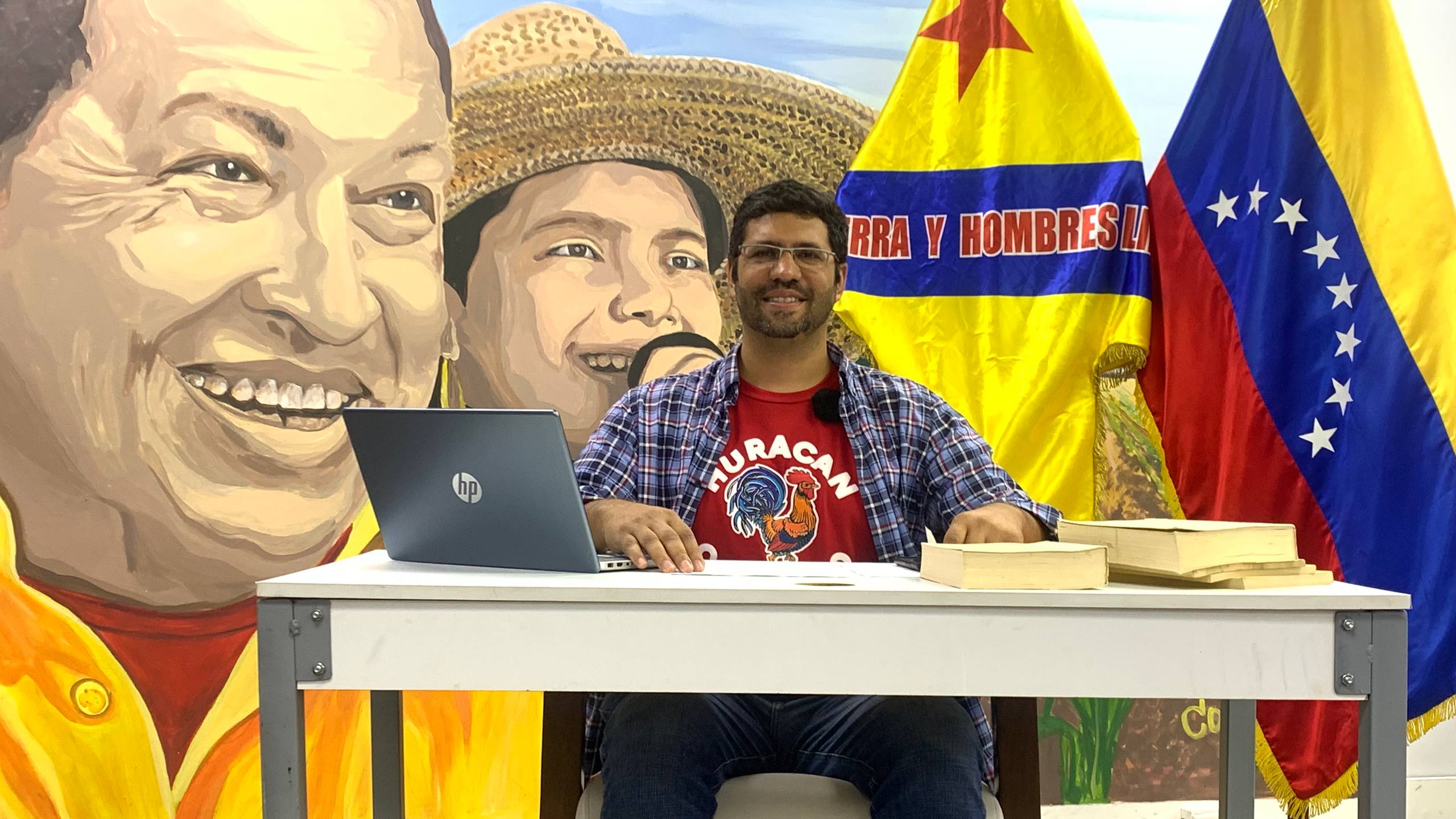
(Caracas, April 16, 2026, Mincomunas Press Release) – This Thursday morning, continuing the People’s Power training cycle, classes 5 and 6 of Module 1 were held. This module is a fundamental learning space for participants seeking to strengthen their capacities in community management. Led by facilitator and Vice Minister of Urban Agriculture, Elías Sánchez, the classes covered essential topics related to communal financial structures, allowing attendees to delve deeper into key concepts vital for building a socialist production model in their communities.
These classes not only focus on theory but also promote active participation and the exchange of experiences among participants, fostering collaborative learning. This training is crucial, as it empowers citizens and strengthens the social fabric, creating an environment conducive to economic and social development and contributing to building a fairer and more equitable future for all.
The consolidation of the Commune Bank
During the session, the Community Bank was ratified as the economic and social institution authorized to manage community funds and assets for repayable purposes. The facilitator emphasized that its operations are governed by the Community Homeland Plan, with a vision focused on the proper management of resources in a self-sustaining manner.
By the time of the debate, it had been clarified that the Bank’s purpose was to guarantee the administration of resources, both returnable and non-returnable, in order to strengthen social ownership, thus exempting this institution from traditional banking regulations.
Among the functions that Sánchez had detailed were the registration and administration of the Commune’s assets, the preparation of investment projects in coordination with the Communal Planning Commission, the financing of socio-productive projects approved by the Citizens’ Assembly, as well as the promotion of solidarity exchange and the Communal currency.
This structure aims not only to revitalize the local economy but also to foster a sense of community and collaboration, ensuring that resources are used efficiently and as a social investment for all residents of the municipality. Thus, the Municipal Bank stands as a fundamental pillar in building a fairer and more participatory economic model.
Sovereignty through communal currency
In these classes, the Communal Currency was analyzed as a local and alternative exchange instrument. Vice Minister Sánchez explained that this tool was designed to operate in specific geographic areas, based on solidarity and use value. During the session, participants understood that the purpose of this currency was to reduce dependence on the Bolívar and strengthen the internal economy in a context of cash scarcity.
To conclude the day, Sánchez delivered a closing speech in which he emphasized the importance of grassroots organizing, stressing that it is essential to revitalize every aspect of the Commune. In his address, he reiterated that the Citizens’ Assembly must be the body that guides the organization’s future.
With a call for constant planning and evaluation, Sánchez closed his speech, reaffirming the construction of a political system rooted in the ideals of the heroes of independence.