
0
preview
Majestic, huh?
(and we thought the flamingo was first)
Majestic, huh?
(and we thought the flamingo was first)
posts tagged #animals

From Rocky Mountain National Park
Are you prepared for winter? We are!
From Rocky Mountain National Park
Are you prepared for winter? We are!

Leslie Vosshall’s lab at Rockefeller (De Obaldia et al., Cell, 2022) ran a 3-year experiment with nylon sleeves worn by volunteers. The “mosquito magnets” had much higher levels of carboxylic acids on their skin, and they stayed attractive month after month. CO2 and body heat get mosquitoes close; skin chemistry decides who gets bitten. My own short cartoon on it (sources in the description).
Leslie Vosshall’s lab at Rockefeller (De Obaldia et al., Cell, 2022) ran a 3-year experiment with nylon sleeves worn by volunteers. The “mosquito magnets” had much higher levels of carboxylic acids on their skin, and they stayed attractive month after month. CO2 and body heat get mosquitoes close; skin chemistry decides who gets bitten. My own short cartoon on it (sources in the description).

From John Scott
Along the Chobe, an African Darter spreads its wings to dry, revealing the beautiful details in its feathers. A remarkable bird in a remarkable place.
Chobe River, Botswana
From John Scott
Along the Chobe, an African Darter spreads its wings to dry, revealing the beautiful details in its feathers. A remarkable bird in a remarkable place.
Chobe River, Botswana

From Kelli Grady
An Atlantic Bay scallop showing off its brilliant blue eyes. Best seen if you view each photo individually. After opening and closing at me, I put it back in the water.
From Kelli Grady
An Atlantic Bay scallop showing off its brilliant blue eyes. Best seen if you view each photo individually. After opening and closing at me, I put it back in the water.

From Ali Xaidi
Big Bird, Meet Big Attitude" Image
Size doesn’t matter when you’ve got fierce attitude! A brave mockingbird goes toe-to-toe (or rather, foot-to- feather) with a crested caracara (often recognized by its striking raptor profile) in an unforgettable moment of avian acrobatics. Talk about punching above a Crested Caracara-a unique falcon found in the Americas.
In Florida

From Charles Janson
I am truly grateful to the judges of the NANPA Showcase competition for awarding my ‘Exploding Woodpecker’ image the top prize in the Bird category! I was totally surprised and delighted when the announcement came through during the online awards ceremony… I had absolutely no idea. My thanks also to this individual woodpecker, who deserves an award for ‘Most Cooperative’ Pileated Woodpecker of the century!


From Trinibats
This is the “wing sac” of a Greater White-lined Bat, as referred to in the previous post. Situated in the wing membrane of both sexes, it is significantly larger, more developed, and only functional in males.
During daily grooming, males actively fill the wing sacs with a composite mixture of urine, saliva, and glandular secretions. As seen in the previous post, during courtship, a male hovers in front of a female and rapidly fans his wings to direct the potent, information-rich scent mixture toward her to influence mate choice. The liquid inside the sacs carries complex chemical fingerprints that convey individual identity, age, and other attributes that influence selection.
As a territorial defense males shake or flick the contents of the wing sacs toward rival or intruder bats outside of their harem territory to warn them off.
The mentioned previous post

Here we see a male Greater White-lined Bat (Saccopteryx bilineata) from east Trinidad, with his harem of females. He is hovering before one of the females while holding open a special sac (or opening) in the front of each wing.
Though initially thought to have a glandular function, these wing sacs are now known to be used by males of the species to actively store secretions from the genital region and the gular gland (sebaceous gland located near the throat of adult males), augmented with a mixture of urine and saliva.
By shaking and thrusting its wings forward as it hovers, the male wafts this combined odour toward the female as she vocalises and wiggles approvingly in response.
From Trinibats
This is the “wing sac” of a Greater White-lined Bat, as referred to in the previous post. Situated in the wing membrane of both sexes, it is significantly larger, more developed, and only functional in males.
During daily grooming, males actively fill the wing sacs with a composite mixture of urine, saliva, and glandular secretions. As seen in the previous post, during courtship, a male hovers in front of a female and rapidly fans his wings to direct the potent, information-rich scent mixture toward her to influence mate choice. The liquid inside the sacs carries complex chemical fingerprints that convey individual identity, age, and other attributes that influence selection.
As a territorial defense males shake or flick the contents of the wing sacs toward rival or intruder bats outside of their harem territory to warn them off.
The mentioned previous post
Here we see a male Greater White-lined Bat (Saccopteryx bilineata) from east Trinidad, with his harem of females. He is hovering before one of the females while holding open a special sac (or opening) in the front of each wing.
Though initially thought to have a glandular function, these wing sacs are now known to be used by males of the species to actively store secretions from the genital region and the gular gland (sebaceous gland located near the throat of adult males), augmented with a mixture of urine and saliva.
By shaking and thrusting its wings forward as it hovers, the male wafts this combined odour toward the female as she vocalises and wiggles approvingly in response.
Majestic, huh?
(and we thought the flamingo was first)
Majestic, huh?
(and we thought the flamingo was first)

From Steve Peeler
Comment in response to asking of time/location:
Smith Rock State Park [Oregon]. in the month of April. The nest is 100 yards away from the rim of the cliff and is one of two in the United States that you can actually look across and down into the nest, and with good equipment get shots like these throughout the nesting season.
Also from his feed:

From Leigh Wilson
I had the pleasure of spending some time photographing this delightful little Sugar Glider in Brisbane QLD
From Leigh Wilson
I had the pleasure of spending some time photographing this delightful little Sugar Glider in Brisbane QLD

Nobody, and I mean NOBODY is better than Sir Richard Attenborough* at narrating natural life, but I find that “Ze Frank” combines something unusual-- a bias for the facts, and a huge sense of silliness, narrated via a Morgan Freeman-type voice.
If you like, here’s more:
www.youtube.com/@zefrank/videos
@anon6789@lemmy.world,
I think I might possibly be getting over my previous butthurt. We’ll see. Unfortunately, I’m trying to cover almost a ~dozen subs these days, so at best I’m probably going to remain a spotty contributor, for better or ze wurst.
* Ahhh… I realised my mistake, started to correct it, then remembered one of the first laws of social media-- mistakes commonly get interest & good corrections, haha. (all apologies to Sir David)

From Nancy Elwood
A Long-tailed Potoo with its chick. Taken this past August in the Amazonian area of Ecuador.
Captured with the Nikon Z9 and Nikon 400 4.5 lens with the Nikon 1.4TC, iso 3200, 1/500, f/6.3, 3d AF mode with birds detection.
Please check out my main website at www.naturesportal.net.
From Nancy Elwood
A Long-tailed Potoo with its chick. Taken this past August in the Amazonian area of Ecuador.
Captured with the Nikon Z9 and Nikon 400 4.5 lens with the Nikon 1.4TC, iso 3200, 1/500, f/6.3, 3d AF mode with birds detection.
Please check out my main website at www.naturesportal.net.

From Virginia Wentworth Barnes
Above the Fray
One of the thousands of Northern Gannets riding the wind above the pounding surf at Race Point.
Cape Cod National Seashore | Provincetown, MA |October 31, 2026
From Virginia Wentworth Barnes
Above the Fray
One of the thousands of Northern Gannets riding the wind above the pounding surf at Race Point.
Cape Cod National Seashore | Provincetown, MA |October 31, 2026

From Glen Little
Brown Antechinus - Billy’s Creek NSW
I had been watching this beastie zip around our frog pond each morning. Their zip-stop-zip-stop erotic movement makes them a challenge to photograph. I knew it always paused on this stump overhanging the water and decided that would be my best chance of a picture.
So, after hearing of “erotic movement,” more investigation was required!
While it turns out I think this was a typo in Glen’s post, they move very erratically, this led to me learning their is a huge problem with the erotic part of their lives: the males all die young by banging themselves to death!
This is called semelparity. Salmon are probably the most common example for those of us in North America. The salmon grow up in the sea, using all their energy to swim upstream only to mate and die.
The antechinus will mate intensely enough that it dies shortly after due to a combination of stress and hormonal overload.
Here is a short 2 minute video about their satisfying but disasterous love life:
Mating to death: the tough life of an antechinus - Australian Academy of Science

From Naidu Kumpatla
Look at that incredible acrobatic balance!
It is always a thrill to find such an elusive local resident in action. This agile Honey Possum was navigating the tough coastal scrub right as the warm sunlight beautifully illuminated the edges.
Fun fact: Despite their name, they don’t actually eat honey! They are one of the only mammals in the world that survive exclusively on a diet of nectar and pollen, meaning they have to constantly move through the heathland performing these high-energy acrobatics to find blooming flowers.
Cheynes Beach

From Patrick McCarthy
Because everyone deserves glamour shots.
Mephitis mephitis, Central MA 11/1/2026
From Patrick McCarthy
Because everyone deserves glamour shots.
Mephitis mephitis, Central MA 11/1/2026

From Henrik Nilsson
Another bird of prey from Africa. This time it is a long- crested eagle. I took this image in Kenya.
Also, I’ve been getting an increasing amount of comments regarding Al. I do NOT post any Al generated images or videos. I dislike Al probably as much as you do when it comes to wildlife.
Canon 5D IV with Canon 500mm f4 II and 1.4x extender. This is a very large crop of the original image.

From Simon d’Entremont
One of my top tips for wildlife photography (which equally applies to pets, BTW!) is to capture or highlight a feature or behaviour for which the species is known. In this case, this species is famous for having a long neck and standing on it’s hind legs to reach up for vegetation in trees that regular antelopes can’t reach, going them an advantage in finding food. The shots I have with its face buried in the tree branches weren’t very pretty, but this one as it was starting to go pull back to go back down was just right.
Gerenuk (aka Giraffe-necked antelope), Samburu, Kenya.

From Amy Booth
Guess what…
Pika butt… 🤣
From Amy Booth
Guess what…
Pika butt… 🤣
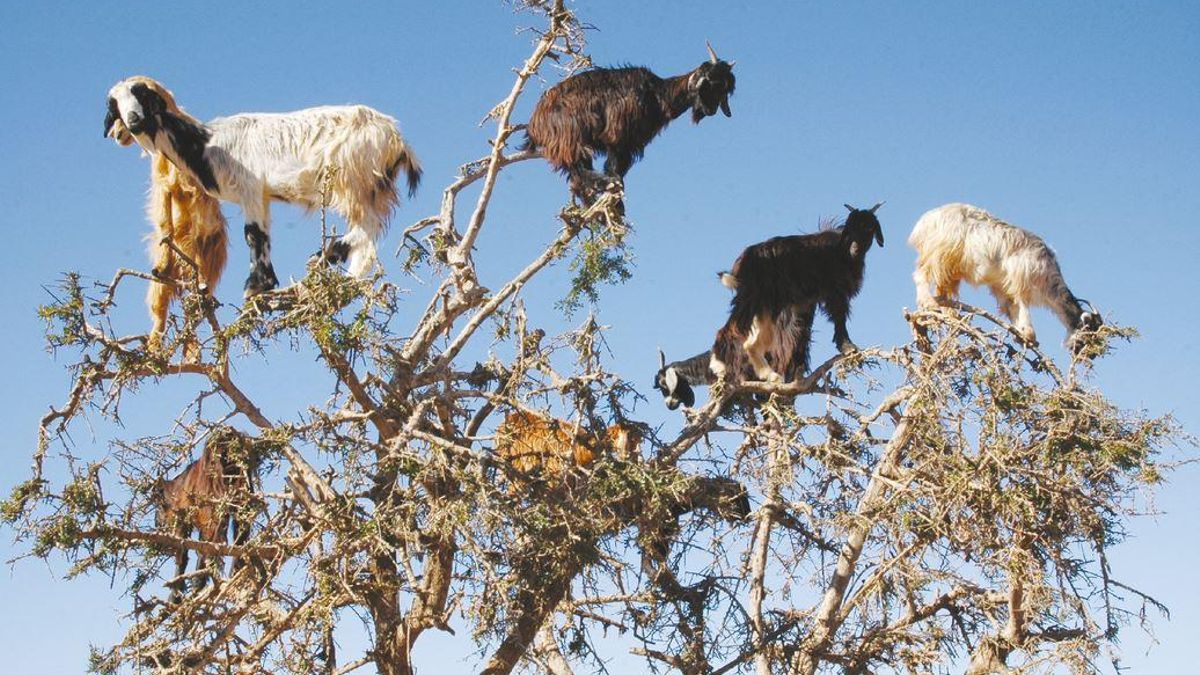
Trepan hasta diez metros de altura para alimentarse en árboles de argán, generando una estampa visual casi surrealista
Trepan hasta diez metros de altura para alimentarse en árboles de argán, generando una estampa visual casi surrealista

On my walk home after work crossing a couple of farm fields and a small wooded area I encounter a lot of wild life but not all of them pose for me like this one.
On my walk home after work crossing a couple of farm fields and a small wooded area I encounter a lot of wild life but not all of them pose for me like this one.

They pulled up to the rescue with the porcupine. They had been worried about it for days as it appeared to be limping and was quite lethargic. As I peered into the box to take a looked at it, one of the finders children mentioned “the little one looks much healthier”.
“What little one?” I asked. I immediately had concerns that the one in front of me was a mother. Porcupines aren’t very social creatures so a large one hanging around a smaller one is usually a mother and a baby.
They informed me that the second porcupine was much smaller. This complicated the situation. Now I knew another little one was likely dependent on this injured one.
I brought her into the rehab room and the family that found her followed. Upon examination it was clear - mama had really bad mange. It isn’t always evident in porcupines as mange loves to hide on their bellies - which aren’t often exposed for viewing.
The skin on mama’s belly and limbs were in really rough shape. That’s why she was limping. She had open sores that were making her very uncomfortable.
Now it was clear - we had to capture the baby. Mange is contagious among porcupines and there was no way this baby didn’t have it too.
The finders were able to contain the porcupette that same day and his exam revealed that he too was dealing with a bad case of mange.
These two would not have made it through the winter in this condition. Their faces, limbs and abdomens were badly affected. It was only going to get worse.
They have been treated and now remain in a large quarantine space together while they recover.
There is a whole neighborhood of people in Tyngsboro who have been watching and admiring these porcupines for months. Thanks to those caring souls, these two will very likely survive this ordeal.
We are so grateful 🙏❤️🙏

From Florida Native Snake Rescue and Rehab
Yesterday afternoon we took in an adult non-venomous Yellow Ratsnake that had swallowed a false wooden egg in a chicken lay box. The homeowner felt terrible it happened and had been trying to catch him for a couple months to get him help. We’re glad she finally did! Without intervention, this snake would have died a slow and painful death as these false eggs create a complete gastrointestinal obstruction.
Here at our facility we tried our best to massage the egg back out of his mouth manually, as we typically do in these cases. Unfortunately, because the egg had been in there for so long, we were unsuccessful. The decision was then made to rush him in for emergency treatment with our friend and local reptile veterinarian Dr. Tony
Colbert at the Exotic Bird Hospital, Jacksonville. He was thankfully able to perform the surgery last night and he successfully removed the wooden egg. The snake spent the night at the vet hospital, and we will update you later on this poor fellow’s progress.
Emergency surgery is expensive, and we are grateful for any donations the public feels moved to give. If you would like to help, we are so thankful for you!! The preliminary estimate for this beautiful snake’s surgery & after care is between $480-$680.
From people in the comment section, wooden eggs are placed in coops to supposedly encourage laying.
I guess that is a chicken thing? I know we’ve given some of our ambassador birds fake eggs to prevent them from laying and wasting nutrients and energy unnecessarily, from what I understood…

From Southwest Virginia Wildlife Center of Roanoke
Meet RSHA 26-2599, the Red-shouldered Hawk! This patient lies at the center of a recently-solved MYSTERY at our wildlife hospital.
Miss RSHA 26-2599 is a mature adult hawk who was found grounded in a driveway about a mile from our facility. On arrival, we checked for the usual suspects: Broken bones, lead toxicity, eye issues, head trauma, emaciation, bruising from any kind of collision or altercation. ALL were within normal limits (except for one, but we’ll get there).
The diagnosis: At over 910g in weight, she was too darn fat to fly! We couldn’t even palpate her keel due to the heavy layer of fat covering it.
It is RARE for wild animals to become obese without human intervention, so how could this happen? Was she a lost falconry bird? Someone was feeding her? Was she an escaped (illegally-kept) captive hawk?
After ruling these out, we asked the finder if any of her neighbors had free-ranging chickens she could be eating.
The finder did some asking around, and called us back to confirm a couple of weeks later: YES! Her neighbors’ free- roaming chickens were disappearing at an alarming rate over the last few weeks.
Our mystery was very likely solved! This queen was picking off the buffet of easy prey set out before her, eating her fill, and then snoozing in the trees nearby until she was ready to eat again. The chickens were let out in the morning, she ate another, and repeat.
After weeks of repeating this feasting and sleeping, it’s no wonder she got too fat to fly!
This story is kinda funny (unless you’re the chickens getting eaten), but there is a sobering reality: This is a man-made issue, and this could have had a sadder ending if she had been found by a larger predator instead of the finder. Without flight, she is extremely vulnerable.
Moral of the story: Don’t feed wildlife… Directly OR indirectly. Also, covered runs are the way to go for chicken keeping!

From Jeff Chow
This young baby baboon nursing … as it hung on to its Mother… was one of my favorite moments in South Africa earlier this month.
From Jeff Chow
This young baby baboon nursing … as it hung on to its Mother… was one of my favorite moments in South Africa earlier this month.
cross-posted from: lemmy.ml/post/54662186
cross-posted from: hexbear.net/post/7996654
March 20 is World Frog Day. Frogs and toads have inhabited Earth for hundreds of millions of years, but 40% of amphibians species are now at risk of extinction, according to the latest conservation assessments.
Every year, roughly 150 new amphibian species are described. But many are immediately listed as threatened or endangered due to habitat loss, disease and climate change.
“Some species may not even get named before they go extinct,” biologist Zeeshan Mirza told Mongabay in December 2025.
Over the last year, Mongabay’s reporters have covered pressing threats facing frogs in all corners of the world. Here are a few.
Rare galaxy frogs threatened by photo tourism in India
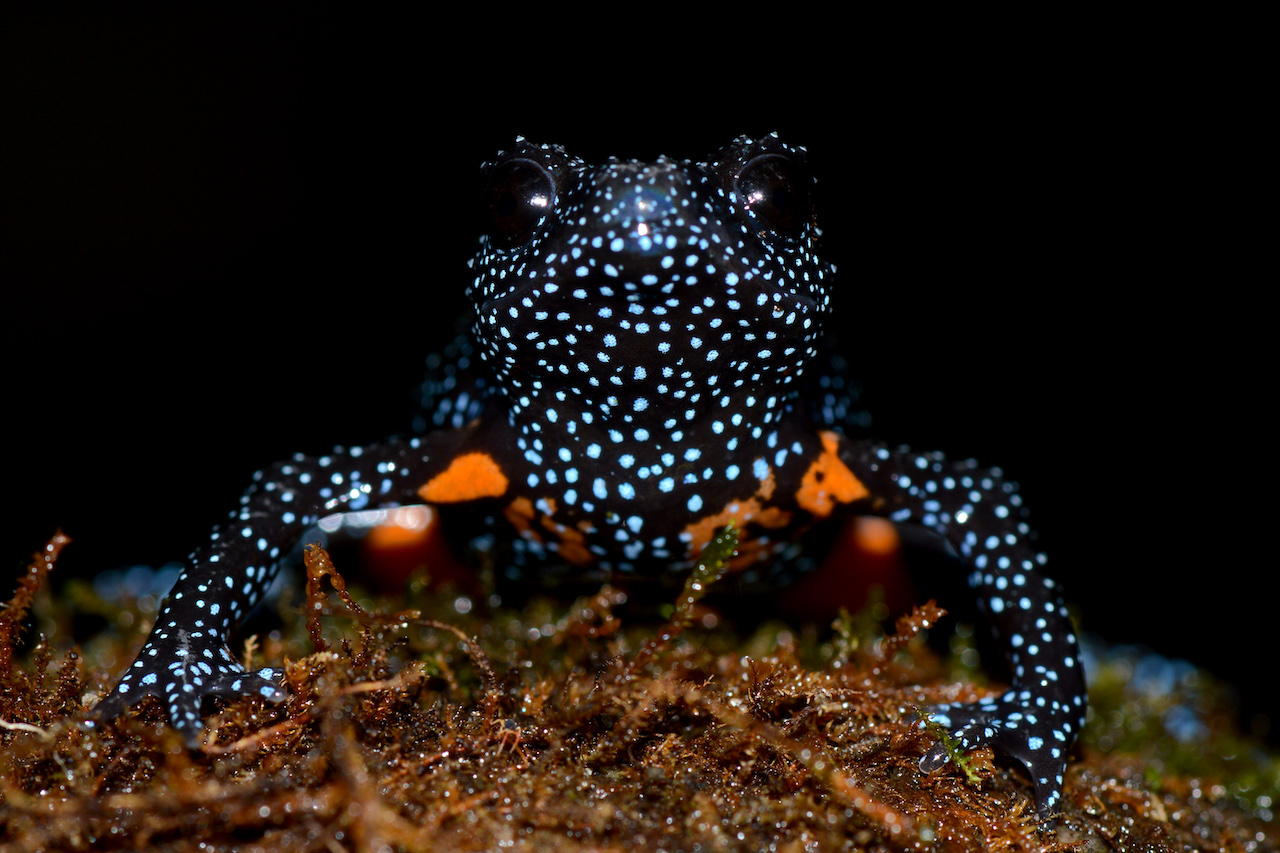
Seven rare galaxy frogs (Melanobatrachus indicus) disappeared from southern India’s Western Ghats rainforest after a small group allegedly spent four hours handling and photographing the animals, an anonymous informant reported.
Researchers studying galaxy frogs, named for their resemblance to a night sky, found overturned logs and trampled vegetation at the site where the frogs had lived among rotting wood and stones.
“These beautiful yet rare frogs are unlike anything else on our tiny corner of the universe,” K.P. Rajkumar, a Zoological Society of London fellow, told Mongabay reporter Liz Kimbrough. “This sad event is a stark warning for the consequences of unregulated photography.”
Endangered mountain yellow-legged frog reintroduced again in California
Conservationists released 350 endangered mountain yellow-legged frogs (Rana muscosa) into Bluff Lake in Southern California earlier this year.
The species was once highly abundant in the region, but in 2023, there were fewer than 200 adults, even following several previous frog releases produced through captive breeding.
Non-native rainbow trout have decimated the species. Climate-driven wildfires and drought paired with a chytrid fungus outbreak have made their survival in the wild even more difficult.
“I think for most species, we’re really hoping for recovery, right? But in this case, we’re trying to prevent extinction,” Debra Shier of San Diego Zoo Wildlife Alliance told Mongabay contributor Sean Mowbray. “We have to try everything in the conservation toolbox.”
Three ‘unassuming’ brown frogs described in Peru
Three new-to-science frog species were described in the remote Cordillera de Huancabamba in the northwestern Peruvian Andes: Pristimantis chinguelas, P. nunezcortezi and P. yonke.
Scientists behind the discovery found the species during a series of night expeditions between 2021 and 2024. They said satellite imagery from the area already showed habitat loss from fire, agriculture and cattle ranching.
“They’re small and unassuming, but these frogs are powerful reminders of how much we still don’t know about the Andes,” lead author Germán Chávez of the Peruvian Institute of Herpetology told Mongabay.

From Jon-jon Salvador
My 23rd LIFER of 2026! The Sooty Woodpecker!
While exploring the El Kabayo area, we were lucky enough to come across this amazing species. What made the encounter even more special was getting to see not just the male, but the female as well! A surprise and another addition to my lifer list this year.
EOS system with Canon 800mm IS STM
Tripod support
October 2026
El Kabayo, Subic, Philippines
I love how the ‘tapir’ has some combination of cats’ airplane ears and dogs’ ears in comics when there’s a major surprise. XD

From Steve Gettle
“Lickity Split - Breakfast” - Panther Chameleon - Eastern Madagascar CC
A dramatic pause - both eyes swivel forward locking on the target and… SNAP! in an instant the tongue flashes and breakfast is served.
Good Luck and Good Light! Steve and Nicole
Image: Panther Chameleon - Eastern Madagascar CC Nikon Z9, Nikkor 100-400mm, 1/2000th @ f5.6, ISO 2000, Image cropped 20% for final composition.

From Mark Hayes
I’ve never seen a Groundhog (also known as Woodchuck and Whistle Pig) in a tree. It seemed unconcerned that I was only about 20 feet away. This was in my local county park so they are accustomed to humans. I’ve seen this Groundhog before as it dove into a nearby hollow tree as I approached. Another first today.

From Brian G Weber
Yesterday, I saw one of the weirdest and coolest sea slugs I’ve ever seen and it was in New Hampshire. This is Elysia chlorotica, a slug that eats algae and steals its chloroplasts to use for photosynthesis. Yes, this slug is solar powered! I saw this species back in 2022 at the same site, but this time there were literally hundreds of them! So cool. Many more pictures to come.
Captured with my Olympus OM-1 + 60mm macro lens.

From Gid Ferrer
10/2026
Great-eared nightjar
Subic Bay, Philippines
The Great eared nightjar is a species of nightjar in the genus Lyncornis. It is found in southwest India and in parts of Southeast Asia. This very large nightjar has long barred wings, a barred tail and long ear-tufts which are often recumbent. It has a white throat band but has no white on its wings or on its tail.
Thank you for this wonderful pose and opportunity to photograph you. We all appreciate you 🦜

Went to toss the squirrels and birds their evening handful of peanuts yesterday, when this guy in the far end of the yard caught my gaze.
Photos aren’t great, he was pretty far away, and the photos are my phone through cheapo binoculars, free hand.
Still a beauty, and a nice surprise for me.
It’s a melanistic Eastern gray squirrel. They’re some interesting theories on them in the black squirrel wiki, though a lot just seen to be guesses to me! 😉

From Jennifer Gordon
Someone attacked this snake with a shovel, severing his spine. Somehow, he managed to make his way to our rescue.
I write about snakes a lot. Particularly copperheads, which seem to bring out some pretty strong opinions in people.
But there’s a reason I gravitate toward snakes.
They’re probably some of the most misunderstood animals on the planet. And after more than two decades of rescuing animals, I’ve come to realize that people are often the cause of the very problems we’re trying to solve.
Writing about these experiences has become somewhat cathartic for me.
For years, I kept so much of what I witnessed bottled up inside. Eventually, I realized how unhealthy that was, and I started writing about the things I encountered in my work.
As it turns out, we have some pretty interesting stories to tell.
Like this one.
Meet one of our eastern ratsnakes, formerly known as black ratsnakes.
I’m not exactly sure who gets to make all these decisions about renaming animals, but apparently someone decided that ratsnakes needed different names depending on where they live.
Because, you know, a ratsnake is a ratsnake. 😂
Anyway, I digress.
I’ve always had a particular fondness for these snakes.
I understand that people fear venomous snakes, even though I could never bring myself to kill an animal simply because I didn’t understand it or was afraid of it.
But ratsnakes?
They’re genuinely some of the gentlest creatures I’ve ever encountered.
Now, don’t get me wrong. I’ve met a few feisty ones over the years, and any wild animal can become defensive when frightened, harassed, or threatened.
But I’ve encountered completely wild ratsnakes that were perfectly content to rest around my shoulders while I walked around.
They’re fascinating animals.
And this particular snake has quite a story.
Somewhere near our rescue, we believe someone attacked him with a shovel.
The injury was devastating.
The back portion of his spine was completely severed.
And somehow, despite that injury, he managed to slither onto our rescue property.
One of our staff members spotted him, recognized that something was terribly wrong, and immediately brought him into our veterinary clinic.
I still find it remarkable that he was able to make his way to us.
And here’s where his story gets even more interesting.
Despite the spinal injury, he can still move the back half of his body.
He can eat small meals, digest his food, and defecate.
Larger meals are more difficult for him because of the scar tissue surrounding the injury, but he’s managing remarkably well considering what happened to him.
We recently brought him in for another evaluation while we were performing surgeries to see whether there might be an opportunity to do some corrective work.
Unfortunately, he’s not quite ready for that yet.
Because of the severity of his injury, he’ll never be released back into the wild.
But what strikes me most about this snake isn’t just his ability to survive.
It’s his temperament.
He is one of the gentlest ratsnakes I’ve ever encountered.
Even after everything he’s been through, he’s remarkably calm when we’re caring for him.
I know people sometimes roll their eyes when I talk about snakes as though they have personalities. But spend enough time working with them, and you begin to appreciate just how different they can be from one another.
I can’t tell you what this snake thinks about the people caring for him.
But I can tell you that he’s safe here.
He’s receiving medical care, he’s eating, and we’re continuing to evaluate what we can do to improve his quality of life.
And yes, he’s loved.
I often wonder what goes through someone’s mind when they pick up a shovel and attack an animal that was simply trying to exist.
I understand fear.
What I don’t understand is cruelty.
This snake wasn’t looking for a fight. He wasn’t trying to hurt anyone. He was simply going about his life until someone decided that his life didn’t matter.
And somehow, he survived.
He may never return to the wild, but his story isn’t over.

Yesterday, I found a rare Melanistic Black Chipmunk! My neighbors have seen him, but this is my first sighting!
Black chipmunks are extremely rare, with melanistic individuals appearing only occasionally in the wild.
A melanistic chipmunk is simply an Eastern chipmunk with a genetic anomaly that results in excessive melanin, giving it a solid black coat instead of the usual dark-and-white stripes - in Wellsboro, PA.

From Erin Rojek
The American Oystercatcher, with its bright orange bill and striking black-and-white plumage, is hard to miss along the shore. A true coastal beauty, probing the sand for its next tasty meal.
New Hampshire
From Erin Rojek
The American Oystercatcher, with its bright orange bill and striking black-and-white plumage, is hard to miss along the shore. A true coastal beauty, probing the sand for its next tasty meal.
New Hampshire

From Steve Gettle
“How Crazy is This?” - Giraffe Weevil - Andasibe, Madagascar
Madagascar is filled with unique and interesting things found no where else on earth. This tiny insect is a giraffe weevil it is about 1.5 inches (4 CM) This one is a male, whose neck is roughly three times longer than a female’s. During mating season the males will joust with their necks (much like a giraffe) trying to dislodge their rivals from the vegetation.
Good Luck and Good Light! Steve and Nicole
Image: Giraffe Weevil - Andasibe, Madagascar Nikon Z9, Nikkor 105mm Macro, 1/200th @ f16, ISO 200, Nikon R1 - C1 Macro flash, Image cropped 5% for final composition

From William Ko
A split second before impact. No hesitation. No second chances. Just focus, talons, and instinct!
Grey-headed Fish Eagle in full hunting dive!
16 Oct 26
Ulu Pandan Park Connector, Singapore
From William Ko
A split second before impact. No hesitation. No second chances. Just focus, talons, and instinct!
Grey-headed Fish Eagle in full hunting dive!
16 Oct 26
Ulu Pandan Park Connector, Singapore

From David Lytwynec
Today I learned that Pileated Woodpeckers, while hunting for insects, will place an ear next to the surface of a tree, listening for insects moving under the bark.
It’s not a great picture, but it does document what I observed.
Ellicott City, 10/17/2026.
I didn’t know this either. I thought they just looked for likely spots and did some trial and error.
Here is a good article about the ways they listen and locate their prey if you’d like some more details.

From Eridan Xharahi
Green Heron in action Wakodahatchee wetlands
From Eridan Xharahi
Green Heron in action Wakodahatchee wetlands

Rufous-necked hornbill (Aceros nipalensis), male Latpanchar, Darjeeling, West Bengal
01.01.26
Canon EOS R3 with 100-500 mm f/8 1/500 sec. ISO 1600
Rufous-necked hornbill (Aceros nipalensis), male Latpanchar, Darjeeling, West Bengal
01.01.26
Canon EOS R3 with 100-500 mm f/8 1/500 sec. ISO 1600

From Edwin Martinez
What a way to finish an incredible Ecuador photography tour-143 species photographed, including 49 species of hummingbirds.
As the tour comes to an end, I can’t help but look back at the incredible landscapes and wildlife this country has to offer.
One of my target species was the Sword-billed Hummingbird-one of the most unique hummingbirds, in my opinion. Its bill is actually longer than its body, an incredible adaptation that allows it to feed from flowers with exceptionally long corollas.
Seeing and photographing this bird in the wild was definitely one of the highlights of the trip.
Sword-billed hummingbird
Ecuador | Sept 2026
Canon EOS R5 + RF 100-500mm + RF1.4x
1/3200 F10 ISO 6400

Seen in Tarangire: Most people go on safari to see the mega fauna but the small fauna is also fun to observe. The Kirk’s dikdik is one of the smallest antelope weighing about 4-6 kg, and is about 30-40 cm high at the shoulder!
Les gens vont en safari pour voir la mégafaune, mais la petite faune est tout aussi amusante à observer. Le dik-dik de Kirk est une très petite antilope, elle pèse environ 4 à 6 kg et mesure environ 30 à 40 cm au garrot!
Another photo I found to give you an idea of scale.

Don’t be fooled though! I’ve seen a photo of a rehabber’s legs where she was absolutely shredded up by one of these guys! Those antlers look very pointy! 🫣
Seen in Tarangire: Most people go on safari to see the mega fauna but the small fauna is also fun to observe. The Kirk’s dikdik is one of the smallest antelope weighing about 4-6 kg, and is about 30-40 cm high at the shoulder!
Les gens vont en safari pour voir la mégafaune, mais la petite faune est tout aussi amusante à observer. Le dik-dik de Kirk est une très petite antilope, elle pèse environ 4 à 6 kg et mesure environ 30 à 40 cm au garrot!
Another photo I found to give you an idea of scale.
Don’t be fooled though! I’ve seen a photo of a rehabber’s legs where she was absolutely shredded up by one of these guys! Those antlers look very pointy! 🫣

From Naidu Kumpatla
Zoom in on this one! 🔎
Caught this adorable Honey Possum mid-meal on a stunning scarlet banksia. 🌸 If you look closely, you can actually see its long tongue reaching for the nectar! While it looks big in this macro shot, they are actually incredibly tiny, measuring just 6.5 to 9 centimeters long!
Fun fact: They are the world’s only strictly nectar-eating mammals besides bats. Their specialized, brush-tipped tongue acts like a tiny sponge, which definitely gets a workout since they drink roughly their own body weight in nectar every single day! 🌸👅✨

From Sebastian Homuth Photography
ΑΒOVE ΤΗE SUREACE
Beneath the calm surface of the water lies a world of hidden strength.
Hippos may look peaceful as they rest in rivers and pools, but they are among Africa’s most powerful and surprisingly territorial animals. Despite their bulky appearance, they can move with remarkable agility in the water, holding their breath for several minutes before rising to the surface to breathe.
This moment reveals just a glimpse of a hippo emerging from its underwater world. The high-key style transforms the scene into something almost abstract: only the upper half of the hippo appears, while the rest dissolves into pure white. No distractions, no defined waterline - just the animal’s expressive eyes, ears, and broad head emerging from the light.
Sometimes, wildlife photography is not about showing everything. It’s about revealing just enough to spark curiosity, invite a closer look, and let the imagination fill in the rest.
Less can reveal so much more.
Canon EOS R5 using an EF100-400mm f/4.5-5.6L IS USM lens at 400mm
1/400s f/5.6 ISO 640 +3 EV
Greater Kruger, 18 Aug 2026

From Tama Sloat
Today I saved a tiny spider from drowning. I never expected her to teach me something about life.
Sometimes the smallest creatures leave the biggest impressions on our hearts.
I walked over to a bucket today that was about half full of water and noticed a tiny spider struggling in it. I scooped her out and gently placed her on the seat of our picnic table.
Then I stood there and watched.
She began drying herself off, carefully cleaning her little legs and body, one tiny movement at a time. I started recording her, completely fascinated.
And somewhere in those few minutes, I found myself overwhelmed with emotion.
There was something so incredibly human about watching this tiny creature tend to herself after what must have been a terrifying experience. The way she moved, the way she carefully cleaned herself, the way she seemed so determined to get back to the business of living.
And then the sunlight caught her.
Suddenly, this tiny black spider was shimmering with the most extraordinary colors. Little flashes of iridescent light danced across her body, like miniature rainbow-colored stars. Colors I never would have imagined were hiding there, just waiting for the sunlight to reveal them.
It was breathtaking. This tiny creature, so easily overlooked, was carrying around her own little universe of beauty.
I know she’s a spider. I know some people would have walked right past that bucket without a second thought.
But I couldn’t stop thinking about how much life matters to the one living it.
That little spider didn’t know I was watching. She didn’t know I’d just saved her life. She was simply doing everything her tiny body knew to do to survive.
And I was reminded that this world is full of little lives, each experiencing existence in ways we may never fully understand, each carrying beauty we might never notice unless we take the time to look.
Sometimes I think we humans are so busy deciding which lives matter that we forget to marvel at life itself.
Today, a tiny spider reminded me.
And I can’t help but wonder how much beauty we walk past every single day simply because we aren’t looking closely enough. ❤️🕷️
The video wasn’t of the best quality and it was hard to make out much of the spider, so I subbed in a photo for reference.
It looked to be a Bold Jumping Spider, with a characteristic abdomen spot and the bright chelicerae (mouth bits).

From Bo Apostol
RAMBUTAN? 😊
Rough-crested Malkoha
UPLB, Laguna | October 2026 Canon EOSR5 x RF800 F11 ISO 10,000 | SS 1/500 | F11 | Handheld
It’s a non-parasitic species of cuckoo from the Philippines.
Here’s a random full body photo so you can see its full glory.

From Bo Apostol
RAMBUTAN? 😊
Rough-crested Malkoha
UPLB, Laguna | October 2026 Canon EOSR5 x RF800 F11 ISO 10,000 | SS 1/500 | F11 | Handheld
It’s a non-parasitic species of cuckoo from the Philippines.
Here’s a random full body photo so you can see its full glory.

From Virginia Wentworth Barnes
Perhaps a little levity is in order.
Double-crested Cormorant Sandwich, MA
October 3, 2026
From Virginia Wentworth Barnes
Perhaps a little levity is in order.
Double-crested Cormorant Sandwich, MA
October 3, 2026

From Rick McCulley
A Egyptian Goose… My first time seeing one of these. Rhea county Tennessee
Though native only to Africa, the Egyptian Goose has been spread around Europe and America either intentionally or not. It has been a popular ornamental bird for a long time.
From Rick McCulley
A Egyptian Goose… My first time seeing one of these. Rhea county Tennessee
Though native only to Africa, the Egyptian Goose has been spread around Europe and America either intentionally or not. It has been a popular ornamental bird for a long time.