
#books

posts tagged #books

0

Sally Rooney says she can no longer sell books in UK due to Palestine Action support

the Guardian Sally Rooney says she can no longer sell books in UK due to Palestine Action support www.theguardian.com
preview

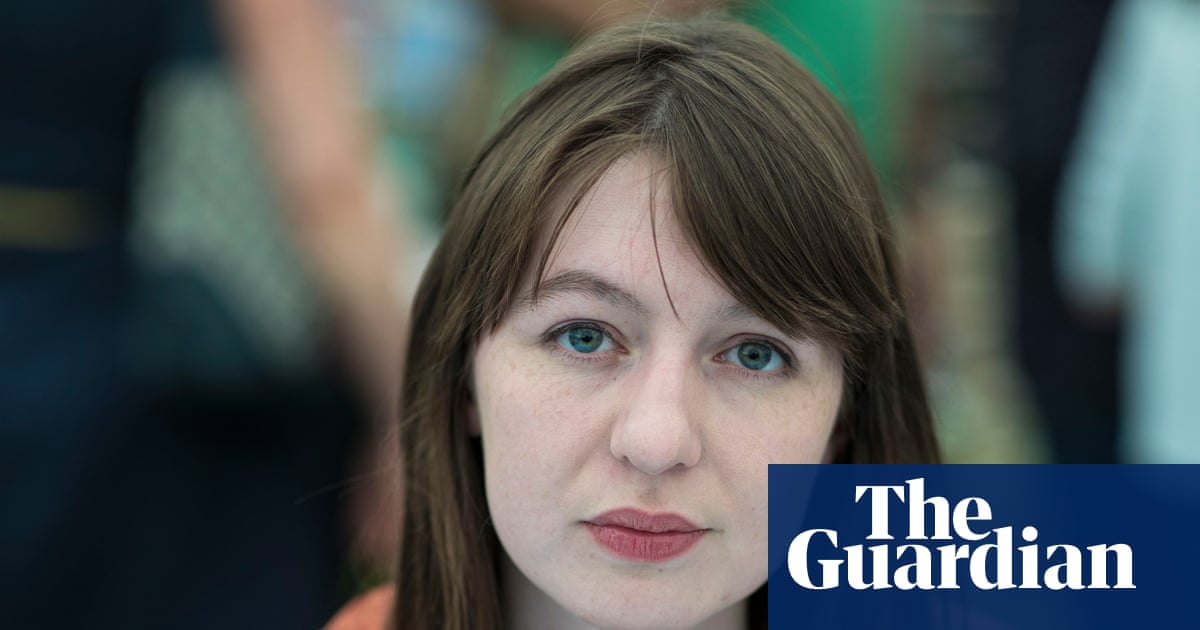
Sally Rooney has said she is being forced to withdraw her books from sale in the UK because of her support for the banned organisation Palestine Action.

The Irish novelist, whose books include Normal People and Conversations With Friends, said her public support for the direct action group meant she could no longer receive royalties from UK sales.

After Palestine Action was banned last year, Rooney said she would use proceeds from her sales to support Palestine Action. Supporting organisations banned under the Terrorism Act is an offence and she subsequently cancelled a trip to the UK to pick up an award, for fear of arrest.

In a statement provided to the Guardian, the bestselling author said: “‘In July 2025, the direct-action protest group Palestine Action was proscribed as a terrorist organisation in the UK. The following month, I wrote an opinion piece expressing my intention to go on supporting Palestine Action, which is not a proscribed or otherwise prohibited group here in the Republic of Ireland.

“As a result, the fulfilment of contracts to publish my work in the UK could now constitute a serious criminal offence. After a process of consultation and deliberation, and with my full agreement, my publisher Faber has therefore determined that it can no longer supply my work within the UK. I have made every effort to be honest with the public about my beliefs and intentions, and I am wholly prepared to accept the consequences.”

Sally Rooney has said she is being forced to withdraw her books from sale in the UK because of her support for the banned organisation Palestine Action.

The Irish novelist, whose books include Normal People and Conversations With Friends, said her public support for the direct action group meant she could no longer receive royalties from UK sales.

After Palestine Action was banned last year, Rooney said she would use proceeds from her sales to support Palestine Action. Supporting organisations banned under the Terrorism Act is an offence and she subsequently cancelled a trip to the UK to pick up an award, for fear of arrest.

In a statement provided to the Guardian, the bestselling author said: “‘In July 2025, the direct-action protest group Palestine Action was proscribed as a terrorist organisation in the UK. The following month, I wrote an opinion piece expressing my intention to go on supporting Palestine Action, which is not a proscribed or otherwise prohibited group here in the Republic of Ireland.

“As a result, the fulfilment of contracts to publish my work in the UK could now constitute a serious criminal offence. After a process of consultation and deliberation, and with my full agreement, my publisher Faber has therefore determined that it can no longer supply my work within the UK. I have made every effort to be honest with the public about my beliefs and intentions, and I am wholly prepared to accept the consequences.”

0

Bestselling Novelist Dropped from Major Prize over Suspected AI Use [based on controversial AI-detection software] | The Walrus

The Walrus Bestselling Novelist Dropped from Major Prize over Suspected AI Use | The Walrus thewalrus.ca
preview

The Thélyson Orélien controversy raises new questions about whether detection software can be trusted

A lot of people here might already be aware of how AI checkers are unreliable at best, and more often just terrible. What I learned from this article is that they might actually harm some groups of people more than others.

NOTE: The original title of this article was “Bestselling Novelist Dropped from Major Prize over Suspected AI Use”. I added the extra context because people might not read the body of the post.

Here are some excerpts that I thought were relevant, with bold emphasis applied by me. Please check out the full article if you want more context outside of what I am highlighting here:

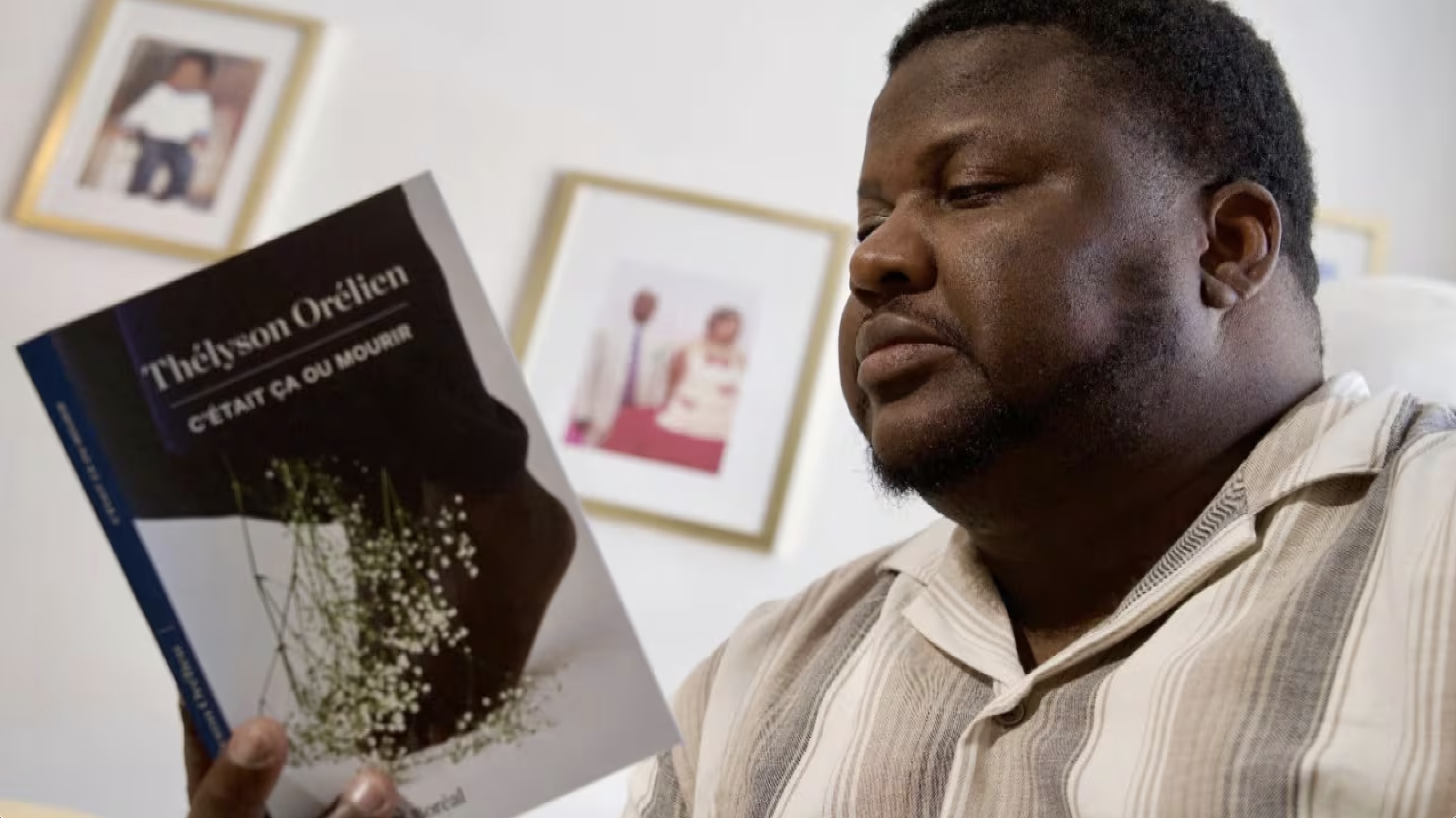
This time, the controversy surrounds C’était ça ou mourir, the first novel by Haitian Canadian author Thélyson Orélien, which has already become a huge success in France. On September 26, the prestigious Académie Goncourt announced it was dropping the title from the longlist for its eponymous literary prize because the prize administrators had concluded it was written with the help of AI. The AI-detection software Pangram determined there was a 100 percent chance the novel was at least in part AI generated.

The author denies using AI, and his French publisher, Grasset, has come out strongly in his defence. Grasset said in a statement that it “strongly objected” to the allegations, which it characterized as “malicious.” The Globe and Mail quoted the French publisher as calling the accusations against Orélien “fake news.” His original French-language Canadian publisher, by contrast, has taken a more measured response to the allegations. The Quebec publisher, Les Éditions du Boréal, told the New York Times, “[A]t this stage, it is impossible for us to confirm or deny the allegations the author is facing.” They went on to say that it is important “not to draw hasty conclusions.”

This is not the first time an award-nominated author has faced accusations of using AI to create written work. Earlier this year, the Commonwealth Short Story Prize encountered criticism after Jamir Nazir’s regional winner, “The Serpent in the Grove,” was accused by social media users of having been written with AI. After a review that included interviews with all the regional winners and examinations of early drafts, edits, and time-stamped emails, the organization that runs the award decided there was no basis to believe Nazir used AI in his writing. The story went on to win the overall Commonwealth Short Story Prize.

The issue of false positives is not incidental: somewhere around 90 percent of the texts used to train large language models are in English, so the French language would throw up difficulties for AI checkers, which themselves use AI to make their determinations. In addition, Orélien is Haitian by background and employs a style of writing heavily influenced by Caribbean oral tradition, which relies on repetition and other tropes often cited as determinants of AI assistance. “I come from a Haitian and Caribbean literary tradition in which poetry, imagery, repetition, and rhythm carry a living voice,” he said in a statement quoted by the CBC. “One might debate my style, but treating its techniques as evidence of artificial intelligence has nothing to do with literary criticism.”

Sutherland, who, like Orélien, is Black, made a similar observation to the Globe about her award-winning story. “This story is rooted in Vincentian oral storytelling tradition, which by nature is formulaic and relies on repetition, rhythm, and patterned language as core elements of their structure,” she said.

The biases and blind spots in AI-detection software are only one issue. Equally troubling is the notion of using AI to detect AI use, an apparent tautology that doesn’t have many safeguards or levels of verifiability. Then there are the people using the software themselves. The accusations against Orélien arose via an anonymous X account run in part by Samuel Fitoussi, a journalist at the right-wing newspaper Le Figaro. His stated reason for using the account to publicize his accusation, according to the New York Times, is that “he thought an anonymous account would be trusted more than his column in a right-leaning newspaper.” Fitoussi may be correct about that, if only because the French right wing has become increasingly antipathetic to immigrant communities in the country.

0

Bestselling Novelist Dropped from Major Prize over Suspected AI Use [based on controversial AI-detection software] | The Walrus

The Walrus Bestselling Novelist Dropped from Major Prize over Suspected AI Use | The Walrus thewalrus.ca
preview

cross-posted from: piefed.ca/…/bestselling-novelist-dropped-from-maj…

The Thélyson Orélien controversy raises new questions about whether detection software can be trusted

A lot of people here might already be aware of how AI checkers are unreliable at best, and more often just terrible. What I learned from this article is that they might actually harm some groups of people more than others.

NOTE: The original title of this article was “Bestselling Novelist Dropped from Major Prize over Suspected AI Use”. I added the extra context because people might not read the body of the post.

Here are some excerpts that I thought were relevant, with bold emphasis applied by me. Please check out the full article if you want more context outside of what I am highlighting here:

This time, the controversy surrounds C’était ça ou mourir, the first novel by Haitian Canadian author Thélyson Orélien, which has already become a huge success in France. On September 26, the prestigious Académie Goncourt announced it was dropping the title from the longlist for its eponymous literary prize because the prize administrators had concluded it was written with the help of AI. The AI-detection software Pangram determined there was a 100 percent chance the novel was at least in part AI generated.

The author denies using AI, and his French publisher, Grasset, has come out strongly in his defence. Grasset said in a statement that it “strongly objected” to the allegations, which it characterized as “malicious.” The Globe and Mail quoted the French publisher as calling the accusations against Orélien “fake news.” His original French-language Canadian publisher, by contrast, has taken a more measured response to the allegations. The Quebec publisher, Les Éditions du Boréal, told the New York Times, “[A]t this stage, it is impossible for us to confirm or deny the allegations the author is facing.” They went on to say that it is important “not to draw hasty conclusions.”

This is not the first time an award-nominated author has faced accusations of using AI to create written work. Earlier this year, the Commonwealth Short Story Prize encountered criticism after Jamir Nazir’s regional winner, “The Serpent in the Grove,” was accused by social media users of having been written with AI. After a review that included interviews with all the regional winners and examinations of early drafts, edits, and time-stamped emails, the organization that runs the award decided there was no basis to believe Nazir used AI in his writing. The story went on to win the overall Commonwealth Short Story Prize.

The issue of false positives is not incidental: somewhere around 90 percent of the texts used to train large language models are in English, so the French language would throw up difficulties for AI checkers, which themselves use AI to make their determinations. In addition, Orélien is Haitian by background and employs a style of writing heavily influenced by Caribbean oral tradition, which relies on repetition and other tropes often cited as determinants of AI assistance. “I come from a Haitian and Caribbean literary tradition in which poetry, imagery, repetition, and rhythm carry a living voice,” he said in a statement quoted by the CBC. “One might debate my style, but treating its techniques as evidence of artificial intelligence has nothing to do with literary criticism.”

Sutherland, who, like Orélien, is Black, made a similar observation to the Globe about her award-winning story. “This story is rooted in Vincentian oral storytelling tradition, which by nature is formulaic and relies on repetition, rhythm, and patterned language as core elements of their structure,” she said.

The biases and blind spots in AI-detection software are only one issue. Equally troubling is the notion of using AI to detect AI use, an apparent tautology that doesn’t have many safeguards or levels of verifiability. Then there are the people using the software themselves. The accusations against Orélien arose via an anonymous X account run in part by Samuel Fitoussi, a journalist at the right-wing newspaper Le Figaro. His stated reason for using the account to publicize his accusation, according to the New York Times, is that “he thought an anonymous account would be trusted more than his column in a right-leaning newspaper.” Fitoussi may be correct about that, if only because the French right wing has become increasingly antipathetic to immigrant communities in the country.

0

Abolish the Top Ten Books List | The Walrus

The Walrus Abolish the Top Ten Books List | The Walrus thewalrus.ca
preview

Stumbled upon this article yesterday. Some food for thought, about something I for sure have taken for granted. What do you think?

Stumbled upon this article yesterday. Some food for thought, about something I for sure have taken for granted. What do you think?

0

Abolish the Top Ten Books List | The Walrus

The Walrus Abolish the Top Ten Books List | The Walrus thewalrus.ca
preview

cross-posted from: lemmy.ca/post/71968046

Stumbled upon this article yesterday. Some food for thought, about something I for sure have taken for granted. What do you think?

cross-posted from: lemmy.ca/post/71968046

Stumbled upon this article yesterday. Some food for thought, about something I for sure have taken for granted. What do you think?

0

My first children's book of this year - Where the Red Fern Grows (1961) Review

preview

Where the Red Fern Grows is about a boy named Billy who saves up enough money to buy two coon hunting dogs. The story is about his adventures and hunts with these dogs that he names Old Dan and Little Ann, and it’s a story about their bond with eachother.

If you have ever lost pets as a kid, I highly highly don’t recommend/recommend you read this book as it will feel cathartic but it will also paralyze you with sorrow for an hour or a half. Beyond that, it’s a neat little book about a boy riding out with his coon hounds and hunting game.

Anthony Heald did an amazing job with the voicing the main character who’s a 14 year old kid. He sounded innocent and curious but also desperate whenever the story commanded it. The adults he voices in an accent and they all sound great, there’s even a few bawls from the dogs thrown in which sounded amazing so I was really happy with the audiobook adaptation of it.

I have never seen a raccoon or even knew anything about the coon hunting culture in the Ozark mountains but the book is pretty easy to read and you never feel lost. The hunts are a big highlight of these book and some of the more important ones were a thrill to read through.

There’s a lot of sensibility in the book as well, it doesn’t shy away from the brutality of the hunt or real life but it also tries it’s best to show that there can be something noble in it as well or atleast a way to do something more nobly.

There are some really dark scenes and dark imagery in the book but it’s not scary per se and a little bit of adventuring thrill makes the book feel engaging and impactful.

I really enjoyed my time with this little book, the pacing is easy and it’s a nice journey to go on with a few serious moments.

For my next read, I’m thinking of going to Stephen King’s Tower but I don’t know the correct way so if there’s a chronological order comprising those books and any important ones I could use that or just go through the published order. I’ll be listening to them as audiobooks

0

Struggling to remember names from books I've read

preview

I’ve been reading quite a decent amount since I was a kid, and I’m now in my late 20’s. I’ve recently realized that the books I’ve read in the last couple of years, I struggle to remember much about them.

I can remember the general outline of the story, or most of the major plot points, but any character names or place names I struggle to remember.

I’ve been going through and reading many fantasy/sci-fi series, and it usually feels like once I get to book 2 of whatever new series I’ve picked up, I can’t remember the previous series I read.

For example, I’m currently reading The Thief series, and really enjoying it. However I’m finding that I can’t remember much of the names or characters from the Red Rising series, which I read just before this. I can remember most of what happens, and I remember really enjoying it, but names just get lost entirely.

If you were to ask me what happens in the books I read the last couple of years, I would be able to tell you in quite decent detail, but I’d struggle with any names.

The only exceptions are books I read when I was young, like the Lord of the Rings books or the Hyperion books.

Does anyone else have this issue? How can I better remember details like this?

0

Naomi Klein new banger

end times fascism, and the fight for the living world. Naomi Klein, astra Taylor
preview

This book is amazing at pulling so much together. I highly recommend it. Very freaky stuff that we all know, but laid out clearly and coherently.

This book is amazing at pulling so much together. I highly recommend it. Very freaky stuff that we all know, but laid out clearly and coherently.

0

Story in a sentence 1. Alistair Maclean: an excerpt from McCrimmon and the blue moonstones

preview

McCrimmon had done very well out of the game and might have been there yet had not some inquisitive bystander seen fit to comment, in terms of loud admiration, upon the exquisite delicacy of the workmanship whereby the backs of the cards were painted in fifty-two different patterns.

- Alistair Maclean, McCrimmon and the blue moonstones, The Lonely Sea

0

Recommend me: lore like Game of Thrones, but only one book

preview

I also don’t like Martin’s writing style. But I love the lore. I just can’t do another series. What’s one book that has the kind of worldbuilding that made us all love (and then hate the unfinished state of) A Song of Ice and Fire?

I also don’t like Martin’s writing style. But I love the lore. I just can’t do another series. What’s one book that has the kind of worldbuilding that made us all love (and then hate the unfinished state of) A Song of Ice and Fire?

0

'Crossing the Red Line' examines the Biden administration and Israel's war in Gaza

NPR Inside the 'herd impunity' behind Biden's Gaza policy www.npr.org
preview

LEILA FADEL, HOST: Nearly three years since the start of the war in Gaza in response to a devastating Hamas attack on Israel, journalist Akbar Shahid Ahmed has written an account detailing the period, October 7, 2023, to January of 2025. It’s focused on the Biden administration’s decisions in that time. And it’s called “Crossing The Red Line: Biden, His Advisors, And Israel’s War In Gaza.”

…

FADEL: I’m thinking of a line that you had kind of near the end of your book. And you wrote, in less than two years, Joe Biden irreversibly changed America’s role in Israel-Palestine and may have permanently altered America’s approach to foreign affairs. Say more.

AHMED: The Biden administration’s Gaza policy created a more dangerous world for us all. It’s a period that reshapes the standards of warfare. It becomes a question not only of danger and influence globally, but a question of democratic accountability to what Americans want their country to be doing on the world stage.

FADEL: Right, because all of the leading officials that were involved are still successfully employed.

AHMED: And positioning themselves for future administrations. A lot of these officials are now saying, well, in retrospect, I would’ve done things differently, but under President Biden, it wasn’t possible. My book makes the argument and offers significant evidence that we shouldn’t let that line be sufficient, that we actually should hold these officials responsible for their choices at junctures where they could have saved Palestinian lives and also Israeli lives - and gotten us off a path, I really feel, a path from enabling Israeli escalation in Gaza, consistent escalation then into Lebanon, into now the Iran war and real risk to American lives and many others.

Archived at web.archive.org/…/crossing-the-red-line-examines-…

0

I'm reading, "Tender Is The Flesh"

preview

Great book so far. A virus makes animals fatal to eat, so of course there could only be 1 solution, systematically breeding and eating people. I know it’s another reality/universe but the main character remembers eating animals as a child. That means people went from normal to completely evil in 1 generation. By the time the man is grown, he lives in a world where everyone acts like a psychopath, trying to normalize it. It’s like in one person’s lifetime, everyone lost their souls to the point where empathy was practically illegal. If the world in this writer’s mind changed that fast, I wonder what a sequel 100 years into the future would look like…

Great book so far. A virus makes animals fatal to eat, so of course there could only be 1 solution, systematically breeding and eating people. I know it’s another reality/universe but the main character remembers eating animals as a child. That means people went from normal to completely evil in 1 generation. By the time the man is grown, he lives in a world where everyone acts like a psychopath, trying to normalize it. It’s like in one person’s lifetime, everyone lost their souls to the point where empathy was practically illegal. If the world in this writer’s mind changed that fast, I wonder what a sequel 100 years into the future would look like…

0

I just finished “The Ruins” by Scott Smith and I’m very mad

preview

Spoiler alert:
Please don’t read this post if you haven’t read the books yet.

Tap for spoiler

I feel robbed. It’s not fair that he killed off all the characters. I’m like heartbroken right now. I was waiting for an ending that would ease all the stress I went through, but nope, the author had to keep it that way for me.

0

How to Hide an Empire by Daniel Immerwahr

Macmillan Publishers How to Hide an Empire us.macmillan.com
preview

I finished this recently and found it incredible. There was so much history I was completely ignorant to. I never knew the U.S. controlled The Phillipines, or that we took so much of Spain’s empire.

Highly recommend this book to anyone who wants to know the full extent of the U.S.'s imperialism. I will say it has many parts that are difficult to read, especially the events in Manila.

0

Book series like Jack reacher?

preview

Hi! Im looking for a series like Jack reacher. Lone wolf, tough guy character, small town settings, helps people in need. Id prefer left-wing authors but ill settle for non-left wing. I know thats a big ask. Thank you!

Hi! Im looking for a series like Jack reacher. Lone wolf, tough guy character, small town settings, helps people in need. Id prefer left-wing authors but ill settle for non-left wing. I know thats a big ask. Thank you!

0

Poetics by Aristotle

preview

This book was interesting to me in the part where Aristotle discusses tragedy plot and tragic hero.

If you are interested in tragedy plot or other basic plots, then Booker’s book may be more informative.

To add some context, here are few examples of the classic tragedy plots: Breaking Bad, Anna Karenina, Oedipus Rex etc.

0

Suggest me fiction book(s) where character(s) world that they live in is an actual book/movie/TV show/video game/etc.

preview

What I mean is books that have characters live in settings that are, in-universe, fictional in some way or the like. I don’t mean books that have adaptations in other mediums

Preferably the story has at least one of the following: the world has its own laws of physics; shows how the world works; explores the setting’s implications; explores how it affects characters; or the world is under threat.

Thanks for your help👍

0

Kobo e-readers collect telemetry on your sideloaded books, and there's no official way to opt out

GitHub GitHub - seandheath/koboctl: koboctl is a Go CLI tool that provisions and hardens Kobo e-readers over USB, automating the installation of KOReader, NickelMenu, KFMon, and Plato while locking down telemetry, disabling unnecessary services, and enforcing family-safe DNS turning a stock Kobo into a secure, vendor-free reading device in a single command. github.com
preview

Your Kobo Knows Every Book You’ve Ever Read

See github.com/seandheath/koboctl

Your Kobo Knows Every Book You’ve Ever Read

See github.com/seandheath/koboctl

0

How do you manage the same book with different editions in Calibre? (Like US, UK, Illustrated, Portuguese Translated, ...)

preview

How do you manage the same book with different editions in Calibre? (Like US, UK, Illustrated, Portuguese Translated, …)

I think they should all belong to the same folder, but that’s not how Calibre works. Is there any way to keep books organized after “Save to Disk”? (I use Kavita)

How do you manage the same book with different editions in Calibre? (Like US, UK, Illustrated, Portuguese Translated, …)

I think they should all belong to the same folder, but that’s not how Calibre works. Is there any way to keep books organized after “Save to Disk”? (I use Kavita)

0

Where to Find Small Form Factor Books

preview

While visiting Japan I noticed they have a lot tof print books in size A6 (and smaller) and thought it would be great to have my reading in a truly pocket size. But I’m finding English books just aren’t available in those sizes except for one-offs. Anyone have a source?

While visiting Japan I noticed they have a lot tof print books in size A6 (and smaller) and thought it would be great to have my reading in a truly pocket size. But I’m finding English books just aren’t available in those sizes except for one-offs. Anyone have a source?

0

Leaving Stone Mountain | Los Angeles Review of Books

Los Angeles Review of Books Leaving Stone Mountain | Los Angeles Review of Books lareviewofbooks.org
preview

Yet Under the Falls stands apart from these texts because, as the name Stone Mountain and its Confederate associations should imply, Russo links his perennial theme of white working-class struggle and misery—what we might call the Gloversville theme—to the South’s “Lost Cause” and, more broadly, to white racist laments for a bygone era. Here, more than in any of his other novels, Russo tempers his personal attachment to a Rust Belt story with a new awareness of how white Americans have long manipulated facts to generate a self-serving and hateful version of the past. The text’s invocation of the January 6, 2021, attack on the Capitol highlights Russo’s interest in distinguishing the white workers of his novel from the “young white men waving Nazi flags and members of the KKK and conspiracy-theory-stoked militiamen” whom he decried in a recent Lit Hub essay.

To be sure, Under the Falls takes regional history seriously through a steady focus on Tyler and his ambivalent feelings about the area. The novel begins with Tyler and his band arriving in Stone Mountain to play a benefit show for Doc, a friend rendered paraplegic by a terrible fall years before. Already uneasy about his return after decades away, Tyler grows even more anxious when Doc informs him that “not everybody on the Mountain is a Tyler Sinclair fan.” Doc explains: “It’s not just that you made all that money, […] It’s that you made it writing songs about us. […] Where’s our cut? is how they look at it.” “The Long Fall,” Tyler’s most famous song, offers ready ammunition to his detractors: inspired by Doc’s accident, the tune allegorizes the town’s economic demise and social crisis. Tyler has turned his friend’s suffering and his community’s misery into popular music and benefited in the process.

0

“Love and Limerence” by Dorothy Tennov (Review)

preview

I’ll try to be clear for once, to be real, to speak normally. I’m obsessed, with you, you’re always on my mind, and I’m always trying to keep up with you, to grab your attention, to have your gaze fixed upon me.

This book was supposed to be a comfortable read to soothe my brain after months of reading theory. Objectively speaking, it is a simple and easy pop-psychology book destined to lay readers, despite its well cited and researched nature. (The study is based on the findings of a large set of questionnaires and interviews). However, I did not expect that every paragraph and every phrase I read would force me back to my past romantic experiences in order to reflect upon them in light of my newly gained knowledge.

Limerence is, to put it simply, the state of “being in love.” It is distinct from love per se, and it is not sexual desire, although all three can coexist. Poets, philosophers, theologians and all sorts of intellectuals have conceived of such a phenomenon, giving it different labels throughout history, such as “romantic love,” “erotic love,” “love spark,” etc.

Tennov posits that “limerence is, above all else, a mental activity. It is an interpretation of events, rather than the events themselves.” That limerence is a mental activity, see an interpretation of real events, implies the existence of a limerent subject on the one hand, and a limerent object (LO) on the other. An entire emotional revolution could be brewing within the limerent person that may perhaps be fully unknown by LO. For limerence is not so much about LO as much as it is about the feelings and emotions one has for LO.

Limerence creates above all a desire for reciprocation within the limerent person. It is the ultimate goal and achievement of limerence. Reciprocation could be expressed in many different ways: for example, it could be sexual intercourse, a relationship, or even a fruitful confession of love. Once reciprocation is achieved, limerence arrives at its consummation, “in which the bliss of reciprocation is gradually either blended into a lasting love or replaced by less positive feelings.” However, reciprocation is not always achieved, and sometimes it is rendered uncertain or almost impossible due to circumstances: this is what we call unrequited love. Regardless, what fuels limerence is that desire for reciprocation and mutuality, and will continue as long as there is even a slimmer of hope in the mind of the limerent.

Just as all roads once led to Rome, when your limerence for someone has crystallized, all events, associations, stimuli, experience return your thoughts to LO with unnerving consistency. (Ch. 2)

One common symptom of limerence is obsession with LO. Some people dream of their LO while others daydream of them. Everything and anything could be a source of romantic reverie. Though such a phenomenon differs from one person to another depending on the degree of limerence which incessantly fluctuates.

Limerence can have positive effects on its subject and the people around them. It is commonly a motivator for self-improvement and has been throughout history the main inspiration for lots of artistic works of different kinds. However, it is not devoid of negative effects: antisocial behavior, intrusive thoughts, extreme moodiness, severe grief and sorrow following rejection, and so on. This promoted psychoanalysts, according to Tennov, to reduce limerence to a pathological, irrational state of the mind. (This claim was moreso confirmed when I discussed the book with a psychology major). To them, limerence is not “true love.” According to Maslow, for instance, “B-lovers [true lovers] are not unreasonably jealous and they are not blind. It is the other, damaging D-love [limerence] which blinds you. In true love (B-love) you are able to perceive your lover clearly and penetratingly.” Sociologist Paul Bohannan puts it as such:

“romantic love” is a condition in which your “love fantasies become ends in themselves.” You are blinded to LO’s “real” personality because you refuse to look at the facts.

There is truth in the claim that limerence is irrational. It is not love for the other based on mutual concern and affection, but it is rather love for love itself. Limerence is selfish in the sense that it disregards the person behind LO and reduces them to an abstracted ideal in the mind of the limerent. Tennov concedes to this, yet she found her respondents and informants to be quite aware of how illogical their limerent state is. She concludes that “while it is illogical, it is also normal, and therefore normal human beings can be illogical,” thus dismissing the psychoanalytical approach of pathologizing limerence.

Limerence is quite a universal experience that transcends human cultures. Yet it is not an experience shared by everyone. Tennov admits the existence of people, as her questionnaire and interviews have shown, who are nonlimerent. This raises more unanswerable questions about the nature of limerence and its origins.

In my personal opinion, and as someone who has experienced limerence, I do not believe it is pathological, despite how irrational or illogical I could have behaved at times. True, limerence is unsustainable if not transformed into true love, which is what must be sought after. That being said, I cannot view limerence as anything other than normal, just because of how ingrained it is in our culture: the music, the folkloric tales, the literature, the language, and so on. I do not seek after the feeling, nor do I wish to stay in its grasp, and yet I accept it as something normal.

I also do not agree with the author’s claim that limerence is not a cultural invention. It is so in the sense that the way it is expressed differs among human societies. Though this ought not diminish from its material existence as a “complex involuntary human reaction pattern.”

The book, while it doesn’t answer many of the mysteries behind limerence, doesn’t shy away from asking the tough questions. I was quite pleased that the author even discussed the question of sexual difference and sexuality and their role in shaping limerence

OC review by @Tatar_Nobility@lemmy.ml

0

[REVIEW] bell hooks - The Will to Change: Men, Masculinity, and Love

preview

I’m having trouble putting my feelings about this book into words.

How do I go about describing the shattering of a window I didn’t know I was peeking through? A slap in the face from someone I didn’t know could exist?

My Kindle melted in my hands as I read. The plastic softened and turned to skin and the screen bent and twisted into eyes and a mouth and a nose, a face. I stared at the eyes, and as the words flickered and tears welled, I heard the mouth move to whisper and then speak and then scream, and I know it was the truth what it said.

bell hooks was a witch; of that, at least, I’m sure.

The Will to Change is honest, sober, and painfully aware of what it is that makes men men, and the systems that rip their nature from them. It describes the iron grip that crushes and shapes boys into loveless archetypes, writhing in a sea of needles that keeps them from being truly human; that same hand that puppeteers their mothers and sisters and lovers, and their fathers and brothers and friends, the same hand that sews their mouths shut as it rips their minds to shreds and chokes their hearts. This book is an indictment of patriarchy not just because of what it does to women, but especially for what it does to men; what it takes from them and the promises it shatters and the silence it demands.

That being said, every word is loving. It is a deep, powerful, raw yearning for love, for healing, for companionship and community. Every chapter begs men to reconsider, to change, to choose love and forego their pain and hurt, to choose to be people instead of dominators and patriarchs, to choose peace instead of violence and war. The Will to Change looks men in the eye and sees past the stoic veneer patriarchy demands and offers release: release from loveless marriages, release from unfulfilling sex, release from violence and grief, release from endless work, release from the burden of living according to a diseased and corrosive script instead of according to our needs and desires. Even as it ravages traditional notions of masculinity and maleness, the feminism of The Will to Change is a hand outstretched and a warm embrace; a guide and a tutor for a new kind of man that can live free and truly love.

And that’s what I loved most about it. Anyone can point out the issues, and in fact many do: the male loneliness epidemic, men are unhappy, the sexual marketplace is a mess, nothing is good for men… Any struggling man or boy will find that their issues are recognized, that their strife is known and acknowledged, but the answers are always unsatisfying. You need to be more violent, more isolated, more hateful. Distrust, deny, control, dominate. Those are the answers you hear so very often. Then, as was already the case when the book was first published over 20 years ago, things got worse for the men that stuck with the old system, that corrosive and hateful system named with such a dreadfully misconstrued word as patriarchy. But The Will to Change is different: it offers a solution rooted in love and compassion. It moves away from the destruction that pervades traditional masculinity and describes a better future for men. It shows a glimpse of a nurturing masculinity, a kind masculinity, a passionate masculinity; it shows men that there’s a path forward where the promises of the patriarchy, of pleasure and wholeness and self, can be fulfilled, away from pain and domination. The lonely man, the angry man, the hurt man, they all can read this book and find a guiding light.

bell hooks saw men and she makes a feminism that saves them. She truly saw and understood and loved, even as men hated and raged and hurt she loved, and as they thrashed around sightless and deaf and lost she loved, and she loved, and she loved, and she says that, to love, men need the will to change. Ultimately, I agree.

I only wish, one day, I can love as she so dearly hoped I would.


Rating: READ IT NOW

Check it out here!

Review by @gon@lemmy.dbzer0.com

0

World's largest open library calls for volunteers to scan and preserve physical books as AI companies buy, scan, and destroy them — Anna's Archive says ‘time is running out’ as ‘knowledge is permanent

Tom's Hardware World's largest open library calls for volunteers to scan and preserve physical books as AI companies buy, scan, and destroy them — Anna's Archive says ‘time is running out’ as ‘knowledge is permanently monopolized on private servers’ www.tomshardware.com
preview

As AI tech companies increasingly buy and destroy books to feed to their AI models, Anna’s Archive is calling for volunteers to help preserve them for the public record

As AI tech companies increasingly buy and destroy books to feed to their AI models, Anna’s Archive is calling for volunteers to help preserve them for the public record

0

We Tracked a Shipment of Rare Books. It Ended at an Amazon AI Training Facility

404 Media We Tracked a Shipment of Rare Books. It Ended at an Amazon AI Training Facility www.404media.co
preview

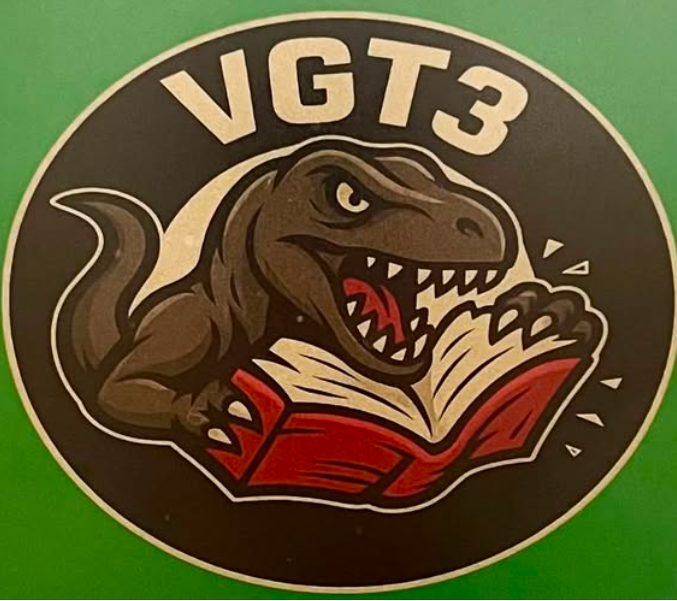
The symbol for Amazon’s VGT3, the Las Vegas facility where it scans book for AI training data.
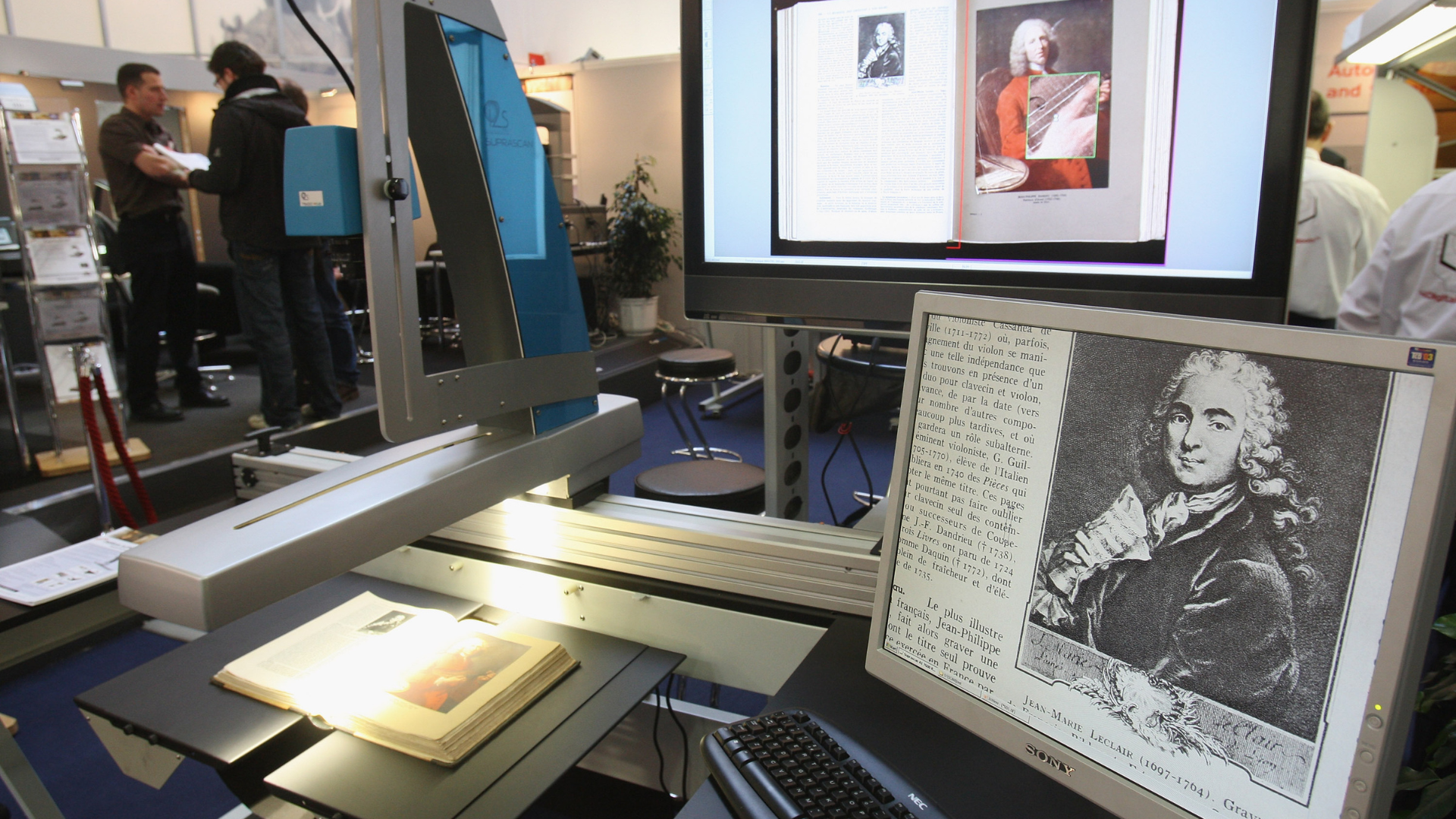
Amazon is buying massive quantities of books, scanning them for AI training data, and destroying them in the process.

A 404 Media investigation was able to reveal Amazon’s book buying operation, which hasn’t been previously reported, by placing a tracking device in a rare book we suspected would be acquired by an AI company for training data, and following it around the country to its final destination.

That final destination was an Amazon warehouse in Las Vegas, Nevada. Amazon employees who work at this location say all they do is receive massive shipments of printed books which they then cut the bindings off in order to scan the books more quickly. The printed book is destroyed in the process. The logo of the Amazon team that works at this warehouse, called VGT3, is a dinosaur, brandishing its teeth and with a book in its hands.

“Amazon purchases books through commercial channels to help develop and improve the products and services our customers use,” an Amazon spokesperson told me in a statement.

The world’s AI companies are constantly looking for, and spending extreme resources to locate, more material to train their AI models. With books, that sometimes means destroying them in the process, something that large parts of the public have spoken up against, and which we can now confirm Amazon is doing.

In July, I published a story about booksellers who reported a historical spike in sales starting in the past year. They suspected this spike in sales was due to AI companies acquiring any books they can in search of new training data. Printed books are valuable as training data because a lot of the text they contain is not readily available on the internet, which AI companies have already scraped. The data is also conveniently organized and, if the book was printed before 2022, is guaranteed to be free of AI-generated text, which can make any AI model that is trained on it worse via a recursive process called “model collapse.”

📖 Do you know work at a facility where you scan books? I would love to hear from you. Using a non-work device, you can message me securely on Signal at @emanuel.404. Otherwise, send me an email at emanuel@404media.co.

These booksellers suspected AI companies were behind these large bulk purchases because of the high number of books they were buying, the seemingly random choice of books, and the fact that these buyers, unlike libraries and universities, did not seem price sensitive at all. But booksellers couldn’t say for certain who was behind the large purchases because the marketplaces where they sell their books keep the buyers anonymous. When an order comes in, a bookseller ships the sold books to a warehouse operated by the marketplaces, where books are sorted and then sent to the buyer.

In July, one bookseller told me they received a very large order of around 1,000 books on Biblio, one of these marketplaces. The seller agreed to put an Apple AirTag provided by 404 Media in one of the books included in this order so we could see where the book was going. And by extension, which company, AI or otherwise, was behind this massive order. 404 Media granted the bookseller anonymity because they worried sharing this information would harm their business. Biblio did not respond to a request for comment

The symbol for Amazon’s VGT3, the Las Vegas facility where it scans book for AI training data.
Amazon is buying massive quantities of books, scanning them for AI training data, and destroying them in the process.

A 404 Media investigation was able to reveal Amazon’s book buying operation, which hasn’t been previously reported, by placing a tracking device in a rare book we suspected would be acquired by an AI company for training data, and following it around the country to its final destination.

That final destination was an Amazon warehouse in Las Vegas, Nevada. Amazon employees who work at this location say all they do is receive massive shipments of printed books which they then cut the bindings off in order to scan the books more quickly. The printed book is destroyed in the process. The logo of the Amazon team that works at this warehouse, called VGT3, is a dinosaur, brandishing its teeth and with a book in its hands.

“Amazon purchases books through commercial channels to help develop and improve the products and services our customers use,” an Amazon spokesperson told me in a statement.

The world’s AI companies are constantly looking for, and spending extreme resources to locate, more material to train their AI models. With books, that sometimes means destroying them in the process, something that large parts of the public have spoken up against, and which we can now confirm Amazon is doing.

In July, I published a story about booksellers who reported a historical spike in sales starting in the past year. They suspected this spike in sales was due to AI companies acquiring any books they can in search of new training data. Printed books are valuable as training data because a lot of the text they contain is not readily available on the internet, which AI companies have already scraped. The data is also conveniently organized and, if the book was printed before 2022, is guaranteed to be free of AI-generated text, which can make any AI model that is trained on it worse via a recursive process called “model collapse.”

📖 Do you know work at a facility where you scan books? I would love to hear from you. Using a non-work device, you can message me securely on Signal at @emanuel.404. Otherwise, send me an email at emanuel@404media.co.

These booksellers suspected AI companies were behind these large bulk purchases because of the high number of books they were buying, the seemingly random choice of books, and the fact that these buyers, unlike libraries and universities, did not seem price sensitive at all. But booksellers couldn’t say for certain who was behind the large purchases because the marketplaces where they sell their books keep the buyers anonymous. When an order comes in, a bookseller ships the sold books to a warehouse operated by the marketplaces, where books are sorted and then sent to the buyer.

In July, one bookseller told me they received a very large order of around 1,000 books on Biblio, one of these marketplaces. The seller agreed to put an Apple AirTag provided by 404 Media in one of the books included in this order so we could see where the book was going. And by extension, which company, AI or otherwise, was behind this massive order. 404 Media granted the bookseller anonymity because they worried sharing this information would harm their business. Biblio did not respond to a request for comment

0

AI-generated stories rated better quality than human-written ones, study finds

the Guardian AI-generated stories rated better quality than human-written ones, study finds www.theguardian.com
preview

The Study

In a study published in the journal Judgment and Decision Making, 1,682 adults were asked to read one of six short stories, three of which were written by humans and three by ChatGPT. Each AI story had a similar theme to one of the human-authored works.

The team told participants whether their story was written by a human or AI, but this information was not always correct. The researchers then asked participants to rate how absorbing and engaging they found the story, and its quality.

Participants who read an AI-generated story rated it as more absorbing and of higher quality than those who read a story written by a human. However, participants gave higher ratings to stories they had been told were written by people.

Dr Deena Skolnick Weisberg, a senior author of the research from Villanova University in Pennsylvania, said: “AI systems can already generate short stories that are seen as being at least as good as – if not better than – human-written stories. We should update our views of AI’s abilities accordingly.”

However, Weisberg, who is herself a creative writer, said that did not mean writing should be left to AI, noting that novels produced by tech were probably going to be different from those written by humans.

“We may need to make room for AI-generated novels, and for AI/human co-written novels, but that doesn’t mean that there’s no longer space for us to appreciate the process of human creativity,” she said.

0

Company Offering Printed Books to Train AI Stops After 404 Media Coverage

404 Media Company Offering Printed Books to Train AI Stops After 404 Media Coverage www.404media.co
preview

Citing backlash, ISBNdb removed its webpages about training AI, denied ever buying, scanning, or selling a book for AI training, and said the site was a “test of market interest.”

Citing backlash, ISBNdb removed its webpages about training AI, denied ever buying, scanning, or selling a book for AI training, and said the site was a “test of market interest.”

0

AI labs buy, scan, shred millions of rare books

news.com.au AI labs buy, scan, shred millions of rare books www.news.com.au
preview

Artificial intelligence labs are in a new arms race to buy up millions of rare books, slicing them open, scanning the pages and pulping the remains — sparking concerns that the last remaining copies of out-of-print texts are being destroyed on an industrial scale.

ISBNdb notes that “print books from the pre-LLM era are structurally guaranteed to be free of this contamination”.

“Millions of the most valuable books have never been digitised. They exist only in physical form, scattered across library shelves, used bookstores, and out-of-print catalogues. We get them to you at scale.”

0

Smashwords – summer/ winter sale

preview

Many ebooks at smashwords are currently reduced as part of the summer/winter sale. Some authors are even offering their books completely free, like this guy: www.smashwords.com/profile/view/ClemensSuter It looks like a great way to stack up on books by Indy authors.

Many ebooks at smashwords are currently reduced as part of the summer/winter sale. Some authors are even offering their books completely free, like this guy: www.smashwords.com/profile/view/ClemensSuter It looks like a great way to stack up on books by Indy authors.

0

A glorious recap - Marvels (1994) Review

preview

I can’t talk about this comic book without stressing the important fact that much of the joy and wonder and amazement that I got out of this book was due to the fact that I was already familiar with a lot of the stories in this comic book.

That’s one of the strengths and weaknesses of this book, it relies on you as a fan of these stories and much of the themes of this book depend upon you knowing these characters beforehand. Now, I have never read more than a handful of comic books but I have seen a lot of the movies which helped a lot.

Marvels is about our main character Phil Sheldon, a photographer in New York as he lives through the 40s and 50s and 60s and 70s and witnesses the stories of many of the major characters from Marvel Comics. We see Captain America fighting the Nazis, the rise of Fantastic Four and the arrival of Galactus, we see Avengers forming and taking on new members and of course the X-Men and how they differ from other heroes.

I have no idea how it would feel to read these stories if you were unfamiliar with most of the stories because one of the reasons why this book works is that it reflects our own childhood wonder and amazement of these characters onto us. We see people marveling at them just as we used to, just as I did when I was a kid watching Spider-Man on an old CRT. Without that reflection, I think much of the appeal would be lost.

Of course, Alex Ross’s drawing is amazing and it feels even more cinematic somehow than Kingdom Come. In that story the amount of busy action sequences left me disoriented at times but here even though there are some really cool battles against foes, much of the focus is on everyday people. I like how these scenes have a momentum to them, the sense of pace as Phil walks the streets or runs toward his house feels impactful even though there’s nothing grand going on action-wise.

What I love about also is how people are hostile towards these heroes, especially the mutant X-Men who are treated like commies and hunted down at every turn. The scenes of human brutality hit a lot harder than any large scale action sequences could. The book also manges to be consistently grounded, this is not one of those stories where an average guy gets in a team-up with superheroes and forms a relationship with them. Instead,

spoiler

the only time he comes too close them, he ends up losing his right eye.

spoiler

It’s not a criticism per say but I find it very strange and interesting how this book forms it’s own version of superhero fatigue within the story. Phil Sheldon towards the end gets so sick and tired of people admiring these heroes whenever they get saved and accuse them of villainy when things are peaceful that he doesn’t want to be a part of it and retires, leaving the story at an inconclusive end for him and the reader.

OC write up by @Legendsofanus@lemmy.ml