

0
preview
@books What are you reading today? Can you recommend this book to me?
@books What are you reading today? Can you recommend this book to me?
posts tagged #books

Nearly 100 books are included in Livraria Lello’s new cultural auditorium, with each relating to four key themes: power, control, voice, and memory. Margaret Atwood’s The Handmaid’s Tale and Reginald Dwayne Betts’ Felon, alongside selected works from Salman Rushdie and Olga Tokarczuk will also be available in the Manifesto Library.
Nearly 100 books are included in Livraria Lello’s new cultural auditorium, with each relating to four key themes: power, control, voice, and memory. Margaret Atwood’s The Handmaid’s Tale and Reginald Dwayne Betts’ Felon, alongside selected works from Salman Rushdie and Olga Tokarczuk will also be available in the Manifesto Library.

“ABODE” is one of the most technologically advanced and gloomy locations in the “Metro 2033” universe, described in detail in Andrei Grebenshchikov’s novel Metro 2033: Abode of Dreams. Unlike the half-destroyed and dirty Moscow Metro, this complex was originally conceived as a true autonomous paradise on Earth, but ultimately turned into a giant high-tech tomb.
Architecture and Level Layout
“ABODE” is located south of Moscow, in the Shcherbinka area. From the surface, the complex looks like a huge artificial hill, the base of which is constantly shrouded in poisonous yellowish fog. Thanks to its own nuclear reactor, the bunker is completely autonomous: it has functioning sewage, water supply, air regeneration systems, and full electricity.
The complex descends deep underground and is divided into functional levels:
Upper level: A huge transport hangar with red emergency lighting. Heavy equipment is preserved here: evacuation buses, “Tiger” armored vehicles, and “Volk” chemical protection vehicles.
Technical floors: Purification systems and warehouses stocked with food supplies for generations ahead.
Minus 2nd and Minus 3rd floors: Residential zones with comfortable furnished apartments. The elite and specialists in key professions lived on the third tier.
Minus 2nd and Minus 3rd floors: Residential zones with comfortable furnished apartments. The elite and specialists in key professions lived on the third tier.
Minus 5th floor: The highlight of the project — a large-scale imitation of a pre-war city. Under a high ceiling with a painted daytime sky, there are asphalt roads, functioning street lamps, open cafes, shops, a library, a cinema, swimming pools, and flower beds with fountains.
Lower levels: A high-tech medical block (Minus 6th floor), beneath which lie deep technical wells and elevator shafts.
Fatal Trap: The Mystery of the Hermetic Gate
The main vulnerability of ABODE was its own security system. The massive entrance hermetic gates could not be locked or opened at will.
All of the bunker’s automation is tied to a rigid timer linked to the date of the beginning of World War III (July 6). The gates open only once every four years and only for a very short period of time. For the rest of the time, the residents are locked inside with no chance of leaving.
History
Originally, the Object was built as a large commercial logistics center with underground refrigeration units. However, one of the investors — the architect Vladimir Aristarkhovich Sannikov (later known as the Dreamer) — had foreseen the nuclear apocalypse and secretly converted the project into an autonomous ark. On the day of the Catastrophe, buses carrying the families of shareholders and residents of an elite village managed to enter.
However, the utopia never materialized. The very first years were marked by a fierce power struggle between the official Bunker Administration and the dissenting residents, who were nicknamed the “Swamp People.” The “Swamp People” uprising was suppressed by the leadership with extreme brutality: people were shot with machine guns and burned with flamethrowers.
The Dreamer himself intervened in this conflict. Having lost his young son during the coup, he faked his own death and became a secret executioner. For years, he methodically eliminated the leadership and tormented the population of ABODE, forcing them to live in constant fear.
The Curse of the “Sleeping One” and the Fall of the Bunker
The final collapse of the shelter was caused by a biological threat from outside. During the next gate opening in 2021, the daughter of the Administrator — El — broke out while trying to save her young son Nick.
The boy was taken to the safety of the Metro, while El herself disappeared into the radioactive Fog.
Four years later, during the next automatic opening of the gates, El’s living but comatose body was found on the threshold of ABODE. It turned out that a dangerous telepathic mutant had possessed her. Becoming the “Sleeping One,” El began broadcasting waves of madness throughout the entire bunker. Residents of ABODE went insane en masse, killing their relatives in their sleep or committing suicide.
Within a few years, the entire population of ABODE died out in terrible agony. The only survivor was the mad Dreamer, who for years dumped the bodies of his former neighbors down the elevator shafts and cared for the body of the Sleeping One on the minus sixth floor — until the voice in his head ordered him to go outside and bring back her (El’s) grown son.
Finale
In 2033, ABODE finally ceased to exist. Lured by deception, Nick managed to destroy the creature inside his mother, ending the mental nightmare. The creator of the bunker himself, the Dreamer, fell under mental control while trying to escape and was crushed alive by the closing multi-ton hermetic gates of ABODE, which sealed this underground city forever.
Commentary
I can’t help but note the similarity between ABODE and the Vaults from the Fallout universe.
Both are highly technological shelters, but with a “Secret.” (While Vault-Tec’s involve experiments, In ABODE, this is a hermetic seal that cannot be opened at any time.).
And in both cases, they met a rather grotesque end.
Author @Trudov@lemmy.world

Pride City is a small isolated group in the Metro 2033 universe that existed in the surface territory of the Moscow Region. The faction appears exclusively in Andrey Grebenshchikov’s novel Metro 2033: Sisters of Sorrow. It is a community built on the principles of radical homosexuality.
The organization was formed after 2013 (after the nuclear war). The members of the community settled in a two-story supermarket building on a hill near the Moscow Region village of Donino.
Society and Daily Life
Almost nothing is known about the internal structure of this community, except for a few details.
Encounter with outsiders: The hosts persistently offer any arriving traveler a “free democratic choice.” A tray is brought out with a jar of Vaseline (a symbol of entering into sexual relations with members of the community) and a small bottle of poison (death).
Manner of speech: Representatives of the faction behave in an exaggeratedly mannered way and speak in falsetto. However, at the slightest disobedience, they instantly resort to using weapons.
Appearance and Armament
The inhabitants of the faction have a hypertrophied, provocative appearance:
- Clothing: They wear shiny shorts, tights, high-platform shoes, vests with beads worn over bare skin, and decorative feathers inserted into elements of their clothing.
- Makeup: They actively use women’s cosmetics, painting their eyes with mascara and blue glitter eyeshadow.
- Security: The fighters and sentries are clad in tight black leather. Despite their caricatured appearance, the faction is well armed with melee weapons and rifles, and maintains a stationary machine-gun position on the roof near the flagpole.
Role in the Plot
In February 2033, the novel’s main characters were passing by a shopping center. Deciding to inspect the building, they entered and encountered a delegation of five people led by an unnamed, heavily made-up leader.
After receiving the traditional ultimatum (“lubricant or poison”), the characters responded with a sharp refusal and opened fire. In the short and bloody battle in the lobby, the heroes completely eliminated the entire delegation from Pride City and their guards. When the characters tried to escape, a machine gunner on the roof opened fire on them, but the protagonists managed to get away.
OC by @Trudov@lemmy.world



@books What are you reading today? Can you recommend this book to me?
@books What are you reading today? Can you recommend this book to me?
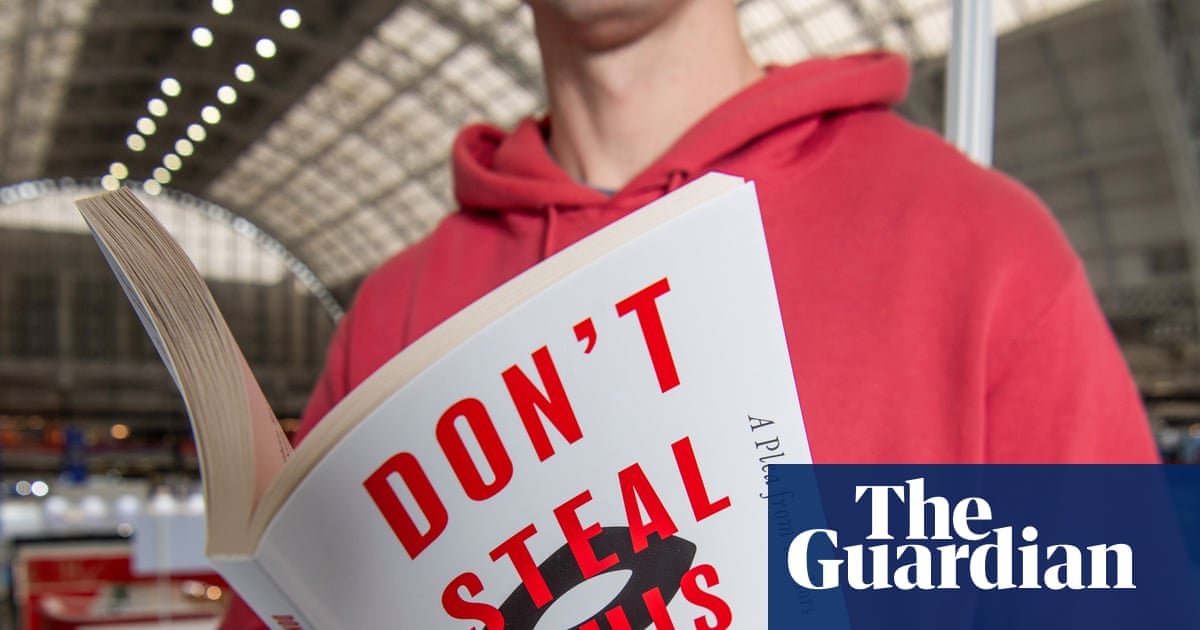

Paul Bloom shares six terrific books about decision-making by non-psychologists. These books offer unique perspectives on psychology and insightful approaches to understanding decision-making processes.
Book list:
Check out the post for the bonus 7th book.
Paul Bloom shares six terrific books about decision-making by non-psychologists. These books offer unique perspectives on psychology and insightful approaches to understanding decision-making processes.
Book list:
Check out the post for the bonus 7th book.

America’s independent bookstores may look like the tattered, provincial shops of a bygone era—holding onto their existence by the slimmest thread. And booksellers may appear genial and absent-minded, like characters out of Dickens. But in reality, they’re the marketing geniuses of our time.
In August of last year Publishers Weekly reported, “Bookstore sales finished the first half of 2023 up 6.9% over the comparable period in 2022.” In fact, independent bookstore sales outpaced most other publishing industry metrics in 2023, growing faster than overall unit sales of print books. This is unprecedented.
Booksellers have bent the rules of the free market. For the first time in history, a significant chunk of the buying public are voluntarily paying almost double—and going out of their way—to buy exactly the same product they can get cheaper and often faster somewhere else. And it’s all due to that ABA message: “non-corporate, authentic, and socially responsible.”
What no one says is that the bargain works both ways. If book buyers must behave virtuously and tithe an additional $11 a book, then booksellers must uphold the community’s doctrines. They’re locked in the moral contract, too.
But books are different. They signal something about readers’ intelligence, identity, and closely held ideas. Books confer status—especially among the highly educated. The people who sell them know this and they used it to make their case.
“Most independent bookstores have succeeded because they’ve responded to the needs of their community,” says Jan Weissmiller, co-owner of Iowa City’s Prairie Lights since 2008. “If they’re in a part of the country where people are asking for a certain kind of book, that’s what they have on the shelf. Because they’re a business.”
But what I really want is a store where all the ideas are on display—the socialist, capitalist, monogamous, polyamorous, urban, rural, popular, and reviled—that also has the homely sacrosanct quality of one of Hemingway’s coffee-and-absinthe bars. With great music, please—and no puppets, or cheap pizza.
Where are you buying books?
Genes tend to be transmitted when they make us do things that transmit genes.
Notes of the book. Seems to be a fun one ;) Have you read it?
Genes tend to be transmitted when they make us do things that transmit genes.
Notes of the book. Seems to be a fun one ;) Have you read it?

Tsundoku is a Japanese term for buying books and magazines far faster than you can read them. Döstädning is a concept from Sweden that translates into death cleaning, advice for how to get rid of your stuff before making other people do it after you die.
Tsundoku is a Japanese term for buying books and magazines far faster than you can read them. Döstädning is a concept from Sweden that translates into death cleaning, advice for how to get rid of your stuff before making other people do it after you die.
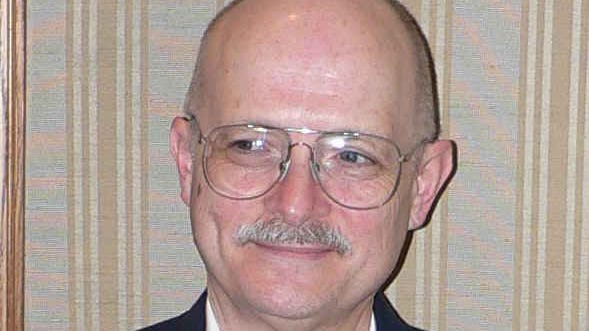
Get to know some books by Vernor Vinge
Get to know some books by Vernor Vinge
In this respect I differed completely from my children, who began to read (I suspect) only after they had left their universities. Like many parents who brought up teenagers in the 1970s, it worried me that my children were more interested in going to pop concerts than in reading “Pride and Prejudice” or “The Brothers Karamazov” — how naive I must have been. But it seemed to me then that they were missing something vital to the growth of their imaginations, that radical reordering of the world that only the great novelists can achieve.
I now see that I was completely wrong to worry, and that their sense of priorities was right — the heady, optimistic world of pop culture, which I had never experienced, was the important one for them to explore. Jane Austen and Dostoyevsky could wait until they had gained the maturity in their 20s and 30s to appreciate and understand these writers, far more meaningfully than I could have done at 16 or 17.
Books:
Some appetizers for the book on breaking Enigma.
Some appetizers for the book on breaking Enigma.

Have enjoyed The New York Trilogy
Have enjoyed The New York Trilogy
Filosofą išgarsinusi „Nuovargio visuomenė“ (vok. Müdigkeitsgesellschaft) Vokietijoje išleista 2010 m. Šioje knygoje jis dešimtmečiu aplenkė šiandien visuotinai pripažįstamą perdegimo kultūros įsigalėjimą, ypač būdingą vadinamajai tūkstantmečio kartai (gimusiesiems 1981–1996 m.). Kasdien patiriama tokia stipri stimuliacija, ypač internete ir socialiniuose tinkluose, kad sunkiai begebama jausti ar savarankiškai mąstyti. Ironiška, kad Hano knygos populiarinamos iš lūpų į lūpas būtent per internetą.
Filosofą išgarsinusi „Nuovargio visuomenė“ (vok. Müdigkeitsgesellschaft) Vokietijoje išleista 2010 m. Šioje knygoje jis dešimtmečiu aplenkė šiandien visuotinai pripažįstamą perdegimo kultūros įsigalėjimą, ypač būdingą vadinamajai tūkstantmečio kartai (gimusiesiems 1981–1996 m.). Kasdien patiriama tokia stipri stimuliacija, ypač internete ir socialiniuose tinkluose, kad sunkiai begebama jausti ar savarankiškai mąstyti. Ironiška, kad Hano knygos populiarinamos iš lūpų į lūpas būtent per internetą.
Looking forward to reading the book someday.
Looking forward to reading the book someday.

cross-posted from: group.lt/post/1868553
The Long Seventies Podcast episode on The Illuminatus! Trilogy
Some topics touched:
Exploration of Authoritarianism, Skepticism, and Anti-authoritarian Stance: The discussed band in the book represents authoritarianism, while the author advocates for thorough skepticism and an anti-authoritarian stance.
Exploring Convictions, Rationality, and Cult Dynamics: Convictions can limit openness to new ideas and cult dynamics can restrict followers’ intellectual options.
Exploring the Thought Exercise of ‘The Illuminatus! Trilogy’ and its Discordian Roots: The book serves as a thought exercise synthesizing eccentric ideas influenced by the Discordian movement.
Exploring E Prime and its Connection to Neuro Linguistic Programming: E Prime as a tool to alter thinking and neuro linguistic programming techniques for behavioral conditioning are discussed.
Exploring the Origins of Social Media Platforms and Conspiracy Theories: Origins of social media platforms, their names, and potential conspiracy theories are explored.
Exploring Mythological References and Time Travel in the Book: The incorporation of mythological references and time-traveling storylines blur fiction and non-fiction in the book.
Exploring Mental Habits, Deep Programming, and Brainwashing: The challenge of eliminating mental habits, deep programming, and brainwashing as a real phenomenon are discussed.
Exploring Conspiracy Theories and Alternative Views: The podcast delves into conspiracy theories like the Bavarian Illuminati theory and the conditioning effects of exposure to such theories.
Decentralized Incentives and Societal Problems: Incentives drive behavior in society, with societal issues often stemming from a decentralized web of incentives rather than intentional conspiracies.
Evolution of News Media and Pressure for Immediate Content: The evolution of news media to the 24-hour news cycle has led to a focus on publishing content quickly, sometimes sacrificing accuracy for speed.

Is V in V for Vendetta good or evil?
Is V in V for Vendetta good or evil?

Review of a book
Review of a book

Check out the book page as well (and you can download the book for free) - goatgreatesteconomistofalltime.ai/en
Check out the book page as well (and you can download the book for free) - goatgreatesteconomistofalltime.ai/en

They were published from the 20s to the 50s and written for children, so they’re quite anachronistic. I find them charming! My elementary school was discarding them 30 years ago and I claimed the whole pile.
I’m reading them to my kids now to their great enjoyment, but I’ve never met anyone else who’s even heard of them.
I will note that I’ve had to explain some of the social stuff that’s very much of it’s time. None of the problematic stuff has been mean-spirited, but I do have to break in once or twice per book to say “we don’t say things like that anymore because …” , but my kids are used to my pointing that sort of thing out already.

Hmm…
Hmm…
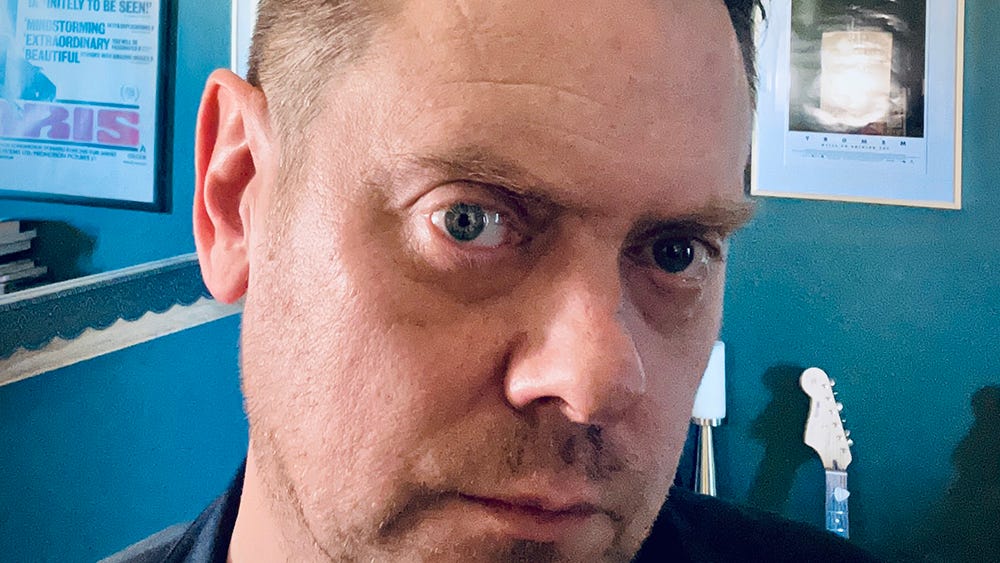
Caught my eye as I really loved Paul Bowles *The Sheltering Sky *.
Caught my eye as I really loved Paul Bowles *The Sheltering Sky *.
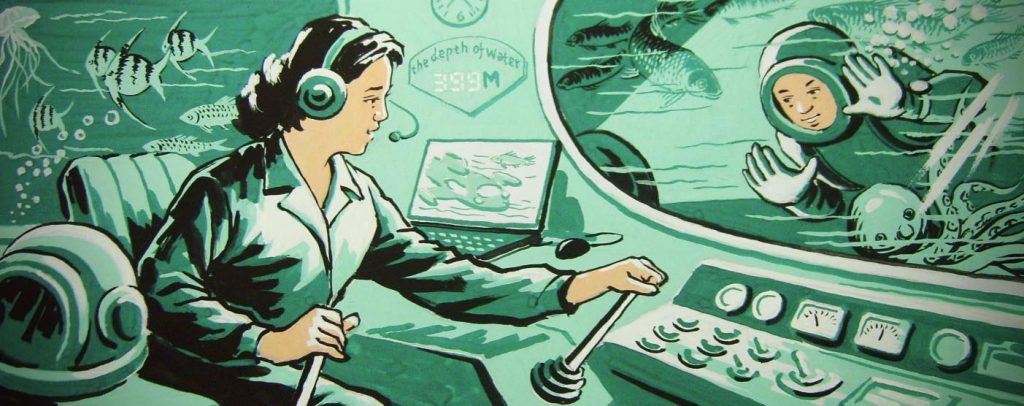
Have you read any?
Have you read any?

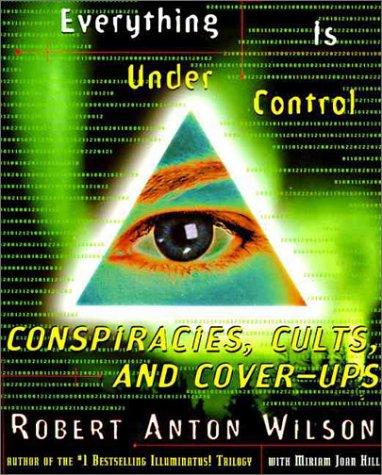
conspiracies, cults, and cover-ups Robert Anton Wilson
conspiracies, cults, and cover-ups Robert Anton Wilson

Some tasty bits are coming
Some tasty bits are coming

All dickheads unite ;)
All dickheads unite ;)
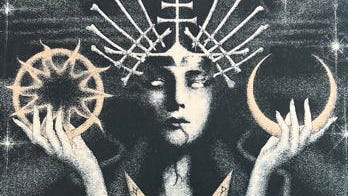
A book review.
A book review.

Seems like fun book ;)
Seems like fun book ;)
(the annual celebration of James Joyce and Ulysses - link to the audio version inside)
(the annual celebration of James Joyce and Ulysses - link to the audio version inside)
Whois James Tabor? a Biblical scholar that I am following for some reason.
If you don’t know what are Dead Sea Scrolls - take a look here - en.wikipedia.org/wiki/Dead_Sea_Scrolls
Whois James Tabor? a Biblical scholar that I am following for some reason.
If you don’t know what are Dead Sea Scrolls - take a look here - en.wikipedia.org/wiki/Dead_Sea_Scrolls
Robert Shea’s son has generously released all of his father’s novels on the internet under a Creative Commons license.
Robert Shea’s son has generously released all of his father’s novels on the internet under a Creative Commons license.
Free pdf inside
Free pdf inside
Seems to be an interesting book
Seems to be an interesting book
I liked the point of view and feel it has lots of truth in it.
I liked the point of view and feel it has lots of truth in it.