“The Book of Disappearance” leans into magical realism by imagining a Tel Aviv where the Palestinian population vanishes overnight, echoing Azem’s family’s real experiences during the Nakba — the mass displacement of Palestinians in the period surrounding the 1948 Arab-Israeli War.
“The Book of Disappearance” leans into magical realism by imagining a Tel Aviv where the Palestinian population vanishes overnight, echoing Azem’s family’s real experiences during the Nakba — the mass displacement of Palestinians in the period surrounding the 1948 Arab-Israeli War.
Just submitted version three of my patch series to the kernel mailing list.
It enables a couple of things for the Xperia 10 III: flash, Wifi, Bluetooth, … :D
Still not a usable phone, but it’s a lot of work that I sitting in front of me, so it’ll likely take a lot of time to make this a useful device… If anyone wants to help making a small Linux phone phone with mainline kernel support, waterproof case and a headphone jack a reality… :p
All this mainlining stuff isn’t actually very hard, it’s mostly trying to figure out how stuff works and a lot of trial and error. At least with my approach of enabling all components that have drivers (most of them) and leaving the rest for the future and other contributors. The device trees of similar devices are very helpful examples as well.
Also, I’m testing with Mobian, these patches has not been tested with Nura yet (which is why the wiki doesn’t show those things as supported), so that’s also where someone could help out. :D
This work was assisted by… my brain. I don’t need lying chat bots for this, I can think. I prefer to do it the slow and sustainable way, the one that’ll pay off much more when this thing is well-supported and will be able to run Linux for years.
Just over five months ago (an entirely too long of a time), I installed NetBSD onto my laptop. With my reintroduction to it, I set out to make NetBSD work the way I want it to work. I am the first to admit that I have a love/hate relationship with configuration; I love to tweak settings, but hate that I never settle for the first (or second, or third, or…) attempt at customization. I have been changing things up on this laptop almost on a daily basis, and there is no shortage of buttons to push, knobs to twist, or switches to toggle when it comes to any open-source product. To be fair, the same can be said of most non-libre software as well.
Just over five months ago (an entirely too long of a time), I installed NetBSD onto my laptop. With my reintroduction to it, I set out to make NetBSD work the way I want it to work. I am the first to admit that I have a love/hate relationship with configuration; I love to tweak settings, but hate that I never settle for the first (or second, or third, or…) attempt at customization. I have been changing things up on this laptop almost on a daily basis, and there is no shortage of buttons to push, knobs to twist, or switches to toggle when it comes to any open-source product. To be fair, the same can be said of most non-libre software as well.
Something from a scene that doesn’t show up here much: a new self-released single from a black metal act out of Tbilisi, Georgia. It came out on 20 October. Curious what people here make of it.
Disclosure: I’m a friend of the artist and sharing this as a fan, not on their behalf.
Something from a scene that doesn’t show up here much: a new self-released single from a black metal act out of Tbilisi, Georgia. It came out on 20 October. Curious what people here make of it.
Disclosure: I’m a friend of the artist and sharing this as a fan, not on their behalf.
To encourage people to add new data, the pipeline used to standardize the data is publicly available as part of the data set. This allows other researchers with access to similar data to grid and standardize it themselves before submitting it to the open database.
“Projects like this advance science through collaboration, accessibility and preservation of data,” said Dee, who is also an author on the paper.
“This database will allow researchers across the world to ask questions about cloud formation, moisture transport processes, El Niño and La Niña, deforestation, soil moisture and more. It’s so important to highlight that it’s not just the collection of data that matters; it’s also the effort it takes to make the data truly usable for the broader research community, students and even the public.”
I will always appreciate novels that succeed in western markets with authentic, informative, and underutilized settings and cultures, especially so when the subject matter so boldly confronts the ceaseless colonial ideologies of the western world. In these aspects, Half of a Yellow Sun hits all the marks.
However, I found the prose, dialogue, character development, political theory, and plot structure to be tremendously underwhelming. Chimamanda Ngozi Adichie’s writing possesses a blunt curtness that was intended, I imagine, to impart a cold and sobering realism upon the reader. For me, however, it encouraged apathy. The characters felt artificial in their conversations with one another, never saying more than a few words before the narration takes over again. Many of the characters will restate the same sentiment in the same way endlessly, as if their purpose is to embody one idea alone. A character’s soul-crushing grief is described in whole within the span of fifty pages as nothing more than red eyes and trips to the bar and is never addressed again. Children are forced into atrocious acts and experiences, and the resultant grief is described within two lines. We are told how socialism and nationalism will save the people of Biafra, but we are not told how. The timeline jumps around for no discernible reason.
While the book certainly sparked my interest in its subject matter, it fell short of providing me with the resources to properly engage with it. Biafra’s diplomatic and administrative problems were described briefly, but hardly expounded upon. The reader is much like the protagonists in that they are kept in the dark, uncritical.
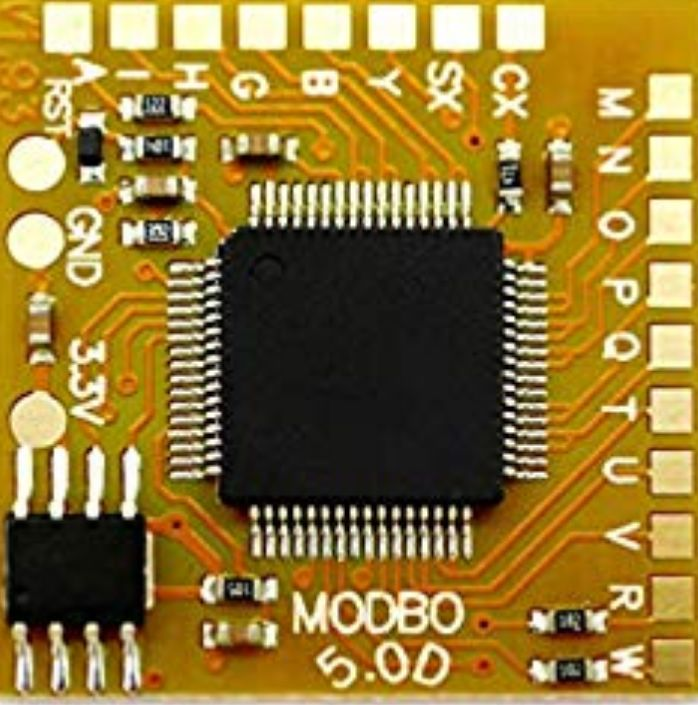
After 12 years , the “unhackable” Xbox One has finally been hacked thanks to the new Bliss exploit that triggers a hardware glitch in the Xbox One console Boot-ROM. In today’s episode we take a closer look at the exploit and discuss what this could mean for all things unsigned code, homebrew and the preservation of Xbox One games. Full talk YT videoFull technical write up
After 12 years , the “unhackable” Xbox One has finally been hacked thanks to the new Bliss exploit that triggers a hardware glitch in the Xbox One console Boot-ROM. In today’s episode we take a closer look at the exploit and discuss what this could mean for all things unsigned code, homebrew and the preservation of Xbox One games. Full talk YT videoFull technical write up