0
0

Al Jazeera
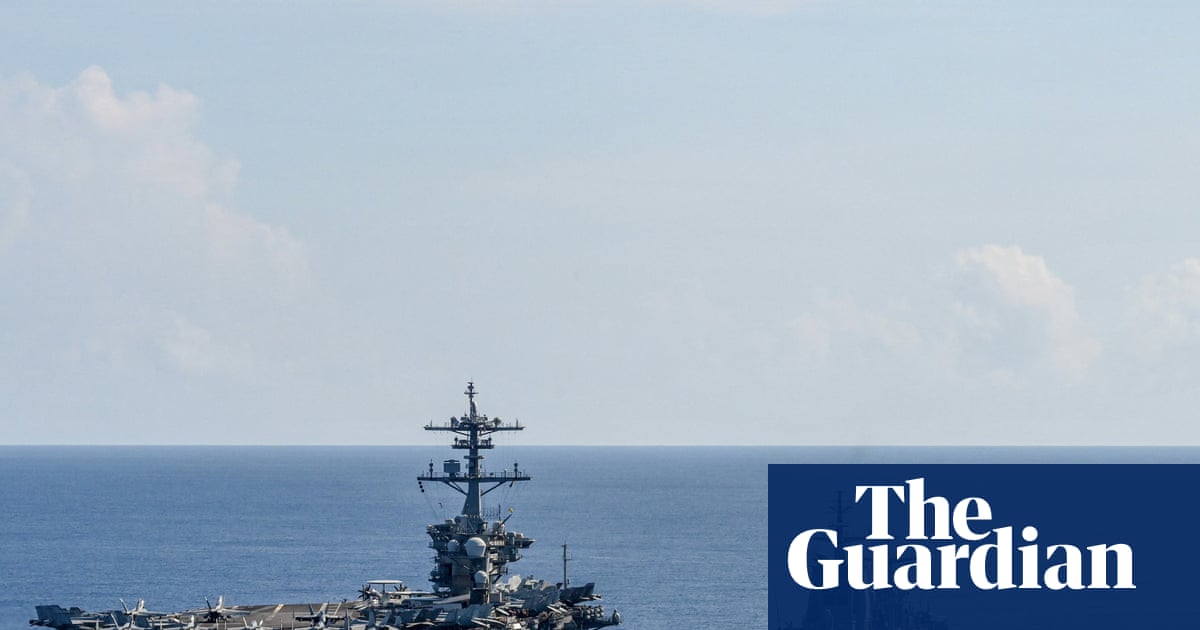
Kuwait reports drone attacks as Iran, US trade attacks on Qeshm and Bahrain
www.aljazeera.com
posts tagged #iran


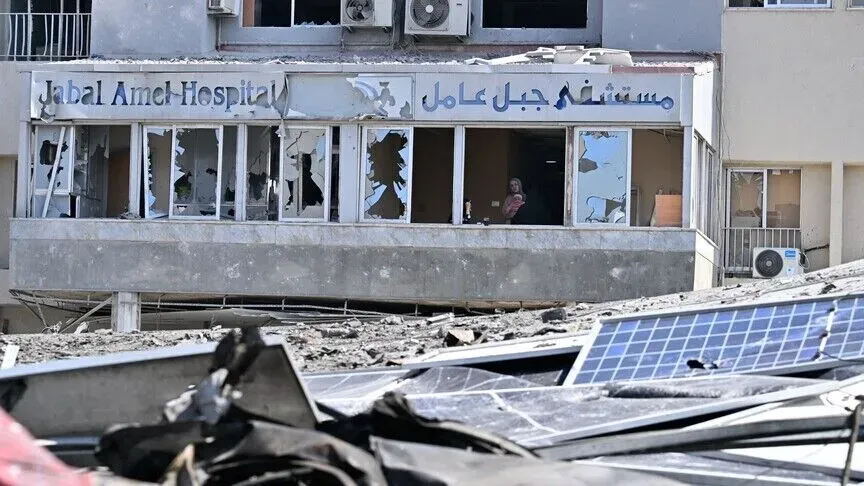
The Zionist regime, which has always considered hospitals as targets of the attack, again destroyed another hospital in southern Lebanon in a clear crime.
Mizan News Agency -
Lebanese media reported that the Israeli army set fire to a hospital in the south of the country.
The media announced that the Zionist military set fire to the hospital in the town of Mis al-Jabal in the Arayoun area (south of Lebanon).
The attack took place despite the so-called “Charcoub” agreement reached between Lebanon and the Zionist regime in June.
The agreement included provisions for the gradual withdrawal of Zionist forces from Lebanese territory and the deployment of the Lebanese army in areas that were evacuated by the occupying regime.
However, after the conclusion of the agreement, the Zionist military remained in several areas of southern Lebanon and continued to carry out attacks.
Earlier, the Israeli army targeted the Ghandor Hospital in the region of the Al-Nutabiyah district during attacks on southern Lebanon. The airstrike caused the complete destruction of the four-storey medical center.
Recent attacks on Lebanese hospitals are not the first examples of the destruction of medical centers in southern Lebanon. In several reports, human rights organizations have documented the destruction of health infrastructure in Lebanon over the past months and years.
According to data analyzed by the World Health Organization (WHO), the military invasion of hospitals, emergency bases and medical staff in Lebanon has paralyzed the bulk of emergency medical services in the south.
UN reports show that direct firing on aid forces, destroying ambulances and removing key hospitals from the service circuit have formed a replay pattern of pressure on Lebanon’s civilian infrastructure.
Analysts believe that targeting medical centers is part of a strategic doctrine for the collapse of the demilitarization and the deprivation of survival facilities in war zones.
From the perspective of International Humanitarian Law (IHL), hospitals and medical centers under all circumstances have absolute immunity and should not be targeted under any military attack.
According to the four Geneva Conventions (1949), in particular the Fourth Convention on the Protection of Civilians, as well as Additional Protocols, deliberate attacks on hospitals and medical units are prominent examples of war crimes.
The International Committee of the Red Cross (ICRC) has repeatedly emphasized that they are under the umbrella of international law, based on the principle of distinction and the principle of proportionality, medical and relief facilities, even if there are adjacent conflicts.
Article 8 of the Rome Statute (International Criminal Court - ICC) has also explicitly criminalized the deliberate conduct of attacks against buildings, materials, medical units and medical transportation. International lawmakers assert that no security justification or reciprocal claim can protect the deprivation of legal immunity from medical centers, and that the international community is obliged to prosecute the perpetrators of such actions.
The official statistics of Lebanon show that since March 2nd, the Zionist regime’s attacks on the martyrdom of at least four thousand and 386 people and the injury of 12 thousand and 407 others have been injured.
The Lebanese Ministry of Health announced that the total number of casualties caused by the Zionist regime’s attacks has reached eight thousand and ۹۵۳ martyrs and 30 thousand and 643 injured since October ۱۶ ۱۴۰۲.
End of message/

In a swift ground offensive, the Houthis pushed out forces allied with the Yemeni government that is backed by Saudi Arabia and seized the city of Mokha as well as its port, according to a local official in the city and a senior provincial official. Both spoke on the condition of anonymity because they were not authorized to speak to the media.
…
The Houthis are expected to try to push further south to try and take territory next to the strait, an area that is “arguably Yemen’s most strategically valuable real estate,” Mr. Baron said. If they are able to do so, it could leave both of the Arabian Peninsula’s major maritime choke points — Bab al-Mandab and the Strait of Hormuz — under the control of Iran and its allies, he added





Dear friends,
Given all that’s happening in Iran right now, I thought it would be cromulent to start a new group on Matrix to bring together serious minds. This is mainly for people who are interested in Iran and want to participate in deeper discussion and analysis.
Link:
matrix.to/#/#iran.news:matrix.org
Thank you,
lisko

This community has been locked and we would like to redirect you to a similar, more active community at !iran@piefed.social
Would you like to reopen this community and moderate it? Contact Sopuli’s admins and we can talk!
Tämä yhteisö on lukittu ja haluaisimme ohjata sinut samankaltaiseen, aktiivisempaan yhteisöön !iran@piefed.social
Haluaisitko avata tämän yhteisön ja ottaa sen hoidettavaksesi? Ota yhteyttä Sopulin ylläpitäjiin niin jutellaan!

By Oscar Rickett
Published date: 24 June 2025 12:54 BST
Last update: ~10:15 EDT"Speaking to reporters before getting onto his helicopter to go to the Nato summit in The Hague, Trump said he was unhappy with both Israel and Iran for breaking the ceasefire agreement he brokered.
Reserving his harshest criticism for Israel, he said: “Israel, as soon as we made the deal, they came out and dropped a load of bombs the likes of which I’ve never seen before, the biggest load we’ve seen.
“I’m not happy with Israel. When I say ‘OK now you have 12 hours’, you don’t go out in the first hour and drop everything you have on them. So I’m not happy with them. I’m not happy with Iran either.””

By MEE correspondent in Tehran
Published date: 24 June 2025 15:22 BST“In the middle of an empty street in Tehran, a young man stood playing the violin. As fear of Israeli air strikes drove people indoors at nightfall, his music carried through the quiet neighbourhoods, offering residents a moment of solace and peace.
“I just wanted to remind my fellow citizens that the lovely sound of love and music is louder than the terrifying sound of bombs and explosions,” the musician, who didn’t want to share his name, told Middle East Eye.
“I’m not into politics at all, but I wanted to give love to the people around me and remind them that life is still going on.””

By Rayhan Uddin
Published date: 24 June 2025 17:51 BST
Last update:~13:30 EDT“It [Israel] attacked Iranian nuclear and military facilities, and assassinated high-profile security, intelligence and military figures, as well as nuclear scientists.
Tehran, which denies it seeks a nuclear weapon, retaliated with ballistic missile strikes on Israeli towns and cities. At least 439 Iranians were killed and 28 in Israel.
While the assault left Iran undoubtedly damaged, it nonetheless provided lessons about its nuclear and military capabilities, as well as the domestic standing of the Islamic Republic itself.”

By MEE staff Published date: 24 June 2025 22:12 BST
Last update:~17:20 EDT“CNN reported on Tuesday that an initial assessment of the strikes by the US Defence Intelligence Agency was that the main components of Iran’s nuclear programme were intact and likely only set back by months.
This flies in the face of Trump saying that the US air strikes “completely and totally obliterated” Iran’s nuclear programme. The White House trumpeted its bombing of Iran’s Fordow, Isfahan and Natanz enrichment complexes as a major military feat that surprised Iran.”
David Hearst
24 June 2025 19:48 BST
Last update: ~18:10 EDTWe also know now that the Germans were worried by the effect the image of the ruined Coventry Cathedral would have on the Americans who were yet to join the war. Indeed, the Germans underestimated the resilience of the British, who forged instead a resolve to hit back as never before. The Royal Air Force began a forceful bombing campaign of Germany shortly afterwards.
It has taken Israel’s high command just 12 days to see the total victory they claimed to have achieved in the first hours of their blitz on Iran turn into something that looks more like a strategic defeat. Hence Israel’s massive reluctance to stick to a ceasefire, after promising US President Donald Trump it would abide by it.
None of Israel’s three war aims have been met. There is no evidence yet that Iran’s nuclear enrichment programme has been “completely and fully obliterated” as Trump claimed.
Iran had time to move at least some of its centrifuges out of harm’s way, and it’s not clear where the existing stockpile of more than 400 kilogrammes of highly enriched uranium is being stored. Meanwhile, the scores of generals and scientists killed in the first hours of the attack were swiftly replaced.
An assessment by the Defense Intelligence Agency, the Pentagon’s intelligence arm, found that the US military strikes on three of Iran’s nuclear facilities did not destroy the core components of Tehran’s nuclear programme and only set it back by a matter of months , CNN reported on Tuesday, citing three people who saw it.
Weathering the storm If Coventry is anything to go by, uranium enrichment and missile-launcher production will be up and running within months, not years, as the Americans claim. The technology, the know-how, and above all the Iranian national will to restore and rebuild key national assets have all weathered the storm.
Evidently, from the damage Iranian missiles inflicted within hours of Trump’s announcement of a ceasefire, its ballistic missile force, the second Israeli war aim, remains a palpable and continuing threat to Israel.
Israel sustained more damage from Iran’s missiles in 12 days than it did from two years of Hamas’s homegrown rockets, or indeed from months of war with Hezbollah.
In 12 days, Israeli crews have come to grips with the sort of damage to apartment blocks that before only Israeli planes had inflicted on Gaza and Lebanon - and it’s been something of a shock. Strategic targets have been hit, including an oil refinery and a power station. Iran has also reported strikes on Israeli military facilities, although Israel’s strict censorship regime makes these assertions difficult to verify.

My Iranian friends told me that all communication with their families has been cut off by the government. I know of associations gathering funds for donating eSIMs in Gaza where Israel did the same. Do you know of any such possibility in Iran?
My friend has a public profile, and we are thinking of organizing a fundraiser.

On June 11, Iran’s Supreme Leader Ayatollah Ali Khamenei delivered a significant speech to a group of scientists, experts, and officials in Iran’s nuclear industry. He praised their achievements and cautiously approved the possibility of a deal with the West regarding Tehran’s nuclear program but also emphasized the importance of preserving Iran’s nuclear infrastructure.
Given that the Supreme Leader holds the final authority in all foreign policy matters, his diplomatic language provides crucial insights into Iran’s negotiating stance and carries serious implications for the future of nuclear negotiations and U.S.-Iran relations.
The speech comes at a critical juncture for Iran’s nuclear program and its relations with Washington and its Western allies. The indirect talks between the U.S. and Iran have been stalled since September, with both sides accusing the other of making unreasonable demands. The Iranian government’s assistance to Russia in the Ukraine war and its brutal crackdown on a countrywide protest movement since that time have also stalled the negotiation process.
Meanwhile, Iran has been steadily advancing its nuclear activities by increasing its stockpiles of highly enriched uranium, installing more advanced centrifuges, and reducing cooperation with the International Atomic Energy Agency (IAEA). These moves, which exceed the limits established under the 2015 Joint Comprehensive Plan of Action that was negotiated between Iran and the five permanent members of the UN Security Council plus Germany have increased concerns about Iran’s intentions as it has approached nuclear breakout capability.
While a full restoration of the JCPOA appears increasingly unlikely, both sides could still benefit from a smaller agreement that involves mutual concessions. Such an agreement would help alleviate tensions and partially address their respective interests, thus averting an immediate crisis.
Khamenei’s approval of a potential agreement, albeit with the caveat that Iran’s nuclear infrastructure should not be compromised, could be interpreted as a signal that Tehran is now prepared to make some concessions for a deal. The key question, however, is what he meant by preserving Iran’s nuclear infrastructure, which could encompass advanced centrifuges, high-enriched uranium stockpiles, and other nuclear material and equipment that pose a proliferation risk.
Iran’s primary concern lies in receiving assurances that the U.S. will honor any new deal, even if it isn’t legally binding. Hence, many in Iran argue that maintaining significant parts of its nuclear infrastructure, even if placed under IAEA or international supervision, is a necessary safeguard against any potential U.S. withdrawal from a new agreement. However, preserving the nuclear infrastructure as it exists today would clearly violate the limitations set forth in the 2015 nuclear deal.
In his speech, Khamenei also reiterated Iran’s long-held position that it is not seeking nuclear weapons and emphasized that such weapons, along with chemical weapons that indiscriminately kill people, are prohibited on religious grounds. He insisted that the West’s claim about “the fear of nuclear weapons production in Iran” is a lie, adding that the U.S. intelligence community has acknowledged several times, including in recent months, that there is no sign of Iran moving towards producing nuclear weapons. He also urged Iran to maintain its cooperation with the IAEA within the framework of its safeguards agreement.
Interestingly, Khamenei’s speech coincides with reports — originating in Korean, Israeli, and Qatari media — suggesting that the U.S. and Iran are indeed considering a more limited or interim agreement. Such an agreement would involve freezing or rolling back some of Iran’s nuclear advances in exchange for partial sanctions relief. Both sides, however, have so far denied reaching any interim deal or alternative arrangement beyond the JCPOA.
Nevertheless, the stakes are high for both sides, as they face domestic and international pressures to resolve the nuclear impasse. Khamenei seeks to ensure conservative President Ebrahim Raisi’s success as his protégé and potential successor, secure Iran’s strategic interests and regional influence, and avoid military confrontation with the U.S. or Israel, both of which have threatened to use force if diplomacy fails to prevent Iran from acquiring nuclear weapons. On the other hand, President Biden aims to fulfill his promise of diplomacy with Iran, prevent a nuclear crisis that could negatively impact his 2024 reelection campaign, and address concerns from U.S. allies in the region, notably Israel and Saudi Arabia, regarding Iran’s nuclear ambitions and regional behavior.
In this context, Khamenei’s speech signals support for the Raisi government to pursue a diplomatic solution with Washington.
Any new agreement, however, carries risks and challenges for both parties. They must navigate the expectations and reactions of their domestic and international audiences, some of which may oppose or seek to undermine a deal. In the U.S., the Biden administration faces resistance from lawmakers, particularly Republicans, who have long opposed the JCPOA and favor maintaining, if not increasing tough economic sanctions against Iran. Biden would face a major challenge, particularly in light of Tehran’s closer ties with Moscow since Russia’s invasion of Ukraine, in persuading Congress and the American public that engaging with Tehran serves the national interest.
Similarly, Raisi must contend with hardliners to his right who oppose any compromises on Iran’s nuclear program and argue that it would be foolhardy to trust that the U.S. would fulfill its promises given former President Trump’s unilateral withdrawal from the JCPOA. Nonetheless, Khamenei’s speech may help protect Raisi against domestic criticism if his diplomats manage to secure a deal.
Ultimately, both Iran and the U.S. share a strong interest in reaching an agreement. A more limited or interim agreement could serve as a crucial bridge, effectively easing tensions and building a foundation for further negotiations. Khamenei’s speech potentially paves the way for a breakthrough in the protracted nuclear impasse or, at the very least, mitigates the risk of further escalation and confrontation with the U.S. However, achieving such an outcome remains uncertain, as both sides face formidable domestic and international pressures that could derail the diplomatic process.