0

AI ‘Resurrection’ of Road Rage Victim Gets Killer’s Prison Sentence Tossed

play · youtube.com
YouTube AI ‘Resurrection’ of Road Rage Victim Gets Killer’s Prison Sentence Tossed youtu.be
preview

Cross posted from lemmy.wtf/post/49914727

In May 2025, an AI-generated video of road rage victim Christopher Pelkey was played in court before his killer was sentenced. The judge praised the AI recreation as “genuine” before sentencing Gabriel Horcasitas to 10½ years in prison. More than a year later, an Arizona appeals court ruled the AI video was “not reliable” and made the sentencing “fundamentally unfair.”

www.bbc.com/news/articles/cwgkvygg5nzvo

Dead Man ‘Speaks’ in Court Through AI Recreation

0

White Phosphorus Case: Legal Violations of International Conventions in the Face of Incendiary Weapons

خبرگزاری میزان پرونده فسفر سفید؛ نقض‌های قانونی کنوانسیون‌های بین‌المللی در مواجهه با سلاح‌های آتش‌زا www.mizanonline.ir
preview

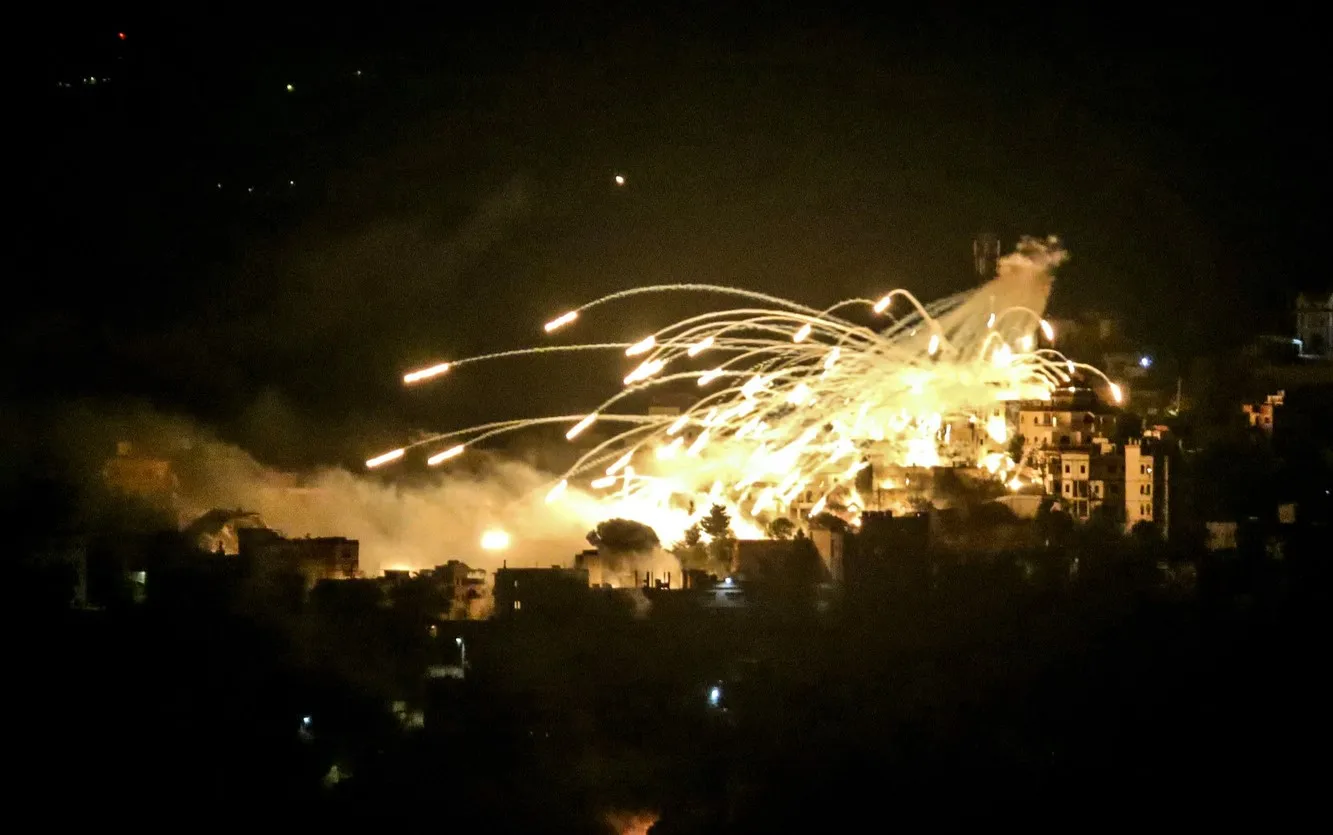
Human rights organizations published a 45-page report on the registration of 23 cases of the Zionist regime’s army of white phosphorus ammunition in southern Lebanon and called for the development of new international laws to contain these destructive weapons.

Human Rights Watch and the International Human Rights Clinic of Harvard Law School said in a recent report published that the Zionist army’s recent use of white phosphorus ammunition in Lebanon highlights the need to develop new international law to monitor and control these destructive weapons.

The groups called on countries to address the issue at a one-month disarmament meeting of the UN General Assembly, which is scheduled to be held in October 2016 (September/November 1405) in New York.

This 45-page report titled “Unreservable Burning: Inhuman Consequences of White Phosphorus Ammunition and the Need for Stronger Laws” has documented the ۲۳ approved use of these ammunition in southern Lebanon in the March period (Esfand/Farvardin) to May 2016 (May/Khordad 1405). The report also describes the horrific damage that the ammunition has caused during the armed conflict in recent years.

Ammos containing white phosphorus, which are exposed to oxygen by their content, are currently not subject to any specific treaty or treaty to control and monitor.

Bonnie Ducherty, senior arms consultant at Human Rights Watch and expert at the Harvard School of Law Clinic for International Human Rights, said White phosphorus ammunition can cause very painful burns and cause lifelong physical, psychological, and socio-economic damage. Countries must condemn the continued use of white phosphorus ammunition, call for further international dialogue, and ensure that international law appropriately addresses the unacceptable human consequences of these weapons.

The findings of this report are based on legal analysis, open-source research, 16 in-person and remote interviews, monitoring diplomatic processes and library studies.

Other uses of white phosphorus ammunition that have been reported since the year 2000 are the use of the use by the Zionist regime in Gaza during the years 2008 to 2009 and 2013; the use of the US-led coalition forces in Iraq and Syria in 2017; the use of the coalition forces led by the United States in Iraq and Syria in 2017; the use of the coalition forces led by Saudi Arabia in Yemen.

White phosphorus ammunition that explodes in the skies of residential areas are considered non-discriminatory weapons, meaning they are unable to separate the military and civilians, and therefore violate the general principles of international humanitarian law. However, despite the fire-tracking effects of these ammunition, white phosphorus is not subject to the Third Protocol of the Convention on Conventions (CCWs) adopted in the 1980s, which is dedicated to the provisions of incendiary weapons.

This protocol defines incendiary weapons as weapons designed primarily to create fire and burn people. This definition includes weapons designed for other purposes.

It doesn’t, even if they create the same effects of fire. White phosphorus ammunition is also not included in this category, as the main purpose of their design is to create a cover (smode) or lighting for military operations.

Human rights organizations assess white phosphorus ammunition based on the Martens principle; the principle in international humanitarian law that stipulates that in the absence of a particular treaty on a subject, civilians and military are protected by the principles of humanity and the requirements of public conscience.

The groups said in their report that the use of white phosphorus ammunition is an example of the use of the Martens principle. Inhuman and difficult wounds of treatment from these weapons are inconsistent with the principles of humanity. White phosphorus can burn people’s bodies to the bone, and the remaining particles in the wound may flare up again when removing the dressing and in contact with oxygen.

Protests by countries, international organizations, human rights groups and medical professionals show that the use of these ammunition is inconsistent with the requirements of public conscience. They stressed that in order to address these issues, stronger and more concrete international law is needed.

Dutchmant said diplomats, doctors, UN inspectors and others have expressed disgust with the brutal injuries caused by white phosphorus ammunition. Countries have already ratified treaties on toxic gases and blind lasers because they were inhumane and inconsistent with public conscience. They should take the same approach on white phosphorus ammunition.

Because white phosphorus ammunition is designed for use because of their burning capability, they are not considered chemical weapons and are not covered by the Chemical Weapons Convention.

Much of the debate on white phosphorus ammunition has been conducted under the supervision of the Convention on Convention on Convention. Dozens of countries have condemned the damage and called for exclusive discussions on the issue.

End of message/

0

Zionist regime's attacks on Lebanese hospitals

خبرگزاری میزان تداوم حمله‌های رژیم صهیونیستی به بیمارستان‌های لبنان www.mizanonline.ir
preview

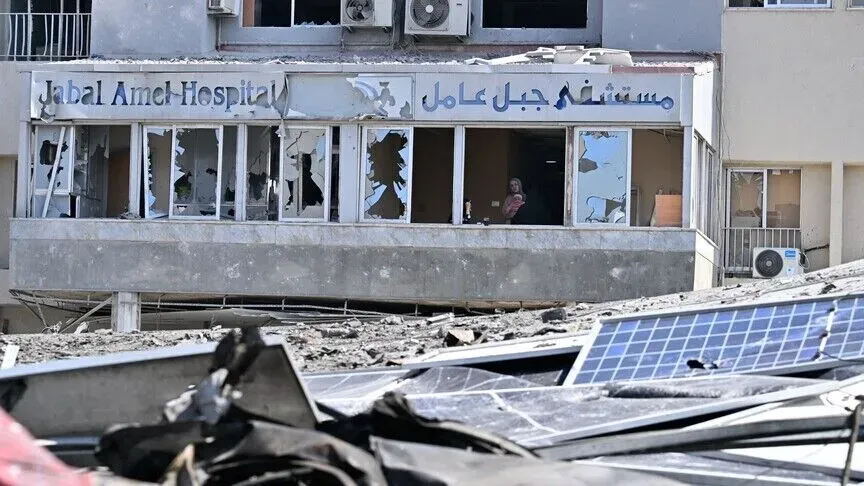
The Zionist regime, which has always considered hospitals as targets of the attack, again destroyed another hospital in southern Lebanon in a clear crime.

Mizan News Agency -

Lebanese media reported that the Israeli army set fire to a hospital in the south of the country.

The media announced that the Zionist military set fire to the hospital in the town of Mis al-Jabal in the Arayoun area (south of Lebanon).

The attack took place despite the so-called “Charcoub” agreement reached between Lebanon and the Zionist regime in June.

The agreement included provisions for the gradual withdrawal of Zionist forces from Lebanese territory and the deployment of the Lebanese army in areas that were evacuated by the occupying regime.

However, after the conclusion of the agreement, the Zionist military remained in several areas of southern Lebanon and continued to carry out attacks.

Earlier, the Israeli army targeted the Ghandor Hospital in the region of the Al-Nutabiyah district during attacks on southern Lebanon. The airstrike caused the complete destruction of the four-storey medical center.

Recent attacks on Lebanese hospitals are not the first examples of the destruction of medical centers in southern Lebanon. In several reports, human rights organizations have documented the destruction of health infrastructure in Lebanon over the past months and years.

According to data analyzed by the World Health Organization (WHO), the military invasion of hospitals, emergency bases and medical staff in Lebanon has paralyzed the bulk of emergency medical services in the south.

UN reports show that direct firing on aid forces, destroying ambulances and removing key hospitals from the service circuit have formed a replay pattern of pressure on Lebanon’s civilian infrastructure.

Analysts believe that targeting medical centers is part of a strategic doctrine for the collapse of the demilitarization and the deprivation of survival facilities in war zones.

From the perspective of International Humanitarian Law (IHL), hospitals and medical centers under all circumstances have absolute immunity and should not be targeted under any military attack.

According to the four Geneva Conventions (1949), in particular the Fourth Convention on the Protection of Civilians, as well as Additional Protocols, deliberate attacks on hospitals and medical units are prominent examples of war crimes.

The International Committee of the Red Cross (ICRC) has repeatedly emphasized that they are under the umbrella of international law, based on the principle of distinction and the principle of proportionality, medical and relief facilities, even if there are adjacent conflicts.

Article 8 of the Rome Statute (International Criminal Court - ICC) has also explicitly criminalized the deliberate conduct of attacks against buildings, materials, medical units and medical transportation. International lawmakers assert that no security justification or reciprocal claim can protect the deprivation of legal immunity from medical centers, and that the international community is obliged to prosecute the perpetrators of such actions.

The official statistics of Lebanon show that since March 2nd, the Zionist regime’s attacks on the martyrdom of at least four thousand and 386 people and the injury of 12 thousand and 407 others have been injured.

The Lebanese Ministry of Health announced that the total number of casualties caused by the Zionist regime’s attacks has reached eight thousand and ۹۵۳ martyrs and 30 thousand and 643 injured since October ۱۶ ۱۴۰۲.

End of message/