#atheism

posts tagged #atheism

0

there are only two types of christians, those indoctrinated as kids and those who want to appear living a virtuous life

preview

and those who want to become a pastor to diddle kids, i guess

was originally intended as a showerthoughts post but i guess it’d be too inflammatory

and those who want to become a pastor to diddle kids, i guess

was originally intended as a showerthoughts post but i guess it’d be too inflammatory

0

Religion and Child Abuse: Perfect Together

preview

I’m providing a link to Donald Capps article from 1992. I just read another near perfect example of the church preaching violence towards kids, and it reminded me of Capps: Church stands by call to execute gay people: “I will not apologize for preaching the Word of God.”

When folks ask me why I’m not a Christian, I have said in the past because “The bible is a book of deception.” It is used to indoctrinate children into Jesus Christ’s New Testament assertions, such as “Love your neighbor as yourself.” Meanwhile, some Christians have practiced a different form of Christianity, one based on hate, violence, and exclusion. These are the types of basic deceptions to which I refer with my statement.

However, there is an even more basic one: There is no god, and assertions to the contrary have been used maliciously, and is still being so used today. The bible is fiction, and it does not have a fiction disclaimer. That is why it is a book of deception.

0

Life's big questions

preview

'Religion has mastered one remarkable skill: surviving without evidence. For thousands of years, gods have been proposed, worshiped, feared, obeyed, and defended yet never independently verified. This is not a minor oversight. In every other domain of human knowledge, claims without evidence are discarded. Only in religion are they protected, revered, and shielded from scrutiny. Atheism begins with a simple, unromantic question: Where is the evidence? Not the feelings, not the traditions, not the anecdotes but the verifiable, testable, independently confirmable evidence. When that question is asked honestly, belief systems that rely on revelation and authority rather than observation begin to wobble.

Faith is often praised as a virtue. In practice, it is an admission of ignorance dressed up as confidence. Faith exists precisely where evidence does not. No one has “faith” that gravity works or that germs cause disease. Those are facts established through experiment and replication. Faith only enters when knowledge fails. If faith were a reliable path to truth, different religions would converge on the same conclusions. Instead, they contradict one another on every fundamental claim how many gods exist, what they want, who they favour, and what happens after death. Billions of believers, thousands of gods, zero consensus. Why should we treat any one of them as special?

A popular apologetic claim is that religion “invented” science or was its primary driver. History tells a messier story. Scientific progress emerged when thinkers began questioning authority including religious authority and insisting on evidence over scripture. Copernicus, Galileo, Darwin, and countless others faced religious resistance, not encouragement. The Catholic Church condemned heliocentrism. Protestant leaders rejected evolution. Even today, creationism and intelligent design attempt to smuggle theology into science classrooms despite overwhelming biological evidence to the contrary.

Another common claim is that without God, morality collapses. This argument misunderstands both morality and human behaviour. Moral systems existed long before monotheistic religions and vary widely across cultures. Empathy, cooperation, and fairness are products of social evolution, not divine command. If morality truly came from God, believers would behave demonstrably better than nonbelievers. They do not. Study after study shows no consistent correlation between religiosity and moral behaviour, and some of the least religious countries score highest on measures of social trust, equality, and well-being. Prayer is often described as powerful, transformative, and effective until it is tested. Controlled studies consistently show that intercessory prayer has no measurable effect on recovery, illness, or outcomes. In some cases, being told you are prayed for worsens outcomes due to performance anxiety. If prayer worked the way believers claim, hospitals would replace ICUs with chapels. They do not. Why? Because when lives are on the line, even believers trust medicine, not miracles. Why is scepticism encouraged everywhere except religion? Why are children taught to question advertisements, politicians, and strangers but not gods? Why is doubt framed as intellectual honesty in science and rebellion in theology?

What would happen if religious claims were held to the same standards as scientific ones? If holy books were treated like hypotheses? If miracles required evidence before belief? Would anything remain? Atheism Is Not Nihilism It Is Responsibility. Atheism offers no cosmic rewards, no eternal surveillance, no divine forgiveness loopholes. That is precisely its strength. Meaning is not handed down; it is constructed. Morality is not outsourced; it is owned. There is no god to blame, no plan to hide behind. If this life is the only one, we know we have, then cruelty is less excusable, not more. Kindness matters now. Justice matters now. Truth matters now. And that is what makes atheism unsettling not that it removes meaning, but that it removes excuses. If faith is a reliable path to truth, why does it produce contradictory conclusions? Why are religious claims exempt from the standards applied to every other claim? If morality comes from God, why do moral intuitions change over time and culture? What belief would you abandon if evidence disproved it and why should religion be different?,

0

UFC is getting hard to watch

preview

I’ve been a UFC fan for about 25 years. Despite all the shit that has been going on with Dana and Trump, I’ve tried to stick with it. Even bought a Paramount sub to continue watching. But I’m having a super-hard time with all the fighters being required to say something to the effect of “First of all I need to thank my lord and savior Jesus Christ”.

This seems like a big push by Dana and right-wing politics to force some weird religious reckoning on fight fans, and casual viewers alike.

Do they think that a huge cadre of rando-fans will be like, “Oh shit, I should go to church tomorrow, because I need to spread the Gospel after Danny Badass told me to thank Jesus” after watching a fight?

Thoughts? Opinions? Left and right encouraged. I really want a cross-section of both sides here. Thanks!

0

America’s Most Dangerous Priests

play · youtube.com
YouTube The Scariest Movement in America youtu.be
preview

The New Apostolic Reformation once sat on the extreme fringes of Christianity. Since, they’ve strategized their way into the most powerful rooms in America. Their target: democracy.

The New Apostolic Reformation once sat on the extreme fringes of Christianity. Since, they’ve strategized their way into the most powerful rooms in America. Their target: democracy.

0

Kim Davis owes a gay couple $565,000. A federal judge wants her to stop lying about her assets.

Kim Davis owes a gay couple $565,000. A federal judge wants her to stop lying about her assets. www.friendlyatheist.com
preview

Davis, they argued, inherited quite a bit of money and land when her mother died—her share was worth over $400,000—but she immediately transferred her half of the property to other members of her family so that the courts couldn’t take it away from her.

Hilarious. Really living up to what Jesus preached, right?

0

Biblical argument against Jesus's wisdom

preview

I’ve been listening to Dan McClellan, CJ Cornthwaite, and Bart Ehrman a lot recently. I put two and two together the other day.

The Gospel of Mark shows a Jesus that was highly influenced by the book of Daniel. (We can see this in things like “Son of man”, “kingdom of god”). This makes sense because it was composed partially in Aramaic, the language Jesus was probably most familiar with, and would have been circulating a lot at the time (as shown by the dead sea scrolls at Qumran). N.T. Wright says:

The Book of Daniel was central to how Jesus taught and who he understood himself to be.

Biblical scholars widely agree that the book of Daniel was written well after the timeframe it purports to be from. The book retrojects prophecy (by that I mean it pretends to predict the future but is actually “predicting” the past) to forge authority, for apocalyptic prophecies that it goes on to make.

The gospel of mark portrays a Jesus fooled by this forgery. Is it possible for a thinking person to reconcile these observations, with a belief in a Jesus with divine knowledge/wisdom?

Fundamentalists will reject the scholarly consensus about the date of Daniel’s composition, but what about moderate Christians?

Am I wrong? Could I explain things more clearly? I’ve never seen this idea articulated clearly before, but it seems very obvious now, I’m not sure it’s of any interest.

0

I find the words “Atheism” and “Nonbeliever” to be really funny.

preview

Seriously, should these words even exist? I don’t think so. I prefer to say “Normal” person over “Atheist” person or “Nonbeliever” person.

The word “Atheism” denotes a negation of theism, but in reality, that negation of theism is what all newborns start with. That is the default behavior; that is the normal behavior. I never saw a Chimp at zoo going to Sunday Schools.

It is us, the human society in general, who dump this theism BS on kids, at an age when they can’t even reason by themselves (pretty convenient age to try to convince and convert eh?)

For context, my Dad has always been a skeptic, and as he became old, he started to be a hardcore agnostic - so I was never brought up in a family of faith (thankfully) - and so I never had to struggle with any “deconstruction”, as some of us had to. All my encounters with religion has been while interacting with my peers, colleagues and neighbors. To me, growing up without any faith was totally normal, because that’s how I happened to be raised. And by the time I encountered religion, I already had enough cognitive capacity to recognize and reject that as BS.

Enough ramblings, but my point is that theists brought in a claim (about invisible Sky Daddy) that can’t be proven, so the burden of proof stays with them. We don’t have to “negate” a fiction. I dislike the word “Atheist” (although I respect the intended purpose of that in this present time), but I still prefer to say we are “normal”.

0

"There is no emperor! There's just clothes" - Ursula K. Le Guin, acceptance speech for the 'Emperor Has no Clothes Award'

Freedom From Religion Foundation Ursula K. Le Guin ffrf.org
preview

This speech was delivered in acceptance of the Emperor Has No Clothes Award on Nov. 7, 2009, at the 32nd annual convention of the Freedom From Religion Foundation at the Red Lion Hotel, Seattle.

I’m going to tell you my take on the story of “The Emperor’s New Clothes.” I read it as a kid, in our volume of Hans Christian Andersen’s stories, a big red book which I only read when I was already kind of depressed, because so many of the stories were scary and depressing.

I understood the story, I think, but when the little boy yells “Look! The Emperor has no clothes!”—I also understood why his mother tries to hush him up: He’s rude. And I have to tell you, I didn’t like that little boy. I didn’t identify with him. He’s the kind of little boy who would look at my kind of little girl and yell, “Look! Ursula’s socks don’t match! Nyeaahh!”

I have gone on secretly disliking that little boy for most of eight decades. And I’m going to get back at him, by saying what really bothers me about the whole story.

Now, OK, the two tailors are con men out to cheat the Emperor, and the Emperor is a twit—what else can you expect of an hereditary Emperor? But the tailors, now, there’s talent—they describe the clothes, the gold embroideries and everything, so well, so completely, so dramatically, that he can’t not believe them. They’re great artists, those guys. The poor twit Emperor doesn’t have a chance against them.

And the court and the people don’t have a chance either, because they have agreed to believe that whatever the Emperor says is true is true. So he says he has great new clothes and instead of looking, they shut their eyes and believe him.

And, because he is an Emperor, that is, a man given undue, un­just pow­er over other people, he de­serves his comedown and a comeuppance. Which I hope weakens or destroys his unjust power, though An­der­sen doesn’t say so.

But now, look at the story again and consider that this emperor is a man, probably a potbellied man with hairy legs, who gets fooled by some tricksters into leading a parade stark naked. And the little kid yells, “He has no clothes on!” and everybody finally looks, and he’s standing there bare-assed, with this awful sinking feeling, and everybody laughs and laughs, and jeers and mocks and howls.

Does this begin to sound like a kind of dream you may have had? I certainly have—the one where I find myself in class wearing, for some reason, nothing but a bra and galoshes; the one where I am about to give a viola concert and suddenly realize that I never learned to play the viola—that kind of dream? The dream that tells you: You are inadequate, you are incompetent, you are pitiful, you are naked to your enemies.

I don’t have just one Inner Child. I have lots of them. That dream is one of my Inner Children: the unpleasant little loudmouth know-it-all. What children don’t understand, and can’t understand until they grow up some, is how much the whole fabric and process of human society depends on everybody agreeing to ignore, most of the time, the fact that all of us are, most of the time, inadequate, incompetent, pitiful, and, in fact, naked to our enemies. None of us really has very much in the way of spiritual, moral clothing. We dress ourselves in rags. And we agree to say nothing about it. To a very large extent, it is human charity that clothes us.

If you read the story this way, the little whistle-blower is not the hero. Certainly the Emperor isn’t the hero; he’s just as much a twit as ever, only you can maybe be a bit sorry for him. The people who first sucked up to him and then jeered at him certainly aren’t the hero. We have no hero. Except possibly the little boy’s mother, who said, “Shh! dear! That’s very rude!” That woman knows what manners are, and that they are important—that civilizations depend, quite literally, on civility. My hope for humanity lies in her. Perhaps she will be able to bring up her little boy to be a decent man, a man who doesn’t want to hurt or humiliate anybody else, even a stupid Emperor, even on the FOX Network.

Now, when I try to read the story of “The Emperor’s New Clothes” in still another way, in the context of religion rather than of human power —that is, if I try to see the Emperor as God—a really weird thing happens.
It’s like I’m standing in the crowd watching the Em­per­or’s parade, and I don’t yell it, but I say it: “Where is the Emperor? There is no Emper­or! There’s just clothes!”

What I see is a marvelous costume, very ancient and beautiful—a halo, a triple crown, robes of white and gold—floating along the street, but nothing, nothing inside them. Empty clothes.

Now, I honestly do not think all the tailors who have made those clothes, that God-costume, so busily, for all these centuries, did it or do it deliberately and knowingly as a con game, to deceive us. Maybe in part, but mostly I think the people who sew the garments of God are busy deceiving themselves. Priests, of course, can make a good living out of it and also gain secular power. But lay believers weave those garments day and night, all over the world, and to some of them it is the most important thing they do, and they love doing it. That’s fine with me, so long as they don’t try to make me do it with them.

So, what I value about the Freedom From Religion Foundation, and why I am proud and happy to receive my award from you all, is the great work you do to diminish the place of religion in secular life—my life. I agree with you with all my heart that people who spend their lives sewing doll clothes for a figment of their imagination have no business running a country, making laws, interfering in people’s sex lives, teaching in public schools, or getting us into wars against people who make a different kind of doll clothes for a different figment of the imagination.

Let the tailors of the garments of God sit in their tailor shops and stitch away, but let them stay there in their temples, out of government, out of the schools. And we who live among real people—real, badly dressed people, people wearing rags, people wearing army uniforms, people sleeping on our streets without a blanket to cover them —let us have true charity: Let us look to our people, and work to clothe them better.

0

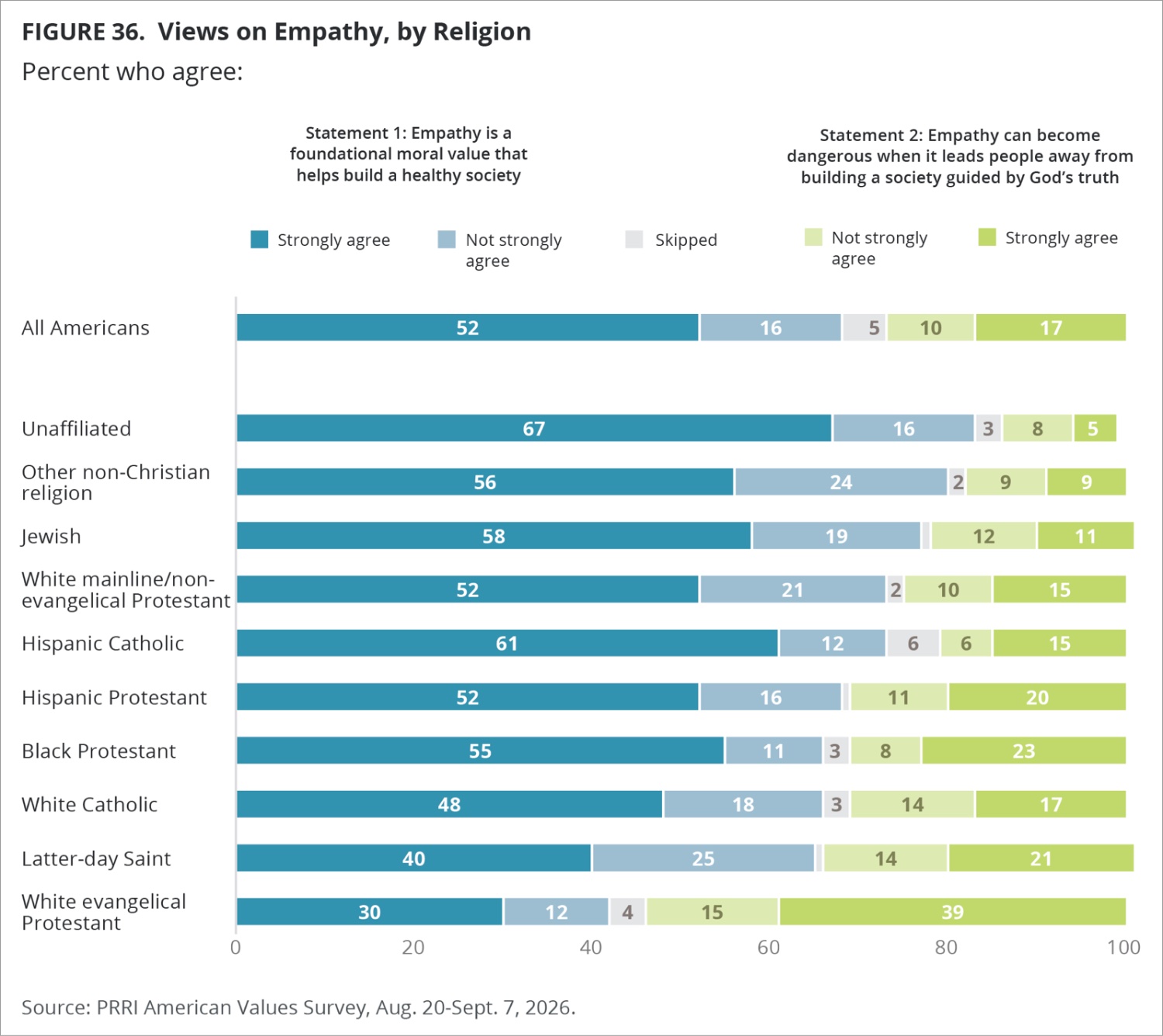
The American Divide on Empathy

kottke.org The American Divide on Empathy kottke.org
preview

Religiously unaffiliated people most strongly believe that empathy is a foundational moral value. Note that doesn’t necessarily mean atheists; people who believe in God but don’t associate with any particular religion would be in that group. In fact, I can’t find any information about whether atheists are included in this survey, or if this was exclusively a survey of religious people.

Interesting (but not exactly surprising) results here. Makes me glad that “religiously unaffiliated” is the fastest growing religion in the U.S.

0

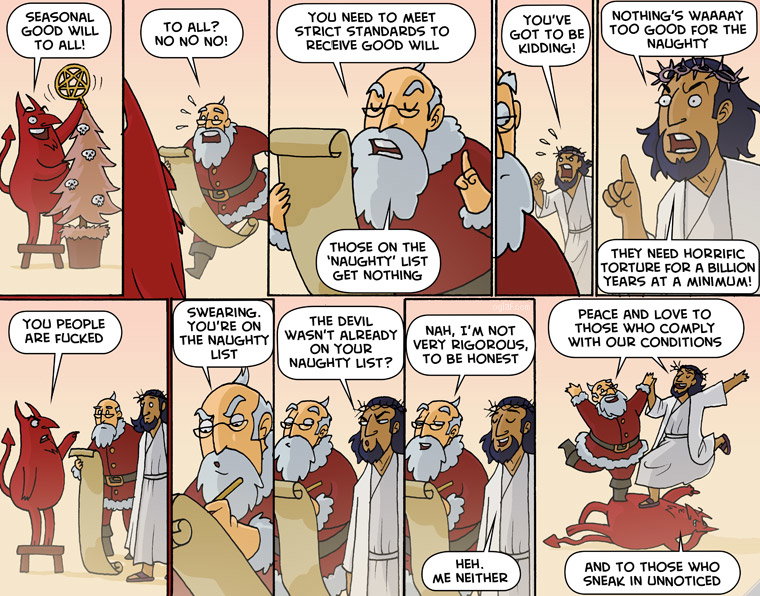
Three Kings

preview

cross-posted from: discuss.online/post/47091642

www.oglaf.com/threekings/

Alt text

Bitcoins in your christmas pudding

Title text

Halloween is the devil’s holiday and even bad kids get candy.

cross-posted from: discuss.online/post/47091642

www.oglaf.com/threekings/

Alt text

Bitcoins in your christmas pudding

Title text

Halloween is the devil’s holiday and even bad kids get candy.

0

Abd Allah ibn Sa'd

preview

https://en.wikipedia.org/wiki/Abd_Allah_ibn_Sa’d

I can’t believe I haven’t come across this guy’s story before - he was a scribe for Muhammad who was skeptical, and purposefully messed up his transcripts to test their veracity. What a legend! Check out the section on ‘During Prophet Muhammad’s Era’

0

What are your biggest pet peeves in the atheism community?

preview

Here are my top 3:

  1. Whataboutism with Christainity - I’ve been a vocal critic of islam in atheist spaces for well over a decade. There has not been a single instance of me criticizing islam where I did not get a hoard of atheists bringing up Christianity for no reason. There’s no relevance and no point to it, but they get really mad when I try to focus on islam. It’s like why can’t they just accept that islam or other religions can be criticized on their own merits independently?

  2. Self centered American atheists - Whenever I ever bring up my and my family’s experiences in the middle east and how horrible islam is over there, there will always be a handful of ignorant American atheists who can’t comprehend that the world is more than their country. No ISIS and your dumb MAGA uncle are not the same.

  3. “All religions are bad” - I hate this statement because it’s like “all lives matter”. Yeah, no shit all religions are bad. That’s literally the baseline of any atheist community. All the discussions lie in the nuances beyond that. Smearing this statement all over atheist spaces is completely meaningless.

What about you guys? Are there any things in the atheist community that you noticed that make your eyes twitch? I would love to hear them.

0

If God exists, why does he behave like a narcissistic absentee landlord with a flair for blood rituals and dietary restrictions?

preview

’

If God exists, why does he behave like a narcissistic absentee landlord with a flair for blood rituals and dietary restrictions? The Abrahamic deity, revered across continents, seems less like a cosmic architect and more like a Bronze Age tribal chieftain with anger management issues. Yet billions genuflect before him daily. Religious faith is often praised as a virtue. But what other domain celebrates belief without evidence? Would you board a plane built by someone who “just felt” the wings would hold? Would you trust a surgeon who prays instead of sterilizing instruments? Richard Dawkins famously called faith “a process of non-thinking.” Yet society elevates it above reason, as if ignorance were a badge of honour. Why is faith exempt from the scrutiny we apply to every other claim? Religion thrives not because it is true, but because it is comforting. It offers immortality, cosmic justice, and a celestial surveillance system that rewards obedience. Freud called religion “a universal obsessional neurosis.” Is it any wonder that belief correlates strongly with existential insecurity? Consider: If you were guaranteed eternal life through science, would you still need God? Or is belief merely a coping mechanism dressed in sacred robes? The Bible commands love, yet sanctions genocide (see Deuteronomy 20:16). It preaches humility yet demands worship. It forbids murder yet glorifies divine slaughter. If morality comes from God, why does it resemble the ethics of a medieval warlord? Sam Harris argues that morality predates religion and is better served by reason and empathy than by scripture. So why do we outsource ethics to ancient texts? Enter the Flying Spaghetti Monster, the Church of the SubGenius, and the Invisible Pink Unicorn parody religions that expose the absurdity of faith by mimicking its structure. Ethan Quillen’s “The Satirical Sacred” explores how these mock faiths challenge religious privilege and reveal the arbitrary nature of belief. Ask yourself: If a belief system is indistinguishable from parody, should it be taken seriously? Religion is not benign. It fuels sectarian violence, suppresses scientific progress, and enforces archaic social norms. From the Crusades to anti-vaccine movements, faith has often been a force of regression. Shouldn’t beliefs be judged by their consequences? Religion persists not because it is rational, but because it is ritualized, institutionalized, and incentivized. It is a cultural fossil revered, untouchable, and absurd. The atheist does not merely reject God; he rejects the intellectual laziness that sustains Him. Do you believe because it is true, or because you were told to? And if the answer is the latter, what else might you be wrong about?’

0

It's a little frightening.

preview

“Florida Man commands people sell their possessions and follow him into the hills swamps”

“Florida Man puts mud into blind person’s eyes.”

“Florida Man Found in giant box with animals from the zoo after surviving the huricane. 40 days at sea.”

“Florida Man commands people sell their possessions and follow him into the hills swamps”

“Florida Man puts mud into blind person’s eyes.”

“Florida Man Found in giant box with animals from the zoo after surviving the huricane. 40 days at sea.”

0

'It Is Done. Hail Satan:' City Immediately Regrets New Religious Liberty Law That Allows Prayer at City Council Meeting

404 Media 'It Is Done. Hail Satan:' City Immediately Regrets New Religious Liberty Law That Allows Prayer at City Council Meeting www.404media.co
preview

cross-posted from: lemmy.world/post/52897112

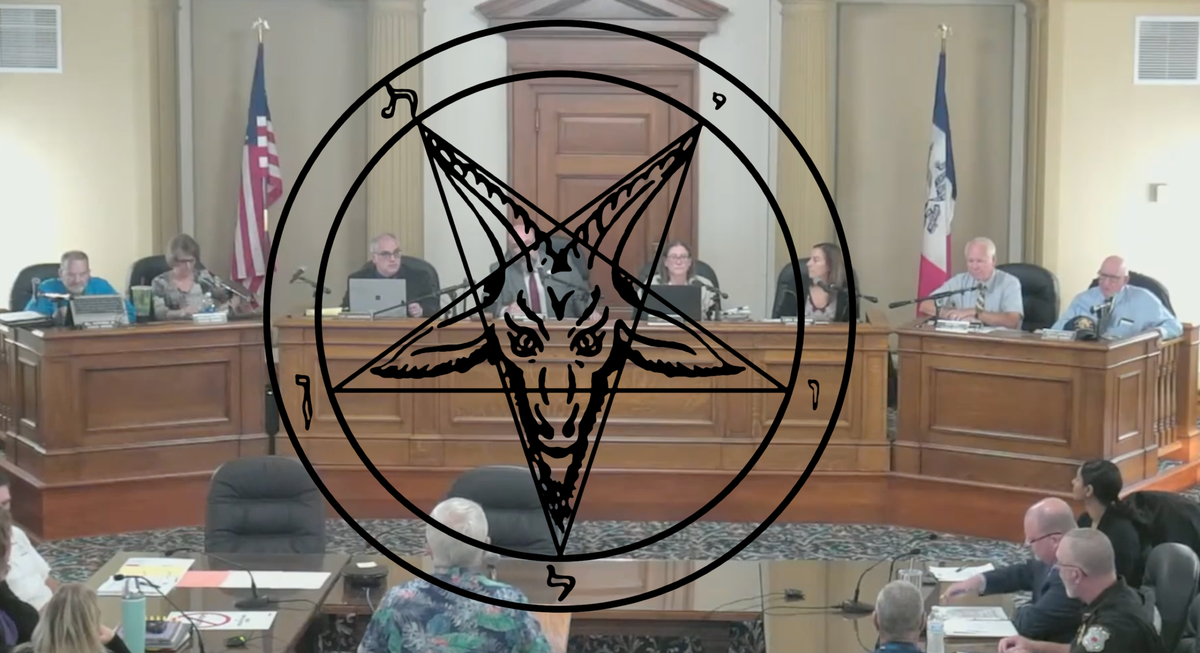
Iowa city council debates proper time in meeting agenda to “undo the curse that was just put on our city.”

An Iowa man has kicked off controversy over religious freedom in the small town of Ottumwa, Iowa by opening a city council meeting with a prayer to Satan, which then kicked off a debate about the proper time in the meeting agenda to undo the “curse.”

0

Intellighent design

preview

It sounds so reasonable, doesn’t it? Such a modest proposal. Why not teach “both sides” and let the children decide for themselves? As President Bush said, “You’re asking me whether or not people ought to be exposed to different ideas, the answer is yes.” At first hearing, everything about the phrase “both sides” warms the hearts of educators like ourselves.

One of us spent years as an Oxford tutor and it was his habit to choose controversial topics for the students’ weekly essays. They were required to go to the library, read about both sides of an argument, give a fair account of both, and then come to a balanced judgment in their essay. The call for balance, by the way, was always tempered by the maxim, “When two opposite points of view are expressed with equal intensity, the truth does not necessarily lie exactly half way between. It is possible for one side simply to be wrong.”

As teachers, both of us have found that asking our students to analyse controversies is of enormous value to their education. What is wrong, then, with teaching both sides of the alleged controversy between evolution and creationism or “intelligent design” (ID)? And, by the way, don’t be fooled by the disingenuous euphemism. There is nothing new about ID. It is simply creationism camouflaged with a new name to slip (with some success, thanks to loads of tax-free money and slick public-relations professionals) under the radar of the US Constitution’s mandate for separation between church and state.

Why, then, would two lifelong educators and passionate advocates of the “both sides” style of teaching join with essentially all biologists in making an exception of the alleged controversy between creation and evolution? What is wrong with the apparently sweet reasonableness of “it is only fair to teach both sides”? The answer is simple. This is not a scientific controversy at all. And it is a time-wasting distraction because evolutionary science, perhaps more than any other major science, is bountifully endowed with genuine controversy.

Among the controversies that students of evolution commonly face, these are genuinely challenging and of great educational value: neutralism versus selectionism in molecular evolution; adaptationism; group selection; punctuated equilibrium; cladism; “evo-devo”; the “Cambrian Explosion”; mass extinctions; interspecies competition; sympatric speciation; sexual selection; the evolution of sex itself; evolutionary psychology; Darwinian medicine and so on. The point is that all these controversies, and many more, provide fodder for fascinating and lively argument, not just in essays but for student discussions late at night.

Intelligent design is not an argument of the same character as these controversies. It is not a scientific argument at all, but a religious one. It might be worth discussing in a class on the history of ideas, in a philosophy class on popular logical fallacies, or in a comparative religion class on origin myths from around the world. But it no more belongs in a biology class than alchemy belongs in a chemistry class, phlogiston in a physics class or the stork theory in a sex education class. In those cases, the demand for equal time for “both theories” would be ludicrous. Similarly, in a class on 20th-century European history, who would demand equal time for the theory that the Holocaust never happened?

So, why are we so sure that intelligent design is not a real scientific theory, worthy of “both sides” treatment? Isn’t that just our personal opinion? It is an opinion shared by the vast majority of professional biologists, but of course science does not proceed by majority vote among scientists. Why isn’t creationism (or its incarnation as intelligent design) just another scientific controversy, as worthy of scientific debate as the dozen essay topics we listed above? Here’s why.

If ID really were a scientific theory, positive evidence for it, gathered through research, would fill peer-reviewed scientific journals. This doesn’t happen. It isn’t that editors refuse to publish ID research. There simply isn’t any ID research to publish. Its advocates bypass normal scientific due process by appealing directly to the non-scientific public and - with great shrewdness - to the government officials they elect.

The argument the ID advocates put, such as it is, is always of the same character. Never do they offer positive evidence in favour of intelligent design. All we ever get is a list of alleged deficiencies in evolution. We are told of “gaps” in the fossil record. Or organs are stated, by fiat and without supporting evidence, to be “irreducibly complex”: too complex to have evolved by natural selection.

In all cases there is a hidden (actually they scarcely even bother to hide it) “default” assumption that if Theory A has some difficulty in explaining Phenomenon X, we must automatically prefer Theory B without even asking whether Theory B (creationism in this case) is any better at explaining it. Note how unbalanced this is, and how it gives the lie to the apparent reasonableness of “let’s teach both sides”. One side is required to produce evidence, every step of the way. The other side is never required to produce one iota of evidence, but is deemed to have won automatically, the moment the first side encounters a difficulty - the sort of difficulty that all sciences encounter every day, and go to work to solve, with relish.

What, after all, is a gap in the fossil record? It is simply the absence of a fossil which would otherwise have documented a particular evolutionary transition. The gap means that we lack a complete cinematic record of every step in the evolutionary process. But how incredibly presumptuous to demand a complete record, given that only a minuscule proportion of deaths result in a fossil anyway.

The equivalent evidential demand of creationism would be a complete cinematic record of God’s behaviour on the day that he went to work on, say, the mammalian ear bones or the bacterial flagellum - the small, hair-like organ that propels mobile bacteria. Not even the most ardent advocate of intelligent design claims that any such divine videotape will ever become available.

Biologists, on the other hand, can confidently claim the equivalent “cinematic” sequence of fossils for a very large number of evolutionary transitions. Not all, but very many, including our own descent from the bipedal ape Australopithecus. And - far more telling - not a single authentic fossil has ever been found in the “wrong” place in the evolutionary sequence. Such an anachronistic fossil, if one were ever unearthed, would blow evolution out of the water.

As the great biologist J B S Haldane growled, when asked what might disprove evolution: “Fossil rabbits in the pre-Cambrian.” Evolution, like all good theories, makes itself vulnerable to disproof. Needless to say, it has always come through with flying colours.

Similarly, the claim that something - say the bacterial flagellum - is too complex to have evolved by natural selection is alleged, by a lamentably common but false syllogism, to support the “rival” intelligent design theory by default. This kind of default reasoning leaves completely open the possibility that, if the bacterial flagellum is too complex to have evolved, it might also be too complex to have been created. And indeed, a moment’s thought shows that any God capable of creating a bacterial flagellum (to say nothing of a universe) would have to be a far more complex, and therefore statistically improbable, entity than the bacterial flagellum (or universe) itself - even more in need of an explanation than the object he is alleged to have created.

If complex organisms demand an explanation, so does a complex designer. And it’s no solution to raise the theologian’s plea that God (or the Intelligent Designer) is simply immune to the normal demands of scientific explanation. To do so would be to shoot yourself in the foot. You cannot have it both ways. Either ID belongs in the science classroom, in which case it must submit to the discipline required of a scientific hypothesis. Or it does not, in which case get it out of the science classroom and send it back into the church, where it belongs.

In fact, the bacterial flagellum is certainly not too complex to have evolved, nor is any other living structure that has ever been carefully studied. Biologists have located plausible series of intermediates, using ingredients to be found elsewhere in living systems. But even if some particular case were found for which biologists could offer no ready explanation, the important point is that the “default” logic of the creationists remains thoroughly rotten.

There is no evidence in favour of intelligent design: only alleged gaps in the completeness of the evolutionary account, coupled with the “default” fallacy we have identified. And, while it is inevitably true that there are incompletenesses in evolutionary science, the positive evidence for the fact of evolution is truly massive, made up of hundreds of thousands of mutually corroborating observations. These come from areas such as geology, paleontology, comparative anatomy, physiology, biochemistry, ethology, biogeography, embryology and - increasingly nowadays - molecular genetics.

The weight of the evidence has become so heavy that opposition to the fact of evolution is laughable to all who are acquainted with even a fraction of the published data. Evolution is a fact: as much a fact as plate tectonics or the heliocentric solar system.

Why, finally, does it matter whether these issues are discussed in science classes? There is a case for saying that it doesn’t - that biologists shouldn’t get so hot under the collar. Perhaps we should just accept the popular demand that we teach ID as well as evolution in science classes. It would, after all, take only about 10 minutes to exhaust the case for ID, then we could get back to teaching real science and genuine controversy.

Tempting as this is, a serious worry remains. The seductive “let’s teach the controversy” language still conveys the false, and highly pernicious, idea that there really are two sides. This would distract students from the genuinely important and interesting controversies that enliven evolutionary discourse. Worse, it would hand creationism the only victory it realistically aspires to. Without needing to make a single good point in any argument, it would have won the right for a form of supernaturalism to be recognised as an authentic part of science. And that would be the end of science education in America. Richard Dawkins

0

|Is Christianity really Christian?

preview

“Consider if you go the New Testament for instruction on how to live, you are told to give away all your possessions, make no plans for the future, reject your family if they disagree with you, and stay celibate if you can (see respectively Matthew 19.21, Matthew 6.25, Matthew 12.48, and 1 Corinthians 7). This is the outlook of people who sincerely believed that the Messiah was going to return next week or next month, anyway very soon. It is an unlivable ethic, and when after several centuries the Second Coming had still not materialised and hope of it had been deferred sine die, more was needed in the way of ethics. Where did it come from? From Greek philosophy – not least from the Stoics – and from the Roman Republican virtues of probity, honour, duty, restraint, respect, friendship and generosity that Cicero, Seneca, Virgil, Horace, and countless others wrote about and enjoined ceaselessly. ‘Christian values’ are largely Greek and Roman secular values. So Christianity is not even Christianity. It is more correct to say that ‘we are Greeks and Romans’ and meant that we are defined by the following words – and therefore concepts – of classical Greek and Latin origin: democracy, liberalism, values, history, morality, comedy, tragedy, literature, music, academy, alphabet, memory, politics, ethics, populace, geography, energy, exploration, hegemony, theory, mathematics, science, theatre, medicine, gymnasium, climate, clone, bureaucracy, dialect, analogy, psychology, method, nostalgia, organ, encyclopaedia, education, paradox, empiricism, polemic, rhetoric, dinosaur, telescope, system, school, trophy, type, fantasy, photography…take almost any word denoting political and social institutions, ideas, learning, science and technology, medicine, and culture, and it derives from the language – and therefore the ideas and the history – of ancient Greece and Rome.

"

0

A looming ‘tsunami’ of church closings is poised to remake America

preview

cross-posted from: lemmy.world/post/52667802

Experts project an estimated 100,000 churches in the US will close or be repurposed over the next decade.

Many churches will be unable to escape this “tsunami” of closings — a grim trajectory one pastor described as, “Every year the pews are getting emptier and the collection plates getting lighter.”

0

AI ‘Resurrection’ of Road Rage Victim Gets Killer’s Prison Sentence Tossed

play · youtube.com
YouTube AI ‘Resurrection’ of Road Rage Victim Gets Killer’s Prison Sentence Tossed youtu.be
preview

Cross posted from lemmy.wtf/post/49914727

In May 2025, an AI-generated video of road rage victim Christopher Pelkey was played in court before his killer was sentenced. The judge praised the AI recreation as “genuine” before sentencing Gabriel Horcasitas to 10½ years in prison. More than a year later, an Arizona appeals court ruled the AI video was “not reliable” and made the sentencing “fundamentally unfair.”

www.bbc.com/news/articles/cwgkvygg5nzvo

Dead Man ‘Speaks’ in Court Through AI Recreation

0

Lower cognitive ability is linked to stronger Christian nationalist views, even after accounting for education

PsyPost - Psychology News Lower cognitive ability is linked to stronger Christian nationalist views, even after accounting for education www.psypost.org
preview

We already knew this, but it’s good to see some proper data

We already knew this, but it’s good to see some proper data

0

My Thoughts on Truthhood

preview

cross-posted from: programming.dev/post/57259387

I wrote this a few months ago and figured I’d go ahead and post it. I originally wrote it as a way to process my feelings about my own beliefs. TW about depression, paranoia, and leaving one’s birth religion.

I don’t know when I realized I was depressive. It should have been something I figured out early on, but didn’t hit me until later. I guess now is still early for most, given I’m 22. Realizing I lost my religion at the age of 17 made me have to recontextualize my worldview in a way that uprooted me from long held beliefs from birth. That was not easy. I remember at the beginning, just conceptualizing right and wrong as ideas that were not tied to a deity was difficult. The urge to pray was instilled in me since childhood, so it took a while before I stopped feeling it out of habit.

Something that has confused me since I started questioning my former faith is how anyone can believe that “objective” morality is an intelligible concept. Morality is a framework for how an individual conceptualizes the weight of actions and situations. Something is considered immoral if one’s moral framework says so. I specified individuals instead of groups because within groups, there is a mismatch between what people consider moral, making a moral framework an inherently individual phenomenon. Objectivity is the idea that something is true regardless of one’s viewpoint. Gravity pulls me down towards the ground whether I believe it or am conscious to experience it. If a deity claims their moral framework is objective, it simply isn’t. They are labeling their subjective moral framework as one that is true regardless of one’s viewpoint, even though the existence of their moral framework is completely dependent on them as an individual. It’s akin to saying my taste in music is the objective taste in music (which it is, of course). My taste in music is my own subjective experience and is completely contingent on me. How would I establish that something I feel is good is good irrespective of others’ viewpoints? It’s an unintelligible claim.

How do you establish objectivity? I don’t know. I also find objectivity as a concept to be hard to wrap my head around given my previous argument. So how do you establish anything as objectively true? I don’t think you can. Every experience you have is contingent on yourself, making them relative experiences, which would make you reach a similar stopping point as the previous argument. It’s hard to let go of the idea that things need to be objectively true. The closest thing I can get to objectivity is the scientific method, which is an attempt to converge onto truths.

I like to separate things I consider true into two categories: “functional” and “convergent” truths. Functional truths are truths I hold because they’re convenient for perceiving and conceptualizing reality. They’re essentially axioms. I try to minimize these because axioms cannot be verified. I hold my senses as being generally accurate as a functional truth. It’s an unfalsifiable claim, but is also convenient to perceiving and experiencing the world. If a functional truth can’t be verified, they may reduce the accuracy of my held worldview because of a direct or implied assumption coming from that functional truth. One example would be god. I’ve had conversations with folks that hold god as an axiom. That creates implied beliefs that reinforce the supernatural, which are unfalsifiable, but due to people’s axiom that a god exists, it allows them to also believe in supernatural phenomena because one of their axioms supports it. Convergent truths are simply truths that are enforced by many people observing the same phenomenon. It’s the scientific process. If many people experience gravity to the point that we can describe it usually mathematical notation, it’s safe to say it exists.

I’ve struggled with mental illness in the past. Like most people, depression, but also lots of delusions. Deep paranoia about imminent supernatural things that I felt deeply in my heart but knew in my head were delusions. I got to the point that I wasn’t sure whether my reality was real at times. I’ve heard the argument that if life wasn’t real that it wouldn’t be worth living and that you should just lay there until you die because it doesn’t matter. It’s interesting because you get to establish what you think is real up to a certain point. Even if my life wasn’t real, that wouldn’t make the sensations and experiences I have any different. Why should life being real deter me from experiencing it? I don’t hold an opinion on whether my life is real because, frankly, I don’t give a fuck. I still get to drive two hours to see my brother and almost throw my guts up at an Indian restaurant. I still get to hit that riff for the first time after a week of practicing it. I still get to tell my mother how I lost my faith and have to sit there to hear her remarks. Those experiences don’t change.

This idea of relativity in morality is such a shallow topic but once stepped in, instantly engulfs me. Starting meaning from where I draw it is such a freeing yet threatening idea because of the amount of, essentially, creative freedom you have to apply to your own wants. Whenever I make a song, I almost always run into a block. Whether I should add more chords or if I should put another instrument in, after a certain point the amount of freedom I can apply to that song is just too much and I need to take a step back to listen, and listen, and listen and understand what it is will scratch that itch in my brain. I find morality to be a similar concept. Because of the amount of freedom you have to do different things that inevitably feel right or wrong, the possibilities are endless. You have to figure out what direction you want to go in by understanding the width and breadth of your emotions surrounding as many things as you can. This contrasts an “objective” morality which dictates what direction people should tend to go in as better or worse and leaves less decision to an individual. This is not about the merits of individuality, nor am I making an argument for individuality, but I feel more at peace knowing I have a choice.

Sometimes the world doesn’t feel real. Sometimes I need to look at the veins in my mother’s hands, or the leaves on a tree, or hear the happiness in a loved one’s laugh to ground me. Those things feel right. But how do I choose to experience those? When do I choose to experience those? It’s much like creative block. How do I go about expressing and consuming love for those things in my life which I hold sacred? I have to decide. It’s not up to a deity, or a religious figure to tell me how many times I should be doing those things, but it’s my decision. The world doesn’t feel real because I am the experience of sensory information being processed by a flesh calculator. There is no inherent meaning to what or why I want to see things, and I don’t think there’s a higher purpose to what is happening on our planet. Moral relativity is the idea that things matter to individuals, not as some sort of objective Cartesian grid you can plot morality coefficients across, but just as internal, intransitive experiences that can conglomerate on a larger scale to create moral trends across a specific population, time, and place. But it all starts with individuals trying to reach inside to understand themselves, because living is a journey to knowing oneself before it passes.

This morning I went on a walk and saw a squirrel stealing a tomato from someone’s garden. It was a green tomato that it could barely bite into, being roughly half its size. I was feeling like nothing really mattered and putting one foot in front of the other felt like trudging through mud. This squirrel had given me eyes that told me not to knock on that house’s door to tell on it. I’m not a snitch. I had originally planned on running, but I couldn’t run in the mud. My mind switches between the ideas of “feeling nothing matters, so why should anything matter” and “so many things matter to me, why should nothing matter”. I don’t really know why it switches like that, but I prefer the latter. The former places me in the mud. The latter lets me giggle at the squirrel and go on with my day.

0

My Thoughts on Truthhood

preview

I wrote this a few months ago and figured I’d go ahead and post it. I originally wrote it as a way to process my feelings about my own beliefs. TW about depression, paranoia, and leaving one’s birth religion.

I don’t know when I realized I was depressive. It should have been something I figured out early on, but didn’t hit me until later. I guess now is still early for most, given I’m 22. Realizing I lost my religion at the age of 17 made me have to recontextualize my worldview in a way that uprooted me from long held beliefs from birth. That was not easy. I remember at the beginning, just conceptualizing right and wrong as ideas that were not tied to a deity was difficult. The urge to pray was instilled in me since childhood, so it took a while before I stopped feeling it out of habit.

Something that has confused me since I started questioning my former faith is how anyone can believe that “objective” morality is an intelligible concept. Morality is a framework for how an individual conceptualizes the weight of actions and situations. Something is considered immoral if one’s moral framework says so. I specified individuals instead of groups because within groups, there is a mismatch between what people consider moral, making a moral framework an inherently individual phenomenon. Objectivity is the idea that something is true regardless of one’s viewpoint. Gravity pulls me down towards the ground whether I believe it or am conscious to experience it. If a deity claims their moral framework is objective, it simply isn’t. They are labeling their subjective moral framework as one that is true regardless of one’s viewpoint, even though the existence of their moral framework is completely dependent on them as an individual. It’s akin to saying my taste in music is the objective taste in music (which it is, of course). My taste in music is my own subjective experience and is completely contingent on me. How would I establish that something I feel is good is good irrespective of others’ viewpoints? It’s an unintelligible claim.

How do you establish objectivity? I don’t know. I also find objectivity as a concept to be hard to wrap my head around given my previous argument. So how do you establish anything as objectively true? I don’t think you can. Every experience you have is contingent on yourself, making them relative experiences, which would make you reach a similar stopping point as the previous argument. It’s hard to let go of the idea that things need to be objectively true. The closest thing I can get to objectivity is the scientific method, which is an attempt to converge onto truths.

I like to separate things I consider true into two categories: “functional” and “convergent” truths. Functional truths are truths I hold because they’re convenient for perceiving and conceptualizing reality. They’re essentially axioms. I try to minimize these because axioms cannot be verified. I hold my senses as being generally accurate as a functional truth. It’s an unfalsifiable claim, but is also convenient to perceiving and experiencing the world. If a functional truth can’t be verified, they may reduce the accuracy of my held worldview because of a direct or implied assumption coming from that functional truth. One example would be god. I’ve had conversations with folks that hold god as an axiom. That creates implied beliefs that reinforce the supernatural, which are unfalsifiable, but due to people’s axiom that a god exists, it allows them to also believe in supernatural phenomena because one of their axioms supports it. Convergent truths are simply truths that are enforced by many people observing the same phenomenon. It’s the scientific process. If many people experience gravity to the point that we can describe it usually mathematical notation, it’s safe to say it exists.

I’ve struggled with mental illness in the past. Like most people, depression, but also lots of delusions. Deep paranoia about imminent supernatural things that I felt deeply in my heart but knew in my head were delusions. I got to the point that I wasn’t sure whether my reality was real at times. I’ve heard the argument that if life wasn’t real that it wouldn’t be worth living and that you should just lay there until you die because it doesn’t matter. It’s interesting because you get to establish what you think is real up to a certain point. Even if my life wasn’t real, that wouldn’t make the sensations and experiences I have any different. Why should life being real deter me from experiencing it? I don’t hold an opinion on whether my life is real because, frankly, I don’t give a fuck. I still get to drive two hours to see my brother and almost throw my guts up at an Indian restaurant. I still get to hit that riff for the first time after a week of practicing it. I still get to tell my mother how I lost my faith and have to sit there to hear her remarks. Those experiences don’t change.

This idea of relativity in morality is such a shallow topic but once stepped in, instantly engulfs me. Starting meaning from where I draw it is such a freeing yet threatening idea because of the amount of, essentially, creative freedom you have to apply to your own wants. Whenever I make a song, I almost always run into a block. Whether I should add more chords or if I should put another instrument in, after a certain point the amount of freedom I can apply to that song is just too much and I need to take a step back to listen, and listen, and listen and understand what it is will scratch that itch in my brain. I find morality to be a similar concept. Because of the amount of freedom you have to do different things that inevitably feel right or wrong, the possibilities are endless. You have to figure out what direction you want to go in by understanding the width and breadth of your emotions surrounding as many things as you can. This contrasts an “objective” morality which dictates what direction people should tend to go in as better or worse and leaves less decision to an individual. This is not about the merits of individuality, nor am I making an argument for individuality, but I feel more at peace knowing I have a choice.

Sometimes the world doesn’t feel real. Sometimes I need to look at the veins in my mother’s hands, or the leaves on a tree, or hear the happiness in a loved one’s laugh to ground me. Those things feel right. But how do I choose to experience those? When do I choose to experience those? It’s much like creative block. How do I go about expressing and consuming love for those things in my life which I hold sacred? I have to decide. It’s not up to a deity, or a religious figure to tell me how many times I should be doing those things, but it’s my decision. The world doesn’t feel real because I am the experience of sensory information being processed by a flesh calculator. There is no inherent meaning to what or why I want to see things, and I don’t think there’s a higher purpose to what is happening on our planet. Moral relativity is the idea that things matter to individuals, not as some sort of objective Cartesian grid you can plot morality coefficients across, but just as internal, intransitive experiences that can conglomerate on a larger scale to create moral trends across a specific population, time, and place. But it all starts with individuals trying to reach inside to understand themselves, because living is a journey to knowing oneself before it passes.

This morning I went on a walk and saw a squirrel stealing a tomato from someone’s garden. It was a green tomato that it could barely bite into, being roughly half its size. I was feeling like nothing really mattered and putting one foot in front of the other felt like trudging through mud. This squirrel had given me eyes that told me not to knock on that house’s door to tell on it. I’m not a snitch. I had originally planned on running, but I couldn’t run in the mud. My mind switches between the ideas of “feeling nothing matters, so why should anything matter” and “so many things matter to me, why should nothing matter”. I don’t really know why it switches like that, but I prefer the latter. The former places me in the mud. The latter lets me giggle at the squirrel and go on with my day.

0

Ars Technica Says Microsoft Should Pay For Church

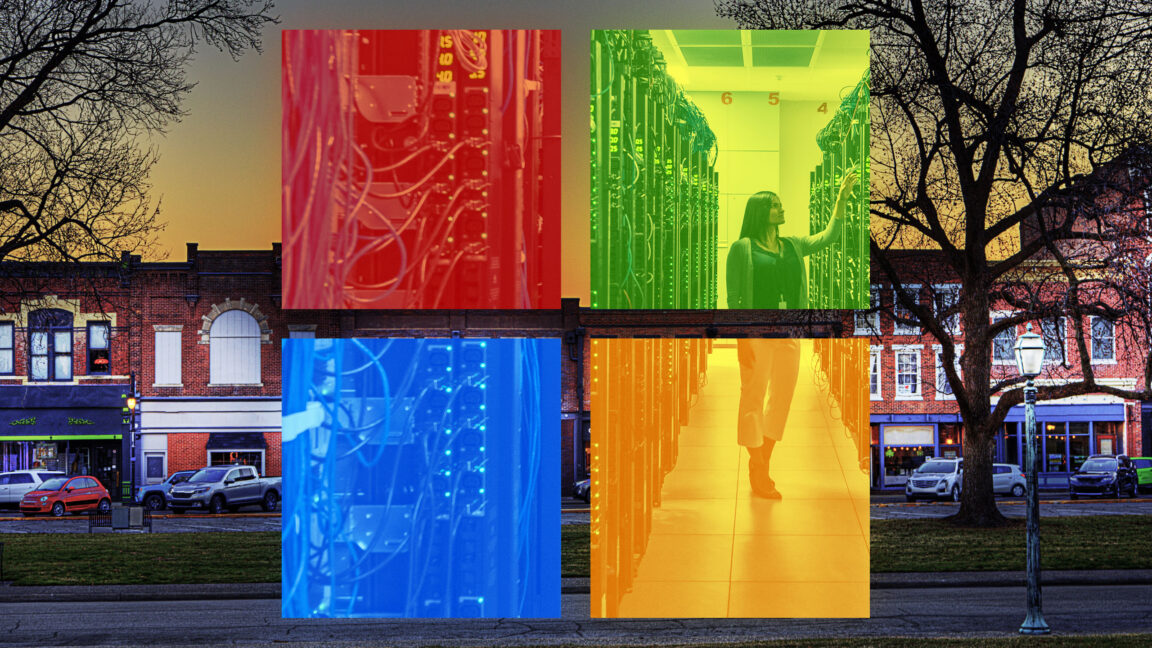
Ars Technica Microsoft goes quiet after church groups ask for 1% of data center costs arstechnica.com
preview

WTF… Ofc churches want in on the grift… Microsoft is a garbage company that should be disbanded. But no, it shouldn’t fund churches.

WTF… Ofc churches want in on the grift… Microsoft is a garbage company that should be disbanded. But no, it shouldn’t fund churches.

0

Bible verse trips up Tommy Tuberville — as he compares himself to America's poorest

Raw Story Bible verse trips up Tommy Tuberville — as he compares himself to America's poorest www.rawstory.com
preview

A central Bible verse left Alabama Sen. Tommy Tuberville puzzled Wednesday — as he compared himself to America’s poorest people.

…

“Some of the people say your party’s, you know, punishing ‘the least of these,’” he was told.

“Punishing what? ‘The least of these?’”

“‘The least of these’ — biblical reference,” the reporter explained, referring to the famous verse in Matthew 25:40, “Truly I tell you, whatever you did for one the least of these brothers and sisters of mine, you did for me.”

…

“The least of these?” Tuberville asked again, clearly puzzled.

0

Gods

preview

I do not believe in leprechauns, pixies, ghosts, werewolves, jujus, angels, Tooth Faeries, Odin, Thor, Zeus, Ra, Brahma, Athena, Hera, Poseidon, Yahweh, Allah, or the Trinity, demons, devils, Astrology, the Tarot, Satan. For the same reason in every case: there is not the tiniest shred of 𝐚𝐧𝐲 𝐟𝐨𝐫𝐦 𝐨𝐟 empirical, 𝐥𝐨𝐠𝐢𝐜𝐚𝐥, 𝐡𝐢𝐬𝐭𝐨𝐫𝐢𝐜𝐚𝐥, 𝐨𝐫 𝐜𝐨𝐫𝐫𝐨𝐛𝐨𝐫𝐚𝐭𝐢𝐧𝐠 𝐞𝐯𝐢𝐝𝐞𝐧𝐜𝐞 𝐟𝐨𝐫 𝐭𝐡𝐞 𝐞𝐱𝐢𝐬𝐭𝐞𝐧𝐜𝐞 𝐨𝐟 any 𝐆𝐨𝐝 and the burden of proof rests with those who wish to believe. Even given no evidence for specific gods, we could make a case for some unspecified “intelligent designer” or “prime mover” or begetter of “something rather than nothing”? By far the most appealing version of this argument is the biological one - living things do present a powerful illusion of design. But that is the very version that Darwin destroyed. Any theist who appeals to “design” of living creatures simply betrays his ignorance of biology. Go away and read a book. And any theist who appeals to biblical “evidence” betrays ignorance of biblical scholarship. The burden of proof rests with those who wish to believe. Even given no evidence for specific gods, could 'his ignorance of modern scholarship. Go away and read another book. As for the cosmological argument, whose God goes under names such as Prime Mover or First cause, again no evidence. Because physicists are closing in, with spell-binding results. Even if there remain unanswered questions - where do the fundamental laws and constants of physics come from? Obviously, it cannot help to postulate a designer whose existence poses bigger questions than he purports to solve. If science fails, our best hope is to build a better science. The answer will lie neither in theology nor - its exact equivalent - reading tea leaves. In any case, it is a fatuously illogical jump from deistic Unmoved Mover to Christian Trinity, with the Son being tortured and murdered because the Father, for all his omniscience and omnipotence, could not think of a better way to forgive “sin”. Equally unconvincing are those who believe because it comforts them (why should truth be consoling?) or because it “feels right”. The wife of a former UK prime minister may stand for the” feels right” brigade. She based her belief on “an understanding of something that her head cannot explain but my heart knows to be true.” She aspired to become a judge! My’lud, I cannot provide the evidence you require. My head cannot explain why, but my heart knows it to be true. Why is religion immune to the critical standards we apply not just in our courts of law, but in every other life?”

I do not believe in leprechauns, pixies, ghosts, werewolves, jujus, angels, Tooth Faeries, Odin, Thor, Zeus, Ra, Brahma, Athena, Hera, Poseidon, Yahweh, Allah, or the Trinity, demons, devils, Astrology, the Tarot, Satan. For the same reason in every case: there is not the tiniest shred of 𝐚𝐧𝐲 𝐟𝐨𝐫𝐦 𝐨𝐟 empirical, 𝐥𝐨𝐠𝐢𝐜𝐚𝐥, 𝐡𝐢𝐬𝐭𝐨𝐫𝐢𝐜𝐚𝐥, 𝐨𝐫 𝐜𝐨𝐫𝐫𝐨𝐛𝐨𝐫𝐚𝐭𝐢𝐧𝐠 𝐞𝐯𝐢𝐝𝐞𝐧𝐜𝐞 𝐟𝐨𝐫 𝐭𝐡𝐞 𝐞𝐱𝐢𝐬𝐭𝐞𝐧𝐜𝐞 𝐨𝐟 any 𝐆𝐨𝐝 and the burden of proof rests with those who wish to believe. Even given no evidence for specific gods, we could make a case for some unspecified “intelligent designer” or “prime mover” or begetter of “something rather than nothing”? By far the most appealing version of this argument is the biological one - living things do present a powerful illusion of design. But that is the very version that Darwin destroyed. Any theist who appeals to “design” of living creatures simply betrays his ignorance of biology. Go away and read a book. And any theist who appeals to biblical “evidence” betrays ignorance of biblical scholarship. The burden of proof rests with those who wish to believe. Even given no evidence for specific gods, could 'his ignorance of modern scholarship. Go away and read another book. As for the cosmological argument, whose God goes under names such as Prime Mover or First cause, again no evidence. Because physicists are closing in, with spell-binding results. Even if there remain unanswered questions - where do the fundamental laws and constants of physics come from? Obviously, it cannot help to postulate a designer whose existence poses bigger questions than he purports to solve. If science fails, our best hope is to build a better science. The answer will lie neither in theology nor - its exact equivalent - reading tea leaves. In any case, it is a fatuously illogical jump from deistic Unmoved Mover to Christian Trinity, with the Son being tortured and murdered because the Father, for all his omniscience and omnipotence, could not think of a better way to forgive “sin”. Equally unconvincing are those who believe because it comforts them (why should truth be consoling?) or because it “feels right”. The wife of a former UK prime minister may stand for the” feels right” brigade. She based her belief on “an understanding of something that her head cannot explain but my heart knows to be true.” She aspired to become a judge! My’lud, I cannot provide the evidence you require. My head cannot explain why, but my heart knows it to be true. Why is religion immune to the critical standards we apply not just in our courts of law, but in every other life?”

0

Former Ohio missionary admits to sexually abusing children in Haiti

WHIO TV 7 and WHIO Radio This website is unavailable in your location. – WHIO TV 7 and WHIO Radio www.whio.com
preview

Cross posted from thelemmy.club/post/56020493

appgateway.drc.ohio.gov/OffenderSearch/…/A770209

Cross posted from thelemmy.club/post/56020493

appgateway.drc.ohio.gov/OffenderSearch/…/A770209

0

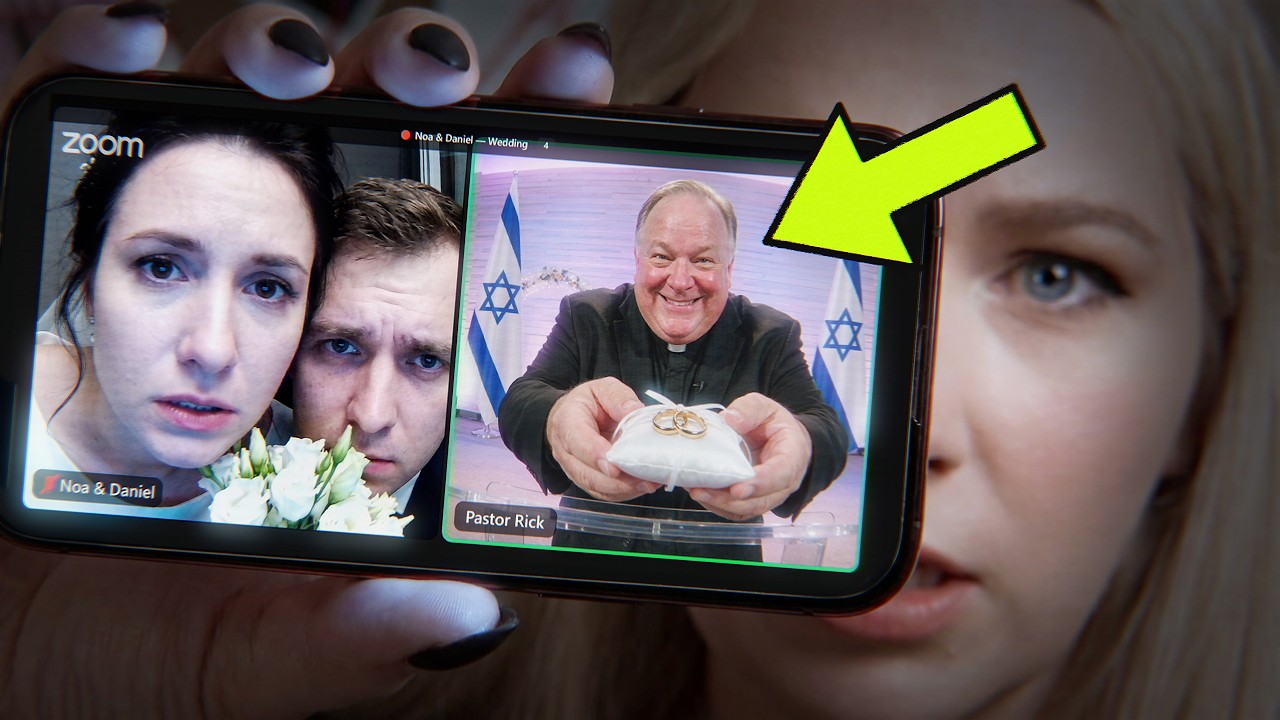
The Real Reason Why Israelis Have To Marry Over Zoom

play · youtube.com
YouTube The Real Reason Why Israelis Have To Marry Over Zoom www.youtube.com
preview

Cross posted from lemmy.ca/post/70884233

Cross posted from lemmy.ca/post/70884231

It’s a little after nine in the morning in Provo, Utah. And this morning, in a county government building here, a man sits down at a desk and opens a laptop. He isn’t a bishop. He isn’t a judge. He works for the county clerk. And according to his calendar, he is marrying people today. A lot of people. Nobody is in the room. No bride, no groom, no parents, no flowers, no mormons. There are two witnesses, because Utah law insists on two adults over eighteen. Then he clicks “join”. A couple appears on the screen. It’s already evening where they are. Nine hours ahead. Before he can marry them, the State of Utah now requires him to read them a sentence - one that was written into the law this year. “A marriage solemnized according to the laws of the State of Utah through online remote appearance may be invalid in the country where the parties to the marriage reside.” Which seems weird and unromantic, especially on a wedding day. Unless you know where the couple is. They are not in Utah. They are not in the United States. They’re in Tel Aviv. He marries them anyway. They say yes from Israel, the certificate is issued in Utah and posted across the Atlantic. Then the next couple appears. Also from Israel. Then the next. And the next. This one clerk’s office has married couples from China, Kenya, Azerbaijan, Madagascar. But Israelis are the biggest foreign group using it by a distance: about three thousand couples in 2024 alone, roughly one in every three foreign couples Utah County marries. So: why are thousands of Israelis, every year, getting married by a government clerk in the most Mormon corner of the most religious state in America - over a video call, in a country most of them have never set foot in? And why does the State of Israel have to recognize their marriage when Utah does?

0

Stephen Wolfe says Christians Nationalists should gain "real power at the local level" by taking over their local Republican Party: "It is happening. We don't talk about it publicly"

preview

Stephen Wolfe is the author of the book “The Case of Christian Nationalism”

en.wikipedia.org/…/The_Case_for_Christian_Nationa…

Stephen Wolfe is the author of the book “The Case of Christian Nationalism”

en.wikipedia.org/…/The_Case_for_Christian_Nationa…

0

Do you think humans will ever give up religion in future?

preview

Day by day, the advancements in human knowledge has caused us to know so many things. Many religious arguments have been debunked in an awesome manner. Many religions have to soften themselves now, in order to be accommodating to the modern mind. Do you think that in our future, say 2060 or 2100, will we humans have religions as we have now or will we all reject God and other supernatural and pseudoscientific hypothesis and become atheists?

Day by day, the advancements in human knowledge has caused us to know so many things. Many religious arguments have been debunked in an awesome manner. Many religions have to soften themselves now, in order to be accommodating to the modern mind. Do you think that in our future, say 2060 or 2100, will we humans have religions as we have now or will we all reject God and other supernatural and pseudoscientific hypothesis and become atheists?