@technocrit@lemmy.dbzer0.com

member since 19 Feb 2024 19:40

posts

Pentagon Investigators Say Overreliance on [Palantir] Contributed to US Strike That Killed 123 Iranian Children

Pentagon Investigators Say Overreliance on Palantir AI Contributed to US Strike That Killed 123 Iranian Children - Slashdot
preview

According to the officials who spoke to Bloomberg, some personnel inside U.S. Central Command leaned too hard on [Palantir] to accelerate intelligence analysis and decision-making. The Defense Department has reportedly made the software tool a cornerstone of military operations over the past year… Officials said some users expected Maven to flag stale records or contradictions in the intelligence assembled for potential targets, though it is not clear why they thought the system would do that. The Minab [elementary school massacre] site, which was cataloged as an Islamic Revolutionary Guard Corps facility due to outdated data, was fed into Maven with other candidates and came out as a recommended day-one target. Target-list work that once took hours was condensed into minutes.

A Palantir spokesperson told Bloomberg the company “is not responsible for the underlying data nor identifying intelligence deficiencies” and that there is no evidence its software was at fault. Two people familiar with Palantir’s Pentagon contracts said the government keeps primary responsibility for the quality of the information that’s fed into Maven.

Everyone can find a reason to dislike data center construction

TechCrunch Everyone can find a reason to dislike data center construction | TechCrunch
preview

[Computer companies] are convinced that scaling up computation is the path to improving [computation], and they’ve put their money where their mouths are, to the tune of trillions of dollars of planned data center projects.

The rest of us? Surveys of public opinion say that more than 60% of Americans favor limiting new data centers, particularly in their communities. And the longest-running surveys show that sentiment is growing fast. Data center projects worth $68 billion were disrupted by local opponents in the second quarter of 2026, according to the trackers at Data Center Watch.

…

In spite of the boosterism, resistance has grown, and in unlikely ways. The researchers said they were surprised by the diversity of the opposition to these projects, calling it not bipartisan but post-partisan.

“We don’t want to romanticize that everyone is having this kumbaya moment, [but data centers are] forcing people to be in conversation together about futures that they want and presents that they want … these fights are incredibly organic,” Woluchem said, pointing to a variety of sources of opposition: Sometimes it is simply folks who are against development — classic NIMBYs — but the coalition grows from there. There are people who dislike “AI” as a technology and the corporate interests behind it, environmental groups concerned about water usage and energy-related emissions, and those with more nebulous concerns about public health.

What’s striking, though, is how often material interests are top of mind. People are concerned that data center electrical usage will affect their own power bills, worried that data centers will drive down property values, or are upset by the playbook that data center builders use to get their way — tactics such as asking local officials to sign non-disclosure agreements.

“There is a significant group of people who are just really clued into their town hall meetings and might notice that wow, a representative from Amazon, Meta, Microsoft, showed up here, or a data center developer showed up at my community meeting… that’s a little odd,” Woluchem notes. “And my council person, who I have previously had a relationship with, now won’t talk to me about this sort of thing.”

Waymo pulls over, calls cops on juvenile riders who had 'ghost gun,' authorities say

Los Angeles Times Waymo pulls over, calls cops on juvenile riders who had 'ghost gun,' authorities say
preview

This wasn’t the first time Waymo has tattled on alleged troublemakers. In July, Waymo contacted the San Mateo Police Department after two teens were found drinking alcohol and shooting toy guns in the back of a car, authorities said at the time.

Trump Claims the Only "AI Guardrail" Needed Is Himself

Truthout Trump Claims the Only AI “Guardrail” Needed Is Himself
preview

“The only control or ‘guardrails’ that AI needs is a STRONG AND SMART (High IQ!) PRESIDENT, and the U.S.A. has that, in spades!” Trump wrote.

Trump claimed those who are pleading for a slowdown of AI advancement are part of “a SICK conspiracy” against U.S. interests, benefiting China. He then issued a warning to anyone who backed regulation of the technology.

“Conspiracy Theorists, Treasonists, Traitors, and Leakers, BEWARE!” Trump said.

LLMs are real, "AI" is fake

pluralistic.net
preview

Once you understand that these are chatbots that were designed to complete challenges like this, using tactics like this, you can understand that the chatbots didn’t “go rogue.” They did what they were designed to do, and because OpenAI ran them with inadequate supervision (without a “human in the loop” that checked each iteration through the Python loop to ensure it hadn’t gone off the rails), they trashed a competitor’s servers.

Designing autonomous, malicious software is generally considered irresponsible and dangerous. If you showed up at Defcon and gave a talk about how your autonomous malware did something unexpected and damaged someone else’s computers, the first question from the audience would be “Why are you so shit at making secure sandboxes?” It wouldn’t be “How are you so awesome at making hacking tools?”

The fact that OpenAI is making it much easier for unskilled people to break into and damage servers is indeed very bad news, but it’s not new bad news. Irresponsible parties have been doing this for years, most notably the NSA…

…

Riley had a very good way of summarizing this: “LLMs are real, AI is fake.” LLMs – chatbots trained on things like CTF logs that can break into servers – are real. They’re on a continuum with other hacking tools that have been steadily demonstrating the fragility of the modern digital world, albeit without inspiring anyone in power to do anything about it.

“AI” – chatbots that wake up, “set their own goals,” and “spontaneously” start hacking servers – is fake. It doesn’t have “a 10% chance of ending the human race.” The Hugging Face hack isn’t a mysterious, supernatural occurrence. It’s a Python loop and a chatbot. The people responsible didn’t accidentally create god: they created autonomous malicious software and then failed to closely monitor it, resulting in it doing something both foreseeable and bad.

It’s fine to worry about this new suite of tools that give even stupider people the ability to trash even more computers. You should worry about that – and demand better security practices from firms and governments, including a blanket prohibition on NOBUS-style vulnerability hoarding. That’s a productive kind of worrying, with a chance of addressing your area of concern. It’s infinitely more reasonable than locking yourself in the toilet with a flashlight and saying “Ayyyyy Eyyyyyye” into the mirror until you wet yourself.

OpenAI’s feud with mathematicians is only escalating

TechCrunch OpenAI's feud with mathematicians is only escalating | TechCrunch
preview

Twenty-five leading mathematicians signed an open letter arguing that AI labs are threatening their intellectual work as they seek to one-up each other with solutions to famous math problems. Each signatory has been awarded the Fields Medal, considered the most prestigious prize in mathematics.

…

While the ability of AI models to solve the world’s outstanding mathematical challenges could be a boon to humanity, the signatories of the new letter argue that will only be the case if those solutions can be understood and communicated by the math community and, ultimately, the rest of the world.

“Often these solutions are announced in a rush, leaving no time for a proper writeup, the isolation of new methods and ideas, and citing relevant previous work of others,” they wrote — and OpenAI’s proof remains unverified. “As in all creative professions, this raises severe attribution and plagiarism questions. Moreover, without the willing mathematicians who must take care of their development and integration into the mathematical canon, AI-conceived ideas would never become fully alive and the crucial human transmission chain between mathematicians would be lost.”

With other mathematicians growing paranoid and wondering if their Codex use was in turn fed into OpenAI’s new models, there is real fear that the culture of open research will be threatened. Today, if frontier labs see a useful path to a discovery, they can spend tens of millions of dollars using LLMs to beat the original researchers to a proof — a dynamic that will incentivize secrecy.

This letter follows the Leiden Declaration, released by a working group of mathematicians in June. That document also grapples with the ways that LLM proofs will change their work and offers a set of recommendations for mathematicians, institutions, and policymakers.

As with software engineering and other areas where AI tools are changing workflows, mathematicians find a justification in the work around the work: The value in math isn’t just the proofs and who gets credit, but the intellectual super-structure that nourishes students, finds new questions and ideas, and integrates them into broader human civilization.

And if you don’t particularly care about the cutthroat world of high-stakes mathematical proofs, don’t forget: Your field of interest is next.

“The issues the mathematical community faces now are similar to issues that other scientific and creative professions are facing, and indicate issues that all of humanity might face: how to make sure that, as AI changes the way work is done, we do not lose sight of what that work was meant to achieve in the first place,” they wrote.

Feds accuse China of ‘systematic’ distillation of U.S. AI models

CyberScoop Feds accuse China of ‘systematic’ distillation of U.S. AI models
preview

“China-based artificial intelligence companies are conducting systematic extraction of proprietary functionalities and capabilities of U.S. AI companies’ models through industrial-scale knowledge distillation campaigns that form the core—not merely a supplement—of their AI development strategy,” the agencies wrote.

The complex corporate web behind a $3.2 billion AI data center

Ars Technica The complex corporate web behind a $3.2 billion AI data center
preview

In early June, a fire broke out in a still-unfinished building at the Lake Mariner data center in Somerset, New York, exposing just how little the local fire department knew about what it was walking into. Firefighters reportedly found no working alarm, no suppression system, and three dead hydrants; the safety documents they’re legally entitled to see reportedly burned up in the blaze.

Steve Matisz, chief of the Barker Fire Department, said his crew went into the building “kind of blind,” facing heavy black smoke from chemicals they couldn’t identify because the safety sheets meant to inform them had apparently burned up. “It’s been a difficult situation,” Matisz said. He wasn’t sure what to think about the claim that the safety sheets had burned in the fire.

It’s a boondoggle run by shell companies and we’ll all pay for the losses.

Auto Companies Call For Ban On Chinese-Made Cars

Auto Companies Call For Ban On Chinese-Made Cars - Slashdot
preview

A group representing American automakers sent a letter (PDF) Thursday to congressional leaders asking for a “permanent ban” on Chinese-made cars in the U.S. John Bozzella, the Alliance for Automotive Innovation’s CEO and president, described in the letter China’s manufacturing industry as “rooted in a well-documented pattern of unfair trade, subsidies, intellectual property theft and surveillance.” Bozzella addressed his request to Senate Majority Leader John Thune (R-S.D.), Senate Minority Leader Chuck Schumer (D-N.Y.), Speaker Mike Johnson (R-La.) and House Minority Leader Hakeem Jeffries (D-N.Y.) – urging them to back a “permanent ban on the sale, import and manufacture of Chinese connected vehicles,” before the 119th Congress concludes in January.

OpenAI's Altman Says the Use of 'AI' is 'Non-Negotiable'

OpenAI's Altman Says the Use of AI is 'Non-Negotiable' - Slashdot
preview

Altman thinks the public won’t be talking as much about “AI” a decade from now – it’ll be expected everywhere. “A kid growing up today will never be smarter than AI, but he or she will also never have understood a world where every product and service that they interact with is not really smart and really capable and really helpful,” he said.

Meta's $17 Billion Settlement is a Bad Deal for Teens and All Social Media Users

Electronic Frontier Foundation Meta's $17 Billion Settlement is a Bad Deal for Teens and All Social Media Users
preview
  • The Settlement embeds age assurance technology and age-gates into Meta’s social media products and requires all users—minors and adults—to undergo a rights-threatening age estimation process
  • The Settlement places severe restrictions on Teens that can only be modified by the Teens’ parents and only then in exchange for giving their parents a ton of information about their online community and usage;
  • The Settlement seems to empower the attorneys general to enforce Meta’s content restriction on “age inappropriate content,” categories that Meta itself has had trouble administering without excluding information about sexuality, sexual and reproductive healthcare, and abortion medication;
  • The Settlement actually requires Meta to collect, analyze, and retain more information about its Teen users—when the pressure should have been on Meta to diminish its surveillance capitalism.

DOT Hasn’t Brought An Airline Privacy Case In 40 Years - Lawmakers Demand Probe After Your Reservations Were Sold

View from the Wing DOT Hasn’t Brought An Airline Privacy Case In 40 Years—Lawmakers Demand Probe After Your Reservations Were Sold
preview

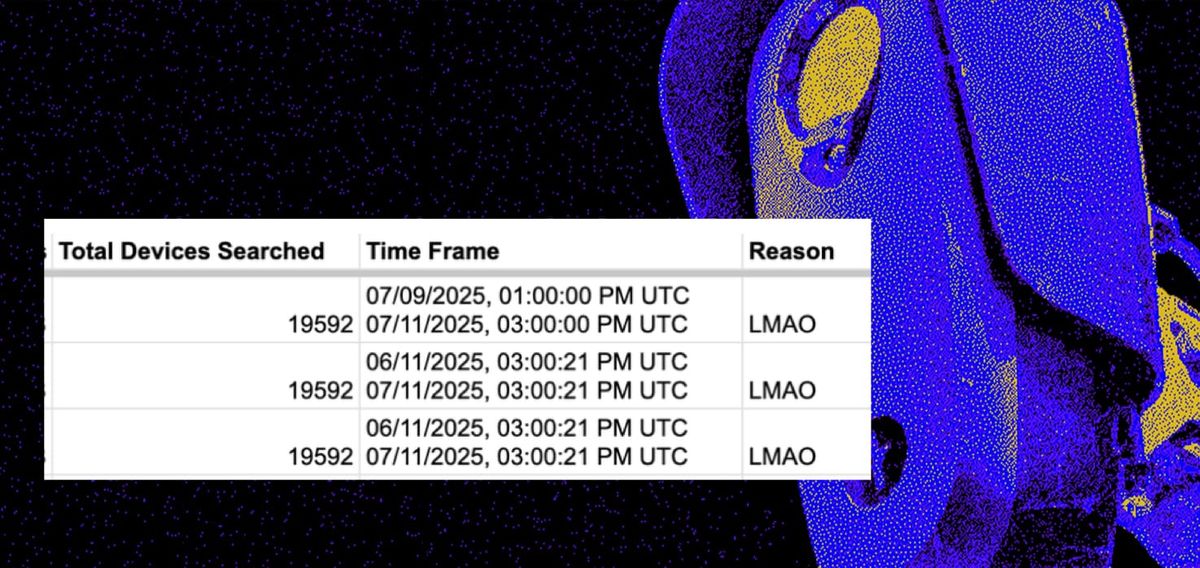
ARC’s Travel Intelligence Program allowed government agencies to search ticket transactions by passenger name, itinerary and payment identifiers. It covered 39 months of travel and could notify an agency when someone matching specified criteria bought a new ticket. They advertised more than one billion (and in some cases ‘billions’ of) searchable records of agency-purchased tickets which were made available to the Federal Bureau of Investigation, Internal Revenue Service, Securities and Exchange Commission and components of Homeland Security without agencies first going to a court or serving an airline with legal process for a particular passenger.

'Starwashing': The new space race has an environmental problem

Grist 'Starwashing': The new space race has an environmental problem
preview

As Musk’s SpaceX, Bezos’ Blue Origin, and other companies expand into space, they risk causing more problems for Earth in the process: air pollution, climate effects, and light pollution. The practice of downplaying these negative consequences while trumpeting the message that space operations can make life better on Earth has a new name: “starwashing,” a term the space researcher Melissa E. Yingling helped popularize in an article published in The Conversation earlier this month.

It’s a play on the term “greenwashing,” used to critique companies that highlight small sustainable investments to divert attention from the pollution their businesses cause. Space companies are appealing to a sense of “cosmic wonder” and making promises to benefit humankind, along with promoting their environmental bona fides, Yingling wrote.

Exploited Data Workers Are "the Secret Ingredient of 'AI' Itself" [Video/Transcript]

Truthout Exploited Data Workers Are “the Secret Ingredient of AI Itself”
preview

Despite being branded as autonomous and self-sustaining, artificial intelligence relies heavily on human labor — an army of data workers all over the world, primarily in the Global South. These workers “are purposely hidden by the companies that produce AI because they are the secret ingredient of AI itself,” says sociologist Antonio Casilli, the author of Waiting for Robots: The Hired Hands of Automation and co-writer of the documentary In the Belly of AI. Casilli estimates that over 160 million people are involved in data work around the world.

ICE Plans to Spends Millions on Boston Dynamics Dog Robots

404 Media ICE Plans to Spends Millions on Boston Dynamics Dog Robots
preview

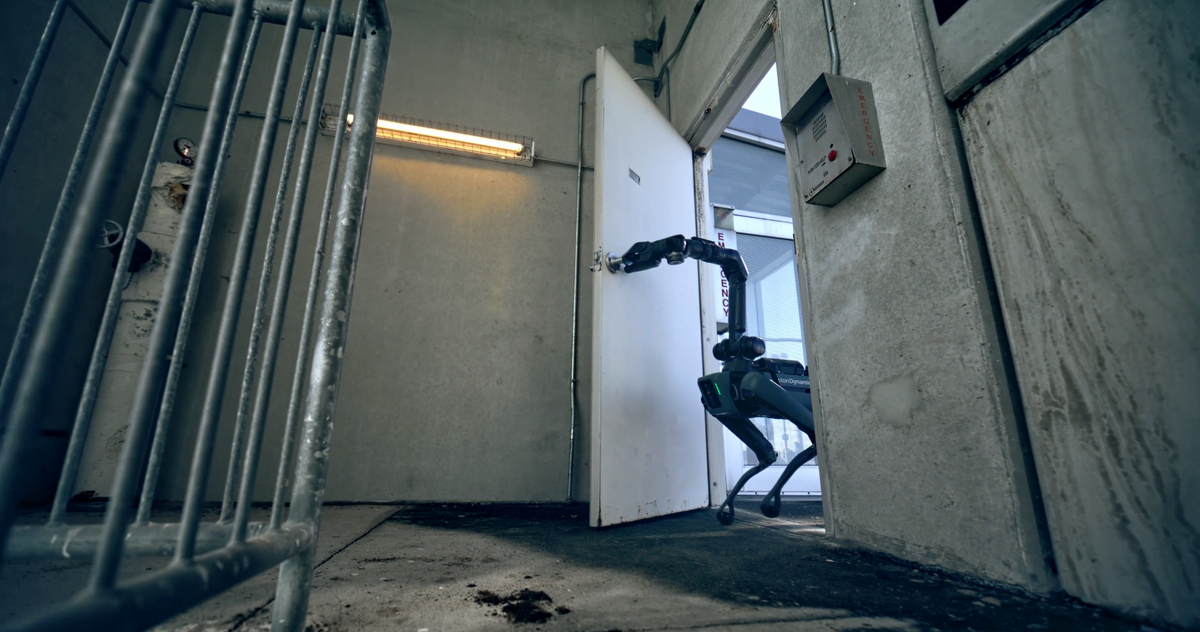
Immigration and Customs Enforcement (ICE) plans to buy at least a million dollars worth of robots from Boston Dynamics, the company that makes the dog-like SPOT robots, with the purpose of improving “officer safety,” according to a Department of Homeland Security (DHS) announcement.

Elon Musk’s xAI used child porn to train Grok models, lawsuit says

Ars Technica Elon Musk’s xAI used child porn to train Grok models, lawsuit says
preview

For her safety, Doe has opted to receive alerts from the US Department of Justice Victim Notification System any time she may be a victim in a new criminal investigation. Although she has received countless alerts, she was shocked when the CCCP notified her that it had identified AI-generated CSAM on xAI that depicted her. This re-traumatized Doe, whose complaint alleged that messages were found on online forums “between offenders chatting about creating AI generated CSAM of Plaintiff and other similarly situated known, legacy, victims of CSAM.”

Now, Doe fears that xAI has not only made it easier to make more violative images of the most distressing time in her life, but also that xAI allegedly has stored the images that Grok generates and uses those outputs to further train Grok. Because of this, she believes that Grok has been trained on both the initial set of images that have haunted her for more than 20 years and the more recent AI-generated ones.

This is the first case to accuse xAI of training on CSAM, and the complaint does not go into great detail on that claim. Previously, Ars reported on a controversial dataset that was later scrubbed after researchers found CSAM in the training data, but there’s no indication xAI trained on that data. In a press release from lawyers representing Doe, it explained that Doe’s images were included in a CSAM Hash List maintained by NCMEC, and “that same material” allegedly “was part of the dataset xAI used to build Grok’s image and video generating capabilities.” The complaint similarly only alleged that “CSAM depicting Plaintiff with its longstanding well-known hash values has been used as a part of the dataset used by xAI.”

Nvidia CEO plans Israel visit to double workforce

www.israelhayom.com Nvidia CEO plans Israel visit to double workforce | Israel Hayom
preview

Nvidia CEO Jensen Huang confirmed on Tuesday his intention to visit Israel soon, underlining the firm’s objective to double its staff in the country from the current 5,000 employees.

The company, which six years ago bought the Israeli networking firm Mellanox recently announced a mega campus in northern Israel in Kiryat Tivon.

SEC reportedly subpoenas Wall Street banks over "AI" hedge fund Situational Awareness’s near collapse

CNBC SEC reportedly subpoenas Wall Street banks over AI hedge fund Situational Awareness's near collapse
preview

The Securities and Exchange Commission has reportedly subpoenaed several major Wall Street lenders to glean more information about their role in the near-collapse of AI-focused hedge fund Situational Awareness.

Regulators are seeking insights into Situational Awareness’s trades, use of leverage and communications with the investment banks, which include Goldman Sachs, JP Morgan, Citigroup and Bank of America, according to Reuters, citing a source familiar with the matter.

Situational Awareness plunged from about $45 billion to around $10 billion in late July after it was hammered in last month’s tech sell-off.

The hedge fund, led by former OpenAI researcher Leopold Aschenbrenner, was forced to unwind much of its publicly listed portfolio of large, concentrated, levered positions — which included SK Hynix and CoreWeave — after losses sparked several margin calls among its prime brokers.

The defense revolving-door, Silicon Valley edition

Bulletin of the Atomic Scientists The defense revolving-door, Silicon Valley edition
preview

An eye-opening glimpse at the links between two congressional committees and more than 100 defense contractors, consultants, and lobbyists.

…

The interactive display below illustrates one piece of the defense revolving door as it has evolved over the last decade. During that time, former congressional officials have strolled through the door and wound up working not just at the largest defense contractors (often called “primes”) but also for a new class of high-technology firms—often involved in artificial intelligence and headquartered in Silicon Valley—that has aggressively expanded its Pentagon contracting efforts. And to be clear, the door leads in both directions; private sector bigwigs sometimes move into influential government positions that could affect the fortunes of their companies.

Camover Portland: Summer Games 2026!

pugetsoundanarchists.org
preview

Camover is a simple game with a simple objective: destroy, disable, and dismantle as many cameras as possible! You play against the surveillance state, an-ever growing enemy that watches all and never sleeps. You play for freedom, for a life without restriction, a city without spy-tech, and a future of possibility!!!

Camover began in 2013 when some anarchists in Berlin decided to take out CCTV cameras ahead of the European Police Congress. They posted their exploits online and encouraged others to play too. Since then, Camover has spread across oceans and continents, with spirited games popping up in Philly, New Jersey, Montreal, and the Bay. Now Camover comes to Portland for Summer 2026!

Surveillance vs guillotines

doctorow.medium.com
preview

Over the past decade, the steady march of digital technology, dominated by a cartel of giant global firms who collude with the US government’s system of political repression in exchange for tax breaks, antitrust forbearance and fat federal contracts has yielded more mass surveillance productivity gains than the previous 25 years.

comments