preview
cross-posted from: slrpnk.net/post/43333831
posts tagged #israelicrimes
cross-posted from: slrpnk.net/post/43333831
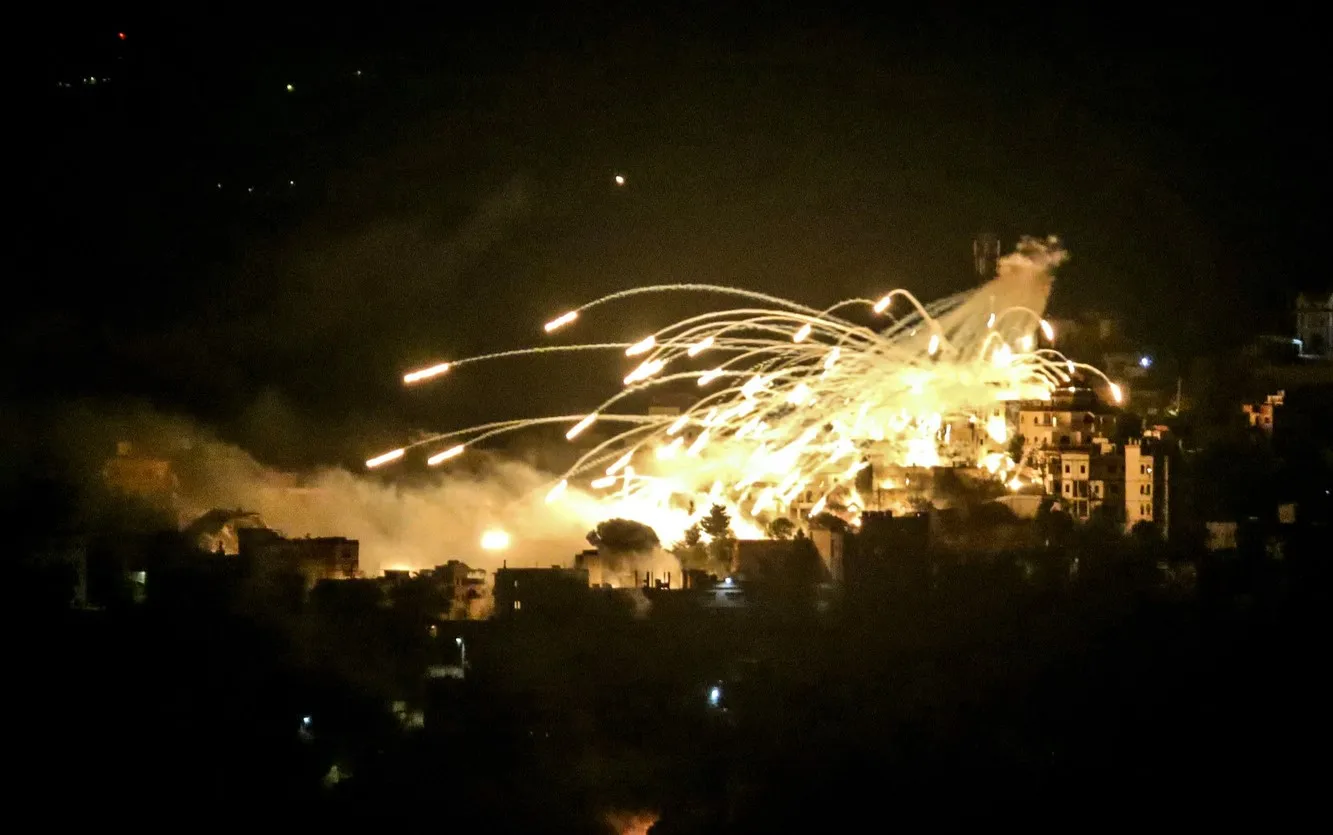
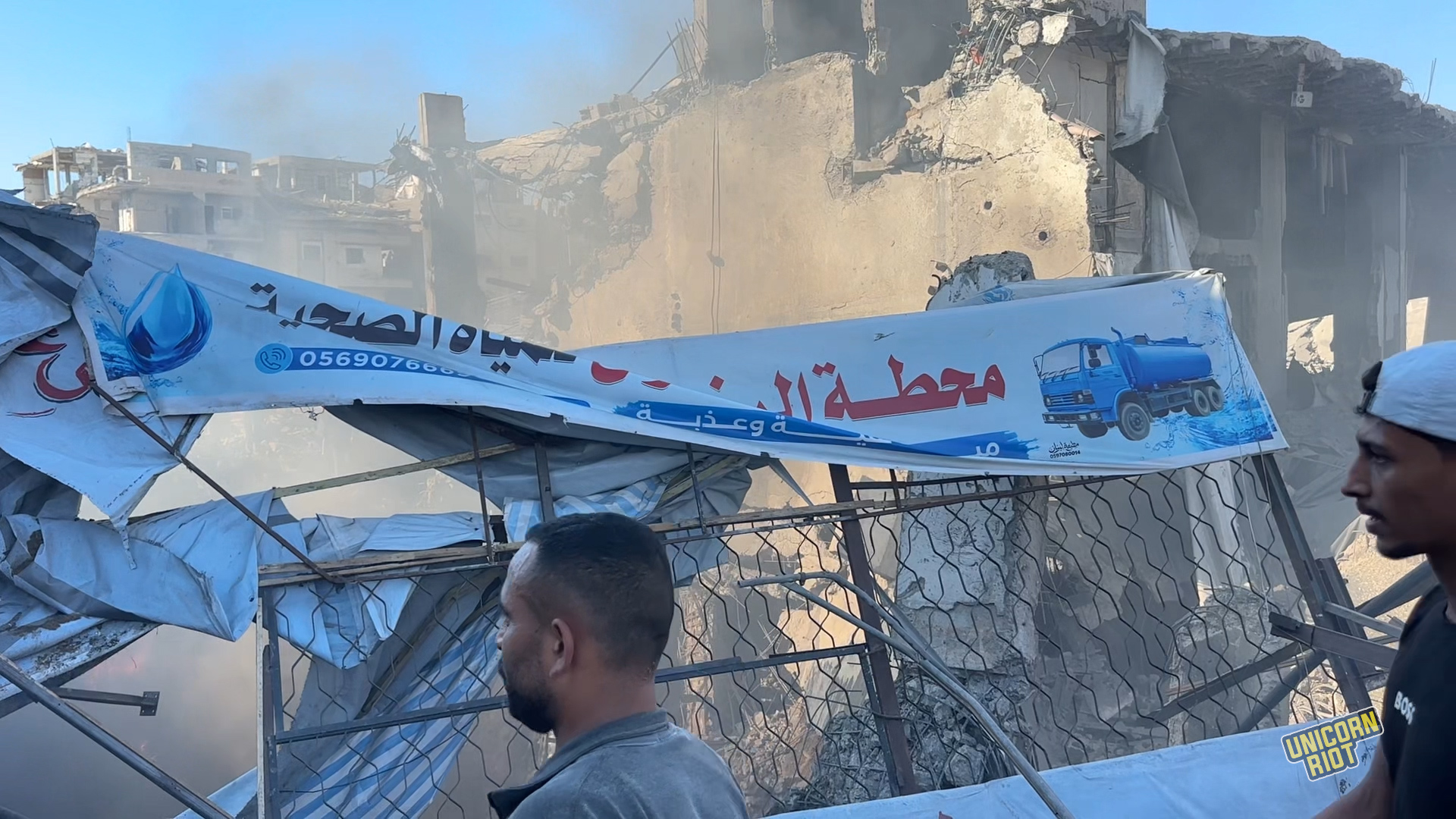
Human rights organizations published a 45-page report on the registration of 23 cases of the Zionist regime’s army of white phosphorus ammunition in southern Lebanon and called for the development of new international laws to contain these destructive weapons.
Human Rights Watch and the International Human Rights Clinic of Harvard Law School said in a recent report published that the Zionist army’s recent use of white phosphorus ammunition in Lebanon highlights the need to develop new international law to monitor and control these destructive weapons.
The groups called on countries to address the issue at a one-month disarmament meeting of the UN General Assembly, which is scheduled to be held in October 2016 (September/November 1405) in New York.
This 45-page report titled “Unreservable Burning: Inhuman Consequences of White Phosphorus Ammunition and the Need for Stronger Laws” has documented the ۲۳ approved use of these ammunition in southern Lebanon in the March period (Esfand/Farvardin) to May 2016 (May/Khordad 1405). The report also describes the horrific damage that the ammunition has caused during the armed conflict in recent years.
Ammos containing white phosphorus, which are exposed to oxygen by their content, are currently not subject to any specific treaty or treaty to control and monitor.
Bonnie Ducherty, senior arms consultant at Human Rights Watch and expert at the Harvard School of Law Clinic for International Human Rights, said White phosphorus ammunition can cause very painful burns and cause lifelong physical, psychological, and socio-economic damage. Countries must condemn the continued use of white phosphorus ammunition, call for further international dialogue, and ensure that international law appropriately addresses the unacceptable human consequences of these weapons.
The findings of this report are based on legal analysis, open-source research, 16 in-person and remote interviews, monitoring diplomatic processes and library studies.
Other uses of white phosphorus ammunition that have been reported since the year 2000 are the use of the use by the Zionist regime in Gaza during the years 2008 to 2009 and 2013; the use of the US-led coalition forces in Iraq and Syria in 2017; the use of the coalition forces led by the United States in Iraq and Syria in 2017; the use of the coalition forces led by Saudi Arabia in Yemen.
White phosphorus ammunition that explodes in the skies of residential areas are considered non-discriminatory weapons, meaning they are unable to separate the military and civilians, and therefore violate the general principles of international humanitarian law. However, despite the fire-tracking effects of these ammunition, white phosphorus is not subject to the Third Protocol of the Convention on Conventions (CCWs) adopted in the 1980s, which is dedicated to the provisions of incendiary weapons.
This protocol defines incendiary weapons as weapons designed primarily to create fire and burn people. This definition includes weapons designed for other purposes.
It doesn’t, even if they create the same effects of fire. White phosphorus ammunition is also not included in this category, as the main purpose of their design is to create a cover (smode) or lighting for military operations.
Human rights organizations assess white phosphorus ammunition based on the Martens principle; the principle in international humanitarian law that stipulates that in the absence of a particular treaty on a subject, civilians and military are protected by the principles of humanity and the requirements of public conscience.
The groups said in their report that the use of white phosphorus ammunition is an example of the use of the Martens principle. Inhuman and difficult wounds of treatment from these weapons are inconsistent with the principles of humanity. White phosphorus can burn people’s bodies to the bone, and the remaining particles in the wound may flare up again when removing the dressing and in contact with oxygen.
Protests by countries, international organizations, human rights groups and medical professionals show that the use of these ammunition is inconsistent with the requirements of public conscience. They stressed that in order to address these issues, stronger and more concrete international law is needed.
Dutchmant said diplomats, doctors, UN inspectors and others have expressed disgust with the brutal injuries caused by white phosphorus ammunition. Countries have already ratified treaties on toxic gases and blind lasers because they were inhumane and inconsistent with public conscience. They should take the same approach on white phosphorus ammunition.
Because white phosphorus ammunition is designed for use because of their burning capability, they are not considered chemical weapons and are not covered by the Chemical Weapons Convention.
Much of the debate on white phosphorus ammunition has been conducted under the supervision of the Convention on Convention on Convention. Dozens of countries have condemned the damage and called for exclusive discussions on the issue.
End of message/
cross-posted from: thelemmy.club/post/55758161
The girls were just eight and 12 years old and were bombed as they slept
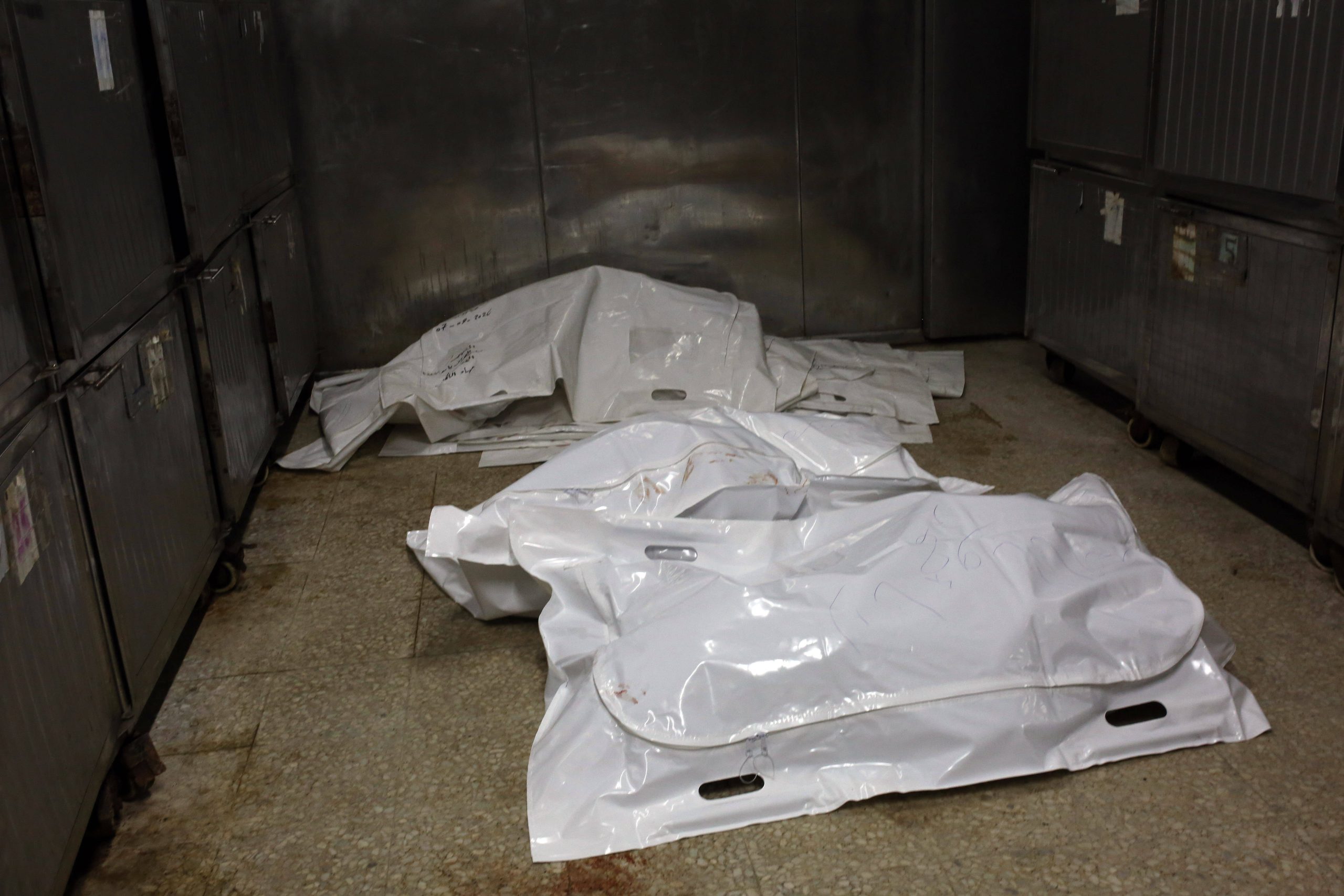
An Israeli strike on a partially destroyed home in Beit Lahia, northern Gaza, on Thursday morning killed a man, his wife, and their two young daughters as the IDF continues to regularly kill children in its constant violations of the US-backed ceasefire deal.
The girls were just eight and 12 years old, and the family was killed as they were sleeping, according to a neighbor. “There isn’t any truce,” the neighbor, Zuhair al-Haisami, told Reuters. “Not a single day passes without martyrs, or (people being) injured.”
Mourners bid farewell to the bodies of Moamen Abdul Rahman Ahmed, his wife Haneen and their two daughters, Lana and Bana Ahmed, at al-Shifa Hospital in Gaza City, on September 10, 2026 (IMAGO/APAimages via Reuters Connect)
The Quds News Networkidentified the father as Moamen Ahmed, the mother as Haneen, and their two daughters as Luna, 12, and Bana, eight. According to Reuters, the IDF claimed without evidence that Moamen was a Hamas member, and its statement made no mention of the woman and children who were killed in the strike.
Palestinian sisters Lana and Bana Ahmed were killed alongside their parents at dawn today in an Israeli airstrike on their home in Jabalia refugee camp, northern Gaza Strip. pic.twitter.com/UTNJ0nAM2I
— Quds News Network (@QudsNen) September 10, 2026
Israeli attacks hit other parts of Gaza on Thursday, with the Palestinian news agency WAFA reporting that several people were injured by strikes in Gaza City and near the Nuseirat refugee camp in central Gaza. In recent days, the IDF has ramped upforced evacuations and the bombing of buildings it ordered evacuated.
Gaza’s Health Ministry said in its daily update that since the so-called ceasefire deal was signed in October 2025, the IDF has killed at least 1,359 Palestinians in Gaza and wounded 4,571. The US has continued to back Israel’s attacks despite announcing that Hamas had agreed to a deal that would see the group give up its weapons, a proposal that Israel has rejected.
Dave DeCamp is the news editor of Antiwar.com, follow him on Twitter @decampdave.
cross-posted from: programming.dev/post/55793649
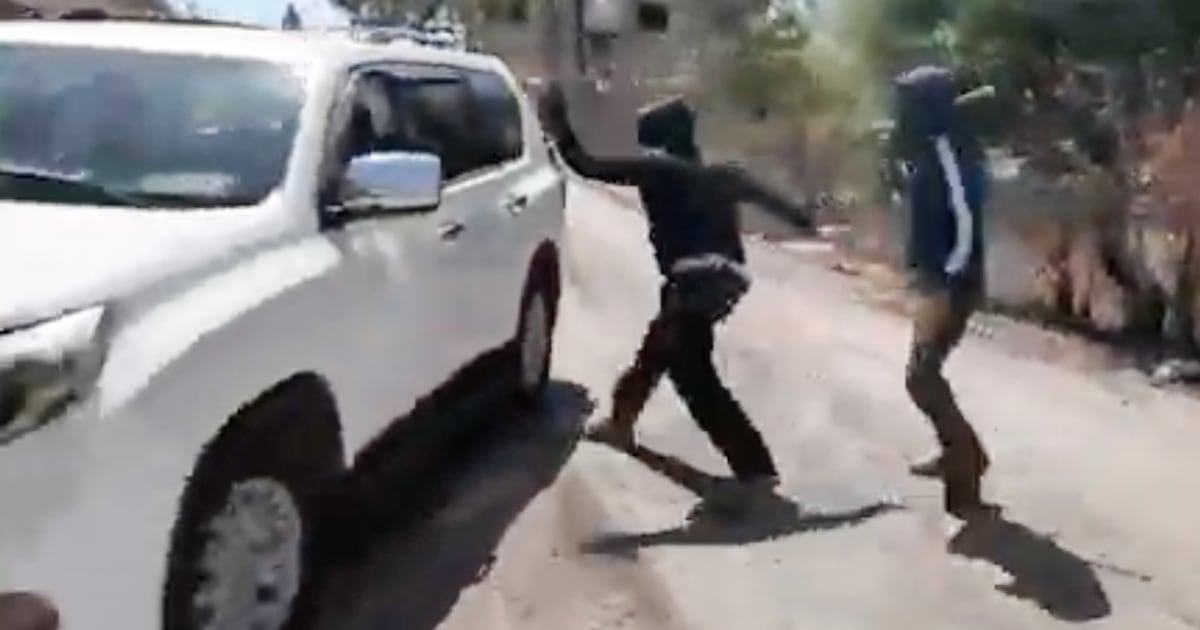
Palestinian woman and NBC News team attacked by masked Israeli settlers
cross-posted from: programming.dev/post/55793649
Palestinian woman and NBC News team attacked by masked Israeli settlers
Cross posted from lemmy.ca/post/66901151
A video posted on social media reportedly shows Israeli settlers stealing wheat crops belonging to Palestinians in Masafer Yatta in the occupied West Bank.
Israeli forces and settlers attacked and injured Palestinians in different parts of the West Bank on Friday, as part of an ongoing effort by armed settlers to seize Palestinian land.
The WAFA news agency also reported that Israeli forces raided several homes in Jenin and arrested two children, while settlers in the area stormed agricultural land.
They’re not even hiding it anymore - The Grayzone live
Former Israeli soldier Eden Abergil’s Facebook photos of her posing with Palestinian prisoners has sparked accusations that ‘souvenir photos’ are widespread in the army. Veterans’ group Breaking the Silence has released a number of soldiers’ pictures, some showing dead Palestinians. The pictures were released with the soldiers’ faces obscured, apart from the image of Abergil. The Guardian has pixellated the faces of the Palestinians
cross-posted from: sh.itjust.works/post/60362357
nitter.tiekoetter.com/…/2056138392543396144#m
Pulled alive from beneath the rubble in Teirfalsiyeh, South Lebanon. Dust in his eyes, blood on his face, terror far too big for a child that small.
This is what Israel’s “ceasefire” looks like in south Lebanon
cross-posted from: lemmy.world/post/46682687
Without people like this there would literally be no journalism left.
Seven months after the so-called ceasefire, people in Gaza say the war has not ended. Bisan Owda reports from Gaza, where bombings continue, large parts of the territory remain inaccessible and families are still living in tents on top of the rubble of their homes.
“They say the war ended. But it didn’t.” With children walking to school under fire and people struggling to access water and basic needs, daily life is still shaped by uncertainty and loss. At the edge of it all, the sea remains one of the few places where people can gather to find a moment of calm.
“They cannot destroy the sea.”
The firm, based in Damascus with a presence in London and Dubai, is comprised of almost exclusively Arab Muslims.
The firm claims it is “unlocking Syria’s next decade of growth.”
Here is a link to the company’s website. syriacapitalpartners.com/team
Poster probably has some dubious ideological motivation but it checks out regardless
Just start shaking already before you read it. Won’t it save us time? Or better yet, donate to these verified + urgent fundraisers 🙏 chuffed.org/project/ahmedaljaro chuffed.org/project/bsharkreem
Settlers in Wad al‑Watawat, north of al‑Khalil, have carried out “recurring arson and nightly intimidation” for more than eight years, with resident Mustafa Ghoneimat’s home set on fire around 3 a.m. as surveillance cameras documented the attack. Occupation forces reportedly arrive without pursuing attackers but instead conduct “search operations inside the homes of the victims,” which residents describe as a policy of “gradual attrition aimed at controlling the land.”
Israeli authorities displaced Palestinian families from 11 homes in the Batn al‑Hawa neighborhood of Silwan, east Jerusalem, evicting approximately “65 residents” and seizing two additional apartments. Israeli rights group B’Tselem said the evictions “mark the beginning of a large wave of displacement affecting around 2,200 people in Silwan” and “clearly embody an Israeli policy aimed at engineering the demographic balance and Judaizing the neighborhood.”
Israeli occupation forces have rearrested approximately “100 freed prisoners” since the exchange deals following the latest war on Gaza, according to the Palestinian Prisoners Society, which described the arrests as “a systematic policy” and “a new violation of the terms of exchange agreements.” The Asra Media Office reported that 3,985 Palestinian prisoners were released under the “Flood of the Free” deal carried out in three phases between 2023 and 2025.
Several Palestinians kidnaped in IOF raids in W. Bank — Palestinian Information Center [2026-03-25]
Israeli occupation forces conducted a large‑scale arrest campaign across the West Bank at dawn Wednesday, kidnapping citizens in Balata refugee camp, Nablus, Tubas, al‑Khalil, Tulkarem, Qalqilya, and elsewhere. In east Jerusalem, police forces kidnapped three Palestinians and killed “21‑year‑old Qasim Shuqairat” during a raid in Jabel al‑Mukaber.
A severe shortage of motor oils in Gaza has led to “increased engine breakdowns” and vehicle stoppages, with mechanic Mohammad Abu Khalil noting that “drivers resort to extending the life of the oil due to high prices, and this sometimes leads to damage to parts of the engine or its complete failure.” Taxi driver Sami al‑Zahrani said only “one shipment of oils” has arrived since the war began, and transportation workers fear more vehicles will stop as the ban on entry of maintenance materials continues.
Palestinian killed by Israeli gunfire in O. Jerusalem — Palestinian Information Center [2026-03-25]
“21‑year‑old Qasim Shuqairat” was killed by Israeli police gunfire in Jabel al‑Mukaber, east Jerusalem, at dawn Wednesday. In separate incidents, forces stormed Silwan, Qalandia refugee camp, and Anata, where police forced a restaurant owner to “shut down his business and ordered him to change its name immediately.” The Abu Basbous family was also evicted from its remaining homes in Batn al‑Hawa.
A group of settlers infiltrated the village of Kafr Qaddum, east of Qalqilya, and threw “a flammable substance into an agricultural room belonging to farmer Abd Takruri,” causing considerable damage to the structure and its contents. The attackers also “spray‑painted anti‑Arab graffiti” in the area.
Child killed by Israeli fire in Al‑Mawasi, Khan Yunis — Palestinian Information Center [2026-03-24]
“13‑year‑old Khaled Saif al‑Din Suleiman Arada” was killed by Israeli forces inside his tent in Al‑Mawasi, Khan Yunis, while a 17‑year‑old girl was injured by gunfire in Al‑Mawasi, Rafah. Medical sources reported the killings amid ongoing ceasefire violations; a total of “687 Palestinians have been killed since the ceasefire” began October 10, 2025, with the overall death toll since October 2023 exceeding 72,000.
A group of settlers infiltrated the village of Kafr Qaddum, east of Qalqilya, and threw “a flammable substance into an agricultural room belonging to farmer Abd Takruri,” causing considerable damage to the structure and its contents. The attackers also “spray‑painted anti‑Arab graffiti” in the area.
Palestinian prisoner Ibrahim Abu Mukh, 65, from Baqa al‑Gharbiyye, was released after “spending four decades in Israeli prisons,” marking one of the longest incarceration periods among Palestinian detainees. The Commission of Detainees and Ex‑Detainees Affairs said Abu Mukh endured “solitary confinement and medical neglect” during his imprisonment but “remained steadfast in his position and national principles.”
Israeli forces uprooted dozens of olive trees near the main entrance of Kifl Hares town in northern Salfit and bulldozed land in eastern Qalqilya, part of efforts to “change the town’s entrance layout and widen roads used by Jewish settlers.” In Kafr Laqif, bulldozers leveled swaths of land following a decision to seize “106 dunums of land” under the pretext of military purposes; bulldozing began immediately after the objection deadline expired.
cross-posted from: hexbear.net/post/8069612
cross-posted from: news.abolish.capital/post/38040
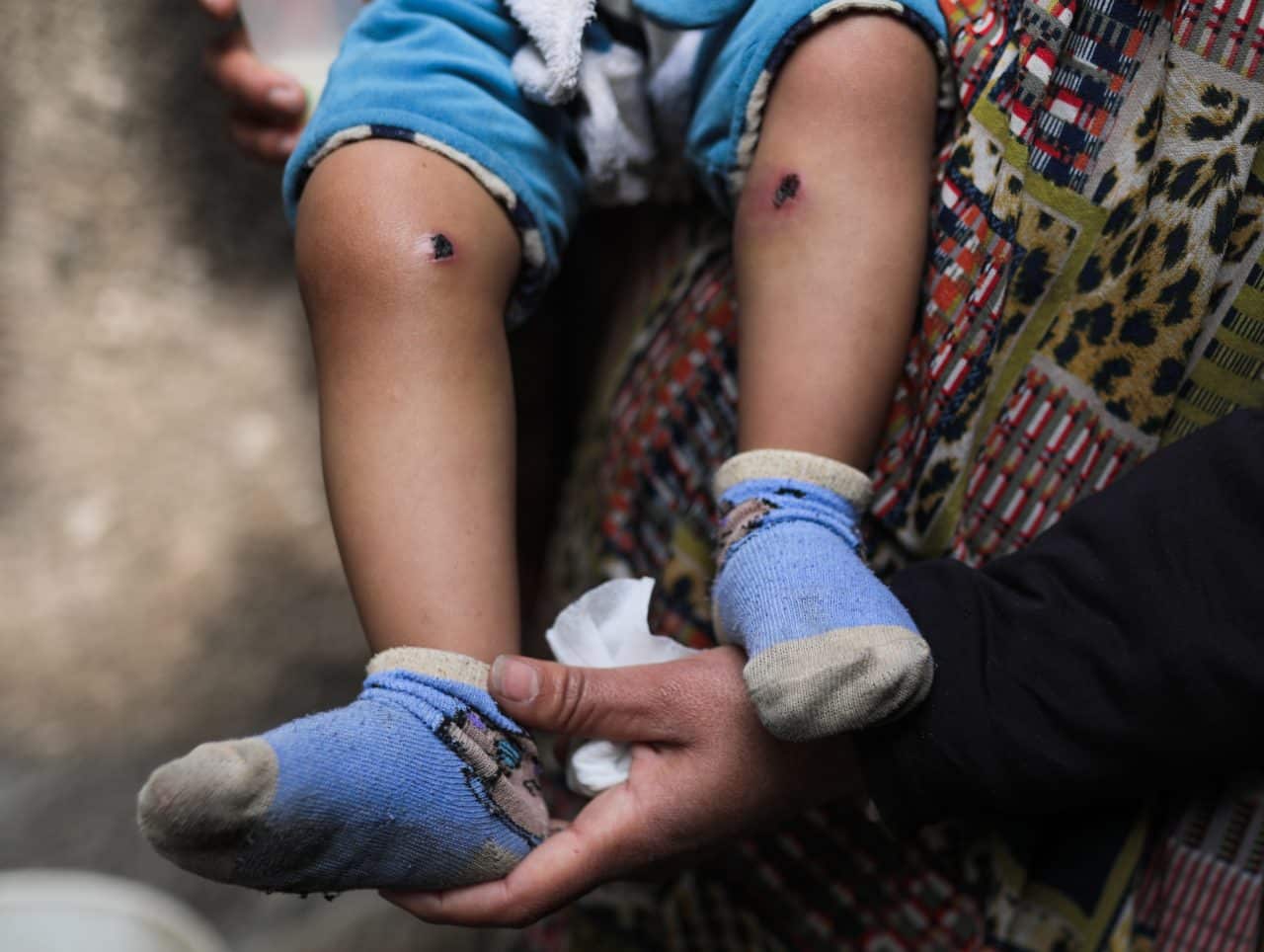
An 18-month-old toddler in Gaza was returned by the Israeli army to his family with burn marks and puncture wounds on his legs. Doctors say the wounds are clearly the result of torture while the child was detained with his father.
The marks on the child’s legs appear unmistakable. Round burn marks, as if from cigarette butts, as well as puncture wounds. His pants have the same two holes, and they are stained with blood. This was the state in which 18-month-old Jawad Abu Nasser was returned to his family in Gaza by the Israeli army.
In video testimony for Mondoweiss, Waad al-Shafi, 19, from the Maghazi area in central Gaza, holds her son and lifts his legs and feet toward the camera. According to the family, the toddler was subjected to severe torture by the Israeli army. They say that the Israelis had put out cigarettes on his legs and punctured them with sharp objects.
“Here is where his foot was pierced, and here is where cigarettes were put out on him,” Jawad’s mother says, holding his feet as she points to each injury. “And here’s another wound. And another.”
The family says they suspect that Jawad’s torture could have been an attempt to pressure his father into providing information, and they also believe that he was likely there while the soldiers carried out the abuse of his son.
From Mondoweiss via This RSS Feed.
Just wanted to highlight that PA blocked Shehab News/The Palestinian Information Center 🖕
A film which has been produced by a group of Australian journalists has sparked an international outcry against Israel after it explicitly detailed Tel Aviv’s use of torture against Palestinian children. The film, titled ‘Stone Cold Justice’ documents how Palestinian children, who have been arrested and detained by Israeli forces, are subjected to physical abuse, torture and forced into false confessions and pushed into gathering intelligence on Palestinian activists. Australia’s foreign minister Julie Bishop has spoken out against Israeli’s use of torture stating that “I am deeply concerned by allegations of the mistreatment of Palestinian children”. Last year a report by the United Nations International Emergency Children’s Fund or UNICEF concluded that Palestinian children are often targeted in night arrests and raids of their homes, threatened with death and subjected to physical violence, solitary confinement and sexual assault. The film Stone Cold Justice has sparked an international outcry about Israel’s treatment of children in Israeli jails. However, rights groups have criticized Tel Aviv for not doing anything to create a policy that protects Palestinian children against arbitrary arrest and torture.
This documentary is produced by ABC Australia As always, edited by Ian Anderson (xcancel.com/starsalwayslost), with special thanks / credit to Sina Rahmani + The East is a Podcast. Robin Brickner is our social media coordinator. Our Twitter presence is xcancel.com/AntiImpArchive, and if you would like to reach out directly we have an email address at: antiimperialistarchive@gmail.com
We have AIA business cards with QR codes - please email or DM us to have one mailed to you
cross-posted from: lemmy.ml/post/44511674
March 14, 2026
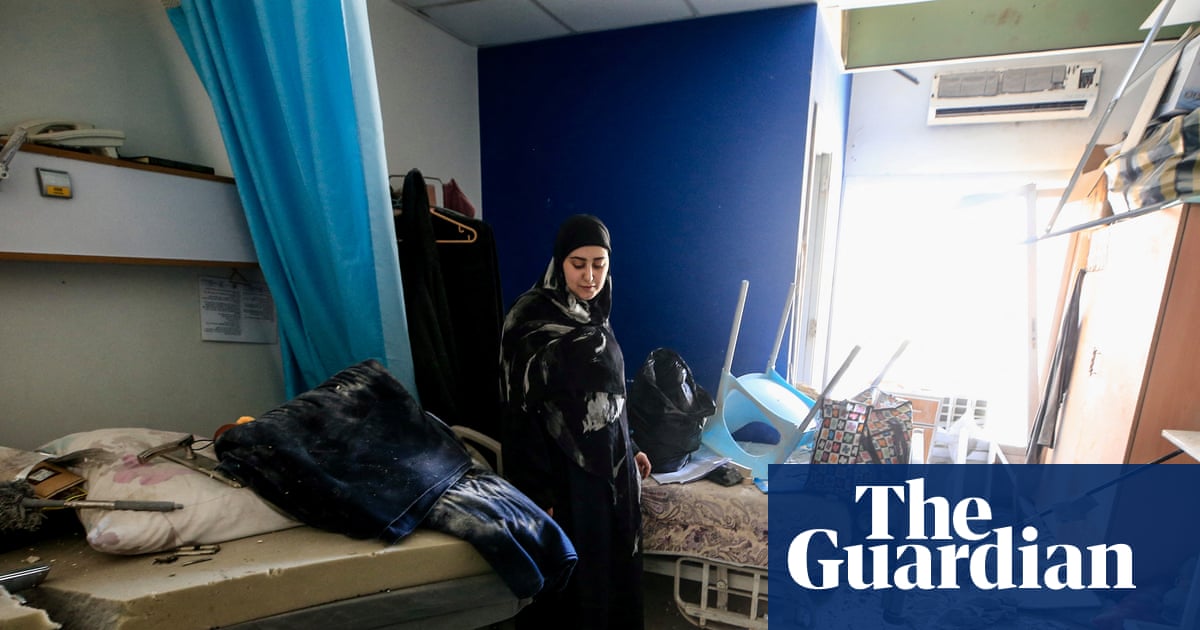
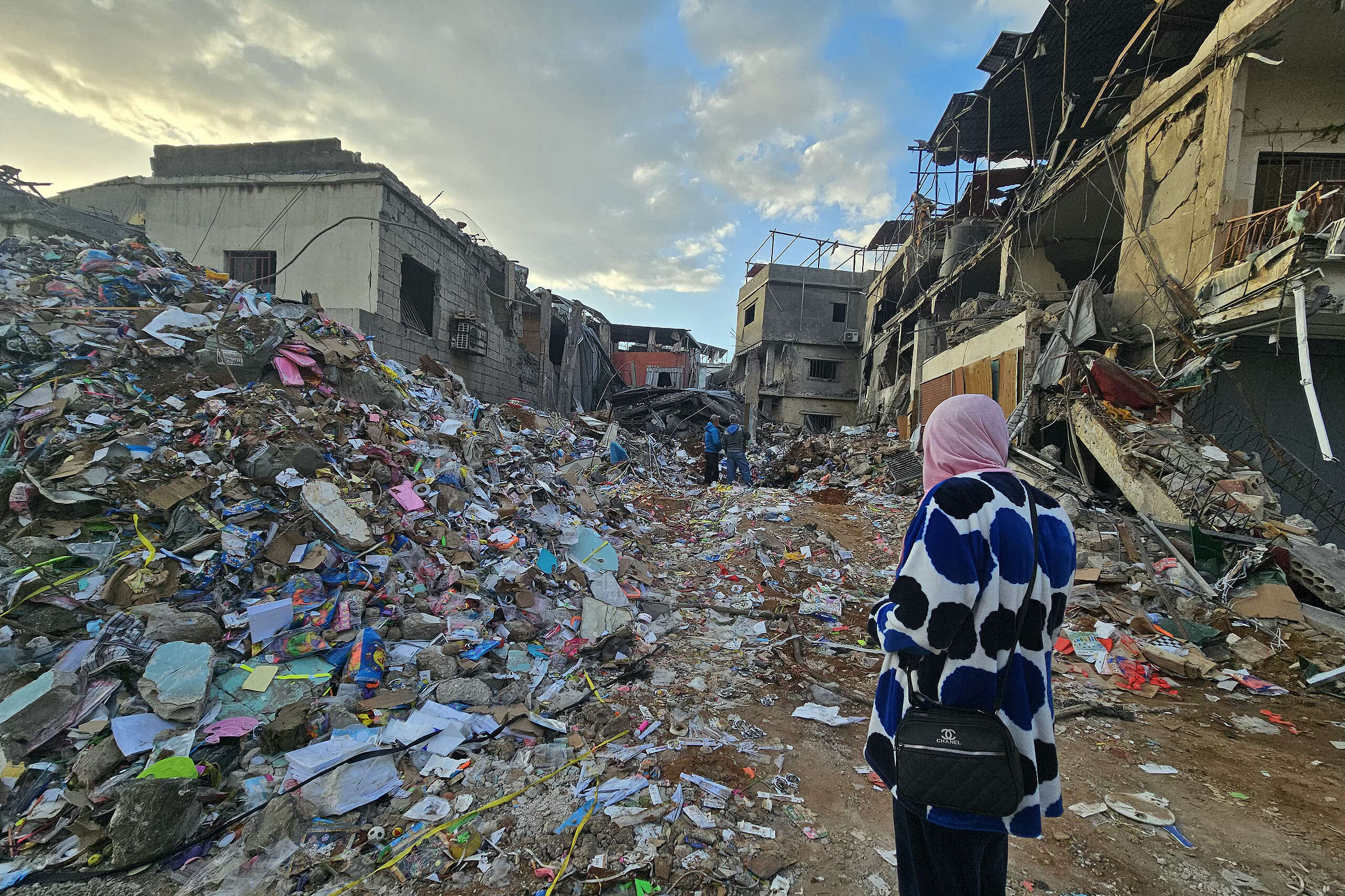
Batoul and her loved ones were among the 773 Lebanese people – including more than 100 children – killed by Israel’s campaign in Lebanon since 2 March. They join a growing list of families completely wiped out by Israeli bombings, in a conflict whose death toll is rising faster than in any previous war in Lebanon.
Forty-one people were killed by Israeli airstrikes in Nabi Chit in the Bekaa valley in only five hours last Saturday, and 18 people died in a single night in the town of Sir el-Gharbiyeh on 8 March. The pace of death has stunned Lebanese people and left them struggling to keep up.
cross-posted from: hexbear.net/post/7905992
cross-posted from: news.abolish.capital/post/34050
RAMALLAH — Traffic was at a standstill outside of Nablus in the occupied West Bank on Saturday, as sunset neared and hungry residents were forced to trickle through an Israeli checkpoint to get home and break their fasts.
The Israeli military had sealed the city off from the outside world. Just over a week after the U.S. and Israel launched their joint war on Iran, Israeli settlers have ramped up their violence against Palestinians in the West Bank, and Israeli forces have imposed a near-total closure of municipal centers, shutting gates and restricting crossings without warning or perceptible logic.
“It’s so unpredictable,” said Shadya Saif, 40, a Palestinian mother of three who teaches at a private school in Ramallah. The Intercept rode alongside Saif as she traveled back to Ramallah from Nablus on Saturday, when the Israeli military closed all but one checkpoint out of the city, putting it under an effective blockade and forcing all traffic through a checkpoint called Shavei Shomron.
The unannounced closures left Palestinians scrambling. Many were visiting Ramallah to see family members during Ramadan, and they hoped to reach their destinations in time for iftar, the fast-breaking meal enjoyed at sunset. Others needed to enter the city to receive medical treatment they cannot obtain elsewhere. Saif had risked the journey to see her dying uncle and, knowing the risks of crossing, she’d left her chronically ill daughter in Nablus with him.
“I was worried I would get stuck here,” Saif told The Intercept inside a yellow “service” taxi, the only form of public transportation widely available in the West Bank. Even though nearly all of her family lives in Nablus, she has tried to avoid visiting since October 7, 2023, after which the Israeli military clamped its ubiquitous yellow gates over entry points throughout the West Bank.
[
Related
Israel Revoked Palestinians’ Work Permits — Then Launched a Deadly Crackdown on Laborers](theintercept.com/…/israel-palestinians-work-permi…)
Israeli soldiers stopped each car to inspect Palestinians’ IDs. At their limit, drivers began pulling their cars onto roundabouts and driving the wrong way down the street, but the final say lay with Israeli forces, who allowed only one car at a time to approach the military installation. Some abandoned their cars to walk through checkpoints and reach their families on foot. An elderly Palestinian woman prayed aloud, saying that all she wanted was to make it safely to her family in Ein Yabrud, a village on the outskirts of Ramallah.
“I was worried I would get stuck here.”
As we sat waiting at the checkpoint, Saif’s face was filled with worry. She opened her phone to show pictures of her daughter, dressed in pink and smiling at the camera.
Saif’s daughter has muscular dystrophy and requires specialized treatment and 24-hour supervision. Saif took a big risk visiting Nablus to see her dying uncle in the hospital, she said, because if she were to get stuck there due to a checkpoint closure — which did happen for three days last week — her daughter’s health would be put in jeopardy.
“I left her with my uncle just for the day, but I have to be there to care for her,” Saif said. “I know her medications and how to ensure she doesn’t get sick.”
Saif made it back to Ramallah, but she said it would not have been possible a few days earlier.
A roadblock Israeli settlers installed on the main road between Sebastia, a Palestinian village south of Nablus, and Route 60, which connects the city to the central and southern West Bank, seen on March 7, 2026. Photo: Theia Chatelle
The day after the U.S. and Israel started attacks on Iran, the prevailing sentiment in Ramallah was anxiety. People wondered if there would be road closures and food and fuel shortages like during last year’s Twelve Day War, and whether the Israeli government would impose what Palestinians describe as collective punishment in the West Bank, even though they were not involved in the conflict.
“It has nothing to do with anything Palestinians in the West Bank are doing or not doing,” said Aviv Tatarsky, who leads an Israeli protective presence collective that organizes watches to deter settlers from invading Deir Istiya, a village outside Ramallah. “And still, there’s an Israeli decision, and life comes to a stop.”
“There is no money, no work. We are in debt, and I have four mouths to feed. What am I to do?”
Ramallah, which has long functioned as a relatively insulated bubble from the effects of Israel’s occupation, is also dealing with a struggling economy. Paired with the war, the economic downturn has muted Ramadan celebrations, according to residents who spoke with The Intercept.
“We are suffering,” said Faisal Taha, who drives taxis in Ramallah. “There is no money, no work. We are in debt, and I have four mouths to feed. What am I to do? I have been driving my taxi all day, and I have forty shekels.”
Unemployment in the West Bank is hovering around 40 percent — up from 13 percent two years ago — and GDP has contracted by 13 percent since October 7.
Dror Etkes, founder of Kerem Navot, an Israeli NGO that monitors settlement construction in the West Bank, said he was not surprised by the restrictions imposed by Israel.
“They always use instances of violence to perpetuate more violence,” Etkes said. “This is what we have seen for years, since October 7, and now it is worse than ever.”
As during the Twelve Day War last year — after which Prime Minister Benjamin Netanyahu declared a “historic victory” that would “stand for generations” against the Islamic Republic of Iran — there are already the beginnings of flour and fuel shortages in the West Bank as the Israeli Civil Administration, which runs the military occupation of the territory, imposes import restrictions.
“This is not something new. It happened in June during the Twelve Day War, and it’s kicking off again,” Tatarsky said. “But what’s different this time is that Israel is also blocking roads — not only disconnecting Palestinians from Area C, but also blocking roads between Palestinian villages.”
A week later, on March 7, there was still only one checkpoint out of Ramallah open, forcing all traffic through a bottleneck that passes by the Beit El settlement and through the Jalazone refugee camp. This is the only route for Palestinians living in Ramallah to access Route 60, the main thoroughfare connecting Palestinian communities in the south to those in the north.
“They always use instances of violence to perpetuate more violence.”
Driving up the highway and passing village after village that had been closed off by the Israeli military, Etkes said it was clear the war with Iran was being used as a pretext for “a system that is meant to reduce as much as possible the area where Palestinians can move freely,” part of the settlement movements’ goal to alter the facts on the ground regarding de facto annexation.
Nabih Odeh, 63, who has been driving public transit taxis in the West Bank for more than 30 years, has watched what he describes as the slow annexation of the West Bank unfold. As he drove up Route 60, he pointed to village after village sealed off by the Israeli military.
“There, that’s Aqraba, closed,” Odeh said. “If you want to get in or out, you must walk. That’s Turmus Ayya — very wealthy — still closed.”
Eighty percent of Turmus Ayya’s residents have U.S. citizenship, yet the town was closed off, its yellow gate locked. Service taxis pulled up to drop residents off, leaving them to walk to the town center or be picked up by relatives. Its status as a wealthy American Palestinian village has no bearing on Israel’s decision.
At the same time, Israeli settlers have used the war with Iran as an opportunity to launch further attacks on Palestinian communities, largely in Area C — the roughly 60 percent of the West Bank under full Israeli civil and military control — working in tandem with movement restrictions in Areas A and B, the Palestinian-administered population centers and villages created under the 1995 Oslo Accords.
Messages circulating in settler WhatsApp groups have called for violence against Palestinians to match Israeli airstrikes in Iran. One graphic depicting a roaring lion, to match the Israel Defense Forces’ name for the military operation against Iran, reads: “It is time to launch a preemptive attack in all arenas, until the enemy is expelled from the country and subdued outside it. This time we win, once and for all.”
“I mean, generally, when you’re speaking about Israeli society, it is torn apart in so many ways,” said Orly Noy, editor at Local Call and chair of B’Tselem’s executive board. “But there’s one thing that always unifies, and I’m speaking about the Jewish section of society, of course, and this is war.”
[
Related
Rubio Admits That America Is Fighting Israel’s War](theintercept.com/…/rubio-trump-iran-israel-war/)
Netanyahu is willing to do anything to stay in power, Noy added, and during his time in office, he has worked effectively to paint the Iranian regime as an existential threat to Israel, working in tandem with the U.S. “He has taken advantage of it very well,” Noy said.
During Operation Rising Lion, this rally-around-the-flag effect has not only served Netanyahu’s interests but also those of settlers living in the West Bank.
WAFA, the Palestinian Authority’s news agency, estimates that settler attacks have increased 25 percent since the start of the conflict. Israeli settlers have killed six Palestinians since the start of the war with Iran, including three in one incident in the West Bank community of Khirbet Abu Falah, east of Ramallah.
Israeli settlers shot Fare’ Hamayel and Thaer Hamayel, and a third man, Mohammad Murra, died of suffocation from tear gas deployed by Israeli forces.
As the world’s attention remains on Iran, solidarity activists said that Israeli settlers appear to feel they have additional impunity to conduct attacks.
“They will be treated as heroes by their supporters, by their society,” Etkes said. “And the government will do nothing about it.”
The post With World’s Eyes on Iran, Israel Locks Down the West Bank appeared first on The Intercept.
From The Intercept via This RSS Feed.
cross-posted from: hexbear.net/post/7905992
cross-posted from: news.abolish.capital/post/34050
RAMALLAH — Traffic was at a standstill outside of Nablus in the occupied West Bank on Saturday, as sunset neared and hungry residents were forced to trickle through an Israeli checkpoint to get home and break their fasts.
The Israeli military had sealed the city off from the outside world. Just over a week after the U.S. and Israel launched their joint war on Iran, Israeli settlers have ramped up their violence against Palestinians in the West Bank, and Israeli forces have imposed a near-total closure of municipal centers, shutting gates and restricting crossings without warning or perceptible logic.
“It’s so unpredictable,” said Shadya Saif, 40, a Palestinian mother of three who teaches at a private school in Ramallah. The Intercept rode alongside Saif as she traveled back to Ramallah from Nablus on Saturday, when the Israeli military closed all but one checkpoint out of the city, putting it under an effective blockade and forcing all traffic through a checkpoint called Shavei Shomron.
The unannounced closures left Palestinians scrambling. Many were visiting Ramallah to see family members during Ramadan, and they hoped to reach their destinations in time for iftar, the fast-breaking meal enjoyed at sunset. Others needed to enter the city to receive medical treatment they cannot obtain elsewhere. Saif had risked the journey to see her dying uncle and, knowing the risks of crossing, she’d left her chronically ill daughter in Nablus with him.
“I was worried I would get stuck here,” Saif told The Intercept inside a yellow “service” taxi, the only form of public transportation widely available in the West Bank. Even though nearly all of her family lives in Nablus, she has tried to avoid visiting since October 7, 2023, after which the Israeli military clamped its ubiquitous yellow gates over entry points throughout the West Bank.
[
Related
Israel Revoked Palestinians’ Work Permits — Then Launched a Deadly Crackdown on Laborers](theintercept.com/…/israel-palestinians-work-permi…)
Israeli soldiers stopped each car to inspect Palestinians’ IDs. At their limit, drivers began pulling their cars onto roundabouts and driving the wrong way down the street, but the final say lay with Israeli forces, who allowed only one car at a time to approach the military installation. Some abandoned their cars to walk through checkpoints and reach their families on foot. An elderly Palestinian woman prayed aloud, saying that all she wanted was to make it safely to her family in Ein Yabrud, a village on the outskirts of Ramallah.
“I was worried I would get stuck here.”
As we sat waiting at the checkpoint, Saif’s face was filled with worry. She opened her phone to show pictures of her daughter, dressed in pink and smiling at the camera.
Saif’s daughter has muscular dystrophy and requires specialized treatment and 24-hour supervision. Saif took a big risk visiting Nablus to see her dying uncle in the hospital, she said, because if she were to get stuck there due to a checkpoint closure — which did happen for three days last week — her daughter’s health would be put in jeopardy.
“I left her with my uncle just for the day, but I have to be there to care for her,” Saif said. “I know her medications and how to ensure she doesn’t get sick.”
Saif made it back to Ramallah, but she said it would not have been possible a few days earlier.
A roadblock Israeli settlers installed on the main road between Sebastia, a Palestinian village south of Nablus, and Route 60, which connects the city to the central and southern West Bank, seen on March 7, 2026. Photo: Theia Chatelle
The day after the U.S. and Israel started attacks on Iran, the prevailing sentiment in Ramallah was anxiety. People wondered if there would be road closures and food and fuel shortages like during last year’s Twelve Day War, and whether the Israeli government would impose what Palestinians describe as collective punishment in the West Bank, even though they were not involved in the conflict.
“It has nothing to do with anything Palestinians in the West Bank are doing or not doing,” said Aviv Tatarsky, who leads an Israeli protective presence collective that organizes watches to deter settlers from invading Deir Istiya, a village outside Ramallah. “And still, there’s an Israeli decision, and life comes to a stop.”
“There is no money, no work. We are in debt, and I have four mouths to feed. What am I to do?”
Ramallah, which has long functioned as a relatively insulated bubble from the effects of Israel’s occupation, is also dealing with a struggling economy. Paired with the war, the economic downturn has muted Ramadan celebrations, according to residents who spoke with The Intercept.
“We are suffering,” said Faisal Taha, who drives taxis in Ramallah. “There is no money, no work. We are in debt, and I have four mouths to feed. What am I to do? I have been driving my taxi all day, and I have forty shekels.”
Unemployment in the West Bank is hovering around 40 percent — up from 13 percent two years ago — and GDP has contracted by 13 percent since October 7.
Dror Etkes, founder of Kerem Navot, an Israeli NGO that monitors settlement construction in the West Bank, said he was not surprised by the restrictions imposed by Israel.
“They always use instances of violence to perpetuate more violence,” Etkes said. “This is what we have seen for years, since October 7, and now it is worse than ever.”
As during the Twelve Day War last year — after which Prime Minister Benjamin Netanyahu declared a “historic victory” that would “stand for generations” against the Islamic Republic of Iran — there are already the beginnings of flour and fuel shortages in the West Bank as the Israeli Civil Administration, which runs the military occupation of the territory, imposes import restrictions.
“This is not something new. It happened in June during the Twelve Day War, and it’s kicking off again,” Tatarsky said. “But what’s different this time is that Israel is also blocking roads — not only disconnecting Palestinians from Area C, but also blocking roads between Palestinian villages.”
A week later, on March 7, there was still only one checkpoint out of Ramallah open, forcing all traffic through a bottleneck that passes by the Beit El settlement and through the Jalazone refugee camp. This is the only route for Palestinians living in Ramallah to access Route 60, the main thoroughfare connecting Palestinian communities in the south to those in the north.
“They always use instances of violence to perpetuate more violence.”
Driving up the highway and passing village after village that had been closed off by the Israeli military, Etkes said it was clear the war with Iran was being used as a pretext for “a system that is meant to reduce as much as possible the area where Palestinians can move freely,” part of the settlement movements’ goal to alter the facts on the ground regarding de facto annexation.
Nabih Odeh, 63, who has been driving public transit taxis in the West Bank for more than 30 years, has watched what he describes as the slow annexation of the West Bank unfold. As he drove up Route 60, he pointed to village after village sealed off by the Israeli military.
“There, that’s Aqraba, closed,” Odeh said. “If you want to get in or out, you must walk. That’s Turmus Ayya — very wealthy — still closed.”
Eighty percent of Turmus Ayya’s residents have U.S. citizenship, yet the town was closed off, its yellow gate locked. Service taxis pulled up to drop residents off, leaving them to walk to the town center or be picked up by relatives. Its status as a wealthy American Palestinian village has no bearing on Israel’s decision.
At the same time, Israeli settlers have used the war with Iran as an opportunity to launch further attacks on Palestinian communities, largely in Area C — the roughly 60 percent of the West Bank under full Israeli civil and military control — working in tandem with movement restrictions in Areas A and B, the Palestinian-administered population centers and villages created under the 1995 Oslo Accords.
Messages circulating in settler WhatsApp groups have called for violence against Palestinians to match Israeli airstrikes in Iran. One graphic depicting a roaring lion, to match the Israel Defense Forces’ name for the military operation against Iran, reads: “It is time to launch a preemptive attack in all arenas, until the enemy is expelled from the country and subdued outside it. This time we win, once and for all.”
“I mean, generally, when you’re speaking about Israeli society, it is torn apart in so many ways,” said Orly Noy, editor at Local Call and chair of B’Tselem’s executive board. “But there’s one thing that always unifies, and I’m speaking about the Jewish section of society, of course, and this is war.”
[
Related
Rubio Admits That America Is Fighting Israel’s War](theintercept.com/…/rubio-trump-iran-israel-war/)
Netanyahu is willing to do anything to stay in power, Noy added, and during his time in office, he has worked effectively to paint the Iranian regime as an existential threat to Israel, working in tandem with the U.S. “He has taken advantage of it very well,” Noy said.
During Operation Rising Lion, this rally-around-the-flag effect has not only served Netanyahu’s interests but also those of settlers living in the West Bank.
WAFA, the Palestinian Authority’s news agency, estimates that settler attacks have increased 25 percent since the start of the conflict. Israeli settlers have killed six Palestinians since the start of the war with Iran, including three in one incident in the West Bank community of Khirbet Abu Falah, east of Ramallah.
Israeli settlers shot Fare’ Hamayel and Thaer Hamayel, and a third man, Mohammad Murra, died of suffocation from tear gas deployed by Israeli forces.
As the world’s attention remains on Iran, solidarity activists said that Israeli settlers appear to feel they have additional impunity to conduct attacks.
“They will be treated as heroes by their supporters, by their society,” Etkes said. “And the government will do nothing about it.”
The post With World’s Eyes on Iran, Israel Locks Down the West Bank appeared first on The Intercept.
From The Intercept via This RSS Feed.
cross-posted from: hexbear.net/post/7946981
cross-posted from: news.abolish.capital/post/35128
A grieving Lebanese father said he buried his parents, four young daughters, and other relatives on Friday after they were killed by an Israeli airstrike—one of many that have wiped out families in Gaza, Lebanon, and Iran.
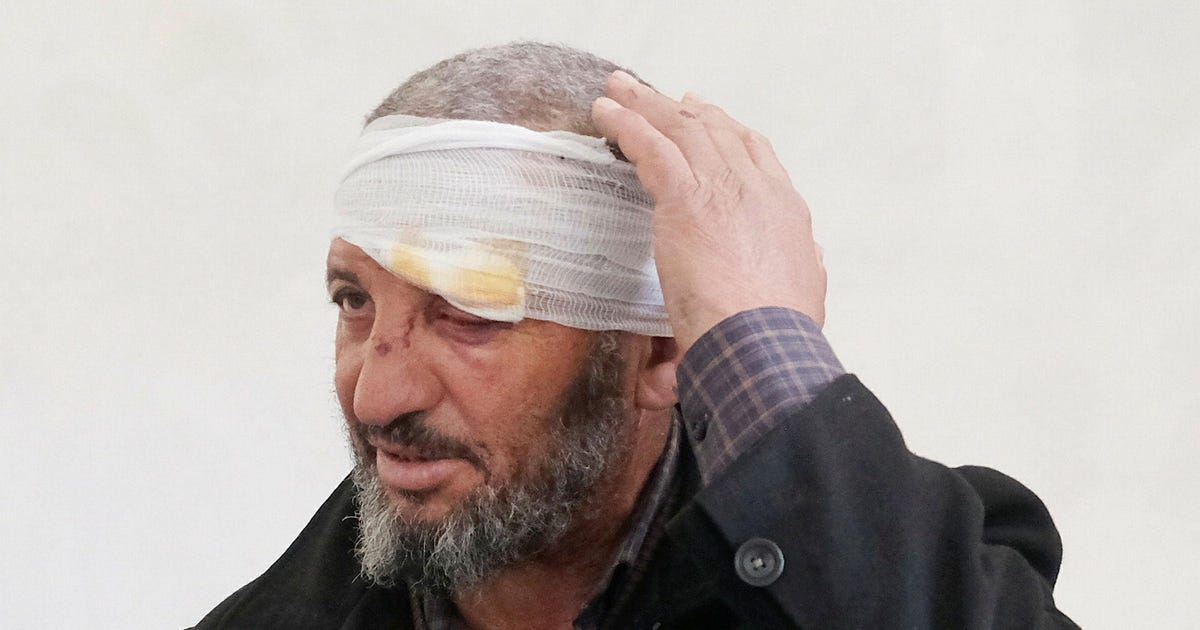
“I lost four of my children, four daughters, they were all I had,” the unidentified man—whose face and head were visibly injured from what he said was the same Israeli strike—told Al Jadeed TV, an independent Lebanese outlet. “Four daughters: Zainab, Zahraa, Maleeka, and Yasmine.”
“And my mother and father,” he added. “Praise be to God. God’s greatness is abundant.”
According to Al Jazeera, the man’s brother-in-law and nephew were also killed in the strike.
“The Israeli enemy says every day that it is targeting infrastructure,” he told the Qatar-based news network. “Is this the infrastructure?”
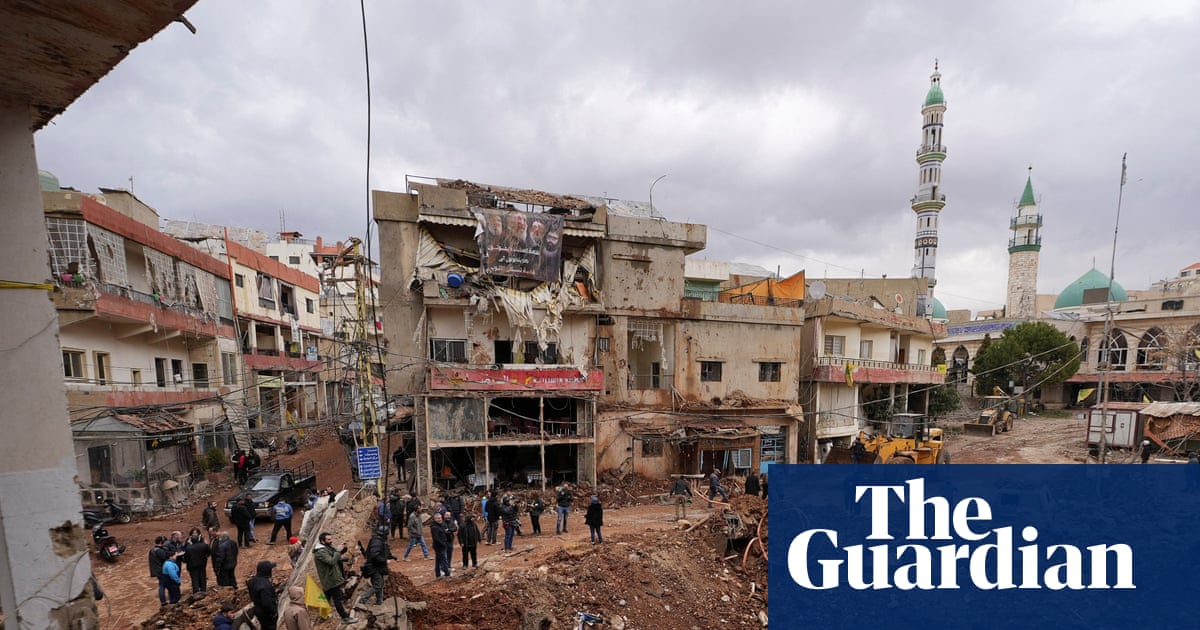
It was a devastating scene repeated in other parts of Lebanon, including the south, were a distraught mother on Friday reportedly buried five sons killed by Israeli bombing, and in the Ghobeiry neighborhood of central Beirut earlier this week, when an Israeli airstrike destroyed the home of the Hamdan family, reportedly killing father Ahmad Hamdan, his three daughters, and two grandchildren. As of Tuesday, Hamdan’s wife was missing beneath the rubble of their bombed-out home.
As in Gaza—where officials say that more than 2,700 families have been erased from the civil registry during Israel’s ongoing genocide and around 6,000 other families have only a single surviving member—entire Lebanese families have been wiped out by Israeli strikes since October 2023.
In one such strike on the Maronite Christian village of Aitou in October 2024, members of four generations of one family were killed, with 22 victims ranging in age from a 4-month-old infant to a 95-year-old great-grandmother.
More than 800,000 Lebanese have also been forcibly displaced by Israel’s assault and attendant evacuation orders. On Friday, Médecins Sans Frontières (MSF), or Doctors Without Borders in English, issued a statement highlighting the war’s impact on families.
“We are seeing a similarity to what we saw in the past two and a half years in Gaza: broad evacuation orders, constant displacement of thousands of families, and systematic bombing on densely populated areas,” said MSF Lebanon coordinator Lou Cormack. “After 15 months of a fragile ceasefire that failed to stop the violence in Lebanon, families are once again trapped between fleeing or facing bombs.”
Israel says it is attacking Lebanon to stop Hezbollah rocket and other attacks, which have killed dozens of Israeli civilians and wounded even more.
Journalist Lylla Younes told Democracy Now! on Friday that “the massacres are multiplying” in Lebanon, pointing to an Israeli airstrike on a Sidon home that reportedly killed at least 8 people and wounded at least 9 others.
“We saw Syrian refugees, displaced, already killed; 7 killed in a massacre in Tamnin in the Beqaa Valley; a massive massacre in Nabi Chit, also in the Beqaa Valley, when the Israelis tried to do a nighttime incursion by helicopter,” Younes said.
Lebanon’s Health Ministry said Friday that an Israeli strike on a health center in Bourj Qalawayh, southern Lebanon killed 12 medics.
Lebanese officials said Friday that 773 people—including 103 children—have been killed by Israeli forces since March 2. This, in addition to Israel’s 2023-25 attacks on Lebanon that killed more than 4,000 people, including nearly 800 women and over 300 children.
In Iran, authorities said more than 1,300 civilians have been killed and over 10,000 others injured by US and Israeli bombing since February 28. More than 200 women and over 200 children have reportedly been killed.
Most of the 175 or more Iranians killed in a February 28 cruise missile strike on a girls’ school in Minab—an attack that was almost certainly carried out by the United States—were children, according to Iranian government and medical officials and international investigations.
Israeli attacks on Iran during last year’s 12-Day War also killed more than 1,000 Iranians, including 436 civilians, while Iranian counterstrikes killed 28 people in Israel.
In Gaza, 28 months of Israel’s assault—for which the country is facing a genocide case at the International Court of Justice and its prime minister is wanted by the International Criminal Court for alleged crimes against humanity—have left more than 250,000 Palestinians dead, maimed, or missing and around 2 million others forcibly displaced, starved, or sickened.
US-led wars in the Middle East, South Asia, and Africa have resulted in the deaths of more than 900,000 people—including over 400,000 civilians—since 2001, according to the Costs of War Project at Brown University’s Watson Institute for International and Public Affairs.
Stories from families devastated by Israel’s war on Lebanon are as common as they are heartbreaking.
“I was sleeping when the Israeli jet bombed the area,” one Lebanese teenager told the independent outlet [comra]. “My father, my mother, my sister-in-law, and her children were killed.”
“I saw my father torn to pieces,” he added. “I wish I had died instead of seeing my father like that.”
From Common Dreams via This RSS Feed.