#linuxphones

posts tagged #linuxphones

0

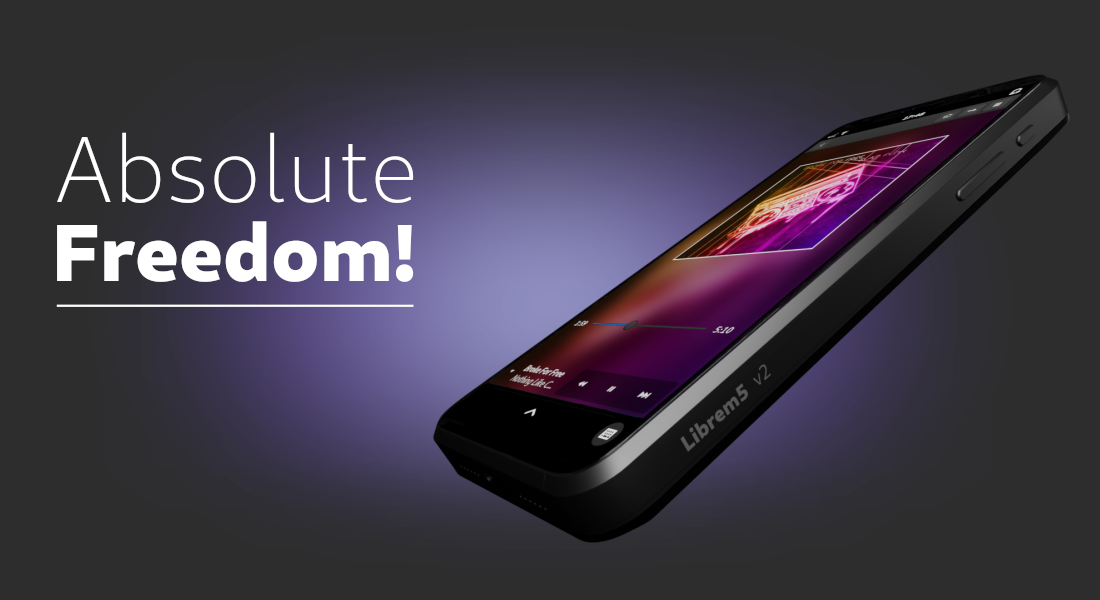
Purism Announces Librem 5 v2

Purism Purism Launches Librem 5 v2 , A RISC-V Phone to Empower People – Purism puri.sm
preview

Powered by an eight-core RISC-V processor and running PureOS, the Librem 5 v2 offers an alternative to Android and iOS—grounded in free software, open standards, and user ownership.

\ The campaign is now live at puri.sm/librem-5-v2-crowdfunding-campaign inviting privacy advocates, open-source enthusiasts, and consumers seeking digital independence to help bring the Librem 5 v2 to market.


“The Librem 5 v2 is the answer we all have been waiting for,” said Todd Weaver, Purism Founder & CEO. “A smartphone that works for you, not for the companies collecting your data. No Android, no iOS, no mandatory Big Tech account. A smart phone designed to put you in control of your digital life.”

The move to RISC-V is central to Purism’s long-term effort to build a more open and auditable mobile platform. The company says the architecture offers a path toward greater independence from proprietary processor designs. Bringing the platform to a fully functioning phone will require substantial engineering, including work on graphics, peripherals, power management, and app compatibility.

“RISC-V is the future, and Librem 5 v2 is the perfect product to bring it to a mainstream audience,” said CTO Jonathon Hall. “Purism’s Librem 5 v2, built on the open RISC-V architecture and PureOS, represents a rare opportunity to give users the privacy, transparency, and control they deserve by rethinking the mobile platform from the processor up.”

The Librem 5 v2 crowdfunding campaign is underway. The phone-only reward is listed at $1,599; campaign options also include payment plans and a phone-and-cellular-service bundle. Purism anticipates delivery approximately 14 to 15 months after the campaign ends. Because development is ongoing, the company notes that campaign rewards and timelines are not guaranteed.

“Technology should serve people—not turn them into products,” said Weaver. “The Librem 5 v2 is our next step toward a mobile future built around ownership, transparency, and digital freedom.”

0

Weekly GNU-like Mobile Linux Update (46/2026): RISC-V Librem 5 and a Plasma Mobile job

LINux on MOBile Weekly GNU-like Mobile Linux Update (46/2026): RISC-V Librem 5 and a Plasma Mobile job linmob.net
preview

Purism is crowdfunding a RISC-V-powered Librem 5 v2, KDE e.V. is hiring a software engineer for Plasma Mobile, Phosh 0.59 is out, Mir 2 is making good progress on Ubuntu Touch, Amazfish 3.0.0 is out, Sailfish OS boots on the Fairphone 6, and more!

Purism is crowdfunding a RISC-V-powered Librem 5 v2, KDE e.V. is hiring a software engineer for Plasma Mobile, Phosh 0.59 is out, Mir 2 is making good progress on Ubuntu Touch, Amazfish 3.0.0 is out, Sailfish OS boots on the Fairphone 6, and more!

0

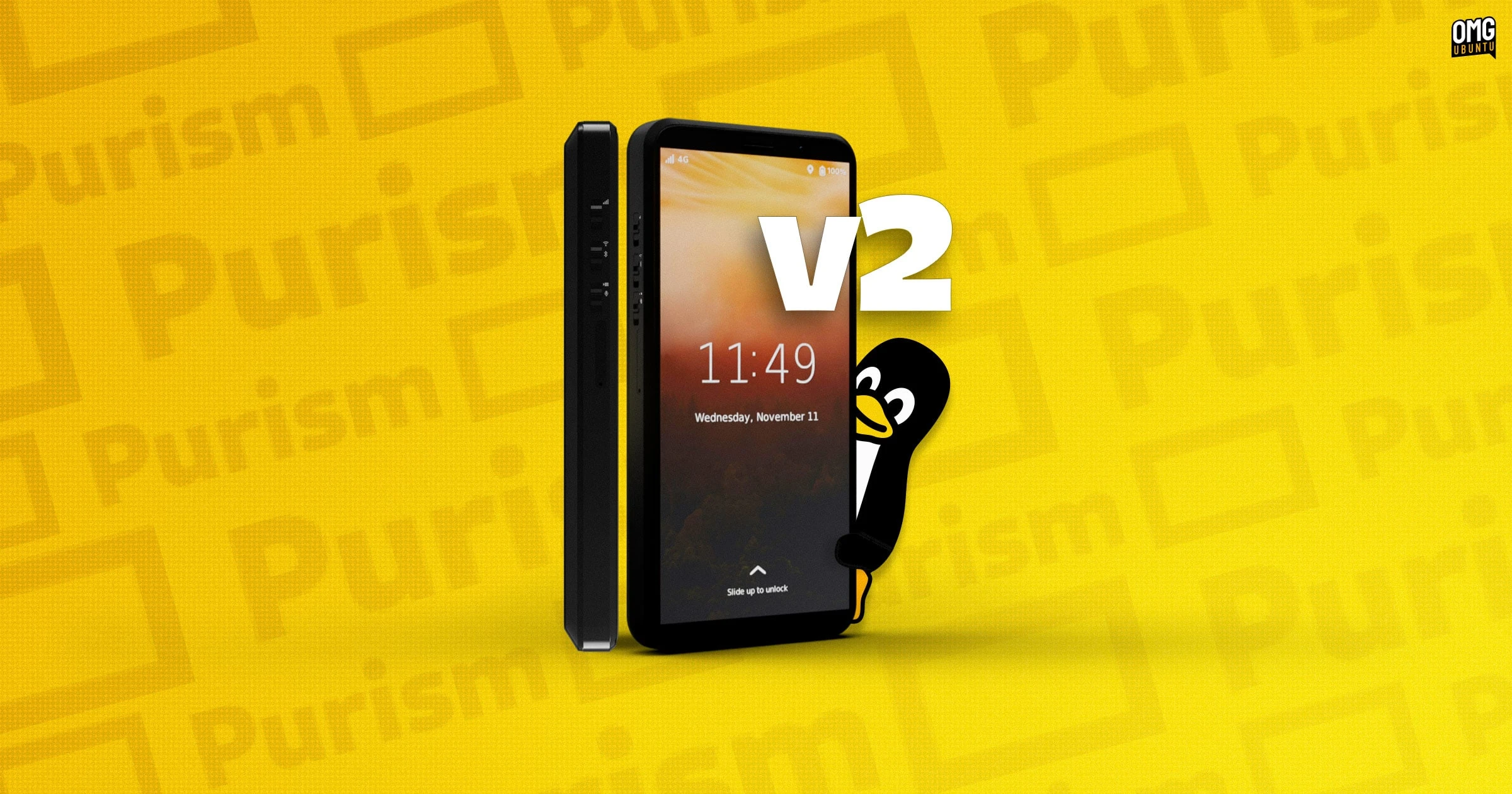
Librem 5 second-gen $1599 RISC-V Linux phone - OMG! Ubuntu

OMG! Ubuntu Purism announces second-gen Librem 5 Linux phone - OMG! Ubuntu www.omgubuntu.co.uk
preview

Purism is crowdfunding a new version of its Librem 5 Linux smartphone, this one powered by RISC-V rather than Arm.

Librem 5 v2 will use an octa-core SpacemiT K1 RISC-V SoC, replacing the quad-core ARM64 NXP CPU This platform shift will provide much better performance and longer battery life than the existing Librem 5 – and not run as hot in use.

Memory is increased to 8 GB RAM, up from 3 GB in the first-generation handset, and storage leaps to 128 GB from 32 GB.

SD card reading speeds are boosted, and on-board hardware encoding means the Librem 5 v2 can take 13 megapixel photos with and shoot high-definition video for the first time.

The rest of the phone is familiar to the first. The same case design, 5.7-inch (720×1440) display, removable 4,500mAh battery, audio jack and physical kit switches. This is intentional as it will make repairs and upgrades between generations easier.

Wireless connectivity also stays modular, though the v2 handset will ship with an improved 4G modem. A 5G module is planned.

Librem 5 v2 will run PureOS, Purism’s Debian-based operating system using Phosh as its UI.

Librem 5 v2 costs from $1599

“RISC-V is the future, and Librem 5 v2 is the perfect product to bring it to a mainstream audience”, Jonathon Hall, CTO at Purism, says of the launch.

“Freeing us from the control of Big Tech starts with the foundation, and RISC-V’s foundation frees us from the oligarchy. The Librem 5 v2 puts you in control of your data, combining that with the ease of use we expect in the modern era”.

Given that general feedback to the first-gen Librem 5 – beset by delays, price rises and patchy build quality – was mixed best. But, to it credit, Purism is still out there making, selling and supporting the phones (and their other devices and services).

Transitioning to RISC-V for the follow-up won’t be trivial, mind. Graphics acceleration, new drivers and power management (which on a phone is rather critical) will be big undertakings.

And more work is needed to make the day-to-day software stack editable, like browser performance (sluggish on the newest and fastest RISC-V chips) and providing an Arm64 app compatibility layer to run software not made for RISC-V. Available to back until February 2027

If you’ve got at least $1599 burning a hole in your pocket and you don’t need anything to show for it before 2028, you can go pledge to the campaign. It runs until February 2027, so don’t feel pressured to decide just yet.

0

Had to go back to Android

preview

Back in February, I bought an FLX1s (new). It had its share of issues, but because I have the luxury of working around them, I’ve been using it as a daily driver. A couple of weeks ago, the USB port started going out[^1], and now the connector is so bad I’m lucky if I can jerry-rig positioning where it’ll charge. As it continues to slowly degrade (because every time I charge it, I stress the port a little more), I expect that before the end of the year I’ll own a very expensive brick.

I’ve spent the past week casting around for a new Linux phone, and any of you on the same journey will have experienced the same thing: every phone that is reported to have decent hardware support and works in the US is either no longer being sold new, or is eye-wateringly expensive ($1700) for mediocre hardware – and the best phones are only available in Europe.

In the end, I had to go back to Android for the time being, and chose a FairPhone 6+. It has decent specs and runs /e/os which at least is deGoogled. It’s not Linux, but nearly all the hardware is user-replaceable without soldering or special tools, so despite the fact that it also has no wireless charging, the USB-C port is easily replaced, so when it craps out it doesn’t brick the phone. I’m hoping I can still be using it by the time one of the mobile Linux distributions comes to it.

It’s a sad day for me: even though the software was far from polished, and even with all of the problems of FuriOS, I loved having Linux on the phone, and it’s going to be painful to go back to Android. I can only cross my fingers that it’ll only be for a couple of years.

Anyway, I know we love success stories, but whatever the state of mobile Linux, it’s frustratingly hard to acquire a new phone[^2] that’ll run Linux and work in the US.

[^1]: An inevitable consequence of the FLX1s supporting neither BlueTooth calls nor wireless charging, so I was having to plug and unplug cables several times a day to swap between the wired USBC headset and the power cable
[^2]: I’m not interested in buying a used phone which is even more likely to have the battery crap out so I can spend more money and risk fat-fingering the replacement; or have an already weakened USB port.

0

KDE is hiring a developer with a focus for Plasma Mobile!

KDE e.V. Call for proposals - Software Engineer ev.kde.org
preview

cross-posted from: lemmy.world/post/54392985

I figure this could also be a place for discussing what are some things you’d like to see in Plasma Mobile? Frankly, hoping to organize ideas to formulate possible work items or goals to suggest to KDE.

cross-posted from: lemmy.world/post/54392985

I figure this could also be a place for discussing what are some things you’d like to see in Plasma Mobile? Frankly, hoping to organize ideas to formulate possible work items or goals to suggest to KDE.

0

KDE is hiring a developer with a focus for Plasma Mobile!

KDE e.V. Call for proposals - Software Engineer ev.kde.org
preview

I figure this could also be a place for discussing what are some things you’d like to see in Plasma Mobile? Frankly, hoping to organize ideas to formulate possible work items or goals to suggest to KDE.

I figure this could also be a place for discussing what are some things you’d like to see in Plasma Mobile? Frankly, hoping to organize ideas to formulate possible work items or goals to suggest to KDE.

0

[PATCH v4 00/12] Enable more nodes for the Xperia 10 III

preview

This is v4 of my patch series, enabling a couple things for the Xperia 10 III.

Compared to v3, it mostly fixes a couple issues and a few rebase mishaps.

Once merged into the kernel, It enables a couple of things for the Xperia 10 III: flash, Wifi, Bluetooth, … :D

Still not a usable phone, but it’s a lot of work that I sits in front of me, so it’ll likely take a lot of time to make this a useful device… If anyone wants to help making a small Linux phone phone with mainline kernel support, waterproof case and a headphone jack a reality…I’ll take help. :p

All this mainlining stuff isn’t actually very hard, it’s mostly trying to figure out how stuff works and a lot of trial and error. At least with my approach of enabling all components that have drivers (most of them) and leaving the rest for the future and other contributors. The device trees of similar devices are very helpful examples as well.

Info on where I’d like some help and how far I’ve go so far: git.erebion.eu/forgejo/erebion/pdx213-temp

My post about v3: news.erebion.eu/post/8269

This work was assisted by… my brain. I don’t need lying chat bots for this, I can think. I prefer to do it the slow and sustainable way, the one that’ll pay off much more when this thing is well-supported and will be able to run Linux for years.

OC by @erebion@news.erebion.eu

0

[PATCH v4 00/12] Enable more nodes for the Xperia 10 III

preview

This is v4 of my patch series, enabling a couple things for the Xperia 10 III.

Compared to v3, it mostly fixes a couple issues and a few rebase mishaps.

Once merged into the kernel, It enables a couple of things for the Xperia 10 III: flash, Wifi, Bluetooth, … :D

Still not a usable phone, but it’s a lot of work that I sits in front of me, so it’ll likely take a lot of time to make this a useful device… If anyone wants to help making a small Linux phone phone with mainline kernel support, waterproof case and a headphone jack a reality…I’ll take help. :p

All this mainlining stuff isn’t actually very hard, it’s mostly trying to figure out how stuff works and a lot of trial and error. At least with my approach of enabling all components that have drivers (most of them) and leaving the rest for the future and other contributors. The device trees of similar devices are very helpful examples as well.

Info on where I’d like some help and how far I’ve go so far: git.erebion.eu/forgejo/erebion/pdx213-temp

My post about v3: news.erebion.eu/post/8269

This work was assisted by… my brain. I don’t need lying chat bots for this, I can think. I prefer to do it the slow and sustainable way, the one that’ll pay off much more when this thing is well-supported and will be able to run Linux for years.

0

Weekly GNU-like Mobile Linux Update (45/2026): Stevia listens, FOSDEM calls

LINux on MOBile Weekly GNU-like Mobile Linux Update (45/2026): Stevia listens, FOSDEM calls linmob.net
preview

Phosh’s on-screen keyboard Stevia learns offline speech-to-text, there’s a call for talks for a Mainline Linux on Mobile devroom at FOSDEM 2027, libcamera 0.8.0 is out, FuriOS unifies camera and gallery apps, Jolla has shipped around 10,000 phones, and more!

Phosh’s on-screen keyboard Stevia learns offline speech-to-text, there’s a call for talks for a Mainline Linux on Mobile devroom at FOSDEM 2027, libcamera 0.8.0 is out, FuriOS unifies camera and gallery apps, Jolla has shipped around 10,000 phones, and more!

0

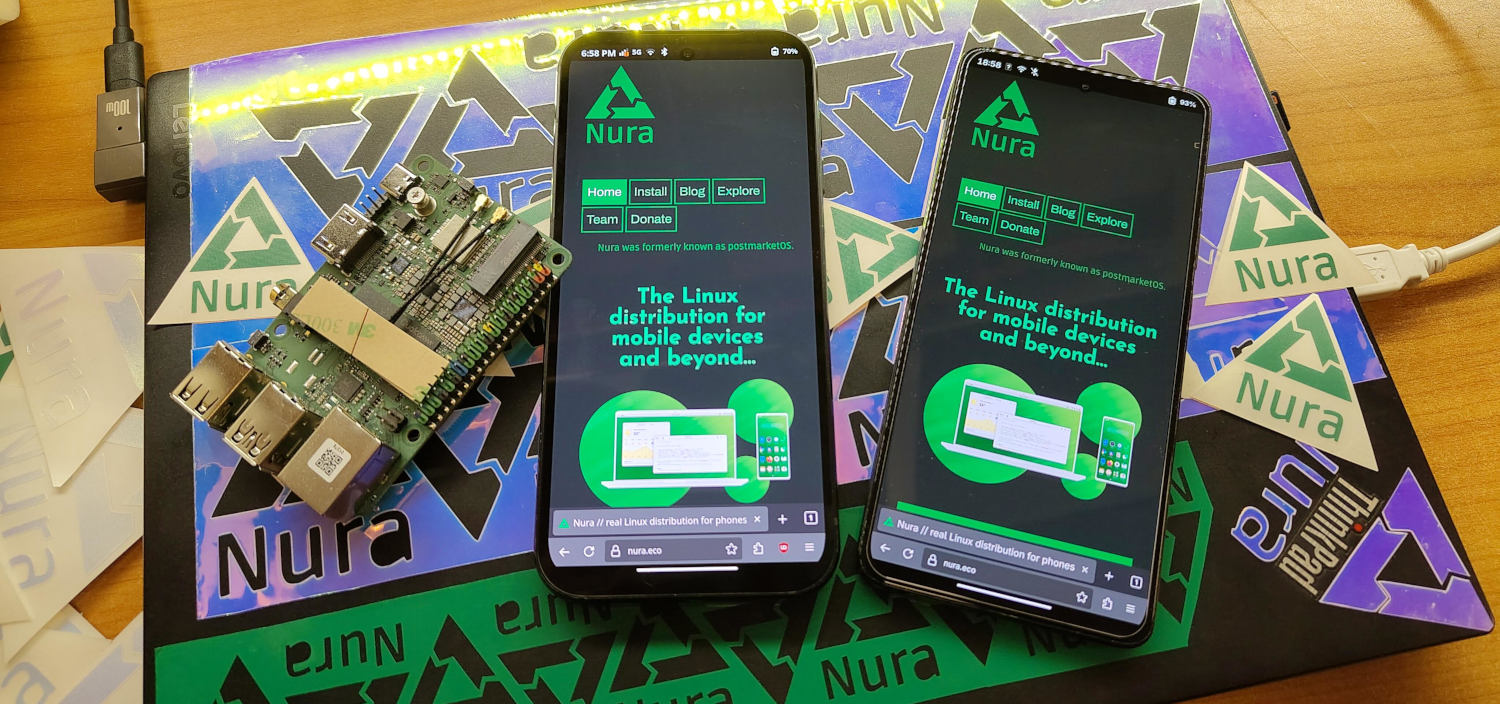
Nura in 2026-10: OSC Tokio, statutes, and project updates

Nura Nura in 2026-10: OSC Tokio, statutes, and project updates nura.eco
preview

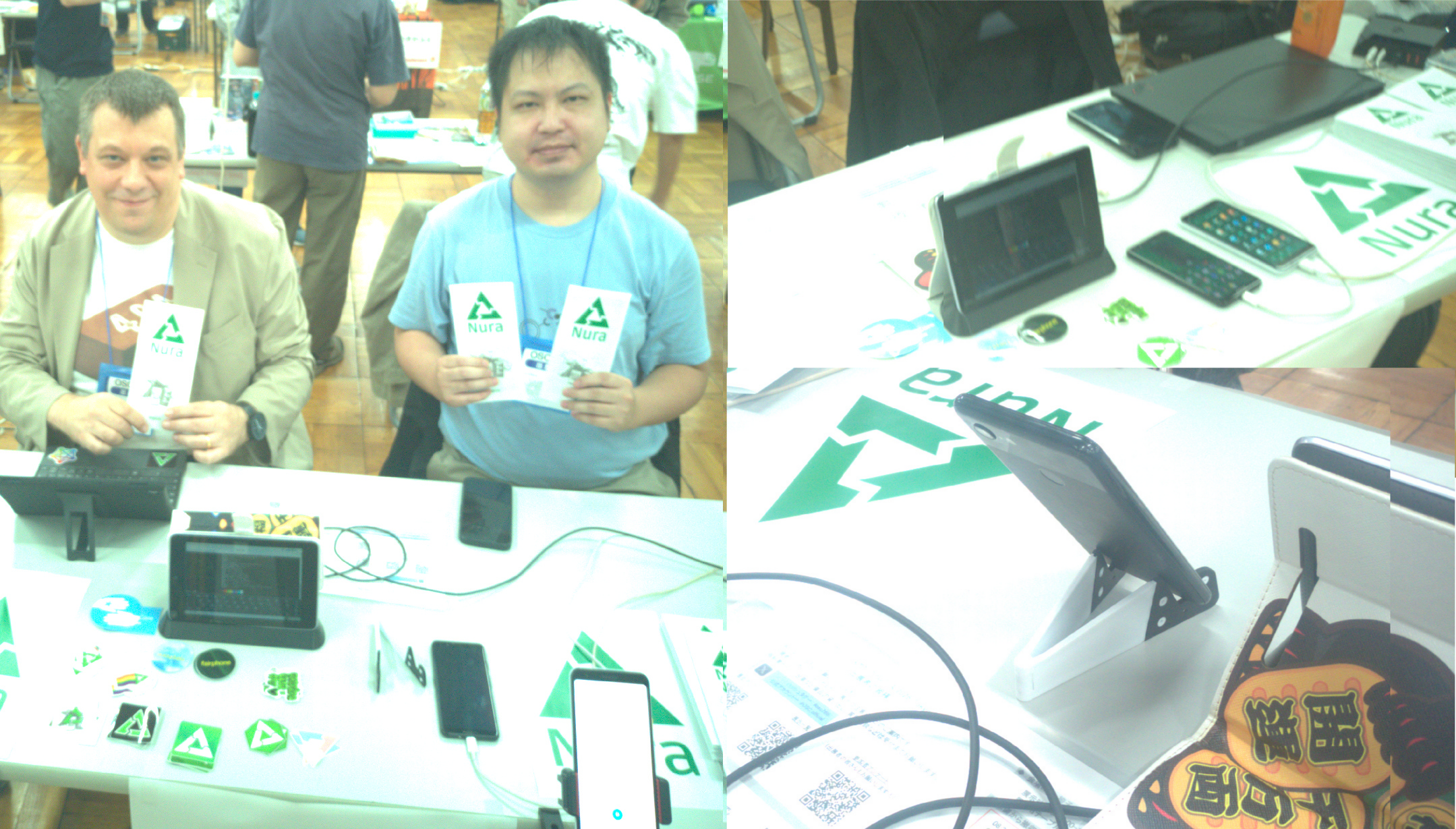
This month, Rob and Masanori (thanks both!) represented Nura at the Fall OpenSource Conference in Tokyo, Japan. They handed over close to 50 leaflets, and showcased a great variety of devices, with attendants being astonished with how well Plasma Mobile and Phosh worked on them. Attendants were also happy to learn about the project rename, which is great news!

This month, Rob and Masanori (thanks both!) represented Nura at the Fall OpenSource Conference in Tokyo, Japan. They handed over close to 50 leaflets, and showcased a great variety of devices, with attendants being astonished with how well Plasma Mobile and Phosh worked on them. Attendants were also happy to learn about the project rename, which is great news!

0

Weekly GNU-like Mobile Linux Update (43, 44/2026): Releases, Releases, Releases

LINux on MOBile Weekly GNU-like Mobile Linux Update (43, 44/2026): Releases, Releases, Releases linmob.net
preview

A rough one: Sailfish OS 5.2 is rolling out to all devices, FuriOS 14.1.0 is out with replacements for previous core apps, Ubuntu Touch security updates, way, way and more!

A rough one: Sailfish OS 5.2 is rolling out to all devices, FuriOS 14.1.0 is out with replacements for previous core apps, Ubuntu Touch security updates, way, way and more!

0

[PATCH v3 00/12] Enable more nodes for the Xperia 10 III

preview

Just submitted version three of my patch series to the kernel mailing list.

It enables a couple of things for the Xperia 10 III: flash, Wifi, Bluetooth, … :D

Still not a usable phone, but it’s a lot of work that I sitting in front of me, so it’ll likely take a lot of time to make this a useful device… If anyone wants to help making a small Linux phone phone with mainline kernel support, waterproof case and a headphone jack a reality… :p

All this mainlining stuff isn’t actually very hard, it’s mostly trying to figure out how stuff works and a lot of trial and error. At least with my approach of enabling all components that have drivers (most of them) and leaving the rest for the future and other contributors. The device trees of similar devices are very helpful examples as well.

Also, I’m testing with Mobian, these patches has not been tested with Nura yet (which is why the wiki doesn’t show those things as supported), so that’s also where someone could help out. :D

I’ve summarised it all - in a way that’s easier to read - on my own repo: git.erebion.eu/forgejo/erebion/pdx213-temp

This work was assisted by… my brain. I don’t need lying chat bots for this, I can think. I prefer to do it the slow and sustainable way, the one that’ll pay off much more when this thing is well-supported and will be able to run Linux for years.

OC by developer @erebion@news.erebion.eu

0

[PATCH v3 00/12] Enable more nodes for the Xperia 10 III

preview

Just submitted version three of my patch series to the kernel mailing list.

It enables a couple of things for the Xperia 10 III: flash, Wifi, Bluetooth, … :D

Still not a usable phone, but it’s a lot of work that I sitting in front of me, so it’ll likely take a lot of time to make this a useful device… If anyone wants to help making a small Linux phone phone with mainline kernel support, waterproof case and a headphone jack a reality… :p

All this mainlining stuff isn’t actually very hard, it’s mostly trying to figure out how stuff works and a lot of trial and error. At least with my approach of enabling all components that have drivers (most of them) and leaving the rest for the future and other contributors. The device trees of similar devices are very helpful examples as well.

Also, I’m testing with Mobian, these patches has not been tested with Nura yet (which is why the wiki doesn’t show those things as supported), so that’s also where someone could help out. :D

I’ve summarised it all - in a way that’s easier to read - on my own repo: git.erebion.eu/forgejo/erebion/pdx213-temp

This work was assisted by… my brain. I don’t need lying chat bots for this, I can think. I prefer to do it the slow and sustainable way, the one that’ll pay off much more when this thing is well-supported and will be able to run Linux for years.

0

Nura KDE on Pixel 3a XL - two months in

A Pixel 3a XL showing Meshy app on Nura
preview

Not so long ago, I made a post here about joining Mobile Linux club with my Pixel 3a XL. Back then, some people (shoutout to @Shatur@discuss.tchncs.de) asked me to share my experience after a while of use.

A lot of it will apply to all mobile Linux, while some points are rather device-specific.

There we go!

Quick recap of the setup

  • Phone: Google Pixel 3a XL (google-bonito)
  • OS: Nura (formerly known as postmarketOS) v26.06 - stable
  • DE: Plasma Mobile

The Good

  • All phone features do work. Calls, SMS, Mobile data are all operational. Calls do wake up the phone, as intended.
  • Wireless connectivity works great. Both Wi-Fi and Bluetooth are fully functional, and my Bluetooth headphones connect just fine (and there’s even a Linux-native app for them made by a cool person!).
  • Battery life, particularly idle, is incredible. On idle, the Pixel battery lasts almost a week, and it does survive a day of moderate use.
  • The collection of mobile-friendly Linux apps is larger than I expected. Many other apps can also work with simple workarounds, like putting the phone in landscape mode. Support of common open-source media software (Navidrome, Jellyfin…) is very good.
  • The controls are mostly intuitive to any Android user. Plasma didn’t reinvent the wheel here: for the most part, the controls are instantly familiar. There are some annoying exceptions, though, like using swipe up to close apps, but somehow not the app drawer.
  • The design is consistent and customizable. You can have all the same icons and menus as in desktop Plasma, and yet somehow they sit just right in the mobile phone design. You can customize the look with third-party styles, colors and icons, many of which are available both for desktop and for mobile. This way, I can get uniform design between both my PC and my phone, which is mind-blowing at first.
  • Waydroid support is built in. You can run Android apps out of the box. There are limitations - not every app will work right, and running Waydroid in the background drains a lot of battery - but most Android apps run well and even send notifications to the main notifications menu.
  • It is Linux, just the way you know it. If something works in desktop Linux, it should work here too. For example, I recently switched the mirrors (more on that later) through CLI and it reflected in Discover app store. I can type “sudo reboot” - and it does indeed reboot. All those little things work here. It’s Linux, you already know it.
  • SSH support. You can easily SSH to your phone and do whatever you want. Awesome if you run a mobile server, very useful when you just want to manage your phone from your computer. Works very well.

The Neutral

  • Linux phone is boring - but intentional. It is there to do exactly what you tell it to. Answer emails? Done. Check messages? Alright. Make a call? No problem. Launch a game? Will do. Much in the spirit of Linux philosophy, the phone will do exactly what you tell it to - and not a tiny bit more. Combine that with the same philosophy on the side of apps, as well as limited entertainment options - and you get a very, very boring phone. For many, it will be a huge advantage - but if you’re used to randomly binge on your phone for a bit of entertainment - this ain’t it. You’ll only address this phone with a clear intent of doing something.
  • There are things about design philosophy that do differ from Android - and not everyone will like it. For example, when you invoke one app from the other on Android, you have to go back to the source app, while on Plasma it opens as a “new window” and you can select the source in the active app menu. There is also no system-wide way to go “back”, and the respective gestures don’t exist. Overall, I like Android way more, but there are neat features here, too.

The Bad

  • The phone feels sluggish. I don’t know whether it’s specific to Nura, Plasma, or if it’s just Pixel 3a being old, but the system often doesn’t feel snappy at all. It doesn’t freeze, but something doesn’t feel right.
  • Some software is very limited. Nura in particular is based on Alpine, which is already not the first pick for a mobile/desktop distro. Add ARM to the mix, and you have a very poor selection of certain applications. For example, I could not find VPN software that would work on this phone in my heavily controlled jurisdiction. And it’s just my personal pain point - there’s plenty of software that simply isn’t available.
  • Notifications are hit or miss. Often times, notifications didn’t come from inactive apps until I opened them. This made me miss important messages, and it is unacceptable for such a device.
  • Some features need fiddling. For example, mobile data didn’t work out of the box or with the GUI settings, so I had to dive into setting the modem via CLI. It worked at the end, though.
  • Browser options are generally quite bad. Browsing on mobile Linux is generally less than enjoyable. Angelfish is almost good enough, and the rest falls short very quickly.
  • Official mirrors can be geographically restricted. As postmarketOS changed name and domain to Nura (nura.eco), their new domain effectively blocked me out. Combine that with lack of VPNs - and it made me change to alternative mirrors to restore update functionality. Given that these are official mirrors, this is not great.

Overall, it was a blast the first week I played around with it, but after the novelty had subsided, all the unpolished and raw parts of the system have hit me quite hard. Now, I’d rather quickly pop my Android phone to do what I actually want to do, and keep Linux phone for experimenting and helping some development. The system feels like it’s still far from prime time, but I’m happy I tried nonetheless. The enthusiast part of me is satisfied.

We’ll see how it goes from then on.

What is your experience daily driving Linux on a phone? Is there anyone with mightier devices running the system, or Mobian/other Linux enthusiasts? How is Linux working for you?

0

Improvements in internationalization and localization

Nura Improvements in internationalization and localization postmarketos.org
preview

As part of an NGI Zero Core grant, musl has now massively improved its support location and internationalization. Although the changes are not yet fully merged in musl and Alpine, they are ready for testing, and you can expect them to land in Nura at some point after the v26.12 release.

New features

From the user perspective, a few new features have landed with these changes:

  • On languages where May is longer than 3 letters, musl is now able to distinguish between abbreviated and non-abbreviated versions.
  • There is now support in musl for the decimal separator to be a comma. Languages where “one and a half” is written as 1,5 instead of 1.5 will now get numbers in the right format, provided localization files for the language exist.
  • Ordering of files (and anything else that depends on the C library for ordering) now follows standard ordering rules. For example, “A” and “a” are now ordered together, and always come before “B” and “b”, which wasn’t the case before. Ordering of some specific characters might not be perfect yet. For example, different languages have different expectations of where should umlauts like “ä” be placed in relation to “a”. musl now has support for that, but the tooling that takes the rules and transforms them into files that musl can read don’t support this yet.

Breaking changes

From the user perspective, these changes come with a breaking change. After the changes get integrated, languages which don’t have a musl-locale will stop seeing translations to their languages in the UI, even if the apps have translations for them (if you want to help, please see the section below). Since the updated musl behavior will not land in a stable release before v27.06, there is plenty of time for the community to collectively reduce the impact of this change.

This change had to be made, because previously musl would just always accept any kind of locale being set. If it could find the locale, it would set the language appropriately. If it couldn’t, it would set the language internally to English (the C locale to be more specific), but assure the consumer that the system was in the locale requested. While this allowed things like apps to use the translations they had available, even if musl lacked those translations, it created inconsistent behavior. The UI would be shown in one language, while the dates for example would be in the wrong format. It also removed incentives to do the right thing and work on locales for musl, and broke testing and some other specific use-cases, as the answer to “does my system support this locale?” would always be “yes”, even if asked to set the language to Elvish 🧝‍♀️.

If you want to get more technical details and the rationale behind all the changes, you can search for the relevant threads in the musl mailing list, most specifically the latest patchseries.

Thanks a lot to Rich, Achill, and Pablo for their work on this project, and to NLnet and NGI Zero Core for funding this work.

Help wanted

To avoid losing app translations in your language due to this breaking change, we need to add translations to musl for the said language. This is relatively easy, simply copying a file and adding the definition in your language. Having the definition in your language will be greatly appreciated!

Alternatively, an automated solution using the Unicode Common Locale Data Repository (CLDR) is potentially also possible, but is a harder problem to solve. Any hero wanting to give it a try would be seriously welcomed. Please have a look at musl-locales#1 if you want to help with that.

If you appreciate the work we’re doing with Nura and want to support us, consider contributing financially via OpenCollective.

This blog post was written by Pablo. Header image by Oliver.

0

Weekly GNU-like Mobile Linux Update (42|2026): Divine D MVP + Plasma turning 6.8 and also 30

LINux on MOBile Weekly GNU-like Mobile Linux Update (42/2026): Divine D MVP + Plasma turning 6.8 and also 30 linmob.net
preview

Plasma 6.8 is out, the dawndrums Divine D has reached MVP running Plasma Mobile, Ubuntu Touch OTA 2.1 adds Volla Tablet support, and more!

Plasma 6.8 is out, the dawndrums Divine D has reached MVP running Plasma Mobile, Ubuntu Touch OTA 2.1 adds Volla Tablet support, and more!

0

Ubuntu Touch 24.04-2.1 Released with More Devices, Updated Morph Browser

Linuxiac Ubuntu Touch 24.04-2.1 Released with More Devices, Updated Morph Browser linuxiac.com
preview

Ubuntu Touch 24.04-2.1 adds support for eight more devices, updates Morph Browser, improves notifications, and fixes a security vulnerability.

Ubuntu Touch 24.04-2.1 adds eight devices to the list supported by the 24.04-2.x series. These include the Nothing Phone (1), OnePlus Nord N10 and N100, Volla Tablet, Xiaomi Redmi Note 9 Pro (Global), Redmi Note 9S/9 Pro (India), Redmi Note 9 Pro Max, and Poco M2 Pro.

Another notable change is the updated Morph Browser, which now uses QtWebEngine 6.11.2 based on Chromium 140, with additional security fixes. The update also improves tab switching and restores user script support in the Qt 6-based implementation.

0

Canadian Carrier locked S20 unlock?

preview

Anyone have a tutorial on how to unlock a carrier locked s20? I read you can make it happen with some kind of modified usb-c and some sort of special program.

Anyone have a tutorial on how to unlock a carrier locked s20? I read you can make it happen with some kind of modified usb-c and some sort of special program.

0

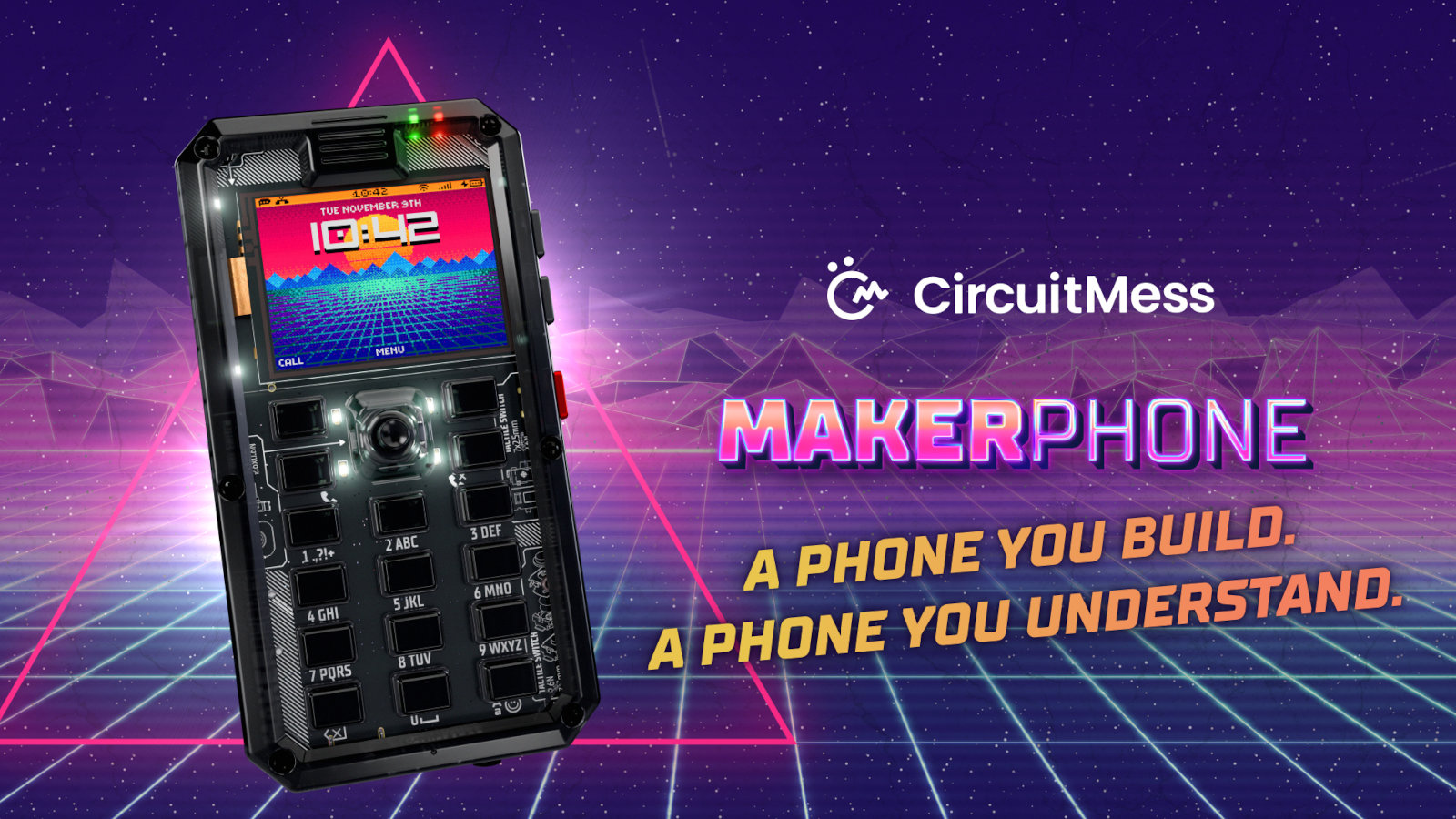
MAKERphone 2.0 Is an Open, Hackable 4G Phone You Build Yourself

Linuxiac MAKERphone 2.0 Is an Open, Hackable 4G Phone You Build Yourself linuxiac.com
preview

CircuitMess launches MAKERphone 2.0, a solder-free ESP32-S3 phone with 4G, MicroPython and C++ support, plus modular hardware expansion.

CircuitMess launches MAKERphone 2.0, a solder-free ESP32-S3 phone with 4G, MicroPython and C++ support, plus modular hardware expansion.

0

What do LineageOS and F-Droid (and possibly other mobile FLOSS) have to say about AI/LLM usage?

preview

For context, I have been using a pretty niche OS on my phone for a long time but recently the community and the 3rd party appstores are flooded with LLM content - and fans. Its ethical, geopolitical and societal dangers are handwaved away at best, or ridiculed or countered with stupid non-arguments (“you wouldn’t tell a farmer not to use a tractor”).

Everybody is in a hurry to churn out the next pretty port of an Android app.

The actual OS devs have not taken any sort of public stance, not even in comments.

And it got me thinking. If this continues maybe LineageOS & F-Droid (no Gapps of course) might turn out to be a better alternative again, despite it being essentially Android and Not True Linux.

But how do they position themselves with AI?

If you want to suggest a 3rd option, please do so - but only if it works reliably as a daily driver - incl. telephony and messaging - on at least a small number of consumer devices that are no older than 8 years.
And only if they clearly position themselves against AI in code and generally.

0

Pixel 3a

preview

I’ve owned a Pinephone Pro since launch, and have tried to daily drive it on and off for years with limited success. It’s sitting in a drawer at the moment because echo cancellation doesn’t work on phone calls regularly.

Anyways, I have a Pixel 3a sitting around that needs a battery replacement, but I wanted to ask here if anyone else is running Linux on it? And if so, how is the experience? I’ve been using Linux for decades, so I have no problem working around quirks, but I just want a Linux phone I can text and make phone calls on. I really don’t have too many advanced app needs other than podcasts and web browsing.

Thanks in advance to anyone that replies.

0

Google Android Sideloading Restrictions: Sept 30 Explained

Gadget Hacks Google Didn't Ban Android Sideloading — Here's What Changed Sept. 30 android.gadgethacks.com
preview

Google’s Android developer verification rule gets its first real-world test on September 30, 2026. In Brazil, Indonesia, Singapore, and Thailand, installing or updating an app on a certified Android device will require that app’s developer to be registered with Google.

Google’s Android developer verification rule gets its first real-world test on September 30, 2026. In Brazil, Indonesia, Singapore, and Thailand, installing or updating an app on a certified Android device will require that app’s developer to be registered with Google.

0

Weekly GNU-like Mobile Linux Update (39/2026): Raider → Twix

LINux on MOBile Weekly GNU-like Mobile Linux Update (39/2026): Raider → Twix linmob.net
preview

postmarketOS is now Nura, Sailfish OS gets RAW camera support and more, WebKitGTK improvements, and a lot more. Enjoy!

postmarketOS is now Nura, Sailfish OS gets RAW camera support and more, WebKitGTK improvements, and a lot more. Enjoy!

0

Firefox on Wayland for Ubuntu Touch

OpenStore Firefox on Wayland (Experimental) open-store.io
preview

Firefox running through XWayland is very choppy on my device. So I made this version that uses Wayland for rendering.

Source:

gitlab.com/asrpo/firefoxwayland

Experimental! Use at your own risk!

Let me know of any not-already-known issue.

  • On-screen keyboard sometimes needs a long press followed a short press to reappear.
  • Flickering on initial page load
0

Any mobile linux distro or FOSS with useful utility features?

preview

For example, one of my old phones had this feature where you can swipe from a sidebar and quickly access and type notes (not needing to open the notes app), as well as set alarms for them, which helped me a lot with my ADHD.

I think phones could be useful and an aid to everyday life. It is sad that users of this platform are often targetted to extract value at the cost of their well-being.

Is there a distro with this feature, or is there a software for this?

0

Fairphone 6 + PostmarketOS: Phosh and fixes!

preview

While i am a KDE plasma stan the #1 feature request i have been getting from users is phosh support, and today i can finally deliver!

Most of the work is DE agnostic, the only things really were the integration with imsd and fingerprintd, both were relativity easy and now live.

My CI is also now building phosh images for the people that want them.

Suspend

One thing that plagues linux phones is higher battery usage, and the lack of true suspend is one of the major rises why. it is disabled on fp6-img currently but im working to fixing it, wanted to include it in this post but its going to take a bit more work so something for next time.

imsd fixes

Please keep the bug reports coming! It is sometimes a bit hard for me to keep up but im doing my best to fix everyone’s issues in time.

With every carrier specific bug report i can fix that is another carrier that now works where people can just flash and calls works out of the box, the list keeps growing!

Even as im writing this at 04:33 another fix has just gone live!

sxmo

A developer of sxmo reached out to me, with posh working maybe sxmo next??? please comment if there is demand for this.

A very long discussion about AI

context: ani.social/post/37216830/18809885

I have spoken with many people about AI, some agree, some disagree, but i think in all cases it was respectful both ways, but this message prompted me to talk about it, this is going to be a very scattered, long text, feel free to skip if you want.

The man behind the cat

This is going to sound arrogant and i apologize but i want to give some context about my background, so people don’t think i am some guy who has never written a line of code and just uses AI without understanding.

Please judge my code, my magnum opus is Crafter.Graphics and i have linked to the time before any AI was used on it. I’m not saying the version i linked is perfect, there was still alot of improving to do, but i believe it shows my credentials.

Heyo! I am Jorijn van der Graaf, 22 year old software developer, I dropped out of public school at 15 because that was the biggest time waste in the world for me, i entered private school and did some odd jobs during it before landing my first real software job while in school at 16, after graduation i started working full time there for a few years before switching to a different job, which turned out to be a big mistake, my main language was C# at that time, i had accepted a C# position. Guess what my actual work turned out to be? maintaining C++ code that was older then me in a windows XP VM using Embarcadero studio… One doesn’t realize how good we have it now until you have to use the tools they had back then. But that is neither here nor there. I now have a good job, although its by far not my preferred stack it has good working conditions and good pay, so i should be happy right?

This is going to sound very entitled since many people have it far worse then me, and i also don’t want this to be a sob story or people to feel bad for me, judge me by my product not my person, this is just context.

But no i’m not happy, cause i feel my work is completely pointless. Posting under your real name is a bit difficult but lets say i don’t fully agree with capitalism and working each day to make shareholders richer is not my definition of a fulfilling life.

Until i found something that i thought would contribute to society.

Enter the FP6

My mom’s phone broke so while i was looking for a new one for her i found the FP6, and i ordered two, one is now her daily driver on e/OS and the other one is my pmos devphone.

and then it started 3 months ago with my first post here:

ani.social/post/33469765

Enter the AI.

I was both early and late to AI. When first chatgpt released i thought it was great.

I really struggled and although to a lesser degree still do with writing, my posts here all fully handwritten and my own thoughts, but for official things i found/find it very hard, chatgpt was a great tool for this, i could give it my draft and it would polish it up to a nice email.

But for coding? they absolutely sucked, outside of asking for small snippets it produced the worst code known to man when on a project scale.

Then the company i work at went full AI mode for productivity, it started with lovable when it first came out and issues that first took a week now took a day, any product owner is going to choose that no matter what.

I mostly work backend so i interacted with it relatively little and used it for the odd frontend task, there is nothing i despise more then writing frontend code so it was quite handy for me, and lovable is this no code platform so it didn’t matter if the code was shit and frankly nobody even cared if the code was shit because nobody was even looking at it anymore.

Enter claude, this was when AI started being used for backend tasks, and while my collegues were vibe coding entire applications i was the single holdout that still fully manually programmed the repos i owned, i once had to implement a feature in one of the other repos and that was so bad that seeing that made me never use AI in my own repos.

When programming manually you make this mental map, you know what each line does and why its there, AI completely shatters that.

But times change and deadlines tighten, i believe it was Opus 4.6 i first used for real coding tasks and i was impressed, it did better then i had expected. At a level where you could give it some tasks and it would execute them relatively well.

And the times continue to change, and now for my work i don’t write a single line of code anymore. Why would i? Why would i put my effort to write code manually when AI can do it way faster? The boss expects a timeline based on AI speed and my work gets significantly easier. If i would work myself to death to reach AI speed and write code manually the only person i would be doing it for is myself, and i gain nothing from it.

FP6 + AI

When i got my FP6 i immediately flashed pmos on it and tried testing the features, many things did not work.

And i got the idea, AI is best at menial work, what if i just give it ssh to the phone and tell it to investigate?

This was using opus 4.7 i believe.

And how the times have changed, because that was really rough back then compared to modern models but the root cause was eventually found with the libqmi and AFW.

Then the ball started rolling, My understanding of the kernel got better, my work process got better, and the models got better.

That brings us to the current day, where modern opus 5-5 and fable 5-1 are very capable, being able to execute tasks alot faster and i know what specific instructions to give.

Have there been mistakes resulting from AI overreliance? yes and i try to learn from each of them, and all of it is public so if you want to browse my mistakes its open for everyone to see.

I think hard banning AI is shortsighted, when done well it is the one of the greatest tools for open source.

Assume open source banned all AI, none of this could have been possible, even if you are a god programmer this is far too much work for a single person.

So the corporations who can spend billions on human labor continue to dominate, now a single person can do the same.

r/mobilelinux has completely exploded with an army of people working with AI to progress mobile linux, I’m not sure if this is caused by my posts but the timing does overlap, and 2027 could actually be the year of the linux phone.

Now looking at some of these posts the issue i mostly have is (outside that they are on reddit) is that they are closed source people mostly doing their own thing. i wonder if they will actually upstream it. I hope so but if they do i hope they do it properly.

The issue is when people start sending slop patches that take maintainer time, i have send one slop patch and i am still ashamed of it.

I am also helping nondescriptpointer with this who also uses AI, and its a tip i would give all starting kernel developers that use AI.

DON’T USE AI TO WRITE COMMIT MESSAGES AND COVER LETTERS.

If you can understand the code and use AI for it and have reviewed that code to be good then great, but AI written commit messages and cover letters are so horrendously bad that i would recommend writing it yourself completely atleast to begin with, and later if you are absolute sure switch to reviewing it, but make sure to really review it thoroughly.

AI and beginners

I have teached programming 2 years now at the school i graduated from and am about to go into a third year.

I have tried to ban or regulate AI but that is a pointless effort, i know students are using it as its painfully obvious, i put that on my evaluations. but its a condrum i haven’t been able to solve yet.

The conclusion i have reached is that a student is robbing themselves if they use AI, and i can live with that.

The ones that want to learn use AI to learn, the ones that don’t say “chatgpt make my assignment”. I suppose it does make it easier for me as i know who i put effort in and who i can let go. The one thing that is sad is that the students who put in no effort have better results then the ones that do.

My tip for beginning programmers, don’t use AI at all, zero, none.

Which leads me into my next section

AI is both a disease for programming and one of its greatest tools

Full programming with AI is neither fun nor you learn much. Programming is all about learning critical thinking, which you don’t learn if you only use AI.

But it can also be one of it greatest tools, the most boring parts of programming can easily be done by AI, but its a slippery slope if you keep taking the path of least resistance.

I suppose its somewhat similar to compilers in the sense, this has been debated alot but here is my take: i learned x86 many years ago and there is a lot of thinking that goes into the machine code which we now export to the compiler. But with that also a massive menial task got exported, making programming alot more fun.

If i am so negative about AI why do i keep using it.

Speed, and AI is undefeatable at that front.

I consider myself an expert at C++, better then AI, but AI is so much faster. I am extremely short on time unless something is absolutely critical and i need to do it by hand the decision isn’t AI or handwritten, its AI or it doesn’t exist at all.

I mentioned Crafter.Graphics earlier, it is one thing i consider myself an expert at, with a true deep understanding. It has taken around 5 years of building this and its predecessors to gain this understanding.

I am far less good at C or kernel development, not to say i can’t do C or kernel if i tried it manually, but there is a massive diffidence between ok, good, and expert.

The only thing i would call myself an expert on is C++ and Vulkan. And that is not me underselling myself, i can do alot more, but im not undervaluing the word expert here.

Being an expert at something takes alot of time to truly understand it, if i were to reach understanding of a single kernel subsystem equal to my C++ and vulkan level that is going take a long time, and im working across several of them.

Is this a good situation? No ofcourse not, i would rather learn it fully and understand it, but i made the decision that a fully working linux phone now with AI is better then one done manually over 5 years. I think that is a honest answer, and its up to the reader to decide if they agree.

And i apologize for the maintainer time i have taken up by doing this.

If a user reports an issue to me, ideally i want it fixed within a day, that is impossible without AI.

I am doing this next to my regular job, i am working deep into the night everyday to further this bringup, i am putting everything into this so people can use it for free, i try to fix issues people have fast, and just view the times my posts are made at, hell last post i worked trough the entire night until morning.

And that is my question for people that attack others for using AI, i don’t want you to agree with me, i want you to understand the reasoning.

Suppose i and others fully quit AI, will you make up for the lost time?

Unless the answer is yes i find that position hypocritical.

For these people, is it the burn-out that open source devs get making it that makes it special? and otherwise it is unacceptable to use?

I can respect most positions on AI, but attacking open source developers for using it i can’t. They do it completely for free, for the betterment of society, and then a tool comes that makes their jobs easier and they should be attacked for it? I understand if you don’t want to use a project that uses AI but don’t be an hypocrite that attacks AI use and then uses the projects anyway.

Android is getting worse by the day, and if i can use AI to make linux a viable alternative for people i see that as a good endeavor. The lesser evil.

Back to where it began

In the convo i linked at the start it was said that the code i submit is bad and that i have missed something with the hexagon processor without saying what and instead attacking me.

All i want is to improve it, if you know of an issue that i don’t let me know please so i can fix it.

And instead of attacking me here, put your money where your mouth is and call my patch trash on the list and i will happily respond there, and if the maintainers agree then great, we have done something productive and we have made mobile linux slightly better.

But continuing to attack me here gets us nowhere, if your goal is to improve mobile linux do so on the list. If your goal is to attack me then why is that your goal?

If you made it this far and are now mad at me

Fully acceptable, please downvote this post, if it gets downvoted to hell i will understand the message.

If you have donated to me and wish you never donated, send me the payment reference and i will return it no questions asked.

If you donated directly instead of via catcrafts.net/shop/donation please send me the account number instead, if you donated via mollie please send me the payment reference and account number, i will return it as fast as possible after you send me the information.

I fully understand if you do, i only ask that you understand my reason and then don’t continue to use my work if you don’t agree with how it was made. And if may request for people that refund donations, please send it to another open source or mental health organization.

For the people that have supported me and hopefully continue to do so

Thank you, your kind messages have kept me going.

I will continue my efforts, and if i am still welcome here post them!

0

Hey, at least it's only a duopoly!

A screenshot of a toot on Mastodon. I have copied and pasted the text by the Mastodon user in the body of this Lemmy post.
preview

after 15 years, iOS has finally caught up with all the main android features, such as

  • very mid ui design
  • kinda floaty feeling
  • unpolished vibe android itself has progressed little, although it is rapidly achieving feature parity with iOS on “locked down user hostility”. overall both ecosystems look very appealing, energetic, and healthy, for shareholders

Source: mastodon.social/@jk/117314678878602994

0

Weekly GNU-like Mobile Linux Update (38/2026): Two Releases and a Conference

LINux on MOBile Weekly GNU-like Mobile Linux Update (38/2026): Two Releases and a Conference linmob.net
preview

Maemo Leste’s 2026 “Excalibur” released, GNOME 51 including Libadwaita 1.10, too; with KDE Akademy currently happening. Sailfish OS 5.2 is nearly ready, good news with regard to the Pixel 9a, and more!

Maemo Leste’s 2026 “Excalibur” released, GNOME 51 including Libadwaita 1.10, too; with KDE Akademy currently happening. Sailfish OS 5.2 is nearly ready, good news with regard to the Pixel 9a, and more!

0

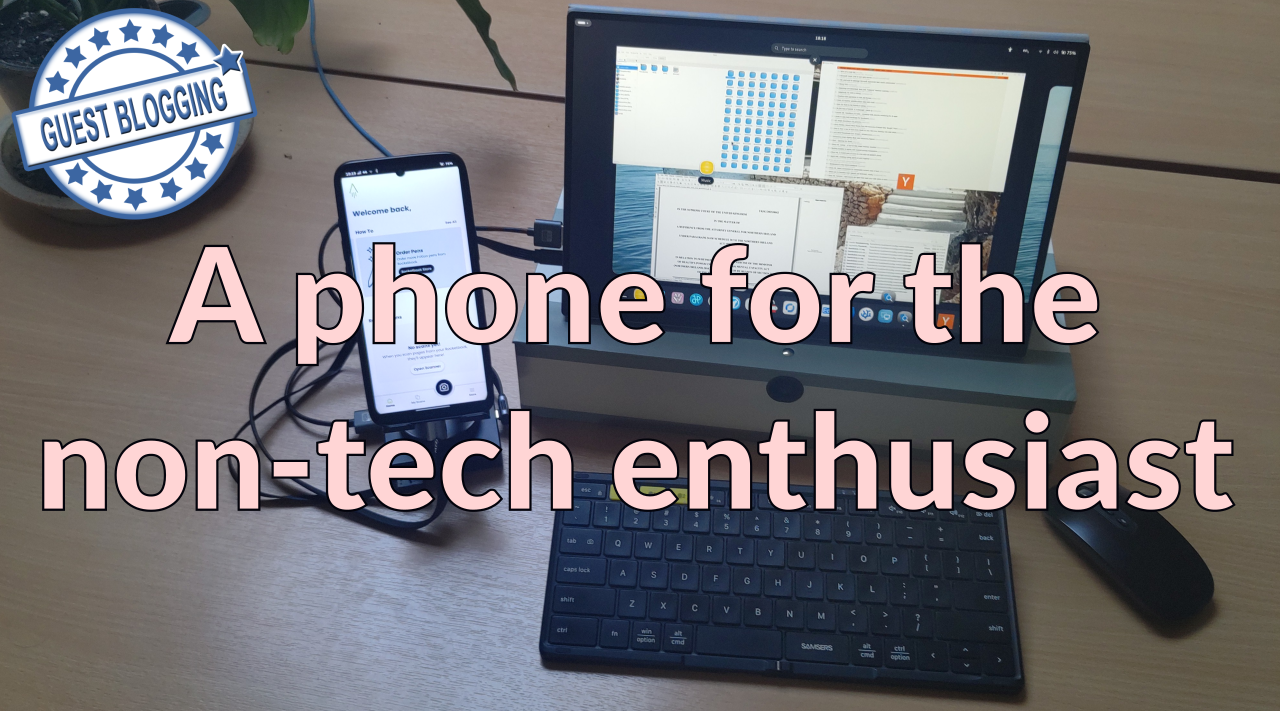
Furilabs Guest Blog Post: A phone for the non-tech enthusiast

Guest Blog Post: A phone for the non-tech enthusiast furilabs.com
preview

Written by community member paint-attract-repeat, he details his experience with the FLX1s

The TL;DR version of this is that FLX1s is a Linux phone which has moved from being of interest to techie enthusiasts to working as an everyday phone - and computer - for a non-tech person.

[…]I describe myself as a “Linux enthusiast”. I’m not a Linux novice, I’ve used it for about a decade. But I am only an end-user of Linux. I’m one of those people the more techie types are writing the software for, and I appreciate you all very much, and contribute (financially) where I can. I can’t write software myself, I happily install software that is packaged ready to install, but drop out of the game if I have to “compile” it myself - I don’t really understand what that means - let alone write it or code it myself.[…]

You might wonder why I got into Linux? I run my own small business. And I too frequently in the early days (it’s 20 years old this year) got my fingers burned when big tech companies were able to hold me to ransom. One particular story that sticks in my mind - not that I’m bitter 😂 - is that we invested in Skype Phones and a Skype number for our telephony. And after Microsoft bought Skype, it decided it wasn’t interested in going down that path, and a software update literally remotely bricked all the hardware we had purchased… I became determined I needed as far as possible, to understand, and to have control over, my own tech. And of course, to have nothing to do with Microsoft.