0
marginalia.nu
Your harddrive is probably full
www.marginalia.nu
posts tagged #discuss


Stumbled on this article in my fedi feed and thought this is interesting. I recently discovered gog which allowed me to find linux friendly games I didn’t know about.
Stumbled on this article in my fedi feed and thought this is interesting. I recently discovered gog which allowed me to find linux friendly games I didn’t know about.




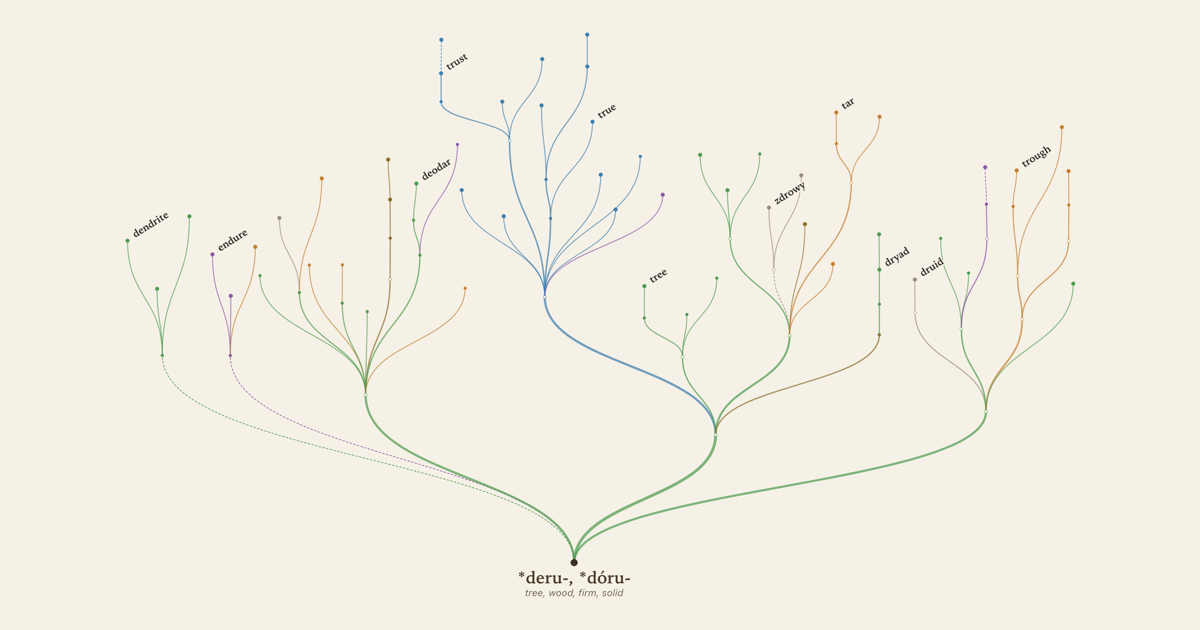
Saw over at discuss.online/post/41716184 and thought it’d be good to post the interactive site here
Saw over at discuss.online/post/41716184 and thought it’d be good to post the interactive site here







I’m interested in seeing how this goes. Competitor to bandcamp, co-operatively owned. Here’s the origin story:
Origin Story
Subvert began with a question.
In March 2022, Bandcamp was sold to Epic Games. A year and a half later, it was sold again to Songtradr, which laid off half the staff including most of the union’s bargaining team.
The question was simple: what if artists and workers collectively owned the platform?
That question became an essay called “A Collectively Owned Bandcamp Successor,” published online with a sign-up form and a plan. The proposal was specific. A music marketplace owned by the people who use it. One vote per member. Profits flowing back to the community rather than out of it.
The response was bigger than expected. Thousands of artists, labels, and supporters signed up in the first weeks. Co-op law specialists, platform researchers, and people who had previously worked on cooperative platform projects came together to build the structure. Funders aligned with the vision provided early support, including fellowships from IDEO and the Center for Cultural Innovation in 2024.
Subvert Cooperative LCA was incorporated in October 2024, alongside the release of the first edition of our zine. Members began joining immediately. By October 2025, the co-op had 10,000 members and the platform entered a private alpha. By April 2026, membership had grown past 20,000. In May 2026, the platform opened to the public. The first Annual General Meeting is scheduled for July 2026.
Subvert exists because the stewardship of a critical piece of cultural infrastructure is too important to not be treated as a commons. That has been the project from the first essay onward.
# Support Lemmy development >An open source project the size of Lemmy needs constant work to manage the project, implement new features and fix bugs. Dessalines and Nutomic work full-time on these tasks and more. As there is no advertising or tracking, all of our work is funded through donations. Even so there is barely enough time in the day, and no time for a second job. The only available option are user donations. To keep it viable donations need to reach a minimum of 5000€ per month, resulting in a modest salary of 2500€ per developer. If that goal is reached we can stop worrying about money, and fully focus on improving the software for the benefit of all users and instances. We especially rely on recurring donations to secure the long-term development and make Lemmy the best it can be. >If you want more information before donating, consider the comparison with Reddit. It began as startup funded by rich investors. The site is managed by corporate executives who over time have become more and more disconnected from normal users. Their main goal is to make investors happy and to make a profit. This leads to user-hostile decisions like firing the employee responsible for AMAs, blocking third-party apps and more. As Reddit is a single website under a single authority, it means all users need to follow the same rules, including ridiculous ones like censoring the name “Luigi”. >Lemmy represents a new type of social media which is the complete opposite of Reddit. It is split across many different websites, each with its own rules, and managed by normal people who actually care about the users. There is no company and no profit motive. Much of the work is carried out by volunteer admins, mods and posters, who contribute out of enthusiasm and not for money. For users this is great as there is no advertising nor tracking, and no chance of takeover by a billionaire. Additionally there are no builtin political or ideological restrictions. You can use the software for any purpose you like, add your own restrictions or scrutinize its inner workings. Lemmy truly belongs to everyone. >Nutomic and Dessalines, Lemmy Developers
There are reasons for this, but I am focusing here on the impact that it has upon the recipients.
Zero mention of PieFed, Mbin, Sublinks, or for that matter, the operating costs of Discuss.Online. This ad is not promoting the “Fediverse/Threadiverse”, but instead funding the political messaging and curation of content on the Lemmy.ml instance, with some portion also going to development of additional software features. We are not told how much, but seeing the rather large number of entries in the modlog on that instance those curation and posting activities done by those asking for funding definitely do not take zero time. Note that the developers have refused to provide a means to fund only the software without also funding the lemmy.ml instance.
I have used PieFed for a year and never once seen anything remotely like this. I used to use Kbin before it forked into Mbin and again never saw anything remotely similar. The operating costs of DO are real and valid - and if the message had been for that purpose then I would have been fine with it. There are many many ways to fund development of the Threadiverse, and most of them do not require platforming messages that routinely call for the literal murder of everyone living in a Western civilization - a topic that has been discussed in great depth pretty much everywhere across the Threadiverse so let’s avoid going deeper into it here and instead I will just point anyone interested to !meanwhileongrad@sh.itjust.works and leave it at that.
I did not appreciate seeing this 3-page advertisement (given the font size used, I had to scroll down almost exactly 3 pages worth to get to any other content). New users fleeing corporate enshittified social media will not appreciate it either. Thank you for letting me vent. There are many possibilities for a solution - including modifications to the Lemmy sourcecode as it runs on DO machines to remove this “feature” (while leaving other more opt-in calls for donations in place), and I am aware that I can click the prominent X button to make it go away (although nowadays the advertisement comes back when I revisit the page? it did not used to behave like that, but now it does for some reason, at least for me?) - but chiefly here I was focused on the poor look that it gives us. This is yet one more reason why I am being driven away from using Lemmy, as it enshittifies for the sake of its own profit, even if to a vastly reduced degree compared to corporate social media, and even if those profits are reinvested into the extremely dubious “benefit” of running by far the most controversial and contested instance across the Threadiverse.
Please remember the community guidelines prior to responding.




www.youtube.com/watch?v=UBdBoWAtLNI
I’m going to tell you about how I took a job building software to kill people.
But don’t get distracted by that; I didn’t know at the time.
www.youtube.com/watch?v=UBdBoWAtLNI
I’m going to tell you about how I took a job building software to kill people.
But don’t get distracted by that; I didn’t know at the time.

Hello, I’m not that aware of why or how chat gpt is not good for the environment, can someone please explain to me? Thank you
Hello, I’m not that aware of why or how chat gpt is not good for the environment, can someone please explain to me? Thank you

An interesting keynote about hidden cost of AI Art by the author Brandon Sanderson. I might be a bit biased though, since Sanderson is my favourite author, and I am resistant to some of the things “AI” is used for, if not completely anti-AI.
What do you think about this?
Note: It’s from the event in Dec 2025, it was just posted in text form recently. If you want to watch the video, you can do it here: youtu.be/RXyWtp8tuYY?t=1988 (about 15-20 mins long, might have to go couple of seconds forward or backward)


The Bitter Lesson
Rich Sutton
March 13, 2019
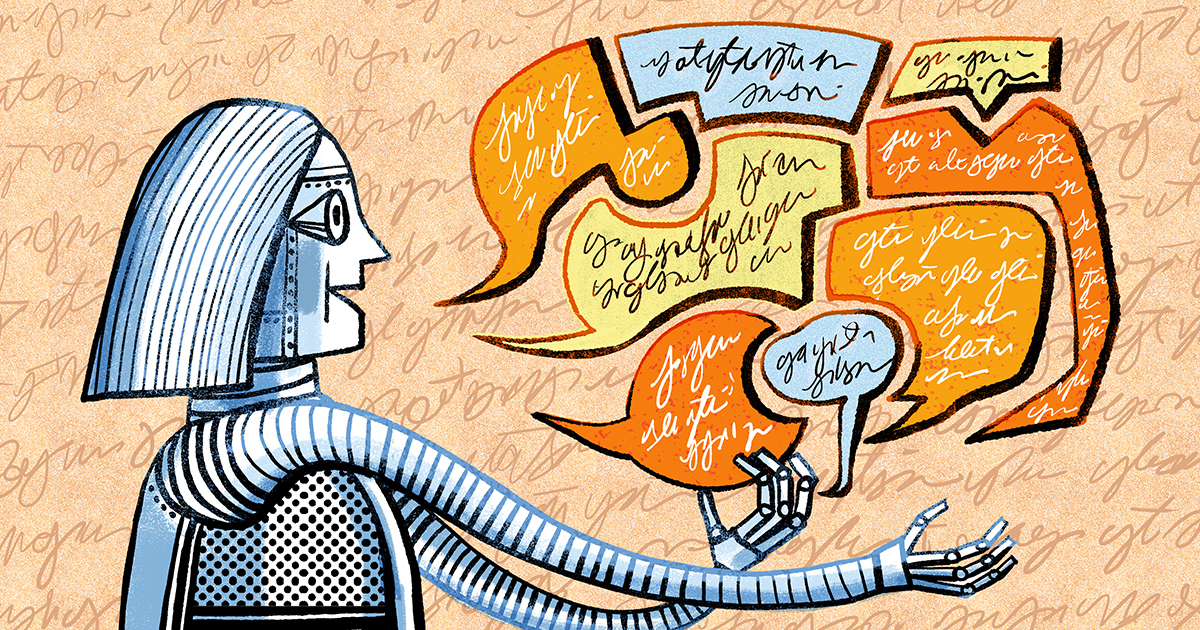
The biggest lesson that can be read from 70 years of AI research is that general methods that leverage computation are ultimately the most effective, and by a large margin. The ultimate reason for this is Moore’s law, or rather its generalization of continued exponentially falling cost per unit of computation. Most AI research has been conducted as if the computation available to the agent were constant (in which case leveraging human knowledge would be one of the only ways to improve performance) but, over a slightly longer time than a typical research project, massively more computation inevitably becomes available. Seeking an improvement that makes a difference in the shorter term, researchers seek to leverage their human knowledge of the domain, but the only thing that matters in the long run is the leveraging of computation. These two need not run counter to each other, but in practice they tend to. Time spent on one is time not spent on the other. There are psychological commitments to investment in one approach or the other. And the human-knowledge approach tends to complicate methods in ways that make them less suited to taking advantage of general methods leveraging computation. There were many examples of AI researchers’ belated learning of this bitter lesson, and it is instructive to review some of the most prominent.
In computer chess, the methods that defeated the world champion, Kasparov, in 1997, were based on massive, deep search. At the time, this was looked upon with dismay by the majority of computer-chess researchers who had pursued methods that leveraged human understanding of the special structure of chess. When a simpler, search-based approach with special hardware and software proved vastly more effective, these human-knowledge-based chess researchers were not good losers. They said that ``brute force" search may have won this time, but it was not a general strategy, and anyway it was not how people played chess. These researchers wanted methods based on human input to win and were disappointed when they did not.
A similar pattern of research progress was seen in computer Go, only delayed by a further 20 years. Enormous initial efforts went into avoiding search by taking advantage of human knowledge, or of the special features of the game, but all those efforts proved irrelevant, or worse, once search was applied effectively at scale. Also important was the use of learning by self play to learn a value function (as it was in many other games and even in chess, although learning did not play a big role in the 1997 program that first beat a world champion). Learning by self play, and learning in general, is like search in that it enables massive computation to be brought to bear. Search and learning are the two most important classes of techniques for utilizing massive amounts of computation in AI research. In computer Go, as in computer chess, researchers’ initial effort was directed towards utilizing human understanding (so that less search was needed) and only much later was much greater success had by embracing search and learning.
In speech recognition, there was an early competition, sponsored by DARPA, in the 1970s. Entrants included a host of special methods that took advantage of human knowledge—knowledge of words, of phonemes, of the human vocal tract, etc. On the other side were newer methods that were more statistical in nature and did much more computation, based on hidden Markov models (HMMs). Again, the statistical methods won out over the human-knowledge-based methods. This led to a major change in all of natural language processing, gradually over decades, where statistics and computation came to dominate the field. The recent rise of deep learning in speech recognition is the most recent step in this consistent direction. Deep learning methods rely even less on human knowledge, and use even more computation, together with learning on huge training sets, to produce dramatically better speech recognition systems. As in the games, researchers always tried to make systems that worked the way the researchers thought their own minds worked—they tried to put that knowledge in their systems—but it proved ultimately counterproductive, and a colossal waste of researcher’s time, when, through Moore’s law, massive computation became available and a means was found to put it to good use.
In computer vision, there has been a similar pattern. Early methods conceived of vision as searching for edges, or generalized cylinders, or in terms of SIFT features. But today all this is discarded. Modern deep-learning neural networks use only the notions of convolution and certain kinds of invariances, and perform much better.
This is a big lesson. As a field, we still have not thoroughly learned it, as we are continuing to make the same kind of mistakes. To see this, and to effectively resist it, we have to understand the appeal of these mistakes. We have to learn the bitter lesson that building in how we think we think does not work in the long run. The bitter lesson is based on the historical observations that 1) AI researchers have often tried to build knowledge into their agents, 2) this always helps in the short term, and is personally satisfying to the researcher, but 3) in the long run it plateaus and even inhibits further progress, and 4) breakthrough progress eventually arrives by an opposing approach based on scaling computation by search and learning. The eventual success is tinged with bitterness, and often incompletely digested, because it is success over a favored, human-centric approach.
One thing that should be learned from the bitter lesson is the great power of general purpose methods, of methods that continue to scale with increased computation even as the available computation becomes very great. The two methods that seem to scale arbitrarily in this way are search and learning.
The second general point to be learned from the bitter lesson is that the actual contents of minds are tremendously, irredeemably complex; we should stop trying to find simple ways to think about the contents of minds, such as simple ways to think about space, objects, multiple agents, or symmetries. All these are part of the arbitrary, intrinsically-complex, outside world. They are not what should be built in, as their complexity is endless; instead we should build in only the meta-methods that can find and capture this arbitrary complexity. Essential to these methods is that they can find good approximations, but the search for them should be by our methods, not by us. We want AI agents that can discover like we can, not which contain what we have discovered. Building in our discoveries only makes it harder to see how the discovering process can be done.

Welcome to !discuss@discuss.online! This community is intended as a place for thoughtful discussion to happen, and this post will attempt to explain the goals of the community and how it’s intended to work.
This is community is intended to be a place to slow down and think a bit before responding. If you see something interesting, talk about it! Substantive doesn’t have to mean “deeply researched and cited” (though that’s always appreciated, of course), but please avoid low-effort and joke responses. Ideally, you’ll come away from here better for the time spent. The general discuss.online posting guidelines have some more guidance as well. Here’s a slightly adapted version as well, for convenience:
Try to create interesting discussion. The best conversation brings a fresh perspective. Substantive comments are expected particularly for contentious topics.
Practice the Principle of Charity. Seek out common ground, and assume the best of others. Inquire, don’t attack.
Humor is fine, but avoid low-effort common joke responses.
Don’t test boundaries, that’s not what the community is for. Consider yourself an honored guest, and respect the mods as people with lives.
Much of the Hacker News Guidelines are relevant as well, if you’d like additional guidelines.
Post anything you find interesting! This community is intended to have a very wide focus, so anything from a cool new physics discovery to a deep dive into the hardware for an obsolete gaming console. The only real offtopic items would be political news. This isn’t a community for “Politician does Bad Thing!”, but “Here’s a history of Bad Thing and how Politician works into it” might be appropriate
Please downvote posts that won’t do a good job of promoting interesting discussion. Please do not downvote posts just as a reaction to the title. If you repeatedly downvote without commenting, or participate (even once) in downvote brigading, you may be given a temp ban from the community, but:
Don’t take it personally
Lemmy’s moderation tools are lacking in this regard, so consider a temp ban a friendly “Please slow your roll”. If you feel that you were wrongly banned or have any other questions, please join us at #online.discuss:discuss.online, we’re a friendly bunch! Please do not DM anybody in response as that can easily come across as harassment, even if not intended that way.
This is a tiny community and not one oriented towards growth. If it ever grows big enough that the above moderation policies cause issues in the wider Fediverse, it will be revisited.
And finally, link to post image on Wikimedia commons:


cross-posted from: sopuli.xyz/post/37371338
The question can be broken into two parts:
- would people use it?
- is it appropriate for a library to have a media room?
I have no TV and I suspect with so many people subscribing to streaming services lately as their sole source (from surveillance capitalists), probably not many people even have antennas to pick up local broadcast TV anymore. Is that a safe assumption?
A couple years ago I setup a MythTV for someone. Their local broadcasts were completely different from what I recall from decades past-- mostly educational (documentaries and how-to shows) and mostly commercial-free. It seemed to be largely fed by tax-funded public broadcast service. It used to be rife with commercials but commercial interests seem to have abandoned it.
Where I live now, I am offline and also lack equipment to see what’s broadcast locally. Not sure it’s justified to buy gear just to see what there is. And I have never seen what free satellite signals are like anywhere.
On the one hand, I could see it turning into an entertainment/cinema type of space with people bringing in popcorn… which is perhaps a deviation from the library’s purpose. OTOH, it could be information focused to give access to locally aired educational broadcasts and to (perhaps more importantly) show people what content exists locally and to experience MythTV. Library users could even schedule shows to be recorded for them (as the library is not open 24/7). The MythTV PCs would of course be running Linux, which would be a covert way to promote the escape from proprietary OSs.
As I ask myself whether this is all crazy talk, a local library has Arduinos for people to experiment with… which has nothing to do with books or media.
A parallel mission could be to get the library to run an Invideous instance to try to liberate people from Google’s stranglehold and their ads. Google would probably block the library’s instance but the blockade would then serve to inform people about Google’s politics. I guess the question is whether Invidious is too much in the legal gray area for libraries to seriously consider.