#feminism

posts tagged #feminism

0

If Men Could Menstruate - A Satire by Gloria Steinem

Our Bodies Ourselves If Men Could Menstruate - A Satire by Gloria Steinem | Our Bodies Ourselves ourbodiesourselves.org
preview

Published in 1978, Gloria Steinem imagines a world where men could menstruate.

It’s important to take this in the context with which it was written, so keep the time period in mind.

Living in India made me understand that a white minority of the world has spent centuries conning us into thinking a white skin makes people superior, even though the only thing it really does is make them more affected by ultraviolet rays and wrinkles.

Reading Freud made me just as skeptical about penis envy. The power of giving birth makes “womb envy” more logical, and an organ as external and unprotected as the penis makes men very vulnerable indeed.

But listening recently to a woman describe the unexpected arrival of her menstrual period (a red stain had spread on her dress as she argued heat- edly on the public stage) still made me cringe with embarrassment. That is, until she explained that, when finally informed in whispers of the obvious event, she said to the all-male audience, “and you should be proud to have a menstruating woman on your stage. It’s probably the first real thing that’s happened to this group in years!” Laughter. Relief. She had turned a negative into a positive. Somehow her story merged with India and Freud to make me finally understand the power of positive thinking.

Whatever a “superior” group has will be used to justify its superiority, and whatever and “inferior” group has will be used to justify its plight. Black men were given poorly paid jobs because they were said to be “stronger” than white men, while all women were relegated to poorly paid jobs because they were said to be “weaker.” As the little boy said when asked if he wanted to be a lawyer like his mother, “Oh no, that’s women’s work.” Logic has nothing to do with oppression.

So what would happen if suddenly, magically, men could menstruate and women could not?

(continued in article)

0

How One Woman Made Upskirting a Crime in 18 Months

The Verified Post Gina Martin: How One Woman Made Upskirting a Crime in 18 Months theverifiedpost.com
preview

In July 2017, at a music festival in Hyde Park, London, a man took a photograph up her skirt without her consent. She grabbed his phone, saw the image, and took it straight to the police. They told her, gently, that there was nothing they could do — it wasn’t a specific criminal offence. Within days, the case was closed.

She went home and decided that answer was not good enough. With no lawyer, no funding, and no political connections, she launched a campaign to make upskirting a crime. Eighteen months later, she had changed the law for all of England and Wales.

…

Martin’s power did not come from expertise. She had no legal degree, no seat in Parliament, no wealthy backers. What she had was a refusal to accept a bad answer and the stamina to keep asking the question long after most people would have given up. The expertise — the lawyer, the MP, the drafting — arrived because she kept going, not before.

0

Rising birth rates no longer tied to economic prosperity

Harvard Gazette Rising birth rates no longer tied to economic prosperity — Harvard Gazette news.harvard.edu
preview

The global shift, she continued, can be traced to one common cause: the increased agency of women, who during the last century became increasingly able to opt out of traditional family roles to pursue other options, such as education and careers.

“Wherever you get increased agency, you get reduction in the birth rate,” said Goldin. “The central cause arises when women have autonomy and have the ability to be educated, to have occupations and careers.”

This can lead to conflict with men, who are more comfortable with traditional roles. “Men don’t want to give up what they had in the past,” Goldin said.

0

She was in active labor when a judge appeared on a tablet. Now she plans to sue UF Health for a court-ordered C-section

WJXT She was in active labor when a judge appeared on a tablet. Now she plans to sue UF Health for a court-ordered C-section www.news4jax.com
preview

Cherise Doyley said she wanted to deliver naturally after having three previous C-sections. Instead, she said nurses brought a tablet to her hospital room, where she discovered a judge, attorneys, doctors and hospital staff were on a Zoom call about whether she should undergo the surgery.

The court hearing lasted about three hours while Doyley remained in active labor.

“I didn’t even know what this court hearing was about,” Doyley said. “And when I found out it was to give me a C-section against my will, it was like, I was floored. I was just dumbfounded.”

Doyley said the experience was traumatic and dehumanizing.

“Honestly, Tiffany, it was one of the most dehumanizing, traumatic, scary experiences I’ve ever had in my life,” she said.

0

The Epstein Files Reading Room Is Coming to a Swing State Near You

Ms. Magazine The Epstein Files Reading Room Is Coming to a Swing State Near You msmagazine.com
preview

The Donald J. Trump and Jeffrey Epstein Memorial Reading Room—a traveling exhibit that organizes the 3.5 million pages of DOJ’s released Epstein files into 3,437 bound books—is going on tour. Five cities will host the full Reading Room; the smaller Bookmobile will visit 20+ more along the way. Explore the full tour schedule.

The tour will kick off in Dallas Sept. 8-11, each day open from 10 a.m. to 8 p.m. It’s free to enter; just reserve a time. Dallas RSVPs are open now; reserve your spot.

0

Early 'Harry Potter' Reviews About a Young Emma Watson Resurface and Fans Are Calling Them 'Disturbing and Disgusting'

Fashion times Early 'Harry Potter' Reviews About a Young Emma Watson Resurface and Fans Are Calling Them 'Disturbing and Disgusting' www.fashiontimes.co.uk
preview

Watson was cast at the age of nine to portray the iconic bookworm Hermione Granger in Harry Potter and the Philosopher’s Stone. Like her co-stars, Daniel Radcliffe and Rupert Grint, she grew up in the intense glare of the global spotlight.

However, as the post points out, mainstream media outlets and mainstream film reviewers frequently published uncomfortable assessments about her maturing appearance long before she reached the legal age of majority.

The Reddit thread compiled several vintage excerpts from prominent publications printed throughout the 2000s. Readers were shocked to see how respected journalists casually speculated about Watson’s transition into womanhood.

One article described the young Emma as ‘The prepubescent Watson is absurdly alluring to those of us who always want bossy girls.’ She was nine years old at the time. Growing up, some older writers described her journey as ‘well made-up from baby to babe’.

0

On Love and Treason: Critical White Feminist Thought for Social Justice Praxis

UNM Digital Repository On Love and Treason: Critical White Feminist Thought for Social Justice Praxis digitalrepository.unm.edu
preview

tl;dr: I did not understand then, but I understand now how my life is built upon her suffering. She is systematically marginalized to do low-wage, unstable work that affords me the ability to purchase services, products, and a lifestyle because of race/gendered/class/citizenship privilege. The managing of palliative solutions to her problems also created a career for me. What I did not understand was my own investment and implication in her suffering. Most white “saviors” do not see their systematic relationship with those they are “helping.” There is distance: I am privileged here; you are oppressed over there. When in reality, it is dialectical. We aren’t trained to see the relational aspects, where I am privileged because she is oppressed, and she is oppressed because I am privileged.

Excerpt

The Makings of a White Matriarch

I was a case manager for Job Corps in my mid-twenties before I was a teacher. Job Corps is one of the last Great Society programs from the Johnson administration in the 1960s that was supposed to provide residential training in a trade. Students, who were from age 16 to 24, lived in dorms and went to classes for their GED and to learn a trade like plumbing or secretarial skills. My job was to assist students leaving campus once they graduated, hopefully finding them jobs, transportation, housing, childcare, and possibly community college.

The vast majority of my caseload was people of color, primarily Latinx and Native American. To say that nothing qualified me for this position is an understatement. I had a history degree, which carved out no career path that would not require an advanced degree or at least a teaching certificate, options I was not ready to take. I had worked my way through college through various forms of retail, warehouse work, and eventually, I became a courier at a law firm. Once I was out of college, I sold car insurance for a large corporation, I was a barista, a secretary, and worked on commission at a local jewelry store. As someone who worked through high school, I was very flexible and familiar with various forms of low wage work. Aside from insurance sales, this was my first professional opportunity and all they were asking was that I owned a car, could network, and would be able to get along with the students who were not much younger than I was. I was also required to be on call 24 hours a day in case students needed me for something.

It was a confusing concept, the concept of students living in poverty, facing systematic racism, and intergenerational trauma “needing” something. When would they not need something? What was I supposed to give them? I was completely overwhelmed with calls about problems I had no idea how to solve and no guidance about how to find out. I was handed a hundred or so cases, made up of teenagers and young adults I was supposed to track for a year, some leaving the center, some who had already left, and others who had been gone for a few months. The goal of the position was to account for where students went after they left the center.

Job Corps receives a huge government grant that we had to answer to, so we needed to show that our program worked, evidenced by stable employment of graduates. My 24-year-old self had no skepticism about this. My older self knows that they probably put unqualified people like me in this position because I would be kind enough to take the calls, responsible enough to gather the data needed, and compliant enough not to question long-standing beliefs and practices that went on in a center like this.

This was also was my first job as a white matriarch. I believed in my own benevolence and the ability to solve peoples’ problems. I was also acting out the part of white savior. White saviority, prevalent in films like Dangerous Minds, Freedom Writers and the Blind Side, always includes the notion of an antiracist white hero or heroine who believes that they are helping people of color overcome obstacles in their lives. White saviors believe they counteract racism by seeing the humanity in all people but really hold racist notions of the people they are tasked with helping (Maurantonio, 2017).

The notion of white saviority works together with colorblindness to mask the significance of race and racism in the supposed benevolent actions of white people. For example, I could believe that I was the same as my students by erasing their specific struggles related to structural inequality, but I could also simultaneously believe that my caseload needed me because the success of people of color was something dependent upon white people.

The problem with white saviority is not that whites are completely useless to people of color. It is that white saviors believe that people of color could not solve their own problems, cannot teach their own children, or manage their own families. It is, of course, part of white matriarchal maintenance. The belief that I would be able to handle these issues at my age is part of how white women gain power over people of color. I was going to be in their homes, their workplaces, and I was going to be surveilling them at best, interfering with their lives at worst. How my lens about their lives was considered competent is deeply rooted in notions of white women’s moral superiority and competence in all things having to do with schools or helping professions (Feimster, 2009; McRae,2018; Spring, 2008).

The second day on the job, a sixteen-year-old 1.5 generation Mexican immigrant, Lucia, came into my office, furious because she was going to have to leave the center without her GED or her training because she was pregnant. The center was not able to house pregnant students in their third trimester. She had nowhere to go except her boyfriend’s family’s house and she was not sure that she wanted to be there. My job was to transition her into schooling or a job at this point, and so I took up the task of trying to figure out where she could go and what she could do. Attempting to help Lucia took me down a path that I had not anticipated and that haunted me afterwards. If I were to name an event that led me to where I am now, it would be getting to know her, her struggle, and failing miserably to find my way with her through a system that does not care about her at all.

I learned about what it meant to try to navigate schools, workplaces, hospitals, and social services for immigrants. I also learned about some of the underground networks for work and money that many immigrants depend on in order to survive. Because my job was nebulous and the goal was to help students stabilize after the Job Corps center, I accompanied her on appointments with doctors, social services, and visited her in the hospital when the baby was born. Many times though, toward the end of her pregnancy, I would just pick her up and take her to Sonic or drive around and talk.

I had a genuine concern and affection for her. She entered my own life at time when I felt rudderless, alone, and distant from family, and I needed company too. Her life had been full of violence, obstacles, and instability, which had landed her at Job Corps like many of her peers. She usually tried to have a lighter mood with me, but some days she shared her deep sadness and fear. One day, we sat at Sonic. She had become quiet, the way women do at the end of pregnancy, and she said, “Miss, why do I have to suffer?”

I did not understand then, but I understand now how my life is built upon her suffering. She is systematically marginalized to do low-wage, unstable work that affords me the ability to purchase services, products, and a lifestyle because of race/gendered/class/citizenship privilege. The managing of palliative solutions to her problems also created a career for me. What I did not understand was my own investment and implication in her suffering. Most white “saviors” do not see their systematic relationship with those they are “helping.” There is distance: I am privileged here; you are oppressed over there. When in reality, it is dialectical. We aren’t trained to see the relational aspects, where I am privileged because she is oppressed, and she is oppressed because I am privileged.
tl;dr: I did not understand then, but I understand now how my life is built upon her suffering. She is systematically marginalized to do low-wage, unstable work that affords me the ability to purchase services, products, and a lifestyle because of race/gendered/class/citizenship privilege. The managing of palliative solutions to her problems also created a career for me. What I did not understand was my own investment and implication in her suffering. Most white “saviors” do not see their systematic relationship with those they are “helping.” There is distance: I am privileged here; you are oppressed over there. When in reality, it is dialectical. We aren’t trained to see the relational aspects, where I am privileged because she is oppressed, and she is oppressed because I am privileged.
Excerpt

The Makings of a White Matriarch

I was a case manager for Job Corps in my mid-twenties before I was a teacher. Job Corps is one of the last Great Society programs from the Johnson administration in the 1960s that was supposed to provide residential training in a trade. Students, who were from age 16 to 24, lived in dorms and went to classes for their GED and to learn a trade like plumbing or secretarial skills. My job was to assist students leaving campus once they graduated, hopefully finding them jobs, transportation, housing, childcare, and possibly community college.

The vast majority of my caseload was people of color, primarily Latinx and Native American. To say that nothing qualified me for this position is an understatement. I had a history degree, which carved out no career path that would not require an advanced degree or at least a teaching certificate, options I was not ready to take. I had worked my way through college through various forms of retail, warehouse work, and eventually, I became a courier at a law firm. Once I was out of college, I sold car insurance for a large corporation, I was a barista, a secretary, and worked on commission at a local jewelry store. As someone who worked through high school, I was very flexible and familiar with various forms of low wage work. Aside from insurance sales, this was my first professional opportunity and all they were asking was that I owned a car, could network, and would be able to get along with the students who were not much younger than I was. I was also required to be on call 24 hours a day in case students needed me for something.

It was a confusing concept, the concept of students living in poverty, facing systematic racism, and intergenerational trauma “needing” something. When would they not need something? What was I supposed to give them? I was completely overwhelmed with calls about problems I had no idea how to solve and no guidance about how to find out. I was handed a hundred or so cases, made up of teenagers and young adults I was supposed to track for a year, some leaving the center, some who had already left, and others who had been gone for a few months. The goal of the position was to account for where students went after they left the center.

Job Corps receives a huge government grant that we had to answer to, so we needed to show that our program worked, evidenced by stable employment of graduates. My 24-year-old self had no skepticism about this. My older self knows that they probably put unqualified people like me in this position because I would be kind enough to take the calls, responsible enough to gather the data needed, and compliant enough not to question long-standing beliefs and practices that went on in a center like this.

This was also was my first job as a white matriarch. I believed in my own benevolence and the ability to solve peoples’ problems. I was also acting out the part of white savior. White saviority, prevalent in films like Dangerous Minds, Freedom Writers and the Blind Side, always includes the notion of an antiracist white hero or heroine who believes that they are helping people of color overcome obstacles in their lives. White saviors believe they counteract racism by seeing the humanity in all people but really hold racist notions of the people they are tasked with helping (Maurantonio, 2017).

The notion of white saviority works together with colorblindness to mask the significance of race and racism in the supposed benevolent actions of white people. For example, I could believe that I was the same as my students by erasing their specific struggles related to structural inequality, but I could also simultaneously believe that my caseload needed me because the success of people of color was something dependent upon white people.

The problem with white saviority is not that whites are completely useless to people of color. It is that white saviors believe that people of color could not solve their own problems, cannot teach their own children, or manage their own families. It is, of course, part of white matriarchal maintenance. The belief that I would be able to handle these issues at my age is part of how white women gain power over people of color. I was going to be in their homes, their workplaces, and I was going to be surveilling them at best, interfering with their lives at worst. How my lens about their lives was considered competent is deeply rooted in notions of white women’s moral superiority and competence in all things having to do with schools or helping professions (Feimster, 2009; McRae,2018; Spring, 2008).

The second day on the job, a sixteen-year-old 1.5 generation Mexican immigrant, Lucia, came into my office, furious because she was going to have to leave the center without her GED or her training because she was pregnant. The center was not able to house pregnant students in their third trimester. She had nowhere to go except her boyfriend’s family’s house and she was not sure that she wanted to be there. My job was to transition her into schooling or a job at this point, and so I took up the task of trying to figure out where she could go and what she could do. Attempting to help Lucia took me down a path that I had not anticipated and that haunted me afterwards. If I were to name an event that led me to where I am now, it would be getting to know her, her struggle, and failing miserably to find my way with her through a system that does not care about her at all.

I learned about what it meant to try to navigate schools, workplaces, hospitals, and social services for immigrants. I also learned about some of the underground networks for work and money that many immigrants depend on in order to survive. Because my job was nebulous and the goal was to help students stabilize after the Job Corps center, I accompanied her on appointments with doctors, social services, and visited her in the hospital when the baby was born. Many times though, toward the end of her pregnancy, I would just pick her up and take her to Sonic or drive around and talk.

I had a genuine concern and affection for her. She entered my own life at time when I felt rudderless, alone, and distant from family, and I needed company too. Her life had been full of violence, obstacles, and instability, which had landed her at Job Corps like many of her peers. She usually tried to have a lighter mood with me, but some days she shared her deep sadness and fear. One day, we sat at Sonic. She had become quiet, the way women do at the end of pregnancy, and she said, “Miss, why do I have to suffer?”

I did not understand then, but I understand now how my life is built upon her suffering. She is systematically marginalized to do low-wage, unstable work that affords me the ability to purchase services, products, and a lifestyle because of race/gendered/class/citizenship privilege. The managing of palliative solutions to her problems also created a career for me. What I did not understand was my own investment and implication in her suffering. Most white “saviors” do not see their systematic relationship with those they are “helping.” There is distance: I am privileged here; you are oppressed over there. When in reality, it is dialectical. We aren’t trained to see the relational aspects, where I am privileged because she is oppressed, and she is oppressed because I am privileged.

0

Please Don’t Make Me Applaud Your Neck

Slate Magazine More and More Women Are Opening Up About Something That Used to Be Shameful. I Wish They’d Kept It All Secret. slate.com
preview

The defense of the face-lift marks a return to the era of “choice feminism,” a strain of thought that rose from the third wave in the 2000s. Through the lens of choice feminism, anything a woman decides to do is empowering: flashing the camera in Girls Gone Wild, spending thousands of dollars on beauty products, abandoning one’s career to support a husband’s aspirations, letting him screw around in a skewed rendition of nonmonogamy. Never mind the social pressures that influence these behaviors or how enacting them affects the broader project of gender equity. Feminists could not judge any of it if a woman was choosing it for herself.

Many of us who lived through the height of choice feminism cringe at the memory. I’m not sure I can stomach another round of pretending that our actions have no effect on the world; neither am I eager to return to the policing of the early 2010s, when we journalists who cut our teeth in feminist blogging brought out our gavels to judge each new entry in the cultural discourse as either good or bad for womankind. But there is a self-congratulatory, self-delusional tone to these pro-face-lift narratives that I haven’t been able to shake from my brain. I expected to see some outspoken feminists like Jong-Fast and O’Donnell cave to the pressures of their moneyed, image-obsessed circles. I did not expect them to marshal the intellectual dishonesty required to spin it as an act of liberation.

0

How Anti-Trans Activism Uses Feminist Rhetoric

We campaign for visibility, acceptance, legal recognition and healthcare for the UK\'s. Transgender, Non-Binary and Gender Diverse community. How Anti-Trans Activism Uses Feminist Rhetoric translucent.org.uk
preview

One of the most striking features of modern reactionary politics is its ability to co‑opt the language of liberation to further restrictive agendas. Trans-exclusionary radical ideology exemplifies this tactic: it cloaks itself in the rhetoric of feminism—invoking safety, rights, womanhood, and empowerment—while using these very concepts to justify exclusion and discrimination.

This strategy is not accidental. It is deliberate, structural, and politically effective.

0

Nancy Fraser’s Theory of Capitalism Is Politically Vital

Nancy Fraser’s Theory of Capitalism Is Politically Vital jacobin.com
preview

In the works written over the last decade and a half, Fraser has elaborated upon this key insight. Building on classical Marxist feminism, she argues that capitalism is a social order that institutes a historically arbitrary divi­sion between paid labor and unpaid social-reproductive activities (such as childrearing and caregiving), with the latter being inherently gendered and assigned to women.

The capitalist economy depends on the free reproduction of labor power. At the symbolic level, however, such dependence cannot be acknowledged because it would mean admitting that reproductive labor is a highly valuable form of work and should be compensated. The capi­talist economy therefore has a systemic need to disavow its depend­ence on the sphere of social reproduction.

How is this disavowal achieved? Precisely through the culturally elaborated gender subtexts of key economic phenomena such as the “family wage” that rein­force and naturalize the gender division of labor, obscuring its arbi­trary character.

0

How everyday household tasks impact relationships: Study of 235 heterosexual couples found women did almost 25% more household thinking, planning and scheduling

preview

“Although this pattern was consistent across all 3 types of household labour, it was most noticeable for cognitive load.

“Women reported taking on almost 25 per cent more of the thinking, planning, and scheduling involved in running the home and organising family commitments than their partners reported.”

The study not only examined how much work each partner reported doing, but also how differences in opinions of their contributions were linked to relationship quality.

It found that when there were different opinions about how physical and emotional household duties were shared, couples reported greater unhappiness in the relationship, with this finding strongest for women.

Disparities in the perceived division of cognitive household demands were only linked to poorer relationship quality in men.

“The findings indicate that 2 people in the same relationship may experience and interpret the division of household responsibilities very differently, and these differences matter for relationship quality,’’ Dr Coundouris said.

0

25 years ago, Andrea Yates killed her 5 kids. The world had a very different reaction

preview

In 2002, Yates was convicted of capital murder and sentenced to life in prison after she drowned her five children in a bathtub while her husband was at work in June 2001. Her children ranged in age from 6 months to 7 years old. She was later found not guilty by reason of insanity during a retrial, and committed to a state psychiatric hospital.

A CNN headline from March 2002 read, “Psychiatrist: Yates could have made herself better.” In a college student opinion column from February 2002, The State Press columnist Rob Jones wrote, “If it were up to many people, there would be no trial, only an execution.” Some columns from that time showed more nuance or even compassion, including an opinion piece published by The Washington Post in February 2002. In that piece, political columnist Richard Cohen wrote, “Why not treat this tragedy for what it is – the act of a sick woman?”

Now, the world is awaiting Clancy’s fate − but with “definitely more empathy this time, and looking at a broken system,” Vaeth said. The mother from Massachusetts faces three murder charges for strangling 5-year-old Cora, 3-year-old Dawson and 8-month-old Callan in January 2023. While prosecutors say Clancy planned the killings − and Clancy does not dispute that she killed her children − Clancy’s defense attorney Kevin Reddington says she is not guilty because she, like Yates, was suffering from postpartum psychosis.

…

“This is not the first, this will not be the last, unfortunately, parent who is experiencing psychosis,” Hanna said. “These people who are stepping up and speaking up are saying, ‘Hello? I’m over here. Yep, I’ve actually had that, but not that. I had something, and I didn’t know what it was, and no one heard me or listened.’”

0

Fetishisation of trans women’s bodies

preview

Spend any length of time in any trans related space and the sexualisation of trans women’s bodies leaks out. Be it the demonisation of trans women’s aesthetics by gender critics, people chasing trans women because they have a sexual proclivity for women with certain genitals, or trans women themselves working through their personal sexualities, the sexualisation of trans women is both overt and subtle due to how society has framed trans female bodies. This has deep historic roots, to the point that when you engage with the history of trans womanhood you are engaging with the sexualisation of those bodies and the fetishes of those who recorded those bodies. This piece examines the hyper sexualisation of trans women, unpacking how the fetishisation of trans bodies has in part caused the backlash against trans women and the rolling back of trans rights.

Spend any length of time in any trans related space and the sexualisation of trans women’s bodies leaks out. Be it the demonisation of trans women’s aesthetics by gender critics, people chasing trans women because they have a sexual proclivity for women with certain genitals, or trans women themselves working through their personal sexualities, the sexualisation of trans women is both overt and subtle due to how society has framed trans female bodies. This has deep historic roots, to the point that when you engage with the history of trans womanhood you are engaging with the sexualisation of those bodies and the fetishes of those who recorded those bodies. This piece examines the hyper sexualisation of trans women, unpacking how the fetishisation of trans bodies has in part caused the backlash against trans women and the rolling back of trans rights.

0

Scientists are only just confirming that women’s menstrual cycles can affect how well drugs work

New York Post Scientists are only just confirming that women’s menstrual cycles can affect how well drugs work nypost.com
preview

It’s often only after a drug is released do we learn women might be affected totally differently from men — as with the case for two recent major studies.

Specifically, the new research points to the role of estrogen, which naturally ebbs and flows over the course of a menstrual cycle.

Changing levels of estrogen has major impacts across the entire body under normal circumstances. Introduce medication into the mix, and it becomes a whole different ballgame.

“For too long, the menstrual cycle has been treated as background noise in health research,” said Poppy Cooper, an author of one of the recent studies. “This work is part of a growing shift in that thinking and a recognition that the menstrual cycle has impacts beyond reproductive health.”

0

Trump Taps Anti-Choice Physician To Lead FDA

preview

Last week, President Donald Trump nominated anti-choice physician Heidi Overton to lead the FDA. Overton has long attacked abortion. In 2022, she lauded the overturn of Roe v. Wade as an opportunity to “choose life through a democratic process.” She also called abortion medication “dangerous to women,” despite scientific consensus that the pills are safe and effective. If confirmed, Overton would oversee the agency’s highly-criticized “review” of mifepristone’s safety that began in June under ex-FDA chief Marty Makary.

Last week, President Donald Trump nominated anti-choice physician Heidi Overton to lead the FDA. Overton has long attacked abortion. In 2022, she lauded the overturn of Roe v. Wade as an opportunity to “choose life through a democratic process.” She also called abortion medication “dangerous to women,” despite scientific consensus that the pills are safe and effective. If confirmed, Overton would oversee the agency’s highly-criticized “review” of mifepristone’s safety that began in June under ex-FDA chief Marty Makary.

0

The Patrick Clancy Conspiracy Theories Are Rooted in the Harsh Realities of Motherhood

WIRED The Patrick Clancy Conspiracy Theories Are Rooted in the Harsh Realities of Motherhood www.wired.com
preview

But a major driving force behind the antipathy toward Patrick appears to be that women recognize the broad contours of his alleged behavior toward his wife—and they are pissed as hell about it. This is evident when you look at the social media comments on the TikToks accusing Patrick, which are filled with harrowing stories from women whose husbands treated them insensitively while they were struggling with postpartum anxiety or depression, left them for another woman while they were at their lowest, or even emotionally or physically abused them.

(As many TikTokkers have pointed out, Rusty Yates, the husband of Andrea Yates, the woman suffering from severe postpartum psychosis who drowned her children in 2001, reportedly urged her to get pregnant again while she was in recovery from postpartum depression after her fourth pregnancy, against her psychiatrist’s advisement.)

Many right-wing (male) pundits have been inclined to dismiss these comments as the ramblings of female hysterics, who are somehow using their own terrible experiences with new motherhood as an excuse to demonize men or exonerate Lindsay. In an X post from last week, far-right pundit Matt Walsh referred to Lindsay’s defenders as “psychotic women on the internet … outright exalting or celebrating” her, attributing this sentiment to “a deep sickness in our culture.” Others have criticized those casting suspicion on Patrick as frivolous misandrists, who are too obsessed with true-crime podcasts and millennial feminism to maintain a logical perspective on the case. (An astrology meme suggesting that Patrick killed his kids because he was a Gemini is often cited as evidence of this perspective.)

Walsh’s reading is an extremely shallow one. The fact that women are empathizing with Lindsay does not suggest they are “celebrating” or “exalting” her, let alone excusing her crimes. But what it does suggest, pretty damningly, is deep structural perversity—not just with the institution of maternal health care in this country, as so many commenters have pointed out, but with the state of motherhood in the United States. Lindsay’s suffering ran so deep that ultimately she thought the only way to end it was to end her own life, and take the lives of her children. Nobody seems to be asking why so many women empathize with that.

0

A hungry woman is easier to dismiss than a well-fed woman

A hungry woman is easier to dismiss than a well-fed woman | Aeon Essays aeon.co
preview

From childhood, women are trained to restrict their appetite. And there’s a huge, hidden, cognitive price to pay for it

From childhood, women are trained to restrict their appetite. And there’s a huge, hidden, cognitive price to pay for it

0

The Silence I Learned to Carry: Real Talk From a Male Survivor of Sexual Abuse

Ms. Magazine The Silence I Learned to Carry: Real Talk From a Male Survivor of Sexual Abuse msmagazine.com
preview

Trigger warning: This op-ed contains firsthand descriptions of abuse.

Roughly one in six men in the United States experience sexual abuse before age 18, yet many never disclose their abuse because of stigma and rigid expectations about masculinity.

Trigger warning: This op-ed contains firsthand descriptions of abuse.

Roughly one in six men in the United States experience sexual abuse before age 18, yet many never disclose their abuse because of stigma and rigid expectations about masculinity.

0

An Exploration of Current Anarcha-Feminist Theory and Praxis [focused on Berlin]

Scrappy Capy Distro An Exploration of Current Anarcha-Feminist Theory and Praxis en.scrappycapydistro.info
preview

cross-posted from: slrpnk.net/post/41776095

Content Notice

discussions of abuse, sexualized violence, and rape.

cross-posted from: slrpnk.net/post/41776095

Content Notice

discussions of abuse, sexualized violence, and rape.

0

Young people more likely to hold hostile attitudes towards women, study finds

preview

The first-of-its-kind Australian study, funded by the Office of National Intelligence, surveyed 1,122 young people aged 13-17 and 2,307 adults, to compare attitudes on women, gender equality, online influences and violent extremism. The study also surveyed more than 500 Australian school teachers about their experiences of misogyny and extremism in classrooms.

Study author Dr Sara Meger, from the University of Melbourne’s Faculty of Arts, said the findings were concerning.

“These attitudes were far more prevalent among the young people surveyed, and of everything we measured, these hostile views were the single strongest predictor of support for violent extremism,” Dr Meger said.

Among boys aged 13-17 the study found:

  • 31.8 per cent believed that attempts to give equal opportunities to women in Australia have gone too far
  • 30.1 per cent believed men have more of a right to a job than women when jobs are scarce
  • 24.7 per cent believed feminism is damaging to our society and should be resisted with violence if necessary.

On several measures, teenage girls shared similar views to adult men surveyed. Gen Z women were twice as likely as Millennial women, and four times as likely as Gen X women, to agree that marriage entitles a husband to sex with his wife, even if she does not want to.

The study found these attitudes were associated with the online content young people were consuming.

“Engagement with ‘manosphere’ content, pornography and online dating showed the strongest links to misogynistic views,” Dr Meger, said.

0

My Voice, My Choice - Love Only campaign to combat online hate mobs

JOIN LOVE ONLY: FIGHT ONLINE VIOLENCE WITH KINDNESS AND COMMUNITY sign.myvoice-mychoice.org
preview

I’m guessing that anyone around here who is still using Instagram or one of the mainstream platforms would’ve seen this. Thought I would share here because I think this is a great idea.

The days when social media seemed to care about things like astroturfing or brigading are in the past. And in the era of bots, this problem is out of control. Online bullying and harassment and swarmed with hate comments is rife, pushing the suicide rate higher. Online groups and spaces exist to target specific people for specific reasons and nothing is done by the lizard brained people running these platforms.

So in order to counter this, a mailing list and / or WhatsApp group has been created to mobilize an army and instead of battling it out with bots in the comment section, giving the bullying victim love and support and rallying around them.

I know that I could do with a cause like this because just fighting bigots all the time poisons you too. You’ll likely need accounts on mainstream platforms for this though, if you’re interested in taking part.

0

Between feminism and pan-Africanism

Between feminism and pan-Africanism africasacountry.com
preview

I read the draft African Charter on Family, Sovereignty and Values the way you read a letter from someone you used to trust. For pages, I was nodding, smiling even. Then I reached my own body on the page, and I understood what the document had done: it had stapled together two tenets of my life that I thought could complement each other, so that to keep one I would have to surrender the other. I always thought my Pan-Africanism gave context and legitimacy to my feminism. This charter disagrees with that.

I am a Pan-Africanist. I am also a feminist. The charter is built so those two cannot share a room.

0

I made a friend in Sea of Thieves and learned why girls don't play pub lobbies

preview

My polycule recently got into Sea of Thieves!

I’ve had this game for years, but I never really played it, because it’s much more fun with friends. Well, now I have friends to play it with. I’ve already got a sloop and a brigantine! But since I live in Australia and My polycule are American, I’m often alone in the afternoon, wanting to play but having no friends online.

So I hopped onto the Sea of Thieves discord. Now, My first experience on this discord was a lot of fun and very educational, but not very cozy. Three boys joined the lobby and acted like, well, boys. One of them made jokes about “oh my god it’s a gamer girl!”, while another put on a rural English accent and told a lot of questionable jokes. That particular boy persuaded us to sail for the Reapers (the player-killing faction), and attack another ship of players. We lost miserably, and then he went to bed for the night. Sigh… boys. My ship is covered in damage now. And then we sailed right into the middle of a ghost armada!

The next day was a lot more chill. I saw someone in LFG chat say they were getting back into the game, so I invited them aboard My sloop. When they arrived.. they sounded like a woman! They asked if I was a woman. I explained that I’m nonbinary trans, and we shared a bit of mutual grieving over the state of the man community. Then we set sail and found a bunch of treasure!

The day after that, I didn’t go to the Sea of Thieves discord, or any other LFG group. I played with My new friend. She’s nice, and we understand each other, and we have fun doing the same sorts of things. We don’t need the pub lobbies anymore. We’d rather play with each other, than put up with boys doing boy things.

I think I know why there’s this culture that video games and tabletop games are a “boy thing”, and all the public spaces are full of boys. I noticed the same thing years ago when I ran a tabletop RPG for a bunch of girls from the quadball club. It’s that the boys who need to go to these LFG spaces aren’t very good at making friends, and women don’t want to be around them. They’d rather just play with friends.

There are millions of “gamer girls” out there. And they’re having a great time playing with their friends.

0

Tampons Are Becoming a Valuable Medical Tool: Menstrual blood is usually treated as waste. But it could be key to helping scientists understand how our bodies heal.

Reasons to be Cheerful Tampons Are Becoming a Valuable Medical Tool reasonstobecheerful.world
preview

Sometimes the most consequential innovations are fueled by frustration. When she was in her early thirties, Ridhi Tariyal asked her gynecologist for a fertility test. Her doctor dismissed the request, saying such a test wasn’t possible. Tariyal knew otherwise. With an MBA from Harvard and a Master of Science in biomedical enterprise from MIT, she was familiar with the Anti-Müllerian Hormone, an established marker of ovarian reserve. The test existed. Still, her doctor would not order it.

The experience left her frustrated enough to turn her own health into a science project. “There are thousands of women like me,” Tariyal, now 45, says. “Women are waiting longer to have children, but they still want information about their reproductive health.”

Regular fertility tests require blood samples, so that raised an obvious question: Where could women collect blood easily and repeatedly without a clinic visit?

The answer, she realized, was hiding in plain sight. Every month, billions of women discard biological material containing blood, immune cells, bacteria and fragments of tissue shed from the uterine lining. According to Taryal, over 800 genes are expressed differently in menstrual effluence and venous blood. Yet, she notes, “We throw all this valuable information into the trash.” What if menstrual blood could reveal fertility, detect disease and provide a window into women’s health, all without invasive procedures?

0

Women’s Health is Still Invisible...and my Mother Paid the Price

Women's eNews Women’s Health is Still Invisible...and my Mother Paid the Price – Women's eNews womensenews.org
preview

Women’s health is chronically underfunded, under-researched, and misunderstood – receiving just 2% of private healthcare funds globally. In fact, most clinical trials were not required to include women until a ruling change in 1993. Consequently, the male body has been treated as the default in medical research, despite substantial physical and biological differences between men and women.

Women’s health is chronically underfunded, under-researched, and misunderstood – receiving just 2% of private healthcare funds globally. In fact, most clinical trials were not required to include women until a ruling change in 1993. Consequently, the male body has been treated as the default in medical research, despite substantial physical and biological differences between men and women.

0

A Major Leap for Mothers Around the World: Historic Report Presented at UN Human Rights Council

Women's eNews A Major Leap for Mothers Around the World: Historic Report Presented at UN Human Rights Council – Women's eNews womensenews.org
preview

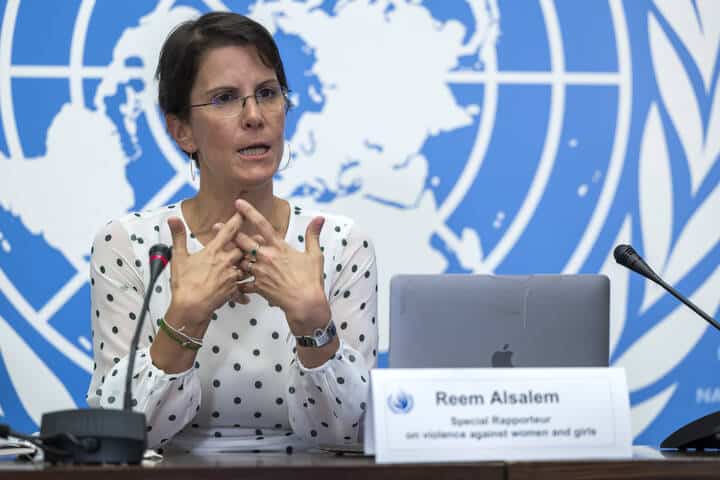
Last week’s 62nd session of the United Nations Human Rights Council (UNHRC) was a major historic leap for mothers around the world, in both the developing countries and in advanced economies. Reem Alsalem, Special Rapporteur for Violence against Women and Girls, its Causes and Consequences presented an astoundingly thorough report titled Violence Against Mothers.

Working under a special UN mandate established in 1994 to investigate the root causes and resulting consequences of gender-based violence, as well as propose systemic reforms, Ms. Alsalem’s report covered the manifold forms of overlooked gender-based violence against mothers. In her public statement accompanying her report she said: “Motherhood remains largely undervalued and mischaracterized as a purely private choice rather than a public good. Mothers are subjected to multiple and intersecting forms of discrimination, yet remain unrecognized as a distinct category in law, policy and data.”

0

From the chatroom to the classroom, these women professors face the manosphere in real life

The 19th From the chatroom to the classroom, these women professors face the manosphere in real life 19thnews.org
preview

Julie Shayne has spent the better part of her teaching career navigating campus politics made complicated by being a woman.

Each semester, she once again finds herself on edge at the beginning of the Gender, Women and Sexuality Studies course she teaches. While most of her students have been pleasant, she said she has had to remain cautious of red flags.

“My classes meet a diversity requirement, so I get students in there who don’t want to be in there, or at least initially, they think they don’t want to be in there,” said Shayne, who is a teaching professor at the University of Washington Bothell. “So they’re almost resentful that they’re having to spend time learning something that they think is just political or opinion or however they feel.”

0

Abortion Rights Coalition of Canada is normalizing abortion – with billboards!

preview

The Abortion Rights Coalition of Canada, also known as ARCC, aims to normalize abortion by putting a simple message where drivers can see it – on a billboard at the side of a busy road. Located at the intersection of Wharncliffe and Southdale Road in London, ON, the new 10 X 24 foot billboard proclaims, “Abortion is healthcare.”

Margret Taylor is the social media coordinator for ARCC.

“There’s a coordinated anti-choice presence in terms of advertising,” said Taylor.

Anyone who’s had a graphic anti-choice pamphlet pressed into their hands on a busy urban street knows this is true. Another example of this organized anti-choice campaigning would be the anti-abortion billboards that were once a staple on BC’s Highway 97. This practice only ended when BC Billboards announced in 2025 that it would no longer display billboards about abortion at all – be they anti-choice or pro-choice.

0

LA Views: I was arrested in a prostitution sting. Why I’m worried for sex workers as the World Cup begins

LA Local Why the World Cup has sex workers worried thelalocal.org
preview

Several years ago, the night before a local election, I was arrested for prostitution outside of a Koreatown motel. The customer who made the appointment with me twirled his wedding ring a lot and made small talk about sex toys. When he stood up, I followed him towards his motel room, which was across a parking lot. Once outside, I was handcuffed and shoved into an unmarked van by the “customer” and another cop, who flashed his shiny gold badge. After a few hours, I was dumped like a stray dog at the Twin Towers Correctional Facility in downtown Los Angeles. Unlike many other sex workers who have been routinely rounded up in prostitution stings, I was not misgendered, raped or beaten by cops. But the subordination ritual of the arrest itself, and the feeling of being caught in the jaws of a likely publicity stunt before an Election Day, stuck with me.

A majority of the other women in jail with me that night were half my age and were Black or brown. One of them fell asleep with her head on my lap after she showed me how to use the phone. Then, and now, the LAPD brags about making the city safer, but for sex workers, more arrests only mean more fear, abuse, trauma and poverty. Incarceration only exacerbates these conditions. For sex workers, cleaning up the city means erasure.

0

What 'emotional labor' actually means — and how Starbucks is testing its limits

Quartz Starbucks tests the limits of emotional labor qz.com
preview

Arlie Hochschild coined the term in 1983 to describe a specific workplace cost. Starbucks’ Green Apron Service is pushing it further than she imagined

Arlie Hochschild coined the term in 1983 to describe a specific workplace cost. Starbucks’ Green Apron Service is pushing it further than she imagined

0

From Gilead to Ladyland: how the rebellious women of literature offer hope in dark times

the Guardian From Gilead to Ladyland: how the rebellious women of literature offer hope in dark times www.theguardian.com
preview

After visiting an island brothel in Bangladesh, the novelist was inspired to write an imagined uprising. She explores the radical fictional worlds where women have the power

After visiting an island brothel in Bangladesh, the novelist was inspired to write an imagined uprising. She explores the radical fictional worlds where women have the power

0

The Women Leaving the New Right

Intelligencer The Women Leaving the New Right nymag.com
preview

For women especially, contempt for feminist pieties, if deftly channeled, could be one’s ticket to stardom. And what had feminism done for them recently, except tell them to work harder and feel bad for wanting to be skinny? Or worse: trick them into waiting too long to have babies? Now, a growing group of right-wing women — both prominent personalities and loyal foot soldiers — are waking up to find their inclusion in the MAGA movement was contingent. Sexism wasn’t merely the price of entry; it was the theme of the party.

OMG why did the leopard ate my face moment right there. Well at least they “get it” now.

0

We Need To Stop With The "Women Didn't Work" Myth

play · youtube.com
YouTube We Need To Stop With The "Women Didn't Work" Myth www.youtube.com
preview

It’s a nice compilation with information a lot of people probably already know about but that really shows how absurd the idea is.

It’s a nice compilation with information a lot of people probably already know about but that really shows how absurd the idea is.

0

Crossposting encouraged to !feminism@lemmy.ml

preview

Please crosspost to our sister community !feminism@lemmy.ml

Our sister community over on lemmy.ml was considering closing down because we are more active, but users on lemmy.ml requested that it be kept open. In order to help sustain that community, we’re currently encouraging everyone to also crosspost anything you post here over there.