0

Seeking volunteer moderators for this community

preview

Greetings!

Alas, the previous moderator became inactive, so I have taken over the moderatorship for now, but seeking volunteer(s) from the community to volunteers as moderators.

If you’re decently active on Lemmy and don’t have a modlog showing you’re a Bad User™¹, and are willing to check for reports daily or so - and handle them in a responsible manner (removing rule-violating posts/comments, not removing things that you don’t agree with but don’t violate rules². You also need ot have a lemmy.world account (this can be an alt that you just check daily for reports - because they won’t appear for you if your user is on another instance), please consider volunteering!

Moderating is usually not too difficult. Posts/comments get reported maybe around weekly or less, currently. So unless there’s a big fight where you need to step in, it’s not usually much to do.

I’d love to see a team of 2-4 willing to step up for this. And considering the community, I’d love to see most of those be women, but men are certainly not excluded in any way from volunteering. Diversity is generally a Good Thing™.

If you have any questions, or would like to volunteer, please leave a comment! Or have any other thoughts on the matter.


¹Yes, this is a subjective judgement. Go ahead and apply if interested, the worst I’ll do is decline :)

²Subjective removals are acceptable, of course!

0

Latest figures show domestic violence still major problem in France

RFI Latest figures show domestic violence still major problem in France www.rfi.fr
preview

Standing at 284,681 last year, the number of recorded victims of domestic violence in France has more than doubled since 2016, according to the annual study by the Interior Ministry’s statistics service, SSMSI.

The figures do not necessarily reflect an equivalent increase in violence, according to the SSMSI, but rather an increase in the number of victims reporting abuse, better case management, and protection and sanction mechanisms put in place in recent years.

As in previous years, the vast majority of victims are women (84 percent), while those accused are most often men (85 percent) of French nationality (84 percent). Nearly three-quarters of the victims – 73 percent – are aged between 20 and 45.

In 2025, 124 people were killed by their spouse or ex-spouse, compared to 134 in 2024, while 433 attempted murders were reported – an increase of 8 percent, according to the SSMSI.

“We still have repeat offenders, multiple repeat offenders, with criminal records as long as your arm, who continue to go free with a sense of societal impunity that allows them to commit the act,” the Collective Against Femicides by Partners or Exes told French news agency AFP on Thursday.

In total, nearly 218,000 people were indicted in 2025, representing an increase of 2 percent.

0

Russell Brand’s convictions renew spotlight on media — and a culture — that may have looked away

preview

For three straight years while he worked at BBC radio stations, Russell Brand was awarded a notable distinction by The Sun, Britain’s largest tabloid: “Shagger of the Year.”

…

Brand’s convictions Thursday for rape and sexual assault have turned a spotlight back on the BBC and other media employers, renewing questions about whether bosses enabled his behavior or chose to look away. They also highlighted the ways in which his excesses were overlooked by the culture at large.

“When Brand was at his most famous, his wrongdoings were indulged or ignored by his employers and, to be fair, the public too,” Ann Olivarius, an attorney specializing in sexual misconduct, said in an email message.

The BBC apologized last year for a culture of silence that, it said, prevented staff from complaining about Brand’s behavior at its radio stations between 2006 and 2008 because they felt he was too powerful.

It reiterated that apology after his conviction.

“It was of great concern to us that some people felt unable to raise concerns about Brand’s behavior,” the BBC said Thursday in a statement. “We apologized to those impacted, for both the culture and failings at the time.”

…

Detective Superintendent Andy Furphy of London’s Metropolitan Police called the conviction “a testament to the extraordinary courage, resilience and determination of the women who came forward and reported what happened to them.”

“Brand used his influence, status and fame to exploit and sexually offend against women,” Furphy said. “As his profile grew, so too did his sense of entitlement.”

Of the eight complaints the BBC investigated, only one — that Brand had urinated in a cup in front of staff — had been made formally during his time at the stations. The review found it was “not dealt with effectively.”

0

Black girls in LA keep seeing women around them getting killed. They’re driving change

the Guardian Black girls in LA keep seeing women around them getting killed. They’re driving change www.theguardian.com
preview

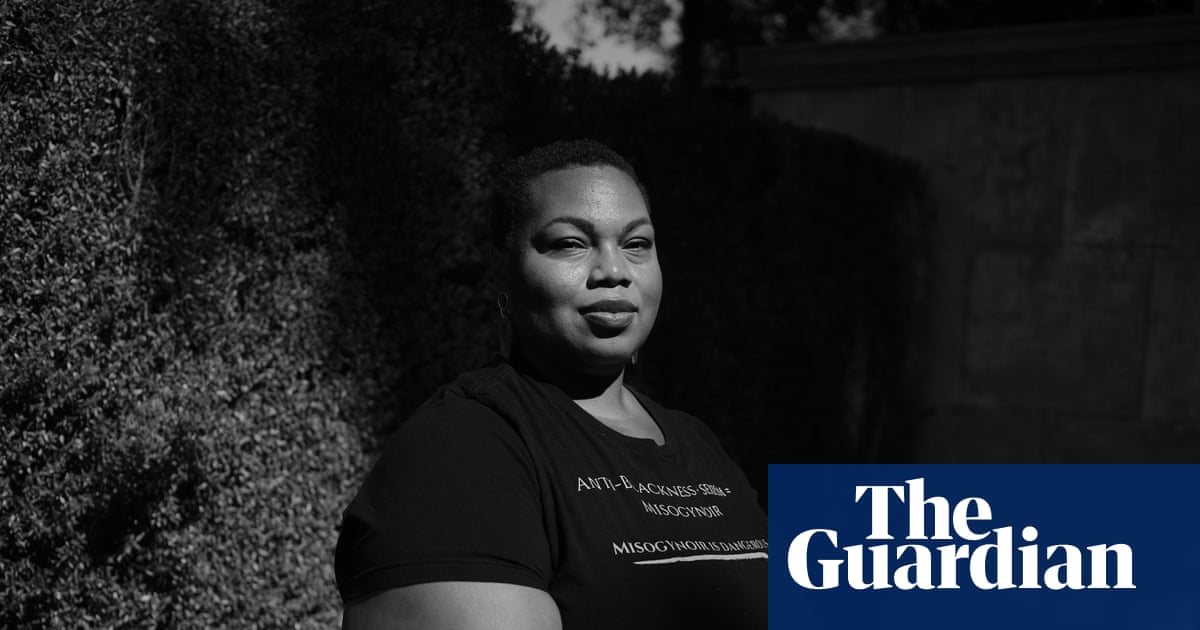
As a child, Tioni Theus was a ball of energy. After school she liked to play golf and dance. On weekends, she’d go to the movies and the mall with her older cousin. Driving back home at the end of the day to her family’s apartment in South Los Angeles, California, she’d ask: “What are we doing next?”

Everything changed when Tioni was 13. Her mother was hit by a car and critically injured, leaving her unable to take care of her daughter. While her mom recovered, Tioni lived with other family members. But the accident left Tioni angry, her older cousin Nafeesah Kincy said, and she struggled to understand that her life had permanently changed.

Tioni started talking to strangers online, Kincy noticed, and hung out with unfamiliar people, including older teen boys and young men. Then she left her family’s care and would bounce between random people’s houses, Kincy said, or spend nights with a boyfriend at a hotel. Each time she saw Tioni, Kincy would implore her to come back to her family.

Over the next two years, Tioni stopped going to school and became “lost in the streets”, said Kincy, who would take her cousin to get food, or meet at another family member’s house to drop off care packages with deodorant, clean underwear and tampons. Family members pleaded with Tioni to stay with one of them permanently.

“It was devastating because I couldn’t protect her,” she said. “We did everything we knew to do.”

Then, on 8 January 2021, Tioni’s body was found on a stretch of highway with a gunshot wound to her neck. She was 16. How she ended up there remains unknown.

Tioni’s killing shocked many in Los Angeles, but it outraged LA’s Black community. In the weeks following her death, there were repeated calls for a swift investigation, for compassion from local leaders, and tangible measures to curb the violence. Black women and girls make up about four percent of the population in the LA region, but represent an outsized share of female homicide victims.

Local and state leaders said they heard their calls. They put together a $115,000 reward for information, and the city commissioned a report to better understand why Black women are killed more often than women of other races. But five years later, there have not been any arrests for her killing, and families, community organizers and violence prevention workers say not enough has changed to prevent future deaths.

0

Sexual Assault Survivors : my new community for SA victims. I also created Secondary Survivors and more. Can you help me to make these spaces safe and useful ? Details in text.

preview

Links :

General community and particularly women lemmy.world/c/rape

For men lemmy.world/c/MenGetRapedToo

For the loved ones of survivors lemmy.world/c/rapeallies

Sorry for dumb english, I’m french speaking.

I’m a french feminist guy. I created safe spaces for all Survivors and their loved ones, exactly like on Reddit. BUT, btw, not EXACLTY. On Reddit, we have : r/rape, r/SexualAssault, r/MenGetRapedToo & r/rapecounseling (essentially). To make easier the migration from Reddit to Lemmy, I used the names of the related equivalent subreddits (rape, MenGetRapedToo) for my communities. The exception is “rapeallies”, who I build with a book title “Allies in healing” and the related subjet.

Let’s see what’s wrong with the mentioned subreddits : r/rape is pretty wild and had bad moderation. r/SexualAsssault is ALSO weird and sometimes wild. r/MenGetRapedToo is too little to become one day a first-class resource on Reddit. r/rapecounseling is the best, but the less known, sadly.

So, I want make my Lemmy communities useful for all users, and particularly women, because they are the most concerned by these topics. What are the things you want to see in it ? I’ve already add links and ressources redirecting to RAINN.org, hotlines, and other useful helps like mental health support. I created a pinned thread to report the users with creepys behaviors.

What can I do after this ?

0

Lemmy has a sexism problem

preview

I couldn’t believe my eyes seeing this advice to teach young boys to hit girls so as to restore the boys’ self esteem and pride.

This is the kind of toxic belief that shouldn’t be allowed to proliferate here and yet is embraced with open arms by other users.

That boys can only regain their pride and self esteem by hitting girls leads directly to more violence against women and girls.

0

‘Don’t worry about the leopard. It’s a man you don’t want to run into’: Delhi women reclaim the outdoors

the Guardian ‘Don’t worry about the leopard. It’s a man you don’t want to run into’: Delhi women reclaim the outdoors www.theguardian.com
preview

Sheel, an urban ecologist, spends hours observing trees of all types in all seasons. She often travels by car for her own safety, worries about the impact of her work on her family, and has clear guidance for her female interns when they are, inevitably, approached: don’t engage, don’t respond.

“It’s the men who ask such intrusive questions: Who are you? Where are you from? What does your father do?” she says.

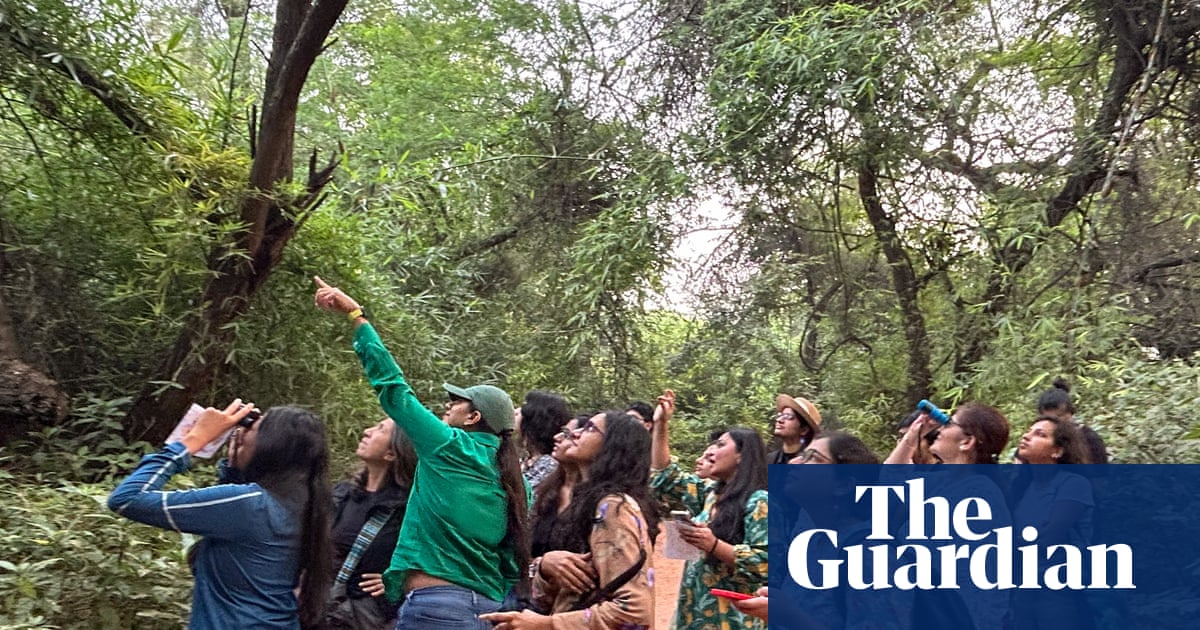
Sheel was recounting these experiences atop Delhi’s oldest fort inside Sanjay Van, a sprawling city forest overlooking a 12th-century minaret. She was one of about 20 women who had gathered on a crisp Sunday morning in October to enjoy nature, safely. Many had never experienced a forest before.

Among the group were a scientist who had stopped birding since she moved to Delhi, a psychiatrist who can’t find a safe place to run, and an environmental planner who cycles everywhere. For many women, simple pleasures such as enjoying nature have become beset by gender crimes.

“The city feels designed to crush any form of freedom, any form of exploration,” says Neha Sinha, who organised the walk. Author of My Wild City: Finding Nature, Meaning, and Hope in India’s Capital, Sinha has been organising these walks for two years.

During her own walks around the city’s forts, forests and wetlands to observe the diminishing number of fireflies, flying foxes, howling jackals, leopards and hyenas, civets and owls, and groves of 350-year-old trees, she has faced the wrath of men. She has changed her route countless times to mislead stalkers, and been asked by men on the street how much she would charge for sex.

“As has everybody else,” she says. “Nearly every woman I know has called a cop saying ‘I have a stalker.’ In a culture that tells you not to go out … how do you make nature your own?”

Two weeks before the women gathered on the walking trails of Sanjay Van, dotted with ruellias, vajradantis and jaal trees, hundreds of people had joined a protest in Delhi over the gang-rape of a 17-year-old in a public park.

Their demand was to make public spaces safer for women. The government’s response was to ban entry to public parks after sunset.

For Alankrita Narayan, a wildlife conservation student who often needs to work alone at night, that rule was unhelpful. During an internship, she recalls, her organisation trained her for worst-case scenarios in the jungle: What if something happens to your partner? What if you encounter a man carrying a weapon? What if you encounter a forest officer asking for sexual favours?

0

Historia de las prohibiciones a las mujeres, muchas en vigor hasta hace pocas décadas

preview

Historia de las prohibiciones a las mujeres, muchas en vigor hasta hace pocas décadas. Conoce cómo a las mujeres se le han prohibido derechos básicos.

Historia de las prohibiciones a las mujeres, muchas en vigor hasta hace pocas décadas. Conoce cómo a las mujeres se le han prohibido derechos básicos.

0

Equal Pay Day: A Month Away in EU - Just Days Away in Austria and Germany

preview

Only a couple of days left before women in some European countries start working for free the rest of the year.

Not accounting for all the non-paid hidden work women do every day at home.

Only a couple of days left before women in some European countries start working for free the rest of the year.

Not accounting for all the non-paid hidden work women do every day at home.

0

The Ur-Tradwives Are Leaving the Aprons Behind

Slate Magazine The Ur-Tradwives Are Getting Out of the Game—and Warning Other Women to Do the Same slate.com
preview

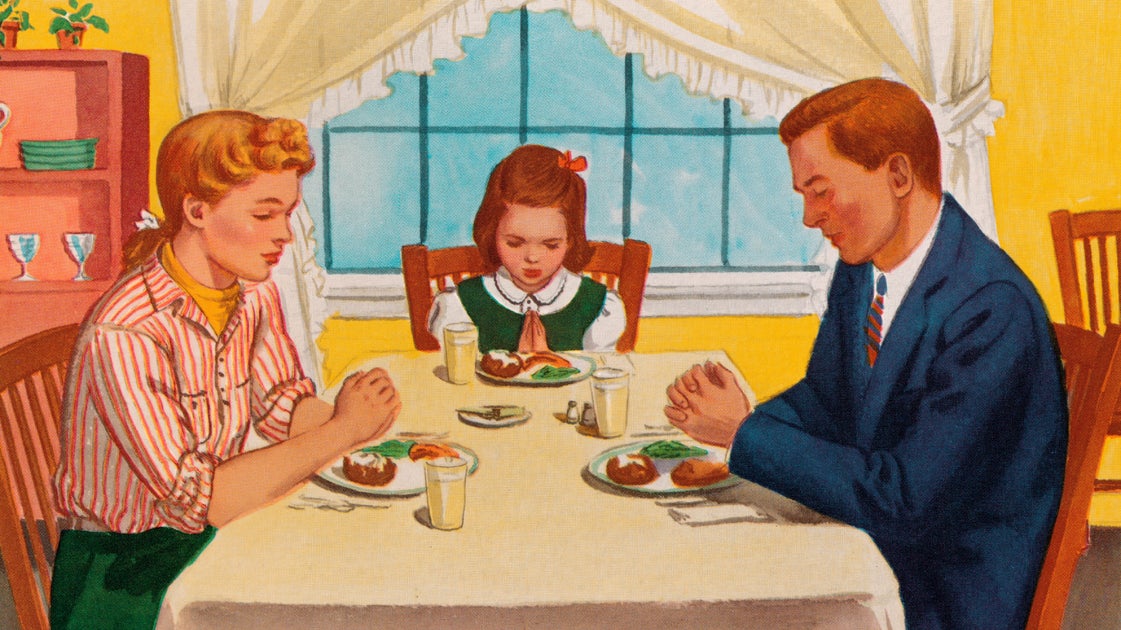
Tradwives come off like a modern phenomenon, a social media chimera spawned by MAGA, fed by women’s exhaustion over “having it all,” and wrapped in a pretty apron. In some ways, that’s true—the Nara Smiths and Ballerina Farms of the world only went viral in the 2020s. But the earlier round of the submissive-woman-as-influencer experiment ran long enough ago—hawked on tape, book, and DVD—that the women involved are now in their 40s or older. Some are becoming the loudest voices warning against the movement.

Bernadine “Bluntly” Barber, a former trad Instagram influencer—here she is dancing in a milkmaid dress gifted to her by the alt-right magazine Evie—has opened up on Instagram and just this month spoke out in the New York Times against the abuse that can thrive in marriages with such a power imbalance. Enitza Templeton, a former tradwife with more than 247,000 TikTok followers, uses her platform to warn young women they may one day regret forgoing education. Templeton describes how a wifely fixation on pleasing one’s husband can leave women emotionally and physically depleted.

Earlier this month, former advocates of stay-at-home-daughterhood Elizabeth and Anna Sofia Botkin issued two apologies on YouTube (and published a lengthy written self-critique) to women negatively impacted by the form of submission they once advocated, when they argued that young women should remain home under their father’s authority until they got married and thereafter could live in submission to their husbands. The sisters’ 2005 book, So Much More, and 2007 film, Return of the Daughters, spawned the stay-at-home-daughter movement, a training ground for the wifely-submission pipeline. It was a stopgap encouraged by Christian patriarchy-preaching ministries to keep women from ever being outside the authority of a man—and usually, out of college, where they might learn Marxism, or worse, feminism. While young women stayed home, they perfected domestic skills, preparing for marriage. Some helped with their father’s business or ministry. A few served as nannies (unpaid or poorly paid) for submissive wives from their churches—training for the day they would have their own big broods of kids.

“We have come to the very painful conclusion that we believed and taught some very destructive things when it came to stay-at-home-daughterhood,” Anna Sofia said as part of their YouTube apology. (Elizabeth and Anna Sofia did not return Slate’s requests for interviews.)

0

‘I wanted to change the stigma’: Nikita Hand on winning her civil rape case against Conor McGregor

the Guardian ‘I wanted to change the stigma’: Nikita Hand on winning a civil rape case against Conor McGregor www.theguardian.com
preview

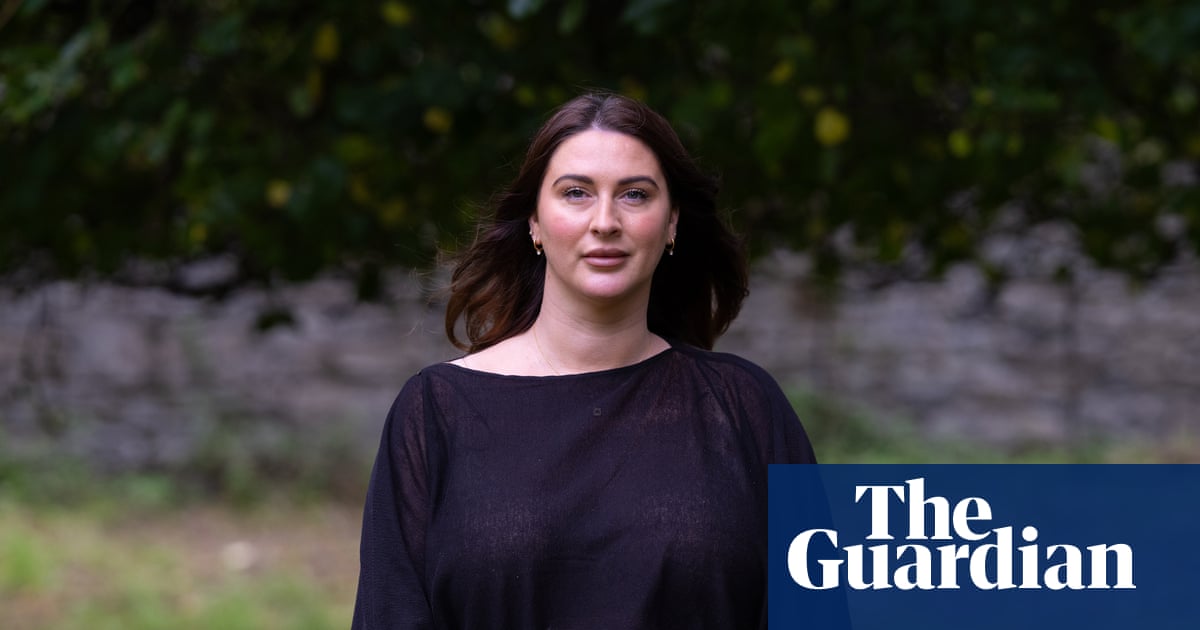
Nikita Hand had a compelling reason to not pursue a civil rape case against Conor McGregor. She was, in her own view, an imperfect victim.

The day of the assault, she had been partying with alcohol and cocaine before contacting McGregor, who took her to a Dublin hotel.

Hours later, bruised and stunned, Hand made a report to police, but Irish authorities declined to pursue a criminal case against the mixed martial artist, saying there was no reasonable prospect of a conviction.

That left the option of a civil case. But that would strip the hairdresser of anonymity, and pit her against a powerful celebrity who denied wrongdoing and had teams of lawyers and a vast online following. Hand went for it.

“I’m not the perfect victim and I never portrayed myself to be,” she said in an interview in Dublin. “But I feel when victims are not perfect, they seem to get blamed. And I really wanted to try to change the stigma around people thinking you have to be a perfect victim to be believed or heard.”

The cross-examination in the witness box at Dublin high court in 2024 felt like another violation, but Hand emerged victorious: the jury found that McGregor had assaulted her in 2018 and awarded nearly €250,000 in damages.

0

'Ek Kachori, Do Samosa': Why Indian Women Are Using Quirky Slogans To Protest Against Rape

NDTV '<i>Ek Kachori, Do Samosa</i>': Why Indian Women Are Using Quirky Slogans To Protest Against Rape www.ndtv.com
preview

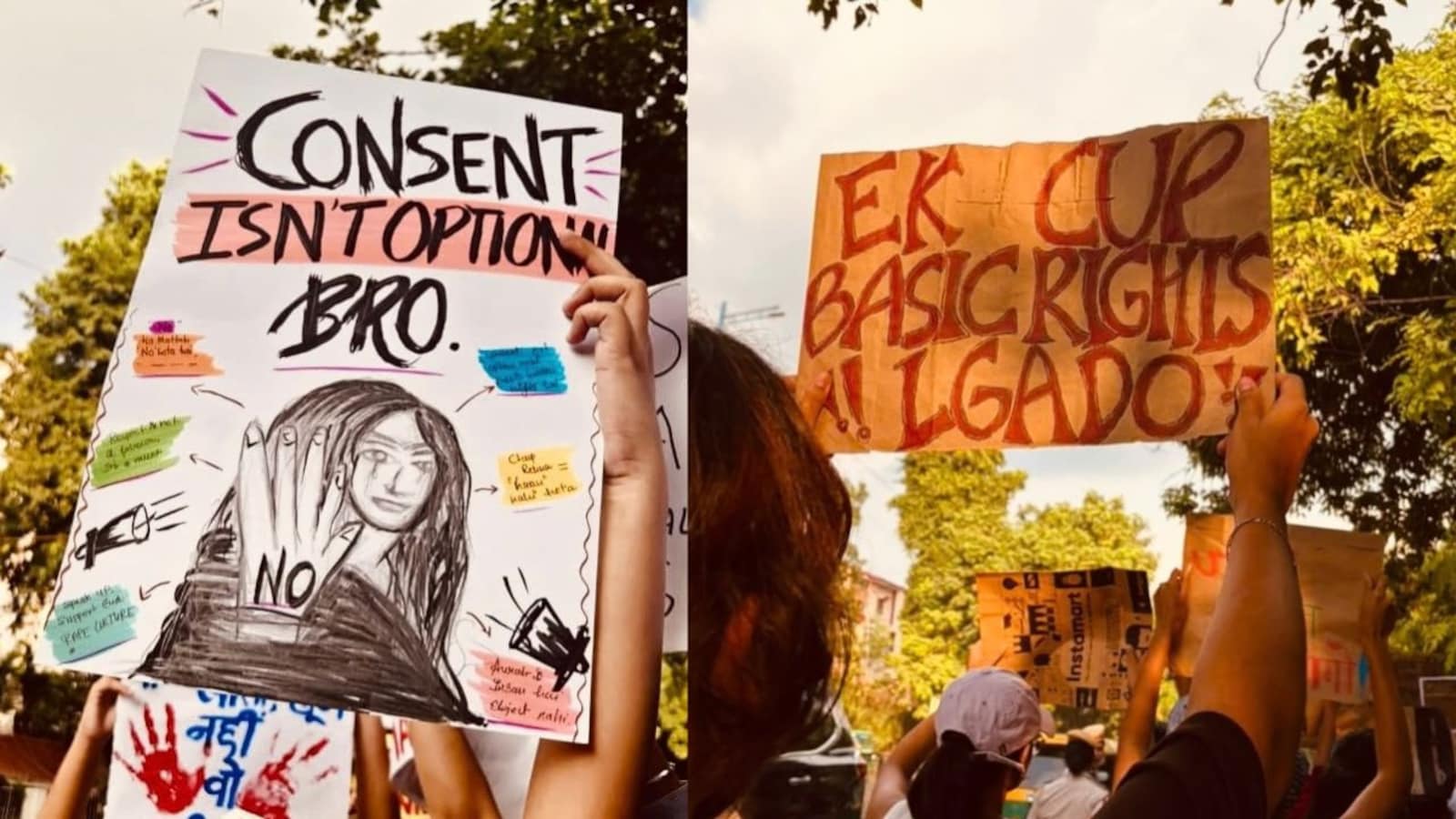
Something unusual is happening on the streets of Delhi right now. Women have taken over the streets to protest against rape and sexual assault cases, demanding something that should hardly need to be demanded in the first place: the right to feel safe in public spaces.

But alongside the familiar chants of azaadi, justice and accountability, a new kind of protest language has emerged. Rhyming, cheeky and distinctly Indian, these slogans are making their way from protest sites to Instagram Reels, just like the CJP protests that led to the then education minister Dharmendra Pradhan’s resignation. Two months later, a new set of slogans is echoing through Delhi streets as remixes, even finding an audience online. Scroll through Instagram, and you will hear women chanting and men ‘vibing’ to slogans like:

“Ek Kachori, Do Samosa, Inn Mardon Ka Kya Bharosa?”

“Ek Aloo, Do Pyaaz, Bhaad Mein Jaye Mard Samaj.”

“Aloo Lo, Puri Lo, Inn Mardo Se Duri Lo.”

“Paani Ka Rang Neela, Inn Mardon Ka Character Dheela.”

The protests, which have involved women and queer students from several Delhi University colleges, have followed a series of reported sexual assaults in Delhi and elsewhere. The protesters are demanding safer public spaces, better infrastructure and accountability, while pushing back against the idea that women’s freedom should be restricted in the name of safety.

…

For Gen Z, a protest does not necessarily end when the march does.

The streets are being documented on Instagram, with protestors filming their chants, creators turning them into Reels and other users picking up the slogans and giving them a life of their own online.

That means a chant heard outside a Delhi University college can quickly become something for the people who were never at the protest to watch it, share it, and recreate it for social media.

0

Women ‘set back by 50 years’ as Bolivia, Chile, Argentina and Peru debate tougher penalties for false reports of sexual assaults, despite such cases being rare

the Guardian ‘Defend our men!’: fears for women’s rights in Latin America over plans to counter gender violence laws www.theguardian.com
preview

In Bolivia, Chile, Argentina and Peru, lawmakers have proposed bills that would toughen punishments and, in some cases, create new procedures for people found to have made false reports, with a particular focus on cases involving domestic, sexual or gender-based violence.

Individually, the measures are presented as safeguards against fabricated allegations. Taken together, women’s rights groups say they reflect a growing – and disturbing – narrative that women routinely misuse laws intended to protect them, one they say risks making victims too afraid to report abuse in the first place.

That the bills have been presented almost in “parallel” suggests that conservative groups campaigning against women’s rights are pursuing a broader and coordinated regional strategy, according to Paula Ávila-Guillén, director of the US-based Women’s Equality Centre. “The likelihood of it being a coincidence is very low.”

And the proposals are advancing despite scant evidence that such cases of false accusations are widespread – and that false reporting already exists as a criminal offence in each of the countries concerned.

0

‘Nothing has changed’: Cornell assault case reignites female fury

BostonGlobe.com Beyond #MeToo, the alleged gang rape at Cornell unleashed a flip-the-table, burn-it-all-down primal scream - The Boston Globe bostonglobe.com
preview

It was the screen grabs that did it.

Over the last week, as news spread about the lawsuit filed by Jane Doe, a former Cornell student who alleges that she was gang raped by seven Chi Phi fraternity brothers in 2024, the tenor of the reaction on social media can perhaps best be described as white hot fury.

For many women, it was as if seeing the vile messages shared that night — the accused offenders advertised “free” sex on Snapchat, saying “you can walk in and whip it out” — had roused an army of sleeper cell agents into action. This incident, judging by the online outrage, was not just another #MeToo moment: It was cause for a flip-the-table, burn-it-all-down primal scream.

As the actor Rati Gupta put it: “Maybe instead of Me Too, this round is [Expletive] Off.”

0

I was raped at a fraternity and changed Texas law. When will other states follow?

I was raped at a fraternity and changed Texas law. When will other states follow? www.thetimes.com
preview

I was 19 years old when I was drugged and raped at a fraternity party at the University of Texas. One member spiked my drink, and a man I had called a friend sexually assaulted me as I lay dazed and helpless. The next morning, that “friend” told me “you tried to push me off” as he laughed about it.

His fraternity brothers later joked about what happened, about how my attacker had been picked up by police for public intoxication and immediately after his release, “got laid”.

It was traumatic, life-shattering and life-altering.

…

It would be a decade before I finally felt able to talk about what had happened to me. But then, as I learnt more about Texas law around sexual assault and intoxication, I was horrified to find that it may not have even legally counted as rape.

At the time, Texas, along with at least 23 other states, had drawn an almost incomprehensible legal distinction around intoxication. In these states, if a victim of sexual assault voluntarily consumed drugs or alcohol, they were responsible for what happened to them. This meant a person could be so impaired that they were incapable of consenting, but the law treated them differently because of how they became impaired.

Rather than looking at the actual assault, the Texas statute focused on whether the perpetrator himself had administered the substance without the victim’s knowledge. In my case, I was drugged by one person and raped by another.

The law cared about that distinction. I did not.

…

Last year, the Texas legislature passed the Summer Willis Act. The act sets out that a sexual assault occurs when the perpetrator knows the other person is intoxicated or impaired to the point of being incapable of consenting, and established a definition of consent in Texas law.

0

Too many women face a "diagnostic odyssey" at the doctor's office. This $20 billion plan could change things.

play · cbsnews.com
CBS News Too many women face a "diagnostic odyssey" at the doctor's office. This $20 billion plan could change things. www.cbsnews.com
preview

Women live longer than men, but they also spend more time being sick. Why is that? One reason is that women’s health has long been under-researched and underfunded.

According to research from Melinda French Gates’ Pivotal, for every dollar spent globally on medical research and innovation, only 5 cents are spent on women’s health.

The Society for Women’s Health Research is trying to change that in the United States with a first-of-its-kind, $20 billion,10-year federal road map to improve the health of more than half of the population.

0

Why Advocates For Women's Rights Are Alarmed By Complementarianism

HuffPost This Worrying Religious Doctrine Is Having A Moment — And It May Explain Why Women's Rights Are Being Attacked www.huffpost.com
preview

“Complementarianism is the belief that men and women are ‘equal’ in value to God but have different God-given roles that complement each other,” April Ajoy, author of “Star-Spangled Jesus: Leaving Christian Nationalism and Finding a True Faith,” told HuffPost.

“It enforces stereotypical, traditional gender roles and focuses on women’s submission to male authority both at home and in the church,” Ajoy continued. “Complementarianism holds that only men can lead in the church and that husbands have complete authority over their wives. Wives are taught that God commands their complete submission and obedience to their husbands in everything.”

This belief that men and women have clear separate roles in marriage and society is quite widespread across fundamentalist Christian communities and evangelicalism.

Cait West, author of “Rift: A Memoir of Breaking Away From Christian Patriarchy,” grew up inside complementarianism and described it plainly.

“It is just another name for patriarchy, and some believers hold to it more strictly than others,” she said. “Men are supposed to be strong leaders, the heads of their households, and women are supposed to submit to their husbands in all things. The idea is that men and women who follow this “godly” plan complement each other as they serve God.”

Ajoy gave the example of Ephesians 5:22-24: “Wives, submit yourselves to your own husbands as you do to the Lord. For the husband is the head of the wife as Christ is the head of the church, his body, of which he is the Savior. Now as the church submits to Christ, so also wives should submit to their husbands in everything.”

“Most evangelicals who use this passage to keep women submissive to men conveniently ignore the verse right before it that says, ‘Submit to one another out of reverence for Christ,’” Ajoy noted.

0

Polish activists open first abortion pill locker in Warsaw

RFI Polish activists open first abortion pill locker in Warsaw www.rfi.fr
preview

cross-posted from: sh.itjust.works/post/67592343

Warsaw (AFP) – Polish activists have opened the country’s first-ever abortion locker, allowing women to access pregnancy-terminating pills anonymously and immediately in the country with some of Europe’s strictest abortion laws, an AFP photographer confirmed Wednesday.

The small, colourfully painted locker, which activists call an “abortomat”, consists of 22 compartments containing envelopes with medications allowing them to carry out medical abortions.

“It’s a feminist intervention meant to show just how upside‑down things are,” Kinga Jelinska, director of the Women Help Women Foundation and co-founder of the Abortion Dream Team, told AFP.

“We always think about how to make abortion care easier, more accessible, friendlier, more people‑centred,” she added.

“It’s simply logical and makes sense”.

The facility’s location – across the street from the Polish parliament, which has failed to follow through on its pledges to relax the country’s stringent abortion laws – is purposefully symbolic.

It was here that activists decided to open an abortion centre just over a year ago.

Rather than a typical medical clinic, it provides women with access to resources, including pills, and a space to be able to seek support or carry out the pharmacological abortion.

Abortion in Poland is legal only in two circumstances: when the pregnancy resulted from a criminal act – such as rape or incest – or if it threatens the mother’s life or health.

A 2020 decision by the Constitutional Tribunal, ruled that severe foetal abnormalities were not legal grounds for abortion.

Prior to this ruling, 98 percent of legal abortions in Poland were performed for this reason.

The new restrictions set off a torrent of protests throughout the country, which became the largest mass demonstrations in Poland since the 1989 anti-communist movement.

In the first half of 2025, only 846 legal abortions took place in Poland, according to data from the National Health Fund (NFZ) and the Committee of Ministers of the Council of Europe.

…

0

Could An Abortion Have Saved Tierra Walker's Life? Her Family Says Yes And Seeks Justice - Essence

preview

The near-total ban on abortion in Texas states that women cannot have an abortion as soon as fetal cardiac activity is detected, which can be as early as five weeks. This is before most women even know they’re pregnant. In addition, the extreme law gives zero exceptions for rape or incest. Doctors and other medical professionals who violate the state’s abortion ban face up to 99 years in prison, creating a culture of fear that leaves healthcare pros hesitant to intervene.

The near-total ban on abortion in Texas states that women cannot have an abortion as soon as fetal cardiac activity is detected, which can be as early as five weeks. This is before most women even know they’re pregnant. In addition, the extreme law gives zero exceptions for rape or incest. Doctors and other medical professionals who violate the state’s abortion ban face up to 99 years in prison, creating a culture of fear that leaves healthcare pros hesitant to intervene.

0

The Manosphere: Beyond the Moral Panic

Psychology Today The Manosphere: Beyond the Moral Panic www.psychologytoday.com
preview

How Manosphere Influencers Draw People in: The B.A.D.G.E.D. Playbook

Drawing on my work with young men and the insights of researchers who have examined the manosphere, I use the acronym B.A.D.G.E.D. to summarise a method consistently employed by some manosphere influencers to enlist and profit from followers:

B—Build up the problem: Frame ordinary developmental struggles as personal deficiency. You’re not attractive enough. You’re not successful enough.

A—Attack the mainstream: Position society as deceptive and hostile. You’re being misled. Feminism is trying to emasculate you.

D—Deliver “hidden” knowledge: Claim to be the voice of truth in a world of lies. You’ve joined the awakened.

G—Gather the tribe: Create a sense of belonging and shared identity. You’ve joined the awakened.

E—Extract payment: Monetise the solution through courses, programmes, subscriptions and investments.

D—Drip-feed reminders: Keep the threat alive. Stay sharp. Society will try to trick you.

0

The EPA would rather monitor abortion pills in water than pollution

Mother Jones The EPA would rather monitor abortion pills in water than pollution www.motherjones.com
preview

With his characteristic deregulatory zeal, Environmental Protection Agency Administrator Lee Zeldin announced before an audience of G20 energy ministers in oil-rich Houston, Texas, that his agency would eliminate climate pollution standards for fossil fuel-fired power plants. “For over 15 years, the Obama and Biden administrations implemented a war on coal to destroy reliable and affordable energy,” Zeldin said in an EPA press statement issued during the Houston meeting. “The Trump Administration has come in to protect American energy and to make sure you can afford to keep the lights on.”

This announcement was yet another example of the Trump administration’s eagerness to reinforce what Republicans have long considered a priority: freedom from government intrusion or regulation. But only a few days before Zeldin reassured energy executives that the government would no longer prioritize protecting public health, the EPA announced a new study that would test the country’s water supply for abortion medication, contraception, and hormones used in gender-affirming care, along with over 1,000 other medications and chemicals. “We have heard loud and clear that Americans are concerned about potential unknown pollutants lurking in their drinking water,” Zeldin wrote in the study press release.

0

Outcry as Michigan high school asks girls to share details of menstrual cycles

the Guardian Outcry as Michigan high school asks girls to share details of menstrual cycles www.theguardian.com
preview

Under the policy, which appears in a Lakeview high school gym syllabus, female students who miss swimming because of their periods must have a parent submit a written note or email identifying the length of their menstrual cycle before they can make up the missed days.

The syllabus states: “Female students will be given the opportunity to make up days, which are missed only because of their menstrual cycle. A written/email note from a parent stating the length of the menstrual duration is required, so the student can make up the days.”

“Students will complete dry land workouts to be able to make up the days,” it continues. “Students will not just sit out. Each day that is not made up will be considered a non-participation day and place the student on the grade reduction scale.”

The requirement caught the attention of Andy Amsdill, whose daughter attends Lakeview high school. Amsdill told WXYZ Detroit that he was stunned when he saw the requirements in her gym syllabus.

“The teacher wants us to either send a note or an email with the suspected length of the cycle which, by itself, is ridiculous,” Amsdill told the outlet.

Menstrual cycle length can sometimes be difficult to predict, and the US National Institutes of Health estimates between 14% to 25% of women experience menstrual irregularities. Irregular periods are even more common in young girls.

Amsdill later told CBS News that other parents contacted him after he spoke publicly about the syllabus, saying they were glad he had brought attention to the issue.

Among them was Bryan Shishakly, whose daughter is now a sophomore at Lakeview. Shishakly said she faced the same requirement during her freshman gym class last year and that it affected her grade.

“My response was like, ‘If they ask, you have no obligation to tell them,’ and it did affect her grade,” Shishakly told CBS. “She’s a straight-A student, and she ended up with a C in gym, and I don’t know how fair that is since it’s only going to apply to the girls at the school.”

The Lakeview public schools superintendent, Karl D Paulson, issued a statement that read: “We recently became aware of a parent’s concern relative to certain class expectations. Given our commitment to partnering with parents to address any issue that might arise, we immediately sought to schedule a meeting with the parent to engage in a conversation about the concern.”

It added: “We look forward to meeting with the parent in the coming days and working collaboratively with that objective. The Lakeview school district remains fully committed to educational excellence and best practices in all it does.”

0

China's Online 'Manosphere' Grows as Beijing Targets Feminism in Battle Over Marriage and Babies

International Business Times UK China's Online 'Manosphere' Grows as Beijing Targets Feminism in Battle Over Marriage and Babies www.ibtimes.co.uk
preview

cross-posted from: lemmy.sdf.org/post/59372222

cross-posted from: lemmy.sdf.org/post/59370594

Archived

[…]

China’s gender conflict has moved well beyond dinner-table arguments. Male content creators who openly criticise feminist ideas have built audiences on major Chinese platforms, while researchers say misogynistic online communities have continued to find space despite periods of censorship.

A CNA Insight documentary, published on 17 September 2026, put a face to the trend through David Wang, a content creator who has built a following by targeting what he calls ‘extreme feminism’.

One broadcast summed up his position: ‘Only unattractive women support extreme feminism.’ Wang is part of China’s growing ‘manosphere’, where male grievances and hostility towards women find an audience on platforms including Bilibili, Zhihu and Hupu.

[…]

Academic research published in Feminist Studies in 2025 found that ‘misogyny in China has grown increasingly radicalised’ but is ‘rarely curtailed by state censorship and is often amplified by platform algorithms’.

The study examined misogynistic communities across Chinese digital platforms and argued that such misogyny can channel rising class discontent into hostility towards women.

[…]

The demographic figures highlighting the pressures facing Beijing are stark. China’s National Bureau of Statistics reported that births fell to 7.92 million in 2025, down from 9.54 million in 2024. The country’s population contracted for a fourth consecutive year, shrinking by 3.39 million to 1.40489 billion.

Marriage figures show a similar decline. China’s Ministry of Civil Affairs recorded 6.106 million marriage registrations in 2024, down from 13.47 million in 2013, less than half the number recorded 11 years earlier.

The 2024 total was down 20.5 per cent from the previous year, according to official data. Demographer Yi Fuxian of the University of Wisconsin-Madison has warned of the implications of China’s demographic decline for the country’s future.

[…]

The United Nations Population Division estimates that China’s total fertility rate is below 1.0 births per woman, compared with the roughly 2.1 children per woman generally associated with long-term population replacement in the absence of migration.

Beijing’s efforts to regulate online gender discourse therefore sit alongside a much broader demographic challenge involving marriage, fertility, economic conditions and changing attitudes towards family life.

Against the backdrop of a widening gender divide and low marriage rates, the demographic shift could have consequences beyond China’s borders.

A contracting and ageing population in the world’s second-largest economy could affect labour supply, domestic demand and the country’s economic outlook, with potential implications for businesses and economies that depend heavily on China.

[…]

A related report says that last Friday (18 Sep 2026), Sophia Huang Xueqin the imprisoned journalist who helped to ignite China’s MeToo movement, was released from Chinese prison, five years after her arrest. She will return to see a feminist movement that has dramatically changed in the years she has been detained.

Experts question, however, that Ms. Huang will be able to move freely as the Chinese internet has changed a lot since her arrest in 2021.

At the time of her conviction, Huang was also sentenced to four years “deprivation of political rights”. Human right groups say it could prevent her from continuing to work as a journalist or travelling abroad.

In a statement released on Saturday, activists pushing for Huang’s release said “though she is released from prison, none of us [her friends] were able to reach her or receive any information from her.

[…] Li Sipan, a Chinese investigative journalist and feminist scholar, says: “The Chinese Communist party regards all mobilisation of the public and movements demanding changes from the government as threats. The feminist movement clearly has these characteristics” {…]

Jasmine [a member of China’s MeToo movement - says: “If you want to organise a public event, anything explicitly related to feminism or LGBT issues is basically not possible, at least in Beijing. If you advertise it that way, there’s a risk the event will be shut down […]

[…]

0

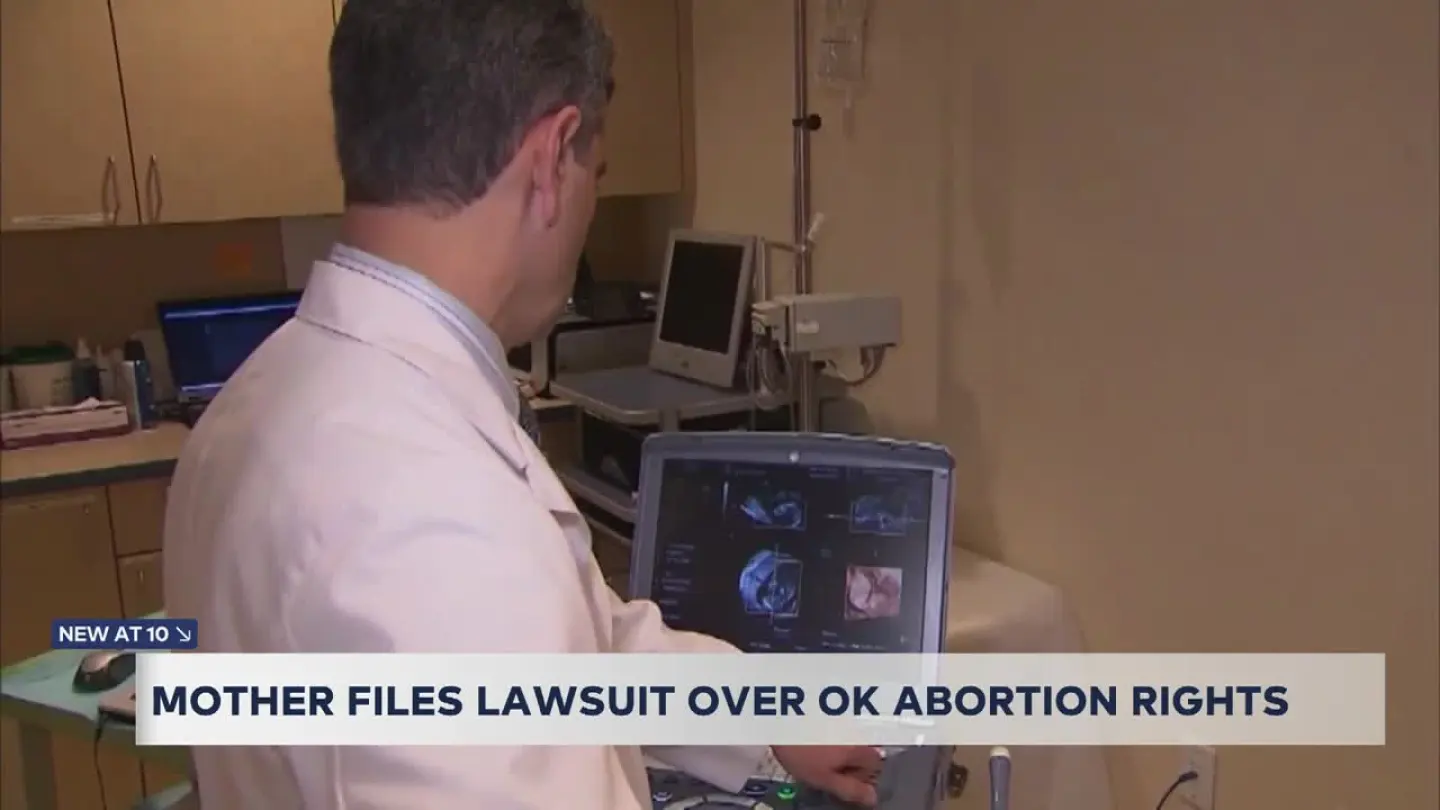
“Not the Oklahoma Standard” : Lawsuit filed over abortion ban after fatal fetal diagnosis

News9.com “Not the Oklahoma Standard” : Lawsuit filed over abortion ban after fatal fetal diagnosis www.news9.com
preview

Hoffman said doctors told her her daughter would never be able to leave the hospital because of a fatal fetal diagnose.

“Which means that your baby is not compatible with life,” Hoffman said.

She said doctors gave her the option of continuing the pregnancy and providing comfort care after birth or leaving Oklahoma to terminate the pregnancy.

“The anatomy center basically told me that I had two options. I could leave the state and terminate the pregnancy, or I could carry to term where I would deliver her here, and my husband and I would just have to wait and watch her die.” Hoffman said she ultimately decided to leave the state. “So I knew immediately that that was not the option that was right for my family and my husband completely agreed with me.”

0

Gender equality woefully off track, new UN report reveals

UN News Gender equality woefully off track, new UN report reveals news.un.org
preview

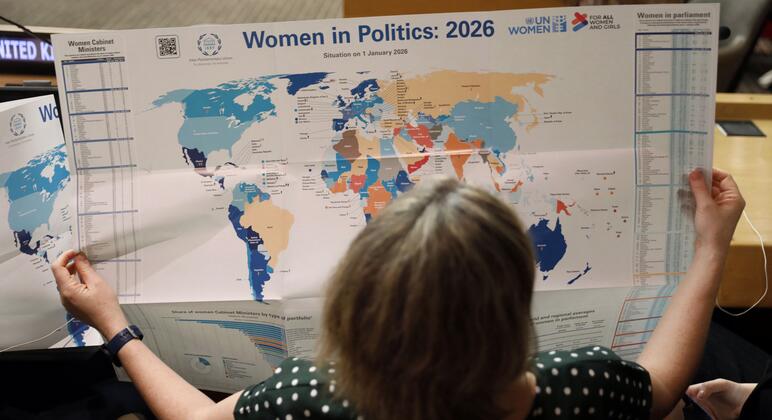
Women continue to face systemic barriers to entering political life.

The UN report highlights the persistent concentration of political power among men, finding that six in seven countries are currently led by men.

Indeed, the cost of running for office can exceed 100 times a country’s average per capita income, excluding many women before the race even begins. In some countries, up to eight in 10 women running for office also face violence in public life.

Even when women do enter government, they are disproportionately steered away from the portfolios that hold the highest security and economic power. Close to nine in 10 defence ministers and more than eight in 10 finance ministers are men.

Beyond government, women make up only six per cent of CEOs globally and lead fewer than 20 per cent of the highest courts, leaving the decisions shaping business, law, employment, and the global economy overwhelmingly in the hands of men.

This imbalance seriously undermines democracy as a country cannot fully uphold human rights or democratic principles while half its population lacks an equal voice in leadership and decision-making, the report stresses.

0

When "Normal" Lab Results Don't Match How a Woman Feels

Women's eNews When "Normal" Lab Results Don't Match How a Woman Feels – Women's eNews womensenews.org
preview

Women’s symptoms are sometimes minimized as stress, aging, or “just menopause” before they’ve been fully explored. Many are also carrying heavy loads at work and at home. Many postpone their own care until symptoms interfere with daily life.

By the time they do seek help, appointments are short, and clinicians are often working within insurance restrictions and standardized protocols that leave little room to untangle a complicated history in one visit. Many arrive having already been through this cycle before: asking for answers, being told everything is normal, and quietly getting dismissed. Add the financial burden of healthcare, with or without insurance, and it’s easy to see why so many are seeking other options that will actually help make a change for them. Women are tired of walking away with no real sense of what happens next or how to proceed, feeling more stress than they started with.

0

South Korea set to approve abortion pills for the 1st time next year

preview

cross-posted from: …blahaj.zone/…/south-korea-set-to-approve-abortio…

South Korea plans to approve abortion pills for the first time to promote women’s rights to health and safety, deepening debates over abortions in a country that until recently had imposed strict rules on the procedure.

The government announced Wednesday that it aims to allow medication abortions for women who are up to nine weeks pregnant by the first quarter of 2027. Officials said that for the first two years, abortion pills would be directly prescribed and dispensed by doctors.

In a landmark ruling in 2019, South Korea’s Constitutional Court ordered the easing of the decades-old ban on most abortions, one of the strictest in the developed world. Abortion was subsequently decriminalized, but parliament has yet to revise related legislation, as opposition remains strong among many religious and conservative groups.

Some women have turned to unauthorized online channels to get abortion drugs that are not verified safe. The legislative gap has also undermined women’s rights to choose surgical or medication abortions and caused some confusion in the medical field.

“This introduction of medication abortion is meaningful because it’s a step to make sure that ending pregnancy is done more safely and within the national healthcare system, and to improve the situation caused by a lack of an effective government oversight system,” Gender Equality and Family Minister Won Min-kyong told a news conference.

The step is designed to approve a local company’s application for importing a two-drug combination pack consisting of mifepristone and misoprostol. A combination of mifepristone and misoprostol is the most common regimen for abortion pills in the United States.

0

The rise of hairy young women: ‘I know people who dye their armpit hair, so it stands out more’

the Guardian The rise of hairy young women: ‘I know people who dye their armpit hair, so it stands out more’ www.theguardian.com
preview

“Hell yeah!” is 27-year-old PhD student Anna Busuttil’s response. “I think it’s awesome; cool and rebellious,” she says – a view that chimes with that of most of the women I speak to outside University College London’s Bloomsbury campus. Busuttil says she sees a lot more women nowadays choosing not to remove their body hair. “I know people who dye their armpit hair a certain colour as well, so it stands out even more. I feel like leg hair is more taboo for women; it feels like such a ‘masculine’ thing, and legs are supposed to be a really sexy part of a woman.”

Francesca Hall, 25, agrees: she removes her leg hair, but doesn’t worry about her underarms. Yet she feels that, if anything, it’s becoming less common to go unshaven. “There’s been a general shift, culturally, towards more conservative ideas,” says the student union-worker. “It’s the same with veganism; it’s gone backwards a bit. My friendship group is quite queer, leftwing, and not everyone would remove their leg hair.” But, she says, not removing leg hair is more common “in those circles … I definitely think there’s a correlation there.”

“I’ve got really hairy legs!” says student Phoebe Green, 21, hitching up her long shorts so I can get a better look. “I don’t really pay attention to the trends that are going around; having leg hair doesn’t affect my life in any way,” she says. “I’ve definitely had a few comments, a few condescending dudes being like, ‘why aren’t they shaved?’ But I get a lot of compliments from girls, there’s a lot of solidarity.”

0

If Men Could Menstruate - A Satire by Gloria Steinem

Our Bodies Ourselves If Men Could Menstruate - A Satire by Gloria Steinem | Our Bodies Ourselves ourbodiesourselves.org
preview

Published in 1978, Gloria Steinem imagines a world where men could menstruate.

It’s important to take this in the context with which it was written, so keep the time period in mind.

Living in India made me understand that a white minority of the world has spent centuries conning us into thinking a white skin makes people superior, even though the only thing it really does is make them more affected by ultraviolet rays and wrinkles.

Reading Freud made me just as skeptical about penis envy. The power of giving birth makes “womb envy” more logical, and an organ as external and unprotected as the penis makes men very vulnerable indeed.

But listening recently to a woman describe the unexpected arrival of her menstrual period (a red stain had spread on her dress as she argued heat- edly on the public stage) still made me cringe with embarrassment. That is, until she explained that, when finally informed in whispers of the obvious event, she said to the all-male audience, “and you should be proud to have a menstruating woman on your stage. It’s probably the first real thing that’s happened to this group in years!” Laughter. Relief. She had turned a negative into a positive. Somehow her story merged with India and Freud to make me finally understand the power of positive thinking.

Whatever a “superior” group has will be used to justify its superiority, and whatever and “inferior” group has will be used to justify its plight. Black men were given poorly paid jobs because they were said to be “stronger” than white men, while all women were relegated to poorly paid jobs because they were said to be “weaker.” As the little boy said when asked if he wanted to be a lawyer like his mother, “Oh no, that’s women’s work.” Logic has nothing to do with oppression.

So what would happen if suddenly, magically, men could menstruate and women could not?

(continued in article)

0

How One Woman Made Upskirting a Crime in 18 Months

The Verified Post Gina Martin: How One Woman Made Upskirting a Crime in 18 Months theverifiedpost.com
preview

In July 2017, at a music festival in Hyde Park, London, a man took a photograph up her skirt without her consent. She grabbed his phone, saw the image, and took it straight to the police. They told her, gently, that there was nothing they could do — it wasn’t a specific criminal offence. Within days, the case was closed.

She went home and decided that answer was not good enough. With no lawyer, no funding, and no political connections, she launched a campaign to make upskirting a crime. Eighteen months later, she had changed the law for all of England and Wales.

…

Martin’s power did not come from expertise. She had no legal degree, no seat in Parliament, no wealthy backers. What she had was a refusal to accept a bad answer and the stamina to keep asking the question long after most people would have given up. The expertise — the lawyer, the MP, the drafting — arrived because she kept going, not before.

0

Rising birth rates no longer tied to economic prosperity

Harvard Gazette Rising birth rates no longer tied to economic prosperity — Harvard Gazette news.harvard.edu
preview

The global shift, she continued, can be traced to one common cause: the increased agency of women, who during the last century became increasingly able to opt out of traditional family roles to pursue other options, such as education and careers.

“Wherever you get increased agency, you get reduction in the birth rate,” said Goldin. “The central cause arises when women have autonomy and have the ability to be educated, to have occupations and careers.”

This can lead to conflict with men, who are more comfortable with traditional roles. “Men don’t want to give up what they had in the past,” Goldin said.

0

She was in active labor when a judge appeared on a tablet. Now she plans to sue UF Health for a court-ordered C-section

WJXT She was in active labor when a judge appeared on a tablet. Now she plans to sue UF Health for a court-ordered C-section www.news4jax.com
preview

Cherise Doyley said she wanted to deliver naturally after having three previous C-sections. Instead, she said nurses brought a tablet to her hospital room, where she discovered a judge, attorneys, doctors and hospital staff were on a Zoom call about whether she should undergo the surgery.

The court hearing lasted about three hours while Doyley remained in active labor.

“I didn’t even know what this court hearing was about,” Doyley said. “And when I found out it was to give me a C-section against my will, it was like, I was floored. I was just dumbfounded.”

Doyley said the experience was traumatic and dehumanizing.

“Honestly, Tiffany, it was one of the most dehumanizing, traumatic, scary experiences I’ve ever had in my life,” she said.

0

The Epstein Files Reading Room Is Coming to a Swing State Near You

Ms. Magazine The Epstein Files Reading Room Is Coming to a Swing State Near You msmagazine.com
preview

The Donald J. Trump and Jeffrey Epstein Memorial Reading Room—a traveling exhibit that organizes the 3.5 million pages of DOJ’s released Epstein files into 3,437 bound books—is going on tour. Five cities will host the full Reading Room; the smaller Bookmobile will visit 20+ more along the way. Explore the full tour schedule.

The tour will kick off in Dallas Sept. 8-11, each day open from 10 a.m. to 8 p.m. It’s free to enter; just reserve a time. Dallas RSVPs are open now; reserve your spot.

0

Early 'Harry Potter' Reviews About a Young Emma Watson Resurface and Fans Are Calling Them 'Disturbing and Disgusting'

Fashion times Early 'Harry Potter' Reviews About a Young Emma Watson Resurface and Fans Are Calling Them 'Disturbing and Disgusting' www.fashiontimes.co.uk
preview

Watson was cast at the age of nine to portray the iconic bookworm Hermione Granger in Harry Potter and the Philosopher’s Stone. Like her co-stars, Daniel Radcliffe and Rupert Grint, she grew up in the intense glare of the global spotlight.

However, as the post points out, mainstream media outlets and mainstream film reviewers frequently published uncomfortable assessments about her maturing appearance long before she reached the legal age of majority.

The Reddit thread compiled several vintage excerpts from prominent publications printed throughout the 2000s. Readers were shocked to see how respected journalists casually speculated about Watson’s transition into womanhood.

One article described the young Emma as ‘The prepubescent Watson is absurdly alluring to those of us who always want bossy girls.’ She was nine years old at the time. Growing up, some older writers described her journey as ‘well made-up from baby to babe’.

0

On Love and Treason: Critical White Feminist Thought for Social Justice Praxis

UNM Digital Repository On Love and Treason: Critical White Feminist Thought for Social Justice Praxis digitalrepository.unm.edu
preview

tl;dr: I did not understand then, but I understand now how my life is built upon her suffering. She is systematically marginalized to do low-wage, unstable work that affords me the ability to purchase services, products, and a lifestyle because of race/gendered/class/citizenship privilege. The managing of palliative solutions to her problems also created a career for me. What I did not understand was my own investment and implication in her suffering. Most white “saviors” do not see their systematic relationship with those they are “helping.” There is distance: I am privileged here; you are oppressed over there. When in reality, it is dialectical. We aren’t trained to see the relational aspects, where I am privileged because she is oppressed, and she is oppressed because I am privileged.

Excerpt

The Makings of a White Matriarch

I was a case manager for Job Corps in my mid-twenties before I was a teacher. Job Corps is one of the last Great Society programs from the Johnson administration in the 1960s that was supposed to provide residential training in a trade. Students, who were from age 16 to 24, lived in dorms and went to classes for their GED and to learn a trade like plumbing or secretarial skills. My job was to assist students leaving campus once they graduated, hopefully finding them jobs, transportation, housing, childcare, and possibly community college.

The vast majority of my caseload was people of color, primarily Latinx and Native American. To say that nothing qualified me for this position is an understatement. I had a history degree, which carved out no career path that would not require an advanced degree or at least a teaching certificate, options I was not ready to take. I had worked my way through college through various forms of retail, warehouse work, and eventually, I became a courier at a law firm. Once I was out of college, I sold car insurance for a large corporation, I was a barista, a secretary, and worked on commission at a local jewelry store. As someone who worked through high school, I was very flexible and familiar with various forms of low wage work. Aside from insurance sales, this was my first professional opportunity and all they were asking was that I owned a car, could network, and would be able to get along with the students who were not much younger than I was. I was also required to be on call 24 hours a day in case students needed me for something.

It was a confusing concept, the concept of students living in poverty, facing systematic racism, and intergenerational trauma “needing” something. When would they not need something? What was I supposed to give them? I was completely overwhelmed with calls about problems I had no idea how to solve and no guidance about how to find out. I was handed a hundred or so cases, made up of teenagers and young adults I was supposed to track for a year, some leaving the center, some who had already left, and others who had been gone for a few months. The goal of the position was to account for where students went after they left the center.

Job Corps receives a huge government grant that we had to answer to, so we needed to show that our program worked, evidenced by stable employment of graduates. My 24-year-old self had no skepticism about this. My older self knows that they probably put unqualified people like me in this position because I would be kind enough to take the calls, responsible enough to gather the data needed, and compliant enough not to question long-standing beliefs and practices that went on in a center like this.

This was also was my first job as a white matriarch. I believed in my own benevolence and the ability to solve peoples’ problems. I was also acting out the part of white savior. White saviority, prevalent in films like Dangerous Minds, Freedom Writers and the Blind Side, always includes the notion of an antiracist white hero or heroine who believes that they are helping people of color overcome obstacles in their lives. White saviors believe they counteract racism by seeing the humanity in all people but really hold racist notions of the people they are tasked with helping (Maurantonio, 2017).

The notion of white saviority works together with colorblindness to mask the significance of race and racism in the supposed benevolent actions of white people. For example, I could believe that I was the same as my students by erasing their specific struggles related to structural inequality, but I could also simultaneously believe that my caseload needed me because the success of people of color was something dependent upon white people.

The problem with white saviority is not that whites are completely useless to people of color. It is that white saviors believe that people of color could not solve their own problems, cannot teach their own children, or manage their own families. It is, of course, part of white matriarchal maintenance. The belief that I would be able to handle these issues at my age is part of how white women gain power over people of color. I was going to be in their homes, their workplaces, and I was going to be surveilling them at best, interfering with their lives at worst. How my lens about their lives was considered competent is deeply rooted in notions of white women’s moral superiority and competence in all things having to do with schools or helping professions (Feimster, 2009; McRae,2018; Spring, 2008).

The second day on the job, a sixteen-year-old 1.5 generation Mexican immigrant, Lucia, came into my office, furious because she was going to have to leave the center without her GED or her training because she was pregnant. The center was not able to house pregnant students in their third trimester. She had nowhere to go except her boyfriend’s family’s house and she was not sure that she wanted to be there. My job was to transition her into schooling or a job at this point, and so I took up the task of trying to figure out where she could go and what she could do. Attempting to help Lucia took me down a path that I had not anticipated and that haunted me afterwards. If I were to name an event that led me to where I am now, it would be getting to know her, her struggle, and failing miserably to find my way with her through a system that does not care about her at all.

I learned about what it meant to try to navigate schools, workplaces, hospitals, and social services for immigrants. I also learned about some of the underground networks for work and money that many immigrants depend on in order to survive. Because my job was nebulous and the goal was to help students stabilize after the Job Corps center, I accompanied her on appointments with doctors, social services, and visited her in the hospital when the baby was born. Many times though, toward the end of her pregnancy, I would just pick her up and take her to Sonic or drive around and talk.

I had a genuine concern and affection for her. She entered my own life at time when I felt rudderless, alone, and distant from family, and I needed company too. Her life had been full of violence, obstacles, and instability, which had landed her at Job Corps like many of her peers. She usually tried to have a lighter mood with me, but some days she shared her deep sadness and fear. One day, we sat at Sonic. She had become quiet, the way women do at the end of pregnancy, and she said, “Miss, why do I have to suffer?”

I did not understand then, but I understand now how my life is built upon her suffering. She is systematically marginalized to do low-wage, unstable work that affords me the ability to purchase services, products, and a lifestyle because of race/gendered/class/citizenship privilege. The managing of palliative solutions to her problems also created a career for me. What I did not understand was my own investment and implication in her suffering. Most white “saviors” do not see their systematic relationship with those they are “helping.” There is distance: I am privileged here; you are oppressed over there. When in reality, it is dialectical. We aren’t trained to see the relational aspects, where I am privileged because she is oppressed, and she is oppressed because I am privileged.

0

Please Don’t Make Me Applaud Your Neck

Slate Magazine More and More Women Are Opening Up About Something That Used to Be Shameful. I Wish They’d Kept It All Secret. slate.com
preview

The defense of the face-lift marks a return to the era of “choice feminism,” a strain of thought that rose from the third wave in the 2000s. Through the lens of choice feminism, anything a woman decides to do is empowering: flashing the camera in Girls Gone Wild, spending thousands of dollars on beauty products, abandoning one’s career to support a husband’s aspirations, letting him screw around in a skewed rendition of nonmonogamy. Never mind the social pressures that influence these behaviors or how enacting them affects the broader project of gender equity. Feminists could not judge any of it if a woman was choosing it for herself.

Many of us who lived through the height of choice feminism cringe at the memory. I’m not sure I can stomach another round of pretending that our actions have no effect on the world; neither am I eager to return to the policing of the early 2010s, when we journalists who cut our teeth in feminist blogging brought out our gavels to judge each new entry in the cultural discourse as either good or bad for womankind. But there is a self-congratulatory, self-delusional tone to these pro-face-lift narratives that I haven’t been able to shake from my brain. I expected to see some outspoken feminists like Jong-Fast and O’Donnell cave to the pressures of their moneyed, image-obsessed circles. I did not expect them to marshal the intellectual dishonesty required to spin it as an act of liberation.

0

Nancy Fraser’s Theory of Capitalism Is Politically Vital

Nancy Fraser’s Theory of Capitalism Is Politically Vital jacobin.com
preview

In the works written over the last decade and a half, Fraser has elaborated upon this key insight. Building on classical Marxist feminism, she argues that capitalism is a social order that institutes a historically arbitrary divi­sion between paid labor and unpaid social-reproductive activities (such as childrearing and caregiving), with the latter being inherently gendered and assigned to women.

The capitalist economy depends on the free reproduction of labor power. At the symbolic level, however, such dependence cannot be acknowledged because it would mean admitting that reproductive labor is a highly valuable form of work and should be compensated. The capi­talist economy therefore has a systemic need to disavow its depend­ence on the sphere of social reproduction.

How is this disavowal achieved? Precisely through the culturally elaborated gender subtexts of key economic phenomena such as the “family wage” that rein­force and naturalize the gender division of labor, obscuring its arbi­trary character.

0

How everyday household tasks impact relationships: Study of 235 heterosexual couples found women did almost 25% more household thinking, planning and scheduling

preview

“Although this pattern was consistent across all 3 types of household labour, it was most noticeable for cognitive load.

“Women reported taking on almost 25 per cent more of the thinking, planning, and scheduling involved in running the home and organising family commitments than their partners reported.”

The study not only examined how much work each partner reported doing, but also how differences in opinions of their contributions were linked to relationship quality.

It found that when there were different opinions about how physical and emotional household duties were shared, couples reported greater unhappiness in the relationship, with this finding strongest for women.

Disparities in the perceived division of cognitive household demands were only linked to poorer relationship quality in men.

“The findings indicate that 2 people in the same relationship may experience and interpret the division of household responsibilities very differently, and these differences matter for relationship quality,’’ Dr Coundouris said.

0

25 years ago, Andrea Yates killed her 5 kids. The world had a very different reaction

preview

In 2002, Yates was convicted of capital murder and sentenced to life in prison after she drowned her five children in a bathtub while her husband was at work in June 2001. Her children ranged in age from 6 months to 7 years old. She was later found not guilty by reason of insanity during a retrial, and committed to a state psychiatric hospital.

A CNN headline from March 2002 read, “Psychiatrist: Yates could have made herself better.” In a college student opinion column from February 2002, The State Press columnist Rob Jones wrote, “If it were up to many people, there would be no trial, only an execution.” Some columns from that time showed more nuance or even compassion, including an opinion piece published by The Washington Post in February 2002. In that piece, political columnist Richard Cohen wrote, “Why not treat this tragedy for what it is – the act of a sick woman?”

Now, the world is awaiting Clancy’s fate − but with “definitely more empathy this time, and looking at a broken system,” Vaeth said. The mother from Massachusetts faces three murder charges for strangling 5-year-old Cora, 3-year-old Dawson and 8-month-old Callan in January 2023. While prosecutors say Clancy planned the killings − and Clancy does not dispute that she killed her children − Clancy’s defense attorney Kevin Reddington says she is not guilty because she, like Yates, was suffering from postpartum psychosis.

…

“This is not the first, this will not be the last, unfortunately, parent who is experiencing psychosis,” Hanna said. “These people who are stepping up and speaking up are saying, ‘Hello? I’m over here. Yep, I’ve actually had that, but not that. I had something, and I didn’t know what it was, and no one heard me or listened.’”

0

Scientists are only just confirming that women’s menstrual cycles can affect how well drugs work

New York Post Scientists are only just confirming that women’s menstrual cycles can affect how well drugs work nypost.com
preview

It’s often only after a drug is released do we learn women might be affected totally differently from men — as with the case for two recent major studies.

Specifically, the new research points to the role of estrogen, which naturally ebbs and flows over the course of a menstrual cycle.

Changing levels of estrogen has major impacts across the entire body under normal circumstances. Introduce medication into the mix, and it becomes a whole different ballgame.

“For too long, the menstrual cycle has been treated as background noise in health research,” said Poppy Cooper, an author of one of the recent studies. “This work is part of a growing shift in that thinking and a recognition that the menstrual cycle has impacts beyond reproductive health.”

0

Trump Taps Anti-Choice Physician To Lead FDA

preview

Last week, President Donald Trump nominated anti-choice physician Heidi Overton to lead the FDA. Overton has long attacked abortion. In 2022, she lauded the overturn of Roe v. Wade as an opportunity to “choose life through a democratic process.” She also called abortion medication “dangerous to women,” despite scientific consensus that the pills are safe and effective. If confirmed, Overton would oversee the agency’s highly-criticized “review” of mifepristone’s safety that began in June under ex-FDA chief Marty Makary.

Last week, President Donald Trump nominated anti-choice physician Heidi Overton to lead the FDA. Overton has long attacked abortion. In 2022, she lauded the overturn of Roe v. Wade as an opportunity to “choose life through a democratic process.” She also called abortion medication “dangerous to women,” despite scientific consensus that the pills are safe and effective. If confirmed, Overton would oversee the agency’s highly-criticized “review” of mifepristone’s safety that began in June under ex-FDA chief Marty Makary.

0

The Patrick Clancy Conspiracy Theories Are Rooted in the Harsh Realities of Motherhood

WIRED The Patrick Clancy Conspiracy Theories Are Rooted in the Harsh Realities of Motherhood www.wired.com
preview

But a major driving force behind the antipathy toward Patrick appears to be that women recognize the broad contours of his alleged behavior toward his wife—and they are pissed as hell about it. This is evident when you look at the social media comments on the TikToks accusing Patrick, which are filled with harrowing stories from women whose husbands treated them insensitively while they were struggling with postpartum anxiety or depression, left them for another woman while they were at their lowest, or even emotionally or physically abused them.

(As many TikTokkers have pointed out, Rusty Yates, the husband of Andrea Yates, the woman suffering from severe postpartum psychosis who drowned her children in 2001, reportedly urged her to get pregnant again while she was in recovery from postpartum depression after her fourth pregnancy, against her psychiatrist’s advisement.)

Many right-wing (male) pundits have been inclined to dismiss these comments as the ramblings of female hysterics, who are somehow using their own terrible experiences with new motherhood as an excuse to demonize men or exonerate Lindsay. In an X post from last week, far-right pundit Matt Walsh referred to Lindsay’s defenders as “psychotic women on the internet … outright exalting or celebrating” her, attributing this sentiment to “a deep sickness in our culture.” Others have criticized those casting suspicion on Patrick as frivolous misandrists, who are too obsessed with true-crime podcasts and millennial feminism to maintain a logical perspective on the case. (An astrology meme suggesting that Patrick killed his kids because he was a Gemini is often cited as evidence of this perspective.)

Walsh’s reading is an extremely shallow one. The fact that women are empathizing with Lindsay does not suggest they are “celebrating” or “exalting” her, let alone excusing her crimes. But what it does suggest, pretty damningly, is deep structural perversity—not just with the institution of maternal health care in this country, as so many commenters have pointed out, but with the state of motherhood in the United States. Lindsay’s suffering ran so deep that ultimately she thought the only way to end it was to end her own life, and take the lives of her children. Nobody seems to be asking why so many women empathize with that.

0

The Silence I Learned to Carry: Real Talk From a Male Survivor of Sexual Abuse

Ms. Magazine The Silence I Learned to Carry: Real Talk From a Male Survivor of Sexual Abuse msmagazine.com
preview

Trigger warning: This op-ed contains firsthand descriptions of abuse.

Roughly one in six men in the United States experience sexual abuse before age 18, yet many never disclose their abuse because of stigma and rigid expectations about masculinity.

Trigger warning: This op-ed contains firsthand descriptions of abuse.

Roughly one in six men in the United States experience sexual abuse before age 18, yet many never disclose their abuse because of stigma and rigid expectations about masculinity.

0

Young people more likely to hold hostile attitudes towards women, study finds

preview

The first-of-its-kind Australian study, funded by the Office of National Intelligence, surveyed 1,122 young people aged 13-17 and 2,307 adults, to compare attitudes on women, gender equality, online influences and violent extremism. The study also surveyed more than 500 Australian school teachers about their experiences of misogyny and extremism in classrooms.

Study author Dr Sara Meger, from the University of Melbourne’s Faculty of Arts, said the findings were concerning.

“These attitudes were far more prevalent among the young people surveyed, and of everything we measured, these hostile views were the single strongest predictor of support for violent extremism,” Dr Meger said.

Among boys aged 13-17 the study found:

  • 31.8 per cent believed that attempts to give equal opportunities to women in Australia have gone too far
  • 30.1 per cent believed men have more of a right to a job than women when jobs are scarce
  • 24.7 per cent believed feminism is damaging to our society and should be resisted with violence if necessary.

On several measures, teenage girls shared similar views to adult men surveyed. Gen Z women were twice as likely as Millennial women, and four times as likely as Gen X women, to agree that marriage entitles a husband to sex with his wife, even if she does not want to.

The study found these attitudes were associated with the online content young people were consuming.

“Engagement with ‘manosphere’ content, pornography and online dating showed the strongest links to misogynistic views,” Dr Meger, said.