0
#hisory
posts tagged #hisory


0

preview
Context: This one is pretty self explanatory I think. The British attacked (and still do) a lot of places, also the Scottish are technically British so they focus on the English aspect.
Context: This one is pretty self explanatory I think. The British attacked (and still do) a lot of places, also the Scottish are technically British so they focus on the English aspect.
0

0

preview
Context: The Vultus Trifrons, or Trifacial Trinity, was a bizarre type of Christian iconography that first appeared in the 12th century. It took the Holy Trinity and grotesquely depicted it as a singular figure (typically Jesus) with three faces merged together To symbolize the Father, Son and Holy Spirit in one entity. This depiction would be banned by Urban VIII in 1628, as it was considered heretical, too reminiscent of pagan depiction of gods, and generally disturbing to look at.
A Vultus Trifrons:
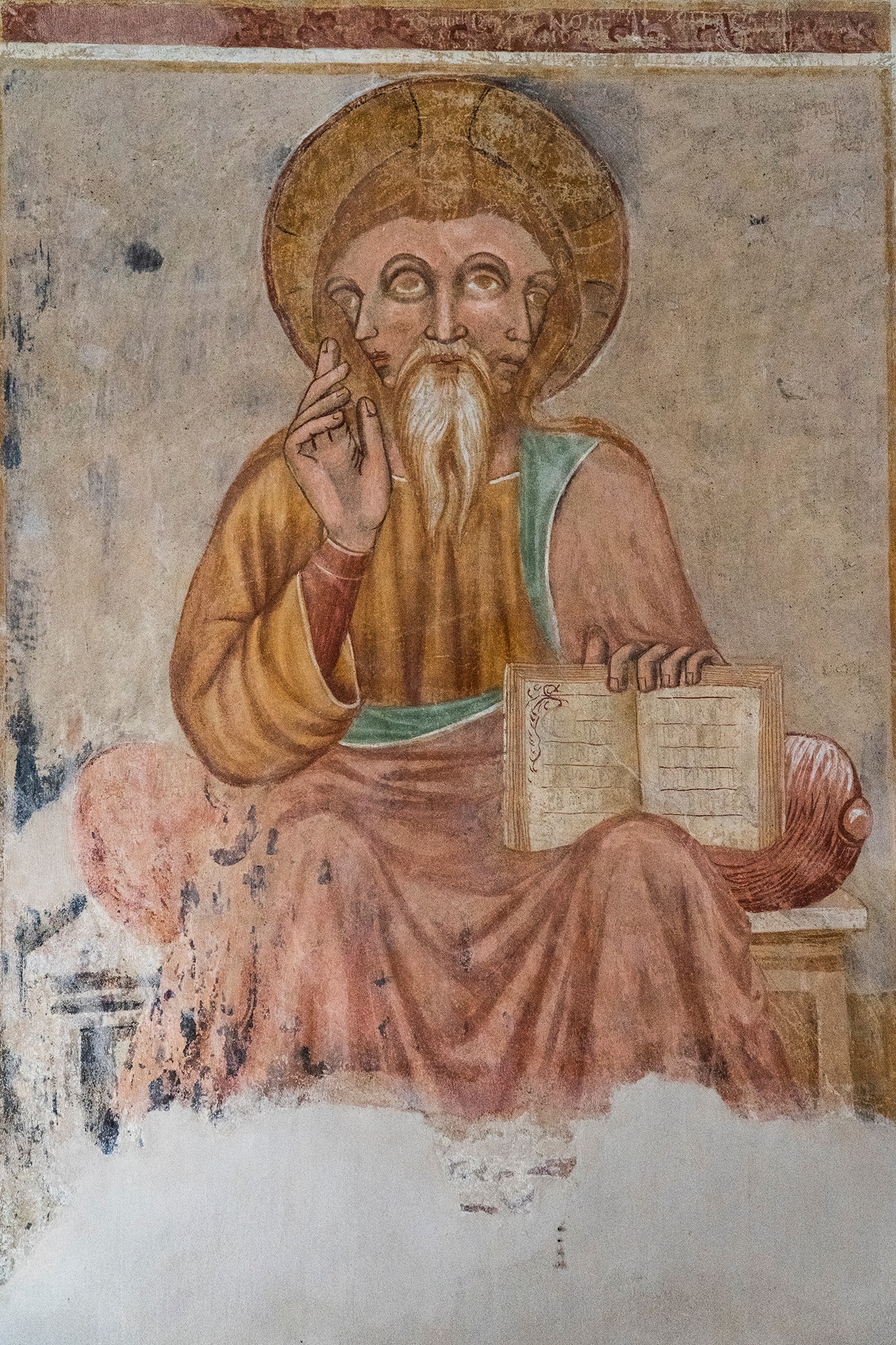
Context: The Vultus Trifrons, or Trifacial Trinity, was a bizarre type of Christian iconography that first appeared in the 12th century. It took the Holy Trinity and grotesquely depicted it as a singular figure (typically Jesus) with three faces merged together To symbolize the Father, Son and Holy Spirit in one entity. This depiction would be banned by Urban VIII in 1628, as it was considered heretical, too reminiscent of pagan depiction of gods, and generally disturbing to look at.
A Vultus Trifrons:
0
preview
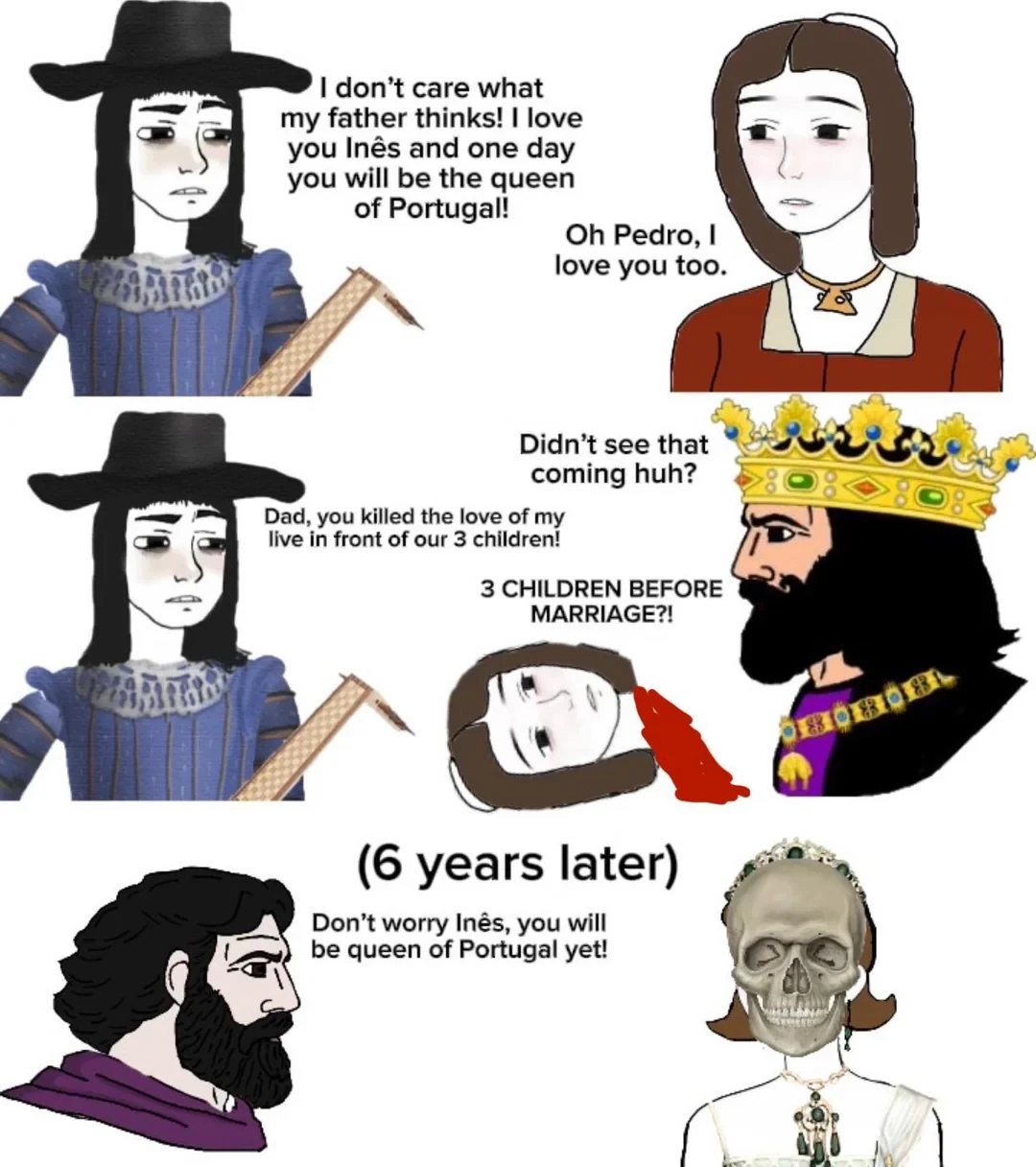
Context: After Prince Pedro married his wife Constance, he fell in love with Inês and took her as his mistress. Disapproving of his son’s adultery, King Afonso IV is said to have banished Inês to Albuquerque (Spain) in 1344. Following Constance’s death in 1349, Inês returned to Portugal and lived openly with Pedro. Within the coming years they would have 3 children, all the while King Afonso attempted to arrange a second marriage for his son, but Pedro refused.
Pedro also developed close relationships with Inês’s brothers, Fernando Ruiz de Castro and Álvaro Pires de Castro. The brothers became increasingly influential in public affairs, causing intrigue among rival factions at the Portuguese court and threatening Portugal’s neutrality in the Castilian Civil War. King Afonso IV grew concerned about the power the Castros wielded over the Infante and ordered Inês’s assassination. Afonso’s knights, Pêro Coelho, Álvaro Gonçalves, and Diogo Lopes Pacheco, travelled to the Monastery where Inês was residing and decapitated her in front of her small children on 7 January 1355.
Pedro would become king in 1357 and sought out Inês’ killers, who had gone into exile in Castile. Pedro managed to capture Coelho and Gonçalves and ordered them to be executed by ripping their hearts out. Around 1361 he admitted to have secretly married Inês in 1353 (this would however turn out to be a lie in 1385 as the pope denied Pedro’s secret request). Pedro commissioned a tomb for Inês, and later one for himself, in the Alcobaça Monastery. Before her entombment, Pedro then ordered the body of his beloved Inês to be placed on a throne, adorned with the diadem and royal robes, and required all the nobility of the kingdom to approach and kiss the hem of her garment, granting her that homage which she had not received in her life.
0

preview
Context: While the 90% figure is made-up, the premise is true in that most of human history has gone unrecorded. History is considered to have begun with the start of proto-writing (earliest being the Jiahu symbols in China circa 6600 BCE) to writing (3200 BCE), and thus the advent of recorded history.
Context: While the 90% figure is made-up, the premise is true in that most of human history has gone unrecorded. History is considered to have begun with the start of proto-writing (earliest being the Jiahu symbols in China circa 6600 BCE) to writing (3200 BCE), and thus the advent of recorded history.