#labor

posts tagged #labor

0

Greens warn of private school fees loophole in Labor's trust tax

Private school fees loophole a sticking point in Labor's trust tax plan Greens say www.abc.net.au
preview

In short: **

The Greens say a “loophole” for private school fees is a sticking point in Labor’s proposed trust laws.

Jim Chalmers will introduce legislation for the 30 per cent minimum tax on discretionary trusts on Wednesday, amid stiff business opposition.

**What’s next?

Labor requires the support of the Greens in the Senate to pass the tax hike, given that the Coalition is opposed.

0

World Cup Workers Strike in Seattle -- UAW Divests from Israel Bonds -- Minnesota Indictment Raises Signal Questions

Payday Report World Cup Workers Strike in Seattle -- UAW Divests from Israel Bonds -- Minnesota Indictment Raises Signal Questions paydayreport.com
preview

cross-posted from: hexbear.net/post/8803000

cross-posted from: news.abolish.capital/post/58004

World Cup Workers Strike in Seattle – UAW Divests from Israel Bonds – Minnesota Indictment Raises Signal Questions

Folks,

Greetings from the Burgh, where Payday is finding some fundraising success and very grateful to everyone who donated in the last few days. It took a lot of pressure off of us and gave us some breathing room.

Donate to Help Us Build a Sustainable Funding Model

We got a lot of exciting stuff planned. Partnerships with local immigration rights groups, a veteran union organizer coming on board to help with fundraising, and media trainings for community groups.

(See our 5-page media and newsletter building training curriculum)

For the last three years, we relied heavily on foundation money for a large part of our budget.  We are working to build a sustainable model that won’t be hurt if a major foundation leaves us like we suffered this year. So please give money if you can and help us build because we are entering a new era of Payday Report.

Donate Now

Seattle Hotel Workers Strike as World Cup Visitors Arrive

Last week, Payday Report released an interactive map showing how unions are fighting back against ICE raids. (Check out our map about this growing trend across the country)

At the Embassy Suites in Seattle across the street from Lumin Field, where World Cup games are being played, UNITE HERE members decided to go on strike. They are striking around, both having their hours cut and the refusal of their hotel to refuse entry to ICE.

“Hotel workers who are welcoming visitors from around the world to Seattle shouldn’t have to work second and third jobs to support their families or worry about whether they will have healthcare over the slow months in winter,” said UNITE HERE Local 8 President Anita Seth. “And, as a majority immigrant workforce, they deserve the peace of mind of notification from their employer if ICE or DHS is on property.”

For more, check out our friends at The Stand.

Feds Likely to Indict More Labor Leaders in Minnesota

Earlier this week, the Trump Administration announced that they were indicting 15 activists, including labor leaders, on a variety of charges. Many labor leaders suspected that the 15 were charged so that the prosecutors could gain access to their signal chats.

Now, a new expose from The Intercept shows that ICE was able to obtain messages from Signal that many previously thought were encrypted and protected. From the Intercept:

The bulk of the indictment consists of transcripts of group messages; at various points it also makes mention of voicemails, text messages, Signal direct messages, and Signal calls. For instance, the indictment in one spot mentions that two of the indictees “exchanged approximately 20 connected Signal calls.” This hints that authorities were able to access not just group chat messages, but likely had wholesale access to the devices of at least some of those indicted.

The Signal app provides end-to-end encryption, protecting communications in transit, so that anyone monitoring your internet or cellular data connection cannot see the contents of your messages. Signal also minimizes the amount of metadata collected, so if the organization behind the app, the Signal Foundation, was served with a compulsory legal process to reveal user information, it wouldn’t even know with whom you spoke or chatted.

But all that falls apart if your device gets into the wrong hands. In order to safeguard your Signal data from someone who obtains access to your device, it’s necessary to manually harden Signal by modifying some of its default settings.

Perhaps Signal’s most well-touted security and privacy feature is its ability to set disappearing messages. Messages can be set to expire in periods ranging from seconds to weeks. A default expiration time for all messages can be selected, and specific groups and conversations can be set to custom retention times. To minimize risk, set retention times to the shortest feasible duration — minutes or hours — rather than days or weeks.

For more safety tips, check out the Intercept.

UAW Votes to Divest from Israel Bonds

At the UAW’s convention this weekend, they voted to become the largest union to date to divest from Israel Bonds. The UAW owned approximately $400,000 worth of Israeli bonds.

“It felt so overwhelming and amazing, but it also was so reaffirming that the United Auto Workers is actually a union that stands for progressive, militant, rank-and-file action and protecting the most vulnerable among us,” Olga Karounos, 33, a public defender in Brooklyn, New York, from  UAW Local 3235, who sponsored the resolution, told the Detroit News.

Karounous’ family is Greek Orthodox, and she said that the Israeli attack on Church of Saint Porphyrius in Gaza City in 2023 had a strong effect on her, deepening her commitment to divest her union from Israeli bonds.

"We vote with our dollars, and we just voted not to support our dollars going to genocide,” Karounus told the Detroit News.

For more, check out the Detroit News.

Amazon Workers Under Investigation for Speaking about Data Centers

Finally, Wired has a look at how three Amazon workers say they are under investigation for speaking out about data centers:

Earlier this month, five current Amazon employees publicly urged Seattle City Council to regulate data centers. It was an unprecedented act of advocacy by tech workers, and now, three of the staffers say they are now under internal investigation for what they understand to be allegedly representing themselves as spokespeople for the company without prior approval. “It’s a totally ridiculous claim,” says one of the affected employees, Patrick Schloesser. “It’s patently absurd.”

The three software engineers, who work in different divisions of Amazon and all live in Seattle, believe they are being unfairly targeted for expressing their political beliefs. They filed a joint complaint on Thursday to Seattle’s Office for Civil Rights, according to the employees and a filing seen by WIRED. They accused Amazon of illegally attempting to intimidate and retaliate against them for expressing their personal opinion outside of work about the need to regulate the environmental and social impacts of data centers.

“Seattle is one of just a few jurisdictions in the country that prohibits private employers from discriminating against their employees based on the political beliefs they hold and the organizations they belong to,” says Abby Lawlor, an attorney at Barnard Iglitzin & Lavitt who is advising the employees. “Here, we have legal tools to fight back and ensure that tech workers can be full democratic participants in these important local discussions. We hope the city of Seattle will do its part to ensure that this vital Seattle law is enforced.”

For more, check out WIRED.

News & Headlines Elsewhere

Alright folks, that’s all for today. Keep sending tips, comments, and complaints to melk@paydayreport.com

Donate to Help Us Cover Labor in News Deserts


From Payday Report via This RSS Feed.

0

Colorado Meatpackers End Strike, Will Return to Work

World-Outlook Colorado Meatpackers End Strike, Will Return to Work world-outlook.com
preview

cross-posted from: lemmy.ml/post/46090112

April 6, 2026

“The company walked away,” Cordova told the crowd of more than 800 workers from the day shift picket lines. “They believed that you would not walk out on strike.”

But of the 3,800 workers in the plant represented by the union, 94% did walk on March 16, marking the first major packinghouse strike in 40 years.[1]

The workers’ action had an impact, according to the union. About 60% of the cattle earmarked for JBS went to competitors as the company tried to operate with the remaining hourly workforce and supervisors.

“The problem is the way we are being treated,” Hector Vargas told World-Outlook before the April 3 union meeting at the parking lot. “To keep up with work means taking a beating. And you cannot go to the bathroom. They make you wait a long time — if they let you go.”

0

Dockworkers in Mediterranean ports announce coordinated action against war : Peoples Dispatch

Peoples Dispatch Dockworkers in Mediterranean ports announce coordinated action against war : Peoples Dispatch peoplesdispatch.org
preview

cross-posted from: hexbear.net/post/7503669

cross-posted from: news.abolish.capital/post/23913

Workers in more than 20 Mediterranean ports are preparing for an international day of action on February 6 to oppose the growing militarization of transport infrastructure, as well as port management’s and governments’ complicity in the genocide in Gaza. “If we don’t take this step, all our other demands will be crushed under war,” Francesco Staccioli of the Italian union Unione Sindacale di Base (USB) warned during a launch event on Tuesday.

The mobilization aims to prevent arms shipments, reject rearmament, and oppose the impact of a war economy on workers’ rights and social security systems. Notably, the day of action is being launched to “ensure that European and Mediterranean ports are places of peace, free from any involvement in war,” according to an earlier announcement.

Read more: Italian city says no to warships and weapons for Israel

The process leading up to the day of action began years ago and gained momentum since 2023, when a growing number of dockworkers started taking action against arms shipments to the Israeli occupation. Next week, many of the workers involved in those earlier initiatives will join coordinated mobilizations in ports across Greece, the Basque Country, Morocco, Turkey, and Italy. At least ten Italian ports have already confirmed their participation, reflecting both last year’s hugely successful general strikes for Palestine and organized resistance to Prime Minister Giorgia Meloni’s rearmament agenda – but also the workers’ local demands.

Representatives from USB’s Sea and Ports chapter emphasized that the ongoing – and overlapping – mobilizations against genocide, militarization, and US imperialism are inseparable from labor struggles. In this context, they spoke of an “internal war” as well as an external one, pointing to increasingly repressive measures adopted by European governments against workers who participate in acts of solidarity. They cited, in particular, Italian firefighters who have faced reprisals for participating in demonstrations against genocide.

Read more: Europe’s Palestine solidarity movement strengthens call to boycott Israeli pharmaceutical company Teva

The link between the militarization of society and the deterioration of living conditions for the working class was a recurring theme throughout the launch event. Dockworkers from Mersin in Turkey and Piraeus in Greece stressed that the situation is worsening by the day and can only be challenged through coordinated, internationalist resistance. If port workers stand together, trade unionists from Piraeus said, “ports can become a barrier to war, not corridors for weapons deliveries.”

Workers from two German ports, along with trade unionists from Brazil, Palestine, the United States, and Venezuela, have already sent messages of support and solidarity to those organizing the February 6 action. Acknowledging the global rise of “repression and fascism” – with the US administration at the forefront – they appealed not only to the global labor movement, but also to groups engaged in other struggles, to join the mobilizations and spread the message: “Dockers don’t work for war.”

The post Dockworkers in Mediterranean ports announce coordinated action against war appeared first on Peoples Dispatch.


From Peoples Dispatch via This RSS Feed.

0

"It is Venezuela today. It will be South Africa tomorrow," warns its largest trade union : Peoples Dispatch

Peoples Dispatch "It is Venezuela today. It will be South Africa tomorrow," warns its largest trade union : Peoples Dispatch peoplesdispatch.org
preview

cross-posted from: hexbear.net/post/7465134

cross-posted from: news.abolish.capital/post/22886

Demanding the release of Venezuela’s President Nicolás Maduro and First Lady Cilia Flores, South Africa’s largest trade union marched to the US consulate in Johannesburg on Saturday, January 24.

“In defending Venezuela, we defend the sovereignty of all nations,” concluded the memorandum read aloud outside the consulate by Irvin Jim, general secretary of the over 460,000 members-strong National Union of Metalworkers of South Africa (NUMSA).

“It is Venezuela today … It will be South Africa tomorrow,” Jim warned in his address to the demonstration. US President Donald Trump, who has bombed parts of Nigeria after concocting a false story about a “Christian Genocide” in the country, has also been spinning tales about a “White Genocide” underway in South Africa.

“This is not a joke,” NUMSA warned in a statement. “Donald Trump can easily use the lie of a White genocide in South Africa to invade South Africa, capture South Africa’s president and transport him to a jail in the US, and declare that he is now in charge of our country and all its natural wealth, whilst controlling all trade and natural wealth … After the US criminal military invasion of Venezuela, it is foolish to ignore” this threat to South Africa.

Read more: The empire laid bare: US terror in Venezuela

“There is a madman in the White House”

“There is a madman in the White House. There is a fascist in the White House,” NUMSA’s president, Andrew Chirwa, said in his opening address to the demonstration. “Today, it is Venezuela that was attacked by this international criminal. Tomorrow it is” Cuba, Iran, Nigeria,  South Africa. “All over the world this man” is baying “for blood.”

In parallel, the Trump administration is also attempting to strangle South Africa’s economy, threatening to exclude it from the African Growth and Opportunity Act (AGOA), which provides tariff-free access to the US market, on which the country’s automotive sector is heavily dependent.

“Our members and workers across various sectors are losing jobs” because “he has imposed 30% tariffs against South Africa,” Jim added in his speech.

Stressing the need for “an anti-imperialist front to mobilize the workers” across party and union affiliations, Jim said that NUMSA “will soon be convening a political colloquium”, inviting all progressive political parties. “It is about time to unite the working class … behind a  revolutionary agenda,” as South Africa faces increasing US aggression.  

South Africa punished for taking the genocidal state of Israel to the ICJ

South Africa, the union maintains, “is being punished by Trump for taking the genocidal state of Israel to the International Court of Justice (ICJ).” Reaffirming that “this was the correct position … in defense of the people of Palestine,” NUMSA called on the South African government not to cave in to the pressure by Leo Brent Bozell III, Trump’s new ambassador to South Africa.

At his Senate confirmation hearing, he had stated that if appointed, “I would press South Africa to end proceedings against Israel,” and the ICJ itself to stop what he deemed a “lawfare” against Israel.

“If he continues to insult our national sovereignty … by demanding that South Africa must withdraw its case in the ICJ against Israel,” NUMSA insists, “the South African government must act swiftly, and ensure that he packs his bags and leaves the country.”

The South African government must also “continue to demand the release of Venezuela’s President Nicolás Maduro and Comrade Cilia Flores in all international forums,” added the memorandum, which was also copied to the Minister of International Relations.

Demanding that the football governing body “cancel all World Cup matches in the US this year,” a copy of the memorandum was also sent to the FIFA President.

It further called on the African Union (AU) and the BRICS to urgently convene and formulate a coordinated and collective response to the US imperialist aggression.

“No country is safe from America’s greedy appetite”

Recalling the European leaders defending unipolarity under the cover of “rules-based order” at last year’s G20 summit in South Africa, the US had boycotted Alex Mashilo, spokesperson of the South African Communist Party (SACP) said in his address to the protest: “Little did they know that just after a few weeks, that unipolar power will turn against them and demand Greenland.”

Under “the mad Trump administration”, NUMSA emphasized in its statement, “no country is safe from America’s greedy appetite”.

​The US is a danger to itself

​The US has now even “become extremely dangerous to itself” and “its citizens”, with Trump “brutalizing the American people daily” using “his personal ‘Gestapo’ police commonly known as ICE.”  ​

Read more: Killing of Alex Pretti in Minneapolis a day after general strike ignites community outrage

Expressing “solidarity with American citizens who are being brutalized by ICE,” NUMSA insisted, “This is a moment when all people of the world, including well-meaning US citizens and all South Africans, must unite” against imperialism.

The post “It is Venezuela today. It will be South Africa tomorrow,” warns its largest trade union appeared first on Peoples Dispatch.


From Peoples Dispatch via This RSS Feed.

0

Trade unions, left in Europe express solidarity with Minnesota general strike

Peoples Dispatch Trade unions, left in Europe express solidarity with Minnesota general strike : Peoples Dispatch peoplesdispatch.org
preview

cross-posted from: hexbear.net/post/7465067

cross-posted from: news.abolish.capital/post/22894

Trade unions and left parties in Europe have expressed widespread solidarity to the January 23 general strike in Minnesota, stressing the importance of resistance in the face of growing violence by the Trump administration. “The horrific images of children as young as five years old being arrested, of people being executed in police gunfire in the middle of the street, are part of an organized operation by the US government to terrorize entire neighborhoods, schools, and workplaces,” wrote the Greek All-Workers’ Militant Front (PAME).

“Murders, arrests of children, terror inflicted on the population: these are the methods of a fascist police,” French MEP Emma Fourreau similarly wrote on social media, responding to the killing of nurse Alex Pretti. Pretti, a 37-year-old ICU nurse, was shot dead by US Customs and Border Protection (CBP) agents on Saturday, January 24.

Commenting on Pretti’s killing, PAME warned that such events cannot be understood as isolated incidents. “They are the result of a policy that seeks to impose silence and fear, to break resistance, to criminalize protest, and to slander the people as an ‘enemy’ whenever they raise their heads,” the organization wrote.

Read more: Killing of Alex Pretti in Minneapolis a day after general strike ignites community outrage

Some reactions also recognized the significance of choosing the general strike as a method of struggle against Immigration and Customs Enforcement (ICE) attacks, putting the working class at the forefront of the resistance to the current US administration’s agenda.

“The strike, under the motto ‘No work, no school, no shopping,’ is a powerful, peaceful expression of solidarity and resistance,” wrote Peter Mertens, general secretary of the Workers’ Party of Belgium (PTB-PVDA). “Hundreds of businesses closed, and thousands of people took to the streets – even in extreme freezing temperatures.”

“It recalls the general strike of February 1941 in Amsterdam, when workers, tram drivers, and ordinary people mobilized to resist the Nazis’ raids against the Jewish community,” he added. “It was the largest act of resistance against the raids in occupied Europe at the time. It took courage, just as those in Minnesota are showing courage today.”

Read more: Federal arrests over ICE protest in a Minneapolis church ignite fierce resistance from Black community

Responses to the Minnesota strike also reflected on what the US administration’s increasingly aggressive behavior could mean for Europe. Several French parliamentarians criticized attempts by political elites – nationally and across the region – to ingratiate themselves with Donald Trump, while warning that far-right forces are eager to replicate equally destructive policies in Europe. “The French far right grovels at Trump’s feet,” wrote Mathilde Panot of France Unbowed  (La France Insoumise), pointing to National Rally leader Jordan Bardella’s enthusiastic endorsement of Trump’s agenda. Her party colleague Manon Aubry warned that, under its preferred national security doctrine, the US administration will use European far-right parties as “tools to attack our sovereignty.”

“The escalation of imperialist aggressiveness by the bourgeois state of the USA abroad, imperialist rivalries, interventions, wars, and the war economy, inevitably brings escalation at home as well: intensified repression, restrictions on rights and freedoms, the targeting of migrant and refugees, and an attack on the lives of the working class,” PAME stated.

“When the people pay for imperialist war through soaring prices and poverty, and when they organize and struggle, the bourgeois state mobilizes its mechanisms to intimidate and subjugate them,” the union concluded. “We strengthen the common struggle against repression, racism, authoritarianism, and state violence. We strengthen the fight for work and life with rights, for the protection of migrants and their families, to put a stop to state terror, and to overthrow anti-people policies.”

Following the successful general strike on Friday, groups in Minnesota have issued the call for another mass shutdown on Friday, January 30, but this time, calling for groups across the United States to join them.

The post Trade unions, left in Europe express solidarity with Minnesota general strike appeared first on Peoples Dispatch.


From Peoples Dispatch via This RSS Feed.

0

Twin Cities general strike, coordinated actions demonstrate resolve of the people

preview

cross-posted from: hexbear.net/post/7465045

cross-posted from: news.abolish.capital/post/22953

By members of the Ernst Thälmann Division of the APL | Minnesota– Friday, Jan. 23 – over 50,000 workers and protesters in the Twin Cities showed out for multiple protests and picket lines on a one-day “general strike” organized by major unions and progressive organizations. The protests expressed the rage of Twin Cities workers over ICE abducting and deporting immigrants, murdering peaceful observers such as Renée Good, and profiling and brutalizing national and racial minorities.

Protests and strikes were held at many unionized workplaces; the metro system continued to run, but fares were not enforced; many workers who did not show up to protests participated in an “economic blackout.

Throughout the whole day, continuing from coordinated actions taking place this entire month, protests were held at the Bishop Henry Whipple Federal Building, which headquarters ICE’s activity in Minneapolis. On Jan. 23, the protests escalated to block off key accessways to and from the building. Local police gave a dispersal order around noon. At around 3:00 PM, reports of water canons being rolled in began circulating. And then around 8:00 PM, some reports indicated that protesters had been “kettled” – a protest control tactic where police trap protesters between either a closed area or multiple walls of police, and then rush in, making as many arrests as possible. These reports have not been confirmed by bourgeois media outlets.”… Read More ›


From The Red Phoenix via This RSS Feed.

0

US’s Largest Nurses’ Union Demands Abolition of ICE After Alex Pretti Killing

Truthout US’s Largest Nurses’ Union Demands Abolition of ICE After Alex Pretti Killing truthout.org
preview

cross-posted from: hexbear.net/post/7465042

cross-posted from: news.abolish.capital/post/22915

The largest nurses’ union in the U.S. has demanded the abolition of Immigration and Customs Enforcement (ICE) after a federal agent shot and killed nurse Alex Pretti on Saturday, joining a rapidly growing chorus calling for Congress to do away with the rogue agency.

In a statement, National Nurses United (NNU) strongly condemned the killing of Pretti, saying the shooting demonstrates the “violence, terror, and lawlessness” and “dire public health threat” that federal immigration agencies pose to communities nationwide.

“The nation’s nurses, who make it their mission to care for and save human lives, are horrified and outraged that immigration agents have once again committed cold-blooded murder of a public observer who posed no threat to them,” NNU said. “ICE agents have been kidnapping hard working people — mothers, fathers, and children — and now murdered a registered nurse, one of the most trusted professions in the country.”

“Nurses demand the immediate abolition of ICE,” the group said. “Abolish ICE now.”

Pretti, 37, was an intensive care nurse at a Department of Veterans Affairs hospital. He was shot and killed by a Customs and Border Patrol (CBP) agent on Saturday as he was filming immigration agents conducting a raid on a Minneapolis street. Videos from bystanders showed multiple agents tackling him, taking his gun, and then shooting at him at least 10 times, killing him.

In their statement, NNU called on the Senate to block the funding package for the Department of Homeland Security (DHS) slated to come to a vote this week. Senate Democrats have said that they are going to block the vote, but Senate Minority Leader Chuck Schumer reportedly told his caucus in a call on Sunday not to back calls to abolish the agency; instead, he said, the message must be to “restrain, reform and restrict ICE.”

On the date of the general strike in Minneapolis on Friday, just a day before Pretti’s killing, NNU had put out a statement condemning the House for its passage of the DHS appropriations bill.

The union, which has 225,000 members, has pledged to do “everything in our power” to get any members of Congress who vote to pass funding for ICE voted out of office.

Source


From Truthout via This RSS Feed.

0

Irish health workers think patients have been conditioned to accept “unacceptably low standard” of care : Peoples Dispatch

Peoples Dispatch Irish health workers think patients have been conditioned to accept “unacceptably low standard” of care : Peoples Dispatch peoplesdispatch.org
preview

cross-posted from: hexbear.net/post/7454329

cross-posted from: news.abolish.capital/post/22685

Workers in Ireland’s health and social services are experiencing high levels of stress and low morale due to inadequate workforce policies, according to a report delivered by the labor union Fórsa and the Think-tank for Action on Social Change (TASC). The findings suggest the situation is so severe that a majority of workers are actively considering leaving the sector.

“Understaffing is leading to longer waiting lists, reduced access to local services, and an increased reliance on private providers,” Fórsa pointed out. “Workers reported that these delays undermine preventative care, worsen outcomes, and demoralize staff who feel they are delivering care far below acceptable standards.”

Read more: 15,000 New York nurses strike for safe staffing and quality care

The research identifies high rates of understaffing and resulting pressure on workers, top-down communication, and faltering quality of care as some of the key problems. “Stress from understaffing and poor retention in the health and social sector contribute to a vicious circle that is draining the service, particularly of more senior, experienced workers,” the report states. “More than three quarters of survey respondents reported that they often think about leaving their current role.”

These challenges continued taking shape as health authorities pursue the Sláintecare reform, which formally aims to improve access to care by strengthening primary and community-based services and ultimately achieving universal healthcare provision  “with a strong emphasis on prevention and improved public health.”

In practice, however, the reform has faced significant obstacles. These include the fact that workforce investments have failed to align with officially projected requirements, let alone the concrete needs identified by frontline staff. This gap has led to multiple grievances. On the one hand, Fórsa and TASC report that many workers feel their observations and proposals are routinely ignored by management, preventing services from benefiting from experience from the ground. On the other hand, the combined effects of heavy workloads and lack of recognition are adding to physical strain, frustration, and already high levels of burnout.

Read more: A health system for all of Ireland

Efforts to reorganize services without sufficient funding or staffing capacity may have even worsened public perceptions of the sector. “A common view was that the public had come to accept an unacceptably low standard of health and social care provision,” the report notes. Workers themselves are no better off, Fórsa representatives insist. “The lived reality for our health and welfare members is long waiting lists, reduced access to community services, and local networks closing or shrinking,” said Ashley Connolly, Fórsa’s head of health and welfare.

The report concludes by calling for a decisive shift in how workforce policy is designed and implemented. This includes giving greater importance to input from health workers and ensuring fair pay across the sector. Crucially, the report’s overall findings indicate that meaningful change will not happen without a true commitment to properly funding health and social care services. “The current situation [in Ireland’s healthcare system overall] is a result of Ireland’s long-term failure to invest properly in public health and social care,” the report notes at one point, pointing both to the strain brought by the COVID-19 pandemic and the lingering effects of decades of austerity policies.

People’s Health Dispatch is a fortnightly bulletin published by the People’s Health Movement and Peoples Dispatch*. For more articles and subscription to People’s Health Dispatch, click* here.

The post Irish health workers think patients have been conditioned to accept “unacceptably low standard” of care appeared first on Peoples Dispatch.


From Peoples Dispatch via This RSS Feed.

0

Alex Pretti Was a Union Member - Another General Strike Now Likely - NBA Game Cancellation Could Spur Player Walkout Again

Payday Report Alex Pretti Was a Union Member - Another General Strike Now Likely - NBA Game Cancellation Could Spur Player Walkout Again paydayreport.com
preview

cross-posted from: hexbear.net/post/7454328

Alex Pretti Was Unarmed & Immobilized When Shot Repeatedly in the Back

​>This morning, Alex J. Pretti, a 37-year-old immigrant rights activist, was shot repeatedly in the back while unarmed and immobilized by multiple agents of ICE and the Border Patrol. The killing is the second time this month that an immigration rights activist has been killed by Trump’s immigration agents in Minneapolis.

​>According to multiple videos analyzed by The New York Times and other websites, Pretti had attempted to intervene to protect a woman who was being beaten by federal agents. In the process, federal agents then sprayed Pretti in the face with bear spray. Several then jumped on him and beat him while he lay on the ground.

​>One ICE agent discovered that Pretti, who was a licensed firearm owner, had a gun on him in his pants. However, the video clearly shows that at no time did Pretti ever touch or attempt to brandish the gun. Indeed, he was completely immobilized with two federal agents holding him down, while another federal agent beat him in the face, and a fourth federal agent disarmed him.

After being disarmed, a fifth federal agent arrived and shot Pretti repeatedly in the back while two agents still restrained him.

Watch this video analysis, which shows that Pretti was unarmed and immobilized when killed. (Warning: graphic content)

Pretti was an AFGE Union Member & ICU Nurse at the Local VA

Alex Pretti was an ICUnurse at the Minneapolis VA and, according to AFGE, a union member of AFGE Local 3669.

“A member of our union lost their life today, and that alone is devastating. Our hearts are heavy, and we are deeply stricken by this tragedy that has befallen one of our own,” his union said in a statement released on Facebook.

One of his co-workers at the hospital said that he was a good guy who looked out for other people.

“He wanted to be helpful, to help humanity, and have a career that was a force of good in the world,” co-worker Ruth Anway told The New York Times.

His parents told NBC News that they had warned him about safety risks.

“We had this discussion with him two weeks ago or so, you know, that, go ahead and protest, but do not engage, do not do anything stupid, basically,” his father, Michael Pretti, told NBC News. “And he said he knows that. He knew that.”

Murder of Union Member Likely to Increase Calls for General Strike

Yesterday, Minneapolis was shut down as more than 700 businesses closed to support the General Strike. More than 300 solidarity actions with the General Strike were also held, according to an analysis by Payday Report.

​>Already, many are calling for another General Strike in Minneapolis and elsewhere. The killing of a union member is only likely to increase the calls for another General Strike. As they say in the labor movement, “an injury to one is an injury to all.”

​>The National Guard has been deployed by Minnesota Governor Tim Walz to restore order in the city, likely leading to schools in Minneapolis once again canceling classes as they have when massive protests erupted following the killing of Renee Good.

​>NBA Game Cancellation Could Spark Another Players’ Walkout

​>The NBA has also canceled its game there tonight between the Minnesota Timberwolves and the Golden State Warriors. The game will be played tomorrow.

​>However, it’s unclear if the players, whose union has gone on strike against police brutality in the past, will want to play the game.

​>In August of 2020, NBA players refused to partake in playoff games following the games being cancelled across the league following the shooting of Jacob Blake by Kenosha police in Wisconsin. The action inspired athletes in baseball, football, hockey, and other sports to also refuse to play for several days.

​>If NBA players refuse to play tomorrow, it could create even more momentum for those advocating for a general strike.

0

Working-Class Minnesota Is Rising Up Against ICE. Unions Must Shut It All Down

Left Voice Working-Class Minnesota Is Rising Up Against ICE. Unions Must Shut It All Down www.leftvoice.org
preview

cross-posted from: hexbear.net/post/7415479

cross-posted from: news.abolish.capital/post/21709

There’s something major happening in the ranks of the labor movement in Minnesota.

At a press conference ahead of the January 23 day of action — dubbed the Day of Truth and Freedom with “no work, no school, no shopping” — SEIU Local 26 president Greg Nammacher declared, “members started telling us in large numbers that they were going to honor the call of the 23rd. 95% of them said they were planning not to go to work.”

At another rally, Marcia Howard, the president of the Minneapolis Federation of Educators Local 59, declared, “we’re not fighting to get back to 2025. These are our streets and we’re taking them back, one block at a time.” Nammacher and Howard are not alone; all week, as we inch closer to Friday, we’ve heard similar declarations from other sectors of the labor movement, all of whom are rearing to go in this fight against Trump’s anti-immigrant offensive in the state and against ICE’s presence in the streets.

Since the original call was made by a coalition of labor, faith and community leaders — including major unions such as St. Paul Federation of Educators, Unite Here Local 17, SEIU Local 26 and the Amalgamated Transit Union Local 1005 — other unions and federations have joined in the call, including the Minneapolis Regional Labor Federation, AFL-CIO along with other regional labor councils throughout the state. The Minneapolis Nurses Association (MNA) has also voiced strong solidarity with the call, though they have clarified that they will not be breaking the “no-strike” clause in their contracts.

This massive mobilization is not happening in a vacuum. It is a direct response to the terror that Trump has unleashed upon Minnesota. Under the banner of “Operation Metro Surge,” the Trump administration has deployed upwards of 3,000 ICE agents into the state, who have operated with impunity and reined terror on immigrant communities. This violence reached a breaking point earlier this month with the brutal killing of Renee Nicole Good, a 37-year-old mother and legal observer who was shot and killed by ICE agent Jonathan Ross.

Despite the outpouring of rage since Good’s murder, ICE’s brutality hasn’t retreated. The Trump administration is preparing 1,500 active-duty soldiers in Alaska for a possible deployment to Minnesota. ICE agents have also been conducting “blind” raids in apartment complexes, pulling people from their cars, and even shooting at bystanders. Just a week after Good’s death, ICE agents shot a Venezuelan immigrant in the foot.

Yet, even in the face of this violence, the people haven’t backed down. In the weeks since Renee Nicole Good’s murder, the resistance has been relentless. Protesters have not only filled the streets but have taken the fight directly to ICE, trying to block their operations during the day. Noise demonstrations have become a nightly occurrence outside the hotels where ICE agents are being housed.

Labor has been at the very center of this defense. Educators, in particular, have transformed schools into sanctuaries. Teachers are organizing themselves in safety committees and coordinating with students and parents to create “early warning” systems and safety corridors. As one educator told Left Voice a few weeks ago, “We’re the front lines for our students, so we’re trying our best to show up and be these rocks for our students.”

The Legacy of Labor

The working class in Minnesota has a storied history of class struggle. In 1934, the Minneapolis Teamsters strike turned the city into a bastion of class struggle. Led by Trotskyists from the Communist League of America, Carl Skoglund, the Dunne brothers, and later Farrell Dobbs, the strike was a masterclass in class solidarity. When truckers faced off against the police, National Guard, and the “Citizens Alliance”—a local paramilitary group of business elites—the entire city mobilized in solidarity. The strike wasn’t just about wages or union recognition; it posed the question of who ran the city. Strikers not only walked off the jobs, but organized with other unions, unemployed workers and the community to halt production and battle against the bosses and the state’s repressive forces, setting up flying pickets, patrols of cars and trucks that stopped scab trucks. They faced “Bloody Friday,” where police killed two strikers and wounded dozens more, but they didn’t back down. The victory of 1934 turned Minneapolis from an “open shop” town into a union stronghold.

That tradition of defiance continued into the 1980s with the P-9 Hormel strike in Austin, Minnesota. The meatpackers of Local P-9 defied both the company’s wage cuts and their own international union leadership who opposed the strike to launch a historic, rank-and-file-led struggle. They faced down the National Guard and built a massive “Adopt-a-Striker” solidarity network that helped sustain striking workers for months at end.

But these shows of force aren’t just relics of the past. In 2020 during the Black Lives Matter protests after the murder of George Floyd, bus drivers, part of ATU Local 1005, refused to cooperate with the Minneapolis Police Department, declining to transport arrested protesters or police officers to the front lines. They showed that workers can directly sabotage state repression by withholding the very infrastructure the state relies on.

In 2022, public school teachers in Minneapolis went on strike for three weeks in the bitter cold of March to demand a better contract that not only addressed their needs, but also improved the learning conditions of their students. Indeed, as they said, their working conditions are their students’ learning conditions. Now too, educators, forged in the fire of those struggles, are at the frontlines of defending their communities.

As federal agents continue to occupy the same streets, we need to channel that same spirit.

The Potential of a Real Strike

The day of action on January 23 is reminiscent of the great boycotts of the Civil Rights Movement, such as the Birmingham campaign, where the economic withdrawal of an entire community forced the hand of a segregationist power structure. But there is a crucial part here that is essential above all: the role of organized labor. While a consumer boycott can hurt the bottom line of businesses for a bit, it is the withdrawal of labor that can bring the entire system to a grinding halt.

It is significant that unions have endorsed the call for Jan 23, and union leaders are speaking passionately about defending our immigrant neighbors because, as we’ve long said, an injury to one is an injury to all. But to take the demand for “no work” to its logical and most powerful conclusion, labor must do more than support it—it must mobilize to strike.

The response of the union leaderships now is a clear reaction to the enormous pressure from the rank-and-file. The thousands who are mobilizing and defending immigrants are workers from across industries, unions and workplaces. Teachers, especially, have been at the forefront of organizing the self-defense at the schools. It is the clamor of the rank-and-file that has made the call for January 23 a reality. Now, we must make the strike effective, with tens of thousands of transport workers, teachers, healthcare workers, and factory and service workers paralyzing everything and imposing a militant strike from below.

Imagine if transit workers actually struck and shut down transport for the day. That action would have the power to impose the strike on other sectors, like hundreds of thousands of unorganized workers, students, and commuters who rely on that system to get to their jobs, schools, or wherever they’re going. This is the “chain reaction” of solidarity that only the power of organized labor can trigger, making the promise of “no work, no school, no shopping” a grinding reality.

Without relying on the individual efforts of workers to participate in the day of action and withhold their labor, unions need to mobilize the power of rank-and-file workers who are enthusiastic to “shut it down.” We can take direct inspiration from the 1934 Teamsters strike, organizing on the shop floor to meet, discuss and decide how to not only make the strike a reality on Friday, but also continue that momentum in the days and weeks following it until we kick ICE out of our communities. In 1934, it was the power of these rank-and-file strike committees working in coordination with the community that was able to expand the strike and win against the bosses and the state’s repressive forces. We can do that again now.

Such a mobilization, furthermore, can have a ripple effect across the country. Even now, this day of action is being met with a national response. Solidarity actions are being organized across the country for Friday. In New York City, major unions including the United Federation of Teachers (UFT), SEIU 1199 and 32BJ, and Teamsters Local 804 have called for a parallel day of action. On the West Coast, SEIU Local 721 in Los Angeles is mobilizing its members. The rage against Trump’s attacks and ICE’s terror is universal. The labor movement, when it acts, can coordinate a response that transcends state lines.

Labor leaders are beginning to realize what the rank and file has known for months, that workers are itching to fight back against the relentless attacks of Trump and the billionaire class. It is precisely this desire to fight that has UAW president Shawn Fain campaigning for a general strike in 2028. But we can’t defer our struggle to a point in the distant future when the struggles we face are in the immediate. The momentum behind January 23 shows it: working people are angry and ready to fight now. As Ximena Goldman puts it,

“Imagine what would happen if UAW called meetings at workplaces to organize active solidarity for their brothers and sisters in Minneapolis. It could change the tide in the fight to kick ICE out of their cities, even as the Trump administration sends more agents to the area and promises immunity to agents who use brutal, even deadly force. Active solidarity in someplace like Detroit, where the UAW has a particular influence, would be an incredible boost to the fight against ICE in Minneapolis, and throughout the country.”

The success of a massive, disruptive work stoppage in one city can demonstrate the real, tangible power of labor and bolster a wave of confidence and militancy across the country. It can bring the slogan of a “general strike” from an aspiration into reality.

From the attacks on immigrants and democratic rights here at home, to his brutal imperialist offensive abroad—including the recent bombing of Venezuela and kidnapping of Nicolás Maduro, Trump has shown us, a year into his second term, on how he plans to govern. We cannot rely on Congress or the courts, or hold out hope for a better administrator of this imperialist system. The only force capable of checking this power is that of the organized working class, acting independently of the two parties of capital.

The “Day of Truth and Freedom” can — and must — be more than a single day of protest. It must be the opening salvo of a working class going on the offensive, against ICE, against the attacks of U.S. imperialism; and for a future that is fully, and finally, ours.

The post Working-Class Minnesota Is Rising Up Against ICE. Unions Must Shut It All Down appeared first on Left Voice.


From Left Voice via This RSS Feed.

0

Largest Nurses Strike in NYC History as Nearly 15,000 Healthcare Workers Hit the Picket Line | Common Dreams

Common Dreams Largest Nurses Strike in NYC History as Nearly 15,000 Healthcare Workers Hit the Picket Line | Common Dreams www.commondreams.org
preview

cross-posted from: hexbear.net/post/7319493

cross-posted from: news.abolish.capital/post/19190

Thousands of nurses are hitting the picket lines in what will be the largest nurses strike in the history of New York City.

The New York State Nurses Association (NYSNA) on Monday announced that nearly 15,000 nurses at Mount Sinai Hospital, Mount Sinai Morningside and West, Montefiore, and NewYork-Presbyterian are going on strike after “greedy hospital management at these wealthy private hospitals have given frontline nurses no other choice.”

The NYSNA posted a long list of sticking points on contract negotiations, including “safe staffing for our patients, protections from workplace violence, and healthcare for frontline nurses.”

NYSNA president Nancy Hagans said that any patients in need of care at these hospitals should enter them, emphasizing that “going into the hospital to get the care you need is not crossing our strike line.” She also encouraged patients to join the picket line with the nurses after receiving care.

New York City Mayor Zohran Mamdani spoke out in solidarity with the striking nurses, while also emphasizing the importance of “ensuring New Yorkers have the care they need… especially during flu season.”

“No New Yorker should have to fear losing access to healthcare,” Mamdani wrote in a social media post. “And no nurse should be asked to accept less pay, fewer benefits, or less dignity for doing lifesaving work. Our nurses have kept this city alive through its hardest moments. Their value is not negotiable.”

Sen. Bernie Sanders (I-Vt.) also expressed support for the striking nurses, while denouncing “NewYork-Presbyterian, Montefiore, and Mount Sinai hospitals for being willing to spend millions on replacement nurses rather than bargain for a fair contract.”

The NYSNA also got a boost from 1199SEIU, which is the largest union of healthcare workers in New York.

“At this time of unprecedented cuts to Medicaid and other healthcare programs by Republican leaders in Washington, DC healthcare workers should not bear the brunt of funding shortfalls,” said 1199SEIU president Yvonne Armstrong. “More than ever, we need stability in our healthcare system, which means investing in the type of good healthcare jobs which are fundamental to the wellbeing of caregivers and the communities they serve.”

Armstrong also called on the hospitals to “bargain in good faith with NYSNA, refrain from committing unfair labor practices, and sign fair contracts that honor nurses’ contributions.”


From Common Dreams via This RSS Feed.

0

Three Cheers for Hilton Hotel Workers Who Banned ICE — Until Their Corporate Bosses Stomped Them Out

The Intercept Three Cheers for Hilton Hotel Workers Who Banned ICE — Until Their Corporate Bosses Stomped Them Out theintercept.com
preview

cross-posted from: hexbear.net/post/7265141

cross-posted from: news.abolish.capital/post/17703

A protester holds an sign as she marches through frigid conditions, with temperatures near 10 degrees Fahrenheit (minus 12 Celsius), in a neighborhood in Minneapolis, Minnesota, on December 20, 2025, where many Somali, Latino and Hispanic immigrants live and work, during the “MN Love Our Immigrant Neighbors - ICE Out of MN!” rally calling for the removal of US Immigration and Customs Enforcement from Minnesota. (Photo by Kerem YUCEL / AFP via Getty Images)

A protester in frigid conditions, with temperatures near 10°F (or –12°C), in Minneapolis on Dec. 20, 2025, during a MN Love Our Immigrant Neighbors rally. Photo: Kerem Yucel/AFP via Getty Images

“NO ROOM AT THE INN!” The U.S. Department of Homeland Security posted on its official X account on Monday. “HiltonHotels has launched a coordinated campaign in Minneapolis to REFUSE service to DHS law enforcement. When officers attempted to book rooms using official government emails and rates, Hilton Hotels maliciously CANCELLED their reservations.”

Leaving aside for a second the obscene comparison of gestapo-style immigration troops to Mary and Joseph searching for lodging in the Nativity story, the post made an extraordinary and unlikely claim: One of the largest hotel chains in the world was taking an organized stand against the Trump administration’s deportation machine. It was, like so many administration claims, a lie.

Behind DHS’s self-pitying post appears to be a story of resistance by workers at a specific Hilton.

There has been no such coordinated campaign by the multibillion-dollar company. Behind DHS’s self-pitying post, however, appears to be a story of resistance by workers and local operators at a specific Hilton franchise — the sort of pushback that should be supported and repeated wherever Donald Trump’s shock troops roam.

DHS posted a screenshot of an email allegedly from the Hampton Inn Lakeville front office manager that said, “[W]e are not allowing any ICE or immigration agents to stay at our property. If you are with DHS or immigration, let us know as we will have to cancel your reservation.” The individual sender’s name is redacted. The Lakeville property is independently owned and operated by Everpeak Hospitality, though Hilton owns the Hampton Inn brand.

Within hours, however, both Hilton and Everpeak released statements condemning the reported cancellations and affirming their willingness to serve the immigration agents terrorizing communities nationwide.

“We have been in direct contact with the hotel, and they have apologized for the actions of their team, which was not in keeping with their policies,” said a statement from Hilton.

Everpeak said in a statement on its website that the incident “was inconsistent with our policy of being a welcoming place for all.” The company said they are “in touch with the impacted guests to ensure they are accommodated.”

DHS spokesperson Tricia McLaughlin, however, rejected the company’s claim that the matter had been addressed, posting on X on Monday night that DHS and ICE “haven’t heard anything from them.”

Hilton then announced on Tuesday that it would be cutting ties with the hotel after far-right influencer Nick Sortor posted a video online, which appears to show a worker at the front desk confirming that the hotel is maintaining the policy to deny rooms to immigration agents.

In the end, both Hilton and Everpeak publicly aligned with the administration’s logic that has for months framed the heavily armed, masked ICE officers as victims.

“We do not discriminate against any individuals or agencies and apologize to those impacted,” Everpeak’s statement said.

[

Related

Right-Wing YouTuber Behind Viral Minnesota Fraud Video Has Long Anti-Immigrant History](theintercept.com/…/nick-shirley-videos-minnesota-…)

Following unsubstantiated claims by far-right provocateurs that members of Minnesota’s Somali community are committing welfare fraud, Trump has sent over 2,000 immigration agents to Minneapolis in the latest leg of his racist crackdowns. It’s a vile, base-baiting attack — not least because most of the Somali community are citizens and legal residents — which businesses should indeed refuse to aid.

It’s not surprising that there’s little coordinated resistance at a major hotel chain. Big businesses will bend over backwards to avoid going head-to-head with the petty and vengeful Trump regime. After DHS’s social media outburst, Hilton’s shares were down 2.5 percent at the close of trading on Monday. For the most part, hospitality giants have gone out of their way to accommodate ICE agents, even permitting the use of hotel rooms as temporary holding cells to detain immigrant families prior to deportation.

These collaborations and acquiescence are all the more reason to throw support behind those who do take a stand — from smaller, more conscientious institutions to the workers themselves.

Powerful corporations won’t stand in solidarity with us, but we can multiply acts of local resistance until they become an accumulative force.

Inconvenience ICE

Even creating short-lived inconvenience for ICE troops is better than advanced compliance. Every barrier to Trump’s immigration forces moving smoothly through a city is a good thing.

[

Related

Kat Abughazaleh on the Right to Protest](theintercept.com/…/briefing-podcast-kat-abughazal…)

Protesters blocking streets, networks warning immigrant neighbors of ICE agents lurking, judges refusing to let ICE in courts, lawsuits on lawsuits, or workers refusing service to officers — these are all acts that can and must be built upon and normalized.

When the Trump administration violently escalated its anti-immigrant attacks on Los Angeles last summer, protesters launched a “No Sleep for ICE” campaign, staging loud and disruptive rallies outside hotels where federal agents were staying. The protests successfully drove agents from a number of hotels, and led the U.S. Marines to compile a list of “LA Hotels to Avoid” when Trump sent National Guard troops and Marines to the city.

We might recall, too, another short-lived and extraordinary event at a Minneapolis hotel, this time during Trump’s first term. Following the police murder of George Floyd in Minneapolis in May 2020, as powerful uprisings spread across the country, an 136-room Minneapolis Sheraton hotel was taken over by activists, including hotel workers with the initial consent of the property’s owner, and turned into a temporary home for unhoused people and others who needed shelter in the midst of the protests. Some dubbed it the “Share-a-ton.” Volunteers provided food, medicine, and other necessities. Handwritten signs with the word “sanctuary” were posted on the windows.

The “Share-a-ton” did not last long; the 200 occupants were ordered to leave after two weeks, when the property’s management company complained to the owner of multiple violations, including drug use. The philosopher Eva von Redecker described the brief experiment as a sort of “short-lived anomaly” that nonetheless “forms a crack through which a possible different future illuminates the present.”

I like to think of ICE’s canceled hotel rooms as a continuation of this legacy on behalf of Minneapolis hotel workers — a refusal to continue business as usual in the face of state violence. And, as von Redecker said of the Share-a-ton, we need more of these cracks to make a brighter future possible.

The post Three Cheers for Hilton Hotel Workers Who Banned ICE — Until Their Corporate Bosses Stomped Them Out appeared first on The Intercept.


From The Intercept via This RSS Feed.

0

Striking Oil and Postal Workers in Brazil Unite Against Privatization

Left Voice Striking Oil and Postal Workers in Brazil Unite Against Privatization - Left Voice www.leftvoice.org
preview

cross-posted from: hexbear.net/post/7169840

cross-posted from: news.abolish.capital/post/15722

Last Friday, striking oil workers and postal workers held a joint rally in Rio de Janeiro, demonstrating growing cross-sector solidarity against privatization and attacks on labor rights in Brazil. Petrobras oil workers launched a national strike last Monday, followed by postal workers at Correios, who voted to strike the next day. Both companies are state-owned and currently undergoing restructuring and privatization processes that threaten jobs, wages, and public services.

The unified action was approved in a democratic oil workers’ assembly last Wednesday, which brought together more than 300 strikers. Workers from both sectors are demanding that President Luiz Inácio Lula da Silva reverse the right-wing, anti-worker measures imposed under former president Jair Bolsonaro.

Despite anti-privatization rhetoric, the Lula government has maintained company leaderships that prioritize dividends and profits of shareholders, many of whom are from the United States and other imperialist countries. Both Petrobras and Correios management have responded to strikes with police repression and concessions to business interests.

Oil Workers Confront Unsafe Conditions and Strikebreaking

Petrobras is Brazil’s biggest oil producer, with an output of about 2.52 million barrels of oil per day. Workers are demanding a collective bargaining agreement with real wage increases, safer working conditions, an end to layoffs, and equal rights for contracted workers and retirees. They have also denounced exhausting work schedules and attacks on offshore workers.

Since the strike began, two serious accidents have occurred, highlighting major safety issues amid management’s use of inexperienced scabs to continue production in place of striking workers. A gas leak on the P-40 platform and a fire on the P-68 platform — one of the company’s largest — forced production stoppages and endangered workers.

The company quickly released a statement downplaying the incidents, claiming that the fire was “quickly extinguished” and that “there is no connection whatsoever with the strike.”

As Esquerda Diario notes, these incidents are not accidents but the result of cost-cutting, deteriorating infrastructure, and the company’s insistence on maintaining output at any cost. Workers emphasize that their strike is also a fight for safety, proper maintenance, and the right to strike without risking lives or the environment.

Petrobras management has escalated repression, including calling in police against pickets. Meanwhile, the leadership of the Federação Única dos Petroleiros (FUP) has actively worked to end the strike, aligning itself with company and government interests. Despite this, major oil unions across the country remain on strike, shutting down production across the Petrobras system.

Postal Workers Resist Layoffs and Corporate “Restructuring”

The postal workers, for their part, went on a national strike that has reached nine states amid deadlocked negotiations for a new collective bargaining agreement for next year. They are also fighting a “restructuring plan” that Lula announced in November that will accelerate privatization in Correiros, the state-owned postal company. In an assembly on Monday, postal workers rejected the proposal presented by the company and the Superior Labor Court for failing to maintain their historical labor rights.

The plan includes a voluntary dismissal program targeting up to 10,000 workers, the closure of 1,000 post offices, and the sale of company real estate. It is paired with a massive loan intended to “modernize” the service. In reality, these plans will deepen job losses and reduce service — especially in remote areas.

The company has been facing massive deficits, which the government is using to justify these measures. While Lula has ruled out outright privatization, the government is pursuing layoffs, asset sales, and austerity measures to address company deficits. Postal workers warn that these policies shift the burden of the crisis onto workers and the public, undermining a vital public service.

Building Cross-Sector Unity from Below

Oil and postal workers are confronting the same political project: the dismantling of the public sector and the transformation of state-owned companies into instruments for private profit. Their joint mobilization is not symbolic, but a concrete step toward building unity across strategic sectors capable of confronting this agenda head-on.

Forging this unity is a fundamental task. The Rio de Janeiro rally should serve as a starting point for constructing a large, unified national mobilization bringing together the rank and file of Petrobras, Correios, and other sectors of workers. This requires breaking with passivity and pressuring union leaderships to move from a policy of accommodation of the Lula government to active mobilization against privatization and labor precarity.

At a moment when sections of the union leadership are capitulating to management or actively working to demobilize the struggle, it is urgent to build a national strike committee elected directly by the rank and file. Delegates must be accountable, and coordinate the struggle nationally. Workers cannot allow bureaucracies to act from above to disarm the strikes.

The strength the workers have already demonstrated shows that another path is possible. With unity, democratic organization, and rank-and-file self-organization, workers can push the struggle forward, defeat company offensives, and win real gains — not only for themselves, but in defense of public services for the broader population.

Defending a fully state-owned Correios under workers’ control, with real public participation, points to a clear alternative to the profit-driven logic that has been hollowing out public services across Brazil. Postal workers insist that those who do the work — together with the communities that rely on the service — are best placed to determine its priorities and reorganize it to fulfill its social function in a universal, efficient way, without layoffs or precarious working conditions.

Oil workers at Petrobras show that this is not an isolated struggle. From energy to communications, workers are drawing the same conclusion: strategic sectors cannot be run in the interests of shareholders without sacrificing safety, labor rights, and the public good. The convergence of these strikes points toward a collective fight to reclaim public services from the logic of profit and place them under democratic control, in the service of workers and society as a whole.

The post Striking Oil and Postal Workers in Brazil Unite Against Privatization appeared first on Left Voice.


From Left Voice via This RSS Feed.

cross-posted from: hexbear.net/post/7169840

cross-posted from: news.abolish.capital/post/15722

Last Friday, striking oil workers and postal workers held a joint rally in Rio de Janeiro, demonstrating growing cross-sector solidarity against privatization and attacks on labor rights in Brazil. Petrobras oil workers launched a national strike last Monday, followed by postal workers at Correios, who voted to strike the next day. Both companies are state-owned and currently undergoing restructuring and privatization processes that threaten jobs, wages, and public services.

The unified action was approved in a democratic oil workers’ assembly last Wednesday, which brought together more than 300 strikers. Workers from both sectors are demanding that President Luiz Inácio Lula da Silva reverse the right-wing, anti-worker measures imposed under former president Jair Bolsonaro.

Despite anti-privatization rhetoric, the Lula government has maintained company leaderships that prioritize dividends and profits of shareholders, many of whom are from the United States and other imperialist countries. Both Petrobras and Correios management have responded to strikes with police repression and concessions to business interests.

Oil Workers Confront Unsafe Conditions and Strikebreaking

Petrobras is Brazil’s biggest oil producer, with an output of about 2.52 million barrels of oil per day. Workers are demanding a collective bargaining agreement with real wage increases, safer working conditions, an end to layoffs, and equal rights for contracted workers and retirees. They have also denounced exhausting work schedules and attacks on offshore workers.

Since the strike began, two serious accidents have occurred, highlighting major safety issues amid management’s use of inexperienced scabs to continue production in place of striking workers. A gas leak on the P-40 platform and a fire on the P-68 platform — one of the company’s largest — forced production stoppages and endangered workers.

The company quickly released a statement downplaying the incidents, claiming that the fire was “quickly extinguished” and that “there is no connection whatsoever with the strike.”

As Esquerda Diario notes, these incidents are not accidents but the result of cost-cutting, deteriorating infrastructure, and the company’s insistence on maintaining output at any cost. Workers emphasize that their strike is also a fight for safety, proper maintenance, and the right to strike without risking lives or the environment.

Petrobras management has escalated repression, including calling in police against pickets. Meanwhile, the leadership of the Federação Única dos Petroleiros (FUP) has actively worked to end the strike, aligning itself with company and government interests. Despite this, major oil unions across the country remain on strike, shutting down production across the Petrobras system.

Postal Workers Resist Layoffs and Corporate “Restructuring”

The postal workers, for their part, went on a national strike that has reached nine states amid deadlocked negotiations for a new collective bargaining agreement for next year. They are also fighting a “restructuring plan” that Lula announced in November that will accelerate privatization in Correiros, the state-owned postal company. In an assembly on Monday, postal workers rejected the proposal presented by the company and the Superior Labor Court for failing to maintain their historical labor rights.

The plan includes a voluntary dismissal program targeting up to 10,000 workers, the closure of 1,000 post offices, and the sale of company real estate. It is paired with a massive loan intended to “modernize” the service. In reality, these plans will deepen job losses and reduce service — especially in remote areas.

The company has been facing massive deficits, which the government is using to justify these measures. While Lula has ruled out outright privatization, the government is pursuing layoffs, asset sales, and austerity measures to address company deficits. Postal workers warn that these policies shift the burden of the crisis onto workers and the public, undermining a vital public service.

Building Cross-Sector Unity from Below

Oil and postal workers are confronting the same political project: the dismantling of the public sector and the transformation of state-owned companies into instruments for private profit. Their joint mobilization is not symbolic, but a concrete step toward building unity across strategic sectors capable of confronting this agenda head-on.

Forging this unity is a fundamental task. The Rio de Janeiro rally should serve as a starting point for constructing a large, unified national mobilization bringing together the rank and file of Petrobras, Correios, and other sectors of workers. This requires breaking with passivity and pressuring union leaderships to move from a policy of accommodation of the Lula government to active mobilization against privatization and labor precarity.

At a moment when sections of the union leadership are capitulating to management or actively working to demobilize the struggle, it is urgent to build a national strike committee elected directly by the rank and file. Delegates must be accountable, and coordinate the struggle nationally. Workers cannot allow bureaucracies to act from above to disarm the strikes.

The strength the workers have already demonstrated shows that another path is possible. With unity, democratic organization, and rank-and-file self-organization, workers can push the struggle forward, defeat company offensives, and win real gains — not only for themselves, but in defense of public services for the broader population.

Defending a fully state-owned Correios under workers’ control, with real public participation, points to a clear alternative to the profit-driven logic that has been hollowing out public services across Brazil. Postal workers insist that those who do the work — together with the communities that rely on the service — are best placed to determine its priorities and reorganize it to fulfill its social function in a universal, efficient way, without layoffs or precarious working conditions.

Oil workers at Petrobras show that this is not an isolated struggle. From energy to communications, workers are drawing the same conclusion: strategic sectors cannot be run in the interests of shareholders without sacrificing safety, labor rights, and the public good. The convergence of these strikes points toward a collective fight to reclaim public services from the logic of profit and place them under democratic control, in the service of workers and society as a whole.

The post Striking Oil and Postal Workers in Brazil Unite Against Privatization appeared first on Left Voice.


From Left Voice via This RSS Feed.

0

Greek unions reaffirm solidarity with Palestine after West Bank visit : Peoples Dispatch

Peoples Dispatch Greek unions reaffirm solidarity with Palestine after West Bank visit : Peoples Dispatch peoplesdispatch.org
preview

cross-posted from: hexbear.net/post/6931655

cross-posted from: news.abolish.capital/post/11388

The All-Workers’ Militant Front organized a solidarity visit to trade unions in the West Bank, witnessing firsthand the violence faced by Palestinian workers under occupation.

The post Greek unions reaffirm solidarity with Palestine after West Bank visit appeared first on Peoples Dispatch.

Around the time the so-called ceasefire in the Gaza Strip was announced, the Greek All-Workers’ Militant Front (PAME) organized a solidarity visit to trade unions in Palestine. During their trip, PAME’s delegation met with labor organizations in the West Bank and traveled to refugee camps and communities that face regular attacks by Israeli settlers.

The delegation, which included PAME Secretariat member Giorgos Perros and Markos Bekris from the dockworkers’ organization ENEDEP, witnessed firsthand the daily reality of workers in the West Bank. “Every day, at the checkpoints of the army of the murderous state of Israel, thousands of Palestinians are subjected to humiliating inspections, waiting for hours in the heat or cold just to reach their workplace,” PAME described. “Every day they risk their lives under the barrel of a gun, struggling to earn a day’s wage to feed their families.”

Since the beginning of the genocide, PAME added, unemployment in the West Bank has reached roughly 70%. As Israel continues to deny work permits to Palestinian workers, many have been left with no option but to attempt risky crossings in search of occasional work. Several workers have been killed, and many more injured, trying to bypass the apartheid wall erected by Israeli authorities, including during the delegation’s visit, as documented by the media organization 902.gr.

The trade unionists also collected testimonies from agricultural workers and farmers whose land continues to be confiscated by Israeli authorities or seized by settlers, as well as from people from refugee camps, violently expelled from their homes and forced into schools or other makeshift shelters. This pattern of violence only escalated throughout the genocide and has continued despite the ceasefire announcement.

“The unrelenting, murderous attacks, even after the so-called ‘truce’ of October 10, 2025, with a gun held to the head of the Palestinian people, show that the crime has never stopped,” PAME wrote in a declaration published on November 29, the International Day of Solidarity with the Palestinian People. “The working class and the people of Greece stand on the right side of history, against the slaughterhouses and wars of the imperialists, asserting the inalienable right of all peoples to live in peace in their own homeland.”

From Peoples Dispatch via This RSS Feed.

0

Kings County Healthcare Workers Rally for Patient Safety

Left Voice Kings County Healthcare Workers Rally for Patient Safety - Left Voice www.leftvoice.org
preview

cross-posted from: hexbear.net/post/6815507

cross-posted from: news.abolish.capital/post/9194

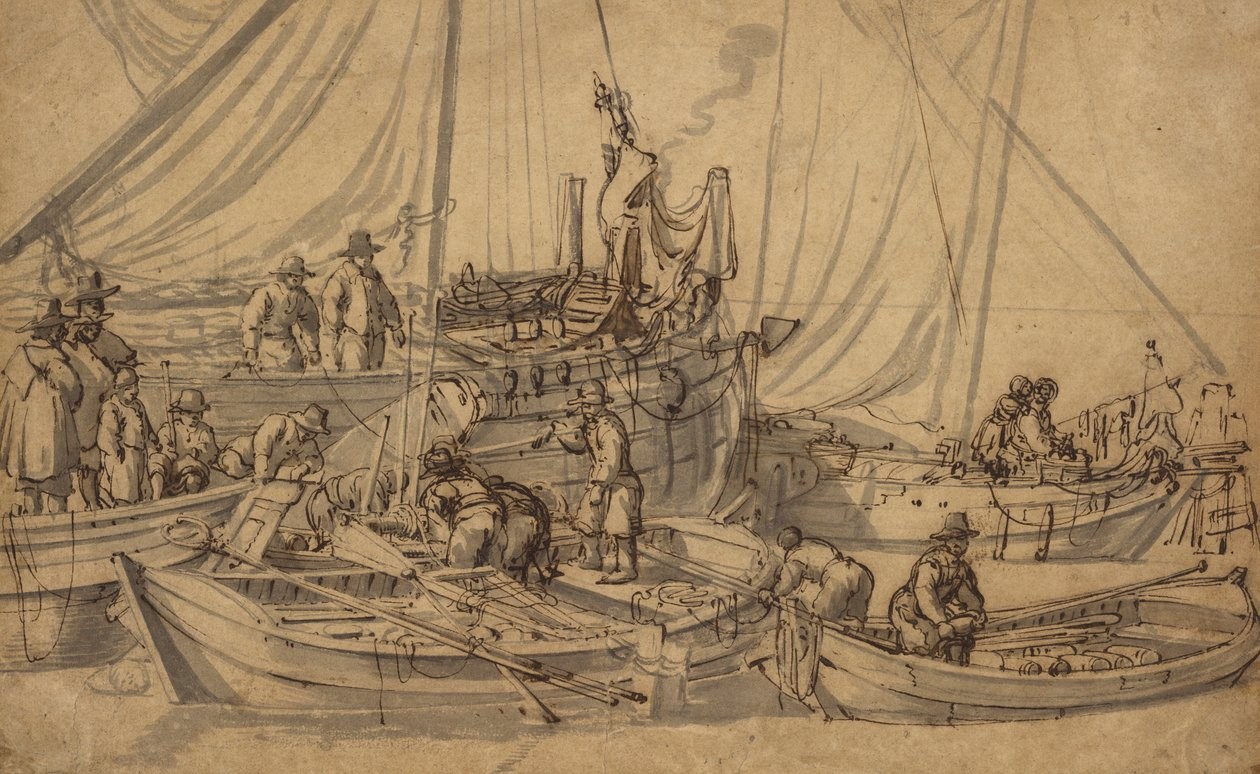
On Wednesday, Kings County Hospital doctors, nurses, PCAs/PCTs, transporters, and others rallied outside of the hospital to demand that the administration halt an unsafe plan to decommission one of the CT scanners that would put patients at risk.

The post Kings County Healthcare Workers Rally for Patient Safety appeared first on Left Voice.


From Left Voice via This RSS Feed.
cross-posted from: hexbear.net/post/6815507

cross-posted from: news.abolish.capital/post/9194

On Wednesday, Kings County Hospital doctors, nurses, PCAs/PCTs, transporters, and others rallied outside of the hospital to demand that the administration halt an unsafe plan to decommission one of the CT scanners that would put patients at risk.

The post Kings County Healthcare Workers Rally for Patient Safety appeared first on Left Voice.


From Left Voice via This RSS Feed.

0

How do I survive my new job?

preview

cross-posted from: lemmygrad.ml/post/9782130

It’s a church non-profit classified as a “retail” thrift store.

Meant to aid the homeless and needy.

Here in Virginia, I needed it.

I certainly needed the income because my funds or money have dried up or almost have.

But goddamn, tomorrow’s the first day.

It’s a small building and it’s pretty homely from what I’ve seen of it.

Commute is 30 minutes long, but I’m transferring to another area that’s about 10 to 15 minutes away in a month or two.

I’m on a probationary period as a full-time worker for three months so my job seems safe for the time being.

But I have to do cashier-work, pricing and stocking, and lift to about 50 lbs., among other retail work.

Honestly? Nobody ever had me do cashier-work before in all the time I’ve worked retail before. Is there a video or source online that walks you step-by-step on how to do it? And what about pricing and stocking items?

Usually, I did backroom work before and even that I found a bit hard.

I get paid $13.00, which is more than I received before.

They said it would be busy now.

I’m sure I can do it… but goddamn, I’m nervous…

lenin facepalm

0

'Willing to Do What It Takes': UAW Volkswagen Workers in Chattanooga Call Strike Vote

Common Dreams 'Willing to Do What It Takes': UAW Volkswagen Workers in Chattanooga Call Strike Vote | Common Dreams www.commondreams.org
preview

cross-posted from: hexbear.net/post/6521665

cross-posted from: news.abolish.capital/post/3744

Volkswagen workers in Chattanooga, Tennessee, who unionized with the United Auto Workers last year, announced Thursday that they will vote next week to authorize a strike after over 13 months of fruitless contract negotiations with the auto giant.

The strike authorization vote planned for October 28-29 “comes after months of unfair labor practices committed by the company, including bad faith negotiations, unlawful intimidation, and the unilateral cutting of jobs at Volkswagen’s only US assembly plant,” UAW said in a statement. The union also highlighted Volkswagen’s $20.6 billion in profits last year.

Company spokesperson Michael Lowder said Monday that “Volkswagen made it clear to the union that our last, best, and final offer is indeed final. We cannot in good faith prolong negotiations by continuing to bargain when we have already put our best offer on the table. It is time for the UAW to give VW employees a voice and let them decide for themselves by voting on our final offer.”

However, multiple employees said Thursday that they are not happy with the company’s latest offer and plan to vote for a strike.

“I’m voting yes because this is the time to show Volkswagen we are serious about receiving industry-standard treatment. Job security’s essential. They could pay us $100 an hour, but it means nothing if they close the plant two weeks into the agreement,” said James Robinson. “I’m hoping this process shows the company we are serious about getting a fair contract. We will show them their offer wasn’t enough, show them we’re willing to stand up to get what we deserve.”

“I’m hoping this process shows the company we are serious about getting a fair contract.”

Employee Taylor Fugate said that “I’m voting yes to get Volkswagen to come back to the table. The majority of the people I know don’t want VW’s ‘final offer.’ They want to keep negotiating, and we are willing to do what it takes to make that happen.”

“We need affordable healthcare and a strong job security statement that leaves no gray area,” Fugate added. “We also deserve equal standards—Southern autoworkers shouldn’t be treated differently!”

One elected Republican held a press conference on Wednesday in a bid to bully the union into holding a vote on the company’s latest offer. Local 3 News reported that Hamilton County Commissioner Jeff Eversole said: “Volkswagen put forward a final union contract offer over a month ago that offers significant gains for Chattanooga workers, including a 20% wage increase, a cost-of-living allowance, a $4,000 ratification bonus, lower healthcare costs, and much more. Many employees have been reaching out to the UAW to vote, and the UAW has refused.”

Payday Report’s Mike Elk pointed out Thursday that “the tactics used by the GOP in Chattanooga are similar to the tactics that they have used for more than a decade to sometimes successfully dissuade union votes by implying that the plant may close if the union gets ‘too greedy’ (their words, not my mine, as the son of a Volkswagen auto assembly line worker).”

Local 3 News noted that “during the press conference, dozens of members from both the UAW and the Chattanooga Area Central Labor Council, or CLC, began picketing outside of the VW plant.”

The outlet also spoke with some employees. One of them, Dakotah Bailey, explained that “originally, it was going to be a 25% increase in wages. They didn’t want to take that, and now they dropped it down to 20%. I wanted to try and get my money now. Especially right before the holidays. It would be great to have an extra $5,500 sitting in my bank account.”

According to a “Volkswagen Stories” video series published by the UAW on YouTube, wages are a primary concern for workers. Other top priorities include health and safety conditions at the plant, healthcare, paid time off, and retirement benefits.

“I don’t want to strike, but if it comes to it, I will,” Volkswagen worker Mitchell Harris said Thursday. “Because I feel that all my brothers and sisters of UAW Local 42 deserve respect, to provide a better life for their families, and have job security for us and generations to come.”


From Common Dreams via This RSS Feed.

0

Burning stoves, empty pockets: The hidden cost of feeding India’s children

preview

cross-posted from: lemmy.ca/post/53920704

I always hear good things about how organized the Indian working class is, and then I read articles like this

“I started about 10 years ago at 500 rupees (0.5$) per month. Now I get 2,000 rupees ($23) monthly. It’s difficult to manage with such high inflation, but whenever we ask about increasing our payment, we’re just told it will happen someday. Nobody tells us when,”

0

Workers and students across Spain strike for Palestine

Peoples Dispatch Workers and students across Spain strike for Palestine : Peoples Dispatch peoplesdispatch.org
preview

cross-posted from: hexbear.net/post/6450406

cross-posted from: ibbit.at/post/83983

Trade unions and youth organizations across Spain held strikes and nationwide demonstrations in solidarity with Palestine on Wednesday, October 15. Tens of thousands of people joined rallies in major cities, demanding an end to ties with Israel, justice for Palestine, and expressing opposition to Europe’s militarization. They also criticized Prime Minister Pedro Sánchez’s administration for failing to take all necessary measures to sanction Israel despite formal condemnations of the genocide.

The actions in Spain came just weeks after two general strikes brought Italy to a halt over similar demands, underscoring that solidarity with Palestine remains a key moment for social movements in Europe.

Read more: Workers shut down Italy again in solidarity with Palestine

Speaking at one of the rallies, Coral Latorre from the Students’ Union (Sindicato de Estudiantes) highlighted the crucial role of students and young people in sustaining the solidarity movement. Approximately 25,000 students participated in the demonstrations at Madrid’s Puerta del Sol, with thousands more joining protests in Barcelona, Tarragona, Valencia, and other cities following a wave of successful mobilizations earlier this month.

“Today we’re not only students [going on strike], but also workers,” Latorre said. “From the first hours of the morning, pickets, roadblocks, rallies in companies and factories, entire enterprises on strike… We said: we’ll block everything, and that’s what we’re doing with this day of general strike.”

October 15 rally in Barcelona. Source: Sindicato de Estudiantes/X

Frustration over the praise received by the recent ceasefire agreement announced by US President Donald Trump and Israeli authorities added fuel to the demonstrations. Protesters denounced the hypocrisy of European leaders congratulating Trump for his “peacemaking skills” while maintaining political, economic, and military cooperation with Israel and investing billions of euros in militarization.

“The ‘peace’ of the genocidal is not peace,” Latorre warned. “It is a farce to crown genocide, to turn Palestine into a colony, and to strip the Palestinian people of their right to exist […] This plan will bring neither justice nor freedom for Palestine.”

Read more: Trump Knesset speech displays complete US backing of Israel

Workers’ organizations, including the General Confederation of Labor (CGT), contextualized European governments’ support for Israel under their broader programs of militarization and austerity. While workers have mobilized for peace and solidarity with Palestine since the beginning of the genocide, governments have instead chosen policies that fund arms manufacturers and eliminate social protections. “CGT bases the call for this day of strike in the fight for a redistribution of public spending in favor of workers, and against the rise of public investment in items aimed at defense and militarization,” the trade union wrote.

The CGT emphasized that ongoing trade relations with Israel and increased military expenditure both show “that public budgets are being used for interests far from the reality that workers live.”

In some cities, protesters reported police repression. According to the Students’ Union, attempts to suppress Palestine solidarity actions in Europe following the ceasefire announcement should be taken as a clear signal to intensify mobilization, not scale it back.

“The [Trump] plan is a scam made by the executioners of the Palestinian people,” Latorre said. “That is why mobilization must continue, and our efforts must be redoubled. They want us to leave the streets precisely because now we’re coming out in greater numbers than ever: we have to keep pushing and keep raising our voices.”

The post Workers and students across Spain strike for Palestine appeared first on Peoples Dispatch.


From Peoples Dispatch via this RSS feed

0

Italy’s Second General Strike for Gaza Brought 2M Workers Into the Streets

Truthout Italy’s Second General Strike for Gaza Brought 2M Workers Into the Streets truthout.org
preview

cross-posted from: hexbear.net/post/6403476

It seemed impossible for Italy to strike for Palestine more successfully than it did the first time, yet it happened: 2 million people returned to the streets on October 3, blocking everything again. The second general strike was called by Si Cobas labor union on September 18, and circulated broadly after September 22, the date of the first strike.

After Israel attacked the Global Sumud Flotilla on the evening of October 1, CGIL (the biggest Italian union) and USB (the union that called the earlier general strike) joined the call. This landmark event marked the first time that all the leftist labor unions in the country decided to go on strike together.

The days preceding the strike were filled with constant mobilization. People took to the streets as soon as the attack on the flotilla was reported through media channels. A spontaneous rage and a will to act took over, with people rushing to the main squares in different Italian cities. After two years of genocide witnessed through phone and laptop screens, people of all ages gathered together physically in continuous and heterogeneous demonstrations. On October 2, the day after the attacks, people were in the streets again, in a diffuse vibrant and electric atmosphere that foreshadowed what would happen over the next two days.

As Marika Giati — a PhD student at the University of Pisa and part of the Women’s Assembly of the Migrants Coordination in Bologna — told Truthout, “In these demonstrations, a new consciousness could be felt — one that exploded and connected with the massive mobilizations stretching from Spain to France, Germany, the Netherlands, Greece, Tunisia, Mexico, and Morocco.”

People were enraged by the Italian government as well. Deputy Prime Minister Antonio Tajani, speaking about Israel’s illegal control of the international waters adjacent to Gaza, said that international law is important, “but does not always matter” — justifying both the Israeli blockade, and the fact that the Italian frigate accompanying the flotilla abandoned the flotilla while it was being attacked and while Italian citizens were being illegally arrested by Israel.

In the meantime, Prime Minister Giorgia Meloni openly opposed the strike and the protests, claiming that the strikers only wanted a longer weekend and didn’t want to work. Such comments purposely overlooked the conditions under which workers are striking, as if people were paid to be on strike. The Strike Guarantee Commission, the Italian regulatory authority on the right to strike, also attempted to hinder the strike, labelling it illegitimate and claiming that the unions didn’t provide enough advance notice.

Full Article soviet-chad

0

Is Organized Labor at Risk Under Trump’s War on Anti-Capitalist “Terrorism”?

Truthout Is Organized Labor at Risk Under Trump’s War on Anti-Capitalist “Terrorism”? truthout.org
preview

cross-posted from: hexbear.net/post/6352089

Labor Notes recently released a guide to help organize for the much-anticipated May Day general strike in…2028. It’s useful information, but as the countdown clock on the site shows, still 937 days away. At the rate the Trump administration is moving, there might not be much left of unions by the scheduled date.

The criminally underreported National Security Presidential Memorandum recently issued by Trump looks to crackdown on a whole range of activities, including actions by workers. We’ve mentioned how the administration’s ICE machine is one of workforce engineering: people out and exploitable workers in.

The administration is also increasingly threatening to use conspiracy law to go after those in opposition to authoritarian capitalism in the US or Israel. Since the assasination of Charlie Kirk, Trump asked the Attorney General to investigate individuals who protested him at dinner, instructing her to “look into that in terms of RICO.” Deputy Attorney General Todd Blanche backed him up, saying such protesters are “part of an organized effort to inflict harm and terror and damage to the United States,” which justifies Racketeer Influenced and Corrupt Organizations (RICO) investigations.

White House Deputy Chief of Staff Stephen Miller has also vowed to “dismantle and take on the radical left” through RICO and conspiracy charges.

It might be tempting to dismiss as more of Trump’s bloviating, but the war on the home front seems like one of the few areas where the administration is moving with unified purpose and, unlike the empire’s targets abroad, a foe against which they stand a chance. For all Trump’s faults he knows weakness, and understands all our crumbling institutions can be bought or bullied. RICO is a useful tool against any holdouts, and there are recent examples of it being wielded successfully.

Perhaps the biggest was the RICO charges against Stop Cop City activists in Atlanta (this was a state case that predated Trump 2.0). The charges against the protesters were recently dismissed on jurisdictional grounds — but not before destroying many of their lives.

Trump, despite also being targeted by Georgia’s anti-racketeering law, is eager to use it against others. In Los Angeles an individual was charged with conspiracy for providing face shields to ICE protesters, and pro-Palestinian protesters, animal activists, and anti-fascist counter-protesters have also faced such charges.

0

Mexican & Canadian Labour Coordinating USMCA Approach

Mexico Solidarity Media Mexican & Canadian Labour Coordinating USMCA Approach mexicosolidarity.com
preview

cross-posted from: hexbear.net/post/6333980

cross-posted from: ibbit.at/post/72860

This article by Paloma Martínez Méndez originally appeared on October 3, 2025 at Radio Canadá Internacional, the multilingual service of the Canadian Broadcasting Corporation, Canada’s state broadcaster.

“If companies are globalizing and have consortiums all over the world, workers must also globalize their strategies,” said Eladio de la Cruz Chavarría of the Frente Auténtico del Trabajo in an interview with RCI.

This delegate is one of three Mexican union representatives who traveled to several Canadian cities in September to meet with the United Steelworkers, the International Centre for Workers’ Solidarity (CISO), and the Quebec Federation of Workers (FTQ).

In June of this year, a Canadian delegation from the aforementioned organizations visited Mexico to participate in workshops and forums on labour rights.

Union Demands in the USMCA

Union members are demanding a voice in the North American Free Trade Agreement (NAFTA/USMCA) negotiations between the United States, Canada, and Mexico, which are scheduled to begin in July 2026.

“We want to give our opinions and be part of the process. These are decisions that directly affect us as workers and our working conditions,” said Marco Antonio Chávez of Mexico’s National Miners’ Union.

Eladio de la Cruz Chavarría, Frente Auténtico del Trabajo, Aguascalientes, Mexico

The Rapid Labour Response Mechanism, provided for in the labour chapter of the USMCA, is seen as a tool to balance forces.

Chávez explained that this resource allows them to act when Mexican authorities fail to address union demands, although he acknowledged that there is still fear in Mexico about using it due to its consequences for businesses.

For his part, Miguel Ángel Villalobos, also from the National Miners’ Union, believes that more unions should be aware of and use this mechanism to defend themselves against companies that do not respect their workers’ rights. “It gave us Mexican workers a boost and a voice to bring our demands to those trinational courts.”

Tariffs Impact

Union representatives from Mexico and Canada agreed that the tariff crisis imposed by the United States and the renegotiation of the USMCA make international cooperation more urgent.

2020 CISO delegation to Hidalgo, Mexico

Eladio de la Cruz Chavarría explained that the central objective is to create a solid support network. “Understanding common problems and having different perspectives creates a slightly more defined strength. We’re also working with companies in the same industry in the state of Aguascalientes and here in Canada, in Toronto, and we see many shared concerns.”

Concern about the effects of tariffs is tangible. In Aguascalientes, De la Cruz Chavarría said, a textile company that exported to the United States is facing uncertainty. Another case in Durango resulted in permanent closure after the increase in export taxes.

Solidarity on the Ground

During their visit to Mexico in June of this year, the Canadian delegation participated in union training activities and learned about local struggles firsthand.

Likewise, during their tour of Canada in September, Mexican union representatives were able to present their complaints and learn from the experiences of union members in the metalworking and mining sectors, as well as begin to build alliances on related issues.

Mineros & Frente Auténtico del Trabajo visiting ArcelorMittal

Guillaume Charboneau, Executive Director of the United Steelworkers’ Humanity Fund, explained that close exchanges have been key: “Going directly to see the workers, talking to them, and understanding their reality makes a difference. It allows us to bring their voices to the negotiating tables here and demonstrate that the struggles are shared.”

Amélie Nguyen, director of the International Center for Workers’ Solidarity (CISO), recalled that the Frente Auténtico del Trabajo, has been a long-standing partner since 1975. “There have been many actions in the past and now with the solidarity economy, but there have also been more political alliances regarding free trade and collective thinking. So it’s a very important and beloved partner.”

Daniel Mallet, of the Unified Union of Steelworkers, highlighted the value of direct contact between activists in both countries: “This builds solidarity on the ground, connects people, and allows for stronger pressure to come from the grassroots toward organizations.”

Along the same lines, the representative of the Quebec Federation of Workers (FTQ) said that the cooperation that has begun must be consolidated to address the division that the U.S. government is using as a strategy. “We share many concerns, and the asymmetry being created with the United States has an impact […] Trump’s strategy is forcing us to withdraw into ourselves. And that will force us to fight industry by industry, factory by factory, to save our jobs,” said Wilfred Cordeau.

Trade union cooperation between Mexico and Canada seeks to jointly address the consequences of U.S. tariffs and actively participate in the trade agreement negotiations, defending the rights of workers in both countries.

Mexican & Canadian Labour Coordinating USMCA Approach Labor | News Briefs

Mexican & Canadian Labour Coordinating USMCA Approach

October 4, 2025October 4, 2025

In September, delegates from the Frente Auténtico del Trabajo and the National Miners’ Union of Mexico traveled to Canada to meet with local unions to strengthen their ties and demand an active role in the renegotiation of the North American Free Trade Agreement.

Mexico Moves Towards Unified Healthcare with PRONAM News Briefs

Mexico Moves Towards Unified Healthcare with PRONAM

October 4, 2025October 4, 2025

The General Health Council’s new guidelines are based on the best scientific evidence for the prevention, diagnosis, and treatment of priority diseases for the entire health sector.

Mexicans Kidnapped by israel to be Repatriated News Briefs

Mexicans Kidnapped by israel to be Repatriated

October 4, 2025October 4, 2025

A protest Friday afternoon drew crowds to the israeli embassy in the Lomas de Chapultepec neighbourhood of Mexico City to demand the release of the six Mexicans.

The post Mexican & Canadian Labour Coordinating USMCA Approach appeared first on Mexico Solidarity Media.


From Mexico Solidarity Media via this RSS feed

0

We Said “We Will Block Everything” and We Did: Inside Italy’s Strike for Gaza

Truthout We Said “We Will Block Everything” and We Did: Inside Italy’s Strike for Gaza truthout.org
preview

cross-posted from: hexbear.net/post/6303280

cross-posted from: ibbit.at/post/68337

As boats from the Global Sumud Flotilla prepared to set sail toward Gaza from the coasts of Italy, Spain, and Tunisia, a representative of Genoa’s Dockworkers’ Union (CALP), now part of Unione Sindacale di Base, declared that if anything happened to the flotilla, workers would “block everything.” “Our young women and men must come back without a scratch,” the worker said at the port…

Source


From Truthout via this RSS feed

0

Why Everything Is Suddenly So "Extreme"

play · youtube.com
YouTube Why Everything Is Suddenly So "Extreme" www.youtube.com
preview

cross-posted from: lemmygrad.ml/post/9251243

Bad video from How Money Works; says that poverty is down across the world but that’s just not true, only in Asia. I agree the news is sensationalist, but the person uses slides for leaders such as Putin and Xi Jinping when it comes to saying that “These leaders have nothing to lose when they leave the Earth” but what about the Western leaders?

Very poor video. Doesn’t mention the two genocides happening in Gaza and Papau New Guinea. Or the other ethnic cleansings.

0

Workers’ in Pakistan’s Punjab fight for their basic rights

Peoples Dispatch Workers in Pakistan’s Punjab fight for their basic rights : Peoples Dispatch peoplesdispatch.org
preview

cross-posted from: hexbear.net/post/5872395

Thousands of power loom, textile, and kiln workers across Punjab’s industrial hubs of Faisalabad and Gujranwala have sustained protests since late July 2025, demanding the implementation of Pakistan’s increased minimum wage and urgent improvements to their working conditions.

The demonstrations, met with illegal factory lockouts by owners, mark a critical standoff between labor and capital in the region’s vital textile sector. 

The unrest follows Punjab’s June 2025 budget announcement, which included a revised minimum monthly wage of Pakistani rupee 40,000 (140 US dollars). 

Though considered highly inadequate by unions which had demanded a minimum wage of PKR 70,000 (245 US dollars), workers report persistent resistance from factory owners and local authorities toward implementing even the promised wage, a pattern compounded by deteriorating workplace safety and withheld benefits. This systemic non-compliance ignited the current wave of workers’ mobilization. 

The workers, particularly in Faisalabad’s power loom sector, which employs roughly 25% of Pakistan’s textile workforce, endure severe conditions: 

Insufficient wages, often below PKR 15,000 per month12-hour shiftsHazardous working conditions plagued by electrical faults, fire risks, and absent safety protocols

Many are denied social security registration, blocking access to healthcare, pensions, and injury compensation, while kiln workers face a form of bonded labor through coercive advance payments.

Workers fight back after owners slash wages 30%

The immediate trigger came in July, when factory owners in Faisalabad and Gujranwala unilaterally slashed wages by 20-30%, citing global market pressures, while further neglecting safety and social security obligations. 

Workers swiftly mobilized under the leadership of established labor organizations, the Labour Qaumi Movement (LQM), founded in 2003 to combat exploitation, and Haqooq-e-Khalq Party (HKP), a leftist socialist party of Pakistan. 

Mass protests paralyzed industrial zones by mid-July. In Faisalabad, workers blockaded key corridors, chanting “Kam do ya jaan do!” (Give work or give death!), crystallizing five core demands: 

Implementation of the legal minimum wageMandatory social security registrationImmediate factory safety overhaulsAbolition of bonded laborFormal union recognition

Factory owners retaliated with a lockout of over 300 factories in Faisalabad, chaining gates, freezing wages, and barring workers, a move later declared illegal by the labor court. Outcomes diverged sharply between cities. 

In Gujranwala, weeks of strikes and protests forced local authorities to broker a provisional agreement, reversing the wage cuts and committing to address other demands. Strengthened by this victory, Faisalabad’s protests escalated.

Since August 1 to date, hundreds of workers, including significant numbers of women and children, have maintained continuous protests outside the Faisalabad Deputy Commissioner’s office, demanding state intervention. 

Leading the effort is Baba Latif Ansari, LQM chairman and HKP Punjab president. Ansari, a former religious activist who redefined “jihad” as workplace justice and survived a 2014 assassination attempt by factory owners, today bridges grassroots mobilization with legal strategy for workers in Faisalabad. 

The HKP amplifies the struggle nationally, challenging lockouts in courts and framing demands for state action against exploitation. Internationally, Punjab’s workers embody a global fight for dignity, resonating with global movements. A victory here could inspire marginalized workers across the Global South supply chains. 

As of August 12, Gujranwala workers are monitoring their agreement’s implementation while Faisalabad’s protests persist. 

The provincial government faces a pivotal choice: enforce labor laws and ensure wage implementation or endorse the owners’ illegal tactics. The workers’ resolve echoes the cry of an LQM organizer: “Toh Hum kya chahte? Azadi!” (What do we want? Freedom!).

0

UAW Faction Seeks to Oust President Shawn Fain - TT

Transport Topics UAW Faction Seeks to Oust President Shawn Fain - TT www.ttnews.com
preview

cross-posted from: hexbear.net/post/5765833

A group of United Auto Workers members is seeking to oust President Shawn Fain ahead of an election next year, a sign of frustration among some in the two years since the labor group secured landmark contracts with U.S. automakers.

Workers at a Stellantis NV truck factory in suburban Detroit and an engine plant in southeast Michigan voted over the weekend to start the union’s process to remove its leader, said two UAW members involved with the effort. The votes join earlier ones by four other local UAW chapters, reaching the threshold needed for Fain’s opponents to bring allegations of financial mismanagement, workplace retaliation and other issues against him to the federal monitor overseeing the union for potential discipline.

Representatives for Fain and the UAW didn’t respond to requests for comment.

The move increases pressure on Fain, the bombastic labor leader who led a 2023 strike against Ford Motor Co., General Motors Co. and Stellantis that helped secure significant wage gains for workers. Fain won a close runoff earlier that year, the first direct vote by union members in the UAW’s 90-year history.

Now, ahead of the union’s next leadership elections in 2026, Fain is facing blowback from some members for layoffs at Stellantis factories, claims he retaliated against two fellow board members who disagreed with him and accusations that the union has mismanaged its funds.

“I supported Shawn, but his spending is out of control and he’s retaliatory,” David Pillsbury, a worker at GM’s Flint, Mich., truck plant who started the petition to remove Fain, said in an interview. “The transparency Shawn promised hasn’t happened.”

Although a small fraction of the UAW’s more than 600 locals, the groups seeking to oust Fain represent a vocal contingent that have been hurt by layoffs. Fain still has strong support among the legions of graduate student teaching aides who are also members of the union, said Art Wheaton, director of labor studies at Cornell University’s School of Industrial and Labor Relations.

The effort to remove Fain was started by two UAW members who have criticized Fain for a lack of transparency. Pillsbury and Brian Keller, a Stellantis worker who intends to run against Fain next year, plan to take their proposal next to a pair of plants in Ohio and Fain’s home plant in Kokomo, Ind., Pillsbury said.

Turnout at some locals has been small. At the Sterling Heights plant that voted over the weekend, 63 workers showed up with all but one voting to oust Fain, Pillsbury said. The plant has 6,200 employees.

If the union challenges any of the victories because of low voter turnout or for any other reason, he said he wants enough wins to maintain the six victories needed to push ahead.

Some UAW workers are angry over thousands of layoffs at Stellantis factories since the 2023 contract was ratified, moves the company took to tame inventory amid declining market share. The contract that Fain negotiated allowed Stellantis to fire hundreds of temporary workers, and it has since been replacing them with part-time summer employees, said Eric Graham, president of UAW Local 140.

“They told the people that ‘this is the best contract ever,’ and it was — incentive-wise,” said Graham, who represents workers at a Stellantis assembly plant in Warren, Michigan, where more than 1,500 people are currently laid off. “But when you pressure the company the way they did and make the company spend money they didn’t want to spend,” it puts jobs at risk, he said.

Five of the six locals that voted to begin removal proceedings represent employees of the Jeep maker, where Fain worked as an electrician before moving up the ranks of UAW administration.

Dissent over Fain’s leadership also centers on his decision to strip duties from two of the union’s elected vice presidents. There were about 1,900 UAW members still on layoff at the end of July, a Stellantis spokeswoman said.

Fain retaliated against UAW Treasurer-Secretary Margaret Mock after she refused to approve certain expenses, according to a report by Neil Barofsky, the federal monitor appointed by the Justice Department to oversee UAW governance after two past presidents were convicted on corruption charges.

After the monitor issued that report, Fain and 10 other board members shot back in a letter saying Mock had obstructed funding for critical organizing efforts. They also blamed the financial management issues on her, saying the monitor is looking into management of union investments during her tenure as treasurer.

The monitor is also probing similar allegations made by the other vice president, Rich Boyer, who was the UAW’s chief negotiator with Stellantis before Fain removed him from the union’s Stellantis department.

0

We now have a general Labor focused community. Please feel free to contribute.

preview

The /c/unions community kept getting non union general labor interest posts and shockingly there are not really many general labor focused communities on Lemmy. So I’ve made one here.

Friends:

The /c/unions community kept getting non union general labor interest posts and shockingly there are not really many general labor focused communities on Lemmy. So I’ve made one here.

Friends: