
0
0
Electronic Frontier Foundation
The Justice Department Wants To Give Patent Trolls More Power
www.eff.org
posts tagged #libre_culture
cross-posted from: lemmy.ml/post/55165008
The vikings shop closed. The vikings shop sold many RYF-certified computers. Another shop that still sells Freedom respecting computers is here.
cross-posted from: lemmy.ml/post/55165008
The vikings shop closed. The vikings shop sold many RYF-certified computers. Another shop that still sells Freedom respecting computers is here.





cross-posted from: discuss.tchncs.de/post/67770797
Hey everyone!
I have been building and maintaining my own infrastructure around self-hosted Linux services for months. Eventually I got annoyed with editing and deploying everything manually and having difficulties sharing what I’m doing with others. So I solved both of these problems with Infrastructure as Code.
Everyone is free to study this repository. Ever wanted to see IaC in practice? Curious how to self-host certain services, automate website deployment from Git to server, make TLS SNI-based router or automate container provisioning? Then this repository is for you.
Want to know how much CPU, RAM or other resources a certain service has? You can see it yourself on my own public dashboard.
This is the first time I share my infrastructure with anyone. I’d be more than happy to discuss it, receive feedback and answer question. In the meantime, I’m writing an article to complement the code with architecture, decisions and thought behind it.



Here’s my situation: I’m somewhat advanced in my career. I’ve been working in media for over a decade. I’m currently unemployed and looking for more work, but I haven’t been finding a lot of success. And the truth is that most of the media jobs available to me are deeply uninspiring: the kinds of producing/shooting/editing roles that I’ve done for a long time, and that no longer bring me joy.
But there’s one thing that HAS gotten me excited over the last few years: Learning more about self-hosting and FOSS. Since ~2021 I’ve been on a journey, building my own computers, setting up my own home server, changing my workflow over to FOSS apps, and slowly moving more of my devices to Linux. I love the idea of using my skills to break up the power of tech giants and their consumer lock-in. This is political for me, and I love it.
Is there any way that I could transition my career to something along those lines? I’m not experienced or knowledgeable enough to be a systems admin. But is there some role I could perform that would let me pursue this passion, learn more about it, and get paid?



A nice rock tune with some chill vocals.
A nice rock tune with some chill vocals.
Gritty rock, with classic rock angst lyrics.
Gritty rock, with classic rock angst lyrics.
From their about page:
This is a community music remixing site featuring remixes and samples licensed under Creative Commons licenses.
Highly recommend checking this out, there’s some wicked music and samples to find here.
From their about page:
This is a community music remixing site featuring remixes and samples licensed under Creative Commons licenses.
Highly recommend checking this out, there’s some wicked music and samples to find here.

Cross-posted from ““Dragon Tiger Gate” by Stephane Wootha Richard (who released 90gb of his work into public domain)” by @Yingwu@lemmy.dbzer0.com in !imaginarylandscapes@lemmy.world
Cross-posted from ““Dragon Tiger Gate” by Stephane Wootha Richard (who released 90gb of his work into public domain)” by @Yingwu@lemmy.dbzer0.com in !imaginary@reddthat.com
He dropped 90gb of his artwork into public domain a couple years back, more information here. Everything’s available on the Internet Archive.
For years you may have known me through a fictional entity called “Wootha”. Today I have decided to destroy this entity. In this text, I will explain to you what motivated this decision. …
I have decided to be radical in the face of what I believe is the most perilous situation humanity has ever known in at least twelve millennia and the Younger Dryas end. It seems to me that the ecosystem crisis we are experiencing, this terrible tierracide (a word invented by Glenn Albrecht to name the conscious murder of the Earth), can only be stopped by a profound change in our current civilizational paradigm.
I believe this change can only come about through creative destruction.
We spend our lives accumulating goods, experiences, memories, and recognition and convincing ourselves that we possess them, to nourish our sense of identity. We identify ourselves with all these possessions and believe that we are a sum that must constantly grow in order not to fall apart. …
Our collective creative power can do more than the destructive creativity that resides within the α angle. We can bring to humanity imaginaries of a vast multitude of possible, desirable, and magnificent futures if we come out collectively.
To apply this philosophy to myself, I will once again indulge in the magic of creative destruction. “Wootha” is dead, but I’m still alive and well. I do not know how this creative force that inhabits me, just like each of us, will manifest. I believe it will take a very different form, rooted in local communities, the present actions, and a lot of friendship and solidarity.

Happy 2025! The Eco-Libre project published our 2024 Annual Report for last year.
Eco-Libre is a volunteer-run project that designs libre technology for sustainable communities.
Eco-Libre’s mission is to research, develop, document, teach, build, and distribute open-source technology that sustainably enfranchises communities’ human rights.
We aim to provide clear documentation to build low-cost machines, tools, and infrastructure for people all over the world who wish to live in sustainable communities with others.
Read the full report here.
If you’d like to help Eco-Libre reach our mission to enfranchise sustainable communities’ human rights with libre tech, please contact us to get involved :)
Cheers,
The Eco-Libre Team
www.eco-libre.org




For me, I really want to see a time-sink game be made for mobile Linux phones. I’m working on something like one, but I’m not confident in my approach.
How about you guys? What do you want to see made?
For me, I really want to see a time-sink game be made for mobile Linux phones. I’m working on something like one, but I’m not confident in my approach.
How about you guys? What do you want to see made?
As the title asks. I’d like to make this place the go-to libre culture forum, since so many others are dead.
A definition of libre culture, surely. I was thinking of keeping the rules sparse and broad, the usual “don’t be rude” rules, but I was also thinking of adding a list of the kind of posts that are allowed here, such as memes and support requests, to help stimulate activity. If those kinds of posts aren’t desired, I can make dedicated communities for those kinds of posts anyways.
What do you guys think?

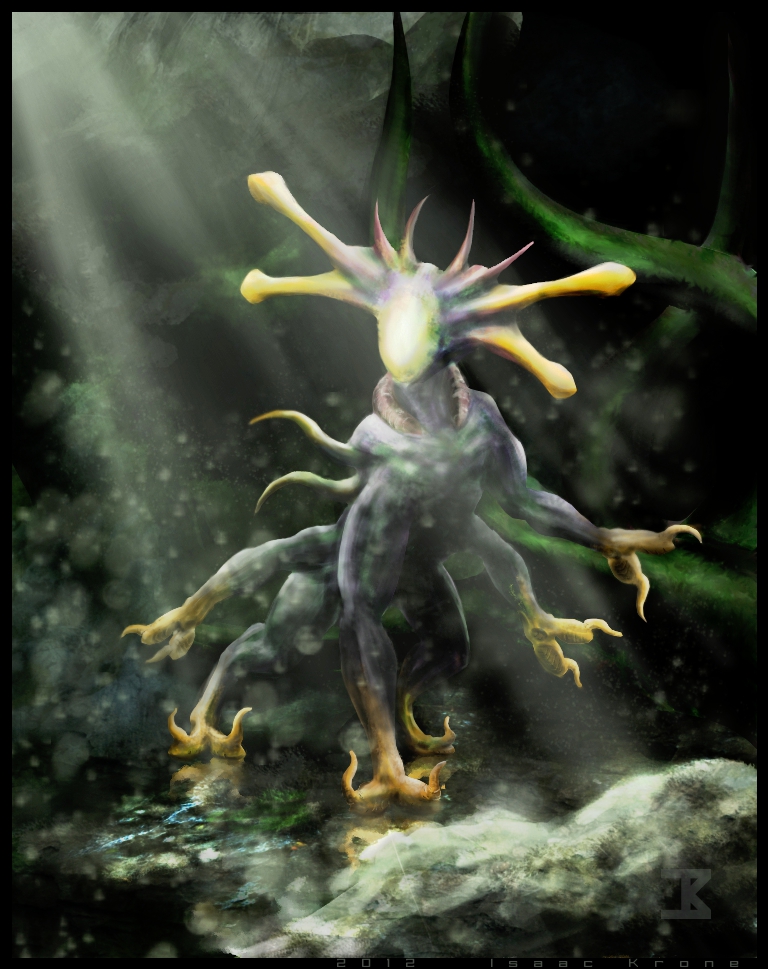
Thrive the game taking the ideas from the ashes of spore and turning them into an far more intricate game, a game of balancing, surviving and as the title suggests thriving!
Thrive is still currently in development, with many ambitious goals still exactly that, ambitious goals. Development is slow, as in really slow, and that’s okay – given that the whole project is being freely developed. Development ‘started’ in 2009, with programming properly beginning in 2012. Thrive seems to be a bit like vaporware in this regard with a lot of ideas but not a huge drive to implement them. Which is again perfectly fine. But as we will go on to see this mishmash of ideas and random bits of development work being undertaken by individuals who are willingly disposing of their time to help move the project forward has created quite the output, even if that output is a mere pebble in comparison to what it wants to be.
So I played the game. The introduction animation is incredible, it’s hard not to raise your expectations too much when watching it. The game natively supports Linux which is a huge plus. The menus are readable and overall the user experience before the game has begun is well thought out, although I did have to search what LAWK meant, (Life as we know it). Starting a game of thrive, you begin as a single piece of cytoplasm floating through a volcanic vent – unless you chose to start somewhere else. You can see lots of other copies of your simple cell running around you, you will have to compete for resources not just with other species but also your own species. A nice nod toward intra-species competition. The aims of thrive are simplified from the typical aims of life, not to the extent of other evolution games, with glucose needing to be collected to break down into ATP, as well as nitrogen and phosphorus needing to be collected to help reproduce each cell organelle, at the beginning only your singular mitochondria needs to be replicated, but this rapidly spirals as your cell becomes more complicated. Once you replicate every organelle. You can navigate into the cellular editor.
Thrive does this thing where instead of replicating many times and occasionally mutating, you gather enough resources to replicate once, and then it pretends that 100 million years have past, and you can then pick a few mutations. The game has an algorithm to take into account your skill and the shape and structure of your cell to determine how much your cell population grows or shrinks. As a design choice I like it, and with how the mechanics for nitrogen and phosphorus are built, you will never be too long await away from being able to play in the editor. This balance that has been stricken between gameplay and evolution decisions is almost perfect, it can feel just sometimes like a little bit too long between each step. When it comes to allocating mutations you get 100 mutation points at the end of game play stage to spend on new parts for your cell, with each new part costing a set number of mutation points.
There is a great variety in the number of options for cell parts and upgrades, proteins that help break down iron and sulfur, flagellum and obviously the all important nucleus part, which unlocks all the eukaryotic cell parts such as mitochondria. Importantly you aren’t drowning in choice initially with most upgrades requiring you to jump a certain hurdle. Thyroids (the things enabling photosynthesis), require you to first be in a biome with a light level greater than 40%. Prokaryotic parts aren’t particularly difficult to unlock once you figure out how to move between biomes and patches. If you decide to take up a nucleus, you can unlock larger more powerful parts like the mitochondria, these are more difficult to get, either requiring you to engulf (eat) another species that the game has deemed suitable for you to turn into an organelle in a process called endosymbiosis. Or the game requires you to evolve a given number of proteins and then keep them for a set amount of time. This latter route takes a lot longer to achieve but is also much less effort.
At each evolution section of the game you can opt to move to different patch/biome, slowly exploring a map, starting in a thermal vent and moving upwards towards the sea surface and up river mouths, each environment brings different challenges and benefits. Sea caves bring with them massive sulfur supplies, whilst having no light to enable photosynthesis. Whilst Rivers have masses of light but a limited supply other usable compounds, such as iron. Importantly glucose supply rapidly drops off after the first few generations, this means that not finding a niche is a way to end up fighting over increasing limited and rare resources, as the game goes on.
The game does an amazing job of producing diagrams for the evolutionary history of your specific game, and an alright job of creating food chain diagrams at the end of each generation. The game also tries to give you an estimate of what your population will be based on what evolutionary upgrades you picked. For example, if you double in size then your population growth will probably half because the same amount of energy needs to go into producing more biomass. This is a nice touch although it can be demoralizing to see a single cytoplasm with a population 10x bigger than your own.
Finally the multicellular stage is clearly still in development, but its definitely playable. I felt that being the only multicellular organism got quite boring after a hot minute but planning out my designs was fun. The multicellular stage unlocks a second editor – one for the arrangement of your cells, as well as the ability to evolve different specializations of cells – enabling greater strategy. This editor pools from the same 100 evolution points as earlier – so like real life, evolution becomes very slow.
I liked the game, it was great fun for a few days until the waiting for evolutionary upgrades got to me and I decided to put it down. It’s got massive potential and a game to keep an eye on. I would 100% recommend to everyone despite the fact its in development.
Do tell me if this was a bit long winded just so I can get my reviews to a manageable Lemmy length
I’ve been discovering that despite what I originally thought - there exists a small collection of high quality games which are not only free but also developed openly. I’ll list the ones I have found to date, I wouldn’t mind seeing any recommendations!
Mindustry - Essentially a fully complete indie game. You can buy it on steam to gain access to a few other features but nothing game changing.
Super Tux Kart - Literally Mario Kart.
Super Tux - Literally Mario
Luanti formerly Minetest. - A voxel game engine, you can add hundreds of mods to make the game into what you want, including into just straight up Minecraft.
Veloren - An open MMO, still very much in alpha development
Thrive - Spore on steroids, still in development although I’ve spent a good 20 hours having a lot of fun with where it’s at, at the moment - with the bacteria stage mostly complete and the multicellular stage taking shape.
Unciv - just civilization.
One thing you probably notice with this list is there are a lot of games which are clones or essentially clones of other games. So I wonder if anyone knows of games which have their own unique style and ideas?
I’ll probably post some reviews of each of these games and any more I find out about in separate posts.
Here’s a Wikipedia list, but if anyone has any favorites rather than me just dumping a list of varying quality games on to this post.
Hey everyone, I’ve decided to create this subforum as an attempt to strengthen discussion around libre culture on Lemmy. Most libre culture subforums are fairly dead, with few having more than one post in just the last year.
I’m going to do what I can to make this place as active as possible.
Let’s get the ball rolling! Post your memes, favourite apps, libre software support questions, libre software you wish existed, and everything else related to libre culture!
Hey everyone,
I recently wrote a mobile-friendly GNU/Linux app called Weights and Measures. It takes a number, and converts it into different units of measurement. I know, it’s not the most advanced thing in the world, but I believe it’s handy enough that more people than myself could use such an app. Personally, I use it to convert my weight from lbs to kilograms.
The thing is, I know that I should publish it, but I feel very demotivated from doing so. Publishing requires effort, so it typically requires a specific motivator. For myself, I used to have much a much stronger stance when it came to free/libre software.
Lately however, I feel very disconnected from any sense of community. I don’t really feel like we are much of a community in the first place. I don’t know a single person in my real life who cares about libre software outside of myself, and online, I feel somewhat jaded, as those who care about libre software seem to be more about worshipping the fungus of Richard Stallman’s feet than they are about the actual libre culture movement.
As such, I can’t decide whether I should keep working on it, or just keep it to myself.
TL;DR: Lonely software developer feels jaded from the libre software community and probably needs to find a way to connect with like-minded folks online.