0
preview
Klamath Falls, OR (my photo)
Cross-posted from: lemmy.world/post/52308809
Klamath Falls, OR (my photo)
Cross-posted from: lemmy.world/post/52308809
posts tagged #streetphotography

8th Street Subway Station (my photo, Fujifilm X-T5)
8th Street Subway Station (my photo, Fujifilm X-T5)

Views from the Train (my photo, Fujifilm X-T5)
Cross-posted from: lemmy.world/post/54266373
Views from the Train (my photo, Fujifilm X-T5)
Cross-posted from: lemmy.world/post/54266373

Views from the Train (my photo, Fujifilm X-T5)
Cross-posted from: lemmy.world/post/53910027
Views from the Train (my photo, Fujifilm X-T5)
Cross-posted from: lemmy.world/post/53910027

Powell Street Station (my photo, Fujifilm X-T5)
Cross-posted from: lemmy.world/post/53666271
Powell Street Station (my photo, Fujifilm X-T5)
Cross-posted from: lemmy.world/post/53666271

Golden Gate geese (my photo, Fujifilm X-T5)
Cross-posted from: lemmy.world/post/53402276
Golden Gate geese (my photo, Fujifilm X-T5)
Cross-posted from: lemmy.world/post/53402276

Light at the end of the tunnel (my photo, Fujifilm X-T5)
Cross-posted from: lemmy.world/post/53312805
Light at the end of the tunnel (my photo, Fujifilm X-T5)
Cross-posted from: lemmy.world/post/53312805

Views from the Train (my photo)
Cross-posted from: lemmy.world/post/53232153
Views from the Train (my photo)
Cross-posted from: lemmy.world/post/53232153

Golden Hour Date (my photo)
Cross-posted from: lemmy.world/post/52658180
Golden Hour Date (my photo)
Cross-posted from: lemmy.world/post/52658180

Views from the Train (my photo)
Cross-posted from: lemmy.world/post/52548614
Views from the Train (my photo)
Cross-posted from: lemmy.world/post/52548614
Klamath Falls, OR (my photo)
Cross-posted from: lemmy.world/post/52308809
Klamath Falls, OR (my photo)
Cross-posted from: lemmy.world/post/52308809
Golden Gate Bridge (my photo)
Cross-posted from: lemmy.world/post/52116910
Golden Gate Bridge (my photo)
Cross-posted from: lemmy.world/post/52116910
Danger, Do Not Enter (my photo)
Cross-posted from: lemmy.world/post/52060931
Danger, Do Not Enter (my photo)
Cross-posted from: lemmy.world/post/52060931
7-8 Cars (my photo)
Cross-posted from: lemmy.world/post/52036934
7-8 Cars (my photo)
Cross-posted from: lemmy.world/post/52036934
Streets of San Francisco (my photo)
Cross-posted from: lemmy.world/post/51927774
Streets of San Francisco (my photo)
Cross-posted from: lemmy.world/post/51927774

Klamath Falls, OR (my photo)
Cross-posted from: lemmy.world/post/51804001
Klamath Falls, OR (my photo)
Cross-posted from: lemmy.world/post/51804001

Golden Hour (my photo)
Cross-posted from: lemmy.world/post/51626660
Golden Hour (my photo)
Cross-posted from: lemmy.world/post/51626660

Train Station (my photo)
Cross-posted from: lemmy.world/post/51525026
Train Station (my photo)
Cross-posted from: lemmy.world/post/51525026

Out for a stroll (my photo)
Cross-posted from: lemmy.world/post/51443201
Out for a stroll (my photo)
Cross-posted from: lemmy.world/post/51443201

2026 Pride Parade, Nashville TN (my photo)
Cross-posted from: lemmy.world/post/50778151
2026 Pride Parade, Nashville TN (my photo)
Cross-posted from: lemmy.world/post/50778151

Out for a stroll (my photo)
Cross-posted from: lemmy.world/post/50571152
Out for a stroll (my photo)
Cross-posted from: lemmy.world/post/50571152

Street in Toronto (my photo)
Cross-posted from: lemmy.world/post/50547657
Street in Toronto (my photo)
Cross-posted from: lemmy.world/post/50547657

Street in Toronto (my photo)
Cross-posted from: lemmy.world/post/50471318
Street in Toronto (my photo)
Cross-posted from: lemmy.world/post/50471318

A black-and-white street portrait from a doorway.
The frame is mostly posture: face resting on one hand, cigarette held out with the other, body folded into a narrow entrance.
Ricoh GR IV Monochrome. Series: Portraits / Small Dramas. StreetSoul.me
A black-and-white street portrait from a doorway.
The frame is mostly posture: face resting on one hand, cigarette held out with the other, body folded into a narrow entrance.
Ricoh GR IV Monochrome. Series: Portraits / Small Dramas. StreetSoul.me

Sharing this as a field note rather than a tutorial.
One walk, a lot of weak frames, hard light, bad corners, and the few photographs that survived the edit.
The part I’m interested in is not the heroic idea of “getting the shot”, but the dull, useful work before it: walking, missing, looking again, and cutting most of it away.
Video: youtu.be/v-AXCoQT0eA

Toronto, Ontario, Canada (my photo)
Cross-posted from: lemmy.world/post/47654803
Toronto, Ontario, Canada (my photo)
Cross-posted from: lemmy.world/post/47654803
Hello community. I love the look of street photography and want to give it a go. What beginner tips or guides would you recommend? I have a rangefinder with a 50mm lens (film) to play around with if that helps.
Hello community. I love the look of street photography and want to give it a go. What beginner tips or guides would you recommend? I have a rangefinder with a 50mm lens (film) to play around with if that helps.

Toronto, Ontario, Canada (my photo)
Toronto, Ontario, Canada (my photo)

Toronto Subway (my photo)
Cross-posted from: lemmy.world/post/47516549
Toronto Subway (my photo)
Cross-posted from: lemmy.world/post/47516549

Encampment (my photo)
Encampment (my photo)

Reflective Architecture (my photo)
Reflective Architecture (my photo)

Gooderham Building (my photo)
Gooderham Building (my photo)

Shot outside an ice cream shop with the Ricoh GR IV Monochrome.
What interested me was the layering: the older man passing close to the camera, the woman eating ice cream and looking back, the shop lights and menu turning the whole thing into a small public stage.
Shot outside an ice cream shop with the Ricoh GR IV Monochrome.
What interested me was the layering: the older man passing close to the camera, the woman eating ice cream and looking back, the shop lights and menu turning the whole thing into a small public stage.

Shot as a street portrait, but what interests me here is the imbalance: the face is close, dark, almost carved into the frame, while the city behind him is blown into white noise.
It feels less like a portrait “of” someone and more like a small collision between a person and the street apparatus around him.
I keep coming back to the hand at the jacket. Tiny gesture, large weather.

A street procession caught in the moment it becomes aware of itself.
There is the ritual: robes, candles, order. There is the photographer at the edge, turning it into spectacle. And there is the man in the foreground, looking back with exactly the amount of suspicion the scene deserves.
Shot with Ricoh GR IV Monochrome.

The Paramount Theater (my photo)
The Paramount Theater (my photo)

Pike Place Fish Market (my photo)
Pike Place Fish Market (my photo)

Toronto, Ontario, Canada (my photo)
Toronto, Ontario, Canada (my photo)

Toronto, Ontario, Canada (my photo)
Toronto, Ontario, Canada (my photo)

Pike Place Fish Market (my photo)
Cross-posted from: lemmy.world/post/46383571
Pike Place Fish Market (my photo)
Cross-posted from: lemmy.world/post/46383571

Chicago, IL (my photo)
Cross-posted from: lemmy.world/post/46383537
Chicago, IL (my photo)
Cross-posted from: lemmy.world/post/46383537

Seattle Streets (my photo)
Seattle Streets (my photo)

A museum guide was speaking in front of a formal group portrait while the visitors slowly became another group portrait around him.
What caught me was the strange hierarchy: painted faces, listening faces, blocked faces, and one living figure trying to hold the room together.
I kept the blacks heavy because I wanted the foreground to feel like a barrier, not just an audience.
Does the crowd in the foreground make the frame stronger, or does it close the image too much?

Near the Courthouse (my photo)
Cross-posted from: lemmy.world/post/46327806
Near the Courthouse (my photo)
Cross-posted from: lemmy.world/post/46327806

(my photo)
(my photo)

Food Truck (my photo)
Food Truck (my photo)

Black and white street photography from Mallorca. I work mostly with a Leica M10 Monochrom and Ricoh GR IV Monochrome, looking for shadow, gesture and those small, accidental compositions that happen when nobody is paying attention.
More work: streetsoul.me
Black and white street photography from Mallorca. I work mostly with a Leica M10 Monochrom and Ricoh GR IV Monochrome, looking for shadow, gesture and those small, accidental compositions that happen when nobody is paying attention.
More work: streetsoul.me

Seattle, Washington, USA (my photo)
Seattle, Washington, USA (my photo)

Toronto, Ontario, Canada (my photo)
Toronto, Ontario, Canada (my photo)

Street (my photo)
Cross-posted from: lemmy.world/post/46076401
Street (my photo)
Cross-posted from: lemmy.world/post/46076401
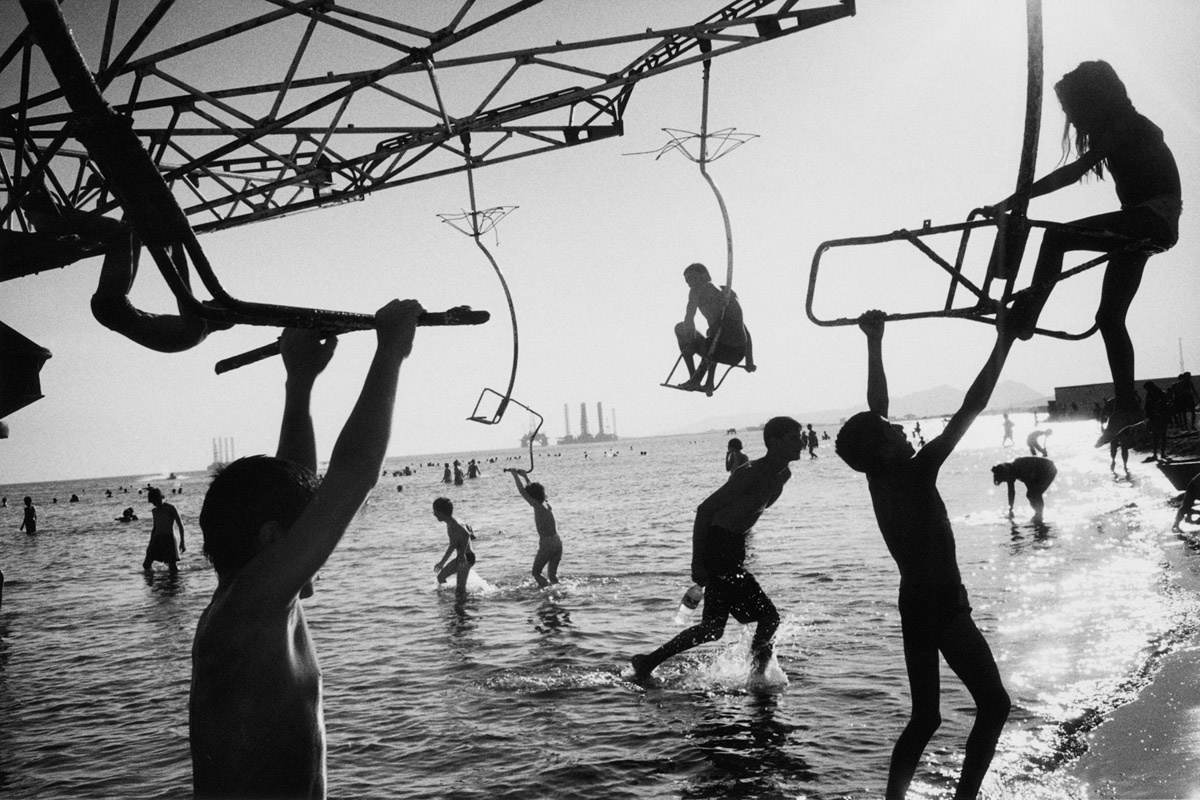
In 2003, for the first time in its history, the Leica Oskar Barnack Award went to a German photographer. Andrea Hoyer’s photo reportage, a long-term project launched in 1998, documents the longings, perspectives and moods of the Russian population of the post-Soviet era, in sensitively composed black and white photographs.
“I’ve always had this urge for languages and countries,” the photographer explains. Curiosity, a thirst for adventure and the willingness to get involved with other peoples and cultures, also characterize this series. Up until 2002, the photographer returned repeatedly to Kazakhstan, Uzbekistan, Russia and Ukraine. She always travelled alone, because, according to her particular approach: “I have to be in a certain state of mind to find what I am looking for.”
The pictures, also taken with a Leica M6, show representative elements of the former Soviet Union, such as monuments of Stalin and inside views of the Red Army. The wide expanses of Russia’s landscape, as well as towns and Black Sea beaches, are also featured. Hoyer, who lives in New York, focuses on people’s circumstances: their loneliness, alone or in groups, their lack of orientation, or the security of their circle of family and friends. The photographer does not aim for the bold drama of press photos, but uses her keen powers of observation to intensify moods and how they reflect on her own soul. The result is not a classic reportage, but a very personal view of the countries she visited. The people she portrays are always part of an overall composition: they are often truncated, the architecture and landscapes often correspond to the poses of those portrayed, and merge into complex picture compositions. “It was always composition that interested me,” she explains. Many things seem mysterious at first, no picture can be interpreted immediately; but this makes it all the more inviting to take a closer look.
The Leica Oskar Barnack Award was Hoyer’s first international recognition. Her success at the awards ceremony during the Rencontres d’Arles rewarded her courage and perseverance. For the first time, the festival also brought her work to the attention of a larger audience. Since 2012, Hoyer has begun sculpting and modelling the heads of imaginary persons in clay. She combines this side of her work with her interest in individual and collective memories, and adapts photographic principles to this other medium. “It tackles the same themes that I explored in photography: memory, identity and loss,” the artist explains.
Text from leica-oskar-barnack-award.com