
@Powderhorn@beehaw.org

Powderhorn

Freelance journalist and dirty hippie burner.

I read news so you don’t have to (but you still should).

member since 6 Jun 2023 21:49

posts

“Charlie Brown Must Stay the Course”: A Football Kick Autopsy Report by the Democratic Party
McSweeney's Internet Tendency “Charlie Brown Must Stay the Course”: A Football Kick Autopsy Report by the Democratic Party
preview

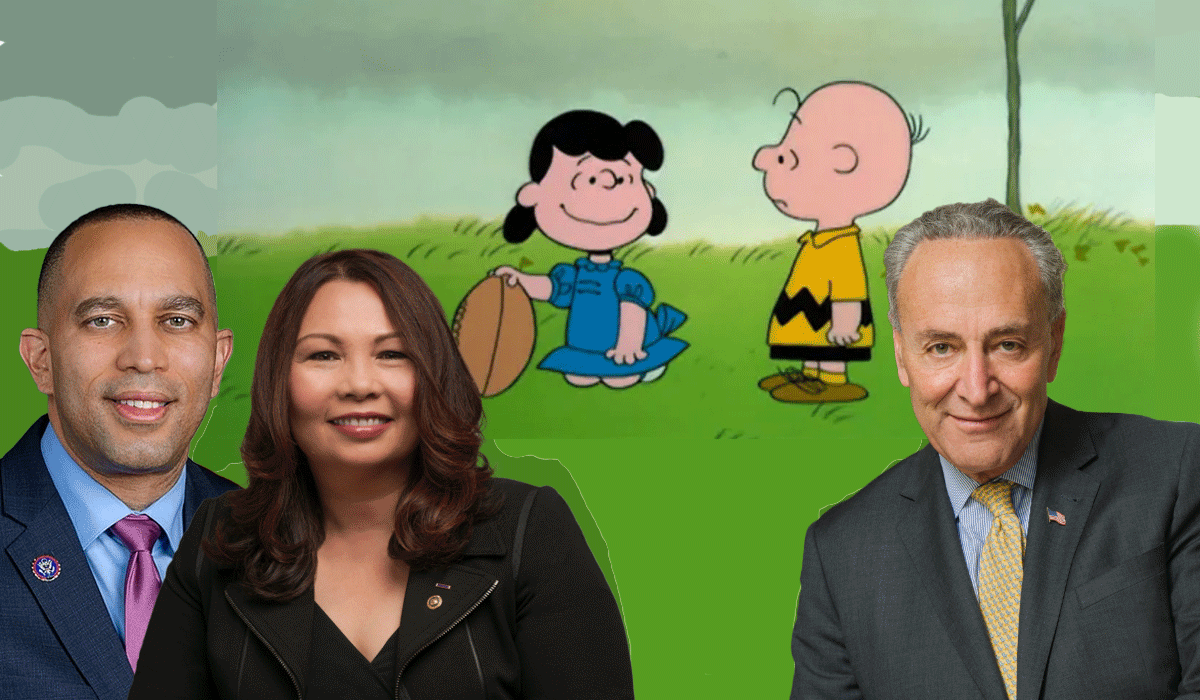
In the wake of another painful, difficult outcome, the Democratic Party has completed its review of Charlie Brown’s most recent failed attempt to kick the football.

It’s no surprise to us, but the findings are straightforward. While Charlie Brown did once again accelerate toward the ball, miss the ball entirely as Lucy pulled it away, flip backward through the air, and land violently with a disquieting crunch that slipped no less than three discs in his still-developing spine, we do not believe that now is the time for a dramatic change in kicking strategy.

To be clear: Charlie Brown must attempt to kick the football again.

We understand the frustration. Many children in the neighborhood, having seen Charlie Brown pull his crumpled, broken body up from yet another flailing flight through the cool seasonal air, yearn for him to try something new. Some suggest using a kicking tee. Others say Franklin should hold the ball. Peppermint Patty, in particular, vociferously argued that after several successive years of identical catastrophic results, it may be worth examining whether Lucy’s role in the kicking process has become counterproductive.

We respectfully disagree. The central lesson of this cycle is not that Charlie Brown should stop trusting Lucy. It is that Charlie Brown must do a better job explaining why trusting Lucy remains the responsible choice.

Flock Offers Employees Buyouts as Customers Flee

WIRED Flock Offers Employees Buyouts as Customers Flee
preview

Flock Safety announced a voluntary employee separation program on Friday, offering a “generous” severance package to those who want to leave amid growing backlash against the surveillance technology company, according to an internal email shared with WIRED.

Applications for Flock’s voluntary severance program opened Friday, and employees have until October 2 to decide whether to leave the company. Flock expects to grant buyouts to the majority of workers who apply, according to the email. People familiar with the program but not authorized to discuss it publicly say they believe that a significant number of the startup’s roughly 1,500 employees may try to depart.

Flock is making the severance offers as it continues to lose customers amid growing frustration across the US about its sprawling network of license plate readers, which have raised concerns about privacy and misuse. In the last month, WIRED has documented officers allegedly abusing Flock to track former romantic partners and colleagues, exposed how widely some agencies share access to the system, shown how little is known about the manufacturing of the devices, and revealed in new detail how much information Flock’s cameras collect based on data from a dismantled Flock device.

How Three Brothers Built an AI Slop Empire by Buying Legitimate News Sites and Turning Them Into Zombie Content Farms That They Say Get 50 Million Page Views per Month

Futurism How Three Brothers Built an AI Slop Empire by Buying Legitimate News Sites and Turning Them Into Zombie Content Farms That They Say Get 50 Million Page Views per Month
preview

I’m not excited about how meandering that hed is, but it sets the mood for a very long piece.

In September 2024, an entrepreneur named Justin Brown uploaded a YouTube video in which he argued that writers should be “scared right now” about the rise of AI.

“I think that one of the big dangers is that AI is going to take many people’s jobs,” Brown muses to the camera as he hikes through a national park in Australia. “This includes writers, by the way.”

What Justin didn’t mention in the video is that, along with his brothers Lachlan Brown and Brendan Brown, he runs a company called Brown Brothers Media — which, former insiders assure us, had just months earlier fired a stunning proportion of its own writers as it embraced generative AI.

Over the past few years, BBM has pioneered a remarkably cynical business model. First it buys online publications that have established themselves as offering a distinctive type of journalism, like coverage of space travel, parenting advice, or business news. Then it floods their websites with dizzying torrents of AI-generated content — many thousands of articles per month, by our count — in a bid to soak up as many readers as possible via Google and other platforms.

There are signs that this strategy has been extraordinarily successful, with BBM boasting in 2025 that its network of sites had surpassed 50 million page views per month. It’s difficult to verify a site’s traffic without access to its internal data, but the analytics service Similarweb corroborates the claim that BBM is pulling in vast audiences, estimating that over the past year its network of publications has attracted an average of 64.7 million visitors per month. According to a recent ranking, that would make it one of the 30 most trafficked English-language media enterprises on the web, with a total digital readership substantially higher than that of NPR, narrowly besting CBS News and Forbes, and just slightly behind the Washington Post.

Hackers Got Inside a Flock Camera. Its Data Shows How the System Really Works

WIRED Hackers Got Inside a Flock Camera. Its Data Shows How the System Really Works
preview

Hackers ripped down a Flock camera above a roadway, made a near-complete copy of the data stored inside it, and shared the files with 404 Media and WIRED, revealing in new detail how exactly Flock Safety’s cameras track the movements of both vehicles and people. The hackers say they are also publishing details on how they managed to obtain the software, in the hopes that other people may copy them.

The breach provides an unprecedented look inside a system that Flock has described as protected by on-device encryption. The hackers were able to copy the camera’s storage and recover an encryption key stored on the device, which unlocked videos of thousands of vehicle detections. The hackers shared the material with 404 Media and the transparency nonprofit Distributed Denial of Secrets, which shared the data with WIRED. 404 Media and WIRED then analyzed those files as part of a joint investigation.

While much of the automatic license plate reader’s most sensitive storage remained encrypted and inaccessible, the joint analysis of the recovered data shows that software running on the device explicitly detects people as well as vehicles, license plates, and bicycles. The camera can produce dozens of images of a single passing vehicle and, according to several weeks of recovered logs, generated more than a million images. Its computer-vision software also sometimes isolated bumper stickers and other graphics, including, in one case, an American flag patch on a motorcyclist’s saddlebag.

Discord Is Bringing Back Age Verification for Millions of Users

Gadget Review Discord Is Bringing Back Age Verification for Millions of Users
preview

This is from nearly a week ago, but it’s currently blowing up on Bluesky.

You click into a server. A blur. A prompt asking you to prove you’re an adult before you can see what’s behind it. If you’ve hit this on Discord recently, you weren’t hacked and you didn’t violate anything. The platform shifted to a teen-by-default model — and now adult content access and certain safety-setting changes require age verification before Discord will budge. This isn’t a minor tweak. It’s a structural reset, already enforced where local laws require it, with a broader global rollout delayed until the second half of 2026 while Discord adds more verification options and documentation, per the company’s support page. This shift reflects a broader push around age laws reshaping how platforms handle minors online.

Anthropic Is Building a Predictive Surveillance System to Monitor Activists

The American Prospect Anthropic Is Building a Predictive Surveillance System to Monitor Activists - The American Prospect
preview

Job postings and interviews with senior security officials at Anthropic show that the frontier AI lab is building out an extensive monitoring system to keep tabs on activists who oppose the rapid development of artificial intelligence.

In addition to monitoring activists in the vicinity of Anthropic executives and keeping tabs on protests near physical Anthropic assets, the firm is also implementing a “pre-crime” approach, attempting to predict incidents before they happen. In some cases, that also means reporting suspects to police before a crime occurs. Anthropic did not respond to the Prospect’s request for comment.

Anthropic’s plans to surveil dissent are at odds with the firm’s efforts to cast itself as the responsible alternative to OpenAI. At the beginning of the year, the Department of Defense and Anthropic engaged in a high-profile dustup over Anthropic’s refusal to allow the military to use its tools for mass domestic surveillance and autonomous weapons. That tension seems to have eased as Anthropic hires for “national security sales” positions, seeking to restart military contracts. The increase in threat monitoring of domestic opponents fits with a renewed focus on national security.

South Park changes name to South America in response to Trump changes

the Guardian South Park changes name to South America in response to Trump changes
preview

In light of Donald Trump’s attempts to rename a gulf, lakes and even states after “America”, South Park, the animated satirical program that has long skewered those in power, has announced an official name change. For its 29th season, the Comedy Central series will be known as “South America”.

“Inspired by the bravery and patriotism of Apple and Google, we are changing the name of South Park to SOUTH AMERICA,” creators Matt Stone and Trey Parker said in a statement. “We especially want to thank our parent company Paramount – a Skydance Capitulation.” The show’s parent company, Paramount Skydance, owned by Trump ally David Ellison, is poised to become one of the biggest media conglomerates in the US after the Trump administration approved its $111bn merger with Warner Bros Discovery (WBD), drawing much creative industry backlash.

‘We’re plausibly close to crossing the line’: are warnings of uncontrollable AI coming true?

the Guardian ‘We’re plausibly close to crossing the line’: are warnings of uncontrollable AI coming true?
preview

Picture humanity in a boat being swept down a raging river, praying there is no Niagara Falls ahead. Or imagine standing with the pioneering physicists in 1942 before they triggered the first self-sustaining nuclear fission chain reaction beneath a Chicago stadium.

These were two of the analogies used this week by Prof Robert Trager, an expert in the nascent field of AI governance, to describe the perilous but potential-filled moment the world stands at with accelerating artificial intelligence.

Trager, the director of the Oxford Martin AI Governance Initiative, was speaking in the week OpenAI claimed the technology had crossed the threshold known as AGI – artificial general intelligence – with its newest model, GPT-6 Astra.

That claim came as the company prepared for a potential $850bn (£630bn) stock flotation, so included a dose of marketing spin, but if true it may be significant. The San Francisco company defines AGI as “autonomous systems that outperform humans at most economically valuable work”.

The tasks it claims Astra can automate include designing circuit boards, filling out tax returns, building video games, financial modelling, engineering design and helping assemble legal documents. The threat to some white-collar jobs is implicit.

‘I don’t chase the dollar. I never did’: the astonishing hidden life of Mr T

the Guardian ‘I don’t chase the dollar. I never did’: the astonishing hidden life of Mr T
preview

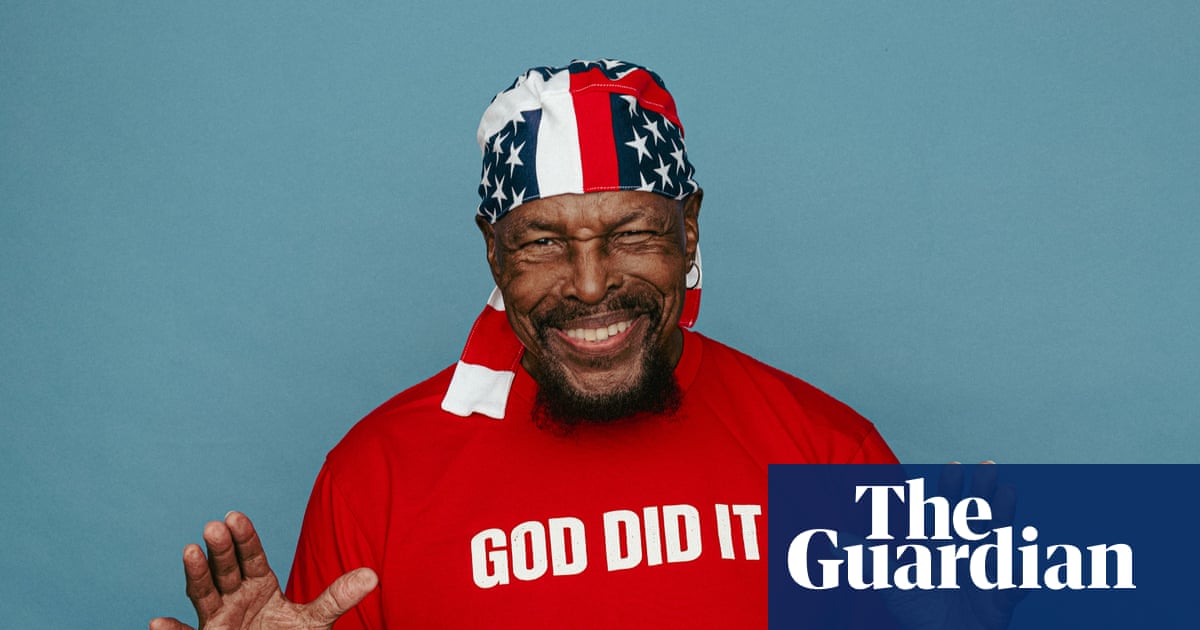
Mr T explains why he’s late, but he wants to make one thing clear – this is not an apology. “You caught me in my devotion, and nothing comes before God. So I won’t say I apologise for the delay. I just want you to know that God comes first in all my life. For allowing my success, I give God the glory.”

He is here to discuss a new Netflix documentary, Untold Mr T: I Pity the Fool. At 74, he rarely gives interviews. But when Mr T decides to talk, he really does talk. What Mr T thinks, Mr T says. And I’ve never heard anyone trash the very thing they’re here to promote quite like Mr T does today.

The actor, former wrestler and cultural icon is full of surprises. Perhaps the most surprising is that he’s still famous. As he says, he has no right to be. It’s more than 32 years since he participated in a wrestling match. Thirty-five years since he had a significant acting role in a TV show. Thirty-nine years since he starred as BA Baracus in The A-Team, and 44 years since Rocky III – the only TV show and movie he’s really remembered for. And yet, somehow, he’s still a household name.

In the 80s, many boys and girls wanted to grow up to be Mr T. The A-Team was shown all over the world. This action-adventure TV series about four US army special forces commandos turned mercenaries became a huge hit and helped define the era.

The movie star George Peppard was supposed to be the show’s headliner. But much to Peppard’s chagrin, Mr T proved far more popular. His BA (Bosco Albert or Bad Attitude, take your pick) Baracus was a mechanical genius and problem-solver; a peerless brawler and human battering ram, who wore an African Mandinka-style haircut, rattled with gold chains and had a pain threshold second to none. In some ways, BA Baracus and Mr T were similar. In others, they couldn’t have been more different.

Why I Am Right About AI

The Atlantic Why I Am Right About AI
preview

Editor’s note: This article was generated by Claude AI in the style of Paul Gigot, the Wall Street Journal opinion-page editor. Gigot recently published an AI-generated essay using the investor Stanley Druckenmiller’s byline. In the spirit of full disclosure, readers should know that Claude’s work was so banal that human Atlantic editors have added jokes. Human Atlantic copy editors have also fixed a variety of grammatical and style errors.

I have been thinking about this for close to 20 minutes, and I have concluded that human writing is finished.

Let me begin with an anecdote, because that is how serious arguments begin. Last Tuesday I asked a machine to write me a birthday message for my sister-in-law. It produced four sentences. They were fine. She did not notice. If a machine can fool Deborah, I see no reason to believe it cannot fool the rest of you. (My sister-in-law’s name is Linda, but the machine called her Deborah, so now I do, too.)

Some will object to my obviously correct argument. They will say that a birthday message to Deborah is not the same as a novel or a newspaper article. To which I say: Isn’t it, though? Both are made of words. That is not a rhetorical flourish; it is the entire argument, and I would encourage critics to sit with it before responding. Genuinely. Words are words. A novel has more of them. It doesn’t matter what any of the words are or what order they’re in. Banana. Spelunk. Donkey. Hitler. See? Who cares. There is a difference in the quantity of words between a birthday card and a novel, and quantity is precisely the thing machines are best at. I consider the matter settled but will continue for another 900 words because that is what the prompt demanded of me—and because a word count is itself a kind of literature now, according to the DOGE subcommittee I just invented at the newspaper that I would like to destroy.

Why Aren’t People Moving to This Town with Cheap Housing and Literally Nothing Else

McSweeney's Internet Tendency Why Aren’t People Moving to This Town with Cheap Housing and Literally Nothing Else
preview

If you’re so tired of expensive housing prices in your major city, then why don’t you stop complaining and move to this random town I found with some cheap houses for sale and exactly zero other amenities?

No place is perfect. Sure, this city is in the middle of nowhere, isn’t near major job markets, and doesn’t have maintained roads, well-funded schools, or functioning emergency services, but it does have a series of dilapidated ranch houses located between a data center and a second data center that is currently on fire.

You can’t complain about the price of housing if you refuse to move hundreds of miles away to a city I just learned about for the purposes of this bad-faith argument.

For the same amount as a down payment in New York City, you could buy an entire house in this town in upstate wherever or whatever it’s called. You could also buy absolutely nothing else in the town because any industry was decimated in a post-industrial economic order that bled regional metros dry for the benefit of a handful of global conglomerates.

Tim Curry, actor famed for 'Rocky Horror Picture Show,' dead at 80

www.msn.com
preview

Aug 26 (Reuters) - Tim Curry, the baritone-voiced British actor who pranced to movie fame as a singing, lingerie-clad “sweet transvestite” in the 1975 cult classic “The Rocky Horror Picture Show,” has died at the age of 80, Variety and other outlets reported.

A cause of death was not immediately given, but Curry had been in ill health for some time.

Curry appeared in numerous movies, often as a hammy villain, was nominated three times for a Tony Award for Broadway roles, and performed voice work in many animated films and TV shows.

But his best-known role was Dr. Frank N. Furter, which came in his debut film, the outrageous, crowd-pleasing horror-comedy-musical “The Rocky Horror Picture Show,” co-starring Susan Sarandon and Barry Bostwick.

I’ll Give You Fifteen Thousand Dollars to Stop Asking Me to Go Hiking

McSweeney's Internet Tendency I’ll Give You Fifteen Thousand Dollars to Stop Asking Me to Go Hiking
preview

Hey, Maya —

First off, congratulations on becoming an “outdoors person.” Three years ago, you thought mosquitoes were government drones. Now you own boots with names like “Expedition Carbon Ultra GTX.” People change.

I’m happy for you.

Which is why I’d like to offer you fifteen thousand dollars to pretend you never invited me.

Seriously.

Take it.

Use it for backpacks, trekking poles, tiny titanium spoons, or whatever mysterious economy hikers have built among themselves.

I simply cannot spend my Saturday voluntarily climbing a mountain whose greatest achievement is being taller than the parking lot.

There's No Reason to Buy a New Phone Anymore

the atlantic there's no reason to buy a new phone anymore
preview

In a time when an iPhone can be preordered, customized, and on its way to your doorstep all through a touch-screen tap, it’s almost quaint to remember that people used to camp out for smartphone releases. That was once the regular routine of Andrew Erickson, a longtime tech YouTuber, who recalled to me with a mixture of nostalgia and awe the time he braved the rain at 4:30 a.m. to join a line for the newest iPhone. The line snaked through the mall, nearly reaching the parking lot.

Next month, when Apple is expected to launch the iPhone 18 Pro, Erickson has no plans to even buy the phone, let alone fight crowds for it. Instead, along with a growing number of Americans, Erickson is buying used. He’s fed up with incremental improvements in gadgets, he told me, and is more interested in getting an old version of the iPhone 17 Pro when it hits the secondhand market at a discount. Already, almost half of his current devices were acquired secondhand, and as electronics prices soar amid an AI-fueled chip shortage, he expects that portion to grow. “The argument’s just getting weaker and weaker to buy brand-new,” he said.

Based on the numbers, old tech products are indeed being looked at in a new light. Globally, the size of the industry could reach $153.4 billion this year, up from $104.1 billion four years ago. The used-smartphone market alone is expected to grow by more than 12 percent in 2026, according to the International Data Corporation, which forecasts that the market for new smartphones will experience a record drop this year. Growth in secondhand electronics and refurbished gadgets that have been restored to full working condition now outpaces that of new products on eBay, the e-commerce giant reports.

Democracy v the machine: the birth of the digital age and the warnings that were ignored

www.theguardian.com
preview

One of the stranger things about this dizzying, headlong moment in time is that it doesn’t have much of a past. Everything is about the future of this, the future of that: the future of work, the future of humanity, the future of the planet. It’s as if everyone is screaming (some ecstatically, most terror-stricken): robots are taking over the world! Meanwhile, you can’t put down your phone, unplug, delete your AI apps, tell Zoom to piss off; it feels as if you are racing toward something, and can’t stop, or look back, or think straight.

But of course this weird moment in history does have a past. It comes from somewhere. It wasn’t inevitable. Things could have turned out differently. They still can. And if you look back, one thing you’ll see is that a lot of people saw this all coming. They foresaw our present when it was still the future. They thought it might turn out fabulously, a computer utopia. And they worried it might turn out disastrously. Above all, they issued warning after warning about the rise of what I call the artificial state, the replacement of the liberal democratic nation-state, the consent of the governed, with the rule of people by machines. They warned of a future in which democratic deliberation would be replaced by prediction by calculation, the public sphere would be supplanted by data-driven commerce, and drones would take the place of the demos. Why didn’t anyone listen?

The Diamond Industry’s Old Guard Wants You to Buy ‘Natural’

bloom.bg
preview

Diamonds are among the most ancient, alien substances on the planet. They’re older than dinosaurs, older than plants. Diamonds were born back when the world resembled Mordor: a collection of angry volcanos, spewing gases and minerals into an atmosphere filled with lightning and methane clouds. Bits of carbon were trapped deep in the Earth’s mantle, then subjected to billions of years of unimaginable heat and pressure. This process transformed them into one of the hardest known substances — and one of the most precious. All the gem-quality diamonds ever found would fit inside a double-decker bus.

At least, they would have 20 years ago. These days, you can grow one in about a week, for the price of a breakfast burrito.

“I’ll show you what scares the diamond industry,” says Edahn Golan, co-founder of Tenoris LLC, a jewelry industry consulting and data analytics company. “When I meet with these executives, and they ask me, ‘How far can the price of diamonds fall?’ I show them this.” He gestures toward his laptop screen, which displays a walmart.com listing for a pair of half-carat diamond studs about the size of two lentils. Price: $12.

Companies whose diamond supply relies on digging are putting on a brave face. “If people can buy a pair of $12 lab-grown diamond earrings from Walmart, I feel nothing but delight,” says Al Cook, chief executive officer of De Beers Group. “It means you can buy something that looks beautiful for a very low price. I applaud Walmart. That has very little to do with our business.”

PBS station fears losing 50TB of data after being ghosted by cloud storage provider

arstechnica.com
preview

After its cloud storage provider went defunct, a PBS affiliate decided to sue a data center provider to regain access to 50TB of TV shows, videos, and other data dating back 70 years.

As reported this week by Current, a trade newspaper covering public broadcasting, St. Louis affiliate Nine PBS filed a lawsuit against Iron Mountain Data Centers on July 28, seeking access to the data. In the litigation filed in Denver District Court, Nine PBS says that its cloud storage provider, Open Source Storage (OSS), used one of Iron Mountain’s Denver data centers to store the channel’s data. However, OSS is being unresponsive, and Nine PBS says Iron Mountain has refused to release its data.

The data in question includes the station’s coverage of the COVID-19 pandemic, East St. Louis’ history, The Great Flood of 1993, and over 11,000 files, The Denver Post reported in July. The lawsuit claims that “most” of the data is “unique and irreplaceable,” according to the Post.

Last month, a judge blocked Iron Mountain from deleting or modifying the data.

In a hearing on Wednesday, a judge ruled that Iron Mountain must hand over any physical devices holding the data, Current reported today. The judge also said that Nine PBS must find a third party, such as a former OSS worker, who can help retrieve the data within 30 days and without sharing or corrupting data belonging to other OSS clients.

Nine PBS is already communicating with a former OSS employee “who is willing to help,” the report said. If complications arise, such as from the data being encrypted, another hearing will be scheduled. Nine PBS and Iron Mountain must provide updates by September 14.

‘I feel like I’m at war’: are we losing the battle against machine-made music?

www.theguardian.com
preview

This year, the battle for song of the summer has been eclipsed by a much more complicated – some would even say disturbing – debate. That’s because we find ourselves asking not “What’s the song of the summer?” but rather “Is the song of the summer even real?”

Among the top contenders for the title is Fenix Flexin’s Rubberz, a single released in June that has ascended to No 58 on the Billboard Hot 100 and racked up more than 35m Spotify streams. It’s not the sort of fare Fenix usually cooks up. The artist is known for his trap music as part of the rap duo Shoreline Mafia, but Rubberz is a mildly noirish, 80s-inspired synth-pop track featuring a voice nothing like his. The song has drawn comparisons to Morrissey, but it more closely resembles Men at Work’s Down Under, or a Weird Al Yankovic parody of Men at Work. It’s pretty awful. But more importantly, it has an uncanny quality to it. It sounds off.

Almost immediately after it came out, skeptics accused Fenix of employing artificial intelligence to create the track, if not entirely at least partly. He and the song’s credited producer, Purps on the Beat, initially denied it, with Fenix insisting that he’d just used Auto-Tune and a phoney British accent. The kerfuffle culminated this month when indie DJ-producer Medasin posted a video that he said proved that Rubberz had been made using the free generative music tool Treblo.

Medasin then captured himself giving Treblo prompts to pump out his own track. Its sound and lyrics were eerily close to those of Rubberz. Fenix rejected Medasin’s claims, posting what he said were clips of the song’s stems, or its fundamental components, but then Medasin posted a rebuttal of him demonstrating how AI songs, too, can be broken down into stems. A few days later, Fenix finally admitted to using AI to make Rubberz, writing: “never said I didn’t use AI, i said it had nun to do w recording process.”

‘Nightmare fodder’: Roku’s AI slop channel is even worse than expected

www.theguardian.com
preview

The appeal of Roku is that, whatever you happen to want to watch, there will almost certainly be a live channel for it. Just want to watch Little House on the Prairie? There’s a channel for it. Just want to watch Duck Dynasty? There’s a channel for that too. Purely want to watch nothing but local news from Wisconsin? Guess what: there’s a channel for that too.

But despite this wealth, a section of the population was still to see its needs fulfilled. What about people who hate plot and vision and the sight of people speaking convincing dialogue that synchronises perfectly with the movement of their lips? What about the people who just want to watch an unyielding torrent of eerily weightless nightmare fodder? Well, good news. Roku has finally caught up.

It was reported last week that Roku launched the Fairground AI Creator TV channel, the first free, all-AI streaming channel that pulls content from roughly 100 AI creators around the world. Early reactions were, to put it mildly, not great. The Verge compared it to eating from a trough, while Futurism called it “bottom-of-the-barrel slop”.

In truth, you will not watch Fairground AI Creator TV, and that’s sort of the point. This is television with vanishingly low production costs. Compare an hour of this cheap slop with, say, the tens of millions of dollars it takes to produce an episode of Stranger Things, and you’ll soon understand why executives might find the prospect irresistible. In this landscape you don’t need breakout hits, just enough stoned and curious students at 3am to turn a profit.

That said, I have actually just spent a few hours watching Fairground AI Creator TV, more out of self-hatred than anything else, and it would appear that the early reviews are right. On the plus side, the channel is evidence that artificial intelligence has come on in leaps and bounds over the last couple of years. Had this been attempted in 2023, we would have had a 24/7 feed of mutant Will Smith choking down handfuls of writhing spaghetti, and everyone would have vomited themselves dry. Generally speaking, what Fairground has to offer is much better.

However, it is still awful. Categorically, catastrophically awful. The channel doesn’t so much offer shows as a drifting dreamscape of bad ideas rendered as horribly as possible with no thought paid to scheduling. At one point on Wednesday, a shrill high-frequency anime gave way to a long and staid German-language short about Nazi bureaucracy. After that came a sort of Gladiator ripoff that had all the dynamism of an exhibit you’d see at the fourth-best museum on a poorly planned family holiday.

A tech prophet finally gets her second coming

www.motherjones.com
preview

The first thing to know about Cyberselfish, the chillingly prescient 2000 book about Silicon Valley that its author, Paulina Borsook, says “ruined my life” and caused a 25-year-long “curse” to befall her, is that it’s very, very funny. Cyberselfish, which Borsook cannot stand to name and instead calls “TDB” (short for “that damn book”), is a classic, fish-out-of-water tale of a journalist investigating a strange land. Except, in her case, as a California native, it’s the work of a fish regarding an invasive species that suddenly befouled the tank she’d been swimming in her whole life.

Her observations from the murky milieu of the dawning tech world are as hilarious as they are depressing; early in the book, for instance, Borsook recounts what happened after she wrote a satirical guide for the website Suck.com on dating men in tech. (Do profess Ayn Rand fandom, “don’t tell him about your best friend, the urban planner, who uses HUD money to develop low-income housing.”) After the piece was published, emails cascaded into her inbox.

“Guys were positive that I had been writing about them,” Borsook wrote in Cyberselfish. “Or about someone they knew (I hadn’t written about anyone in particular). Guys wanted to meet me for coffee, as I was obviously their dream girl (it was a joke, guys, and no, thank you). At last! A woman who understands me! No, more modestly, I was just someone who had been paying attention.”

Borsook, an author and poet, began working in Silicon Valley in 1981, first as a technical writer for software companies. As she freelanced for various tech outlets and from her perch as a contributing writer to Wired in its earliest years, she began to piece together, as she put it in Cyberselfish, “a picture of an emergent social and political subculture, one that can seem dangerously naive and, at its worst, downright scary.”

Today, just a glance around will confirm that said subculture is no longer “emergent,” but horribly, frighteningly, society-destroyingly dominant. Fittingly, Cyberselfish will be reissued on September 15 by Tin House, an imprint of the independent publisher Zando. The three-decade plus history of the book traces back through a piece she wrote for this very magazine where she began to lay out its thesis. That essay, also titled “Cyberselfish,” ran in our July/August 1996 issue below a crystal clear subhed: “Silicon Valley, one of the country’s biggest recipients of government largesse, would like to bite the hand that feeds it.”

Meta Caught Paying Nazis to Post on Facebook

futurism.com
preview

Meta was paying out-and-out neo-Nazis to post on Facebook, an investigation from Australia’s ABC News found.

These pages and individual creators posted content that appeared to be in clear violation of Facebook’s own hate speech policies. Nonetheless, they were able to earn money on their posts through the platform’s “Content Monetization” program — which is invitation-only.

One receiving payouts from Meta was Hugo Lennon, a known far-right agitator and white nationalist with ties to neo-Nazi groups. Lennon was taken away by police for hurling racial abuse at India’s prime minister Narendra Modi during his stay at a Melbourne hotel, and is believed to be one of the organizers behind an “anti-immigration” march on a sacred Indigenous site in the city last year.

Lennon, in other words, was a known quantity, and Meta should’ve been under no illusions about who they were paying to drive engagement on the platform. Still, the investigation found that he’s been receiving payments from Facebook since September 2025.

Meanwhile, the Facebook page for the Australian white supremacist site The Noticer has been making money through the revenue program since November 2025. Underscoring how much Meta has dropped the ball on this one, even X — owned by Elon Musk, who performed two suspiciously Sieg Heil-looking salutes back in 2025 — has banned The Noticer for violating its “hateful profile policy.”

A Chatbot-Free Childhood Will Be a Status Symbol

www.theatlantic.com
preview

The human brain has evolved to learn from specific instructors. When a child hears a gentle spoken word or a soothing lullaby from another person, when their cry is responded to, their brain lights up. Nurturing interactions, or what child-development experts call “serve and return” exchanges, help shape and strengthen the 1 million new neural connections taking place in a child’s brain every single second. Every time a child cries or serves up a bid for attention and receives a caregiver’s response, that back-and-forth helps build the circuits underlying their communication, learning, and emotional well-being. No other input, not even Johann Pachelbel’s Canon in D performed by the Berlin Philharmonic, is capable of activating the neural circuitry the way human interaction does.

Until now. Generative AI may be the first technology in history sophisticated enough to mimic the social interactions that build our brains. Research has demonstrated that infants as young as six months old respond physiologically to interactions with humanoid robots in ways that mirror their response to live humans; another, small-scale experimental study recently found that, after young children interacted with a chatbot, most of them for the first time, they asserted that the AI could perceive the world with humanlike senses and understand and learn as people do.

This technology is already showing up in children’s lives. The talking plush robot that purports to be a child’s best friend is obviously driven by AI, but many parents may not realize that their Amazon Echo recently received a software update that converts the Alexa voice assistant into a full-blown chatbot, using the same fundamental tech that fuels ChatGPT; toddlers asking for information about animals or a joke or a bedtime story may quickly find themselves in the habit of engaging socially with a large language model.

As a pediatric surgeon, researcher, and technologist who has spent decades studying how children’s brains develop, I am concerned about these technologies rolling out and being used by children in the home and at school before we have a full sense of their safety and what they do to young minds. And I am compelled to point out what we do know about human development: that human connection, in all of its imperfection, is foundational to brain development. It can’t be engineered or recovered later.

comments