0

Understanding the role of pareidolia in early human cave art

Phys.org Understanding the role of pareidolia in early human cave art phys.org
preview

A psychological phenomenon where people see meaningful forms in random patterns, such as seeing faces in clouds, may have stimulated early humans to make cave art.

A psychological phenomenon where people see meaningful forms in random patterns, such as seeing faces in clouds, may have stimulated early humans to make cave art.

0

New Indo-European language discovered during excavation in Turkey

Phys.org New Indo-European language discovered during excavation in Turkey phys.org
preview

An excavation in Turkey has brought to light an unknown Indo-European language. Professor Daniel Schwemer, an expert for the ancient Near East, is involved in investigating the discovery.

An excavation in Turkey has brought to light an unknown Indo-European language. Professor Daniel Schwemer, an expert for the ancient Near East, is involved in investigating the discovery.

0

Chemical Analysis of Viking Combs Hints at Long-Distance Trade

preview

YORK, ENGLAND—According to a statement released by the University of York, a new analysis of collagen extracted from Viking hair combs by researchers from the University of York, University of Stockholm, the University of Barcelona, the Center for Baltic and Scandinavian Archaeology, and the Leibniz Center for Archaeology suggests trade between the Viking settlement of Hedeby in Germany and northern Scandinavia may have originated earlier than previously thought. Large amounts of craft production waste, mostly comprised of red deer antler, has been recovered at Hedeby, a major antler-working center. But the study found that 85 to 90 percent of the finished antler combs unearthed in Hedeby had been made from the antlers of reindeer, which live in northern Scandinavia. The study therefore indicates that the combs unearthed at Hedeby had been manufactured elsewhere and then transported on a large scale as early as A.D. 800. Read the original scholarly article about this research in Antiquity.

YORK, ENGLAND—According to a statement released by the University of York, a new analysis of collagen extracted from Viking hair combs by researchers from the University of York, University of Stockholm, the University of Barcelona, the Center for Baltic and Scandinavian Archaeology, and the Leibniz Center for Archaeology suggests trade between the Viking settlement of Hedeby in Germany and northern Scandinavia may have originated earlier than previously thought. Large amounts of craft production waste, mostly comprised of red deer antler, has been recovered at Hedeby, a major antler-working center. But the study found that 85 to 90 percent of the finished antler combs unearthed in Hedeby had been made from the antlers of reindeer, which live in northern Scandinavia. The study therefore indicates that the combs unearthed at Hedeby had been manufactured elsewhere and then transported on a large scale as early as A.D. 800. Read the original scholarly article about this research in Antiquity.

0

Hominins Built Wooden Structures and Transformed Environment

preview

LIVERPOOL, ENGLAND—The Guardian reports that remains of a wooden structure built by hominins has been discovered near Zambia’s Kalambo Falls by a team of researchers led by Larry Barham of the University of Liverpool. The materials have been dated to least 476,000 years ago by team members from the University of Aberystwyth with luminescence dating techniques, which reveal the last time minerals in the sands surrounding the artifacts had been exposed to sunlight. The remains of the structure include two logs bearing cutting, chopping, and scraping marks made with stone tools also found at the site. The end of one log crosses the second and is held in place with a large notch. “When I first saw it, I thought this can’t be real,” Barham said. He thinks the structure may have been part of a walkway or a foundation for a platform. “A platform could be used as a place to store things, to keep firewood or food dry, or it might have been a place to sit and make things. You could put a little shelter on top and sleep there,” he explained. The dating of the structure indicates it could have been made by Homo heidelbergensis, a hominin that lived in the region at the time. During their investigation of the Kalambo Falls area, Barham and his colleagues also recovered a wooden wedge, a split branch with a notch in it that may have been part of a trap, and a log that had been cut at both ends.

LIVERPOOL, ENGLAND—The Guardian reports that remains of a wooden structure built by hominins has been discovered near Zambia’s Kalambo Falls by a team of researchers led by Larry Barham of the University of Liverpool. The materials have been dated to least 476,000 years ago by team members from the University of Aberystwyth with luminescence dating techniques, which reveal the last time minerals in the sands surrounding the artifacts had been exposed to sunlight. The remains of the structure include two logs bearing cutting, chopping, and scraping marks made with stone tools also found at the site. The end of one log crosses the second and is held in place with a large notch. “When I first saw it, I thought this can’t be real,” Barham said. He thinks the structure may have been part of a walkway or a foundation for a platform. “A platform could be used as a place to store things, to keep firewood or food dry, or it might have been a place to sit and make things. You could put a little shelter on top and sleep there,” he explained. The dating of the structure indicates it could have been made by Homo heidelbergensis, a hominin that lived in the region at the time. During their investigation of the Kalambo Falls area, Barham and his colleagues also recovered a wooden wedge, a split branch with a notch in it that may have been part of a trap, and a log that had been cut at both ends.

0

Civil War Remains Identified in Williamsburg

Archaeology Magazine News - Civil War Remains Identified in Williamsburg - Archaeology Magazine www.archaeology.org
preview

WILLIAMSBURG, VIRGINIA—Colonial Williamsburg archaeologists have determined that the remains of 21 or 22 men found in a historic area of the city belong to Confederate soldiers, according to a report in the Daily Press. The men likely died in a Union-operated hospital established after the Battle of Williamsburg on May 5, 1862, which claimed the lives of 1,682 Confederate soldiers and 2,283 Union soldiers. The men’s remains will eventually be reburied, along with the artifacts found with them, including a snuff bottle, toothbrush, buttons, and gold coins. “I’m really happy we’re able to work toward identifying these guys (and) then provide some level to dignity” in their reburial, said Jack Gary, Colonial Williamsburg Foundation’s director of archaeology who is leading the recovery project.

WILLIAMSBURG, VIRGINIA—Colonial Williamsburg archaeologists have determined that the remains of 21 or 22 men found in a historic area of the city belong to Confederate soldiers, according to a report in the Daily Press. The men likely died in a Union-operated hospital established after the Battle of Williamsburg on May 5, 1862, which claimed the lives of 1,682 Confederate soldiers and 2,283 Union soldiers. The men’s remains will eventually be reburied, along with the artifacts found with them, including a snuff bottle, toothbrush, buttons, and gold coins. “I’m really happy we’re able to work toward identifying these guys (and) then provide some level to dignity” in their reburial, said Jack Gary, Colonial Williamsburg Foundation’s director of archaeology who is leading the recovery project.

0

Grieving Wordsworth found solace in poignant shipwreck treasure after brother’s death

preview

When the Romantic poet’s younger brother John died at sea, marine artefacts helped him bear the loss, research reveals

When William Wordsworth’s beloved younger brother John died on a ship that sank in rough seas off the coast of Dorset in 1805, the great Romantic poet dealt with his sorrow by writing of the “calamitous” loss: “Sea, Ship, drown’d, Shipwreck – so it came/The meek, the brave, the good, was gone;/ He who had been our living John/ Was nothing but a name.”

John was captain of the East India Company’s largest ship, the Earl of Abergavenny, which sank after hitting rocks shortly after embarking on a trading voyage to China. He was among more than 250 crew and passengers who perished on a bitterly cold February night.

0

Revival of Stonehenge road tunnel plan triggers new legal challenge

the Guardian Revival of Stonehenge road tunnel plan triggers new legal challenge www.theguardian.com
preview

Campaigners to return to the courts after planned two-mile tunnel near site, blocked in 2021, is greenlit again

Campaigners have launched a fresh legal battle after the government once again greenlit plans for a controversial road tunnel at Stonehenge, after the development was successfully blocked two years ago.

The Save Stonehenge World Heritage Site campaign (SSWHS) is challenging the decision by the transport secretary, Mark Harper, to allow a £1.7bn scheme to widen roads and dig a two-mile tunnel near the ancient site. The plan is designed to improve traffic on the A303, a congestion hotspot in south-west England.

0

‘Nobody was expecting it’: British Museum warned reputation seriously damaged and treasures will take decades to recover

the Guardian ‘Nobody was expecting it’: British Museum warned reputation seriously damaged and treasures will take decades to recover www.theguardian.com
preview

Experts say loss of 1,500 items reveals lax cataloguing and boosts case for returning objects to countries of origin

Close observers of the antiquities market tend to be a cynical bunch, having witnessed any number of scams, dubious practices and illicit trading. Yet there was a collective expression of shock among them last week when news emerged of the unexplained absence of a reported around 2,000 items from the British Museum’s priceless collection of ancient and historical artefacts, leading to the resignation of director Hartwig Fischer.

“The volume of missing objects is huge,” says Christos Tsirogiannis, a forensic archaeologist who works with Trafficking Culture, which researches global traffic in looted cultural objects. “No experts were expecting this to happen in one of the world’s biggest museums.”

0

Doctoral thesis: The land use of West Estonian lowlands in Late Stone Age turned out to be seasonal

Phys.org Doctoral thesis: The land use of West Estonian lowlands in Late Stone Age turned out to be seasonal phys.org
preview

At the end of the Middle Stone Age and during the Late Stone Age, settlements in the West Estonian lowlands were more seasonal than in the neighboring areas of the island of Saaremaa and the Pärnu Bay catchment area, indicates the study conducted by Kristjan Sander who defended his doctoral thesis at Tallinn University’s School of Humanities. The doctoral thesis examines the period of approximately 5300-2600 BC.

The time frame of the thesis begins with the end of the maximum water level of one of the development stages of the Baltic Sea following the Last Glacial Period—the Littorina Sea—since which the sea level in Estonia has been continuously falling. To this day, post-glacial rebound is particularly fast in West and North-West Estonia, and the ancient coastlines are now located as far as up to 30 km inland in certain locations. In many places, millennia-old beach formations are still visible in nature today.

In the two geographical areas examined, Kristjan Sander searched for settlements of Stone Age people on the land freed from under the sea as a result of post-glacial rebound and on inland riverbanks up to 10 km from the coastline of the Littorina Sea at its maximum water level.

One of the areas studied is situated in North-West Estonia, embracing the peninsulas bordering the sea bay that lay there in the place of the present-day Suursoo, and, further northwest, the Elbiku mountain that was once an island located up to 15 km from the coast.

Fieldwork took place in the villages of Kõmmaste, Risti, Vilivalla, Vihterpalu, Variku, and Nõmmemaa. The second examined area is situated on the beach of Ancient Matsalu Bay on the Üdruma—Teenuse—Vana-Vigala—Avaste route and on the southern edge of Matsalu National Park where the current highlands (Kirbla, Lautna, Kloostri, Hälvati, Lihula, Massu, and Salevere) formed an archipelago resembling today’s Väinameri Sea.

New settlements were searched for by collecting finds on open land, i.e. plowed fields, allotments, road verges, firebreaks, forest roads, and clearings.

Kristjan Sander’s doctoral thesis fills a big gap in studying Stone Age in Estonia as prior to Sander’s exploration only four settlements and one burial site were known in Western Estonian lowlands. During fieldwork, 102 settlements (at least 3 finds) and 39 incidental discovery sites were mapped.

Surprisingly, no settlements were identified that could, based on the material found and dimensions established, be considered more permanent in nature as are known settlements in the neighboring Pärnu Bay catchment area and the island of Saaremaa. Regarding the studied period, solely seasonal land use in large areas like the ones in question is a new discovery on the entire eastern shore of the Baltic Sea, although individual seasonal settlements have also been described earlier.

Stone Age settlements in Western Estonia expanded on different terrains at different times. The oldest settlements of the Middle Stone Age are located at river estuaries and ancient coastal lagoons as well as at the tips of peninsulas. At the end of the Middle Stone Age at the latest, starting from the Narva stage (5200-3900 BC), small islands were also made use of. At the beginning of the New Stone Age, in the Comb Ware stage (approx. 3900–1800 BC), additional settlements were built on the riverbanks near the coast.

Based on ethnographic analogies, Sander hypothesizes that the observed settlement dynamics are caused by the intensification of fishing in response to the slow cooling of the climate. It can be assumed then that the seasonal settlement situated in the southern area examined originated from Saaremaa island as inhabitants of the Pärnu Bay catchment area already had an abundance of large rivers rich in fish.

Assembling such a broader picture of settlements provides an insight into the ways of life and society of the distant past that cannot be replaced by excavation of individual settlements. However, archaeological excavations are indeed required to investigate the activities that took place in the newly identified settlements.


At the end of the Middle Stone Age and during the Late Stone Age, settlements in the West Estonian lowlands were more seasonal than in the neighboring areas of the island of Saaremaa and the Pärnu Bay catchment area, indicates the study conducted by Kristjan Sander who defended his doctoral thesis at Tallinn University’s School of Humanities. The doctoral thesis examines the period of approximately 5300-2600 BC.

The time frame of the thesis begins with the end of the maximum water level of one of the development stages of the Baltic Sea following the Last Glacial Period—the Littorina Sea—since which the sea level in Estonia has been continuously falling. To this day, post-glacial rebound is particularly fast in West and North-West Estonia, and the ancient coastlines are now located as far as up to 30 km inland in certain locations. In many places, millennia-old beach formations are still visible in nature today.

In the two geographical areas examined, Kristjan Sander searched for settlements of Stone Age people on the land freed from under the sea as a result of post-glacial rebound and on inland riverbanks up to 10 km from the coastline of the Littorina Sea at its maximum water level.

One of the areas studied is situated in North-West Estonia, embracing the peninsulas bordering the sea bay that lay there in the place of the present-day Suursoo, and, further northwest, the Elbiku mountain that was once an island located up to 15 km from the coast.

Fieldwork took place in the villages of Kõmmaste, Risti, Vilivalla, Vihterpalu, Variku, and Nõmmemaa. The second examined area is situated on the beach of Ancient Matsalu Bay on the Üdruma—Teenuse—Vana-Vigala—Avaste route and on the southern edge of Matsalu National Park where the current highlands (Kirbla, Lautna, Kloostri, Hälvati, Lihula, Massu, and Salevere) formed an archipelago resembling today’s Väinameri Sea.

New settlements were searched for by collecting finds on open land, i.e. plowed fields, allotments, road verges, firebreaks, forest roads, and clearings.

Kristjan Sander’s doctoral thesis fills a big gap in studying Stone Age in Estonia as prior to Sander’s exploration only four settlements and one burial site were known in Western Estonian lowlands. During fieldwork, 102 settlements (at least 3 finds) and 39 incidental discovery sites were mapped.

Surprisingly, no settlements were identified that could, based on the material found and dimensions established, be considered more permanent in nature as are known settlements in the neighboring Pärnu Bay catchment area and the island of Saaremaa. Regarding the studied period, solely seasonal land use in large areas like the ones in question is a new discovery on the entire eastern shore of the Baltic Sea, although individual seasonal settlements have also been described earlier.

Stone Age settlements in Western Estonia expanded on different terrains at different times. The oldest settlements of the Middle Stone Age are located at river estuaries and ancient coastal lagoons as well as at the tips of peninsulas. At the end of the Middle Stone Age at the latest, starting from the Narva stage (5200-3900 BC), small islands were also made use of. At the beginning of the New Stone Age, in the Comb Ware stage (approx. 3900–1800 BC), additional settlements were built on the riverbanks near the coast.

Based on ethnographic analogies, Sander hypothesizes that the observed settlement dynamics are caused by the intensification of fishing in response to the slow cooling of the climate. It can be assumed then that the seasonal settlement situated in the southern area examined originated from Saaremaa island as inhabitants of the Pärnu Bay catchment area already had an abundance of large rivers rich in fish.

Assembling such a broader picture of settlements provides an insight into the ways of life and society of the distant past that cannot be replaced by excavation of individual settlements. However, archaeological excavations are indeed required to investigate the activities that took place in the newly identified settlements.
0

Possible Evidence of Deer Sacrifice Uncovered in England

Archaeology Magazine News - Possible Evidence of Deer Sacrifice Uncovered in England - Archaeology Magazine www.archaeology.org
preview

Skeletons of two red deer dating to the Bronze Age were unearthed in an ancient pit during work to build a new water grid across the East of England, according to a statement released by Anglian Water. The deer bones, which were buried more than 4,000 years ago, bear no signs of butchery. Alongside the remains, archaeologists found pottery made by members of the Bell Beaker culture, who originated in Europe and began to produce their distinctive, bell-shaped ceramics between 2800 and 2300 B.C. “The red deer may have been left as a sacrifice or offering by Early Bronze Age people,” project archaeologist Jonathan Hutchings said. “Alternatively, it could have been a sort of ‘funeral’ for the deer, or a way to ward off or attract spirits.”

Skeletons of two red deer dating to the Bronze Age were unearthed in an ancient pit during work to build a new water grid across the East of England, according to a statement released by Anglian Water. The deer bones, which were buried more than 4,000 years ago, bear no signs of butchery. Alongside the remains, archaeologists found pottery made by members of the Bell Beaker culture, who originated in Europe and began to produce their distinctive, bell-shaped ceramics between 2800 and 2300 B.C. “The red deer may have been left as a sacrifice or offering by Early Bronze Age people,” project archaeologist Jonathan Hutchings said. “Alternatively, it could have been a sort of ‘funeral’ for the deer, or a way to ward off or attract spirits.”

0

Looking for Community Mods

preview

If you are an anthropologist or just someone who loves archaeology we are currently looking for mods to help grow c/archaeology! Please comment below if you are interested.

If you are an anthropologist or just someone who loves archaeology we are currently looking for mods to help grow c/archaeology! Please comment below if you are interested.

0

The idea that imprisonment 'corrects' prisoners stretches back to some of the earliest texts in history

Phys.org The idea that imprisonment 'corrects' prisoners stretches back to some of the earliest texts in history phys.org
preview

Prisons are places of suffering. But in theory, they aim for something beyond punishment: reform.

In the United States, the goal of prisoner rehabilitation can be traced back, in part, to the 1876 opening of the Elmira Reformatory in upstate New York. Purported to be an institution of “benevolent reform,” the reformatory aimed to transform prisoners, not just deprive them—though founder Zebulon Brockway, known as the “Father of American Corrections,” was notoriously harsh.

Other states soon adopted the reformatory model, and the notion that prisons are places to “correct” people has become a staple of the judicial system.

But the idea that imprisonment and suffering were supposedly good for the prisoner didn’t emerge in the 19th century. The earliest evidence goes back some 4,000 years: to a hymn in Mesopotamia, in modern-day Iraq, praising a prison goddess named Nungal.

Almost a decade ago, as a graduate student researching slavery in early Mesopotamia, I came across numerous texts dealing with imprisonment. Some were administrative documents dealing with everyday accounting information. Others were legal texts, literature or personal letters. I became fascinated with imprisonment in these cultures: Most of them detained suspects only briefly, but in literary and ritual texts, imprisonment was seen as a transformative, purifying experience.

0

Study finds evidence of the formation and structural evolution of prehistoric agricultural economy in Central China

Phys.org Study finds evidence of the formation and structural evolution of prehistoric agricultural economy in Central China phys.org
preview

A research team led by Prof. Yang Yuzhang from the University of Science and Technology of China (USTC) of the Chinese Academy of Sciences (CAS) investigated the human subsistence strategy evolution of agricultural structure during the Yangshao culture period (ca. 6400-5300 cal. BP) at Changge Shigu, a representative prehistoric site in the Central Plains region.

The study was published in Archaeological and Anthropological Sciences.

Previous studies have shown that in the middle and late Yangshao culture (ca. 6000-5000 BP), all major regional civilizations in China established agricultural production as the mainstay of the ancestors’ living economy.

The Central Plains region, with west-central Henan and south-central Shanxi as its core, played a leading role in the origin and early development of Chinese civilization, which is closely related to the sustained development of the agricultural economy and the formation of a diversified crop cultivation system in the region 6,000 years before present.

However, due to a lack of reliable archaeobotanical evidence and accurate chronological data, the archaeological community is still unclear about the exact time and structural evolution of the Yangshao-era agricultural economy in the region.

In this study, the researchers employed the method of analyzing the charred plant remains, combined with the high-precision accelerator mass spectrometer (AMS) 14C dating of a series of samples.

The results showed that the identifiable charred plant remains found in the flotation soil samples of the Yangshao culture period at the Shigu site are dominated by three kinds of crops planted, namely broomcorn millet, foxtail millet, and rice, as well as various kinds of field weed seeds, among which the crops occupied a dominant position. the proportion of rice is lower than those of millet. Weed seeds are predominantly from the grass family.

The results also showed that agricultural production based on the cultivation of two types of millets, namely the dryland crops, has become the main way of obtaining plant food resources for the ancestors of Shigu, and the main position of the agricultural economy in the Central Plains region has been established 6,400 years ago.

Since the Yangshao culture 6,000 years ago, the proportion of rice in the site significantly declined. The millets took an absolute main position in the agricultural structure. This change is attributed to the deterioration of the climate environment at that time.

This study clarifies for the first time the exact time of the formation of the prehistoric agricultural economy in the Central Plains, the core area of the origin of Chinese civilization, as well as the evolution process of the economic structure of rice and millet farming and its possible driving factors in the Yangshao culture period (ca. 7000-5000 BP) in the study area. The results provide key research materials for the evolution of prehistoric human subsistence strategy, agricultural economy, and the origin of civilization in the Central Plains region.

0

Roman Calendar Fragments Found at Ostia

Archaeology Magazine News - Roman Calendar Fragments Found at Ostia - Archaeology Magazine www.archaeology.org
preview

According to a report in The Guardian, archaeologists working at the site of Ostia Antica about 20 miles from Rome have uncovered fragments of marble slabs called fasti recording official events that took place in A.D. 128 during the reign of the emperor Hadrian (reigned A.D. 117–138). One of the dates mentioned is January 10th, when the emperor was given the title of pater patriae, or father of the country, and his wife, Sabina, received the title Augusta. Hadrian’s April 11th trip to Africa is also noted, as is his dedication of a building in Rome which may be the Pantheon. Alessandro D’Alessio, director of the Ostia Antica Archaeological Park, calls the discovery “extraordinary” and believes that it will reveal more about the activities of the famous emperor and about ancient Ostia as well.

According to a report in The Guardian, archaeologists working at the site of Ostia Antica about 20 miles from Rome have uncovered fragments of marble slabs called fasti recording official events that took place in A.D. 128 during the reign of the emperor Hadrian (reigned A.D. 117–138). One of the dates mentioned is January 10th, when the emperor was given the title of pater patriae, or father of the country, and his wife, Sabina, received the title Augusta. Hadrian’s April 11th trip to Africa is also noted, as is his dedication of a building in Rome which may be the Pantheon. Alessandro D’Alessio, director of the Ostia Antica Archaeological Park, calls the discovery “extraordinary” and believes that it will reveal more about the activities of the famous emperor and about ancient Ostia as well.

0

Sequencing genes of Iron and Bronze Age peoples to better understand early Mediterranean migration patterns

Phys.org Sequencing genes of Iron and Bronze Age peoples to better understand early Mediterranean migration patterns phys.org
preview

An international team of anthropologists, archaeologists and geneticists has learned more about the migration patterns of people living around the Mediterranean Sea during the Iron and Bronze ages. In their study, reported in the journal Nature Ecology & Evolution, the group conducted genetic sequencing on the remains of 30 people who lived during the Iron or Bronze Age in Italy, Tunisia and Sardinia.

An international team of anthropologists, archaeologists and geneticists has learned more about the migration patterns of people living around the Mediterranean Sea during the Iron and Bronze ages. In their study, reported in the journal Nature Ecology & Evolution, the group conducted genetic sequencing on the remains of 30 people who lived during the Iron or Bronze Age in Italy, Tunisia and Sardinia.

0

Ancient metal cauldrons give us clues about what people ate in the Bronze Age

Phys.org Ancient metal cauldrons give us clues about what people ate in the Bronze Age phys.org
preview

Archaeologists have long been drawing conclusions about how ancient tools were used by the people who crafted them based on written records and context clues. But with dietary practices, they have had to make assumptions about what was eaten and how it was prepared.

Archaeologists have long been drawing conclusions about how ancient tools were used by the people who crafted them based on written records and context clues. But with dietary practices, they have had to make assumptions about what was eaten and how it was prepared.

0

Atlatl weapon use by prehistoric females equalized the division of labor while hunting, experimental study shows

Phys.org Atlatl weapon use by prehistoric females equalized the division of labor while hunting, experimental study shows phys.org
preview

A new study led by archaeologist Michelle Bebber, Ph.D., an assistant professor in Kent State University’s Department of Anthropology, has demonstrated that the atlatl (i.e., spear thrower) functions as an “equalizer,” a finding which supports women’s potential active role as prehistoric hunters.

A new study led by archaeologist Michelle Bebber, Ph.D., an assistant professor in Kent State University’s Department of Anthropology, has demonstrated that the atlatl (i.e., spear thrower) functions as an “equalizer,” a finding which supports women’s potential active role as prehistoric hunters.

0

Early Island Sugar Plantation Site Investigated

Archaeology Magazine News - Early Island Sugar Plantation Site Investigated - Archaeology Magazine www.archaeology.org
preview

COLOGNE, GERMANY—According to a Live Science report, M. Dores Cruz of the University of Cologne and her colleagues have found early evidence for the practice of plantation slavery at Praia Melão, the recently identified site of a sixteenth-century sugar mill on the northeastern coast of the island of São Tomé. The Portuguese inhabited the island, which is located off the coast of West Africa in the Gulf of Guinea, in the late fifteenth century. They soon found, however, that migrants to the previously uninhabited island endured high rates of malaria. Convicts, Jewish children, and enslaved Africans were soon forced to work there, harvesting and processing sugar cane, and building and maintaining the sugar mills. Praia Melão includes a large stone two-story building with a clay roof. Its lower floor served as a sugar boiling room, while domestic quarters were placed on the upper floor. Fragments of cone-shaped sugar molds similar to those found at Portuguese sugar mills in Madeira have also been recovered at the site. By 1530, plantations on São Tomé were so profitable that additional sugar mills were constructed, but the Portuguese eventually moved much of their sugar production to Brazil in the early seventeenth century. Read the original scholarly article about this research in Antiquity.

COLOGNE, GERMANY—According to a Live Science report, M. Dores Cruz of the University of Cologne and her colleagues have found early evidence for the practice of plantation slavery at Praia Melão, the recently identified site of a sixteenth-century sugar mill on the northeastern coast of the island of São Tomé. The Portuguese inhabited the island, which is located off the coast of West Africa in the Gulf of Guinea, in the late fifteenth century. They soon found, however, that migrants to the previously uninhabited island endured high rates of malaria. Convicts, Jewish children, and enslaved Africans were soon forced to work there, harvesting and processing sugar cane, and building and maintaining the sugar mills. Praia Melão includes a large stone two-story building with a clay roof. Its lower floor served as a sugar boiling room, while domestic quarters were placed on the upper floor. Fragments of cone-shaped sugar molds similar to those found at Portuguese sugar mills in Madeira have also been recovered at the site. By 1530, plantations on São Tomé were so profitable that additional sugar mills were constructed, but the Portuguese eventually moved much of their sugar production to Brazil in the early seventeenth century. Read the original scholarly article about this research in Antiquity.

0

Human Remains and Jade Ring Found at Maya Site in Mexico

Archaeology Magazine News - Human Remains and Jade Ring Found at Maya Site in Mexico - Archaeology Magazine www.archaeology.org
preview

CAMPECHE, MEXICO—According to a statement released by Mexico’s National Institute of Anthropology and History (INAH), a 1,200-year-old ritual deposit has been found in a platform at a monumental complex at the Maya site of El Tigre in southeastern Mexico. The deposit contained two ceramic vessels with lids, whose style suggests that they date to sometime between A.D. 600 and 800. One of the vessels contained the skeletal remains of a young person in a flexed position and a well-preserved jade ring. INAH general director Diego Prieto Hernández said that the remains will be carefully excavated from the vessel in the laboratory, noting that the soil would be searched for any other artifacts and analyzed for any traces of pollen or seeds.

CAMPECHE, MEXICO—According to a statement released by Mexico’s National Institute of Anthropology and History (INAH), a 1,200-year-old ritual deposit has been found in a platform at a monumental complex at the Maya site of El Tigre in southeastern Mexico. The deposit contained two ceramic vessels with lids, whose style suggests that they date to sometime between A.D. 600 and 800. One of the vessels contained the skeletal remains of a young person in a flexed position and a well-preserved jade ring. INAH general director Diego Prieto Hernández said that the remains will be carefully excavated from the vessel in the laboratory, noting that the soil would be searched for any other artifacts and analyzed for any traces of pollen or seeds.

0

Museums and Artifacts Are Likely Lost in Maui Wildfires

Archaeology Magazine News - Museums and Artifacts Are Likely Lost in Maui Wildfires - Archaeology Magazine www.archaeology.org
preview

LAHAINA, MAUI—Time Magazine reports that Kimberly Flook of the Lahaina Restoration Foundation and her colleagues estimate that at least four museums and thousands of artifacts have been lost in the recent wildfires. Among the objects believed to be lost is an original flag of the Hawaiian kingdom, last flown on August 12, 1898, when it was replaced with the American flag. Hawaiian feather work, furniture, photographs, and objects made of kapa, a fabric made of fibers from trees and shrubs, are also likely to be gone. The destroyed or damaged museums include the Wo Hing Museum & Cookhouse, a social hall for Chinese immigrants who built tunnels and irrigations systems; the Baldwin Home, which was the oldest standing residence on the island; and the Old Lahaina prison, which dates to the whaling era of the mid-nineteenth century. “We’ve lost physical pieces of history,” Flook said. “We have not lost our history, our culture. And we won’t."

LAHAINA, MAUI—Time Magazine reports that Kimberly Flook of the Lahaina Restoration Foundation and her colleagues estimate that at least four museums and thousands of artifacts have been lost in the recent wildfires. Among the objects believed to be lost is an original flag of the Hawaiian kingdom, last flown on August 12, 1898, when it was replaced with the American flag. Hawaiian feather work, furniture, photographs, and objects made of kapa, a fabric made of fibers from trees and shrubs, are also likely to be gone. The destroyed or damaged museums include the Wo Hing Museum & Cookhouse, a social hall for Chinese immigrants who built tunnels and irrigations systems; the Baldwin Home, which was the oldest standing residence on the island; and the Old Lahaina prison, which dates to the whaling era of the mid-nineteenth century. “We’ve lost physical pieces of history,” Flook said. “We have not lost our history, our culture. And we won’t."

0

Bedroom ‘used by slaves’ found by archaeologists near Pompeii

the Guardian Bedroom ‘used by slaves’ found by archaeologists near Pompeii www.theguardian.com
preview

Finding at Civita Giuliana villa throws light on lowly status of slaves in ancient world

Archaeologists have discovered a small bedroom in a Roman villa near Pompeii that was almost certainly used by slaves, throwing light on their lowly status in the ancient world, Italy’s culture ministry said on Sunday.

The room was found at the Civita Giuliana villa, some 600 metres (2,000ft) north of the walls of Pompeii, which was wiped out by a volcanic eruption of Mount Vesuvius nearly 2,000 years ago.

0

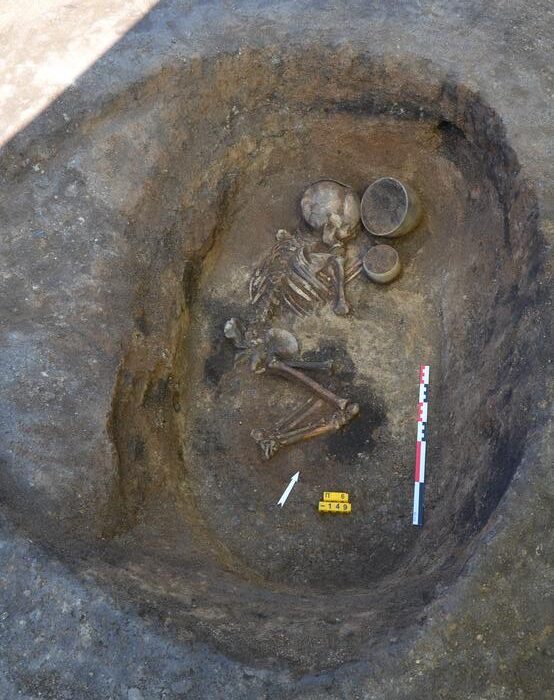
Strange burial of 9th-century teenager reveals tragic story

preview

English archaeologists have announced the discovery of the remains of a teenage girl buried in the Early Middle Ages. The circumstances of her burial were very unusual, suggesting she may have led a tragic life.

In ninth-century Cambridgeshire, as a community prepared to abandon their settlement, they took down the elaborate entrance gate and replaced it with a grave. In it were the remains of a young woman, aged just 15, buried face down in a pit and perhaps with her ankles bound together. This unusual grave gives us insight into a rare Early Medieval burial practice, and perhaps even contemporary attitudes towards those within the community who were considered different.

0

Roman fragments offer glimpse of emperor Hadrian’s daily events calendar

the Guardian Roman fragments offer glimpse of emperor Hadrian’s daily events calendar www.theguardian.com
preview

Some of the daily activities of the Roman emperor Hadrian, who built monuments including the Pantheon during his more than two-decade reign, have been revealed after the discovery of fragments of marble slabs in Ostia Antica, an archaeological park close to Rome that was once the city’s harbour.

The details were inscribed on fasti ostienses, a type of calendar chronicling events involving emperors and other officials in ancient Rome which were drafted by the pontifex Volcani, the highest local religious authority.

One of the two newly recovered fragments, which experts say matches perfectly with another previously found at the site, dates to AD128, during the reign of Hadrian. The inscription refers to events that took place that year, including 10 January, when Hadrian received the title pater patriae, or father of his country, and his wife, Sabina, that of Augusta. According to the inscription, Hadrian celebrated the occasion by offering a congiar dedit, or donation of money, to the people.

Another date, 11 April of the same year, refers to Hadrian’s trip to Africa before he returned to Rome between July and August. Before a subsequent trip to Athens, he consecrated (the inscription reads “consecravit”) a building in Rome that experts believe could be either the Pantheon or the Temple of Venus and Roma, possibly on 11 August. This would have marked his 11th anniversary as emperor.

The fragments were found in the forum of Porta Marina, a large rectangular building where fasti ostienses were carved into columns, during recent excavations at Ostia Antica that involved teams of archaeologists from the University of Catania and Polytechnic University of Bari.

Alessandro D’Alessio, the director of the archaeological park, said the “extraordinary discovery” sheds more light on the activities of Hadrian, including the buildings he constructed in Rome, while helping to better understand the story of ancient Ostia.

Gennaro Sangiuliano, Italy’s culture minister, said the excavations, which have also revealed extensive sections of a mosaic floor that will eventually be open to the public, gave additional insight into life in Ostia and Rome.

Fragments of fasti ostienses were first discovered at the site in 1940 and 1941 and then again between 1969 and 1972, including one that joins the recently rediscovered fragment. The combined slab chronicles the AD126-128 period. Some of the calendar fragments, which range between AD49 and AD175, are on display at the Vatican Museums.

0

Sea sequin 'bling' links Indonesian islands' ancient communities

Phys.org Sea sequin 'bling' links Indonesian islands' ancient communities phys.org
preview

A team of researchers have found a shared penchant for sewing reflective shell beads onto clothing and other items across three Indonesian islands that dates back to at least 12,000 years ago.

The team, led by the Australian National University’s Professor Sue O’Connor with Griffith University’s Associate Professor Michelle Langley, used advanced microscopic analysis to investigate Nautilus shell beads from Makpan Cave on the Indonesian island of Alor, and that the trends in style were shared with at least two other islands.

Striking similarities between the beads of Alor, Timor, and Kisar indicate that there was a shared affinity for sewing the reflective beads onto clothing or other items, therefore, the team deduced that there must have been shared ornament traditions across the sea in the region from the Terminal Pleistocene (late Ice Age) around 12,000 years ago.

Recent DNA evidence has shown how people on different Indonesian islands were genetically related, but until now it wasn’t known how culturally similar the populations were.

To answer this question, the Griffith and ANU teams analyzed the beads from Makpan and found that not only were they incredibly consistent in their method of production, but also similar to beads previously found on the islands of Timor and Kisar.

“The time and skill required to create the tiny shiny beads in the numbers found archaeologically must have been extensive, suggesting that the beads were an important part of the Makpan community’s repertoire of adornment,” said Associate Professor Langley, lead author of the article published in Antiquity. It is titled “Sequins from the sea: Nautilus shell bead technology at Makpan, Alor Island, Indonesia.”

There was also an intensification in fishing technology during this period with shell fishhooks appearing at associated sites, as well as exotic obsidian and artifacts appearing in the assemblages.

The similarity between the beads and fishhooks from different islands coupled with the skill and effort required to produce them implies that the practice was a tradition shared between islands, indicating frequent interaction across the sea.

Furthermore, the team who excavated at Makpan found thousands of shells in the food waste.

“What is interesting,” said ANU’s Dr. Shimona Kealy, “is that Nautilus shells, which were used to make the beads, are almost entirely absent from this discard pile of ancient shellfish feasts, indicating that Nautilus was not collected for food but specifically for crafting.”

Professor Sue O’Connor recalls, “When we were excavating at Makpan Cave in Alor we were amazed at how many shell beads we were finding, and how we just kept on finding them even into the lowest levels of the excavation. In view of the great depth of the excavation we thought that there was a high likelihood that the oldest beads would be in Pleistocene-aged deposits.”

Importantly, this means that Makpan’s occupants were collecting Nautilus purely for the purpose of making beads. This presents a society that was secure enough to invest effort into harvesting and processing resources for aesthetic uses without any obvious practical benefit.

All of these factors combine to create “an image of an inter-island ‘community of practice’ with shared values and worldviews” said Associate Professor Langley.

“It is likely that the populations of these islands shared a distinctive culture, exchanging style, goods, technology and genes across the sea.”